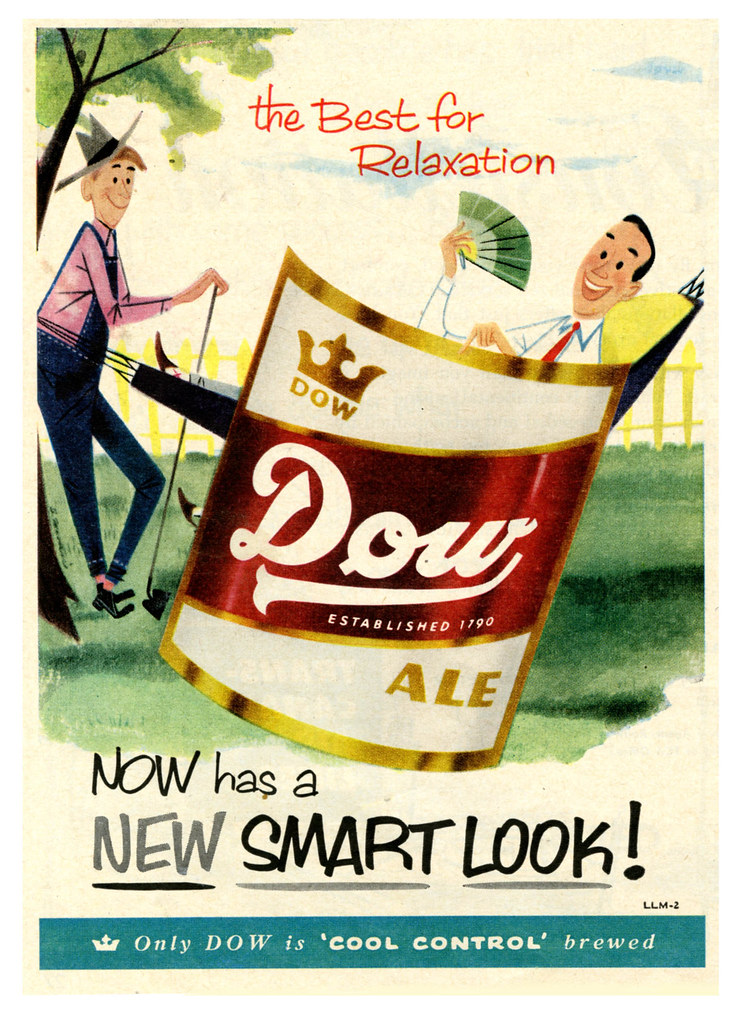
Friday’s ad is for Dow Ale, from 1954. The Canadian brewery in 1954 had “a smart new look” and was “‘cool control’ brewed,” whatever that meant. But the man sure looks comfy in the hammock, while still wearing a tie and holding a fan.

Friday’s ad is for Dow Ale, from 1954. The Canadian brewery in 1954 had “a smart new look” and was “‘cool control’ brewed,” whatever that meant. But the man sure looks comfy in the hammock, while still wearing a tie and holding a fan.

Today, June 26, in 1997, the first Harry Potter book, Harry Potter and the Philosopher’s Stone, was published in the United Kingdom. If that title looks wrong to you, that’s because in America it was titled Harry Potter and the Sorcerer’s Stone because the publisher “thought that a child would not want to read a book with the word ‘philosopher’ in the title.” They may have been right, but it’s still a little sad. At any rate, in the seven novels there was something called “Butterbeer,” described as a drink that “can be served either cold with a taste similar to cream soda or frozen as a slush with a butterscotch-like foam on top.” Basically, it’s fake beer for kids. More interestingly, a Los Angeles artist or designer by the name of Anita Brown did a series of imaginary labels for beers based on the titles of each the seven books.
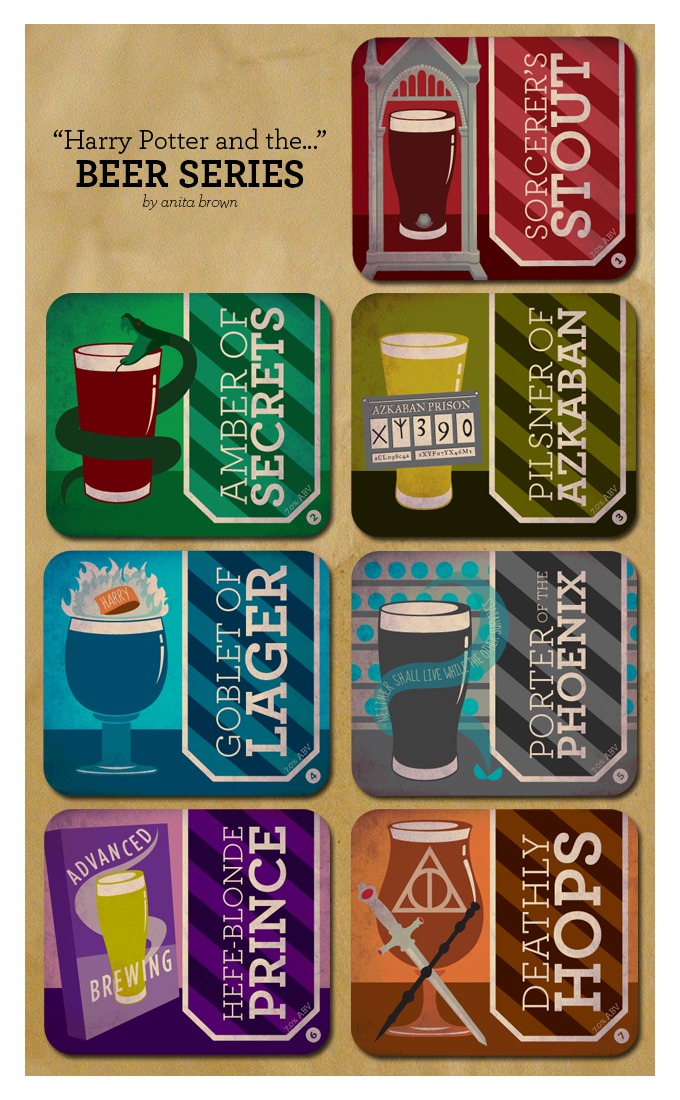
And here’s each title in order:
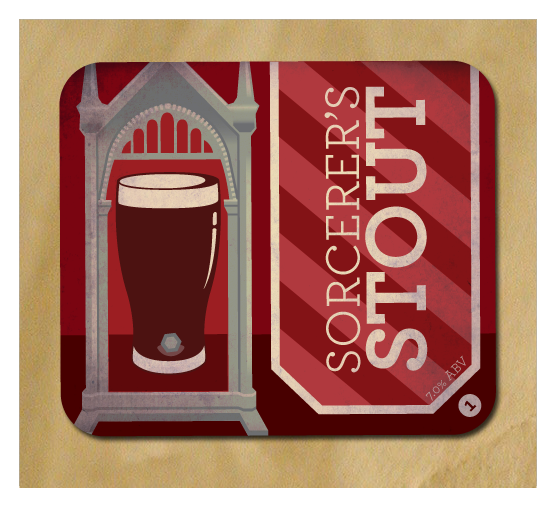
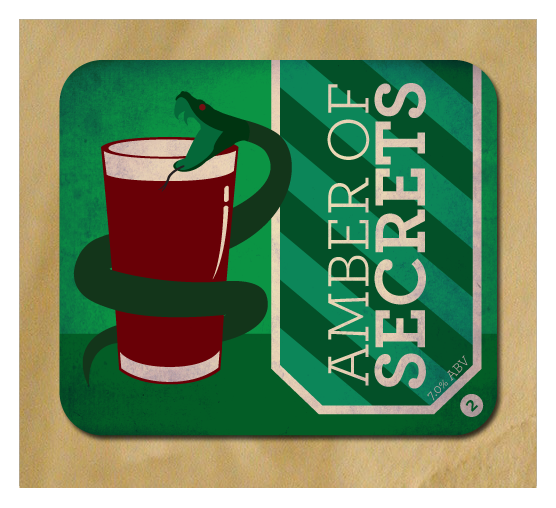
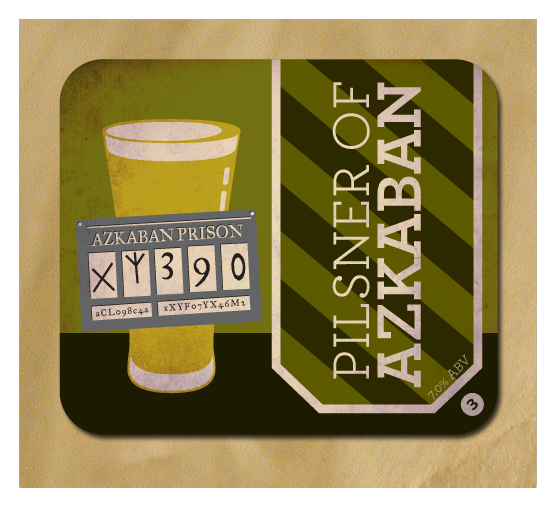
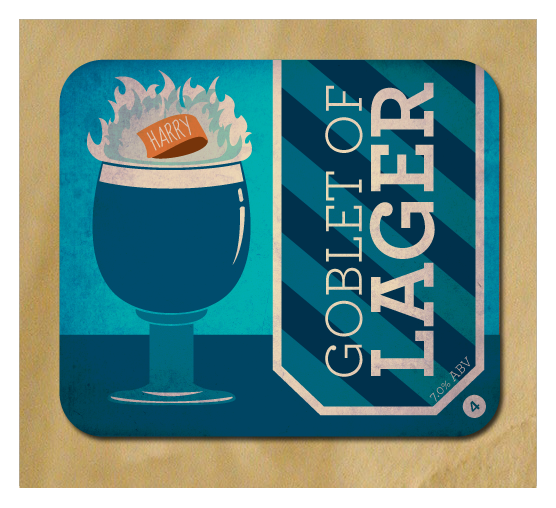
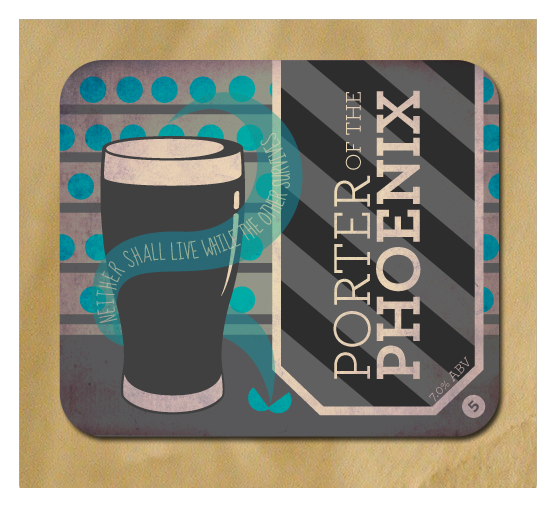
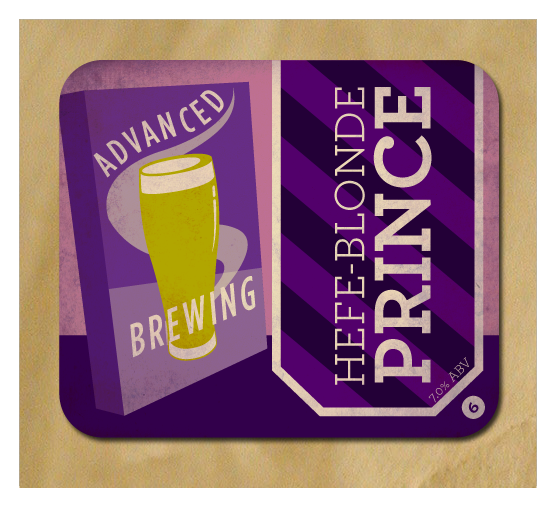
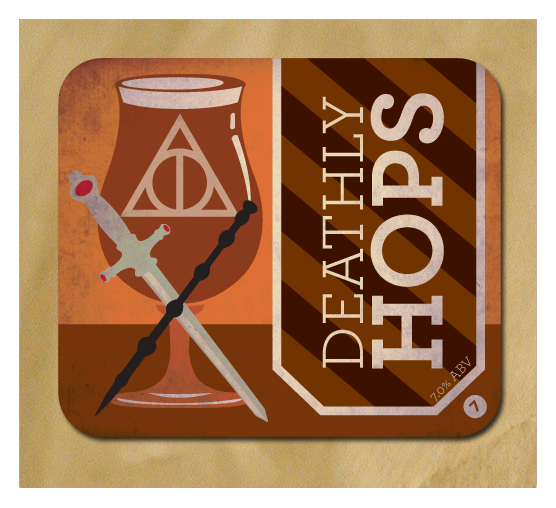
A fun exercise, with some fairly clever names. I wonder if the beers she chose would pair with the individual stories themselves? I only read the first two books, but didn’t really care that much for them; they never really grabbed me the way they did a lot of people. Another, somewhat similar, series that was published around the same time, the Golden Compass and the His Dark Materials trilogy was, in my opinion, was far richer and more interesting, but Harry Potter certainly was a phenomenon and anything that gets more people reading is a great thing in my opinion. Happy Harry Potter Day.

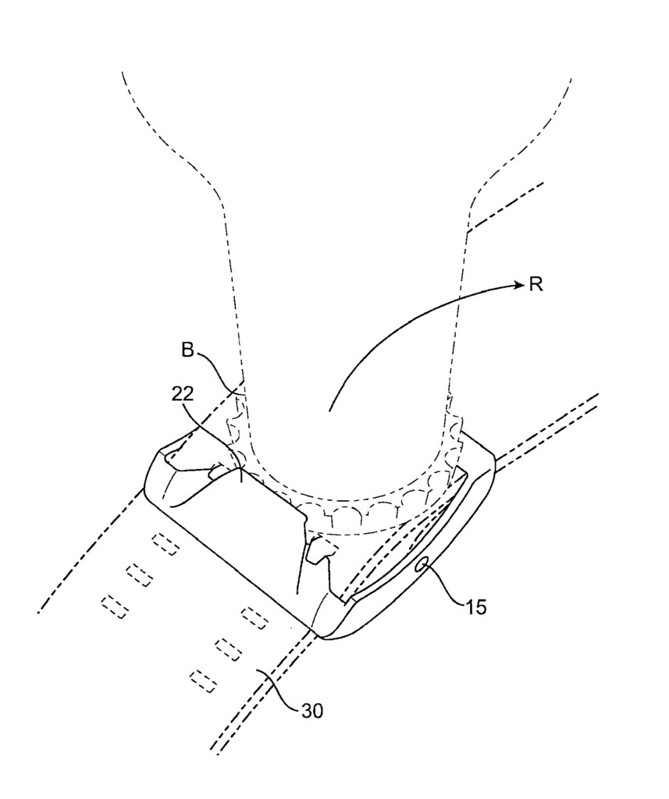
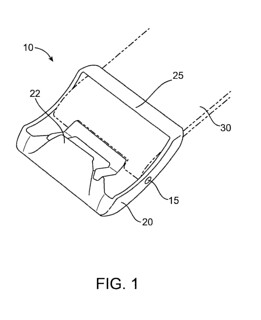
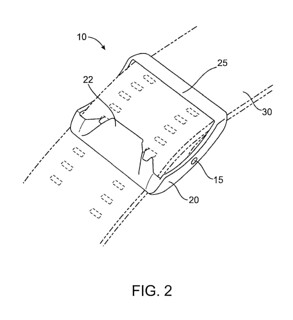
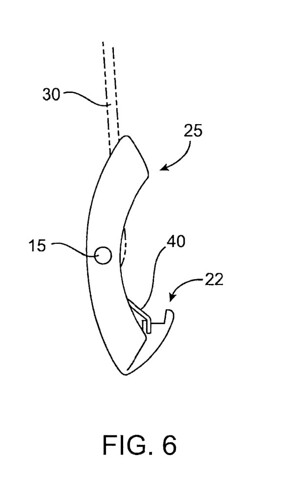
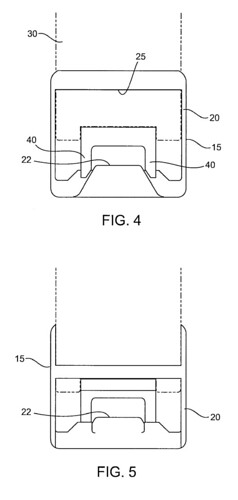
Today in 2012, US Patent 8205527 B2 was issued, an invention of Dominic A. Chenelia, for his “Watchband bottle opener with central extending projection to receive a bottlecap thereunder.” Here’s the Abstract:
A bottle opening wristband, having: a pivot member; a buckle loop rotatably connected to the pivot member; a first projection extending from a center edge of the buckle loop, the projection being dimensioned to be received under an edge of a bottle cap; and a second projection positioned opposite the first projection, wherein the first and second projections are positioned on opposite sides of the pivot member.

I’ve been traveling most of this week, so I missed the announcement Wednesday by owner Tony Magee when he unveiled plans for a third brewery on Twitter. When I interviewed him for a profile piece in in Beer Connoisseur magazine in 2012, he was already thinking about a third location after Chicago was up and running, but at that time was leaning toward New Orleans. But it turns out the new brewery will be in Southern California in the town of Azusa, which is in the San Gabriel Valley and is part of Los Angeles County, about 25 miles east of the city of L.A. This third brewery is a whopping 178,000-square feet and will reportedly have “an initial capacity of 420,000 barrels” which can be raised to one million barrels over time. By contrast, Chicago, when completely finished, will be able to brew 1.2 million barrels a year, and when an expansion in Petaluma is done, they’ll go from a capacity of 450,000-bbl to 750,000-bbl.
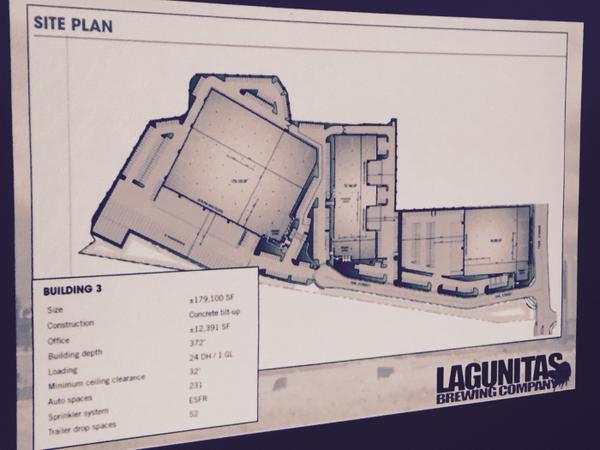
Tony teased out the new space on Twitter with this blueprint.
It’s location is also “spittin’ distance” from the Miller facility in Irwindale. Construction has apparently already begun and is expected to open by early 2017. The decision was prompted by nearing capacity in Petaluma, which is expected to be at 85% in about 18 months. Magee said the L.A. space will be “similar in scale and operation to their Chicago brewery,” so that’s pretty promising. If it’s anything like the Chicago brewery, which I just visited Monday, it will be spectacular.
UPDATE: Lagunitas posted some photos of the ongoing construction which has already begun in Azusa.




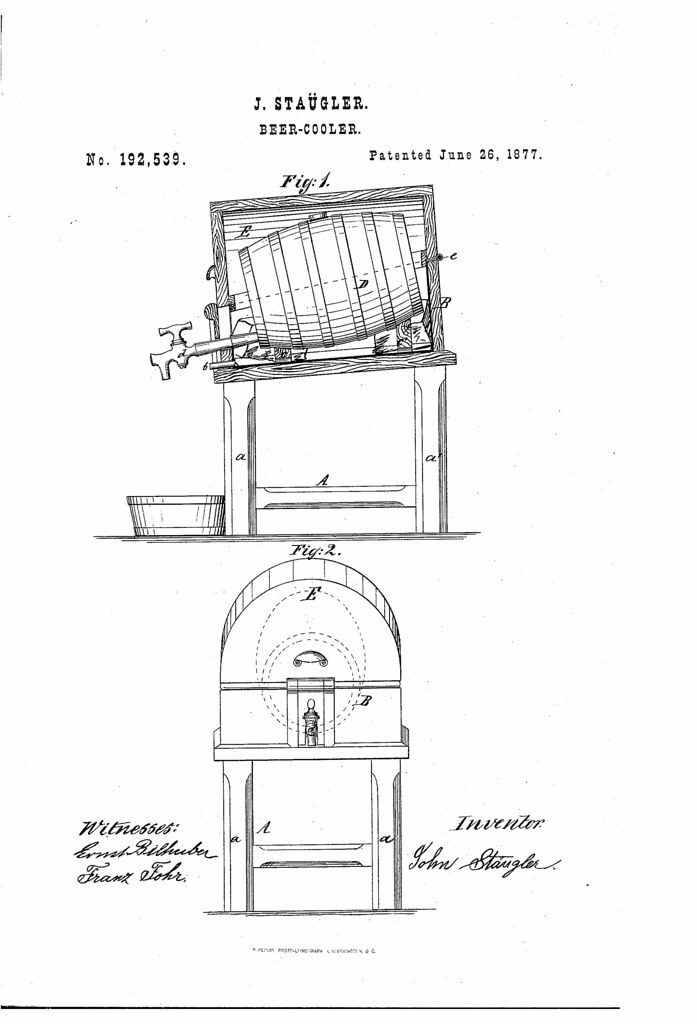
Today in 1877, US Patent 192539 A was issued, an invention of John Staugler, for his “Improvement in Beer-Coolers.” There’s no Abstract, although in the description it includes this summary:
This invention consists in the peculiar construction of’ a cooling-box, resting on a frame or horse, with a rounded cover hinged to the box.
The shape of the box, and especially the cover, follows the form of the cask as closely as convenient, and leaves only in the lower part of the box sufficient space to put in a few pieces of ice, for the purpose of keeping the contents of the cask cool while on draft.
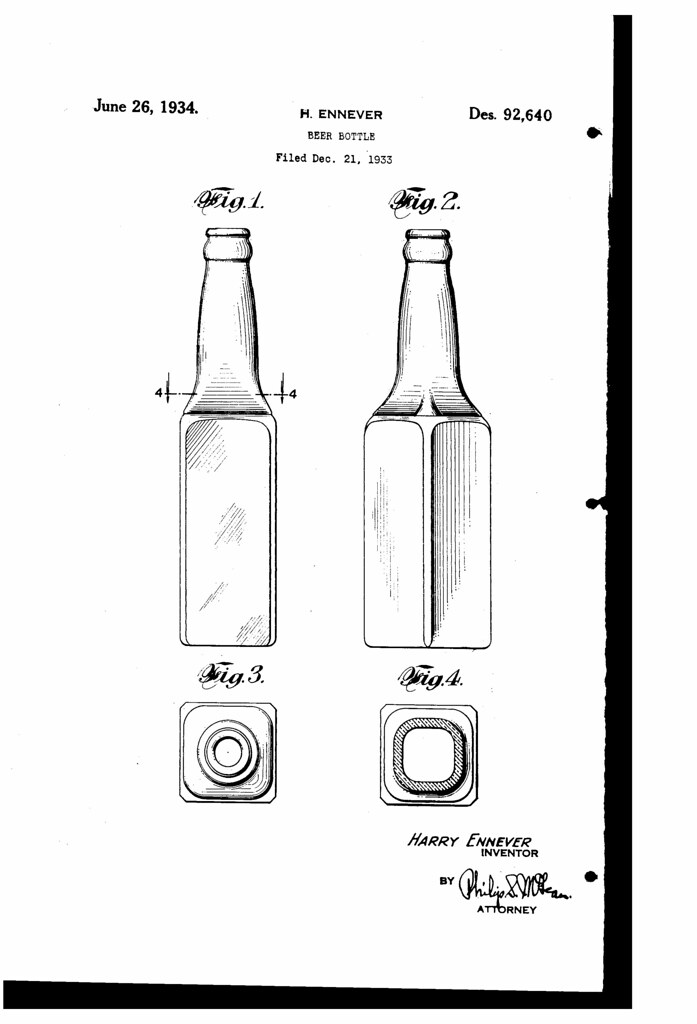
Today in 1934, US Patent D92640 S was issued, an invention of Harry Ennever, for his “Design for a Beer Bottle.” There’s no Abstract, although in the description this the entirety of what is claimed:
I invented a new, original, and ornamental Design for a Beer Bottle, of which the following is a description. The ornamental design for a beer bottle, reference being had to the [sic] substantially as shown in the accompanying drawing.
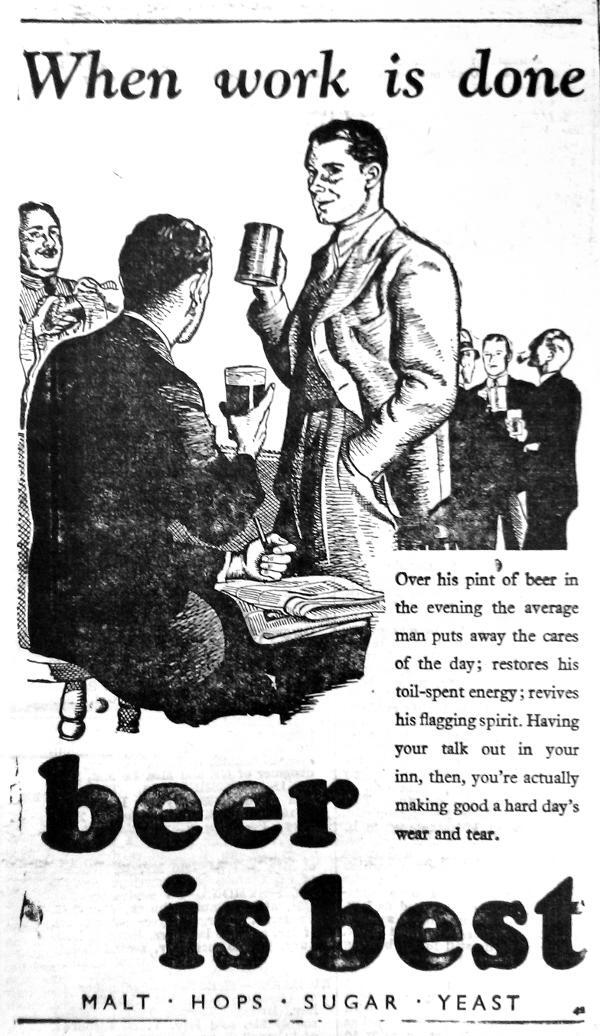
Thursday’s ad is for Great Britain brewers’ “Beer is Best” campaign, from 1935. Part of the British brewers series of ad promoting beer generally, this one focuses on an after work drink as a positive, where a man can “put away the cares of the day; restores his toil-spent energy; revives his flagging spirit.” But what stood out for me was at the bottom of the ad there’s a simple list of beer’s four ingredients, which they list as “Malt · Hops · Sugar · Yeast.” What was that third one again?
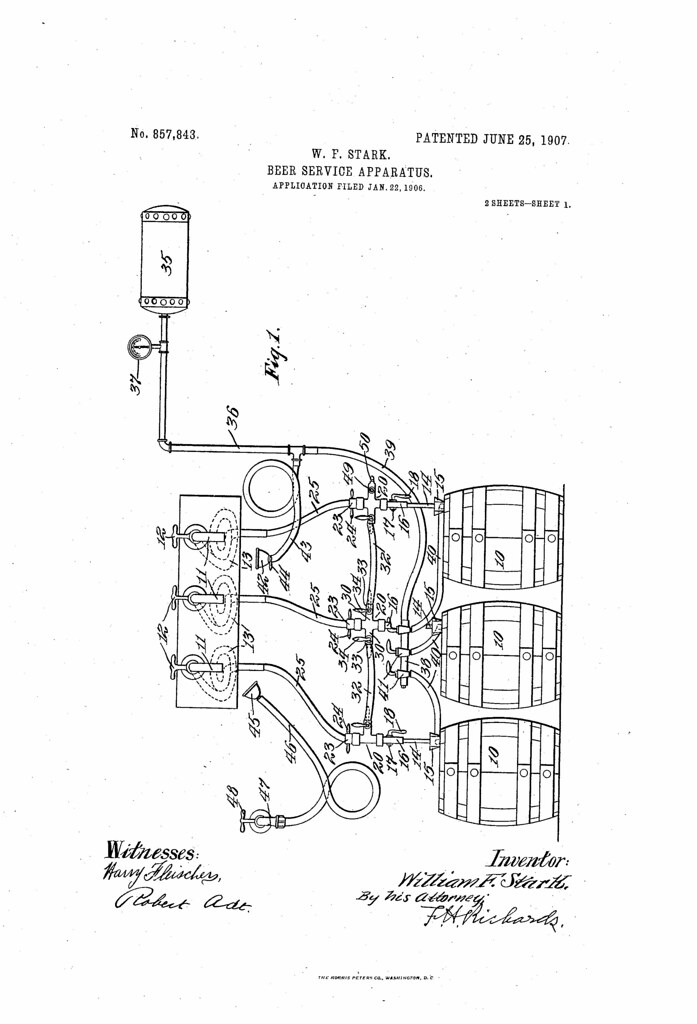
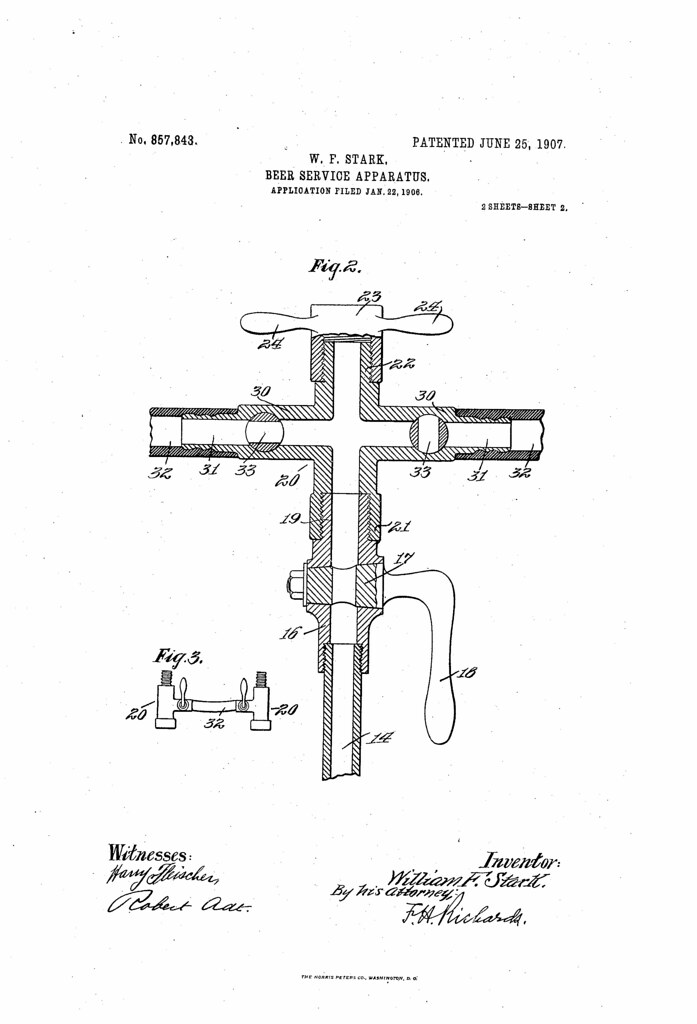
Today in 1907, US Patent 857843 A was issued, an invention of William F. Stark, for his “Beer-Service Apparatus.” There’s no Abstract, although in the description it includes this summary:
This invention relates to and has for an object to provide an improved beer service apparatus.
In the dispensing of liquids, more particularly malt beverages, the casks containing the same are usually stored in the cellar, and in the tap room, situated at some place on a higher plane than the casks, there are suitable faucets connected to the casks by a series of piping, the casks also being connected with a suitable pressure device, as for instance, a source of compressed air supply whereby the beverage is forced to the faucets and is there drawn as occasion may demand, the presence of the compressed air preventing the volatilization of the beverage and the escape of the entrained gas. During those portions of the day when the beverage is not being drawn from the faucets it will remain in the pipes between the casks and the faucets, and should the pipes have cooling coils connected with them, the beverage will become unduly chilled.
It is one of the objects of my present invention to provide means whereby the beverage may be returned from the pipes into the casks and there retained until it is again desired to force it to the faucets.
My present improvement makes use of the method of returning liquid under pressure to its receptacle by counter pressure and gravity, by employing means for connecting the draw faucet at its point of delivery to the counter pressure.
The passage of malt beverages through pipes has a tendency to gum and coat the inside of the pipes, rendering the same foul, and requiring frequent purging to keep them in a proper hygienic condition. The present improvement embodies means whereby the pipes may be filled with water for preventing them from becoming dry after the time the beverage has been returned to the cask and during the time the pipes remain idle, and also for the purpose of flushing and washing the pipes. This can be done by the employment of the present improvement without uncoupling the pipes from their connection with the casks or with the draw tubes which are ordinarily employed for establishing communication with the cask, and this while using a draw faucet of ordinary form.
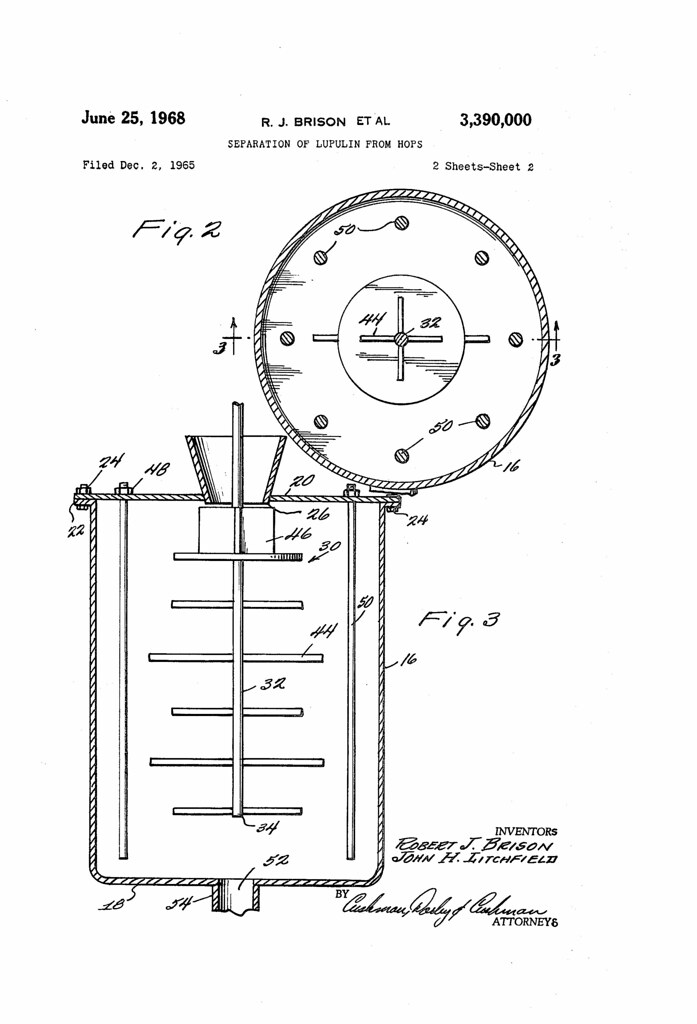
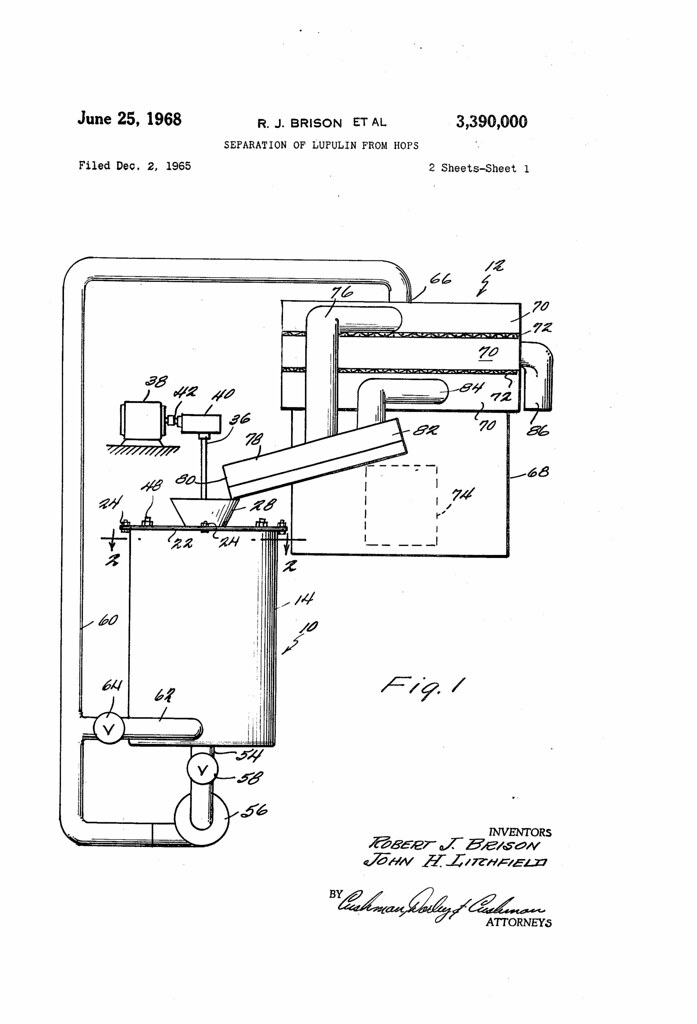
Today in 1968, US Patent 3390000 A was issued, an invention of Robert J. Brison and John H. Litchfield, assigned to John I. Haas Inc., for their “Separation Of Lupulin From Hops.” There’s no Abstract, although in the description it includes this summary:
In the production of beer or ale one important ingredient employed is hops. Hops contain certain soft resins which impart not only bitterness to the beer, but also aroma. In the usual practice the hop cones which include the leaves, stems, petals, lupulin and at times, seeds, are boiled in their entirety within a sugary wort in order to extract the necessary resins and aromatic oils from the lupulin thereof. The lupulin particles are closed cup-like fibrous containers filled with hop flavoring substance including a relatively small amount of moisture, and essentially soft bitter resins and volatile aromatic oils.
It has been known however, that the flavor content of lupulin deteriorates in the ordinary practice of drying the hops prior to shipment to the brewery and that oxidation of lupulin occurs easily if the dried hops are not placed in sealed containers (preferably in an inert atmosphere) thus avoiding further oxidation thereof.
It will be recognized that such a procedure is costly since it involves packaging and handling extraneous -materials. Efforts dating back to the mid-nineteenth century have been directed to separating the lupulin from the hops although certain economic disadvantages have prevented their widespread acceptance. Further, many of these efforts result in a lupulin product excessively fragmented or crushed, thus exposing its valuable constituents to unnecessarily rapid and disadvantageous oxidation.
It is therefore an important object of the instant invention to overcome the disadvantages of prior art methods of separating lupulin from hops.
It is a further object of the instant invention to provide an improved method of separating lupulin particles from hops in the substantial absence of damage or comminution of said lupulin particles.
Another object of the instant invention is to provide an improved, simplified and economical method of separating lupulin particles from hops in the absence of appreciable particle size reduction and in the absence of appreciable oxidation or deterioration of the soft resin or volatile aromatic oil content `of said lupulin particles.
Still another object of the instant invention is to provide a simple, effective method of separating lupulin from hops which method can be implemented at the ranch or vine location and wherein the hops treated can be fresh (not dried, dehydrated or stored for any substantial length of time) or dried or a mixture thereof.
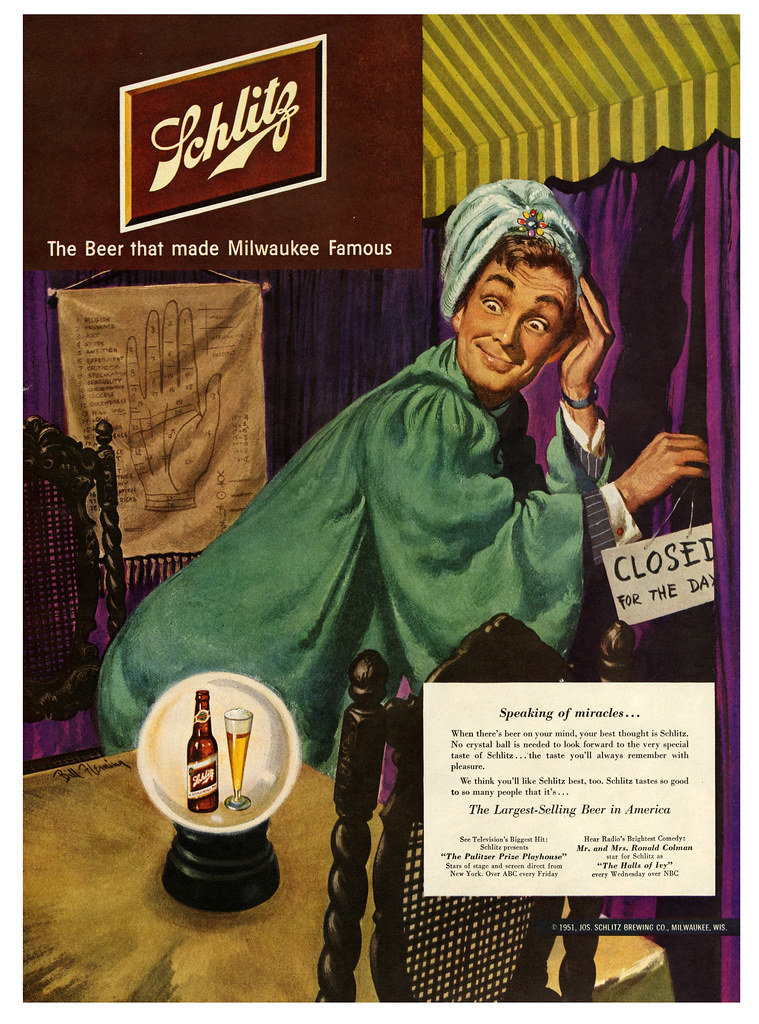
Wednesday’s ad is for Schlitz, from 1951. This is an odd ad, showing a man who could easily be mistaken for being in drag, but is just dressed up as a gypsy or fortune-teller. Wearing a goofy grin, he’s seeing a bottle of Schlitz and a full glass of beer in his crystal ball, apparently giving him the idea that a cold drink of beer would be a miracle after a hard day of work.