Brookston Beer Bulletin

Jay R. Brooks on Beer

  • Home
  • About
  • Editorial
  • Birthdays
  • Art & Beer

Socialize

  • Dribbble
  • Email
  • Facebook
  • Flickr
  • GitHub
  • Instagram
  • LinkedIn
  • Pinterest
  • RSS
  • Twitter
  • YouTube

Powered by Genesis

Ivory Tower Thinking

January 5, 2014 By Jay Brooks

ivory-tower-100
The proverbial ivory tower of academia, where some intellectuals live and work in an insulated world separate from the real world, was never more on display than in this “study” about which alcohol brands are mentioned most often in popular songs. Conducted by Boston University and Johns Hopkins, their survey of popular music, Alcohol Brand References in U.S. Popular Music, 2009–2011, was published in the December issue of the journal Substance Use & Misuse. The researchers looked at the Billboard charts in four music types — Urban, Pop, Country, and Rock. Here’s the abstract:

This study aimed to assess the prevalence and context of alcohol brand references in popular music. Billboard Magazine year-end charts from 2009 to 2011 were used to identify the most popular songs in four genres: Urban, Pop, Country, and Rock. Of the 720 songs, 23% included an alcohol mention, and 6.4% included an alcohol brand mention. Songs classified as Urban had the highest percentage of alcohol mentions and alcohol brand mentions. The context associated with alcohol brand mentions was almost uniformly positive or neutral. Public health efforts may be necessary to reduce youth exposure to these positive messages about alcohol use.

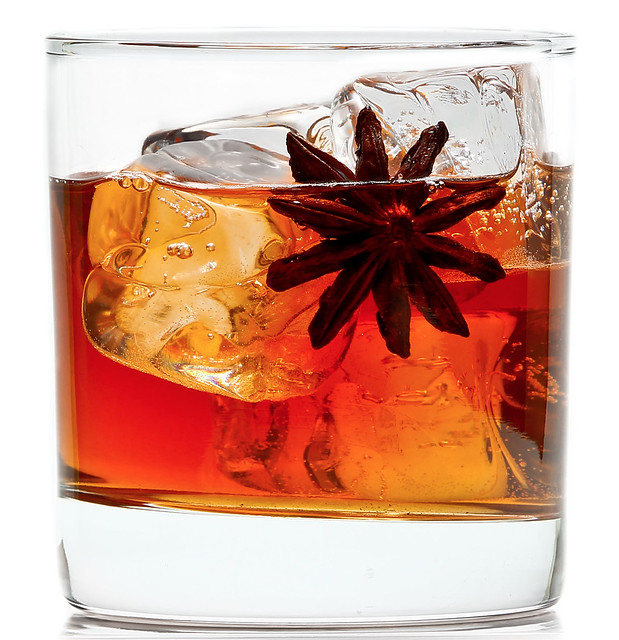
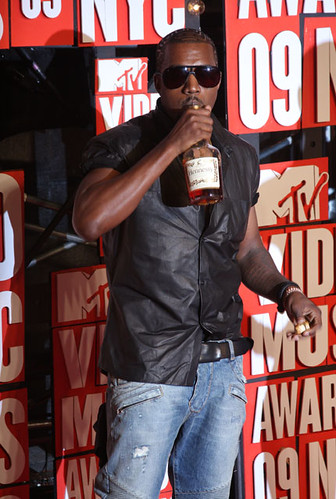
Because most journals require you to pay large sums to read them (or be an academic yourself), most of the information about this one comes from an article about the study, Music Artists Love to Sing About These 4 Alcohol Brands, which appeared on Futurity, a website covering “research news from top universities.” In it, the researchers reveal how out-of-touch they are with their subject. Of the more than one-thousand alcohol labels sold today, they noted, “only four brands show up often in the lyrics of popular songs.” Those four were Hennessy, Grey Goose, Jack Daniel’s and Patron; a cognac, vodka, tequila and whiskey. “They accounted for more than half of the alcohol brands named in songs from Billboard’s most popular song lists in 2009, 2010, and 2011.” Here’s the insights from one of the researchers.

“You would expect there would be hundreds of brands that are randomly mentioned,” says Michael Siegel, a professor of community health sciences at Boston University’s School of Public Health. “But we found that those top four accounted for 52 percent of all the brand mentions. That can’t be coincidental.”
hennesy

Are you sure?

Apparently, they also found that “alcohol use was portrayed as overwhelmingly positive in lyrics, with negative consequences almost never referred to.” I don’t think they listened to enough country music which, traditionally at least, was all about the consequences of drinking too much. But all kidding aside, why would a singer sing about any negative aspects of drinking? They’re not PSAs. The goal of pop music is to entertain, period. It’s not to educate or warn kids about the dangers of overindulging. They also seem worried because — gasp — kids also listen to the same music as adults, which the researchers found “alarming” because in their mind that meant the music was “promoting” drinking.

But after all that fretting, professor Michael Siegel admits that no “causal connection” was found between the music actual consumption, stating “further research is needed.” He also mentions that they also found that some of the artists — gasp — had sponsorship deals with some of the alcohol brands. To the researchers, that means that listeners are being marketed to, because in the ivory tower that simply has “to be recognized as marketing, not random chance.”

This so-called “study” examined (really, examined? They just listened to some music, didn’t they?) 720 songs. Of those, less than one-quarter (23.2%, or 167) mentioned alcohol. And just 6.4% (or 46 songs) dropped the name of a specific brand of alcohol, of which 51.6% mentioned one of the top four brands; Hennessy, Grey Goose, Jack Daniel’s and Patron. Of the four music genres they surveyed, alcohol was mentioned most often in “so-called urban songs (rap, hip-hop, and R&B, with 37.7 percent), followed by country (21.8 percent), and pop (14.9 percent).” They further discovered that “Tequila, cognac, vodka, and champagne brands appeared more prevalently in urban music (R&B, hip-hop, and rap), while whiskey and beer brands were more common in country or pop music. Surprisingly, there was no alcohol referred to in the rock-genre music examined.” Maybe that was Christian rock, because I can name more than a few rock and roll songs about beer alone, but maybe they’re not popular right now.

Is anyone not living in the clouds surprised by that? But let’s take a closer look at reality regarding these brands. Hennessey is hands down the best-selling brand of cognac in not just the U.S., but worldwide. Likewise, Grey Goose is the best-selling vodka. Jack Daniel’s is the best-selling American whiskey worldwide, too. At this point, you probably won’t be too shocked to learn that Patrón is the biggest selling ultra-premium tequila in the US. So when the researchers say it “can’t be coincidental” that “those top four accounted for 52 percent of all the brand mentions,” it’s not, but it’s not a conspiracy, either. They’re each the most popular brands of their type, which is the more logical reason why they’re the ones most often mentioned in songs. You don’t need a slide rule to figure that out.

As long ago as when I worked for BevMo, and saw sales figures for spirits on occasion, those were popular brands, especially among the same demographic as might listen to urban music. The brands were, and most likely still are, status symbols in some communities, which would also account for their popularity in song lyrics. That’s the reason these companies are looking for sponsorship opportunities with musicians and music events, not the other way around.
kayne-west

The researchers, showing just how biased their thinking is, claim that their concern over advertising stems from a belief that “[a]t least 14 long-term studies have found that exposure to alcohol marketing in the mass media increases the likelihood that young people will start drinking, or if already drinking, consume more.” And yet a recent GfK Roper Youth Report on the Influences on Youth Decisions about Drinking clearly shows that since at least 1991, advertising is at the very bottom of the reasons that influence kids to drink, age 13-20, accounting for just 1%, though for all media (defined as a including TV, radio, magazines, and Internet) it’s twice that, but of course that’s still only 2%. It’s hardly the scourge that the prohibitionists continue to insist it is.

It’s hard to see this as anything more than researchers out of touch with the real world of music or alcohol, making pronouncements from their ivory tower without really understanding the context of what they’re commenting on, mis-analyzing the results as a consequence. For example, professor Siegel suggests that “[o]ne intervention would be to teach young people ‘media literacy skills’ that would educate them about marketing techniques.” That’s rich, considering most young people are probably far more media savvy than the average college professor.

But beyond that, the idea that music made by and for adults, but also listened to by children, is rarely, if ever, the danger it’s believed to be. Or that adults singing about adult situations, in this case alcohol, for adults to listen to should not be permitted to do so on the off-chance that kids might hear it too. But that’s typical of the ridiculous lengths and logic to which the prohibitionists will go in promoting their agenda with junk science. This type of thinking suggests that they believe there should be two worlds, one that’s exclusively adult, walled off completely lest the kiddies be corrupted by seeing and hearing adult entertainment. That advertising is so often the bogeyman, despite it having so little actual influence, has more to do with the strategy that prohibitionists have employed since the day after prohibition was repealed. Every generation, they claim, is being corrupted and ruined by alcohol advertising. And yet, each generation seems to turn out just fine, don’t they? Those same youth from the previous generation grew up to become among the next generation of researchers claiming how this next group of kids will be ruined by being advertised to by alcohol companies, and each time they miss the irony that they, too, grew up seeing alcohol advertising, as well. Maybe it’s the air up in their ivory tower that makes them so forgetful, that along with being detached from reality. Can I assume Michael Bolton, Kenny G and Barry Manilow are playing on the radio?

Filed Under: Editorial, Politics & Law Tagged With: Anti-Alcohol, Science, Statistics

Beer Film #5: The American Brew, Pt. 4

January 5, 2014 By Jay Brooks

brookston-film
Today’s beer video is part four of the film The American Brew that was produced by Anheuser-Busch’s Here’s To Beer campaign in 2008. The DVD is still actually available from Amazon. Enjoy.

Filed Under: Beers, Breweries, Just For Fun, Politics & Law Tagged With: Documentary, Film, History, Video

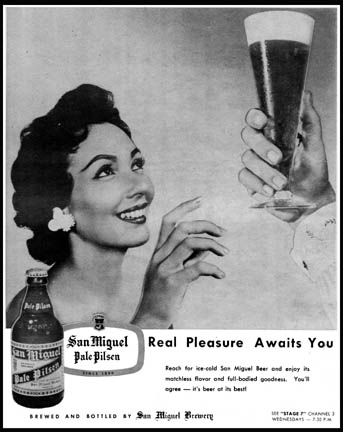
Beer In Ads #1061: Real Pleasure Awaits You

January 4, 2014 By Jay Brooks


Saturday’s ad is for San Miguel, from 1958. A smiling woman reaches out for a glass of Pale Pilsen, the most popular beer in the Philippines.

san-miguel-1958-1

Filed Under: Art & Beer, Beers Tagged With: Advertising, History, Philippines

Dunedin’s Mobile Brewhouse On Wheels

January 4, 2014 By Jay Brooks

road-trips
My friend and colleague, Gerard Walen, has an interesting story on CraftBeer.com about a mobile brewery that drove from Florida to Oregon. In Collaboration On the FL-ORegon Trail, Walen details the rolling brewery built by the Dunedin Brewery and its journey to Oregon, and then on to Denver for GABF. Check it out. Gerard can normally be found on Road Trips For Beer, and recently finished the Florida Breweries book in the same series as my northern California guidebook, which will be published this April.

fl-oregon-trail-main1
The Mobile Brewhouse.

Filed Under: Breweries, Just For Fun, Related Pleasures Tagged With: Florida, Oregon, Science of Brewing, Travel, United States

Beer Film #4: The American Brew, Pt. 3

January 4, 2014 By Jay Brooks

brookston-film
Today’s beer video is part three of the film The American Brew that was produced by Anheuser-Busch’s Here’s To Beer campaign in 2008. The DVD is still actually available from Amazon. Enjoy.

Filed Under: Beers, Breweries, Just For Fun, Politics & Law Tagged With: Documentary, Film, History, Video

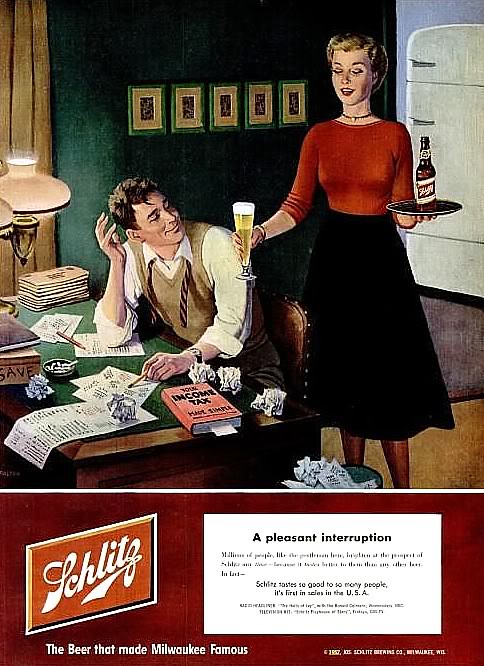
Beer In Ads #1060: A Pleasant Interruption

January 3, 2014 By Jay Brooks


Friday’s ad is for Schlitz, from 1952. In this case the interruption that’s so pleasant is the little woman bringing her man, who’s busy working on the taxes, a beer. He certainly looks pleased. In my household it’s my wife doing the taxes, while I cheer her on from the sidelines, while both of us drink beer.

schlitz_taxtime_1952

Filed Under: Art & Beer, Beers Tagged With: Advertising, History, Schlitz

Archeologists Discover Ancient Brewer’s Tomb In Egypt

January 3, 2014 By Jay Brooks

history-pyramids
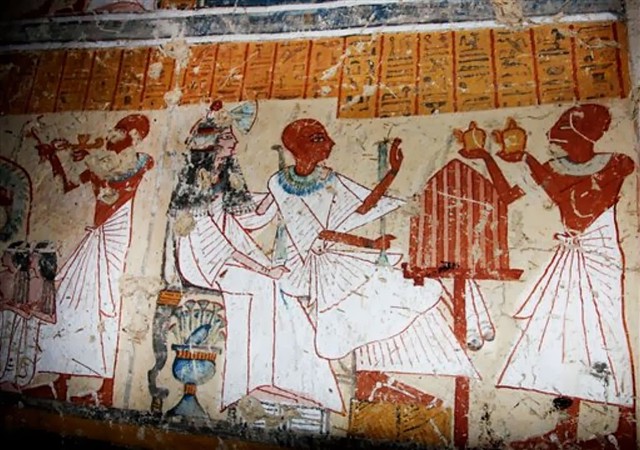
This is pretty cool news. Egypt’s minister of antiquities, Mohammed Ibrahim, is reporting today that a group of archeologists from Japan “have unearthed the tomb of an ancient beer brewer in the city of Luxor that is more than 3,000 years old.” According to Ibrahim, “the tomb dates back to the Ramesside period and belongs to the chief ‘maker of beer for gods of the dead’ who was also the head of a warehouse,” adding “that the walls of the tomb’s chambers contain ‘fabulous designs and colors, reflecting details of daily life … along with their religious rituals.'”

Egypt_02
Inside the brewer’s tomb. [Photo: Supreme Council of Antiquities]

The Luxor tomb “is home to a large and famous temple complex built by Amenhotep III and later by Rameses II. The “Japanese team found the tomb during work on another tomb belonging to a top official under Pharaoh Amenhotep III, who died around 1354 BC.” See the BBC for the full story, though there’s not too much about it yet. Apparently, after it’s fully excavated they plan on opening it to visitors. Now that’s a vacation I’d sign up for.

Egypt_01
A wall inside the brewer’s tomb. [Photo: Supreme Council of Antiquities]

Filed Under: Just For Fun, News, Related Pleasures Tagged With: brewers, Egypt, History

Session #83: Against The Grain

January 3, 2014 By Jay Brooks

barley
Our 83rd Session is hosted by Rebecca Patrick, who writes online at The Bake and Brew. Her topic for this session is decidedly against the grain, so much so that it is specifically Against the Grain.

How much is our taste or opinion of a craft beer affected by what friends and the craft beer community at large thinks? What beer do you love that no one else seems to get? Or what beer do you say “no thanks” to that everyone can’t get enough of?

I can find myself wondering sometimes when I’ve had an extremely popular beer, but haven’t been all that “wowed”…is it me? Am I missing something here? Was there too much hype? Could there be such a thing as taste inflation? If we really want to dive further into this, is it really only “good” if a large portion of the craft beer community says it is or is our own opinion and taste enough?

session_logo_all_text_200

You only have to watch the lines at GABF at the beginning of each session to know that hype and brand perception do play a role in a brewery’s success. There are a handful of breweries whose lines are suddenly longer than most of the others, seemingly immediately after the doors open and the people rush inside. Many make a beeline to a select number of brewer’s booths. Many of these remain more crowded throughout the session. Are they better than other breweries? Perhaps, but probably not. They certainly make good beer, and beer which has, for whatever reason, captured the public imagination. That intangible popularity, whether manufactured or developed organically, is at least a part of the company’s success. Any business needs to have customers want to buy their products or they won’t survive. I know that sounds obvious, like the sports announcer who says the team has to score more points in order to win, but I think we sometimes forget that.

Indeed, many people complain mightily about hyped and over-hyped beers, forgetting that hype is the engine that drives awareness and, ultimately, sales. Honestly, if you don’t want to wait in a line all day for some rare (or even artificially rare) beer, I think I see a way out. Don’t go. But what I don’t understand is the need to piss on everybody else’s enjoyment of the event. The many release parties and events that numerous breweries create are generally well-attended, despite the complaining, so what’s the problem? It sometimes feels like we’re entering a phase in craft beer akin to the music world where as soon as a band becomes popular, their fans who were with them in the beginning accuse them of “selling out” or say they’re no good anymore, moving on to the next unknown. It was ridiculous when I was in the music business, and it’s no less absurd when it comes to beer.

against-the-grain

But that brings us back to Rebecca’s question about whether or not “our own opinion and taste [is] enough?” Yes. Yes, it is. If you’re a longtime reader of the Bulletin, you’ve probably noticed that I rarely post “reviews” of beers. Unless it’s part of a specific assignment, I generally don’t. I’ve been writing about beer over twenty years, and been judging at competitions for around fifteen years, and been drinking critically far longer than that, and still I don’t really understand why anyone would take my advice on how good a beer is. Whenever anyone writes a review, it’s personal. By design and definition, what I say about a beer is just how it tastes to me — what I like or don’t like about it — on that particular day and under the specific circumstances it was sampled (time and place). But your experience will vary. Your palate isn’t the same as mine. If I’ve learned anything from tasting with the same people for many years (on tasting panels and commercial judging) it’s that tastes vary. Different people have tolerances and sensitivities to certain flavors and those vary from person to person. It’s not a problem in most instances; spaghetti tastes like spaghetti to almost everybody. But when you examine anything more closely, the minute differences become more important when you’re paying close attention and looking for them. With so much variation, you’d think that beer judging would be little better than a crapshoot, and yet many beers that as a community we agree are at least good, tend to rise to the top and win awards multiple times. By careful selection of judges with different backgrounds and experience, and by making the standards for judging as unambiguous and detailed as possible, these differences seem to work themselves out. That’s been my experience, as least.

But having worked retail a lot when I was younger, I’ve also witnessed that many people do honestly want to be told what to try. It’s not necessarily a bad thing. You ask someone who knows more than you for advice about what’s good, what’s worth trying. In theory, they should know more, and in practice that is often the case. At BevMo, though, I can’t tell you how many times I witnessed people walking the wine aisles with a Wine Spectator open to their ratings pages, shopping the scores. That seems less effective, to me because you don’t know how your own palate matches up to the reviewer (or how honest the review was).

One nice thing about beer, at least, is taking a bad recommendation won’t break the bank. If you try a pint or even a six-pack of something you end up not enjoying, you’re not out too much money. You may not take that person’s advice again, especially if happens several times, but that’s about it. If I start doing more reviews, which is always a possibility, my only goal would be to suggest beers to try, and perhaps why you’d want to, not why I like them, or why you must, too. I know there’s wide disagreement among writers on this issue, but I prefer to talk about what’s good, and not write bad reviews, in effect telling people what to avoid or what’s unappetizing. There’s just too much beer out there, with much of it quite good, to waste ink (or bytes) on tearing down a beer I didn’t happen to enjoy. I understand the counter-arguments, and realize bad reviews have their place, it’s just not for me.

I’m not quite sure that answers the question, or even does go against the grain, though it does ramble around in the vicinity of the topic. I don’t mind the hype surrounding many popular beers, mostly because I don’t get caught up in it. I think it’s a necessary part of there being so many breweries all trying to gain the attention of consumers. Each brewery has to find some way to stand out. Some of their attempts work better than others, naturally, but that’s to be expected. I’m probably not the typical beer consumer, and so am not swayed too much by opinion or popularity. On the other hand, I’ll try almost anything, and in fact am interested in doing just that, all the time. I rarely say “no thanks” to trying anything. I find these days it’s harder to be “wowed,” but I think that’s more about having tried so many beers in my lifetime. There’s certainly no shortage of great beers being made these days, and I’m still just as excited to try each new one I can. And as much as I’m happy to have a job talking about what beers I like and love, you should trust your own palate about what you enjoy most. I hope I can help steer you to something new or worthwhile from time to time, but if you love a beer than that alone makes it a great beer.

barley-fields-of-gold

Filed Under: Beers, Reviews, The Session Tagged With: hype, Marketing, Tasting

Time-Lapse Bigfoot Fermentation

January 3, 2014 By Jay Brooks

sierra-nevada
Here’s a very cool video of Sierra Nevada’s annual Bigfoot Barleywine Style Ale being brewed in open fermenters. The video shows 12,400 gallons of barley wine fermenting “over six days in four traditional open fermenters.”

First made in 1983, Bigfoot has been released every February since, and will again be much easier to find than the real Bigfoot this coming February, as well.

SierraNevada-Bigfoot

Filed Under: Beers, Breweries, Just For Fun Tagged With: Science of Brewing, Sierra Nevada, Video

Beer Film #3: The American Brew, Pt. 2

January 3, 2014 By Jay Brooks

brookston-film
Today’s beer video is part two of the film The American Brew that was produced by Anheuser-Busch’s Here’s To Beer campaign in 2008. The DVD is still actually available from Amazon. Enjoy.

Filed Under: Beers, Breweries, Just For Fun, Politics & Law Tagged With: Documentary, History, Video

« Previous Page
Next Page »

Find Something

Northern California Breweries

Please consider purchasing my latest book, California Breweries North, available from Amazon, or ask for it at your local bookstore.

Recent Comments

  • Bob Paolino on Beer Birthday: Grant Johnston
  • Gambrinus on Historic Beer Birthday: A.J. Houghton
  • Ernie Dewing on Historic Beer Birthday: Charles William Bergner 
  • Steve 'Pudgy' De Rose on Historic Beer Birthday: Jacob Schmidt
  • Jay Brooks on Beer Birthday: Bill Owens

Recent Posts

  • Beer In Ads #5228: To Clarify The “Bock Beer Date” Question April 23, 2026
  • Historic Beer Birthday: Anton Schwartz April 23, 2026
  • Beer Birthday: Christian Kazakoff April 23, 2026
  • Beer In Ads #5228: We Are Coming On The Run … April 22, 2026
  • Beer In Ads #5228: All Together For Newark April 21, 2026

BBB Archives

Feedback

Head Quarter
This site is hosted and maintained by H25Q.dev. Any questions or comments for the webmaster can be directed here.