Brookston Beer Bulletin

Jay R. Brooks on Beer

  • Home
  • About
  • Editorial
  • Birthdays
  • Art & Beer

Socialize

  • Dribbble
  • Email
  • Facebook
  • Flickr
  • GitHub
  • Instagram
  • LinkedIn
  • Pinterest
  • RSS
  • Twitter
  • YouTube

Powered by Genesis

Curious Cautions On Consumption Of Alcohol

October 16, 2013 By Jay Brooks

spirits-wine-beer
It’s not sure what to make of some news that’s being reported based on a new report by the Alcohol Research Group of Emeryville, California. Several news outlets have picked up the story, including the San Francisco Chronicle, in Sobering tip – drink makers alter alcohol content; Join Together, in Drinks Often Contain More Alcohol Than People Realize; and Health magazine, in How Much Alcohol In Your Drink? Stronger Beverages Make It Tough to Tell.

The first curiosity is some articles say the report was done by the Public Health Institute’s Alcohol Research Group while others claim it was the National Alcohol Beverage Control Association. Curiouser still is the fact that neither organization has any information I can find about the alleged report, which is odd since the news reports quote people involved in it and from it. It’s not uncommon for only a summary to be available, especially if they’re trying to sell it to people, but I can’t even find any reference to it at all. It’s also fairly common for there to be a press release summarizing the report, but I can’t locate one of those, either. The NABCA in their news section has a link to a report on their report on Health24, the same syndicated article by Brenda Goodman that many news outlets are using. You’d think they’d at least have their own story about their own report.

Although the articles concern themselves with this new report, not one of them even mentions its name, although they each quote the report’s author, William Kerr, who’s billed as “a senior scientist with the Alcohol Research Group.” Scientist seems like a stretch, since his background is not in the hard sciences, having a BA and a PhD, both in economics. Now I have nothing against economics whatsoever, in fact I love the dismal science, and am fascinated by it. I know it’s a social science, a concept I fully accept, but when’s the last time you ever heard an economist referred to as a scientist, or even a social scientist? Having the title “senior scientist” strikes me as just a tad misleading, or is that just me?

curiouser

Anyway, the point of the report, from what I can piece together, is that the standard drink sizes that are generally used determine as a single drink (mind you, for purposes of research and making people feel guilty, not for our real lives) are not as effective as they once were, because the alcoholic strength of beer and wine varies, and many people are too stupid to realize that. It honestly strikes me as a tempest in a teacup at the very least, and an attempt to fan the flames of anti-alcohol mischief at worst.

Here’s how one of the articles begins. “Thanks to rising alcohol levels in wine and beer, the drinks served in bars and restaurants are often more potent than people realize, a new report shows.” Seriously, just now rising? I know there are perhaps more higher strength beers than before the 1980s, when most beer was all the same, and certainly since craft beer is getting more popular arguably more of it’s being sold, but it’s still a drop in the ocean of the 5% beer majority. And really, is wine getting stronger? The report’s author, William Kerr, is quoted, saying “A lot of the wines now are 14 percent or even 15 percent commonly, and the standard 5-ounce glass of wine doesn’t apply to that level.” Um, as long as I can remember 14% has been the average wine strength. Seriously, if you had asked me how strong wine typically is, that would have been my immediate response. Of course, I’m no wine expert, by any stretch of the imagination, so I’ll defer to my wine brethren on that one. A Guardian article from 2011 reveals that it’s closer to 13% worldwide and 13.65% in the “New World,” by which I assume they mean us upstarts in the colonies. But if the averages are higher than what the “guidelines” are based on, wouldn’t it make more sense to argue for changing them, instead of complaining that people aren’t converting them properly? If they’re really concerned that people are drinking too much because of their own information, then changing it seems a more obvious solution to me.

Here’s another one I don’t quite understand. “Beer drinkers may find themselves in the same boat. A 12-ounce bottle of Bud Light beer has 4.2 percent alcohol, but the same-size bottle of Bud Light Platinum has 6 percent alcohol by volume, a nearly 50 percent increase.” I know math is hard, but that seems to skew the numbers to stretch a point. A 4.2% beer would contain .0504 ounces of alcohol, while at 6 percent, the amount would be 0.72. While ordinary rounding you could argue might make sense in other contexts, when you’re talking about such small numbers, the effect of rounding is inflating by one-half a percent (0.5%), not an inconsequential amount when the difference between the two examples is only 1.8%. That seems designed to make that example seem worse than it really is.

They also mention that it “matters whether you’re drinking a standard 12-ounce bottle, or downing draft beer in pints, which are 16 ounces each.” And that’s partly true, it does make a difference, but most good beer bars don’t serve higher alcohol beers in pint glasses, but in a smaller glass that’s less than that.

The Chronicle’s report claims that “craft beers and European imported beers usually have alcohol content a few percentage points higher than major American beers.” Some, sure, but their point is that beer strength varies widely, but then they give this absurd generality that’s not remotely true.

Also in the Chronicle, Kerr tells us that “Federal law requires hard alcohol manufacturers to list the alcohol content by volume on labels, but it’s optional for beer and most wines.” Actually, it’s the states that determine that, and in California it is indeed required on the label. Given that Kerr is in California, and the article was written by and for a California audience, that seems like it could have been useful information. It’s not optional here, nor do I believe that’s the case for any other state.

One thing I do agree with is the statement by Robert Pandina, director of the Rutgers Center of Alcohol Studies, who posits that the “dietary guidelines aren’t very useful. They don’t parallel the drinking habits of the American public.” So why we keep using them, I think, has more to do with people involved in the addiction business and anti-alcohol groups, then wanting to honestly come up with something that most people can actually use. Tellingly, Pandina is not part of the report that’s the subject of the articles.

The overall tone of the advice from the report, at least as gleaned from the quotes from it, is that people should be ridiculously fastidious in monitoring their intake of alcohol. But the guidelines are not that exact, nor should they be. The UK’s recommended amounts in fact were simply made up, while ours were more likely based on average drink sizes from once upon a time, and became fixed in stone along the same lines as binge drinking became increasingly narrowly defined. This, I can only guess, is the result of working with or around people with drinking problems. Most of us can manage to drink responsibly and moderately without a measuring cup or journal. If the majority of people who drink alcohol are not problem drinkers, which is the case, then being sensible doesn’t require a calculator. Most people know their limits and can, and do, moderate their own behavior and probably do so intuitively, having learned their own limits. I know mine, don’t you?

The headline that the “alcohol content of beer and wine varies widely” seems almost insulting in its assumption that most people think it’s all the same. I may not be among the average drinkers, but the news that different drinks have varying strengths seems too obvious, especially when you consider that the usual argument for not listing strength is that everyone will start shopping the labels and buy the strongest drinks to get drunk faster. So on one hand, us drinkers are smart enough to game the system by reading the labels to get drunk quicker, yet we’re too stupid to realize that different drinks have different amounts of alcohol in them. How many people honestly still believe that all beer is the same in 2013? Maybe it’s just the air of superiority that the prohibitionists and parts of the medical community adopt when they talk down to us in the world that continues to rankle. But I’ll sleep better tonight in the knowledge that by drinking moderately and responsibly, I’ll most likely live longer than the teetotalers who look down upon me and my ilk.

Alcohol

Filed Under: Editorial, News, Politics & Law Tagged With: Anti-Alcohol, Science, Statistics

Learn How Budweiser Drives Results From Social Media

October 16, 2013 By Jay Brooks

ABI
AdAge posted an interesting video today, it’s an interview with Anheuser-Busch InBev Vice President Digital Marketing for North America, Lucas Herscovici, where he discusses how ABI “measures its results in social media. It was taped prior to his presentation at the Ad Age Digital Conference, which took place yesterday in San Francisco.

Filed Under: Breweries, Just For Fun, News, Related Pleasures Tagged With: Anheuser-Busch InBev, Social Media, Video

Beer In Ads #998: Gathering Wildflowers

October 15, 2013 By Jay Brooks


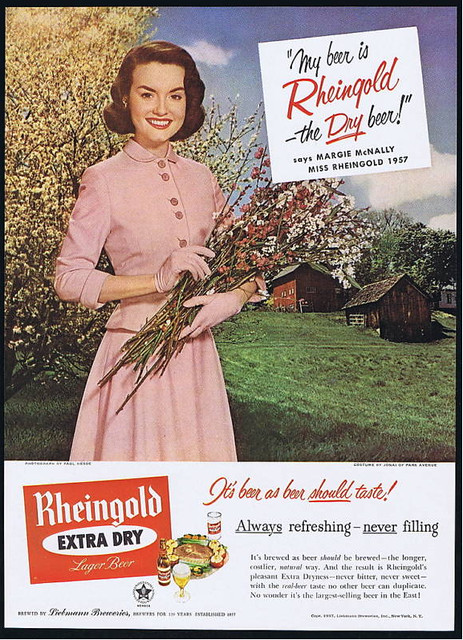
Tuesday’s ad is another for Rheingold Beer, again from 1957, and features Miss Rheingold from that year, Margie McNally. The ad features her in pink, with a farm in the background, holding a sprig of wildflowers. That’s some nice-looking grass, but those buildings look a bit dilapidated. How many farms do you know of with manicured lawns?

Rheingold-1957-3

Filed Under: Art & Beer, Beers Tagged With: Advertising, History

Worldwide Alcohol Consumption Cartogram

October 15, 2013 By Jay Brooks

world-map
Today’s infographic is a type of map known as a cartogram, which takes a standard map and distorts the land masses based on a particular data point. It was created by World Mapper, a website that’s done close to 700 cartograms showing a variety of data in this way.

Here’s the standard map, showing each country based on their land mass. Actually, a Mercator projection is the one most of us are familiar with, but that map distorts the size of land which shows the round Earth as a flat map that’s drawn as if you took the globe apart and laid it down, making the land closest to the North and South poles look much bigger than they are in reality. The standard map for World Mapper is known as a Gall–Peters projection , which shows the land masses much closer to their actual size.
cartogram-1-land
Click here to see the map full size.

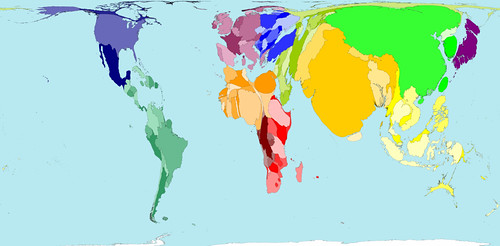
What a cartogram does is take their standard map and distort the land masses of nations on purpose, to show the differences in the data more clearly by how much it’s been distorted from the original. For example, here’s the same map, but distorted to show the world by population.
cartogram-2-population
Click here to see the map full size.

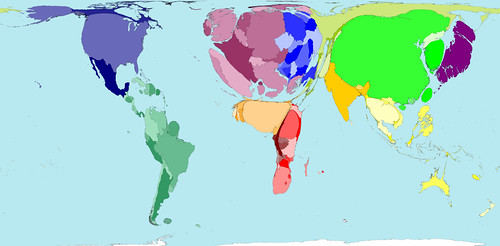
So here’s the same map again, but this time distorted to show absolute alcohol consumption, based on data from 2001.
cartogram-3-alcohol
Click here to see the map full size.

Here’s some more information on the alcohol consumption map.

The average Western European drinks over a third more alcohol than the average person living in any other region. The lowest alcohol consumption per person is found in Southern Asia, where on average people drink less than a third of the average consumption elsewhere.

In some territories there is practically no alcohol consumption. Many Middle Eastern and Northern African territories are not visible on the map for that reason. In contrast, China, the United States and the Russian Federation have the largest areas on the map, because the most alcohol is consumed there by large populations.

If you’re curious about the debate surrounding different map projections, take a peak at the Gall-Peters – Mercator projection Debate, a closer look at the Gall-Peters projection at the Power of Cartography, and a good overview of different projections at One world, many faces: A brief look at map projections.

Filed Under: Beers, Just For Fun, Related Pleasures Tagged With: Infographics, International, Statistics

New Survey Shows Big Beer Brands Aren’t Reaching Women

October 15, 2013 By Jay Brooks

women
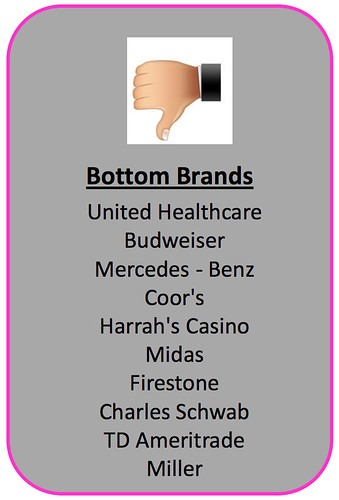
A new survey of women by Insights in Marketing found that while women control 80% of all purchasing decisions, the large beer companies are not doing a good job of reaching them. According to the results, only 6% of women thought ABI is doing a good job reaching them, while 5% liked Coors’ approach and a mere 2% had anything positive to say about Miller’s methods. The survey included 1300 women, and 200 men, across a wide demographic, and asked how they thought top national brands, in a variety of consumer goods, were doing in “effectively marketing their products and services.”

For all products, they found that 49%, or just less than half, thought they did a good job, suggesting that marketing and advertising in general, across the board, could be doing a better job reaching women, but that beer companies are doing a particularly bad job. All three brands surveyed — Bud, Miller & Coors — ranked in the bottom half for all women. Anybody surprised by that result?

bottom-brands-2012

The survey also found some slight differences between generations. For example, Baby Boomers seem to like Miller and Coor’s just fine, but not Budweiser. Gen X thinks Coor’s and Bud are doing great, but Miller, not so much. Millenials didn’t respond well to any of the beer brands, with Miller coming out on top, at just below the middle for all brands (beer and non-beer).
Young blond woman with glass of beer

Filed Under: Beers, News, Related Pleasures Tagged With: Statistics, Women

Beer In Ads #997: Boat Painting

October 14, 2013 By Jay Brooks


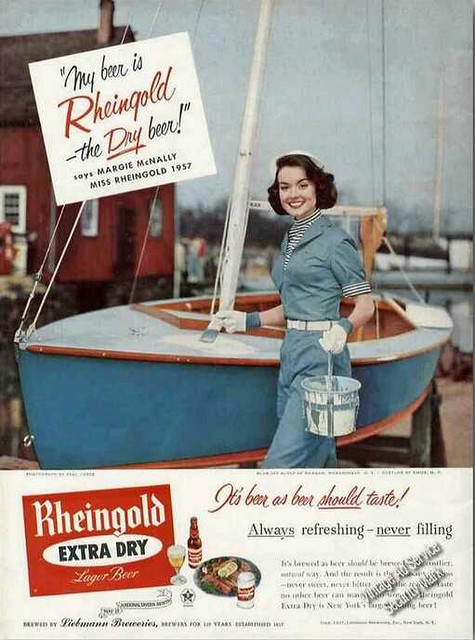
Monday’s ad is for Rheingold Beer, from 1957, and features Miss Rheingold from that year, Margie McNally. The ad features her painting a small boat light blue, and the color seems to nearly match that of her dress. Her outfit also has white accessories, just like the boat. I think somebody was getting a bit too cute with the design. As my wife might say, it’s all too “matchy matchy.”

Rheingold-1957-2

Filed Under: Art & Beer, Beers Tagged With: Advertising, History

The Legal Drinking Age Around The World

October 14, 2013 By Jay Brooks

world-map-3
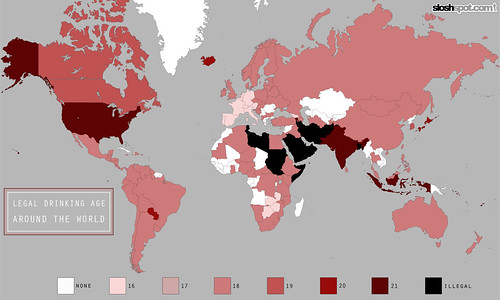
Today’s infographic is a world map, showing the Legal Drinking Age Around the World. The darker the color, the higher the age at which you’re legally allowed to drink alcohol. Notice that America is one of the darkest regions on the map. Sheesh, sometimes we’re backwards.

drinking-age-around-the-world
Click here to see the map full size.

Filed Under: Just For Fun, Politics & Law, Related Pleasures Tagged With: Infographics, Statistics

Anchor Brewing Announces Zymaster #5: Harvest One American Pale Ale

October 14, 2013 By Jay Brooks

anchor-new
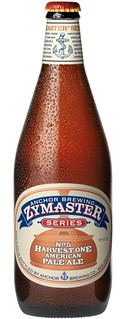
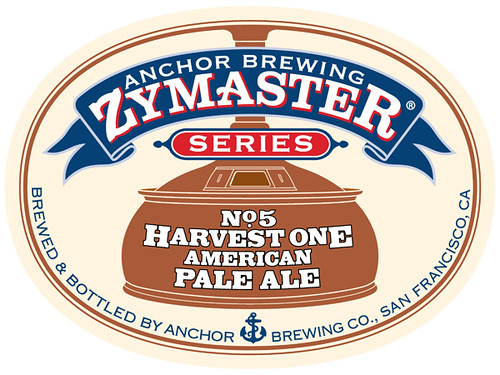
Anchor Brewing announced today the 5th beer in their Zymaster series. This latest offering — Harvest One American Pale Ale — is a beer made with a new, experimental hop variety. I had a chance to try it during GABF last week, and the nose has amazing peach aromas, with soft, fruit flavors.
anchor-zymaster-5
Here’s the full story, from the press release:

It’s hard to imagine that the Cascade hop, today one of craft brewing’s most popular hop varieties, was ever new. Yet this distinctively aromatic hop, developed in Oregon by the USDA’s breeding program, was first released in the early 1970s. In 1975, Anchor Brewing featured Cascade hops with the debut of Liberty Ale®, America’s first craft-brewed, dry-hopped ale. Anchor Brewing has been using it in Liberty Ale® ever since.

Over the years, Anchor Brewing experimented with many different hops—both old and new—from around the world. For Zymaster Series No. 5: Harvest One American Pale Ale, Anchor Brewing decided to feature an experimental new hop variety. This yet unnamed, pre-commercial, aroma hop provides a uniquely Anchor twist to Zymaster 5.

Zymaster Series No. 5 (7.2% ABV) is made with a special blend of pale, caramel, and Munich malts, which contribute a distinctively complex maltiness and deep golden color. Nugget hops give it a tangy bitterness. But the hallmark of Zymaster 5: Harvest One American Pale Ale is the intriguingly novel aroma of an experimental new hop, which was used liberally in both the brewhouse and the cellar. A late addition to the boil plus dry hopping provides Harvest One with an incredibly lively hop aroma reminiscent of tree-ripened peaches, with just a hint of fresh melon. The result is a uniquely exciting new beer unlike anything brewed or tasted before.

“We have a fantastic and long-lasting relationship with the hop growers we work with,” said Mark Carpenter, Brewmaster at Anchor Brewing. “When we had the opportunity to sample and test a small set of experimental hops that were being grown, we were excited at the opportunity to work with something new and different. Out of about a dozen or so samples, there was one that really stood out to us. Right away, we knew this was a new hop variety we wanted to brew on a large scale. We were after something unique and aromatic, and this hop was one we hadn’t seen or smelled before and decided it would fit well in our Zymaster Series. Similar to how Anchor introduced the world to the Cascade hop in 1975 with Liberty Ale, we are proud and excited to share our take on this new, experimental hop in this beer.”

It’s being released today in California, though not all markets within the state, on draft and in 22 oz. bottles, and will be rolled out nationally in the next few months.

anchor-zymaster-5-pale-ale

Filed Under: Beers, Breweries, News, Reviews Tagged With: Anchor Brewery, Announcements, Bay Area, California, new release, San Francisco

Brewery Caves

October 14, 2013 By Jay Brooks

cave
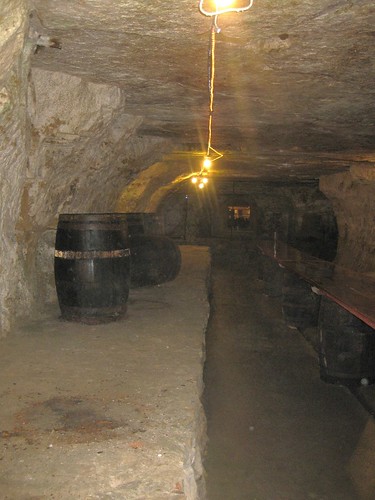
The original beer cellars, of course, were caves, where brewers could count on the temperatures staying low enough. I got an e-mail the other day from Dagmar Suarez (not his real name) who writes Detritus of Empire about his series of blog posts on abandoned brewery caves. As a former medical doctor in Wisconsin, most of the more than two dozen posts on old beer caves are located in the Great Lakes area, but it’s a fascinating look back to a time when brewers had to be resourceful to meet their cooling needs.

brewery-cave-minn
A brewery cave in Stillwater, Minnesota from the 1870s.

Filed Under: Breweries, Just For Fun, Related Pleasures Tagged With: History

The Original Midget Brewery

October 14, 2013 By Jay Brooks

nanobrewery
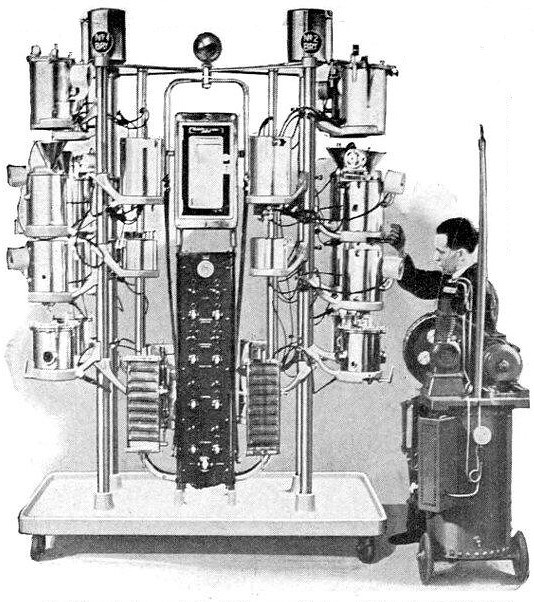
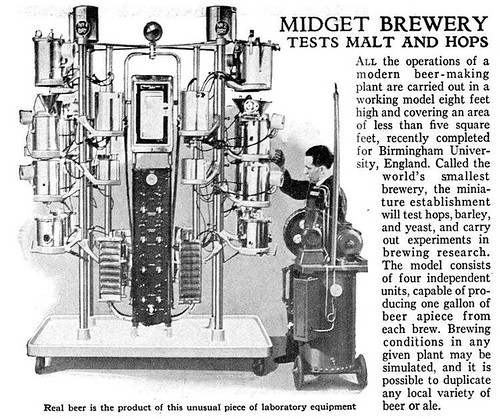
Last week, Boak & Bailey tweeted about what must have been one of the earliest commercial nanobrewery systems. I tried to find out more about the Midget Brewery, though there’s scant information available on the interwebs. Here’s what I found. In 1936, page 30 of the February issue of Popular Science featured a little piece about the Midget Brewery, developed for R&D in Great Britain.

midget-brewery-image

Here’s the full text that accompanied the photograph:

All the operations of a modern beer-making plant are carried out in a working model eight feet high and covering an area of less than five square feet, recently completed for Birmingham University, England. Called the world’s smallest brewery, the miniature establishment will test hops, barley, and yeast, and carry out experiments in brewing research. The model consists of four independent units, capable of producing one gallon of beer apiece from each brew. Brewing conditions in any given plant may be simulated, and it is possible to duplicate any local variety of beer or ale.

midget-brewery

Filed Under: Breweries, Just For Fun Tagged With: Brewing Equipment, History, Science of Brewing, technology, UK

« Previous Page
Next Page »

Find Something

Northern California Breweries

Please consider purchasing my latest book, California Breweries North, available from Amazon, or ask for it at your local bookstore.

Recent Comments

  • Bob Paolino on Beer Birthday: Grant Johnston
  • Gambrinus on Historic Beer Birthday: A.J. Houghton
  • Ernie Dewing on Historic Beer Birthday: Charles William Bergner 
  • Steve 'Pudgy' De Rose on Historic Beer Birthday: Jacob Schmidt
  • Jay Brooks on Beer Birthday: Bill Owens

Recent Posts

  • Beer In Ads #5244: Southern Brewing Bock Beer May 7, 2026
  • Historic Beer Birthday: Anton Dreher May 7, 2026
  • Beer In Ads #5243: Union Brewery Bock Beer! May 6, 2026
  • Historic Beer Birthday: Bernard “Toots” Shor May 6, 2026
  • Historic Beer Birthday: Jacob F. Kuhn May 6, 2026

BBB Archives

Feedback

Head Quarter
This site is hosted and maintained by H25Q.dev. Any questions or comments for the webmaster can be directed here.