Brookston Beer Bulletin

Jay R. Brooks on Beer

  • Home
  • About
  • Editorial
  • Birthdays
  • Art & Beer

Socialize

  • Dribbble
  • Email
  • Facebook
  • Flickr
  • GitHub
  • Instagram
  • LinkedIn
  • Pinterest
  • RSS
  • Twitter
  • YouTube

Powered by Genesis

Historic Beer Birthday: Lüder Rutenberg

February 8, 2026 By Jay Brooks

becks-white
Today is the birthday of Lüder Rutenberg (February 8, 1816-June 14, 1890) who was born in Bremen, Germany. He was an architect, a builder and one of the co-founders of Beck’s Brewery, formally known as Brauerei Beck & Co. “The brewery was formed under the name Kaiserbrauerei Beck & May o.H.G. in 1873 by Lüder Rutenberg, Heinrich Beck and Thomas May. In 1875, Thomas May left the brewery which then became known as Kaiserbrauerei Beck & Co.”

Here’s a short biography of Lüder Rutenberg, translated from his German Wikipedia page:

Rutenberg — son of the builder Diedrich Christian Rutenberg — learned after visiting the Remberti and the grammar school with his father. He studied from 1836 to 1840 in Berlin physics, chemistry and technology. From 1841 he was an employee at his father.

In 1847 he became an independent architect. Its operation was one of the largest construction companies in Bremen. Lüder Rutenberg was especially during the expansion of the Bremen suburbs as a builder for the typical residential streets with one- or two-story terraced houses successfully. Men of his profession erected at that time for its own account and sold whole streets of houses or flats profitably. 1849 by the Bremen Senate a request Rod Berg refused to be allowed to build in Bremen similarly large tenement houses such as in Hamburg or Berlin. Had been such application is approved, this greatly affect the appearance of many neighborhoods Bremen would have had.

1853 rose Rutenberg in the brewery business and acquired with his sister and his brother-in as a partner, the Runge brewery, which he in St. Pauli Brewery renamed and goal for until 1870 the largest brewery in Bremen. Later he bought along with the master brewer Heinrich Beck several smaller breweries and participated in 1873 in the construction of a brewery in the New Town, the then Kaiser brewery was later large brewery Beck & Co.

kaiser-brauerei-becks

Filed Under: Birthdays, Just For Fun Tagged With: Germany, History

Historic Beer Birthday: William Wenzel

January 31, 2026 By Jay Brooks

science

Today is the birthday of William Frederick Wenzel (January 31, 1854-January 15, 1927). He was born in Germany, but moved to Wisconsin as a boy with his family. He was trained in a number of fields, but is best known in brewing circles for the Wenzel Filtermass, which became the standard for clarifying filters for breweries in the 19th century. Unfortunately, I could not find any photographs of Wenzel. This biography of Weznel is from a “History of Outagamie County, Wisconsin.”

Wenzel-bio
wenzel-filtermass

And this obituary was published in the Post-Crescent of Appleton, Wisconsin, on April 25, 2917.

Wenzel-obituary

Filed Under: Birthdays, Just For Fun, Related Pleasures Tagged With: Germany, Science of Brewing, Wisconsin

Historic Beer Birthday: Christian Hess

January 30, 2026 By Jay Brooks

weisbrod-hess
Today is the birthday of Christian Hess (January 30, 1848-July 27, 1912). Hess was born in Germany, and that’s about all I could find out about the man who co-founded, along with George Weisbrod, the George Weisbrod & Christian Hess Brewery in Philadelphia, Pennsylvania, usually shortened to just the Weisbrod & Hess Brewery, and also known as the Oriental Brewery.

christian-hess-cartoon

Both Weisbrod and Hess were German immigrants, and originally their intention was simply to make enough beer to supply their Philadelphia saloon on Germantown Avenue. Some sources say they began as early as 1880, but most put the founding at 1882. The brewery was going strong until closed by prohibition. They managed to reopen in 1933, but closed for good in 1938.
weisbrod-hess-1905
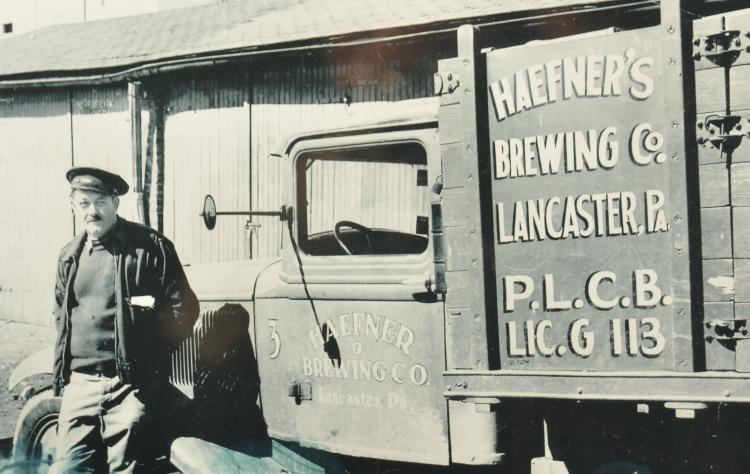
A brewery poster from 1905.
In 1994, Yards Brewing renovated the old Weisbrod & Hess Brewery, but after the partners split, it became the Philadelphia Brewing Co., while Yards under the direction of Tom Kehoe moved to another location.
phillybeerwk08-47
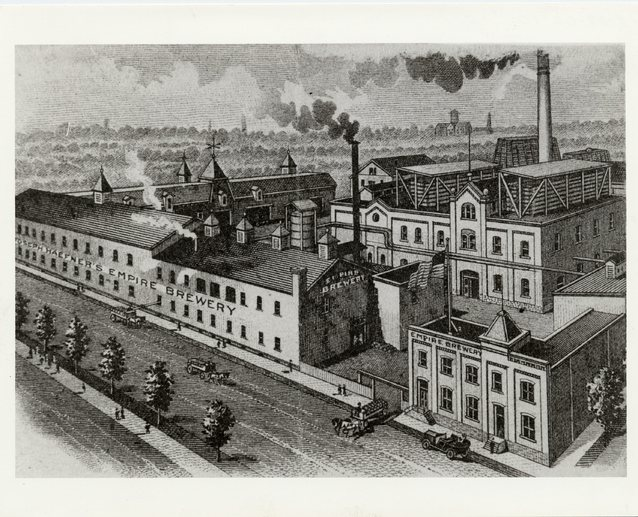
In the Philadelphia Brewing Co. tasting room upstairs, an old photo of the employees of the original brewery on the premises, Weisbrod & Hess Oriental Brewing Company.
Both Philadelphia Weekly and Hidden City Philadelphia have stories about the brewery and efforts to re-open it.

weisbrod-hess-1892
The brewery two years closing, in 1940.

The brewery was designed by famed local architect Adam C. Wagner, and this is an illustration of his design for the brewery from 1892.

W&H-1892

OrientalBreweryPhila1899
An ad from 1899.

Factory-Scene-1912-calendar-Signs-Pre-Pro-Weisbrod-Hess-Brewing-Co
And a calendar from 1912.

Filed Under: Birthdays, Just For Fun Tagged With: Germany, History, Pennsylvania, Philadelphia

Historic Beer Birthday: Martin Stelzer

January 30, 2026 By Jay Brooks

pilsner-urquell
Today is the birthday of Martin Stelzer (January 30, 1815-August 3, 1894). Stelzer was an architect, probably from Germany, who built a number of homes in Plzeň, Czech Republic, such as “the old (small) Synagogue in Pilsen, the Little Theatre (formerly on Goethe Street) and a stone Saxon bridge in the suburbs of Roudná which has one rare feature, a sweep middle.” He was also hired by the local Burghers (or citizens) to build the town brewery, which today is known as the Pilsner Urquell brewery. He is also believed to have hired their first brewmaster, Josef Groll.

Martin_Stelzer_(1815-1894)

This biography is from the Pilsner Urquell website:

When it comes to the founding of Pilsner Urquell, Martin Stelzer remains one of the most important figures, though he is also one of the most misunderstood.

Often mischaracterized as a brewer, Martin Stelzer was the most famous builder in nineteenth-century Plzen — something like the unofficial town architect. Born in 1815, Stelzer had constructed more than two hundred buildings in Plzen by the time of his death in 1894, including such important sites as Old Synagogue of 1859 and the Small Theater of 1869.

When he was first hired to create the new town brewery in 1839, however, Stelzer was just 24 years old — and, most importantly, he had never built a brewery of any kind. (Later, he would be seen as something of an expert on the subject.) One special demand: the new brewery was supposed to be a cold-fermentation or lager brewery, something that did not exist in Plzen at the time. To familiarize himself with the requirements of the project, Stelzer traveled to Bavaria in December of 1839, visiting several breweries there.

A common rumor holds that Stelzer befriended Josef Groll, the first brewmaster of Pilsner Urquell, during this trip, or even that Stelzer brought Groll back to Plzen with him. However, no confirmation of this appears to have been published during Stelzer’s lifetime. It certainly seems possible that the two were friends, however, given the closeness of their age: the original brewmaster was less than a year and a half older than the architect.

In addition to directing the expansion of the Burghers’ Brewery in 1849 and 1852, as well as the construction of a new fermentation room in 1856, Stelzer designed and built the brewery’s enlarged cooperage in 1870. Stelzer’s other projects included the next-door Gambrinus brewery in 1869 and the Dobřany town brewery in 1873. He remains part of everyday lore in Plzen today, having given his first name to the street Martinská in central Plzen as early as 1857.

Pilsner-Urquell

Roger Protz wrote the entry for Pilsner Urquell in the Oxford Companion to Beer, and he mentions Stelzer in these two paragraphs.

Local businessmen and tavern owners in Pilsen committed to raise funds and build a new brewery, to be called Burghers’ (Citizens’) Brewery. A leading architect, Martin Stelzer, was hired to design the brewery and he toured Europe and Britain to study modern breweries that used the new technologies of the Industrial Revolution—pure yeast strains, steam power, and artificial refrigeration—to make beer.

He returned to Pilsen to design a brewery on a site in the Bubenc district with a plentiful supply of soft water and sandstone foundations where deep cellars could be dug to store or “lager” beer. He also brought with him from Bavaria a brewer called Josef Groll who had the skills to make the new cold-fermented style of beer. See groll, josef. The brewery was built rapidly and its first batch of beer was unveiled at the Martinmas Fair on November 11, 1842. The beer astonished and delighted the people of Pilsen. It was a golden beer, the first truly pale beer ever seen in central Europe, for the lager beers brewed in Bavaria were a deep russet/brown in color as a result of barley malt being kilned or gently roasted over wood fires. A legend in Pilsen says the wrong type of malt was delivered to the brewery by mistake but this seems fanciful. It’s more likely that Martin Stelzer brought back from England a malt kiln indirectly fired by coke rather than directly fired by wood. This type of kiln that was used to make pale malt, the basis of the new style of beer brewed in England called pale ale. A model of a kiln in the Pilsen museum of brewing supports this theory.

urquell-brewery

And here’s an account from Food Reference:

At the start of the nineteenth century, the quality of beer everywhere was often poor and standards varied wildly. This prompted some of the Plzen’s conscientious and passionate brewers to band together to find a way of producing a beer of a superior and more consistent quality.

Their first decision was one of their finest, to appoint a young architect called Martin Stelzer. Traveling far and wide to study the best of brewery design he returned to Plzen with plans for the most modern brewery of the age.

He chose a site on the banks of the city‘s Radbuza River, which offered a number of natural advantages – sandstone rock for the easy carving of large tunnels for cold storage, and aquifers supplying the soft water which would one day help make Plzen’s finest beer so distinctive.

But, most importantly, Martin Stelzer also discovered a brewmaster who would change the way that beer was brewed forever: a young Bavarian called Josef Groll.

Beer-Pilsner-Urquell-Site-Brewery
The original gate, which still stands at the brewery.

Pilsen-Brewery-Today-Pilsner-Urquell-Beer
The brewery today.

Filed Under: Birthdays, Breweries, Just For Fun, Related Pleasures Tagged With: Czech Republic, Germany, History

Historic Beer Birthday: Charles Hebrank

January 27, 2026 By Jay Brooks

Today is the birthday of Charles ‘Carl’ Hebrank (January 27, 1809 or 1811-March 18, 1887). He was born in Hohen Neuendorf, Germany, where he trained as a brewery. After marrying Catherine and having three children, around 1853 he moved his family to the United States, settling in Parkersburg, West Virginia.

He soon after partnered with Marcus Rapp (who was also a recent immigrant from Germany) to open a brewery in 1850 they called the Rapp & Hebrank Lager Beer Brewery, but in 1874 shortened to the Hebrank & Rapp. His two eldest sons, Lewis (or Louis, accounts differ) and John, were also trained in brewing and later opoened their own breweries in Kansas and West Virginia. Shortly after Hebrank died in 1887, the brewery was reorganized as the Parkersburg Brewing Co. but closed for good in 1914, thanks to West Virginia passing Anti-Saloon laws that took effect that year, even before the nationwide prohibition.

The Hebrank and Rapp Brewery around 1880.

Filed Under: Birthdays, Breweries, Just For Fun Tagged With: Germany, History, West Virginia

Historic Beer Birthday: Carl Dinkelacker

January 26, 2026 By Jay Brooks

dinkelacker

Today is the birthday of Carl Dinkelacker (January 26, 1863-September 5, 1934). He was born in Böblingen, Landkreis Böblingen, Baden-Württemberg, Germany. In 1888, he founded the Dinkelacker Brewery in Stuttgart, Germany, and by the end of the 19th century, it was the largest brewery in town. In 1996, it merged with Schwaben Bräu, which is also located in Stuttgart to create Dinkelacker-Schwaben Bräu, but in 2004 was acquired by InBev. More recently, it again became an independent family-owned company in 2007, called Dinkelacker-Schwaben Bräu GmbH & Co. KG. Unfortunately, there’s not much biographical information I could find about Carl.

carl-dinkelacker

Here’s a short history of the brewery from Hobby db:

The brewery Dinkelacker is a Swabian brewery. It was founded in 1888 by Carl Dinkelacker in Tübinger Strasse in Stuttgart, where even today a brewery of the company is located. The founding was a challenge as there were already many established breweries in the area at that time. However, the brewery withstood the competitive pressure, so that it was one of the largest breweries in Stuttgart at the end of the 19th century. The annual production in 2013 was approximately 600,000 hectoliters.

In 1994, the actually competing breweries Dinkelacker and Schwaben Bräu opened a joint logistics center under the name Dinkelacker-Schwaben Bräu Logistik (DSL) . In 1996, Dinkelacker and Schwaben Bräu merged to form Dinkelacker-Schwaben Bräu AG in order to be able to survive in the increasingly difficult market. In 2003 InBevexpanded to the German market. The company took over the beer division of the Spaten-Franziskaner-BräuGmbH, which was also the majority shareholder of Dinkelacker-Schwaben Bräu AG. Thus, Dinkelacker operated from October 1, 2004 to December 31, 2006 under the umbrella of InBev. Since 2 January 2007 Dinkelacker together with Schwaben Bräu under the name Dinkelacker-Schwaben Bräu GmbH & Co. KG is again an independent family-owned company.

dinkelacker-wagon

The brand has been available in the U.S. off and on over the years, including being served at the New York World’s Fair in 1964. While I attended that World’s Fair, I did not sample the being, being only five years old at the time.

dinkelacker-ny-fair-1964

Brewery wagon in the early 20th century.

Dinkelacker-marzen-wagon

The brewery today.

Brauerei_dinkelacker
Dinkelacker-label

Filed Under: Birthdays, Breweries, Just For Fun Tagged With: Germany, History

Historic Beer Birthday: Christian Heuser

January 25, 2026 By Jay Brooks

Today is the birthday of Christian Heuser (January 24, 1808-June 13, 1866). He was born in Rheinland, Prussia (which today is part of Germany). He came to the U.S. in the late 1840s, settling in St. Charles, Missouri. In 1852, he founded the Spring Brewery. When he passed away in 1866, the brewery passed to his son-in-law, Theodore Runge, who ran it for over two decades before selling it to Jacob Moerschel. The brewery continued on under a variety of owners and names — such as the Fischbach Brewery, the Skooner Brewing, the Van Dyke Brewery, and Cardinal Brewing — before closing for good in 1970.

There’s very little information about Heuser. All I could find was that he was born in Evangelisch, Ruenderoth, in Rheinland, and then nothing until 1842. In that year, he had a daughter born, and his wife appears to be “A. Margaret,” which isn’t much to go on.

Filed Under: Birthdays, Breweries, Just For Fun Tagged With: Germany, History, Missouri

Historic Beer Birthday: Jacob Knecht

January 25, 2026 By Jay Brooks

Today is the birthday of Jacob Knecht (January 25, 1821-May 9, 1910). He was born in Lampertheim, Kreis Bergstraße, Hessen, Germany, and at some point emigrated to the United States in the 1850s, settling in Chillicothe, Ohio, which is located in the south-central part of the state. He bought into the P. J. Loepel in 1877, which Loepel founded three years earlier, in 1874. From 1877-1883 it was known as Knecht & Muehling, but after that became associated only with Jacob Knecht and/or his sons. After changing hands a few times, it closed in 1953, although more recently in 2021 a craft brewery opened using the name Old Capitol Brewing.

Here’s his obituary from the Chillicothe Gazette in May 1910:

Filed Under: Birthdays, Breweries, Just For Fun Tagged With: Germany, Ohio

Historic Beer Birthday: Philip Bissinger

January 24, 2026 By Jay Brooks

reading-brewery
Today is the birthday of Philip Bissinger (January 24, 1842-November 11, 1926), though confusingly many sources list the spelling of his name as “Bessinger,” which has made researching him unusually difficult. He was born in Duerkheim, Bavaria, and came to the U.S. at age thirteen with his parents, who settled in Baltimore, Maryland. When the Civil War began, he enlisted in the Army, and was a captain when the war ended. “Captain” became his nickname, and that’s what people apparently called him for the rest of his life. He settled in Reading, Pennsylvania (which is where I grew up) and ran a cafe. He also founded the Reading Brewing Co. in 1886.

Here’s a biography of Bissinger from Find-a-Grave:

Undoubtedly one of the most influential, respected and powerful men in Reading during that period. He arrived from Germany with his parents at the age of 13. His father was George Bissinger who settled in Baltimore. Phillip arrived in Berks county in 1845. When the Civil War began he became a sergeant major in the 79th Pa. Vol. Infantry. He was later promoted to 1st Lieutenant and finally became captain of company F of the same infantry. He resigned his commission Sep 12 1864. After the war he returned to Reading and later opened the Café Bissinger which became a very prominent and prestigious establishment not only locally but throughout the region as a member of the Shriners he was instrumental in the organization and construction of the Rajah Temple in 1892. He was a talented musician, a composer and director of music. He organized the Philharmonic Society where he directed concerts.

There was horrible tragedy in his life however, apparently upset, suspecting her husband of infidelity,
Louisa Bissinger, nee Eban, age 39, pregnant with child, walked calmly down the Union Canal towpath one day, filling a basket with rocks as her three dutiful children followed along. They strolled casually for about two miles. As she passed the canal office she commented to the office manager “It is warm.” He replied “yes indeed.” She then said “We have to carry a basket and take the children with us.” The mother and children were very nicely dressed. It was thought she had the children help in filling the basket with rocks. As she neared the canal lock she tied the basket to her waist with a rope she brought along, intended to keep her and the children submerged. She then gathered the children in her arms and threw herself and the children into the canal. It was premeditated and calculated. A witness saw the event and viewed Phillip Jr. come to the surface struggling but was unable to save him as he could not swim. He ran for help. The bodies were recovered later that day. The children were Lillie age 9, Mollie age 6, and Phillip Jr. age 3, and the mother’s unborn fetus. They were often seen at their father’s dining establishment and were adored by all. The mother too was well liked and respected and no one suspected she had any emotional problems nor is there any documented reason for her actions. On her person when she was recovered was a note simply giving Capt. Bissingers name and address. There were no other messages from her.

Capt. Bissinger remarried Ida Sebald Rosenthal but had no other children. He was still tending bar in 1880.

The Brewers’ Journal and Barley, Malt and Hop Trades’ Reporter mentioned in their July 1917 issue that Bissinger retired, due to “owing to illness and advanced age,” and Ferdinand Winter replaced him as president of the brewery.

Here’s a fuller biography from the Historical and Biographical Annals of Berks County Pennsylvania, by Morton Montgomery, published in 1909:

Philip Bissinger, president and manager of the Reading Brewing Company and founder of the Bissinger Caf, was born Jan. 24, 1842, in Duerkheim, Germany, and received his preliminary education at that place, where he lived until he was thirteen years of age. He then accompanied his parents in their emigration to America, landing at the port of New York. He attended private schools at Lancaster, Pa., for several years, and then secured a position as clerk which he filled until he enlisted for service in the Civil war, on Sept. 19, 1861, for the term of three years. He became sergeant-major of the 79th Regiment, P. V. I.; was promoted to first lieutenant of Company F in January, 1863, and to captain in December, 1863, having command of the company until Sept. 12, 1864, when he resigned.

Shortly after returning home Captain Bissinger removed to Reading, and on Jan. 1, 1866, established a saloon and restaurant at No. 611 Penn street, which he soon developed into the most popular resort at Reading. His success was extraordinary from the start, and in 1882 he purchased the property, making extensive improvements to accommodate the increasing demands of his patronage; and in 1890 he erected a large four-story brick building for offices and halls and storage purposes on the rear of the lot at Court street. By this time the “Bissinger Caf” had a reputation for superiority and first-class catering which extended throughout the State and nation. Numerous banquets came to be held there in celebration of events in the history of societies of all kinds, more particularly of a fraternal, political and musical nature, and in honor of popular and prominent individuals; and visiting strangers and travelers from all parts of the world found satisfactory entertainment. After having operated the caf for thirty years, until 1895, he sold the business to a faithful employe and manger for many years, Wellington B. Krick, and then retired to enable him and his wife to take a long-anticipated trip to Europe, and for nearly a year they visited the prominent centers there.

In 1886 Captain Bissinger encouraged the establishment of another brewery at Reading, and with the aid of local capitalists succeeded in organizing the Reading Brewing Company. He became the first manger of the plant and filled the position for three years, having in this time secured a large patronage from the community and made the new enterprise a success. In 1897, upon his return from Europe, he resumed his active interest in this company as a director, and in 1898 became its president and general manager; and he has served the company in these responsible positions until the present time, having in the past ten years developed its annual production from 17,000 barrels to 75,000, remodeled the plant entirely, and made it one of the finest brewing establishments in the country in point of equipment and sanitation.

For over forty years Captain Bissinger was prominently identified with the Masonic fraternity. He was chiefly instrumental in establishing Rajah Temple at Reading in 1892, and the plans for its unique and attractive hall, erected in 1904, were designed by him. He has also been prominently connected with the Grand Army of the Republic (Keim Post, No. 76), Loyal Legion, Veteran Legion, and Army of the Cumberland. In 1891 the city councils selected him as the park commissioner for the northeast division of the city and he officiated in this position until 1897, when he removed his residence to the southeast division, where he had erected a fine home on Mineral Spring road.

But it was in the musical culture of Reading that Captain Bissinger was especially influential and successful for a period of twenty years, from 1864-1883. Immediately after locating at Reading, he became a member of the Reading Maennerchor, and the society, appreciating his great talent and enthusiasm, selected him to be its assistant musical director. He filled this position with remarkable success for some years,and then the society united with the Harmonic Gesangverein, another and older musical organization at Reading. In the reorganization of the two societies, the name Harmononie Maennerchor was adopted and Captain Bissinger was selected as the musical director of the new society. His recognized ability as a leader, together with his popularity and sociability, soon won increasing support and encouragement, and the society’s concerts at Reading and other cities were highly appreciated and largely patronized. He continued to serve as the director until 1879, when he declined a re-election. During this time he was also interested in the Germania Orchestra and aided materially in its successful reorganization. In 1876, by special invitation, the Harmonie Maennerchor and the Germania Orchestra attended the United States Centennial at Philadelphia and rendered a program of classical selections in a superb manner, for which they were given high praise by leading musicians of this country and also foreign countries. In October, 1878, the society held a bazaar for a week in its commodious hall and evidenced the superior ability of its members and the efficiency and popularity of its members and the efficiency and popularity of its director. The numerous musical numbers were specially prepared by Captain Bissinger for the occasion, which involved extraordinary labors, patience and perseverance. In 1879, he organized the Philharmonic Society and directed its admirable concerts until 1883, when he was obliged to devote his entire attention to his own business affairs.

In 1880, Captain Bissinger married Ida Sebald Rosenthal (daughter of William Rosenthal, proprietor an publisher of German newspapers at Reading for forty years), who was graduated from the Reading Girls High School in 1865, and in 1871 taught the French and German languages there.

George Bissinger, his father, was a native of Germany, and after his emigration located at Baltimore, Md., about 1855, and there followed the teaching of music until his decease, in 1866.

Image from the collection of Dave Doxie, from his website The Breweriana Collector.

Apparently the brewery name, at least, had been incorporated a few decades earlier, in 1868, by a group of businessmen, including Frederick Lauer, but it never came to fruition, and Bissinger seems to have snapped up the name twenty years later. Here’s the brewery entry from Wikipedia:

Reading produced a Pennsylvania Dutch Lager at a volume of 1,200 barrels a year. The brewery raised its production to approximately 50,000 barrels a year by 1891.

Public domain image of the Reading Brewing Company, Reading, Pennsylvania; cropped from a 1910 company bill of sale. [Wikipedia]

Reading suffered from difficulties after Prohibition began in 1920. From 1928 to 1933, the brewery was closed down. The facility itself was almost dismantled, but U.S. Marshals had trouble breaking the padlock on the front door and eventually left the plant intact. After considerable litigation, Reading brewery reopened in 1934. From 1934 to 1951 Reading ran a ‘retro’ advertising campaign which played on the nostalgia for simpler times.

In 1958, due to flagging sales, Reading re-branded as “The Friendly Beer for Modern People.” The change proved successful in reversing the slump and Reading made strong sales that lasted into the 1970s.

In 1976, Reading ceased operations due to increasing pressure from larger macro brewers. The label was purchased shortly afterwards by C. Schmidt & Sons.

The Reading Brewery in 1897, from Go Reading Berks.

In 2006, the Label was revived by Legacy Brewing, which produced original Reading recipes. In 2009, the Reading label and its recipes were purchased by Ruckus Brewing, and they set up a new website for Reading Premium, though it’s hard to tell if it’s still being sold, since the website hasn’t been updated in a few years. But they did produce a short video of the history of Reading Brewing Co.

One final detail about his life that’s fairly odd. Well, it’s more about his wife and children, and how they died, a tale which you can find frequently on websites about ghost stories. Here’s one such re-telling of the stories, which they call “The Haunting of Lock 49 East.”

Late in the afternoon of Tuesday, August 17, 1875, following a trolley ride to near the Harrisburg (Penn Street) Bridge, Louisa Bissinger of Reading, Berks County, Pennsylvania, walked with her three children, Lillie (age 9), Mollie (age 6), and Philip (age 3), across the bridge and then two miles down the Union Canal towpath to lock number 49 East (having told them they were going on a picnic). At the lock, she loaded the basket with rocks, some of which she had got the children to gather along the way. Then she tied the basket to her waist, held her unsuspecting children tightly to her, and plunged with them into the murky waters of the canal. Though Louisa, weighed down by the basket of stones, sank immediately, the children struggled to stay afloat.

A witness to the event, who could not swim, ran for a boat at nearby Gring’s Mill, across, on the west side of, Tulpehocken Creek, but ultimately he reached them too late. Louisa and her children were drowned.

Louisa’s commission of this her final desperate act came about as the culmination to her husband’s longtime “undo respect” toward her and his open courtship of another woman whom he eventually brought into their home. A newspaper story, date-lined “Reading, Pa., August 21,” explained that an argument had led to Louisa being ordered from the house and told to take the two girls, but to leave their brother, who was the youngest. Expecting her fourth child, a fact not known to most others until after the tragedy, and determined that she would not let another woman raise her children, Louisa decided to kill herself as well as her offspring.

Captain Philip Bissinger, the husband, long a respected, prominent, and prosperous member of the community nonetheless had to be placed under police protection soon after the drownings and was nearly killed by members of the procession of about a thousand persons who had attended the funeral. “When the bodies were lowered into the graves,” the newspaper reported, “the people hooted Bissinger, and made a rush for him.” Only the quick action by policemen assigned for the occasion saved his life. He was hurriedly placed into a carriage and taken away. A shot had been fired before then and yet another was fired as the vehicle reached the cemetery gate. Later, in an attempt to defend himself from public calumny, Bissinger wrote the newspaper that it was his wife who was to blame for listening to what he said were baseless rumors concerning extramarital affairs. Fred Eben, Captain Bissinger’s former brother-in-law, answered Bissinger’s remarks to the press, calling him “the murderer of my sister and your four children.”

Louisa and the three children she drowned that sad summer day are buried in Reading in the Charles Evans Cemetery, next to the graves of two of her three other children who died before the tragic murder-suicide. Philip Bissinger remarried, and he and his second wife are buried in the row of graves adjacent to the graves of his first wife and children.

It is said that the ghosts of Louisa and her children haunt the towpath near the lock. The legend states that since the time of the tragedy, people walking the towpath have sometimes seen Louisa and her children gathering stones. The spirits vanish as the viewer watches them. Others have reported hearing children’s voices in the vicinity of the lock, as well as cries for help which cease when they approach near the site of the drownings. Charles J. Adams III, an Exeter Township author who has written much about ghosts in Berks County and environs, writing in Ghost Stories of Berks County (1982), related his attempt to try to investigate the presence of ghosts at the lock. Disappointed by the lack of spectral evidence, he and several reporters who had accompanied him were leaving the area when suddenly one reporter clutched his chest and was unable to breathe or speak. Adams conjectured that the event could have been the result of a spirit attempting to enter the reporter’s body.

Today the Union Canal is dry; however, the Berks County Parks Department maintains the towpath as part of its facilities for jogging and cycling. The park would be an interesting and enjoyable place to visit. Who knows, it may also be a place where you can see a ghost!

bissing3
bissing4

And also the “Steuebenville Daily Herald And News” on August 21, 1875, covered the story in “The Bissinger Tragedy – Funeral of the Victims – Attempt to Mob The Husband.”

Reading, Pa., August 21 – There was great excitement here at the funeral of Mrs. Bissinger and her children, drowned Tuesday last. It seems from stories of the people that the woman had lived unhappily with her husband, owing to the introduction by him of another woman in to the house, and that unhappiness resulted in a quarrel Monday, when the husband ordered his wife to leave the house and take the the two girls with her, while he would retain the boy. The next day she went to the canal with the children and after filling a basket with stones, in which operation the children assisted, she bound the basket securely to her body, and taking the children in her arms, leaped in to the canal, and all were drowned. As soon as the bodies were recovered and taken to their former home, the police had to guard the house to save the husband from assault, and at the funeral procession to-day, which included about one thousand persons on foot, surrounded his carriage. When the bodies were lowered into the graves, the people hooted Bissinger, and made a rush for him. In the confusion one shot was fired, when the police hurriedly placed him in a carriage and drove off, on passing the cemetery gates, another, which , it is thought, wounded him, as he was carried into the house. The police are still on guard, and the people, including many women, continue their threats.”

One last bit of trivia. I once visited the Reading Brewery when I was a kid. One of the employees there apparently owed by stepfather some money (probably for car repairs, he owned a garage near downtown Reading) and we went to visit this man, with me in tow. I wish I’d paid more attention, but I was only around fourteen at the time, which would have made it 1973, just three years before they closed. Probably because they’re local to me, I love their breweriana, and especially the new brewery slogan they started using in the late 1950s, to try to boost sales and not make themselves seem so old-fashioned. It’s hands down my favorite brewery slogan by any brewery. “The Friendly Beer For Modern People.”

Reach-for-Reading-postcard

Filed Under: Birthdays, Breweries, Just For Fun Tagged With: Germany, Pennsylvania

Historic Beer Birthday: Max Helmrich

January 24, 2026 By Jay Brooks

Today is the birthday of Max Helmrich (January 24, 1824-March 24, 1879). Helmrich was born in Germany, but later relocated to Stockton, California, where he opened the Chicago Lager Beer Saloon and ran it for around five years until his premature death at 55 in 1879.

There’s not much information I could find, but this ad from the Daily Evening Herald of Stockton, California on September 13, 1875 is announcing the opening of his brewery saloon.

It appears he also owned another saloon in Stockton, Helmrich’s Weber Avenue Saloon.

Filed Under: Beers, Birthdays, Breweries, Just For Fun Tagged With: California, Germany, History

« Previous Page
Next Page »

Find Something

Northern California Breweries

Please consider purchasing my latest book, California Breweries North, available from Amazon, or ask for it at your local bookstore.

Recent Comments

  • Bob Paolino on Beer Birthday: Grant Johnston
  • Gambrinus on Historic Beer Birthday: A.J. Houghton
  • Ernie Dewing on Historic Beer Birthday: Charles William Bergner 
  • Steve 'Pudgy' De Rose on Historic Beer Birthday: Jacob Schmidt
  • Jay Brooks on Beer Birthday: Bill Owens

Recent Posts

  • Beer In Ads #5224: Harvard Bock Beer April 16, 2026
  • Historic Beer Birthday: William H. Biner April 16, 2026
  • Historic Beer Birthday: Alan Eames April 16, 2026
  • Historic Beer Birthday: Mathias Leinenkugel April 16, 2026
  • Historic Beer Birthday: Emil Schandein April 16, 2026

BBB Archives

Feedback

Head Quarter
This site is hosted and maintained by H25Q.dev. Any questions or comments for the webmaster can be directed here.