Brookston Beer Bulletin

Jay R. Brooks on Beer

  • Home
  • About
  • Editorial
  • Birthdays
  • Art & Beer

Socialize

  • Dribbble
  • Email
  • Facebook
  • Flickr
  • GitHub
  • Instagram
  • LinkedIn
  • Pinterest
  • RSS
  • Twitter
  • YouTube

Powered by Genesis

Beer In Ads #5231: A Sign Of Spring

April 26, 2026 By Jay Brooks

Two years ago I decided to concentrate on Bock ads for awhile. Bock, of course, may have originated in Germany, in the town of Einbeck. Because many 19th century American breweries were founded by German immigrants, they offered a bock at certain times of the year, be it Spring, Easter, Lent, Christmas, or what have you. In a sense they were some of the first seasonal beers. “The style was later adopted in Bavaria by Munich brewers in the 17th century. Due to their Bavarian accent, citizens of Munich pronounced ‘Einbeck’ as ‘ein Bock’ (a billy goat), and thus the beer became known as ‘Bock.’ A goat often appears on bottle labels.” And presumably because they were special releases, many breweries went all out promoting them with beautiful artwork on posters and other advertising. With Spring approaching, there are so many great examples that I’m going to post two a day for a few months.

Sunday’s ad is for Old German Bock Beer, which was published on April 26, 1906. This ad was for the Independent Brewing Co. of Pittsburgh, Pennsylvania, which was founded in 1850 by Sebastien Heid and Xavier Walz, and went through several owners and and names before becoming the Independent Brewing Co. in 1904. This ad ran in The Monongahela Valley Republican, of Monongahela, Pennsylvania.

Filed Under: Art & Beer, Beers, Breweries, Just For Fun Tagged With: Advertising, Bock, History, Pennsylvania

Historic Beer Birthday: Henry Hoerl
April 26, 2026 By Jay Brooks

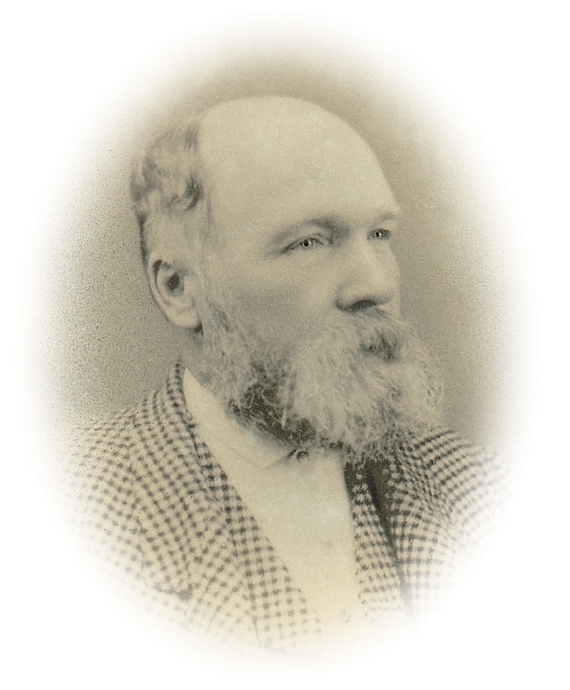
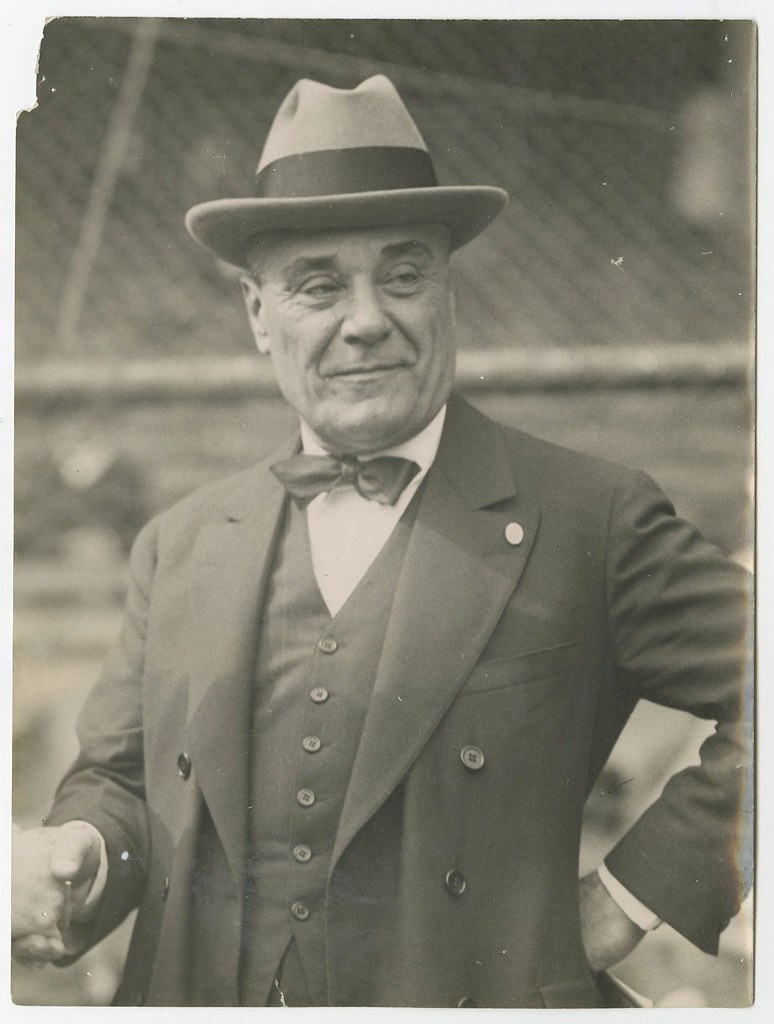
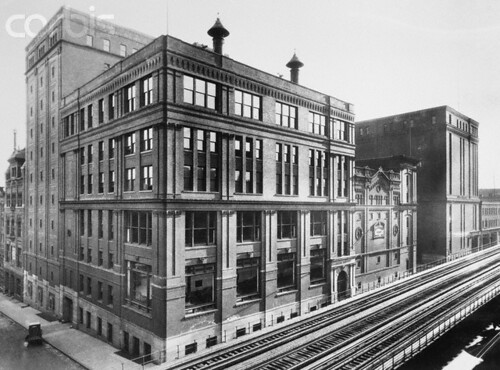
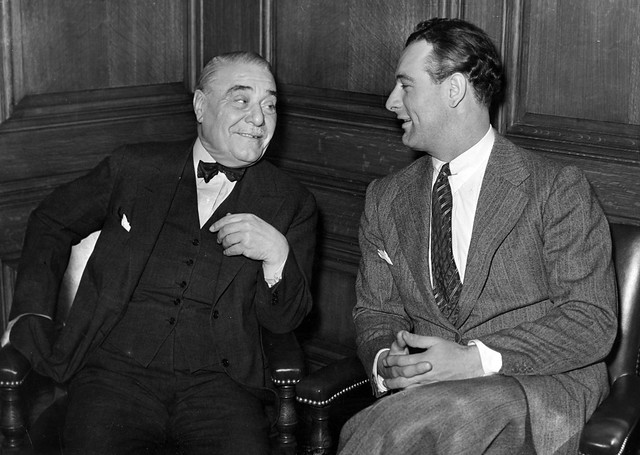
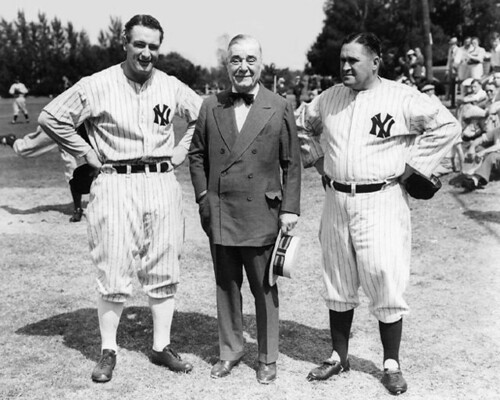
Today is the birthday of Henry Hoerl (April 26, 1854-November 14, 1917). He was born in Altdorf, in Bavaria, Germany, the son of a German brewery owner, where he learned the trade. When he was 24, he came to the U.S. and found employment with a number of breweries throughout New York. In 1892, he moved to Milwaukee, Wisconsin to become the Superintendent of the Val. Blatz Brewing Co. a position he held for the rest of his life.

Here is his obituary from the American Brewers’ Review:
BlatzBrewery1886

This biography of Henry Hoerl is his entry from “Freemasonry in Wisconsin: Biographical Sketches of Men who Have Been Prominent in the Various Masonic Bodies in the State,” published in 1900.

Henry-Hoerl-oval

And this biography is from “Memoirs of Milwaukee County: from the earliest historical times down to the present, including a genealogical and biographical record of representative families in Milwaukee County,” published by the Madison, Wisconsin Western Historical Society in 1909.

Henry Hoerl, for many years a prominent figure in the brewing circles of Milwaukee, has achieved his prominence through untiring energetic effort. He is of German descent and was born at Altdorf, Bavaria, Germany, April 26, 1854, the son of George and Anna (Funck) Hoerl, natives of the famous old city of Nuremberg. Henry, the subject of this review, received his education in the elementary schools of his native city and then took a course in the high school. After finishing his studies he was employed in breweries in Germany for several years. He served with distinction in the German army as sergeant of artillery of a Munich regiment. Ambitious to rise in the world and recognizing the greater possibilities and advantages offered in this country to young men of energy and determination, he left his home in 1878, when twenty-four years of age, and set out for the new world, entering upon a career in the course of which he encountered many disappointments, to ultimately reap the reward of honest efforts in abundant prosperity. Soon after landing in New York he found employment in the breweries there and took the brewmaster’s course in the New York Brewing Academy, winning the first prize in 1886. This brought him into prominence among the brewing men of the city and he secured an excellent position. In 1892 he moved to Milwaukee to become superintendent of the Valentine Blatz Brewing Company and has made their beer famous. On June 4, 1878, Mr. Hoerl married Katherine, the daughter of Michael and Katherine (Neuner) Strobel, of Albany, N. Y. Four children have come to bless this union: Emil, who is the proprietor of the Germania brewery of Altoona, Pa. ; Jenny, John M., who resides in Milwaukee, and Annie, the wife of George Schott, who runs a cooperage works in Cincinnati, Ohio. Mr. and Mrs. Hoerl are communicants of the Lutheran church, to which their ancestors have belonged for many generations. Mr. Hoerl is affiliated with the Masonic Order, having taken the Bine Lodge, the Chapter, Knights Templar and Consistory degrees, and he is also a member of the Mystic Shrine. Hoerl is a popular member of the Deutscher Club, the Millioki Club, the Milwaukee Music Vercin and the “West Side Turn Verein.”

And finally, I came upon this little oddity via eBay. It’s an invitation sent to Hoerl at the Val. Blatz Brewing Co. in Milwaukee, Wisconsin.

Henry-Hoerl-invitation

The invitation was to attend a brewmaster’s convention of the United Brewer’s Association of the City of New York and the Surrounding Area, September 26-28, 1897. It doesn’t look like he mailed it back, but he may have been thinking about it, as he marked it for 2 train tickets to be reserved to get there.

Henry-Hoerl-invitation-bk

Filed Under: Birthdays, Just For Fun Tagged With: Germany, History, New York, Wisconsin

Historic Beer Birthday: John Toohey

April 26, 2026 By Jay Brooks

Today is the birthday of John Thomas Toohey (April 26, 1839-May 5, 1903). He and his brother James bought the Darling Brewery in Melbourne, Australia, and eventually it became known as Tooheys Brewery.

This brief biography is from his Wikipedia page:

He was born in County Limerick to businessman Matthew Toohey and Honora Hall. His family migrated to Melbourne in 1841, where his father was involved in unsuccessful business dealings that eventually forced them to move to New South Wales in 1866. Toohey settled near Lismore, and around 1869 established a cordial factory. The following year he and his brother James began brewing at the Metropolitan Brewery; this would eventually lead to Tooheys Brewery, which the brothers ran. On 26 August 1871 Toohey married Sarah Doheny, with whom he had five children; he would later marry Annie Mary Murphy Egan, a widow, in New Zealand. In 1892 he was appointed to the New South Wales Legislative Council, where he was known as a supporter of Irish nationalism and as a prominent Catholic. In 1902 he embarked on a world tour, but he died in Chicago the following year.

tooheys-brewery-hall

And here’s part of their early history from the brewery’s Wikipedia page:

Tooheys dates from 1869, when John Thomas Toohey (an Irish immigrant to Melbourne) obtained his brewing licence. Toohey and his brother James Matthew ran pubs in Melbourne (The Limerick Arms and The Great Britain) before moving to Sydney in the 1860s. They commenced brewing Tooheys Black Old Ale in a brewery in the area of present-day Darling Harbour. By 1875, demand for their beer had soared and they established The Standard Brewery in inner-city Surry Hills. In 1902, the company went public as Tooheys Limited, and commenced brewing lager (the present-day Tooheys New) in 1930. In 1955, the brewery moved west to Lidcombe. In 1967, Tooheys bought competitor Miller’s Brewers located in Taverner’s Hill, closing that brewery in 1975.

This is a shared entry, with his brother John, of James Toohey from the Australian Dictionary of Biography, Volume 6, 1976:

John Thomas Toohey (1839-1903) and James Matthew Toohey (1850-1895), brewers, were the sons of Matthew Toohey (d.1892), businessman, and his wife Honora (d.1878), née Hall. John Thomas was born on 26 April 1839 at Limerick, Ireland, and was taken to Melbourne by his parents in 1841. His father bought town lots and settled many Irish families in Victoria. One of the founders of the St Patrick’s Society in Melbourne, he was a political ally of (Sir) John O’Shanassy and (Sir) Charles Gavan Duffy. In the 1860s he was forced to sell at a loss; in 1866 he went to New South Wales and lived in virtual retirement. James Matthew was born on 18 March 1850 in Melbourne: he is said to have been named after Fr Matthew, the Irish apostle of temperance.

After unsuccessful business ventures in Victoria, New Zealand and Queensland, John settled near Lismore: later James had a property near Coonamble. About 1869 with W. G. Henfrey John set up an auctioneering agency and cordial manufacturing business in Castlereagh Street, Sydney; the next year the brothers began brewing at the Metropolitan Brewery and in 1873 they bought the Darling Brewery in Harbour Street. In 1876 they moved to new premises on the site of the old Albion Brewery in Elizabeth Street and began the Standard Brewery, employing twenty-six hands. Before 1880 imported beer was preferred to the local product, but in the 1880s Toohey’s and Tooth’s beers quickly became popular.

Vice-president of the Licensed Victuallers’ Association, in 1886 James was appointed to the royal commission on the excessive use of intoxicating drink, but withdrew when he felt the balance between local and anti-local optionists was upset. In evidence to the commission he said that ‘the system of shouting’ was the cause of all the excessive drinking in the colony and that beer was less injurious to health than ‘the ardent spirits’. He approved of the tied-house system and maintained that the 830 public houses in the Sydney metropolitan licensing district were not an excessive number, though there were a few too many in certain areas of the city.

Campaigning in 1885 for the Legislative Assembly seat of South Sydney, James claimed that the government’s action in sending troops to the Sudan ‘had resulted in a huge advertisement for the colony’. Favouring an elected Upper House, payment of members and the eight-hour system, he said he opposed local option and the abstinence party, as no Act of parliament could make a man sober. He represented the seat in 1885-93. A firm protectionist by 1887, he saw most free traders as ‘the curled darlings of the [Potts] Point and the merchants of Sydney’. He was a good speaker, if a little impetuous at times. According to the Sydney Morning Herald’s political correspondent in 1887, he ‘rolls the letter “r” beautifully, he drops his voice down to sweet whisper, lifts it up to a palpitating splendour, and then rolls it over the solemn path of prophetic parlance’. Dissatisfied with Sir George Dibbs’s administration, he opposed him for Tamworth in July 1894, but polled poorly. Next year he visited Ireland, England and Europe. James died at Pisa, Italy, on 25 September 1895 and was buried in the Catholic section of Rookwood cemetery, Sydney. He was survived by his wife Catherine (Kate) Magdalene (d.1913), née Ferris, whom he had married at Parramatta on 5 June 1873; they had four sons and eight daughters. Probate of his estate was sworn at £133,623.

On James’s death, John and James’s eldest son, also named John Thomas, took over the brewery. John was a leading Catholic layman, benefactor to numerous Catholic charitable institutions and a financial supporter of the Irish nationalist movement. On Christmas Day 1888 Cardinal Patrick Moran invested him as a knight of the Order of St Gregory. A leader in the Home Rule movement, he was prominent in the erection of the monument over the grave of Michael Dwyer in Waverley cemetery in 1898. Well known in business circles, he was a director of several companies including the City Mutual Fire Insurance Co. Ltd. He lived first at Moira, Burwood, and later at Innisfail, Wahroonga, and assisted in the development of both suburbs. He stood for Monaro in the Legislative Assembly in 1880 but was defeated by Henry Septimus Badgery and (Sir) Robert Lucas Tooth. In April 1892 he was nominated to the Legislative Council, but he very rarely spoke. In September 1901 he gave evidence to an assembly select committee on tied houses. Next year the brewery became a public company, Toohey’s Ltd, with John as chairman; the vendors received 375,000 fully paid shares and £175,000 cash. The well-known advertising slogan and symbol ‘Here’s to ‘ee’ originated in 1894.

For health reasons John went on a world tour with his family in 1902. He died suddenly in Chicago on 5 May 1903 and was buried in the Catholic section of Rookwood cemetery, Sydney. On 26 August 1871 at St Mary’s Cathedral he had married Sarah Doheny who died in 1891 survived by two sons and three daughters. Toohey was survived by his second wife, a widow Annie Mary Murphy, née Egan, whom he had married in Auckland, New Zealand. His estate was sworn for probate at £275,215.

tooheys-brewery

And this is a commercial that Tooheys produced that tells some of the history of the brewery.

Weirdly, some yahoo at Toohey’s thinks that if you’re not 18 then you shouldn’t be able to watch a video about their history, which is just baffling. So go watch the video on YouTube until if, or when, they come to their senses.

Filed Under: Birthdays, Breweries, Just For Fun Tagged With: Australia, History

Historic Beer Birthday: Heinrich L. Hartman

April 25, 2026 By Jay Brooks

Today is the birthday of Heinrich Ludwig “Henry” Hartman (April 25, 1824-August 3, 1870). He was born in Kirchheim am Neckar, Ludwigsburg, Baden-Württemberg, Germany. There’s very little definitive information I could find on him. By the 1850s, he had moved to the United States, settling in Lebanon, Pennsylvania. In 1856, he opened a brewery called the Hartman Brewery, which he operated until 1870, when he died at age 46, leaving his wife, Pauline Elizabeth Loelke along with three sons and a daughter (plus he also had another son, but who died before him, in 1864).

After his death, the brewery was sold to John Yost, Jr., eventually becoming known as the Lebanon Valley Brewing Co., but closed for good in 1959. A new brewery has opened recently, the Lebanon Valley Craft Brewery, carrying on their legacy.

Brewery employees around 1900.

Filed Under: Birthdays, Breweries, Just For Fun Tagged With: Germany, History, Pennsylvania

Beer In Ads #5229: Bock. At Last The Great Sensation Has Arrived. Read, Gaze & Ponder!

April 24, 2026 By Jay Brooks

Two years ago I decided to concentrate on Bock ads for awhile. Bock, of course, may have originated in Germany, in the town of Einbeck. Because many 19th century American breweries were founded by German immigrants, they offered a bock at certain times of the year, be it Spring, Easter, Lent, Christmas, or what have you. In a sense they were some of the first seasonal beers. “The style was later adopted in Bavaria by Munich brewers in the 17th century. Due to their Bavarian accent, citizens of Munich pronounced ‘Einbeck’ as ‘ein Bock’ (a billy goat), and thus the beer became known as ‘Bock.’ A goat often appears on bottle labels.” And presumably because they were special releases, many breweries went all out promoting them with beautiful artwork on posters and other advertising. With Spring approaching, there are so many great examples that I’m going to post two a day for a few months.

Friday’s ad is for Centilvre Bock Beer, which was published on April 24, 1886. This ad was for the C.L. Centlivre Brewing Co. of Fort Wayne, Indiana, which was founded in 1862 by Charles l. Centlivre. It went through several name changes until 1970, when it closed, however it was recently relaunched by the Centlivre family as Centlivre Beer. This ad ran in The Fort Wayne News and Sentinel, also of Fort Wayne, Indiana. 

Filed Under: Art & Beer, Beers, Breweries, Just For Fun Tagged With: Advertising, Bock, History, Indiana

Historic Beer Birthday: Max Hassel

April 24, 2026 By Jay Brooks

Today is the birthday of Max Hassel (April 24, 1900-April 12, 1933), who was nicknamed the “Beer Baron of Berks County,” which is where I grew up. That alone, get’s him a mention here, since he has quite the interesting, if short, history in the beer world. He was born in Lithuania, and at age 11 emigrated to the U.S. through New York with his family. By 1920, he was living in Reading, Pennsylvania, where he appears to have entered a life of crime, centering around beer and bootlegging. Here’s a short history, from Go Reading Berks, detailing several notorious local figures.

The Pioneer: Max Hassel (Reign: ~1923–1933)

Reading’s journey into organized crime began in earnest with the opportunities of Prohibition, and no one capitalized on it better than Max Hassel. While others, including a young Abe Minker, were small-time bootleggers, Hassel quickly elevated the game. By 1923, he had become a veritable “beer baron,” amassing a fortune by acquiring interests in breweries along the East Coast.

Hassel’s method was more business than brutality. Known as a “master briber” rather than a violent gangster, he used political corruption and well-paid lawyers to protect his vast enterprise. His influence was so profound that upon his murder by New York mobsters in 1933, an estimated ten thousand mourners flooded the streets of Reading for his funeral—a testament to the city’s complicated acceptance of its vice lords. Hassel’s death marked the end of Prohibition’s reign and created a power vacuum in the local underworld.

After he got started, he quickly focused on beer, which made him a millionaire by the time he was 25 years old. He was apparently trying to go legit after the repeal of Prohibition, and was in talks to buy the Harrison Brewery of Harrison, New Jersey. Unfortunately, he was unable to complete the deal when he was murdered, shot to death, just five days after the Cullen-Harrison Act took effect allowing the sale of 3.2 beer, on April 12, 1933. It is believed he was murdered by New York mobsters. According to one account, “his funeral [was] a massive event in Reading, with an estimated ten thousand mourners, indicating the city’s complex attitude toward its vice figures.” Curiously, he’s buried in cemetery in Shillington, the small town where I lived.

Several people and websites have written more extensive accounts of his career as a bootlegger. To read more about his exploits, check out these from the Berks History Center, by Edward A. Taggert, Brewery Aficionado, Hassel’s Find-a-Grave page, written by Tom Raub, and Go Reading Berks. These accounts also indicate he had links to between one and two dozen breweries in the area.

Taggert even wrote a book about Hassel, entitled “Bootlegger: Max Hassel, The Millionaire Newsboy,” published in 2003.

Filed Under: Beers, Birthdays, Related Pleasures Tagged With: History, Pennsylvania, Prohibition

Beer In Ads #5228: To Clarify The “Bock Beer Date” Question

April 23, 2026 By Jay Brooks

Two years ago I decided to concentrate on Bock ads for awhile. Bock, of course, may have originated in Germany, in the town of Einbeck. Because many 19th century American breweries were founded by German immigrants, they offered a bock at certain times of the year, be it Spring, Easter, Lent, Christmas, or what have you. In a sense they were some of the first seasonal beers. “The style was later adopted in Bavaria by Munich brewers in the 17th century. Due to their Bavarian accent, citizens of Munich pronounced ‘Einbeck’ as ‘ein Bock’ (a billy goat), and thus the beer became known as ‘Bock.’ A goat often appears on bottle labels.” And presumably because they were special releases, many breweries went all out promoting them with beautiful artwork on posters and other advertising. With Spring approaching, there are so many great examples that I’m going to post two a day for a few months.

Thursday’s ad is for Camden Bock Beer, which was published on April 23, 1939. This ad was for the Camden County Beverage Co. of Camden, New Jersey, which was originally founded in 1904. This ad ran in The Camden Courier-Post, of Camden, New Jersey.

Filed Under: Art & Beer, Beers, Breweries, Just For Fun Tagged With: Advertising, Bock, History, New Jersey

Beer In Ads #5228: We Are Coming On The Run …

April 22, 2026 By Jay Brooks

Two years ago I decided to concentrate on Bock ads for awhile. Bock, of course, may have originated in Germany, in the town of Einbeck. Because many 19th century American breweries were founded by German immigrants, they offered a bock at certain times of the year, be it Spring, Easter, Lent, Christmas, or what have you. In a sense they were some of the first seasonal beers. “The style was later adopted in Bavaria by Munich brewers in the 17th century. Due to their Bavarian accent, citizens of Munich pronounced ‘Einbeck’ as ‘ein Bock’ (a billy goat), and thus the beer became known as ‘Bock.’ A goat often appears on bottle labels.” And presumably because they were special releases, many breweries went all out promoting them with beautiful artwork on posters and other advertising. With Spring approaching, there are so many great examples that I’m going to post two a day for a few months.

Wednesday’s ad is for Terre Haute Bock Beer, which was published on April 22, 1899. This ad was for the Terre Haute Brewing Co., of Terre Haute, Indiana and was founded in 1855. This ad ran in The Vincennes Sun Commercial, of Vincennes, Indiana.

Filed Under: Art & Beer, Beers, Breweries, Just For Fun Tagged With: Advertising, Bock, History, Indiana

Beer In Ads #5228: All Together For Newark

April 21, 2026 By Jay Brooks

Two years ago I decided to concentrate on Bock ads for awhile. Bock, of course, may have originated in Germany, in the town of Einbeck. Because many 19th century American breweries were founded by German immigrants, they offered a bock at certain times of the year, be it Spring, Easter, Lent, Christmas, or what have you. In a sense they were some of the first seasonal beers. “The style was later adopted in Bavaria by Munich brewers in the 17th century. Due to their Bavarian accent, citizens of Munich pronounced ‘Einbeck’ as ‘ein Bock’ (a billy goat), and thus the beer became known as ‘Bock.’ A goat often appears on bottle labels.” And presumably because they were special releases, many breweries went all out promoting them with beautiful artwork on posters and other advertising. With Spring approaching, there are so many great examples that I’m going to post two a day for a few months.

Tuesday’s ad is for Consumers Bock Beer, which was published on April 21, 1916. This ad was for the Consumers Brewing Co., of Newark, Ohio and was founded in 1897. This ad ran in The Newark Advocate, of Newark, Ohio.

Filed Under: Art & Beer, Beers, Breweries, Just For Fun Tagged With: Advertising, Bock, History

Beer In Ads #5227: It’s Here! Bock Beer By Bosch

April 20, 2026 By Jay Brooks

Two years ago I decided to concentrate on Bock ads for awhile. Bock, of course, may have originated in Germany, in the town of Einbeck. Because many 19th century American breweries were founded by German immigrants, they offered a bock at certain times of the year, be it Spring, Easter, Lent, Christmas, or what have you. In a sense they were some of the first seasonal beers. “The style was later adopted in Bavaria by Munich brewers in the 17th century. Due to their Bavarian accent, citizens of Munich pronounced ‘Einbeck’ as ‘ein Bock’ (a billy goat), and thus the beer became known as ‘Bock.’ A goat often appears on bottle labels.” And presumably because they were special releases, many breweries went all out promoting them with beautiful artwork on posters and other advertising. With Spring approaching, there are so many great examples that I’m going to post two a day for a few months.

Monday’s ad is for Bosch Brewing Bock Beer, which was published on April 20, 1935. This ad was for the Bosch Brewing Co., of Houghton, Michigan and was founded in 1857 by William Ault. This ad ran in The Escanaba Daily Press, of Escanaba, Michigan.

Filed Under: Art & Beer, Beers, Breweries, Just For Fun Tagged With: Advertising, Bock, History, Michigan

« Previous Page
Next Page »

Find Something

Northern California Breweries

Please consider purchasing my latest book, California Breweries North, available from Amazon, or ask for it at your local bookstore.

Recent Comments

  • Bob Paolino on Beer Birthday: Grant Johnston
  • Gambrinus on Historic Beer Birthday: A.J. Houghton
  • Ernie Dewing on Historic Beer Birthday: Charles William Bergner 
  • Steve 'Pudgy' De Rose on Historic Beer Birthday: Jacob Schmidt
  • Jay Brooks on Beer Birthday: Bill Owens

Recent Posts

  • Beer Birthday: Colin Kaminski June 17, 2026
  • Beer Birthday: Ed Stoudt June 17, 2026
  • Beer In Ads #5270: Bock Beer Prima Special June 16, 2026
  • Historic Beer Birthday: Max Delbrück June 16, 2026
  • Historic Beer Birthday: Harry MacElhone June 16, 2026

BBB Archives

Feedback

Head Quarter
This site is hosted and maintained by H25Q.dev. Any questions or comments for the webmaster can be directed here.