Brookston Beer Bulletin

Jay R. Brooks on Beer

  • Home
  • About
  • Editorial
  • Birthdays
  • Art & Beer

Socialize

  • Dribbble
  • Email
  • Facebook
  • Flickr
  • GitHub
  • Instagram
  • LinkedIn
  • Pinterest
  • RSS
  • Twitter
  • YouTube

Powered by Genesis

Beer In Ads #5018: Point Bock Beer

July 7, 2025 By Jay Brooks

Last year I decided to concentrate on Bock ads. Bock, of course, may have originated in Germany, in the town of Einbeck. Because many 19th century American breweries were founded by German immigrants, they offered a bock at certain times of the year, be it Spring, Easter, Lent, Christmas, or what have you. In a sense they were some of the first seasonal beers. “The style was later adopted in Bavaria by Munich brewers in the 17th century. Due to their Bavarian accent, citizens of Munich pronounced ‘Einbeck’ as ‘ein Bock’ (a billy goat), and thus the beer became known as ‘Bock.’ A goat often appears on bottle labels.” And presumably because they were special releases, many breweries went all out promoting them with beautiful artwork on posters and other advertising.

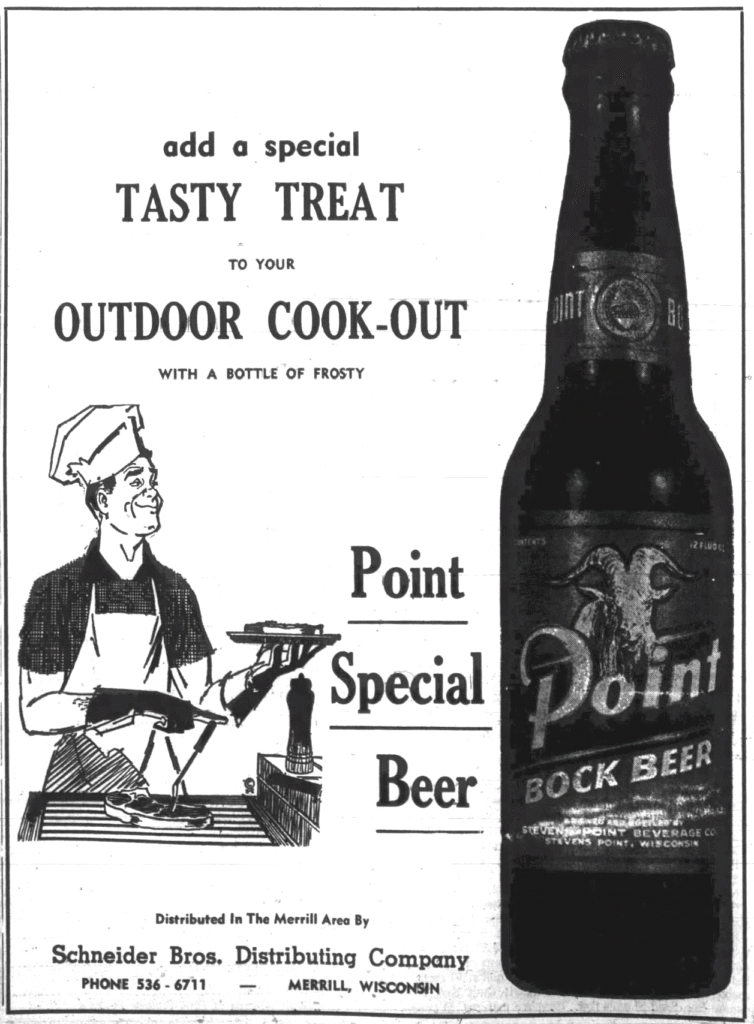
Monday’s ad is for Point Bock Beer, which was published on July 7, 1967. This one was for the Stevens Point Brewery of Stevens Point, Wisconsin, which was originally founded in 1857. This ad ran in The Merrill Daily Herald, of Merrill, Wisconsin.

Filed Under: Art & Beer, Beers, Breweries, Just For Fun Tagged With: Advertising, Bock, History, Wisconsin

Beer In Ads #5017: Don’t Worry. Be Happy. Drink Bock Beer.

July 6, 2025 By Jay Brooks

Last year I decided to concentrate on Bock ads. Bock, of course, may have originated in Germany, in the town of Einbeck. Because many 19th century American breweries were founded by German immigrants, they offered a bock at certain times of the year, be it Spring, Easter, Lent, Christmas, or what have you. In a sense they were some of the first seasonal beers. “The style was later adopted in Bavaria by Munich brewers in the 17th century. Due to their Bavarian accent, citizens of Munich pronounced ‘Einbeck’ as ‘ein Bock’ (a billy goat), and thus the beer became known as ‘Bock.’ A goat often appears on bottle labels.” And presumably because they were special releases, many breweries went all out promoting them with beautiful artwork on posters and other advertising.

Sunday’s ad is for another unnamed Bock Beer, which was published on July 6, 1906. This one mentions a famous bock beer, though there is an agent for the brewery listed, Phil Thierolf. He apparently launched a business as a Wholesale and Retail Liquor Dealer in Nebraska around 1899. I found another ad he placed in the “Semi-Weekly News-Herald” indicating that he represented both the “Yellowstone (Kentucky) distillery” and the “Anheuser-Busch Brewing Ass’n” of St. Louis. So the bock he was touting in this ad may have been Budweiser Bock, but who knows. He easily could have had additional clients. Pro Tip: if you’re going to advertise that you have for sale a “famous ‘Bock‘ beer,” maybe list the goldarn brewery. Just a thought. This ad ran in The Evening Journal, of Plattsmouth, Nebraska.

The ad seems like it’s from the future for 1906. First that face looks at too little emoji-like, but more telling still is the phrase “Don’t Worry. Be happy.” a full 82-years before Bobby McFerrin used it in his 1988 hit song “Don’t Worry, Be Happy.“

Filed Under: Art & Beer, Beers, Breweries, Just For Fun Tagged With: Advertising, Bock, History, Nebraska

Historic Beer Birthday: William W. Sloan

July 6, 2025 By Jay Brooks

hydraulic
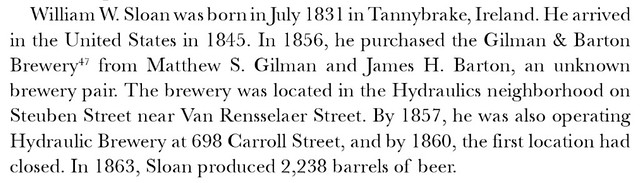
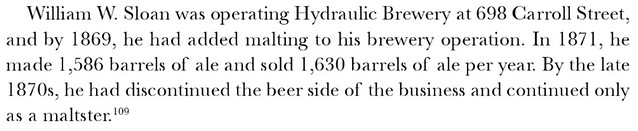
Today is the birthday of William Wilson Sloan (July 6, 1831-May 7, 1901). He was born in Ireland, and moved to Buffalo, New York. Originally a malster, he bought into Buffalo’s fifth brewery, the McCulloch Brewery around 1857. There’s very little I could find about Sloan, and even less in the way of images or photographs.

Here’s some information about Sloan’s brewery, from John & Dave’s Buffalo Brewing History:

Buffalo’s Fifth Brewers: 1830? 1832 McCulloch Brewery

Alexander McCulloch and his son John were listed as brewers, Seneca Street in the 1832 Buffalo Directory. Charles C. Relay of Buffalo’s second brewery is also listed as a brewer, Seneca Street. Could Relay and McCulloch have brewed together for a short time?

The “Hydraulics” was an area near present day Seneca and Hydraulic Streets where a canal was dug in 1828 from Buffalo Creek to produce hydraulic power for an industrial zone. The 1832 Buffalo Directory lists this area as having a grist mill, hat body shop, pail factory, last factory, woolen factory and one brewery believed to be McCulloch’s. Around 1836 the Hydraulics name was changed to “Clintonville” with a population of 500. It was later incorporated into the city of Buffalo.

Alexander had three sons with his wife Elizabeth: Alexander Jr. the eldest, John H. and James. Alexander Sr., who turned the brewery over to his eldest son around 1836, continued to live in Clintonville with his wife until his death around 1846. The McCulloch’s became an important family in what was then called the “Hydraulics” or “Clintonville”. Alexander Jr. and his brothers operated their brewery located on Mill Street near the Hydraulic canal (later Hydraulic St.) until 1843 when they relocated to Steuben Street (later becoming part of Carroll Street) also near the Hydraulic canal. The Attica Railroad laid tracks into Buffalo down Mill Street in the early 1840’s. This is probably what caused McCulloch to relocate his brewery to Steuben Street.

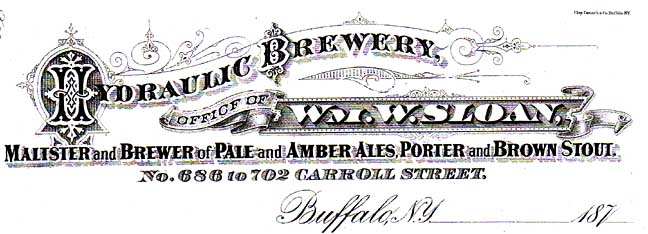
In 1847 the McCulloch’s sold their brewery to James H. Barton and Matthew J. Gilman. The Barton and Gilman Brewery operated until 1857 when it was sold to William W. Sloan. Sloan named his brewery the Hydraulic Brewery. The location remained the same but the address changed to 686 – 702 Carroll Street. Sloan continued brewing and malting at the Hydraulic Brewery until 1876.

hydraulic-letterhead

And Buffalo Beer: The History of Brewing in the Nickel City, by Michael F. Rizzo and Ethan Cox has some more:

Sloan-bio-1

Sloan-bio-2

And the web page History of Buffalo has a little more about the Hydraulic Brewery.

Filed Under: Birthdays, Just For Fun Tagged With: History, Ireland, New York

Beer In Ads #5016: Enjoy The 4th With Del’s Bock Beer

July 5, 2025 By Jay Brooks

Last year I decided to concentrate on Bock ads. Bock, of course, may have originated in Germany, in the town of Einbeck. Because many 19th century American breweries were founded by German immigrants, they offered a bock at certain times of the year, be it Spring, Easter, Lent, Christmas, or what have you. In a sense they were some of the first seasonal beers. “The style was later adopted in Bavaria by Munich brewers in the 17th century. Due to their Bavarian accent, citizens of Munich pronounced ‘Einbeck’ as ‘ein Bock’ (a billy goat), and thus the beer became known as ‘Bock.’ A goat often appears on bottle labels.” And presumably because they were special releases, many breweries went all out promoting them with beautiful artwork on posters and other advertising.

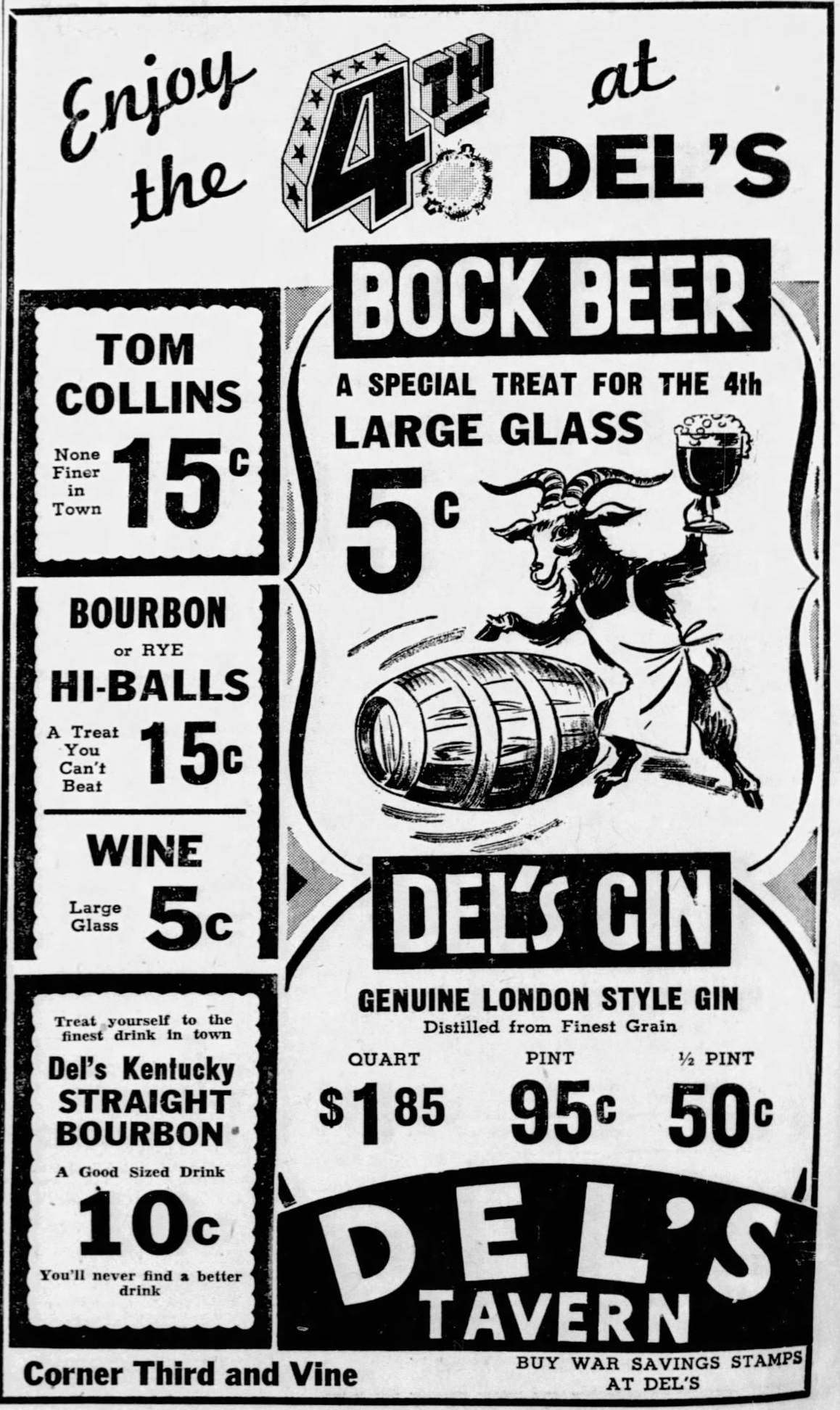
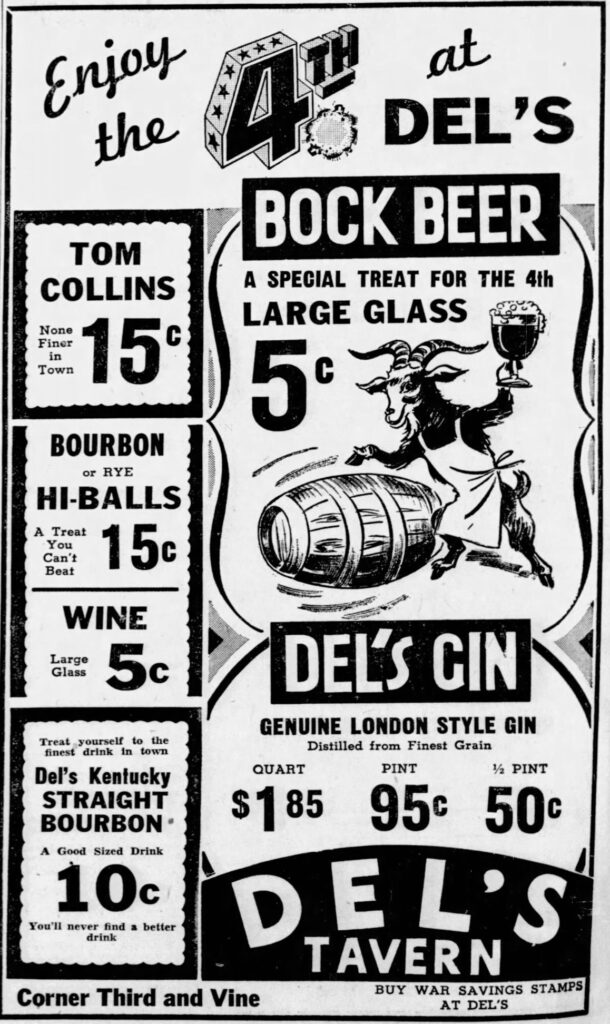
Saturday’s ad is for Bock Beer at Del’s Tavern, which was published in July 1942. This one was for an unnamed bock, though itvwas probably a local one. The iconic La Crosse bar was originally founded in 1933. This ad ran in The La Crosse Tribune, also of La Crosse, Wisconsin.
Filed Under: Art & Beer, Beers, Breweries, Just For Fun Tagged With: Advertising, Bock, History, Holidays, Wisconsin

Historic Beer Birthday: Alfred Marti

July 5, 2025 By Jay Brooks

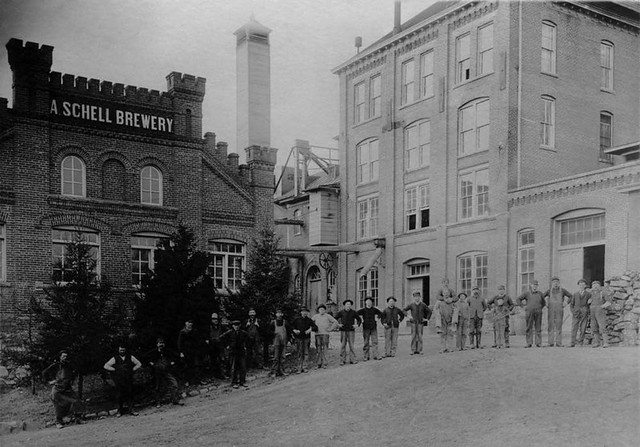
august-schell
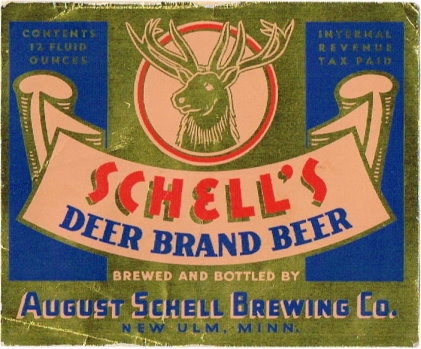
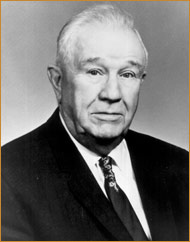
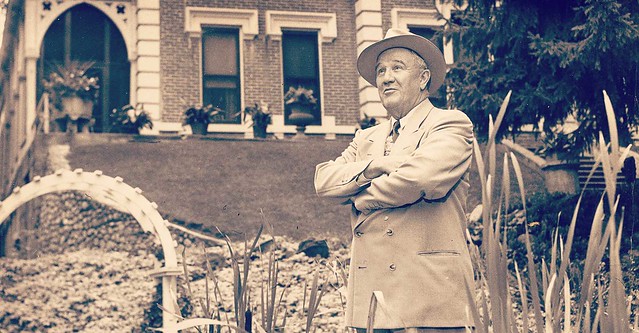
Today is the birthday of Alfred W. Marti (July 5, 1886-November 22, 1977). He was born in Saint Paul, Minnesota, and was the son of George Marti and Emma Schell, whose father founded August Schell started the Schell’s Brewery in 1860 in New Ulm, Minnesota. Schell’s Brewery is still in business today, and is still owned by the family who started it. “It is the second oldest family-owned brewery in America (after D. G. Yuengling & Son) and became the oldest and largest brewery in Minnesota when the company bought the Grain Belt rights in 2002.” A pharmacist by trade, when August’s son Otto, who had been running the brewery after his father died, also died suddenly in 1911, George stepped up and became the manager and president of the brewery. He thought it would be temporary, but he remained at the brewery for the rest of his life, and in 1934 when he passed away, his son Alfred took over for him. He remained in charge of the brewery until 1969, when his son Warren took over for him.

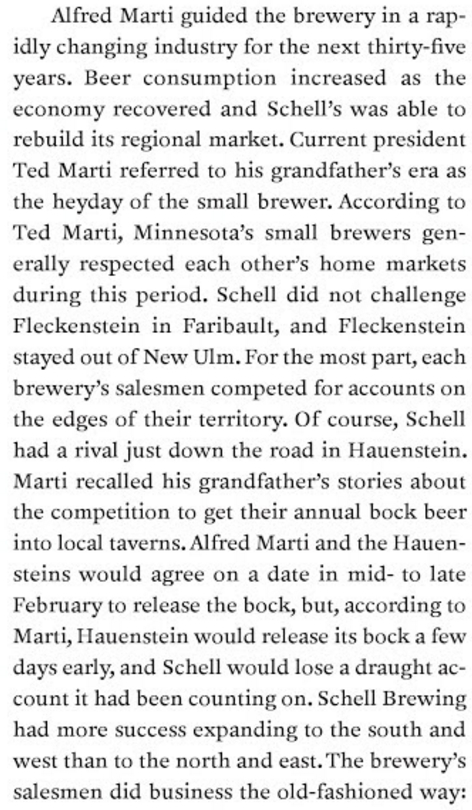
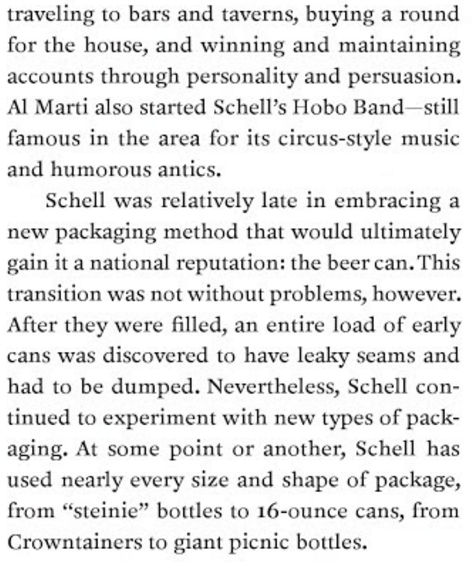
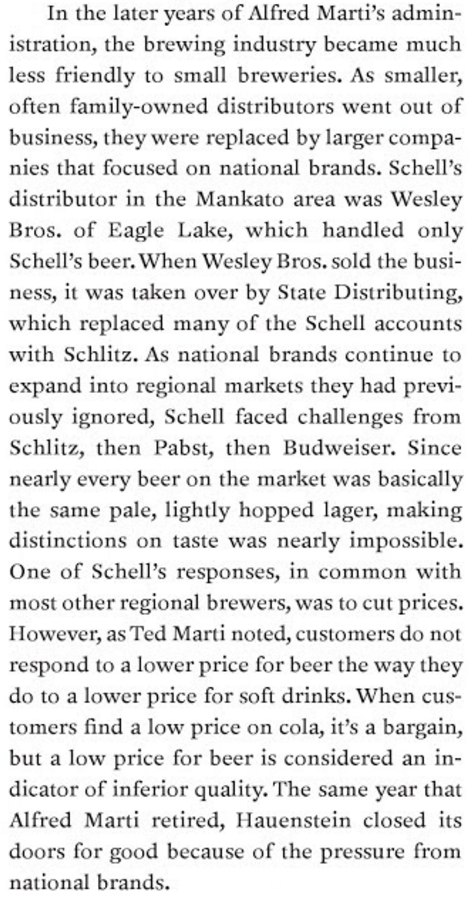
This account of the Schell Brewery under Alfred Marti is from the “Land of Amber Waters: The History of Brewing in Minnesota,” by Doug Hoverson:

alfred-marti

This portion of a history of the August Schell Brewery, from Funding Universe, mentions Alfred Marti and his role in the company:

The next generation, represented by Alfred Marti, took over brewery management in 1934 after George Marti passed away. The younger Marti added entertainment to the brewery’s local allure by establishing the Schell’s Hobo Band, which still performs in the community today. In 1969, Alfred Marti retired, passing on leadership to his son Warren.
Schell-brewery-1879

Filed Under: Birthdays, Just For Fun Tagged With: History, Minnesota

Beer In Ads #5015: Washington Brewery’s Pure Bock Beer

July 4, 2025 By Jay Brooks

Last year I decided to concentrate on Bock ads. Bock, of course, may have originated in Germany, in the town of Einbeck. Because many 19th century American breweries were founded by German immigrants, they offered a bock at certain times of the year, be it Spring, Easter, Lent, Christmas, or what have you. In a sense they were some of the first seasonal beers. “The style was later adopted in Bavaria by Munich brewers in the 17th century. Due to their Bavarian accent, citizens of Munich pronounced ‘Einbeck’ as ‘ein Bock’ (a billy goat), and thus the beer became known as ‘Bock.’ A goat often appears on bottle labels.” And presumably because they were special releases, many breweries went all out promoting them with beautiful artwork on posters and other advertising.
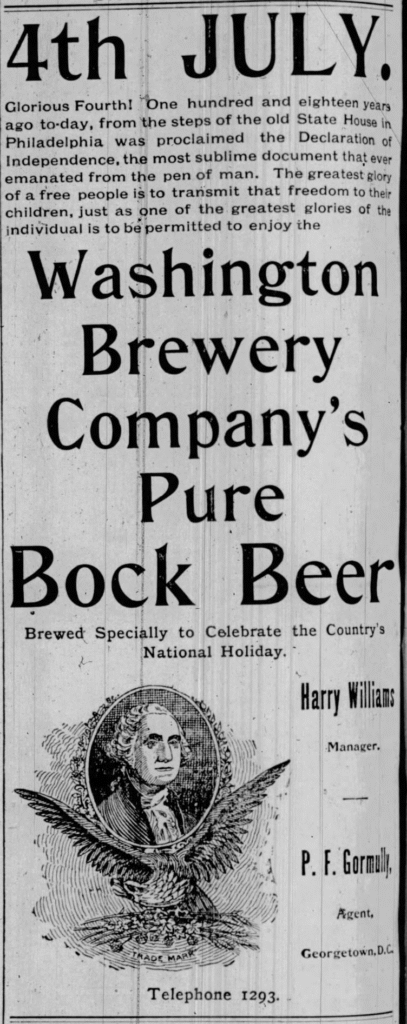
Friday’s ad is for Washington Brewery’s Pure Bock Beer, which was published on July 4, 1894. This one was for the Washington Brewery Co. of Washington, D.C., which was originally founded in 1857. This ad ran in The Washington Post, also of Washington, D.C.

Filed Under: Art & Beer, Beers, Breweries, Just For Fun Tagged With: Advertising, Bock, D.C., History

Historic Beer Birthday: Sammy Fuchs

July 4, 2025 By Jay Brooks

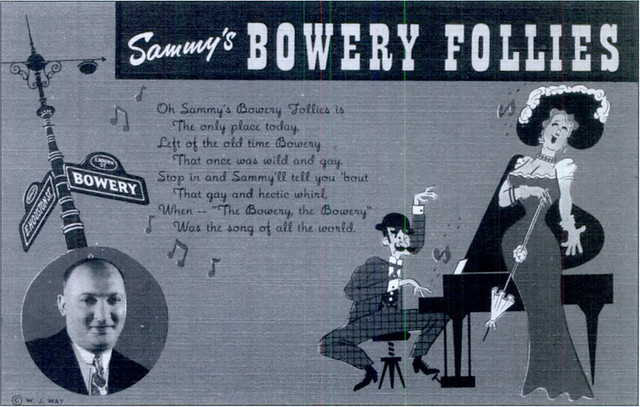
sammys-bowery-follies
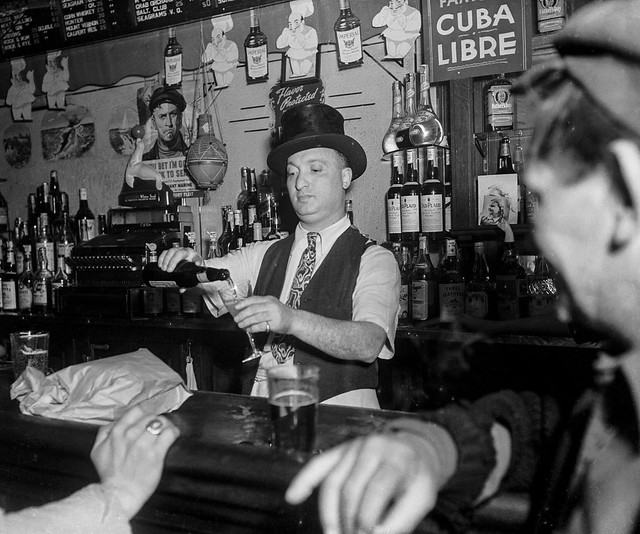
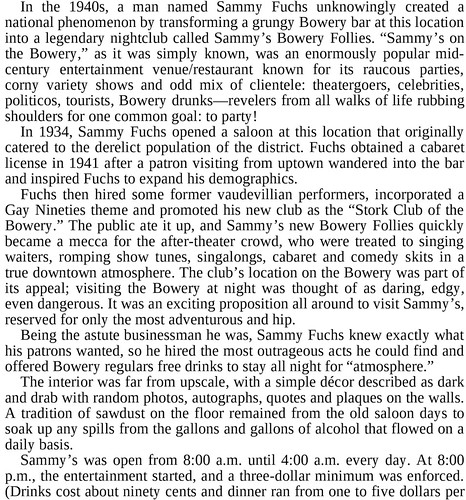
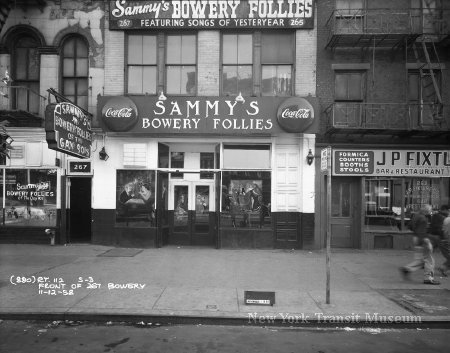
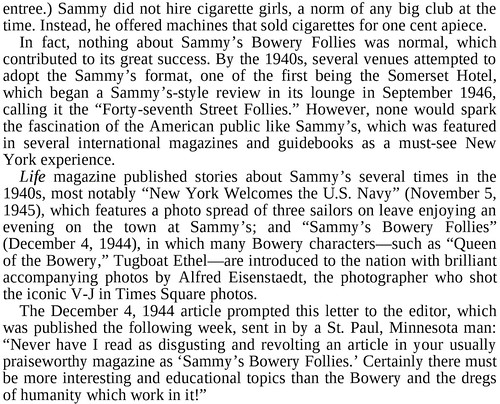
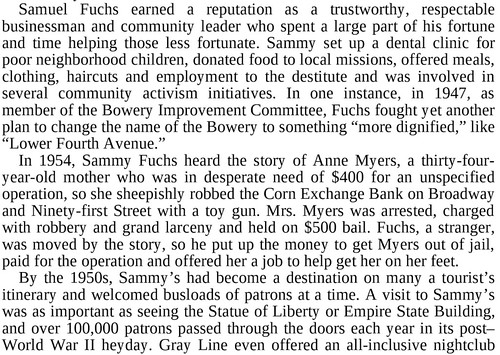
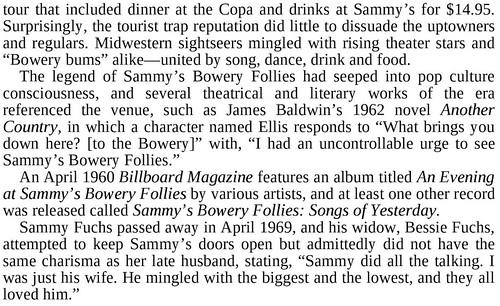
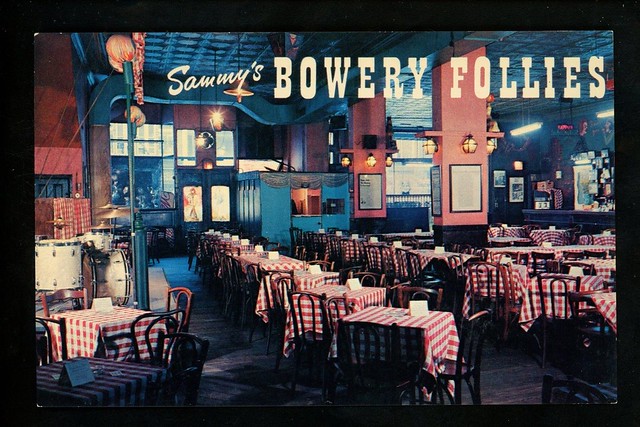
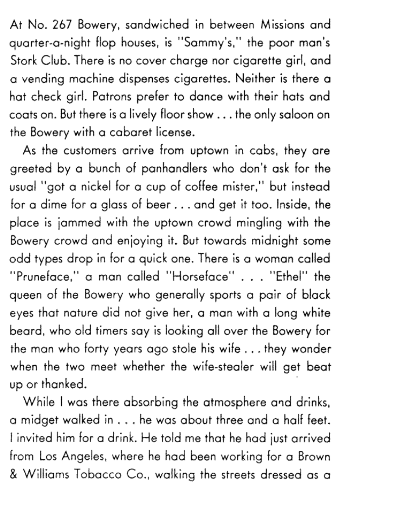
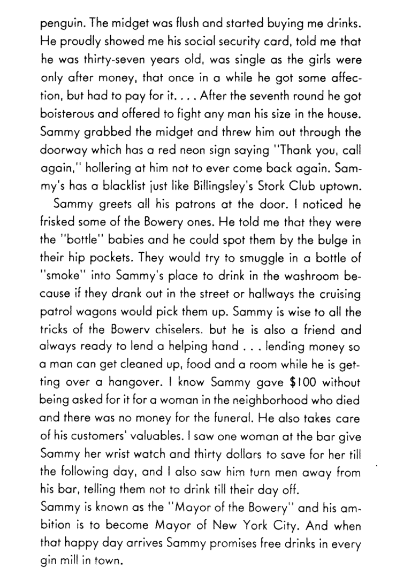
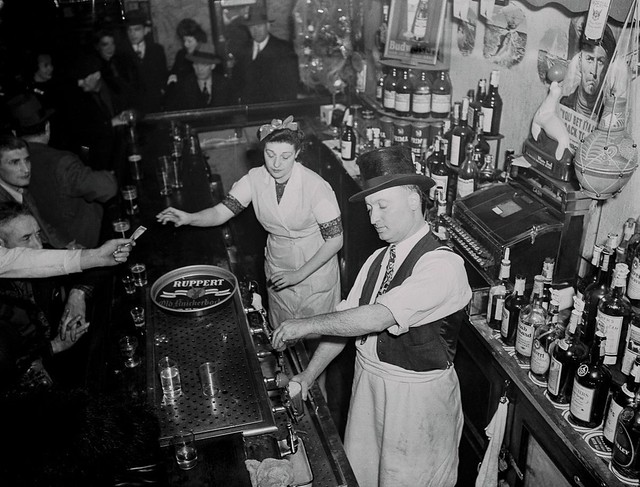
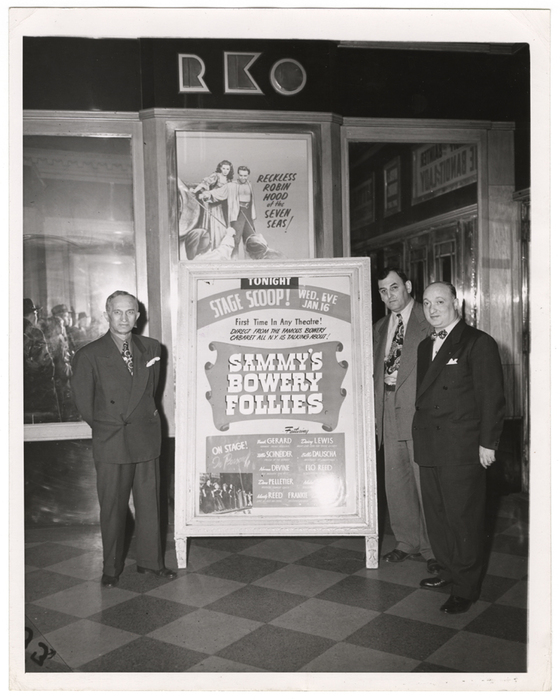
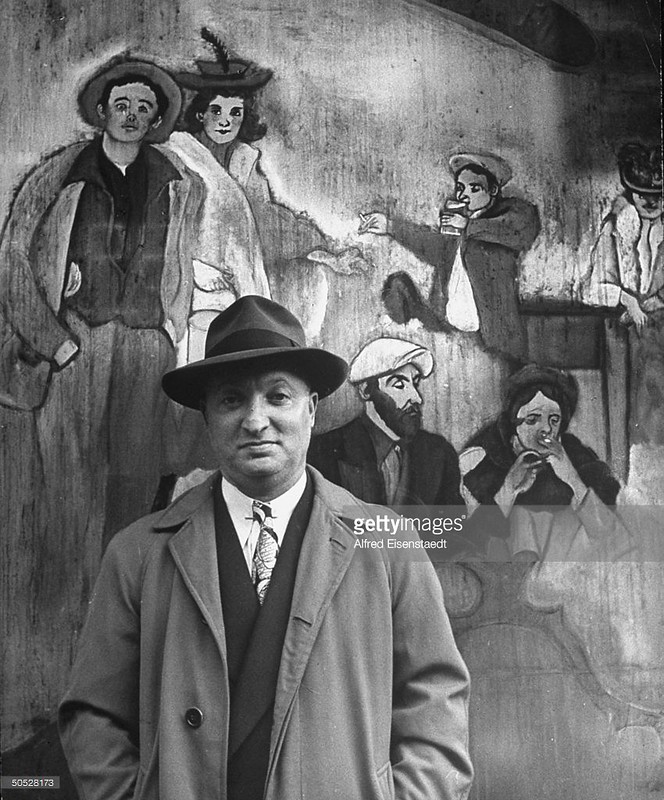
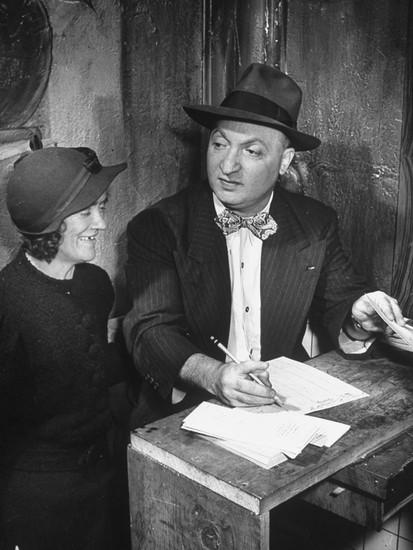
Today is the birthday of Sammy Fuchs (July 4, 1884-April 5, 1969). He was born in the New York City neighborhood known as the Bowery, probably in 1884, although at least one source gives 1905 as his birth year. “He was a busboy, waiter, and a restaurant manager before he opened up his famous saloon at 267 Bowery in 1934” known as “Sammy’s Bowery Follies.” Open until 1970, eight years before I moved to New York City, it sounds like it was an amazing place.

sammy-fuchs-5
Sammy Fuchs behind his bar, pouring a beer.

This account of Sammy Fuchs is from “The Bowery: A History of Grit, Graft and Grandeur,” by Eric Ferrara:

the-bowery-sammys-1
sammys-1958
the-bowery-sammys-2
the-bowery-sammys-3
the-bowery-sammys-4

Restaurant-postcard-New-York-City-NY-Sammys-Bowery

sammy-fuchs-8
In their December 4, 1944 issue, Life magazine featured the bar and wrote the following:

“From 8 in the morning until 4 the next morning Sammy’s is an alcoholic haven for the derelicts whose presence has made the Bowery a universal symbol of poverty and futility. It is also a popular stopping point for prosperous people from uptown who like to see how the other half staggers”

There were lots of photographers who visited the bar, and as a result lots of pictures exist from its heyday, and many are online. See, for example, Sammy’s Stork Club of the Bowery New York: ‘An Alcoholic Haven’ of Prospering Poverty, Sammy’s Bowery Follies c. 1945 from Mashable, or The Chiseler.

This account is by photographer Arthur “Weegee” Fellig in his book “Naked City,” published in 2002, but describing the Bowery in the 1940s:

weegee-naked-city-sammys-1
naked-city-weegee-sammys-2

sammys-postcard

Here’s a few more random photos of Sammy Fuchs.

sammy-fuchs-4

sammy-fuchs-6
sammy-fuchs-3

And here’s a short video of the history of Sammy’s Bowery Follies.

Filed Under: Birthdays, Just For Fun, Related Pleasures Tagged With: Bars, History, New York

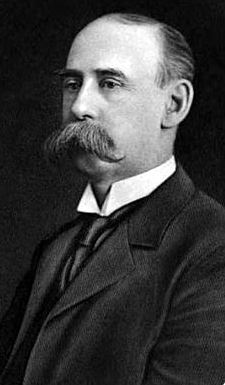
Historic Beer Birthday: Alonzo Gilford Van Nostrand

July 4, 2025 By Jay Brooks

van-nostrand-bunker-hill
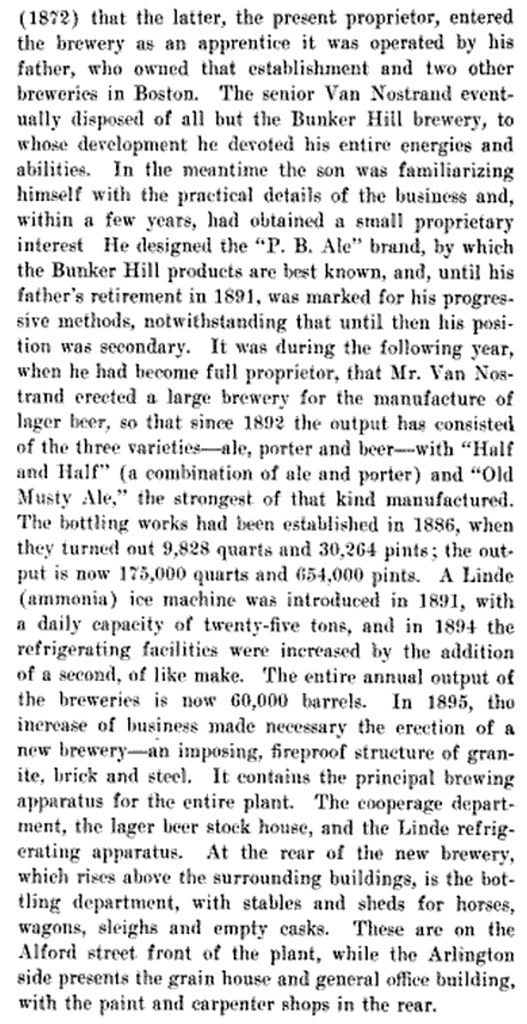
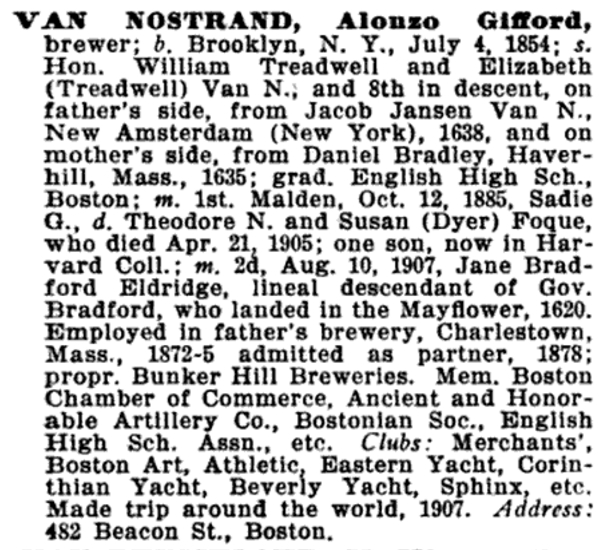
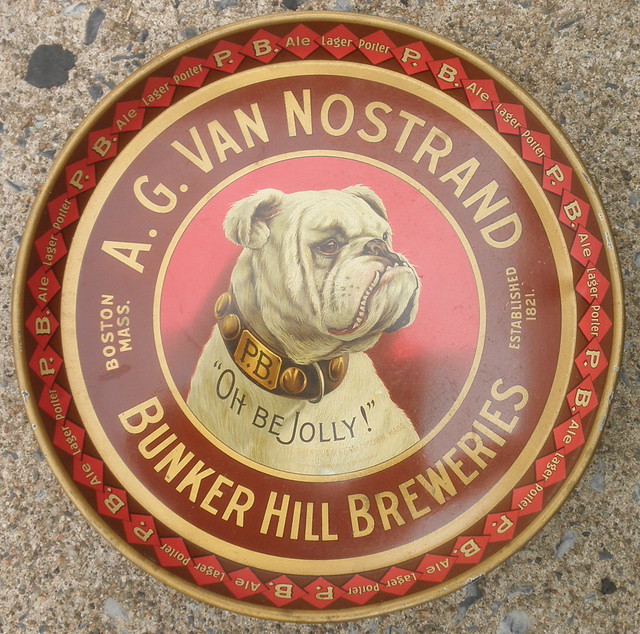
Today is the birthday of Alonzo Gilford Van Nostrand (July 4, 1854-November 5, 1923). He was born in Brooklyn, New York. His father, William Tredwell Van Nostrand bought the Bunker Hill Breweries, which had been founded in 1821, and in 1878, Alonzo Gilford became a partner and took over the brewery from his father. It was originally known as the John Cooper & Thomas Gould Brewery, and Crystal Lake Brewery, but Alonzo’s father renamed it the Wm. T. Van Nostrand & Co. Brewery in 1877, though they used the trade name Bunker Hill Breweries Brewery from 1890 on. It remained open until prohibition, but reopened briefly after repeal as the Van Nostrand Brewing Co., but lasted less than a year, closing in 1934.

van-nostrand

Here’s a short biography from Find-a-Grave:

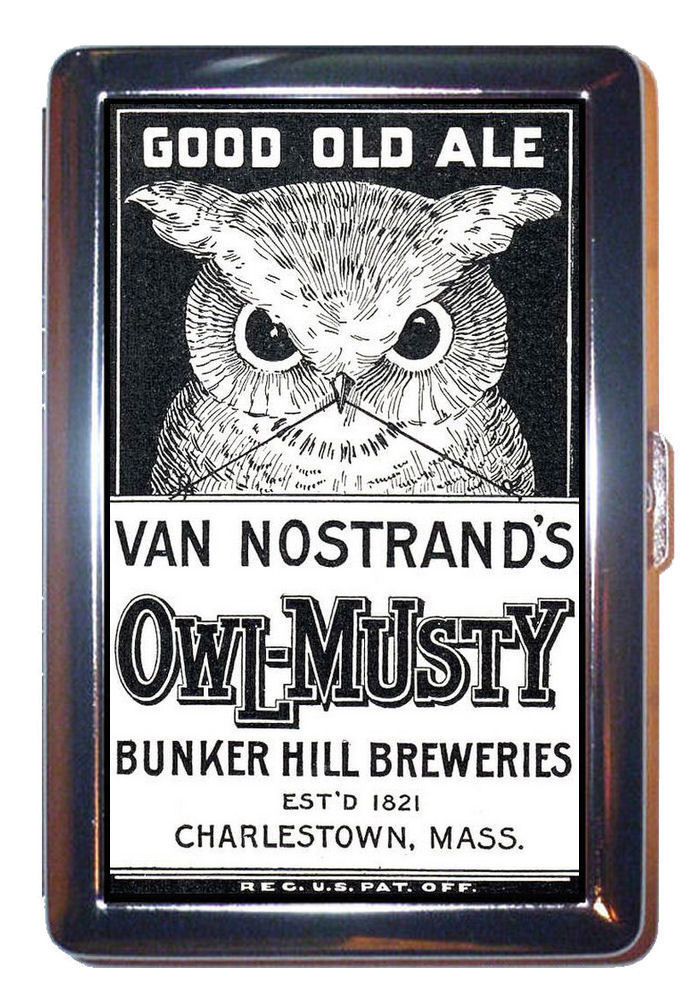
Some records say he was born on Jul 3rd 1854, but on a passport application Alonzo himself says he was born on July 4th 1854 in New York. He graduated from the English High School of Boston, Mass. From 1872 to 1875 he was employed in his father’s brewery and was admitted as a partner in 1878. Following his father, he was the proprietor of the very famous Bunker Hill Breweries of Charlestown (Boston), Massachusetts, which was in business in Massachusetts from 1821 until prohibition. The plural “Breweries” does not indicate locations in different towns, but rather was used because there were two facilities in Charlestown which made beer (using bottom fermenting yeast) and ale (using top fermenting yeast). in 1879 Alonzo originated the “P & B” (Purest & Best) Trademark for his ale. He started bottling ale in the English fashion to compete with Bass. At the time, “P&B ale had a reputation second to none and was the only malt liquor used in the Massachusetts General and City Hospitals and others for the sick and convalescent.” Before closing, Bunker Hill was undoubtedly the most prolific advertiser among the Boston area breweries. Brands included Boston Club Lager, Bunker Hill Lager, Old Musty Ale, Owl Musty, Van Nostrand’s Porter, and P.B. (Purest Best) Ale, Bock, Lager, Porter, Stock Ale, and Stout. PB Ale reappeared briefly after prohibition circa 1933 or 1934, as shown on post prohibition items including a tin over cardboard sign and 2 different labels from the Feigenspan Brewery of Newark New Jersey and a label from the Dobler Brewery of Albany New York. Alonzo died in the Vanderbilt Hotel, Park Avenue and 34th Street, Manhattan, New York. He was a member of the Boston Chamber of Commerce, the Ancient and Honorable Artillery Company and the Bostonian Society. He traveled extensively, and in 1907 made a trip around the world. He was a member of the Merchants Club, the Boston City Club, the Eastern Yacht Club, the City Club of New York, the Beverly Yacht Club, the Sphinx Club and various other clubs and societies.

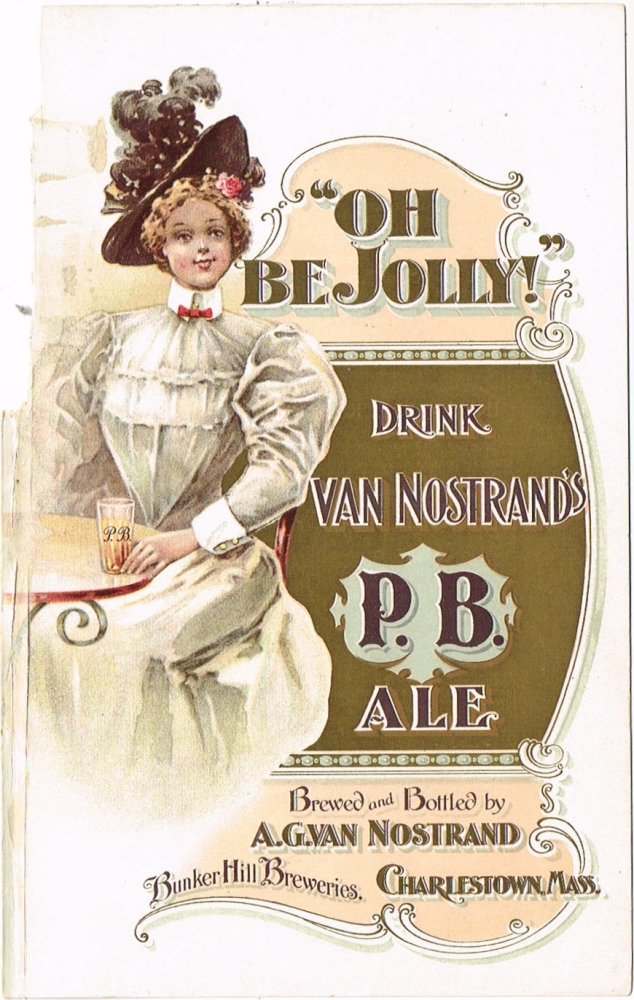
Van-Nostrands-P-B-Ale-Paper-Ads-Bunker-Hill-Breweries-A-G-Van-Nostrand

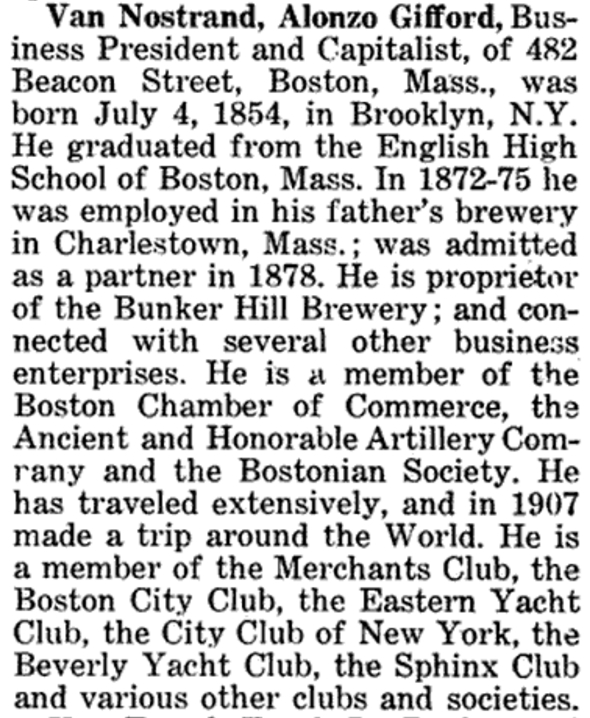
And this is from “Who’s Who in New England,” published in 1909:

ag-van-nostand-bio

bunker-hill-brewery-tray-1906

This account of Van Nostrand is from “Herringshaw’s American Blue-book of Biography: Prominent Americans of 1919:”

van-nostrand-blue-book

PB-Ale-Paper-Ads-Bunker-Hill-Breweries-A-G-Van-Nostrand

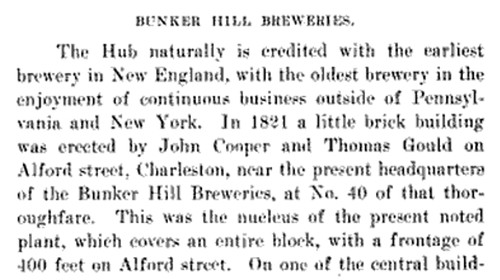
And this is a history of the Bunker Hills Breweries from “100 Years of Brewing History:”

bunker-hill-100yrs-1
bunker-hill-100yrs-2
bunker-hill-letterhead
bunker-hill-100yrs-3

bunker-hill-brewery-1897
The Bunker Hill brewery in 1987.

This biography is from the breweriana website, Rick’s Bottle Room:

ALONZO G. VAN NOSTRAMO

Dutch forbears, can turn to the maternal line and trace his ancestry from those who settled in New England, who suffered the deprivations of the early colonists, who participated in the wars with the Indians and French and finally in the Revolution, and who helped to make this part of the United States what it is to-day. Mr. Van Nostrand’s mother’s maiden name was Mehetabel Bradlee. She is the daughter of Thomas and Ann (Howard) Bradlee, and was born in the old house at the corner of Tremont and Hollis Streets in Boston, from which her grandfather and other patriots disguised as Indians sallied forth as members of the Boston Tea Party in 1773. Her ancestor in direct line was Daniel Bradley, who came from London in 1635 in the ship Elizabeth, settling in Haverhill, Massachusetts, where he was killed in the Indian Massacre of August 13, 1689.

Alonzo G. Van Nostrand was born July 4, 1854. He was not quite eighteen years of age when, graduating from the English High School, he was given a clerkship in the small brewery on Alford Street. During the three years following he worked his way through every department, gaining a comprehensive and practical knowledge of the business and its possibilities. In 1875 he was taken into partnership by his father. Thereafter the development of the plant and the business was steady and significant. It was in 1875 that the P. B. trademark was originated and adopted. A bottling building was erected, with a storage capacity of 240,000 bottles. In 1891 the brewing of Bunker Hill Lager was begun in a new brewery. Later another brew house was completed at a cost of $100,000 to meet the increasing demand. At the present time the breweries cover an entire block of four acres and there is no room for further expansion, except by increasing the height of buildings. Mr. Van Nostrand made a trip around the world in 1907. He is married and has one son now in Harvard College. Mrs. Van Nostrand’s maiden name was Jane Bradford Eldridge. She is a daughter of Captain Eldridge, of Fairhaven, and is a lineal descendant of Governor Bradford, of the Plymouth Colony, who landed from the Mayflower in 1620. Mr. and Mrs. Van Nostrand occupy the Van Nostrand residence at 482 Beacon Street. Mr. Van Nostrand holds membership in a score or more of clubs and associations, including art and historical societies in Boston and New York, and is a member of the leading yacht clubs.

bunker-hill-letterhead

He considers that the best advice that he can offer to young men just starting in life can be tersely stated as follows:

“Be honest, and particularly with yourself. Concentrate your efforts on one thing at a time. Undertake only what you believe you can accomplish, but when once started, never give up.”

Mr. Van Nostrand has developed a group of splendid, modern brewery buildings, each equipped for a special purpose, but those buildings would be useless, that equipment would rust in idleness, were it not for the fact that, in the midst of intense competition and in resistance of the constant temptation to consolidate forces and reduce standards, he has chosen his own path, has sought to produce, without regard to cost, malt beverages that will surpass any of domestic brewing and will compare with the best of Europe, and has made the P. B. Brewery the standard by which all others in New England are gaged, or seek to be gaged, in public estimate. And that takes us back to the original point that pride of ancestry is a good thing and that business ability is better; but that, when pride of ancestry and superlative business ability are blended and aged in the vat of commercial experience, the output is inevitably as good as can be asked for, the best that can be obtained.

good-ale-owl-musty

Without a doubt, this is one of my favorite old beer names: “Owl-Musty Good Old Ale.” What a crazy name. Who would want something “owl-musty?” But it was obviously popular, so who knows? Hoo! Hoo!

old-musty-button

Filed Under: Birthdays, Breweries, Just For Fun Tagged With: Boston, History, Massachusetts, New York

Historic Beer Birthday: Cord Hinrich Haake

July 4, 2025 By Jay Brooks

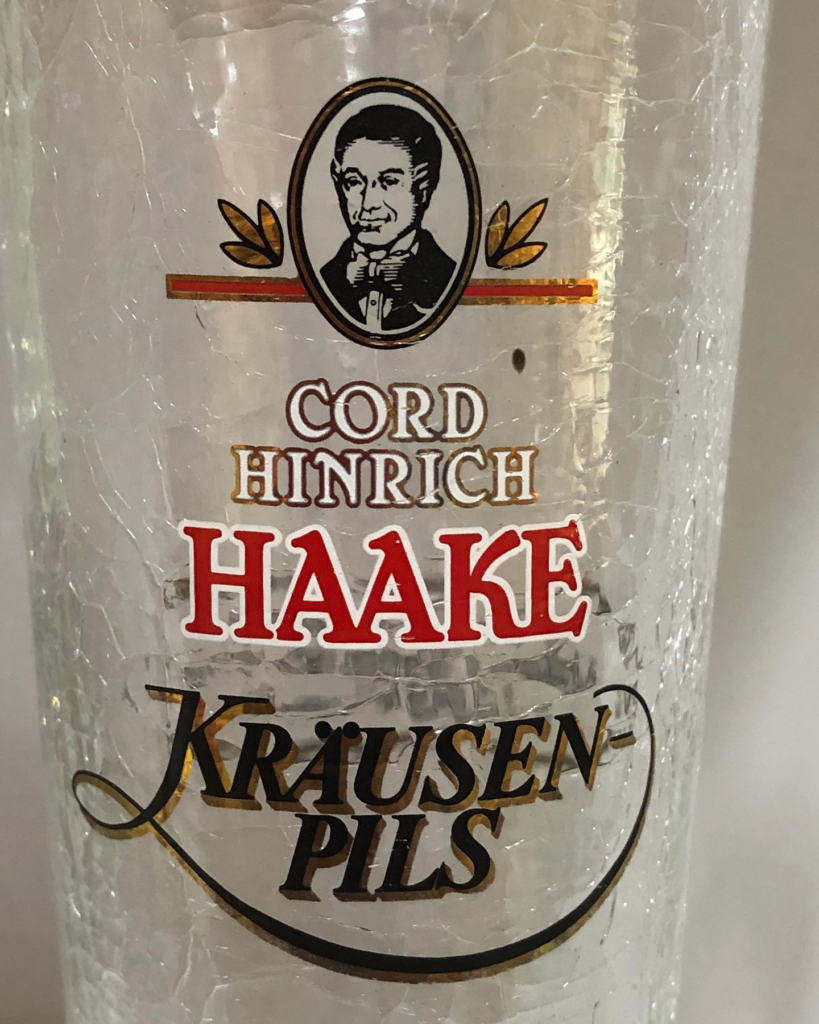
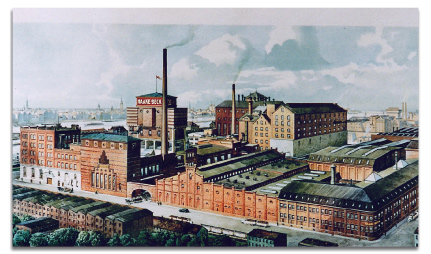
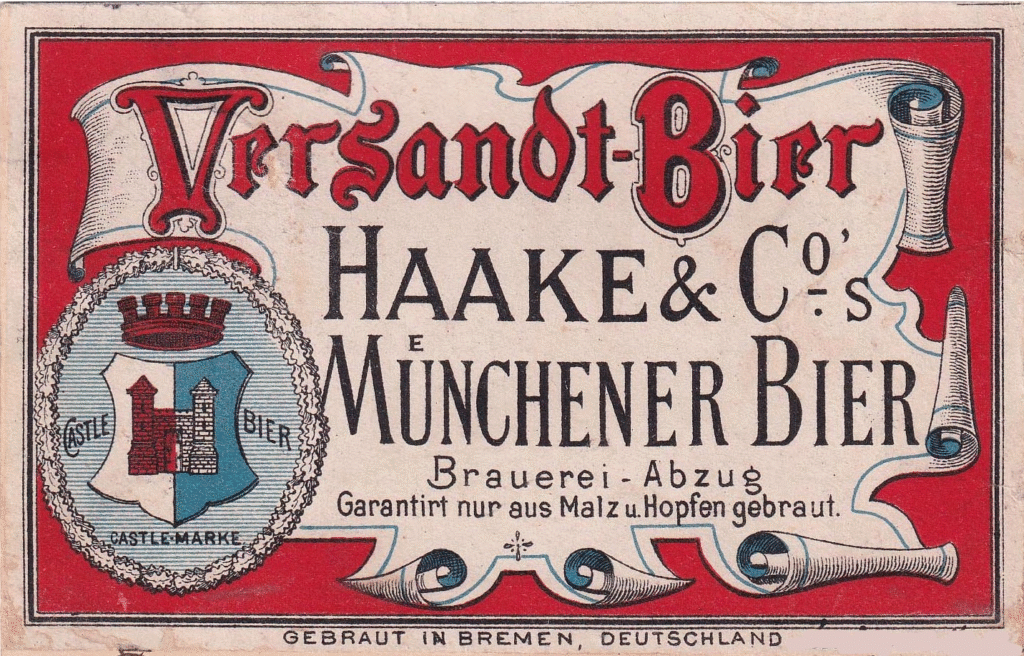
Today is the birthday of Cord Hinrich Haake (July 4, 1801-1845). He was born in Bremen, Germany. His father was Heinrich Wilhelm, who was a farmer from Möhlenhoff in the Freudenberg district near Bassum, who already had a beer bar there and his own “brewing rights.” In 1805, his father was accepted into the Brauer-Societät Bremen and won the “Gerechtsame” — permission to brew in-house. In 1826, Cord acquired the neighboring house of his future father-in-law, Hans Ehntholt, and in May of that year, he founded the C.H. Haake brewery. In 1832, Haake became the first to start producing bottom-fermented beer. In 1845, at age 44, Haake died, leaving the brewery to his widow.

In 1921, the Haake brewery merged with Kaiserbrauerei Beck & Co and the combined company name the two became Haake-Beck Brauerei AG. In 2002, it was bought by Interbrew, who today is Anheuser-Busch InBev.

Filed Under: Birthdays, Breweries, Just For Fun Tagged With: Germany, History

Beer In Ads #5013: T. & A. Goux Bock

July 1, 2025 By Jay Brooks

Last year I decided to concentrate on Bock ads. Bock, of course, may have originated in Germany, in the town of Einbeck. Because many 19th century American breweries were founded by German immigrants, they offered a bock at certain times of the year, be it Spring, Easter, Lent, Christmas, or what have you. In a sense they were some of the first seasonal beers. “The style was later adopted in Bavaria by Munich brewers in the 17th century. Due to their Bavarian accent, citizens of Munich pronounced ‘Einbeck’ as ‘ein Bock’ (a billy goat), and thus the beer became known as ‘Bock.’ A goat often appears on bottle labels.” And presumably because they were special releases, many breweries went all out promoting them with beautiful artwork on posters and other advertising.

Monday’s ad is for Bock Beer, though who’s bock is unclear, at least I can’t make it out. The ad was published on July 1, 1899 and was for T. & A. Goux Resale and Wholesale Liquor Dealers of Santa Barbara, California. They were a liquor dealer founded by Thomas and Augustin Goux, whose father had emigrated to the U.S. to work at the French Consulate in Los Angeles. They appear to have been in business from 1890 to 1905. This ad ran in The Independent, also of Santa Barbara, California.

Filed Under: Art & Beer, Beers, Breweries, Just For Fun Tagged With: Advertising, Bock, California, History, Southern California

« Previous Page
Next Page »

Find Something

Northern California Breweries

Please consider purchasing my latest book, California Breweries North, available from Amazon, or ask for it at your local bookstore.

Recent Comments

  • Bob Paolino on Beer Birthday: Grant Johnston
  • Gambrinus on Historic Beer Birthday: A.J. Houghton
  • Ernie Dewing on Historic Beer Birthday: Charles William Bergner 
  • Steve 'Pudgy' De Rose on Historic Beer Birthday: Jacob Schmidt
  • Jay Brooks on Beer Birthday: Bill Owens

Recent Posts

  • Beer In Ads #5137: Bock Is Back… Look For It March 1st February 28, 2026
  • Historic Beer Birthday: John Holme Ballantine February 28, 2026
  • American Craft Beer Hall of Fame: 2nd Year Inductees February 28, 2026
  • Beer Birthday: Jeff Bell February 28, 2026
  • Beer In Ads #5136: American Bock Beer Is Being Served Today! February 28, 2026

BBB Archives

Feedback

Head Quarter
This site is hosted and maintained by H25Q.dev. Any questions or comments for the webmaster can be directed here.