Brookston Beer Bulletin

Jay R. Brooks on Beer

  • Home
  • About
  • Editorial
  • Birthdays
  • Art & Beer

Socialize

  • Dribbble
  • Email
  • Facebook
  • Flickr
  • GitHub
  • Instagram
  • LinkedIn
  • Pinterest
  • RSS
  • Twitter
  • YouTube

Powered by Genesis

Historic Beer Birthday: Joseph Seelinger

June 23, 2025 By Jay Brooks

eagle-erie
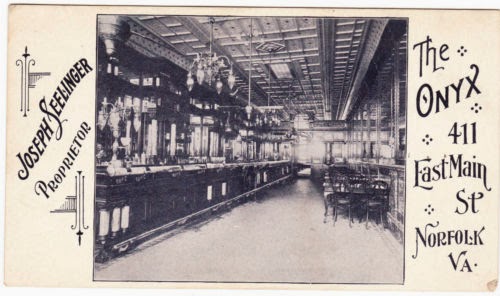
Today is the birthday of Joseph Seelinger (June 23, 1863-October 17, 1939). He was born in Erie, Pennsylvania, the son of Joseph F. Seelinger, who owned the Erie City Brewery for a time. Originally founded in 1861 by George Frey, Seelinger bought in 1870, renamed it the Joseph F. Seelinger Brewery in 1872, but closed it for good the same year, and relocated to Norfolk, Virginia and opened the Onyx Saloon.

Joseph-Seelinger

This short obit is from Find-a-Grave:

Joseph Seelinger aged 76, operator of one of Norfolk’s Bygone popular restaurants, and who entertained such prominent personages as President Grover Cleveland, when the latter came to Norfolk on duck hunting trips, died yesterday afternoon at 4:30 at his residence, 318 Mowbray Arch.

Mr. Seelinger came to Norfolk in his early life from Erie Penn. and became widely know throughout the city by the fastidious diners with whom cost was not a factor. In the gay days of Norfolk his place was the center of fashionable gatherings, especially around the holiday seasons.

Mr Seelinger was an active member of Norfolk Lodge No. 38, BPOE. He was the son of F Joseph and Elizabeth Stemmer Seelinger, he is survived by his sons Sherman E and Joseph P Seelinger and two daughters Mrs. C J Aydlette and Mrs C C Dixon.
Onyx-Saloon-Norfolk-blotter

The family never looked back and found success with the restaurant saloon in Virginia. There’s also an entertaining account of the time Saloon Owner “Joe” Went Gunning with Grover Cleveland. That may be Seelinger in the trade card below, but nobody seems to be able to confirm it.
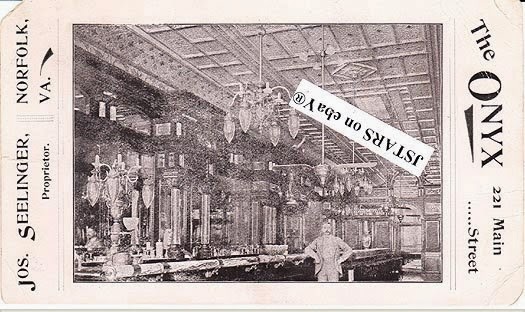
Onyx-trade-card

Filed Under: Birthdays, Breweries, Just For Fun Tagged With: History, Pennsylvania

Historic Beer Birthday: Henry Foss

June 23, 2025 By Jay Brooks

foss-schneider
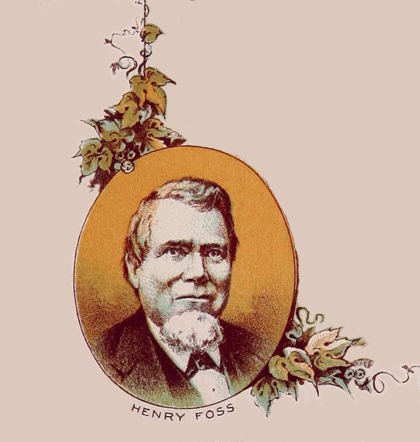
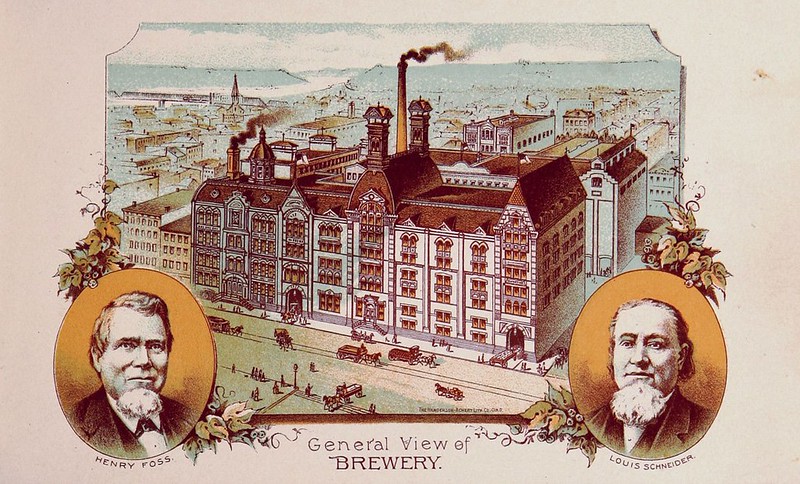
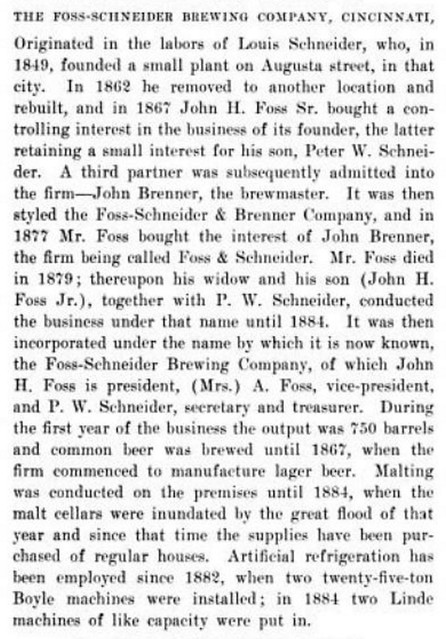
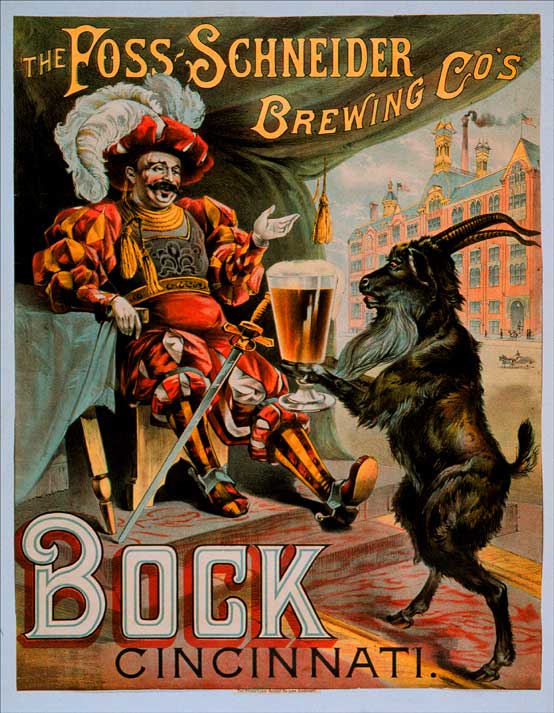
Today is the birthday of Henry Foss, a.k.a. John Henry Foss (June 23, 1817-August 13, 1879). Foss was born in Hanover, Germany but emigrated to Ohio. In 1842, he married Elizabeth Rumpeing, but she passed away in 1854 after twelve years of marriage. He then married Adelaide Foss later the same year, and they had 13 children together. In 1867, he became involved with the Louis Schneider Brewery in Cincinnati, Ohio, becoming a partner and it eventually became known as the Foss-Schneider Brewing Co. It closed during prohibition, but reopened when it was repealed in 1933, though closed for good in 1939.

henry-foss

Here’s a biography of Foss, from the “History of Cincinnati and Hamilton County, Ohio: Their Past and Present Including Early Development, Antiquarian Researches, Their Aboriginal History, Pioneer History, Political Organization, Agricultural, Mining and Manufacturing Interests, A History of the City, Villages and Townships, Religious, Educational, Biographies, and Portraits of Pioneers and Representative Citizens, Etc.,” which was published in 1894.

Henry Foss was born in Germany, June 23, 1817, and died in Cincinnati August 13, 1879. After attending the common schools until he was between thirteen and fourteen years of age he was given to understand that from that time he would be expected to “paddle his own canoe,” so he at once commenced the life of a farm laborer, and, to the credit of his industrious habits, it is said that he followed this kind of work faithfully until he was nearly twenty years old. But at that time he somehow or other began to get dissatisfied with the result of his six years’ hard work, so he thought he would “take stock” to see how much he had made, and calculated how much he would be worth in forty years, if he continued at the same business at the same wages — about twelve or fourteen dollars a year. He had nothing at the start; he had wasted no money; had only kept himself clothed, and still he had nothing to show for all his labor but a few dollars, barely sufficient to take him over the sea to the New World. Yet, nevertheless, he was determined to go with a party that was about to leave the village for America. Leaving home on the tenth day of May 1837, the party, consisting of himself and three others, traveled by wagon to Bremen, where they took passage on the ship “Richmond” bound for Richmond, Va. After paying his passage money he had but five cents left, so that it was no trouble for him to conclude to rely solely upon his efforts in the New World of the West — in fact, there was no choice in the matter. After being at sea for several days they encountered a storm of great severity, during which they lost their mainmast and much of their rigging, and were driven back so far that the distance lost was not regained for fourteen days. Besides the above disasters the cook’s galley, with all the cooking apparatus, was swept clean overboard, so that it was three days after before they had a particle of anything warm to eat or drink. At last, however, after twenty-two days. they landed safely at Richmond, Va., our subject having, we suspect, had enough of “life on the ocean wave” to satisfy him, as he never re-crossed it.

After looking around for a day or two, Mr. Foss went to work on the James River canal, at seventeen dollars per month and board. At this he continued for about seven months, when, having saved something like one hundred dollars, he thought he was rich at once, and would soon buy all the land he wanted. Like thousands of his countrymen he judged that the West was the place for him; so he joined a party of twenty-two possessed of the same idea. Clubbing together, the party procured a large team, and started over the mountains to the Kanawha canal, by which they arrived at Wheeling, where they took steamer for Pittsburgh, and at once proceeded down the river to Cincinnati. On landing here Mr. Foss found things so dull that he determined to proceed to St. Louis. Finding matters much the same there, he began to think he had made a mistake in coming west; but he passed over into Illinois with the expectation of going to work on a turnpike at Belleville. It was so swampy there, however, that almost every one who worked there was seized with fever and ague. In this emergency he returned to St. Louis, and from there again came to Cincinnati, where he was advised by his friends to go to work on the Whitewater canal, at Brookville, some forty miles from the city. He walked this distance with his knapsack on his back, and at once began to work at seventeen dollars per month and board. At the end of three months he went to Cincinnati. and sent fifty dollars home to his parents to help smooth the path of life for them. After working on the canal two months longer he was made foreman of a squad of quarry men; while at this work he conceived the idea of learning the stone-cutting trade, and after instructing another in his duties, he went to the yard to learn the trade. In nine mouths the locks of the canal were completed, at the end of which time Mr. Foss came to the city, and was employed at dressing stone until he saw an opening at the locks of the Licking canal, Kentucky. After working there about six mouths he commenced as a stone mason, and having a good eye for mechanics he soon proved an efficient workman, and thereafter could either cut or lay stone. After continuing in this way two years, during which he had sent $500 home to bring out the whole family, and saved $500 besides, on the arrival of his parents and his brothers and sisters they found that Henrv had rented and furnished a house complete for them to go into.

With the $500 in hand he commenced business for himself on a small scale, which he gradually increased from year to year until he employed from fifty to sixty journeymen, and nearly as many laborers. In 1848-49, in connection with Henry Atlemeier, he built the House of Refuge; and while thus engaged the cholera was raging so fearfully that the funerals moving from the city to the cemetery formed a constant procession. The architect of their job. Henry Walters, and many of their workmen fell victims to the epidemic. In 1851 he built the foundations of the Hamilton and Dayton depot, which consumed some 5,000 perches of stone, and completed the job in about three months. He built the church on the corner of Mound and Barr, and adjoining gymnasium in 1857-58, also the foundations of St. Philomena church on Congress and Butler streets; St. Joseph’s, on Linn; Holy Trinity, on Fifth; likewise that of the large block on the corner of Ninth and Walnut; and the church of the Holy Angels (all of stone), Fulton; and the south wing of Bishop Purcell’s seminary, besides a vast number of dwelling houses. He continued this business until 1856, when he sold off his teams and building apparatus generally, and built a distillery on the Plank road, now Gest street, for himself and his partner, with a capacity of 900 bushels per day. After its completion his partner was somewhat alarmed at their great undertaking, so, to make the matter lighter, sold a quarter interest to two other gentlemen, retaining a quarter himself. After conducting the business together for about three months, hard times came upon them, and Mr. Foss’ original partner again became alarmed for fear all would be lost; but not so Mr. Foss, who at once bought the interest of that gentleman, and continued the business with the owner of the fourth interest. The scale soon turned in their favor, and, after eight years of success, having considerable surplus money, Mr. Foss bought the interest of his partners, and carried on the business alone for about two years, then sold out to Mr. John Pfeffer, concluding that he would work a little in his garden, and take things easy the rest of his life. But to his surprise he did not know what to do with himself, and, after laying off about two months, he came to the conclusion that doing nothing was the hardest work in the world. He then formed a partnership with Adam Heitbrink for the purpose of building the foundation of the city Work House. After this was finished he formed a partnership with William P. Snyder and John Brenner, and went into the manufacture of. lager beer, ‘ the capacity of their works at the commencement being about sixty-five barrels per day. This was in December, 1867; in the spring of 1868 it became necessary to enlarge their works, and their business continued to increase. The further connection of Mr. Foss with the great brewing establishment, now known as the Foss-Schneider Brewing Company, is contained in the personal history of his son and successor, John H. Foss, president of that company, and which is contained in this volume.

Mr. Henry Foss was married in 1842, to Miss Elizabeth Rumpeing, a German lady, who was every way worthy to be his wife. Of this union five children were born, all of whom, together with their mother, have died, the latter in 1854. Mr. Foss was married again, during the same year, to Miss Adelaide TeVeluwe, of Zutfen Lechtenforde, Holland, and by her eight children were born to him, seven of whom—John H., William, Edward, Philomena, Lizzy, Rosey and Bernidena—are still living, as is also Mrs. Foss.

foss-schneider-2

Here’s a short history of the brewery, from “100 Years of Brewing:”

foss-schnedier-100yrs

Foss-Brewery-bock

Nonpareil-Beer-Labels-Foss-Schneider-Company

Filed Under: Birthdays, Just For Fun Tagged With: Germany, History, Ohio

Beer In Ads #5006: Valley Forge Bock Beer

June 22, 2025 By Jay Brooks

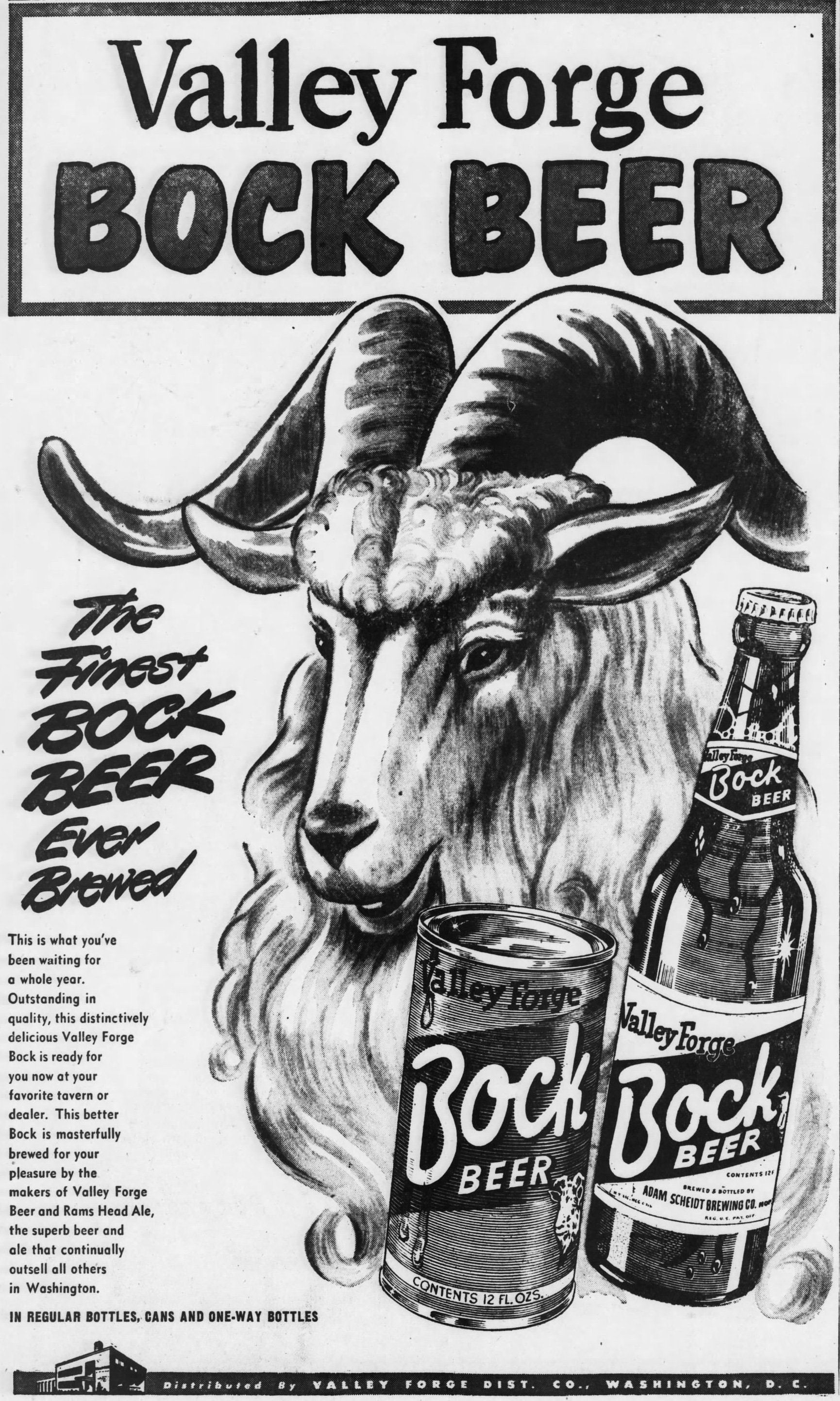
Last year I decided to concentrate on Bock ads. Bock, of course, may have originated in Germany, in the town of Einbeck. Because many 19th century American breweries were founded by German immigrants, they offered a bock at certain times of the year, be it Spring, Easter, Lent, Christmas, or what have you. In a sense they were some of the first seasonal beers. “The style was later adopted in Bavaria by Munich brewers in the 17th century. Due to their Bavarian accent, citizens of Munich pronounced ‘Einbeck’ as ‘ein Bock’ (a billy goat), and thus the beer became known as ‘Bock.’ A goat often appears on bottle labels.” And presumably because they were special releases, many breweries went all out promoting them with beautiful artwork on posters and other advertising.

Sunday’s ad is for Valley Forge Bock Beer. The ad was published in 1954. This one was for the Adam Scheidt Brewing Co., which was located in Norristown, Pennsylvania and was originally founded in 1866. This ad ran in The Evening Star, of Washington, D.C.

Filed Under: Art & Beer, Beers, Breweries, Just For Fun Tagged With: Advertising, Bock, History, Pennsylvania

Beer In Ads #5005: Valter & Droopy Love Old Imperial Bock

June 21, 2025 By Jay Brooks

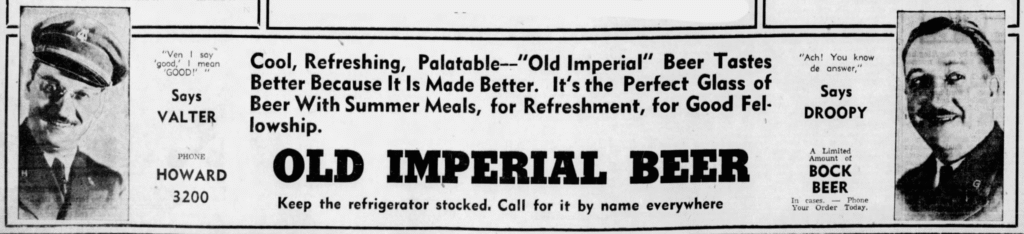
Last year I decided to concentrate on Bock ads. Bock, of course, may have originated in Germany, in the town of Einbeck. Because many 19th century American breweries were founded by German immigrants, they offered a bock at certain times of the year, be it Spring, Easter, Lent, Christmas, or what have you. In a sense they were some of the first seasonal beers. “The style was later adopted in Bavaria by Munich brewers in the 17th century. Due to their Bavarian accent, citizens of Munich pronounced ‘Einbeck’ as ‘ein Bock’ (a billy goat), and thus the beer became known as ‘Bock.’ A goat often appears on bottle labels.” And presumably because they were special releases, many breweries went all out promoting them with beautiful artwork on posters and other advertising.

Saturday’s ad is for Old Imperial Bock Beer. The ad was published in 1962. This one was for the Rahr-Green Bay Brewing Co., which was located in Green Bay, Wisconsin and was originally founded in 1853. This ad ran in The Green Bay Press Gazette, of Green Bay, Wisconsin. The text on this one is great. “Cool, Refreshing, Palatable.” Palatable? Not exactly a great descriptor. But even better are the two endorsements, first from Valter: “Ven I say ‘good,’ I mean ‘GOOD!'” followed by Droopy: “‘Ach! You know de answer.”

Filed Under: Art & Beer, Beers, Breweries, Just For Fun Tagged With: Advertising, Bock, History, Wisconsin

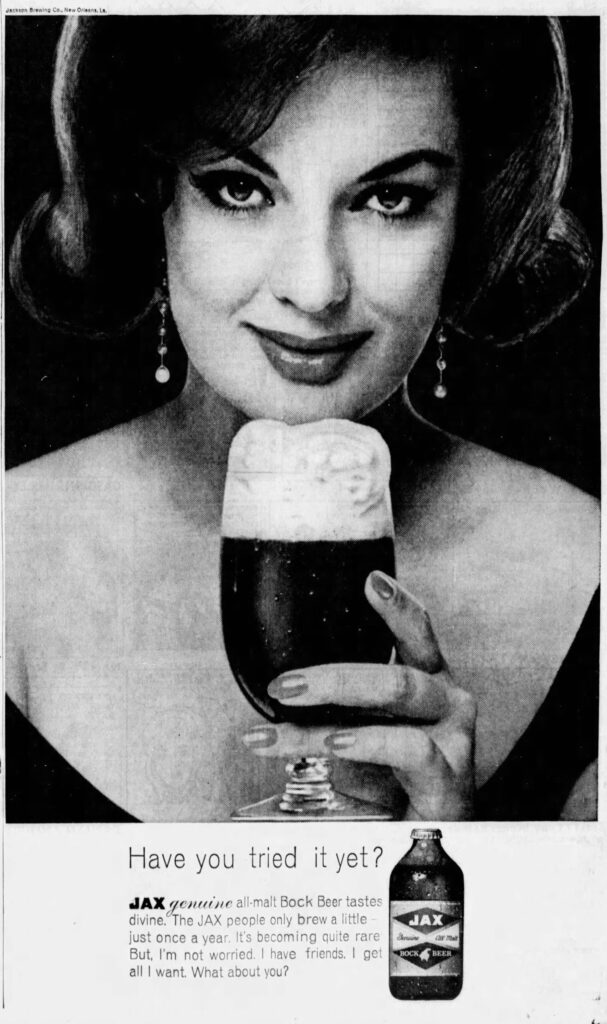
Beer In Ads #5004: Have You Tried It Yet?

June 20, 2025 By Jay Brooks

Last year I decided to concentrate on Bock ads. Bock, of course, may have originated in Germany, in the town of Einbeck. Because many 19th century American breweries were founded by German immigrants, they offered a bock at certain times of the year, be it Spring, Easter, Lent, Christmas, or what have you. In a sense they were some of the first seasonal beers. “The style was later adopted in Bavaria by Munich brewers in the 17th century. Due to their Bavarian accent, citizens of Munich pronounced ‘Einbeck’ as ‘ein Bock’ (a billy goat), and thus the beer became known as ‘Bock.’ A goat often appears on bottle labels.” And presumably because they were special releases, many breweries went all out promoting them with beautiful artwork on posters and other advertising.

Friday’s ad is for Jax Bock Beer. The ad was published in 1962. This one was for the Jackson Brewing Co., which was located in New Orleans, Louisiana and was originally founded in 1890. This ad ran in The San Angelo Standard Times, of San Angelo, Texas.

Filed Under: Art & Beer, Beers, Breweries, Just For Fun Tagged With: Advertising, Bock, History, Louisiana, New Orleans, Texas

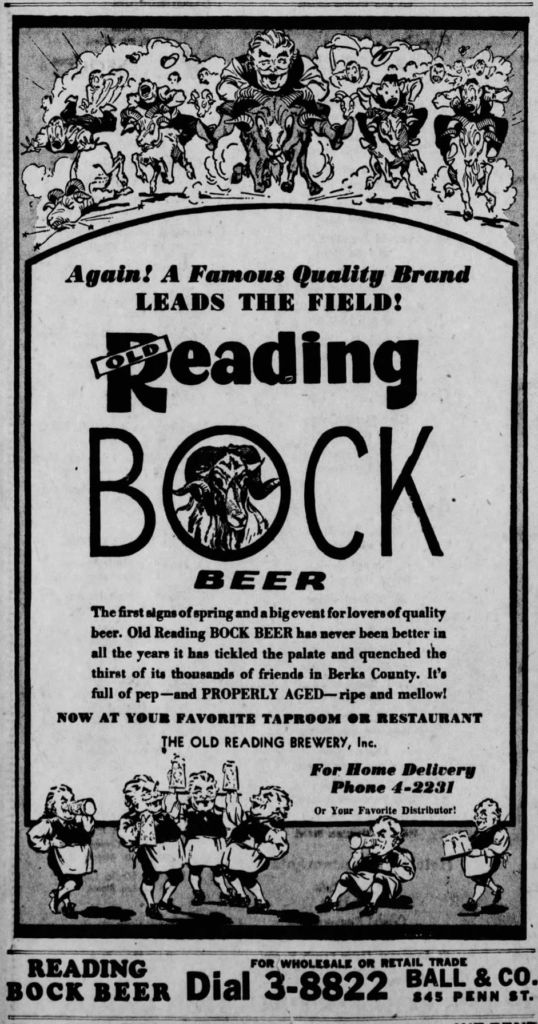
Beer In Ads #5003: Old Reading Bock Beer

June 19, 2025 By Jay Brooks

Last year I decided to concentrate on Bock ads. Bock, of course, may have originated in Germany, in the town of Einbeck. Because many 19th century American breweries were founded by German immigrants, they offered a bock at certain times of the year, be it Spring, Easter, Lent, Christmas, or what have you. In a sense they were some of the first seasonal beers. “The style was later adopted in Bavaria by Munich brewers in the 17th century. Due to their Bavarian accent, citizens of Munich pronounced ‘Einbeck’ as ‘ein Bock’ (a billy goat), and thus the beer became known as ‘Bock.’ A goat often appears on bottle labels.” And presumably because they were special releases, many breweries went all out promoting them with beautiful artwork on posters and other advertising.

Thursday’s ad is for Old Reading Bock Beer. The ad was published in 1935. This one was for the Reading Brewing Co., which was located in Reading, Pennsylvania and was originally founded in 1886. This ad ran in The Reading Times, also of Reading, Pennsylvania.

Filed Under: Art & Beer, Beers, Breweries, Just For Fun Tagged With: Advertising, Bock, History, Pennsylvania

Historic Beer Birthday: Alan Cranston

June 19, 2025 By Jay Brooks

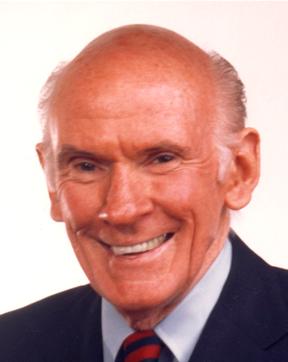
alan-cranston
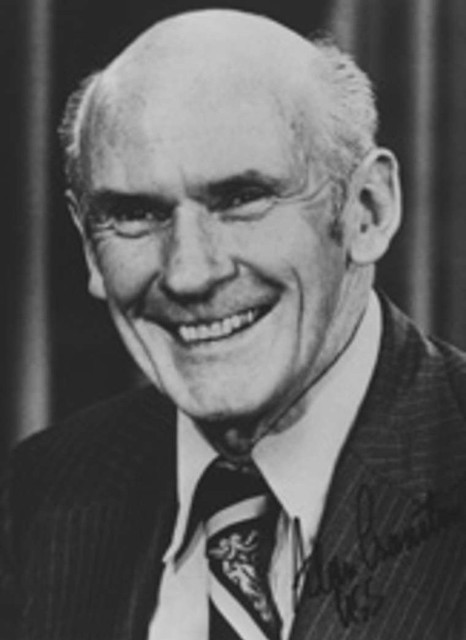
Today is the birthday of Alan MacGregor Cranston (June 19, 1914–December 31, 2000). Cranston was a Democratic senator from California, born in Palo Alto, and served four terms.

cranston

Here’s a biography from Find a Grave:

US Senator. A member of the Democratic party, he represented the state of California for four terms in the US Senate from January 1969 until January 1993, serving as the Democratic Whip from 1977 until 1991. Born Alan MacGregor Cranston in Palo Alto, California into a wealthy real estate family, he attended local public schools before attending Pomona College in Claremont, California and the Universidad Nacional Autonoma de Mexico in Mexico City, Mexico, and graduated in 1936 from Stanford University in Palo Alto with a degree in journalism. In 1937 he became a correspondent for the International News Service for two years preceding World War II, covering Europe and North Africa. When an abridged English-language translation of Adolf Hitler’s “Mein Kampf” was released, sanitized to exclude some of Hitler’s anti-semitism and militancy, he published a different translation (with annotations) which he believed more accurately reflected the contents of the book. In 1939 Hitler’s publisher sued him for copyright violation in Connecticut and a judge ruled in Hitler’s favor and publication of the book was halted. From 1940 until 1944 he served as chief, foreign language division in the Office of War Information and in 1944 he enlisted in the US Army. In 1945 he wrote the book, “The Killing of the Peace,” a synopsis of the failed bid to get the US to join the League of Nations immediately following World War I. A world government supporter, he attended the 1945 conference that led to the Dublin Declaration, and became president of the World Federalist Association in 1948. In 1949 he successfully pushed for the California legislature to pass the World Federalist California Resolution, calling on Congress to amend the Constitution to allow US participation in a federal world government. From 1949 until 1952 he was the national president of the United World Federalists. In 1952 he co-founded the California Democratic Council and served as its chairman. In 1958 he was elected California’s State Controller as a Democrat and was re-elected in 1962. In 1968 he ran as the Democratic candidate for US Senate and was elected to the first of four six-year terms, defeating Republican challenger Max Rafferty, followed by Republican challenger H.L. “Bill” Richardson in 1974, Republican Paul Gann in 1980, and Republican Congressman Ed Zschau in 1986. During his time in the US Senate, he served on the Banking, Housing, Urban Affairs, Veterans (which he chaired), and Foreign Relations Committees and was strongly opposed to the US involvement in the Vietnam War. He was an unsuccessful candidate for the 1984 Democratic presidential nomination, dropping out of the race after finishing poorly in the Iowa and New Hampshire primaries. In November 1991 he was reprimanded by the US Senate Select Committee on Ethics for “improper conduct” after Lincoln Savings head Charles Keating’s companies contributed $850,000 to voter registration groups closely affiliated with him. Because the Keating affair had damaged his political career, coupled with his diagnosis and treatment of prostate cancer, he decided against running for a 5th US Senate term. His final act as a Senator was to preside over the inauguration of Bill Clinton as President of the US on January 20, 1993. A fitness enthusiast, he was notable for practicing and participating in the sport of track and field as a sprinter in special senior races. An avid lifetime supporter of the global abolishment of nuclear weapons, in his retirement he became a part of the Nuclear Weapon Elimination Initiative of the State of the World Forum and founded the Global Security Institute in 1999, serving as its president. He died of natural causes in Los Altos, California at the age of 86.

alan-cranston

Of course, the one thing left out of Cranston’s biography in most accounts is the reason that he’s featured here. On January 4, 1977, Representative William A. Steiger (Republican from Wisconsin’s 6th District) introduced H.R.1337 a transportation bill with the title “A bill to amend the Internal Revenue Code of 1954 with respect to excise tax on certain trucks, buses, tractors, etcetera.”

To that bill, senator Cranston added a crucial amendment which had a profound effect on the landscape of beer today, and its final title was “An Act to amend the Internal Revenue Code of 1954 with respect to excise tax on certain trucks, buses, tractors, et cetera, home production of beer and wine, refunds of the taxes on gasoline and special fuels to aerial applicators, and partial rollovers of lump sum distributions.”

Here’s the text of the beer portion of Amendment 3534, added by Senator Alan Cranston:

(e) BEER FOR PERSONAL OR FAMILY USE. — Subject to regulation prescribed by the Secretary, any adult may, without payment of tax, produce beer for personal or family use and not for sale. The aggregate amount of beer exempt from tax under this subsection with respect to any household shall not exceed —

(1) 200 gallons per calendar year if there are 2 or more adults in such household, or
(2) 100 gallons per calendar year if there is only 1 adult in such household.

For purposes of this subsection, the term ‘adult’ means an individual who has attained 18 years of age, or the minimum age (if any) established by law applicable in the locality in which the household is situated at which beer may be sold to individuals, whichever is greater.

As we all know, President Jimmy Carter signed H.R. 1337 into law on October 14, 1978, paving the way for the our modern brewing industry that includes over 700 breweries in California alone, and over 4,000 nationwide. Thanks Alan.

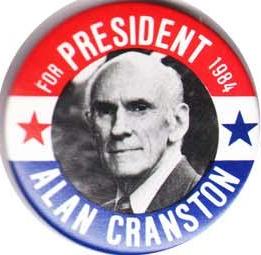
cranston-for-prez-84

In 1984, Cranston made a failed bid to run for president. I bet he would have gotten the homebrewing vote.

Filed Under: Birthdays, Just For Fun, Politics & Law, Related Pleasures Tagged With: California, History, Homebrewing

Beer In Ads #5002: Lemp’s Bock Beer

June 18, 2025 By Jay Brooks

Last year I decided to concentrate on Bock ads. Bock, of course, may have originated in Germany, in the town of Einbeck. Because many 19th century American breweries were founded by German immigrants, they offered a bock at certain times of the year, be it Spring, Easter, Lent, Christmas, or what have you. In a sense they were some of the first seasonal beers. “The style was later adopted in Bavaria by Munich brewers in the 17th century. Due to their Bavarian accent, citizens of Munich pronounced ‘Einbeck’ as ‘ein Bock’ (a billy goat), and thus the beer became known as ‘Bock.’ A goat often appears on bottle labels.” And presumably because they were special releases, many breweries went all out promoting them with beautiful artwork on posters and other advertising.

Wednesday’s ad is for Lemp’s Bock Beer. The ad was published on June 18, 1914. This one was for the Lemp Brewing Co., which was located in St. Louis, Missouri and was originally founded in 1840. This ad ran in The Post Intelligencer, of Seattle, Washington, I think, Illinois.

Filed Under: Art & Beer, Beers, Breweries, Just For Fun Tagged With: Advertising, Bock, History, Missouri, St. Louis

Historic Beer Birthday: Thomas M. Dukehart

June 18, 2025 By Jay Brooks

dukehart
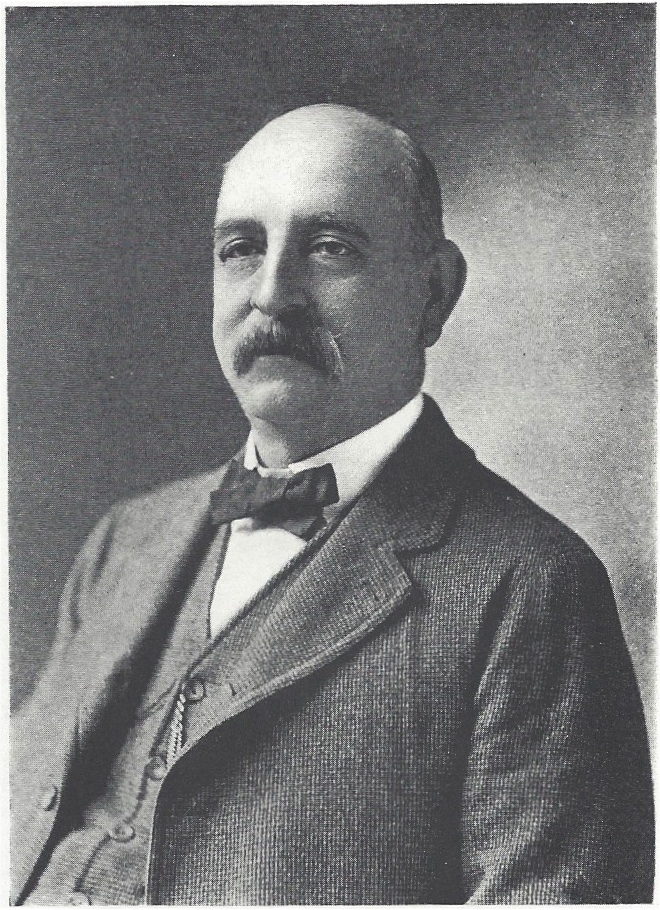
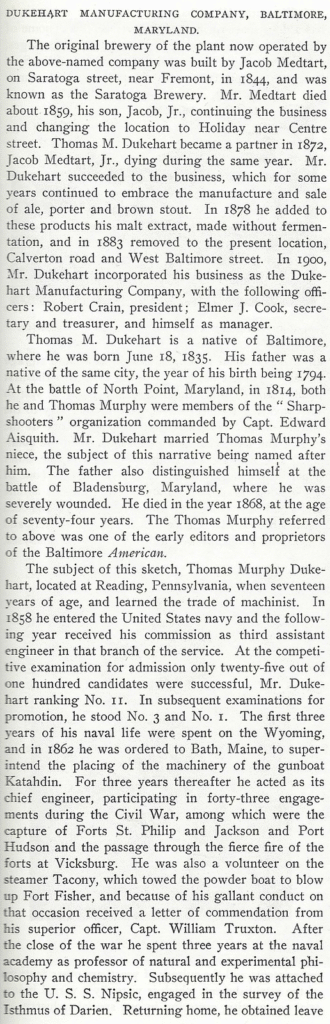
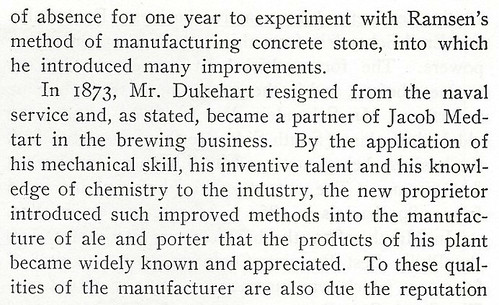
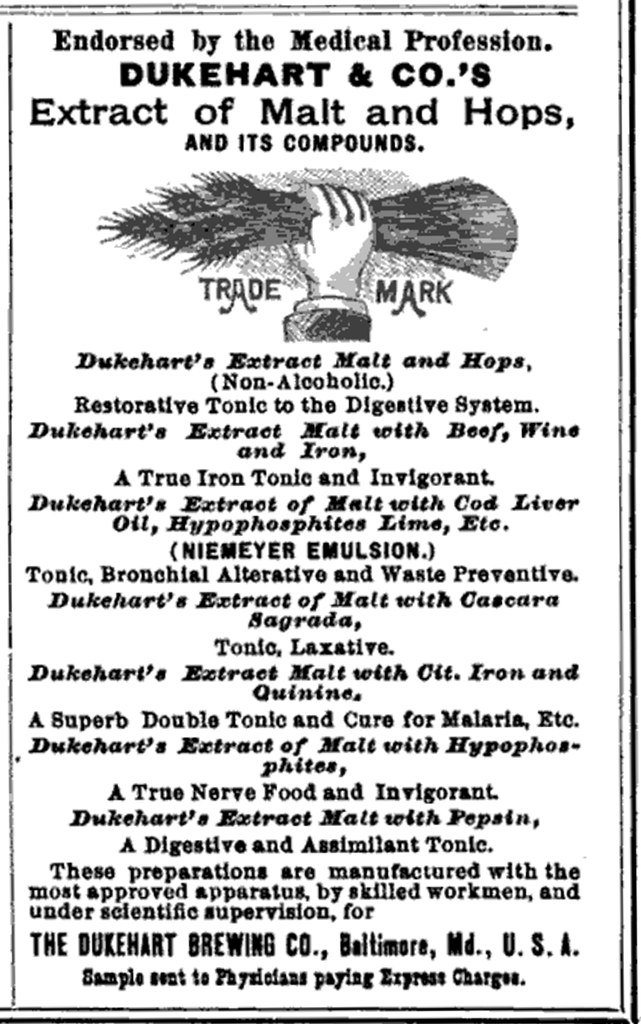
Today is the birthday of Thomas M. Dukehart (June 18, 1835-August 1, 1912). He was born in Maryland, and became a partner in a Baltimore Brewery, the Rock Spring Brewery, in 1872 and later it was known as the Maryland Brewing Co., from 1884-1891. Dukehart eventually became the sole owner, renaming it the Dukehart Brewing Co. in 1891, and in 1900 it became known as the Dukehart Manufacturing Co. Brewery. Dukehart died just as prohibition was starting, in 1912, and the brewery was closed and never reopened.

thomas-dukehart

This story of the Dukehart and the brewery is from “100 Years of Brewing,” published in 1903.

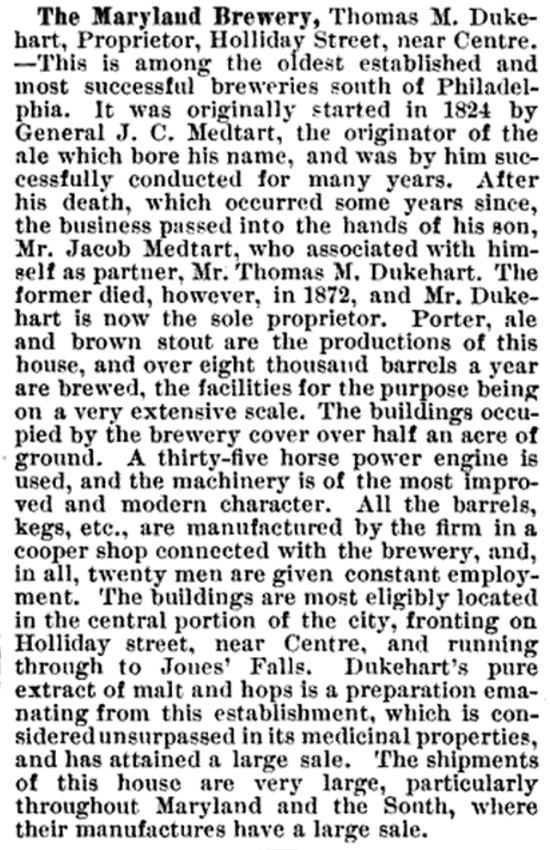
And this is from the “Industries of Maryland: A Descriptive Review of the Manufacturing and Mercantile Industries of the City of Baltimore,” published in 1882:

dukehart-ad-1891

Filed Under: Birthdays, Breweries, Just For Fun Tagged With: History, Maryland

Historic Beer Birthday: William Lassell

June 18, 2025 By Jay Brooks

astronomy
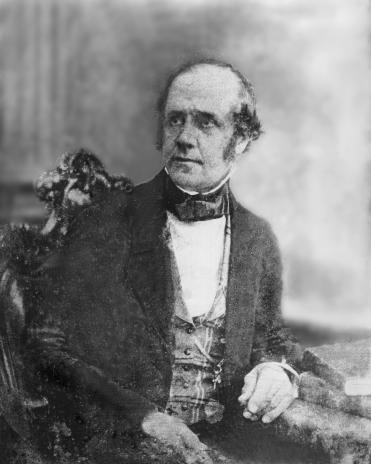
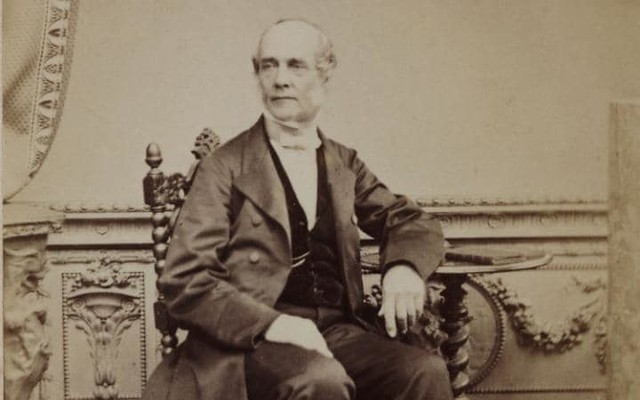
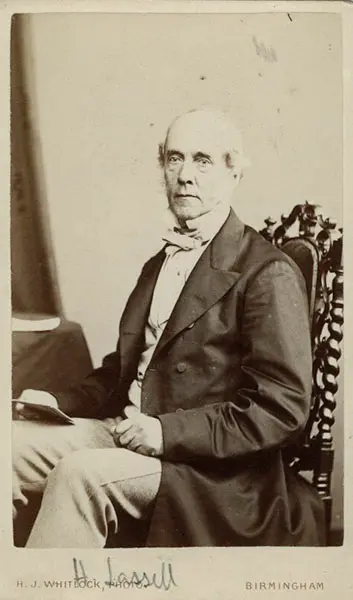
Today is the birthday of William Lassell (June 18, 1799–October 5, 1880). He made great contributions to astronomy throughout his life, but that “hobby” was funded by the fortune he made at his Liverpool brewery. He was initially trained as a merchant, and in 1825 started an apparently successful brewery, and one account states that he “married a widow of a wealthy Liverpool brewer gaining at the same time financial independence.” That may have given him the idea. Perhaps because his life was overshadowed by his astronomical pursuits, there’s very little about his brewery I could find, although I believe it was known as Lassell & Sharman Ltd.

william-lassell-large

Here’s his basic biography from his Wikipedia page:

William Lassell was born in Bolton, Lancashire, a town west of Manchester. He was educated first in Bolton then at Rochdale Academy. After the death of his father, he was apprenticed from 1814 to 1821 to a merchant in Liverpool. He then made his fortune as a beer brewer, which enabled him to indulge his interest in astronomy. He built an observatory at his house “Starfield” in West Derby, a suburb of Liverpool. There he had a 24-inch (610 mm) reflector telescope, for which he pioneered the use of an equatorial mount for easy tracking of objects as the Earth rotates. He ground and polished the mirror himself, using equipment he constructed. The observatory was later (1854) moved further out of Liverpool, to Bradstone.

In 1846 Lassell discovered Triton, the largest moon of Neptune, just 17 days after the discovery of Neptune itself by German astronomer Johann Gottfried Galle. In 1848 he independently co-discovered Hyperion, a moon of Saturn. In 1851 he discovered Ariel and Umbriel, two moons of Uranus.

When Queen Victoria visited Liverpool in 1851, Lassell was the only local she specifically requested to meet.

In 1855, he built a 48-inch (1,200 mm) telescope, which he installed in Malta because of the observing conditions that were better than in often-overcast England. On his return to the UK after several years in Malta he moved to Maidenhead and operated his 24-inch (610 mm) telescope in an observatory there. The 48-inch telescope was dismantled and was eventually scrapped.

Lassell was a Fellow of the Royal Astronomical Society (FRAS) from 1839, won the Gold Medal of the Royal Astronomical Society in 1849, and served as its president for two years starting in 1870. He was elected a Fellow of the Royal Society (FRS) in 1849 and won their Royal Medal in 1858. Lassel was also a Fellow of the Royal Society of Literature (FRSL). He was furthermore elected an honorary Fellow of the Royal Society of Edinburgh (HonFRSE) and of the Society of Sciences of Upsala, and received an honorary LL.D. degree from the University of Cambridge in 1874.

Lassell died in Maidenhead in 1880. Upon his death, he left a fortune of £80,000 (roughly equivalent to £7,200,000 in 2015). His telescope was presented to the Royal Observatory in Greenwich.

The crater Lassell on the Moon, a crater on Mars, the asteroid 2636 Lassell and a ring of Neptune are named in his honour.

This account of Lassell is from A Popular History of Astronomy During the Nineteen Century, by Agnes M. Clerke, published in 1885:

Within seventeen days of its identification with the Berlin achromatic, Neptune was found to be attended by a satellite. This discovery was the first notable performance of the celebrated two-foot reflector[224] erected by Mr. Lassell at his suggestively named residence of Starfield, near Liverpool. William Lassell was a brewer by profession, but by inclination an astronomer. Born at Bolton in Lancashire, June 18, 1799, he closed a life of eminent usefulness to science, October 5, 1818, thus spanning with his well-spent years four-fifths of the momentous period which we have undertaken to traverse. At the age of twenty-one, being without the means to purchase, he undertook to construct telescopes, and naturally turned his attention to the reflecting sort, as favouring amateur efforts by the comparative simplicity of its structure. His native ingenuity was remarkable, and was developed by the hourly exigencies of his successive enterprises. Their uniform success encouraged him to enlarge his aims, and in 1844 he visited Birr Castle for the purpose of inspecting the machine used in polishing the giant speculum of Parsonstown. In the construction of his new instrument, however, he eventually discarded the model there obtained, and worked on a method of his own, assisted by the supreme mechanical skill of James Nasmyth. The result was a Newtonian of exquisite definition, with an aperture of two, and a focal length of twenty feet, provided by a novel artifice with the equatoreal mounting, previously regarded as available only for refractors.

This beautiful instrument afforded to its maker, October 10, 1846, a cursory view of a Neptunian attendant. But the planet was then approaching the sun, and it was not until the following July that the observation could be verified, which it was completely, first by Lassell himself, and somewhat later by Otto Stuve and Bond of Cambridge (U.S.). When it is considered that this remote object shines by reflecting sunlight reduced by distance to 1/900th of the intensity with which it illuminates our moon, the fact of its visibility, even in the most perfect telescopes, is a somewhat surprising one. It can only, indeed, be accounted for by attributing to it dimensions very considerable for a body of the secondary order. It shares with the moons of Uranus the peculiarity of retrograde motion; that is to say, its revolutions, running counter to the grand current of movement in the solar system, are performed from east to west, in a plane inclined at an angle of 35 deg. to that of the ecliptic. Their swiftness serves to measure the mass of the globe round which they are performed. For while our moon takes twenty-seven days and nearly eight hours to complete its circuit of the earth, the satellite of Neptune, at a distance not greatly inferior, sweeps round its primary in five days and twenty-one hours, showing (according to a very simple principle of computation) that it is urged by a force seventeen times greater than the terrestrial pull upon the lunar orb. Combining this result with those of Professor Barnard’s and Dr. See’s recent measurements of the small telescopic disc of this farthest known planet, it is found that while in “mass” Neptune equals seventeen, in “bulk” it is equivalent to forty-nine earths. This is as much as to say that it is composed of relatively very light materials, or more probably of materials distended by internal heat, as yet unwasted by radiation into space, to about five times the volume they would occupy in the interior of our globe. The fact, at any rate, is fairly well ascertained, that the average density of Neptune is about twice that of water.

Filed Under: Birthdays, Just For Fun, Related Pleasures Tagged With: England, Great Britain, History, Science

« Previous Page
Next Page »

Find Something

Northern California Breweries

Please consider purchasing my latest book, California Breweries North, available from Amazon, or ask for it at your local bookstore.

Recent Comments

  • Bob Paolino on Beer Birthday: Grant Johnston
  • Gambrinus on Historic Beer Birthday: A.J. Houghton
  • Ernie Dewing on Historic Beer Birthday: Charles William Bergner 
  • Steve 'Pudgy' De Rose on Historic Beer Birthday: Jacob Schmidt
  • Jay Brooks on Beer Birthday: Bill Owens

Recent Posts

  • Beer In Ads #5137: Bock Is Back… Look For It March 1st February 28, 2026
  • Historic Beer Birthday: John Holme Ballantine February 28, 2026
  • American Craft Beer Hall of Fame: 2nd Year Inductees February 28, 2026
  • Beer Birthday: Jeff Bell February 28, 2026
  • Beer In Ads #5136: American Bock Beer Is Being Served Today! February 28, 2026

BBB Archives

Feedback

Head Quarter
This site is hosted and maintained by H25Q.dev. Any questions or comments for the webmaster can be directed here.