Brookston Beer Bulletin

Jay R. Brooks on Beer

  • Home
  • About
  • Editorial
  • Birthdays
  • Art & Beer

Socialize

  • Dribbble
  • Email
  • Facebook
  • Flickr
  • GitHub
  • Instagram
  • LinkedIn
  • Pinterest
  • RSS
  • Twitter
  • YouTube

Powered by Genesis

Historic Beer Birthday: Edmund Resch

June 9, 2025 By Jay Brooks

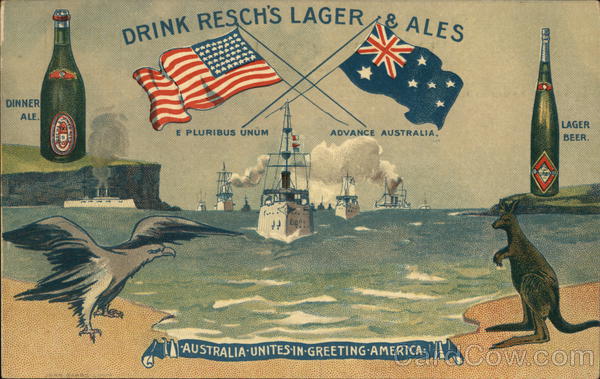
Today is the birthday of Edmund Resch (June 9, 1847-May 22, 1923). He was the oldest brother of Richard and Emil Resch, who founded the Lion Brewery in Australia, although it was later known as Resch’s Brewery. The brewery was taken over by Tooth and Co. in 1929, but today is owned by Carlton and United Breweries.

Because his career is so intertwined with his brothers, this is his older brother Edmund’s biography, also from the Australian Dictionary of Biography:

Edmund Resch (1847-1923) and Emil Karl Resch (1860-1930), brewers, were the sons of Johann Nicolaus Resch, ironmaster, and his wife Julia Bernhardine Louise Wilhelmine, née Heitmann, both of Saxony. Edmund was born on 9 June 1847 at Hörde, Westphalia, and arrived in Australia in 1863. In 1871, after mining in Victoria, he moved to New South Wales where he and his mate were the first to strike copper at the Cobar South mine. After prospecting for a year between Cobar, Louth, Bourke and Gilgandra he went to Charters Towers, Queensland, where he built, then operated a hotel for four years. He sold out because of ill health and about 1877 bought with a younger brother Richard Frederick Edward Nicolas (1851-1912) a cordial and aerated water factory at Wilcannia, New South Wales. Next year he visited Germany, where at Munich, on 17 October 1878, he married Carolina Rach (1855-1927).

Business flourished, for Wilcannia was a busy river port and centre of a vast pastoral district. In September 1879 Edmund and Richard opened the Lion Brewery and in 1883 purchased a brewery at Cootamundra, renaming it the Lion Brewery; by 1885 they had branches at Silverton, west of Broken Hill, and Tibooburra on the Mount Browne goldfield. On 11 August 1885, however, the partnership was dissolved by mutual consent, Richard carrying on at Cootamundra and Tibooburra and Edmund at Wilcannia, where he built up an enviable reputation as a skilful brewer.

In 1892 Edmund Resch installed a manager and retired to live in Melbourne. In 1895, however, he moved to Sydney to manage Allt’s Brewing & Wine and Spirit Co. Ltd for a banker who had assisted him in his early business career. In 1897 he purchased the brewery for about £67,000 and in 1900 also acquired the business and plant of the New South Wales Lager Bier Brewing Co. Ltd. Assisted by John Herbert Alvarez (d.1913), his able accountant and manager, and his sons Edmund (1879-1963) and Arnold Gottfried (1881-1942), who had both studied modern brewing methods in Europe and the United States of America, Resch embarked on a large building programme, centralizing his combined interests in Dowling Street, Redfern. In July 1906 Resch’s Ltd was incorporated with an authorized capital of £150,000.

Resch’s second business career was even more successful than his first. In 1901 he told a Legislative Assembly select committee on tied houses, where he was reprimanded by the chairman Richard Meagher for answering ‘in an acrimonious way’, that he was the only brewer in New South Wales who did not use ‘salicylic acid and other antiseptics’ in his beer, and, not surprisingly, that he was against tied houses. He successfully advertised in 1904-14 as ‘brewer by appointment to His Excellency the Governor-General’: his ales, beers and stout captured much of the State’s market. From 1903 to October 1913 he was consul in Sydney for the Netherlands government and on his retirement he was appointed knight of the Order of Orange-Nassau. Wealthy, but uncultivated, he lived in great style at Swifts, a Gothic mansion on Darling Point built by (Sir) Robert Lucas-Tooth; sailing on Sydney Harbour was his chief recreation. During World War I Resch contributed generously to the war effort and made up the difference in pay for about sixty employees who had enlisted, but in November 1917, following an indiscretion, he was arrested and interned in Holsworthy camp.
Edmund Resch died at Swifts on 22 May 1923, survived by his wife and sons, and was buried in the Anglican section of Waverley cemetery. Probate of his estate was sworn at £316,828. In 1929 Resch’s Waverley Brewery was taken over by Tooth & Co. Ltd in exchange for shares issued to the Resch family.
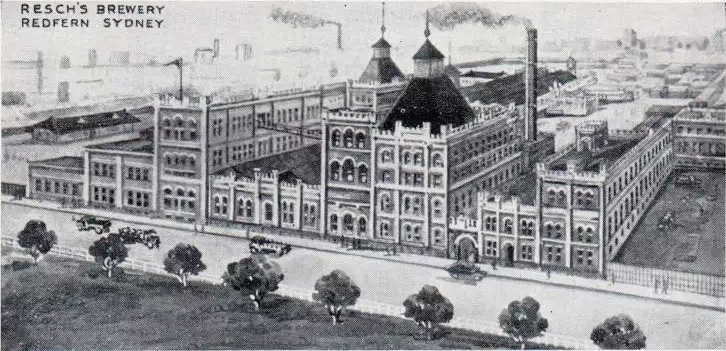
Resch-Brewery

During World War I, like many Germans living in Australia, Edmund was imprisoned for the duration of the world because people believed his German heritage would make him a traitor to the allied war effort.

Despite, or perhaps because of his German roots, Edmund contributed generously to Australia’s war effort after the outbreak of WWI, as well as paying his sixty-odd enlisted employees the difference between their service and civilian wages. Nonetheless, he was not immune to the 1916 War Precautions (Alien Restriction) Regulations that required all non-British subjects aged fifteen and over to register their whereabouts. In November 1917, he was arrested and interred at Holdsworthy, near Liverpool, home of Australia’s largest war internment camp, despite having been a resident of Australia for more than fifty years.

Edmund during his interrment.

This story about the brothers is from a breweriana collector in Australia:

Edmund Resch arrived in Australia from Germany in 1863, probably with his younger brother Richard, and after spending time on Victorian and New South Wales mine fields and as an hotelier in Queensland, he and Richard bought a cordial and aerated water factory in bustling Wilcannia in 1877. Business flourished and in 1879 the pair opened the Lion Brewery in the township.
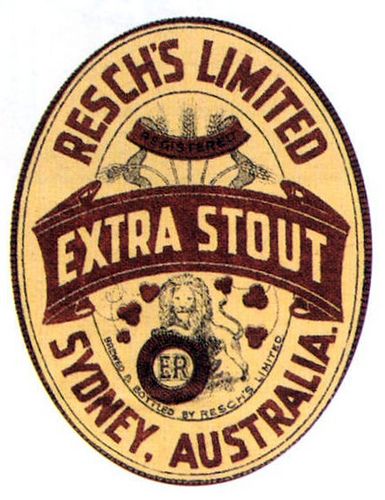
Resch-stout

Four years later, the brothers expanded their activities by taking over Cootamundra’s Burton Brewery. Originally established by Mary Jane Rochester, Henry Morton and Frederick Henry Jackson in 1881, the new owners renamed it the Lion Brewery in line with their earlier establishment and in December 1883 advertised that “…for cleanliness, condition, fullness of the palate, great keeping qualities and mellow vinous flavour, our ales cannot be surpassed.”
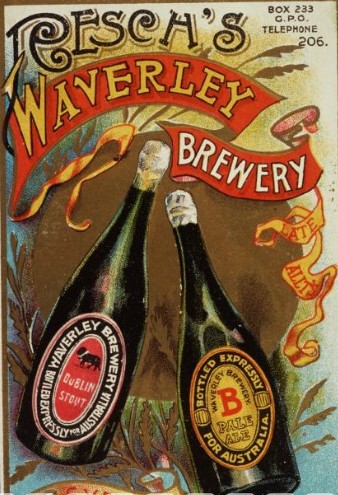
reschs-1899

In 1882, a third brother Emil arrived in Australia after serving a brewing and malting apprenticeship in Germany and following a short stint in Melbourne, moved to Wilcannia to join his siblings. By 1885, their expanding business empire also boasted branches at Silverton and Tibooburra, but in August that year, the partnership was amicably dissolved, with the various holdings split up between the brothers.

Richard continued the Cootamundra and Tibooburra businesses, and after trying unsuccessfully in 1888 to sell the former brewery, carried on until 1903, when he relocated to the Clarence River Brewery at Maclean. Operations ceased around 1915.
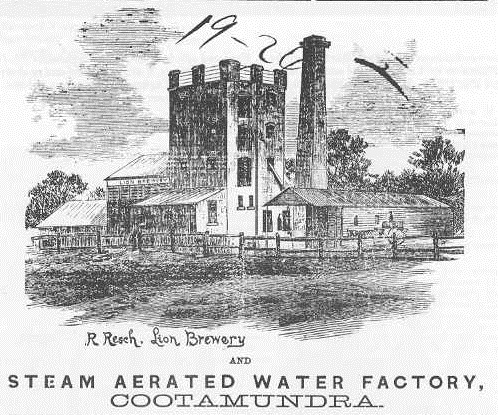
lionbrewery-steam-aerated

Edmund carried on at Wilcannia until 1892 when, after installing a manager to oversee operations, he moved to Melbourne intending to retire. This was short lived, however, and three years later he relocated to Sydney to take over management of Allt’s, a brewing, wine and spirit company, on behalf of a banker who had supported him in his early business activities.

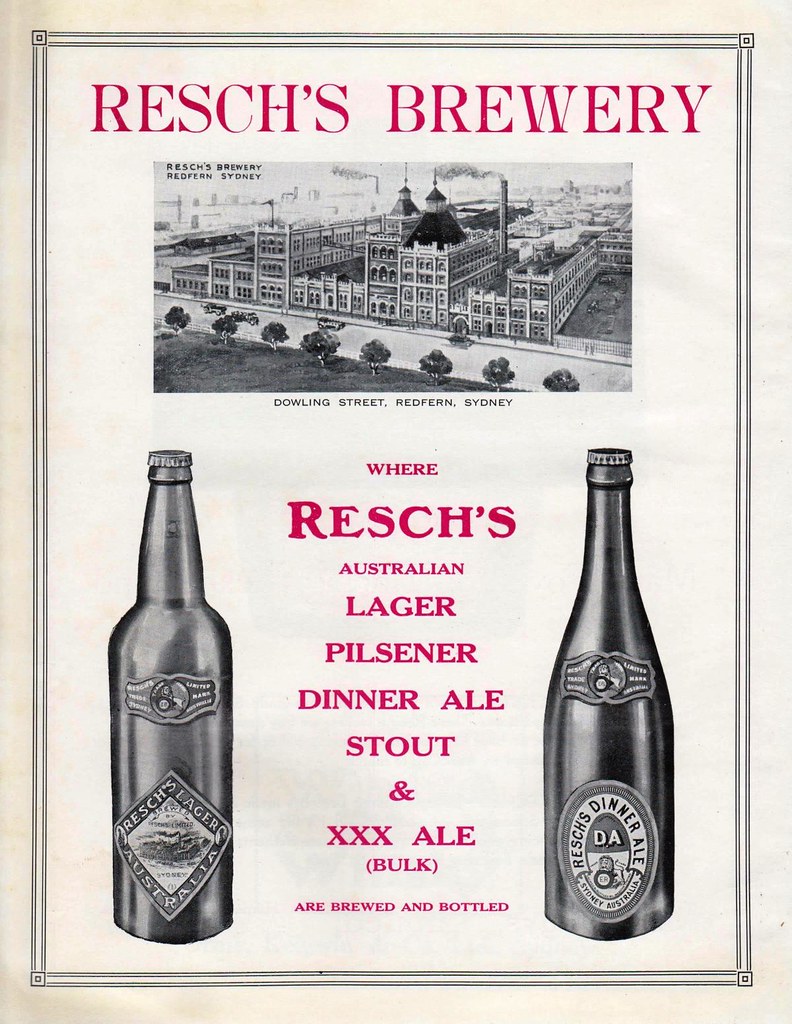
After purchasing Allt’s Brewery in 1897 for more than £65,000, Edmund went on to acquire the New South Wales Lager Bier Brewing Company Ltd’s Waverley Brewery business and plant in Redfern three years later. Together with his sons Edmund and Arnold and his accountant/manager John Alvarez, he embarked on major construction works to centralise activities on the Dowling Street, Redfern site. Directories show that he also continued to operate his Wilcannia business until at least 1909.
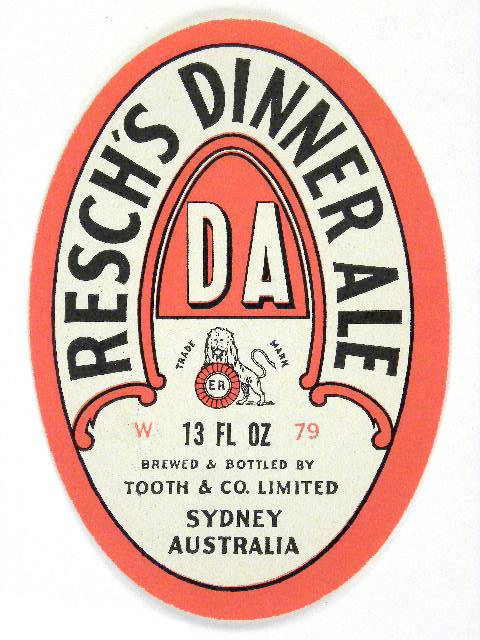
Reschs-Dinner-Ale

Promoting himself between 1904 and 1914 as “brewer by appointment to His Excellency the Governor-General”, Edmund became so successful that his brewery’s output secured much of the State’s market. In 1906, Resch’s Ltd was incorporated with a capital of £150,000.
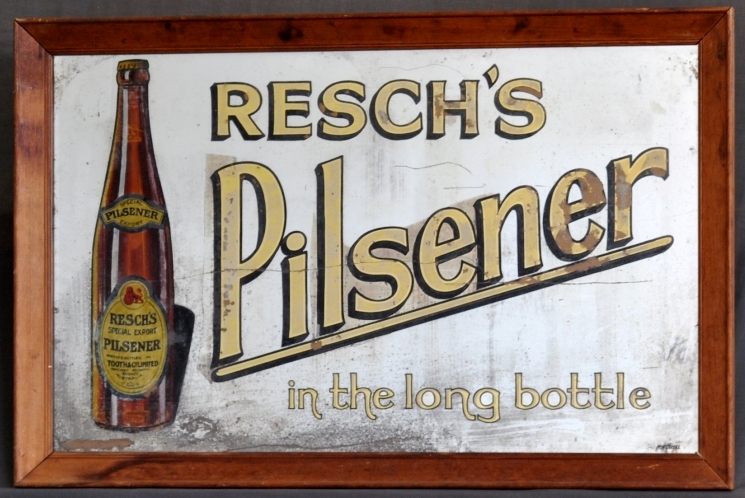
reschs-mirror
Reschs-Brewery-001
Resch-card00487_fr

Filed Under: Birthdays, Breweries, Just For Fun Tagged With: Australia, Germany

Beer In Ads #4992: It’s The Celebrated Bock Beer Of The Lebanon Brewing Co. Is Out To-Day

June 8, 2025 By Jay Brooks

Last year I decided to concentrate on Bock ads. Bock, of course, may have originated in Germany, in the town of Einbeck. Because many 19th century American breweries were founded by German immigrants, they offered a bock at certain times of the year, be it Spring, Easter, Lent, Christmas, or what have you. In a sense they were some of the first seasonal beers. “The style was later adopted in Bavaria by Munich brewers in the 17th century. Due to their Bavarian accent, citizens of Munich pronounced ‘Einbeck’ as ‘ein Bock’ (a billy goat), and thus the beer became known as ‘Bock.’ A goat often appears on bottle labels.” And presumably because they were special releases, many breweries went all out promoting them with beautiful artwork on posters and other advertising.

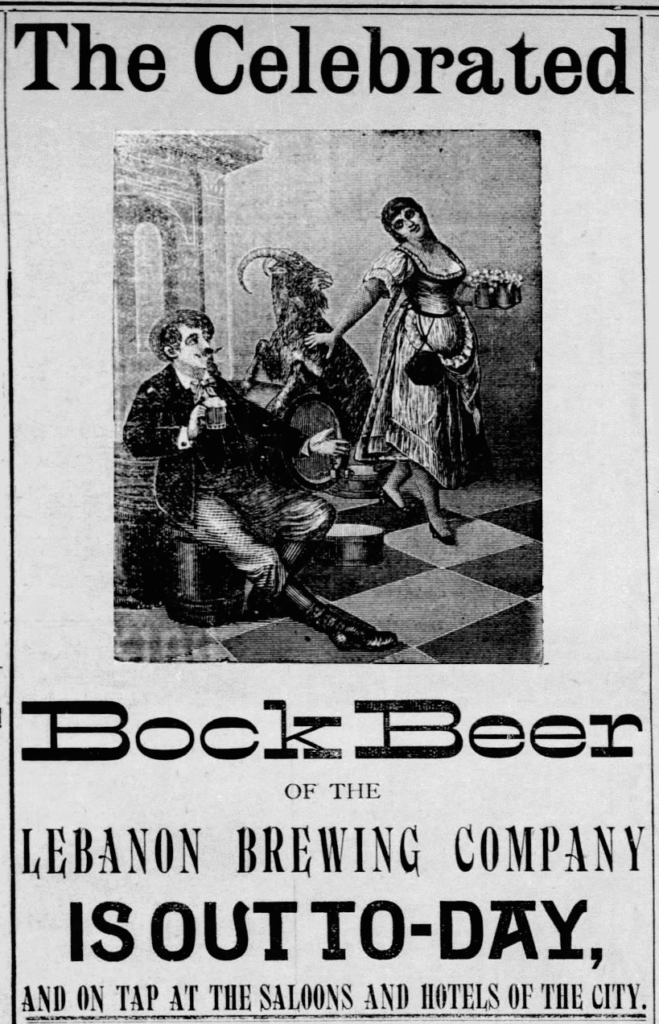
Sunday’s ad is for Lebanon Brewing Company Bock Beer. The ad was published on June 8, 1889. This one was for Lebanon Brewing Co. of Lebanon, Pennsylvania, which was originally founded in 1856 by Henry Hartman, but went through several owners and name changes. From 1884-1893 it was the Lebanon Brewing Co. This ad ran in The Daily News, also of Lebanon, Pennsylvania.

Filed Under: Art & Beer, Beers, Breweries, Just For Fun Tagged With: Advertising, Bock, History, Pennsylvania

Beer Saints: St. Medard of Noyon

June 8, 2025 By Jay Brooks

Today is the feast day of St. Medard of Noyon, who was also known as St. Medardus (c. 456–545). “He was the Bishop of Noyon. He moved the seat of the diocese from Vermand to Noviomagus Veromanduorum (modern Noyon) in northern France. Medardus was one of the most honored bishops of his time, often depicted laughing, with his mouth wide open, and therefore he was invoked against toothache.” He is also the patron of brewers, as well as vineyards and good harvests. “He is sometimes depicted with a giant eagle hovering over his head to shelter him from rain, while others around him got wet (reputedly this occurred while he was a child.) This led to his association with control over the weather.”

This account is from CatholicSaints.Info:

Born c.470 in Salency, Picardy, France; died c.558. Born of a Frankish noble father and a Gallo-Roman mother, Saint Medard was educated at Saint-Quentin. He is also the brother of Saint Gildard, archbishop of Rouen. At 33, he was ordained to the priesthood and became so successful as a missioner that he was chosen to succeed Bishop Alomer in 530 in the see of Vermandois. Medard may have been consecrated by Saint Remigius of Rheims.

According to an unreliable tradition, Medard moved his see from Saint-Quentin to Noyon after a raid by the Huns, then united it with the diocese of Tournai. Allegedly Noyon and Tournai remained under one bishop for 500 years.

Medard is known to have given the veil to Queen Saint Radegund. He is credited with the institution of the old local custom of Rosiere. Each year where his feast is celebrated, the young girl who has been judged the most exemplary in the district is escorted by 12 boys and 12 girls to the church, where she is crowned with roses and given a gift of money (Benedictines, White).

In art, an eagle shelters Saint Medard from the rain, a reference to the legend that this happened when he was a child (Roeder). This may explain the origins of the superstition that if it rains on his feast day, the next 40 days will be wet; if the weather is good, the next 40 will be fine as well (White). He might also be portrayed with two horses at his feet, leaving footprints on stone, or holding a citadel (Roeder). In Medieval art, Medard may be laughing with his mouth wide open (le ris de Saint Medard), and for this reason he is invoked against toothache (White).

Saint Medard is the patron of brewers, peasants, prisoners (Roeder), corn harvests, and vintage (White). He is invoked on behalf of idiots and lunatics, as well as for fruitfulness, both in child-bearing and in the fields, for rains and vineyards, and against bad weather and toothache (Roeder).

Why exactly he’s a patron of brewers or vineyards or good harvests is not very clear, and I can find no satisfactory answer. The only logical assumption may have to do with association with rain, but that’s admittedly a bit of a stretch.

Central part of a triptych from St. Catherine Chapel by unknown artist (circa 16th century)

There’s also a Brasserie Saint Médard in France that was founded in 2015 that uses the saint in their logo and on their beer bottles.

Filed Under: Beers, Birthdays, Breweries, Related Pleasures Tagged With: beer saints, Religion & Beer

Historic Beer Birthday: Johann George Moerlein

June 8, 2025 By Jay Brooks

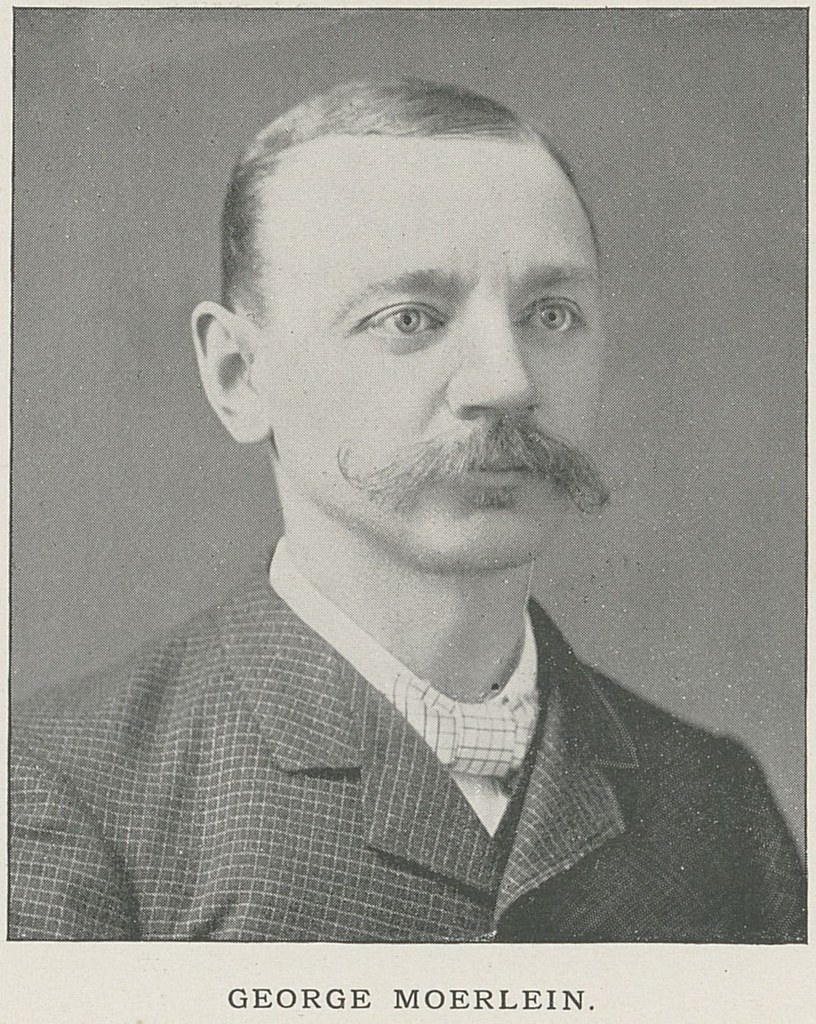
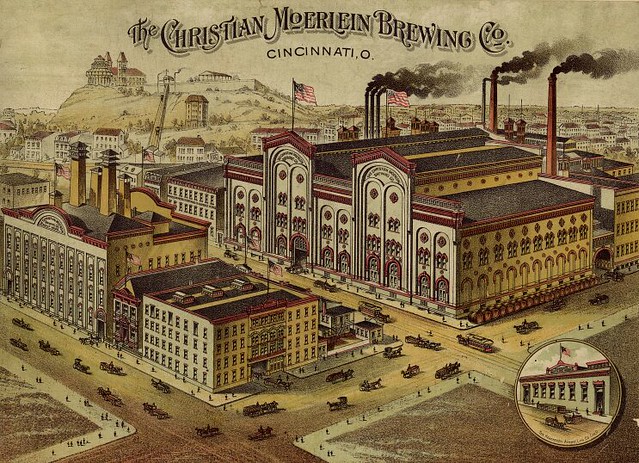
Today is the birthday of Johann George Moerlein, who went by “George” (June 8, 1852-August 31, 1891). He was the son of Christian Moerlein, who founded the Christian Moerlein Brewery in 1853, when his son was one year old. He later joined the firm and was the vice-president at the time of his untimely death at 39.

And while he was obviously involved in the family business for all of his life, he’s perhaps more well-known for something else.

Christian-Moerlein-Beer1890

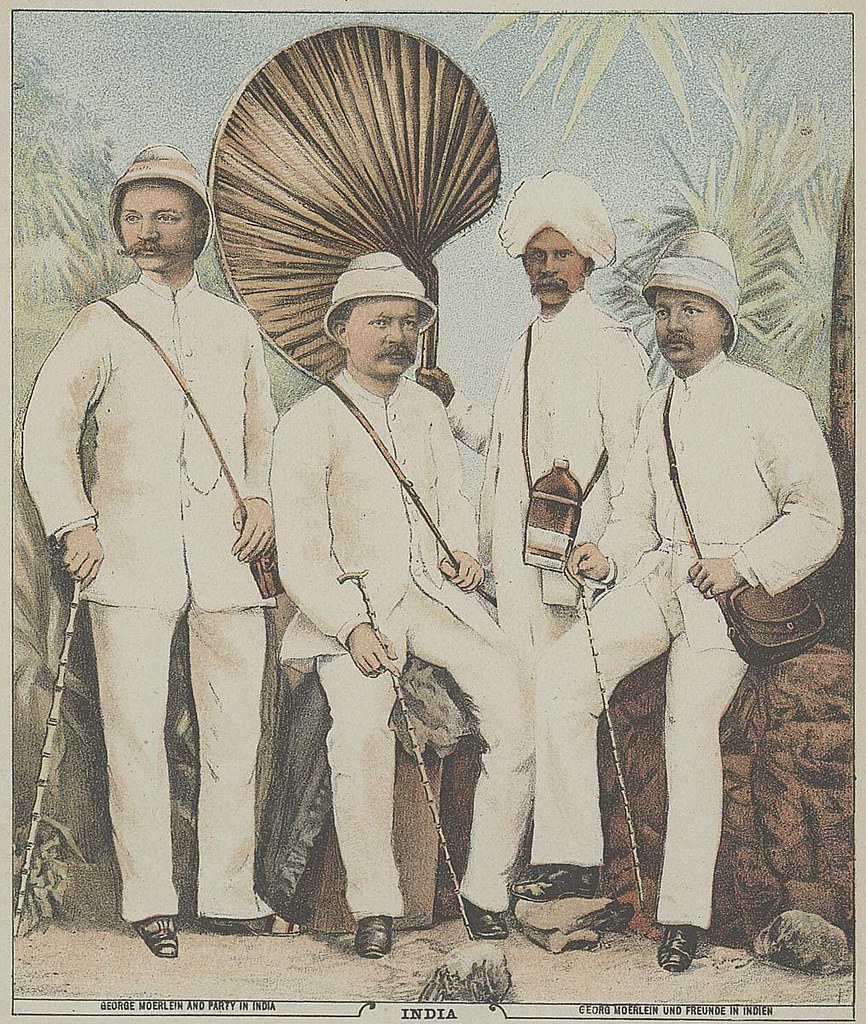
In 1884, he “got the idea to take a trip around the world. Ten days later he was on his way to traveling a total distance of 35,194 miles by railroad and steamer. Throughout his trip, Moerlein wrote letters documenting his journey which were published in the local papers, The Commercial Gazette and the Volksblatt. The Krebs Lithographing Company of Cincinnati created 110 color illustrations, chosen from a collection of over 800 original pictures gathered during Moerlein’s travels. In 1886 George Moerlein’s “A Trip Around the World” was published.”

George Moerlein (seated) in India.

While having little to with their brewery, the book is still fascinating. Here’s a few more of the illustrations from it:

Singapore.
Constantinople.
Japan.

Filed Under: Birthdays, Breweries, Just For Fun Tagged With: History, Ohio, Travel

Beer In Ads #4991: It’s The Time Of Year For Pearl Bock Beer

June 7, 2025 By Jay Brooks

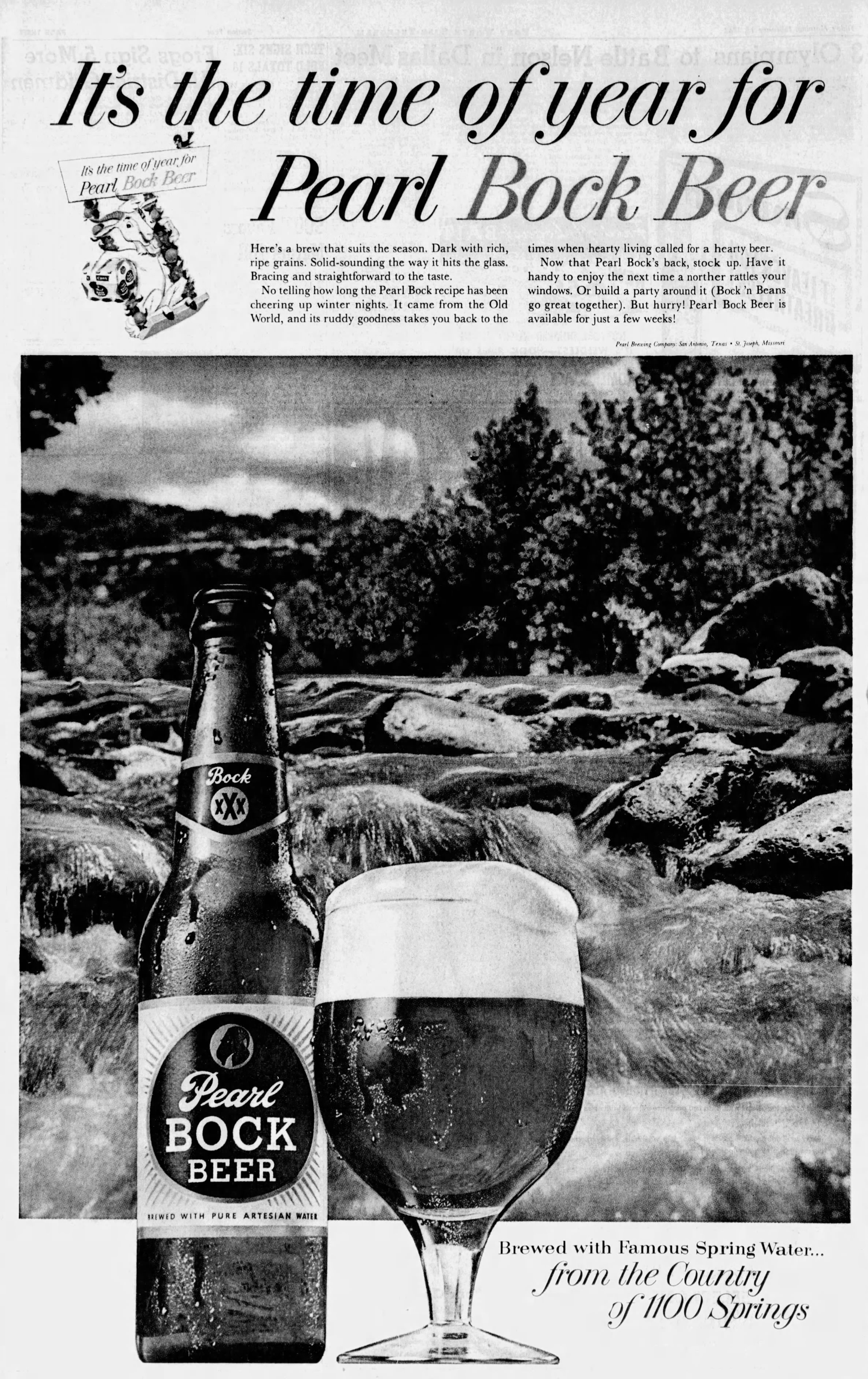
Last year I decided to concentrate on Bock ads. Bock, of course, may have originated in Germany, in the town of Einbeck. Because many 19th century American breweries were founded by German immigrants, they offered a bock at certain times of the year, be it Spring, Easter, Lent, Christmas, or what have you. In a sense they were some of the first seasonal beers. “The style was later adopted in Bavaria by Munich brewers in the 17th century. Due to their Bavarian accent, citizens of Munich pronounced ‘Einbeck’ as ‘ein Bock’ (a billy goat), and thus the beer became known as ‘Bock.’ A goat often appears on bottle labels.” And presumably because they were special releases, many breweries went all out promoting them with beautiful artwork on posters and other advertising.

Saturday’s ad is for Pearl Bock Beer. The ad was published in 1963. This one was for Pearl Brewing Co. of San Antonio, Texas, which was originally founded in 1883. This ad ran in The Fort Worth Star Telegram, of Fort Worth, Texas.

Filed Under: Art & Beer, Beers, Breweries, Politics & Law Tagged With: Advertising, Bock, History, Texas

Beer In Ads #4990: Oil City Bock Beer

June 6, 2025 By Jay Brooks

Last year I decided to concentrate on Bock ads. Bock, of course, may have originated in Germany, in the town of Einbeck. Because many 19th century American breweries were founded by German immigrants, they offered a bock at certain times of the year, be it Spring, Easter, Lent, Christmas, or what have you. In a sense they were some of the first seasonal beers. “The style was later adopted in Bavaria by Munich brewers in the 17th century. Due to their Bavarian accent, citizens of Munich pronounced ‘Einbeck’ as ‘ein Bock’ (a billy goat), and thus the beer became known as ‘Bock.’ A goat often appears on bottle labels.” And presumably because they were special releases, many breweries went all out promoting them with beautiful artwork on posters and other advertising.

Friday’s ad is for Oil City Bock Beer. The ad was published on June 6, 1936. The brewery was the Oil City Brewing Co. of Oil City, Pennsylvania, which was originally founded in 1867, but was only known by the Oil City name from 1933 until it closed in 1936.  This ad ran in The News Herald, of Franklin, Pennsylvania.

Filed Under: Art & Beer, Beers, Breweries, Just For Fun Tagged With: Advertising, Bock, History, Pennsylvania

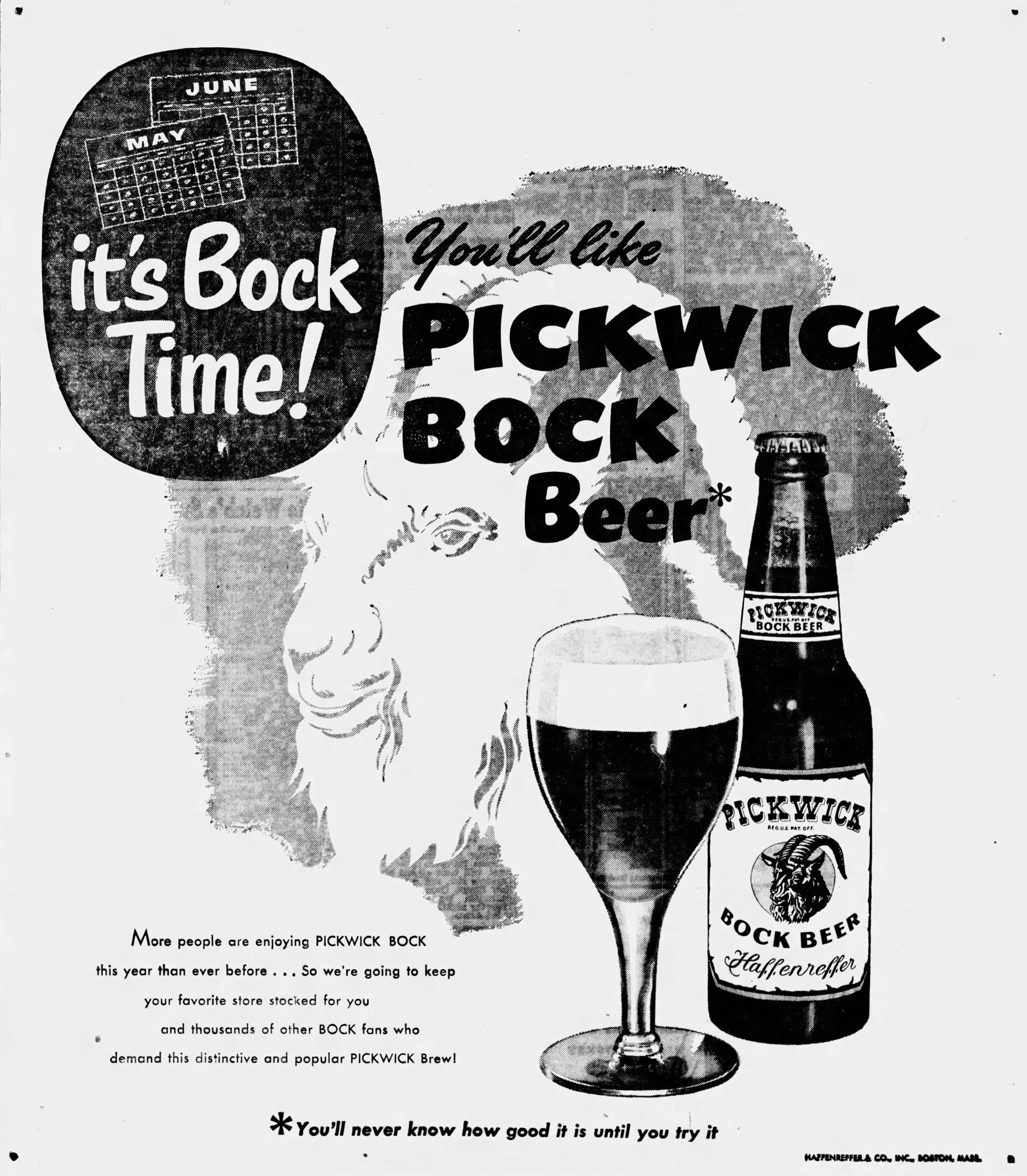
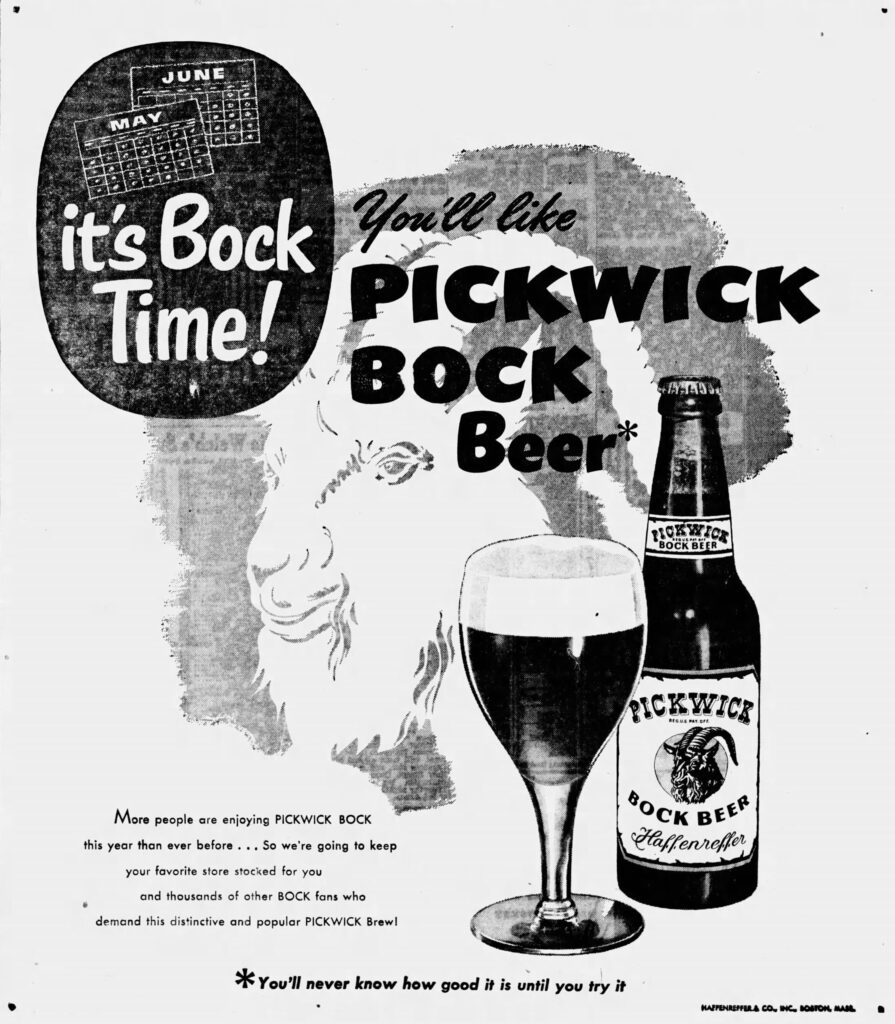
Beer In Ads #4989: You’ll Like Pickwick Bock Beer

June 5, 2025 By Jay Brooks

Last year I decided to concentrate on Bock ads. Bock, of course, may have originated in Germany, in the town of Einbeck. Because many 19th century American breweries were founded by German immigrants, they offered a bock at certain times of the year, be it Spring, Easter, Lent, Christmas, or what have you. In a sense they were some of the first seasonal beers. “The style was later adopted in Bavaria by Munich brewers in the 17th century. Due to their Bavarian accent, citizens of Munich pronounced ‘Einbeck’ as ‘ein Bock’ (a billy goat), and thus the beer became known as ‘Bock.’ A goat often appears on bottle labels.” And presumably because they were special releases, many breweries went all out promoting them with beautiful artwork on posters and other advertising.

Thursday’s ad is for Pickwick Bock Beer. The ad was published on June 5, 1951. The brewery was the Haffenreffer Brewery of Boston, Massachusetts, which was originally founded in 1870. It was located in the Jamaica Plain area of Boston, and today the site of the brewery is where the Boston Beer Co. operates one of its breweries. This ad ran in The Boston Globe, of Boston, Massachusetts.
Filed Under: Art & Beer, Beers, Breweries, Just For Fun Tagged With: Advertising, Bock, Boston, History, Massachusetts

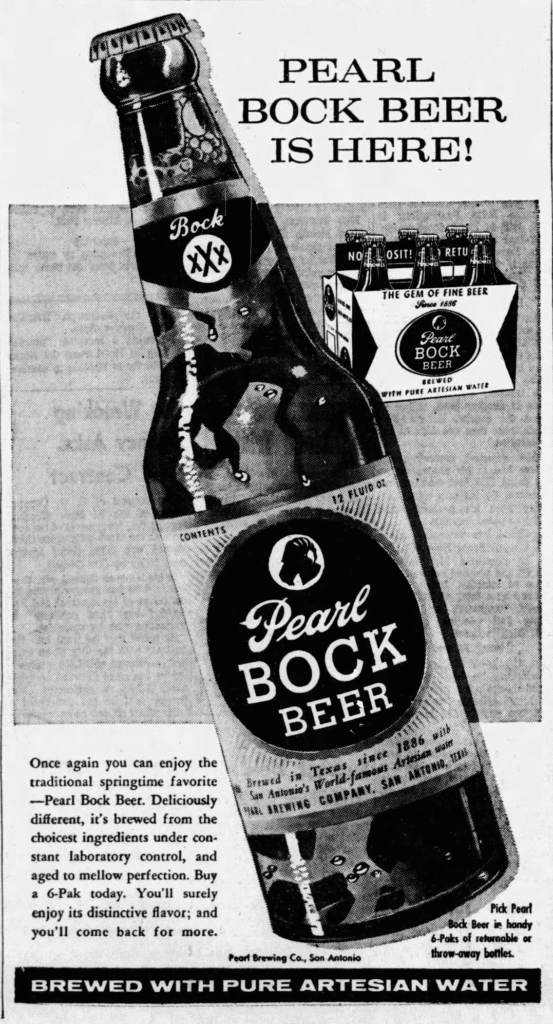
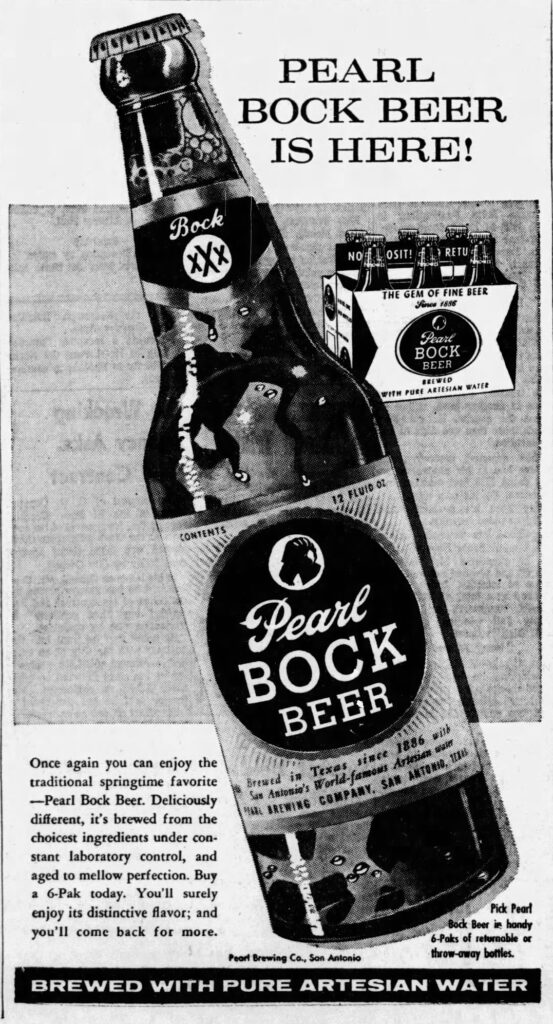
Beer In Ads #4988: Pearl Bock Beer Is Here!

June 4, 2025 By Jay Brooks

Last year I decided to concentrate on Bock ads. Bock, of course, may have originated in Germany, in the town of Einbeck. Because many 19th century American breweries were founded by German immigrants, they offered a bock at certain times of the year, be it Spring, Easter, Lent, Christmas, or what have you. In a sense they were some of the first seasonal beers. “The style was later adopted in Bavaria by Munich brewers in the 17th century. Due to their Bavarian accent, citizens of Munich pronounced ‘Einbeck’ as ‘ein Bock’ (a billy goat), and thus the beer became known as ‘Bock.’ A goat often appears on bottle labels.” And presumably because they were special releases, many breweries went all out promoting them with beautiful artwork on posters and other advertising.

Wednesday’s ad is for Pearl Bock Beer. The ad was published on June 4, 1959. This one was for Pearl Brewing Co. of San Antonio, Texas, which was originally founded in 1883. This ad ran in The Brazosport Facts, of Brazoria County, Texas, which is part of the greater Houston area.

Filed Under: Art & Beer, Beers, Breweries, Just For Fun Tagged With: Advertising, Bock, History, Texas

Historic Beer Birthday: Frank Leonard Eppig

June 4, 2025 By Jay Brooks

eppig
Today is the birthday of Frank Leonard Eppig (June 4, 1864-February 11, 1923). He was born in Brooklyn, New York, and was the son of Leonard or Leonhard Eppig, who owned the Leonard Eppig Brewing Co., but traded under the name Germania Brewery. When his father died, his sons, including Frank as president, continued running the brewery until it was closed down by prohibition in 1920. Frank died in 1923, but the rest of the remaining family reopened the brewery after repeal, but in 1935 sold it to George Ehret Brewery.

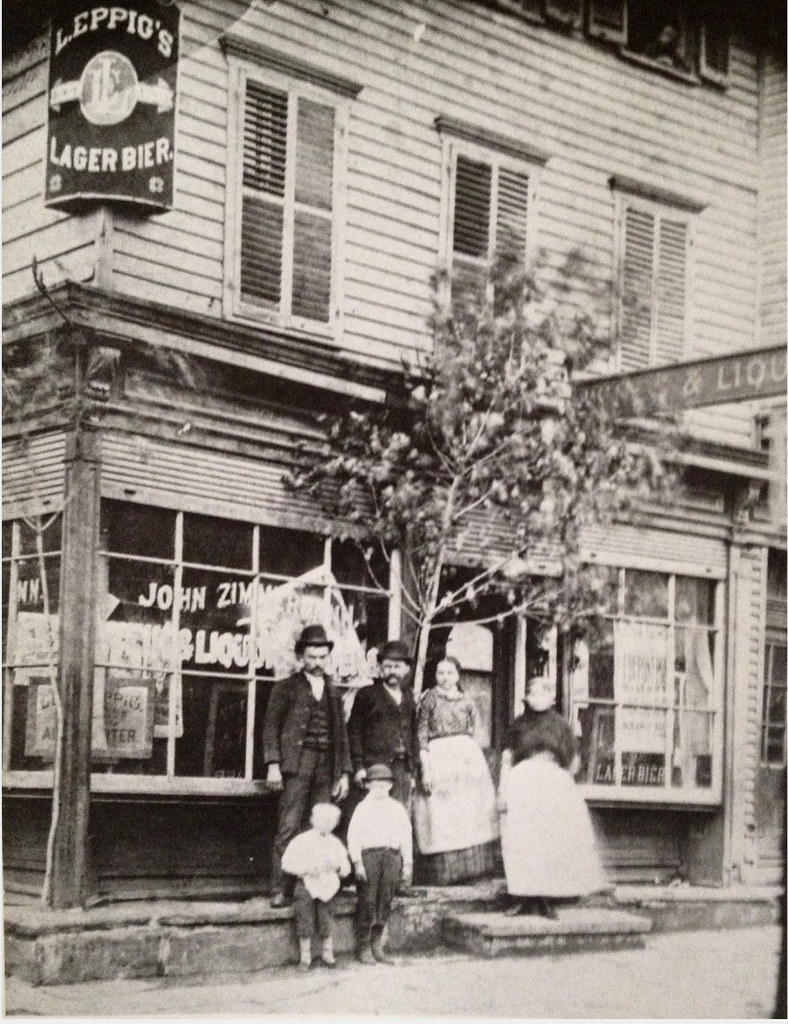
zimmermans-salooon-1877


Zimmerman’s Saloon, located at the corner of Graham Ave and Moore Street, in Williamsburg, New York, in 1877, advertising that they carried Leonard Eppig beer.

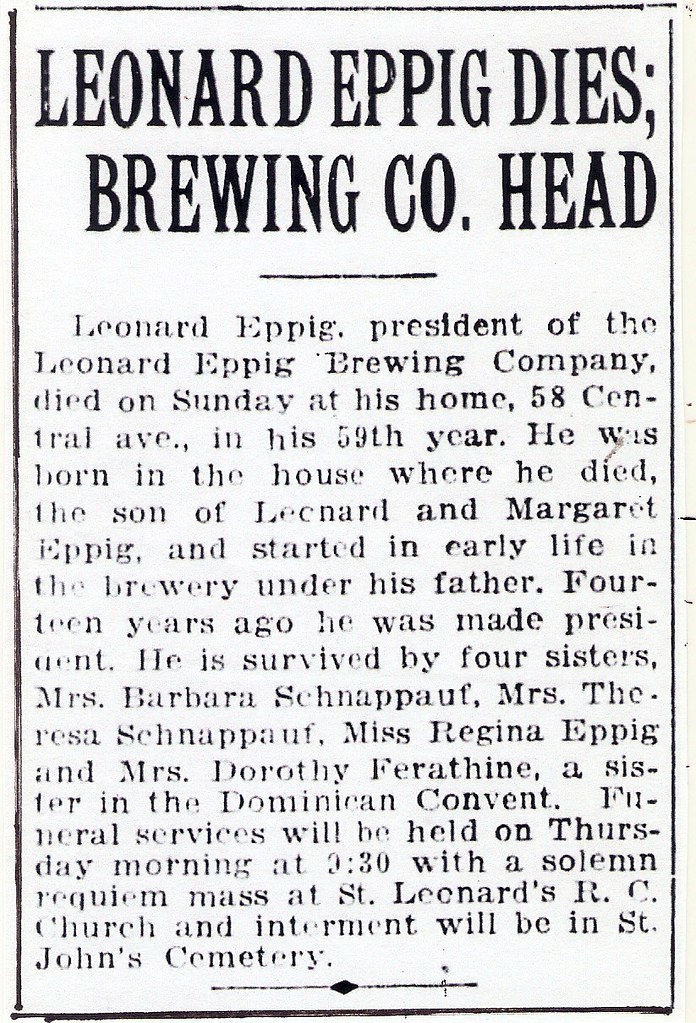
I’ve been unablt to find any photos of Frank, or much information, but this is Eppig’s obituary from the Brooklyn Daily Eagle, for February 13, 1923:

Eppig-obit

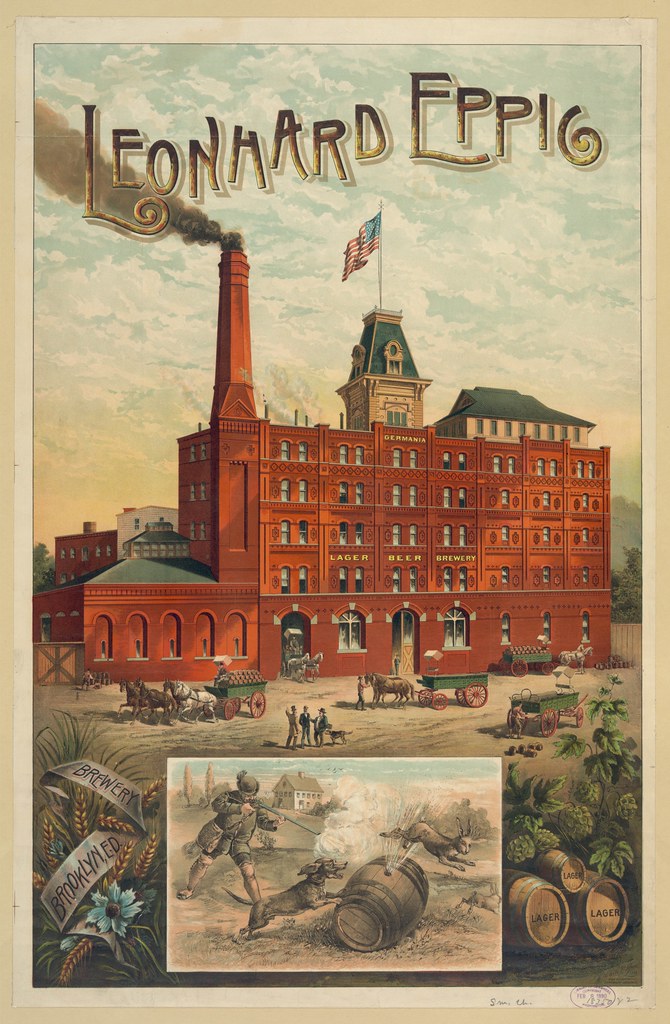
Leonhard_Eppig_Brewery_Poster_Historic

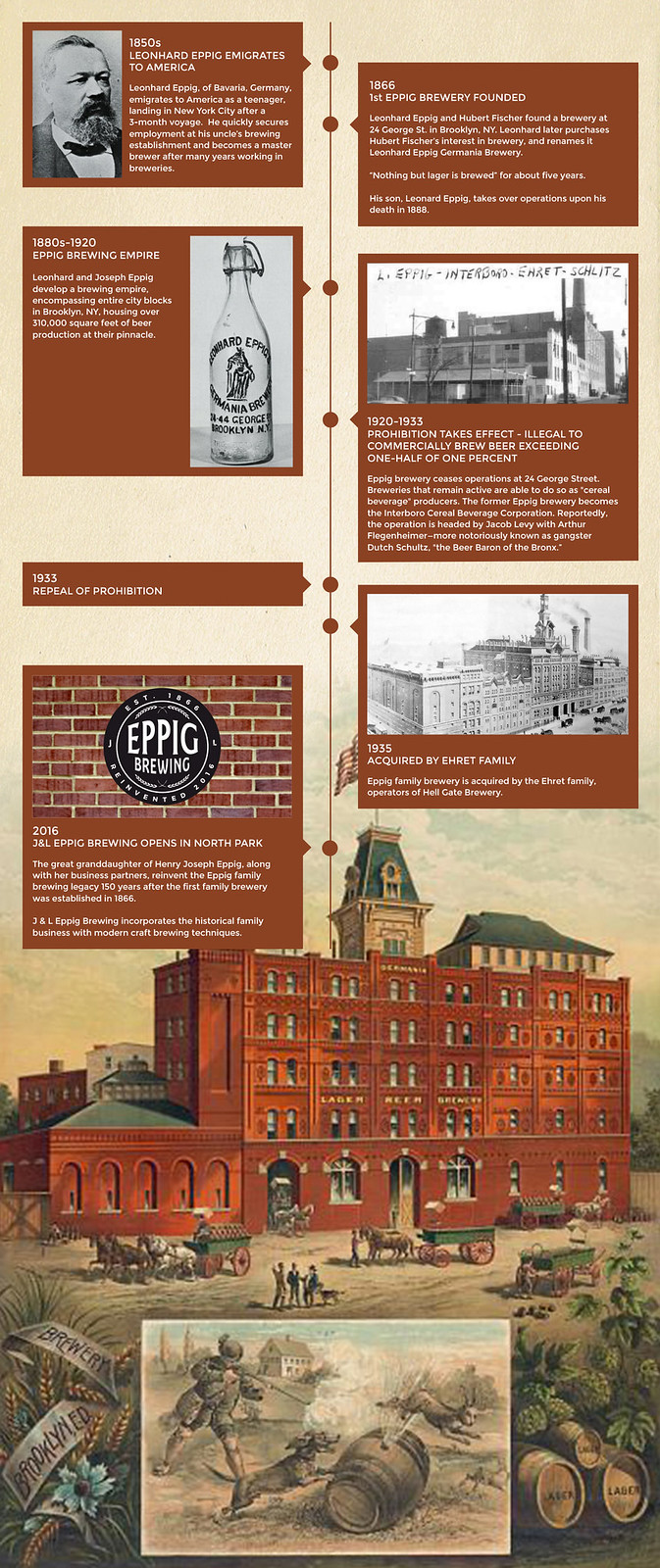
Recently, a descendant of the Eppig family opened a craft brewery in San Diego, which they named Eppig Brewing, and included this infographic in their website:

eppig-history-infographic

Filed Under: Birthdays, Breweries, Just For Fun Tagged With: History, New York

Historic Beer Birthday: August Schmid

June 4, 2025 By Jay Brooks

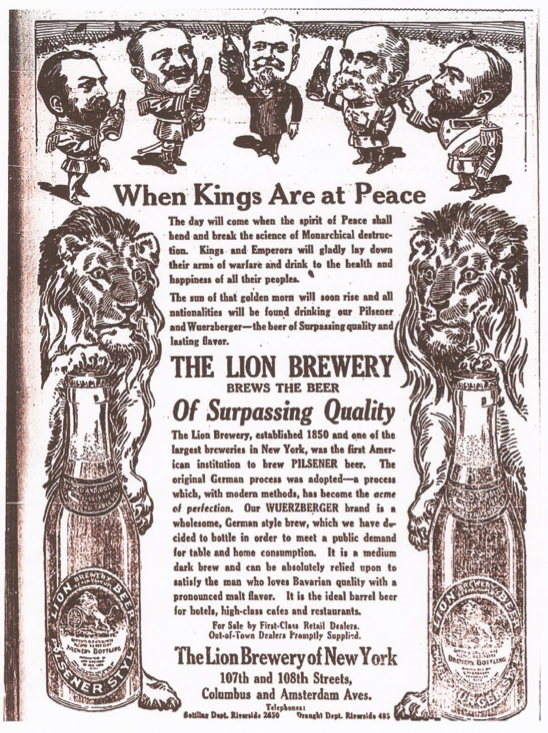
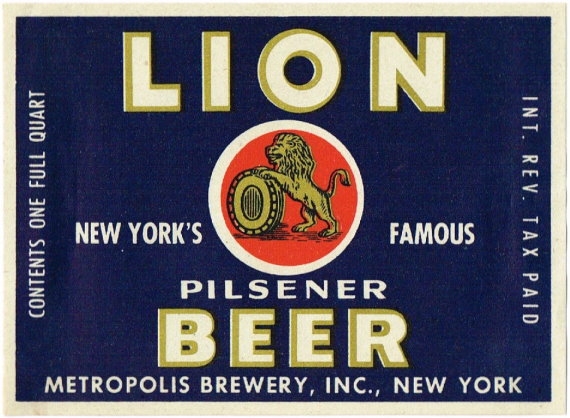
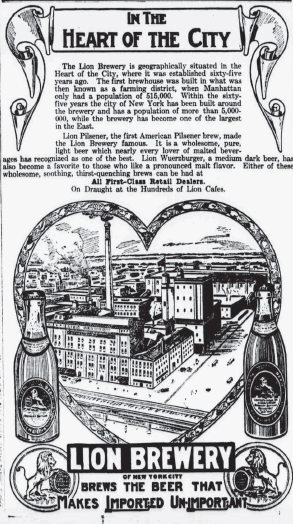
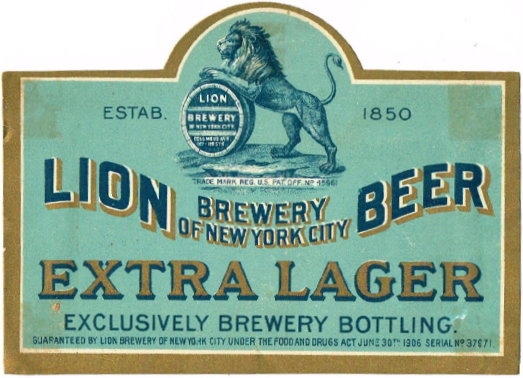
Today is the birthday of August Schmid (June 4, 1843-June 4, 1889). He was born in Switzerland, emigrated to the U.S., and in 1850 with a partner, Emanuel Bernheimer, he founded the Constanz Brewery on East 4th Street near Avenue B, and a couple of years later, Bernheimer and a different partner, James Speyers, started the Lion Brewery on Columbus Ave, between 107th and 108th Streets in Manhattan, next door to the beer garden at the Lion Park, and indeed it is sometimes referred to as the Lion Park Brewery. The business was reorganized in 1868, and August Schmid also became a partner in the Lion Brewery, and by 1890 its official name was the Bernheimer & Schmid Brewery, though they continued to trade under the Lion Brewery name. In 1895, it was the sixth-largest brewery in the U.S. After 1903, it was called the Lion Brewery of New York, presumably to avoid confusion with the many other breweries with Lion in their name. Lion survived prohibition but closed for good in 1942.

This is the beginning of Schmid’s obituary from the New York Times, but it’s oddly only available to subscribers.

August Schmid of the firm of Bernheimer Schmid, proprietors of the Lion Brewery, died early Monday morning at the Hotel Royal after an illness of three days with pneumonia.

Lion-kings

This is about the brewery from Wikipedia:

Shortly after immigrating to the United States, Swiss-German August Schmid and Emanuel Bernheimer founded the Costanz Brewery at East 4th Street near Avenue B in 1850. The brewery produced a lagered beer, a favorite among German immigrants. By 1852, they built a second Costanz Brewery at Four Corners in Staten Island, home to a large German community. Five years later, Bernheimer became the partner of another German immigrant, James Speyers and founded the Lion Brewery in 1857 in Manhattan Valley.

A group of Catholic Bavarians helped build the Lion Brewery. When it was built, they held masses in the Brewery on Sunday mornings.

Lion-Pilsener-Beer-Labels-Metropolis-Brewery-Inc

At its peak, the Lion Brewery occupied about six square city blocks, from Central Park West to Amsterdam Avenue and from 107th to 109th Street. At the time Manhattan’s Upper West Side was an open area with inexpensive land housing, many public institutions and an insane asylum. There were about five to ten thousand living in shanties after being displaced by the creation of Central Park in 1859. Consequently, with the brewery and surrounding areas, the Upper West Side failed to increase its real estate value until the early twentieth century.

In 1862, a $1 tax on each barrel of beer hurt small brewers but not Lion. The anti-saloon movement in the late 19th and early 20th century encouraged Lion to clean up its own saloons. Lion Brewery got caught up in a wave of mergers and closings among some of the smaller New York Brewers in the early 1940s which continued until 1941, when the business closed. The brewery (including the canning facilities) was auctioned off on August 26, 1943. The plant was demolished in 1944 and more than 3,000 tons of steel were taken from the original brewery structure and recycled for the war effort.

After the Brewery was knocked down the lot was paved over with cinders. On Sundays, after the war, returning World War II Veterans formed a Softball League and played almost every Sunday afternoon. Home plate was located near 107th street and Columbus Avenue. Today, apartment houses occupy the Lion brewery’s former location.

lionbrewery1

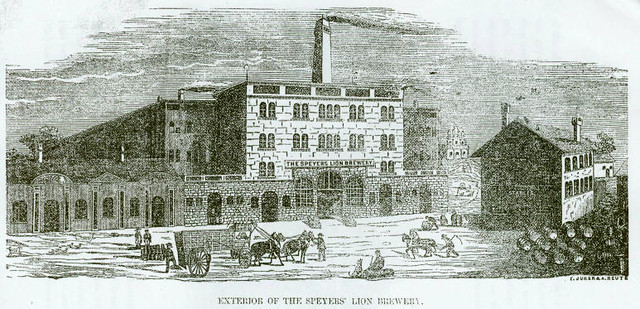
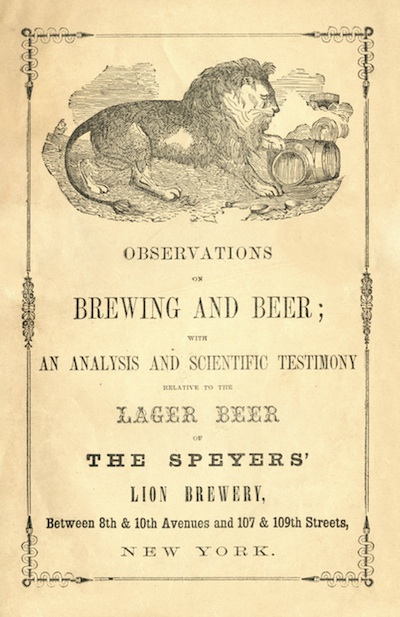
Around 1860, the brewery published a pamphlet titled “Observations on Brewing and Beer: With an Analysis and Scientific Testimony Relative to the Lager Beer of the Speyers’ Lion Brewery.” The pamphlet had a short history of the different kinds of beer, and an analysis showing that their lager beer was pure. The pamphlet also included some great line drawings of the brewery complex.

Lion-Extra-Lager-Beer--Labels-Lion-Brewery-Of-New-York-City

And here’s another story from Rusty Cans:

In 1850 recent Swiss German immigrants August Schmid and Emanuel Bernheimer founded the Costanz Brewery at East 4th Street near Avenue B. The brewery specialized in lagered beer, a favorites among their fellow immigrants. By 1852, their success encouraged them to build a second Costanz Brewery at Four Corners in Staten Island, then home to a large German immigrant community. Eight years later, Bernheimer became the partner of another German immigrant, James Speyers, in his Lion Brewery, established in 1857.

The Lion Brewery, depicted here, occupied a site bounded by what are now Central Park West and Amsterdam Avenue and extending from 107th to 109th Streets. The background view includes Central Park, with a glimpse of the Blockhouse, a relic from the War of 1812. (The Church of the Ascension is there now, built with the brewery’s help in the 1890s). During this period Manhattan’s Upper West Side was a relatively open area offering inexpensive land and it accommodated numerous public institutions including an insane asylum. Also clustered in the neighborhood were the shanty homes of between 5-10,000 thousand people displaced by the formal opening of Central Park in 1859. The combination of shanties, public institutions, and such foul-smelling industries as breweries explains why the Upper West Side failed to develop the real estate value of other areas bordering Central Park until the early twentieth century.

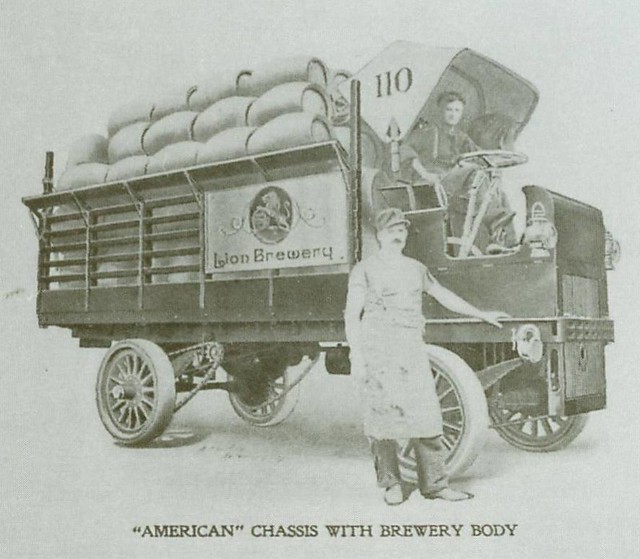
liontruck1

Late in the life of the Lion Brewery, it became involved in a number of mergers and acquisitions, eventually becoming The Greater New York Brewery, Inc.:

Lion brewing got caught up in a wave of mergers and closing among some of the smaller New York Brewers in the early 1940s. In late 1940, the Fidelio Brewing Co., located at 1st Ave. between 29th and 30th Streets., closed. However, on November 15, 1940, it reopened business as the Greater New York Brewery, Inc. In December 1940, the Greater New York Brewery merged with the Horton Pilsener Brewing Co., which was located at Amsterdam Ave. and 128th Street. Horton Brewing President Alex White became a director of Greater New York Brewery and they continued producing previous Horton products. In January 1941, the Greater New York Brewery merged with City Brewing Corporation of Queens. In February of 1941, Horton, as part of Greater New York Brewery, closed its doors. On April 9, 1941, City Brewing Corporation, as part of Greater New York Brewery, temporarily had its license canceled because of illegal merchandising in the form of gifts to retailers. (It apparently reopened at a later date.)

In May of 1941, Greater New York Brewery, Inc. acquired the Lion Brewery. It was the only brewery of the four that merged that had facilities to package beer in flat top cans. But by February of 1942, the Lion Brewery was closed and put up for sale. There being no buyers, the brewery (including the canning facilities) was auctioned off on August 26, 1943. In 1944 over 3,000 tons of steel were taken from the original brewery structure and recycled for the war effort. In April, 1946, the Greater New York Brewery, Inc. became known as the Greater New York Industries. This entity remained in operation until 1950.

For its short lifetime the former Lion Brewery continued to produce beer in cans labeled as products of the Greater New York Brewery. The two flat tops produced are scarce, but not truly rare. However, during its short life span, the Greater New York Brewery also produced a very rare crowntainer and two rare quarts containing Lion beer and ale. There are only 3 of the Beer quarts known today and the Ale is not much more common. Another rare Lion can, a Lion Pilsner, was produced by Pilsner Brewing in New York in the 1940s, but I do not yet know this company’s relationship to the original Lion Brewing. Today, apartment houses occupy the Lion brewery’s former location.

lion-1915

Filed Under: Birthdays, Breweries, Just For Fun Tagged With: New York, Switzerland

« Previous Page
Next Page »

Find Something

Northern California Breweries

Please consider purchasing my latest book, California Breweries North, available from Amazon, or ask for it at your local bookstore.

Recent Comments

  • Bob Paolino on Beer Birthday: Grant Johnston
  • Gambrinus on Historic Beer Birthday: A.J. Houghton
  • Ernie Dewing on Historic Beer Birthday: Charles William Bergner 
  • Steve 'Pudgy' De Rose on Historic Beer Birthday: Jacob Schmidt
  • Jay Brooks on Beer Birthday: Bill Owens

Recent Posts

  • Beer In Ads #5171: It Has To Be Good To Be Gunther’s March 18, 2026
  • Historic Beer Birthday: James Toohey March 18, 2026
  • John Updike’s Paean To The Beer Can March 18, 2026
  • Historic Beer Birthday: John Smith March 18, 2026
  • Beer Birthday: Jason Chavez March 18, 2026

BBB Archives

Feedback

Head Quarter
This site is hosted and maintained by H25Q.dev. Any questions or comments for the webmaster can be directed here.