Today is the birthday of Leopold Nathan (July 30, 1864- December 24, 1937). He was born in Laupheim, in Württemberg, Germany, in 1864. “He studied chemistry in Frankfurt am Main and became a leading expert in wine and beer processing. In 1912 he founded the Nathan-Institut, or Nathan-Institute AG.” He developed the Nathan Brewing System, the closed system using conical-cylindrical fermenters that are ubiquitous today.
This is his biography, translated from Dutch, from his page on the BeerWiki:
Leopold Nathan (Laupheim, July 30, 1864 – Berlin-Dahlem , December 24, 1937) was a German scientist, brewer and inventor. He was born at Schloss Laupheim. This slot had the disposal of a brewery, so early did not only his interest in fermentation measure that also to nature in general. Due to poor health, after doctoral education he did not go to the gymnasium, but in the doctrine of an uncle, where he could transform his love for flowers and plants into the open air into theoretical knowledge. Before his 18th he studied fruit and wine studies at Geisenheim University College. For some time he had been the assistant of Hermann Müller, better known as Hermann Müller-Thurgau, the breeder of the Müller-Thurgau grape breeder.
Nathan dedicated himself to making wine from berries and paid close attention to the yeast types used. In winter of 1888, Nathan again contacted brewing when he studied the yeast reindeer culture for three months in the famous laboratory of the Carlsberg Brewery, where Emil Christian Hansen performed groundbreaking work for the brewing industry.
In the years thereafter he made more and more of fermentation, first of berries, later also the preparation of champagne and schaumwein and sekt – the German version of champagne.
Nathan Institute
Nathan develops a new way of producing and riping beer under substantially sterile conditions, the [Nathan_Brouwerij | Nathan System]. Around the turn of the century, Leopold Nathan came to Switzerland, where he would later receive citizenship. In 1912, in Zurich, together with Ing. Gille, Bonenblust and Einstein founded the Nathan Institute. From this institute, the process and components of the brewing facilities are further improved and the commercial activities supported. The chemical department of the Technical University of Munich, Nathan, awarded his title in 1923 the title ‘Doctor ing.’.
The Walkerville Co-operative Brewing Company Ltd of Adelaide signed an agreement with the Nathan Institute of Zurich in November 1925 for the installation of its plant at the company’s brewery at Southwark, and this became the first Nathan system to be installed in Australia. It was a major project for the brewery, requiring the erection of additional buildings to accommodate the new equipment. Beer production commenced in the Nathan plant late in 1927, and a formal opening ceremony was held in January 1928.
Nathan Bitter was the first beer brewed and was instantly popular, being sold around Australia. The South Australian Brewing Company was becoming the more dominant brewery in the 1930’s and by the end of the decade they had purchased the Walkerville Brewery. Since the Nathan Beers were so popular they continued to make the beer at the Southwark Brewery, the brewery wanted to remove the Walkerville branding so they renamed the brewery to the Nathan Brewery.
This is Nathan’s obituary, written by H. Lloyd Hind, from the Journal of the Institute of Brewing in March of 1938:
Members will have heard with regret of the sudden death of Dr. Leopold Nathan, at Berlin. To many he was personally known through his visit to Edinburgh and London in 1930, when he addressed both Sections. His name stood very high in the brewing world on account of the great technical advances he introduced. These may possibly have overshadowed his scientific attainments, which were of no mean order. Though he lived to the age of 73, he was rather delicate in his youth, but overcame this and developed the remarkable energy which characterised him in later years. He had a varied career. Engaged first at a distillery in Erfurt, he passed on to the study of viniculture and, finally worked under Hanson at Copenhagen. Returning to Germany he was engaged in the preservation of vegetables by drying and drew attention to the possibilities of canning.
During this early stage of his career he also worked on the manufacture of fruit juices and was the first to apply pure yeast culture to wines, and was one of the earliest protagonists of the collection of fermentation gas. This work led him to study brewing, and ultimately to the rapid brewing process, with which his name is associated. The object of the Nathan process is to produce a lager beer in much shorter time than is usual. It is based on the principle of pure yeast in sterile wort. In 1900, Nathan moved to Zurich, and in 1912 founded the Nathan Institute and from there directed many installations all over the world. The output of beer brewed by his process now amounts to more than 1,500,000 barrels a year. He drew attention many years ago to the necessity of using air-free CO, and to the advantages of bottling under CO2. The University of Munich recognized the value of his scientific and technical work by conferring on him the honorary degree of doctor.
The Nathan Brewery
But it’s his brewing system that he invented and improved upon throughout his life that he’s remembered for, so let’s take a look at the Nathan System.
This description is from the page on the Nathan Brewery, translated from Dutch, on the BeerWiki
In the early twentieth century, in climatic conditions, it was virtually impossible to brew a good beer in areas with a tropical climate. The German but Swiss resident Brewer and inventor Leopold Nathan developed a new type of brewery with a brewing method in that time. The method was aimed at not contacting the wort with direct outdoor air and significantly reducing the bearing time. Several breweries were already in use in Germany who used a Nathan installation and the results were hopeful. During this time, conventional fermenters used conventional breweries, and after a storage period of up to six months, the beer was suitable for consumption.
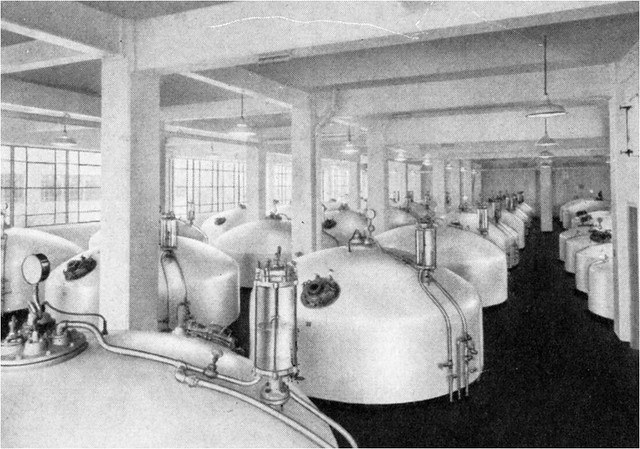
The tight, technically well-equipped interior of a Nathan brewery.
As with the classic method, the malt is scraped and mixed with water. This mixture is then heated in steps to convert the starch into sugars during the germination. The next step is filtering out the grain residues and the remaining liquid (the wort) is boiled and hops are added. In this process the wort becomes sterile.
With the method of Nathan, the wort is removed in a special barrel of all hop and malt residues and then cooled to 5 ° C as soon as possible by means of a surface cooler. This cooler is located in a space where filtered and sterile air is blown. The chilled wort goes slowly from below into the vessel and is pumped so until the liquid is clear.
Yeast
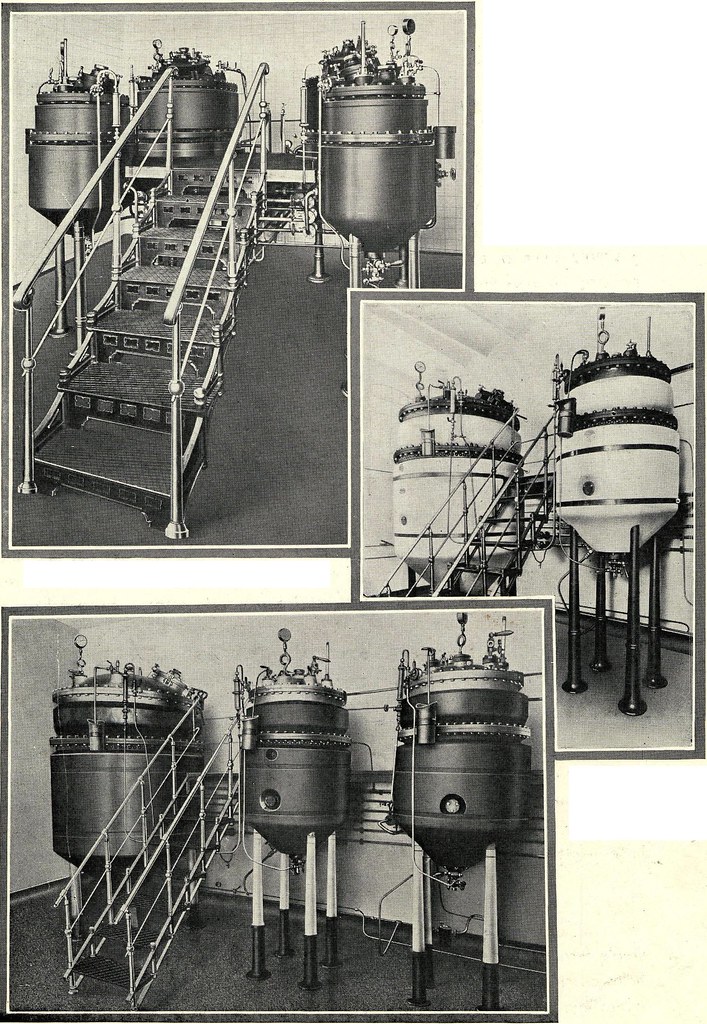
Unlike the usual open fermentation bins, aluminum barrels were used in a Nathan brewery. These cylinder conical tanks were an essential part of the Nathan Breweries. This type of tank was patented by Nathan in 1927 and are still used in many breweries. The tanks were fitted with a jacket that allowed cooling to the right temperature. The yeast – a cultured, clean culture – was added from below and kept in motion by sterile air or carbon dioxide so that the yeast process could be accurately controlled. In six to nine days, depending on the type of beer, the fermentation was completed. Because it was a closed system all carbon dioxide generated at the fermentation could be collected and reused after purification. Before use, the used material was sterilized with alcohol.
The Nathan Institute also provided “loose” yeast cultivation plants. Such an installation was placed at the Hürlimann brewery based in Zurich. At this brewery a lot of research was done on yeast and its functioning. Hürlimann brought “Birell” one of the first truly successful alcohol-free beers on the market.
The storage that took place in a classic brewery in those days was accelerated in the Nathan method by a few days a lot of small bubbles of carbonated acid (collected at the fermentation) by pumping the young beer.
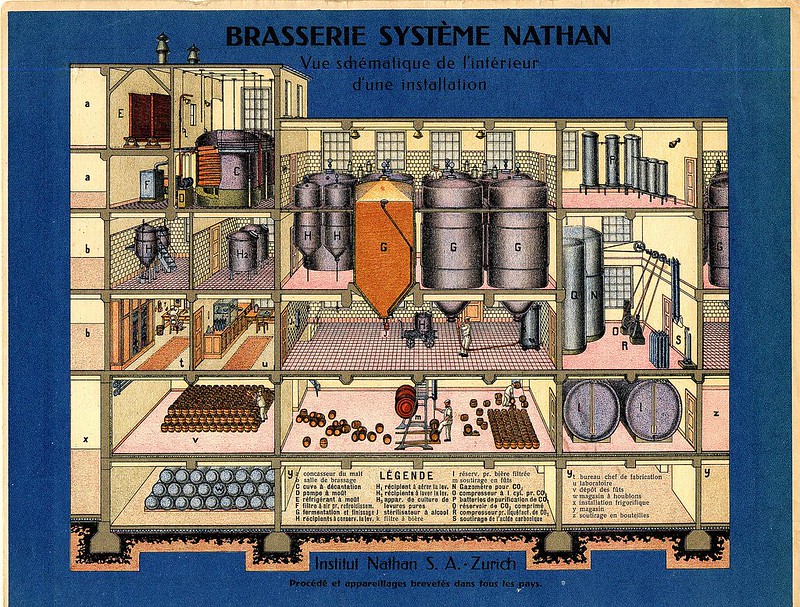
Schematic drawing of a Nathan brewery on the back of a French-language brochure.
This is a report on a talk Nathan gave in Chicago at a meeting of the American Society of Brewing Technology in 1914:
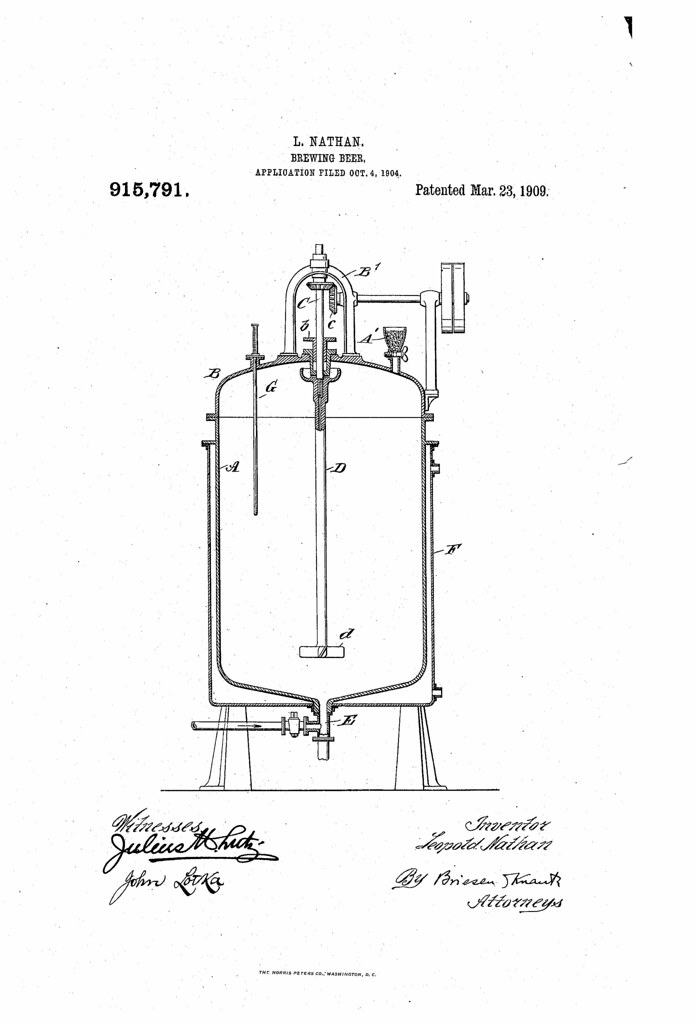
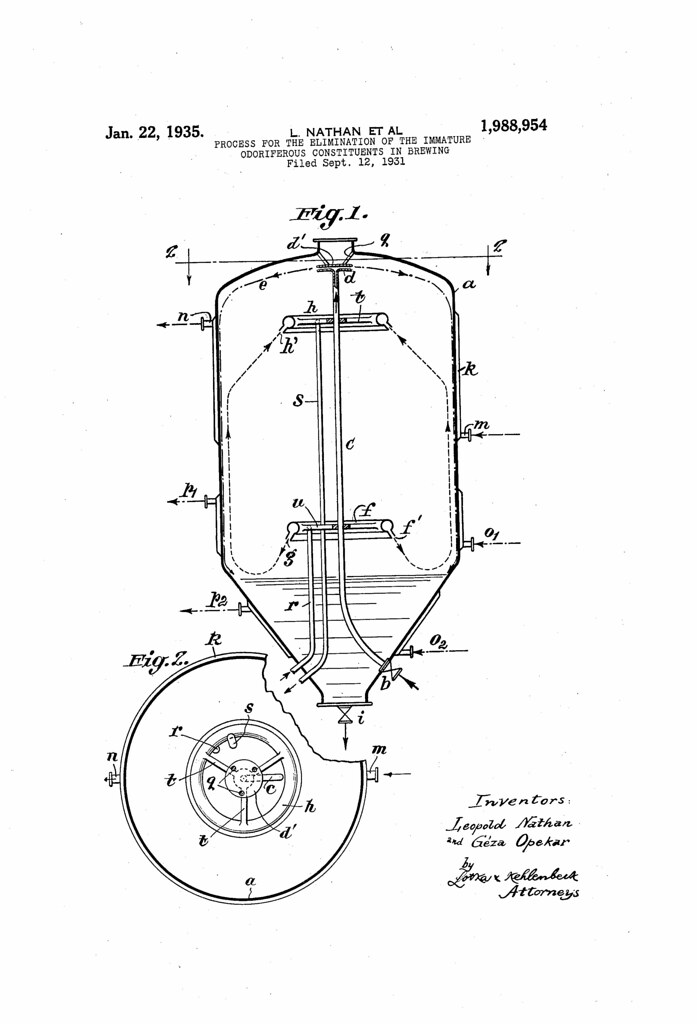
This is one of his earlier patents.
And this history is from Ian Spencer Hornsey’s “A History of Beer and Brewing:”
Today is also the 63rd birthday of William Sysak, better known to the beer community as Dr. Bill. Dr. Bill’s massive tastings are the stuff of legends, and he later transported them — albeit on a smaller scale — to working at Stone Brewing’s World Bistro & Gardens. He has impeccable taste, be it in beer, wine, whiskey, cigars, what have you, and is one of the most fun people to taste with. He was working with Stone Brewing for a time, but then started his own brewery, co-founding Wild Barrel Brewing, in San Marcos, California, which lasted for a number of years before closing in 2023. Join me in wishing Bill a very happy birthday.
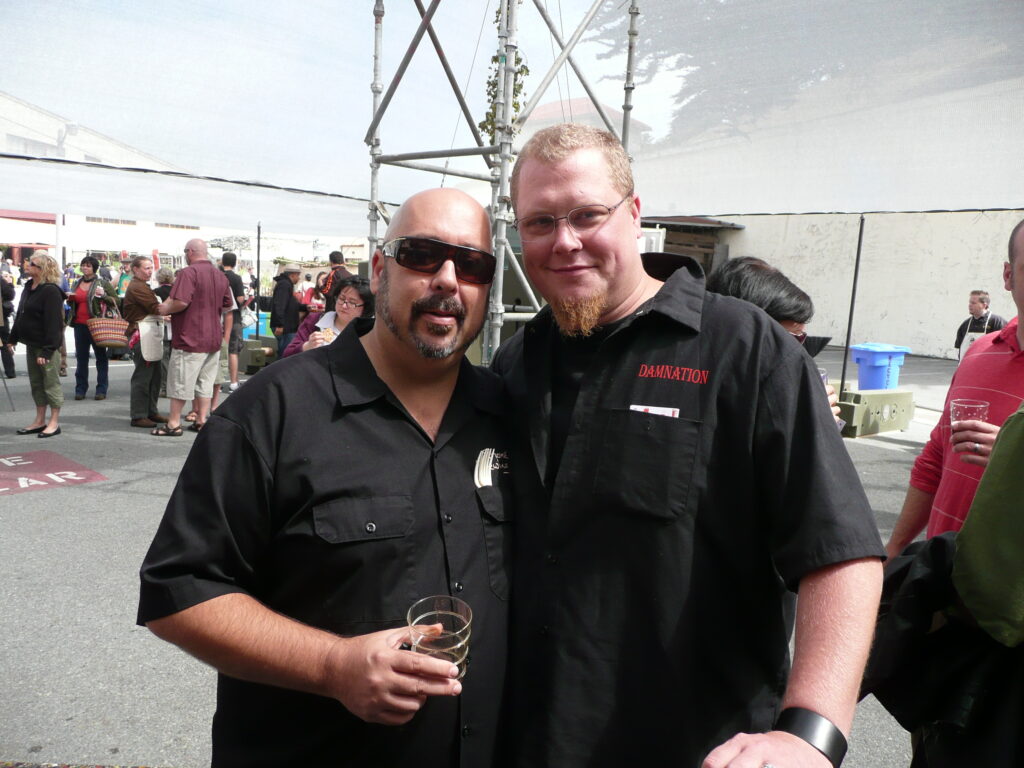
Dr. Bill and me sharing a plate of frites before the final judging at the Hard Liver Barleywine Festival in 2008.
Dr. Bill with Matt Bonney, from Brouwer’s/Bottleworks in Seattle at Slow Food Nation 2008 at Fort Mason.
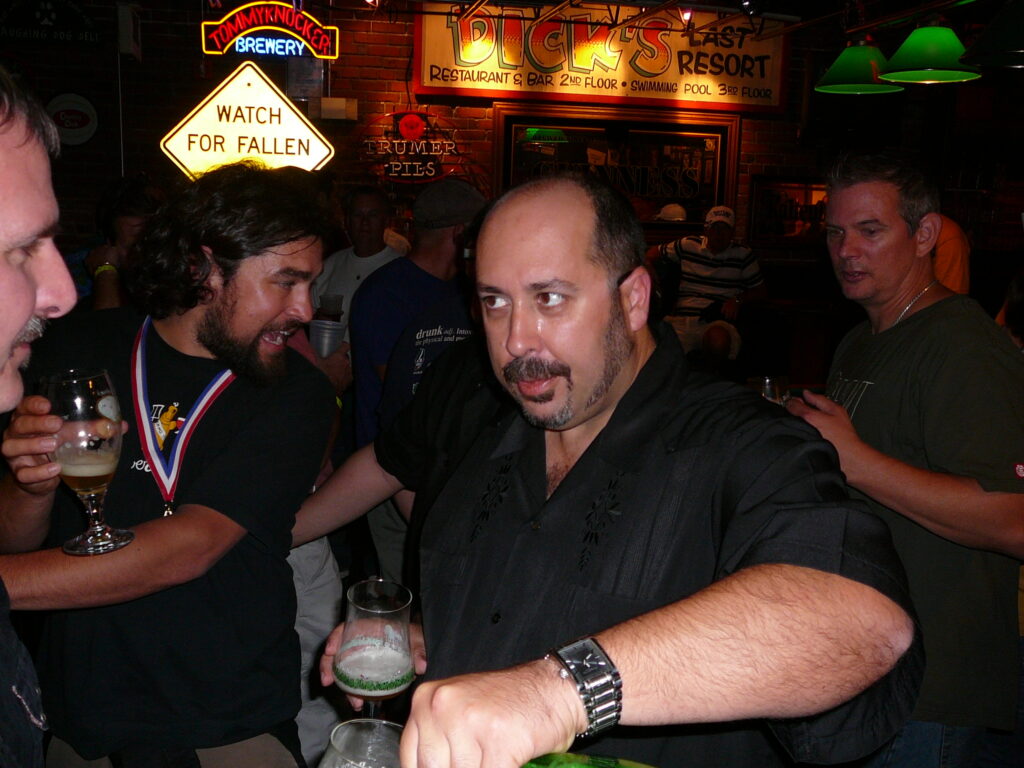
Dr. Bill at Falling Rock, hosting one of his legendary tastings, during GABF in 2006.
Me, Bill, Bonney and a few others at the Keene Tasting in Seattle in 2008.
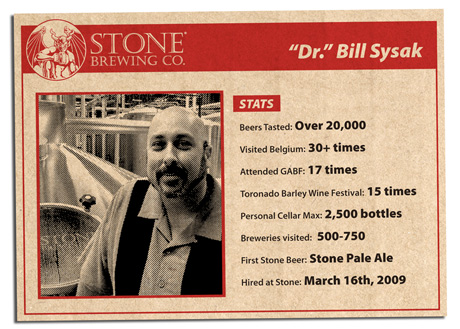
Dr. Bill’s player’s card when he joined Stone Brewing.
Today is the 62nd birthday of Jim Jacobs, who for many years was doing various things at Lagunitas Brewing, most recently as Director of Community Giving. He also helped create the legendary Lagunitas Beer Circus. In his spare time he works with the Petaluma Music Festival and is also the drummer in the Smokehouse Gamblers. Plus, he’s ben a great friend to both me and craft beer over the years. Join me in wishing Jimmy a very happy birthday.
Today is the birthday of Hamar Alfred Bass (July 30, 1842-April 8, 1898). He was the great-grandson of William Bass, the founder of the Bass brewery, and the second son of brewer Michael Thomas Bass.
Bass was born in Burton upon Trent, the second son of brewer Michael Thomas Bass and his wife Eliza Jane Arden, daughter of Major Samuel Arden of Longcrofts Hall, Stafford. Bass was the great-grandson of William Bass, the founder of the brewery firm of Bass & Co, and his elder brother became Lord Burton. Bass was educated at Harrow School and became a Director of the family firm of Bass, Ratcliff, Gretton and Co. He was Honorary Major of the 4th Prince of Wales’s (North Staffordshire) Regiment and was a J.P. for Staffordshire. Bass played cricket for the Marylebone Cricket Club (MCC), making a single first-class appearance for the MCC against Sussex in 1865. He was dismissed in the MCC’s first-innings by James Lillywhite, while in their second-innings he was dismissed for 3 runs by George Wells. The match ended in a draw.
Bass was elected MP for Tamworth at a in by-election in 1878 and held the seat until 1885 when the representation was reduced to one seat under the Redistribution of Seats Act 1885. He was elected MP for West Staffordshire in the 1885 general election and held the seat until his death aged 55 in 1898 from a complex form of rheumatism.
Bass was a breeder at the Byrkley Stud and his horse “Love Wisely” won the Ascot Gold Cup in 1896. He was also for 12 years master of the Meynell Hunt.
Bass married Louisa Bagot (1853–1942), daughter of William Bagot, 3rd Baron Bagot, in 1879. They lived at Byrkley Lodge and Needwood House, Burton, and also at 145 Piccadilly, London. After his death, Louisa married Rev Bernard Shaw.
Bass’s sister Emily Bass married Sir William Plowden, MP for Wolverhampton West, and his sister Alice Bass married Sir George Chetwode being the mother of Field Marshal Philip Chetwode.
Bass’s son William succeeded in his uncle’s baronetcy according to special remainder. Hamar Bass’s daughter Sibell Lucia married Major Berkeley John Talbot Levett of the Scots Guards, son of Theophilus Levett of Wychnor Park, Staffordshire. Berkeley Levett served as one of the Gentlemen Ushers to the Royal Family from 1919 to 1937.
Rear: Austro-Hungarian Ambassador, Lady Alice Stanley.
Back Row: Hon. Col. Legge, Marquis of Soveral, Duchess of Devonshire, Mr Hamar Alfred Bass, Lord Elcho, Miss Jane Thornewill, H.M. Queen Alexandra, Lord Burton (Michael Arthur Bass), Lady Mar & Kellie, Prince Henry of Pless
Front Row: Lady Noreen Bass, Miss Muriel Wilson, Lady Desborough, Lady de Grey, H.M. King Edward VII, Lady Burton (Harriett Bass), Princess Henry of Pless, Mrs Alice Fredrica Keppel, Miss Bunny Thornewill
Hamar Bass was the second son of Michael Thomas Bass and his wife Eliza Jane Arden. He was brother of Lord Burton and also a Director of the family firm of Bass, Ratcliff, Gretton and Co. One sister Emily married Sir William Plowden, MP for Wolverhampton West, and the other married Sir George Chetwode being the mother of Field Marshall Philip Chetwode.
Hamar Bass was MP for Tamworth from 1878 to 1885. He was then MP for West Staffordshire from 1885 until his death aged 56 in 1898 from a complex form of rheumatism.
Hamar Bass married Louisa Bagot (1853-1942), daughter of William Bagot, 3rd Baron Bagot, in 1879. They lived at Byrkley Lodge and Needwood House, Burton, and also at 145 Piccadilly, London. Louisa subsequently married Rev Bernard Shaw. He was a breeder at the Byrkley Stud and his horse “Love Wisely” won the Ascot Gold Cup in 1896. He was also for 12 years master of the Meynell Hunt.
His son William succeeded in his uncle’s baronetcy of Stafford according to special remainder. Hamar Bass’s daughter Sibell Lucia married Major Berkeley John Talbot Levett, Scots Guard, son of Theophilus Levett of Wychnor Park, Staffordshire. Berkeley Levett served as one of the Gentlemen Ushers to the Royal Family from 1919 to 1937.
My good friend Tom Peters, one of the owners of Monk’s Cafe and Belgian Beer Emporium in Philadelphia, Pennsylvania, turns 72 today. His enthusiasm for and promotion of Belgian beer has few equals. A couple of years ago, I was privileged to travel through France and Belgium with Tom, which was amazing. And he threw perhaps the best late night parties of anyone I’ve ever known during GABF during its golden age. Plus, he flew out for my 60th birthday party at Russian River Brewery. Join me in wishing Tom a very happy birthday.
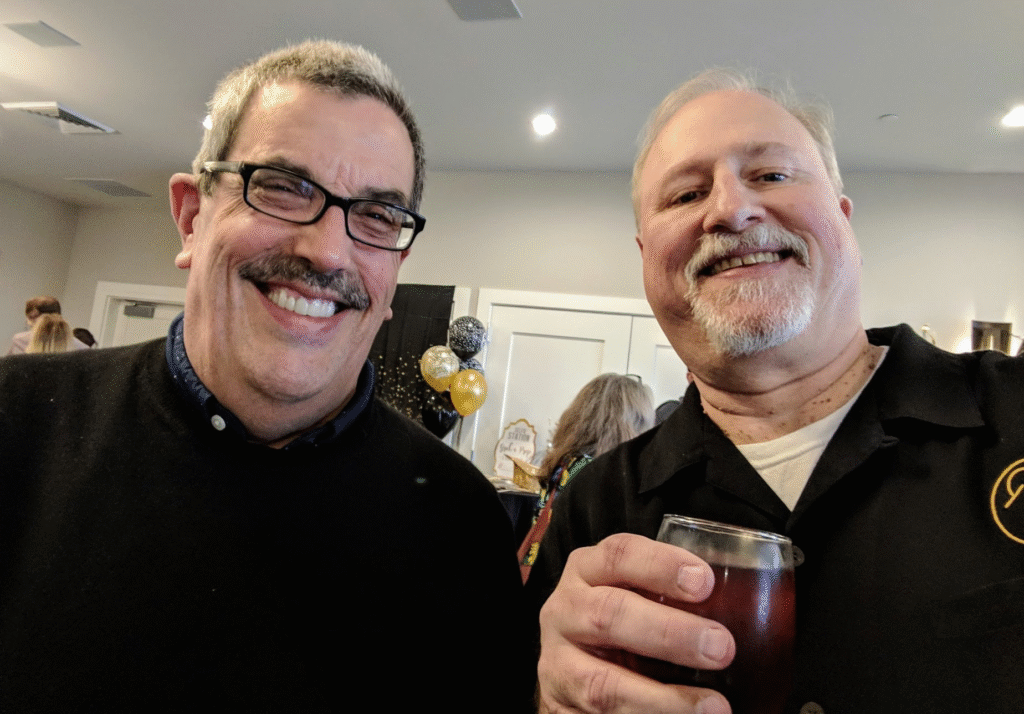
Me and Tom after the Great Lambic Summit at the University of Pennsylvania Museum of Archeology & Anthropology during Philly Beer Week in 2010.
Tom and me at my 60th birthday party at Russian River Brewing.
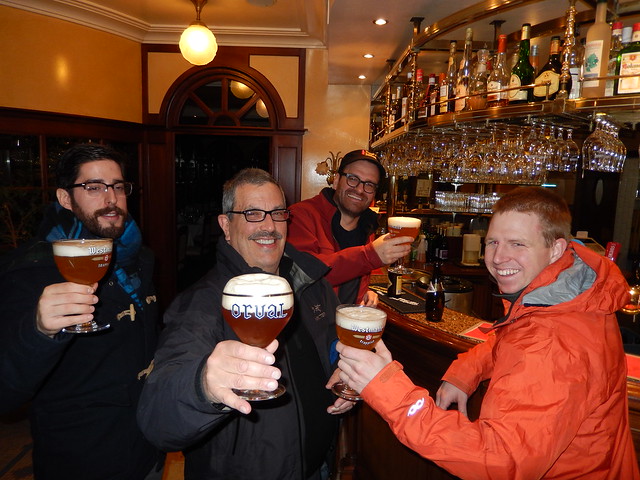
In Belgium, with a perfectly poured Orval, with Daniel Neuner, William Reed and Justin Low.
Tom Peters with Dave Keene, owners of the best two Belgian beer bars on both coasts.
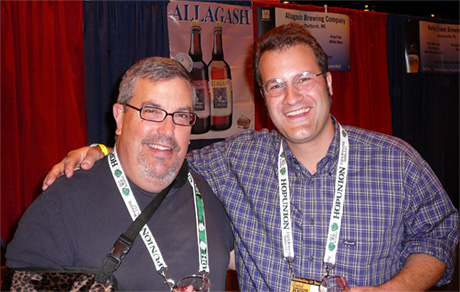
Tom Peters, with Rob Tod from Allagash in Portland, Maine, at GABF.
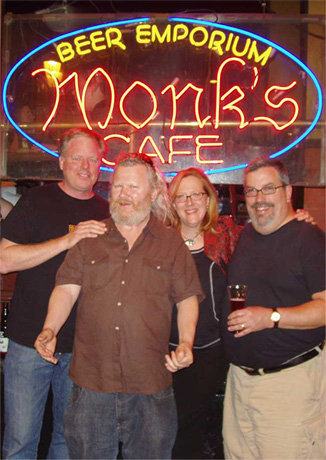
Shaun O’Sullivan from 21st Amendment, Fergie Carey, co-owner of Monk’s, Lucy Saunders, the beer cook, and Tom Peters.
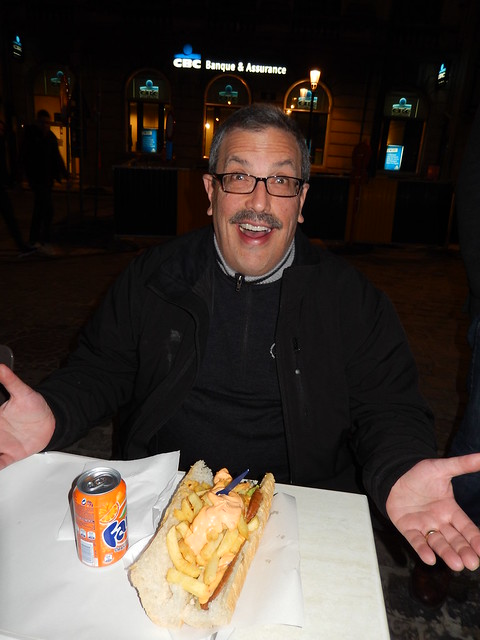
Also in Belgium, with a Fanta and Frites sandwich.
Last year I decided to concentrate on Bock ads. Bock, of course, may have originated in Germany, in the town of Einbeck. Because many 19th century American breweries were founded by German immigrants, they offered a bock at certain times of the year, be it Spring, Easter, Lent, Christmas, or what have you. In a sense they were some of the first seasonal beers. “The style was later adopted in Bavaria by Munich brewers in the 17th century. Due to their Bavarian accent, citizens of Munich pronounced ‘Einbeck’ as ‘ein Bock’ (a billy goat), and thus the beer became known as ‘Bock.’ A goat often appears on bottle labels.” And presumably because they were special releases, many breweries went all out promoting them with beautiful artwork on posters and other advertising.
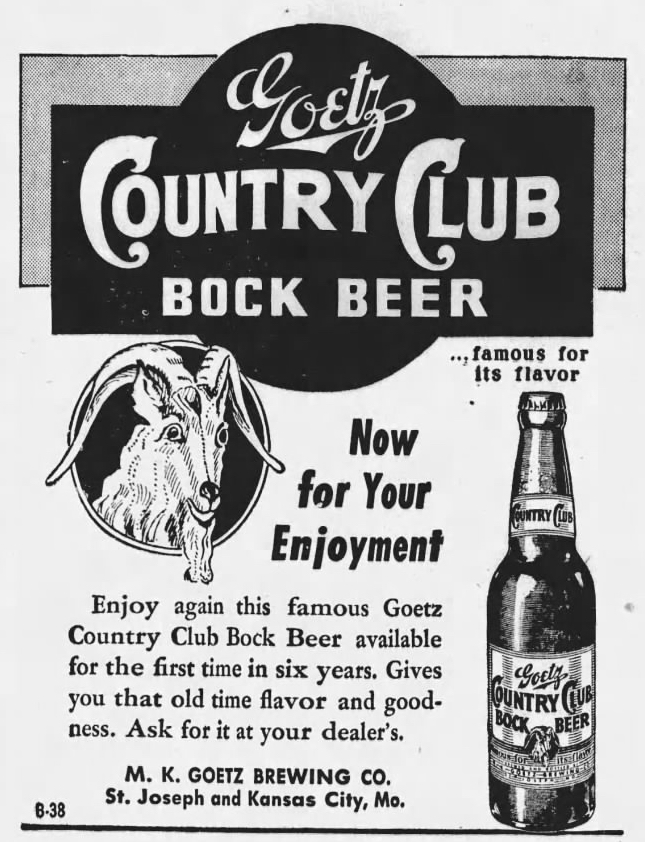
Tuesday’s ad is for Goetz Country Club Bock Beer, which was published on July 29, 1948. This one was for the M.K. Goetz Brewing Co. of Saint Joseph, Missouri (and they also had a brewery in Kansas City), which was originally founded in 1859. This ad ran in The Mound City News Independent, of Mound City, Missouri, serving Holt County.
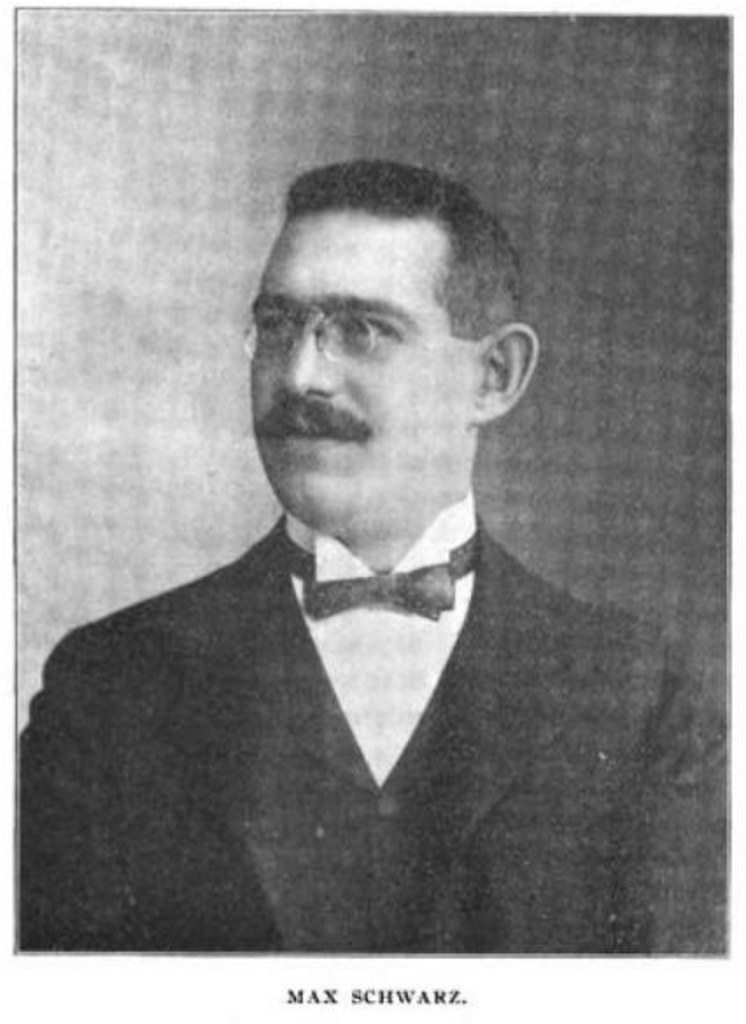
Today is the birthday of Max Schwarz (July 29, 1863-February 7, 1901). He was the son of Anton Schwarz, who owned the magazine/journal American Brewer, which he turned into a serious scientific journal, writing many of the articles himself, and is credited with helping the entire industry improve its standards and processes. His son Max took over as publisher of the American Brewer when he passed away.
He was also mentioned in his father’s entry in the Jewish Encyclopedia, published in 1906.
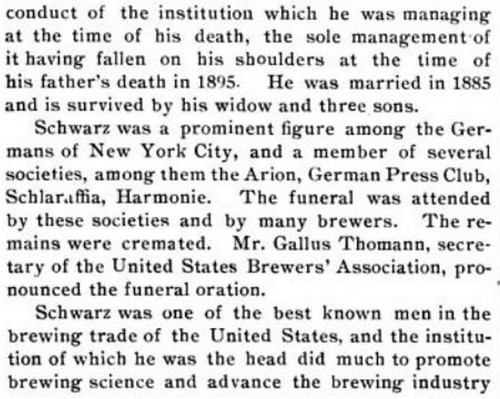
Schwarz’s eldest son, Max Schwarz (b. in Budapest July 29, 1863; d. in New York city Feb. 7, 1901), succeeded him as editor of “The American Brewer” and principal of the Brewers’ Academy. He studied at the universities of Erlangen and Breslau and at the Polytechnic High School at Dresden. In 1880 he followed his father to the United States and became associated with him in many of his undertakings.
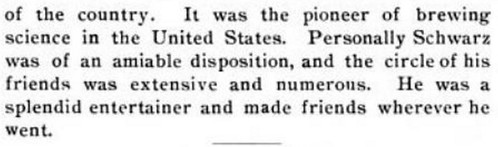
Both as editor and as principal of the academy he was very successful. Many of the essays in “The American Brewer,” especially those on chemistry, were written by him. He was a great advocate of the “pure beer” question in America.
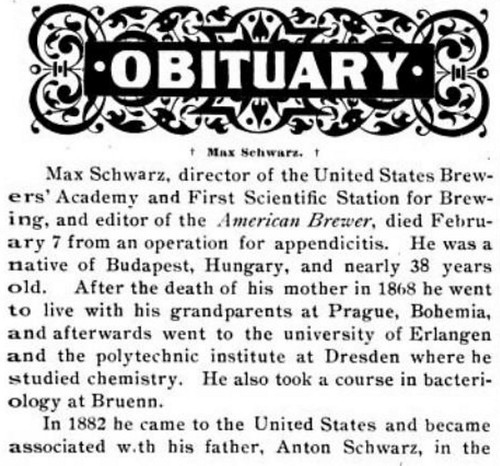
And here’s his obituary from the American Brewers Review, Vol. XIV:
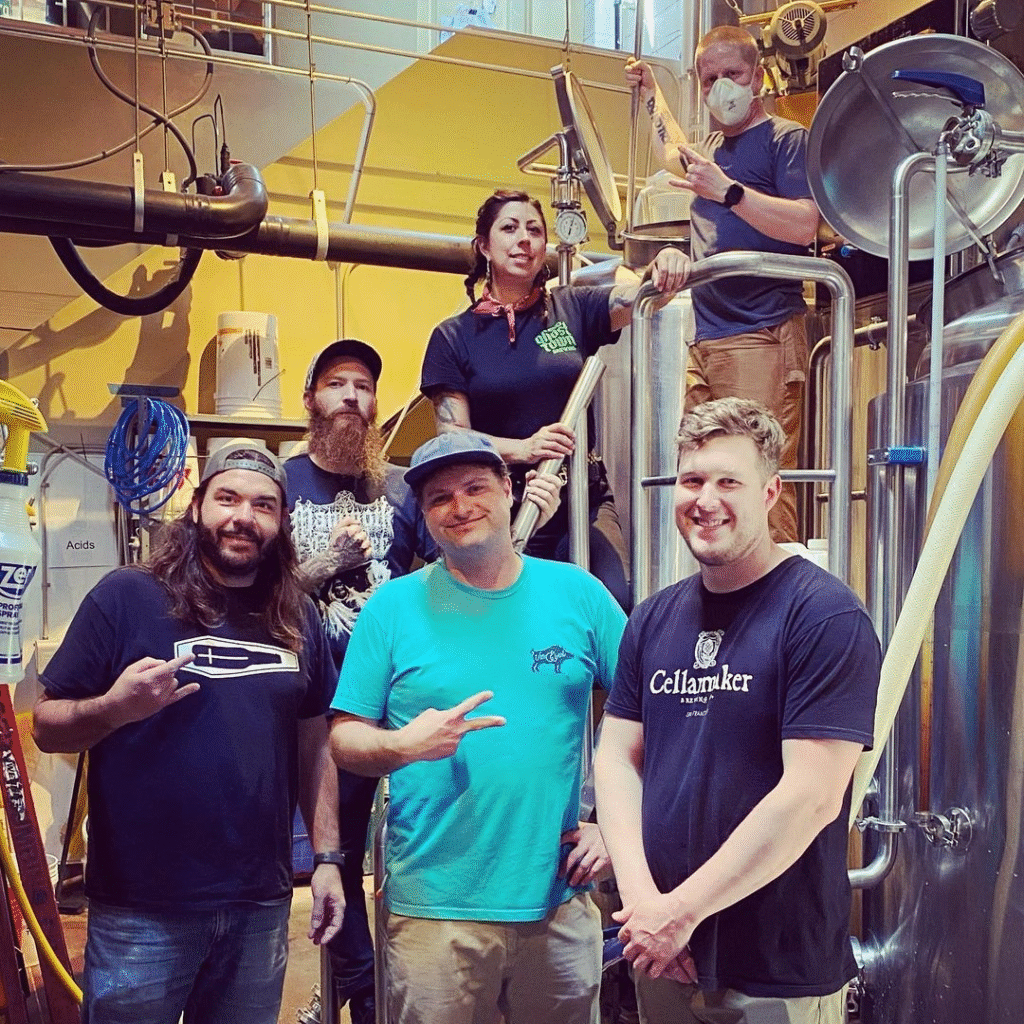
Today is the 41st birthday of Tim Sciascia, co-founder of Cellarmaker Brewing, which started in San Francisco but now has locations in Oakland and Berkeley, as well. He’s also recently joined Berkeley Yeast as a Brand Ambassador. Originally from Massachusetts, his original passion was one we share: classical Saxophone. But he also picked up homebrewing in college, and afterwards worked at the Samuel Adams brewery in the Jamaica Plain neighborhood of Boston. But wanting to make his own way, he relocated to the Bay Area, and spent five years under Arne Johnson at Marin Brewing before partnering with his fiancé Kelly and fellow Marin-alum Connor Casey to start Cellarmaker in 2013. Since then, it’s been nothing but upward trajectory. Join me in wishing Tim a very happy birthday.
Co-founders Connor Casey and Tim (along with Kelly Caveney Sciascia) at thier Oakland location in 2023.
Last year I decided to concentrate on Bock ads. Bock, of course, may have originated in Germany, in the town of Einbeck. Because many 19th century American breweries were founded by German immigrants, they offered a bock at certain times of the year, be it Spring, Easter, Lent, Christmas, or what have you. In a sense they were some of the first seasonal beers. “The style was later adopted in Bavaria by Munich brewers in the 17th century. Due to their Bavarian accent, citizens of Munich pronounced ‘Einbeck’ as ‘ein Bock’ (a billy goat), and thus the beer became known as ‘Bock.’ A goat often appears on bottle labels.” And presumably because they were special releases, many breweries went all out promoting them with beautiful artwork on posters and other advertising.
Monday’s poster is for Falken Schaffhauser’s Oster-Bock, and was published in 1929. This one was made for the Bierbrauerei Falken Schaffhausen, or Falcon Brewery, of Schaffhausen, Switzerland. The brewery was founded in 1799, and is still in business today, and is “considered the only independent brewery in the Schaffhausen region,” and is Switzerland’s 5th largest brewery. This one is for their Schaffhauser Oster-Bock (Easter Bock) and shows a man balancing on a wooden beer barrel while holding a mug full of beer and a pipe in his mouth. It was created by Swiss artist Arnold Oechslin.
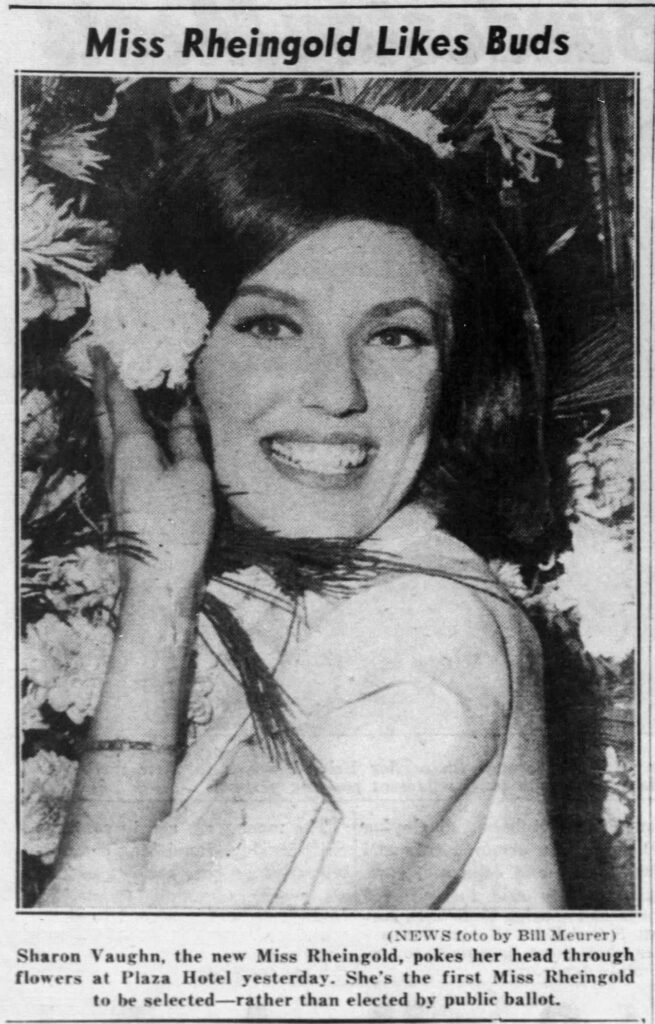
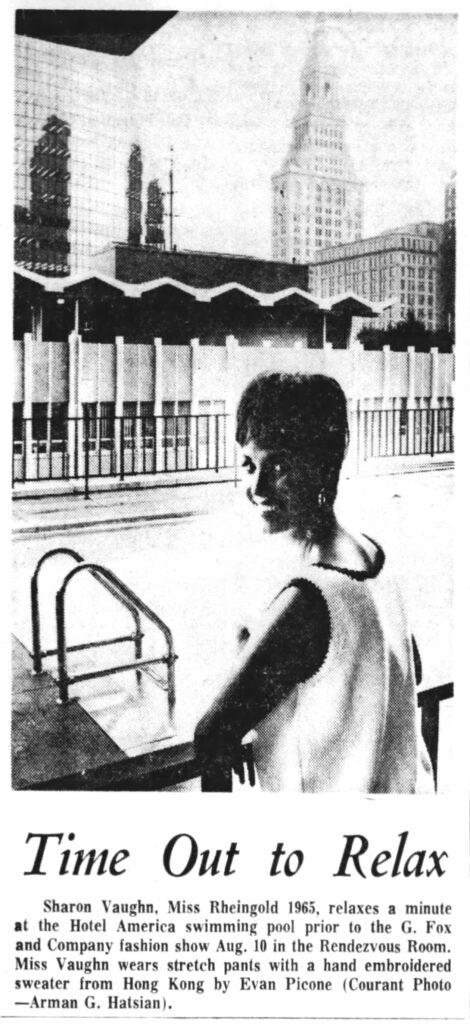
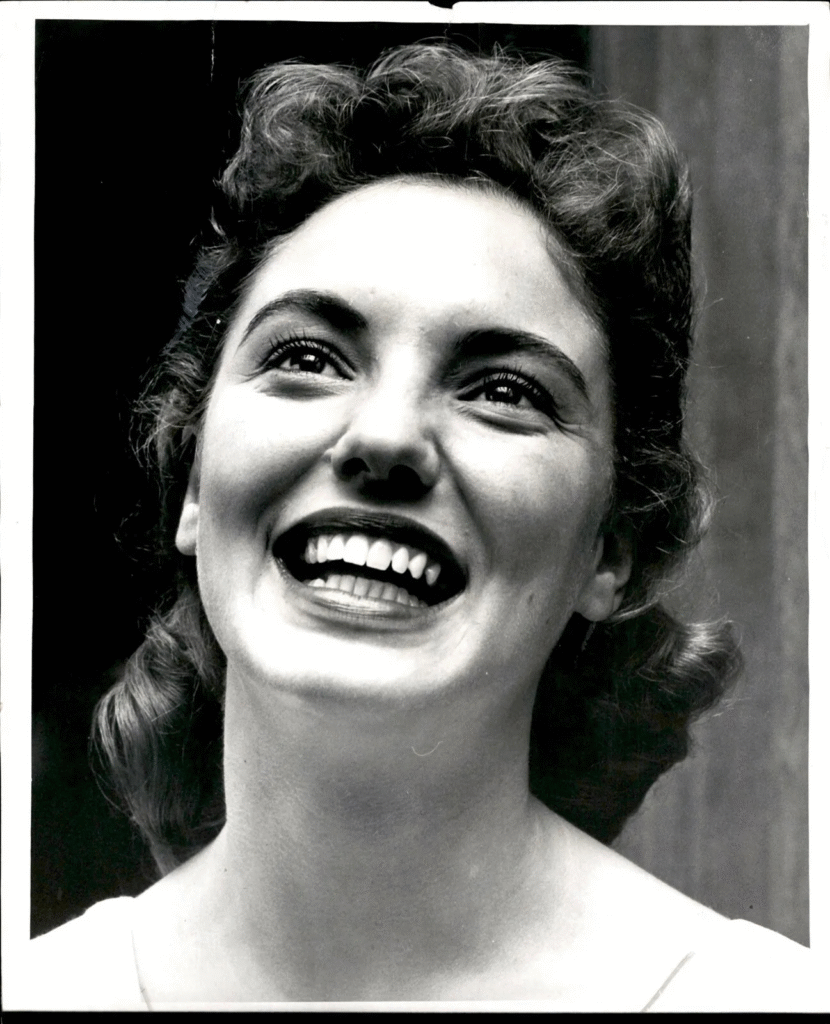
Today is the birthday of Sharon Vaughn (July 28, 1938-December 2023). Her claim to beer fame was being named as Miss Rheingold for 1965, the last Miss Rheingold in the golden era. She was also chosen by the new owners of the brewery rather than through a public vote, which hadn’t been the case since the second year of the contest in 1941. Unfortunately, the new owners didn’t really know what to do with her and she appeared in no ads her year, but instead only made public appearances at events and had fluff pieces written about those appearances. As a result, there’s far less breweriana of her than almost any other Miss Rheingold, which is a shame. She didn’t even appear in print until March of 1965, unlike previous ones who typically were announced the previous September or October.
She was born in Missouri, but moved to Washington state when she was five, and graduated from the University of Washington as a music major. While in college, she became Miss Washington and represented the state at the Miss America Pageant, where she was second runner-up. After college, she moved to New York City and attended Julliard. She began getting small parts in Broadway musicals, but also sang in nightclubs and appeared in television commercials. In 1965, she took a year off to become Miss Rheingold. Afterwards, she was cast in Funny Girl, and also appeared in the film a few years later. While in L.A. for filming she met talent agent Byron Lapin, whom she married. She also did some television, appearing on Bewitched and Get Smart. The couple later moved to St. Louis when he took over his family’s business. She passed away in December of 2023.
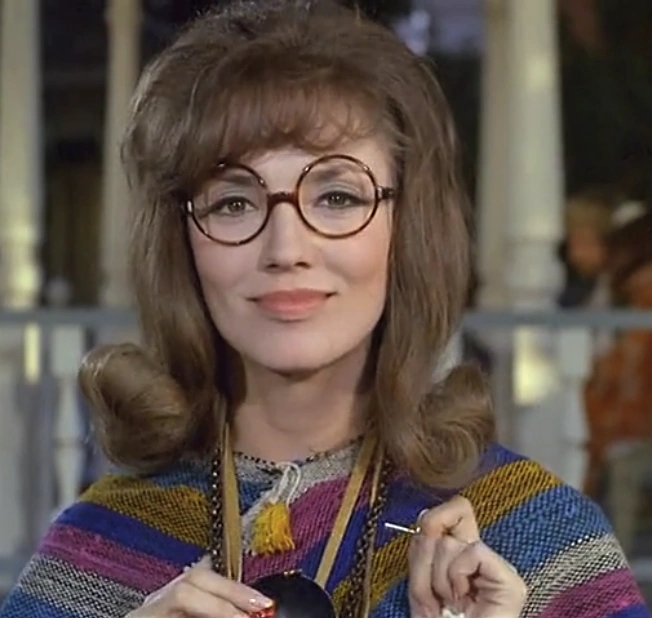
In 1968, Vaughn played a villain known as “Wanda” in an episode of “Get Smart” called “The Groovy Guru.“
Headshot when she competed in the Miss America pageant as Miss Washington.
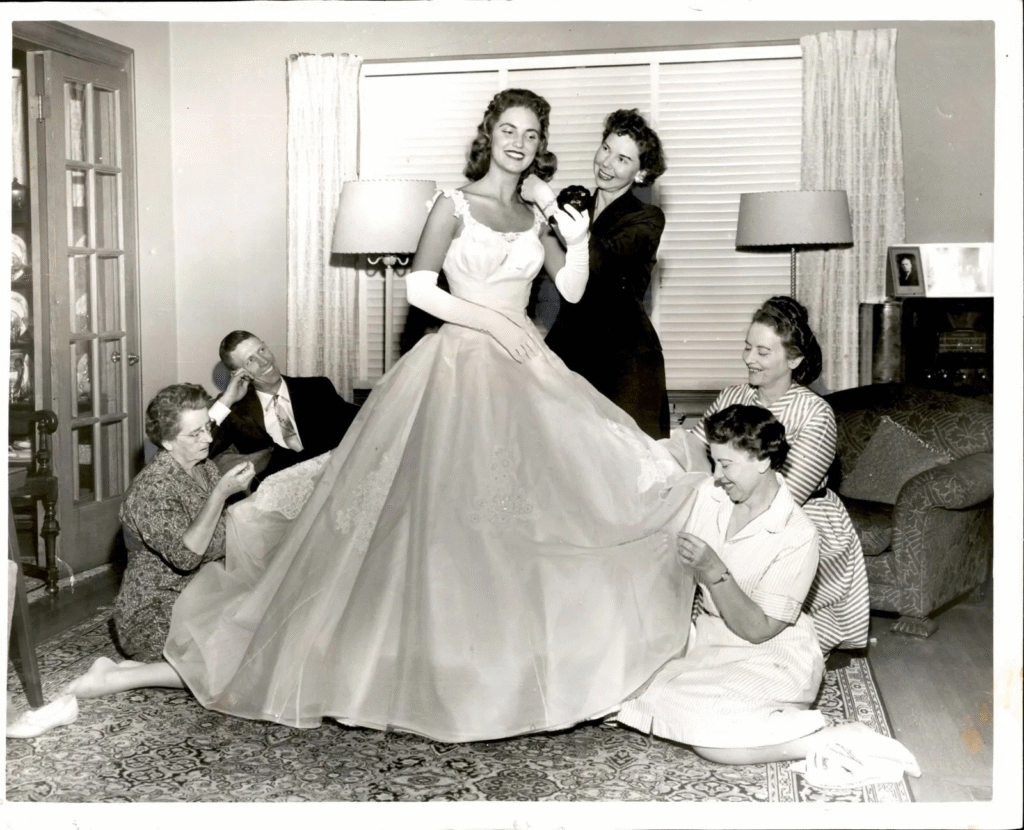
Getting her evening gown ready for the Miss America pageant.