Brookston Beer Bulletin

Jay R. Brooks on Beer

  • Home
  • About
  • Editorial
  • Birthdays
  • Art & Beer

Socialize

  • Dribbble
  • Email
  • Facebook
  • Flickr
  • GitHub
  • Instagram
  • LinkedIn
  • Pinterest
  • RSS
  • Twitter
  • YouTube

Powered by Genesis

The Homebrew Chef’s Toronado Bars

November 19, 2009 By Jay Brooks

sean-paxton
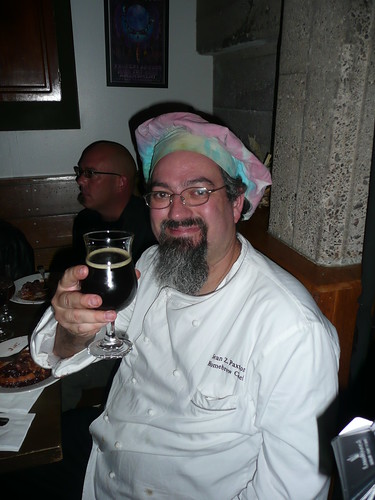
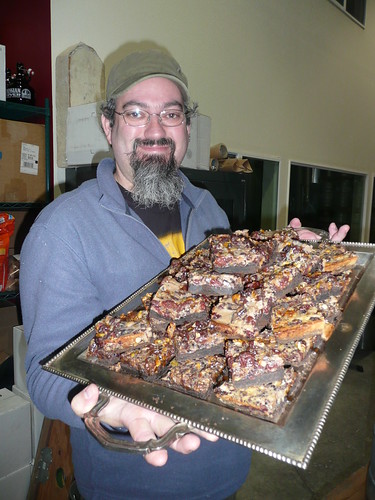
The morning after the Monk’s Blood Beer Dinner, Sean Paxton delivered a tray of his newest confectionery concoction, Toronado Bars, to the CSBA meeting that began Tuesday morning at Russian River Brewing.
P1180117

All I know about them is they’re cake cookies that pay homage to the iconic San Francisco beer bar and they included cherries soaked in Russian River’s Consecration. Natalie even opened a few bottles of Consecration to pair with them. You’ll have to wait until the December issue of Beer Advocate magazine to get the full story (and the recipe). I can tell you they were incredibly delicious.

Filed Under: Breweries, Food & Beer Tagged With: California, Northern California

Monk’s Blood Dinner

November 19, 2009 By Jay Brooks

monks-blood-can
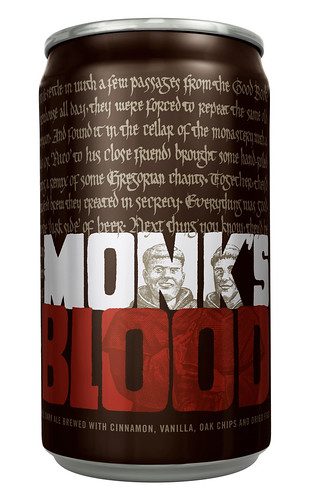
Monday night a beer dinner was held at the 21st Amendment Brewery & Restaurant in San Francisco to celebrate the release of their newest beer in a can, Monk’s Blood, the first in a new series they’ve dubbed the “Insurrection Series.” The cans themselves will be out in four-packs in about two weeks. Here’s what they’ll look like:
The Monk's Blood can
The text around the can reads as follows (thanks to the beer sage for transcribing it, and most importantly, saving me from having to do it):

Legend has it that in the evenings, the monks would retire to their chambers & settle in with a few passages from the Good Book. But Brothers Nicolas and O’Sullivan [21st Amendment partners] had other plans. Working in the brewhouse all day, they were forced to repeat the same old recipes the elder monks had invented years before. They needed a little diversion. And found it in the cellar of the monastery with a fresh twist they put on the beer and the way they enjoyed it. Brother Nicolas (or Nico to his close friend) brought some hand-rolled cigars. O’Sullivan, the outspoken one, broke the vow of silence by spinning a remix of some Gregorian chants. Together, they’d throw down a couple nice hands of Texas Hold’Em and savor the handcrafted brew they created in secrecy. Everyday was good. Or so it seemed. But deep in his heart, Nico knew they were drifting into the ‘dark side’ of beer. Next thing you know they’d be skipping Lent. Then on night they’d face the Judgment for their actions with a hard knock at the door. Outside, the Abbots and elders would be holding stone in the air. A threat the brothers were sure would lead to the spilling of Monk’s Blood.

From the press release:

Monk’s Blood pays homage to the monks of Belgium’s monasteries who have been brewing some of the world’s great beer for centuries. During times of fasting, the monks subsist solely on beer, which they refer to as “liquid bread”. Beer, quite literally, is in their blood. The most sublime of the monk’s premium brews is dark like blood, rich and nourishing.

21st Amendment founders Nico Freccia and Shaun O’Sullivan traveled to Belgium to develop the recipe for this special beer, visiting small, traditional breweries in the hop fields of west Flanders, not far from the famous Trappist abbey of Westvletren. Monk’s Blood is designed to pair beautifully with rich winter stews, creamy cheeses, unctuous desserts or just by itself, in a Belgian tulip glass, with a good book by the fire.

The beer itself is a strong, dark Belgian-style beer that’s 8.3% abv. It’s 34 IBUs, using Centennial, Magnum and Amarillo hops. In addition to the eight malts (including Special B and oats), an Abbey ale yeast, it is flavored with dark Belgian candi sugar, cinnamon, vanilla beans, and dried black Mission Figs. Then it’s aged on oak. The result is a complex, delicious beer with a sweet nose consisting of a melange of aromas. The flavors, too, are complex with caramel and candy sweetness balanced by American hop character that works surprisingly well. The finish is long and sweet.

A toast by the Homebrew Chef, Sean Paxton
The Homebrew Chef, Sean Paxton, relaxing with some Monk’s Blood after the end of the beer dinner.

Sean Z. Paxton, put on the five-course dinner using all of the Belgian-style 21st Amendment beers from the BRU/SFO Project that’s going on all month at 21A and Magnolia. To see the meal and the beers poured at the dinner, see the photo gallery below.

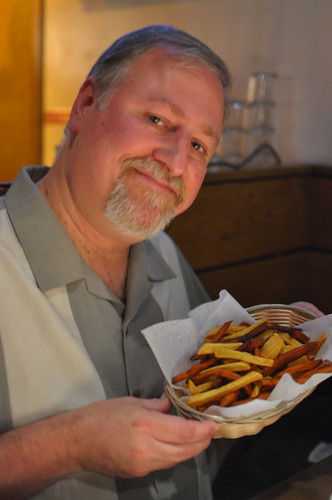
Me and My Own Frites (by Jesse Friedman)
My favorite part of the dinner was the frites, of course, and while most table shared a basket or two of them, because Sean knows my love of frites, I got my own basket of frites. (Photo by Jesse Friedman. To see his account of the dinner, see his Beer & Nosh post.)


Here is a slideshow of the Monk’s Blood Beer Dinner. This Flickr gallery is best viewed in full screen. To view it that way, after clicking on the arrow in the center to start the slideshow, click on the button on the bottom right with the four arrows pointing outward on it, to see the photos in glorious full screen. Once in full screen slideshow mode, click on “Show Info” to identify each photo.

Filed Under: Beers, Events, Food & Beer, Reviews Tagged With: California, Northern California, Photo Gallery, San Francisco

Want A Healthier Heart? Drink More Beer!

November 19, 2009 By Jay Brooks

health
This has got to drive the anti-alcohol lobby nuts, and especially their medical co-conspirators who continue to insist that a binge drinker is simply someone who drinks five or more drinks in one session. The UK newspaper, The Independent, had an interesting article today, provocatively titled “Drink half a dozen beers every day and have a healthier heart: Teetotallers more likely to have heart attack than drinkers, study shows.”

According to the article, “Drinking a bottle of wine a day, or half a dozen beers, cuts the risk of heart disease by more than half in men, it has been shown.” That’s based on a study just published in the medical journal Health entitled Alcohol intake and the Risk of coronary heart disease in the Spanish EPIC cohort study.

In the Abstract:

Background
The association between alcohol consumption and Coronary Heart Disease (CHD) has been broadly studied. Most studies conclude that moderate alcohol intake reduces the risk of CHD. There are many discussions on whether the association is causal or biased. The objective is to analyse the association between alcohol intake and risk of CHD in the Spanish cohort of the European Prospective Investigation into Cancer (EPIC).

Methods
Participants from the EPIC Spanish cohort were included (15,630 men and 25,808 women). The median follow up period was 10 years. Ethanol intake was calculated using a validated dietary history questionnaire. Participants with a definite CHD event were considered cases. A Cox regression model was performed adjusted for relevant covariables and stratified by age. Separate models were carried out for men and women.

Results
Crude incidence rate of CHD was 300.6/100,000 person-years for men and 47.9/100, 000 person-years for women. Moderate, high and very high consumption was associated with a reduce risk of CHD in men: HR 0.86 (95% CI= 0.54-1.38) for former drinkers, 0.64 (95% CI= 0.4-1.0) for low, 0.47 (95% CI= 0.31-0.73) for moderate, 0.45 (95% CI= 0.29-0.69) for high and 0.49 (95% CI= 0.28-0.86) for very high consumers. In women a negative association was found with p values above 0.05 in all categories.

Conclusions
In men aged 29-69 years, alcohol intake was associated with a more than 30% lower CHD incidence. Our study is based on a large prospective cohort study and is free of the abstainer error.

The Independent distills it in clearer language:

In one of the largest studies of the link between alcohol and heart disease, researchers have found that the protective effects of a daily tipple are not limited to those who drink moderately but also extend to those who consume at what are conventionally considered to be dangerously high levels.

The research was conducted among 15,000 men and 26,000 women aged from 29 to 69 who were followed for 10 years.

The results showed that those who drank a little — a glass of wine or a bottle of beer every other day — had a 35 per cent lower risk of a heart attack than those who never drank. Moderate drinkers, consuming up to a couple of glasses of wine a day or a couple of pints of ordinary bitter, had a 54 per cent lower risk.

The surprise was that heavy drinkers consuming up to a bottle of wine or six pints of ordinary bitter had a similar 50 per cent reduction in risk of a heart attack to moderate drinkers. Those drinking at even higher levels were still half as likely to suffer a heart attack as the teetotallers.

Larraitz Arriola, who led the study, said alcohol caused 1.8 million deaths a year around the world and 55,000 deaths among young people under 30 in Europe alone. “The first thing to say about our research is that alcohol is very harmful. If you drink heavily, you should drink moderately. The more you drink, the worse off you will be.” The researchers only looked at the effect of alcohol on the heart and confirmed what 30 years of studies have shown — that it is protective. The effect was independent of the form in which the alcohol was taken, as beer, wine or spirits. However, people who only drank wine had slightly less protection.

Not surprisingly, British “scientists” are calling the results “flawed,” most likely because it flies in the face of their politically-motivated advice and the ridiculous (and recently revealed to be completely arbitrary) “units of alcohol” that set the nation’s alcohol policy for over twenty years. In a BBC article, they’re still treating the guidelines as if they mean something, which is almost funny.

In May of 2006, Danish study that also found healthy heart benefits for alcohol drinkers, though in that study they concluded that drinking levels above moderate would not increase benefits. This new Spanish study appears to conclude otherwise. In every article I’ve seen on this study, everyone is scrambling to make sure to tell people not to go out and start drinking more, due to other risks from heavy drinking. I’d say anyone that suddenly started binging based on this study probably deserves whatever ill effects they experience. But seriously, do health professionals really believe people are that stupid? I’m sure there are a few stupid enough (P.T. Barnum had it right) but it’s more likely they were already unhealthy drinkers just looking for an excuse.

What I take away from this is simply that the arbitrary and self-serving definitions of binge drinking are not only wrong, but very, very wrong. I attend beer dinners all the time, drinking an average of four, five or six different beers (and sometimes more) over several hours, paired with several courses. These dinners cost $50, $75, $100 (and sometimes more). They are attended by people who can afford that, people with good jobs, professionals, people with families, upstanding members of their communities. Yet in the U.S., the CDC claims if you have “five or more drinks in a row,” you’re an unhealthy binge drinker, endangering your own life, and possibly those around you. That makes every one of the people at all the beer dinners I attend, binge drinkers, and, to some in the anti-alcohol movement, automatic alcoholics, too. Could any standard be farther from reality?

Despite all the warnings of binge drinking, it appears by defining it in a way that’s so far removed from ordinary experience, that it actually makes it completely meaningless. Certainly there are people who drink too much and put their health at risk. But lumping them together with those who occasionally drink “five or more drinks in a row” safely and without sinking into alcoholism, the problems of the people who really need help never get addressed. All it does is give the AnAl’s more ammunition to scare people with, and few media outlets ever call them on it. After all, it has the stamp of a government agency. But we all know it’s not accurate by any stretch of the imagination to call the average beer dinner attendee a binge drinker. At least now we know their heart will get a boost. In the end, I think the best advice is “everything in moderation … including moderation.”

Filed Under: Beers, Editorial, News, Politics & Law Tagged With: Health & Beer

Breweries Have 5th-Most Satisfied Customers

November 18, 2009 By Jay Brooks

acsi
According to a new survey, released yesterday by the American Consumer Satisfaction Index (and tweeted my way by Anat Baron — thanks!), Breweries ranked 5th in overall satisfaction by consumers among industries polled by the group. Here are the first five with their score in parentheses (out of 100):

  1. Personal Care & Cleaning Products (85)
  2. Soft Drinks (85)
  3. Full Service Restaurants (84)
  4. Automobiles & Light Vehicles (84)
  5. Breweries (84)

For breweries, this is the highest marks they’ve received since this poll began, and represents a 1.2% increase over last year.

As reported by Brand Week, comfort foods like candy and beer continued to do well.

Beer manufacturers reached their highest level to date with a score of 84 (out of a 100-point scale) to mark a 1.2 percent change from 2008 rankings. Top companies included Anheuser-Busch InBev (85) and SABMiller (83), which grew 3.7 percent and 1.2 percent respectively from last year. Molson Coors Brewing (81) dipped by 2.4 percent, while “all others” maintained their rank at 83.

The ACSI had their own take on beer in their analysis:

Beer: A Comfort Drink?

Beer drinker satisfaction has soared to an all-time high in ACSI. It too seems to follow the pattern of chocolate and sweets, but perhaps a bit less pronounced. The industry improved 1.2% to an ACSI score of 84, led by a 4% climb for Anheuser-Busch to a score of 85. Just a year after it was acquired by the Belgian-Brazilian conglomerate InBev, Anheuser-Busch matched its biggest ever single-year gain to reach its highest level ever. InBev has made a number of changes in business strategy—it sold the ten theme parks owned by Anheuser-Busch to reduce debt and focus on core business, cut over 1,000 employees, and overhauled management. The company has seen increased sales of lower-priced brands such as Natural Light and Busch and of newer products such as Bud Light Lime and Golden Wheat varieties.

Results for Miller and Coors brands, which market under a joint operating agreement, were mixed. Miller improved slightly, up 1% to 83, while Coors dropped 2% to 81, falling to the bottom of the industry. The Coors brand portfolio is composed of a greater proportion of high-end entities and more high-priced brands compared with Anheuser-Busch. In the midst of an economic downturn, customers typically look more to value for money. Coors drinkers report a sharp decline in value for money.

The ACSI also noted a pattern during economic downturns:

“The same thing happened in 2001 in the midst of the previous recession and also in 2004 when concern over the Iraq war and rising fuel prices appeared to be reflected in higher satisfaction with comfort foods,” said Professor Claes Fornell, founder of the ACSI and author of The Satisfied Customer, in a statement.

Newspapers and Cable/Satellite TV tied for last, though Airlines were a close second-to-last.

Filed Under: Breweries, Editorial, Just For Fun, News Tagged With: Mainstream Coverage, Statistics

First Bay Area Holiday Fest A Good Start

November 18, 2009 By Jay Brooks

bevmo-holiday
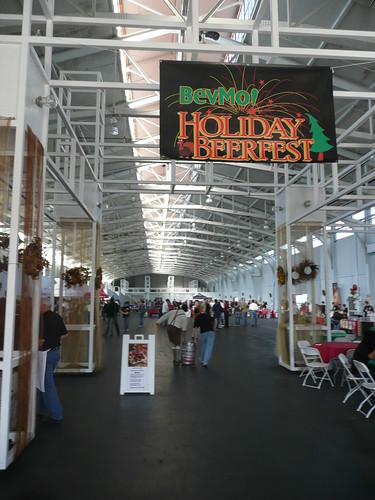
Last Sunday, my old company, Beverages & more, where once upon a time I was the beer buyer for almost five years, hosted the first holiday beer fest in the Bay Area. Dubbed the BevMo Holiday Beerfest, it was organized by local beer festival promoter Jeff Moses, who also does the Monterey Beer Festival, among others. It was held at the Herbst Pavilion at Fort Mason in San Francisco.

Inside the Pavilion before the fest began

It was a good space and they wisely used only a portion of the hall so it wasn’t too large inside. I’ve long thought San Francisco needs a holiday beer festival, Pacific Coast Brewing’s holiday tasting notwithstanding. Winter and Christmas beers are some of my favorite seasonals because brewers tend to really be creative with them. Plus, I like spice beer more than most.

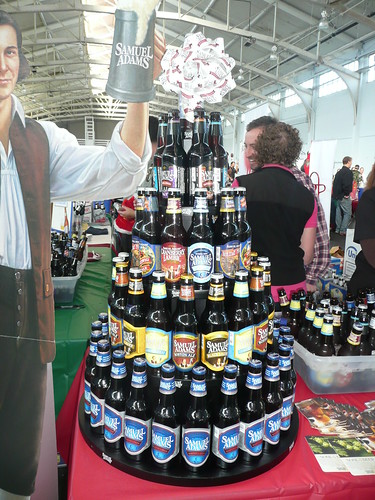
Samuel Adams' cool bottle tree

I’d guess only about one-third of the beers there were in fact winter seasonals or holiday beers, but still, it was a good start. Unlike many festivals, beer from abroad was also served, which allowed a greater range of beers to be available. I think this could, over time, develop into a great annual festival, especially if the focus on holiday beers increases. Organizer Jeff Moses only had a few weeks to put this year’s festival together, so I expect next year’s to be even grander (no pressure, Jeff). Naturally, I couldn’t try everything there, but of what I did have, here are a few stand-outs:

  • Anchor Christmas Ale 2009: The last few years have not seen the roller coaster flavor changes of the late 1990s, more’s the pity. But it’s as solid as ever and still one of my all-time favorite holiday beers and one of my go-to beers for Thanksgiving.
  • Anderson Valley Winter Solstice: For years, this beer has been too vanilla-forward for my tastes, but this year they’ve got the balance just right, with just a delicious hint of the vanilla.
  • Ayinger Weizen Bock: A great mix of wheat character and the dark, malt strength of a bock.
  • Grand Teton Pursuit of Hoppiness Double Red Ale: A terrific big, hoppy beer; one of two great double reds at the festival.
  • Lhasa Beer: A clean pilsner brewed in Tibet. Despite the politics surrounding the beer, it tastes pretty decent.
  • Mad River John Barleycorn Barleywine Style Ale: Another beer that continues to improve. The last few years, this beer has been fantastic, and this year’s edition is no exception.
  • Ninkasi Believer Double Red: Not yet in the Bay Area, but soon, I’m told. Keep an eye out for this, and their entire line. If you love hoppy beers, Eugene, Oregon’s Ninkasi Brewery will quickly become one of your favorites. Brewmaster Jamie Floyd has a deft hand with big, hoppy beers. The Double Red is a terrific hop monster with great balance.
  • Okocim Polish Porter: I haven’t tasted this porter in a few years, and it’s even better than I remember. A really nice example.
  • Uncommon Brewers Rubidus Red Ale: A beer brewed with mushrooms that nicely captures the savory flavors of Candy Cap mushrooms balanced by the addition of maple sugar.


Here is a slideshow of the BevMo Holiday Beerfest. This Flickr gallery is best viewed in full screen. To view it that way, after clicking on the arrow in the center to start the slideshow, click on the button on the bottom right with the four arrows pointing outward on it, to see the photos in glorious full screen. Once in full screen slideshow mode, click on “Show Info” to identify each photo.

Filed Under: Beers, Events, Reviews Tagged With: Beer Festivals, California, Northern California, Photo Gallery, San Francisco

Top Ten Tuesday: Top 10 New Breweries

November 17, 2009 By Jay Brooks

top-10
I recently came upon another interesting group of Top 10 lists by Newsweek about the first decade of the 21st century. It’s called The Decade in Rewind 20/10 and one part of their look back at the aughts includes a new Top 10 list every day. The list that caught my eye was an interesting one, Unknown in ’99, Indispensable Now which picked 10 things that we can’t do without in 2009 but didn’t exist ten years ago. Some things take years to catch on, but these caught on like wildfire. I use over half of them all the time, and couldn’t imagine life without them. Here’s that list:

  1. Wikipedia
  2. YouTube
  3. iTunes
  4. Digital Video Recorder (DVR)
  5. Gardasil
  6. Chipotle
  7. TMZ
  8. Red Bull
  9. Free Credit Reports
  10. Online Airline Check-In

So it got me thinking about the breweries that have been around for less than ten years. With Sierra Nevada coming up on their 30th anniversary, a growing number of successful breweries are older than a decade, in some cases two decades. But many new breweries have seen a phenomenal amount of success in a relatively short time. Undoubtedly, the market has changed considerably from where it was pre-millennium and that probably accounts for more favorable conditions for new craft brewers. But alone that’s not enough to account for it all. Some of these new breweries just stepped up and kicked butt. So for my 20th Top 10 list, here are my choices for the ten most important and influential breweries that began within the last ten years. These are the young Turks, the mavericks and the rookies. Some are here because they make great beer while others have made their mark through their influence. I should stress I don’t think I have a complete list of every brewery that’s opened since 1999. Also, I didn’t include new locations opened by an older, existing brewery, or ones that moved. And I certainly haven’t been to all of them at any rate. So undoubtedly I’m going to miss some worthy places, but I can only pick ten. Let me know who you’d put on the list. Here’s List #20:

Top 10 New Breweries

   Ninkasi Brewing (OR; 2006)
   The Bruery (CA; 2008)
   Pretty Things Beer & Ale Project (MA; 2008)
   21st Amendment Brewery (CA; 2000)
   Surly Brewing (MN; 2006)
   Southern Tier (NY; 2003)
   Captain Lawrence (NY; 2006)
   Tie: Laurelwood Public House & Brewery (OR; 2001) /    Hopworks Urban Brewery (OR; 2008)
   Jolly Pumpkin Artisan Ales (MI; 2004)
   The Lost Abbey (CA; 2006)

It was, as always, really difficult to keep the list to ten, and a great many terrific and deserving breweries were left on the cutting room floor. Here’s a few more that almost made the list:

Alpine Beer Co. (CA; 2006); Bard’s Tale (NY; 2004); City Brewing (WI; 1999); Fifty Fifty Brewing (CA; 2007); Five Seasons Brewing (GA; 2000); Heavyweight Brewing (NJ; 1999); Moon River (GA; 1999); Natty Greene’s (NC; 2004); Nebraska Brewing (NE; 2007); Piece Brewing (IL; 2001); Pisgah Brewing (NC; 2005); Roots Organic Brewery (OR; 2005); Short’s Brewing (MI; 2004); Trumer Brauerei (CA; 2003)

Let me know your favorites, and if there are any that you think should have made the list, please post a comment.

NOTE: It’s a little sad that I have to mention this, but while I encourage a lively debate, that doesn’t mean I enjoy being insulted or attacked. This is meant to be fun and encourage discussion — notice the “Just For Fun” tag? Please stop reminding me it’s “just” opinion. Of course it is. Are you under the impression that I think this list is somehow definitive? Just to clear it up, it’s not. I know it. If you’d read the introduction, which apparently many people did not, you’d know it too. It’s the very definition of subjectivity. But please try to remember, as you type those angry words, that even though you can’t see me, I am a real human being. Honest, I exist. Before you hit send, ask yourself if you’d say the things you’re writing to a person who was standing right in front of you, having a conversation. If not, please take a breath, calm down, and try again. I’ve deleted the worst offenders because, oddly enough, I don’t enjoy being on the receiving end of vituperation any more than you probably do. Let’s try to keep it civil, people. Okay?

Also, if you have any ideas for future Top 10 lists you’d like to see, drop me a line.

Filed Under: Breweries, Just For Fun, Top 10 Tagged With: History

Update On FDA Caffeine/Alcohol Ultimatum

November 16, 2009 By Jay Brooks

caffeine
As reported last Friday, the FDA announced that they’d sent letters to almost 30 manufacturers of alcohol drinks that also contain caffeine. The FDA gave these companies 30 days to essentially prove that they’re safe. On the beer side, some of the breweries that received letters include Ithaca Beer Co. (Ithaca Eleven Malt Beverage with Coffee), New Century Brewing (Moonshot) and Thomas Creek Brewery (Mobius Lager). Here’s the full list.

My friend and colleague, Harry Schuhmacher, who writes Beer Business Daily, has some interesting insights into this move by the FDA. Beer Business Daily reports daily on the beer business. If you don’t subscribe to it, you should, especially if you’re a brewery owner or work for one on the business side.

Here’s his take on a few relevant portions of the FDA letter.

FDA: “FDA has not made a determination regarding the GRAS status [GRAS stands for ‘generally regarded as safe’] of the use of caffeine in alcoholic beverages.”

BBD: True, although the FDA has determined that caffeine, even in doses much higher than what are in the alcohol beverages in question, isn’t unsafe. The fact is that caffeine and alcohol have been mixed safely for hundreds of years. But does that mean that the manufacturer should do it for us? Read on.

FDA: “Nor are we aware of a basis for concluding that your use of caffeine in these beverages is prior sanctioned.”

BBD: This doesn’t make sense to us at first blush. The TTB, the federal agency charged by the FAA Act with regulating alcoholic beverages, has certainly “sanctioned” these products by their approval of their formulas, their labels, and even vetted their marketing practices. The TTB has guidelines about adding caffeine to alcohol beverages — ironically based on FDA guidelines on caffeine — and all of the products on the market fall within these guidelines. In fact, these beverages are at caffeine levels well below what the FDA deems as unsafe. So while these beverages haven’t received prior sanction from the FDA, they have received a sort of de facto “sanction” from the TTB, which is just as much a part of the United States government as the FDA.

The crux here I suppose is in the idea of caffeine + alcohol. The FDA operates under the Federal Food, Drug, and Cosmetic Act, while the TTB operates under the Federal Alcohol Administration Act. FDA governs food and non-alc beverages (and caffeine in such), while the TTB governs beverage alcohol. Methinks there is a land grab going on here, and the TTB isn’t too pleased about it, we hear. The FDA says it has jurisdiction because the Federal Food, Drug and Cosmetics Act gives it authority over “articles used for food or drink” and “thus includes alcoholic beverages,” says the FDA. This is probably news to the TTB.

The FDA has guidelines for caffeine in non-alc beverages, and the TTB has guidelines for alcohol in general. So the TTB naturally put the FDA caffeine guidelines with their alcohol guidelines, looked at the products in question, and deemed them safe. But the FDA is now reaching out beyond its historical bounds by placing the onus on the bev-alc manufacturers to prove that putting alcohol and caffeine together in one beverage is safe. More on that below.

He’s been inundated with questions and earlier today gave his thoughts to the most popular ones. With his permission, here are several of the questions and his answers to them:

WHAT’S THE DEAL? The FDA, under pressure from several state Attorneys General (who we hasten to add could make these drinks illegal in their respective states tomorrow either through legislation, regulatory ruling, and/or by AG fiat, but would rather make the feds do the heavy lifting) is formally tackling the issue of caffeine intentionally added to alcohol beverages. It says it has providence when a food or beverage intentionally adds a substance to it that is “unsafe” unless its use has been approved by the FDA, is generally recognized as safe (as caffeine is), or is “subject to a prior sanction.” If the additive is “unapproved” then it is subject to “seizure” if deemed unsafe. The FDA has not “issued a food additive regulation to approve the use of caffeine in alcoholic beverages, and FDA is not aware of a basis to conclude that this use of caffeine is GRAS or subject to a prior sanction by FDA. By law, any person can make a GRAS determination but that determination must meet the GRAS criteria for safety and general recognition.” In other words, call in your best lawyers, because this is going to be a legal war of words just as much as it is a scientific one.

Historically, the FDA has listed caffeine as generally safe in cola-type beverages in lower doses, but there are no “regulations that permit the addition of caffeine, at any level, in alcoholic beverages.” That doesn’t mean it’s unsafe, it just means there aren’t any regulations. But as we mentioned above, the TTB has guidelines, based on the fact that the FDA hasn’t deemed caffeine as unsafe even in larger doses. Can you say turf war? In fact, the FDA and the TTB have a “Memorandum of Understanding” between them outlining what actions each should take under certain circumstances when there is overlap in their jurisdiction. We quote from it: “When FDA learns or is advised that an alcoholic beverage is or may be adulterated, FDA will contact ATF [Ed. Note: that’s the old name for the TTB].” The memorandum unhappily doesn’t mention what happens when a seemingly safe substance like caffeine has found to be “adulterating” alcoholic drinks. One would think the action would be the same as for other alleged adulterations: FDA should contact the TTB, make them aware of it, and let them take care of it. Instead they called a press conference. Politics are involved as usual, and we’ll get to that.

The FDA says it is “unaware of the basis upon which manufacturers may have concluded that the use of caffeine in alcoholic beverages is” generally recognized as safe. But I know of one basis: the fact that the TTB says it was okay. The two agencies must not read each other’s websites. I hear the Internets are slow this time of year in DC. But still, the FDA says that in order for caffeine AND alcohol together to be classified as “Generally Regarded as Safe”, even if they’re safe apart, it must past two tests: 1. Publicly available science must show that caffeine in alcohol is safe, and 2. there is a “consensus among qualified experts regarding the safety of caffeine for this use.” In other words, what the FDA is trying to do is come up with a new substance it can regulate, a substance that is the combination of both caffeine and alcohol. We can call it CafAlc. And CalfAlc, the FDA says, needs to be classified under FDA rules as GRAS or sanctioned. Here’s my beef with this reasoning: If CalfAlc comes under FDA jurisdiction, does that mean that plain old “Alc” isn’t too far behind? Slippery slopes and victory by inches, my friends.

[Ed. Note: This isn’t the first time the FDA has reached into the alcohol beverage business. Because of the strict legal wording of the what the TTB has authority over, gluten free beers like A-B’s Redbridge and Saki fall under FDA authority, because of how they’re made. Technically, it’s legal for gluten free beers to have slotting fees, as a result].

This is extremely unusual. The last time the FDA formally asked a manufacturer to prove their substance is GRAF was back in 2001, when it asked the manufacturers of Echinacea to prove it was GRAS or prior sanctioned for use in conventional foods. So this is a bid deal.

WHAT ABOUT KAHLUA AND CUBA LIBRES? This was a common cry from distributors. Consumers and manufacturers have been mixing alcohol with caffeine for many years. “This FDA action is not directed at products that are flavored with coffee,” says the FDA. So Kahlua isn’t illegal ….. yet. Also, for the time being, the bartender that serves you a Jack and Coke is also safe from arrest, as the FDA is “focusing its attention on products in which caffeine has been intentionally added to alcoholic beverages by the manufacturers. Other products containing added caffeine may be subject to agency review if the available scientific data and information indicate that added caffeine may pose a safety concern, or is being unlawfully used, under the conditions of its use in other products.” So stay tuned. Cuba libres may be next.

HOW HARD IS IT TO GET GRAS STATUS? The FDA says that there must be “technical evidence of safety and a basis to conclude that this evidence is generally known and accepted by qualified experts.” That includes establishing that the beverage’s “intended use” be safe and that it’s not harmful under “probable consumption” and the “cumulative effect of the ingredient in the diet.”

This is kind of bizarre, because as we’ve said, caffeine hasn’t been deemed unsafe. But there’s a reason that alcohol is regulated by a different agency, because by its very nature it is a different type of product — it can be intoxicating — and as such the guidelines of “safe” are a different animal. Here’s my point: If there was no such thing as alcohol on earth, and an alien suddenly landed in Des Moines and introduced the miracle of vodka to us, I doubt the FDA would approve it as GRAS. But the fact remains that alcohol has been on earth for thousands of years, and the voters won’t be denied it. The government once tried to “take away its GRAS status” in 1919, but that didn’t work out so well. We’ll let the lawyers grapple with that. We are in unchartered territory, and while we’re not talking about alcohol alone, but rather CafAlc, the consequences of going down this legal road could still be significant to the industry at large. If CafAlc is deemed unsafe by our protectors at the FDA, and yet caffeine is considered safe, then where does that leave Alc?

WHAT’S THE TIME FRAME? While the FDA gives the producers of these beverages 30 short Winter days to prove they are safe, it gives itself an indeterminate amount of Summer days to respond. “The timeframe is difficult to predict and it will depend on the amount and quality of data and information that the FDA receives from manufacturers and that are otherwise available to the agency and upon the complexity of scientific issues that may be encountered in the course of its review,” writes the FDA. “The FDA’s decision regarding the regulatory status of caffeine added to various alcoholic beverages will be a high priority for the agency; however, a decision regarding the use of caffeine in alcoholic beverages could take some time.”

BIG BREWERS’ HAND IN THIS? A few readers have suggested that A-B and MillerCoors probably have a hand in these latest developments, as it would kill a growing competitive threat while also fitting their crowns with bright white halos (and the added “benefit” of putting the NBWA on its heels). Perhaps, but there are several competing factors in that equation. You can imagine that their marketing people aren’t unhappy about what’s happened, as these indie manufacturers were operating under the radar and taking share and shelf space from castrated Sparks and Tilt. And at the same time I don’t think their government affairs people, who trump almost everything at both those companies, like having any malt-based products out there that cast a bad light on the industry at large — it puts a tax and regulation target on everybody’s back. Still, I also don’t think they’re particularly happy about the FDA getting into the alcohol business. I happen to know that they haven’t been in contact with the FDA about it, in fact. But they do seem to favor federal regulation over state-based regulation. So take all that for what it’s worth.

OUR TAKE. So what’s likely to happen? That’s anybody’s guess, as you can never predict what government agencies will do. But that won’t stop us from conjecturing. The larger producers will likely fold like lawn chairs on Labor Day. Constellation already killed their caffeinated alcohol drink, even though it’s still listed in the FDA’s hit list. I expect Diageo will kill Smirnoff Raw Tea in about sixty seconds if they haven’t already (one source says they already discontinued Raw Tea), as they also want that white halo that A-B and MC have. We note Boston Beer’s Twisted Tea didn’t get a love letter from the FDA.

The smaller producers like Four Loko and Joose, who have everything to lose, have already lawyered up, we hear. One thing that jumps out at us is that 30 days is a ridiculously short time frame for the FDA to expect anybody to prepare a defense. They’ll get extensions on that, you can almost be sure. And you have to think they may have a pretty decent case. There’s no evidence we’ve seen that caffeine and alcohol are dangerous to your health per se, or any more dangerous than either one apart. People have been quaffing rum and Cokes for years. The evidence will be vetted, and in the end, if indeed caffeine and alcohol aren’t any worse for you than drinking coffee and vodka separately, or together to your health, then the FDA will ultimately be satisfied and can report back to the AGs that they did their job.

But I think this is important: The FDA cites a letter provided by the AGs of a group of university scientists showing evidence that alcohol and caffeine may keep people up longer into the night, so there’s more of a chance of them consuming more and getting into dangerous mischief. But one would think this is beyond the scope of the FDA. They’re food regulators, not behavior police. Also, the fact that these products are high in alcohol and taste sweet, and so could be construed to appeal to young people, would also seem to be out of the FDA’s wheelhouse. But I’m no Perry Mason.

THE COLD HARD TRUTH. Having said all that, the fact remains that the Big Boys in our industry — brewers and distillers alike — in the alcohol industry don’t want these drinks to exist. Neither do the control states, neither do the license state regulators, neither do the AGs, neither do parents, neither do some chain retailers, and neither do the fun bunchers [Note: “fun bunchers” is Harry’s term for neo-prohibitionists —J]. These products have been painted with a tar brush — nobody wants to touch them. Even if Joose and Four Loko have great legal representation, there are a lot of big forces against them, including the beer, wine, and spirits industry at large in which they operate. While they may have a legal case against the FDA, this tide is a strong one to swim against.

Worst case scenario for these producers: Caffeine and taurine and other stimulants are deemed to be dangerous in conjunction with alcohol, so Joose and Four Loko and their ilk will have to reformulate without stimulants, but with other vitamins or whatever, and ultimately they get placed on the same playing field as Sparks and Tilt, and we move on down the road. Book it.

Filed Under: Beers, News, Politics & Law Tagged With: FDA, Prohibitionists

Beer In Art #52: Ernst Henseler’s Beer Evening

November 15, 2009 By Jay Brooks

art-beer
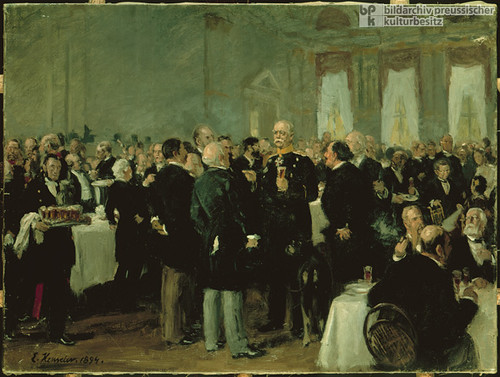
Today’s work of art is straight out of Germany’s history pages, and in fact I found it at the German History in Documents and Images website. It was by a relatively obscure German artist named Ernst Henseler. About all I could find out about him is that he was born in 1852 and died in 1940. Though I called it “Beer Evening” above, today’s painting is really titled Bismarck in Conversation with Reichstag Deputies at a Parliamentary Soirée and is believed to have been painted in 1894.

Ernest Hensler: Beer Evening
The painting is an illustration for the section of the GHDI entitled “Forging an Empire: Bismarckian Germany (1866-1890)” and under the sub-heading “Parties and Political Mobilization.” This also included the following description of the events in the painting:

This painting by Ernst Henseler (b. 1852) shows a parliamentary “beer evening” in the Imperial chancellery. These soirées provided Bismarck with an opportunity to convince parliamentary friends and foes alike that his policies deserved support. Sometimes consensus-building flowed in the opposite direction. Note that beer was more plentiful than food on such occasions, perhaps to the disappointment of one of Bismarck’s dogs, who was also on the invitation list.

Filed Under: Art & Beer Tagged With: Europe, Germany, History

Fun With Science: Beer Can Robug

November 15, 2009 By Jay Brooks

science
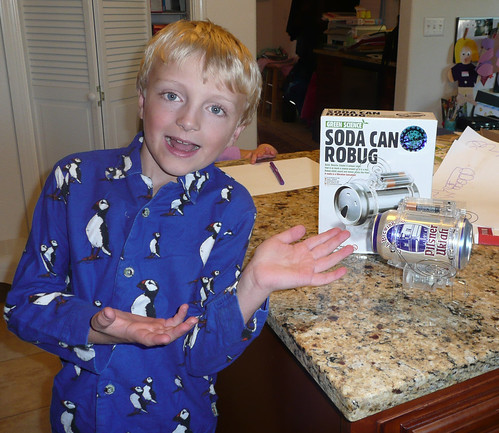
This morning, my son Porter and I finally got around to building the Kids Lab science project that he got for his birthday back in September. It was a Soda Can Robug, but since we’re a soda-free household, we used a beer can instead.
beer-robug
Porter showing off his Beer Can Robug, made with Ukiah Pilsner.

Filed Under: Just For Fun, Related Pleasures Tagged With: Cans, Science

Pete Brown On Beer Marketing

November 15, 2009 By Jay Brooks

While you should know Pete Brown from his books, especially what is arguably the best beer book of the year, Hops and Glory, he began his career in marketing and worked on several high-profile ad campaigns for well-known beer brands. On Wednesday in the UK’s Daily Mail, Pete had an interesting article giving his perspective on the present state of beer marketing. It’s entitled “The rise and fall of Britain’s favourite beers: Why brewers are desperate for us to spend £4 on a pint of lager”. Although it details British ad campaigns you may not be familiar with, it’s still worth a read, as many of the points he makes I think are universal.

Filed Under: Beers, Breweries Tagged With: Advertising, Marketing, Packaging, UK

« Previous Page
Next Page »

Find Something

Northern California Breweries

Please consider purchasing my latest book, California Breweries North, available from Amazon, or ask for it at your local bookstore.

Recent Comments

  • Bob Paolino on Beer Birthday: Grant Johnston
  • Gambrinus on Historic Beer Birthday: A.J. Houghton
  • Ernie Dewing on Historic Beer Birthday: Charles William Bergner 
  • Steve 'Pudgy' De Rose on Historic Beer Birthday: Jacob Schmidt
  • Jay Brooks on Beer Birthday: Bill Owens

Recent Posts

  • Beer In Ads #5215: Another Load Of “Milwaukee’s Choicest” April 10, 2026
  • Beer Birthday: Alexandre Bazzo April 10, 2026
  • Beer In Ads #5214: Poth’s Bock Beer April 10, 2026
  • Historic Beer Birthday: Rudolf Brand April 10, 2026
  • Beer In Ads #5213: Bock Beer Cascade Quality April 9, 2026

BBB Archives

Feedback

Head Quarter
This site is hosted and maintained by H25Q.dev. Any questions or comments for the webmaster can be directed here.