Brookston Beer Bulletin

Jay R. Brooks on Beer

  • Home
  • About
  • Editorial
  • Birthdays
  • Art & Beer

Socialize

  • Dribbble
  • Email
  • Facebook
  • Flickr
  • GitHub
  • Instagram
  • LinkedIn
  • Pinterest
  • RSS
  • Twitter
  • YouTube

Powered by Genesis

Patent No. 2359876A: Brewing

October 10, 2015 By Jay Brooks

patent-logo
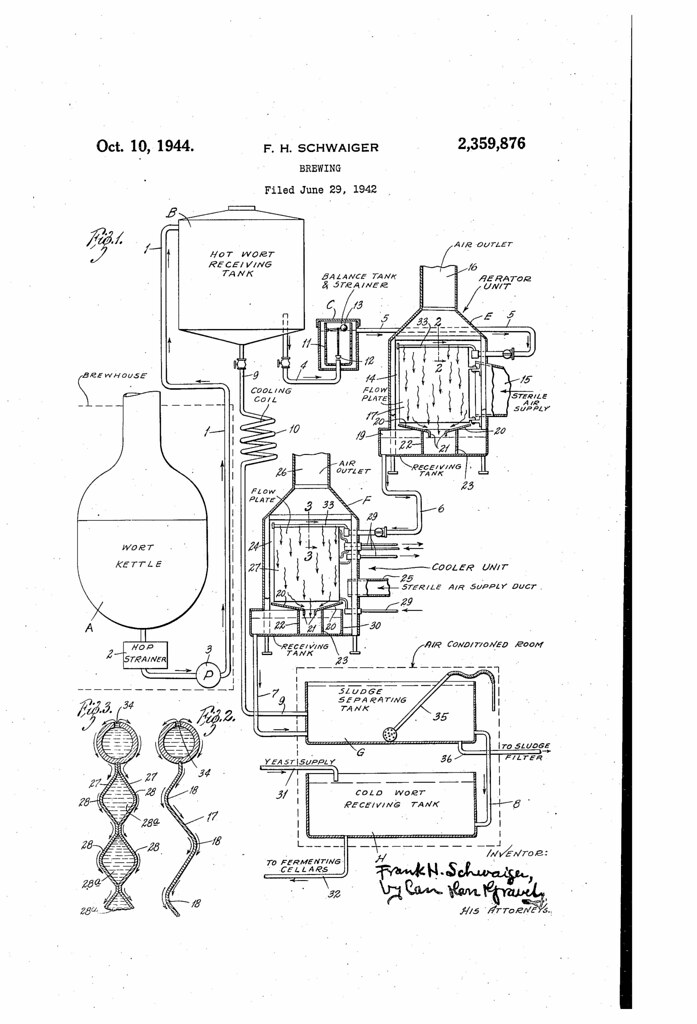
Today in 1944, US Patent 2359876 A was issued, an invention of Frank H. Schwaiger, assigned to Anheuser-Busch, for his “Brewing.” There’s no Abstract, although in the description it includes this summary:

The principal objects of the present invention are to devise a better, simpler, more thorough and more economical way of removing. the suspended solids from the wort. The present invention consists principally in cooling the wort, while it still contains the hot break sludge, under conditions that overcome the difficulties and disadvantages that have heretofore made it impracticable to delay the removal of the sludge until the wort is cooled. It also consists in delaying the removal of the hot break solids until the wort is cooled. It also consists in aerating the wort at or above pasteurizing temperature and quickly cooling and simultaneously aerating it again and then separating the sludge therefrom by sedimentation. It also consists in a novel way of utilizing hot break for removal of cold break from the wort. It also consists in the process hereinafter described.
Untitled

Filed Under: Beers, Breweries, Just For Fun, Politics & Law, Related Pleasures Tagged With: Brewing Equipment, History, Law, Patent, Science of Brewing

Beer In Ads #1703: Again In Demand … The World Over

October 9, 2015 By Jay Brooks


Friday’s ad is for Budweiser, from 1934. The idea is eight months after prohibition ended, orders were coming in once more for Budweiser from all over the world. The half-dozen stereotypes sitting on the globe in national garb, each raising their beers with a traditional toast, represent six nations or cultures. Curiously, the American toast is “Here’s How.” That’s not a toast I’ve ever heard here, or anywhere for that matter.

Bud-1934-again-in-demand

Filed Under: Art & Beer, Beers Tagged With: Advertising, Budweiser, History

Patent No. 1976173A: Barrel Stave

October 9, 2015 By Jay Brooks

patent-logo
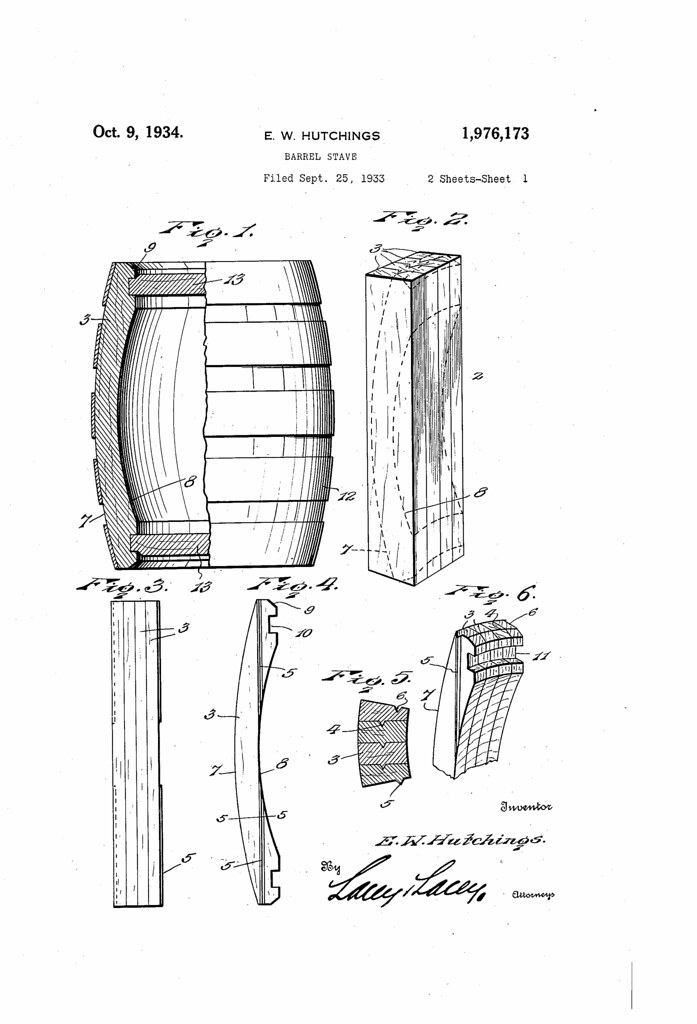
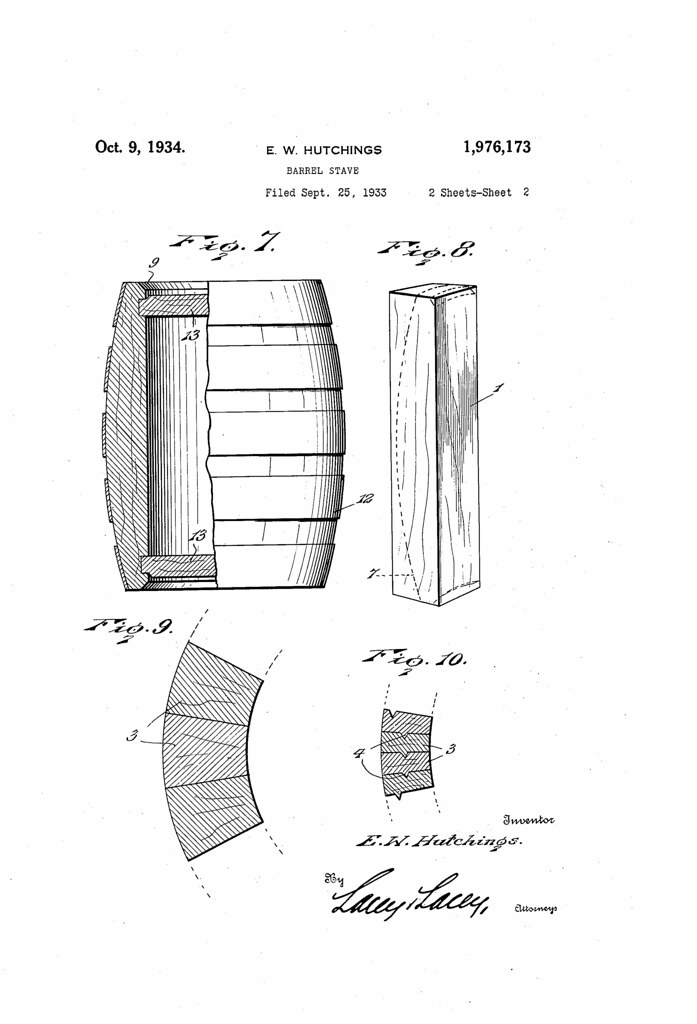
Today in 1934, US Patent 1976173 A was issued, an invention of Edward W. Hutchings, for his “Barrel Stave.” There’s no Abstract, although in the description it includes this summary:

This invention relates to the manufacture of staves for barrels and other containers and the object is to utilize thoroughly seasoned and dried lumber which is now available and which will render unnecessary steaming of the stave in order to bring it into the desired shape. Staves for barrels and kegs, especially for beer kegs, have heretofore been cut from white oak and then subjected to steaming in order to be bent into the required curvature. White oak, however, at the present time, is very scarce and the steaming process is expensive and time-consuming, while there is available a plentiful supply of thoroughly dried and seasoned lumber which may be utilized for the production of staves. It is an object of the present invention to utilize available lumber, and especially lumber which would otherwise be treated as waste, for the production of staves by a method which is expeditious and inexpensive. The invention will be herein fully described in connection with the accompanying drawings and resides in certain novel features which will be particularly pointed out in the appended claims.

Untitled
Untitled

Filed Under: Beers, Just For Fun, Politics & Law, Related Pleasures Tagged With: Barrels, Cask, History, Kegs, Law, Patent

Labatt Breweries Buys Mill Street

October 9, 2015 By Jay Brooks

Mill-Street labatt
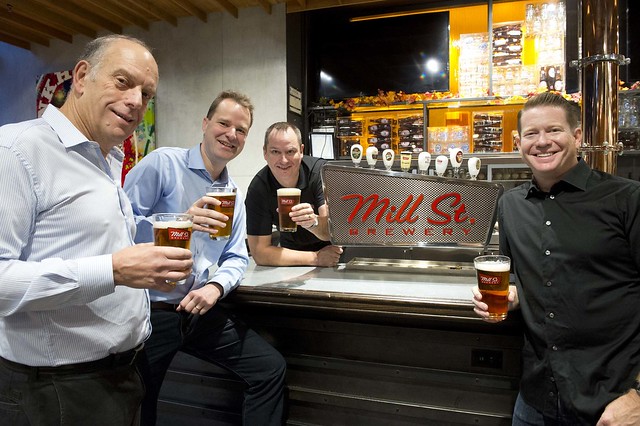
This morning, Labatt Breweries, itself part of the family of brands owned by Anheuser-Busch InBev, announced that they were purchasing Toronto’s Mill Street Brewery.

From the press release:

Labatt Breweries of Canada today announced that it has purchased Mill Street Brewery, an award-winning craft brewer based in Toronto. The deal will allow Mill Street to deepen its traction with consumers in the fast growing craft beer segment, where it has an extraordinary variety of unique beers, as well as brew pubs in both Toronto and Ottawa. To help achieve this, Labatt will immediately invest $10 million in Mill Street’s Toronto brewery, which includes a state-of-the-art brewhouse and packaging capabilities.

“Mill Street has continually distinguished itself with its energy and success in innovation, and powerful commitment to great-tasting quality beer,” said Labatt president Jan Craps. “Our partnership and investment will accelerate its growth in one of the most dynamic beer segments, while fully preserving Mill Street’s creative character and pioneering spirit.”

“With the success of Mill Street has come the challenge of serving a growing demand for our brands,” said Irvine Weitzman, Mill Street CEO, who will continue with Mill Street along with co-founder Steve Abrams and famed brewmaster Joel Manning. “Our partnership with Labatt is a natural evolution in our growth that will allow more Canadians to enjoy our beer and secure the legacy of our brands by allowing us to remain focused on the authentic characteristics that have made Mill Street what it is today.”

Founded in Toronto’s Distillery District in 2002, Mill Street is an award-winning craft brewery and the largest producer of certified organic beer in Canada. It has won numerous beer quality awards including the Canadian Brewery of the Year Award in three consecutive years. Core brands include Ontario’s first organic beer, Mill Street Original Organic Lager, along with 100th Meridian, Tankhouse Ale, and Cobblestone Stout. The brewer is also renowned for permanent specialties including a strong golden ale Betelgeuse, an Irish-style red ale Bob’s Bearded Red and nitrogen-charged Vanilla Porter, as well as for several small-batch specialty beers.

“Throughout our history, our dedication to our craft and our passion for pushing the envelope have allowed Mill Street to make waves in Canada’s craft beer segment,” said Abrams. “We are excited about the prospect of working with Labatt to build even further on our successes and sharing our brands with more beer lovers across Canada.”

Mill Street brands will continue to be brewed under the expertise of brewmaster Joel Manning.
“This investment in a state-of-the-art brewhouse that Mill Street will run on a stand-alone basis positions us to reach the very top of our craft,” added Manning. “We couldn’t be more pleased by this fantastic opportunity to further entrench our reputation for innovation and quality, and bring more great brands to more consumers.”

Labatt and Mill Street Brewery announce purchase agreement
From left to right: Irvine Weitzman, Mill Street CEO, Jan Craps, President of Labatt, Joel Manning, Brewmaster at Mill Street, and Steve Abrams, Co-Founder of Mill Street. (CNW Group/Labatt Breweries of Canada)

Filed Under: Breweries, News Tagged With: Anheuser-Busch InBev, Business, Canada, Press Release

Next Session Has You Seeing Double

October 9, 2015 By Jay Brooks

session-the
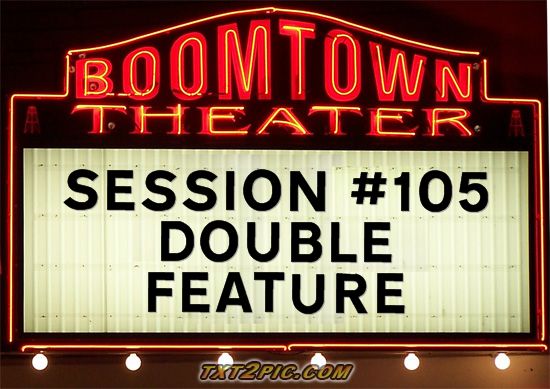
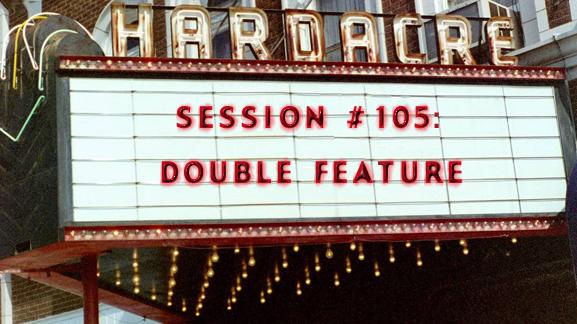
So our recently back-from-the-dead Session next month will be our 105th monthly outing, and our host will be Mark Ciocco, who writes the Kaedrin Beer Blog. For his topic, he’s chosen Double Features, by which he means ” comparative tastings,” meaning “[d]rink two beers (usually of the same style) with a critical eye, compare and contrast.” But I’ll let him give the full explanation of what he’s looking for:

For this installment, I’d like to revisit that glorious time of beer drinking when I was just starting to realize what I was getting into. One of my favorite ways to learn about beer was to do comparative tastings. Drink two beers (usually of the same style) with a critical eye, compare and contrast. Because I’m also a movie nerd, this would often be accompanied by a film pairing. It was fun, and I still enjoy doing such things to this day!

So your mission, should you choose to accept it, is to drink two beers, compare and contrast. No need for slavish tasting notes, but if you want to, that’s fine too. The important part is to highlight how the two beers interact with one another during your session (pun intended!) For extra credit, pair your beers with two films to make your own Double Feature. Now, I’m a big tent kinda guy, so feel free to stretch this premise to its breaking point. The possibilities are endless!

  • Drink two beers of the same style, pair with a double feature of horror movies (it being October and all – it’s what I’ll be doing!)
  • Drink two vintages of the same beer, pair with a famous double album (The White Album, The Wall, Exile on Main Street, etc…)
  • Throw caution to the wind and do a triple feature!
  • Drink a base beer and its barrel aged variant, pair with two episodes of your favorite TV show.
  • Actually, lots of other types of variants out there too: base beer and it’s Brett-dosed counterpart, base and a fruited variant, base and spiced variant, base and a dry hopped variant, many possibilities here… Pair with video games.
  • Play master blender by taking two beers, tasting both, then blending them together in the perfect proportion for the ultimate whatever. Then say nuts to pairing it with non-beer stuff, because you’re just that cool.
  • Test your endurance by taking down two bottles of Black Tuesday solo, then documenting the resultant trip to the emergency room*.
  • Recount a previous comparative tasting experience that proved formative.
  • Drink a fresh IPA and a six-month old IPA and discuss where you fall on the “Freshness Fetish” scale.
  • Drink a beer and compare with wine or bourbon or coke or whatever strikes your fancy. One should probably be beer though. I said “big tent” not “no tent”…
  • “These two beers are in my fridge, I should probably drink them or something.” (Pair with leftovers.)
  • Drink a beer and a homebrewed clone of that beer (an obscure one that requires you to have both readily available, but this is part of the fun!)
  • Hold a March Madness style beer tournament, pitting beer versus beer in a series of brackets in order to determine the supreme winner.
  • Devise a two course beer dinner, pairing two beers with various foodstuffs.
  • If any of you people live near an Alamo Drafthouse, I think you know what you need to do. Do it for me; I don’t have the awesomeness that is Alamo anywhere near me and wish to live vicariously through your sublime double feature.
  • Collect an insane amount of barleywines and drink them with your friends, making sure to do the appropriate statistical analysis of everyone’s ratings.
  • Go to a bar, have your friends choose two beers for you, but make sure they don’t tell you what the beers are. Compare, contrast, guess what they are, and bask in the glory of blind tasting.
  • Lecture me on the evils of comparative tasting and let me have it with both barrels. We’ll love you for it, but you’re probably wrong.

Truly, there are a plethora of ways to take this, so hop to it!

session-105-boomtown

So start choosing your beers (and your movies, too, for extra credit). To participate in the November Session, on or around Friday, November 6, leave a comment to the original announcement if you’re on WordPress. If not, since he’s had some issues with comments, send an e-mail to mciocco at gmail dot com or notify him via Twitter at @KaedrinBeer.

session-105-hardacre

Filed Under: Beers, Just For Fun, Related Pleasures, The Session Tagged With: Announcements, Film

Patent No. 195980A: Improvement In Gage Attachments For Beer-Measures

October 9, 2015 By Jay Brooks

patent-logo
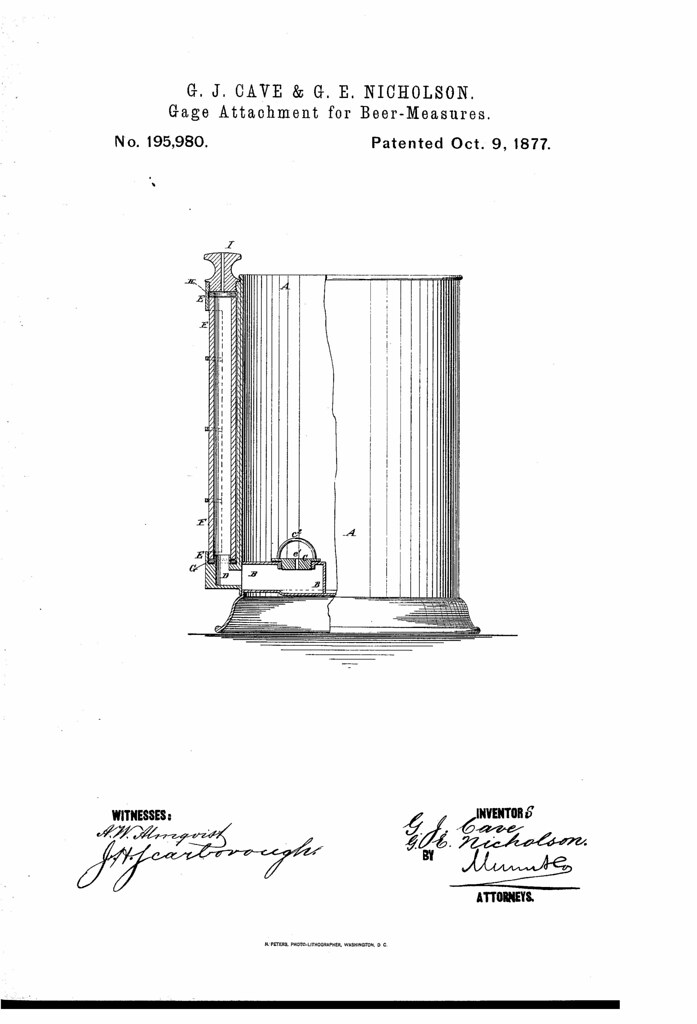
Today in 1877, US Patent 195980 A was issued, an invention of George J. Cave and George E. Nicholson, for their “Improvement in Gage Attachments for Beer-Measures.” There’s no Abstract, although in the description it includes this summary:

The object of this invention is to furnish an improved measure for measuring beer and other liquids that foam when drawn, which shall be so constructed as to show at once how much of the liquid there may be in the measure, however foamy it may be, so that there need be no waiting for the foam to subside, and no refilling.

The invention consists in the combination of the detachable glass tube, the rubber rings, and the screw-plug with the case,the measure, and the elbow-pipe connected with the interior of the measure, or with a box or trap secured within said measure; and in the combination of the screw-cap, provided with the hole and the handle, with the box or trap secured in the interior of the measure, and connected with a glass tube by an elbow-pipe, as hereinafter fully described.

Untitled

Filed Under: Beers, Breweries, Just For Fun, Politics & Law, Related Pleasures Tagged With: History, Law, Patent, Science of Brewing

Pre-Pilsner Pilsen

October 9, 2015 By Jay Brooks

pilsner-urquell
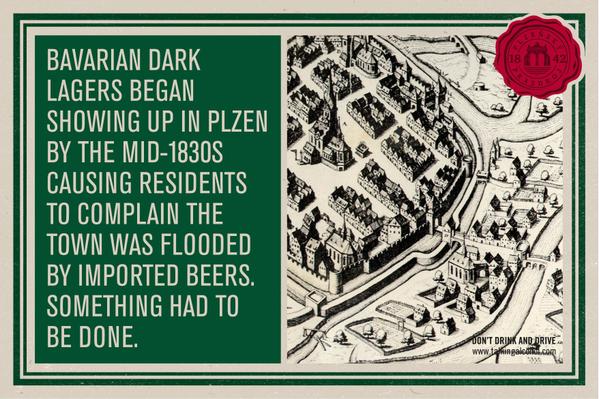
This morning Pilsner Urquell tweeted the quetion “What happened in Plzen in the 1830s to make the citizens decide to build their own brewery?”

pilsner-urquell-imports

The answer Pilsner Urquell gives to Plzen Before Pilsner Urquell is a short history lesson about Bohemia in the mid-1800s.

What was the town of Plzen like when Pilsner Urquell was founded back in 1842? To get a feel for things, imagine the number 563. That’s the total number of dwellings — just 563 buildings for living in — that stood in Plzen at the time of the town’s 1840 census.

Despite its small size, Plzen was still a relatively important place, especially after the construction of the military barracks that were built there in 1826 (this was crowd-funded and paid for by the citizens), after which the town’s population and strategic importance grew substantially. By 1840, Plzen had grown to 10,184 inhabitants, up from 6,447 inhabitants some fifty years earlier.

Along with the barracks, Plzen also developed a more cultivated side in the 1820s and 1830s, developing a merchant class and showing theatrical performances and concerts in both Czech and German languages. Perhaps because of that cosmopolitanism, as well as the town’s setting not far from the Czech-Bavarian border, a number of imported beers, including many Bavarian dark lagers, began showing up in Plzen by the mid-1830s. These proved to be quite popular, and some residents complained that Plzen was flooded by imported beers. Ironically, the imports were quite cheap, much cheaper than Plzen’s own beer at the time, which thus had trouble selling fast enough to keep up with its relatively short shelf life.

The result was a major problem for local beer lovers. The first solution suggested by the citizens of Plzen? A ban on all imported beer. Only after this idea was laughingly dismissed by the town’s mayor Martin Kopecký did the good people of Plzen came up with their second proposal: to build a new brewery that could compete with the imports.

It’s funny to see concerns about imports being an issue even 175 years ago, something that’s still talked about today.

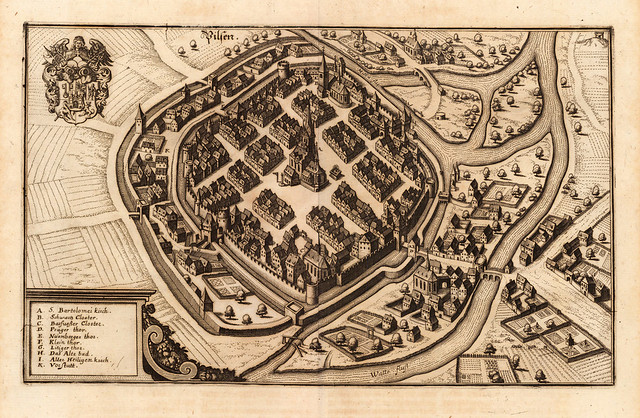
The image Pilsner Urquell uses part of with the story is from 1649. It was a “copper engraving, uncolored as published,” and is a “Bird’s eye view of the city of Pilsen, published in the Topographia Bohemiae by Matthaeus Merian.”

Pilsen-1649

Filed Under: Beers, Just For Fun, Related Pleasures Tagged With: Czech Republic, History

Patent No. 2570844A: Hop-Picking Machine

October 9, 2015 By Jay Brooks

patent-logo
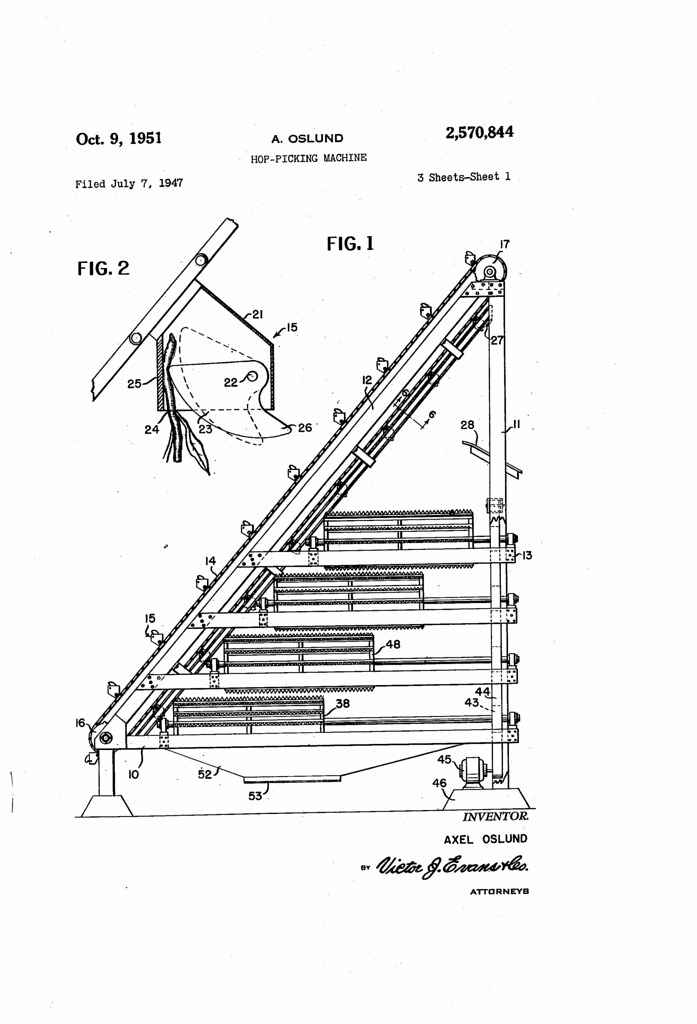
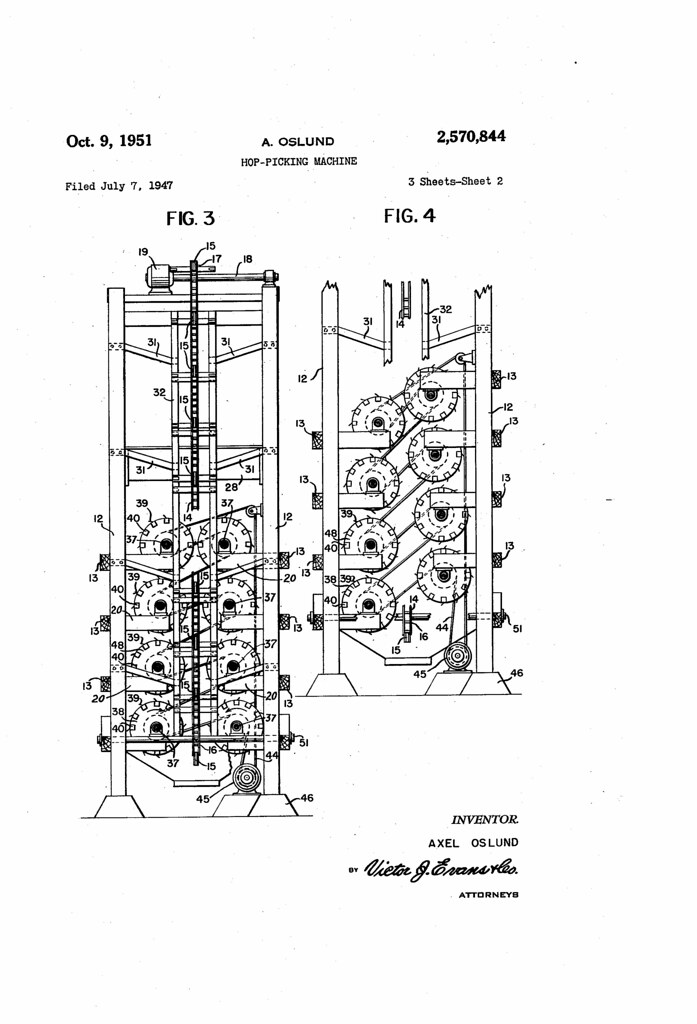
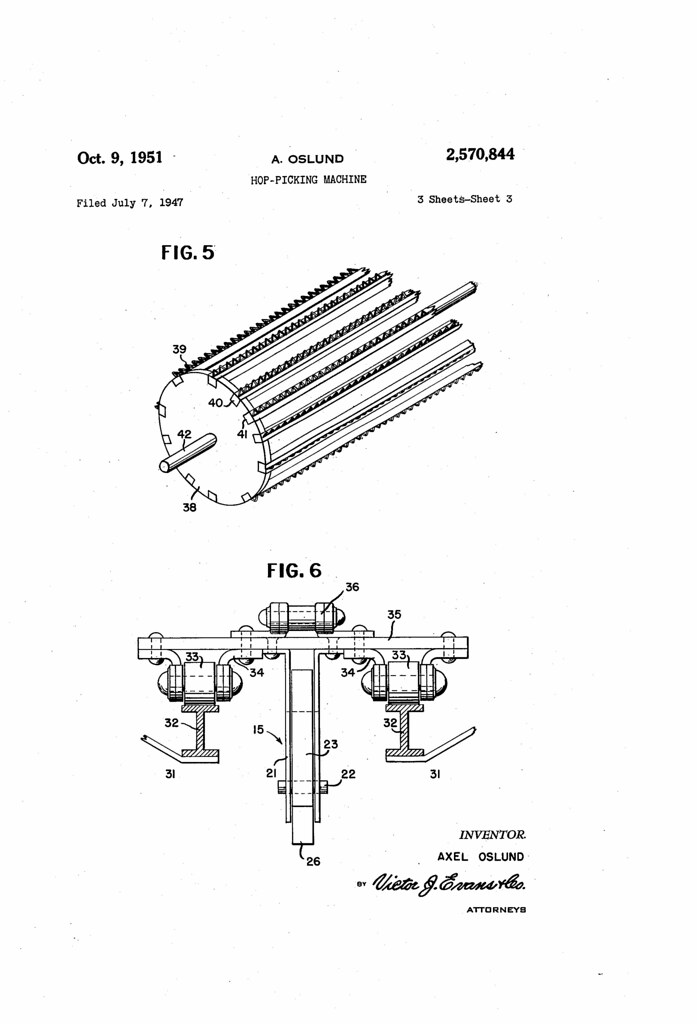
Today in 1951, US Patent 2570844 A was issued, an invention of Axel Oslund, for his “Hop-Picking Machine.” There’s no Abstract, although in the description it includes this summary:

This invention relates to hop picking machines.

It is an object of the present invention to provide a hop picking machine for picking hops from hop vines wherein the vines will be extended through the machine in a vertical direction by a traveling conveyor which is connected to the vine stems and through picking drums acting upon opposite sides of the vine as the vine is pulled upwardly and wherein the drums are arranged in pairs working upon opposite sides of the vine and wherein these drums may be staggered with respect to each other throughout the height of the machine.

It is another object of the present invention to provide a vertical hop picking machine wherein the drums are arranged in pairs and wherein the individual drums from the lower position to the top position are brought closer together for each pair so that the last pair of the drums will be so close that they almost touch one another.

Other objects of the present invention are to provide a hop vine picking machine which is of simple construction, inexpensive tov manufacture and efficient in operation.

Untitled
Untitled
Untitled

Filed Under: Beers, Just For Fun, Politics & Law, Related Pleasures Tagged With: History, Hops, Law, Patent

Beer In Ads #1702: Long Before The Chicago Fire

October 8, 2015 By Jay Brooks


Thursday’s ad is for Schlitz, from 1935. The Great Chicago Fire took place on October 8, 1871, or today 144 years ago. In this Schlitz ad from two years after prohibition ended, it shows an illustration of the “Great Chicago Fire,” stating that even before that event in 1871, “Schlitz was making Milwaukee famous.”

Schlitz-1935-chicago-fire

Filed Under: Art & Beer, Beers Tagged With: Advertising, History, Schlitz

Patent No. 2808806A: Keg Striping Device

October 8, 2015 By Jay Brooks

patent-logo
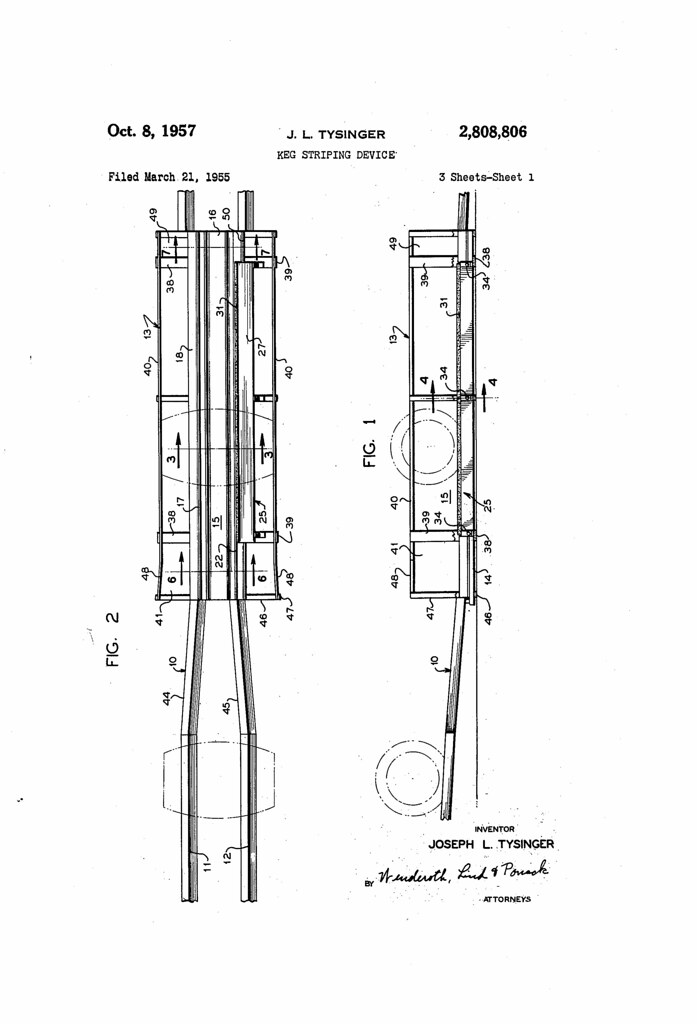
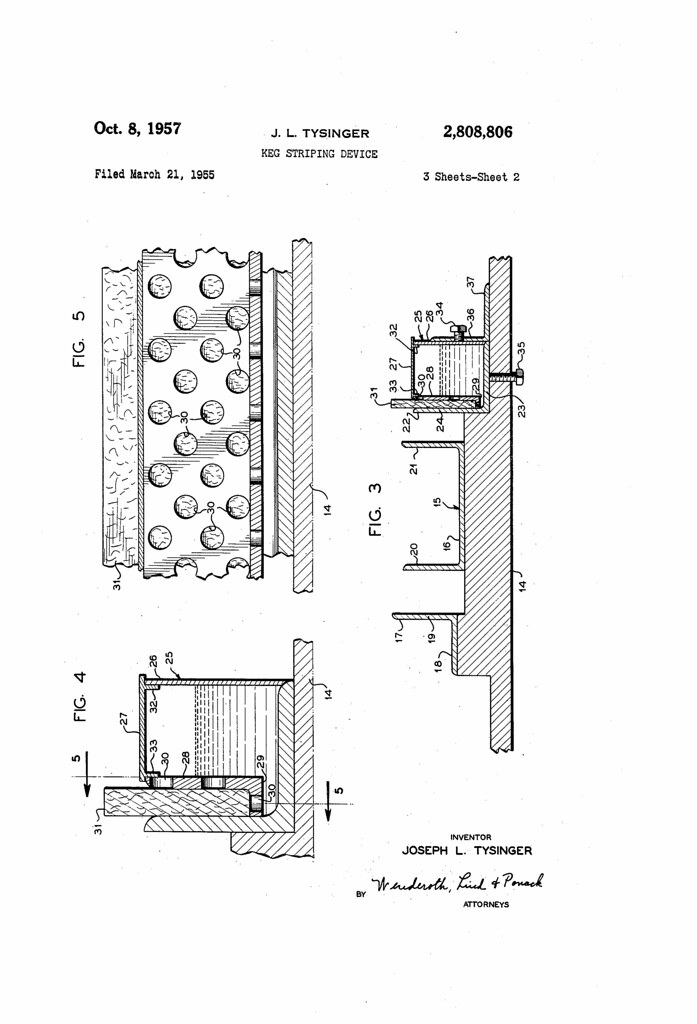
Today in 1957, US Patent 2808806 A was issued, an invention of Joseph L. Tysinger, assigned to Schaefer Brewing Co., for his “Keg Striping Device.” There’s no Abstract, although in the description it includes this summary:

This invention relates to a device for painting stripes around the periphery of beer kegs and the like.

Heretofore it has been necessary to paint stripes on beer kegs and the like by hand, or by placing the keg on a device which rotates the keg and holding a paint applying element against the rotating keg. It has been proposed to apply paint or a like coating by means of a roller which is rotated by frictional contact with the rotating keg. Similar methods have been used to apply paint or other lluid coatings to other cylindrical bodies.

These methods of applying paint and similar` coatings to cylindrical bodies are not only expensive but are time-consuming, and they require the provision, operation and maintenance of oftentimes complex machinery, depending upon the size and nature of the cylindrical body being coated. l c

It is an object of this invention to provide a simple yet reliable means for. applying a coating around the periphery of a substantially cylindrical body.

It is another object of this invention to provide a simple yet effective device by which a stripe can be painted around a substantially cylindrical body.

It is a still further object of the present invention to provide a device for striping a keg or other cylindrical body, which device does not include complex machinery to rotate the cylindrical body, and requires no complex means to apply the paint or other coating.

Untitled
Untitled

Filed Under: Beers, Just For Fun, Politics & Law, Related Pleasures Tagged With: History, Kegs, Law, Patent

« Previous Page
Next Page »

Find Something

Northern California Breweries

Please consider purchasing my latest book, California Breweries North, available from Amazon, or ask for it at your local bookstore.

Recent Comments

  • Bob Paolino on Beer Birthday: Grant Johnston
  • Gambrinus on Historic Beer Birthday: A.J. Houghton
  • Ernie Dewing on Historic Beer Birthday: Charles William Bergner 
  • Steve 'Pudgy' De Rose on Historic Beer Birthday: Jacob Schmidt
  • Jay Brooks on Beer Birthday: Bill Owens

Recent Posts

  • Historic Beer Birthday: Christian Moerlein May 13, 2026
  • Beer In Ads #5249: Dresdner Hofbräu Bock-Bier May 12, 2026
  • Beer Birthday: Homer Simpson May 12, 2026
  • Historic Beer Birthday: Frank J. Hahne, Jr. May 12, 2026
  • Historic Beer Birthday: Louis Hennepin May 12, 2026

BBB Archives

Feedback

Head Quarter
This site is hosted and maintained by H25Q.dev. Any questions or comments for the webmaster can be directed here.