So I know this is one of those thorny issues that tends to fire people up and argue from an emotional point of view. That being said, the issue of a woman drinking when pregnant is a tough one, especially because the science is not exactly as settled as people believe. My understanding is that it’s not clear how drinking effects an unborn fetus, though a significant amount of drinking has been shown to have potentially disastrous consequences. Generally speaking, a modest amount of drinking probably won’t do any lasting damage, especially in the very early stages of pregnancy. But since when and how much are fairly unknown with any precision, doctors, and the medical community as a whole, have tended to recommend that a woman abstain from drinking during pregnancy. And that seems almost reasonable, except for the fact that prohibitionist and anti-alcohol groups have taken that advice as sacrosanct without really examining the science behind it and have done their best to shame women who might have an occasional drink and make them feel as guilty as humanly possible.
For example, WebMd says. “For decades, researchers have known that heavy drinking during pregnancy can cause birth defects. But the potential effects of small amounts of alcohol on a developing baby are not well understood. Because there are so many unknowns, the CDC, the U.S. Surgeon General, the American College of Obstetricians and Gynecologists, and the American Academy of Pediatrics advise pregnant women not to drink alcohol at all.” But again, that’s just because they don’t really know, not because it’s proven that any amount of alcohol is harmful. If you do a quick search, you’ll find that a lot of websites claim that pregnant women should never drink because, as most of them put it, “[t]here is no known safe amount of alcohol that you can consume if you are pregnant.” But that’s misleading. It’s not so much that no amount is safe so much as the amount that is safe is not known with precision, and for every person. I know that sounds like I’m splitting hairs, but I think it’s an important distinction. There are safe levels of drinking alcohol that would have no effect on a woman’s pregnancy, and for any given woman that amount would differ, but so far we don’t know how to calculate that amount, so instead doctors recommend abstaining. But that’s very different from hounding women who might have the occasional drink or acting as if they’re actively or willfully harming their unborn fetus.
It’s quite easy to find this scaremongering in all sorts of places. Not surprisingly, Alcohol Justice, who is a leading propagandist, regularly tweets “Save Babies From Birth Defects: Don’t Drink While Pregnant,” with a link to International Fetal Alcohol Spectrum Disorders Awareness Day Aims To Help Save Babies From Birth Defects: Don’t Drink While You’re Pregnant. Which would be reasonable, except for the fact that the Medical Daily piece is littered with exactly the sort of absolutist misinformation I’m talking about.
There’s a common misconception that it’s safe to drink during certain points in the pregnancy, or that one glass of wine or beer is harmless. It has been almost 30 years since the medical community recognized mothers who drank alcohol while pregnant could result in a wide range of physical and mental disabilities, but still, one in 13 pregnant women reports drinking in the past 30 days and one in six reports binge drinking. Fetal alcohol syndrome can be devastating, which is why a day [September 9] has been dedicated to spreading the awareness and clearing up the truth for mothers to understand that anything they eat and drink affects the baby.
The NIH’s Alcohol Abuse and Alcoholism branch has supported years of research to reveal the dangers and understand when developmental problems within the womb begin. Babies who are born with fetal alcohol syndrome have been born small and premature, develop problems eating, sleeping, seeing, hearing, learning, paying attention in school, controlling their behavior, and may even need medical care through their life. The severity of drinking alcohol while pregnant cannot be underplayed because of the profound confirmed health effects that could follow a child throughout their life.
Every pregnancy is different and unique to the mother’s health, genetic composition, and the baby. According to the NIH, drinking alcohol the first or second month of pregnancy can hurt the baby with irreversible health consequences. The Centers for Disease Control and Prevention backs up the NIH by saying there is no safe level of alcohol to use during pregnancy. If drinking continues throughout the pregnancy, babies are likely to develop fetal alcohol syndrome with characteristic facial features such as a wide set of eyes, smooth ride on the upper lip, and a thin upper lip border. But that’s only the surface, because within the brain lies the possibility of intellectual disabilities, speech and language delays, and poor social skills.
Unfortunately, the “truth” as they put it is not exactly the whole truth, nor is it the same advice given universally by the medical community, despite the fact that both the NIH and the CDC take the absolutist point of view just to be safe. That these government agencies here, and in other places, take this position without actually explaining why, or even how they arrived at it and the uncertainty about it, seems to me a condescending way to treat people. I know, or hope, they mean well, and the goal is to bring healthy babies into the world. Everyone agrees that frequent drinking or drinking large quantities of alcohol while pregnant is a terrible idea, but not giving women all of the facts is yet another example of the medical community talking down to people and treating them with condescension. And it’s taking its toll on some women in unexpected ways, as I’ll explain later.
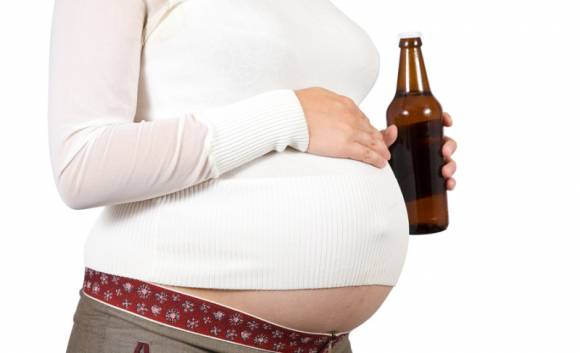
More recent studies are beginning to show that in fact the occasional drink is not only harmless, but in some cases beneficial. For example, a 2013 study at Harvard found “no connection between drinking alcohol early in pregnancy and birth problems” and at the University College London, they found “Light drinking in pregnancy not bad for children.” Others found A Drink A Day While Pregnant Is OK and Moms Who Drink Wine While Pregnant Have Better Behaved Kids. Yet another recent New study shows no harm from moderate drinking in pregnancy. Likewise, Moderate drinking during pregnancy may not harm baby’s neurodevelopment and the Parenting Squad says that Yes, You Can Drink While Pregnant.
In Is It OK to Drink While Pregnant? Why Scientists Really Don’t Know, the author details why it is that the science is so difficult to pin down, and as such many doctors advise abstaining altogether. One of the problems with this contrary advice is that some people who are convinced that any alcohol represents a danger to an unborn fetus and they make life difficult for anyone who’s received different advice, or who has looked at the issue and come to a different conclusion. Despite it being unsettled, some states have, or are considering, passing laws to punish women who have the temerity to have a drink while pregnant. Both of my wife’s baby doctors advised her the occasional drink was not a problem, and even told her that if it helped her relax was a positive. She tended to have a drink only every so often, rarely even, and I certainly enjoyed the months of having a designated driver. But many other women report having been publicly shamed, ridiculed and punished for drinking while pregnant in public. At least one person reports being accosted for simply buying alcohol (it was for a party and she had no intention of drinking it) and I suspect that’s not an isolated incident. The clerk at the liquor store acted like it was against the law for her to simply purchase it.
Many have written about their experiences with alcohol during pregnancy and are worth reading. See, for example, Take Back Your Pregnancy, by an economist writing for the Wall Street Journal. And for Slate, Emily Oster explains herself in “I Wrote That It’s OK to Drink While Pregnant. Everyone Freaked Out. Here’s Why I’m Right.” In addition, Dr. Peggy Drexler, a research psychologist and gender scholar, examined the history and psychology of shaming such women in A Loaded Question: On Drinking While Pregnant. Not surprisingly, it’s only been since 1981 that the U.S. Surgeon General’s took the official position pregnant women should completely abstain from drinking alcohol. And for a while, drinking among pregnant women declined, but since 2002 has been on the rise again, though it’s the “‘every now and then’ glass of wine or two” rather than binge drinking and the biggest demographic to see this increase is “college-educated women between 35 and 44.” Her answer to why “as a whole we continue to judge women who opt to have that occasional glass of wine,” is that “[w]e’re so fully entrenched in the age of over-parenting — having opinions, and voicing them, about how other people raise their kids — that, it seems, we can’t help but start in before the baby is actually born.”
Similarly, in a lengthy piece for Boston Magazine, Pregnant Pause?, author Alyssa Giacobbe details this explanation.
“As soon as you’re pregnant, or have a baby, it’s like all bets are off,” says Kara Baskin, a 33-year-old mother of a two-year-old boy. “People can say whatever they want, touch whatever they want, make whatever comments they want.” A few years back, she was at a Starbucks when the barista asked her, “Are you supposed to be having any caffeine when you’re pregnant?” She wasn’t pregnant — it was just the shirt — but of course that didn’t matter. She ran out crying.
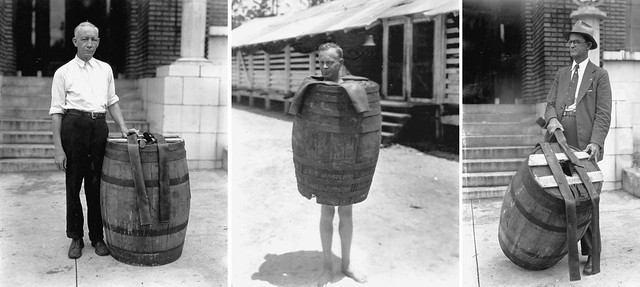
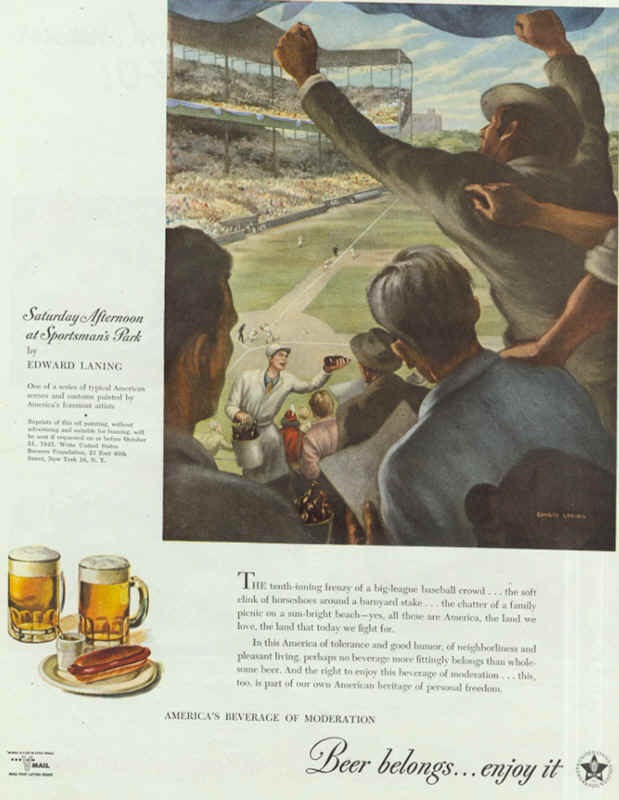
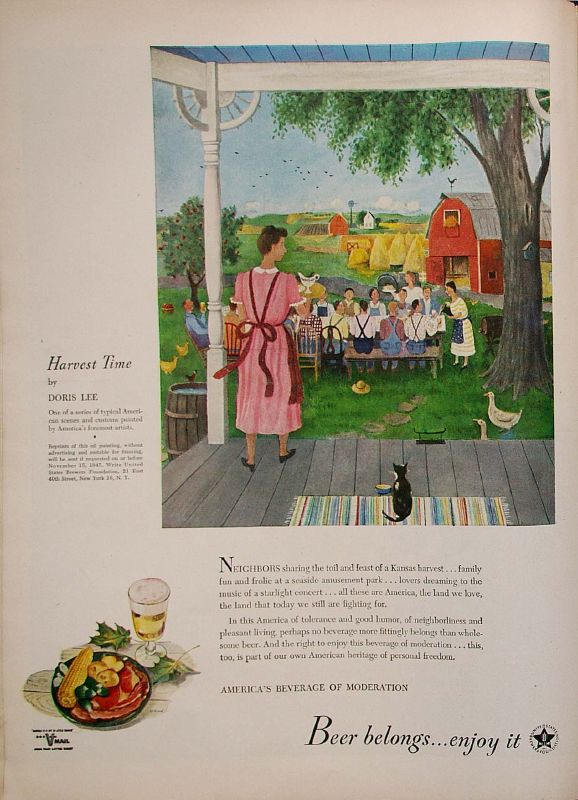
Of course, it wasn’t always that way. My mother drank, and most likely smoked, while she was pregnant with me. If you’re close to my age, or older, your Mom probably did, too. Entire generations did, and while it would be hard to argue that children today aren’t better off thanks to their mothers watching what they consumed or what they did while pregnant, our species made it pretty far before 1981 just by being sensible.
But back to Dr. Drexler, who concluded with these words of wisdom.
This is not a call to drink while pregnant, or to be careless in any way. We know much more now than our own mothers did, and that’s an advantage. But years of experience studying gender and working with families have shown me, time and again, that mothers get a bad rap. This can create needless fear, anxiety, and self-doubt. Perhaps it’s time to rethink the tendency to assign blame, constantly monitor, and voice our every opinion about the choices other mothers make. After all, isn’t the prospect of having a baby daunting enough?
Indeed, I think we can all agree that over-indulging during pregnancy is not a good idea. But making hard and fast rules, giving people a hard time about it, or even punishing them socially, or legally, is going too far. Which brings me back to my statement earlier that this is “taking its toll on some women in unexpected ways.” An article last week in London’s Telegraph, Pre-pregnancy test binge-drinking: 5 myths busted, detailed the darker side of humiliating pregnant women with the abstinence only propaganda so commonly employed by prohibitionist groups.
Most women try and follow the existing guidelines, or avoid alcohol altogether.
But what about those who don’t know they’re pregnant? What about the women who have spent the first few weeks of their pregnancy binge drinking, because they had no idea they were unexpectedly expecting?
Today, the British Pregnancy Advisory Service (BPAS) said that many women are so shocked to discover they’ve been binge drinking through the early stages of pregnancy, that they consider having an abortion.
The organisation reports an increase in women who are so worried about having unknowingly harmed their baby that they’re enquiring about ending what would otherwise have been a wanted pregnancy. BPAS is now trying to reassure pregnant women that this is not necessary.
That’s right, some women have been so traumatized by the scaremongering propaganda out there about binge drinking that they’re considering terminating their pregnancy, that is having an abortion rather than risk giving birth. The BPAS is now scrambling to reassure women that they don’t need to go to such extreme measures, and author Radhika Sanghani takes on five common myths which lead women to consider an abortion, and in the process contradicts much of the absolutist rhetoric and rationale for advising women to completely abstain from alcohol during pregnancy.
What struck me about this story is that it’s a real example of harm being perpetrated on women — not to mention their unborn children — through prohibitionist propaganda. I want to believe that the healthcare community has been giving the abstaining advice in an abundance of caution and with a greatest good sort of mentality to protect women and children. But I have no such illusions about the motives of prohibitionists, who have shown they’ll use any tactic to promote their agenda, and will exaggerate any claim that shows alcohol in a negative light. This is what can happen when propaganda goes unchecked. This suggests that there may be children who were terminated and not given a chance to live full lives thanks to exaggerated propaganda by prohibitionist groups and other anti-alcohol organizations. As my British colleague Pete Brown tweeted when this article first appeared; “Proud of yourselves, Alcohol Concern? These are the, hopefully, unintended consequences of prohibitionist propaganda.