AdAge posted an interesting video today, it’s an interview with Anheuser-Busch InBev Vice President Digital Marketing for North America, Lucas Herscovici, where he discusses how ABI “measures its results in social media. It was taped prior to his presentation at the Ad Age Digital Conference, which took place yesterday in San Francisco.
Beer In Ads #998: Gathering Wildflowers

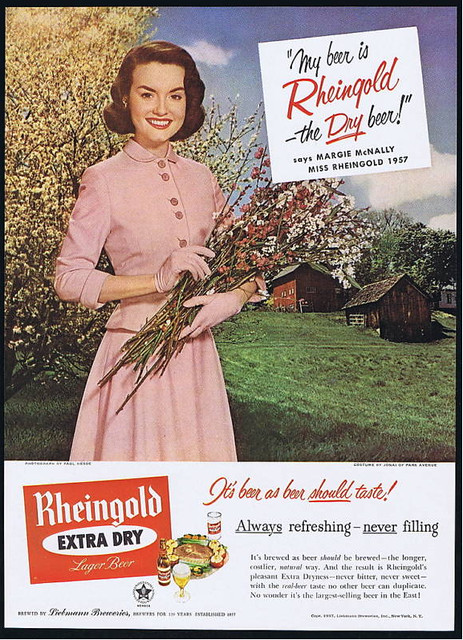
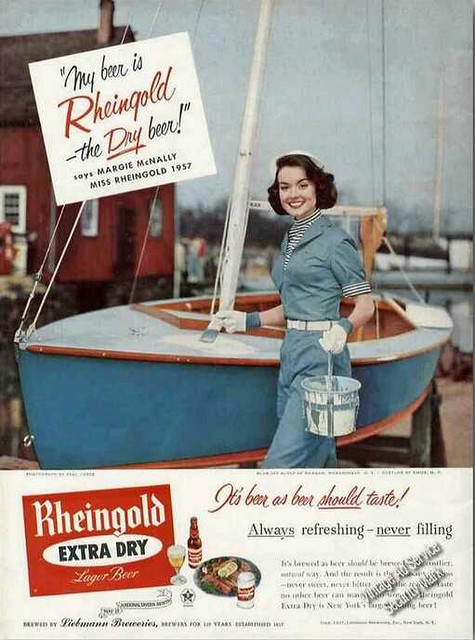
Tuesday’s ad is another for Rheingold Beer, again from 1957, and features Miss Rheingold from that year, Margie McNally. The ad features her in pink, with a farm in the background, holding a sprig of wildflowers. That’s some nice-looking grass, but those buildings look a bit dilapidated. How many farms do you know of with manicured lawns?
Worldwide Alcohol Consumption Cartogram

Today’s infographic is a type of map known as a cartogram, which takes a standard map and distorts the land masses based on a particular data point. It was created by World Mapper, a website that’s done close to 700 cartograms showing a variety of data in this way.
Here’s the standard map, showing each country based on their land mass. Actually, a Mercator projection is the one most of us are familiar with, but that map distorts the size of land which shows the round Earth as a flat map that’s drawn as if you took the globe apart and laid it down, making the land closest to the North and South poles look much bigger than they are in reality. The standard map for World Mapper is known as a Gall–Peters projection , which shows the land masses much closer to their actual size.

Click here to see the map full size.
What a cartogram does is take their standard map and distort the land masses of nations on purpose, to show the differences in the data more clearly by how much it’s been distorted from the original. For example, here’s the same map, but distorted to show the world by population.
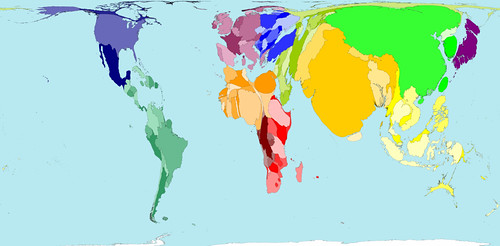
Click here to see the map full size.
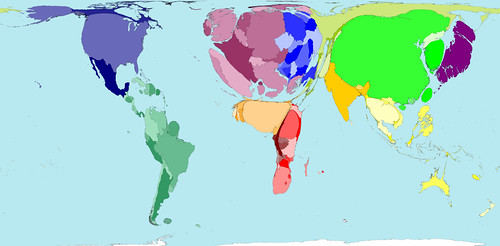
So here’s the same map again, but this time distorted to show absolute alcohol consumption, based on data from 2001.
Click here to see the map full size.
Here’s some more information on the alcohol consumption map.
The average Western European drinks over a third more alcohol than the average person living in any other region. The lowest alcohol consumption per person is found in Southern Asia, where on average people drink less than a third of the average consumption elsewhere.
In some territories there is practically no alcohol consumption. Many Middle Eastern and Northern African territories are not visible on the map for that reason. In contrast, China, the United States and the Russian Federation have the largest areas on the map, because the most alcohol is consumed there by large populations.
If you’re curious about the debate surrounding different map projections, take a peak at the Gall-Peters – Mercator projection Debate, a closer look at the Gall-Peters projection at the Power of Cartography, and a good overview of different projections at One world, many faces: A brief look at map projections.
New Survey Shows Big Beer Brands Aren’t Reaching Women

A new survey of women by Insights in Marketing found that while women control 80% of all purchasing decisions, the large beer companies are not doing a good job of reaching them. According to the results, only 6% of women thought ABI is doing a good job reaching them, while 5% liked Coors’ approach and a mere 2% had anything positive to say about Miller’s methods. The survey included 1300 women, and 200 men, across a wide demographic, and asked how they thought top national brands, in a variety of consumer goods, were doing in “effectively marketing their products and services.”
For all products, they found that 49%, or just less than half, thought they did a good job, suggesting that marketing and advertising in general, across the board, could be doing a better job reaching women, but that beer companies are doing a particularly bad job. All three brands surveyed — Bud, Miller & Coors — ranked in the bottom half for all women. Anybody surprised by that result?
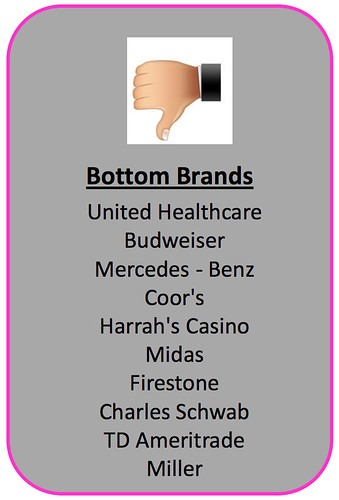
The survey also found some slight differences between generations. For example, Baby Boomers seem to like Miller and Coor’s just fine, but not Budweiser. Gen X thinks Coor’s and Bud are doing great, but Miller, not so much. Millenials didn’t respond well to any of the beer brands, with Miller coming out on top, at just below the middle for all brands (beer and non-beer).

Beer In Ads #997: Boat Painting
Monday’s ad is for Rheingold Beer, from 1957, and features Miss Rheingold from that year, Margie McNally. The ad features her painting a small boat light blue, and the color seems to nearly match that of her dress. Her outfit also has white accessories, just like the boat. I think somebody was getting a bit too cute with the design. As my wife might say, it’s all too “matchy matchy.”
The Legal Drinking Age Around The World

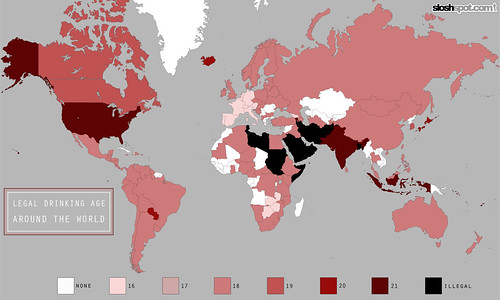
Today’s infographic is a world map, showing the Legal Drinking Age Around the World. The darker the color, the higher the age at which you’re legally allowed to drink alcohol. Notice that America is one of the darkest regions on the map. Sheesh, sometimes we’re backwards.
Click here to see the map full size.
Anchor Brewing Announces Zymaster #5: Harvest One American Pale Ale

Anchor Brewing announced today the 5th beer in their Zymaster series. This latest offering — Harvest One American Pale Ale — is a beer made with a new, experimental hop variety. I had a chance to try it during GABF last week, and the nose has amazing peach aromas, with soft, fruit flavors.
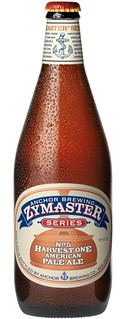
Here’s the full story, from the press release:
It’s hard to imagine that the Cascade hop, today one of craft brewing’s most popular hop varieties, was ever new. Yet this distinctively aromatic hop, developed in Oregon by the USDA’s breeding program, was first released in the early 1970s. In 1975, Anchor Brewing featured Cascade hops with the debut of Liberty Ale®, America’s first craft-brewed, dry-hopped ale. Anchor Brewing has been using it in Liberty Ale® ever since.
Over the years, Anchor Brewing experimented with many different hops—both old and new—from around the world. For Zymaster Series No. 5: Harvest One American Pale Ale, Anchor Brewing decided to feature an experimental new hop variety. This yet unnamed, pre-commercial, aroma hop provides a uniquely Anchor twist to Zymaster 5.
Zymaster Series No. 5 (7.2% ABV) is made with a special blend of pale, caramel, and Munich malts, which contribute a distinctively complex maltiness and deep golden color. Nugget hops give it a tangy bitterness. But the hallmark of Zymaster 5: Harvest One American Pale Ale is the intriguingly novel aroma of an experimental new hop, which was used liberally in both the brewhouse and the cellar. A late addition to the boil plus dry hopping provides Harvest One with an incredibly lively hop aroma reminiscent of tree-ripened peaches, with just a hint of fresh melon. The result is a uniquely exciting new beer unlike anything brewed or tasted before.
“We have a fantastic and long-lasting relationship with the hop growers we work with,” said Mark Carpenter, Brewmaster at Anchor Brewing. “When we had the opportunity to sample and test a small set of experimental hops that were being grown, we were excited at the opportunity to work with something new and different. Out of about a dozen or so samples, there was one that really stood out to us. Right away, we knew this was a new hop variety we wanted to brew on a large scale. We were after something unique and aromatic, and this hop was one we hadn’t seen or smelled before and decided it would fit well in our Zymaster Series. Similar to how Anchor introduced the world to the Cascade hop in 1975 with Liberty Ale, we are proud and excited to share our take on this new, experimental hop in this beer.”
It’s being released today in California, though not all markets within the state, on draft and in 22 oz. bottles, and will be rolled out nationally in the next few months.
Brewery Caves

The original beer cellars, of course, were caves, where brewers could count on the temperatures staying low enough. I got an e-mail the other day from Dagmar Suarez (not his real name) who writes Detritus of Empire about his series of blog posts on abandoned brewery caves. As a former medical doctor in Wisconsin, most of the more than two dozen posts on old beer caves are located in the Great Lakes area, but it’s a fascinating look back to a time when brewers had to be resourceful to meet their cooling needs.
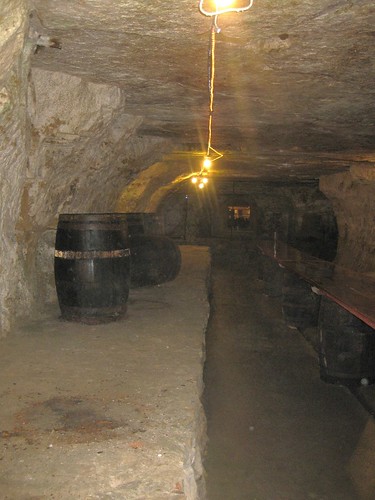
A brewery cave in Stillwater, Minnesota from the 1870s.
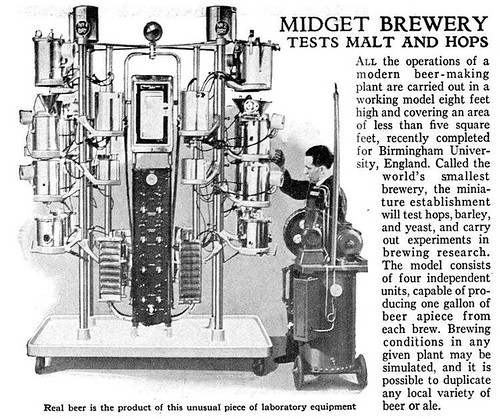
The Original Midget Brewery

Last week, Boak & Bailey tweeted about what must have been one of the earliest commercial nanobrewery systems. I tried to find out more about the Midget Brewery, though there’s scant information available on the interwebs. Here’s what I found. In 1936, page 30 of the February issue of Popular Science featured a little piece about the Midget Brewery, developed for R&D in Great Britain.
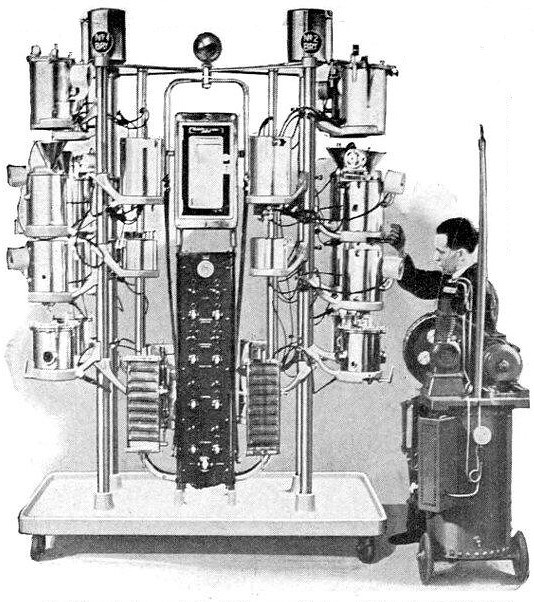
Here’s the full text that accompanied the photograph:
All the operations of a modern beer-making plant are carried out in a working model eight feet high and covering an area of less than five square feet, recently completed for Birmingham University, England. Called the world’s smallest brewery, the miniature establishment will test hops, barley, and yeast, and carry out experiments in brewing research. The model consists of four independent units, capable of producing one gallon of beer apiece from each brew. Brewing conditions in any given plant may be simulated, and it is possible to duplicate any local variety of beer or ale.
Who Exports Beer?
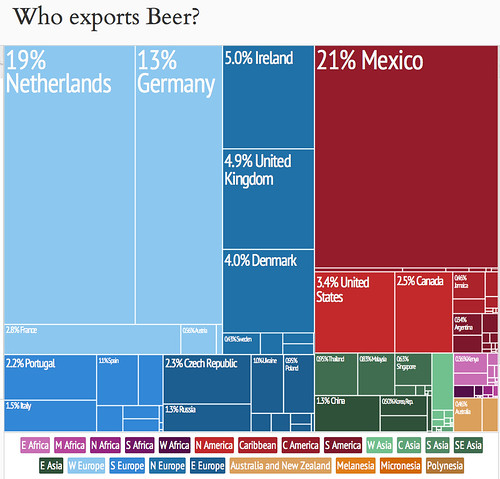
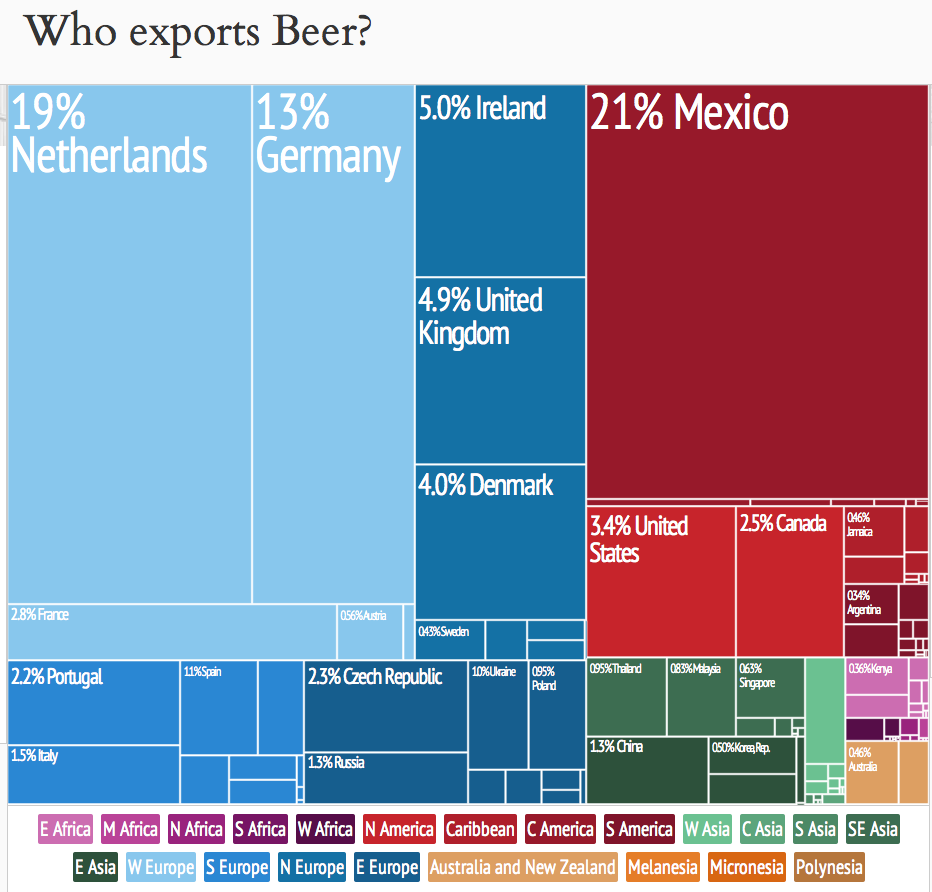
Today’s infographic is an interesting treemap created by the Observatory of Economic Complexity, a collaboration between M.I.T. and Harvard. This one, contrasting yesterday’s, shows the amount of beer exported by the nations of the world, with the size of their relative amount of exporting shown by the size of the rectangle.