
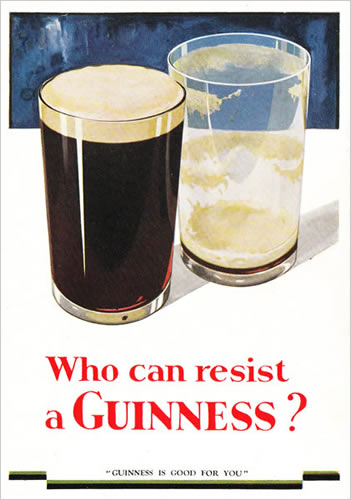
Our 65th Guinness ad depicts two pint glasses, one full, one freshly emptied. The tagline in small print at the bottom is “Guinness is Good For You.”
And below is the same artwork used in a Russian ad.


Our 65th Guinness ad depicts two pint glasses, one full, one freshly emptied. The tagline in small print at the bottom is “Guinness is Good For You.”
And below is the same artwork used in a Russian ad.

B.Y.O.B. TV — Brew Your Own Beer TV — the new television show that will air on local KOFY Channel 20 debuts this evening at 10:30 p.m. KOFY TV20 / Cable13 will be airing the half-hour B.Y.O.B. TV this Saturday, April 23 at 10:30 p.m. If you miss its debut, it will also air on Saturdays at 1:00 a.m. and Sundays, starting April 24th, at 9:30 p.m. On Sunday, the re-runs will air during their “local’s only” programming block. You can catch it three ways: on TV Channel 20, Comcast Cable 13 and Comcast Cable HD 713.
B.Y.O.B. TV will be hosted by Justin Crossley and Jason Petros of The Brewing Network, the #1 on-line radio network dedicated to the art of beer making. The show follows 8 teams, each consisting of 3 eager home brewers as they’re challenged in various stages of the beer brewing process in hopes to escape weekly elimination. The final brewer left standing will win the ultimate prize, a trip to the Pilsner Urquell Brewery in the Czech Republic and become the B.Y.O.B. TV Brewing Champion.

“We want the average consumer to be able to watch this show, enjoy it from an entertaining perspective and gain an appreciation and knowledge for some of the best craft brews in the marketplace”, said Crossley, “at the same time we hope the show will encourage others to tackle the art of home brewing on their own.”
Various craft and import beers from around the region and the world are participating in the show to place emphasis on their commitment towards the innovation and brewing science behind beer making; partners include Pilsner Urquell, Lagunitas, Blue Moon, Grolsh and Blake Brewing. Additional breweries, brew masters and beer and food connoisseurs are participating as well.
While there’s no actual brewing in episode one, we do get to meet the teams and learn how the process will work. But don’t change the channel just yet, things will definitely start to pick up in episode two when the teams do their first batches of beer and things will just keep going from there. Should be fun.
Below is the trailer for the show:

Friday’s ad is yet another one for Rheingold beer, again from 1958, featuring Miss Rheingold for that year, Madelyn Darrow, on a picnic, though really it looks more like tailgating, though far more mellow tailgating than I’m used to.

Thursday’s ad is another one for Rheingold beer, this one from 1958, featuring Miss Rheingold for that year, Madelyn Darrow, out on a motor boat — the Owens — along with a driver, her dog and at least a six-pack of Rheingold beer, in cans naturally since they’re on the water.


Ray Daniels of the Cicerone program tweeted this link yesterday, but I didn’t get a chance to watch it until this morning. The creator of the video, Liquid Horseplay, must be an insider because he’s knows a lot of the right people. The video was made using the Xtranormal movie making architecture and is a hilarious spoof of the uber beer geek. Make sure you watch it through to the end, because it just keeps getting funnier.
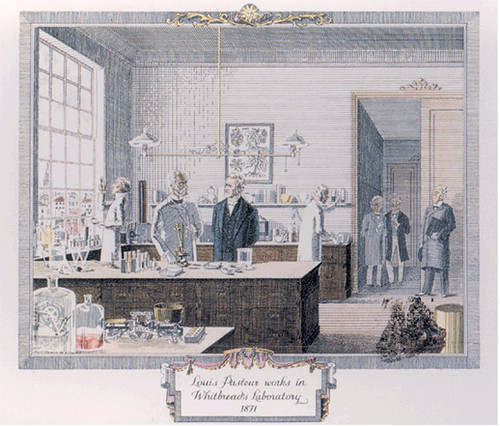
Wednesday’s ad is for Whitbread, from 1937, and the ad shows an illustration of Louis Pasteur working on his fermentation studies in a laboratory at Whitbread Brewing in 1871, nine years after he completed his first test of pasteurization, which took place today in 1862.

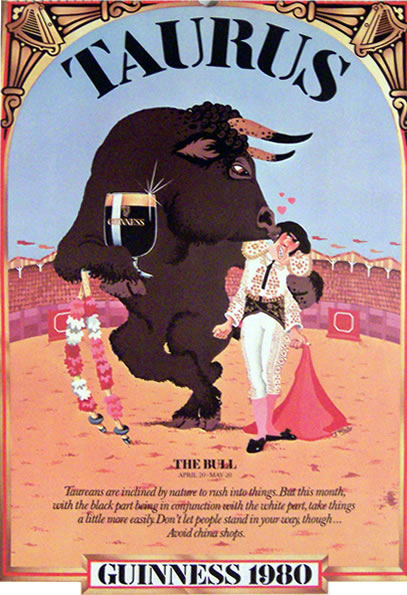
While I don’t put any stock in astrology, in 1980 Guinness put out a calendar with each month representing one of the zodiac signs, and I thought it would be fun to share these throughout the year.
Taurus, the bull, is from April 20-May 21. To learn more, see:
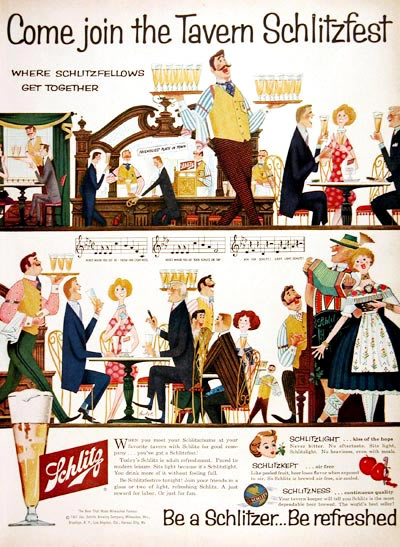
Tuesday’s ad is for Schlitz, from 1957, during one of my favorite ad campaigns by any brewer: Schlitzerland. Schlitzerland featured some great retro-style illustrations (though at the time perhaps they weren’t quite so retro). This one shows the happiest people in the world singing and drinking Schlitz in a tavern — the kind “Where Schutzfellows Get Together.”

For the second time in a few years, a UK Government agency has admitted to making a mistake regarding statistics used in the creation and furtherance of alcohol policy. The first, in 2007, was when the UK’s Department of Health revealed that the definition of a hazardous drinker, that is what the safe limits of alcohol intake were said to be, was completely made up, quite literally “plucked out of the air.”
On Monday, the UK’s Office for National Statistics (ONS) “admitted that it misrepresented the trends in alcohol consumption and has issued a sincere apology to the Portman Group, the drinks industry organisation that champions responsible drinking.”
According to Straight Statistics:
In a report about the productivity of the NHS published at the end of last month, the claim was made that the proportion of women drinking more than 14 units a week had increased by a fifth since 1998, leading to a greater demand for healthcare. As Straight Statistics reported here, there was no justification for such a claim.
A change in methodology for measuring alcohol consumption in 2006 creates a break in the time series. If not allowed for, this gives the impression that the number of women who exceed 14 units a week has indeed increased. Plenty of anti-drink campaigners are happy to spread this false message but it came as a shock when the ONS did so.
David Poley, chief executive of the Portman Group wrote to Stephen Penneck, Director General of the ONS, who has now replied admitting that Mr Poley’s concerns are “entirely justified”. He blames a “lapse in the quality assurance process by which we check carefully the accuracy and reliability of any information that is for publication … unfortunately in this rare instance a key issue went unnoticed.”
The article and press release have been amended. The article, accessible here, is now proceeded by a correction notice. The press release now reads: “The percentage of males and females consuming over the weekly recommended alcohol limits declined from 2006 to 2009.”
Mr Penneck’s response is prompt, straightforward, and makes no attempt to fudge the issue. If only it were equally easy to persuade the media to look more critically at its assumptions about drinking being out of control.
At least they admitted their error. I doubt the same would be true on this side of the pond, where statistical errors tend to live in perpetuity if they serve the anti-alcohol agenda. But the original stories that parroted the incorrect statistics that drinking for women has increased in The Daily Telegraph, the Daily Mail and the Daily Star are still out there and, as far as I know, have not been corrected. They can’t be, really, because the stories focused on the false problem at the heart of the mistake. And that’s the same here, too, as propaganda — even after it’s been disproved — is still used by numerous anti-alcohol groups. Repeat a lie often enough and … well, you know the rest.

It reads like a joke, so I don’t know if it’s true or not, though it does come from the Clark County Democrat of Grove Hill, Alabama from late October, 2009. Thanks to Pete Slosberg, who sent me the link. Apparently, a Texas beer joint sues church…. Here’s the joke … er, story:
In a small Texas town, (Mt. Vernon) Drummond’s bar began construction on a new building to increase their business. The local Baptist church started a campaign to block the bar from opening with petitions and prayers. Work progressed right up till the week before opening when lightning struck the bar and it burned to the ground.
The church folks were rather smug in their outlook after that, until the bar owner sued the church on the grounds that the church was ultimately responsible for the demise of his building, either through direct or indirect actions or means.
The church vehemently denied all responsibility or any connection to the building’s demise in its reply to the court.
As the case made its way into court, the judge looked over the paperwork. At the hearing he commented, “I don’t know how I’m going to decide this, but as it appears from the paperwork, we have a bar owner who believes in the power of prayer, and an entire church congregation that does not.”