Brookston Beer Bulletin

Jay R. Brooks on Beer

  • Home
  • About
  • Editorial
  • Birthdays
  • Art & Beer

Socialize

  • Dribbble
  • Email
  • Facebook
  • Flickr
  • GitHub
  • Instagram
  • LinkedIn
  • Pinterest
  • RSS
  • Twitter
  • YouTube

Powered by Genesis

Beer In Ads #5197: It’s Here! Rahr’s Bock Beer

February 9, 2026 By Jay Brooks

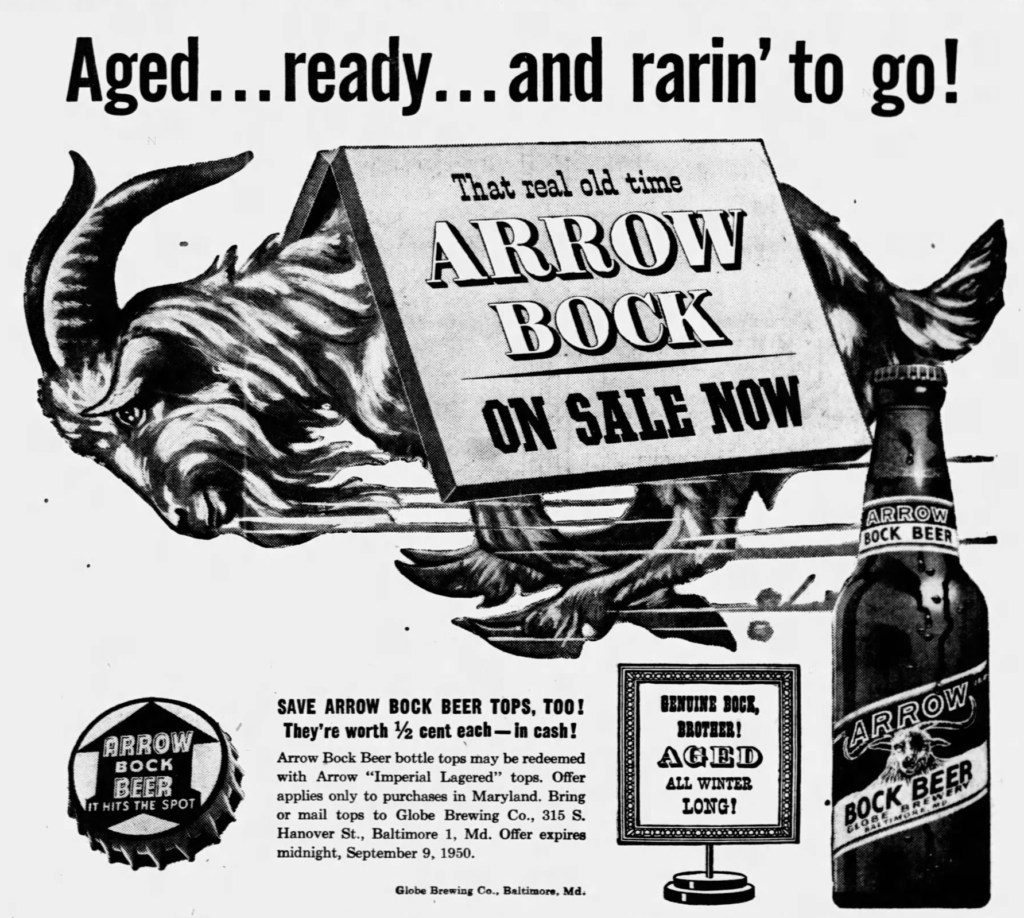
Two years ago I decided to concentrate on Bock ads for awhile. Bock, of course, may have originated in Germany, in the town of Einbeck. Because many 19th century American breweries were founded by German immigrants, they offered a bock at certain times of the year, be it Spring, Easter, Lent, Christmas, or what have you. In a sense they were some of the first seasonal beers. “The style was later adopted in Bavaria by Munich brewers in the 17th century. Due to their Bavarian accent, citizens of Munich pronounced ‘Einbeck’ as ‘ein Bock’ (a billy goat), and thus the beer became known as ‘Bock.’ A goat often appears on bottle labels.” And presumably because they were special releases, many breweries went all out promoting them with beautiful artwork on posters and other advertising.

Monday’s ad is for Rahr’s Bock Beer, which was published on February 9, 1957.  This one was for Rahr Green Bay Brewing Corp., of Green Bay, Wisconsin and was founded by Henry Rahr in 1864. This ad ran in The Green Bay Press Gazette, of Green Bay, Wisconsin.

Filed Under: Art & Beer, Beers, Breweries, Just For Fun Tagged With: Advertising, Bock, History, Wisconsin

Historic Beer Birthday: David C. Kuntz

February 9, 2026 By Jay Brooks

kuntz
Today is the birthday of David C. Kuntz (February 9, 1877-October 22, 1915). He was born in Waterloo, Ontario, in Canada, and was the grandson of David Kuntz, who established the first brewery in Ontario. He was also the son of Louis Kuntz, David’s son. After the first David Kuntz died, his son Louis Kuntz took over, renaming the the business Louis Kuntz’s Park Brewery, and David C. succeeded his father. Shortly after his passing, in 1930, Canadian Breweries Limited, which had originally been “named Brewing Corporation of Ontario,” was created “by merging The Brading Breweries Limited, an Ottawa company Taylor had inherited from his grandfather, Capital Brewing of Ottawa, and Kuntz Brewery of Waterloo, Ontario.” In 1977 Carling Brewery was purchased by Labatt Breweries of London, but the Waterloo plant was closed by 1993 and all the buildings on the site had been demolished.

This is his obituary, from the Brewers Journal in 1915:

Kuntz-employees-1910s
Kuntz brewery works around 1910.

Here’s a brief mention of David C. Kuntz from Flash from the Past: What remains of the Kuntz Brewery legacy?

Louis Kuntz died, aged 39, following an appendectomy in 1891. His children were still young so brother-in-law Frank Bauer, also a brewer, took over. Then David Kuntz died in 1892. Bauer’s own 1895 passing began an almost unbelievable sequence of deaths in the brewery’s management. However, business success continued and in 1910 David Kuntz Jr., Louis’ son, took over. He also died young, 38, in 1915 so his two brothers, Herbert and William stepped in.

Kuntz-Brewery-postcard-lg

Filed Under: Birthdays, Breweries Tagged With: Canada, History, Ontario

Historic Beer Birthday: Joe Allen

February 9, 2026 By Jay Brooks

anchor-new
Today is the birthday of Joe Allen (February 9, 1888-April 24, 1976). Allen’s parents were Irish and came to America, settling in Minnesota, in 1883. At some point, Joe made his way to San Francisco and was working as a brewer at the Anchor Brewery when it reopened after the end of prohibition in 1933 at 1610 Harrison Street. Unfortunately, less than a year later, in February of 1934, the brewery burned to the ground. Owner Joe Kraus then partnered with his brewmaster, Joe Allen, and they re-built the brewery in an old brick building at 398 Kansas Street, by 1st Street.

Joe-Allen-1-29-52

Here, I’ll let Anchor Brewery’s website take up the story from The Era of Mass Production.

Kraus and Allen valiantly and lovingly kept Anchor afloat until Kraus’s death in 1952. By late 1959, America’s—even San Francisco’s—new-found “taste” for mass-produced, heavily marketed lighter beers had taken its toll on Anchor’s already declining sales. In July of that year, at the age of 71, Joe Allen shut Anchor down for what would, thankfully, be a brief period.

Joe-Allen-6-26-59

Again, Anchor Brewing picks up the story, Surviving Another Challenge from 1960.

Lawrence Steese bought and re-opened Anchor in 1960 at yet another nearby location, retaining Joe Allen to carry Anchor’s craft brewing tradition forward. But one of Anchor’s oldest accounts, the Crystal Palace Market had already closed its doors. And Steese had an increasingly difficult time convincing loyal Bay Area establishments to continue serving Anchor Steam. By 1965, Steese—like Allen six years before—was ready to shut Anchor down.

The next year, 1961, the brewery moved to 541 8th Street, where it remained until 1977. Of course, in 1965, another owner invested in the brewery, eventually buying out the remaining partners. That, you probably already know, was Fritz Maytag. There’s not much I could find on Allen’s life before and after he worked at, and then owned, the Anchor Brewery, not even the year of his death. If anyone has any more information, please leave a comment below or contact me directly.

Filed Under: Birthdays, Just For Fun Tagged With: Anchor Brewery, California, History, San Francisco

Beer In Ads #5196: Happy Days Are Here Again

February 8, 2026 By Jay Brooks

Two years ago I decided to concentrate on Bock ads for awhile. Bock, of course, may have originated in Germany, in the town of Einbeck. Because many 19th century American breweries were founded by German immigrants, they offered a bock at certain times of the year, be it Spring, Easter, Lent, Christmas, or what have you. In a sense they were some of the first seasonal beers. “The style was later adopted in Bavaria by Munich brewers in the 17th century. Due to their Bavarian accent, citizens of Munich pronounced ‘Einbeck’ as ‘ein Bock’ (a billy goat), and thus the beer became known as ‘Bock.’ A goat often appears on bottle labels.” And presumably because they were special releases, many breweries went all out promoting them with beautiful artwork on posters and other advertising.

Sunday’s ad is for Dawson’s Bock Beer, which was published on February 8, 1940.  This one was for Dawson’s Brewery, of New Bedford, Massachusetts and was founded in 1899. This ad ran in The Boston Globe, of Boston, Massachusetts.

Filed Under: Art & Beer, Beers, Breweries, Just For Fun Tagged With: Advertising, Bock, History, Massachusetts

Historic Beer Birthday: Charles Tascher

February 8, 2026 By Jay Brooks

Today is the birthday of Charles Tascher (February 8, 1832-June 5, 1890). He was born in Stark, Ohio, but moved with his family to be raised in Indiana, where he married Elizabeth Soice in 1854. A few years later, Tascher then moved his family to Colorado, settling in Denver. Initially, along with a business partner, Frederick Zadek Salomon, he started a successful mercantile business. From that success, and the addition of Tascher’s brother-in-law, Charles Endlich, the trio founded Denver’s first brewery, Rocky Mountain Brewery, in 1859.

As Endlich’s involvement with the brewery grew and his brother-in-law became sole proprietor, Tascher withdrew from the brewery, moved to Central City, and became a miner (which was the reason he moved West). He passed away at age 58 in 1890.

As for the brewery, Philip Zang bought into it around 1868 and eventually took it over, renaming it the Philip Zang Brewery in 1870, though they continued to use the Rocky Mountain name in the trade. They closed during prohibition, of course, but only lasted one year afterwards before closing for good in 1934.

Filed Under: Birthdays, Breweries, Just For Fun Tagged With: Colorado, History

Historic Beer Birthday: Lüder Rutenberg

February 8, 2026 By Jay Brooks

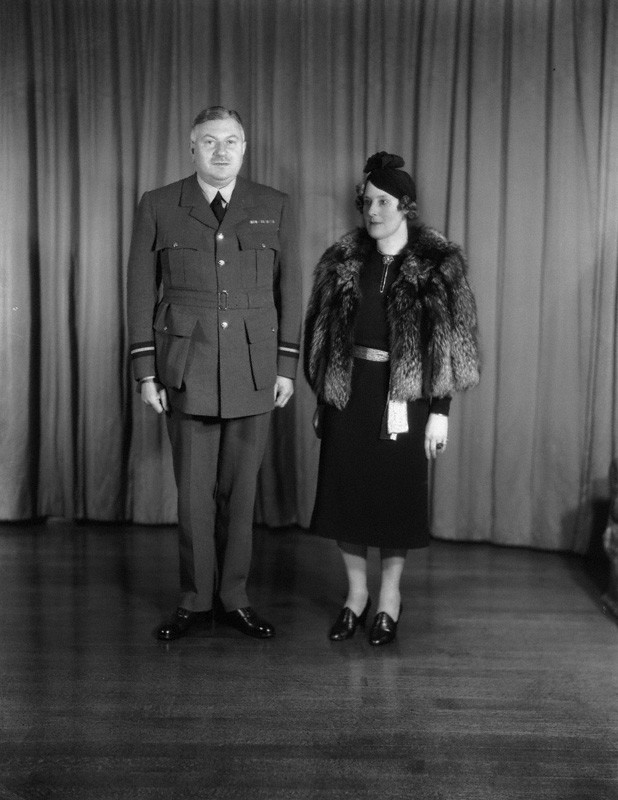
becks-white
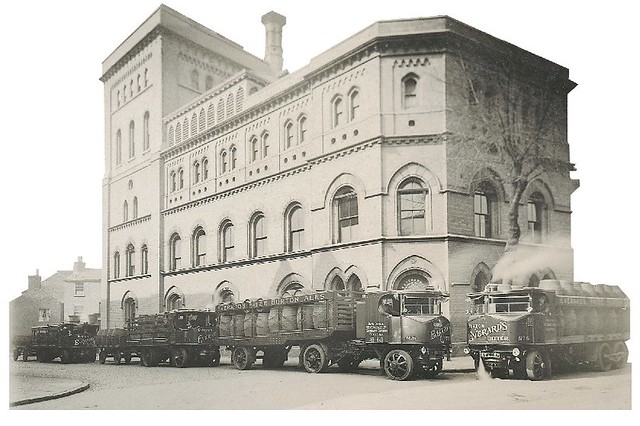
Today is the birthday of Lüder Rutenberg (February 8, 1816-June 14, 1890) who was born in Bremen, Germany. He was an architect, a builder and one of the co-founders of Beck’s Brewery, formally known as Brauerei Beck & Co. “The brewery was formed under the name Kaiserbrauerei Beck & May o.H.G. in 1873 by Lüder Rutenberg, Heinrich Beck and Thomas May. In 1875, Thomas May left the brewery which then became known as Kaiserbrauerei Beck & Co.”

Here’s a short biography of Lüder Rutenberg, translated from his German Wikipedia page:

Rutenberg — son of the builder Diedrich Christian Rutenberg — learned after visiting the Remberti and the grammar school with his father. He studied from 1836 to 1840 in Berlin physics, chemistry and technology. From 1841 he was an employee at his father.

In 1847 he became an independent architect. Its operation was one of the largest construction companies in Bremen. Lüder Rutenberg was especially during the expansion of the Bremen suburbs as a builder for the typical residential streets with one- or two-story terraced houses successfully. Men of his profession erected at that time for its own account and sold whole streets of houses or flats profitably. 1849 by the Bremen Senate a request Rod Berg refused to be allowed to build in Bremen similarly large tenement houses such as in Hamburg or Berlin. Had been such application is approved, this greatly affect the appearance of many neighborhoods Bremen would have had.

1853 rose Rutenberg in the brewery business and acquired with his sister and his brother-in as a partner, the Runge brewery, which he in St. Pauli Brewery renamed and goal for until 1870 the largest brewery in Bremen. Later he bought along with the master brewer Heinrich Beck several smaller breweries and participated in 1873 in the construction of a brewery in the New Town, the then Kaiser brewery was later large brewery Beck & Co.

kaiser-brauerei-becks

Filed Under: Birthdays, Just For Fun Tagged With: Germany, History

Beer In Ads #5195: It’s The Time Of Year For Pearl Bock Beer

February 7, 2026 By Jay Brooks

Two years ago I decided to concentrate on Bock ads for awhile. Bock, of course, may have originated in Germany, in the town of Einbeck. Because many 19th century American breweries were founded by German immigrants, they offered a bock at certain times of the year, be it Spring, Easter, Lent, Christmas, or what have you. In a sense they were some of the first seasonal beers. “The style was later adopted in Bavaria by Munich brewers in the 17th century. Due to their Bavarian accent, citizens of Munich pronounced ‘Einbeck’ as ‘ein Bock’ (a billy goat), and thus the beer became known as ‘Bock.’ A goat often appears on bottle labels.” And presumably because they were special releases, many breweries went all out promoting them with beautiful artwork on posters and other advertising.

Saturday’s ad is for Pearl Bock Beer, which was published on February 7, 1964.  This one was for Pearl Brewing Co., of San Antonio, Texas and was founded in 1883. This ad ran in The San Antonio Express, also of San Antonio, Texas.

Filed Under: Art & Beer, Beers, Breweries, Just For Fun Tagged With: Advertising, Bock, History, Texas

Historic Beer Birthday: Morton Coutts

February 7, 2026 By Jay Brooks

db-breweries
Today is the birthday of Morton W. Coutts (February 7, 1904-June 25, 2004) who was a “New Zealand inventor who revolutionized the science of brewing beer,” and “is best known for the continuous fermentation method.”

Here’s a basic biography from the DB Breweries website:

Morton Coutts (1904-2004) was the inheritor of a rich brewing tradition dating back to the 19th century. Like his father, W. Joseph Coutts and grandfather, Joseph Friedrich Kühtze, Morton Coutts was more an innovator and scientific brewer than a businessman. He was foundation head brewer of Dominion Breweries Ltd under (Sir) Henry Kelliher and became a director of the company after his father’s death in 1946. He and Kelliher formed a formidable team-Coutts, the boffin-like heir to a rich brewing heritage, obsessed with quality control and production innovation, and Kelliher, a confident, entrepreneurial businessman, able to hold his own with politicians and competitors.

continuous-fermentation

Morton Coutts’ most important contribution was the development in the 1950s of the system of continuous fermentation, patented in 1956, to give greater beer consistency and product control. The continuous fermentation process was so named because it allows a continuous flow of ingredients in the brewing, eliminating variables to produce the ideal beer continuously. The system achieved this by scrapping open vats-the weak link in the old system-and replacing them with enclosed sealed tanks. Continuous fermentation allows the brew to flow from tank to tank, fermenting under pressure, and never coming into contact with the atmosphere, even when bottled. Coutts’ research showed that his process could produce consistent, more palatable beer with a longer shelf life than under batch brewing. A London newspaper described it as a “brewer’s dream and yours too”. Coutts patented the process, and subsequently the patent rights were sold worldwide as other brewers recognised the inherent benefits of continuous processes. Although many attempted to implement the technology, most failed due to their inability to apply the rigorous hygiene techniques developed and applied by Coutts. Eventually, in 1983, Coutts’ contribution to the industry was honoured in New Zealand.

And DB Breweries also has a timeline with key events in the brewery’s history, including dates from Coutts’ life.

Waitemata-Brewery
The Waitemata Brewery in 1933, after it became part of DB Breweries.

As for his most influential invention, continuous fermentation, here are some resources, one from New Zealand’s Science Trust Roadshow with Morton Coutts — Continuous Fermentation System. And after I visited New Zealand, I wrote a sidebar on it for an article I did for All About Beer, and also later when a German university announced something very similar a few years ago in Everything Old Is New Again: Non-Stop Fermentation.

continuous-fermentation

MortonCouttsNZBeerinnovatorchangedglobalprocesses
Coutts later in life.
Also, here’s the story of him creating DB Export The Untold Story, featuring this fun video.

Filed Under: Birthdays, Breweries, Just For Fun Tagged With: History, New Zealand, Science of Brewing, Video

Beer In Ads #5194: Ring In Spring With Pearl Bock Beer

February 6, 2026 By Jay Brooks

Two years ago I decided to concentrate on Bock ads for awhile. Bock, of course, may have originated in Germany, in the town of Einbeck. Because many 19th century American breweries were founded by German immigrants, they offered a bock at certain times of the year, be it Spring, Easter, Lent, Christmas, or what have you. In a sense they were some of the first seasonal beers. “The style was later adopted in Bavaria by Munich brewers in the 17th century. Due to their Bavarian accent, citizens of Munich pronounced ‘Einbeck’ as ‘ein Bock’ (a billy goat), and thus the beer became known as ‘Bock.’ A goat often appears on bottle labels.” And presumably because they were special releases, many breweries went all out promoting them with beautiful artwork on posters and other advertising.

Friday’s ad is for Pearl Bock Beer, which was published on February 6, 1962.  This one was for Pearl Brewing Co., of San Antonio, Texas and was founded in 1883. This ad ran in The El Paso Herald-Post, of El Paso, Texas.

Filed Under: Art & Beer, Beers, Breweries, Just For Fun Tagged With: Advertising, Bock, History, Texas

Historic Beer Birthday: Henry Miller

February 6, 2026 By Jay Brooks

duquesne

Today is the birthday of Henry Miller (February 6, 1857-August 19, 1902). He was born in Pennsylvania, and was originally a furniture salesman. But later in life he co-founded the Duquesne Brewing Company in 1899, serving as its first president. They were one of the first breweries to pasteurize their bottled beer, the original Duquesne Lager and Silver Top, which quickly began outselling local and out-of-state competitors, and turning the business it into a large regional brewer. But in 1905, they merged with 16 breweries in the area to create the Independent Brewing Co. of Pittsburgh. They survived prohibition and by 1940 were the nation’s eighth-largest brewery, but closed for good in 1972.

Duquesne-Brewery

There wasn’t much information, or even a picture, I could find of Miller. But here is a short obituary of him from the American Brewers Review:

Henry-Miller-obit
Duquesne-Pilsener
Duquesne-Pittsburgh_Post_Gazette_Mon__Dec_2__1935_
Duquesne-Pilsener-2

Filed Under: Birthdays, Breweries, Just For Fun Tagged With: History, Pennsylvania

« Previous Page
Next Page »

Find Something

Northern California Breweries

Please consider purchasing my latest book, California Breweries North, available from Amazon, or ask for it at your local bookstore.

Recent Comments

  • Bob Paolino on Beer Birthday: Grant Johnston
  • Gambrinus on Historic Beer Birthday: A.J. Houghton
  • Ernie Dewing on Historic Beer Birthday: Charles William Bergner 
  • Steve 'Pudgy' De Rose on Historic Beer Birthday: Jacob Schmidt
  • Jay Brooks on Beer Birthday: Bill Owens

Recent Posts

  • Beer In Ads #5135: What Record’s Bock Beer Is February 27, 2026
  • Historic Beer Birthday: Albert Braun February 27, 2026
  • Historic Beer Birthday: John J. Schlawig February 27, 2026
  • Beer In Ads #5134: Lord Bushkill On Bushkill Bock February 27, 2026
  • Historic Beer Birthday: William Henry Beadleston February 27, 2026

BBB Archives

Feedback

Head Quarter
This site is hosted and maintained by H25Q.dev. Any questions or comments for the webmaster can be directed here.