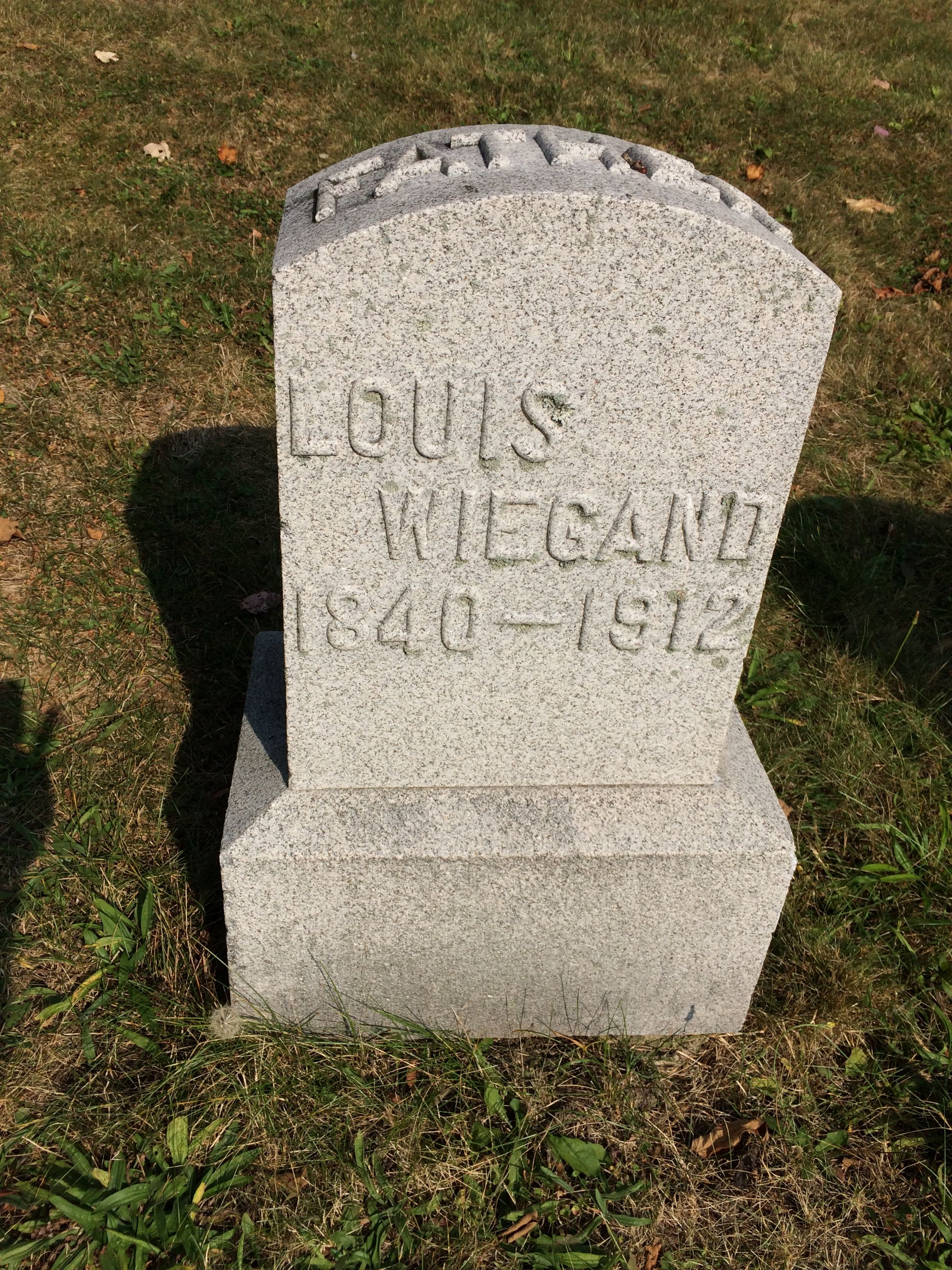
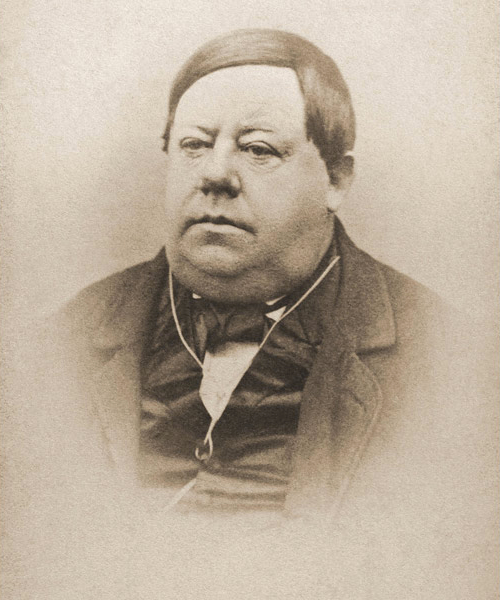
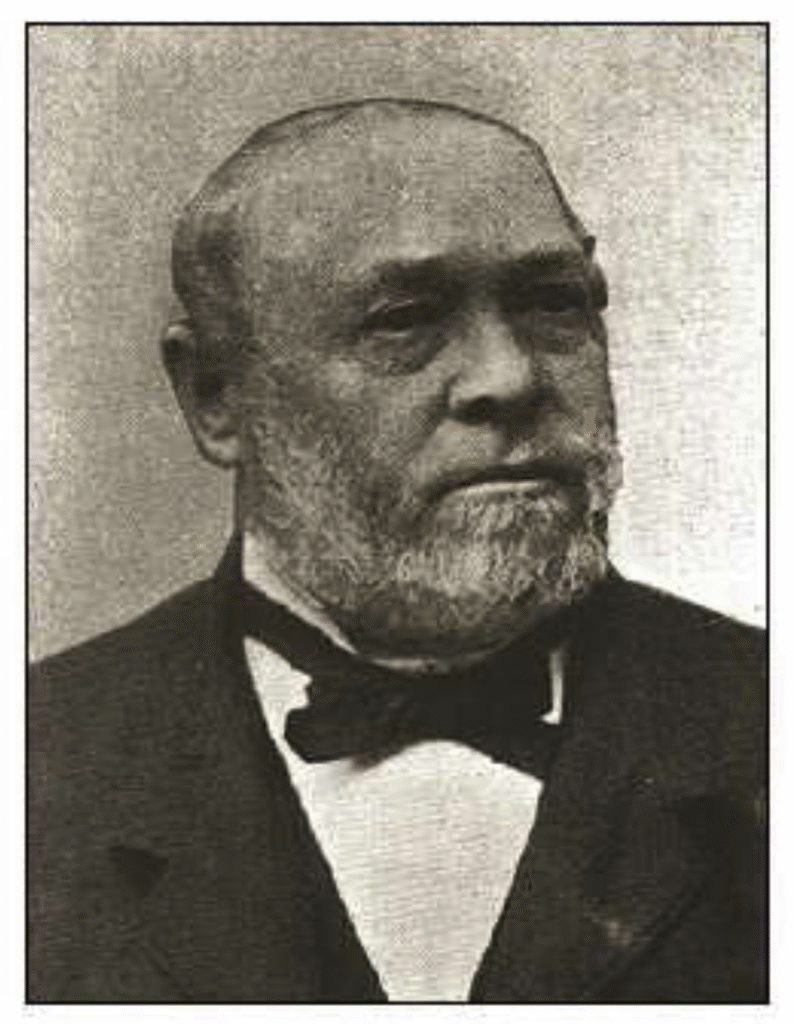
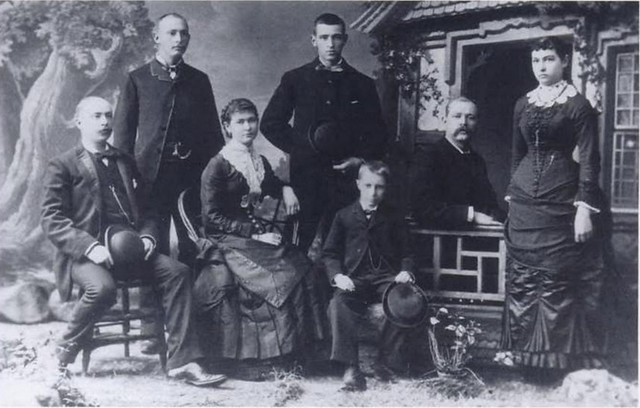
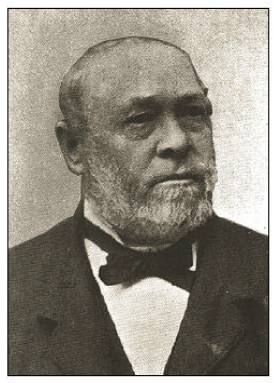
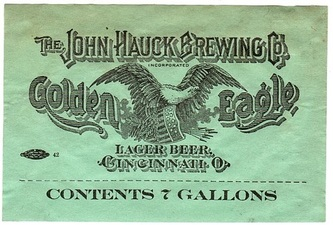
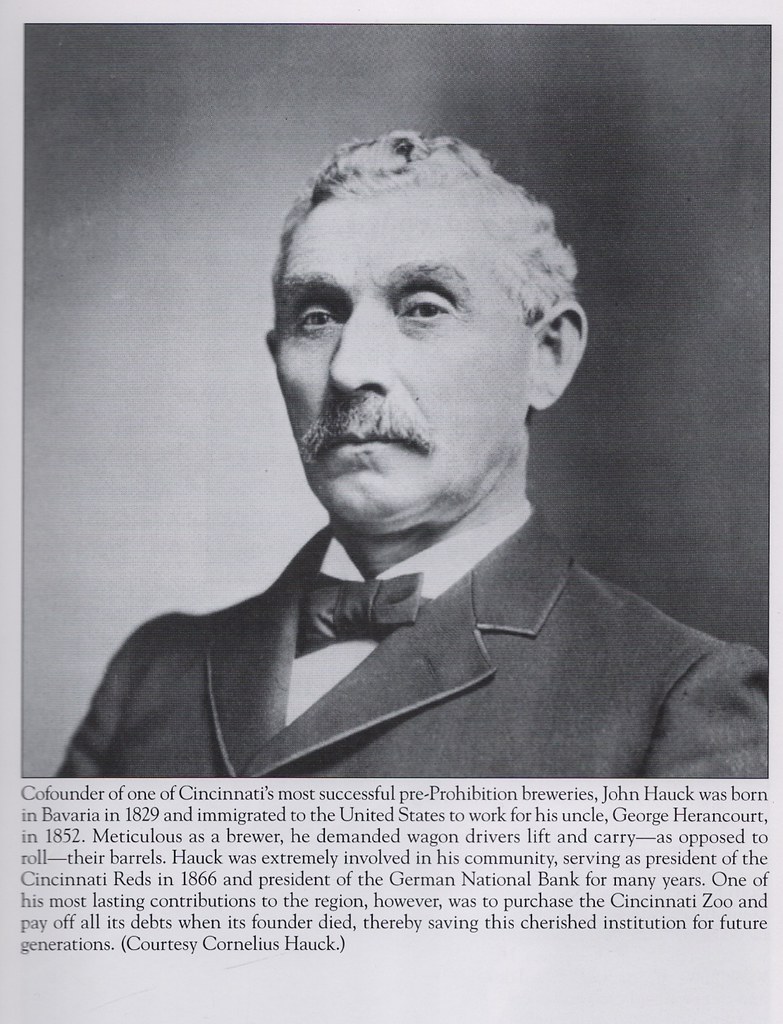
Today is the birthday of Frank J. Hahne (March 31, 1856-March 8, 1932). He was born in Neiderfeleris, Germany, an orphan, but made his way to the U.S. when he was 19, in 1875, and found a job in a Milwaukee brewery. He moved around to different brewery jobs across the country, eventually coming to Pennsylvania, and fews later settling in DuBois. Arriving in 1896, he founded the DuBois Brewing Co. either that year or 1897, sources seem mixed. The brewery survived prohibition, with his son, Frank Jr. taking over, and the brewery stayed in business until 1973, but the business had been sold to Pittsburgh Brewing in 1967.
Here’s a biography of Hahne from the “Twentieth Century History of Clearfield County, Pennsylvania, and Representative Citizens,” by Roland D. Swoope, Jr., published in 1911:
FRANK HAHNE, who is identified with many of the leading enterprises of DuBois, Pa., has been a resident of this borough since 1896. He was born in Germany, March 31, 1856, and being left an orphan when quite young, has mainly made his own way in the world and stands today as a telling example of what an honest, right-minded, hard working boy can become.
Mr. Hahne attended the excellent German schools and at the age of seventeen years started to learn the brewer’s trade. In 1875 he came to America in search of better industrial conditions, landing in Milwaukee, Wis., where he found employment in a brewery. One year later he went to Iowa, where he worked at his trade for three years, when, having accumulated some capital, he took up Government claims in South Dakota, where he engaged in farming for two years. In 1881 he became a resident of Chicago, Ill., and there again went into the brewing business and remained until 1887, at which time he went to Allegheny. He was there until 1896, and then came to DuBois, where his business interests have been extensively developed.
When Mr. Hahne decided that this Pennsylvania town offered excellent business opportunities, he organized first the DuBois Brewing Company and was made its president. The plant at the beginning was not more than one-half the size of the present one but the growth of the enterprise has been continuous, under Mr. Hahne’s judicious management and the time will come when the present commodious quarters on South Main Street, on the B. R. & P. Railroad, will have to be enlarged and still better facilities provided. It is a growing business. The buildings are of brick construction and an average of eighty men are employed. The main office is at DuBois, Pa., with branch offices at Buffalo, N. Y., and Newark, N. J. In connection with the brewery proper, the company has a complete ice plant and by contract, the Hygienic Ice Company takes all their over-production of ice. In addition to supplying the local trade from the brewery, shipments are made to many points, including Hamilton, Canada. The main brands of beer manufactured are: DuBois Budweiser, DuBois Wurzburger, Hahne’s Export and Hahne’s Porter. The officers of the DuBois Brewing Company are well known capitalists. Frank Hahne is president; J. Weil, is vice president; Frank I. Schwem is treasurer, and M. I. McCreight is secretary. Mr. Hahne is also president of the DuBois Storage and Carting Company; is a director of the DuBois Electric and Traction Company; a director of the United Traction Company, and formerly was president of the J. Mahler Glass Company which sold out to the American-French Belgium Glass Company, in 1909.
Mr. Hahne has also prospered as a farmer and stock raiser. He manages a farm of 180 acres of valuable land belonging to the Brewing Company and situated near Luthersburg, in Clearfield County, where he has a large orchard selected by the state as a model demonstrating orchard. He is much interested in the breeding of thoroughbred horses and cattle, making a specialty of Percherons and Holsteins. His 1800-pound Percheron stallion, DuBois, has taken many blue ribbons when exhibited. Improvements of every kind have been made on this farm and Mr. Hahne has been heard to express the wish that he may spend his last years in the midst of these beautiful surroundings.
On May 30, 1883, Mr. Hahne was married first to Miss Carrie A. Trom, of Chicago, Ill., who died in 1896. Four children were born to that union, namely: Emelia T., Maria A., Frank John and Carolla A. In 1900, Mr. Hahne was married secondly to Mrs. Maria Strey, whose death occurred May 16, 1910. Mr. Hahne and children are members of the Roman Catholic church. He is identified fraternally with the Elks, at DuBois, and socially with the Acorn Club of DuBois and the German Club, of Pittsburg. He belongs also to the Pennsylvania Brewer’s Association. In 1903 Mr. Hahne erected his substantial and comfortable dwelling on South Main Street, DuBois, which has been the family home ever since.
As I mentioned, there was some confusion about the brewery’s founding date, which is addressed on the Wikipedia page for the town of DuBois, Pennsylvania:
There seems to be some debate as to exactly when Frank Hahne came to DuBois and broke ground on his own facility. One source claims 1898, another 1897. It seems most likely that this occurred between April and the end of 1896. It was on April 16, 1896, that the DuBois Weekly Courier reported: “Some new developments in connection with the brewery may be looked for in the near future.”
There were a number of reasons Hahne chose the DuBois site for his facility, but the most frequently cited was the excellence of the water supply. He purchased 2,300 acres (9.3 km2) surrounding the local reservoir to protect the watershed from pollution.
By 1906, the brewery had four products on the market: DuBois Wurzburger, Hahne’s Export Pilsener, DuBois Porter, and DuBois Budweiser. The Budweiser name would be at the center of controversy for 60 years between DuBois Brewing and Anheuser-Busch.
The DuBois brands soon traveled far and wide for a brewery of its size, ranging up to 150 miles (240 km) away and selling well in Buffalo, Erie and Pittsburgh. The brewery’s 300-barrel kettle was kept busy churning out brands, while the left-over grain materials were pressed and sold for cattle feed and grist mills in the rural areas surrounding DuBois.
As with many other American breweries, DuBois Brewing moved right along until 1918 and the advent of Prohibition. The brewery shifted production to “near beer” and soft drinks and opened the H&G Ice Company. According to the April 7, 1933, DuBois Courier, the brewery won the honor of being one of only two breweries in the entire nation that had never violated or been suspected of violating the Prohibition laws since the 18th Amendment went into effect. As a result, DuBois Brewing Company was issued license number G-2, allowing them to resume brewing immediately upon the enaction of the 21st Amendment.
Frank Hahne died in 1932, and the brewery was passed to his only son, Frank Hahne Jr., whose own only son died in infancy, leaving the family without an heir. Hahne Jr. sold the brewery to Pittsburgh Brewing in 1967.
Frank Hahne had been an orphan at a young age and at the age of 17 he learned the craft of brewing. In 1875 he emigrated to the USA and settled down in Milwaukee , where he found employment in a brewery. A year later he moved to the state of Iowa and worked as a brewer for three more years. With his hitherto saved money he was able to settle in South Dakota and worked for two years in agriculture. He was a beer brewer in Chicago (1881-1887) and Pittsburgh (1887-1896), where he worked as a Braumeister for Eberhardt & Oberbrewery.
In 1896 he moved to DuBois, where he wanted to start his own brewery because of the high water quality. At first, it was not certain whether Hahn’s plans would be accepted by the City Council, but the initial resistance was agreed, and Hahne founded the Du Bois Brewing Company on South Main Street. His business partners were Mike Winter and Jack Weil. Hahne held 51% of the shares in the brewery.
In order to protect the water used in his brewery from pollution, Hahne rose almost nine square kilometers of the area surrounding the local water reservoir.
In 1911 Hahne bought a farm near Luthersburg, Pennsylvania. There he raised Percheron and Holsteiner horses. His orchard was selected by the state as a model factory (English state model orchard).
The Du Bois Brewing Company was at the height of its success when the Prohibition Laws were passed. In the following years, she was only able to produce alcohol-reduced beer and soft drinks.
In addition to the Du Bois Brewing Company, Hahne was also President of DuBois Storage and Carting Company, as well as Director of DuBois Electric and Traction Company and United Traction Company. He also temporarily held the office of J. Mahler Glass Company. In addition, Hahne was a member of the Catholic Church, the DuBois Elks, the Acorn Club of DuBois and the Pennsylvania Brewer’s Association.
Frank Hahne died in 1932, one year before the end of prohibition. His son Frank Jr. took over the management of the company, his daughter Maria became Vice-President.
The Du Bois Brewing Company stayed in business until 1972 when it was closed by their new owner, the Pittsburgh Brewing Company.
The DuBois Brewing Company started by Frank Hahne Sr., who was born in Neiderfeleris-on-Rhine, Germany, on March 31, 1856. His father was a tenant famer for one of the great German nobles.
Hahne came to the United States at age 19. He went to the Iowa farming region having heard of the need for help in that section. He worked there for a year before moving to Milwaukee, Wisconsin, where he got a job in a brewery. Later he went back to farming in Iowa and then to Chicago, Ill,. and Pittsburgh as an employee of various breweries learning all the intricicies of that trade. He was brewmaster for Eberhardt and Ober (E & O) in Pittsburgh’s Troy Hill area.
He married Caroline Trum in Chicago in 1895 and they had four children, Caroline, Amelia, Marie, and Frank Jr.
Hahne came to DuBois in 1895 or 1896 to see if the area would be a suitable place to open his own brewery. He requested a public meeting to determine whether or not the business would be welcome.
There was some resistance to a brewery being established. Hahne decided to take his brewery elsewhere, but was convinced to come back for a second meeting where the details were worked out. A newspaper report on March 8, 1932, the year of Hahne’s death, told the story in this fashion:
“The Board of Trade called such a meeting where he with several of his associates from Pittsburgh outlined their project and offered to join with DuBois citizens in establishing a large brewery . . . To show their good faith large sums were forthwith subscribed and paid to the Board of Trade officials with the privilege to DuBois citizens to subscribe such amounts as they might desire. The public meeting was so enthusiastic at the fine spirit shown by Mr. Hahne and his associates that nearly all the business men of the city subscribed to the venture and a charter was applied for.”
Hahne’s partners in his business were Mike Winter and Jack Weil. Hahne owned 51% of the stock in the company and the rest was sold to interested buyers. The brewery opened in 1896 or 1897. The brewery was built by A. D. Orner and included the brew house, outbuildings, ice house, hospitality room, smoke stack, and the Hahne home on Main Street, still a private residence.
By 1906, at least four products – DuBois Wurzburger, Hahne’s Export Pilsener, DuBois Porter and DuBois Budweiser – were being produced. Hahne’s use of the Budweiser name would create legal battles with the giant Anheuser-Busch Brewery leading to several court cases.
Hahne also owned a farm off of what is now Route 322 east in Luthersburg (above), which he purchased from the R. W. Moore estate in 1911. The orchard was selected by the state as a model demonstrating orchard and his 1,800-pound Percheron stallion, DuBois, took many blue ribbons when he exhibited him. He also breed Holstein cattle.
John H. Hayes managed the farm from 1912-25 and Bill Fairman Sr. and Jr. farmed the grounds from 1936-53. DuBois Brewing sold the farm to Milton Sr., Milton Jr., and Gordon Hartzfeld in 1946. Hartzfeld sold his portion of the farm to Crescent Brick Company, who sold it to present owner Larry Baumgardner. Today the farm is a memory, the buildings are gone and the land strip-mined for coal. There is new growth grasses and small trees and the old farm has become home for wildlife.
Ultimately, the DuBois Brewery grew to a point where branches were established in Buffalo, N.Y., and Newark, N. J. The grain that was left over from the beer was dried and sold to farmers to be used as feed for their cattle. Early on, horse and wagon were used for local deliveries, but anything further could only be delivered by the railroad, using boxcars kept cold by blocks of ice.
The Buffalo, Rochester, & Pittsburgh (BR&P) Railway Company served the brewery. Two spur tracks from the mainline crossed over Pentz Run to the complex. The railroad provided there special designated cars for the brewery, white with trademark lettering, that cost the brewery $50 in 1899.
Over 100 employees were on the payroll and the business was at its peak when the 18th Ammendment to the U.S. Constitution, the Prohibition ammendment, was passed in 1918. Throughout Prohibition the brewery stayed open by converting to selling soda pop and near beer; and opening a division called H & G Ice Company. The DuBois Brewery was one of the few in the country not to be cited during Prohibition and one of the first to reopen when Congress passed the 21st Ammendment. The sale of beer became legal again on April 7, 1933.
Unfortunately, Frank Hahne Sr., who died in March 1932, never got to see his brewery reopen. The reopening meant that the skeleton crew of 20 employees, who kept the plant open during Prohibition, increased to 108 with $200,000 a year in payrolls. Carl Waldbisser resumed his duties as brewmaster, the position he held for two decades prior to Prohibition, and Hahne Porter and Hahne Expoert were new products. The company had orders for 3,000,000 bottles of beer when it reopened.
With the death of his father, management of DuBois Brewery passed to Frank Hahne Jr. with his sister, Marie, as vice president.
The DuBois Brewery had many successes and some setbacks defending its right to use the Budwiser name for over 60 years that it brewed a Budweiser beer. Starting in 1905 when the brewery began the use of the name for one of its many beer brands, Hahne Sr. and later Frank Jr. maintained that their major label beer’s name was derived from the original Budvar Brewery of Budweis, Germany, in the present Czech Republic. This was the Royal Brewery of the Holy Roman Emperor dating back to the early Middle Ages. Effective October 31, 1970, however, Frank Hahne Jr. was prohibited from the using the Budweiser name by a Federal Court order.
In 1967, because of no heirs and the fact that he was losing interest, Frank Jr. had sold the brewery to the Pittsburgh Brewing Company for $1 million, as the Budweiser name case was preceding through the appeals process. A temporary production output problem for Iron City and the DuBois competition was eliminated at the same time. Five years later, 1972, the DuBois Brewery was closed forever. The Pittsburgh company had been bound by the terms of sale to keep the DuBois plant operating for those five years. While under the ownership of Iron City, the Budweiser name case was settled with Anheuser-Busch for a reported million-dollar profit for Pittsburgh Brewing, which had won the U. S. Supreme Court decision. So in effect, Iron City Beer got the DuBois Brewery for next to nothing, however over 100 jobs were lost.
The brewery building complex, which had been used by various businesses over the decades since closing as a brewery, was demolished in 2003. Clearfield County took over the largely condemned and abandoned area and tore down the derelict structures that summer. First to go was the H & G Ice Company followed by the stock house, offices, and, finally, the huge main brewery building and smoke stacks. During the demolition, the whole rear side collapsed unexpectedly with a loud crash and a billow of dust. Luckily, the workmen were on a break and no one was hurt. Rubble was piled to make a ramp that enabled the cranes to reach and safely remove the tall smokestacks. The powerhouse and the smaller outbuilding shops were the last to go. A DuBois landmark was gone.
Curiously, the DuBois brewery started marketing a beer under the name DuBois Budweiser in 1905. Not surprisingly, Anheuser-Busch brought suit in 1908, but dismissed it and the two brands were marketed simultaneously until DuBois finally stopped making its Budweiser in 1972, after it was owned by Pittsburgh Brewing. Here’s the interesting story of the two Budweisers, from a Metropolitan News-Enterprise article on Thursday, August 4, 2005
Anheuser-Busch long tolerated the operations of DuBois Brewery, maker of “DuBois Budweiser.” It did sue the small Pennsylvania brewery for infringement in 1908, but dismissed the action without prejudice the following year, supposedly because company president Adolphus Busch was in ill-health and conserving his energies. It wasn’t until 1940 that it filed a new action, 35 years after the introduction of “Dubois Budweiser.”
The Associated Press reported on March 11, 1947:
The DuBois Brewing Co. of DuBois, Pa., contended in Federal District Court Monday that the name “Budweiser Beer” is a geographic and descriptive name and is not the exclusive name of the Anheuser-Busch Brewing Corp. of St. Louis. Judge R. M. Gibson heard arguments in a suit entered by Anheuser-Busch to bar the Pennsylvania company using the name Budweiser for its products. “We have a great mass of testimony to show that where Anheuser-Busch Budweiser and DuBois Budweiser are sold together, there is no confusion,” Elder W. Marshall, former Allegheny county judge and counsel for the DuBois company, declared. “The bartender knows his customers and knows which Budweiser they want,” he continued. “Where a stranger asks for Budweiser, the bartender asks him, ‘Anheuser-Busch or DuBois?’” Marshall said Anheuser-Busch had no exclusive right to the name when DuBois first used it in 1905 and that nothing has occurred since to justify issuance of an injunction against DuBois using the name.
Gibson held on Sept. 9, 1947, that “Budweiser” was not a geographic term as applied to the product of either litigant. The beer of neither brewer came from Budweis. And the word was not a mere description because there was no such thing as a Budweiser process for making beer. It was, plainly and simply, a trade name, he found.
Declaring DuBois to be an infringer in using that trade name, the jurist said:
“In the instant case the Court has had little difficulty in determining that in 1905, when defendant adopted its trade name, the name ‘Budweiser’ identified beer so marked to the general public as the product of Anheuser-Busch.”
As to laches, Gibson wrote:
“While the delay in bringing the action has been great, it must not be forgotten that defendant faced the fact that suit might again be brought when it consented to the withdrawal of the 1909 action, and that since the withdrawal it had notice that plaintiff was not consenting to its use of the trade name.”
The majority of a three-judge panel of the Third U.S. Circuit Court of Appeals saw it differently. Judge John J. O’Connell remarked in his May 12, 1949 opinion:
“Certainly we have found no case in which injunctive relief was granted after an inexcusable delay for a comparable period of time….In our view, this is not merely a matter of laches; Anheuser has been grossly remiss.”
O’Connell said of the dismissal in 1908:
“The conclusion is irresistible that the Association feared the outcome of its 1908 suit, and that the long delay prior to the filing of the instant complaint amounted to at least an acquiescence in use of the word by DuBois, which Anheuser should be estopped to deny at this late hour, if it was not an actual abandonment of the exclusive right as far as DuBois was concerned.”
The DuBois brewery was purchased in 1967 by Pittsburgh Brewing Company which continued to produce DuBois Budweiser. It ceased production in 1972 following an adverse decision in the U.S. District Court for the Western District of Pennsylvania.
The Associated Press reported on Oct. 1, 1970:
A 65-year court battle over the use of the name “Budweiser” by two brewing companies apparently came to a head Wednesday when a federal judge shut off the tap on “DuBois Budweiser.”
Judge Louis Rosenberg ruled in U.S. District Court that the name “Budweiser” is now the exclusive trademark of Anheuser-Busch, Inc., of St. Louis….
The two companies in the past reached several court agreements limiting the area in which the DuBois product could be sold, but each agreement was marred by charges of violation.
Here’s Hahne’s obituary, from the Punxsutawney Spirit from March 10, 1932:
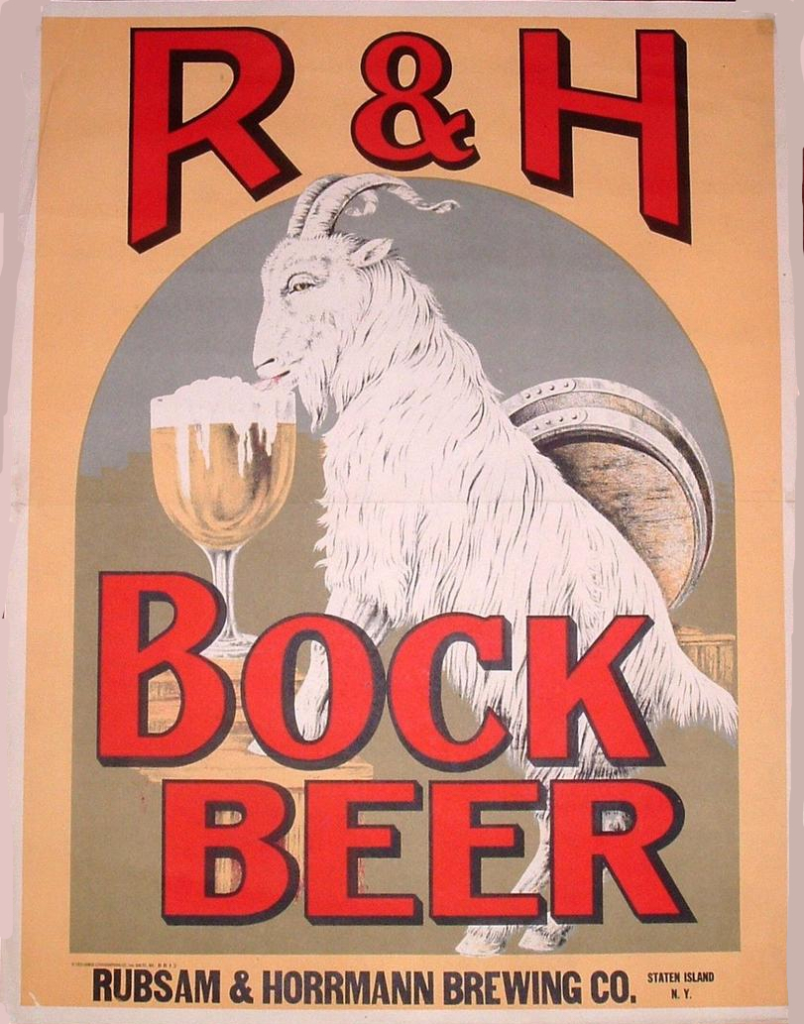
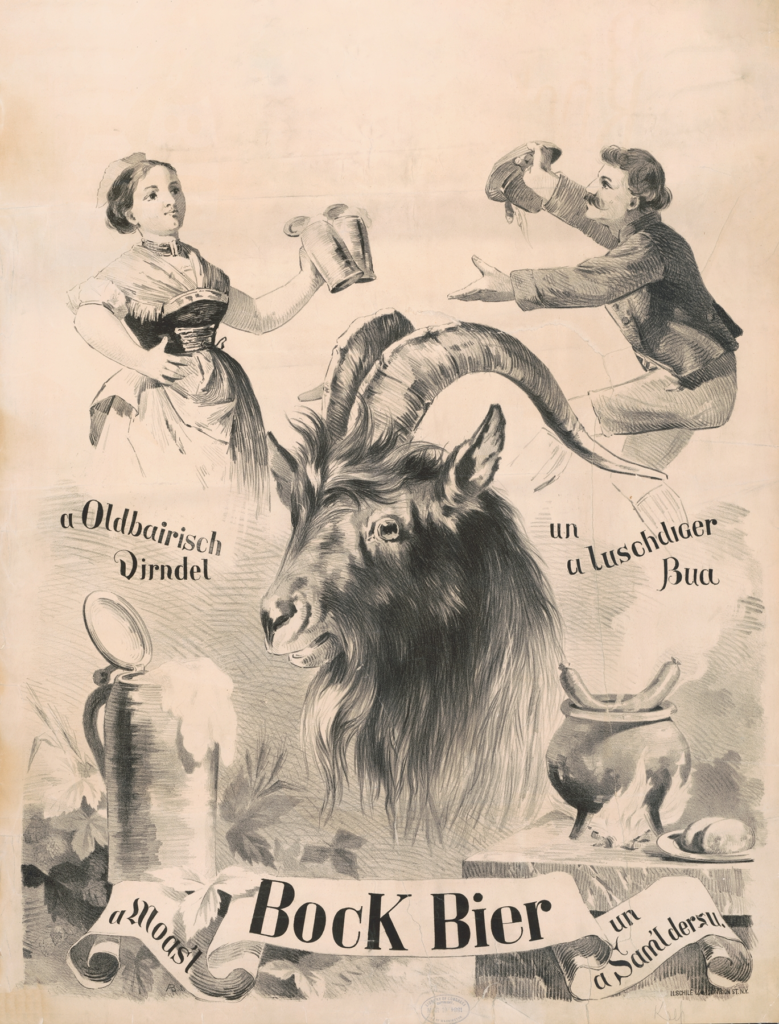
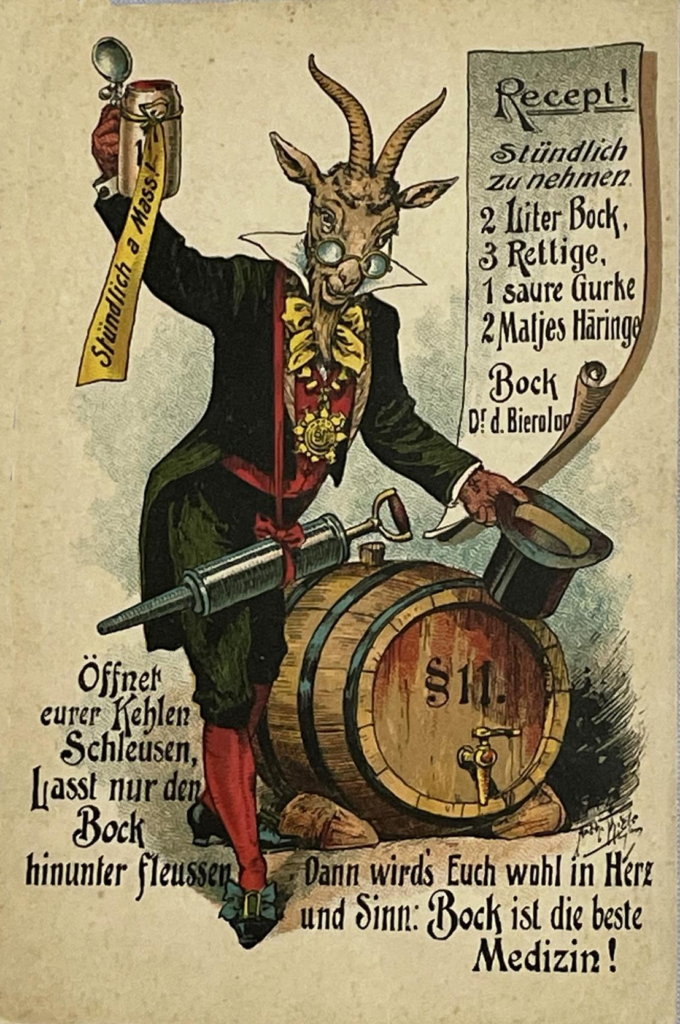
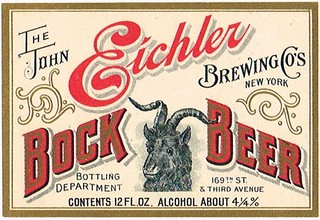
Two years ago I decided to concentrate on Bock ads for awhile. Bock, of course, may have originated in Germany, in the town of Einbeck. Because many 19th century American breweries were founded by German immigrants, they offered a bock at certain times of the year, be it Spring, Easter, Lent, Christmas, or what have you. In a sense they were some of the first seasonal beers. “The style was later adopted in Bavaria by Munich brewers in the 17th century. Due to their Bavarian accent, citizens of Munich pronounced ‘Einbeck’ as ‘ein Bock’ (a billy goat), and thus the beer became known as ‘Bock.’ A goat often appears on bottle labels.” And presumably because they were special releases, many breweries went all out promoting them with beautiful artwork on posters and other advertising. With Spring approaching, there are so many great examples that I’m going to post two a day for a few months.
Tuesday’s first ad is for Tacoma Bock Beer, which was published on March 31, 1917. This one was for the Pacific Brewing & Malting Co., which was founded in 1897 in Tacoma, Washington. They also had a location in San Jose, California that was founded as the Krahenburg & Co., or Fredricksburg Brewery, in 1872, but apparently was bought by the Tacoma brewery who called by their own name from 1933-1951. But the ad below lists San Francisco, California, not just in the ad but San Francisco is printed on the bottle depicted in the ad, as well, so perhaps they had a facility in the city there. This ad has one of my favorite text blurbs from any ad: “Buck up, man! ‘Now is the Winter of our discontent made glorious’ by Spring’s greatest teams — Bock Beer and Baseball.” This ad ran in The Bulletin, also of San Francisco, California.
Two years ago I decided to concentrate on Bock ads for awhile. Bock, of course, may have originated in Germany, in the town of Einbeck. Because many 19th century American breweries were founded by German immigrants, they offered a bock at certain times of the year, be it Spring, Easter, Lent, Christmas, or what have you. In a sense they were some of the first seasonal beers. “The style was later adopted in Bavaria by Munich brewers in the 17th century. Due to their Bavarian accent, citizens of Munich pronounced ‘Einbeck’ as ‘ein Bock’ (a billy goat), and thus the beer became known as ‘Bock.’ A goat often appears on bottle labels.” And presumably because they were special releases, many breweries went all out promoting them with beautiful artwork on posters and other advertising. With Spring approaching, there are so many great examples that I’m going to post two a day for a few months.
Monday’s second ad is for Gunther’s Bock Beer, which was published on March 30, 1934. This one was for the Gunther Brewing Co., of Baltimore, Maryland, which was originally founded in 1900 by George Gunther, or 1881, according to the ad itself. This ad ran in The Evening Sun, also of Baltimore, Maryland.
Today is the birthday of Gilbert Greenall (March 30, 1867-October 24, 1938). He “was the son of Sir Gilbert Greenall, 1st Baronet. The family’s wealth was based on the brewing business established by Greenall’s great-grandfather Thomas Greenall in 1762 (which later became the Greenall’s Group PLC) [and which now is part of the De Vere hotel operator]. His father also had large interests in canals and banking. Greenall succeeded his father in the baronetcy in 1894 and notably served as High Sheriff of Cheshire in 1907, being appointed a deputy lieutenant the same year. In 1927 he was raised to the peerage as Baron Daresbury, of Walton in the County of Chester.
Lord Daresbury married Frances Eliza, daughter of Captain Edward Wynne Griffith, in 1900. He died in October 1938, aged 71, and was succeeded in his titles by his son Edward. Lady Daresbury died in 1953.”
Greenall’s Brewery was founded by Thomas Greenall in 1762. Initially based in St Helens, the company relocated to Warrington in 1787.
It bought the Groves & Whitnall Brewery in Salford in 1961, Shipstone’s Brewery in Nottingham in 1978 and Davenport’s Brewery in Birmingham in 1986. For much of the 20th century, the company traded as Greenall Whitley & Co Limited. The St Helens brewery was demolished in the 1970s to make way for a new shopping centre. The Warrington brewery on the edge of Stockton Heath was bought by Bruntwood, renamed Wilderspool Business Park and is now let to office occupiers.
The company ceased brewing in 1991 to concentrate on running pubs and hotels.
In 1999, the tenanted wing of the Greenall’s operation was sold to the Japanese bank, Nomura for £370 million[7] and the main Greenall’s operation, involving 770 pubs and 69 budget lodges, was sold to Scottish and Newcastle for £1.1billion. Greenalls started to focus its resources on its De Vere and Village Leisure hotel branding at that time.
In February 2005, Greenalls sold The Belfry to The Quinn Group for £186 million.
The Greenall family connection remained as Lord Daresbury, the descendant of the original founder, remained the non-executive chairman. This tie was severed in 2006 when Daresbury stepped down from the post and much of the family’s interest was sold.
Patriarch Thomas Greenall learned the brewing trade from his wife’s family in the 1750s and founded his own brewery in northwestern England at St. Helens in 1762. Brewing was a highly competitive business, with rivals ranging from the lone homebrewer to inns and pubs that brewed their own ales to wholesale brew masters like Greenall. Though the founder dabbled in nail making, coal mining, and yarn spinning throughout the late 18th century, brewing remained the family’s core interest. By the turn of the century, Thomas had brought sons Edward, William, and Peter into the business. The Greenalls began to purchase their own pubs and inns as early as 1800, helping to accelerate a gradual elimination of their competition. In Britain, it was customary for bars owned by breweries to carry only the beers brewed by the parent company. For nearly two centuries, these “tied houses” were a profitable segment of Greenall’s business.
In 1788, Greenall formed a separate partnership with William Orrett and Thomas Lyon to purchase the Saracen’s Head Brewery in nearby Wilderspool. Business was so good that within just three years the three partners undertook a £4,400 expansion of the operation.
The family business interests endured a rapid succession of generations in the first two decades of the 19th century. In 1805, both Thomas Greenall and William Orrett died. By 1817, the passing of William and Peter Greenall left only Edward to operate the growing St. Helens brewery. Just a year later, Thomas Lyon died. His nephew and heir, also Thomas, was interested in the Wilderspool brewery only as an investment. In 1818, 60-year-old Edward assigned eldest son Thomas to manage the family’s half interest in Wilderspool and charged younger son Peter with management of the family brewery at St. Helens.
While Peter pursued politics, eventually winning election to Parliament, Thomas proved to be the brewer of his generation. By this time, the family businesses had grown to the point that the Greenalls served as chairmen, guiding the overall direction of the company but leaving daily management concerns to other top executives. Throughout this period, ownership of the pubs and inns through which Greenall’s porters, sparkling ales, and bitters were dispensed was a key to maintaining a strong competitive position.
And this is Greenall Whitley & Co’s., Wilderspool Brewery, in Warrington in 1887.
And continuing Funding Universe’s history, this portion, entitled “Consolidation of Family Holdings in Mid-19th Century” is where Gilbert comes in and runs the company:
When both Peter and Thomas died in the late 1840s, their younger brother, Parliamentarian Gilbert Greenall, inherited the family’s St. Helens and Wilderspool holdings. Gilbert appointed his nephew, John Whitley, to manage the Wilderspool brewery in 1853 and set out himself to rebuild, retool, and enlarge the St. Helens operation mid-decade.
Longtime silent partner Thomas Lyon died in 1859 and his estate sold his stake in the Wilderspool brewery to Gilbert Greenall, making the Greenall family the sole owners of both the St. Helens and the Wilderspool operations. Gilbert marked the occasion by changing the unified firm’s name to Greenall & Company. Not long thereafter, Greenalls eliminated its last major local competitor by acquiring the Dentons Green Brewery in St. Helens. In 1880, Gilbert (who was made a baronet in 1876 by Queen Victoria) merged the St. Helens and Wilderspool breweries as Greenall Whitley & Company Limited and installed himself as the corporation’s first chairman. Though operating under the same corporate umbrella, the two houses retained their separate identities and brands. By 1882, Greenall’s annual sales volume totaled nearly 90,000 barrels of beer and the company owned about 200 pubs.
Sir Gilbert guided the expansion and modernization of the Wilderspool brewery as well as a flurry of acquisitions in the waning years of the 19th century. His four-year, £6,750 modernization program brought in state-of-the-art brewing and bottling equipment, upgraded the company’s railway access, and expanded the operation’s office space. Acquisitions included the Halewood, Richardson’s, and Spring breweries, bringing with them more than two dozen pubs. A rapid series of untimely deaths accelerated the family’s succession plans when in the space of just two years both Sir Gilbert and his second-in-command, Peter Whitley, died, propelling the chairman’s son, also Gilbert, into the leadership of two growing breweries at the young age of 27.
The new chairman suffered a trial by fire in the first two decades of the 20th century. He began the transition from horse-drawn transportation to gasoline-driven vehicles as early as 1908, adopting some of the first vehicles of their type. World War I brought extreme deprivation to the United Kingdom. Rationing of all foods–including brewing ingredients–and manpower shortages made this period a difficult one for Greenall Whitley, but the company emerged from the conflict unscathed.
The Greenall, Whitley & Co. Ltd. Brewery, in St. Helens, in 1902.
Greenall Whitley resumed its acquisition strategy in the period between the World Wars, purchasing nine pubs in 1919 alone. Four years later, the brewery diversified into wine and liquors through the acquisition of Gilbert & John Greenall Limited, a distillery owned by another branch of the family. Though the business remained concentrated in the northwest region of Britain, acquisitions gave Greenall Whitley a growing share of the area’s breweries and pubs in the early 1930s. The purchase of three operations in as many years added nearly 90 ale houses and inns to the company roster.
After four decades as chairman, Lord Gilbert Greenall (who had been given the hereditary title First Baron Daresbury of Walton by King George V in 1927) died in 1938, passing leadership of Greenall Whitley to his son Edward. In his nine years of service to the company, Edward made a special effort to restore and preserve the company’s historic pubs, as well as maintain high standards of quality in the breweries.
Two years ago I decided to concentrate on Bock ads for awhile. Bock, of course, may have originated in Germany, in the town of Einbeck. Because many 19th century American breweries were founded by German immigrants, they offered a bock at certain times of the year, be it Spring, Easter, Lent, Christmas, or what have you. In a sense they were some of the first seasonal beers. “The style was later adopted in Bavaria by Munich brewers in the 17th century. Due to their Bavarian accent, citizens of Munich pronounced ‘Einbeck’ as ‘ein Bock’ (a billy goat), and thus the beer became known as ‘Bock.’ A goat often appears on bottle labels.” And presumably because they were special releases, many breweries went all out promoting them with beautiful artwork on posters and other advertising. With Spring approaching, there are so many great examples that I’m going to post two a day for a few months.
Monday’s first ad is for Ajax Bock Beer, which was published on March 30, 1939. This one was for the Ajax Brewing Corp., of Indianapolis, Indiana, which was originally founded in 1905 as the Capitol City Brewing Co., but used Ajax as its name for its last three years in business, from 1938-1941. This ad ran in The Indianapolis Star, also of Indianapolis, Indiana.
Two years ago I decided to concentrate on Bock ads for awhile. Bock, of course, may have originated in Germany, in the town of Einbeck. Because many 19th century American breweries were founded by German immigrants, they offered a bock at certain times of the year, be it Spring, Easter, Lent, Christmas, or what have you. In a sense they were some of the first seasonal beers. “The style was later adopted in Bavaria by Munich brewers in the 17th century. Due to their Bavarian accent, citizens of Munich pronounced ‘Einbeck’ as ‘ein Bock’ (a billy goat), and thus the beer became known as ‘Bock.’ A goat often appears on bottle labels.” And presumably because they were special releases, many breweries went all out promoting them with beautiful artwork on posters and other advertising. With Spring approaching, there are so many great examples that I’m going to post two a day for a few months.
Sunday’s second ad is for Maier’s Select Bock Beer, which was published on March 29, 1913. This one was for the Maier Brewing Co., of Los Angeles, California, which was originally founded in 1874 by Wattelet & Vogel, as, curiously, the Philadelphia Brewery, though Maier became involved at least as early as 1882. This ad ran in The Los Angeles Evening Post Record, also of Los Angeles, California.
Today is the birthday of William Alton Carter III, better known as Billy Carter (March 29, 1937–September 25, 1988). He “was an American farmer, businessman, and politician. Carter promoted Billy Beer, and was a candidate for Mayor of Plains, Georgia. He was also the younger brother of former Georgia Governor and U.S. President Jimmy Carter,” who signed into law the bill re-legalizing homebrewing.
He was a proud redneck, and capitalized on his image as a beer-drinking roughneck bumpkin to sell Billy Beer.
Billy Beer was a beer first made in the United States in July 1977, by the Falls City Brewing Company. It was promoted by Billy Carter, whose older brother Jimmy was the incumbent President of the United States. In October 1978, Falls City announced that it was closing its doors after less than a year of Carter’s promotion. The beer was produced by Cold Spring Brewing, West End Brewing, and Pearl Brewing Company.
Each can from the four breweries that produced it were slightly different. And you can see those differences in the cans below.
“After Billy Beer ceased production, advertisements appeared in newspapers offering to sell Billy Beer cans for several hundred to several thousands of dollars each, attempting to profit from their perceived rarity. However, since the cans were actually produced in the millions, the real value of a can ranged from 50 cents to one dollar in 1981.”
circa 1975: A shopkeeper selling ‘Billy Carter Beer’. (Photo by Peter Keegan.)”
“Billy Beer was also featured on an episode of the reality series Auction Kings, where an appraiser deemed a case of unopened Billy Beer to be worthless; however, at the featured auction, the case was sold for $100.”
Truly the standard by which all other presidential sibling’s antics are judged, Billy burst onto the national scene as the boisterous, hard-drinking counterpoint to his pious, reserved brother Jimmy. Billy’s early antics were amusing and fairly innocuous: he endorsed the legendarily terrible Billy Beer in an effort to make a little cash off of his hard-living image, and he made quips like, “My mother went into the Peace Corps when she was sixty-eight. My one sister is a motorcycle freak, my other sister is a Holy Roller evangelist and my brother is running for president. I’m the only sane one in the family.” While he worked hard to convey a roughneck bumpkin image to the press, Billy’s confidantes claimed that he was in fact well-read and an able businessman who used his Southern bona fides to help his older brother’s political cause. On the other hand, Billy’s drinking turned from amusing to tragic as his fame grew.
In 1979, he had to go into rehab to curb his drinking. Around the same time he nearly lost his Georgia home to the IRS for failing to pay a six-figure federal income tax bill for 1978.
The real capper, though, came when Billy began consorting with Libya at a time when relations between the North African nation and the U.S. were starting to strain. In 1978 he made a trip to Libya with a group of Georgia businessmen who were interested in expanding trade with the country; Billy then hosted a Libyan delegation in Atlanta. When questioned about his dealings, Billy responded, “The only thing I can say is there is a hell of a lot more Arabians than there is Jews,” a public-relations nightmare for which he later apologized. The damage got worse in 1980 when Billy registered as an agent of the Libyan government and received a $220,000 loan from the Libyans for helping facilitate oil sales. This transaction led to accusations of influence peddling and a Congressional investigation. In short, it was enough to make Jimmy Carter long for the days when his brother’s antics only included such little quirks as urinating in public in front of a group of reporters and dignitaries.
Mental Floss has an article entitled A Brief History of Billy Beer, which is actually a reasonably thorough account.
Folk Figure, Businessman. Known for his outlandish public behavior, he was a younger brother of former Georgia Governor and US President Jimmy Carter. After graduating from high school, he attended Emory University in Atlanta, Georgia but did not complete a degree. He then served four years in the US Marine Corps and after his discharge, he returned to Plains, Georgia to work with his brother in the family business of growing peanuts. In 1972 he purchased a gas and service station in Plains and operated it for most of the 1970s. In 1976 he attempted to enter the political ring when he ran for mayor of Plains but lost the election. In 1977 he endorsed Billy Beer, capitalizing upon his colorful image as a beer-drinking Southern “good ol’ boy” that developed in the press when his brother ran for US President. After Billy Beer failed, he was forced to sell his house to settle back taxes owed to the Internal Revenue Service. In late 1978 and early 1979, he visited Libya three times with a contingent from Georgia, eventually registering as a foreign agent of the Libyan government and received a $220,000 loan. This led to a US Senate hearing on alleged influence peddling which the press named “Billygate.” In the autumn of 1987, he was diagnosed with pancreatic cancer, and after receiving unsuccessful treatments for the disease, he died the following year at the age of 51. In 1999 his son, William “Buddy” Carter, published a biography of his father titled “Billy Carter: A Journey Through the Shadows.”
The hit television show The Simpsons featured Homer drinking a can of Billy Beer in the 1997 episode “Lisa the Skeptic”; after Bart tells him that the skeleton he is trying to hide is probably old enough already, he counters Bart’s remark by introducing his Billy Beer stating that people said the same thing about the beer. After he drinks the beer, he says “We elected the wrong Carter”. Also in the 1992 episode “The Otto Show”, Homer excitedly finds a can of Billy Beer in the pocket of his old “concert jacket”, and drinks it.
Two years ago I decided to concentrate on Bock ads for awhile. Bock, of course, may have originated in Germany, in the town of Einbeck. Because many 19th century American breweries were founded by German immigrants, they offered a bock at certain times of the year, be it Spring, Easter, Lent, Christmas, or what have you. In a sense they were some of the first seasonal beers. “The style was later adopted in Bavaria by Munich brewers in the 17th century. Due to their Bavarian accent, citizens of Munich pronounced ‘Einbeck’ as ‘ein Bock’ (a billy goat), and thus the beer became known as ‘Bock.’ A goat often appears on bottle labels.” And presumably because they were special releases, many breweries went all out promoting them with beautiful artwork on posters and other advertising. With Spring approaching, there are so many great examples that I’m going to post two a day for a few months.
Sunday’s first ad is for Pittsburgh Bock Beer, which was published on March 29, 1910. This one was for the Pittsburgh Brewing Co., of Pittsburgh, Pennsylvania and was founded by Edward Frauenheim in 1861. This ad ran in The Pittsburgh Press, also of Pittsburgh, Pennsylvania.
Today is the birthday of Michael Piel (March 29, 1849-June 12, 1915) who along with his brothers Gottfried and Wilhelm Piel founded Piel Bros. Beer in New York, more commonly known as Piels Beer in 1883. Michael Piel was the brewer among his brothers, and the oldest, as well.
Michel Piel was born on the 29th of March, 1849 in Dussendorf, Germany. He immigrated to the United States in 1883 with his wife Marie and son William. They settled first in Brooklyn, then moved to Manhattan. They had 11 children: William, Henry, Otto, Michael Jr, Louisa Gertrude, Rudolph, Agnes, Oswald, Roland and Albert was died at 2yrs and Maria who also died at 2 yrs. Michael with his brothers Gottfried and Wilhelm founded Piels Beer in 1883 and located the brewery in Brooklyn, New York at 315 Liberty Avenue in the East New York section of Brooklyn. On September 20, 1973, Piels Brothers closed down after 90 years in operation. Piels brand of beer was [licensed, not sold as many sources report] to Pabst Brewing Company, which continues to market the Piels on a limited basis in New York and the New England States.
And here’s a fuller biography from the Cyclopedia of American Biography:
PIEL, Michael, brewer, b. in Stoffeln, Düsseldorf am Rhein, Germany, 29 March, 1849; d. at Lake Parlin, Me., 12 June, 1915, son of Heinrich Hubert and Gertrud (Gispé) Piel. He was descended from an old Rhenish stock of farmers of singular attachment, whose members successively aimed to expand their patrimony of tillable lands. To the original and extensive Stoffeln Farm his father and uncles added the great Mörsenbroich-Düsseldorf tillages, which now border the residential section of the Lower Rhenish financial capitol. Michael was born in an environment of industry, thrift, and enterprise. His early youth was devoted to the farm at Mörsenbroich-Düsseldorf. At the age of eighteen, he began his military service in the Kaiser Alexander II Regiment of the Imperial Guards at Berlin. The Franco-Prussian War of 1870-71 broke out just as he had completed this duty. As he was not, therefore, subject to the call of the Fatherland, his family sought to hold him back. He promptly volunteered, however, and served throughout the war, participating with his regiment in several engagements, the battle of Gravelotte and the siege of Paris. The impressions on the country boy of his years of service at Berlin, which had already begun to modernize its industries, lingered and served constantly to stimulate his natural gifts of invention. While for several years after the war, true to the family tradition, he worked at Mörsenbroich with his elder brother, he continually sought expression for his native talents. The arduous discipline of farm-labor from sun-up to sun-down, — valuable preparation though it was for the early trials of his later life career — could not check his inventive spirit. Gradually, making the most of his opportunities on the farm, his successes won him away from the family calling. In the creation of new rose-cultures and, particularly, in the perfection of a new and highly productive breed of bees, for both of which, after but two years of experimentation, he was voted the government’s highest awards, he found the encouragement he needed for the growing determination to carve out his own future. It was, however, his invention of a centrifuge for the extraction of honey, awarded special governmental recognition and immediately adopted into general use, that decided him. As the protégé of a machine manufacturer, he visited the industrial centers of the progressive Rhineland and soon chose the ancient German industry of brewing as the one offering the best opportunity for his talent of applying machinery to natural processes. He found a fertile field. The new science of modern refrigeration had just come into practice, and the suggestions which it offered in his chosen field fascinated him. He began his novitiate in the old-style subterranean cellars at the breweries of Dortmund, Westphalia. In 1883, his apprenticeship ended, he welcomed the call of a younger brother, Gottfried, then already established as an export merchant in New York, to found with him in East New York, at its present site, a typically German brewery, to be conceived on modern and scientific principles. The brothers, as a partnership, secured title to a small old-style brewing plant, then in disuse, and found the problem to convert it to newer ideas a fight against tremendous odds. At the outset, Michael was its brewer, superintendent, and engineer, his accumulated experience fitting him admirably for the multiplicity of his duties. In the early days of the converted plant, Michael found that his hours were from four o’clock in the morning till ten at night. At last, in 1888, the ability of his brother as the financial head of the firm and the excellence of his own products assured success and the long struggle was won. The country which had offered him his opportunity for success he gladly and promptly adopted as his own, being admitted to citizenship in 1888. The enterprise prospered and the partnership became a corporation in 1898, with an established business of national reputation. The popular demand for the products of the plant, — then a novelty in the American brewing industry: a typical German beer, — necessitated enlarged facilities.
Michael Piel in 1900.
A new era began. The acquired plant was demolished and a new plant, offering Michael the long-sought opportunity for the application of his talents, was erected. Subterranean cellars made way for a building of cellars above surface, under modern refrigeration. The plant, completed, represented a new achievement in brewing construction; it continues to serve as a model of the German-type plant. New principles were easily adopted by him and many ideas of his own creation were applied. Continued success justified this enlargement of facilities, and twice more during his lifetime the plant was expanded in size and facilities. The brewery’s reputation spread abroad, and for years brought brewing academicians, experts, and scientists from Europe and South America to note his work. Many of his ideas were copied abroad. The plant enjoyed the distinction, as the result of Michael’s constant scientific advances in his field, of the continued exchange with European authorities of German brewing ideas, a unique achievement for an American manufacturer. He retired from active management as the technical head of the corporation in 1900, devoting his last years to the acquisition of German paintings of hunting scenes. He was an enthusiastic sportsman, and was particularly devoted to hunting, fishing, and yachting. In 1901 he acquired the Parlin Farm, situated in a basin of the Maine Boundary Mountains, on the Quebec-Portland Highway, on the line of Arnold’s Retreat. It is recognized as one of the most attractive residences of the State. He married 19 March, 1882, Maria Gertrud, daughter of Josef and Agnes (Holz) Herrmann, at Bochum, Westphalia. His widow and nine children survived him.
Two years ago I decided to concentrate on Bock ads for awhile. Bock, of course, may have originated in Germany, in the town of Einbeck. Because many 19th century American breweries were founded by German immigrants, they offered a bock at certain times of the year, be it Spring, Easter, Lent, Christmas, or what have you. In a sense they were some of the first seasonal beers. “The style was later adopted in Bavaria by Munich brewers in the 17th century. Due to their Bavarian accent, citizens of Munich pronounced ‘Einbeck’ as ‘ein Bock’ (a billy goat), and thus the beer became known as ‘Bock.’ A goat often appears on bottle labels.” And presumably because they were special releases, many breweries went all out promoting them with beautiful artwork on posters and other advertising. With Spring approaching, there are so many great examples that I’m going to post two a day for a few months.
Saturday’s second ad is for Jax Bock Beer, which was published on March 28, 1937. This ad was for the Jax Brewing Co. of Jacksonville, Florida, which was originally founded in 1913 as the Jacksonville Brewing Co. This ad ran in The Florence Morning News, of Florence, South Carolina.