Brookston Beer Bulletin

Jay R. Brooks on Beer

  • Home
  • About
  • Editorial
  • Birthdays
  • Art & Beer

Socialize

  • Dribbble
  • Email
  • Facebook
  • Flickr
  • GitHub
  • Instagram
  • LinkedIn
  • Pinterest
  • RSS
  • Twitter
  • YouTube

Powered by Genesis

Beer In Ads #4959: Bock Beer! Bock! To-Day And Following Days

May 4, 2025 By Jay Brooks

Last year I decided to concentrate on Bock ads. Bock, of course, may have originated in Germany, in the town of Einbeck. Because many 19th century American breweries were founded by German immigrants, they offered a bock at certain times of the year, be it Spring, Easter, Lent, Christmas, or what have you. In a sense they were some of the first seasonal beers. “The style was later adopted in Bavaria by Munich brewers in the 17th century. Due to their Bavarian accent, citizens of Munich pronounced ‘Einbeck’ as ‘ein Bock’ (a billy goat), and thus the beer became known as ‘Bock.’ A goat often appears on bottle labels.” And presumably because they were special releases, many breweries went all out promoting them with beautiful artwork on posters and other advertising.

Sunday’s ad is for J. Ruppert’s Bock Beer and was published May 4, 1884. The brewery was the Jacob Ruppert Brewery of New York, New York, which was originally founded in 1867. This ad ran in The Sun, also of New York, New York.

Filed Under: Art & Beer, Beers, Breweries, Just For Fun Tagged With: Advertising, Bock, History, New York

Historic Beer Birthday: Philip Jacob Ebling Jr.

April 29, 2025 By Jay Brooks

ebling
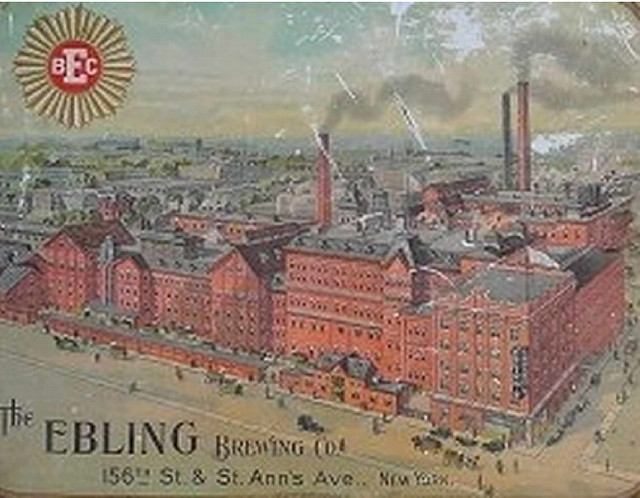
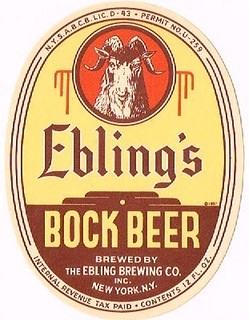
Today is the birthday of Philip Jacob Ebling Jr. (April 29, 1861-September 26, 1896). He was the son of Philip Ebling, who along with his brother William Ebling founded the Ebling Brewing Co., which was known by several different names during its life from 1868 to 1950, including the Philip Ebling & Bro. Wm., Aurora Park Brewery, Ph. & Wm. Ebling Brewing Co. and Ebling Brewing Co., which was its name almost the entirety of the 20th century, both before and after prohibition.

philip-ebling-jr
Here’s a short biography from Find a Grave:

Philip Jacob Ebling, son of Philip and Catherine (Baum)Ebling, was president of the Ebling Brewery when his father Philip Ebling died in 1895. He Then directed all of its affairs until death called him in 1896. Philip Jr. was a member of Wieland Lodge No. 714, Free and Accepted Masons; he was also a member of the Schnorer Club and the K.O.S. Bowling Club. Philip Jacob Ebling married at Union Hill, New Jersey, April 12, 1894, Amanda Anna Peter, born March 01, 1872, daughter of William and Caroline (Aeppli) (Ohlenschlager) Peter. He had one child her name was Priscilla Katherine Philipine Ebling.

ebling-brewery-postcard

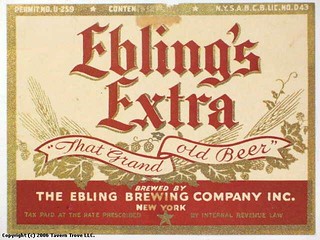
The brewery apparently aged some of their beer in Bronx caves, and for some of their beers, like Special Brew, whose label boasts that the beer was “aged in natural rock caves.” Which sounds crazy, but in 2009, road construction crews in the Melrose section of the Bronx found the old caves, which was detailed by Edible Geography in Bronx Beer Caves.

1938-New-York-city-61st-street-4-Ebling-Brewery
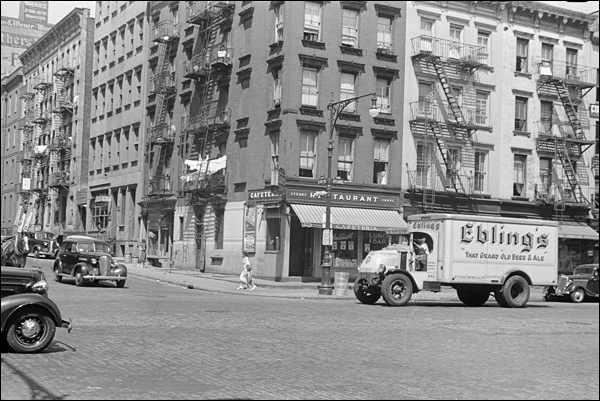
An Ebling beer truck on 61st Street in New York in 1938.

Ebling-Brewing-Co-1908-Calendar-Signs-Pre-Pro-Ebling-Brewing-Co--Pre-Prohibition-_83627-1
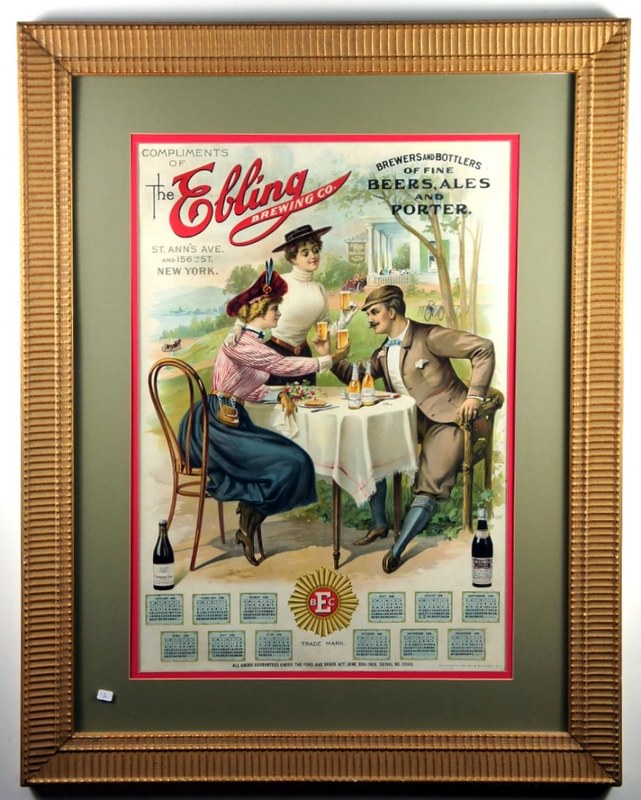
A 1908 calendar from the brewery.

Eblings-Extra-Beer--Labels-Ebling-Brewing
Eblings-Bock-Beer-Labels-Ebling-Brewing

Filed Under: Birthdays, Just For Fun Tagged With: History, New York

Historic Beer Birthday: Henry Hoerl

April 26, 2025 By Jay Brooks

blatz

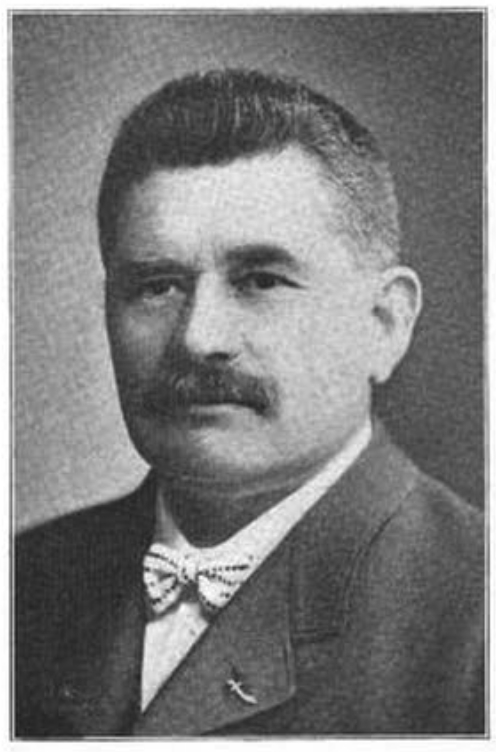
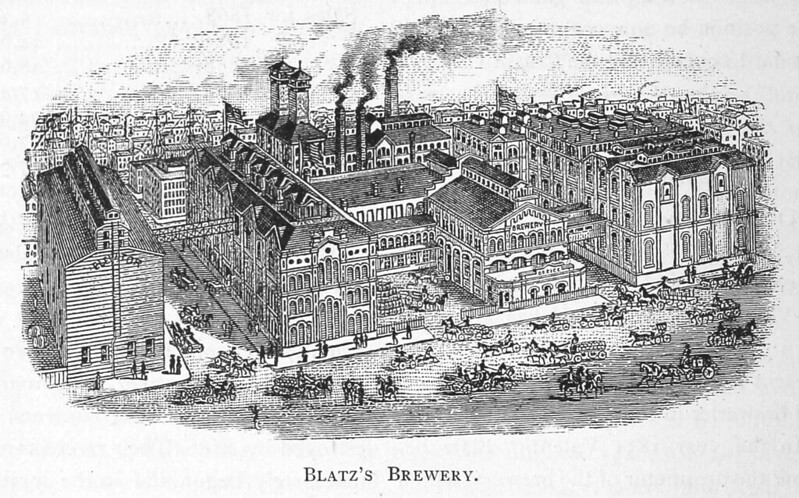
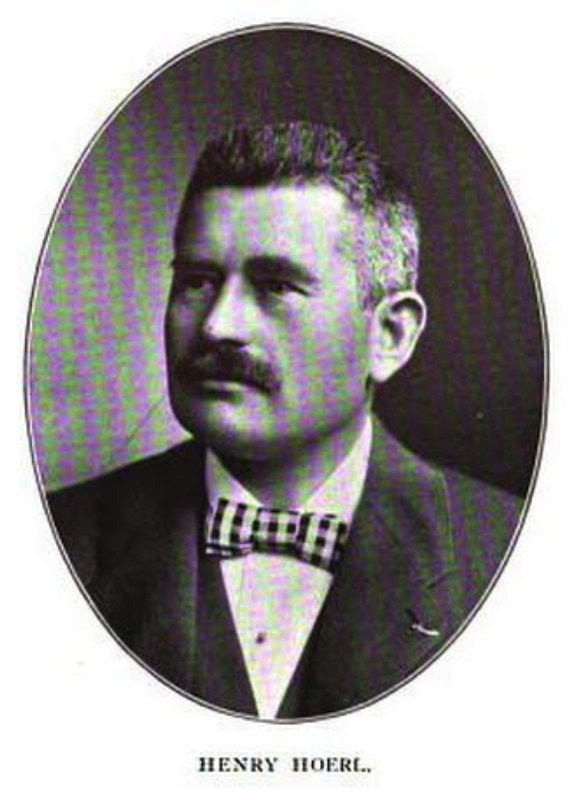
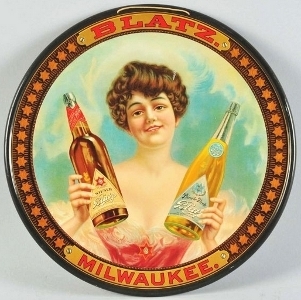
Today is the birthday of Henry Hoerl (April 26, 1854-November 14, 1917). He was born in Altdorf, in Bavaria, Germany, the son of a German brewery owner, where he learned the trade. When he was 24, he came to the U.S. and found employment with a number of breweries throughout New York. In 1892, he moved to Milwaukee, Wisconsin to become the Superintendent of the Val. Blatz Brewing Co. a position he held for the rest of his life.

Henry-Hoerl

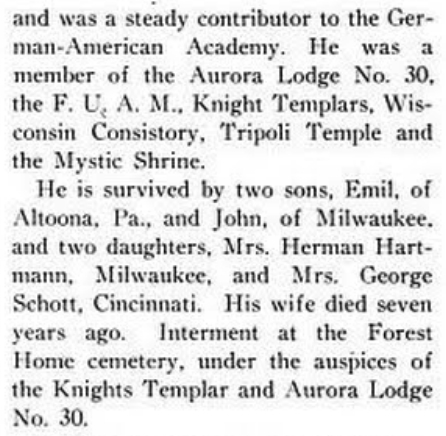
Here is his obituary from the American Brewers’ Review:

Henry-Hoerl-obit-1
Henry-Hoerl-obit-2
Henry-Hoerl-obit-3
BlatzBrewery1886

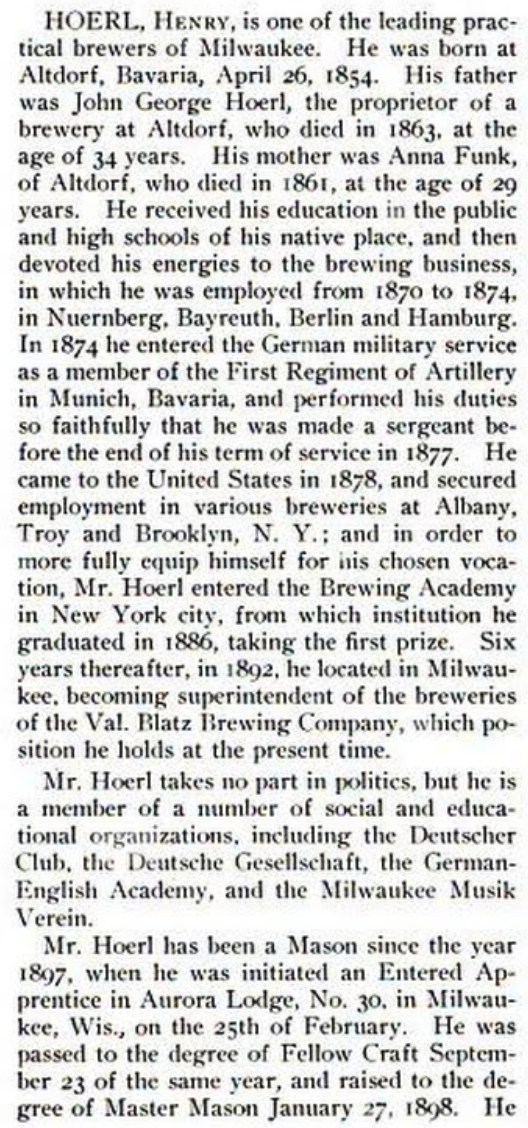
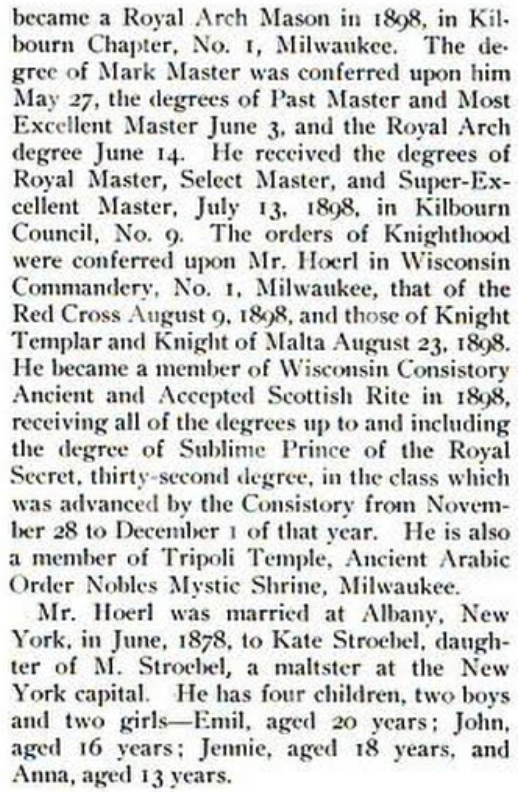
This biography of Henry Hoerl is his entry from “Freemasonry in Wisconsin: Biographical Sketches of Men who Have Been Prominent in the Various Masonic Bodies in the State,” published in 1900.

Henry-Hoerl-bio-1
Henry-Hoerl-bio-2
Henry-Hoerl-oval

And this biography is from “Memoirs of Milwaukee County: from the earliest historical times down to the present, including a genealogical and biographical record of representative families in Milwaukee County,” published by the Madison, Wisconsin Western Historical Society in 1909.

Henry Hoerl, for many years a prominent figure in the brewing circles of Milwaukee, has achieved his prominence through untiring energetic effort. He is of German descent and was born at Altdorf, Bavaria, Germany, April 26, 1854, the son of George and Anna (Funck) Hoerl, natives of the famous old city of Nuremberg. Henry, the subject of this review, received his education in the elementary schools of his native city and then took a course in the high school. After finishing his studies he was employed in breweries in Germany for several years. He served with distinction in the German army as sergeant of artillery of a Munich regiment. Ambitious to rise in the world and recognizing the greater possibilities and advantages offered in this country to young men of energy and determination, he left his home in 1878, when twenty-four years of age, and set out for the new world, entering upon a career in the course of which he encountered many disappointments, to ultimately reap the reward of honest efforts in abundant prosperity. Soon after landing in New York he found employment in the breweries there and took the brewmaster’s course in the New York Brewing Academy, winning the first prize in 1886. This brought him into prominence among the brewing men of the city and he secured an excellent position. In 1892 he moved to Milwaukee to become superintendent of the Valentine Blatz Brewing Company and has made their beer famous. On June 4, 1878, Mr. Hoerl married Katherine, the daughter of Michael and Katherine (Neuner) Strobel, of Albany, N. Y. Four children have come to bless this union: Emil, who is the proprietor of the Germania brewery of Altoona, Pa. ; Jenny, John M., who resides in Milwaukee, and Annie, the wife of George Schott, who runs a cooperage works in Cincinnati, Ohio. Mr. and Mrs. Hoerl are communicants of the Lutheran church, to which their ancestors have belonged for many generations. Mr. Hoerl is affiliated with the Masonic Order, having taken the Bine Lodge, the Chapter, Knights Templar and Consistory degrees, and he is also a member of the Mystic Shrine. Hoerl is a popular member of the Deutscher Club, the Millioki Club, the Milwaukee Music Vercin and the “West Side Turn Verein.”

blatz-tray

And finally, I came upon this little oddity via eBay. It’s an invitation sent to Hoerl at the Val. Blatz Brewing Co. in Milwaukee, Wisconsin.

Henry-Hoerl-invitation

The invitation was to attend a brewmaster’s convention of the United Brewer’s Association of the City of New York and the Surrounding Area, September 26-28, 1897. It doesn’t look like he mailed it back, but he may have been thinking about it, as he marked it for 2 train tickets to be reserved to get there.

Henry-Hoerl-invitation-bk

Filed Under: Birthdays, Just For Fun Tagged With: Germany, History, New York, Wisconsin

Beer Birthday: Jeremy Cowan

April 24, 2025 By Jay Brooks

hebrew

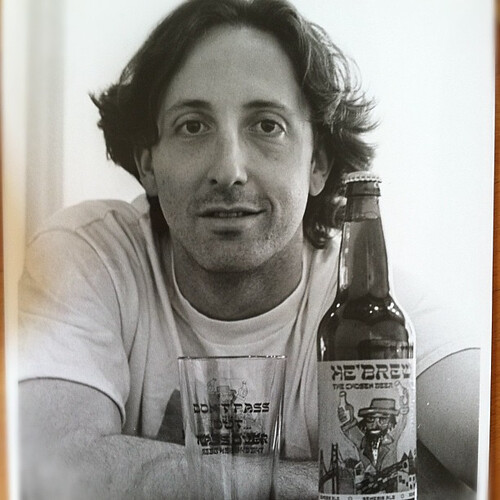
Today is Jeremy Cowan’s 56th birthday. Jeremy owned Shmaltz Brewing, makers of He’Brew. Jeremy is a good friend and we’ve known one another since he first pitched He’Brew to me at BevMo many years ago (which is detailed in Jeremy’s memoir Craft Beer Bar Mitzvah). Jeremy used to split his time between San Francisco and New York, and so I would often see him at beer events somewhat frequently, but less so after he built a brick and mortar brewery in upstate New York. Although that’s now been sold, he’s also a co-owner of Alphabet City Brewing in New York, which keeps him busy, and I haven’t seen him in a while. Join me in wishing Jeremy a very happy birthday.

Jeremy and me at the Craft Brewers Conference in Minneapolis in 2022.
citybeer-xmas07-1
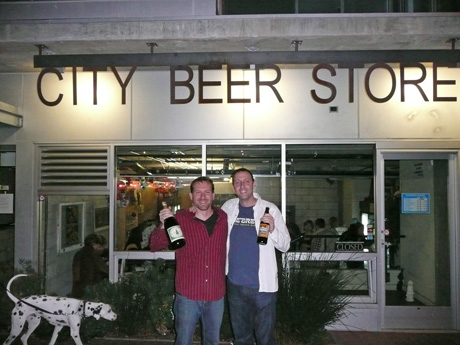
Jeremy, with City Beer Store owner Craig Wathen at their original location.
he-tor-1
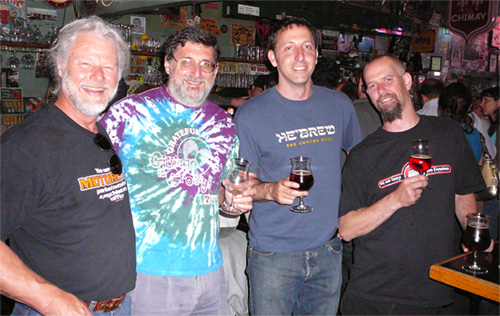
A few years ago at the Toronado for a He’Brew release party. From left: Alec Moss, recently retired from Half Moon Bay Brewing, Pete Slosberg, Jeremy, and Rodger Davis, when he was still with Drake’s Brewing.
gabf06-wed-08
Jeremy with Rich Norgrove, with Bear Republic, at GABF in 2006.
bistro-dipa09-08
Me and Jeremy at the Bistro Double IPA Fest in 2009.
Old-Skool-Jeremy
Jeremy shortly after he launched the Shmaltz beers, before all the grey hairs set in. (Thanks to the anonymous source that sent me this photo.)
Ron Silberstein, Rich Norgrove and Jeremy at the Toronado.
Jesse Cutler, Jeremy and two original He’Brew employees along with Zak at Admiral Malting (photo courtesy of Jeremy).

Filed Under: Birthdays, Just For Fun Tagged With: California, New York, San Francisco

Historic Beer Birthday: Anton Schwartz

April 23, 2025 By Jay Brooks

bernheimer-schwartz-color
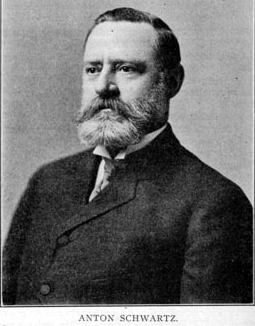
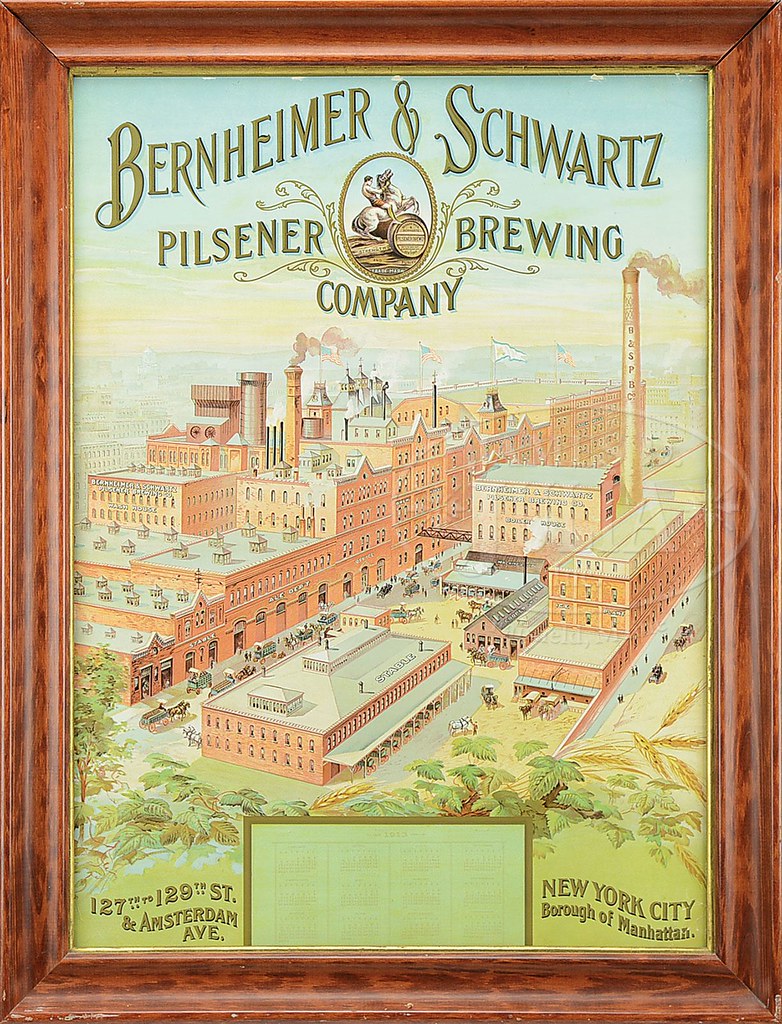
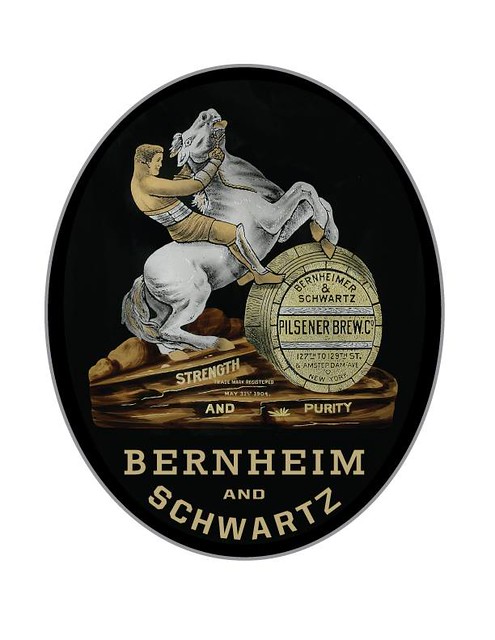
Today is the birthday of Anton Schwartz (April 23, 1853-November 6, 1910). He was a German-American brewer who after college began working for breweries when he was only 17 and built a reputation as a great brewmaster. In 1903, he bought a brewery with two partners, brothers Simon E. and Max E. Bernheimer, and they opened the Bernheimer & Schwartz Pilsener Brewing Company.

anton-schwartz
Here’s his obituary from Find a Grave:

German brewer, president of Bernheimer & Schwartz Pilsener Brewing Company located at Amsterdam Avenue and West 128th Street in Manhattan, New York County, New York during the late 19th and early 20th Centuries, the heyday of German-American breweries in New York City.

Schwartz graduated from New York City College and soon therafter, in 1870, he was engaged by August Schmid and his Lion Brewery in Manhattan and by 1975 became its Superintendent. By 1903, after gaining a national reputation as a brewmaster, he purchased the John F. Betz Manhattan Brewery with brothers, Simon E. and Max E. Bernheimer. After their deaths, he became sole owner of the brewery.

Anton married Emma Kleiner, daughter of a Cincinnati brewer and sister of Princess Josephine del Drago (formerly Josephine Kleiner Schmid, widow of August Schmid), owner of the Lion Brewery of Manhattan.

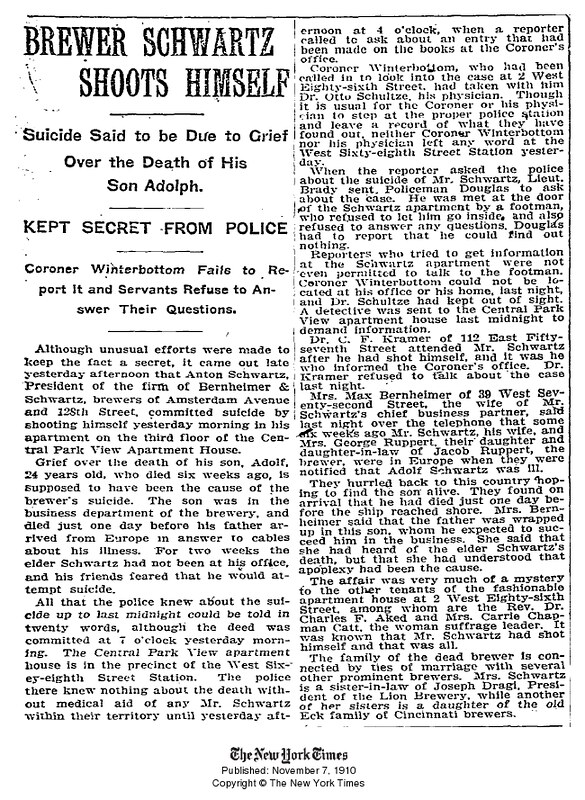
Anton Schwartz died of a self-inflicted gunshot wound at 7 a.m. that morning in the family’s third floor apartment located No. 2 West 86th Street in Manhattan (the Central Park View Apartments) over the death of his only son, Adolf, aged 24, who died of spinal meningitis six weeks earlier while he and his wife and daughter were on holiday in Germany. All three learned of his sudden illness and immediately set sail back to New York City, only to arrive less than 24 hours after his death. Adolph was the only son and was being groomed to take over the family brewing business. The death of Adolph threw Schwartz into a melancholia that manifested in his failure to attend to the brewery’s business and, near the end, reclusiveness.

The family is not without similar tragedy as ten years earlier, in 1900, Anton’s mother-in-law, Mary (Mrs. Meinrad) Kleiner, committed suicide by inhaling gas from her bedroom heater by removing the tubing and placing it in her mouth.

Schwartz’s paternal grandfather was Gen. Anton Carl Schwartz, lieutenant in the German Army, who was born in Carlsruhe, Baden. He came to America in 1848 and lived in Springfield, Illinois and was a close friend of Abraham Lincoln. He traveled with Fremont on his expeditions through California, Nicaragua and Central America, suveying the first Nicaraguan Canal. He served as colonel in the Civil War, organizaing Gumbart’s Battery, Second Illinois Light Artillery. Hw was wounded in Shiloh and died a few years later of complications therefrom.

Surviving Anton Schwartz was his wife, Emma Kleiner Schwartz, and his daughter, Emma Josephine Schwartz Ruppert (Mrs. George Ehret Ruppert).

bernheimer-schwartz-framed

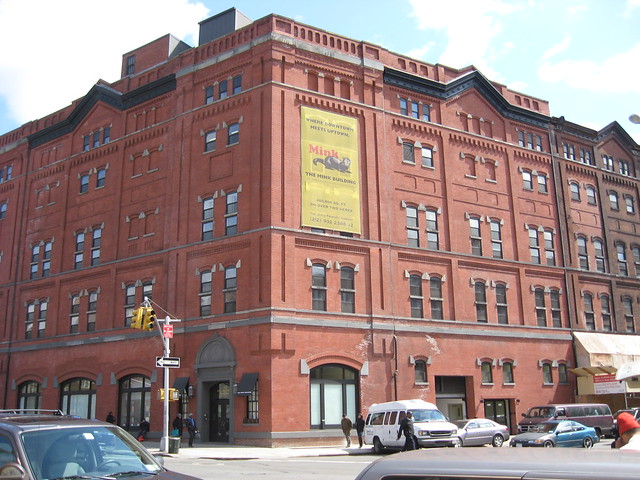
Curiously, the building where they built their brewery had originally been built by Yuengling Brewery in 1876. According to Wikipedia, “The Yuengling Brewery opened in this New York City location in 1876, when there was plenty of land to use in this part of Manhattan. The brewery included a stable with room for one hundred horses, a swimming pool, and large lofts for entertaining. David Yuengling’s Brewery enjoyed initial success, and an 1885 article in the New York Times gave the plant a rave review. It was not long, however, before Yuengling’s management decided to consolidate the company in Pennsylvania and sold the Manhattanville site to the Bernheimer & Schwartz Pilsener Brewing Company in 1903.” It fell into disuse during Prohibition, and by the 1940s the buildings used to store furs, and it became known as the Mink Building, the name it still goes by today.

Yuengling-Brewing-Complex

Here’s his obituary from the New York Times:

NYT-schwartz-shoots-himself
bernheimer-schwartz-logo

Filed Under: Birthdays, Just For Fun Tagged With: New York

Historic Beer Birthday: Richard Katzenmayer

April 15, 2025 By Jay Brooks

usba
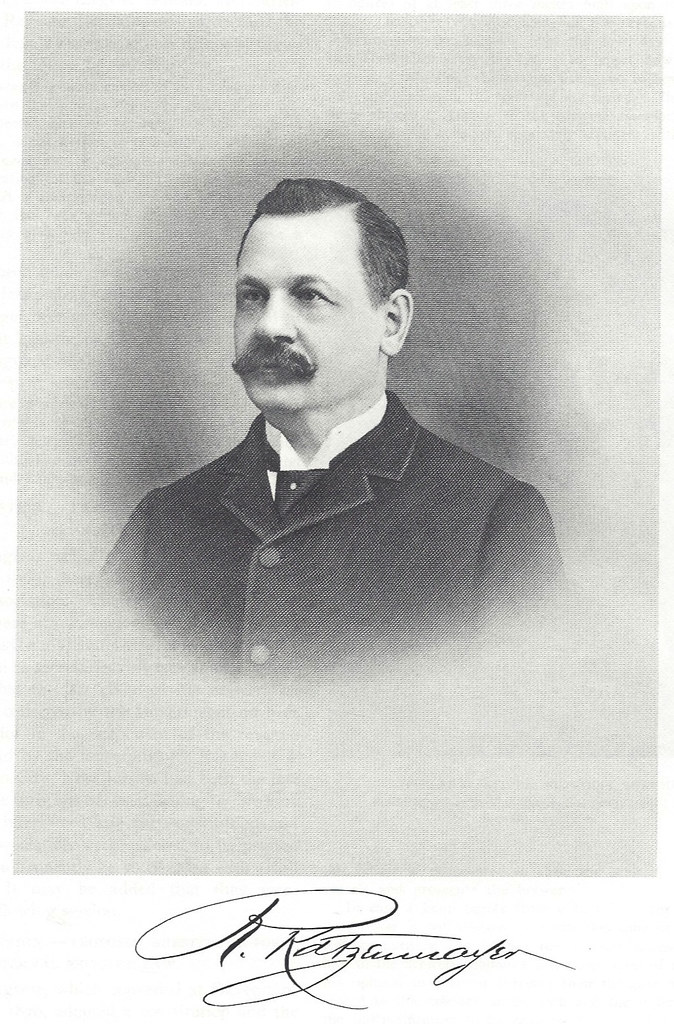
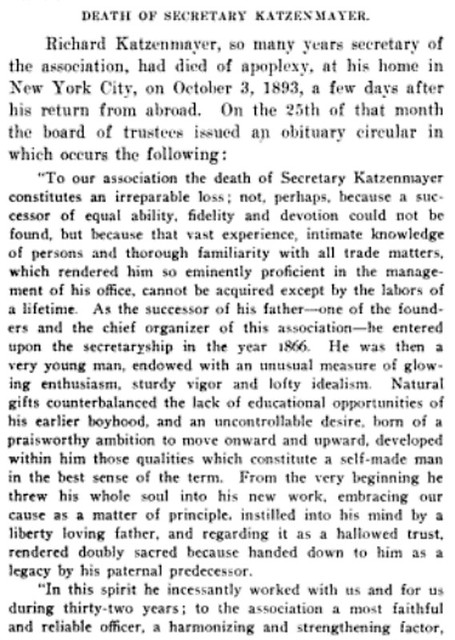
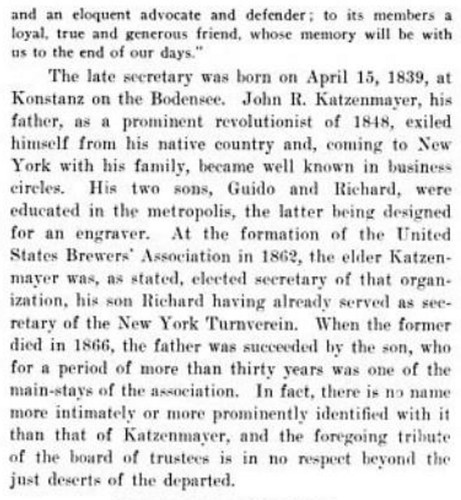
Today is the birthday of Richard Katzenmayer (April 15, 1839-October 3, 1893). He came with his family to America from the Bodensee, the European lake that borders Germany, Austria and Switzerland. They settled in New York City, and his father, John Katzenmayer, was a bookkeeper for a brewery there, A. Schmid & Co. John Katzenmayer was a founding member of the United States Brewers Association in 1862, and was its first secretary, a position he held until his death in 1866. When Richard’s father passed away, he became the secretary of the USBA and continued in that role for over thirty years until his own death. Although not a brewer by trade, he was a fixture of the association in its early days and helped shape the future of the brewing industry in the late 19th century.

Richard-Katzenmayer

Considering his prominent role in the USBA, surprisingly there isn’t much information I could find about him, apart from this obituary from 100 Years of Brewing:

katzenmayer-100yrs-1
katzenmayer-100yrs-2

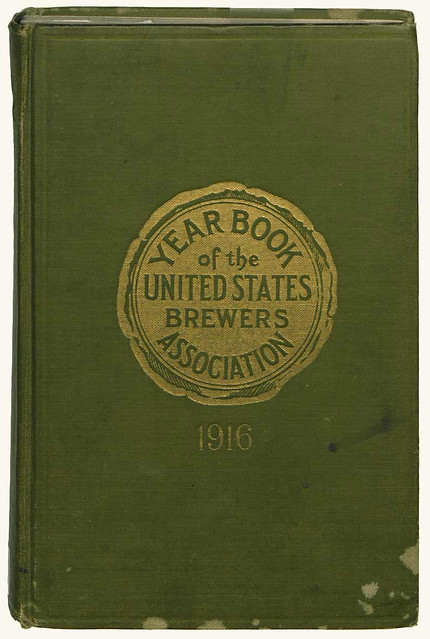
usba-yearbook-1916

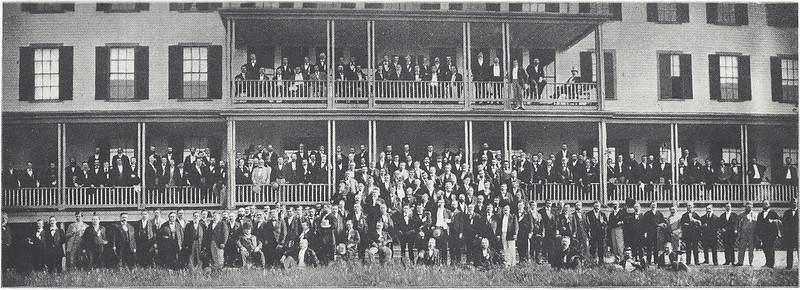
usba-1874
The USBA Convention, held in Boston, in 1874. Katzenmayer is listed as being in the photo, but if you can find him you’ve got better eyes that I do.

Filed Under: Birthdays, Just For Fun Tagged With: Brewers Association, History, New York

Historic Beer Birthday: George Schmitt

April 14, 2025 By Jay Brooks

new_york
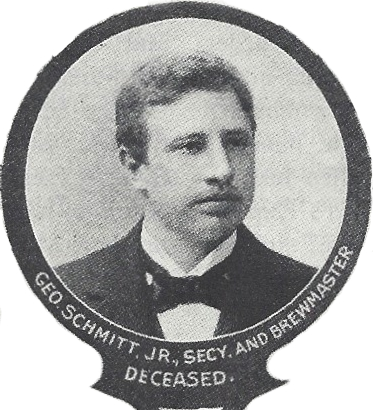
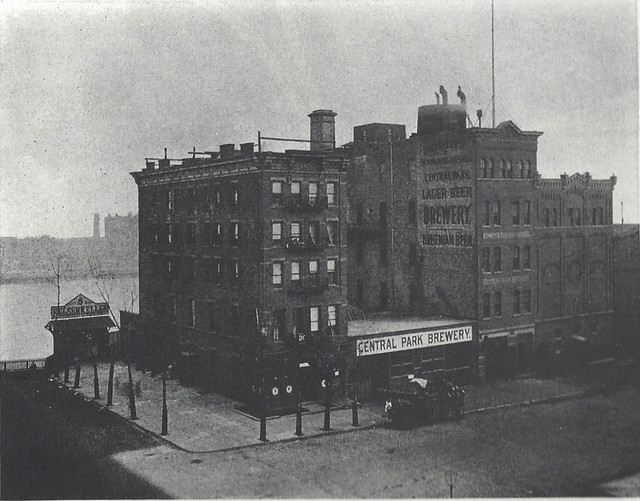
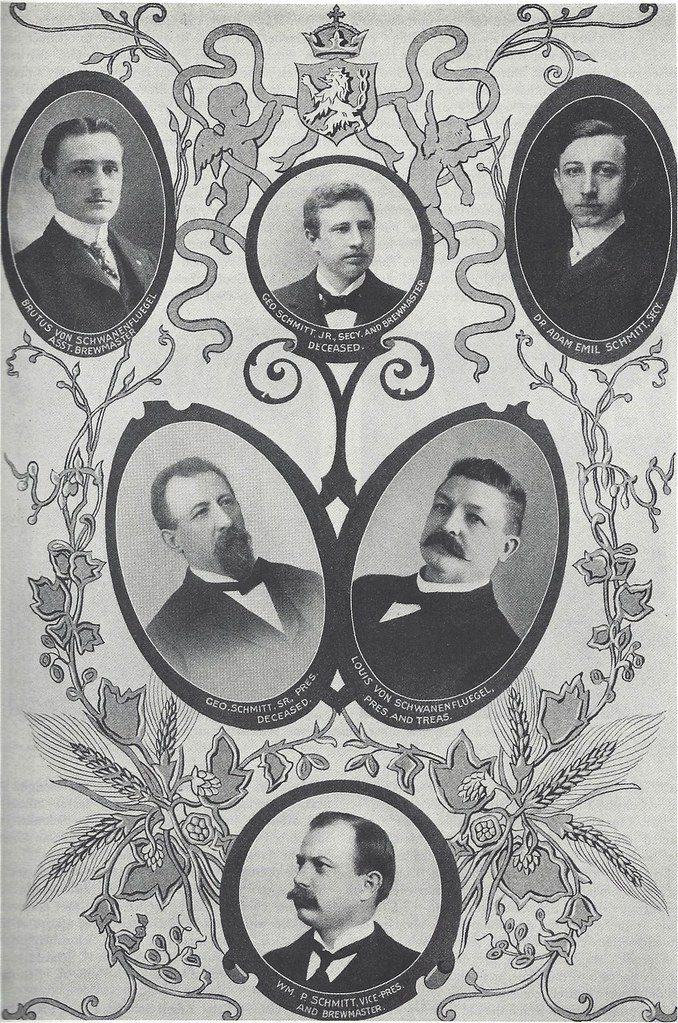
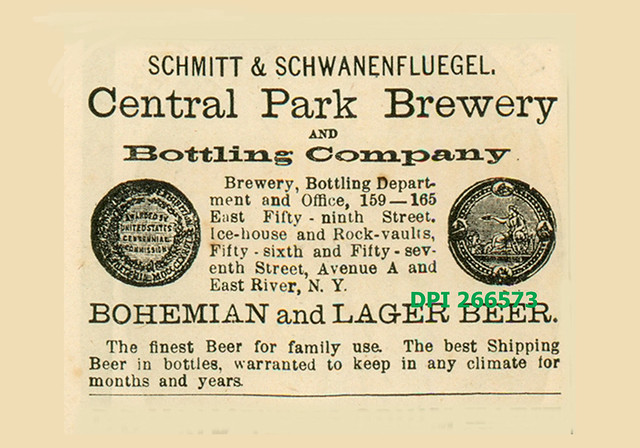
Today is the birthday of George Schmitt (April 14, 1869-July 31, 1898). There’s very little about him that I could find, though I suspect the fact that he died when he was only 29 might have something to do with that. He was trained as a brewer at his father’s brewery, worked at a malt house, and became the manager of Schmitt & Schwanenfluegel Brewery, which was in New York City, near Central Park at 1065 Avenue A, between 56th & 57th.

George-Schmitt-jr

Extra-Bohemian-Beer-Foam-Scrapers-Schmitt-and-Schwanenfluegel

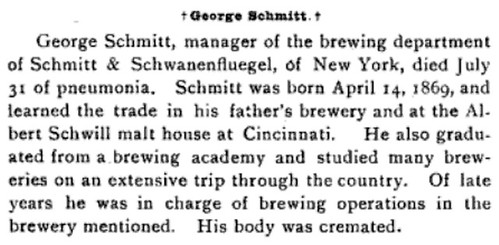
This short obituary was printed in the American Brewers’ Review:

george-schmitt-obit

Schmitt-and-Schwanenfluegel-brewery

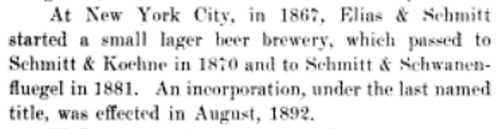
The brewery was originally known as the Henry Elias Brewery, who founded it near 15th Street & Broadway in 1855. Elias, in 1865, partnered with George Schmitt, this George’s father, and became known as Henry Elias & George Schmitt Brewery, a.k.a. the Central Park Brewery (and was readdressed to 1065 Avenue A, between 56th & 57th). In 1868, Schmitt partnered with Christian Koehne to keep it going and it became the Schmitt & Christian Koehne Brewery. Then in 1885, Koehne left and Louis Von Schwanenfluegel came to the business and it became known as Schmitt & Schwanenfluegel Brewery, which it remained until it closed in 1906. During that time it was also known as Consumers Park Brewing Co. and also Central Park Brewery.

Schmitt-and-Schwanenfluegel

According to 100 Years of Brewing, the chronology is slightly different:

schmitt-100yrs

schmitt-schwan

Filed Under: Birthdays, Breweries, Just For Fun Tagged With: History, New York

Beer In Ads #4936: Rheingold Bock Beer

April 10, 2025 By Jay Brooks

Last year I decided to concentrate on Bock ads. Bock, of course, originated in Germany, in the town of Einbeck. Because many 19th century American breweries were founded by German immigrants, they offered a bock at certain times of the year, be it Spring, Easter, Lent, Christmas, or what have you. In a sense they were some of the first seasonal beers. “The style was later adopted in Bavaria by Munich brewers in the 17th century. Due to their Bavarian accent, citizens of Munich pronounced ‘Einbeck’ as ‘ein Bock’ (a billy goat), and thus the beer became known as ‘Bock.’ A goat often appears on bottle labels.” And presumably because they were special releases, many breweries went all out promoting them with beautiful artwork on posters and other advertising.

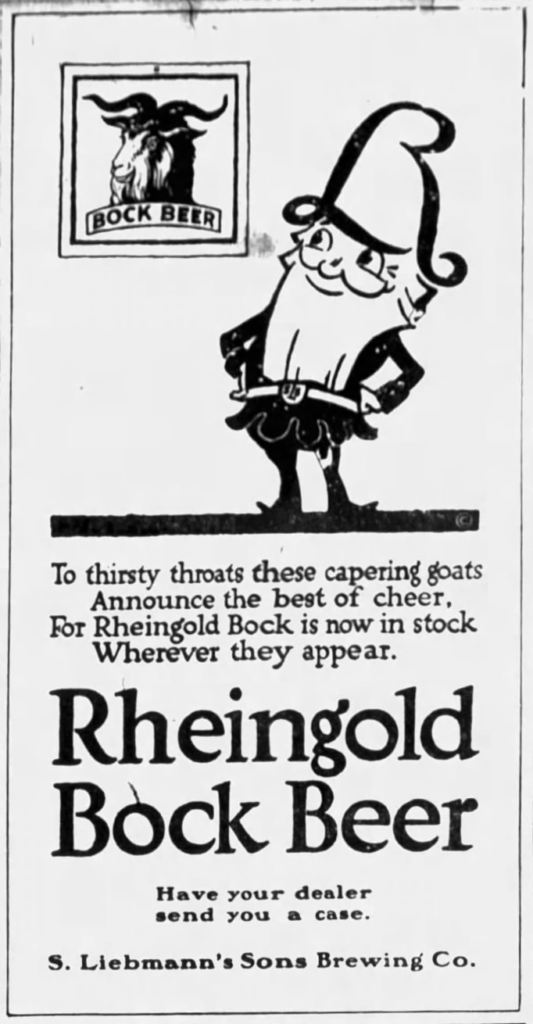
Thursday’s ad is for Rheingold Bock Beer and was published April 10, 1916. The brewery was S. Liebmann’s Sons Brewing Co., a.k.a. as the Rheingold Brewery, of New York, New York, which was originally founded in 1870. This ad ran in The Brooklyn Citizen, of Brooklyn, New York. I do love the poem that’s a part of the ad:

To thirsty throats these capering goats
Announce the best of cheer
For Rheingold Bock is now in stock
Wherever they appear.

Filed Under: Art & Beer, Beers, Breweries, Just For Fun Tagged With: Advertising, Bock, History, New York

Beer In Ads #4932: Eichler’s Bock Beer Since Civil War Days

April 6, 2025 By Jay Brooks

Last year I decided to concentrate on Bock ads. Bock, of course, originated in Germany, in the town of Einbeck. Because many 19th century American breweries were founded by German immigrants, they offered a bock at certain times of the year, be it Spring, Easter, Lent, Christmas, or what have you. In a sense they were some of the first seasonal beers. “The style was later adopted in Bavaria by Munich brewers in the 17th century. Due to their Bavarian accent, citizens of Munich pronounced ‘Einbeck’ as ‘ein Bock’ (a billy goat), and thus the beer became known as ‘Bock.’ A goat often appears on bottle labels.” And presumably because they were special releases, many breweries went all out promoting them with beautiful artwork on posters and other advertising.
Sunday’s ad is for Eichler’s Bock Beer and was published April 6, 1934. The brewery was the John Eichler Brewing Co. of New York, New York, which was originally founded in 1857. This ad ran in the Daily Item, of Sunbury, Pennsylvania, with the tagline: “Eichler’s Bock Beer Since Civil War Days.”

Filed Under: Art & Beer, Beers, Breweries, Just For Fun Tagged With: Advertising, Bock, History, New York

Historic Beer Birthday: George Ehret

April 6, 2025 By Jay Brooks

george-ehret
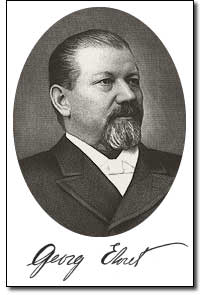
Today is the birthday of George Ehret (April 6, 1835-January 21, 1927). He was born in Hofweier, Buden, Germany but followed his father to America, arriving in New York in 1857, age 31. Having been trained as a brewer, he worked for a few years and then founded his own brewery, the George Ehret Brewery, which was also known as the Hell Gate Brewery, in 1866. It stopped producing beer in 1920 due to prohibition and limped along until 1927, when it closed due to his death.

The entry at Find a Grave has just a couple of sentences. “Beer Brewer, he established The Hell Gate Brewery in 1866 in New York City. It became one of the nation’s largest breweries, producing 602,000 barrels in 1900. When he died, his estate was valued at $40,000,000.”

george-ehret-portrait

100 Years of Brewing has a much fuller account of Ehret and the Hell Gate Brewery:

George Ehret’s Hell Gate Brewery, New York City.

The Hell Gate Brewery was established by George Ehret in the year 1866; hence, at a time when the annual production of malt liquors [in the U.S.] had increased to 5,115,140 barrels. He had then just attained the age of thirty-one years, the date of his birth being April 6, 1835. Nine years before the establishment of this brewery, Mr. Ehret came to America (1857) to join his father, who had emigrated from Germany in August, 1852.

Mr. Ehret, being a thoroughly practical brewer, strictly devoted to his calling, had not long to serve in the brewery of A. Hupfel before he rose to the foremanship and gained the full confidence and friendship of his employer. When he made known his intention to start a brewery for himself, Mr. Hupfel, a man of generous instincts and philanthropic disposition, at once promised and, at the proper time, gave his support and assistance to the new enterprise.

george_ehret

The site selected by Mr. George Ehret for his brewery was at that time of a decidedly rural character. It was opposite a dangerous passage in the East river, which had been designated “Hell Gate.” From this fact Mr. Ehret decided to name his brewery “The Hell Gate Brewery.”

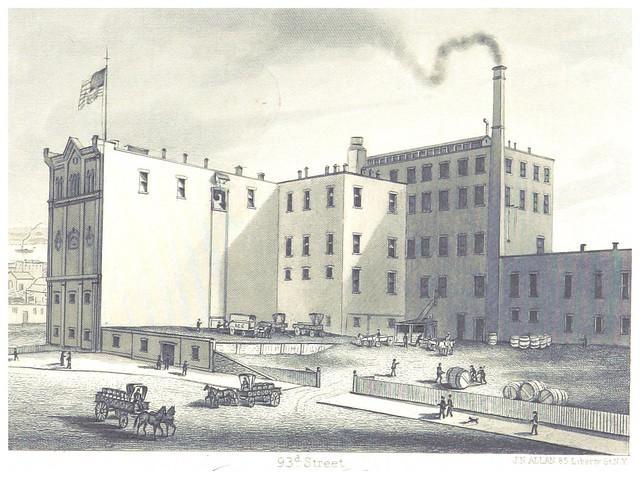
The building in which he began brewing was erected under his supervision on the lower part of the block, between Ninety-second and Ninety-third streets and Second and Third avenues, and its interior appointments were completed at the beginning of the year 1867. This building is no longer standing. It was succeeded by another in 1871, which formed the nucleus of the establishment that now covers the greater part of an entire block. It is at present almost hidden by the over-towering brewery buildings which have sprung up around it in the course of a quarter century, and a full view of it can only be gained from the quadrangular yard, of which it forms the interior side, the buildings flanking it being the offices and the storehouse, both fronting on Ninety-second street.

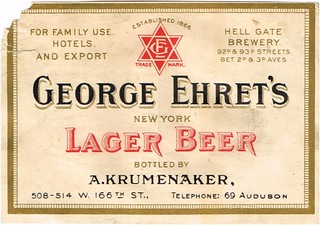
George-Ehrets-Lager-Beer-Labels

Mr. George Ehret, from the very beginning, aimed at the brewing of a beer as nearly like the best quality of Munich lager as the difference between our water and that of the river Isar would admit. How well he succeeded in this may be inferred from the popularity which his beer attained in a few years. As has been said, he began brewing immediately after the completion of his plant. At the beginning of January, 1867, the first brew was stored in the cellars; in March of the same year his wagons, freighted not only with kegs, but also, metaphorically speaking, with all his expectations and anxieties, left his yards for the first time to serve his new customers. Five years after that date he sold 33,512 barrels; seven years later, 74,497 barrels, and in 1874 he produced and sold 101,050 barrels — a quantity which twenty-eight years ago was manufactured by but very few of the largest establishments. This growth was then all the more remarkable, because Mr. Ehret’s operations had suddenly been checked for a considerable time on account of a fire which, on the 19th of September, 1870, destroyed the greater part of his brewery, including books and papers. It is owing to this fact that we are unable to give the quantities of beer brewed during the four years preceding the fire.

Ehrets-Extra-Draught-Beer-Serving-Trays-10-16-inches-George-Ehret-Brewery

The year 1870 may be called the second starting point in the growth of Hell Gate Brewery. In a certain sense the fire was not an unmixed evil, especially in view of the fact that the demand for Ehret beer was fast outgrowing the capacity of the original plant, necessitating a considerable extension of the premises and buildings, and many additions to the machinery and other appointments.

As stated above, the amount of beer produced and sold by the Hell Gate Brewery in the year 1874 amounted to 101,050 barrels; in 1880, the production amounted to 220,096 barrels, an increase in six years of over one hundred per cent. Ten years after, in the year 1890, the production amounted to 412,851 barrels, making another increase of almost one hundred per cent for the decade. In the year 1900, the production was 601,000 barrels, showing an increase of about forty-six per cent. This is a record to be proud of, and one that has seldom been equaled in the history of brewing.

This immense production has been attained without any forced efforts to open new channels outside of the limits of the State of New York; although, naturally enough, whenever a demand was shown to exist in outside markets, Mr. George Ehret endeavored to supply it, and thus established a number of agencies. The home demand always proved so great that the idea of engaging in an extensive export trade beyond the sea could not be entertained, save in conjunction with plans for a further enlargement of the brewery premises and increase in equipment.

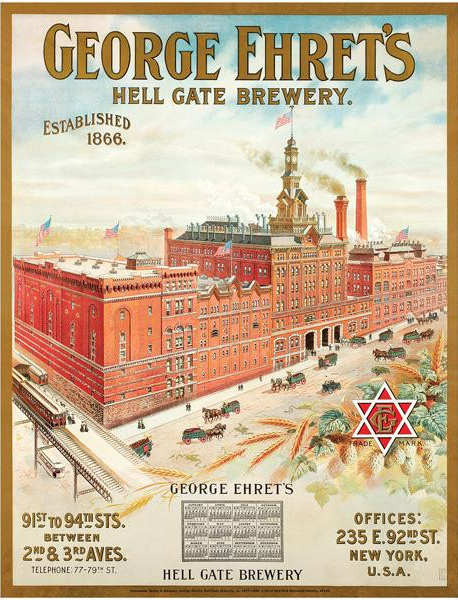
On approaching the brewery, one is impressed at the very first glance with the unusually large dimensions of the grounds upon which the buildings are erected. In a smaller city this would not be anything worthy of note, but in New York, and especially in that part of it to which we refer, where scantness of territory and an immense and ever-growing population render necessary the utmost economy in the utilization of space (much to the detriment of architectural beauty), such extended premises as those we speak of can not fail to make an impression. The grounds, extending from within a short distance of Third avenue to Second avenue, and from Ninety-first to Ninety-fourth streets, comprise, inclusive of stables and storage buildings on Second avenue between Ninety-first and Ninety-third streets, seventy-five city lots, or one hundred and eighty-seven thousand five hundred square feet.

The main building, an imposing structure, surmounted by a graceful clock tower, fronts on Ninety-third street, extending southward to a considerable depth; it is flanked on either side by lower wings, which, in point of architecture and symmetrical proportions, harmonize perfectly with the principal facade. Ornamental gables, rising from the cornices of every building, enhance the impression of uniformity which, next to utility, was manifestly one of the prime objects of the architect.

9276-Hell-Gate-Brewery_1024x1024

100 Years of Brewing was published in 1903, so the rest of the story can be found in Will Anderson’s Breweries of Brooklyn:

George Ehret, once this nation’s largest brewer, passed away in January of 1927 (leaving an estate valued at $40,000,000!). It was beginning to look as if Prohibition would last forever and the executors of Ehret’s estate debated whether they should sell the mammoth brewery buildings on the upper east side of Manhattan. For years they held off but in April of 1935 Col. Jacob Ruppert, Ehret’s neighbor on Third Avenue and 92nd Street, made an offer that the Ehret family just couldn’t refuse. With the sale to Ruppert, the Ehrets had even more money to add to what they’d inherited earlier — but they had no brewery. This problem was solved very nicely by the cash purchase, in July of 1935, of the Interboro Beverage Co. facilities [in Brooklyn]. Although the location was new, the brewery was still very much under the control of the Ehret family. Louis J. Ehret, George’s son, headed the firm, and he was aided by two of George’s grandchildren, George Ehret Burghardt and William Ehret Ottmann. Richard Barthel, brewmaster at the old Ehret plant in Yorkville, also made the move to Brooklyn. Over $200,000 was spent to thoroughly recondition the plant throughout, and by the summer of 1936 Louis J. Ehret had the plant in full production.

Ehret’s Extra Beer and Ale were brewed in Brooklyn for the next 12 years, until 1948, when the company transferred its operations to Union City, New Jersey. Whether Ehret’s moved because of an irresistible offer from Schlitz [who bought the Brooklyn plant] or because the Union City plant seemed preferable is unknown. In any case, move to New Jersey they did, where they remained in operation but three more years.

LOSSING(1876)_p169_GEORGE_EHRET'S_LAGER-BIER_BREWERY,_NYC_(2)_-_93d_STREET

And finally, here;s George Ehret’s obituary.

george-ehret-obit

1909-george-ehret-lager-beer-ad
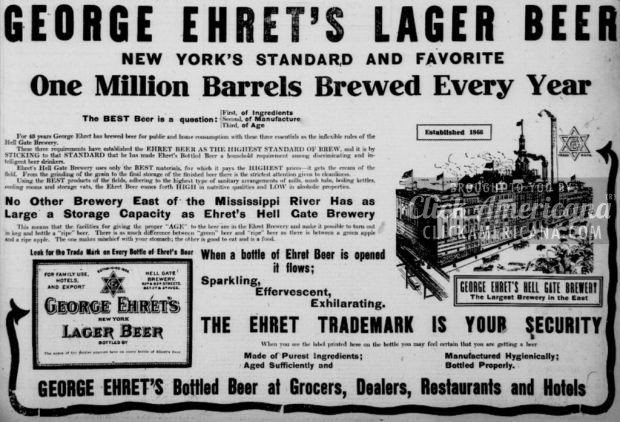
A ad from 1909.

Filed Under: Birthdays, Breweries, Just For Fun Tagged With: History, New York

« Previous Page
Next Page »

Find Something

Northern California Breweries

Please consider purchasing my latest book, California Breweries North, available from Amazon, or ask for it at your local bookstore.

Recent Comments

  • Bob Paolino on Beer Birthday: Grant Johnston
  • Gambrinus on Historic Beer Birthday: A.J. Houghton
  • Ernie Dewing on Historic Beer Birthday: Charles William Bergner 
  • Steve 'Pudgy' De Rose on Historic Beer Birthday: Jacob Schmidt
  • Jay Brooks on Beer Birthday: Bill Owens

Recent Posts

  • Beer In Ads #5177: The Fable Of Bock Beer! March 21, 2026
  • Historic Beer Birthday: Sampson Salter March 21, 2026
  • Historic Beer Birthday: Anton Dreher Jr. March 21, 2026
  • Historic Beer Birthday: William Worthington March 21, 2026
  • Beer In Ads #5176: I’m “Bock” Again March 21, 2026

BBB Archives

Feedback

Head Quarter
This site is hosted and maintained by H25Q.dev. Any questions or comments for the webmaster can be directed here.