Brookston Beer Bulletin

Jay R. Brooks on Beer

  • Home
  • About
  • Editorial
  • Birthdays
  • Art & Beer

Socialize

  • Dribbble
  • Email
  • Facebook
  • Flickr
  • GitHub
  • Instagram
  • LinkedIn
  • Pinterest
  • RSS
  • Twitter
  • YouTube

Powered by Genesis

Tolkien’s ” The Man in the Moon Stayed Up Too Late”

January 3, 2026 By Jay Brooks 1 Comment

bilbo-baggins
Today is the birthday of J.R.R. Tolkien, the English author of The Hobbit and the Lord of the Rings trilogy. But he was also a poet, which shouldn’t be a big surprise to fans since most of his works include pomes and songs as a part of his stories.

Tolkien was also a fan of British beer. One of the 30 Facts about J.R.R. Tolkien mentions his love of beer:

As a young student at Exeter college, Oxford University, he spent his first few years often getting into debt trying to keep up with richer students, who had more disposable income. Tolkien admits he had a great love of beer and talking into the early hours of the morning.

Author Eric San Juan also writes about J.R.R. Tolkien, Hobbits, and BEER. After detailing the ways in which beer influenced his life and work, he concludes that “yes, J.R.R. Tolkien enjoyed his beer, and this is reflected in his life’s work. He enjoyed quiet times and good conversation and a great pint. And who doesn’t?”

tolkien-drinks-1

In 1968 during a BBC interview, part of a series entitled “In Their Own Words British Authors,” Tolkien quips. “I’m very fond of beer.” In fact, the interview is described as “John Izzard meets with JRR Tolkien at his home, walking with him through the Oxford locations that he loves while hearing the author’s own views about his wildly successful high-fantasy novels. Tolkien shares his love of nature and beer and his admiration for ‘trenchermen’ in this genial and affectionate programme.”

Earlier today, I tweeted a Tolkien quote, an excerpt from one of his poems. But while I’d collected the quote years ago, in checking it for accuracy, I encountered some confusion about the poem. It comes from a poem entitled “The Man in the Moon Stayed Up Too Late” from 1923 but some misattributed it to a later one, called “The Man in the Moon Came Down Too Soon,” which also appeared with the latter one in a collection published under the title “The Adventures of Tom Bombadil,” published in 1962.

The Man in the Moon Stayed Up Too Late also appeared in The Fellowship of the Ring, the first book in the Lord of the Rings trilogy.

In the Inn at Bree (“At the Sign of the Prancing Pony”, The Fellowship of the Ring Chapter 9) Frodo jumps on a table and recites “a ridiculous song” invented by Bilbo. “Here it is in full,” said Tolkien. “Only a few words of it are now, as a rule, remembered.”

There follows the tale, in thirteen ballad-like five-line stanzas, introducing each element in turn: “the Man in the Moon” himself, the ostler’s “tipsy cat/ that plays a five-stringed fiddle”, the little dog, the “hornéd cow” and the silver dishes and spoons.

Note that the cow is able to jump over the Moon with ease because the Man in the Moon has temporarily brought it down to Earth.

I read all of the books when I was younger — much younger — and I confess I didn’t recall the poem at all. Even when I found the quote, it was an excerpt. So today I figured I’d check out the full poem. The first one is great, filled with cool allusions, references to nursery rhymes, excellent wordplay and fun beeriness. The second doesn’t mention beer at all, only wine and moonshine, but it still interesting, especially as it’s considered a companion poem to the other. I’ve put both of them down below, with illustrations by British artist Alan Lee. Read the first one at least, it’s great — really great — but the second is nice, as well.

alan_lee_the-man-in-the-moon-stayed-up-too-late

The Man in the Moon Stayed Up Too Late

There is an inn, a merry old inn
beneath an old grey hill,
And there they brew a beer so brown
That the Man in the Moon himself came down
one night to drink his fill.

The ostler has a tipsy cat
that plays a five-stringed fiddle;
And up and down he saws his bow
Now squeaking high, now purring low,
now sawing in the middle.

The landlord keeps a little dog
that is mighty fond of jokes;
When there’s good cheer among the guests,
He cocks an ear at all the jests
and laughs until he chokes.

They also keep a hornéd cow
as proud as any queen;
But music turns her head like ale,
And makes her wave her tufted tail
and dance upon the green.

And O! the rows of silver dishes
and the store of silver spoons!
For Sunday there’s a special pair,
And these they polish up with care
on Saturday afternoons.

The Man in the Moon was drinking deep,
and the cat began to wail;
A dish and a spoon on the table danced,
The cow in the garden madly pranced
and the little dog chased his tail.

The Man in the Moon took another mug,
and then rolled beneath his chair;
And there he dozed and dreamed of ale,
Till in the sky the stars were pale,
and dawn was in the air.

Then the ostler said to his tipsy cat:
‘The white horses of the Moon,
They neigh and champ their silver bits;
But their master’s been and drowned his wits,
and the Sun’ll be rising soon!’

So the cat on the fiddle played hey-diddle-diddle,
a jig that would wake the dead:
He squeaked and sawed and quickened the tune,
While the landlord shook the Man in the Moon:
‘It’s after three!’ he said.

They rolled the Man slowly up the hill
and bundled him into the Moon,
While his horses galloped up in rear,
And the cow came capering like a deer,
and a dish ran up with the spoon.

Now quicker the fiddle went deedle-dum-diddle;
the dog began to roar,
The cow and the horses stood on their heads;
The guests all bounded from their beds
and danced upon the floor.

With a ping and a pang the fiddle-strings broke!
the cow jumped over the Moon,
And the little dog laughed to see such fun,
And the Saturday dish went off at a run
with the silver Sunday spoon.

The round Moon rolled behind the hill,
as the Sun raised up her head.
She hardly believed her fiery eyes;
For though it was day, to her surprise
they all went back to bed!

man-in-moon

The Man in the Moon Came Down Too Soon

The Man in the Moon had silver shoon,
It and his beard was of silver thread;
With opals crowned and pearls all bound
about his girdlestead,
In his mantle grey he walked one day
across a shining floor,
And with crystal key in secrecy
he opened an ivory door.

On a filigree stair of glimmering hair
then lightly down he went,
And merry was he at last to be free
on a mad adventure bent.
In diamonds white he had lost delight;
he was tired of his minaret
Of tall moonstone that towered alone
on a lunar mountain set.

Hĺ would dare any peril for ruby and beryl
to broider his pale attire,
For new diadems of lustrous gems,
emerald and sapphire.
So was lonely too with nothing to do
but stare at the world of gold
And heark to the hum that would distantly come
as gaily round it rolled.

At plenilune in his argent moon
in his heart he longed for Fire:
fot the limpid lights of wan selenites;
for red was his desire,

For crimson and rose and ember-glows,
for flame with burning tongue,
For the scarlet skies in a swift sunrise
when a stormy day is young.

He’d have seas of blues, and the living hues
of forest green and fen;
And he yearned for the mirth of the populous earth
and the sanguine blood of men.
He coveted song, and laughter long,
and viands hot, and wine,
Eating pearly cakes of light snowflakes
and drinking thin moonshine.

He twinkled his feet, as he thought of the meat,
of pepper, and punch galore;
And he tripped unaware on his slanting stair,
and like a meteor,
A star in flight, ere Yule one night
flickering down he fell
From his laddery path to a foaming bath
in the windy Bay of Bel.

He began to think, lest he melt and sink,
what in the moon to do,
When a fisherman’s boat found him far afloat
to the amazement of the crew,
Caught in their net all shimmering wet
in a phosphorescent sheen
Of bluey whites and opal lights
and delicate liquid green.

Against his wish with the morning fish
they packed him back to land:
‘You had best get a bed in an inn’, they said;
‘the town is near at hand’.
Only the knell of one slow bell
high in the Seaward Tower
Announced the news of his moonsick cruise.

Not a hearth was laid, not a breakfast made,
and dawn was cold and damp.
There were ashes for fire, and for grass the mire,
for the sun a smoking lamp
In a dim back-street. Not a man did he meet,
no voice was raised in song;
There were snores instead, for all folk were abed
and still would slumber long.

He knocked as he passed on doors locked fast,
and called and cried in vain,
Till he came to an inn that had light within,
and tapped at a window-pane.
A drowsy cook gave a surly look,
and ‘What do you want?’ said he.
‘I want fire and gold and songs of old
and red wine flowing free!’

‘You won’t get them here’, said the cook with a leer,
‘but you may come inside.
Silver I lack and silk to my back—
maybe I’ll let you bide’.
A silver gift the latch to lift,
a pearl to pass the door;
For a seat by the cook in the ingle-nook
it cost him twenty more.

For hunger or drouth naught passed his mouth
till he gave both crown and cloak;
And all that he got, in an earthen pot
broken and black with smoke,
Was porridge cold and two days old
to eat with a wooden spoon.
For puddings of Yule with plums, poor fool,
he arrived so much too sooo:
An unwary guest on a lunatic quest
from the Mountains of the Moon.

tolkien-drinks

Filed Under: Just For Fun, Related Pleasures Tagged With: England, Great Britain, History, Literature, Poetry, Writing

Historic Beer Birthday: Michael Joseph Owens

January 1, 2026 By Jay Brooks Leave a Comment

owens-illinois
Today is the birthday of Michael Joseph Owens (January 1, 1859–December 27, 1923). He “was an inventor of machines that could automate the production of glass bottles.”

Michael-J-Owens-close

If you’ve ever opened a beer bottle, you’ve probably held something he had a hand in developing, because he made beer bottles cheap and affordable for breweries, and his company has continued to improve upon his designs. Based on his patents, in 1903 he founded the Owens Bottle Company, which in 1929 merged with the Illinois Glass Company in 1929 to become Owens-Illinois, Inc. Today, O-I is an international company with 80 plants in 23 countries, joint ventures in China, Italy, Malaysia, Mexico, the United States and Vietnam, with 27,000 employees worldwide and 2,100-plus worldwide patents.

MJOwens3-a
Michael J. Owens in front of one of his bottling machines from a film shot in 1910.

Here’s a short biography of Owens:

Michael Joseph Owens was an inventor of machines that could automate the production of glass bottles.

Michael J. Owens was born on January 1, 1859, in Mason County, West Virginia. As a teenager, he went to work for a glass manufacturer in Newark, Ohio.

During the late 1800s, Toledo, Ohio was the site of large supplies of natural gas and high silica-content sandstone — two items necessary for glass manufacturing. Numerous companies either formed in or relocated to Toledo, including the New England Glass Company, which relocated to Toledo in 1888. This same year, the company’s owner, Edward Drummond Libbey, hired Owens.

Within a short time, Owens had become a plant manager for Libbey in Findlay, Ohio. At this point in time, glass manufacturers in the United States had to blow glass to produce the bottles. This was a slow and tedious process. Owens sought to invent a machine that could manufacture glass bottles, rather than having to rely on skilled laborers, greatly speeding up the manufacturing process. On August 2, 1904, Owens patented a machine that could automatically manufacture glass bottles. This machine could produce four bottles per second. Owens’s invention revolutionized the glass industry. His machine also caused tremendous growth in the soft drink and beer industries, as these firms now had a less expensive way of packaging their products.

In 1903, after Owens had invented his bottle machine but before he had patented the invention, Owens formed the Owens Bottle Machine Company in Toledo. Libbey helped finance Owens’s company. This firm initially manufactured Owens’s bottle machine. By 1919, the firm had begun to manufacture bottles, and the company changed its name to the Owens Bottle Company. The company grew quickly, acquiring the Illinois Glass Company in 1929. The Owens Bottle Company became known as the Owens-Illinois Glass Company this same year. In 1965, the company changed its name one final time. It became and remains known as Owens-Illinois, Inc.

Owens retired in 1919. He did not live to see his company grow into such an important manufacturer of glass. He died on December 27, 1923, in Toledo, Ohio. Over the course of his life, Owens secured forty-five patents.

Michael Owens / sally

Here’s his biography from his Wikipedia page:

He was born in Mason County, West Virginia on January 1, 1859. He left school at the age of 10 to start a glassware apprenticeship at J. H. Hobbs, Brockunier and Company in Wheeling, West Virginia.

In 1888 he moved to Toledo, Ohio and worked for the Toledo Glass Factory owned by Edward Drummond Libbey. He was later promoted to foreman and then to supervisor. He formed the Owens Bottle Machine Company in 1903. His machines could produce glass bottles at a rate of 240 per minute, and reduce labor costs by 80%.

Owens and Libbey entered into a partnership and the company was renamed the Owens Bottle Company in 1919. In 1929 the company merged with the Illinois Glass Company to become the Owens-Illinois Glass Company.

Michael-J-Owens

To read more about Owens’ contributions, check out Michael Owens’ Glass Bottles Changed The World, by Scott S. Smith, Owens the Innovator at the University of Toledo, Today in Science, and the West Virginia Encyclopedia has a history of the Owens-Illinois Glass Company.

michael-owens-glass-bottle-machine-no-6

Filed Under: Birthdays, Just For Fun, Related Pleasures Tagged With: Bottles, History, Packaging, Patent, Science of Brewing

Historic Beer Birthday: Louis Pasteur

December 27, 2025 By Jay Brooks Leave a Comment

pasteurized
Today is the birthday of Louis Pasteur (December 27, 1822–September 28, 1895). He “was a French chemist and microbiologist renowned for his discoveries of the principles of vaccination, microbial fermentation and pasteurization. He is remembered for his remarkable breakthroughs in the causes and preventions of diseases, and his discoveries have saved countless lives ever since. He reduced mortality from puerperal fever, and created the first vaccines for rabies and anthrax. His medical discoveries provided direct support for the germ theory of disease and its application in clinical medicine. He is best known to the general public for his invention of the technique of treating milk and wine to stop bacterial contamination, a process now called pasteurization. He is regarded as one of the three main founders of bacteriology, together with Ferdinand Cohn and Robert Koch, and is popularly known as the ‘father of microbiology.'”

Portrait of Louis Pasteur

But, of course, for the brewing industry, he’s best remembered for his “Studies on Fermentation,” which he published in 1876.

In 1876, Louis Pasteur published his ground-breaking volume, Études sur la Bière, soon translated into English as Studies On Fermentation. The book changed the course of brewing during the late 19th and early 20th centuries, representing a huge leap forward in the scientific understanding of the processes involved in beermaking. Brewers around the globe put Pasteur’s findings to work in their breweries, and thus plunged the industry headlong into the modern era.

In tribute to Pasteur’s tremendous contributions to brewing science, BeerBooks.com has reprinted Studies On Fermentation exactly as it appeared when first released in English, complete with all of Pasteur’s illustrations. An original 1879 edition was digitally scanned, professionally enhanced and reproduced in a hard cover format.

In his preface, Pasteur modestly wrote, “I need not hazard any prediction concerning the advantages likely to accrue to the brewing industry from the adoption of such a process of brewing as my study of the subject has enabled me to devise, and from an application of the novel facts upon which this process is founded. Time is the best appraiser of scientific work, and I am not unaware that an industrial discovery rarely produces all its fruits in the hands of its first inventor.”

But, of course, the brewing industry recognized almost immediately the impact that Pasteur’s work would have on the art and science of beermaking. Frank Faulkner, the British brewing scholar who performed the English translation, wrote, “Seeing the vast importance of Pasteur’s work from a practical point of view, after writing a review of it for the Brewers’ Journal, I determined to procure, at any rate for the use of my own pupils, a literal translation, illustrated by photo-lithographic copies of the original plates…It was on the completion of this translation that my views and desires expanded. The more I studied the work, the more I was convinced of its immense value to the brewer as affording him an intelligent knowledge of the processes and materials with which he deals…I determined accordingly to publish the work if I could secure the consent of its distinguished author…The debt which we English brewers owe to M[r]. Pasteur can hardly be over-estimated.”

While I’m sure there are probably many more, he had patents I highlighted last year, Patent No. 135245A: Improvement in Brewing Beer and Ale from 1873, and Patent No. 141072A: Manufacture of Beer and Yeast, in the same year.

Albert_Edelfelt_-_Louis_Pasteur_-_1885
A portrait of Louis Pasteur painted by Swedish-speaking Finnish artist Albert Edelfelt, in 1886.

Fermentation and germ theory of diseases

Pasteur demonstrated that fermentation is caused by the growth of micro-organisms, and the emergent growth of bacteria in nutrient broths is due not to spontaneous generation, but rather to biogenesis (Omne vivum ex vivo “all life from life”). He was motivated to investigate the matter while working at Lille. In 1856 a local wine manufacturer, M. Bigot, the father of his student, sought for his advice on the problems of making beetroot alcohol and souring after long storage. In 1857 he developed his ideas stating that: “I intend to establish that, just as there is an alcoholic ferment, the yeast of beer, which is found everywhere that sugar is decomposed into alcohol and carbonic acid, so also there is a particular ferment, a lactic yeast, always present when sugar becomes lactic acid.” According to his son-in-law, Pasteur presented his experiment on sour milk titled “Latate Fermentation” in August 1857 before the Société des Sciences de Lille. (But according to a memoire subsequently published, it was dated November 30, 1857). It was published in full form in 1858. He demonstrated that yeast was responsible for fermentation to produce alcohol from sugar, and that air (oxygen) was not required. He also demonstrated that fermentation could also produce lactic acid (due to bacterial contamination), which makes wines sour. This is regarded as the foundation of Pasteur’s fermentation experiment and disprove of spontaneous generation of life.

Louis_Pasteur_experiment

Pasteur’s research also showed that the growth of micro-organisms was responsible for spoiling beverages, such as beer, wine and milk. With this established, he invented a process in which liquids such as milk were heated to a temperature between 60 and 100 °C. This killed most bacteria and moulds already present within them. Pasteur and Claude Bernard completed the first test on April 20, 1862. Pasteur patented the process, to fight the “diseases” of wine, in 1865. The method became known as pasteurization, and was soon applied to beer and milk.

Beverage contamination led Pasteur to the idea that micro-organisms infecting animals and humans cause disease. He proposed preventing the entry of micro-organisms into the human body, leading Joseph Lister to develop antiseptic methods in surgery. Lister’s work in turn inspired Joseph Lawrence to develop his own alcohol-based antiseptic, which he named in tribute Listerine.

whitbread-pasteur-1937cal

This is an ad is for Whitbread, from 1937, showing an illustration of Louis Pasteur working on his fermentation studies in a laboratory at Whitbread Brewing in 1871, nine years after he completed his first test of pasteurization, which took place April 20, 1862.

On his Wikipedia page, under the heading “Controversies, there’s this paragraph about his research into fermentation:

When Pasteur published his theory and experiments on fermentation in 1858, it was not new to science, neither the idea nor the experiment. In 1840 a German chemist Justus von Liebig had noted that yeast could induce fermentation in water. However, he did not know that yeasts were organisms. In 1856 another German, Friedrich Wilhelm Lüdersdorff, reported that yeasts were microorganisms that convert sugar into alcohol. In 1855, Antoine Béchamp, Professor of Chemistry at the University of Montpellier, showed that sugar was converted to sucrose and fructose in a closed bottle containing water and when he added calcium or zinc chloride to it, no reaction occurred. He also noticed moulds developing in the solution, but could not fathom the significance of it. He concluded that water was the factor for fermentation. He changed his conclusion in 1858 that water was not the main factor, in fact, fermentation was directly related to the growth of moulds, and moulds required air for growth. He regarded himself as the first to show the role of microorganisms in fermentation. Pasteur started his experiments only in 1857 and published his findings in 1858 (April issue of Comptes Rendus Chimie, Béchamp’s paper appeared in January issue), which, as Béchamp noted, did not bring any novel idea or experiments that earlier works had not shown. On the other hand, Béchamp was probably aware of Pasteur’s 1857 preliminary works. With both scientists claiming priority on the discovery, a bitter and protracted dispute lasted throughout their lives. Their rivalry extended to ideas on microbiology, pathogenesis, and germ theory. Particularly on the spontaneous generation because Pasteur in his 1858 paper explicitly stated that the lactic acid bacteria (he named them “lactic yeasts”), which caused wine souring, “takes birth spontaneously, as easily as beer yeast every time that the conditions are favourable.” This statement directly implied that Pasteur did believe in spontaneous generation. He condemned the ideas of Pasteur as “‘the greatest scientific silliness of the age”. However, Béchamp was on the losing side, as the BMJ obituary remarked: His name was associated with bygone controversies as to priority which it would be unprofitable to recall. Pasteur and Béchamp believed that fermentation was exclusively cellular activity, that is, it was only due to living cells. But later extraction of enzymes such as invertase by Marcellin Berthelot in 1860 showed that it was simply an enzymatic reaction.

Pasteur’s ground-breaking “Studies on Fermentation” is in the public domain, of course, so you can read the entire work, or just browse through it, at the Internet Archive.

USBF-1951-qa9
In 1951, the United States Brewers Foundation featured Louis Pasteur in an ad, which was part of a series that used a Q&A format aimed at highlighting different positive aspects of beer and the brewing industry.

Filed Under: Birthdays, Just For Fun, Related Pleasures Tagged With: France, History, Science, Science of Brewing, Yeast

Historic Beer Birthday: Gerardus Johannes Mulder

December 27, 2025 By Jay Brooks Leave a Comment

science
Today is the birthday of Gerardus Johannes Mulder (December 26, 1802–April 18, 1880). He “was a Dutch organic and analytical chemist,” who wrote several technical chemical publications analyzing various substances, including one entitled “The Chemistry of Beer,” in 1856 or 57 (sources vary).

“He became a professor of chemistry at Rotterdam and later at Utrecht. While at the Utrecht University, Mulder described the chemical composition of protein. He claimed that albuminous substances are made up of a common radical, protein, and that protein had the same empirical formula except for some variation in amounts of sulfur and phosphorus, long before the polymer nature of proteins was recognized after work by Staudinger and Carrothers.

He was the first to use this name, protein, coined by Jöns Jacob Berzelius in a publication, his 1838 paper ‘On the composition of some animal substances’ (originally in French but translated in 1839 to German). In the same publication he also proposed that animals draw most of their protein from plants.”

Gerardus_Johannes_Mulder

Here’s a biography of Mulder from Encyclopedia.com:

Mulder studied medicine at the University of Utrecht (1819–1825), from which he graduated with a dissertation on the action of alkaloids of opium, De opio ejusque principiis, actione inter se comparatis (1825). He practiced medicine in Amsterdam and then in Rotterdam, where he also lectured at the Bataafsch Genootschap der Proefondervindelijke Wijsbegeerte and taught botany to student apothecaries. At the foundation of a medical school at Rotterdam (1828), Mulder became lecturer in botany, chemistry, mathematics, and pharmacy. His attention was directed primarily to the practical training of his students. In 1840 Mulder succeeded N. C. de Fremery as professor of chemistry at the University of Utrecht. He applied for his retirement in 1868 and spent the rest of his life in Bennekom. Besides publishing on scientific subjects, Mulder took an active part in education, politics and public health. The works of Faraday and Berzelius exerted a great influence on him; his Leerboek voor Scheikundige werktuigkunde (1832–1835) was written in the spirit of Faraday’s Chemical Manipulation. Mulder edited a Dutch translation by three of his students of Berzelius’ textbook of chemistry as Leerboek der Scheikunde (6 vols., 1834–1845). His difficult character caused problems with some of his pupils and with other chemists.
From 1826 to 1865 Mulder edited five Dutch chemical journals (see bibliography), in which most of his work was published. He worked in physics and in both general and physical chemistry, the latter in combination with medicine, physiology, agriculture, and technology. Most of his work had a polemic character. His most important contributions are in the field of physiological chemistry and soil chemistry, in which he published two extensive works that attracted much attention in translation despite their many mistakes and erroneous speculations.

Studies on proteins led Mulder to his protein theory (1838): he supposed that all albuminous substances consist of a radical compound (protein) of carbon, hydrogen, nitrogen, and oxygen, in combination with varying amounts of sulfur and phosphorus. The differences among proteins resulted from multiplication of the protein units in conjunction with the two other elements. Thus, casein was formulated as

10 protein units + S,

And serum albumin as

10 protein units + SP2.

In 1843 Mulder published the first volume of a treatise on physiological chemistry, which was translated into English as The Chemistry of Vegetable and Animal Physiology (1845–1849). At first both Liebig and Berzelius accepted Mulder’s analysis of proteins; but Liebig soon opposed the theory vigorously, and a deep conflict with Mulder ensued. In 1839–1840 Mulder investigated humic and ulmic acids and humus substances and determined the amounts of geic acid (acidum geïcum), apocrenic acid (acidum apocrenicum or Quellsatzsäure), crenic acid (acidum crenicum or Quellsäure), and humic acids in fertile soils (1844). The structure of these various brown or black substances is unknown. They are a group of aromatic acids of high molecular weight, which can be extracted from peat, turf, and decaying vegetable matter in the soil. The difference between these acids is the oxygen content. In the decay of vegetable matter ulmic acid is formed. According to Mulder, this has the formula C20H14O6(in modern equivalents). In contact with air and water more oxygen is absorbed, which results in the successive formation of humic acid (C20H12O6, geic acid (C20H12O7), apocrenic acid C24H12O12, and crenic acid (C12H12O8).

His studies on agricultural chemistry led to the treatise De scheikunde der bouwbare aarde (1860). Mulder confirmed Berzelius’ suggestion that theine and caffeine are identical (1838) and was the first to analyze phytol correctly in his researches on chlorophyll. Among his other works are technical chemical publications on indigo (1833), wine (1855), and beer (1856), detailed research on the assaying method for analyzing silver in relation to the volumetric silver determination of Gay-Lussac (1857), and a study on drying oils (1865).

Gerrit-Jan-Mulder-01

While I can’t find the book itself, Julius E. Thausing mentions it in his “Theory and Practice of the Preparation of Malt and the Fabrication of Beer,”published in 1882.

mulder-excerpt

Dr._G.J._Mulder

Filed Under: Birthdays, Just For Fun, Related Pleasures Tagged With: History, Science, Science of Brewing, The Netherlands

Historic Beer Birthday: Michael Edward Ash

December 17, 2025 By Jay Brooks

guinness-new
Today is the birthday of Michael Edward Ash (December 17, 1927–April 30, 2016). He “was a British mathematician and brewer. Ash led a team that invented a nitrogenated dispense system for Guinness stout, which evolved to become the beer now sold globally as Draught Guinness. As the manager in charge of the Easy Serve project, Ash is credited as the inventor of nitrogenated beer (sometimes known as “nitro beer” colloquially).”

Michael E. Ash
Michael Ash in the 1950s.

“Following graduation from Cambridge, Ash lectured in mathematics at The Bedford College for women for three years before joining Guinness & Co. at their London Brewery in Park Royal in January 1951.

After training as a brewer by 1954 Ash also had experience of running two departments (Brewing and Forwarding) and in 1955 he was given his own department the ‘Sample Room’, which had facilities for experimentation. The ‘Draught problem’ was given to Ash as part of his briefing from the managing Director, Hugh Beaver. At the time, Guinness used a convoluted draught system in which highly conditioned beer was blended with aged, nearly still beer. It was a slow, arduous process that limited the ability of draught dispense to reach a more global market.

Guinness had for years been looking for a system in which a barman with no special training could pour a glass of draught in a matter of seconds to settle quickly with a head (3/8″ in a normal ½ pint glass).

Ash realized the solution lay in the use of a blend of nitrogen and carbon dioxide (beer typically just uses the latter), but it took years to figure out a mechanism to dispense nitrogenated beer. Inside Guinness, Ash’s quest was regarded as quixotic, and other brewers chided it as “daft Guinness” and the “Ash Can.” Eventually, working with a keg designer, Ash hit on a revolutionary, self-contained two-part keg, with one chamber full of beer and the other full of mixed gas under pressure, and the introduction of nitrogen.[5] Nitrogen is less soluble than carbon dioxide, which allows the beer to be put under high pressure without making it fizzy. The high pressure of dissolved gas is required to enable very small bubbles to be formed by forcing the draught beer through fine holes in a plate in the tap, which causes the characteristic ‘surge’.

Ultimately called the “easy serve system,” it began to replace the old “high and low” taps used in Ireland and spread to Great Britain and beyond beginning in the 1960s. The invention, which made for a smoother, less characterful beer, was not without controversy, and for years a minority of Irish drinkers complained about the change. Eventually, nitrogrenated stout became a standard, not just at Guinness but among all Irish makers of stout.

Ash left the brewing side of Guinness in 1962 to become managing director of Crooks Laboratories in Park Royal (owned by Guinness). Crooks moved to Basingstoke in 1965. At Crooks Ash was responsible for acquiring the licence for the anti-depressant Prothiaden (Dosulepin) in 1967. From 1970 onwards Ash followed various interests including business education and was a founding governor of Templeton College Oxford.”

ash-brown
Ash with Pete Brown.
Pete Brown, who’d met Ash recently, wrote his obituary for the Morning Advertiser after he passed away in April of this year at 88 years old, entitled The man who created the nitro stout.

Michael-Ash-Guinness
A photograph of Ash taken by Jeff Alworth during his visit to Guinness in early 2016.

Similarly, Jeff Alworth wrote a piece for All About Beer Magazine, The Man Who Invented Nitro the month after he passed away.

Alworth’s article online includes an audio clip of Michael Ash describing the process he used to create Draught Guinness using nitrogen.
http://allaboutbeer.com/wp-content/uploads/2016/05/Michael-Ash.mp3

And this biography of Ash was prepared by Guinness’ marketing department:

Michael read mathematics at Trinity College, Cambridge and was awarded a triple first in his studies – top scholar that year in Cambridge. Between 1948 – 1950, Michael was allowed to reduce his national service conscription by teaching Maths at a University (other than Oxbridge). He taught at Bedford College. Up to the end of World War Two, the Guinness Company had a policy of recruiting only first class honours science graduates from Oxford or Cambridge. Michael was the first non-brewer to be recruited into Guinness.

It was in this role, he led a team of over 20, and their primary role was to seek to improve the shelf life of bottled Guinness. However, Michael felt that the real prize was in developing a proper system for Draught Guinness and began dedicating his time to the ‘Draught Problem’.

The rise of lagers available on draught, especially in the UK in the 1940s and 1950s, was encroaching on traditional Guinness sales, and Michael felt that there was a great opportunity for Guinness, should the stout be available in Draught format. However, the essential problem was with the gas. Carbon dioxide was used to pressurise kegs of bitter and lager, and it was easy and effective for everyone concerned. Guinness, though was too lively to be draughted with carbon dioxide alone.

Of the 20 plus men on his Sample Room team, he could only afford to assign 2 people to work part-time with him on ‘Daft Guinness’ as it became known with the Park Royal Brewery. Michael talks about working weekends and late nights over a long period of time to eventually come up with a nitrogen gas solution.

He worked hand in hand with Eric Lewis, of Alumasc, who supplied Michael with prototype after protoype of metal kegs with different experimental gas chambers. The fact that nitrogen is an inert gas meant that they bubbles lasted longer and were smaller. The right amount of nitrogen, created the ‘surge’ and allowed for a controlled, creamy head that lasts for the whole pint.

The eventual solution was a ‘mixed gas dispense’ system. Known initially as ‘The Ash Can’, The Easy Serve Cask was a self-contained, two-part keg, with one chamber full of beer and the other full of mixed gas under pressure.

Having seen the possibilities, [the company] was in a hurry to get Draught Guinness out into the market place, and he demanded that it should be launched in 1959 – the year of the Guinness bicentenary. At a board meeting of 9 December 1959 – Viscount Elveden (later 3rd Lord Iveagh) reported that about half the draught Guinness outlets had now been changed to the Easy Serve system, and the changeover of the remainder should take place by mid-January 1960.

Here’s a short video that Guinness made about Michael Ash. Unfortunately, apparently you can’t even WATCH a video about beer unless you’re old enough, whiuch is maddneingly stupid, so go watch it on YouTube.

Filed Under: Birthdays, Just For Fun, Related Pleasures Tagged With: Guinness, History, Ireland, Science, Science of Brewing

Historic Beer Birthday: Theodor Schwann

December 7, 2025 By Jay Brooks

yeast-cell
Today is the birthday of Theodor Schwann (December 7, 1810–January 11, 1882). He “was a German physiologist. His many contributions to biology include the development of cell theory, the discovery of Schwann cells in the peripheral nervous system, the discovery and study of pepsin, the discovery of the organic nature of yeast, and the invention of the term metabolism.”

Theodor_Schwann_Litho

So Schwann appears to have made several important contributions to science, but his most important one, for my purposes, is that his discovery of the organic nature of yeast influenced Pasteur.

Schwann was the first of Johannes Peter Müller’s pupils to break with vitalism and work towards a physico-chemical explanation of life. Schwann also examined the question of spontaneous generation, which led to its eventual disconfirmation. In the early 1840s, Schwann went beyond others who had noted simply the multiplication of yeast during alcoholic fermentation, as Schwann assigned the yeast the role of primary causal factor, and then went further and claimed it was alive. Embattled controversy ensued as eminent chemists alleged that Schwann was undoing scientific progress by reverting to vitalism.

After publishing anonymous mockery in a journal of their own editorship, they published a purely physicochemical if also hypothetical explanation of the interaction resulting in fermentation. As both the rival perspectives were hypothetical, and there was not even an empirical definition of ‘life’ to hold as a reference frame, the controversy—as well as interest itself—fell into obscurity unresolved. Pasteur began fermentation researches in 1857 by approximately just repeating and confirming Schwann’s, yet Pasteur accepted that yeast were alive, thus dissolving the controversy over their living status, and then Pasteur took fermentation researches further.

In retrospect, the germ theory of Pasteur, as well as its antiseptic applications by Lister, can be traced to Schwann’s influence.

Theodor_Schwann_Oval

In his biography on Famous Scientists, under the section entitled “Microbes, Yeast and Fermentation” it discusses his influence on Pasteur’s work on yeast in fermentation:

Schwann identified the role that microorganisms played in alcohol fermentation and putrefaction. He carried out a variety of fermentation experiments and by 1836 had gathered enough evidence to convince himself that the conversion of sugar to alcohol during fermentation was a biological process that required the action of a living substance (yeast) rather than a chemical process of sugar oxidation.

Unfortunately, Schwann’s explanation of fermentation was ridiculed by other scientists. Acceptance only came with Louis Pasteur’s work over a decade later. Pasteur later wrote in a letter to Schwann:

“For twenty years past I have been travelling along some of the paths opened up by you.”


LOUIS PASTEUR
Letter to Schwann, 1878

Rising_bubbles_from_yeast_fermentation

In a deeper dive about the history of yeast on Think Write Publish, entitled “For the Love of Yeast: A little cell at the cutting edge of big science,” by Molly Bain and Niki Vermeulen, in Chapter 2, they discuss Schwann, Pasteur and others unlocking the secrets of yeast’s role in fermentation:

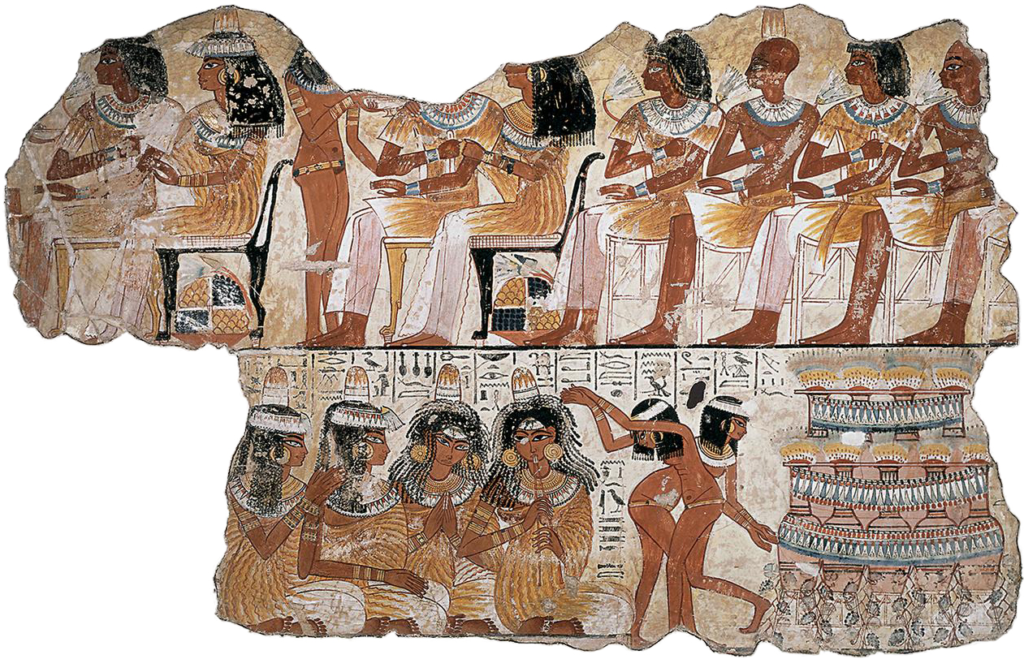
People had been using yeast—spooning off its loamy, foamy scum from one bread bowl or wine vat and inserting it in another—for thousands of years before they understood what this seething substance was or what, exactly, it was doing. Hieroglyphs from ancient Egypt already suggested yeast as an essential sidekick for the baker and brewer, but they didn’t delineate its magic—that people had identified and isolated yeast to make bread rise and grape juice spirited was magic enough. As the great anatomist and evolutionary theory advocate Thomas Henry Huxley declared in an 1871 lecture, “It is highly creditable to the ingenuity of our ancestors that the peculiar property of fermented liquids, in virtue of which they ‘make glad the heart of man,’ seems to have been known in the remotest periods of which we have any record.”

All the different linguistic iterations of yeast—gäscht, gischt, gest, gist, yst, barm, beorm, bären, hefe—refer to the same descriptive action and event: to raise, to rise, to bear up with, as Huxley put it, “‘yeasty’ waves and ‘gusty’ breezes.” This predictable, if chaotic and muddy, pulpy process—fermentation—was also known to purify the original grain down to its liquid essence—its “spirit”—which, as Huxley described it, “possesses a very wonderful influence on the nervous system; so that in small doses it exhilarates, while in larger it stupefies.”

Though beer and wine were staples of everyday living for thousands and thousands of years, wine- and beer-making were tough trades—precisely because what the gift of yeast was, exactly, was not clear. Until about 150 years ago, mass spoilage of both commercial and homemade alcoholic consumables was incredibly common. Imagine your livelihood or daily gratification dependent on your own handcrafted concoctions. Now, imagine stumbling down to your cellar on a damp night to fetch a nip or a barrel for yourself, your neighbors, or the local tavern. Instead you’re assaulted by a putrid smell wafting from half of your wooden drums. You ladle into one of your casks and discover an intensely sour or sulfurous brew. In the meantime, some drink has sloshed onto your floor, and the broth’s so rancid, it’s slick with its own nasty turn. What caused this quick slippage into spoilage? This question enticed many an early scientist to the lab bench—in part because funding was at the ready.

In a 2003 article on yeast research in the journal Microbiology, James A. Barnett explains that because fermentation was so important to daily life and whole economies, scientific investigations of yeast began in the seventeenth century and were formalized in the eighteenth century, by chemists—not “natural historians” (as early biologists were called)—who were originally interested in the fermentation process as a series of chemical reactions.

In late eighteenth-century Florence, Giovanni Valentino Fabbroni was part of the first wave of yeast research. Fabbroni—a true Renaissance man who dabbled in politics and electro-chemistry, wrote tomes on farming practices, and helped Italy adapt the metric system—determined that in order for fermentation to begin, yeast must be present. But he also concluded his work by doing something remarkable: Fabbroni categorized yeast as a “vegeto-animal”—something akin to a living organism—responsible for the fermentation process.

Two years later, in 1789 and in France, Antoine Lavoisier focused on fermentation in winemaking, again regarding it as a chemical process. As Barnett explains, “he seem[ed] to be the first person to describe a chemical reaction by means of an equation, writing ‘grape must = carbonic acid + alcohol.’” Lavoisier, who was born into the aristocracy, became a lawyer while pursuing everything from botany to meteorology on the side. At twenty-six, he was elected to the Academy of Sciences, bought part of a law firm specializing in tax collection for the state, and, while working on his own theory of combustion, eventually came to be considered France’s “father of modern chemistry.” The French government, then the world’s top supplier of wine (today, it ranks second, after Italy), needed Lavoisier’s discoveries—and badly, too: France had to stem the literal and figurative spoiling of its top-grossing industry. But as the revolution took hold, Lavoisier’s fame and wealth implicated him as a soldier of the regime. Arrested for his role as a tax collector, Lavoisier was tried and convicted as a traitor and decapitated in 1794. The Italian mathematician and astronomer Joseph-Louis Lagrange publicly mourned: “It took them only an instant to cut off his head, and one hundred years might not suffice to reproduce its like.”

Indeed, Lagrange was onto something: the new government’s leaders were very quickly in want of scientific help for the wine and spirits industries. In 1803, the Institut de France offered up a medal of pure gold for any scientist who could specify the key agent in the fermenting process. Another thirty years passed before the scientific community had much of a clue—and its discovery tore the community apart.

By the 1830s, with the help of new microscope magnification, Friedrich Kützing and Theodor Schwann, both Germans, and Charles Cagniard-Latour, a Frenchman, independently concluded that yeast was responsible for fermenting grains. And much more than that: these yeasts, the scientists nervously hemmed, um, they seemed to be alive.

Cagniard-Latour focused on the shapes of both beer and wine yeasts, describing their cellular bulbous contours as less like chemical substances and more resembling organisms in the vegetable kingdom. Schwann pushed the categorization even further: upon persistent and continued microscopic investigations, he declared that yeast looks like, acts like, and clearly is a member of the fungi family—“without doubt a plant.” He also argued that a yeast’s cell was essentially its body—meaning that each yeast cell was a complete organism, somewhat independent of the other yeast organisms. Kützing, a pharmacist’s assistant with limited formal training, published extensive illustrations of yeast and speculated that different types of yeast fermented differently; his speculation was confirmed three decades later. From their individual lab perches, each of the three scientists concluded the same thing: yeast is not only alive, but it also eats the sugars of grains or grapes, and this digestion, which creates acid and alcohol in the process, is, in effect, fermentation.

This abrupt reframing of fermentation as a feat of biology caused a stir. Some chemist giants in the field, like Justus von Liebig, found it flat out ridiculous. A preeminent chemistry teacher and theorist, von Liebig proclaimed that if yeast was alive, the growth and integrity of all science was at grave risk: “When we examine strictly the arguments by which this vitalist theory of fermentation is supported and defended, we feel ourselves carried back to the infancy of science.” Von Liebig went so far as to co-publish anonymously (with another famous and similarly offended chemist, Friedrich Wöhler) a satirical journal paper in which yeasts were depicted as little animals feasting on sugar and pissing and shitting carbonic acid and alcohol.

Though he himself did little experimental research on yeast and fermentation, von Liebig insisted that the yeasts were just the result of a chemical process. Chemical reactions could perhaps produce yeast, he allowed, but the yeasts themselves could never be alive, nor active, nor the agents of change.
Von Liebig stuck to this story even after Louis Pasteur, another famous chemist, took up yeast study and eventually became the world’s first famous microbiologist because of it.

These long-term investigations into and disciplinary disputes about the nature of yeast reordered the scientific landscape: the borders between chemistry and biology shifted, giving way to a new field: microbiology—the study of the smallest forms of life.

Dr_Theodor_Schwann

Filed Under: Birthdays, Just For Fun, Related Pleasures Tagged With: History, Science, Yeast

Historic Beer Terrorist Birthday: Carrie Nation

November 25, 2025 By Jay Brooks

hatchet
Today is the birthday of Carrie Nation (November 25, 1846–June 9, 1911). Many biographies of her today refer to her as a “famous leader and activist,” a “temperance crusader” or “temperance advocate.” But she was also a terrorist who tried to impose her will by smashing up bars. One simple definition of terrorism is “the unlawful use of violence and intimidation, especially against civilians, in the pursuit of political aims.” That’s exactly what she was doing, and why she was celebrated by temperance groups, especially the Woman’s Christian Temperance Union, which she was a member of and went so far as to start a local branch. None of these groups did much to stop her destroying private property and terrorizing people she disagreed with, because even though they wouldn’t come out publicly in favor of such tactics, in private they were just fine with the results. That she’s still revered in some circles today strikes me as quite odd. She was a criminal, and yet has her own page on The State Historical Society of Missouri’s “Historic Missourians,” (which is doubly odd since she was born in Kentucky and only moved to Missouri when she was a young girl). Many biographies refer to her “passionate activism against alcohol” or her “passion for fighting liquor” as positive attributes, which certainly seems like revisionist history and apologists for criminal behavior to me. Certainly, the bar owners and patrons whom she encountered have a considerably different opinion of her “passion.” According to Wikipedia, “She described herself as ‘a bulldog running along at the feet of Jesus, barking at what He doesn’t like,’ and claimed a divine ordination to promote temperance by destroying bars.”

Here’s her entry from Wikipedia:

Nation was born in Garrard County, Kentucky, to George and Mary (née Campbell) Moore. Her father was a successful farmer, stock trader, and slaveholder of Irish descent. During much of her early life, her health was poor and her family experienced financial setbacks. The family moved several times in Kentucky and finally settled in Belton, Missouri in 1854. She had poor education and informal learning.

In addition to their financial difficulties, many of her family members suffered from mental illness, her mother at times having delusions. There is speculation that the family did not stay in one place long because of rumors about Nation’s mother’s mental state. Some writers have speculated that Nation’s mother, Mary, believed she was Queen Victoria because of her love of finery and social airs. Mary lived in an insane asylum in Nevada, Missouri, from August 1890 until her death on September 28, 1893. Mary was put in the asylum through legal action by her son, Charles, although there is suspicion that Charles instigated the lawsuit because he owed Mary money.

The family moved to Texas as Missouri became involved in the Civil War in 1862. George did not fare well in Texas, and he moved his family back to Missouri. The family returned to High Grove Farm in Cass County. When the Union Army ordered them to evacuate their farm, they moved to Kansas City. Carrie nursed wounded soldiers after a raid on Independence, Missouri. The family again returned to their farm when the Civil War ended.

In 1865 Carrie met Charles Gloyd, a young physician who had fought for the Union, who was a severe alcoholic. Gloyd taught school near the Moores’ farm while deciding where to establish his medical practice. He eventually settled on Holden, Missouri, and asked Nation to marry him. Nation’s parents objected to the union because they believed he was addicted to alcohol, but the marriage proceeded. They were married on November 21, 1867, and separated shortly before the birth of their daughter, Charlien, on September 27, 1868. Gloyd died in 1869 of alcoholism.

Influenced by the death of her husband, Nation developed a passionate activism against alcohol. With the proceeds from selling her inherited land (as well as that of her husband’s estate), she built a small house in Holden. She moved there with her mother-in-law and Charlien, and attended the Normal Institute in Warrensburg, Missouri, earning her teaching certificate in July 1872. She taught at a school in Holden for four years. She obtained a history degree and studied the influence of Greek philosophers on American politics.

In 1874, Carrie married David A. Nation, an attorney, minister, newspaper journalist, and father, 19 years her senior.

The family purchased a 1,700 acre (690 ha) cotton plantation on the San Bernard River in Brazoria County, Texas. As neither knew much about farming, the venture was ultimately unsuccessful. David Nation moved to Brazoria to practice law. In about 1880, Carrie moved to Columbia to operate the hotel owned by A. R. and Jesse W. Park. Her name is on the Columbia Methodist Church roll. She lived at the hotel with her daughter, Charlien Gloyd, “Mother Gloyd” (Carrie’s first mother-in-law), and David’s daughter, Lola. Her husband also operated a saddle shop just southwest of this site. The family soon moved to Richmond, Texas to operate a hotel.

David Nation became involved in the Jaybird–Woodpecker War. As a result, he was forced to move back north to Medicine Lodge, Kansas in 1889, where he found work preaching at a Christian church and Carrie ran a successful hotel.

She began her temperance work in Medicine Lodge by starting a local branch of the Woman’s Christian Temperance Union and campaigning for the enforcement of Kansas’ ban on the sale of liquor. Her methods escalated from simple protests to serenading saloon patrons with hymns accompanied by a hand organ, to greeting bartenders with pointed remarks such as, “Good morning, destroyer of men’s souls.” She also helped her mother and her daughter who had mental health problems.

Dissatisfied with the results of her efforts, Nation began to pray to God for direction. On June 5, 1900, she felt she received her answer in the form of a heavenly vision. As she described it:

The next morning I was awakened by a voice which seemed to me speaking in my heart, these words, “GO TO KIOWA,” and my hands were lifted and thrown down and the words, “I’LL STAND BY YOU.” The words, “Go to Kiowa,” were spoken in a murmuring, musical tone, low and soft, but “I’ll stand by you,” was very clear, positive and emphatic. I was impressed with a great inspiration, the interpretation was very plain, it was this: “Take something in your hands, and throw at these places in Kiowa and smash them.”

Responding to the revelation, Nation gathered several rocks – “smashers”, she called them – and proceeded to Dobson’s Saloon on June 7. Announcing “Men, I have come to save you from a drunkard’s fate”, she began to destroy the saloon’s stock with her cache of rocks. After she similarly destroyed two other saloons in Kiowa, a tornado hit eastern Kansas, which she took as divine approval of her actions.

hatchetpin
She even sold hatchet pins.

Nation continued her destructive ways in Kansas, her fame spreading through her growing arrest record. After she led a raid in Wichita, Kansas, her husband joked that she should use a hatchet next time for maximum damage. Nation replied, “That is the most sensible thing you have said since I married you.” The couple divorced in 1901; they had no children. Between 1902-06 she lived in Guthrie, Oklahoma.

Alone or accompanied by hymn-singing women, she would march into a bar and sing and pray while smashing bar fixtures and stock with a hatchet. Her actions often did not include other people, just herself. Between 1900 and 1910, she was arrested some 30 times for “hatchetations”, as she came to call them. Nation paid her jail fines from lecture-tour fees and sales of souvenir hatchets. The souvenirs were provided by a Topeka, Kansas pharmacist. Engraved on the handle of the hatchet, the pin reads, “Death to Rum”.

In April 1901, Nation went to Kansas City, Missouri, a city known for its wide opposition to the temperance movement, and smashed liquor in various bars on 12th Street in downtown Kansas City. She was arrested, hauled into court and fined $500 ($13,400 in 2011 dollars), although the judge suspended the fine so long as Nation never returned to Kansas City. She would be arrested over 32 times—one report is that she was placed in the Washington DC poorhouse for three days for refusing to pay a $35 fine.

Nation also conducted women’s rights marches in Topeka, Kansas. She led hundreds of women that were part of the Home Defender’s Army to march in opposition to saloons.

In Amarillo, Texas, Nation received a strong response, as she was sponsored by the noted surveyor W.D. Twichell, an active Methodist layman.

Carrie_Nation_postcard
A common sight in bars and taverns at the time.

Nation’s anti-alcohol activities became widely known, with the slogan “All Nations Welcome But Carrie” becoming a bar-room staple. She published The Smasher’s Mail, a biweekly newsletter, and The Hatchet, a newspaper. Later in life she exploited her name by appearing in vaudeville in the United States and music halls in Great Britain. In October 1909, various press outlets reported that Nation claimed to have invented an aeroplane.

Nation, a proud woman more given to sermonizing than entertaining, found these venues uninspiring for her proselytizing. One of the number of pre-World War I acts that “failed to click” with foreign audiences, Nation was struck by an egg thrown by an audience member during one 1909 music hall lecture at the Canterbury Theatre of Varieties. Indignantly, “The Anti-Souse Queen” ripped up her contract and returned to the United States. Seeking profits elsewhere, she sold photographs of herself, collected lecture fees, and marketed miniature souvenir hatchets.

Suspicious that President William McKinley was a secret drinker, Nation applauded his 1901 assassination because drinkers “got what they deserved.”

Near the end of her life, Nation moved to Eureka Springs, Arkansas where she founded the home known as “Hatchet Hall”. In poor health, she collapsed during a speech in a Eureka Springs park. She was taken to a hospital in Leavenworth, Kansas, the Evergreen Place Hospital and Sanitarium located on 25 acres at Limit Street and South Maple Avenue just outside the city limits of Leavenworth.

Evergreen Place Hospital was founded and operated by Dr. Charles Goddard, a professor at the University of Kansas School of Medicine and a distinguished authority on nervous and mental troubles, liquor and drug habits.

Nation died there on June 9, 1911. She was buried in an unmarked grave in Belton City Cemetery in Belton, Missouri. The Woman’s Christian Temperance Union later erected a stone inscribed “Faithful to the Cause of Prohibition, She Hath Done What She Could” and the name “Carry A. Nation.”

And this is her biography from the Encyclopedia Britannica:

Carry Nation, in full Carry A. Nation, née Carrie Amelia Moore, (born November 25, 1846, Garrard county, Kentucky, U.S.—died June 9, 1911, Leavenworth, Kansas), American temperance advocate famous for using a hatchet to demolish barrooms.

Carry Moore as a child experienced poverty, her mother’s mental instability, and frequent bouts of ill health. Although she held a teaching certificate from a state normal school, her education was intermittent. In 1867 she married a young physician, Charles Gloyd, whom she left after a few months because of his alcoholism. In 1877 she married David Nation, a lawyer, journalist, and minister, who divorced her in 1901 on the grounds of desertion.

Carry Nation entered the temperance movement in 1890, when a U.S. Supreme Court decision in favour of the importation and sale of liquor in “original packages” from other states weakened the prohibition laws of Kansas, where she was living. In her view, the illegality of the saloons flourishing in that state meant that anyone could destroy them with impunity. Alone or accompanied by hymn-singing women, Nation, who was typically dressed in stark black-and-white clothing, would march into a saloon and proceed to sing, pray, hurl biblical-sounding vituperations, and smash the bar fixtures and stock with a hatchet. At one point, her fervour led her to invade the governor’s chambers at Topeka. Jailed many times, she paid her fines from lecture tour fees and sales of souvenir hatchets, at times earning as much as $300 per week. She herself survived numerous physical assaults.

Nation published a few short-lived newsletters—called variously The Smasher’s Mail, The Hatchet, and the Home Defender—and her autobiography, The Use and Need of the Life of Carry A. Nation, in 1904 (rev. ed., 2006). Her “hatchetation” period was brief but brought her national notoriety. She was for a time much in demand as a temperance lecturer; she also railed against fraternal orders, tobacco, foreign foods, corsets, skirts of improper length, and mildly pornographic art of the sort found in some barrooms of the time. She was an advocate of woman suffrage. Later she appeared in vaudeville, at Coney Island, New York, and briefly in 1903 in Hatchetation, an adaptation of T.S. Arthur’s Ten Nights in a Bar-Room: And What I Saw There (1854). Despite her campaign, the enactment in 1919 of national prohibition was largely the result of the efforts of more conventional reformers, who had been reluctant to support her.

Nation-SF-Call-March-1-1903
This was the front page of the newspaper, the San Francisco Call, on March 1, 1903, when Nation visited the California city.

If you’re curious if her first name is “Carry” or “Carrie,” it’s actually both. “The spelling of her first name varies; both ‘Carrie’ and ‘Carry’ are considered correct. Official records say ‘Carrie,’ which Nation used for most of her life; the name ‘Carry’ was used by her father in the family Bible. Upon beginning her campaign against liquor in the early 20th century, she adopted the name ‘Carry A. Nation,’ saying it meant ‘Carry A Nation for Prohibition.’ After gaining notoriety, Carrie officially registered ‘Carry’ as a trademark.”

Filed Under: Birthdays, Editorial, Just For Fun, Politics & Law, Related Pleasures Tagged With: History, Prohibition, Prohibitionists

Historic Beer Birthday: William Painter

November 20, 2025 By Jay Brooks

crown-seal-and-cork
Today is the birthday of William Painter (November 20, 1838-July 15, 1906). He was born in Ireland, and in 1858 came to the U.S. “in search of better opportunities,” and settled in Baltimore, Maryland. He trained as a mechanical engineer and initially got a job “as a foreman at the Murrill & Keizer’s machine shop.” His biggest claim to fame is that he “invented the crown cork bottle cap and bottle opener. He worked with manufacturers to develop a universal neck for all glass bottles and started Crown Cork and Seal in 1892 to manufacture caps that could be used to seal the universal necks.”

William Painter and his father, Dr. Edward Painter : sketches and reminiscences

Over the course of his life, “Painter patented 85 inventions, including the common bottle cap, the bottle opener, a machine for crowning bottles, a paper-folding machine, a safety ejection seat for passenger trains, and a machine for detecting counterfeit currency. He was inducted to the National Inventors Hall of Fame in 2006.”

The bottle cap was arguably his most important invention. “The crown cork was patented by William Painter on February 2, 1892 (U.S. Patent 468,258). It had 24 teeth and a cork seal with a paper backing to prevent contact between the contents and the metal cap. The current version has 21 teeth. To open these bottles, a bottle opener is generally used.

The height of the crown cap was reduced and specified in the German standard DIN 6099 in the 1960s. This also defined the “twist-off” crown cap, now used in the United States, Canada, and Australia. This cap is pressed around screw threads instead of a flange, and can be removed by twisting the cap by hand, eliminating the need for an opener.”

US468258-0

He also patented several other innovations for the brewing industry, such as the Bottle Seal Or Stopper, from 1894, the Bottle Stopper, in 1885, a Closure For Sealing Bottles, in 1899, and a Capped-Bottle Opener, from 1894, to name just a few.

crown-cork-system
And here’s Painter’s obituary from the Brewers Journal in 1906:

william-pinter-obit-1
william-pinter-obit-2
william-pinter-obit-3

Filed Under: Birthdays, Just For Fun, Related Pleasures Tagged With: Bottles, Crowns, History, Patent, Science of Brewing

Historic Beer Birthday: Morten Meilgaard

November 11, 2025 By Jay Brooks

Today is the birthday of Morten Meilgaard (November 11, 1928-April 11, 2009). He was born in Vigerslev, Denmark, and received a Master of Science in Chemical Engineering, from the Technology University Denmark in 1952 and a Doctor of Science in Food Science, also from the Technology University Denmark in 1982. He is best known in the beer world for his work in sensory evaluation and the creation of the beer flavor wheel in the 1970s.

Meilgaard in 2000.

Throughout his career, he worked as a research chemist for Carlsberg in the late 1940s and 50s, then opened his own lab, the Alfred Jorgensen Laboratory for Fermentation, Copenhagen, which he ran until 1967. He later did research while working for Cerveceria Cuauhtemoc, in Mexico, and the Stroh Brewery Co. in Detroit, among others.

In Australia in 1962.

He received the Master Brewers Association Award of Merit for his research into compounds that influence the taste of beer. Meilgaard also founded the Hops Research Council of the United States, and chaired the Scientific Advisory Committee of the U.S. Brewers Association. He also chaired the Subcommittee on Sensory Analysis of the American Society of Brewing Chemists for 14 years.

This biography of Morten Milgaard is by his son Stephen Goodfellow:

Morten Christian Meilgaard was born on Fyn, Denmark in 1928. His younger siblings, Ida, Jorgen, and Erik, followed in short succession. As their father, Anton Meilgaard, was a country doctor, they were brought up in a rural milieu in Morud. Their school was a considerable distance away, and during some winters, they would ski to pursue their education.

Morten caught the travel bug early, taking a road trip with his friends Finn and Torben, pulling a creaky four-wheeled cart around Jutland in 1944, during the German occupation of Denmark.

After WWII, Morten pursued a degree as a chemical engineer and became rapidly became a research chemist specializing in yeasts for Alfred Jorgensens Laboratorium in Copenhagen. This dovetailed nicely with his love of travel, and his job took him all over the World. He was the Johnny Appleseed of establishing the flavors for beer throughout the World, including in Japan, South Africa, and the Americas.

Morten’s contribution to the field of sensory science cannot be underestimated; it was truly extensive. Amongst his many contributions, He is the major contributor to the flavor wheel, a Rosetta Stone of sensory evaluation science.

Morten’s publication, Sensory Evaluation Techniques, is the educational standard in this field of science. He was quite possibly the foremost expert in his field.

During his work and travels in England, he met Manon Meadows. They fell in love and remained married for almost fifty years, until her death in 2007.

Justin Meilgaard, Morten’s and Manon’s son, was born in England, 1966.

In 1967, the entire family, including Manon’s mother, Doris Meadows moved from Denmark to Monterrey Mexico where Morten worked for the Cuauhtemoc Brewery from 1967 to 1973.

In 1973, Morten was hired by Peter Stroh of the Stroh Brewery, Detroit, where he worked as Peter’s right-hand man until the Brewery was acquired by the Miller Brewing Company in 1999, at which point Morten retired.

Even after retirement, he continued to be active in his profession for many years, doing consulting jobs for the Danish Government, working with his co-editors on a revised edition of his book, and donating his extensive collection of brewing literature to Wayne State University.

In 1979, brewing chemist Morten Meilgaard created the Beer Flavor Wheel to be a standard for beer organoleptic analysis.Soon afterward, the European Brewery Convention, the American Society of Brewing Chemists, and the Master Brewers Association of the Americas all accepted it as such.

This is Scott Bickham’s “An Introduction to Sensory Analysis” from Brewing Techniques for their December 1997 issue, explaining the development of the beer flavor wheel:

The Meilgaard system developed by Meilgaard in 1975, was the first attempt to link flavor characteristics to certain styles of beer. This classification scheme assigned a Flavor Unit (FU) rating to each flavor constituent, defined as the ratio of a given compound’s concentration to its threshold value. Thus, if an American amber ale contained a caramel compound in concentrations twice that of its threshold value, for example, it would have an FU of 2. In this context, the relevant threshold is one of recognition, which corresponds to the lowest physical intensity at which a stimulus is correctly identified. This is to be compared with the stimulus threshold, the lowest physical intensity at which stimulus is perceptible and the difference threshold, the smallest change in physical intensity of a stimulus which is perceptible.

In the Meilgaard system, compounds primarily responsible for “beery” flavors are called primary constituents. These have concentrations above 2 FU (therefore they are generally present at concentrations at least twice the threshold). Removing any primary constituents from the beer would have a significant impact on the flavor. It doesn’t require much sensory training to recognize the essential contributions of alcohol, hop bitterness (technically), and carbon dioxide to any beer’s flavor. Although not as intense, secondary constituents (classified as having 0.5-2.0 FU) constitute the bulk of the flavor and act together to provide the characteristics that distinguish different beer styles. Removal of any of these secondary constituents would result in a lesser but still noticeable change in the flavor.

The next group is the tertiary constituents (0.1-0.5 FU) responsible for contributing subsidiary flavor notes. Removal of these, or of any of the background constituents with concentrations below 0.1 FU, produces no perceptible change in beer flavor, though these compounds nevertheless contribute to the overall character of the beer. Just as if you had removed the spices from a casserole, they may not be a major part of the recipe, but without them the end result will be flat.

Filed Under: Birthdays, Just For Fun, Related Pleasures Tagged With: Denmark, History, Senses, Sensory, Tasting

Historic Beer Birthday: Antonie van Leeuwenhoek

October 24, 2025 By Jay Brooks

microbiology
Today is the birthday of Antonie van Leeuwenhoek (October 24, 1632–August 26, 1723). He “was a Dutch tradesman and scientist, and is commonly known as ‘the Father of Microbiology.'” Apropos of nothing, “his mother, Margaretha (Bel van den Berch), came from a well-to-do brewer’s family.” Despite hi family ties, van Leeuwenhoek didn’t discover anything specifically useful to the brewing industry, but he did find that there was life pretty much everywhere he looked, using his microscope, including the “microscope—tiny “animalcules,” including yeast cells, which he described for the first time” in 1674-80.” But he laid the groundwork for later scientists to figure how exactly yeast worked. As Brian Hunt wrote in the entry for “infection” in the “The Oxford Companion to Beer,” that “the existence of yeast as a microbe was only discovered in 1674 by Antonie van Leeuwenhoek, the inventor of the modern microscope.” Or as Sylvie Van Zandycke, PhD, put it. “The yeast Saccharomyces cerevisiae was used for thousands of years in the fermentation of alcoholic beverages before anyone realized it! The Dutch scientist, Anton Van Leeuwenhoek observed the mighty cells for the first time under the microscope in 1680.”

Leeuwenhoek-1680

Here’s a short biography, from the Science Museum Brought to Life:

Leeuwenhoek was born in Delft in the Netherlands, to a family of brewers. He is known for his highly accurate observations using microscopes.

Leeuwenhoek worked as a draper, or fabric merchant. In his work he used magnifying glasses to look at the quality of fabric. After reading natural scientist Robert Hooke’s highly popular study of the microscopic world, called Micrographia (1665), he decided to use magnifying lenses to examine the natural world. Leeuwenhoek began to make lenses and made observations with the microscopes he produced. In total he made over 500 such microscopes, some of which allowed him to see objects magnified up to 200 times.

These were not the first microscopes, but Leeuwenhoek became famous for his ability to observe and reproduce what was seen under the microscope. He hired an illustrator who reproduced the things Leeuwenhoek saw.

In 1673 he began corresponding with the Royal Society of London, which had just formed. Leeuwenhoek made some of the first observations of blood cells, many microscopic animals, and living bacteria, which he described as ‘many very little living animalcules’. In 1680 his work was recognised with membership of the Royal Society – although he never attended a meeting, remaining all his life in Delft.

Board-Leeuwenhoek
Leeuwenhoek with His Microscope, by Ernest Board (1877–1934)

Here’s a story from Gizmodo, by Esther Inglis-Arkell, explaining Antonie van Leeuwenhoek’s role and iviting readers to Meet The First Man To Put Beer Under A Microscope:

The man in the picture [the same one at the top of this post] is considered the “Father of Microbiology.” He helped to discover and sketch microorganisms. When he turned his microscope on beer, he saw some of the most useful microorganisms in the world — but he failed to recognize them.

This man above is Anton van Leeuwenhoek, and he’s wearing an absolutely bitchin’ coat because he was a draper by trade. In fact, he draped so successfully that he managed to indulge his hobbies as he got older, one of which was lens making. Anton spent his days making powerful microscopes and sketching the objects he put in front of them. He discovered many things, the most interesting of which were animalcules, things that looked like tiny little animals. His sketches and descriptions, as well as his microscopes, jumpstarted the field of microbiology.

It wasn’t long before he turned his lens on beer in the process of brewing. It was 1680 when he first trained his lens on a droplet of beer. At the time, no one knew what it was that made hops, barley, and water turn into beer. Although they knew of yeast as a cloudy substance that appeared in beer after it spent some time fermenting, they were entirely ignorant of what it did; to the point where there were laws against using anything except barley, hops, and water in the beer-making process. Naturally, as soon as Anton looked at brewing beer he saw little circular blobs. He saw the way they aggregated into larger groups. He saw the way that they produced bubbles of what he thought was “air,” and floated to the surface.

Leeuwenhoek-globs

Despite his obsession with microorganisms, he utterly failed to recognize them as life. These blobs, he believed, had come loose from flour. They aggregated into groups of six as part of a chemical process. Anton was fascinated by these groups of flour globs. He modeled them in wax, because he wanted to figure out the ways six globs could stick together while all being visible from above. This is his sketch of his models.

It took another 150 years before Charles Canard-Latour figured out that the “air” was carbon dioxide and the sextets of blobs hadn’t aggregated together, they’d grown. Archaeologists believe that beer was probably first brewed around 3000 BC. That means that we used an organism for nearly 5,000 years before we realized it even existed.

Although van Leeuwenhoek did write about the wood used in beer barrels:

Leeuwenhoek-wood

Filed Under: Birthdays, Just For Fun, Related Pleasures Tagged With: History, Science, The Netherlands

Next Page »

Find Something

Northern California Breweries

Please consider purchasing my latest book, California Breweries North, available from Amazon, or ask for it at your local bookstore.

Recent Comments

  • Ernie Dewing on Historic Beer Birthday: Charles William Bergner 
  • Steve 'Pudgy' De Rose on Historic Beer Birthday: Jacob Schmidt
  • Jay Brooks on Beer Birthday: Bill Owens
  • Steve 'Pudgy' De Rose on Beer Birthday: Charles Finkel
  • Steve 'Pudgy' De Rose on Beer Birthday: Bill Owens

Recent Posts

  • Historic Beer Birthday: John Kress January 7, 2026
  • Beer In Ads #5163: Fresh As A Babbling Brook, Congress Bock Beer January 6, 2026
  • Historic Beer Birthday: Henry C. Berghoff January 6, 2026
  • Historic Beer Birthday: Caspar Ruff January 6, 2026
  • Beer Birthday: Bryan Roth January 6, 2026

BBB Archives

Feedback

Head Quarter
This site is hosted and maintained by H25Q.dev. Any questions or comments for the webmaster can be directed here.