Brookston Beer Bulletin

Jay R. Brooks on Beer

  • Home
  • About
  • Editorial
  • Birthdays
  • Art & Beer

Socialize

  • Dribbble
  • Email
  • Facebook
  • Flickr
  • GitHub
  • Instagram
  • LinkedIn
  • Pinterest
  • RSS
  • Twitter
  • YouTube

Powered by Genesis

Historic Beer Birthday: Joseph Junk

January 15, 2025 By Jay Brooks

chicago-1
Today is the birthday of German-born Joseph P. Junk (January 15, 1841-February 17, 1887) who emigrated to the U.S. in 1868, and in 1883 opened the eponymous Joseph Junk Brewery in Chicago, Illinois. Unfortunately, he died just a few years later, in 1887, and his widow, Magdalena Junk, took over management of the brewery, renaming it Junk’s Brewery and then the Jos. Junk Brewery, which it remained until 1909. She increased production from around 4,000 barrels to 45,000 barrels of lager beer.

It then became the South Side Brewing Co. until prohibition, and afterwards reopened under that same name. But in 1937 in became the more fancifully named Ambrosia Brewing Co., then changed again one final time, to the Atlantic Brewing Co., before closing for good in 1965. It was located at 3700/3710 South Halstead and 37th Streets. According to Tavern Trove, “the brewery has been torn down. What was the Ambrosia Brewery is now the parking lot for Schaller’s Pump, a tavern located at 3714 S. Halsted, Chicago.”

Here’s a short article from the Western Brewer (Brewer’s Journal) from August 1909 reporting on the transition from Jos. Junk to South Side Brewing.

south-side-chicago

I was unable to find any photos of any of the Junk family, and in fact very little of anything, which I guess makes sense since they were the Junk Brewery, or some variation, for a relatively short time a very long time ago. Here’s what I did find.

junk-bottle
A rare Junk bottle.

Delivery-from-South-Side-Brewing-aka-Ambrosia-Brewing-circa-1936
This is a South Side delivery truck taken around 1936.

postcard-chicago-ambrosia-brewing-company-3700-s-halsted-aerial-c1930
The website where I found this claims it was from 1930, but American Breweries II states that it wasn’t called Ambrosia Brewing until 1937, so it’s probably from the late 1930s at the earliest. But another source says it’s from the 1950s, and indeed it as known as Ambrosia through 1959, so that’s perhaps more likely given the look of the postcard.

ambrosia-brewing
This is in the collection of the Chicago History Museum, but they appear to have no idea when it was taken.

AmbrosiaChicago1952This is the brewery around 1952, taken by Ernie Oest and featured at beer can history.

But by far, this is the most interesting bit of history on Joseph Junk I turned up. This is a newspaper article from the Chicago Tribune for March 29, 1902. It concerns what I can only assume is Joe and Magdalena’s son, since they refer to him as a “young man” and “member of the Chicago Brewery” rather then saying “owner.” Seems the young man went on a bender in San Francisco and ended up marrying some floozy he’d just met. But here’s the best bit. “The trouble began when the young man’s family learned that Lottie (is that not a floozy’s name?) had done a song-and-dance turn in abbreviated skirts.” Oh, the horror. It sounds like they could live with or tolerate the “song-and dance turn,” but not, I repeat not, if there were “abbreviated skirts” involved. That was the deal breaker, so they sent him off on “a Southern tour” and her packing back to Frisco, eventually settling on a payoff on $10,000, which in today’s money is over a quarter-million dollars, or roughly $276,150. It must have been the talk of polite society for months afterwards, bringing shame down on the Junk family.

Junk-chi-tribune-1902

Filed Under: Beers, Birthdays, Breweries, Just For Fun, Related Pleasures Tagged With: Chicago, History, Illinois

Historic Beer Birthday: Henry Shlaudeman

January 13, 2025 By Jay Brooks

decatur-brewing-old
Today is the birthday of Henry Shlaudeman (January 13, 1834-February 24, 1923), who founded what would become the Decatur Brewing Co., in Decatur, Illinois. Shlaudeman was born in Wildeshausen, Grossherzogtum Oldenburg, in what today is part of Germany. He emigrated to America in 1846. After a short stint in the cigar trade, he joined the Edward Harpstrite Brewery (which was originally the John Koehler & Adam Keck Brewery when it opened in 1855). Within a few years, he’d made enough of an impact that it became the Harpstrite & Shlaudeman Brewery, and two years after that, in 1884, he bought out his partner and it became the Henry Shlaudeman Brewery. In 1888, it was again renamed, this time the Decatur Brewing Co. It reopened after prohibition in 1934 under the name Macon County Beverage Co., but closed for good the same year.


decatur_brewery_1895

Surprising, I was unable to turn up even one photograph of him, and very little even of the brewery he owned. The City of Decatur and Macon County, subtitled “A Record of Settlement, Organization, Progress and Achievement,” includes a biography of Henry Shlaudeman:

Henry-Shlaudeman-bio-1
Henry-Shlaudeman-bio-2

And while there’s not much about him, his house has an entire webpage, all about the Henry Shlaudeman House

Henry-Shlaudeman-house

He also held at least two patents related to brewing. One was for an Improvement in safety-valves for fermented-liquor casks from 1878 and the other for a Refrigerator-building for fermenting and storing beer.

Filed Under: Birthdays, Breweries, Just For Fun, Related Pleasures Tagged With: Germany, History, Illinois

Historic Beer Birthday: Michael Joseph Owens

January 1, 2025 By Jay Brooks

owens-illinois
Today is the birthday of Michael Joseph Owens (January 1, 1859–December 27, 1923). He “was an inventor of machines that could automate the production of glass bottles.”

Michael-J-Owens-close

If you’ve ever opened a beer bottle, you’ve probably held something he had a hand in developing, because he made beer bottles cheap and affordable for breweries, and his company has continued to improve upon his designs. Based on his patents, in 1903 he founded the Owens Bottle Company, which in 1929 merged with the Illinois Glass Company in 1929 to become Owens-Illinois, Inc. Today, O-I is an international company with 80 plants in 23 countries, joint ventures in China, Italy, Malaysia, Mexico, the United States and Vietnam, with 27,000 employees worldwide and 2,100-plus worldwide patents.

MJOwens3-a
Michael J. Owens in front of one of his bottling machines from a film shot in 1910.

Here’s a short biography of Owens:

Michael Joseph Owens was an inventor of machines that could automate the production of glass bottles.

Michael J. Owens was born on January 1, 1859, in Mason County, West Virginia. As a teenager, he went to work for a glass manufacturer in Newark, Ohio.

During the late 1800s, Toledo, Ohio was the site of large supplies of natural gas and high silica-content sandstone — two items necessary for glass manufacturing. Numerous companies either formed in or relocated to Toledo, including the New England Glass Company, which relocated to Toledo in 1888. This same year, the company’s owner, Edward Drummond Libbey, hired Owens.

Within a short time, Owens had become a plant manager for Libbey in Findlay, Ohio. At this point in time, glass manufacturers in the United States had to blow glass to produce the bottles. This was a slow and tedious process. Owens sought to invent a machine that could manufacture glass bottles, rather than having to rely on skilled laborers, greatly speeding up the manufacturing process. On August 2, 1904, Owens patented a machine that could automatically manufacture glass bottles. This machine could produce four bottles per second. Owens’s invention revolutionized the glass industry. His machine also caused tremendous growth in the soft drink and beer industries, as these firms now had a less expensive way of packaging their products.

In 1903, after Owens had invented his bottle machine but before he had patented the invention, Owens formed the Owens Bottle Machine Company in Toledo. Libbey helped finance Owens’s company. This firm initially manufactured Owens’s bottle machine. By 1919, the firm had begun to manufacture bottles, and the company changed its name to the Owens Bottle Company. The company grew quickly, acquiring the Illinois Glass Company in 1929. The Owens Bottle Company became known as the Owens-Illinois Glass Company this same year. In 1965, the company changed its name one final time. It became and remains known as Owens-Illinois, Inc.

Owens retired in 1919. He did not live to see his company grow into such an important manufacturer of glass. He died on December 27, 1923, in Toledo, Ohio. Over the course of his life, Owens secured forty-five patents.

Michael Owens / sally

Here’s his biography from his Wikipedia page:

He was born in Mason County, West Virginia on January 1, 1859. He left school at the age of 10 to start a glassware apprenticeship at J. H. Hobbs, Brockunier and Company in Wheeling, West Virginia.

In 1888 he moved to Toledo, Ohio and worked for the Toledo Glass Factory owned by Edward Drummond Libbey. He was later promoted to foreman and then to supervisor. He formed the Owens Bottle Machine Company in 1903. His machines could produce glass bottles at a rate of 240 per minute, and reduce labor costs by 80%.

Owens and Libbey entered into a partnership and the company was renamed the Owens Bottle Company in 1919. In 1929 the company merged with the Illinois Glass Company to become the Owens-Illinois Glass Company.

Michael-J-Owens

To read more about Owens’ contributions, check out Michael Owens’ Glass Bottles Changed The World, by Scott S. Smith, Owens the Innovator at the University of Toledo, Today in Science, and the West Virginia Encyclopedia has a history of the Owens-Illinois Glass Company.

michael-owens-glass-bottle-machine-no-6

Filed Under: Birthdays, Just For Fun, Related Pleasures Tagged With: Bottles, History, Packaging, Patent, Science of Brewing

John Updike’s Paean To The Beer Can

March 18, 2024 By Jay Brooks

beer-can-beer
Today is one of my favorite author’s birthdays, John Updike. He grew up in the same small Pennsylvania town that I did — Shillington — and we both escaped to a life of writing. Though I think you’ll agree he did rather better than I did with the writing thing, not that I’m complaining. I once wrote to him about a harebrained idea I had about writing updated Olinger stories from the perspective of the next generation (his Olinger Stories were a series of short tales set in Olinger, which was essentially his fictional name for Shillington). He wrote me back a nice note of encouragement on a hand-typed postcard that he signed, which today hangs in my office as a reminder and for inspiration. Anyway, this little gem he wrote for the The New Yorker in 1964 is a favorite of mine and I now post it each year in his honor. Enjoy.
Beer Can by John Updike

This seems to be an era of gratuitous inventions and negative improvements. Consider the beer can. It was beautiful — as beautiful as the clothespin, as inevitable as the wine bottle, as dignified and reassuring as the fire hydrant. A tranquil cylinder of delightfully resonant metal, it could be opened in an instant, requiring only the application of a handy gadget freely dispensed by every grocer. Who can forget the small, symmetrical thrill of those two triangular punctures, the dainty pfff, the little crest of suds that foamed eagerly in the exultation of release? Now we are given, instead, a top beetling with an ugly, shmoo-shaped tab, which, after fiercely resisting the tugging, bleeding fingers of the thirsty man, threatens his lips with a dangerous and hideous hole. However, we have discovered a way to thwart Progress, usually so unthwartable. Turn the beer can upside down and open the bottom. The bottom is still the way the top used to be. True, this operation gives the beer an unsettling jolt, and the sight of a consistently inverted beer can might make people edgy, not to say queasy. But the latter difficulty could be eliminated if manufacturers would design cans that looked the same whichever end was up, like playing cards. What we need is Progress with an escape hatch.

Now that’s writing. I especially like his allusion to the beauty of the clothespin as I am an unabashed lover of clothespins.

In case you’re not as old and curmudgeonly as me — and who is? — he’s talking about the transition to the pull-tab beer can (introduced between 1962-64) to replace the flat punch-top can that required you to punch two triangular holes in the top of the can in order to drink the beer and pour it in a glass.
pull-top-can punch-top-can

The pull-tab (at left) replaced the punch top (right).

Originally known as the Zip Top, Rusty Cans has an informative and entertaining history of them. Now you know why a lot of bottle openers still have that triangle-shaped punch on one end.

So essentially, he’s lamenting the death of the old style beer can which most people considered a pain to open and downright impossible should you be without the necessary church key opener. He is correct, however, that the newfangled suckers were sharp and did cut fingers and lips on occasion, even snapping off without opening from time to time. But you still have to laugh at the unwillingness to embrace change (and possibly progress) even though he was only 32 at the time; hardly a normally curmudgeonly age.

updike

Filed Under: Beers, Just For Fun, Related Pleasures Tagged With: Cans, Literature

Märzen Madness 2024

March 5, 2024 By Jay Brooks

I may not be biggest fan of academia’s version of indentured servitude, otherwise known as college basketball, but I do still enjoy the games of March Madness every year. The tournament is usually a fun diversion for a few weeks each year, so for the thirteenth straight year, I’ve set up a fantasy game, similar to fantasy football or baseball. It’s a bracket game through Yahoo which I call “Märzen Madness.” It doesn’t look like there’s a limit to the number of people who can play, so sign up and make your picks beginning right now, with the first games taking place on March 17, which only gives you roughly two weeks to complete your bracket. So don’t delay, sign up right away and fill out your bracket.

To join Märzen Madness and play the Yahoo! Sports Tournament Pick’em game, just follow the link below. You’ll also need a Yahoo ID (which is free if you don’t already have one).

To accept the invitation and play Märzen Madness this year, just follow this invitation link.

Good luck everybody!

Filed Under: Just For Fun, Related Pleasures Tagged With: Basketball, Fantasy, Games, Sports

Beer In Ads #4665: Batman, Robin & Miss Rheingold 1962

January 2, 2024 By Jay Brooks

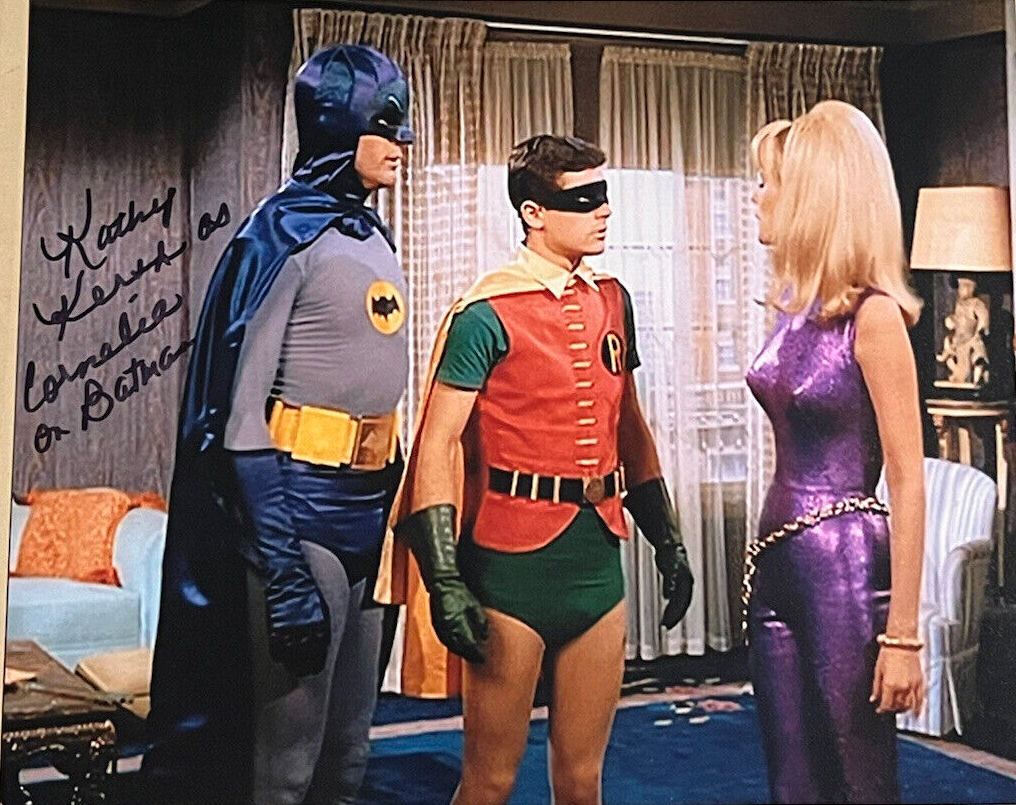
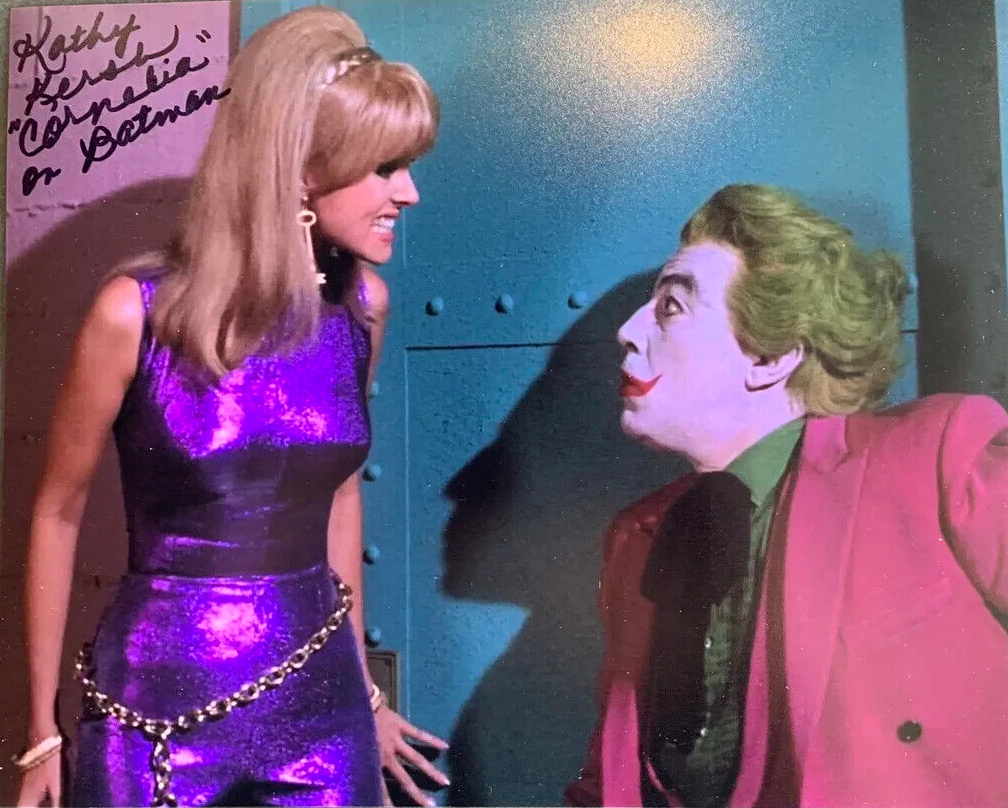
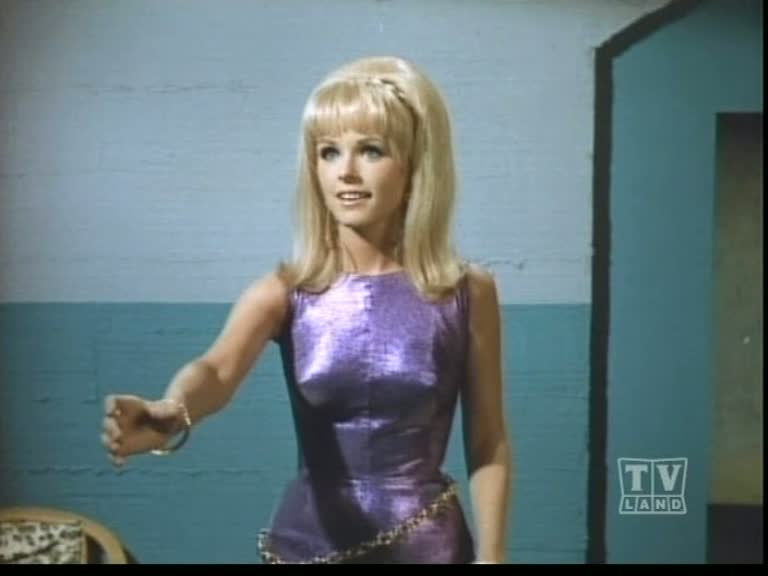
Tuesday’s ad is for “Rheingold Beer,” from 1962. This ad was made for the Rheingold Brewery, which was founded by the Liebmann family in 1883 in New York, New York. At its peak, it sold 35% of all the beer in New York state. In 1963, the family sold the brewery and in was shut down in 1976. In 1940, Philip Liebmann, great-grandson of the founder, Samuel Liebmann, started the “Miss Rheingold” pageant as the centerpiece of its marketing campaign. Beer drinkers voted each year on the young lady who would be featured as Miss Rheingold in advertisements. In the 1940s and 1950s in New York, “the selection of Miss Rheingold was as highly anticipated as the race for the White House.” The winning model was then featured in at least twelve monthly advertisements for the brewery, beginning in 1940 and ending in 1965. Beginning in 1941, the selection of next year’s Miss Rheingold was instituted and became wildly popular in the New York Area and beyond. In 1962, Kathy Kersh won the contest and became Miss Rheingold for that year. She was born Kathleen Kroeger Kersh on December 15, 1942 in Los Angeles, California (though one source claimed it was Hawaii). She attended a theatrical school, studying dance and acting. In 1959, she won the title of Miss Junior Rose Bowl, and became a professional model, and later an actress and singer. After her year as Miss Rheingold 1962, she married actor Vince Edwards, best known as Dr. Ben Casey on the TV show of the same name. But they were married for only four months before divorcing, and her daughter was born shortly thereafter when she became a single mother. Some of her more memorable appearances were on Burke’s Law, My Favorite Martian, The Beverly Hillbillies, The Man from U.N.C.L.E., and a small part in the film “The Americanization of Emily.” In 1967, she signed a record deal with Power Records, and released two singles. After a small role as Cornelia, one of the Joker’s henchmen, on Batman, she married Burt Ward, who played Robin. That marriage last two years, and afterwards she attended business school and embarked on successful a career in commercial real estate. As far as know, she still lives in Sherman Oaks, California. Unlike many of the Miss Rheingolds, Kathy Kersh, went on to have quite a career in entertainment, appearing in both films and television, and continued to sing and do some modeling as she had before 1962. Probably her most remembered appearance was in two episodes of Batman during season 2 in 1966. She played Cornelia, one of the Joker’s henchmen in a two-part story: Episode 21 – “The Impractical Joker” followed by Episode 22 – “The Joker’s Provokers.” Here’s the description of “The Impractical Joker” episode:

The Joker pulls off a string of key-related pranks throughout Gotham City, then with his magic box, proceeds to snatch a priceless jeweled key right under the noses of Batman and Robin. The Dynamic Duo wise up to his ways and thwart him at their next encounter. However, the Joker has more devious plans to do away with them both before his final caper.

And this is for “The Joker’s Provokers” episode:

After a reworking, the Joker’s magic box holds the power to alter time forward and backward. Batman and Robin learn of his plans to pollute the city water supply, and butler Alfred is sent to take over as security guard at the water works. Alfred nabs the box upon the villain’s arrival, freezing him and his cronies in time, but unwittingly commits a dangerous error when he removes the box’s key.

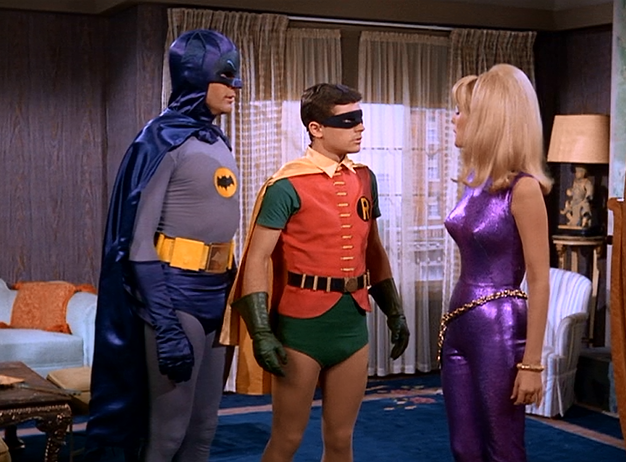
Kathy Kersh wore a very distinctive costume which was a fan favorite. Here’s several stills from the two episodes. And she got quite a lot more out of this appearance on Batman as you’ll soon learn.

Batman, Robin and Cornelia (Kathy Kersh).
Another signed still showing Robin being kidnapped.
Kathy Kersh as Cornelia.
Joker and Cornelia.
Joker and Cornelia agin.
Batman and Robin break into Cornelia’s place.
Cornelia and Joker again.
Kathy Kersh as Cornelia.
Everyone remembers that purple outfit.

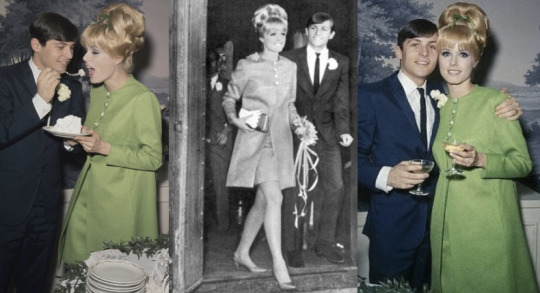
During the filming of the two episodes, Kathy Kersh became acquainted with Burt Ward, the actor who played Robin and the pair became a couple, getting married in 1967.

Burt Ward and Kathy Kersh at the wedding in 1967.
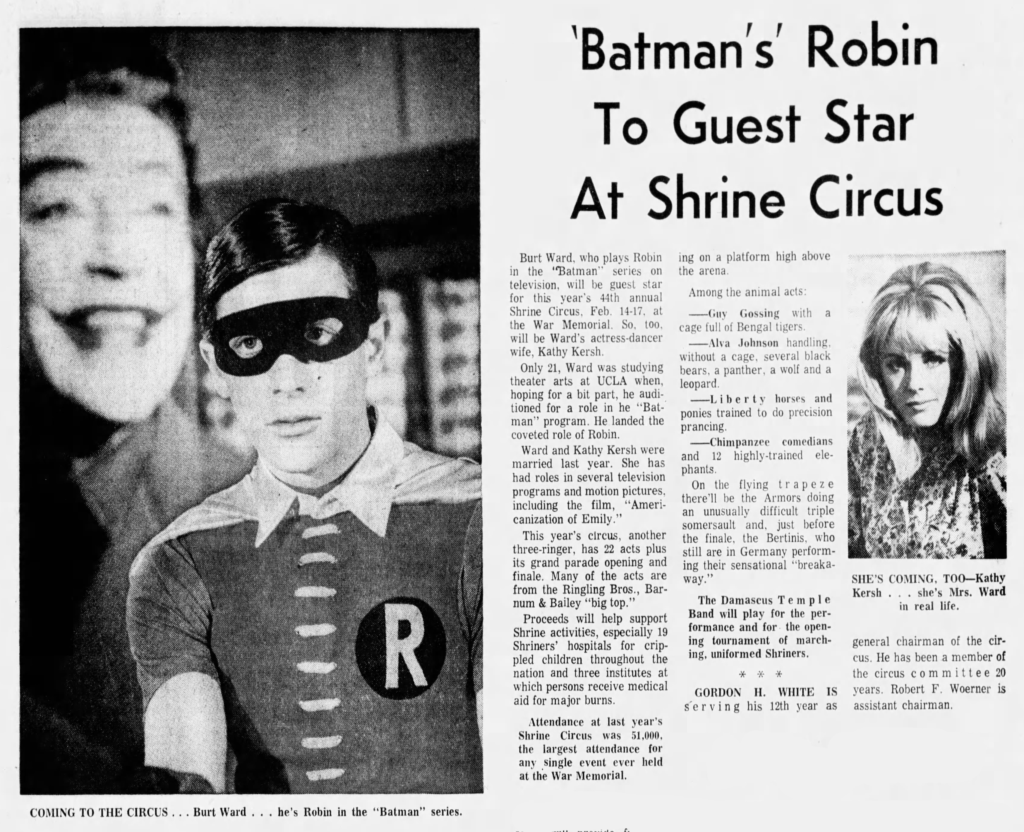
This article appeared shortly after the couple married in 1967.
This newspaper item from after the duo married.

Filed Under: Art & Beer, Beers, Just For Fun, Related Pleasures Tagged With: Advertising, History, Rheingold

The Yule Lads of Iceland #12: Meat-Hook

December 23, 2023 By Jay Brooks

By now, undoubtedly, you’ve seen my post last Tuesday with an overview of the Icelandic tradition of the Yule Lads. If you haven’t, go back and read that first so this will make more sense. According to folklore, today — December 23 — is the day when the twelfth Yule Lad arrives.

The twelfth Yule Lad’s name is Ketkrókur, which translates as Meat-Hook. His particular brand of mischief is using a hook to steal meat.

Here’s how he’s described in the 1932 Icelandic poem, “Yule Lads,” by Jóhannes úr Kötlum:

Meat Hook, the twelfth one,
his talent would display
as soon as he arrived
on Saint Thorlak’s Day.
He snagged himself a morsel
of meat of any sort,
although his hook at times was
a tiny bit short.

Meat-Hook arrives each year on December 23, and leaves again on January 5.

And here’s a more thorough explanation, from Iceland24:

Meat Hooker, the twelfth one,
Knew a thing or two.
-He marched into the country
On St. Thorlak’s Day.

He hooked a bit of meat
Whenever he could.
But often a little short
was at times his staff.

Another Yule Lad, another story of gluttony. Oh boy, aren’t these dudes a little repetitive? This time is Ketkrókur’s (Meat Hook) turn. He comes down from the mountains on December 23, Saint Thorlak’s Day.

Ketkrókur is cunning and resourceful, even for the Lads’ already high standards of cunning and resourcefulness. What Ketkrókur does better than any other is “fishing” the traditional smoked lamb with a hooked pole.

He’s the tallest of the brothers. That cross of troll, elf and human ancestry gave him a very long and rather stiff pair of legs. Legend says he walks as though they were made of wood, and he has to use a long walking stick to be able to walk properly.

His favorite strategy consists in lowering his hook through the kitchen chimney. He can steal heaps of this Icelandic delicacy using this peculiar technique. If you have no chimney is your festive dinner safe then, you’ll ask? I don’t honestly know.

The 13 Yule Lads, Mom, Dad and Cat:

Filed Under: Just For Fun, Related Pleasures Tagged With: Christmas, History, Holidays, Iceland

The Yule Lads of Iceland #11: Doorway-Sniffer

December 22, 2023 By Jay Brooks

Hopefully, by now, you’ve seen my post last Tuesday with an overview of the Icelandic tradition of the Yule Lads. If you haven’t, go back and read that first so this will make more sense. According to folklore, today — December 22 — is the day when the eleventh Yule Lad arrives.

The eleventh Yule Lad’s name is Gáttaþefur, which translates as Doorway-Sniffer. He has an abnormally large nose, and his particular brand of mischief is an acute sense of smell which he uses to locate leaf bread (laufabrauð), which “is a traditional kind of Icelandic bread that is most often eaten in the Christmas season. Originating from northern Iceland but now eaten throughout the country, it consists of round, very thin flat cakes with a diameter of about 15 to 20 cm (6 to 8 inches), decorated with leaf-like, geometric patterns and fried briefly in hot fat or oil.” It’s also called snowflake bread.

Here’s how he’s described in the 1932 Icelandic poem, “Yule Lads,” by Jóhannes úr Kötlum:

Eleventh was Door Sniffer,
a doltish lad and gross.
He never got a cold, yet had
a huge, sensitive nose.
He caught the scent of lace bread
while leagues away still
and ran toward it weightless
as wind over dale and hill.

Doorway-Sniffer arrives each year on December 22, and leaves again on January 4.

And here’s a more thorough explanation, from Iceland24:

Eleventh was Doorway Sniffer
– Who never had a cold,
Even though he had a funny
And enormous nose.

The scent of Leaf Bread
He smelled in the hills,
And lightly, like the smoke,
He followed that scent.

Gáttaþefur (Door Sniffer) is a big-nosed fellow that, instead of developing a nose complex and turning to rhinoplasty, used his protuberance to his own advantage.

Gáttaþefur ‘s nose not only is noticeable enough to make any Cirano look like a mere amateur, but it is also extremely sensitive: this dude can smell Christmas delicacies as accurately as a truffle hog. But Gáttaþefur doesn’t care much for truffles. He prefers laufabrauð (the traditional Icelandic bread that is eaten during the Christmas period), cookies and cakes. And of course when he finds something edible he likes, he doesn’t content himself with the smell…

Gáttaþefur will be around sniffing on the night of December 22. Be sure to lock all your cookies in a safe if you don’t intend to eat them all before this darling arrives.

The 13 Yule Lads, Mom, Dad and Cat:

Filed Under: Just For Fun, Related Pleasures Tagged With: Christmas, History, Holidays, Iceland

The Yule Lads of Iceland #10: Window-Peeper

December 21, 2023 By Jay Brooks

Hopefully, by now, you’ve seen my post last Tuesday with an overview of the Icelandic tradition of the Yule Lads. If you haven’t, go back and read that first so this will make more sense. According to folklore, today — December 21 — is the day when the tenth Yule Lad arrives.

The tenth Yule Lad’s name is Gluggagægir, which translates as Window-Peeper. His particular brand of mischief is being snoop who looks through windows in search of things to steal.

Here’s how he’s described in the 1932 Icelandic poem, “Yule Lads,” by Jóhannes úr Kötlum:

The tenth was Window Peeper,
a weird little twit,
who stepped up to the window
and stole a peek through it.
And whatever was inside
to which his eye was drawn,
he most likely attempted
to take later on.

Window-Peeper arrives each year on December 21, and leaves again on January 3.

And here’s a more thorough explanation, from Iceland24:

Tenth was Window Peeper
A grumpy lad,
Who sneaked to the window
And looked through it.

If anything was inside
Nice to look at,
He usually later
Tried to get that.

Gluggagægir (Window Peeper) is the tenth Yule Lad in the list. He’s one of my faves too. Maybe he actually is the Lad I like the most.

The Window Peeper is a classic figure in literature, music and cinema. If you don’t like the classic window peeper’s approach, just think about James Stewart in Rear Window, but reversed.

There are many elements at play when this kind of characters are involved so I can safely say Gluggagægir is the Lad with more potential: with a little of invention you could have a whole series of Christmas thrillers or horrors made after him.

Some consider Gluggagægir just a very nosy guy, but completely harmless – although he does like to steal when something he sees arouses his fancy. Some others prefer to add a sinister aura to his curiosity, describing him as a hardcore voyeur…

Whatever the truth, you are now aware of his habit of peeping through windows at night. So, unless you’re OK with it, maybe you’ll feel more comfortable drawing your curtains on December 21.

So, this guy may be looking in your window between Dec 21 and Jan 3, so give him a friendly wave and wish him Gleðileg Jól (Happy Holidays)

The 13 Yule Lads, Mom, Dad and Cat:

Filed Under: Just For Fun, Related Pleasures Tagged With: Christmas, History, Holidays, Iceland

The Yule Lads of Iceland #9: Sausage-Swiper

December 20, 2023 By Jay Brooks

Hopefully, by now, you’ve seen my post last Tuesday with an overview of the Icelandic tradition of the Yule Lads. If you haven’t, go back and read that first so this will make more sense. According to folklore, today — December 20 — is the day when the ninth Yule Lad arrives.

The ninth Yule Lad’s name is Bjúgnakrækir, which translates as Sausage-Swiper. His particular brand of mischief is hiding in the rafters so he can snatch the sausages that are being smoked.

Here’s how he’s described in the 1932 Icelandic poem, “Yule Lads,” by Jóhannes úr Kötlum:

The ninth was Sausage Swiper,
a shifty pilferer.
He climbed up to the rafters
and raided food from there.
Sitting on a crossbeam
in soot and in smoke,
he fed himself on sausage
fit for gentlefolk.

Sausage-Stealer arrives each year on December 20, and leaves again on January 2.

And here’s a more thorough explanation, by Robert Nelson, on Medium.

Bjúgnakrækir, or Sausage-Swiper, probably has the most lucrative job of the thirteen Yule Lads. He’ll make his way up to your rafters, possibly above the fireplace where his waiting gets him all tarnished in ash and soot (excuse the cross-referencing). From there, he’ll find a moment to make away with your sausage. The calorie-rich reward probably sustains him for longer than the simple bowl- or spoon-lickers of the group.

The sausage in question is an Icelandic “delicacy” called the bjuga, from which the Bjúgnakrækir derives his name. It’s usually made of smoked lamb meat, sometimes combined with horse- and or pork as well. Valur Grettison has done a nice write-up of the bjuga for the Reykjavik Grapevine, and concludes that the only people who continue to enjoy the bjuga are the “alt-right nuts” who are desperately searching for some bygone and pure Icelandic culture.

In other words, it’s not known for being a pleasing meal.

And here’s another, from Iceland24:

Ninth was Sausage Snatcher
Artful and quick.
He hied up to the rafters
And snatched a little there.

On a kitchen beam he sat
In smoke and soot
And ate a smoked sausage,
That was very good.

In contrast with Skyrgámur‘s habit of eating tons of healthy skyr, Bjúgnakrækir (Sausage Swiper), the Yule Lad arriving on the 20th night of December, prefers his snacks high in cholesterol. Nobody knows exactly what his preference is: rumors say he will ravenously eat all kinds of sausages, without any exception. His appetite can make him reckless sometimes.

Smoked sausages are a brilliant way to preserve meat in a place like Berk (or most of the North Atlantic Islands) where it may snow and hail and rain locusts (or whatever Hiccup dreams up in his snarkfest), but it rarely gets cold enough to freeze food. So smoking, pickling, drying, curing are all ways to keep food stashed through the winter.

The rafters are an ideal place to store the lamb meat and fish meat sausages once they are prepared. Then the cook just snags down dinner from the ceiling and dumps it in a pot to boil. Sometimes you have to climb a bit to get dinner. At the Haddock household it´s a good thing there is a tall chieftain and a willing Night Fury to help with this. And a few cleverly designed long hooks for those days when the chief dragon tamer/chef does not want dragon drool on the sausages.

Until December 20, of course. Then Bjúgnakrækir makes his way into the farms and the village, ready to snatch some sausages. It’s a good thing he’s an acrobat so he can climb WAAAY up into those rafters and reach for the prize. He just, unfortunately, is a leeetle bit afraid of heights. But singing usually helps him deal with the situation, and also keeps the watch dragon fast asleep.

So, if you are planning to make sausage stuffing or simply hot dogs between Dec 20 and Jan 2, keep ’em hidden. This guy’s on the prowl!

Luckily for this chap, there’s not much need for recklessness in recent times: in Reykjavík you can find near the harbor the famous Bæjarins beztu pylsur (Best hot dog in town in English) stand, described by many satisfied customers as one of the best in the world. I’m pretty sure Bjúgnakrækir knows very well and he visits the stand regularly during his annual excursions.

The 13 Yule Lads, Mom, Dad and Cat:

Filed Under: Just For Fun, Related Pleasures Tagged With: Christmas, History, Holidays, Iceland

« Previous Page
Next Page »

Find Something

Northern California Breweries

Please consider purchasing my latest book, California Breweries North, available from Amazon, or ask for it at your local bookstore.

Recent Comments

  • Steve 'Pudgy' De Rose on Historic Beer Birthday: Jacob Schmidt
  • Jay Brooks on Beer Birthday: Bill Owens
  • Steve 'Pudgy' De Rose on Beer Birthday: Charles Finkel
  • Steve 'Pudgy' De Rose on Beer Birthday: Bill Owens
  • Steve "Pudgy" De Rose on Beer Birthday: Pete Slosberg

Recent Posts

  • Beer In Ads #5156: Straub Bock Beer December 30, 2025
  • Beer Birthday: John Dean December 30, 2025
  • Beer In Ads #5155: Bock Beer Festival Parade December 29, 2025
  • Historic Beer Birthday: August A. Busch, Sr. December 29, 2025
  • Beer Birthday: Michael Lewis December 29, 2025

BBB Archives

Feedback

Head Quarter
This site is hosted and maintained by H25Q.dev. Any questions or comments for the webmaster can be directed here.