Brookston Beer Bulletin

Jay R. Brooks on Beer

  • Home
  • About
  • Editorial
  • Birthdays
  • Art & Beer

Socialize

  • Dribbble
  • Email
  • Facebook
  • Flickr
  • GitHub
  • Instagram
  • LinkedIn
  • Pinterest
  • RSS
  • Twitter
  • YouTube

Powered by Genesis

Patent No. 3415654A: Deep Vat Fermentation Of Beer

December 10, 2015 By Jay Brooks

patent-logo
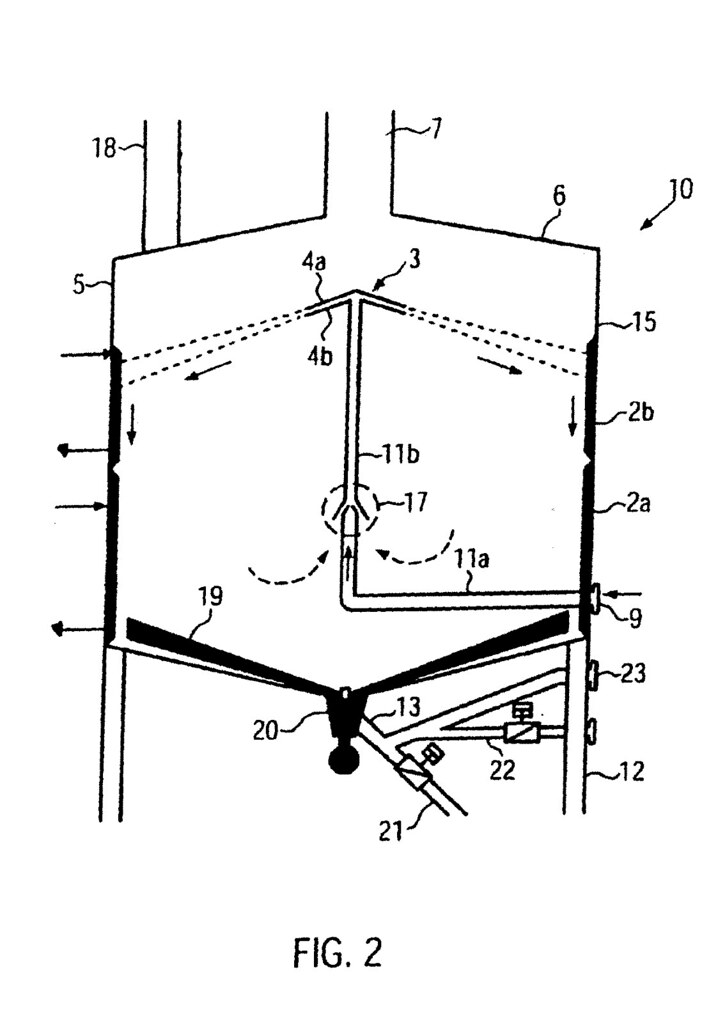
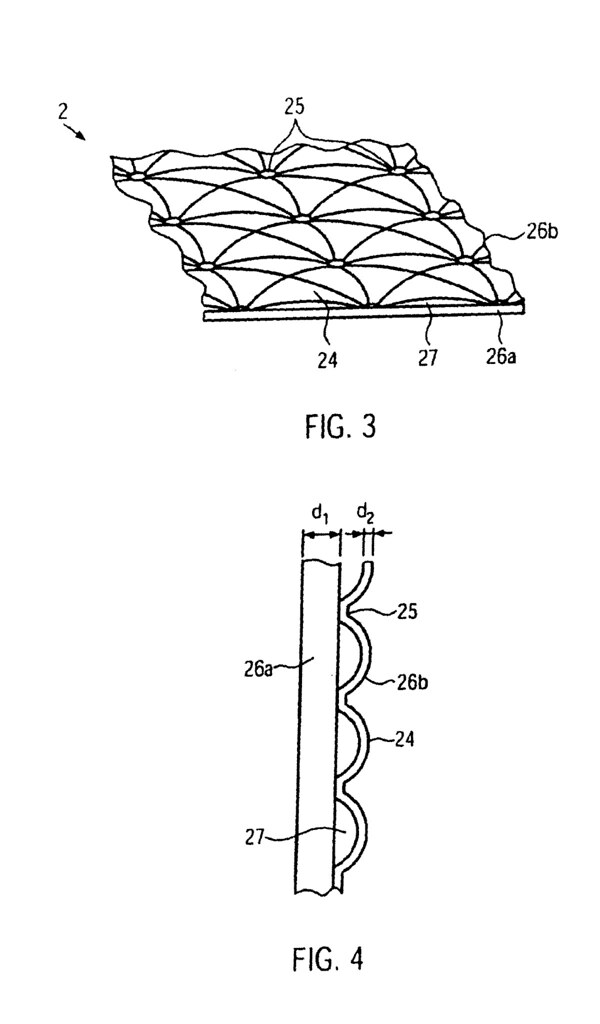
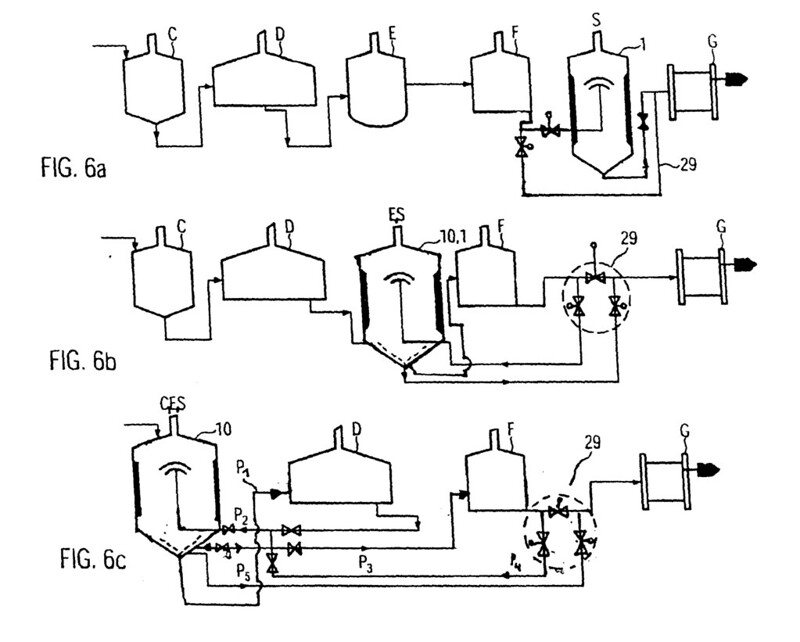
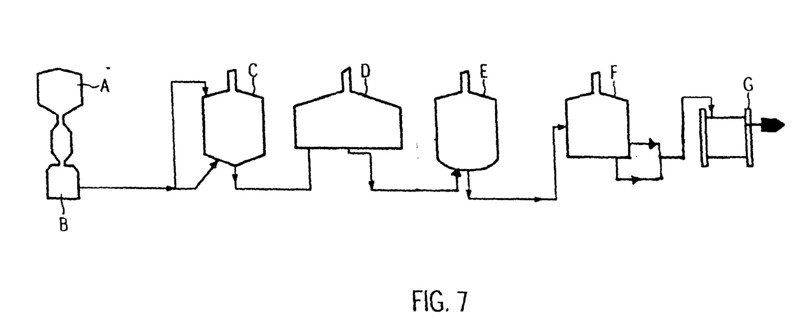
Today in 1968, US Patent 3415654 A was issued, another invention of Robert E. Zinn, assigned to Falstaff Brewing Corp., for his “Deep Vat Fermentation of Beer.” There’s no Abstract, although in the description it includes this summary:

This invention relates to an improved process for making beer, and to apparatus for carrying out the process. By the term beer is meant the various fermented malt beverages commonly included within that term, e.g., lager, ale, bock, porter, and stout. The fermentation of malt beverages is similar in many respects to fermentations in general; however, the consumption of the product by humans to satisfy thirst and for pleasure imposes unique and severe organoleptic criteria on the product.

It has now been found, in accordance with the present invention, that the fermentation of beer, to produce a highly acceptable product, can be carried out advantageously without the use of cellars and in thermally insulated and temperature-controlled individual tanks which provide the requisite greater beer depth and thus the greater foam depth. Despite the greater static pressure in the brew at these greater depths, the normal course of yeast-wort fermentation can unexpectedly be achieved, although hitherto it has generally been considered impossible or undesirable. Additionally, a volume of fermenting beer confined to a deep tank has a smaller surface area exposed to air than the same volume in a shallow tank. Preferably, the reciprocal ratio of surface area to the volume of liquid should be at least 20, and may exceed 60 or more. It will be noted that depth alone controls the surface area to volume ratio of the beer liquid.

A principal object of the present invention is therefore to provide a method of and apparatus for deep fermentation of beer with improved control of foam removal.

It is an object of the invention to provide a process of deep fermentation where the reciprocal ratio of surface area to the volume of liquid is at least 20. It is another object of the invention to provide a deep fermentation process wherein the reciprocal ratio of surface area to volume of liquid exceeds 40.

The object of this invention is attained by providing one or more deep fermentation tanks or fermenters of sufficient size to provide a beer depth of at least 20 feet, each tank being jacketed with suitable temperature control means adequate to assure the desired temperatures within the tanks. These tanks are supplied with wort and yeast and other conventional ingredients prepared in the usual fashion for supplying to beer fermentation tanks. Provisions are also made for thoroughly mixing the ingredients as fed to the fermentation tanks, and preferably also for circulation of the contents of such tanks during fermentation, so that the yeast may be effectively distributed throughout the fermenting mass to provide complete uniformity, thus assisting in assuring desired taste characteristics of the fermented product. Each fermenter is provided with means for selectively removing foam from the brew surface.

Untitled
Untitled
Untitled
Untitled

Filed Under: Beers, Breweries, Just For Fun, Politics & Law, Related Pleasures Tagged With: Brewing Equipment, History, Law, Patent, Science of Brewing

Patent No. 2620961A: Carton Flap Opener

December 9, 2015 By Jay Brooks

patent-logo
Today in 1952, US Patent 2620961 A was issued, another invention of Eugene A. Wahl and Ralph J. Winters, assigned to Ballantine & Sons, for their “Carton Flap Opener.” There’s no Abstract, although in the description it includes this summary:

The present invention relates generally to a method and apparatus for inspecting the interior and/or contents of cartons, or for filling and emptying cartons, and more particularly to a method and apparatus for unfolding the carton fiaps from folded closed position to unfolded open position to automatically have access to the interior of the carton for any desired purpose.

Untitled
Untitled

Filed Under: Beers, Breweries, Just For Fun, Politics & Law, Related Pleasures Tagged With: Brewing Equipment, History, Law, Packaging, Patent

Storm Brewing Releases $1,000 Beer Bottle

December 9, 2015 By Jay Brooks

storm
I suspect that by the time you read this, all ten bottles of the newest release from Storm Brewing, of East Vancouver in British Columbia, will already have been sold, despite the hefty $1,000 per bottle price tag. The new beer is Glacial Mammoth Extinction, and is described on Storm’s website. Essentially it’s a sour beer that, according to brewer James Walton, was frozen “into one big, solid ice cube at -30 degrees Celsius, a process that took him about a month to complete.” Then the water was removed, and the remaining liquid was “aged in French oak barrels for two years until it was ready.”

Part of the expense of the beer is the packaging, with a hand-blown glass bottle fashioned by a local artist, using a 14K gold clasp and 35,000-year-old ivory for the pendant hanging from the neck of the bottle. The beer weighs in at almost 25% a.b.v. and is described as “quite sweet, almost like a port.”

Glacial-Mammoth-Extinction
The Beer: The Glacial Mammoth Extinction is the first beer of its kind (in the world!!) and the result of freezing a strong sour beer to -30C in two stages over a one month period. The sweet alcoholic liquid was separated from the extinct ice glacier that was left in the tank and then aged in French oak barrels for two years until it was ready. The final product is a rich, complex, and viscous 100% malt beverage that resembles Port more than beer.

ALCOHOL – 25% ABV
RESIDUAL SUGAR – 80grams per litre
VOLUME PRODUCED – 400 litres

The Brewery: For over 20 years brewer James Walton and the Storm Brewing team have been bringing Vancouverites innovative and unpretentious craft beer. James is hailed as a craft beer pioneer by both media and trade and is proud to be one of the very first brewers in North America to brew sour beer. The brewery sits at the corner of Commercial Drive and Franklin Street in gritty East Vancouver and is considered a “must-visit” destination by craft beer fans worldwide.

The $1000 Bottles: A total of ten bottles were designed and made of hand blown glass by Terminal City Glass Co-op’s Brad Turner. Adorning these bottles are one of a kind prehistoric mammoth ivory pendants made by local sculptor Richard Marcus. The ivory used for these pendants is from a tusk estimated to be 35,000 years old and they are complimented with a 14K gold clasp. Both of these East Vancouver artists are renowned for their craft and their studios are located within walking distance from the brewery.

Storm-Glacial-Mammoth-Extinction

Filed Under: Beers, Breweries, Just For Fun, News Tagged With: British Columbia, Business, Canada, Extreme Beer, new release

AleSmith Partners With Mikkeller

December 8, 2015 By Jay Brooks

alesmith mikkeller
AleSmith Brewing of San Diego, California announced this morning that they’ve entered into a “creative enterprise” with Mikkel Borg Bjergsø to establish Mikkeller Brewing,” taking over day-to-day operation of San Diego’s second-oldest craft brewing facility. So essentially, as far as I can tell, Mikkel will be taking over the original AleSmith location, with Pete Zien retaining a minority stake in the business. Mikkel will get the older, original 30-barrel brewing system — which will become Mikkeller San Diego — and AleSmith will operate the newer 105,500-square-foot facility located two blocks west of MSD.

San Diego, California (December 8, 2015) — Two world-renowned brewing interests are proud to announce the launch of a creative partnership that will result in the planet’s most famous gypsy brewer acquiring a brick-and-mortar brewery to call his own. Mikkel Borg Bjergsø, the founder and creative mind behind Denmark-based Mikkeller, has officially entered into an agreement with AleSmith Brewing Company owner and brewmaster Peter Zien for the duo to establish a new company called Mikkeller Brewing San Diego. Bjergsø and Zien will possess ownership stakes in the business, which will be based within the storied confines of AleSmith’s original headquarters on Cabot Drive in San Diego’s Miramar community and produce beers for worldwide release.

“People have always asked me when I’m going to open my own brewery, and my answer has always been ‘never.’ It’s the easiest answer, but it’s been on my mind for several years,” says Bjergsø. “I like being a ‘gypsy brewer,’ but know that having a stake in a U.S. brewery will change our position here. Brewing in one of the best breweries in the world really makes sense. If they can brew beers like they do at AleSmith, it really can’t go wrong.”

Bjergsø’s vision will guide brewing operations at Mikkeller San Diego, which is equipped with the same 30-barrel brewing system AleSmith used to produce 15,000 barrels of beer annually before moving into a much larger, 105,500-square-foot facility two blocks west earlier this year. To ensure the fastest, most efficient transition, Zien will initially oversee multiple components of the brewing process and provide ongoing assistance on an as-needed basis. Additionally, several members of AleSmith’s original brewing team, the bulk of whose careers with the company have been spent operating the original brewery, will become employees of Mikkeller San Diego and usher the facility through its exciting second life.

“I am very excited to announce this partnership to the brewing world,” says Zien who will maintain a minority stake in the business. “Mikkel and I expect to create unique and flavorful beers of the highest quality, as we are both known for brewing with AleSmith and Mikkeller.”

Eager to embark on this shared next chapter in their brewing careers, Bjergsø and Zien worked with the eventual Mikkeller San Diego staff to craft two beers based off brand new recipes conceived by the former. Those beers, AleSmith-Mikkeller IPA (India Pale Ale) and AleSmith-Mikkeller APA (American Pale Ale) are currently on tap at Mikkeller Bar in San Francisco, Calif.; AleSmith’s recently debuted 25,000-square-foot Miramar tasting room; and numerous craft beer-centric venues throughout San Diego County. Thus far, they have been met positively by beer enthusiasts. Next up on the brew schedule is an imperial take on an English-style porter, which will be released via a similar distribution method. Eventually, numerous Mikkeller San Diego beers will be bottled, canned, and distributed more widely nationally and internationally.

In addition to beers brewed solely by Mikkeller San Diego personnel, Bjergsø intends to make a center of craft collaboration of his new digs by inviting respected brewers from all over the world to conceive and brew recipes that push the envelopes of what ales and lagers can be. In doing so, he will build off relationships forged during his decade spent trotting the globe in an ongoing mission to bring his beery ideas to life with the help of gifted brewers the world over. He will also reach out to new and upcoming brewers making waves within the industry, providing the basis for many happy returns among brewery visitors.

While the brewing component of Mikkeller San Diego’s campus—which consists of five suites within an intimate business complex—will remain mostly untouched, construction will soon commence to convert the 750-square-foot tasting room to an interior design concept more consistent with that of Mikkeller’s global beer bars. The sampling space is projected to open to the public in early 2016, offering an array of beers that simultaneously display traditionally stylistic roots while coming across as exploratory, adventurous and, in some cases, downright twisted. It will be the only place in the world to taste the entire array of Mikkeller San Diego beers in a single sitting.

P1120133
Matt Brynildson, from Firestone Walker, and Mikkel comparing beards with Sir Thomas Gresham at a pub in London.

Filed Under: Beers, Breweries, News Tagged With: Business, California, Denmark, Press Release, San Diego

Patent No. 2916421A: Straining Tank

December 8, 2015 By Jay Brooks

patent-logo
Today in 1959, US Patent 2916421 A was issued, another invention of Robert C. Gadsby, Joseph Schwaiger and Frank H. Schwaiger, assigned to Anheuser Busch, for their “Straining Tank.” There’s no Abstract, although in the description it includes this summary:

This invention relates to a straining tank or grain extractor or lauter tub, and more particularly to a new type of straining tank for use in the brewing industry to remove extract from brewers grains.

One of the principal objects of the present invention is to increase the efficiency of the extraction of soluble substances from material within a straining tank. Another object is to provide a’straining tank with the shortest exposure and contact time between the wort and grains and between the sparge water and the grains which have substances extracted therefrom, thereby extracting less of the undesired substances from the husks of the grains. This results in a cleaner and milder flavor for the resulting wort. Another object is to eliminate the mechanical agitator formerly required and avoid the formation of channels which the numerous knife .blades previously cut into the grain bed.

Another object of the present invention is to provide a straining tank which is relatively small and inexpensive compared to those lauter tubs and mash filters presently used to remove extracts from grains. Another object is to increase .the capacity for removing extracts from grains in a brewing operation, thereby increasing the capacity of the brewery. Another object is to provide a straining device which requires less time per batch and allows more brews per day. Another object is to provide for the fast removal of spent grains from a straining tank which can then be easily and rapidly cleaned.

Still another object is to provide a device which has a smaller initial cost and which requires fewer operators than previously required to efficiently operate a straining tank or mash filter.

Untitled
Untitled
Untitled

Filed Under: Beers, Breweries, Just For Fun, Politics & Law, Related Pleasures Tagged With: Brewing Equipment, History, Law, Patent, Science of Brewing

Patent No. 3625843A: Method For Treating Beer

December 7, 2015 By Jay Brooks

patent-logo
Today in 1971, US Patent 3625843 A was issued, another invention of Heinz Doevenspeck, for his “Method For Treating Beer.” There’s no Abstract, although in the description it includes this summary:

It is an object of the present invention to develop this prior art method and, in particular, to render it applicable with advantage to the treatment of liquids, preferably of beer. The method is intended to be developed in a manner as to enable the same to be carried out at temperatures of only about 25 C, thereby to prevent changes in flavor and color of the liquids to be treated and to obtain, at the same time, pasteurization and/or sterilization as well as stabilization of the liquids for the purpose of increasing the durability thereof.

Untitled
Untitled
Untitled

Filed Under: Beers, Breweries, Just For Fun, Politics & Law, Related Pleasures Tagged With: Brewing Equipment, History, Law, Patent, Science of Brewing

Patent No. 3290153A: Process And Apparatus For Concentrating Wort

December 6, 2015 By Jay Brooks

patent-logo
Today in 1966, US Patent 3290153 A was issued, an invention of Peter D. Bayne and John L. Pahlow, assigned to Schlitz Brewing Co., for his “Process and Apparatus for Concentrating Wort.” There’s no Abstract, although in the description it includes this summary:

The process of the invention, which includes the continuous film evaporation under high temperature and short holding time conditions, prevents degradation or color gain of the wort. On reconstitution, identical or organoleptic properties of the original wort are obtained.

The process of the invention utilizes a continuous flow of wort which is obtained by use of the pair of hot wort settling tanks in combination with the centrifuge so that a continuous supply of wort is available. Thus, it is not necessary to cease openation while waiting for a new batch of wort. l

A provision is also made in the process for automatically adding hop constituents to the Wort in the holding tank. A portion of the hop constituents will be lost during the concentrating process, and to compensate for this loss, a predetermined amount of hop constituents may be empirically added during the concentration process.

In addition, the process employs a density control mechanism which accurately regulate-s the final specific -gravity or concentration of the wort. The wort being discharged from the finishing evaporator passes through the density control mechanism which regulates the heating medium used in the` evaporator so that a uniform degree of Wort concentration is obtained.

Untitled
Untitled

Filed Under: Beers, Breweries, Just For Fun, Politics & Law, Related Pleasures Tagged With: Brewing Equipment, History, Law, Patent, Science of Brewing, Wort

Patent No. 6326185B1: Method For Decontaminating Yeast

December 4, 2015 By Jay Brooks

patent-logo
Today in 2001, US Patent 6326185 B1 was issued, an invention of Michael C. Barney, Kathleen M. Carrick, Alfonso Navarro, and David S. Ryder, assigned to Miller Brewing Company, for their “Method For Decontaminating Yeast.” Here’s the Abstract:

An improved method for reducing colony forming units bacteria in yeast is disclosed. The method involves contacting the yeast with a hop acid in an amount sufficient to give a final concentration of the hop acid of at least about 40 ppm.

Untitled
Untitled
Untitled
Untitled
Untitled
Untitled

Filed Under: Beers, Breweries, Just For Fun, Politics & Law, Related Pleasures Tagged With: History, Law, Patent, Yeast

Patent No. 2772975A: Injecting Of Hops In The Brewing Of Beer

December 4, 2015 By Jay Brooks

patent-logo
Today in 1956, US Patent 2772975 A was issued, an invention of Frank Otto Rickers, assigned to the Geo Wiedemann Brewing Co. Inc., for his “Injecting Of Hops In The Brewing Of Beer.” There’s no Abstract, although in the description it includes this summary:

It is an object of the present invention to provide for the addition of the hops to a brew kettle in a manner such that the hops will be uniformly distributed through the brew and for greatly increased control over this step of the brewing so any deteriorating effect is prevented by storing in cold temperature so that the loss of hops up the flue will be minimized. Thus, it is an object of the present invention to provide process to the end that each successive brew will have undergone the same length of time in the cooking of the same amount of hops.

Briefly, in the practice of my invention I provide means for insuring that the hops, as they are added to the kettle, are wetted down and caused to enter below the surface of the brew in a rather closely confined area and I provide for a localized ebullition and circulation of the brew such that the lumps or fragments of hops are carried by this localized ebullition and circulation down into the bottom of the kettle whence they are uniformly distributed by the general circulation in the kettle.

Untitled

Filed Under: Beers, Breweries, Just For Fun, Politics & Law, Related Pleasures Tagged With: Brewing Equipment, History, Hops, Law, Patent, Science of Brewing

Consumers File Lawsuit To Stop ABI Buying SABMiller

December 3, 2015 By Jay Brooks

scales
In a particularly strange twist, 23 consumers — 19 from Oregon, 3 from California and 1 from Washington — have filed a lawsuit in the United States District Court, for the District of Oregon, Medford Division. The Plaintiffs are represented by two law firms, the Alioto Law Firm of San Francisco, California, and Cauble & Cauble, LLP of Grant’s Pass, Oregon. The lawsuit names both Anheuser-Busch InBev and SABMiller as Defendants and the initial filing requests “Injunctive Relief to Prohibit the Acquisition of SABMiller PLC by Anheuser-Busch InBev, SA/NV as a Violation of Section 7 of the Clayton Antitrust Act, 15 U.S.C. § 18.” The 33-page complaint is available to read online as a pdf. The Oregonian is reporting on at least a few of the Plaintiff’s rationales for the lawsuit. “I don’t think it’s good for consumers, I don’t think it’s good for industry, I don’t think it’s good for the tax base, I don’t think it’s good for any of that,” states Plaintiff James DeHoog, who owns an air quality and environmental consulting business in Central Point, which is near where the case was filed in Medford, Oregon. Courthouse News Service also has an account of the filing.

It will certainly be interesting to see how far they get with this.

Court Gavel And Money

Filed Under: Breweries, News, Politics & Law, Related Pleasures Tagged With: Anheuser-Busch InBev, Business, California, Law, Oregon

« Previous Page
Next Page »

Find Something

Northern California Breweries

Please consider purchasing my latest book, California Breweries North, available from Amazon, or ask for it at your local bookstore.

Recent Comments

  • Bob Paolino on Beer Birthday: Grant Johnston
  • Gambrinus on Historic Beer Birthday: A.J. Houghton
  • Ernie Dewing on Historic Beer Birthday: Charles William Bergner 
  • Steve 'Pudgy' De Rose on Historic Beer Birthday: Jacob Schmidt
  • Jay Brooks on Beer Birthday: Bill Owens

Recent Posts

  • Historic Beer Birthday: Oliver Hughes May 20, 2026
  • Historic Beer Birthday: Benjamin, Lord Iveagh May 20, 2026
  • Historic Beer Birthday: Eduard Buchner May 20, 2026
  • Historic Beer Birthday: Louis de Luze Simonds May 20, 2026
  • Historic Beer Birthday: Johann Adam Lemp May 20, 2026

BBB Archives

Feedback

Head Quarter
This site is hosted and maintained by H25Q.dev. Any questions or comments for the webmaster can be directed here.