Brookston Beer Bulletin

Jay R. Brooks on Beer

  • Home
  • About
  • Editorial
  • Birthdays
  • Art & Beer

Socialize

  • Dribbble
  • Email
  • Facebook
  • Flickr
  • GitHub
  • Instagram
  • LinkedIn
  • Pinterest
  • RSS
  • Twitter
  • YouTube

Powered by Genesis

Historic Beer Birthday: William Treadwell Van Nostrand

October 7, 2025 By Jay Brooks

van-nostrand-bunker-hill

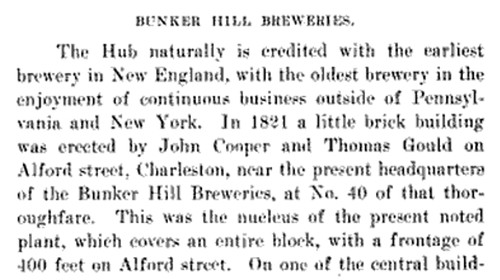
Today is the birthday of William Treadwell Van Nostrand (October 7, 1821-January 4, 1901). He bought the Bunker Hill Breweries, located in Charlestown, Massachusetts (which today is part of Boston), which had been founded in 1821. In 1878, Alonzo Gilford became a partner and took over the brewery from his father. It was originally known as the John Cooper & Thomas Gould Brewery, and Crystal Lake Brewery, but he renamed it the Wm. T. Van Nostrand & Co. Brewery in 1877, though they used the trade name Bunker Hill Breweries Brewery from 1890 on. It remained open until prohibition, but reopened briefly after repeal as the Van Nostrand Brewing Co., but lasted less than a year, closing in 1934.

William-Treadwell-Van-Nostrand

Here’s an obituary of Van Nostrand from the American Brewers Review:

William-Treadwell-Van-Nostrand-obit
bunker-hill-brewery-1897
The Bunker Hill Brewery in 1897.

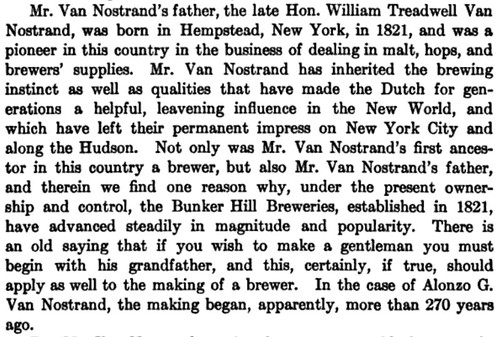
This is from a biography in the Biographical History of Massachusetts of his son, Alonzo Van Nostrand, but includes biographical information on the father, William Treadwell Van Nostrand.
William-Treadwell-Van-Nostrand-bio
Van Nostrands Owl-Musty Ale-1906

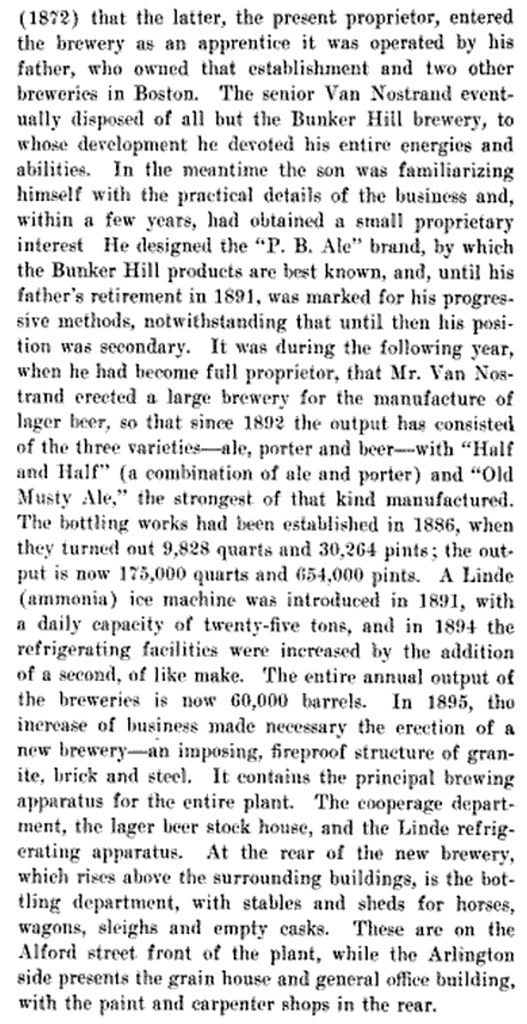
And this is a history of the Bunker Hills Breweries from “100 Years of Brewing History:”
bunker-hill-100yrs-1
bunker-hill-100yrs-2
bunker-hill-100yrs-3
Van-Nostrand-October

Filed Under: Birthdays, Breweries, Just For Fun Tagged With: Massachusetts, United States

Historic Beer Birthday: John Wieland

October 6, 2025 By Jay Brooks

john-wieland
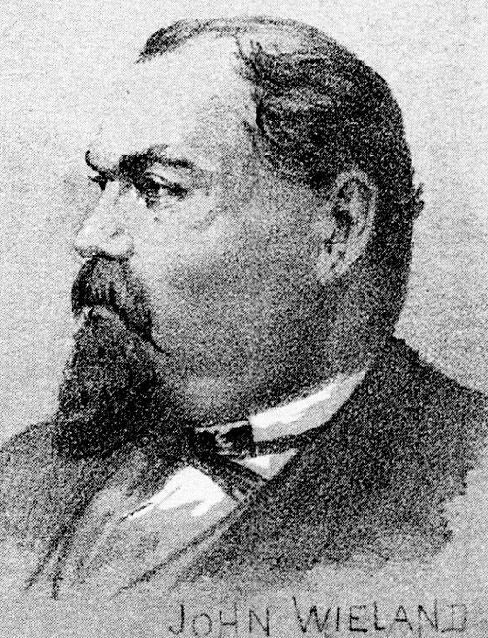
Today is the birthday of John Wieland (October 6, 1829-January 3, 1885). He was born in Baden-Württemberg, Germany, and emigrated to the U.S. when he was twenty, in 1849, eventually settling in the San Francisco area of California. In 1855, he founded (or bought into) the Philadelphia Brewery in San Francisco. After his death in 1885, the name was changed in 1887 to the John Wieland Brewery. In 1890, it became part of a ten-brewery British syndicate, and remained open until prohibition. It reopened in 1934, but closed for good the same year.

John-Wieland-portrait

This obituary is from the Daily Alta California, January 3, 1885:

Founder of Philadelpha Brewery, Descended from one of oldest families in Wurtemberg, Germany. His father, John David Wieland was born in Wurtemberg in 1751 and married to Regina Hahn.
John Wieland went to school to age 13 and then worked in the vineyards. On 3/26/1849 he set sail to the United States, landing in New York and going directly to Philadelphia where he was apprenticed as a baker. In 1850, after hearing tales of gold in California, he sailed around Cape Horn on a 165-day voyage and arrived in San Francisco in early 1851. He mined on the South Fork of the Yuba river and Canon creek with great success and purchased a claim on Twist Flat, sold it and then returned to San Francisco as a baker at Union Bakery- later owning it. He married Sophia Fredrica Dorthea Schulthiess (native of Wurtemburg) in November 1853 and had eleven children. (Nine of them were surviving as of 1892). Tragically, on January 3, 1895, he and his 17-year-old daughter, Bertha, were killed in an accident when he brought a candle too close to oil stored in the basement and it exploded. His son Albert was also badly burnt and his son Hermann had severe burns on his right hand.

Wieland
This obituary is from “The Bay of San Francisco,” published in 1892:

JOHN WIELAND, deceased, whose name was so well and favorably known as one of San Francisco’s most progressive business men, was the founder and proprietor of the Philadelphia Brewery, which grew from a small beginning to be one of the leading industries of the city. Mr. Wieland was descended from one of the oldest families of Wurtemberg, Germany. His father, John David Wieland, was born in the home of his ancestors in 1791, and followed the business of a wine grower and also did some farming. During his life he was a gallant soldier, and in recognition of his bravery he was decorated. He married Regina Hahn. Their son, John Wieland, was born October 6, 1829 in Wurtemberg, and attended school until he was thirteen years of age, when he went to Constadt and worked on farms and in vineyards. After seven pears [years] spent in this way he determined to go to American, and March 26, 1849, he bade farewell to his native land and set sail for the New World. After landing in New York he went direct to Philadelphia and apprenticed himself as a baker. In 1850 the stories of the gold discoveries of California reached the East, and he determined to see all that the United States could offer. He sailed from the port of New York on board the ship Botner, went around the Horn, and arrived in San Francisco early in 1851, after a voyage of 165 days. He at once went to work at his trade, but attracted by the gold mining reports he went to the south fork of the Yuba river and mined on Canon creek, meeting with great success. Later he purchased a claim on Twist Flat and continued there until the close of 1851, when the sold out and returned to San Francisco. For two months he was employed at the Union Bakery, and then bought an interest in the business, and in six months was the owner of the whole establishment. The following year he formed a partnership, the firm being known as John Wieland & Co., and this existed until 1855. When this relationship ceased he determined to embark in the business in which he was successful up to the time of his death. He first purchased an interest in the business of August Hoelscher; they were very prosperous, and in 1867 he purchased the interest of his partner, paying therefor the sum of $100,000. He continued to make improvements and to extend his patronage until the establishment became one of the great enterprises in the commerce of the city.

philadelphia-brewery-ad

Mr. Wieland was married in November 1853, to Miss Sophia Frederica Dorothea Schulthiess, a native of Wurtemberg, and the union was blessed with eleven children; nine of whom still survive; three of the sons were associated with the father in business and rendered him valuable assistance. Mr. Wieland was a member of the Turn Verein, having joined in 1854; for a short time he was Treasurer of the society; he was a member of the San Francisco Schuetzen Verein. He was frequently urged to allow his name to be used as a candidate for public office, but he steadily declined the honor. Soon after his arrival in Philadelphia he made application for citizenship, and in 1853, in San Francisco, he accepted the obligations imposed upon an adopted citizen of the United States, and has ever been true to his vows.

Wieland-ad-1888

On January 3, 1885, he met with a sad and painful accident, which resulted in his death on the following day. The cause of the disaster was a kerosene explosion, in which his son and daughter were badly burned, and in his efforts to save them he lost his own life. This affliction caused a deep gloom to settle over the city, and many sympathizing friends did all in human power for the bereaved and suffering family. Mr. Wieland was a kind and indulgent father and husband, and a stanch and trusted friend. Mrs. Wieland survived her husband until the year 1891, when she, too, passed to the other life. She was a women of unlimited generosity and of most gracious hospitality. The children are all natives of San Francisco, and are among her most worthy sons and daughters.

wielands_brewery
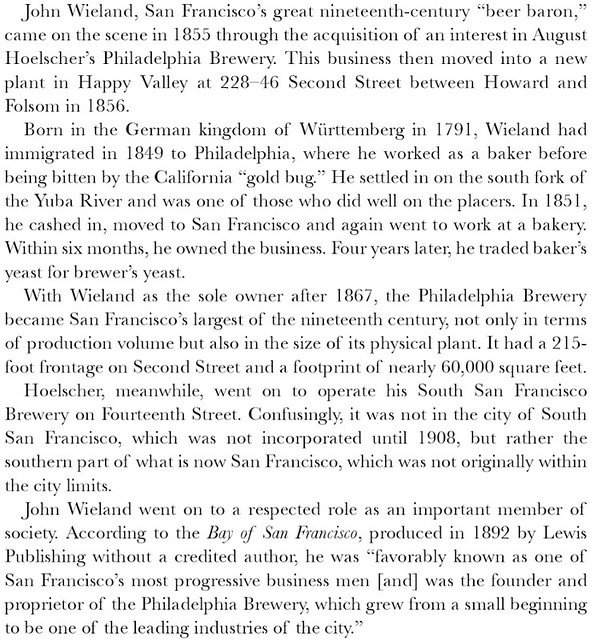
This account is from Bill Yenne’s “San Francisco Beer: A History of Brewing by the Bay:”

Wieland-yenne

wieland-employees

wielands-extra-pale-lager-indian-girl-beer-tray

Crown-Special-Lager-Beer-Labels-John-Wieland-Brewery--San-Francisco-Breweries

Filed Under: Birthdays, Breweries, Just For Fun Tagged With: California, Germany, History

Beer In Ads #5097: Hornung’s White Bock Beer Wins!

October 5, 2025 By Jay Brooks

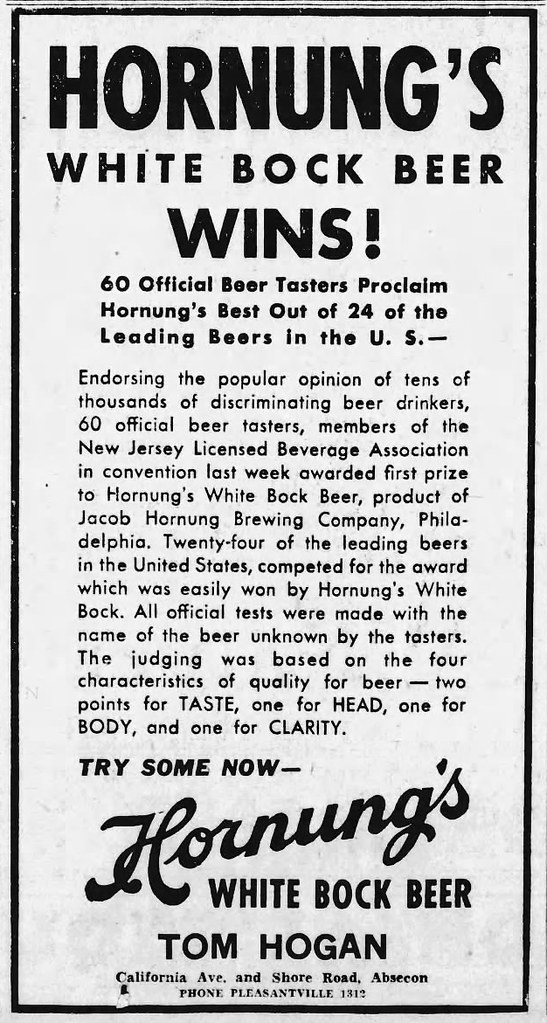
Last year I decided to concentrate on Bock ads. Bock, of course, may have originated in Germany, in the town of Einbeck. Because many 19th century American breweries were founded by German immigrants, they offered a bock at certain times of the year, be it Spring, Easter, Lent, Christmas, or what have you. In a sense they were some of the first seasonal beers. “The style was later adopted in Bavaria by Munich brewers in the 17th century. Due to their Bavarian accent, citizens of Munich pronounced ‘Einbeck’ as ‘ein Bock’ (a billy goat), and thus the beer became known as ‘Bock.’ A goat often appears on bottle labels.” And presumably because they were special releases, many breweries went all out promoting them with beautiful artwork on posters and other advertising.
Sunday’s ad is for Hornung’s White Bock Beer, which was published on October 5, 1934. This one was for the Jacob Hornung Brewing Co. of Philadelphia, Pennsylvania, which was originally founded in 1885. This ad ran in The Press of Atlantic City, from Atlantic City, New Jersey. I’ve shared more ads for this beer, and a few where they were crowing about their victories in two beer competitions, one in 1912 and, apparently, this one in 1934.

Filed Under: Art & Beer, Beers, Breweries, Just For Fun Tagged With: Advertising, Bock, History, New Jersey, Pennsylvania, Philadelphia

Historic Beer Birthday: Alexander Keith

October 5, 2025 By Jay Brooks

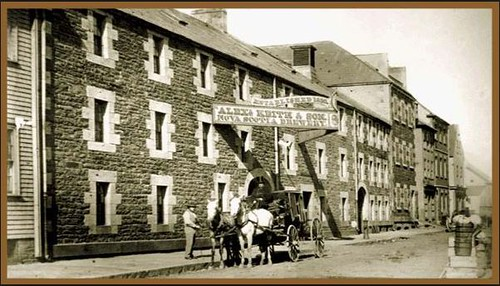
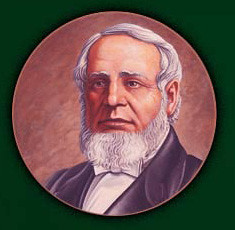
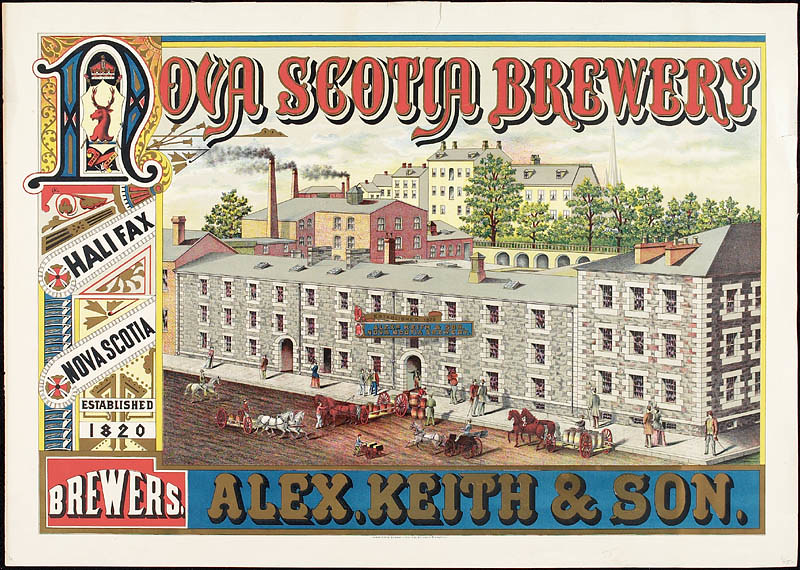
Today is the birthday of Alexander Keith (October 5, 1795–December 14, 1873). He was born in Scotland, where he was trained as a brewer. He settled in Canada, specifically Halifax, Nova Scotia, in 1820, where he founded the Alexander Keith Brewery.

Here’s his biography from his Wikipedia page:

Keith was born in Halkirk, Caithness, Highland, Scotland, where he became a brewer. He immigrated to Canada in 1817 and founded the Alexander Keith’s brewing company in Halifax, Nova Scotia in 1820, moving to a three-storey building on Hollis Street at Lower Water in the downtown area in 1820. Keith had trained as a brewer in Edinburgh and London. His early products included ale, porter, ginger wine, table and spruce beers.

Alexander Keith served as mayor in 1843 and in 1853-54 and president of the Legislative Council (provincial parliament) from 1867 to his death in 1873.

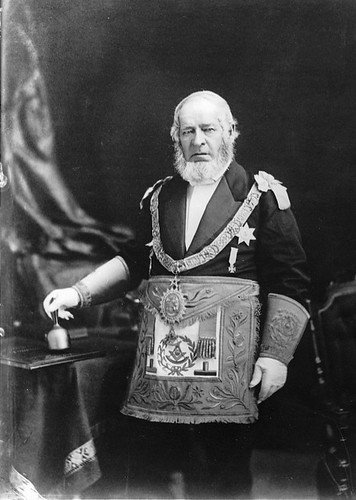
Throughout his career Keith was connected with several charitable and fraternal societies. He served as president of the North British Society from 1831 and as chief of the Highland Society from 1868 until his death. In 1838 he was connected with the Halifax Mechanics Library and in the early 1840s with the Nova Scotia Auxiliary Colonial Society. Keith was also well known to the Halifax public as a leader of the Freemasons. He became Provincial Grand Master for the Maritimes under the English authority in 1840 and under the Scottish lodge in 1845. Following a reorganization of the various divisions in 1869, he became Grand Master of Nova Scotia. There are four masonic lodges named in his honour: Moncton, New Brunswick, and Halifax, Stellarton, and Bear River in Nova Scotia.

Alexander Keith died in Halifax in 1873 and was buried at Camp Hill Cemetery at the corner of Spring Garden Road and Robie Streets. His birthday is often marked by people visiting the grave and placing beer bottles and caps on it (or, less frequently, cards or flowers).

And this more thorough biography is from the Dictionary of Canadian Biography:

KEITH, ALEXANDER, brewer and politician; b. 5 Oct. 1795 in Caithness-shire, Scotland, son of Donald Keith and Christina Brims; d. 14 Dec. 1873 in Halifax, N.S.

When Alexander Keith was 17, his father sent him to an uncle in northern England to learn the brewing business. Five years later, when Keith migrated to Halifax, he became sole brewer and business manager for Charles Boggs, and he bought out Boggs’ brewery in 1820. On 17 Dec. 1822 he married Sarah Ann Stalcup, who died in 1832. On 30 Sept. 1833 he married Eliza Keith; they had six daughters and two sons. One son, Donald G. Keith, became a partner in the brewing firm in 1853.

In 1822 Keith moved his brewery and premises to larger facilities on Lower Water Street and in 1836 he again expanded, building a new brewery on Hollis Street. In 1863 he began construction of Keith Hall which was connected by a tunnel to his brewery. Keith Hall, now occupied by Oland’s Brewery, is in the Renaissance palazzo style, with baroque adornments, pillars of no particular style, and a mansard roof. This peculiar combination of styles resulted from the fact that the designs were probably derived from books with plans of buildings in Great Britain and the United States. Keith’s appointment as a director of the Bank of Nova Scotia in 1837 along with William Blowers Bliss is an indication of his importance in the Halifax business community. Beginning in 1837, he also served as a director, at various dates, of the Halifax Fire Insurance Company. In 1838 he helped found the Halifax Marine Insurance Association, and in the 1840s he was on the board of management of the Colonial Life Assurance Company. He was also a director of the Halifax Gas, Light, and Water Company, incorporated in 1840, and in 1844 helped incorporate the Halifax Water Company, becoming a director in 1856. By 1864 Keith was a director of the Provincial Permanent Building and Investment Society. At the time of his death his estate was evaluated at $251,000.

Keith’s interest in utilities and insurance was but part of his general involvement in the public life of Halifax. He was unsuccessful in the general election of 1840 when he stood as a Conservative candidate for the town of Halifax but was elected to the first city council in 1841. In 1842 he served as a commissioner of public property and in 1843 was selected mayor of Halifax. He continued as a member of council until he again served as mayor, by election, in 1853 and 1854. In December 1843 he was appointed to the Legislative Council and in June 1867 he accepted the appointment of president of the council, declining a seat in the Canadian Senate. As a supporter of confederation and president of the council, he was helped at first by the fact that before 1 July 1867 Charles Tupper* had filled several seats in the upper house with known confederates. Although the premier, William Annand*, appointed to the upper house in November 1867, had complete control of the lower house, he did not dare introduce a resolution into the upper chamber in 1868 calling for repeal of union. The anti-confederates gradually secured control of the upper house, however, and Keith was unable to prevent passage, in 1871, of a particularly flagrant bill which took the vote from all federal officials in provincial elections. It was perhaps a commentary on Keith that he was not actively involved at this time with the Conservative party organization which was run by such party stalwarts as Philip C. Hill* and James MacDonald*.

Throughout his career Keith was connected with several charitable and fraternal societies. He served as president of the North British Society from 1831 and as chief of the Highland Society from 1868 until his death. In 1838 he was connected with the Halifax Mechanics Library and in the early 1840s with the Nova Scotia Auxiliary Colonial Society. Keith was perhaps best known to the Halifax public as a leader of the freemasons. He became provincial grand master for the Maritimes under the English authority in 1840 and under the Scottish lodge in 1845. Following a reorganization of the various divisions in 1869, he became grand master of Nova Scotia.

This short history of Keith’s brewery is from their Wikipedia page:

Founded in 1820, Alexander Keith’s is a brewery in Halifax, Canada. It is among the oldest commercial breweries in North America. (The oldest surviving brewing enterprise in Canada was established by John Molson in Montreal in 1786 while the oldest in the US, Yuengling, originally called Eagle Brewing, was founded in 1829 in Pottsville, PA.)

Keith’s was founded by Alexander Keith who emigrated from Scotland in 1817. Keith moved the facility to its final location, a three-storey building on Hollis Street at Lower Water in the downtown area, in 1820. Keith had trained as a brewer in Edinburgh and London. His early product included ale, porter, ginger wine, table and spruce beers. Alexander Keith was mayor in 1843 and in 1853-54 and president of the Legislative Council from 1867 to his death in 1873.

Keith’s was sold to Oland Breweries in 1928 and to Labatt in 1971. Today, the brewery is under the control of this subsidiary of Anheuser–Busch InBev which took the brand national in 1990’s. Keith’s also produces Oland Brewery beers, distributed in Eastern Canada.

In April 2011, Anheuser–Busch InBev began selling Alexander Keith’s beer in the United States after nearly two centuries of being available only in Canada.

AB InBev produces Keith’s India Pale Ale, currently the most popular product in this line,[6] as well as Keith’s Red Amber Ale, Keith’s Premium White, and Keith’s Light Ale.[7] Products sold in the United States are labelled Keith’s Nova Scotia Style Pale Ale, Keith’s Nova Scotia Style Lager, and Keith’s Nova Scotia Style Brown Ale.[8] Seasonal products have included Keith’s Ambrosia Blonde, Keith’s Harvest Ale, and Keith’s Tartan Ale. Although Alexander Keith products were originally produced in the Halifax brewery only for sale in the Maritimes, they are now national products, mass produced at AB InBev plants across Canada and in Baldwinsville, New York.

Filed Under: Birthdays, Breweries, Just For Fun Tagged With: Canada, History, Nova Scotia, Scotland

Historic Beer Birthday: Fred Horix

October 3, 2025 By Jay Brooks

akron
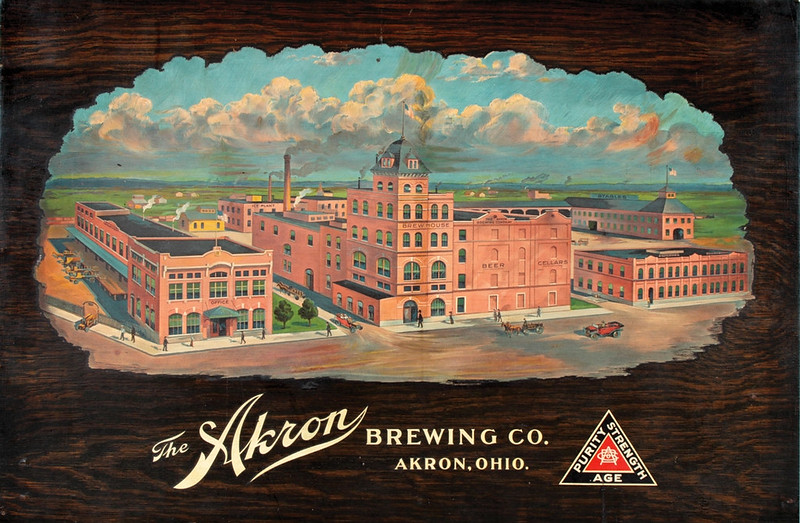
Today is the birthday of Fred Horix (October 3, 1843-1929+?). Horix was born in Hesse-Darmstadt, Germany, but came to America in 1868, eventually settling in Akron, Ohio. In 870, he and John Kirn formed the Fred Horix & John Kirn Brewery, and three years later he bought out Kirn, renaming it the Fred Horix Brewery. Unfortunately, the brewery closed in 1879. Horix then bought another brewery which he named the Frederick Horix Brewery, but a decade later he sold it to George J. Renner. He later became part-owner of the Akron Brewing Co., along with over 50 local saloonkeepers, and spent the remainder of his career as its Vice-President. Unfortunately, there’s not much biographical information I could find on Horix, not even his date of death or a photo.

Akron-Brewing-Company-lg

After his first brewery closed, he bought another, as detailed in “Brewing Beer In The Buckeye State, Volume I” by Dr. Robert A. Musson:

At this point, [brewery owner Frederick] Oberholtz found himself $30,000 in debt to several parties, and he subsequently lost ownership of the plant. The brewery changed hands twice more while sitting idle, until September 1876, when it was purchased by John A. Kolp. He operated it briefly before defaulting on several loans himself. It was then sold at a sheriff’s auction in January 1879 to Fred Horix, for $8,334, or two-thirds of its appraised value. Oberholtz later moved to Kansas City for a time before returning to Akron, where he died of consumption in 1888.

Horix had successfully operated a small brewery on East Exchange St. for several years. When he took ownership of this plant, it consisted only of an icehouse, a small storage building, and the main brewhouse with a potential annual capacity of 20,000 barrels. Horix was immediately able to invest a significant amount of money into the plant, and brewing operations began again by mid-1879.

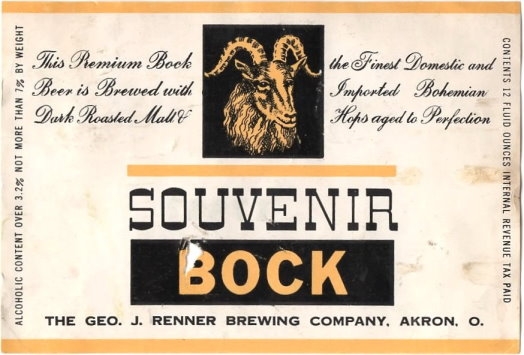
Souvenir-Bock-Beer-Labels-Geo-J-Renner-Brewing-Company

Just one year later, in August 1880, a second fire struck the plant. Beginning late at night in the boiler room, it quickly spread through the plant. Horix, who lived in a house next door to the plant, saw the fire and ran up the Forge Street hill in his nightclothes to the nearest firebox a half mile away. Despite a rapid response by the fire department, the top two floors of the plant were gutted, with a loss of nearly $12,000. This time, however, the plant was fully insured, and was quickly rebuilt.

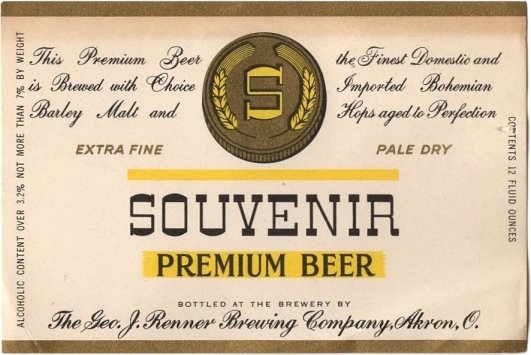
Within several years, the plant had increased in size to seven buildings, and annual production had increased to nearly 7,000 barrels; the brewery was finally operating at a profit. In 1888, however, Horix chose to sell the plant for $45,000 to George J. Renner. The deed of transfer mentioned that while Renner would take ownership of the entire plant and house, Horix would retain his personal records, family furniture, and “a spotted horse called Dick”. Horix then spent a year in Germany before returning to Akron, where he was involved in several different business ventures before opening a delicatessen on South High St. After the turn of the century, he would return to the brewing business, becoming involved with the newly formed Akron Brewing Company.

Souvenir-Premium-Beer-Labels-Geo-J-Renner-Brewing-Company
And his final job was with the Akron Brewing Co., again told in “Brewing Beer In The Buckeye State, Volume I” by Dr. Robert A. Musson:

At the outset of the twentieth century, the predominant trend in the brewing industry was toward the formation of stock companies, many of which were operated by local saloon owners. The Akron Brewing Company began as one of these, when in October 1902, approximately fifty saloonkeepers from the Akron area banded together to create a new brewery in the city. Many of them had argued for years that the prices they had to pay for beer from the existing breweries were too high, which made it more difficult to realize a profit. Therefore, with the creation of their own company, they would have a guaranteed supply of beer at a reasonable cost. It was also assumed that many of the 250 saloons in Summit County would also patronize this new establishment.

The new company was incorporated in April 1903, with a capital stock of $200,000. The initial president was John Koerber, the owner of the Bank CafÈ in downtown Akron, and who had previously been involved with the formation of other brewery stock companies elsewhere before coming to Akron. Vice-president was Fred Horix, who had previously operated a small brewery on East Exchange Street, as well as what was now known as the Renner brewery on North Forge Street. A native Prussian, he had more experience with the brewing of beer than anyone else in the group, and was currently the operator of a small delicatessen and saloon on South High Street.

The company’s treasurer was John Lamparter, a local real estate dealer and owner of the Palace Drug Store. Secretary and general manager was F. Wm. Fuchs, the proprietor of the Buckeye Supply House, who had previously been an Akron agent for the L. Schlather Brewery of Cleveland. Other initial directors included John Backe, Ed Kearn, Christian Koch, Jacob Gayer, Adolph Kull, George Good, William Evans, Frank Selzer, William Carter, Sam Woodring, Ed Curran, and brothers Jacob, John, and Louis Dettling, all of whom were local businessmen or saloon owners.

Construction of a new modern brewery building, costing $150,000, began in September. The site was at 841-869 South High St., at the corner of Voris St., although High St. was renamed South Broadway in later years. This new plant, made primarily of steel, was considered to be fireproof and it contained storage cellars that were made of enameled steel. Eliminating wood from the storage vats meant no need for frequent varnishing, and the beer would never taste like wood. The plant’s five-story brewhouse initially had an annual capacity of 30,000 barrels, but it could be enlarged to 100,000 barrels if necessary.

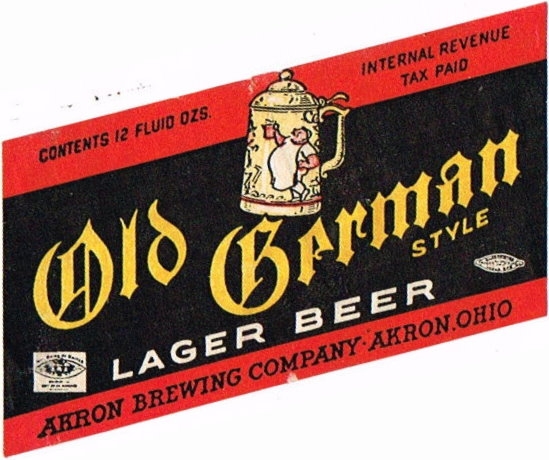
The plant’s brewmaster was John Hau, and his first brew took place on February 24, 1904. Three months later, White Rock Export Beer made its debut in the Akron market. In addition to sales in many local saloons, the beer was also bottled and marketed heavily for home consumption, the latter being an emerging trend in the industry at the time. A decade later, Wurzburger Beer would make its appearance as an alternative to White Rock.

Old-German-Lager-Beer-Labels-Akron-Brewing
In 1906, Koerber sold his share in the company and was subsequently replaced by John Backe, another saloon owner. Koerber then moved to Ionia, Michigan, where he purchased and rebuilt a small local brewery that had recently burned. The rebuilding was successful, but when the county voted itself “dry” by local option in 1909, the business collapsed, and Koerber was ruined. He died of kidney disease just two years later. His family remained in the business, however, later operating the Koerber Brewing Co. in Toledo and two breweries in Michigan after Prohibition ended.

By 1911, Louis Dettling had become president of the brewery. With his brothers Jacob and John, Dettling was the proprietor of The Rathskeller, a prominent restaurant and tavern in downtown Akron. When Louis died in 1917, he was replaced as president by his brother Jacob. Also joining the company during this period was new master brewer Ernst Hafenbrack. He was replaced shortly thereafter by Walter Gruner, who would eventually become the company’s president in 1921 upon the death of Jacob Dettling.

In 1913 came the appearance of the Diamond Land and Improvement Co., a real estate development company owned by the brewery’s stockholders. It began as a management office for the 82 saloons in Akron that were owned by the brewery, although other non-saloon properties were later acquired by the company.

Despite indications that Prohibition was inevitable, the company undertook a major ex-pansion in late 1916, building a large new four-story brewhouse and expanding the cellars into the original brewhouse. This radically changed the appearance of the plant, as it lost a great deal of the original ornate architecture. Soon after this, the company’s capital stock was increased to $400,000.

When statewide Prohibition took effect in May 1919, the company reincorporated as the Akron Beverage and Cold Storage Co., with capital stock of $500,000. This would continue to produce White Rock Cereal Beverage, with less than 0.5% alcohol, as well as a new cereal beverage known as Tiro, which apparently met with disappointing sales, as it did not last for long. In addition, the original bottling house was converted into the new White Rock Dairy, producing a wide range of dairy products. Walter Gruner remained president of the company until 1923, when he was replaced by Fred W. Fuchs, son of F. Wm. Fuchs, one of the company’s original officers. Fred had begun working for the brewery in 1914 upon graduating from nearby Buchtel College, later known as the University of Akron.

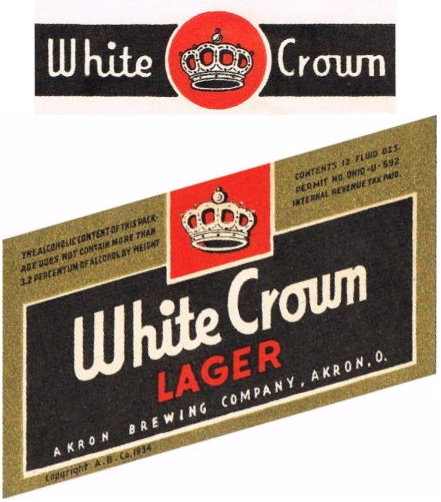
White-Crown-Lager-Beer-Labels-Akron-Brewing-Company

Filed Under: Birthdays, Breweries, Just For Fun Tagged With: Germany, History, Ohio

Historic Beer Birthday: F.D. Radeke

October 3, 2025 By Jay Brooks

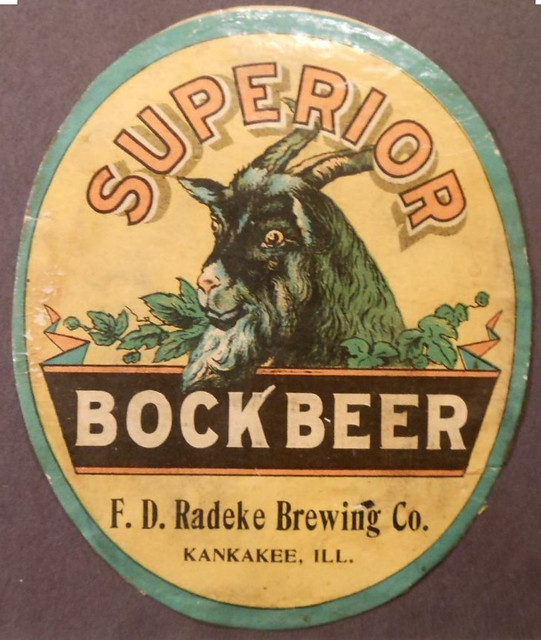
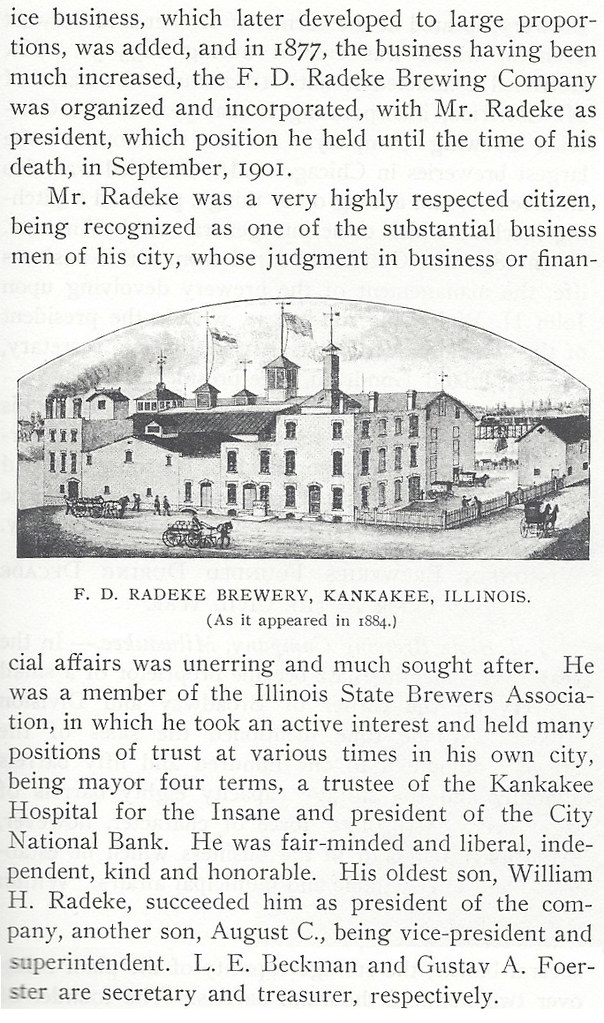
Today is the birthday of Frederick D. Radeke (October 3, 1843-September 24, 1901). He was born in Oyle, Hanover, Germany, but came to America when he was 24, in 1867, settling in Kankakee, Illinois. He initially became a grocer, but when it burned down, he joined his brother-in-law in the brewery business he’d bought, and by 1873 it had been reorganized as the F. D. Radeke Brewing Co. It was closed by prohibition, reopened under a series of names after repeal, but closed for good in 1937.

Frederick-D-Radeke-portrait

This obituary is from “The Kankakee Daily-Journal,” dated November 29, 2016.

Frederick Radeke moved to Kankakee in 1867. The previous year his sister, Margaret Radeke Beckman and her husband, Fredrick, bought the Riverside Brewery. Radeke quickly became involved in the local business community.

Within a year, he had purchased a grocery store on Court Street, opened a billiards parlor and set up a bottling works to produce ginger ale and carbonated water. Shortly after fire destroyed both his store and billiards parlor in 1870, Radeke joined Beckman in the brewery operation. In 1873, the Riverside Brewery was reorganized and renamed as the F.D. Radeke Brewing Company.

During the first two decades of the 20th century, the brewery was highly successful. In the year 1913, for example, a workforce of 125 people produced 40,000 barrels of beer, and the bottling department filled and capped 30,000 bottles per day. Radeke brewed bottles of beer with names such as Wiener Export and Royal Pale. F.D. Radeke Brewing Company advertised itself as “Brewers and Bottlers of High Grades of Beer.”

On Jan. 1, 1920, brewing of Radeke beer came to a halt because of the Volstead Act. After Prohibition the brewery reverted from root beer back to regular beer, but never recovered from the years of Prohibition and eventually closed in 1936.

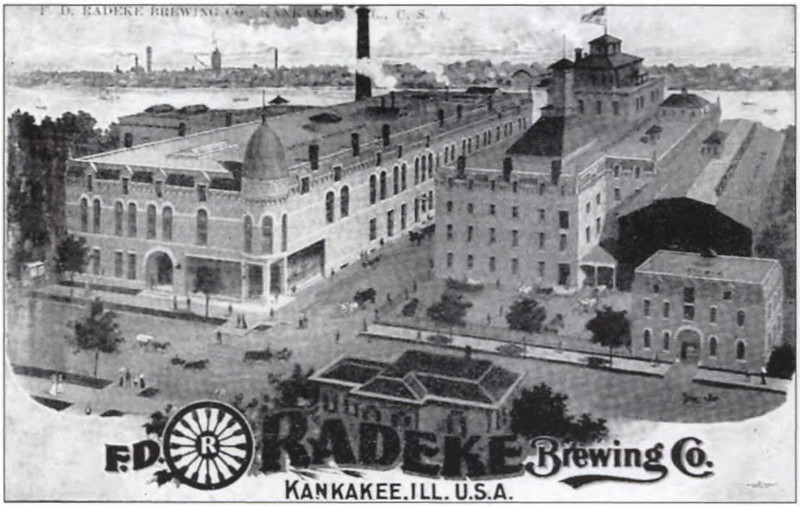
Radeke-postcard

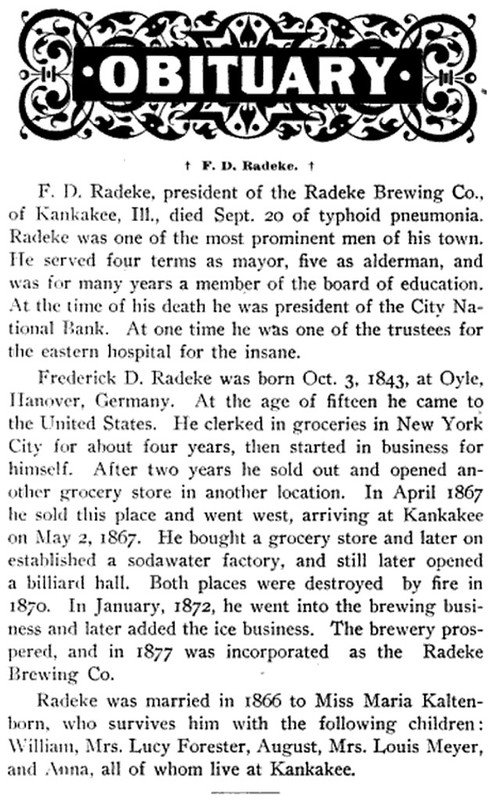
And here’s another obituary, this one from the American Brewers’ Review:

Radeke-brewery-workers
F.D. Radeke Brewing Co. workers.

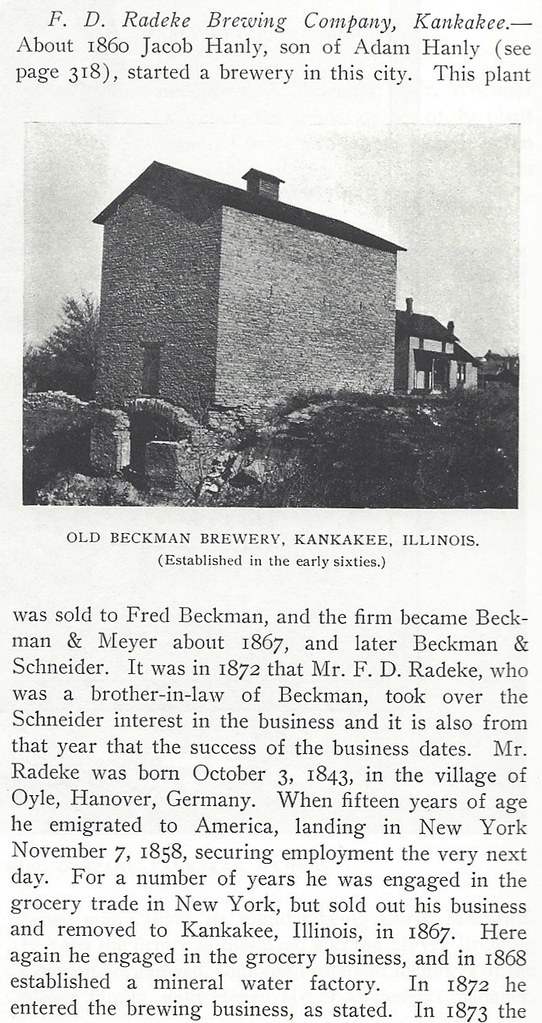
This history of the brewery is from “100 Years of Brewing.”

Radeke-beer-label

FD-Radeke-Brewery-1883

Filed Under: Birthdays, Breweries, Just For Fun Tagged With: Germany, History, Illinois

Historic Beer Birthday: Alois Alexander Assman

October 3, 2025 By Jay Brooks

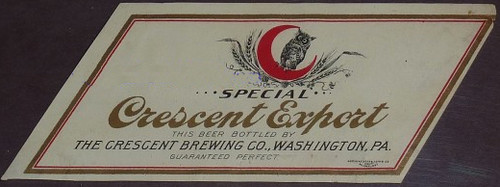
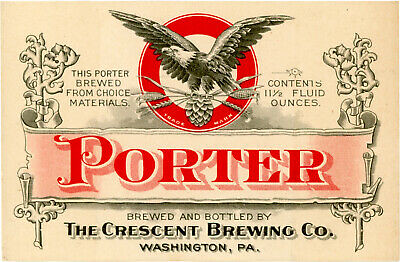
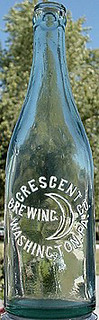
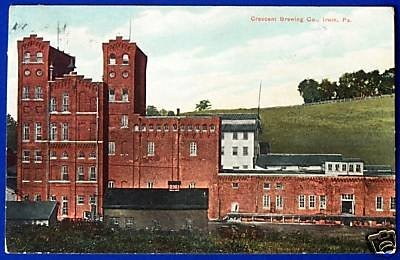
Today is the birthday of Alois Alexander Assman (October 3, 1856-August 4, 1900). He was born in Moravia, Austria-Hungary, in what today is the Czech Republic. At 18, he began working in breweries and attended the American Brewing Academy. When he died suddenly after being struck by a train, he was the brewmaster of the Crescent Brewing Co., of Washington, Pennsylvania, which had been founded in 1896, but closed due to Prohibition in 1920, and never reopened after repeal.

This is Assman’s obituary from the American Brewers’ Review:

Filed Under: Birthdays, Breweries, Just For Fun Tagged With: Czech Republic, Pennsylvania, United States

Beer In Ads #5094: Christiania Bryggeri’s Bok-Øl

October 2, 2025 By Jay Brooks

Last year I decided to concentrate on Bock ads. Bock, of course, may have originated in Germany, in the town of Einbeck. Because many 19th century American breweries were founded by German immigrants, they offered a bock at certain times of the year, be it Spring, Easter, Lent, Christmas, or what have you. In a sense they were some of the first seasonal beers. “The style was later adopted in Bavaria by Munich brewers in the 17th century. Due to their Bavarian accent, citizens of Munich pronounced ‘Einbeck’ as ‘ein Bock’ (a billy goat), and thus the beer became known as ‘Bock.’ A goat often appears on bottle labels.” And presumably because they were special releases, many breweries went all out promoting them with beautiful artwork on posters and other advertising.

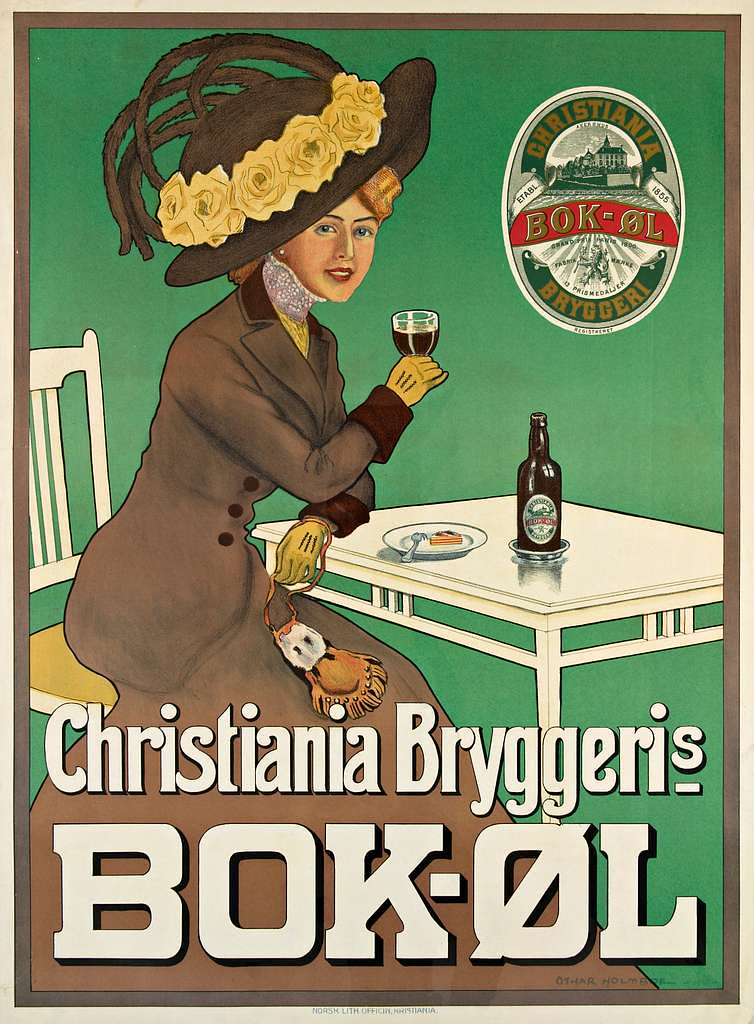
Thursday’s work is for Christiania Bryggeri’s Bok-Øl, which was created in 1910. This one was for the Christiania Bryggeri, of Christiania (Oslo), Norway, which was originally founded in 1855. The artist who created this poster was Othar Holmboe, who was also from Norway.

Filed Under: Art & Beer, Beers, Breweries, Just For Fun Tagged With: Advertising, Bock, History, Norway

Beer In Ads #5093: Bock Bier Wädenswil

October 1, 2025 By Jay Brooks

Last year I decided to concentrate on Bock ads. Bock, of course, may have originated in Germany, in the town of Einbeck. Because many 19th century American breweries were founded by German immigrants, they offered a bock at certain times of the year, be it Spring, Easter, Lent, Christmas, or what have you. In a sense they were some of the first seasonal beers. “The style was later adopted in Bavaria by Munich brewers in the 17th century. Due to their Bavarian accent, citizens of Munich pronounced ‘Einbeck’ as ‘ein Bock’ (a billy goat), and thus the beer became known as ‘Bock.’ A goat often appears on bottle labels.” And presumably because they were special releases, many breweries went all out promoting them with beautiful artwork on posters and other advertising.

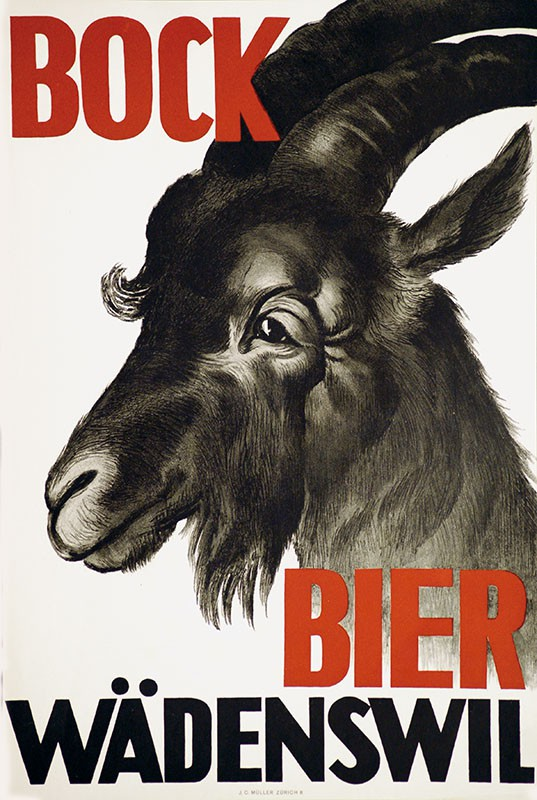
Wednesday’s work is for Wädenswil Bock Bier, which was created in 1939. This one was for the Brauerei Wädenswil of Wädenswil, Switzerland, which was originally founded in 1833. Sadly, the artist who created it is unknown.

Filed Under: Art & Beer, Beers, Breweries, Just For Fun Tagged With: Advertising, Bock, History, Switzerland

Historic Beer Birthday: John Courage

October 1, 2025 By Jay Brooks

Today is the birthday of John Courage (October 1, 1761-October 1797). He founded the Courage Brewery in London in 1787, when he bought a brew house in Horselydown, Bermondsey, London.

This biography is from Courage & Co., a website dedicated to the Courage Brewery and the Courage family.

John Courage, the founder of Courage & Co., came to London in 1780 as a
younger son of a French Huguenot family who had been exiled and settled in Scotland a century before.

In a letter dated 7th February 1786, the Founder’s sister writes to him congratulating him on his marriage to Harriet Murdoch and that “the marriage is no surprise to us and be that she be a sober good woman and that we drank your health on your marriage night very hearty.”

The Anchor Brewhouse, the location of the original Courage Brewery.

By 1787 he had already been in business in London for eight years as an agent for the Glasgow shipping firm of Carron which traded from the Glasgow Wharf (the Carron and Continental Wharves) on the north side of the Thames, downstream from the Tower of London.

John Courage was the only surviving son of his late father, Alexander, when he left Aberdeen for London in about 1780 to become the Wapping agent for Carron Shipping, leaving behind in Aberdeen his mother Isabel and his unmarried sister Ann. John could see across the river to the foreshore of Southwark and decided to diversify his interests by going into the beer business. Thus it was that the name of Courage became associated with the brewing industry.

When John Courage, together with a number of friends, settled for the purchase of a brew house at Horselydown, on the south bank of the Thames, he was investing his acumen and money in a staple industry at an opportune time. He purchased the Anchor Brewery at Horselydown, Bermondsey, in 1787 from John and Hagger Ellis. An earlier owner of the Brewery was Vassal Webbing a Flemish émigré. What is interesting is that both Vassal Webbing and John were described in G.N. Hardinge’s book, Courages 1787-1932, as being Protestant émigrés. Frank Courage wrote to his daughter Milly in New Zealand in 1914, that he thought John (his Grandfather), could have come from Flanders, as brewing has always been more of an industry there than in France. The only known French Protestant Courages in the 1600s were Thomas and Nicholas Courage, and their names do not appear in Aberdeen, so the search has shifted to Flanders (Belgium), for our Protestant forebears.

On 17th December 1787, John Courage, aged 26, paid a cheque for £100 to the Morris Estate as part payment for the Private House and Old Brewhouse at Horselydown over the Thames and opposite Wapping. On Christmas Eve, John paid the balance on the purchase of £674 18s 9d. On 4th January 1788, he paid George Courage £26 6s for sundries and scroll book. On 15th January 1788 John purchased one silk waistcoat for 19 shillings 8d, and on 7th June paid John Ward £10 for a gelding. On 15th November 1788, the Founder’s sister Ann writes to her brother “this piece of news that our king is died” (Bonnie Prince Charlie in exile in Italy).

In March 1793, tragedy struck and John’s sister Ann died of a fever in Aberdeen and was buried beside her father in Old Machar; there is a long letter from the Founder’s mother, Isabel Courage, about this in the Courage Collection at the Greater London Record Office, EC1, together with the other original letters that survive from this period including the old brewery book.

In May 1793, Archibald Courage from Findhorn supplies his cousin “with 1000 American staves and 20 bundles hoops”. Courage Beer was being shipped all over the world, as its reputation grew. 2 hogsheads of Porter on 25th February 1793 were shipped back to Scotland to the Earl of Fife,
and throughout 1794 barrels of porter were dispatched to India, Dominica, Antigua, Amsterdam, Hambro, Gibraltar and Lisbon. Ann Murdoch, the Founder’s mother-in-law spent £6-10-6 on clothes for her grandson John in September 1796 and Mrs Courage’s house expenses for the month of October 1796 were £9-6-10d.

On 26th June 1788 a son, John, was born to John and his wife Harriet and on 8th June 1790 twins Ann and Elizabeth were born. On 23rd February 1795 another daughter, Harriet, was born.

John Courage died in October 1797 aged 36 and was buried at St John’s, Horselydown. His widow, Harriet died in May the following year aged 32, and was also buried at Horselydown. On Harriet’s death, the new John Courage was only 10, and John Donaldson, the managing clerk, took over the running of the Brewery, becoming a partner in the newly named firm of Courage and Donaldson, taking a third of the gross profits which was afterwards enlarged to half, as well as half of the capital.

This is a short history of the brewery from its Wikipedia page:

Courage & Co Ltd was started by John Courage at the Anchor Brewhouse in Horsleydown, Bermondsey in 1787. He was a Scottish shipping agent of French Huguenot descent. It became Courage & Donaldson in 1797. By 1888, it had been registered simply as Courage. In 1955, the company merged with Barclay, Perkins & Co Ltd (who were located at the nearby Anchor Brewery) to become Courage, Barclay & Co Ltd. Only five years later another merger with the Reading based Simonds Brewery led to the name changing to Courage, Barclay, Simonds & Co Ltd. In the late 1960s, the group had assets of approximately £100m, and operated five breweries in London, Reading, Bristol, Plymouth and Newark-on-Trent. It owned some 5,000 licensed premises spread over the whole of Southern England, a large part of South Wales and an extensive area of the East Midlands and South Yorkshire. It was employing some 15,000 people and producing something like 75 million imperial gallons (340,000,000 L) of beer annually. Its name was simplified to Courage Ltd in October 1970 and the company was taken over by the Imperial Tobacco Group Ltd two years later.

Its vast Worton Grange (later the Berkshire) brewery was opened on the Reading/Shinfield border in 1978. The Anchor Brewery closed in 1981 and all brewing was transferred to Reading. Imperial Tobacco was acquired by the Hanson Trust in 1986 and it sold off Courage to Elders IXL who were renamed the Foster’s Brewing Group in 1990. The following year the Courage section of Foster’s merged with the breweries of Grand Metropolitan. Its public houses were owned by a joint-company called Inntrepreneur Estates. Scottish & Newcastle purchased Courage from Foster’s in 1995, creating Scottish Courage as its brewing arm.

Filed Under: Birthdays, Breweries, Just For Fun Tagged With: England, Great Britain, History, UK

« Previous Page
Next Page »

Find Something

Northern California Breweries

Please consider purchasing my latest book, California Breweries North, available from Amazon, or ask for it at your local bookstore.

Recent Comments

  • Bob Paolino on Beer Birthday: Grant Johnston
  • Gambrinus on Historic Beer Birthday: A.J. Houghton
  • Ernie Dewing on Historic Beer Birthday: Charles William Bergner 
  • Steve 'Pudgy' De Rose on Historic Beer Birthday: Jacob Schmidt
  • Jay Brooks on Beer Birthday: Bill Owens

Recent Posts

  • Beer In Ads #5168: Hey! It’s Bock Beer Day To-Day! March 17, 2026
  • Beer In Ads #5167: Acme Bock Is Back Tomorrow! March 16, 2026
  • Historic Beer Birthday: John Land March 16, 2026
  • Historic Beer Birthday: Axel Heiberg March 16, 2026
  • Beer Birthday: Paul Segura March 16, 2026

BBB Archives

Feedback

Head Quarter
This site is hosted and maintained by H25Q.dev. Any questions or comments for the webmaster can be directed here.