Brookston Beer Bulletin

Jay R. Brooks on Beer

  • Home
  • About
  • Editorial
  • Birthdays
  • Art & Beer

Socialize

  • Dribbble
  • Email
  • Facebook
  • Flickr
  • GitHub
  • Instagram
  • LinkedIn
  • Pinterest
  • RSS
  • Twitter
  • YouTube

Powered by Genesis

Beer Birthday: Art Larrance

February 26, 2025 By Jay Brooks

obf
Today would have been the 81st birthday of Art Larrance, co-founder of the Oregon Brewers Festival, and also a co-founder of Portland Brewing, too. Unfortunately, Art passed away last year. Art also started the Raccoon Lodge, in 1998, and then launched the Cascade Barrel Brewing House to concentrate on sour beers. In 2012, Art was named Restaurateur of the Year by the Oregon Restaurant & Lodging Association. But I know him best for his continuing work on OBF, which he’d been doing since the beginning of time, or at least 1988. Join me in raising a toast to Art.

Rick Lyke, me, Art and Charles Willet at OBF in 2011.
Pedicab leading the OBF Parade with Grand Marshall Fred Eckhardt and Art in 2011.
Jamie Emmerson, from Full Sail, with Art at the OBF Parade in 2009.
Art in 2009 with then-mayor of Portland Sam Adams.

Filed Under: Birthdays Tagged With: OBF, Oregon, Portland

Historic Beer Birthday: Frederick C. Miller

February 26, 2025 By Jay Brooks

miller-old
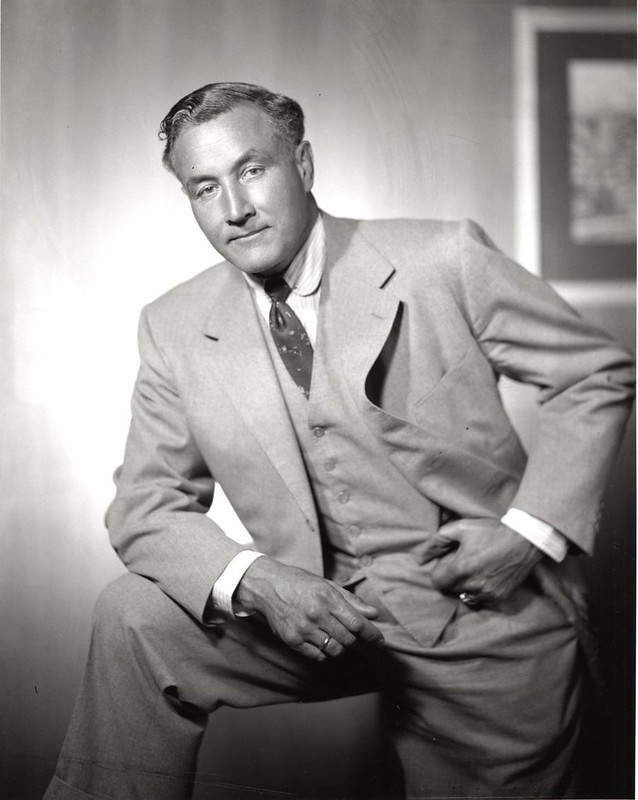
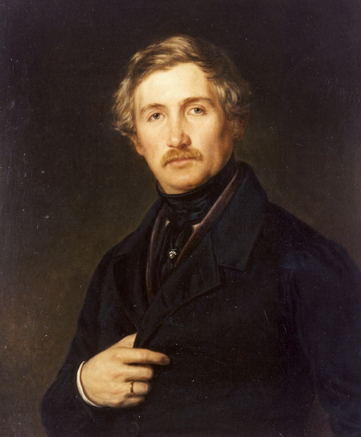
Today is the birthday of Frederick C. Miller (February 26, 1906–December 17, 1954). Fred was born in Milwaukee, Wisconsin, “the son of Carl A. Miller of Germany, and Clara Miller (no relation), a daughter of Miller Brewing Company founder Frederick Miller.

1954-Fred-C.-Miller

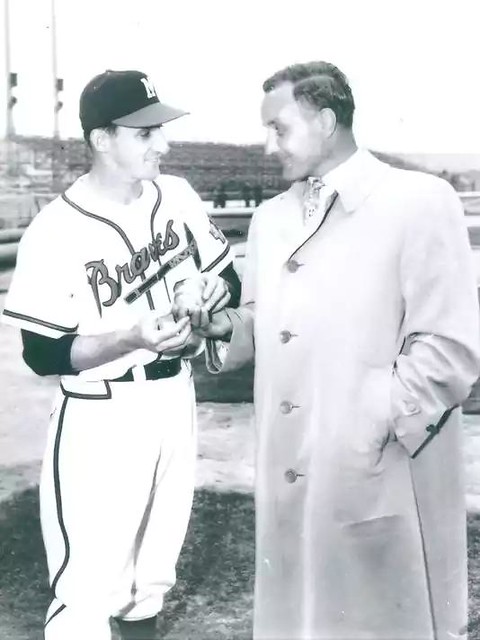
Succeeding his younger cousin Harry John (1919–1992), Miller became the president of the family brewing company in 1947 at age 41 and had a major role in bringing Major League Baseball to Wisconsin, moving the Braves from Boston to Milwaukee in 1953. He coaxed Lou Perini into moving them into the new County Stadium and the Braves later played in consecutive World Series in 1957 and 1958, both against the New York Yankees. Both series went the full seven games with Milwaukee winning the former and New York the latter.

Fred-Miller-with-Warren-Spahn-Courtesy-of-David-Klug

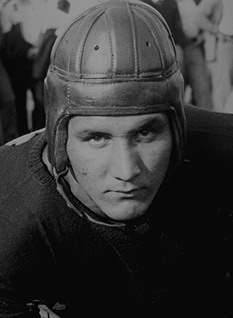
Fred Miller was also notably a college football player, an All-American tackle under head coach Knute Rockne at the University of Notre Dame, posthumously elected to the College Football Hall of Fame in 1985. He later served as an unpaid assistant coach for the Irish, flying in from Milwaukee several times a week.

fred-miller-fb

He also “volunteered as a coach for the Green Bay Packers and, during a difficult financial period, even helped fund the team. Miller Brewing remains the largest stockholder of the Green Bay Packers,” which probably explains why they played half of their home games in Milwaukee before Lambeau Field was refurbished.

miller-chof

Here’s his biography from the College Football Hall of Fame:

A native of Milwaukee, Fred Miller was the grandson of the founder of the Miller Brewing Company. The qualities which later made Fred a great business executive were already evident when he entered Notre Dame in 1925, and they were quickly recognized by the immortal Knute Rockne. It was under Rockne’s tutelage that the 6-1, 195-pounder came to his gridiron peak, earning All-America mention in 1927, and again in 1928, and achieving the ultimate Notre Dame football honor by being named captain of the 1928 team. His quest for perfection was not limited to the gridiron. During his years at Notre Dame he coupled athletic prowess with academic proficiency and established the highest scholastic average of any monogram winner. Miller was involved in real estate, lumber, and investments before becoming president of the Miller Brewing Company. In 1954, he and his son, Fred Jr., were killed in an airplane crash. Miller was 48 years old. He was survived by his wife, six daughters and a son.

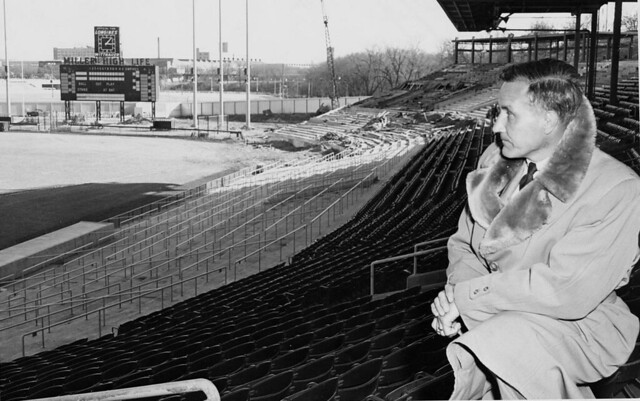
fred-miller-stadium
Miller at Milwaukee’s County stadium, where he helped moved the Boston Braves to in 1953, along with paying $75,000 for the County Stadium scoreboard in the background.

But beyond his sports accomplishments, he was an effective leader of his family’s brewery, as detailed by the Milwaukee Journal-Sentinel in Remembering Frederick C. Miller, Milwaukee brewing’s 1st rock star:

Frederick C. Miller was the first brewery rock star.

Industry types praised Miller in the 1940s and early ’50s in the same way they gush over leading craft brewers today.

Frederick J. Miller was the builder of the brewery that is marking its 160th anniversary this year. Frederick’s son, Ernest, who took over after his father’s death, was a caretaker for the brewery keeping the status quo.

But Frederick C. Miller, part of the focus of a monthlong celebration of the company’s history that wrapped up last weekend, was the innovator who sparked new relationships, new buildings, put new ideas in motion and marched the family brewery past regional dominance to become the nation’s fifth-ranked brewery.

When you sip a beer at Miller Park or Lambeau Field it’s because of Fred C. He identified the relationship between beer and sports, and ran with it like the all-American football player he was.

“Fred was iconic,” said David S. Ryder, MillerCoors vice president for brewing, research, innovation and quality. “He was named as president of Miller Brewing in 1947, and from the day that he was named president, Miller Brewing started to grow.”

Frederick C. died when his plane crashed on takeoff at what is now Mitchell International Airport on Dec. 17, 1954. He was 48. His son Fred Jr., 20, and two pilots on the Miller Brewing payroll were killed on impact in the crash; Frederick C. was thrown clear of the crash but died hours later in the hospital.

A crowd of 3,000 mourners attended the funeral services, and the overflow was described by The Milwaukee Journal as “everyday folks — men in overalls and other rough work clothes, mothers carrying babies, young people and old.”

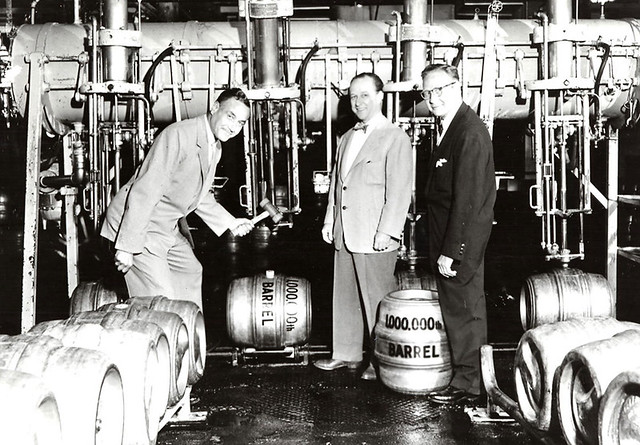
During Frederick C.’s time, Miller’s brewery expanded and sales grew from 653,000 barrels in 1947 to more than 3 million in 1952. He added buildings, including a new brewhouse and a new office building. He turned the former ice caves into The Caves Museum, a place where brewers could assemble for lunch or special occasions.

Liberace, a West Allis native, cut the ribbon for The Caves in 1953, according to John Gurda’s book “Miller Time: A History of Miller Brewing Company.”

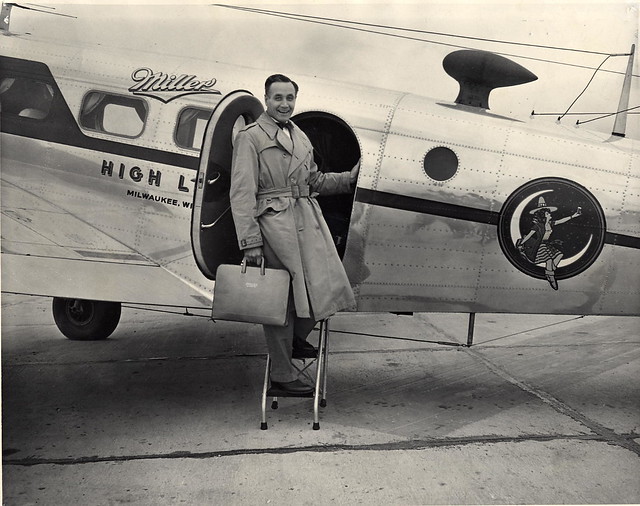
Miller-airplane

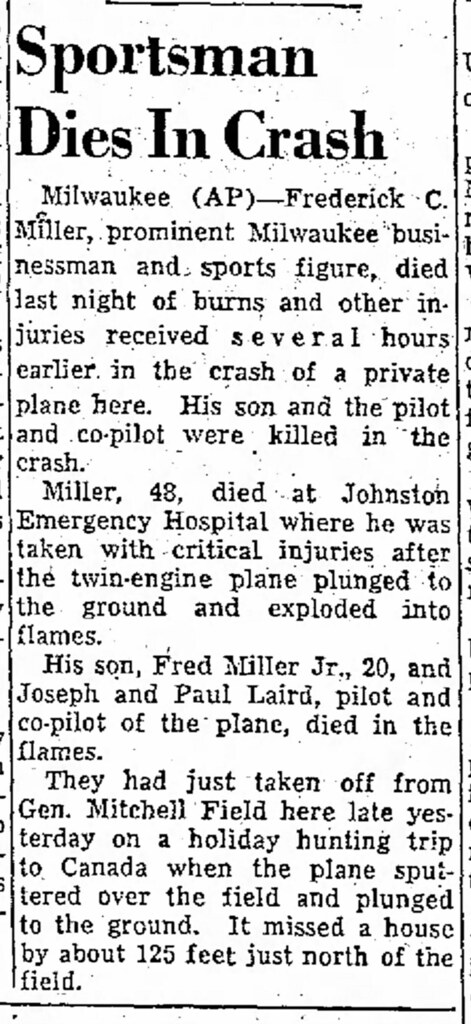
Here’s a newspaper account of the tragic death of Fred and his son in 1954.

Miller-sportsman-dies

1949-Miller-tops-1-million-barrels

And lastly, here’s some interesting speculation from my friend, historian Maureen Ogle, that Miller Brewing might have done considerably better against their rival, Anheuser-Busch, if Fred Miller had not died prematurely in that place crash when he was only 48 years old.

It’s rare that the presence or absence of one person makes a historical difference (I said “rare,” not impossible). But I think that the death of Fred C. Miller in 1954 altered the course of American brewing. Miller was aggressive, ambitious, smart — all on a grand scale. He was the first beermaker to come along in decades who showed the potential to go head-to-head with the Busch family, particularly Gus Busch, who ran A-B from the late 1940s until the mid-1970s.

Miller became company president in 1947, and over the next few years, he shoved, pushed, prodded, and otherwise steered his family’s brewing company not-much-of-anything into the ranks of the top ten. But in late 1954, he died (in a plane crash) — and Miller Brewing lost its way.

As Miller faltered, A-B solidified its position as the dominant player in American brewing. Had Fred Miller not died, I believe the course of American brewing would have turned out differently: Fred Miller would have transformed his family’s company into a formidable powerhouse. He would have challenged A-B’s dominance. He would have been able to command-and-direct in a way that, for example, Bob Uihlein was not able to do at Schlitz during the same period.

Put another way, in the 1950s, Gus Busch met his match in Fred C. Miller. Things might have turned out differently had Miller lived

I can’t prove that, of course, but hey — what’s all that research good for if I can’t express an informed opinion.

And lastly, the Wisconsin Business Hall of Fame created a short video of Miller’s life that’s a nice over view of him.

Filed Under: Birthdays, Just For Fun Tagged With: Football, History, Miller Brewing, Sports, Video, Wisconsin

Historic Beer Birthday: Gabriel Sedlmayr II

February 26, 2025 By Jay Brooks

spaten-hops
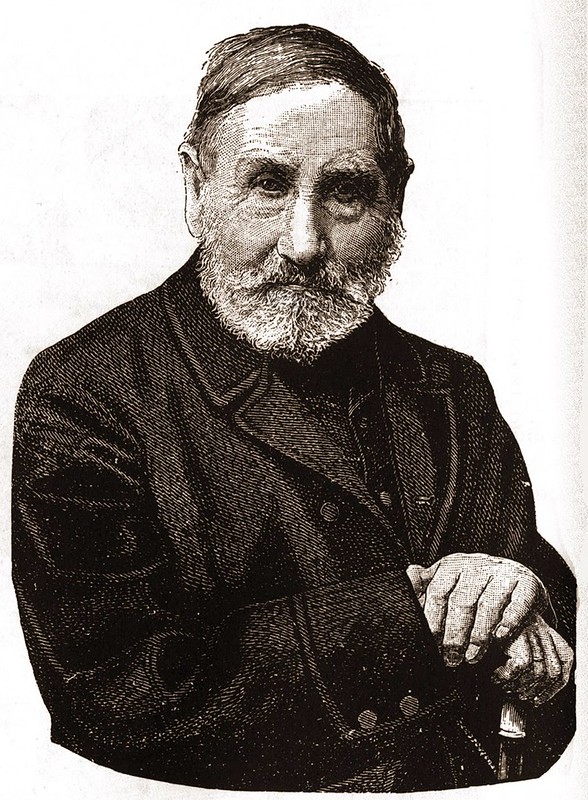
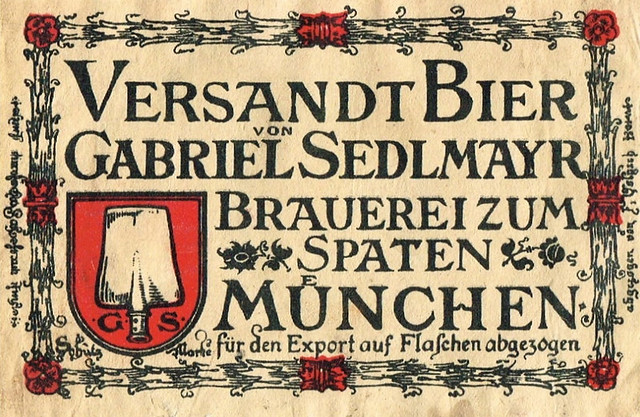
Today is the birthday of Gabriel Sedlmayr II, sometimes referred to as Gabriel Sedlmayr the Younger (February 26, 1811-October 1, 1891). He was, of course, the son of Gabriel Sedlmayr the Elder, who acquired the Spaten brewery in 1807, when “at the time was the smallest brewery in Munich.” When his father died in 1839, the brewery passed to Gabriel and his brother Joseph, and the two ran the brewery for three years, until Joseph bowed out to start his own brewery, and Gabriel became the sole owner of the Spaten brewery. By 1867, it became the largest brewery in Munich, a position it held until the 1890s. In 1874, Sedlmayr retired, and three of his four sons, Johann, Carl and Anton, began running the company. During his tenure at Spaten, he played a major role in the development of lager fermentation.

Gabriel_Sedlmayr_(1811-1891)
Here’s a short biography from the Entrepreneur Wiki:

Gabriel Sedlmayr II was born in Munich on February 26, 1811. He is often called Gabriel Sedlmayr the Younger. While in high school, he was given private lessons by Professor Johann Baptist Hermann in chemistry and physics. He graduated from high school and then began training in a brewery.

He also traveled to European to visit and learn from different breweries, as well as local scientists. In Vienna he attended lectures at the Polytechnic of Vienna and in Berlin he attended chemistry lectures at the University of Berlin. He then took over his father’s brewery with help from his brother.

SPATEN-Geschichte
In 1842, when Joseph, his brother, left the business, he became the sole owner of the brewery. In 1866 he then opened up the Bavaroise Brasserie in Paris. Then he helped at and then eventually took over the Spanenbrau Brewery. He is responsible for developing a dark lager called Dunkel at his Spaten Brewery. He was known for using science, microbiology, and cultivation to develop new beers. In 1874, he passed his business to his sons Johann, Carl, and Anton because of his poor health. In 1881 he was awarded the Gold Medal of the City if Munich and then on October 1, 1891 he died.

Gabriel_Sedlmayr_Jr

This is his entry in the Oxford Encyclopedia of Beer, written by Ian Horsey:

Sedlmayr, Gabriel the Younger

was a brewer who took over the reins of the Spaten Brewery of Munich, with his brother Josef, upon the death of his father, Gabriel Sedlmayr the Elder, in 1839. The two brothers inherited their father’s innovative zeal and, over the next few years, modernized the brewery at the same pace as their father had done before them. In 1844, Spaten became the first brewery outside England to adopt steam power. A year later, Gabriel bought out his brother and became the sole proprietor of Spaten, which would continue to be a center of brewing innovation. Already during his student days, Gabriel had been an innovator. As part of the requirement for his Master Diploma, young Gabriel embarked upon an extensive grand tour of noted European brewing centers in the early 1830s. On one of his trips, he met fellow brewer Anton Dreher, whose mother owned a small brewery in Klein-Schwechat, just outside Vienna. The meeting, in 1832, marked the beginning of a life-long friendship and business association. The two travelers visited Great Britain in 1833 to learn more about fermentation—and engaged in what can only be described as a classic case of industrial espionage. By using a specially modified hollow walking cane, they furtively gathered wort and beer samples during their brewery visits und subsequently analyzed them in their hotel. They put the data thus collected to good use after they had returned home by developing two new malts and two new beer styles: Dreher came up with Vienna malt and Vienna lager; Sedlmayr invented Munich malt and märzen beer.

gabriel-sedlmayr

In those days it was difficult to brew lagers in the summer; the hot central European climate was inhospitable to brewing in general and lager brewing in particular. Brewers used ice blocks cut from frozen lakes and ponds in the winter and stored them underground for use as coolant in the summer. This was costly and inefficient. So Sedlmayr looked around for a technological solution, which he found in the work of a young Munich engineering professor, Carl Linde. Linde had been tinkering with refrigeration machines, and in 1873, Sedlmayr persuaded Linde to install one of his experimental devices in the Spaten fermentation and lagering cellars. This was, as best as anybody knows, the first time that mechanical refrigeration had been used in a brewery, and Spaten was from then on uniquely equipped to brew bottom-fermented beer reliably year-round. With this new technology in place, Spaten had become the largest of the Munich breweries. Spaten’s superb lager-making ability allowed it to experiment with ever more delicate brews, especially one that could compete with the rising popularity of the Bohemian pilsner from just east of the Bavarian border. The result was the introduction, in 1894, of a straw blond beer, the delicate lager that was to become the signature brew for Bavarian beer garden and beer hall lagers for the next century, Helles.

gabriel-sedlmayr-coin

Spaten-Werbung

Filed Under: Birthdays, Just For Fun Tagged With: Bavaria, Germany, History

Beer In Ads #4892: Neuweiler’s Bock Beer

February 25, 2025 By Jay Brooks

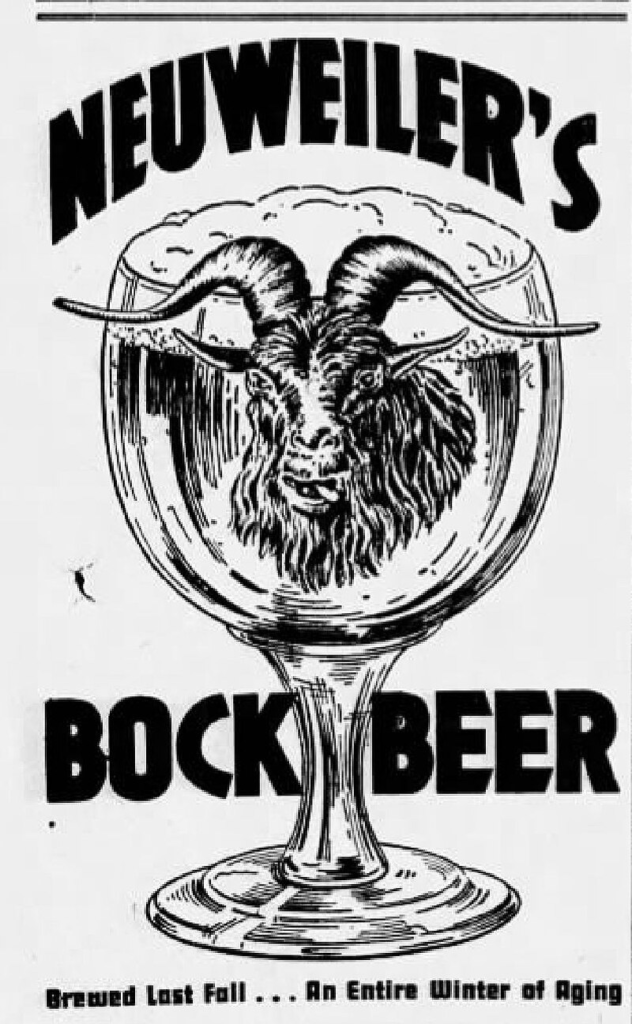
Last year I decided to concentrate on Bock ads. Bock, of course, originated in Germany, in the town of Einbeck. Because many 19th century American breweries were founded by German immigrants, they offered a bock at certain times of the year, be it Spring, Easter, Lent, Christmas, or what have you. In a sense they were some of the first seasonal beers. “The style was later adopted in Bavaria by Munich brewers in the 17th century. Due to their Bavarian accent, citizens of Munich pronounced ‘Einbeck’ as ‘ein Bock’ (a billy goat), and thus the beer became known as ‘Bock.’ A goat often appears on bottle labels.” And presumably because they were special releases, many breweries went all out promoting them with beautiful artwork on posters and other advertising.

Tuesday’s ad is for “Neuweiler’s Bock Beer,” and was created in 1939. Neuweiler Brewery was located in Allentown, Pennsylvania and was founded in 1900. It closed in 1968.

Filed Under: Art & Beer, Beers, Breweries, Just For Fun Tagged With: Advertising, Bock, History, Pennsylvania

Historic Beer Birthday: Robert Neame

February 25, 2025 By Jay Brooks

shepherd-neame
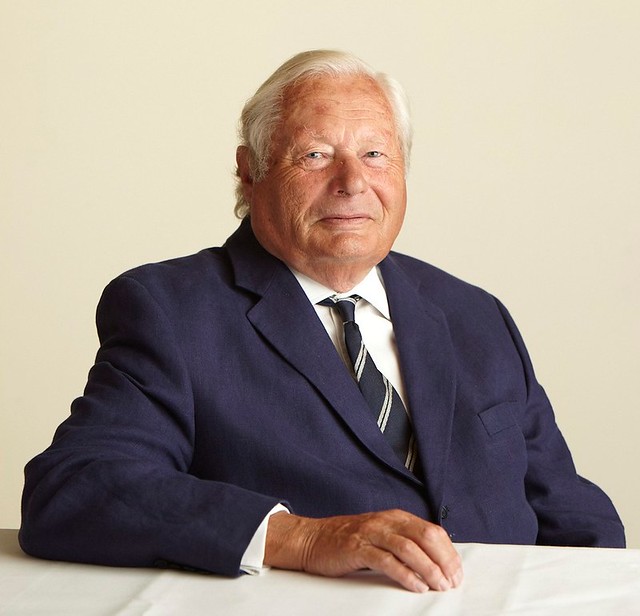
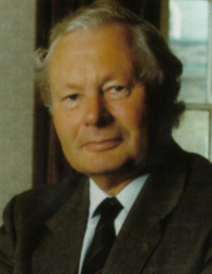
Today is the birthday of Robert Harry Beale Neame, though he was generally known as Bobby (February 25, 1934-November 15, 2019). He joined his family’s company, Shephard Neame in 1956, and in 1971 became the chairman of the company, a position he held until retiring in 2005, when he was named president.

He passed away recently, in 2019, and here is his obituary from the Guardian:

Robert Neame, who has died aged 85, helped safeguard the independence of Shepherd Neame, Britain’s oldest brewery. He was a director from 1957 until 2006 and steered it through the turbulence of the 1960s and 70s, when many family breweries were taken over by national groups keen to acquire more pubs to fill with keg beer and lager.

Bobby, as he was known, joined the family business as marketing director in 1956. Shepherd Neame, founded in 1698 in Faversham in the heart of the Kent hop fields, enjoyed a good reputation for its beer, while its large estate of pubs was tempting bait for bigger brewers. In 1967 Shepherd Neame’s rival in Faversham, Fremlin’s, was bought by Whitbread. Bobby and his family were determined that their brewery would not suffer a similar fate.

Born in London, Bobby was the son of Violet (nee Cobb) and Jasper Neame, chairman and managing director of the brewery until 1961. He went to Harrow school, where he became head boy. Before he joined the family firm he went on a grand tour of breweries in Europe and Scandinavia to gain experience of both making and selling beer. He finished the tour at Hürlimann in Zurich, a visit that led to the Swiss lager being brewed at Faversham.

One of Bobby’s first tasks at the family brewery was to add keg beer to its cask and bottled ales. Such filtered and pasteurised keg beers as Watney’s Red Barrel and Worthington E were taking sales away from traditional beer – and Shepherd Neame knew it had to respond with its own version.

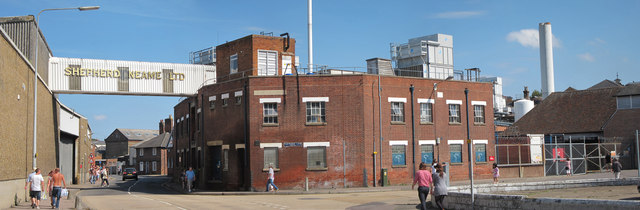
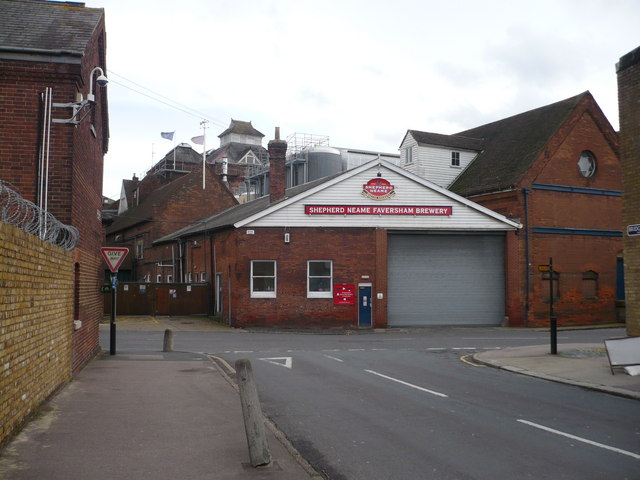
The Shepherd Neame brewery in Faversham, Kent.
The Shepherd Neame brewery in Faversham, Kent. Photograph: Shepherd Neame

Bobby was given £1,000 to set up a keg plant and he recalled buying two tanks from a Mr Roberts in north London. It was like a scene from Steptoe and Son, he said, with the deal sealed behind Tottenham Hotspur football ground over a lunch of greasy chops on a tablecloth of newspapers. At the brewery the new keg beer was pasteurised in a primitive fashion, with kegs lowered into two zinc baths filled with hot water.

Bobby became chairman of the brewery in 1971 and was able to add more distinguished beers than those brewed under the keg initiative. One of his great achievements was to launch, in 1990, a new cask and bottled beer called Spitfire. It commemorated the 50th anniversary of the Battle of Britain, when the RAF defeated the Luftwaffe in the skies above Kent. Spitfire went on to become the brewery’s best known and biggest-selling beer.

In the 90s Bobby and the brewery faced the threat of a new invasion, with the rise of hordes of British drinkers crossing to Calais on what became known as “booze cruises”. They returned with boxes of French beer that cost half the price of British beer as a result of far lower rates of duty in France.

Shepherd Neame, close to Dover and Folkestone, was badly affected by the cheap imports. Bobby hit back by exporting his strong ale, Bishops Finger, to Calais and other parts of northern France. The beer, first brewed in the 50s, takes its name from ancient road signs directing pilgrims to the shrine of Thomas Becket in Canterbury Cathedral. Bishops Finger became a cult beer in France and helped counter the impact of cheap imports.

Bobby and his fellow directors lobbied successive British governments over the punitive rates of duty imposed on British beer. The campaign had only limited success, with some freezes on duty in recent years, but Bobby was able to use another government policy to build his pub estate.

In the early 90s the Conservative government, following advice from a report by the Monopolies and Mergers Commission into the brewing industry that had castigated the national brewers, forced the nationals (the Big Six) to sell off large parcels of their pubs. As a result, Bobby was able to snap up a number of pubs from Whitbread.

When Bobby retired as chairman in 2005 he was given the honorary role of president. He passed to his son, Jonathan, a company producing 200,000 barrels of beer a year, with 320 pubs and hotels, and substantial free trade.

Bobby was active in Kent life. A one-nation Tory, he was leader of Kent county council between 1982 and 1984. He was deputy lieutenant of Kent in 1992 and high sheriff in 2001. A passionate supporter of cricket, he was president of Kent county cricket club in 1992. He was appointed CBE in 1999.

He was married twice, first in 1961 to Sally Corben. The marriage ended in divorce, and in 1974 he married Yvonne Mackenzie. He is survived by Yvonne, their daughter, Moray, his children Jonathan, Charlotte and Sarah from his first marriage, and nine grandchildren; his son Richard died in 1968.

bobby-neame

Shepherd Neame is an English independent regional brewery founded in 1698 in Faversham, Kent. Evidence has been uncovered showing brewing has taken place continuously on the current site since at least 1573. It is the oldest brewer in Great Britain and has been family-owned since 1864. The brewery produces a range of cask ales and filtered beers. Production is around 281,000 brewers’ barrels a year. It owns 338 pubs & hotels predominantly in Kent, London and South East England.

Shepherd-Neame-brewery-3

From the Neame Family Research:

The next generation faced the same difficulties in the 1960s. Bobby Neame came to work at the Brewery in 1956. In September 1957 he became a director when Madeleine Finn, due to retire, decided to step down. Jasper, his father was ill at the time, but Bobby was back at work in the following January. By the September 1969 AGM he had widened his range considerably and it was said that he was helping in the Brewery, and was in charge of the free trade, advertising etc.

Laurie’s son, Colin Roger Beale Neame joined the company in October 1959, to help his father in the bottled beer department, a month after Rex Neame had joined in Managing ‘Queen Court’. At the September 1961 AGM after serving a probationary period on the Board, they both became full members. As the production director, he was in charge of the more technical side of the brewing business, making improvements in the bottling plant and keg beer, by utilizing many labour saving techniques. He also introduced a small biochemical laboratory employing a laboratory technician.

Jasper died on 18 Jan 1961 at the early age of 56, Laurie then becoming sole managing director. He survived his brother for another nine years and continued his interest in production.

Following is his father’s footsteps, Bobby took particular interest in the sales side of the business. This became especially important once the larger brewers started investing heavily in advertising, especially on commercial television. Bobby then became marketing manager in charge of “improving the image of the Company in the eyes of the public”, showing greater attention to publicity, with advertising on Southern Television in 1970.

robert-neame
In 1968 the Cobb brewing company in Margate (with its family connection) again came on the market, together with 38 licensed premises. The Cobbs found it increasingly difficult to survive independently after the increasing success of the Butlins hotels group took over much of its trade. It was taken over by the Whitbreads in Januray 1968 and ceased to brew in the following October. This now left Shepherd Neame as ‘the last independent brewery in Kent.’

On 19 Dec 1970, Laurie died suddenly and unexpectedly at the end of the day, after all the excitement when his second son, Stuart, was married. In March 1971 Bobby became chairman and Colin managing director.

Shepherd-Neame-brewery-2

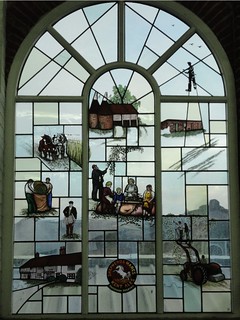
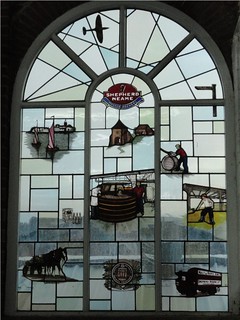
I love the stained glass windows showing the brewery’s history.

Millenium Brewhouse window I Millenium Brewhouse window II
Martyn Cornell has a nice photo tour of the Shepherd Neame Brewery. And on YouTube there’s an interesting tour of the brewery.

Filed Under: Birthdays, Just For Fun Tagged With: England, Great Britain, History, UK

Beer In Ads #4891: American Brewing Co. Bock Beer

February 24, 2025 By Jay Brooks

Last year I decided to concentrate on Bock ads. Bock, of course, originated in Germany, in the town of Einbeck. Because many 19th century American breweries were founded by German immigrants, they offered a bock at certain times of the year, be it Spring, Easter, Lent, Christmas, or what have you. In a sense they were some of the first seasonal beers. “The style was later adopted in Bavaria by Munich brewers in the 17th century. Due to their Bavarian accent, citizens of Munich pronounced ‘Einbeck’ as ‘ein Bock’ (a billy goat), and thus the beer became known as ‘Bock.’ A goat often appears on bottle labels.” And presumably because they were special releases, many breweries went all out promoting them with beautiful artwork on posters and other advertising.

Monday’s ad is for “American Brewing Co. Bock Beer,” and the chromolithograph was created in 1890. The American Brewing Company was located in St. Louis, Missouri, and was founded in 1857 as the Excelsior Brewery by Charles Hoelzle. In 1890, it was bought by Oscar Henry Jr. and Hugo Koehler.

Filed Under: Art & Beer, Beers, Breweries, Just For Fun Tagged With: Advertising, Bock, History, Missouri, St. Louis

Historic Beer Birthday: Jim Patton

February 24, 2025 By Jay Brooks

abita
Today is the birthday of Jim Patton (February 24, 1953-October 23, 2012). He was a founder of the Abita Brewing Co. in 1986, the first microbrewery in the south, and one of the earliest anywhere. This is from his Wikipedia entry:

He was an anthropologist and craft beer brewer. He was considered one of the pioneers in the craft beer brewing industry. He was one of the founders of the Abita Brewing Company in Abita Springs, Louisiana. He also brewed beer for Key West Brewery and Wynwood Brewing in Miami, Florida. Patton’s first career was as a cultural anthropologist. He received a doctorate in the subject from Washington and Lee University. His specialty was Andean agricultural economics. Patton taught at Southeastern Louisiana University in Hammond, Louisiana and Xavier University of Louisiana. He eventually quit those jobs to become a full-time brewer. Patton co-founded the Abita Brewing Company in 1986. The first Abita Beer debuted on July 4 that same year in New Orleans and Mandeville, Louisiana. Abita Brewing Company was the first craft brewery to open in the South. Patton was instrumental in creating many of the recipes for the beers that Abita still produces today. Patton sold his share in the Abita Brewing Company in 1997 and co-founded the Zea Rotisserie and Brewery where he was also the brewmaster. Later, he would brew beer for Key West Brewery and Wynwood Brewery in Miami, Florida. Patton was also interested in wine making and worked for wineries in California and Oregon. Jim Patton died in Miami on October 23, 2012.

jim-patton-photo

And this is his obituary from the Miami New Times:

Born February 24, 1953, Patton earned a bachelors degree from Carleton College in Northfield, Minnesota, where he met his wife of 42 years. His first career was in professorship, earning a doctorate in cultural anthropology from Washington and Lee University in St. Louis, where he was a Dougherty Fellow specializing in Andean agricultural economics.

In 1980, Patton took a break from academia to visit friends in Abita Springs, Louisiana for the New Orleans Jazz and Heritage Festival. Soon after he moved to teach at Southeastern and Xavier universities in southern Louisiana.

Patton made an abrupt career change, deciding to leave the “politics in the teaching” to become a full-time brewer, applying his research skills and business acumen to start a company that would become among the cornerstones of the craft beer movement in the United States.

“One thing my academic background did teach me was research and study,” Patton told the Spartanburg Herald-Journal in 1994.

Abita Brewing Company debuted its first beer on July 4, 1986, and brewed only 1,500 barrels that year. Patton sold the brewery in 1998, but his legacy continued in the recipes for Abita’s flagship beers: Purple Haze, Turbo Dog, Amber, Andygator and Abita root beer. In 2011, Abita brewed over 130,000 barrels, and their product is available in 46 states, making it synonymous with Louisiana and one of the most widely distributed craft beers in the U.S.

After leaving Abita, Patton continued his entrepreneurship and brewing knowledge to co-found Zea Rotisserie, a chain of brewpubs in New Orleans, where he was also a brewmaster.

Patton went on to brew for Key West Brewery. A San Francisco native, he also returned to northern California to study wine, taking distance learning courses through University of California-Davis. He was an avid wine maker, working for wineries in Oregon and California.

Earlier this year, Patton responded to Brignoni’s ad on probrewer.com seeking a brewmaster. Patton came aboard with Wynwood Brewing in late September. Patton settled into an apartment in the Wynwood district of Miami, where he was attracted by the arts and street culture.

When WBC opens later this year or early 2013, it will be the first production craft brewery to open in the city of Miami since Wagner Brewing Company in 1934.

Patton was an avid explorer and Sierra Club member. As a teenager he explored the mountains of his native California on foot, bike and cross-country skiing. In his twenties he hiked the Inca Trail, exploring Patagonia and the caves of of the Maya mountains. He was a champion for peace and passionate defender of wild places and sustainability.

An extremely kind man, Patton kept cool and confident during difficult situations, believing that good will eventually triumph.

He was a man of many locations throughout the U.S., traversing between Washington state, California, New Orleans, Key West and Miami, keeping an intimate connection to each place.

“I just had a real desire to get back into brewing,” Patton told Short Order earlier this month. “I looked into a lot of places. I really enjoy start-ups because they get my mind going and engaged. Miami is just open territory for craft beer. Not a lot of local stuff is going on here, compared to Seattle, where there are 30 craft breweries in the city. Miami is a place where we could go in and get some recognition.”

“I am more determined than ever to take this project open and thrive,” Brignoni says. “WBC wasn’t just my dream, it was Jim’s too and there is no better way to honor him than by doing so. So I ask you all to cheers today in Jim’s name.”

He is survived by his mother, Peggy, his wife, Kathleen, his daughter, Kathryn, his son, Will, and his two sisters, Amy and Betty.

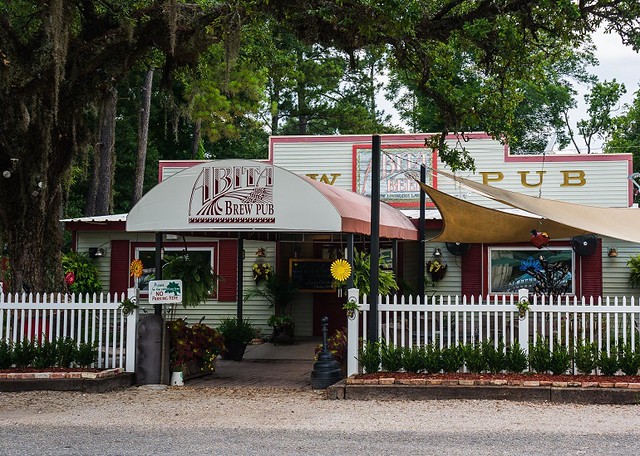
abita-brewpub
The Abita Brew Pub.

And this is from NOLA:

Jim Patton, a pioneer in the American craft beer brewing movement and a founder of Abita Brewing Co. and Zea Rotisserie & Brewery, died Oct. 23 in Miami, where he was helping to start a new brewery. He was 59.

Patton died suddenly of unknown causes, said his wife of 42 years, Kathleen “Catch” Patton.

An avid home brewer, Patton was a founding partner in the Abita Brewing Co. in Abita Springs. Taking advantage of the town’s famous artesian waters, he launched the company at a time when Americans were first developing a taste for indie craft brews. When its first beers debuted on July 4, 1986, Abita was just the 13th craft brewery to open in the United States and the first in the South.

“The first night we rolled out with a beer, we had one bar in New Orleans and one bar in Mandeville that carried it,” Patton recalled last month to writer David Minsky of Miami’s New Times newspaper. “We got some of the local television media in there, and they had some pictures of people dancing on the bar, and you just can’t buy that.”

Crafting beer intrigued him, Patton said in the article, because it was a “blend of science and art.”

Abita produced 1,500 barrels of beer its initial year. Patton sold his stake in the company in 1997, but the business he launched now brews more than 125,000 barrels of beer and 8,000 barrels of root beer.

Patton left Abita when he realized he was spending more time behind a desk than in the brewery, he told New Times. “I opened a brewery because I wanted to brew. Eight years later I was sitting in an office talking to distributors and bankers and that’s not what I wanted to do.”

After Abita, Patton was a co-founder and brewmaster of Zea Rotisserie & Brewery, and was brewmaster at Key West Brewery in Florida. Recently, he became involved with the launch of Wynwood Brewing Co., a craft brewer in Miami.

But beer wasn’t his only love. Patton also enjoyed making wine at his home on Lopez Island, in the San Juan Islands of Washington state, and he worked at several wineries in Oregon and California, Kathleen Patton said.

Before he got in the beer business, Patton was an anthropologist and taught at several universities, including Southeastern Louisiana and Xavier. He earned a doctorate in cultural anthropology as a Dougherty Fellow at Washington University and specialized in Andean agricultural economics.

A California native, Patton loved the outdoors and hiked, biked and cross-country skied throughout his teenage years. “In his 20s, he hiked the Inca Trail, explored Patagonia, and journeyed into the caves of the Maya mountains,” Kathleen Patton said by email Thursday night. “Recently he sailed the waters of the Florida Keys and hiked and kayaked extensively in his beloved great Pacific Northwest.”

He met Kathleen in 1970 during their first week of classes at Carleton College.

In addition to Kathleen, Patton is survived by his daughter Kathryn Braidwood Patton of Seattle, Wash; his son, William Anselm Patton, of Lopez Island, Wash.; his mother and two sisters

jim_patton

Filed Under: Birthdays Tagged With: History, Louisiana, New Orleans

Historic Beer Birthday: August Meiresonne

February 24, 2025 By Jay Brooks

Today is the birthday of August Meiresonne (February 24, 1842-1913). He was born in Belgium and according to his Dutch Wikipedia page. “Initially, together with his sisters Ida and Pauline, he ran a brewery in Bellem beginning in 1866. In 1871 (in what was then Damstraat and today is now Brouwerijstraat) in Landegem, he took over the existing brewery from the Francies De Paepe and Marie-Thérèse Speeckaert family.”

August Meiresonne called his company De Hoprank and the family brewed beer there until 1918. It was a modern brewery for that time that already worked with electricity. He even supplied electricity to the municipality and the church of Landegem was already equipped with electric lighting for this. The energy came by means of two gas engines and a steam engine.

In October 1918 the brewery and the house were razed to the ground by the Germans. After the First World War, his son Aimé Meiresonne started the new Meiresonne Brewery in Ghent.

August Meiresonne with his family around 1890.

And this is from the Meiresonne Brewery Wikipedia page:

[Meiresonne] started the brewery “De Hoprank” there together with his wife Marie David, with whom he had 10 children. They had a modern business for the time. He became alderman in Landegem and mayor and son Aimé (1888 – 1966) took over the management of the company in 1913 . However, the company was destroyed by the retreating Germans in 1918 , which gave rise to a new start in Ghent. There Aimé Meiresonne took over Brasserij Prosper from Ostend-De Marteleire on the Koepoortkaai.

The brewery in Landegem before 1914.

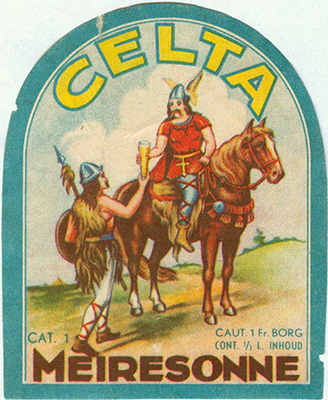
In 1935 the name “Hoprank” was changed to “Meiresonne,” which in Ghent was irreverently called Meire-zeke. This drink probably couldn’t have been very bad, because until the 1960s there was a thriving company with more than 500 employees; in Ghent one could not miss the name, by the way. Aimé was in charge, Sister Céline was his right-hand man and brother Alfred was the brewmaster.

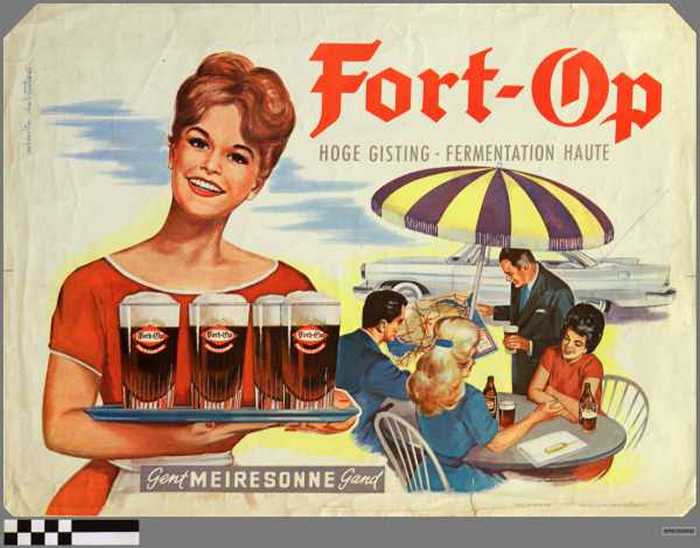
Brand names: The most famous drink was Celta Pils, alongside Fort Op, Family’s (presumably table beer), Pigall’s Stout, Koekoek, Munich, Export, Stolz, Ganda, Goliath and Pater Fredo’s. In 1964 the brewery was taken over by Brouwerij Artois and like many companies merged into Interbrew and InBev. In 1985 the buildings were demolished and apartment buildings were erected on the site, completely erasing the past.

Filed Under: Birthdays, Breweries, Just For Fun Tagged With: Belgium

Historic Beer Birthday: Frederick Gettelman

February 24, 2025 By Jay Brooks

a-gettelman
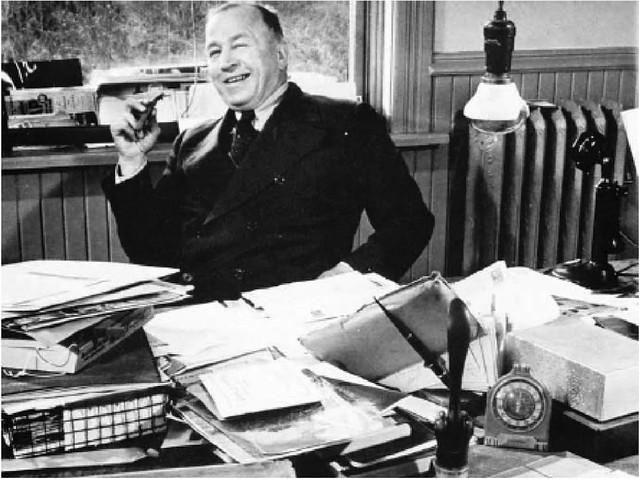
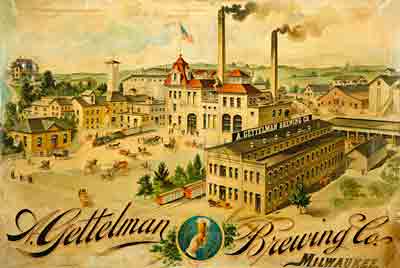
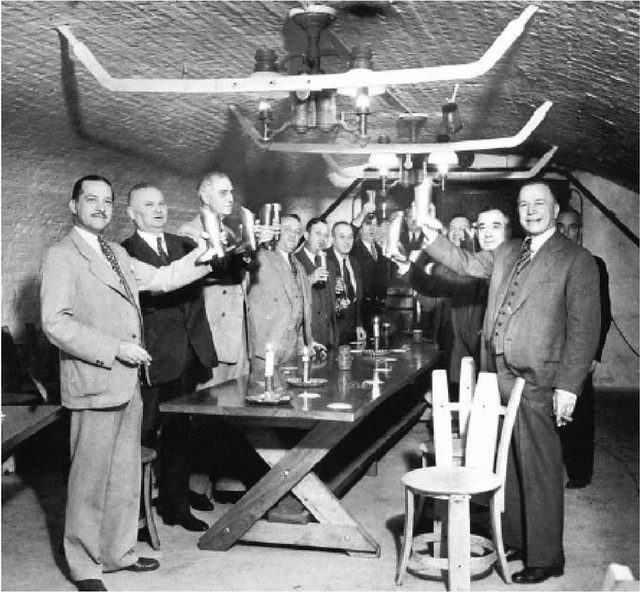
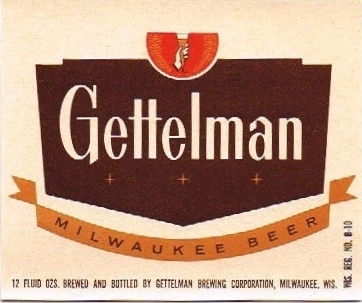
Today is the birthday of Frederick “Fritz” Gettelman (February 24, 1887-June 23, 1954). He was the son of Adam Gettelman, whose father-in-law, George Schweickhart, founded the Strohn & Reitzenstein Brewery in 1854, though the same year it became known as the Menomonee Brewery. When Schweickhart passed away in 1876, Adam Gettelman became the sole owner and renamed it the A. Gettelman Brewing Co. The Milwaukee brewery managed to remain open during prohibition and began making beer again in 1933. When Adam Gettelman dies in 1925, his other son William briefly led the brewery until 1929, when Fritz took over and continued to run the brewery until he passed away in 1954. It remained open after Fritz, though it struggled, and in 1961 was bought by rival Miller Brewing.

fritz-gettelman

This account of Fritz Gettelman’s time at the breweries from the Encyclopedia of Milwaukee:

Gettelman survived Prohibition making “near beer” and through several different investments outside of brewing, like the West Side Savings Bank, the development and manufacturing of snow plows, gold-mining in the American southwest, and a sugar beet processing plant in Menomonee Falls. Gettelman returned to brewing in 1933, with Frederick “Fritz” Gettelman as president.

In order to counteract barrel shortages as brewing resumed, Frederick Gettelman personally designed the first practical steel keg in 1933, manufactured by the A.O. Smith Company of Milwaukee. Shortly after, he also consulted with the American and Continental Can Companies on how to apply his design to the development of what became known as the “keg-lined” beer can. In the late 1930s, he developed new glass-lined storage tanks, also manufactured by A.O. Smith, and a more efficient bottle-washing machine.

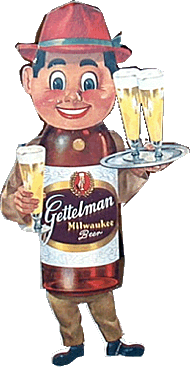
The company introduced a new eight-ounce beer bottle labeled “Fritzie” in 1946, inspired by heinzelmännchen, the house gnomes of German folklore. By 1952, Fritzie had evolved into a cartoon beer bottle with a rotund face and Tyrolean hat that was famously featured in different humorous scenes painted on the exterior walls of several Milwaukee taverns. Moreover, the company became an important pioneer in television advertising in Milwaukee, sponsoring televised wrestling matches in 1947, and World Series pre-game shows in 1949.

Gettelan-Lithograph-2

Gettelman Brewing also made major investments in modernizing and expanding their operations in the 1950s. They entered the Chicago, Boston, California, and other regional and national markets as they briefly opened in the wake of industry consolidation. Gettelman released a new, lighter “Milwaukee” brand beer in 1956, and began importing and distributing Tucher beer from Nuremburg, Germany in 1959—the first American brewer to establish such a relationship.

Nevertheless, the company was unable to continue competing with the national giants, and the Gettelman family sold the brewery to the neighboring Miller Brewing Company in 1961. The Gettelman plant and brand continued on with brothers Tom Gettelman and Frederick Gettelman, Jr. as plant managers until Miller formally merged the two operations in 1971.

Elements of the Gettelman brewery remain part of the Miller Brewing Company complex, and its Milwaukee’s Best brand lives on in Miller’s portfolio.

fritz-gettelman-2
fritz-gettelman-2-text

And this is from “A Century of Brewing, 1854-1954: The A. Gettelman Brewing Company,” a company brochure from 1954:

The A. Gettelman Brewing Company first began to show signs of the new post-prohibition prosperity in 1937 with construction of an addition to the old bottle-house. An 80 x 110 foot structure, the building was twice the size of the building it annexed. Cream-colored bricks salvaged from the old Gettelman mansion atop the hill overlooking the brewery went into the construction of its walls and the bottling equipment it housed was modernity itself. In fact, Fritz Gettelman had had a hand in the improvement of the bottle washer installed in the new bottle house. It was he who had dreamed up and perfected the idea of cleaning the bottles with high pressure steam and water. So efficient was the equipment in the ultra modern bottle shop that Gettelman was able to show figures proving that breakage on bottles of all makes and ages ran only .442 percent of total bottles handled.

In addition to the modern machinery on the ground floor the bottle shop boasted a battery of glass-lined storage tanks in the basement, an innovation which Fritz Gettelman had also helped engineer. During development of the revolutionary tanks, he had spent long hours at the A. 0. Smith plant subjecting experimental models to every conceivable torture to prove his idea that molten glass will stick to steel. How he did this in the face of skeptical college “enchineers” — as he called them — is another story, but the success he encountered is borne out by the fact that few progressive breweries today are without the big beer holders with the glazed walls.

Gettelman-Beer-Labels-A-Gettelman-Brewing-Company

All this while the affairs of the brewery had been directed from the office building which lies between State street and the brewery proper. By 1948, however, it was becoming increasingly apparent that the expanding brewery would need corresponding office facilities. It was decided, therefore, that an old malt-house which had, for the last several years, served as a place for miscellaneous storage be made over into an office building. Part of the building had originally been the first Gettelman homestead, antedating even the mansion on the hill. From what had once been its living room emerged the present office reception room whose walls are panelled with the cypress of the old wooden beer storage tanks. From the rest of the building the architect’s skill and a lot of hard work wrought the present Gettelman offices. Fritz Gettelman went along with, and indeed inaugurated, most of the brewery’s advances, but he turned a deaf ear to any suggestion that he move his office to the newly renovated building. Moreover, he insisted that the second story room in which he had been born and from which had come many of his ideas on the humble brown butcher paper be left inviolate — and so it has been, to this day.

Modernization of brewery and office facilities was approved by everyone connected with the business, but no one sanctioned them more heartily than the two Gettelman brothers, Fred, Jr., and Tom, sons of the energetic and imaginative Fritz. Actively entering the management affairs of the brewery in 1939 and 1941, respectively, the two younger Gettelmans not only welcomed the changes but were, in large measure, responsible for their execution. Interest of the brothers in increased production and administrative efficiency was not an overnight affair. The lives of both of them had revolved around the brewery almost since they had taken their first steps and they had a working knowledge of every facet of the business long before they emerged from brewers’ school as master brewers.

Gettelman-Brewery-1054
The brewery in 1954, on its 100th anniversary.

Here’s a fun fact about Fritz:

As Prohibition was beginning to end, the Gettelmen found that there was a wood shortage that would impact the creation of beer barrels. To solve this problem the first steel beer keg was invented by Fritz Gettelman.

Gettelman-Pre-Pro-Milw.-Best-1910

And another:

The brewery suffered from the Milwaukee brewery strikes of 1953 and, like other breweries in Milwaukee, lost the trust of some local taverns as they began to buy their beer from other breweries. In the following years, Gettelman had to struggle along with the other smaller Milwaukee breweries for advertisement and sales, as the larger breweries were dominating the market in both areas. In 1961, as Miller was becoming ever more interested in purchasing more breweries, The Gettelman Brewing Company was purchased by Miller.

Gettelman-brewery-fresh

fritz

Filed Under: Birthdays, Breweries, Just For Fun Tagged With: History, Wisconsin

Historic Beer Birthday: Georg Schneider II

February 24, 2025 By Jay Brooks

schneider-weisse
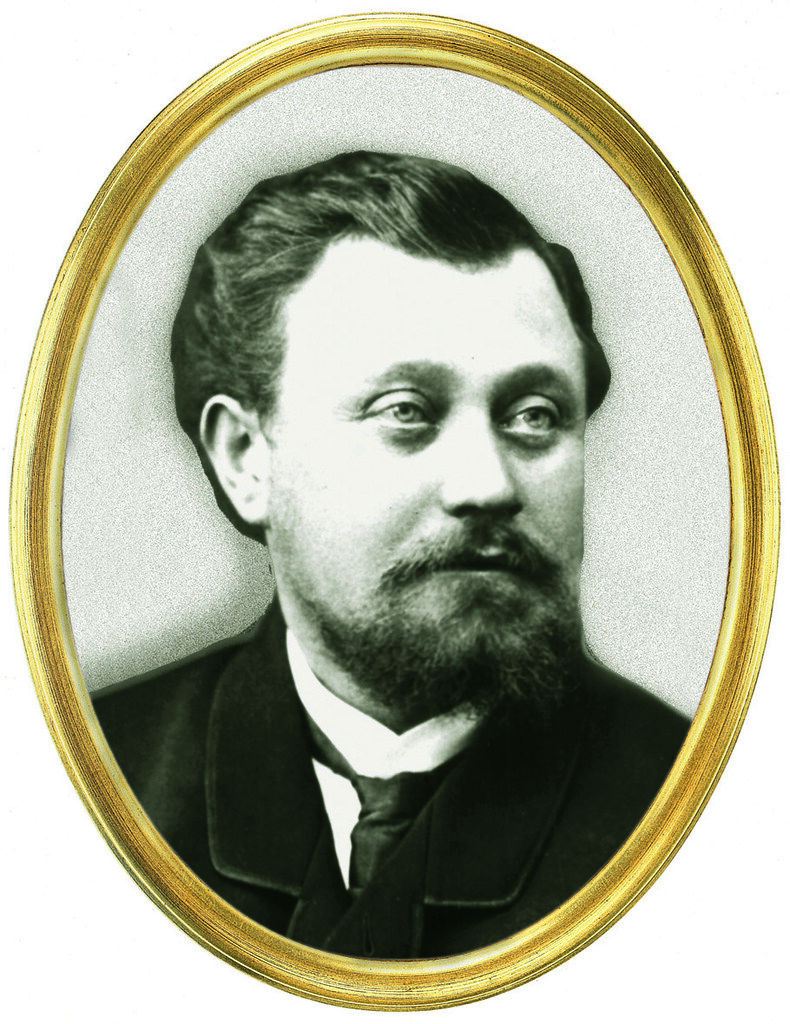
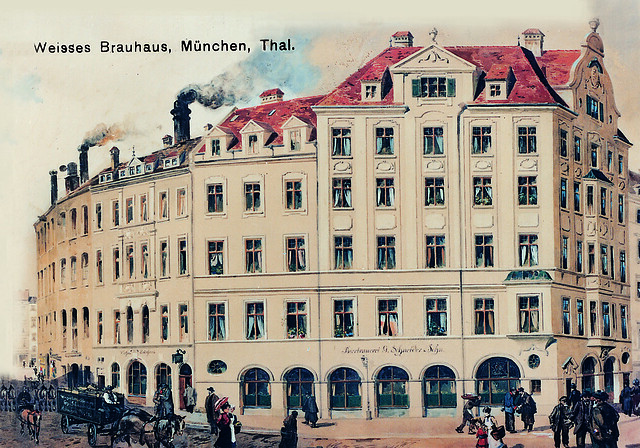
Today is the birthday of Georg Schneider II (February 24, 1846-1890) who co-founded G. Schneider & Son along with his father Georg Schneider I in 1872. His dad leased the royal “Weisse Brauhuas’ Hofbräuhaus in Munich in 1855 and purchased from King Ludwig II the right to brew wheat beer in 1872. Georg II, along with his father acquired the so-called Maderbräu Im Tal 10” in 1872.

georgschneider2

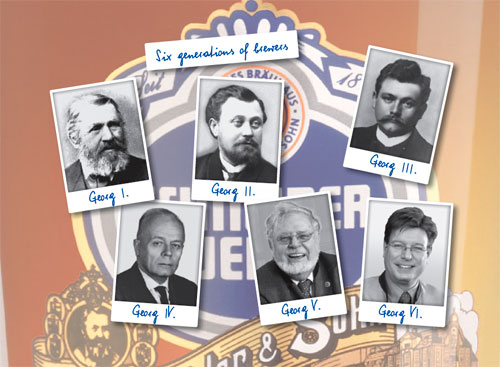
Both he and his father passed away in 1890, and his son, Georg III, took over the brewery even though he was barely 20 at the time, and today George VI still owns and runs the brewery.

six-generations-schneider
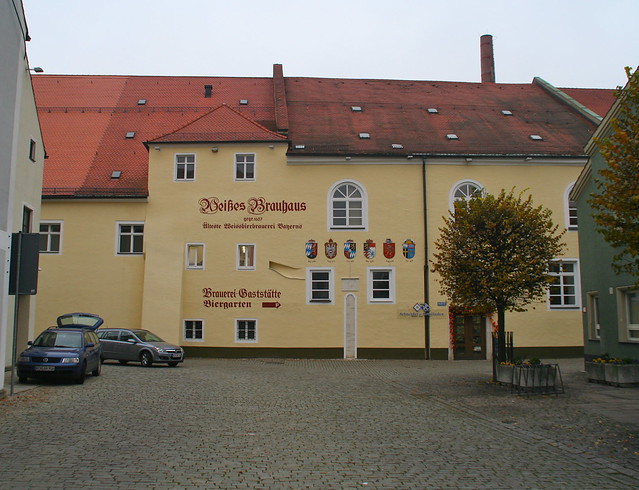
The “Weisses Bräuhaus” in Munich, Tal (or Thal) is the founding place of their brewery. It’s the place where Georg Schneider I brewed his first Schneider Weisse Original in 1872.

schneider_munichbrewery

“In 1927 the owners, who to this day are descendants of Georg Schneider I, expanded their brewing operations into Kelheim and Straubing. After the breweries in Munich were destroyed in 1944 by aerial bombardment by the Allies of World War II, the entire production was relocated to Kelheim.”

Schneiderbrewery

Filed Under: Birthdays, Just For Fun Tagged With: Germany, History

« Previous Page
Next Page »

Find Something

Northern California Breweries

Please consider purchasing my latest book, California Breweries North, available from Amazon, or ask for it at your local bookstore.

Recent Comments

  • Ernie Dewing on Historic Beer Birthday: Charles William Bergner 
  • Steve 'Pudgy' De Rose on Historic Beer Birthday: Jacob Schmidt
  • Jay Brooks on Beer Birthday: Bill Owens
  • Steve 'Pudgy' De Rose on Beer Birthday: Charles Finkel
  • Steve 'Pudgy' De Rose on Beer Birthday: Bill Owens

Recent Posts

  • Beer In Ads #5204: Oh Brother! Griesedieck Bros. Genuine Premium Bock Beer Is Here! February 15, 2026
  • Historic Beer Birthday: Emil Resch February 15, 2026
  • Historic Beer Birthday: Philip Zang February 15, 2026
  • Beer In Ads #5203: Robert Portner’s Bock Beer February 15, 2026
  • Historic Beer Birthday: August Schell February 15, 2026

BBB Archives

Feedback

Head Quarter
This site is hosted and maintained by H25Q.dev. Any questions or comments for the webmaster can be directed here.