Brookston Beer Bulletin

Jay R. Brooks on Beer

  • Home
  • About
  • Editorial
  • Birthdays
  • Art & Beer

Socialize

  • Dribbble
  • Email
  • Facebook
  • Flickr
  • GitHub
  • Instagram
  • LinkedIn
  • Pinterest
  • RSS
  • Twitter
  • YouTube

Powered by Genesis

Patent No. 3037431A: Carton Feeding, Erecting And Filling Mechanism

June 5, 2015 By Jay Brooks

patent-logo
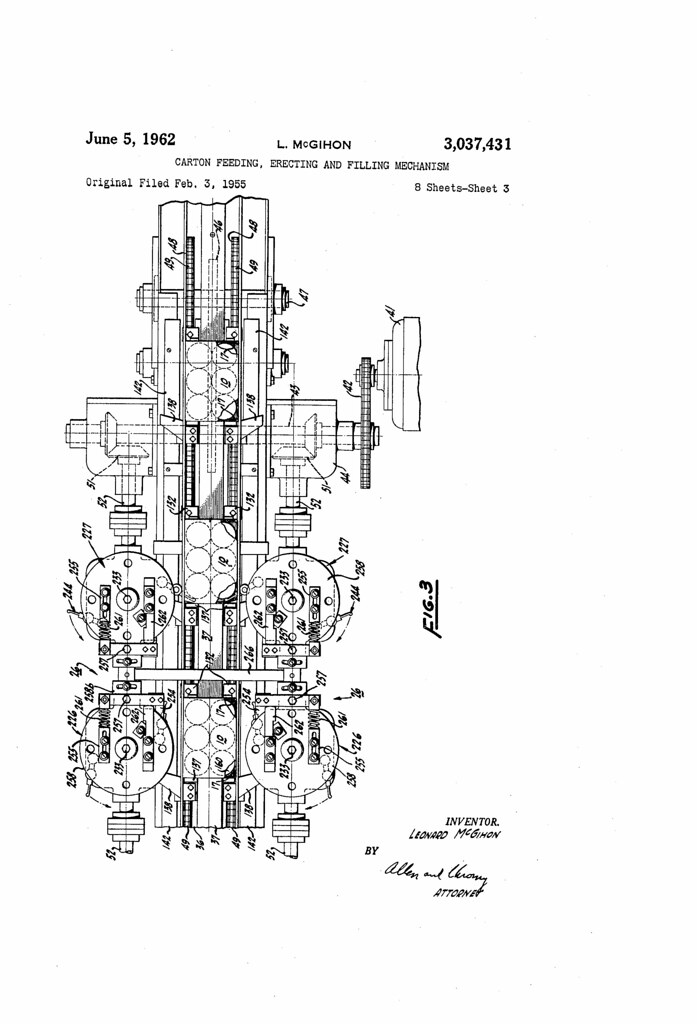
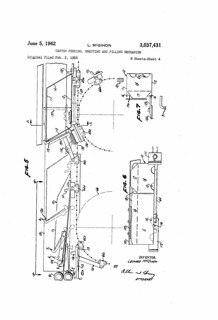
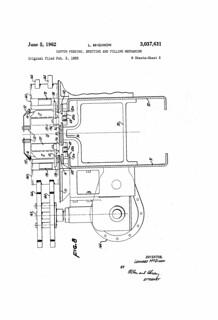
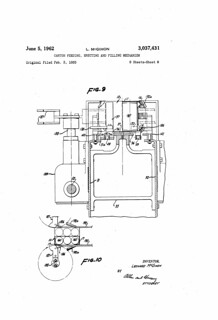
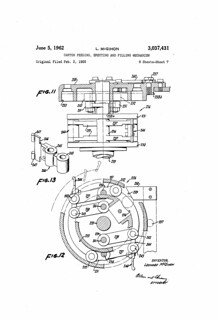
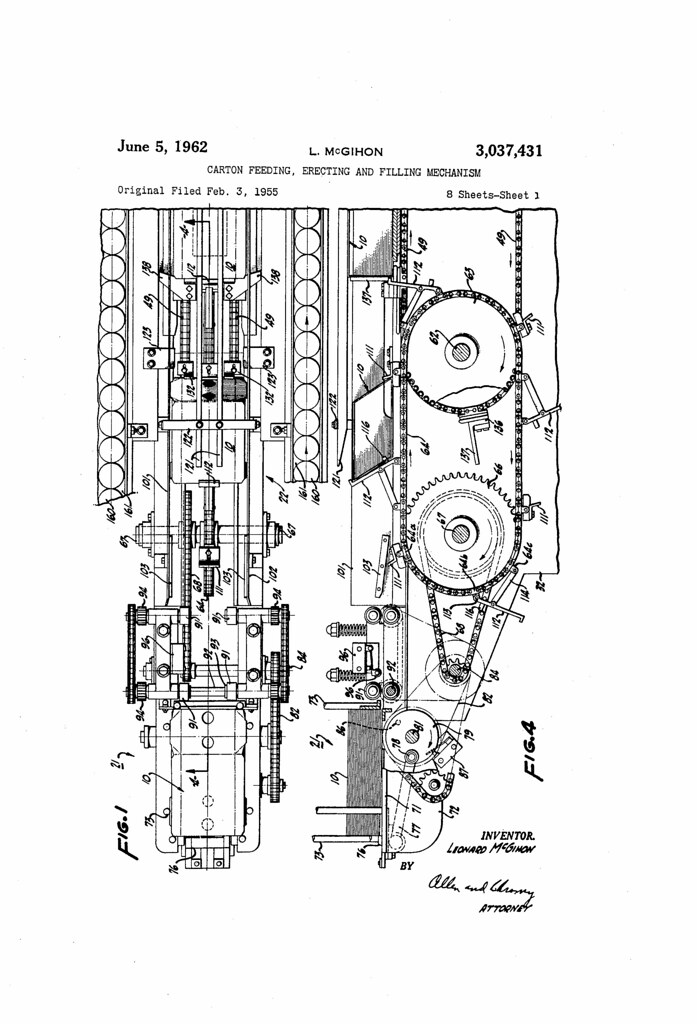
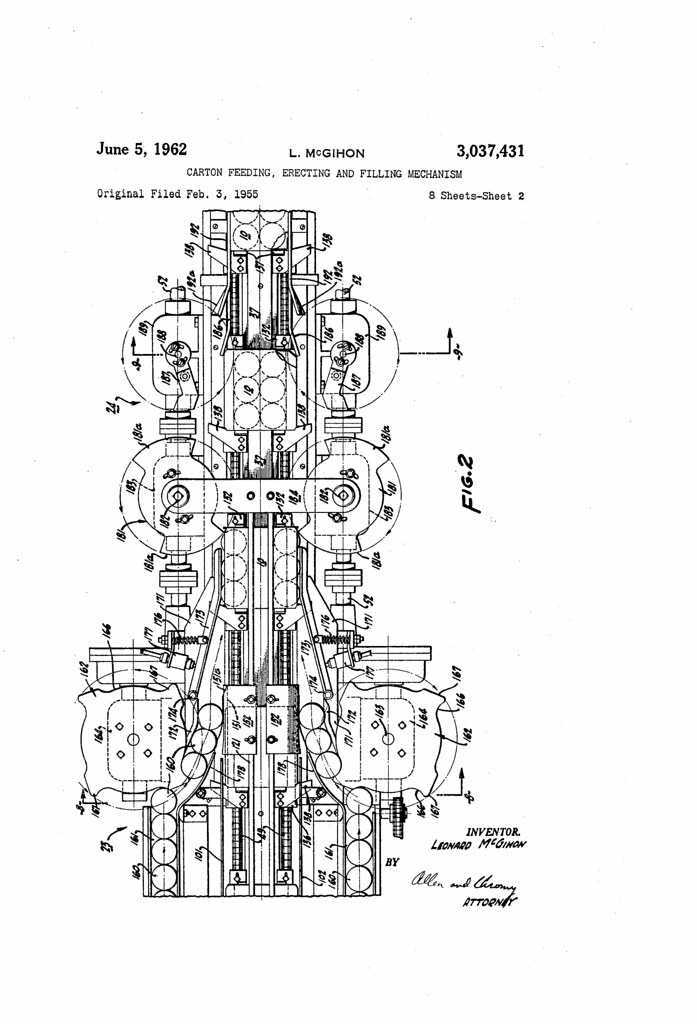
Today in 1962, US Patent 3037431 A was issued, an invention of Leonard McGihon of San Leandro, California, assigned to the King-O-Matic Equipment Corp., for his “Carton Feeding, Erecting And Filling Mechanism” There’s no Abstract, although there’s a paragraph in the description that summarizes it nicely.

The present invention relates to mechanism for taking respective folded cartons, successively from a stack, opening these cartons to a box-like form with open sides, feeding cans or other containers in groups into the carton through the open sides thereof, and then closing the cartons so as to provide a carry-home pack of the containers in the carton. The various operations take place in sequence and continuously to provide a rapid and efficient method of packing containers in cartons, for example beer cans packed in the familiar six-pack cartons as now commonly on the market. More particularly, the instant mechanism is designed to operate on a carton of a character having a closed rectangular shape with partially open sides, the open sides being provided with connected or continuous side flap portions, the respective adjacent side flaps of each corner being connected by a gusset type fold. In this type of carton, the folding of the flaps attached to the end panels of the carton tucks these flaps behind the containers or cans in the carton and effectively holds the carton closed during shipment and handling, but provides for easy opening by the user.
Untitled
Untitled
Untitled

Untitled Untitled

Untitled Untitled

Filed Under: Beers, Breweries, Just For Fun, Politics & Law, Related Pleasures Tagged With: Brewing Equipment, History, Law, Packaging, Patent

Patent No. 1228917A: Manufacture Of Dry Extracts Of Beer

June 5, 2015 By Jay Brooks

patent-logo
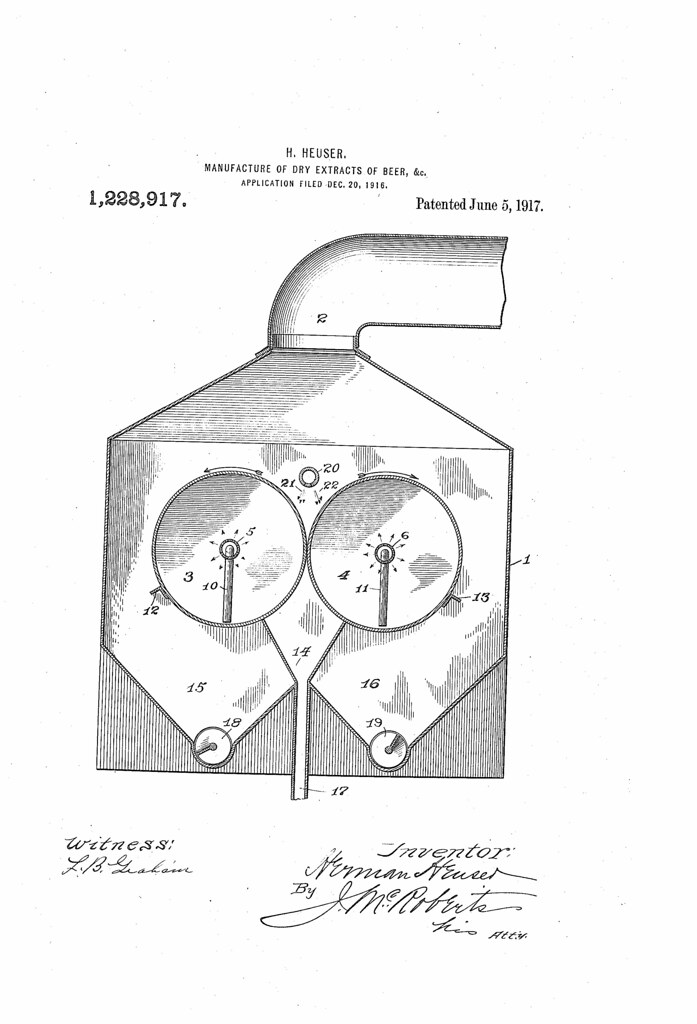
Today in 1917, US Patent 1228917 A was issued, an invention of Herman Heuser, for his “Manufacture of Dry Extracts Of Beer, Etc.” There’s no Abstract, though in an old book of Chemical Abstracts, also from 1917, is summarizes it as “A preparation for the formation of alcohol-reduced beer by the addition of H20 is formed of dry extract, [along with] dry, live yeast and fermentable carbohydrates.” The descriptions also picks up mid-sentence (because I suspect there’s part of the application that’s gone missing or the OCR didn’t pick up):

substances to produce in the beverage made by properly water-diluting such compound the desired reduced amount of alcohol by yeast-fermentation; Thus, when such extracts are intended for conversion into beverages of low-alcoholic strength, the amount of added fermentable substances ‘is small, and vice versa it is larger for the manufacture of beverages having higher alcoholic content, but in each case the compound contains yeast in live condition to create fermentation in the dilute beverage to produce the desired reduced amount of alcohol.

Untitled

Filed Under: Beers Tagged With: History, Law, Patent, Science of Brewing

Beer In Ads #1576: Coming Home From A Day’s Hard Work

June 4, 2015 By Jay Brooks


Thursday’s ad is for Schlitz, from 1941. This ad was presumably from the months before America entered World War 2, when life was still relatively normal. A time when the “thoughtful wife” has Schlitz waiting for her husband when he arrived home from “a day’s hard work.” For some reason she left the icebox door wide open, letting all the cold air out and warming up the beer, not to mention all of the food in there.

Schlitz-1941-coming-home-2

Filed Under: Art & Beer, Beers Tagged With: Advertising, History, Schlitz

Patent No. 5021246A: Step Mashing Process For Producing Low Alcohol Beer

June 4, 2015 By Jay Brooks

patent-logo
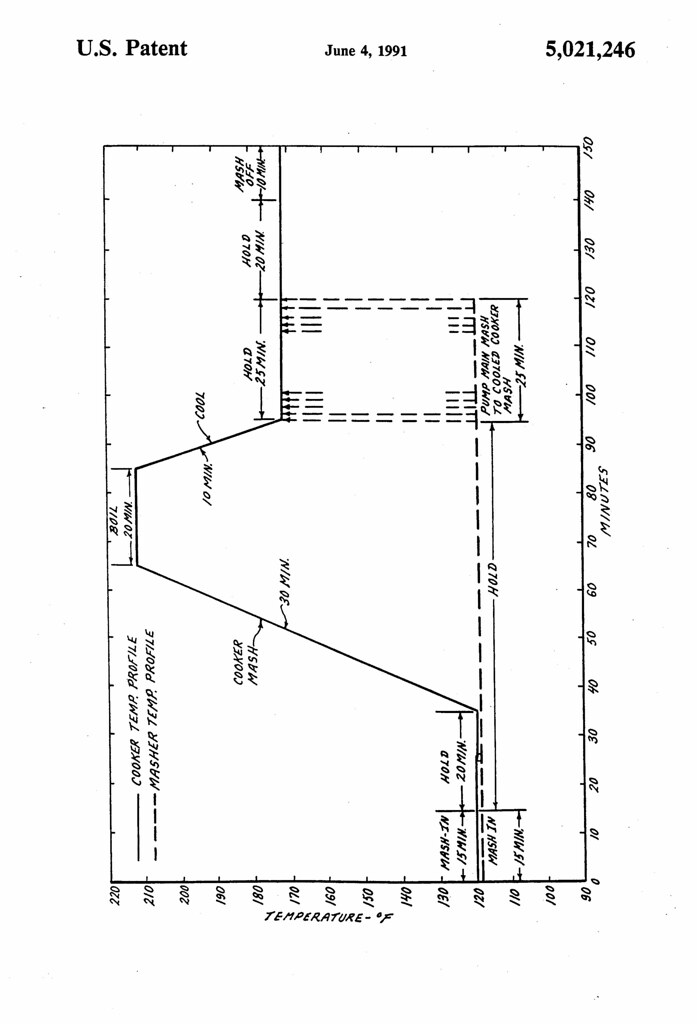
Today in 1991, US Patent 5021246 A was issued, an invention of Roger L. Sieben and Klaus D. Zastrow, assigned to Anheuser-Busch, for their “Step Mashing Process For Producing Low Alcohol Beer.” Here’s the Abstract:

A low alcohol reduced calorie beer is produced by a mashing technique wherein a main mash at a temperature below the activity range for beta-amylase is added incrementally to a brewing liquid at a temperature above the deactivation temperature of beta-amylase and below the deactivation temperature of alpha-amylase at a rate such that the added main mash is substantially instantaneously raised to the temperature of the brewing liquid. This mashing technique limits the conversion of starches by beta-amylase and other enzymes without significant loss of alpha-amylase from overheating to produce a wort having a low real degree of fermentation of from about 40% to about 46%. The main mash has a temperature of about 95° F. to 120° F., and the brewing liquid has a temperature of about 169° F. to 174° F. and can be water or a cooker mash that has been boiled and cooled. Beer can be produced having less than 2% alcohol by weight and less than about 118 calories per 12 ounce serving.

Untitled

Filed Under: Beers, Breweries, Just For Fun, Politics & Law, Related Pleasures Tagged With: Anheuser-Busch, History, Law, Light Beer, Patent, Science of Brewing

Thinking About Beer Color

June 4, 2015 By Jay Brooks

color-wheel
I’ve always been fascinated by color, even as a child, and naturally, more recently, beer color. I understand how the color numbering systems came about, and their obvious utility, but I’m more interested in thinking about beer color, by which I mean how we describe a beer’s color using names for colors in the same way that we have more or less standardized descriptors for flavors and aromas. When it comes to the descriptors for beer’s aroma and flavors, we understand and acknowledge the importance of vocabulary, of having a standardized series of words to express what we’re tasting. Several years ago, my friend Fal Allen (who’s the brewmaster at Anderson Valley Brewing) started a list of Beer Tasting Terms that I expanded on which includes most of the more common descriptors and other terms used when tasting beer. Having everyone using and understanding the same language makes talking about those much, much easier. That’s why in the 1970s Morton Meilgaard created the Beer Flavor Wheel which has since been updated and maintained by the American Society of Brewing Chemists.
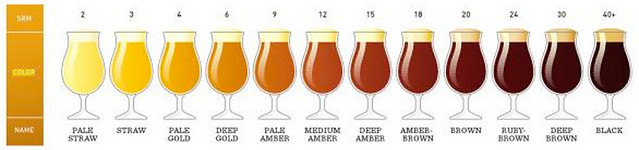
beer-color-line-of-glasses
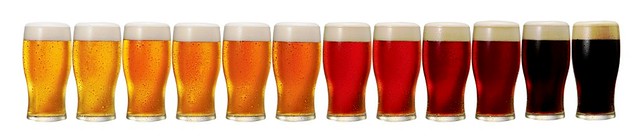
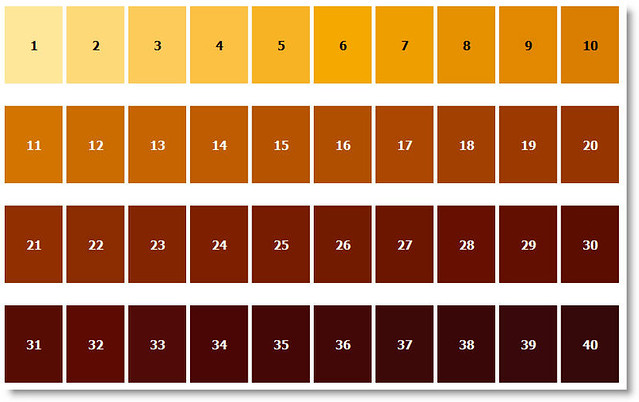
But that brings us back to color. Color is generally expressed by numbers, first using the Lovibond scale (or Degrees Lovibond / °L) which has been mostly replaced by the SRM (Standard Reference Method) and the EBC (European Brewery Convention). SRM is the one most commonly used in the U.S., and it expresses beer color using a numbering system of 1-40, with the lower the number, the lighter the beer, and vice versa.

SRM_Beer_Color_Chart

And that works fairly well, especially for reviews or judging since it’s reasonably easy to determine if a beer hits its range for a particular style. So I have nothing against it, except that it’s not very elegant or poetic. I realize it doesn’t have to be, but I make my living writing. I love language. Words excite me. I love to linger at the paint chips and marvel at the imaginative names that people give to different shades of colors. Even as a child I remember being intrigued by the names on crayons, especially those with such descriptive names as “burnt sienna,” “midnight blue” or “atomic tangerine.” They’re so much more evocative than brown, blue or orange.

So when writing a beer review, I struggle to avoid using the same semi-standard color names over and over again, none of which have been set in stone, at least not to my knowledge. The most common four colors that one sees are Yellow, Amber, Brown and Black. And while that does express the range of beer color, it’s a bit too vague. Other scales include Straw, Yellow, Gold, Amber, Copper, Brown and Black with many more using modifiers to those like Light, Dark, Deep and occasionally Medium or Ruby.

In Randy Mosher’s latest book, Mastering Homebrew, he includes a chart with some basic beer color nomenclature.

mosher-beer-color

And that’s obviously better than just four colors, or even seven; although like taste, you probably don’t want too many. And keeping them fairly standardized makes sense since it helps communicate the colors more effectively, but I still can’t help but think that in terms of describing the beer that it’s too limiting. For example, I like to use “mahogany” to describe a beer that’s primarily brown but with some red in it, too. And while I think that does communicate the actual color better, it’s not clear to me where on the scale it would fall.

The elephant in the room, of course, is that like aroma and taste, none of us perceive color in exactly the same way. Some people are color blind, and while some see only black and white, in most cases it means that they see color differently than typical people do. My stepfather couldn’t see red, for example and when driving was fine with normal traffic lights but would often get tripped up if the lights were horizontal rather than vertical. Color blindness overwhelmingly effects men, with as many as 8% of the male population having some form of it, while only about 0.4% of women are color blind (at least for people of Northern European ancestry).

But for the rest of us, colors are something we learn very early in life and we can more or less agree on the basic colors, if not the more nuanced shades of colors. So where do the names for colors come from? We all can agree on the primary colors, the rainbow’s ROYGBIV. But it gets trickier when you start looking at the shades, say grass green, apple green, olive or avocado. Most people started noticing colors, like me, with crayons. A list of Crayola crayons reveals more than 200 named colors over the years, although a collector’s website lists 1,629 different colors. Wikipedia has their own list of colors, and also has a list of X11 colors. Then there are internet or web colors, with 6-digit hex codes, though many of them also have color names, and there’s another list of over 500 web colors. There are also alphabetical color lists like this one.

One of the most popular color systems is the commercial Pantone Matching System, which unfortunately primarily uses a numbering system to organize the majority of their colors, although names are assigned to some of them. I find them hard to use because of that, and because within Pantone there are so many ways they’re divided into collections and other ways of being displayed. Just take a look at a few third-party lists of their colors to get a feel for how many there are, and how unwieldy they are to use. There’s the Pantone® Matching System Color Chart, All Pantone C colors with HEX and RGB codes, a Pantone Color Table, and PANTONE® Colours. These are the ones used by a number of different professions and professional designers, but they can also be expensive.

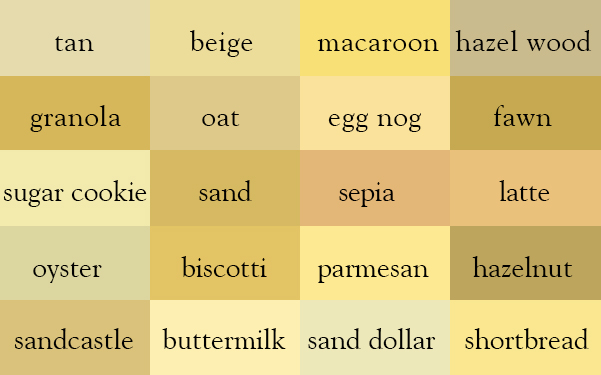
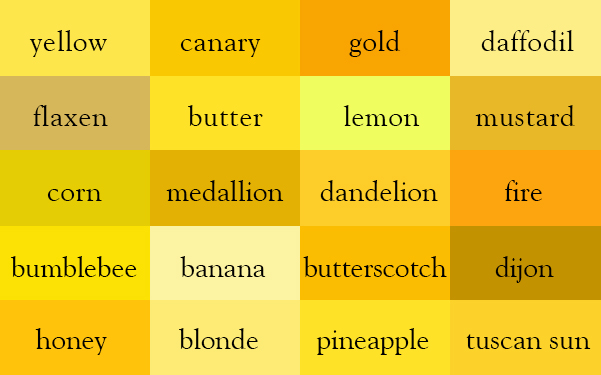
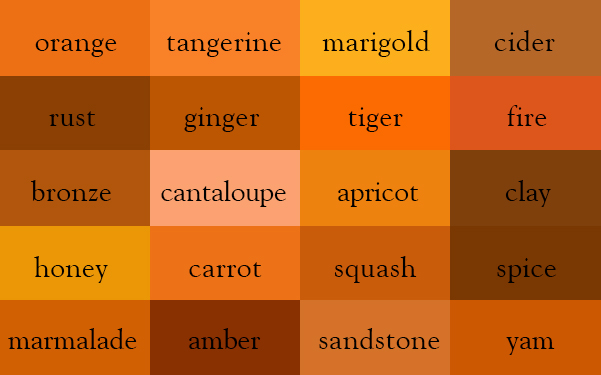
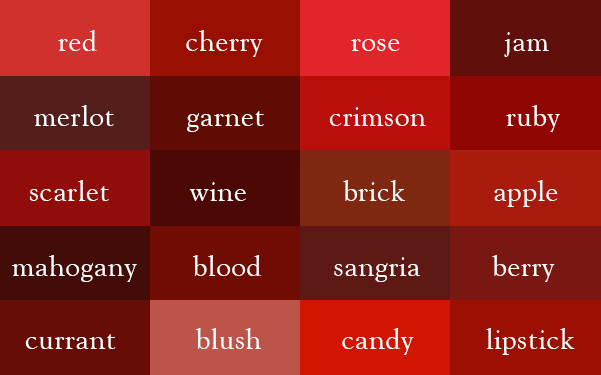
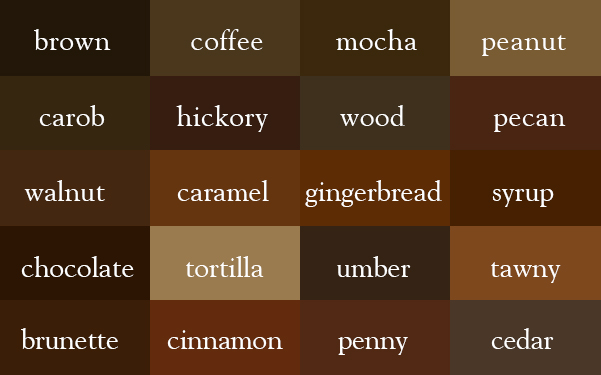
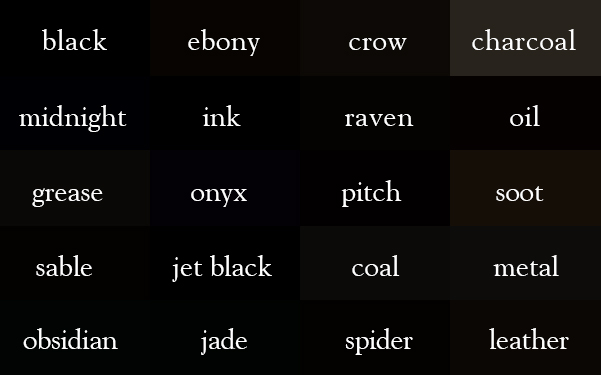
What got me thinking about this was a post entitled The Color Thesaurus by new novelist Ingrid Sundberg on her blog. She writes that “[o]ne of my on-going word collections is of colors. I love to stop in the paint section of a hardware store and find new names for red or white or yellow. Having a variety of color names at my fingertips helps me to create specificity in my writing. I can paint a more evocative image in my reader’s mind if I describe a character’s hair as the color of rust or carrot-squash, rather than red.”

So she created a color thesaurus of colors, shades and their names. I’ve included the six of them that involve beer colors, but you can see the rest of them here. Not all of them are strictly beerish in their nomenclature, but perhaps it’s worth exploring to come up with a list that is.


color1-tan_revised
color2-yellow
color3-orange_revised
color4-red
color5-brown
color6-black

Here’s another hilarious list of 16 Creative Paint Color Names We Haven’t Seen — Yet that includes such colorful names as “Grandma’s Upholstery” and “Beer Belly.”

Fallout Shelter Brewing (which I think is a homebrewer’s personal site) has a very helpful chart of the HTML color codes for SRM Colors that includes 0 through 60, with halftones of .5 in between each, along with the codes for three different constrained path lengths, which he believes would show the beer as seen through a carboy, a pint glass or a tasting glass, respectively. Using the codes for the taster glass, primarily because they seemed to show a greater range of colors from lightest to darkest, I created a Beer Color Nomeclature Chart, which is below.

I then took the main range of colors, including the halftones only between 0 and 13 because after that as they become darker, differences become harder to make out or even notice. I then listed the SRM value and display a swatch of the color corresponding to the SRM number. The third column lists the common name known for that SRM number, if there is one, though having looked at numerous sources, you’ll probably not be surprised to learn that they rarely agree. So I made some choices, and also included some non-standard names there, but used italics to differentiate those.

In the final column, in order to make it more useful or understandable, I included a number of pieces of data, including:

  • BJCP beginning and ending colors for each listed style.
  • Cicerone beginning and ending colors for each listed style.
  • GABF beginning and ending colors for each listed style.
  • Beginning and ending colors for each listed style in Randy Mosher’s Tasting Beer.
  • Specific examples of beers where I was able to find their SRM, though I can’t be certain how correct the information is. In fact, I’ve found multiple sources for some beers that do not agree, for example I’ve found references to Pilsner Urquell having an SRM of 4.2 and 6. I think a lot of the differences stem from the fact that what the SRM numbers are is dependent upon how that color was calculated. I will gladly correct any if I can be shown some proof from a more reliable source or how the more correct number was arrived upon. There’s actually not a lot of information listing the exact SRM for many beers, at least not that I could find. If you know of any resources listing exact SRM for common and/or popular beers, please leave a comment or send me an e-mail. Thanks.

                         Beer Color Nomenclature Chart

Name Key: Plain Text = traditional name / Italics = non-traditional but used by someone on a list that I found researching this.
BJCP Key: b = range begins / e = range ends / Numbers correspond to BJCP styles.
Styles Key: Cicerone program: Range begins = Plain Text w/© / Range ends = Italics w/© (© for Cicerone) / Tasting Beer by Randy Mosher: Range begins = Plain Text w/® / Range ends = Italics w/® (® for Randy) / Brewers Association GABF 2014 Beer Style Guidelines: Range begins = Plain Text w/ß / Range ends = Italics w/ß (ß for BA) / No code = found on a list researching this.
Abbreviations: Amer. = American / Amer-Belgo = American-Belgo-Style / APA = American Pale Ale / A-S = American-Style / B-S = Belgian-Style / E-S = English-Style / EU-S = European Style / F-S = French Style / G-S = German-Style / No. = North / So. = South

SRMColorBeer NameCommon Beer Style Ranges & Examples
0
 
WhiteWater, Miller Clear
0.5
 
NoneZima
1
 
Very LightSpecialty Beerß/Specialty Honey Beerß; Carib Shandy Lager
1.5
 
NoneA-S Light (Low-Calorie)ß
2
 
Pale Strawb:1ABC/2A/15A/16A/17A/American Lager©ß/A-S Cream Aleß/A-S Ice Lagerß/Australasian, Latin American or Tropical-Style Light Lagerß/Berliner Weisseß/EU Low-Alcohol Lagerß/German Pilsner©/Leichtß/Light Amer. Wheat Beer w/o Yeastß/Malt Liquorß/Pilsner®/ Weissbier©/Witbier®©ß; Asahi Dry, Coors Light, Little King’s, Miller Lite
2.5
 
Noneb:6A/Cream Ale©; Beck’s, Budweiser, Heineken
3
 
Strawb:1D/2C/6BD/17DEF/18D/A-S Pilsenerß/American Wheat©/Belgian Golden Strong©/Blonde©ß/Bohemian Pilsnerß/G-S Kölschß/G-S Oktoberfestß/G-S Pilsenerß/ Goldenß/Goseß/Grodziskieß/ Helles©/Int’l-S Pilsenerß/Lambic©/So. G-S Hefeweizenß/So. G-S Kristal Weizenß; e:1A/17A; Bud Light, Hoegaarden, St. Pauli Girl, Tsingtao
3.5
 
Noneb:2B/6C/B-S Pale Strongß/Bohemian Pilsner©/Dortmunderß/G-S Leichtes Weizenß; Asahi Super Dry, Jever Pils, Labatt’s 50, Pyramid Wheat, Saison Dupont, Unibroue Blanche de Chambly, Wittekerke
4
 
Pale Goldb:1E/8A/18A/A-S Märzen&Oktoberfestß/Bamberg-Style Helles Rauchbierß/Bamberg-Style Märzen Rauchbierß/Bamberg-Style Weiss Rauchbierß/Belgian Blond©ß/B-S Tripelß/Bitter©/Coffee-Flavored Beerß/E-S Summerß/F&B-S Saisonß/G-S Heller Bockß/G-S Märzenß/Golden®/Japanese Sake-Yeast Beerß/Light Amer. Wheat Beer with Yeastß/Maibock®/Münchner Hellesß/Oktoberfest®/ Roggenbierß/Weizen®; e:1B/16A/American Lager©/A-S Amber Lager (Low-Calorie)ß/A-S Light (Low-Calorie)ß/Berliner Weisseß/Belgian Strong®/EU Low-Alcohol Lagerß/Int’l-S Pilsenerß/G-S Pilsenerß/Leichtß/Witbier®©ß; Berliner Kindl Weiss, Foster’s Lager, San Miguel
4.5
 
Deep StrawSo. G-S Weizenbockß/Tripel©; e:18C; Paulaner Premium Pils, Sly Fox Pikeland Pils, Tugboat Rye Ale
5
 
Noneb:10A/16C/APA©/A-S Wheat Wineß/Australian Paleß/B-S Table Beerß/Best Bitter©/E-S Paleß/Field Beerß/Fruit Beerß/Herb and Spice Beerß/Imperial IPAß/IPA®/Int’l Paleß/Kuitß/Ordinary Bitterß/Pale Amer-Belgoß/Pumpkin Beerß/Saison©;
e:1D/2A/6ABC/8B/A-S Cream Aleß/Australasian, Latin American or Tropical-Style Light Lagerß/Cream Ale©/German Pilsner©/G-S Oktoberfestß/Helles©/Malt Liquorß; Full Sail Golden, Gaffel Kölsch, Duvel
5.5
 
NoneBamberg-Style Helles Rauchbierß/Münchner Hellesß; Kingfisher Premium Lager, Westmalle Tripel
6
 
Deep Goldb:5AC/8C/16D/18D/APA®ß/A-S Amber Lagerß/A-S Strong Paleß/Amer. IPA©ß/B-S Gueuze Lambicß/B-S Lambicß/B-S Paleß/Best Bitterß/Bière de Garde®/Doppelbock©/E-S IPAß/E-S Pale Mildß/ESB©/Maibock©/Helles Bock©Scottish-Style Lightß; e:1C/1E/2BC/6D/A-S Lagerß/A-S Pilsenerß/American Wheat©/Belgian Golden Strong©/Blonde©/Bohemian Pilsner©/Dortmunderß/G-S Kölschß/Grodziskieß; Pilsner Urquell
6.5
 
NoneCooper’s Sparkling Ale, Double Enghien Blonde Ale, Fraoch Heather Ale
7
 
Light Amberb:3B/14B/Belgian Strong®/F-S Bière de Gardeß/Märzen®©/Vienna Lager®; e:17DEF/18AC/Belgian Blond©ß/Bohemian Pilsnerß/E-S Summerß/Lambic©/Pilsner®/Tripel©; Barbar Belgian Honey Ale, Sea Dog Wild Blueberry Wheat, Sierra Nevada Pale Ale
7.5
 
NoneIthaca Apricot Wheat, Leffe Blonde
8
 
Noneb:14AC/16B/19B/Belgian Pale©/B-S Quadß/California Commonß/English IPA©/ESB®ß/Imperial IPA©/Saison/Scottish-Style HeavyßStrong Aleß; e:15A/A-S Ice Lagerß/Golden®/Weissbier©; Abita Purple Haze, Petrus Tripel
8.5
 
NoneBrains Traditional Welsh Ale, Paulaner Oktoberfest
9
 
Pale Amberb:9ABCD/B-S Dark Strongß/Dark Amer. Wheat Beer with Yeastß/Dark Amer. Wheat Beer w/o Yeastß/Dunkel Weizen®/Scottish Ale©/Scottish-Style Exportß/So. G-S Bernsteinfarbenes Weizenß; B-S Tripelß/E-S Pale Mildß/G-S Heller Bockß/Goseß/So. G-S Hefeweizenß/So. G-S Kristal Weizenß; Harpoon IPA, Worthington’s White Shield
9.5
 
NoneBass Ale, Samuel Adams Boston Lager
10
 
Noneb:3A/7B/10B/17B/18B/19AC/Amber©/California Common©/Dubbel/Imperial Redß/So. G-S Dunkel Weizenß; e:17DEF/18AC;/B-S Pale Strongß/Light Amer. Wheat Beer with Yeastß/Light Amer. Wheat Beer w/o Yeastß/Maibock®/Weizen®; Edelweiss Dunkel Weissbier, Jenlain, Orval
10.5
 
NoneBoskeun, Shepherd Neame IPA
11
 
Red-Brownb:7C;e:5A; Amber®ß/A-S Barley Wineß/G-S Altbierß/Irish-Style Redß; Helles Bock©/IPA®/Maibock©; Whitbread Pale Ale
11.5
 
NoneAnchor Liberty Ale
12
 
Med. Amberb:11AC/15C/18E/22A/Belgian Dark Strong©/B-S Flanders Oud Bruinß/Brown&#174ß/G-S Doppelbockß/Mild©/No. Eng. Brown&#169/Old Aleß/Vienna Lagerß; A-S Amber Lager (Low-Calorie)ß/B-S Paleß/E-S Paleß/Oktoberfest®/Ordinary Bitterß/So. G-S Bernsteinfarbenesß; Grant’s Spice Ale
12.5
 
NoneDutch-Style Kuitß
13
 
Noneb:7A; Bière de Garde®/B-S Gueuze Lambicß/B-S Lambicß/Dunkel Weizen®; Magic Hat #9, Noche Buena, Red Hook ESB, Smithwick’s Export
14
 
Light Brownb:4AB/5B/9E/15BD/A-S Dark Lagerß/British-Style Barley Wineß/Dunkel©/Scotch Ale©; e:3B/7B/8A/10A/14A/16BC/APA®©ß/A-S Amber Lagerß/A-S IPAß/A-S Strong Paleß/Australian Paleß/Belgian Pale©/Best Bitterß/Bitter©/California Common©/English IPA©ß/ESB®ß/Int’l Paleß/Märzen©/Saison©/Vienna Lager®; Affligem Tripel, Fuller’s London Pride, Spitfire Premium Ale
15
 
Deep Amberb:17C/Adambierß/A-S Brownß/Chocolate or Cocoa-Flavored Beerß; Bamberg-Style Märzen Rauchbierß/EU-S Darkß/Münchner Dunkelß/Scotch Aleß; e:14BC/Amer. IPA©/A-S Märzen&Oktoberfestß/A-S Wheat Wineß/Bock®/California Commonß/G-S Leichtes Weizenß/Imperial IPA©/Märzen®ß/Pale Amer-Belgoß/Scottish-Style Lightß; Kwak Pauwel, Samuel Smith’s Winter Welcome
16
 
NoneB-S Dubbelß/Dark Amer-Belgoß; e:3A/8BC/17B/Best Bitter©/F-S Bière de Gardeß/Imperial IPAß; Anchor Steam, George Killian’s Irish Red, Wexford Irish Cream Ale
17
 
Chestnutb:4C/12C/Baltic Porter®/E-S Dark Mildß; e:7C/9ABC/10B/18B/Amber©/Dubbel©/Imperial Redß/Scottish Ale©; Aventinus Wheat-Doppelbock, Samuel Adams Boston Stock Ale
18
 
Dark Red-Orangeb:5D/10C/Amer. Brown©/G-S Eisbockß; e:9D/Amber®ß/A-S Barley Wineß/Bamberg-Style Weiss Rauchbierß/British-Style Barley Wineß/ESB©/F&B-S Saisonß/Irish-Style Redß; Chimay Red, Dos Equis, Michelob Dark, Old Speckled Hen
19
 
Noneb:11B;e:7A/15D/16D/19C/G-S Altbierß/Scottish-Style Exportß/Scottish-Style Heavyß; Einbecker Ur-Bock, McEwan’s Export IPA, Negra Modelo
20
 
Brownb:12A/Bamberg-Style Bock Rauchbierß/British-Style Imperial Stoutß/Brown Porter©ß/Porter®/Oatmeal Stoutß/Smoke Porterß/Traditional G-S Bockß; B-S Quadß/EU-S Darkß/Japanese Sake-Yeast Beerß/Münchner Dunkelß; Alsopp Burton Ale 1879, Scaldis Noel
21
 
NoneStrong Aleß; Gulden Draak, Otter Creek Copper Ale, Paulaner Salvator, Samiclaus, St. Louis Framboise
22
 
Noneb:12B/13C/Robust Porter©; e:4A/5B/11C/17C/18E/19AB/22A/Belgian Dark Strong©/Brown&#174/Dark Amer. Wheat Beer with Yeastß/Dark Amer. Wheat Beer w/o Yeastß/No. Eng. Brown©; EKU Kulminator, Kentucky Common 1907, Lindeman’s Framboise, Red Nectar, Skull Splitter
23
 
Nonee:15B; Newcastle Brown Ale, Wild Goose Amber
24
 
Ruby BrownGeary’s Pale Ale, Hobgoblin Dark English Ale, Rodenbach Grand Cru, Thomas Hardy Ale
25
 
Noneb:13A/Dry Irish Stout©/G-S Schwarzbierß/Oatmeal Stout®
e:5C/9E/11A/15C/A-S Dark Lagerß/B-S Flanders Oud Bruinß/Doppelbock©/E-S Brownß/Mild©/Scotch Ale©/So. G-S DunkelWeizenß/Roggenbierß, Traquair House Ale
26
 
NoneA-S Brownß/Vienna Lagerß
27
 
NoneBeck’s Dark, Pete’s Wicked Ale
28
 
Nonee:4B/Dunkel©; Weihenstephaner Hefeweissbier Dunkel, Widmer Alt
29
 
NoneNewcastle Brown
30
 
Deep Brownb:13B/13DEF/Amer. Stout©/Foreign Stout®©/Imperial Stout©/Robust Porterß; e:4C/5D/12AC; Bamberg-Style Bock Rauchbierß/Bock®/Brown Porter©/G-S Doppelbockß/G-S Schwarzbierß/Old Aleß/Scotch Aleß/So. G-S Weizenbockß/Traditional G-S Bockß; Saku Estonian Porter, Schlenkerla Rauchbier
31
 
NoneSamuel Smith Nut Brown Ale
32
 
NoneTröegs HopBack Amber Ale
33
 
NoneGouden Carolus
34
 
NoneE-S Dark Mildß; BridgePort Old Knucklehead
35
 
NoneA-S Blackß; e:10C/11B/12B/Adambierß/Amer. Brown©/B-S Dark Strongß/E-S Imperial Stoutß/Brown Porterß/Robust Porter©; Anchor Porter, Theakston’s Old Peculiar
36
 
NoneB-S Dubbelß; George Gale Prize Old Ale, Rogue Old Crustacean Barley Wine
37
 
NoneTilburgs Dutch Brown Ale
38
 
NoneSierra Nevada Porter, St. Sixtus Abbey Ale
39
 
NoneSapporo Black Beer
40
 
BlackA-S Imperial Porterß/A-S Imperial Stoutß/A-S Stoutß/Baltic-Style Porterß/Cream or Sweet Stoutß/Foreign-Style Stoutß/Irish-Style Dry Stoutß; e:13ABCDEF/Amer. Stout©/Baltic Porter®/Dry Irish Stout©/
Foreign Stout©/Imperial Stout©/Oatmeal Stout®/Porter®
50
 
BlackImperial Stout®; B-S Table Beerß/Chocolate or Cocoa-Flavored Beerß/Coffee-Flavored Beerß/Field Beerß/Fruit Beerß/G-S Eisbockß/Herb and Spice Beerß/Pumpkin Beerß; Guinness Draft, Reichelbräu Eisbock
65
 
BlackForeign Stout®; ABC Extra Stout
80+
 
BlackA-S Blackß/A-S Imperial Porterß/A-S Imperial Stoutß/A-S Stoutß/Baltic-Style Porterß/Cream or Sweet Stoutß/Dark Amer-Belgoß/Foreign-Style Stoutß/Imperial Stout®/Irish-Style Dry Stoutß/Oatmeal Stoutß/Robust Porterß/Smoke Porterß/Specialty Beerß/Specialty Honey Beerß; Bell’s Expedition Stout,
Mendocino Black Hawk Stout, North Coast Old Rasputin

And here’s a more thorough list of words for the basic beer colors that I cobbled together from a variety of sources. White is included not because beer is white, but because the very light colors of some beers fall into the range of off-white, colors like light straw veer between yellow and white, as do other very pale hues. I tried to avoid colors that would never be found in beer, but as many, if not most, would, it’s still a pretty broad list. Some might never work, whereas others maybe only for a very few beers. But the goal is to start a conversation about color, and to inspire a sense of playful poetry when it comes to describing it, as we do in enjoying it. So I wanted to include as much as possible rather than try to be too exclusive.

 White
 Yellow
 Orange
Alabaster, Antique White, Arctic White, Ashen White, Beige, Birch Biscuit White, Bisque, Blanched Almond, Bleached White, Bone White, Buff, Canvas Beige, Chalk White, Champagne, Coconut White, Cotton White, Cream, Deep Peach, Dove White, Dutch White, Ecru, Eggshell, Flax, Flour White, Fog White, French Beige, Ghost White, Ivory White, Lace White, Light tan, Lily White, Linen, Marshmallow, Milk White, Mother-of-Pearl, Mushroom, Nude, Oat, Oatmeal, Off-White, Old Lace, Opal, Oyster, Paper White, Parchment, Peach, Pearl, Polar White, Porcelain, Powder White, Pure White, Sand, Sandstone, Seashell, Sheep White, Smoky Beige, Snow White, Sugar, Tan, Toothpaste White, Vanilla, Whey, White, White SmokeBanana, Bee Yellow, Bleached Blond, Blonde, Brass, Buff, Bumblebee, Butter, Buttercup, Buttermilk, Butternut Squash, Butterscotch, Canary, Champagne, Chardonnay, Citrine, Corn, Cornsilk, Cream, Custard, Dandelion, Dijon, Egg Nog, Egg Yolk, Flax, French Fry Gold, Gamboge, Gold, Golden Bronze, Golden Brown, Golden Yellow, Goldenrod, Honey, Lemon, Lion, Maize, Macaroni and Cheese, Macaroon, Marigold, Medallion, Mimosa, Mustard, Ochre, Old Gold, Pale Yellow, Papaya, Parmesan, Pineapple, Saffron, Squash, Stil de Grain Yellow, Straw, Sunglow, Sunset, Sunshine, Topaz, Tuscan Sun, Wheat, Xanthic, YellowAmber, Apricot, Atomic Tangerine, Blood Orange, Bourbon, Burnt Orange, Candlelight, Candy Corn, Cantaloupe, Carnelian, Carotene, Carrot, Cheddar Orange, Cider, Construction Cone Orange, Copper, Copper Penny, Dark Orange, Fall Leaves Orange, Ginger, Golden Orange, Goldfish, Light Orange, Mandarin Orange, Mango, Marmalade, Melon, Orange, Orange Gold, Orange Juice, Orange Peel, Orange Soda, Orange-Red, Papaya, Peach, Peach-Orange, Persimmon, Pumpkin, Red Fox, Russet, Rust, Salmon, Sedona, Shocking Orange, Squash, Sunrise Orange, Tangelo, Tangerine, Tiger Orange, Yam
 Red
 Brown
 Black
Amaranth, Apple Red, Auburn, Autumn Leaf Red, Barn Red, Beet Red, Berry, Blood Red, Blush, Bordeaux, Brick, Burgundy, Cardinal Red, Carmine, Carnelian, Cerise, Cherry, Chestnut Red, Chili Pepper Red, Cinnabar, Claret, Copper, Crab Red, Cranberry, Crimson, Currant, Dark Cerise, Dark Red, Devil Red, Faded Rose, Fire Red, Flame, Garnet, Geranium, Grapefruit, Hibiscus Red, Indian Red, Ketchup, Ladybug Red, Lobster, Magenta, Maroon, Merlot, Orange-Red, Paprika, Pepperoni Red, Plum, Pomegranate, Poppy Red, Radish, Rare Steak Red, Raspberry, Red, Red Apple, Red Berry, Red Licorice, Red Pepper, Red Rose, Red Velvet, Redwood, Rose, Rosewood, Ruby, Ruddy, Russet, Rust Red, Sangria, Sanguine, Scarlet, Strawberry, Tawny Port Red, Tawny Red, Terra Cotta, Tomato Bisque, Tomato Red, Tuscan Red, Tyrian Purple, Vermillion, Watermelon, Wine RedAcorn Brown, Auburn, Autumn Leaf, Barbecue Sauce Brown, Bark, Biscuit, Biscotti, Black Bean, Branch Brown, Brass, Bronze, Brown, Brown Sugar, Brunette, Burly Wood, Burnt Sienna, Burnt Umber, Butterscotch, Cafe au Lait, Camel Brown, Cappuccino, Carob, Caramel, Cardboard, Chestnut, Chocolate, Cider, Cinnamon, Clay, Cocoa, Coffee Bean, Coffee, Cookie Brown, Copper, Dark Chocolate, Deer Brown, Deep Brown, Desert Sand, Dirt, Dun, Earth Brown, Earthenware, Fawn, Gingerbread, Golden Brown, Hazel, Henna, Hickory, Khaki, Latte, Leather, Liver Brown, Mahogany, Maple, Maple Sugar Brown, Meatball Brown, Milk Chocolate, Mink, Moccasin, Mocha, Mud, Nougat, Nut Brown, Nutmeg, Oak Brown, October Brown, Pancake Brown, Peanut, Peanut Butter, Peanut Shell, Pecan, Potato Brown, Pretzel, Raisin, Red Dirt, Redwood, Rich Earth, Root Beer, Rosewood, Ruddy Brown, Russet Brown, Rust, Saddle Brown, Sand, Sandy Brown, Semi-Sweet Chocolate, Sepia, Sienna, Sorrel, Spice, Steak Brown, Syrup, Tan, Tawny, Toast, Tortilla, Tweed, Umber, Walnut, Wheat, Whiskey Brown, WoodBlack, Black Coffee, Black Cow, Black Licorice, Black Olive, Black Pearl, Black Pepper, Black Tar, Carbon Black, Caviar Black, Charcoal Black, Coal Black, Crow, Ebony, Eclipse Black, Fig, Grease, Ink Black, Iridium, Jet Black, Kettle Black, Licorice, Mica, Midnight Black, Mocha, Night, Obsidian, Oil, Onyx, Pitch Black, Raven Black, Sable, Slate, Smoky Black, Soot Black, Tar, Taupe, Tuxedo Black

So that’s a lot of different shades of colors in a few different families. It was just an exercise to see what were the more common names used for those colors. There are many, many more I did not include, though I did look at quite a few different sources.

Finally, below is a Color Nomenclature Chart, a list of the same beer colors as the first chart, but with the html hex codes for each along with the color’s name, if known, or if there even is one. If not, I tried to find the closest match. I looked through numerous color websites and databases to find the names for the colors below based upon their web hex code. A few were easy, but most were not easy to find. With 8-bit (2^8=256 colors), 16-bit (2^16=65,536 colors), and 24-bit (2^24=16,777,216 colors) having so many available colors, it’s not terribly surprising that no one has given them all names. It would be like naming every star. The last column then is color names that were close to the code for the one shown, and may provide better names.

Since the colors themselves are not perfect, and many systems exist for displaying them, being exact isn’t really necessary so the goal is to find descriptive names that most people will recognize and understand which describe the color of the beer. Maybe the best approach to use the most iconic or classic beer as the name. For example, perhaps if Orval is SRM 10, then SRM 10’s color should be called Orval. There are a number of ways we could go, and below is one idea, that there are already some names for most colors that exist, and here are some of them.


                         Color Nomenclature Chart

Code Key: The six-digit code is the HEX code data to display a color using the internet.
Color Key: Recognized name or the closest recognized name I could find.
Alternate Names Key: These color names have codes very close to the listed code. If there’s no parenthetical name, then the color name was also an exact match for the code. If there is a parenthetical name, then it was not an exact match, and I’ve listed the company that makes that named color.

SRMCodeColorAlternate Color Names
0
 ffffff
WhiteBright White, Pure Brilliant White
0.5
 fbf0cb
ChampagneBarely Dawn (Kelly-Moore), Grapefruit (Taubmans)
1
 f7e1a1
CandleglowSandwisp, Butter Up (Sherman Williams)
1.5
 f4d380
Broadway LightsYellow (Chrysler), Sunbonnet (ICI), Katydid (Taubmans)
2
 f0c566
Cream CanFirefly (Benjamin Moore)
2.5
 edb950
CasablancaRonchi, Yellow Coneflower (Pittsburgh)
3
 e9ad3f
Tulip TreeDried Mustard (Cloverdale)
3.5
 e5a231
Fire BushOcker (Caparol)
4
 e19726
ButtercupAmberger (Caparol), Pencil Yellow (Devoe)
4.5
 dd8d1d
ZestDixie, Golden Bark (Dulux), Butterscotch Tempest (Devoe)
5
 d98416
Golden BellGamboge, Desert Sunset (GM)
5.5
 d57b11
MeteorAmber 65 (Caparol)
6
 d1730c
Dark GoldenrodOchre
6.5
 cd6c08
IndochineRed Stage, Sticky Toffee (Plascon)
7
 c86505
Alloy OrangeOxidrot 7s (Caparol)
7.5
 c45e03
TawnyOxidrot 8s (Caparol)
8
 c05801
Rose of SharonBurnt Orange (Marston & Langinger)
8.5
 bc5200
Ruddy BrownPMS167 (Pantone), Mahogany
9
 b74d00
MahoganyRust
9.5
 b34800
FireRust
10
 af4300
OrangeTerra Warmth (Dutch Boy)
10.5
 ab3f00
Dark OrangeIndia O (Caparol)
11
 a73b00
Chinese RedRotor Bolus (Caparol)
11.5
 a33700
QuoraRotor Bolus (Caparol)
12
 9f3400
SangriaRufous
12.5
 9b3000
Dark Orange-RedA7 (Trumatch)
13
 972d00
Totem PoleOregon, Dark Red, Schwedenro/Schwedenrot (Caparol)
14
 8f2800
Peru TanDark Red, Kobe, Rotbraun (Caparol)
15
 882300
Red BeechSienna, Grand Canyon Brown (GM)
16
 811f00
MaroonKenyan Copper
17
 7b1b00
PuebloOxidrot+Feuerrot 1/1 (Caparol)
18
 741800
Cedar WoodAmber Fire (Chrysler), Kardinal Braun (Caparol)
19
 6e1500
Barn RedOxidrot Dunkel (Caparol)
20
 681200
RosewoodOxidrot (Caparol), Red (Ford, Chrysler)
21
 631000
Dark RedOxidrot (Caparol)
22
 5e0e00
Red OxidePrune, Persian Plum, Burgundy (Ford)
23
 590c00
Rustic RedBulgarian Rose, Murano (Caparol), Mohawk Maroon (Ford)
24
 540b00
Burnt MaroonIndian Tan, Grenadin 35 (Caparol), Crimson Red (Chrysler)
25
 500900
Pheasant RedDark Diamond Bright Red (Ford), Pimento Red (Chrysler)
26
 4c0800
Brown PodMedium Rosewood (Ford), Cordovan Brown (Chrysler)
27
 480700
TemptressRegis Red (Ford), Dark Beech Firemist (Chrysler)
28
 440600
Dark SiennaChestnut (Ford)
29
 410500
Black BeanDark Cordovan (Ford)
30
 3d0500
Dark BronzeDark Champagne (Ford), Piedmont Maroon (Chrysler)
31
 3a0400
ChocolateCarmine, Seal Brown, Maroon (Ford)
32
 370400
Autumn MapleImperial Maroon (Chrysler), Sunset Maroon (AMC)
33
 340300
Dark CabernetDark Maroon (Ford)
34
 320300
Titian MaroonVictoria Plum (GM)
35
 2f0200
Sepia BlackTyrian Purple, Brown (Ford)
36
 2d0200
Dark Gold WingCoppertone (Ford)
37
 2a0200
Zinnwaldite BrownMidnight Wine (Ford)
38
 280100
DieselMaroon Deep (AMC), Amarone (Alcro)
39
 260100
LicoriceDark Vivid Red (AMC)
40
 240100
BlackMorocco Red, Oporto Maroon (GM)
50
 160000
Smoky BlackBlack Magic (Homebase), Velvet Maroon (Ford)
65
 0d0000
Coal BlackBlack Diamond (GM), Granada Black (GM)
80+
 000000
Moonlight BlackEbony, Jet Black (RAL), Panther Black (Ford)

I’m not entirely sure where I’m going with this or what the ultimate goal might be. This started a couple of weeks ago as what I thought would be a short post about some beer color names, but grew and grew until it became the bloated colossus you see before you. It ended up being more of an exploration of color in general and beer color more specifically. There’s no doubt that the SRM and other numbering systems for color and their ranges work pretty well. But I think it’s always worth contemplating if anything can be made better and, if so, how. My bias obviously is for more descriptive words instead of numbers, and there’s no doubt that bias is personal. But I also can’t believe I’m the only one who prefers poetry to mathematics.

What happens next is entirely dependent upon how much interest this generates, which will reveal if my geekery about beer color is a solitary quirk, or whether any other like-minded color nerds are out there. Just making it this far and reading this sentence will undoubtedly mean you’re probably one of us, as I suspect the rest will have jumped ship after the first few colorful passages. This paragraph is like the teaser after the credits that many movies show after most of the audience has left the theatre. I always stay to the end of the credits of every movie I see, and that should tell you quite a bit about me. But if you’re reading this, then you’re most likely ready to take the next step with me. Drop me a note or comment here and we’ll see what happens. Chromanerds unite!

UPDATE: Here’s another beer-related color that I recently came across on a listical entitled 17 Of The Most Beautiful Colors You Never Knew Existed. #3 is Drunk Tank Pink, and is accompanied by this description. “This particular shade of pink has been used to calm people after it was tested and proven in psych studies to achieve some degree of tranquility.”

drunk-tank-pink

Filed Under: Beers, Just For Fun, Related Pleasures Tagged With: beer color, Science

Patent No. 2794453A: Filling Heads For Bottling Machine

June 4, 2015 By Jay Brooks

patent-logo
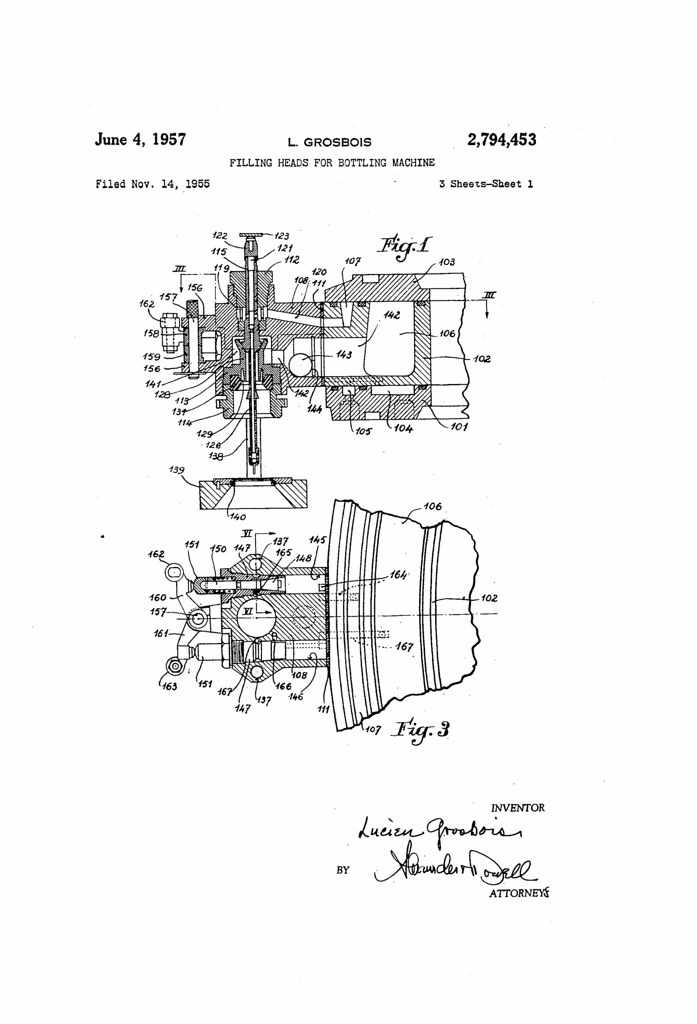
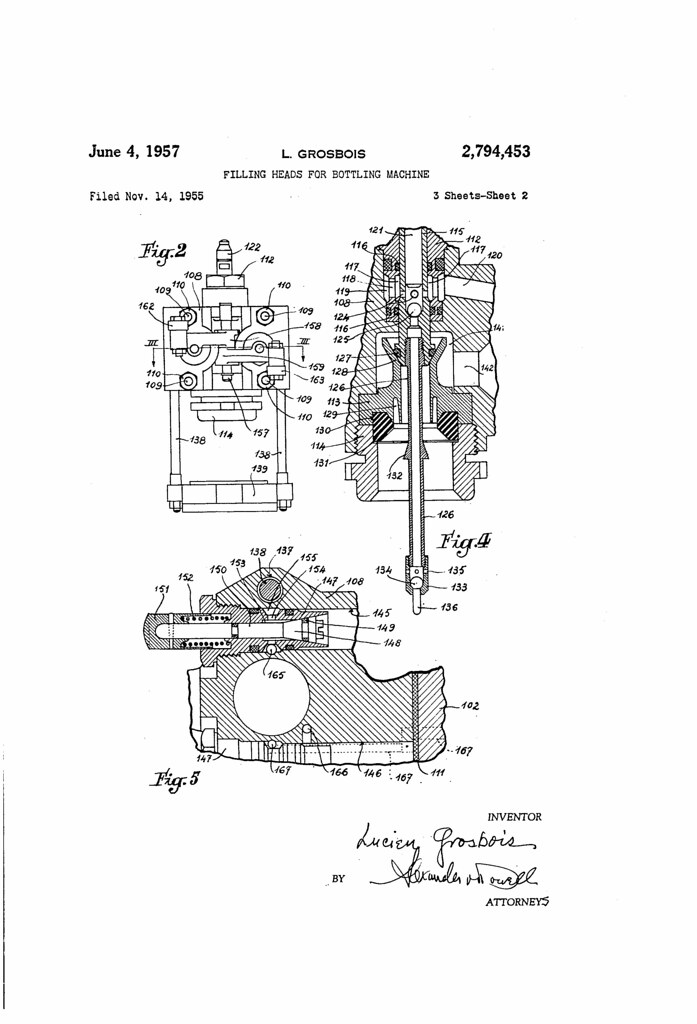
Today in 1957, US Patent 2794453 A was issued, an invention of Lucien Grosbois, for his “Filling Heads For Bottling Machine.” There’s no Abstract, though the description in the application states that the “invention relates to filling heads adapted to be mounted on bottling machines for gaseous liquids under pressure.”
Untitled
Untitled

Filed Under: Beers, Just For Fun, Politics & Law, Related Pleasures Tagged With: Bottles, Brewing Equipment, History, Law, Patent

Patent No. 2203130A: Beer Energizer

June 4, 2015 By Jay Brooks

patent-logo
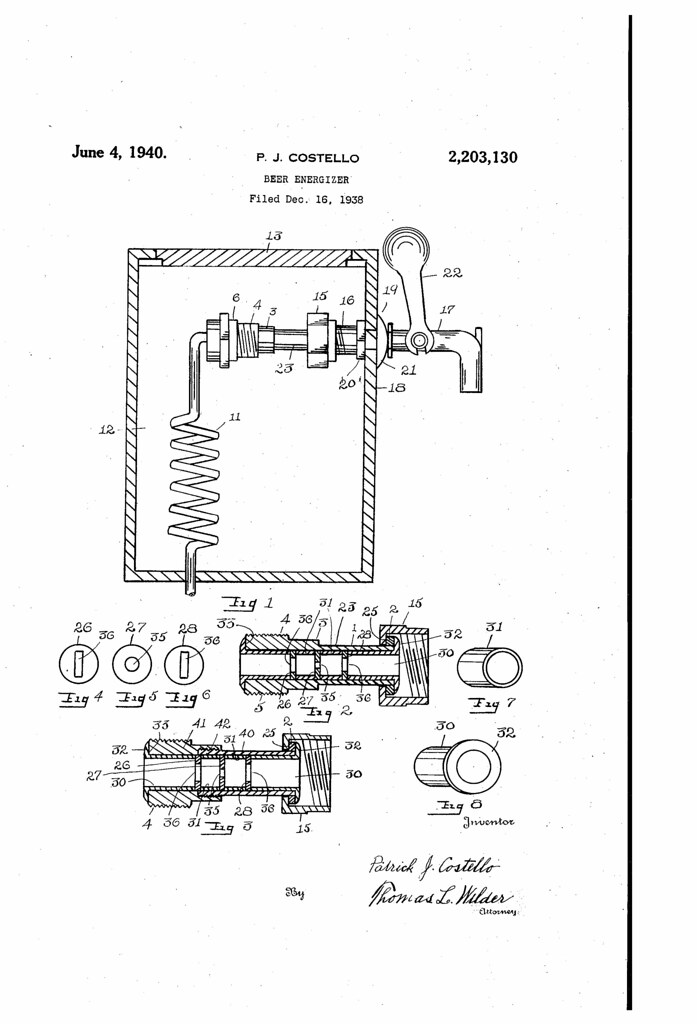
Today in 1940, US Patent 2203130 A was issued, an invention of Patrick J. Costello, for his “Beer Energizer.” There’s no Abstract, though the description in the application states that the “object of my invention is to provide a device for drawing beer in its normal stage without applying extra pressure or force, whereby to create a line creamy foam.” I’m not sure what about that “energizes” the beer, but it’s certainly a catchy name.
Untitled

Filed Under: Beers, Just For Fun, Politics & Law, Related Pleasures Tagged With: History, Law, Patent

10-Cent Beer Night In Cleveland

June 4, 2015 By Jay Brooks

10-cents
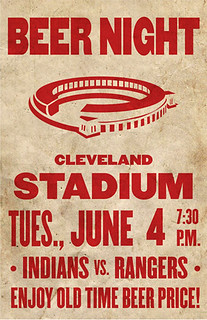
On June 4, 1974, the Cleveland Indians hosted the Texas Rangers with a promotion entitled “10¢ Beer Night” in an effort to boost sagging attendance to Municipal Stadium. 25,134 fans showed up, about twice the number expected. They were allowed to purchase six 10¢ beers (12 oz. cups of 3.2 beer or 4% ABV) at a time, but there was no limit on how many trips to the concession stand one could make. To give that some context, regular beer prices at the time were 65¢, so a dime beer was about 6-and-half times cheaper, a pretty good bargain. Accounts vary on the brand of beer. Some say Stroh’s while other say it was Genesee. By the time the game ended in chaos, around 60,000 beers had been consumed.

beer-night-poster 10centcup

To add fuel to the fire, a little over a week before in Texas, the Rangers had a similar promotion in which there was “a bench-clearing brawl” when the two teams had played “at Arlington Stadium in Texas [which] left some Indians fans harboring a grudge against the Rangers.”

The Indians had been losing most of the game, but managed to tie it up in the 9th inning, at which point I’ll let Wikipedia take over the story.

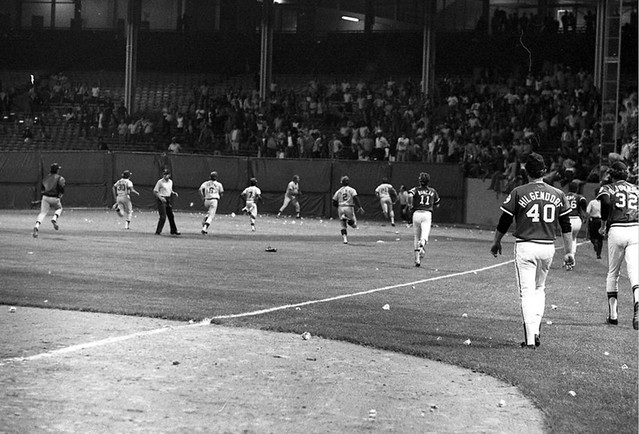
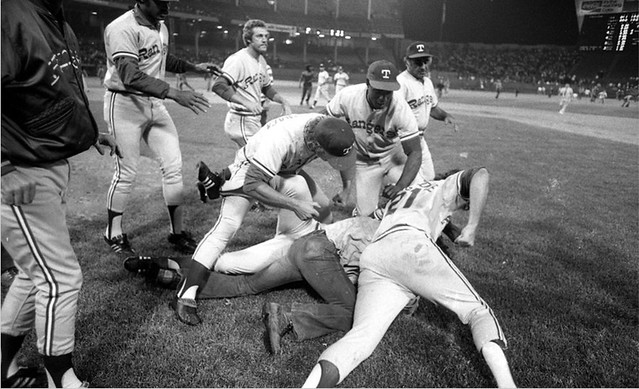
After the Indians had managed to tie the game, a 19-year-old fan named Terry Yerkic ran onto the field and attempted to steal Texas outfielder Jeff Burroughs’ cap. Confronting the fan, Burroughs tripped. Thinking that Burroughs had been attacked, Texas manager Billy Martin charged onto the field with his players right behind, some wielding bats. A large number of intoxicated fans – some armed with knives, chains, and portions of stadium seats that they had torn apart – surged onto the field, and others hurled bottles from the stands. Hundreds of fans surrounded the outnumbered Rangers.

Realizing that the Rangers’ lives might be in danger, Cleveland manager Ken Aspromonte ordered his players to grab bats and help the Rangers, attacking the team’s own fans in the process. Rioters began throwing steel folding chairs, and Cleveland relief pitcher Tom Hilgendorf was hit in the head by one of them. Hargrove, after subduing one rioter in a fistfight, had to fight another on his way back to the Texas dugout. The two teams retreated off the field through the dugouts in groups, with players protecting each other.

The bases were pulled up and stolen and many rioters threw a vast array of objects including cups, rocks, bottles, batteries from radios, hot dogs, popcorn containers, and folding chairs. As a result, umpire crew chief Nestor Chylak, realizing that order would not be restored in a timely fashion, forfeited the game to Texas. He too was a victim of the rioters, as one struck and cut his head with part of a stadium seat[11] and his hand was cut by a thrown rock. He later called the fans “uncontrollable beasts” and stated that he’d never seen anything like what had happened, “except in a zoo”.

As Joe Tait and Herb Score called the riot live on radio, Score mentioned the security guards’ inability to handle the crowd. He said, “Aw, this is absolute tragedy.” The Cleveland Police Department finally arrived to restore order.

Later, Cleveland general manager Phil Seghi blamed the umpires for losing control of the game. The Sporting News wrote that “Seghi’s perspective might have been different had he been in Chylak’s shoes, in the midst of knife-wielding, bottle-throwing, chair-tossing, fist-swinging drunks.”

The game ended with the Indian forfeiting because order could not be restored so the game could be completed.

Cleveland-10c-beer-1
The scene as thinks began to turn ugly in the bottom of the 9th.

Cleveland-10c-beer-2
Things went from bad to worse after that. Here’s a run down of the statistics from sportswriter Dan Coughlin, who was there that night and got punched in the face:

  • 25,134 fans
  • 60,000 Genesee beers at 10 cents each
  • 50 cops
  • 19 streakers
  • 7 emergency room injuries
  • 9 arrests
  • 2 bare moons
  • 2 bouncing breasts
  • 1 sportswriter punched in the jaw

You can read all about Dan Coughlin recalls the Indians’ famous Ten-Cent Beer Night and see a gallery of photos at SB★Nation entitled Celebrating 10-Cent Beer Night in photos.

Mental Floss summed it up like this:

Among the more tame incidents was a woman who flashed the crowd from the on-deck circle, a father-son team mooning the players, and fans jumping on the field to meet the outfielders. Then, in the bottom of the ninth, the Indians tied the game, but never got a chance to win. Fans started throwing batteries, golf balls, cups, and rocks onto the field. The drunk-fest involved more streakers, base stealers (literally), and fans who stormed the field and attacked the opposing team. Cleveland players had to wield bats to come to the aid of the Rangers players. Texas was awarded a forfeit.

Not exactly baseball or beer’s finest hour.

And a special thanks to Jason Petros from MoreBeer and The Brewing Network for reminding me it was today.

Filed Under: Beers, Just For Fun, Related Pleasures Tagged With: Baseball, History, Sports

Patent No. 3814003A: Brewing Apparatus

June 4, 2015 By Jay Brooks

patent-logo
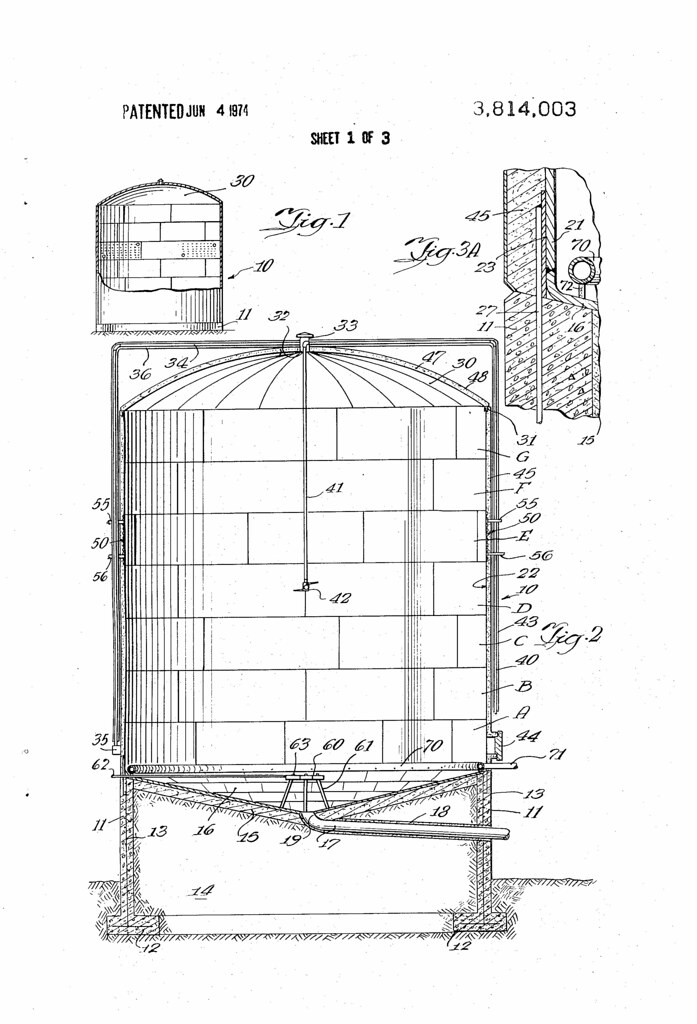
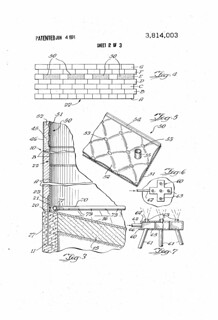
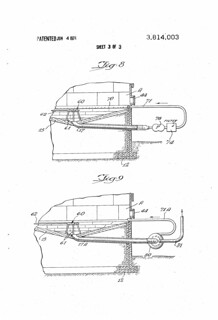
Today in 1974, US Patent 3814003 A was issued, an invention of Nickolas Lothar Vacano, assigned to Rainier Companies, for his “Brewing Apparatus.” Here’s the Abstract:

A large size thin-shelled outdoor metal tank, such as for making beer, with a conical metal bottom having a shallow slope of no more than 25 DEG from the horizontal, a conduit communicating with the tank interior at the apex of the conical bottom, a circular cylindrical vertical metal wall joined to the bottom, a metal roof joined to and supported by the vertical wall, insulation exterior of the bottom, wall and roof, a vent opening in the roof, a manifold centrally located in the tank spaced above the bottom and the level of unsuspended solids which may settle therein, said manifold having a plurality of openings through which carbon dioxide gas can exit into liquid in the tank, and a pipe leading from outside the tank to the manifold for supplying carbon dioxide thereto. The tank can have a tubular ring positioned inside the tank adjacent the periphery of the bottom, a pipe communicating with the ring and the exterior of the tank for supplying fluid to the ring, and a plurality of holes in the ring from which fluid under pressure can be ejected along the slope of the bottom to wash solids to the conduit in the bottom for removal.

Untitled

Untitled Untitled

Filed Under: Beers, Breweries, Just For Fun, Politics & Law, Related Pleasures Tagged With: Brewing Equipment, History, Law, Patent, Science of Brewing

Beer In Ads #1575: Yours To Enjoy

June 3, 2015 By Jay Brooks


Wednesday’s ad is for Olympia, from the 1950s. I suspect this was originally a billboard ad, and it’s surprisingly colorful. A Stubby bottle of Olympia sits next to a full pilsner glass on a table in front of a grand piano. What is that box on the table to the right of the beer? Tissues, cigars or something else?

Olympia-1950s-piano

Filed Under: Art & Beer, Beers Tagged With: Advertising, History, Washington

« Previous Page
Next Page »

Find Something

Northern California Breweries

Please consider purchasing my latest book, California Breweries North, available from Amazon, or ask for it at your local bookstore.

Recent Comments

  • Bob Paolino on Beer Birthday: Grant Johnston
  • Gambrinus on Historic Beer Birthday: A.J. Houghton
  • Ernie Dewing on Historic Beer Birthday: Charles William Bergner 
  • Steve 'Pudgy' De Rose on Historic Beer Birthday: Jacob Schmidt
  • Jay Brooks on Beer Birthday: Bill Owens

Recent Posts

  • Beer Birthday: Alexandre Bazzo April 10, 2026
  • Beer In Ads #5214: Poth’s Bock Beer April 10, 2026
  • Historic Beer Birthday: Rudolf Brand April 10, 2026
  • Beer In Ads #5213: Bock Beer Cascade Quality April 9, 2026
  • Historic Beer Birthday: Otto Schinkel Jr. April 9, 2026

BBB Archives

Feedback

Head Quarter
This site is hosted and maintained by H25Q.dev. Any questions or comments for the webmaster can be directed here.