Brookston Beer Bulletin

Jay R. Brooks on Beer

  • Home
  • About
  • Editorial
  • Birthdays
  • Art & Beer

Socialize

  • Dribbble
  • Email
  • Facebook
  • Flickr
  • GitHub
  • Instagram
  • LinkedIn
  • Pinterest
  • RSS
  • Twitter
  • YouTube

Powered by Genesis

Beer In Ads #4924: Poth’s Bock Beer

March 29, 2025 By Jay Brooks

Last year I decided to concentrate on Bock ads. Bock, of course, originated in Germany, in the town of Einbeck. Because many 19th century American breweries were founded by German immigrants, they offered a bock at certain times of the year, be it Spring, Easter, Lent, Christmas, or what have you. In a sense they were some of the first seasonal beers. “The style was later adopted in Bavaria by Munich brewers in the 17th century. Due to their Bavarian accent, citizens of Munich pronounced ‘Einbeck’ as ‘ein Bock’ (a billy goat), and thus the beer became known as ‘Bock.’ A goat often appears on bottle labels.” And presumably because they were special releases, many breweries went all out promoting them with beautiful artwork on posters and other advertising.

Saturday’s ad is for Poth’s Bock Beer and was published March 29, 1907 in the Philadelphia Inquirer, of Philadelphia, Pennsylvania. The ad was for the F.A. Poth & Sons Brewery, also of Philadelphia, and it’s an interesting advertising approach told in a story involving a waiter and restaurant patron having a conversation about bock beer.

Filed Under: Art & Beer, Beers, Breweries, Just For Fun Tagged With: Advertising, Bock, History, Pennsylvania, Philadelphia

Historic Beer Birthday: Billy Carter

March 29, 2025 By Jay Brooks

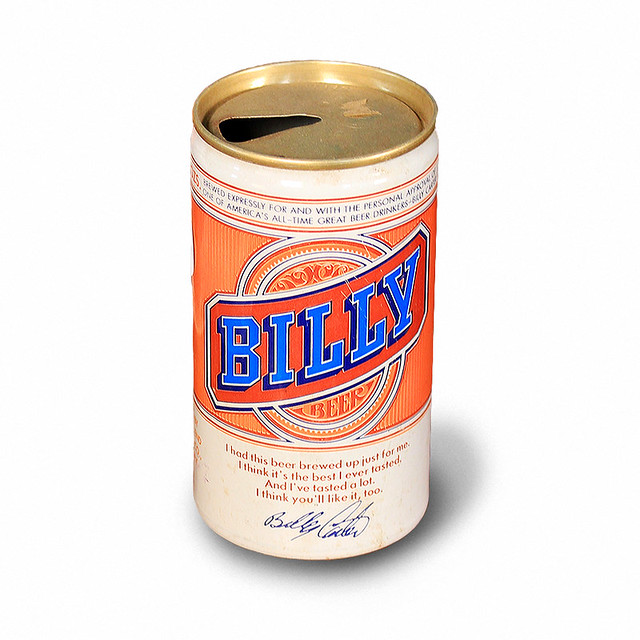
billy
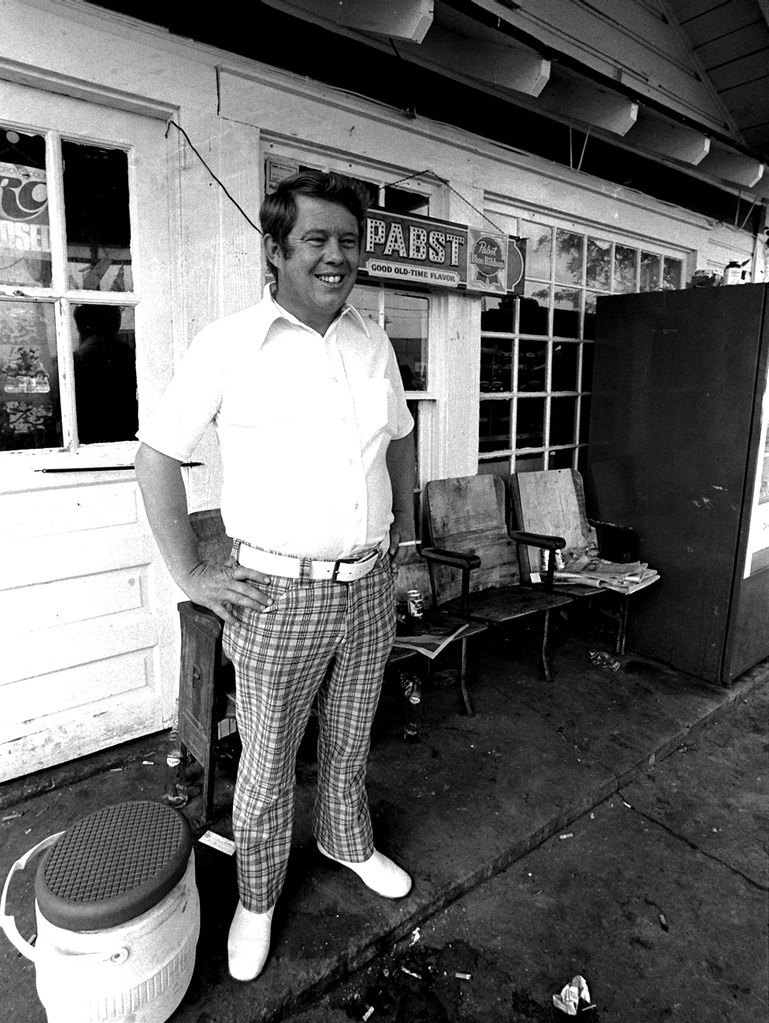
Today is the birthday of William Alton Carter III, better known as Billy Carter (March 29, 1937–September 25, 1988). He “was an American farmer, businessman, and politician. Carter promoted Billy Beer, and was a candidate for Mayor of Plains, Georgia. He was also the younger brother of former Georgia Governor and U.S. President Jimmy Carter,” who signed into law the bill re-legalizing homebrewing.

BILLY CARTER

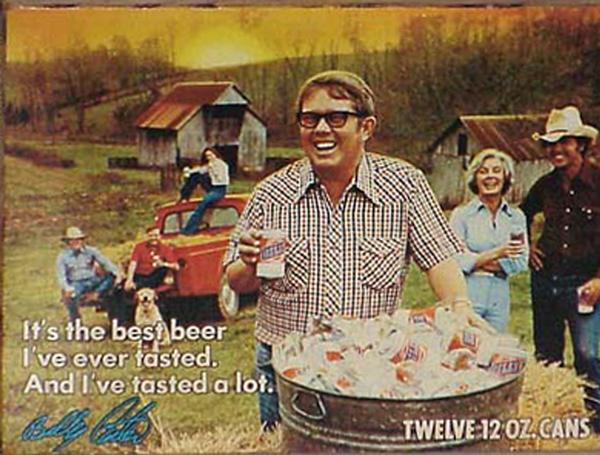
He was a proud redneck, and capitalized on his image as a beer-drinking roughneck bumpkin to sell Billy Beer.

billy-beer

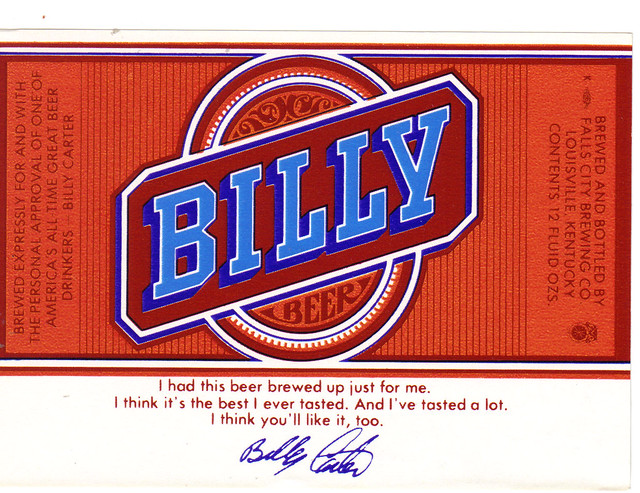
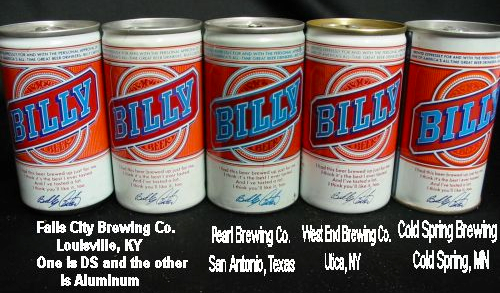
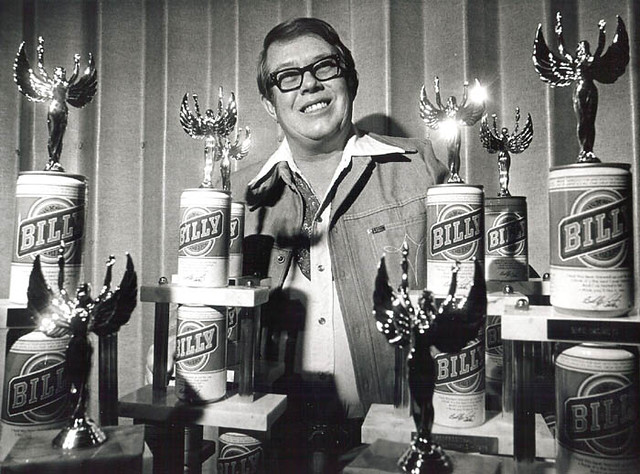
Billy Beer was a beer first made in the United States in July 1977, by the Falls City Brewing Company. It was promoted by Billy Carter, whose older brother Jimmy was the incumbent President of the United States. In October 1978, Falls City announced that it was closing its doors after less than a year of Carter’s promotion. The beer was produced by Cold Spring Brewing, West End Brewing, and Pearl Brewing Company.

Each can from the four breweries that produced it were slightly different. And you can see those differences in the cans below.

billy-beer-cans-5

“After Billy Beer ceased production, advertisements appeared in newspapers offering to sell Billy Beer cans for several hundred to several thousands of dollars each, attempting to profit from their perceived rarity. However, since the cans were actually produced in the millions, the real value of a can ranged from 50 cents to one dollar in 1981.”

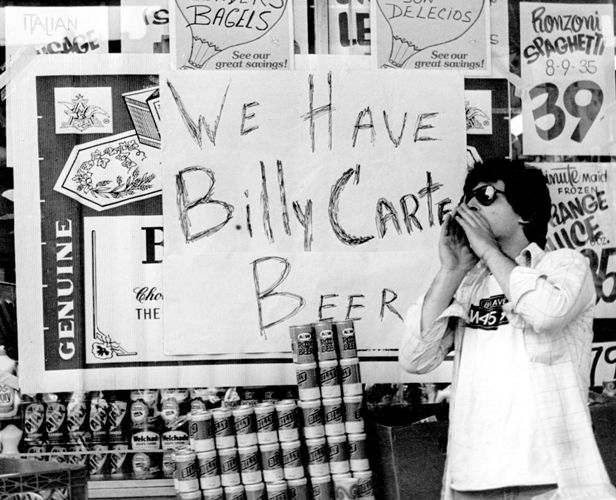
circa 1975:  A shopkeeper selling 'Billy Carter Beer'. Billy Carter, the brother of American President Jimmy Carter, is a noted beer drinker and has named a beer for himself.  (Photo by Peter Keegan/Keystone/Getty Images)

“Billy Beer was also featured on an episode of the reality series Auction Kings, where an appraiser deemed a case of unopened Billy Beer to be worthless; however, at the featured auction, the case was sold for $100.”
billy_beer_masked
Here’s part of his story from 6 Presidential Siblings and the Headaches They Caused, published in Mental Floss:

Truly the standard by which all other presidential sibling’s antics are judged, Billy burst onto the national scene as the boisterous, hard-drinking counterpoint to his pious, reserved brother Jimmy. Billy’s early antics were amusing and fairly innocuous: he endorsed the legendarily terrible Billy Beer in an effort to make a little cash off of his hard-living image, and he made quips like, “My mother went into the Peace Corps when she was sixty-eight. My one sister is a motorcycle freak, my other sister is a Holy Roller evangelist and my brother is running for president. I’m the only sane one in the family.” While he worked hard to convey a roughneck bumpkin image to the press, Billy’s confidantes claimed that he was in fact well-read and an able businessman who used his Southern bona fides to help his older brother’s political cause. On the other hand, Billy’s drinking turned from amusing to tragic as his fame grew.

In 1979, he had to go into rehab to curb his drinking. Around the same time he nearly lost his Georgia home to the IRS for failing to pay a six-figure federal income tax bill for 1978.

The real capper, though, came when Billy began consorting with Libya at a time when relations between the North African nation and the U.S. were starting to strain. In 1978 he made a trip to Libya with a group of Georgia businessmen who were interested in expanding trade with the country; Billy then hosted a Libyan delegation in Atlanta. When questioned about his dealings, Billy responded, “The only thing I can say is there is a hell of a lot more Arabians than there is Jews,” a public-relations nightmare for which he later apologized. The damage got worse in 1980 when Billy registered as an agent of the Libyan government and received a $220,000 loan from the Libyans for helping facilitate oil sales. This transaction led to accusations of influence peddling and a Congressional investigation. In short, it was enough to make Jimmy Carter long for the days when his brother’s antics only included such little quirks as urinating in public in front of a group of reporters and dignitaries.

Mental Floss has an article entitled A Brief History of Billy Beer, which is actually a reasonably thorough account.

billy-beer-carton
The side of the twelve-pack carton of Billy Beer.

And here’s his biography from Find-a-Grave:

Folk Figure, Businessman. Known for his outlandish public behavior, he was a younger brother of former Georgia Governor and US President Jimmy Carter. After graduating from high school, he attended Emory University in Atlanta, Georgia but did not complete a degree. He then served four years in the US Marine Corps and after his discharge, he returned to Plains, Georgia to work with his brother in the family business of growing peanuts. In 1972 he purchased a gas and service station in Plains and operated it for most of the 1970s. In 1976 he attempted to enter the political ring when he ran for mayor of Plains but lost the election. In 1977 he endorsed Billy Beer, capitalizing upon his colorful image as a beer-drinking Southern “good ol’ boy” that developed in the press when his brother ran for US President. After Billy Beer failed, he was forced to sell his house to settle back taxes owed to the Internal Revenue Service. In late 1978 and early 1979, he visited Libya three times with a contingent from Georgia, eventually registering as a foreign agent of the Libyan government and received a $220,000 loan. This led to a US Senate hearing on alleged influence peddling which the press named “Billygate.” In the autumn of 1987, he was diagnosed with pancreatic cancer, and after receiving unsuccessful treatments for the disease, he died the following year at the age of 51. In 1999 his son, William “Buddy” Carter, published a biography of his father titled “Billy Carter: A Journey Through the Shadows.”

BillyBeerWEB

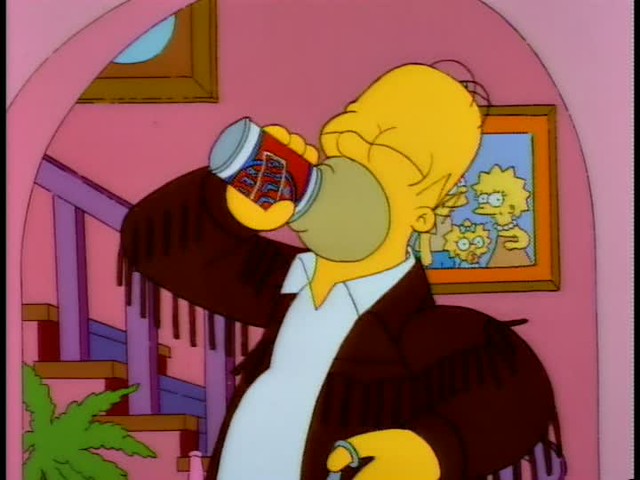
The hit television show The Simpsons featured Homer drinking a can of Billy Beer in the 1997 episode “Lisa the Skeptic”; after Bart tells him that the skeleton he is trying to hide is probably old enough already, he counters Bart’s remark by introducing his Billy Beer stating that people said the same thing about the beer. After he drinks the beer, he says “We elected the wrong Carter”. Also in the 1992 episode “The Otto Show”, Homer excitedly finds a can of Billy Beer in the pocket of his old “concert jacket”, and drinks it.

Homer-billy-beer

Filed Under: Beers, Birthdays, Just For Fun, Politics & Law Tagged With: Georgia, History, Politics

Historic Beer Birthday: Michael Piel

March 29, 2025 By Jay Brooks

piels
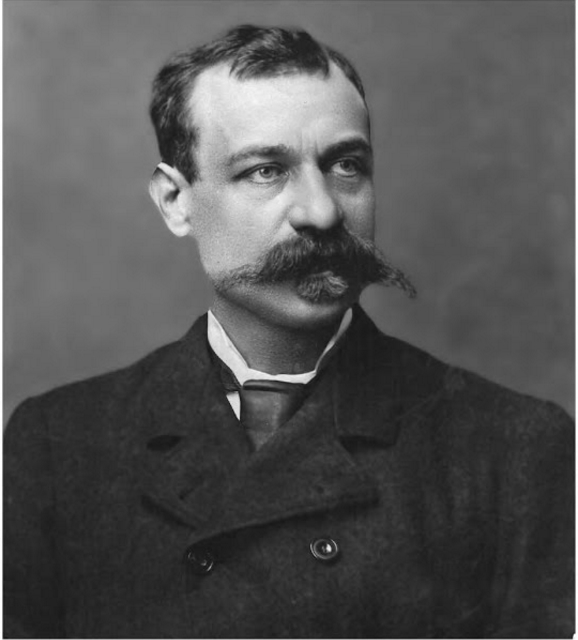
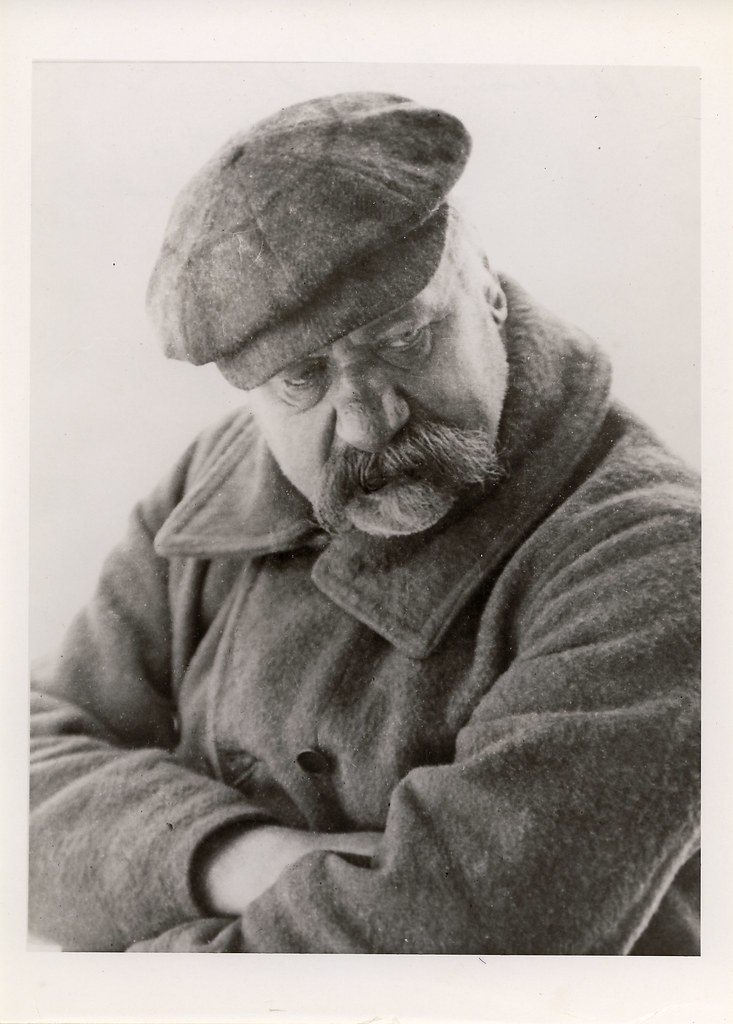
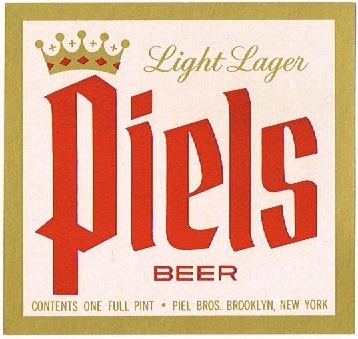
Today is the birthday of Michael Piel (March 29, 1849-June 12, 1915) who along with his brothers Gottfried and Wilhelm Piel founded Piel Bros. Beer in New York, more commonly known as Piels Beer in 1883. Michael Piel was the brewer among his brothers, and the oldest, as well.

Michael-Piel-1890
Michael Piel in 1890.

Here’s a short biography from Find a Grave:

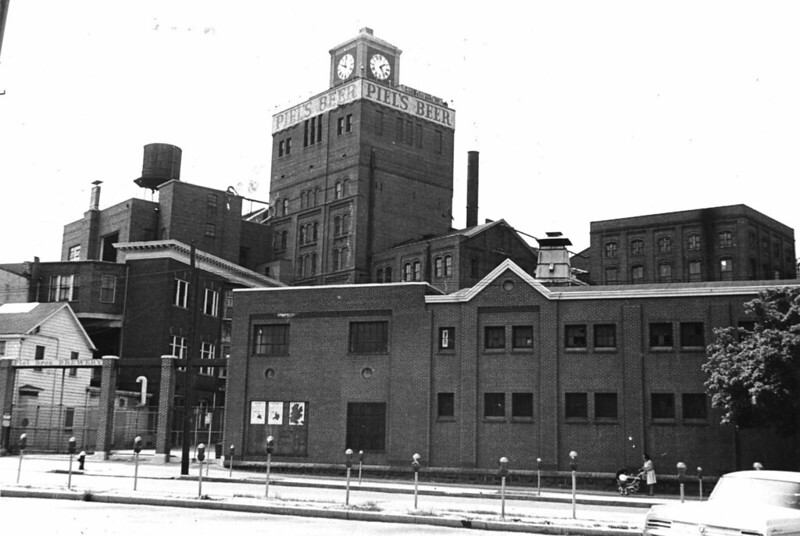
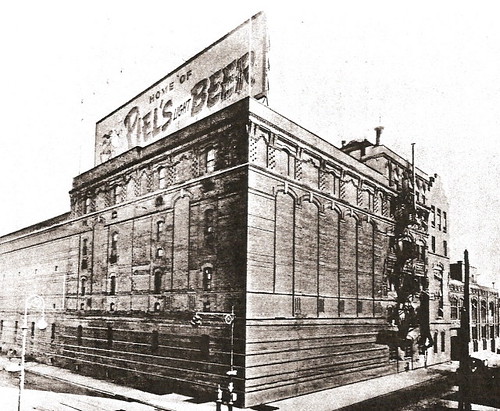
Michel Piel was born on the 29th of March, 1849 in Dussendorf, Germany. He immigrated to the United States in 1883 with his wife Marie and son William. They settled first in Brooklyn, then moved to Manhattan. They had 11 children: William, Henry, Otto, Michael Jr, Louisa Gertrude, Rudolph, Agnes, Oswald, Roland and Albert was died at 2yrs and Maria who also died at 2 yrs. Michael with his brothers Gottfried and Wilhelm founded Piels Beer in 1883 and located the brewery in Brooklyn, New York at 315 Liberty Avenue in the East New York section of Brooklyn. On September 20, 1973, Piels Brothers closed down after 90 years in operation. Piels brand of beer was [licensed, not sold as many sources report] to Pabst Brewing Company, which continues to market the Piels on a limited basis in New York and the New England States.

piels-brewery-1965

And here’s a fuller biography from the Cyclopedia of American Biography:

PIEL, Michael, brewer, b. in Stoffeln, Düsseldorf am Rhein, Germany, 29 March, 1849; d. at Lake Parlin, Me., 12 June, 1915, son of Heinrich Hubert and Gertrud (Gispé) Piel. He was descended from an old Rhenish stock of farmers of singular attachment, whose members successively aimed to expand their patrimony of tillable lands. To the original and extensive Stoffeln Farm his father and uncles added the great Mörsenbroich-Düsseldorf tillages, which now border the residential section of the Lower Rhenish financial capitol. Michael was born in an environment of industry, thrift, and enterprise. His early youth was devoted to the farm at Mörsenbroich-Düsseldorf. At the age of eighteen, he began his military service in the Kaiser Alexander II Regiment of the Imperial Guards at Berlin. The Franco-Prussian War of 1870-71 broke out just as he had completed this duty. As he was not, therefore, subject to the call of the Fatherland, his family sought to hold him back. He promptly volunteered, however, and served throughout the war, participating with his regiment in several engagements, the battle of Gravelotte and the siege of Paris. The impressions on the country boy of his years of service at Berlin, which had already begun to modernize its industries, lingered and served constantly to stimulate his natural gifts of invention. While for several years after the war, true to the family tradition, he worked at Mörsenbroich with his elder brother, he continually sought expression for his native talents. The arduous discipline of farm-labor from sun-up to sun-down, — valuable preparation though it was for the early trials of his later life career — could not check his inventive spirit. Gradually, making the most of his opportunities on the farm, his successes won him away from the family calling. In the creation of new rose-cultures and, particularly, in the perfection of a new and highly productive breed of bees, for both of which, after but two years of experimentation, he was voted the government’s highest awards, he found the encouragement he needed for the growing determination to carve out his own future. It was, however, his invention of a centrifuge for the extraction of honey, awarded special governmental recognition and immediately adopted into general use, that decided him. As the protégé of a machine manufacturer, he visited the industrial centers of the progressive Rhineland and soon chose the ancient German industry of brewing as the one offering the best opportunity for his talent of applying machinery to natural processes. He found a fertile field. The new science of modern refrigeration had just come into practice, and the suggestions which it offered in his chosen field fascinated him. He began his novitiate in the old-style subterranean cellars at the breweries of Dortmund, Westphalia. In 1883, his apprenticeship ended, he welcomed the call of a younger brother, Gottfried, then already established as an export merchant in New York, to found with him in East New York, at its present site, a typically German brewery, to be conceived on modern and scientific principles. The brothers, as a partnership, secured title to a small old-style brewing plant, then in disuse, and found the problem to convert it to newer ideas a fight against tremendous odds. At the outset, Michael was its brewer, superintendent, and engineer, his accumulated experience fitting him admirably for the multiplicity of his duties. In the early days of the converted plant, Michael found that his hours were from four o’clock in the morning till ten at night. At last, in 1888, the ability of his brother as the financial head of the firm and the excellence of his own products assured success and the long struggle was won. The country which had offered him his opportunity for success he gladly and promptly adopted as his own, being admitted to citizenship in 1888. The enterprise prospered and the partnership became a corporation in 1898, with an established business of national reputation. The popular demand for the products of the plant, — then a novelty in the American brewing industry: a typical German beer, — necessitated enlarged facilities.

Michael-Piel-1900

A new era began. The acquired plant was demolished and a new plant, offering Michael the long-sought opportunity for the application of his talents, was erected. Subterranean cellars made way for a building of cellars above surface, under modern refrigeration. The plant, completed, represented a new achievement in brewing construction; it continues to serve as a model of the German-type plant. New principles were easily adopted by him and many ideas of his own creation were applied. Continued success justified this enlargement of facilities, and twice more during his lifetime the plant was expanded in size and facilities. The brewery’s reputation spread abroad, and for years brought brewing academicians, experts, and scientists from Europe and South America to note his work. Many of his ideas were copied abroad. The plant enjoyed the distinction, as the result of Michael’s constant scientific advances in his field, of the continued exchange with European authorities of German brewing ideas, a unique achievement for an American manufacturer. He retired from active management as the technical head of the corporation in 1900, devoting his last years to the acquisition of German paintings of hunting scenes. He was an enthusiastic sportsman, and was particularly devoted to hunting, fishing, and yachting. In 1901 he acquired the Parlin Farm, situated in a basin of the Maine Boundary Mountains, on the Quebec-Portland Highway, on the line of Arnold’s Retreat. It is recognized as one of the most attractive residences of the State. He married 19 March, 1882, Maria Gertrud, daughter of Josef and Agnes (Holz) Herrmann, at Bochum, Westphalia. His widow and nine children survived him.

michael-piel-1900s

PielsSign1947

Piels--Beer-Labels-Piel-Bros

Filed Under: Birthdays, Just For Fun Tagged With: History, New York

Beer In Ads #4923: The Fable Of Bock Beer

March 28, 2025 By Jay Brooks

Last year I decided to concentrate on Bock ads. Bock, of course, originated in Germany, in the town of Einbeck. Because many 19th century American breweries were founded by German immigrants, they offered a bock at certain times of the year, be it Spring, Easter, Lent, Christmas, or what have you. In a sense they were some of the first seasonal beers. “The style was later adopted in Bavaria by Munich brewers in the 17th century. Due to their Bavarian accent, citizens of Munich pronounced ‘Einbeck’ as ‘ein Bock’ (a billy goat), and thus the beer became known as ‘Bock.’ A goat often appears on bottle labels.” And presumably because they were special releases, many breweries went all out promoting them with beautiful artwork on posters and other advertising.

Friday’s ad is for Bock Beer for several Canadian breweries and was published March 28, 1928 in the Vancouver Sun. The ad mentions that bock will be available at Government Liquor Stores beginning on April 7, and includes bock beer from Vancouver Breweries, Westminster Brewery, Rainier Brewing Co. of Canada, Silver Spring Breweries, and Victoria-Phoenix Brewing Co. But it’s the fable that’s the most interesting part of this ad.

Filed Under: Art & Beer, Beers, Just For Fun Tagged With: Advertising, Bock, British Columbia, Canada, History

Historic Beer Birthday: Jaromír Vejvoda

March 28, 2025 By Jay Brooks

accordion
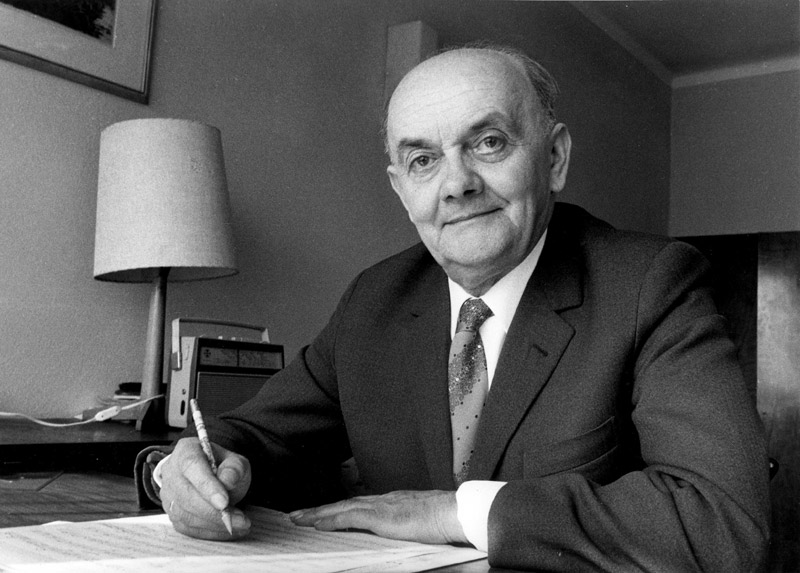
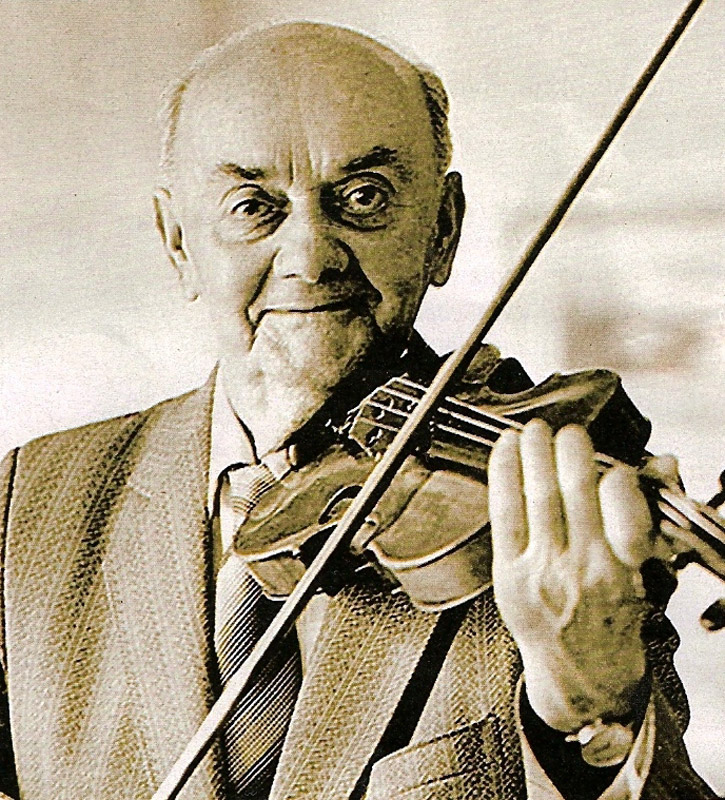
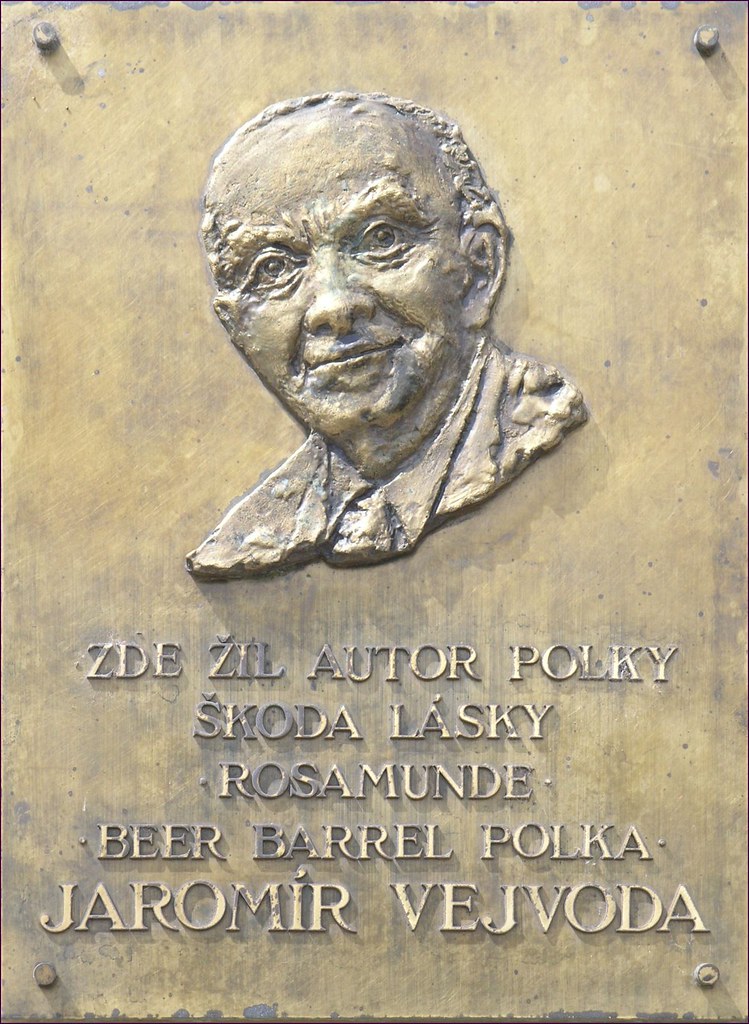
Today is the birthday of Jaromír Vejvoda (March 28, 1902-November 13, 1988). He was a Czech composer and his most famous song was the iconic “Beer Barrel Polka.”

Jaromir_Vejvoda

Here’s a short biography of Vejvoda, from his Wikipedia page:

Vejvoda was born and died in Zbraslav. He learned to play the fiddle and flugelhorn in a band led by his father. Later he played these instruments in a military band. He started to compose in the 1920s while he worked as a bartender in a pub owned by his father-in-law. In 1929 he wrote the Modřanská polka named after Modřany, a suburb of Prague where it was played the first time. This catchy tune became a hit and allowed Vejvoda to pursue music as a full-time professional. It was published in 1934 with lyrics Škoda lásky, kterou jsem tobě dala… Publishing house Shapiro Bernstein acquired the rights shortly before World War II and the polka, now the “Beer Barrel Polka” with the English lyrics “Roll out the barrel…”, became the most popular song of the Allies in the West, although the original Czech lyrics have a very different meaning and do not speak about beer. After the war this polka became popular around the world, in German-speaking countries as “Rosamunde.”

Jaromir-Vejvoda

And here’s the story of his famous song:

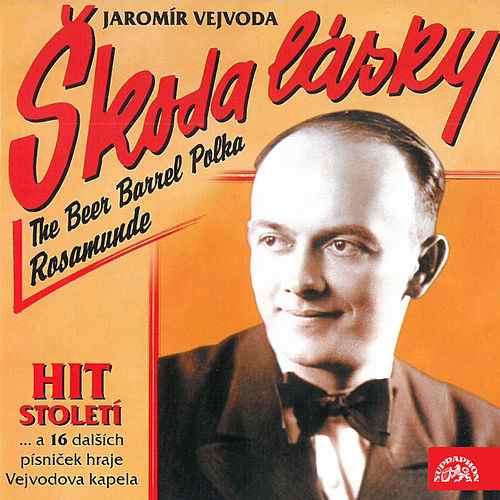
“Beer Barrel Polka”, also known as “The Barrel Polka” and “Roll Out the Barrel”, is a song which became popular worldwide during World War II. The music was composed by the Czech musician Jaromír Vejvoda in 1927.[1] Eduard Ingriš wrote the first arrangement of the piece, after Vejvoda came upon the melody and sought Ingriš’s help in refining it. At that time, it was played without lyrics as “Modřanská polka” (“Polka of Modřany”). Its first text was written later (in 1934) by Václav Zeman – with the title “Škoda lásky” (“Wasted Love”).

The polka became famous around the world. In June 1939, “Beer Barrel Polka”, as recorded by Will Glahé, was number one on the Hit Parade. This version was distributed by Shapiro Bernstein. Glahé’s earlier 1934 recording sold many copies in its German version Rosamunde (it is possible the reason for the rapid spread was due to the occupation of Czechoslovakia by Nazi Germany, and subsequent emigration of thousands of Czechs to other parts of the world, bringing this catchy tune with them). The authors of the English lyrics were Lew Brown and Wladimir Timm. Meanwhile, the song was recorded and played by many others such as Andrews Sisters in 1939, Glenn Miller Orchestra, Benny Goodman, Bobby Vinton, Billie Holiday, and Joe Patek who sold over a million copies of his album “Beer Barrel Polka.”

During World War II, versions in many other languages were created and the song was popular among soldiers, regardless of their allegiances. It was claimed many times that the song was written in the country where it had just become a hit. Its actual composer was not widely known until after the war.

skoda-lasky

Praha_Zbraslav_-_Jaromir_Vejvoda

This more recent recording is by Frankie Yankovic and His Yanks.

But the first hit recording of the song under the name we all know it by today was in 1939, by Will Glahé.

Filed Under: Birthdays, Just For Fun, Related Pleasures Tagged With: Czech Republic, History, Music

Historic Beer Birthday: August Anheuser Busch, Jr. a.k.a. Gussie Busch

March 28, 2025 By Jay Brooks

a-b
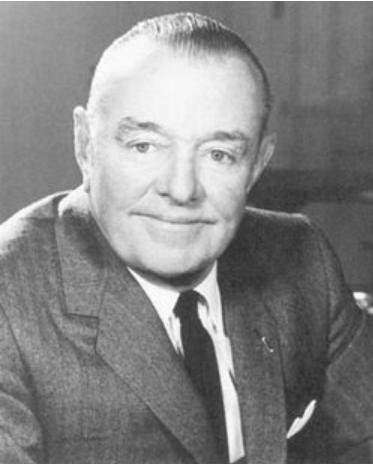
Today is the birthday of August Anheuser Busch, Jr., better known as Gussie Busch (March 28, 1899–September 29, 1989). He was the grandson of Anheuser-Busch founder Adolphus Busch. His parents were August Anheuser Busch, Sr. “Starting at lower levels to learn the family business of Anheuser-Busch Company, Busch became superintendent of brewing operations in 1924 and head of the brewing division after his father’s death in 1934. After his older brother Adolphus Busch III’s death in 1946, August A. Jr. succeeded him as President and CEO.”

gussie-busch

Here’s a short biography from Find a Grave:

Born in St. Louis, Missouri, he was the President and CEO head of the Anheuser Busch Brewery the largest brewery in the world, (1946-75). He succeeded his older brother Adolphus bush III as President and CEO and began using the Bud Clydesdale Horse Team as a company logo. He was an avid sportsman and became owner of the National League St. Louis Cardinals Major League franchise in 1953, until his death. He died at age 90 in St. Louis, Missouri. In 1984, the Cardinals retired the number 85 in his honor, which was his age at the time and he was posthumously inducted into the Cardinals team Hall of Fame in 2014.

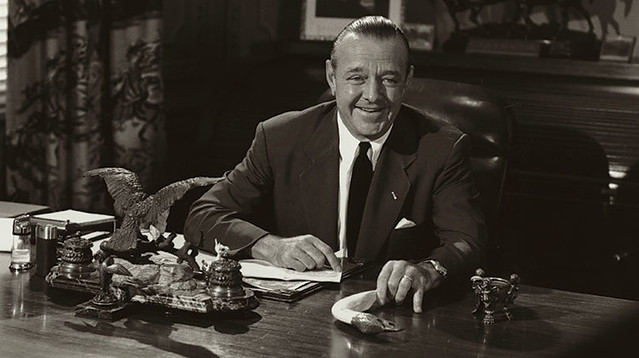
Grants_Farm_Gussie
Gussie at his desk at Grant’s Farm.

This is August Anheuser Busch Jr.’s obituary from the New York Times:

August Anheuser Busch Jr., the master showman and irrepressible salesman who turned a small family operation into the world’s largest brewing company, died yesterday at his home in suburban St. Louis County, Mo. He was 90 years old and had recently been hospitalized with pneumonia.

August Anheuser Busch Jr., the master showman and irrepressible salesman who turned a small family operation into the world’s largest brewing company, died yesterday at his home in suburban St. Louis County, Mo. He was 90 years old and had recently been hospitalized with pneumonia.

He had been honorary chairman of the Anheuser-Busch Companies since his retirement in 1975. But he had remained active as the president of the St. Louis Cardinals, the National League baseball club he persuaded the company’s board to buy in 1953.

Mr. Busch, known as Gussie to virtually everybody who did not know him and as Gus to those who knew him well enough not to call him Mr. Busch, was the grandson and great-grandson of the founders of the company that bore two of his names.

The company, founded in 1876, survived Prohibition by moving into widely diverse products like soft drinks and automobile bodies.

Born in St. Louis on March 28, 1899, Mr. Busch entered the family business as a young man and became general superintendent of brewing operations in 1924. He took over as head of the brewery division after the death of his father in 1934. Although he did not become president of the company until the death of his older brother, Adolphus Busch 3d, in 1946, Mr. Busch had already made his mark as a salesman-showman.

To celebrate the repeal of Prohibition in 1933, Mr. Busch recalled the draft horses that had once pulled beer wagons in Germany and pre-automotive America and obtained a team to haul the first case of Budweiser down Pennsylvania Avenue for delivery to President Franklin D. Roosevelt at the White House. Since then the famous eight-horse hitch of Clydesdales has become almost as famous as the brand they continue to promote.

What was undoubtedly Mr. Busch’s greatest promotional coup was disguised as a civic duty – the company’s purchase of the Cardinals for $7.8 million in 1953 after the previous owner was convicted of income tax invasion.

”My ambition,” Mr. Busch declared, ”is, whether hell or high water, to get a championship baseball team for St. Louis before I die.”

He had a long wait. But beginning in 1964, the team won six National League pennants, most recently in 1987, and the World Series in 1964, 1967 and 1982.

Savored Success

Mr. Busch savored success, and he became a familiar triumphant figure to baseball fans in league playoffs and World Series home games when he would ride into Busch Stadium on the Clydesdale wagon waving a red cowboy hat.

He attributed the team’s success and the company’s to his policy of noninterference. Even so, he was active in the club’s affairs long after he left the company to others, and in 1982 he led the campaign among major league owners not to retain the previous commissioner, Bowie Kuhn.

Through the Clydesdales and the Cardinals, other promotional gimmicks and a commitment to mass advertising, Mr. Busch turned a comparatively small and financially ailing company into the industry giant. In his 29 years as the company’s active head, sales of beer went from 3 million to 37 million barrels a year. Last year the company produced 78.5 million barrels, almost double the output of its nearest competitor, and recorded sales of $9.7 billion. Its flagship brand, Budweiser, is the most popular beer in the world.

Medium Stature, Loud Voice

Through direct ownership and various trusts, Mr. Busch owned 12.5 percent of the company, or more than 30 million shares of its common stock. At yesterday’s closing price of $43.375 on the New York Stock Exchange, the holdings were worth more than $1.3 billion. The day’s increase of $1.125 a share represented a gain of more than $30 million. Trading in the company’s stock was suspended for 20 minutes after the announcement of his death.

Mr. Busch, at 5 feet 10 inches tall and 165 pounds, was a man of medium stature, but he had a loud voice that was once likened to the roar of a hoarse lion.

Fortunately for his colleagues, he had a sense of humor about his own shortcomings, which included a hairtrigger temper. ”All right, you guys,” he once shouted at a raucous company meeting. ”Let me blow my stack first. Then you can blow yours.” He also had an outsized zest for life, and both the wealth and the inclination to indulge it.

Among other things, his 281-acre estate, Grant’s Farm, includes a cabin built by hand by President Ulysses S. Grant and has a 34-room French Renaissance chateau and a well-stocked private zoo, which reflect his abiding love of animals. Mr. Busch trained his own chimpanzees and elephants before donating them to the St. Louis Zoo.

A onetime rodeo rider who later served as master of the Bridlespur Hunt outside St. Louis, Mr. Busch stocked his air-conditioned stables with several breeds, including hackneys, hunters and jumpers.

He clattered his way into family legend one day when he rode one of his horses up the main staircase of the family residence to cheer up his bedridden father.

Mr. Busch was married four times. Two of the marriages ended in divorce. His last wife, the former Margaret Rohde, died last year.

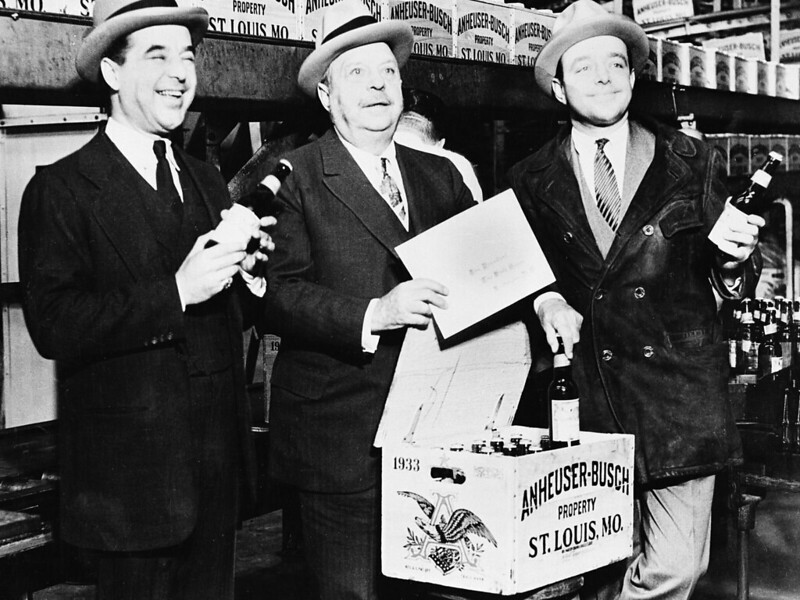
3-Buschs
August A. Busch (center) and his sons, Adolphus III (left) and August Jr., seal the first case of beer off the Anheuser-Busch bottling plant line in St. Louis on April 7, 1933, when the sale of low-alcohol beers and wines was once again legal. Prohibition didn’t officially end until Dec. 5 of that year.

During World War II, Busch was very involved in the war effort through the Ordnance Corps, during which time he attained the rank of colonel.

Colonel August A. Busch, Jr. was born in 1899 in St. Louis, Missouri and was educated in the public schools there. He entered the family brewing business in 1924, and by 1931 was Second Vice President and a member of the board of directors. In June 1942, he was commissioned a major in the Ordnance Corps and was assigned to the Ammunition Division in the Office of the Chief of Ordnance.

He later became Deputy Chairman in charge of the Industry Integrating Committees of Ammunition (one of 82 committees set up to work with industry). Each Industry Integration Committee was made up of representatives from each participating contractor and set up to integrate Ordnance with industry. As Deputy Chairman, he was instrumental in expediting and improving production on several items. In January 1943, he was assigned to the Tank and Automotive Center at Detroit, Michigan. His task was to further the efforts of the committees on the production of tanks, the most critical item of Ordnance procurement. In March of 1943, he was reassigned to the Industry Committees of the Ammunition Division, as the Assistant Chief in Charge of Procurement for metal parts. In 1944, he became Chief of the Industry Production Branch while still retaining the title and duties of the Deputy Chairman of Industry Integrating Committees.

He established precedents and procedures that helped industry and Ordnance work together towards the war effort. His intimate knowledge of industry and his ability to gain the confidence of industrial leaders made him an invaluable asset to the Ordnance procurement process. During his later years, he served as Chairman of the board and Chief Executive Officer of Anheuser-Busch, Inc. and as Chairman of the board and President of the St. Louis Baseball Cardinals organization. Colonel Busch died in 1989.

gussie-busch-time

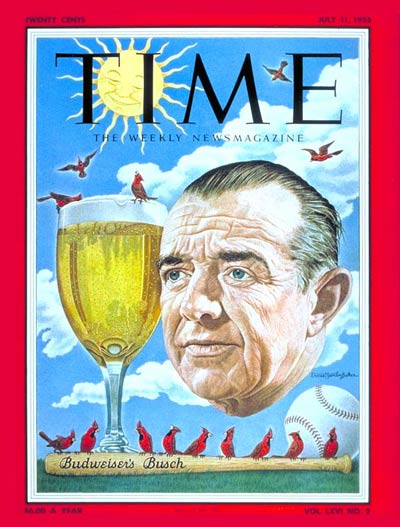
The St. Louis Cardinals, which Anhesuer-Busch bought in 1953, became an important part of Gussie Busch’s life.

In 1953, Cardinals owner Fred Saigh was convicted of tax evasion. Facing almost certain banishment from baseball, he put the Cardinals up for sale. When Busch got word that Saigh was seriously considering selling the team to interests who would move the team to Houston; he decided to have Anheuser-Busch get into the bidding in order to keep the Cardinals in St. Louis. Ultimately, Busch persuaded Saigh to take less money ($3.75 million) than what he was being offered by out-of-town interests in the name of civic pride, and also achieved a marketing tool.

As chairman, president or CEO of the Cardinals from the time the club was purchased by the brewery in 1953 until his death, Busch oversaw a team that won six National League pennants (1964, 1967, 1968, 1982, 1985, 1987) and three World Series (1964, 1967 and 1982). When his son, August Busch III, ousted him as president of Anheuser-Busch, the elder Busch remained as president of the Cardinals.

Although the Cardinals were the dominant baseball team in St. Louis, they did not own their own ballpark. Since 1920 they had rented Sportsman’s Park from the St. Louis Browns of the American League. Shortly after buying the Cardinals, Busch bought and extensively renovated the park, renaming it Busch Stadium (but only after a failed attempt to rename it as Budweiser Stadium). The team played there until Busch Memorial Stadium was built in the middle of the 1966 season.

In 1984, the Cardinals retired a number, 85, in Busch’s honor, which was his age at the time.

Gussie-and-Ken-Boyer
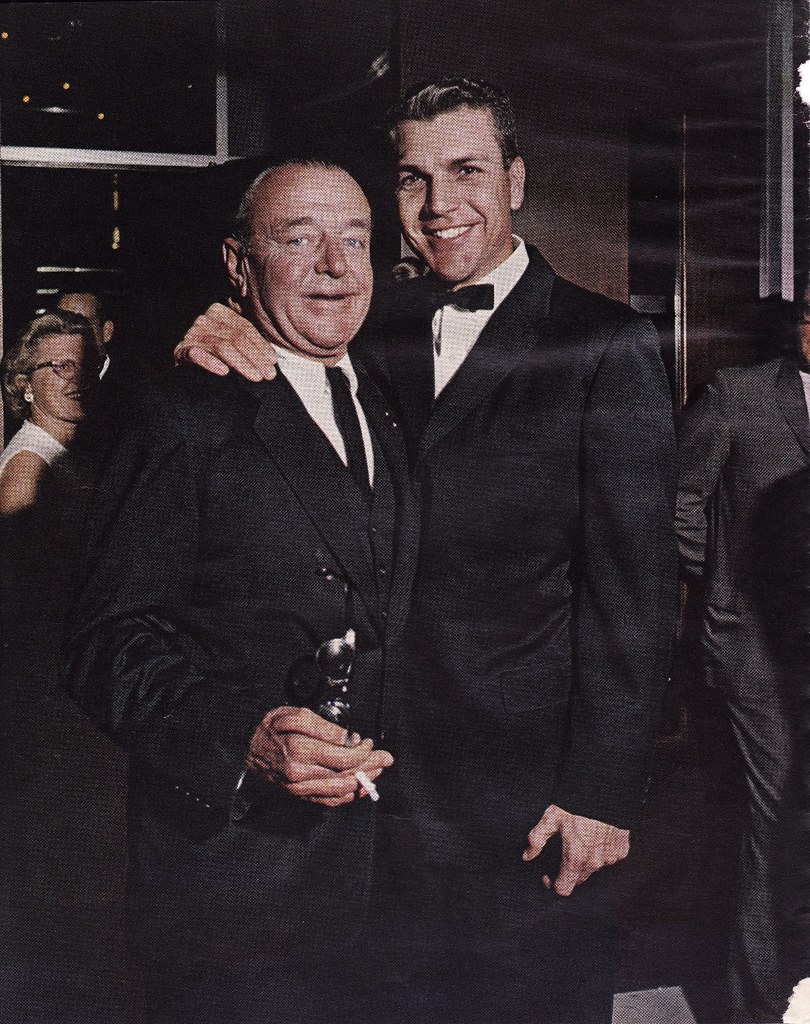
Cardinal’s Owner and beer baron Gussie Busch threw a party at the Chase Hotel following the Cardinals 1964 World Series Championship. Here he congratulates Cardinal’s third baseman Ken Boyer, who hit two home runs and drove in six.

The Busch family also acquired Grant’s Farm, and made it the Busch Family Estate, opening it up to the public beginning in 1954. The estate website also has a timeline and there’s a short history of the farm from Wikipedia:

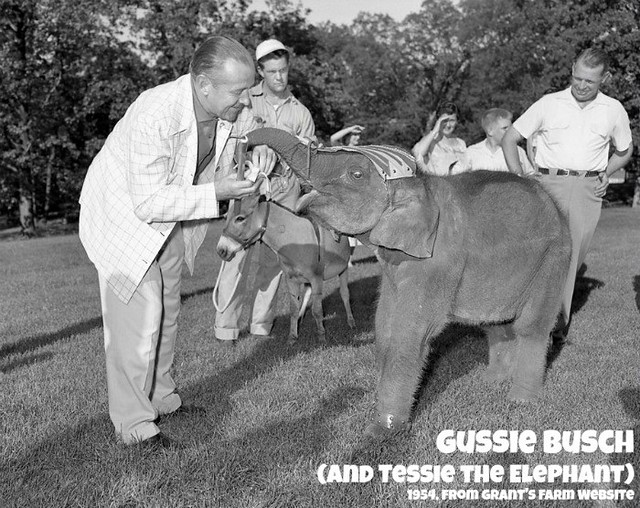
The property was at one time owned by Ulysses S. Grant and prior to that, by the Dent family. It is now owned by the Busch family, who owned the Anheuser-Busch Brewing Company for many years until it was sold to InBev in 2008. Grant’s Farm has been an animal reserve for many years and is open to the public for free; however, there is a parking fee of $12 per vehicle. This fee helps to maintain the farm. The farm is home to such animals as buffalo, elephants, camels, kangaroos, donkeys, goats, peacocks, the iconic Budweiser Clydesdales and many more. Most of these animals can be seen by visitors on a tram tour of the deer park region of the park, while the Clydesdales are found in their nearby barn and pastures. The farm also contains a cabin called “Hardscrabble,” which was built by Ulysses S. Grant on another part of the property and later relocated to Grant’s Farm. It is the only remaining structure that was hand-built by a U.S. president prior to assuming office.

Also on the farm is the Busch family mansion, and a house in which Ulysses S. Grant resided between the Mexican and Civil Wars—White Haven. This had been his wife, Julia Grant’s, family home. Frederick Dent, Julia’s father, gave 80 acres of the farm to the couple as a wedding present. White Haven is now a national historic site: the Ulysses S. Grant National Historic Site, and is located just across the road from Grant’s Farm.

gussie-elephant

Here’s Gussie’s entry from the Encyclopedia Britannica:

August Anheuser Busch, Jr., byname Gussie Busch (born March 28, 1899, St. Louis, Missouri, U.S. — died September 29, 1989, near St. Louis), American beer baron, president (1946–75) of Anheuser-Busch Companies, Inc., who built the company into the world’s largest brewery.

In 1922 Busch was put to work sweeping floors and cleaning vats at the brewery cofounded by his grandfather Adolphus Busch, but by 1924 he was general superintendent of brewing operations. After his father died (1934), Busch became head of the brewery department, and he was installed as president of the company following his older brother’s death (1946).

Busch was a civic leader who helped revive St. Louis in the 1950s by donating $5 million toward the construction of Busch Memorial Stadium and purchasing the St. Louis Cardinals professional baseball team for $7.8 million. A familiar figure during postseason play-off games, Busch often rode into the stadium in a wagon drawn by Clydesdales, the horses that were indelibly identified with the beer wagons of Budweiser, Anheuser-Busch’s main brand. Grant’s Farm, the Busch family estate near St. Louis, was converted into a 281-acre (114-hectare) historical site and wildlife preserve.

gussie-busch-signed-photo

And finally, here’s a video created for Gussie’s induction into the St. Louis Sports Hall of Fame.

Gussie-and-IIITo celebrate production of the ten millionth barrel of beer, August A. Busch Jr. (right) and his son August III share a toast with other officials of the company on December 15, 1964.
Filed Under: Birthdays, Just For Fun Tagged With: Anheuser-Busch, History, Missouri, Video

Historic Beer Birthday: Frederick Pabst

March 28, 2025 By Jay Brooks

pabst
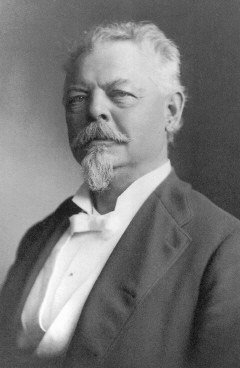
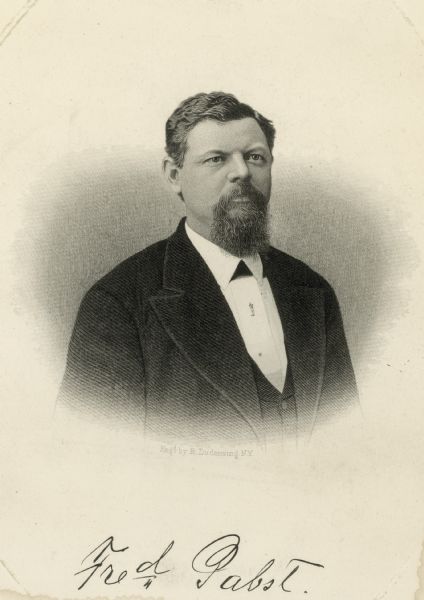
Today is the birthday of Frederick Pabst (March 28, 1836–January 1, 1904). His full name was Johann Gottlieb Friedrich Pabst. According to Wikipedia, he was born in the village of Nikolausrieth, which is in the Province of Saxony, in the Kingdom of Prussia,’ which today is part of Germany. “Friedrich was the second child of Gottlieb Pabst, a local farmer, and his wife, Johanna Friederike.”

Frederick_Pabst_by_SL_Stein

Here’s his biography from Find a Grave:

Businessman. Beer magnate who founded the Pabst Breweries. Born in Nicholausreith, Bavaria, Germany, he immigrated with his parents to Milwaukee, Wisconsin, in 1848, worked for a time as a cook in Chicago and later became captain and part owner of one of the Goodrich Steamship Lines’ ships, theHuron, on the Great Lakes. In Milwaukee, he met the prominent brewer, Phillip Best, son of Jacob Best, and before long married Phillip’s daughter Maria. After a December 1863 shipwreck near Milwaukee, Pabst bought a half interest in the Phillip Best Brewing Company so that his father-in-law could retire; at that time annual production was 5,000 barrels. Nine years later, the output was 100,000 barrels and he had become President of the company, was 37 years old and just hitting his stride. He went after the best brewmasters of his day, even traveling abroad hire the right men for his brewery. He increased its capacity by convincing the stockholders that the profits should be put into bigger and better equipment. He also traveled extensively, utilizing his personality and salesmanship to promote a nation-wide market by making the beer synonymous with fashionable people and places. Milwaukee’s German immigrant and second-generation population had more than doubled and this community was a ready market and skilled workforce for the lager breweries there. Eventually 40 distributing branches were established across the nation (12 of them in Wisconsin alone), with Chicago leading in sales, and the company’s export volume reached was nearly one-third of U.S. export sales. Under his leadership, the company became the largest national brewery in 1874; the name was changed to The Pabst Brewing Co. in 1889; and it became the largest lager brewery in the world, the first to produce over a million barrels of beer in a single year, 1892. The well-known “Pabst Blue Ribbon” label evolved from marketing and from a host of awards won at various fairs and expositions; his beer won gold medals at the Philadelphia Centennial Exposition in 1876 and the 1878 Paris World’s Fair. In 1882, the company began tying blue ribbons around the neck of each bottle of its “Select” beer to distinguish it from other brands and customers began asking for “blue ribbon” beer even before it became the official name after winning the blue ribbon at the 1893 Columbian Exposition in Chicago. Pabst was also prominent in civic affairs, and was noted for the establishment of Milwaukee’s Pabst Theater and he had also established a traveling library providing German language books for immigrants. Afflicted with both diabetes and emphysema, he attempted to regain his health in 1903 with a trip to California. After two strokes during his trip he returned to Milwaukee, soon transferred $4 million in stock to his children and died six months later.

Fred-Pabst

Another account from the Wisconsin Historical Society. The WHS also has a “Historical Essay” entitled Frederick Pabst and the Pabst Brewing Company, with a deeper dive into the history of both.

Pabst, Frederick (Mar. 28, 1836-Jan. 1, 1904), brewer, business executive, b. Thuringia, Germany. He migrated with his parents to the U.S. and to Milwaukee in 1848, worked for a time as a cook in Chicago and later became captain and part owner of one of the Great Lakes ships of the Goodrich Lines. In Milwaukee, Pabst met the prominent brewer, Phillip Best, soon married Best’s daughter Maria, and invested his savings in his father-in-law’s brewing business. After Phillip Best retired, Pabst became co-manager of the company with Emil Schandein, and together they built it into one of the largest enterprises of its kind in the nation. Schandein handled the production end of the business, while Pabst traveled extensively, utilizing his personality and salesmanship to promote a nation-wide market by making beer synonymous with fashionable people and places. Eventually 40 or 50 distributing branches were established, with Chicago leading in sales, and the export volume of the company for a time was nearly one-third of U.S. export sales. In 1873 Pabst became president of the company, and in 1889 the firm name was changed to The Pabst Brewing Co. Pabst was also prominent in Milwaukee civic affairs, and was noted for the establishment of the Pabst Theater.

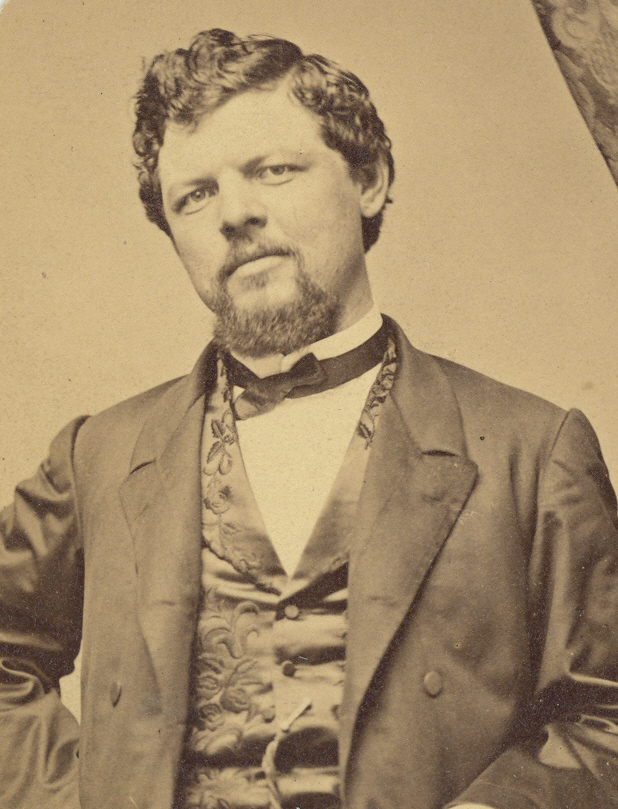
pabst-younger
Fred as a younger man.

fred-founder-of-brewery
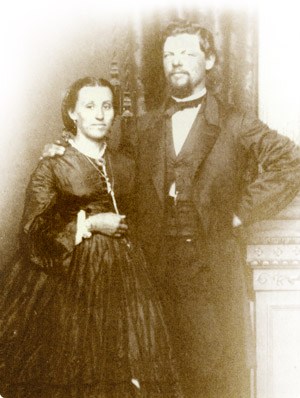
Pabst with his wife Maria Best.

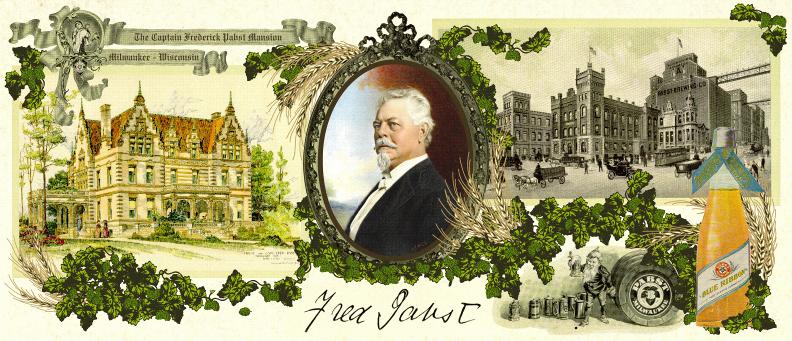
Here’s yet another account, this one from the Pabst Mansion website, which today is a popular tourist attraction in Milwaukee, Wisconsin.

Captain Pabst was born on March 28, 1836 in the small town of Nicholausreith, Saxony, Germany. In 1848, at the age of twelve, his parents, Gottlieb and Fredericka Pabst, made the momentous decision to immigrate to the United States and settled in Chicago. At the age of 14, young Frederick signed on as a cabin boy on a Great Lake steamer and by the age of 21, he became a Captain. Henceforth, until the day he died, he always retained the title of Captain.

Captain Pabst’s vessels plied the waters between Chicago, Milwaukee and Manitowoc. As Captain of a side-wheeler christened Comet, he found his future wife, Miss Maria Best. Maria, born on May 16, 1842, was the eldest daughter of Phillip Best, a brewer from Milwaukee. Frederick and Maria courted for two years and were married in Milwaukee on March 25, 1862. Two years later Captain Pabst took his father-in-law’s offer to buy a half-interest in the Phillip Best Brewing Company.

Captain and Mrs. Pabst would eventually have ten children from 1863-1875. However, only five survived to adulthood, a common occurrence during the nineteenth century.

Elizabeth 1865-1891 Gustave 1866-1943 Marie 1868-1947 Frederick, Jr. 1869-1958 Emma 1871-1943

They raised their new family in a home built in the shadow of the brewing company buildings. After the company’s name was changed in 1889 to the Pabst Brewing Company, Captain Pabst pursued the idea of building on property he had acquired some years earlier on Milwaukee’s prestigious Grand Avenue. During the summer of 1892, the Pabst family moved into their new home.

At the turn of the new century, Captain Pabst’s health started to deteriorate due to a number of ailments including pulmonary edema, diabetes and emphysema. In 1903, while traveling in California, he suffered two strokes before returning to Milwaukee. After his family rallied around him, Captain Pabst slipped away and died shortly after noon on New Year’s Day 1904. His funeral, which took place in the Music Room of the mansion, was meant to be a private affair, but the enormous crowds of mourners that surrounded the mansion made it all but impossible.

pabst-stein

The Pabst website also has a time of brewery history they call the whole story.

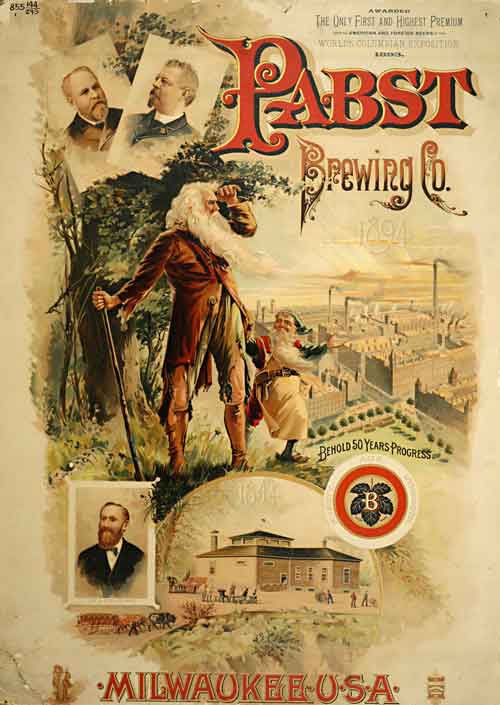
Pabst-poster-1894

Also, Immigrant Entrepreneurship has a more thorough account of both Captain Pabst and his brewery. This is relevant part about Frederick Pabst.

Frederick (originally Johann Gottlieb Friedrich) Pabst was born on March 28, 1836, in the small village of Nikolausrieth, Kingdom of Prussia (today Mönchpfiffel-Nikolausrieth, Province of Saxony) and was the second child of the farmers Gottlieb Pabst (1800-1880) and Johanna Friederika (née Nauland) Pabst (1806-1849).[10] His older sister, Christine (1828-1905), remained in Prussia when the rest of the family migrated to the United States in 1848. The family’s migration was initiated by several promotional letters from relatives who had settled in Wisconsin. Shortly after his father arrived in New York from Hamburg, he booked a passage for the rest of the family. Reunited, they first joined their relatives in Milwaukee, and the following year they resettled in Chicago, where Frederick’s mother died in a cholera epidemic.

In some respects, Pabst’s family story reads like the archetypal “rags to riches” narrative of the era. Initially, Gottlieb and Frederick worked in hotels (Mansion House and New York House) as a waiter and a busboy earning $5 (approximately $156 in 2014$) per month. Around the age of twelve, Frederick found employment as a cabin boy abroad a Great Lakes steamer, the Sam Ward, of the Ward Line – a job in which he established a reputation for fairness, honesty, and determination as his 1904 obituary in the Milwaukee Sentinel attested. Stationed at the cabin door on day, his superiors instructed him not to allow passengers to leave the side-wheel steamer without showing a valid ticket. When the vessel’s owner attempted to pass without showing his ticket:

Young Pabst confronted and stopped him. Capt. Ward attempted to force his way out but was thrust back with considerable energy by the sturdy young German. The owner of the steamer stormed about and at last tried to bribe young Pabst to let him pass by offering him a dollar. This was indignantly refused, and Capt. Ward returned to the cabin in the worst temper possible. Then he began to think over the incident and as the integrity of the young man appealed to his better judgment, he not only relented, but from that time forward to the end of his life was one of Frederick Pabst’s best friends.

In 1857, Frederick Pabst received his maritime pilot’s license and “the Captain” was born – not only by occupation but also by personality. During the next six years, he navigated the ships of the Goodrich Transportation Line: theTraveler between Milwaukee and Chicago; the Huron between Milwaukee and Two Rivers; the Sea Bird between Milwaukee and Manitowoc; and the Comet between Milwaukee and Sheboygan, an important barley market that provided the key ingredient in beer. This last route brought him into contact with Phillip Best, who was a frequent passenger on his ships and sometimes took his eldest daughter Maria along with him. After two years of courtship, Frederick and Maria wed on March 25, 1862, and out of eleven children born to them, five survived to adulthood: Elizabeth Frederica (1865-1891), Gustav Phillip Gottlieb (1866-1943), Marie (1868-1947), Frederick Jr. (1869-1958), and Emma (1871-1943).

After marrying Maria, Frederick decided to remain a ship captain, but he changed his mind after the Sea Bird ran aground off the shore of Whitefish Bay on its way to Milwaukee during a winter storm in December 1863. Unable to pay for repairs to the vessel himself, he decided to join the brewing business of his father-in-law. Under the guidance of Phillip Best, “the Captain” learned the brewing business and served as an equal partner in the operation until his father-in-law retired in 1866 and sold his remaining stake in the business to his other son-in-law, Emil Schandein, a former travelling salesman who had migrated from the German lands to the U.S. in 1856 and had married Lisette Best.

Due to emphysema and pulmonary edema caused by years of smoking cigars, diabetes, and two strokes while on vacation in Southern California in 1903, Pabst’s health declined rapidly. When he died on January 1, 1904, newspapers around the world lamented his passing. At the height of his success, he passed on to his children and his eldest granddaughter, Emma (child of Elizabeth and Otto von Ernst), one million dollars’ (approximately $27.4 million in 2014$) worth of company stock (at a time when the average working class salary was about $600 per year or approximately $16,500 in 2014$) and his sons Gustav and Fred Jr. – both educated at military academies and trained as brewers at Arnold Schwarz’s United States Brewers’ Academy in New York – took over the business as president and vice president, respectively.

Frederick_pabst

pabst-circle

Filed Under: Birthdays, Just For Fun Tagged With: History, Wisconsin

Beer In Ads #4922: It’s Wise To Ask For Braumeister Bock Beer

March 27, 2025 By Jay Brooks

Last year I decided to concentrate on Bock ads. Bock, of course, originated in Germany, in the town of Einbeck. Because many 19th century American breweries were founded by German immigrants, they offered a bock at certain times of the year, be it Spring, Easter, Lent, Christmas, or what have you. In a sense they were some of the first seasonal beers. “The style was later adopted in Bavaria by Munich brewers in the 17th century. Due to their Bavarian accent, citizens of Munich pronounced ‘Einbeck’ as ‘ein Bock’ (a billy goat), and thus the beer became known as ‘Bock.’ A goat often appears on bottle labels.” And presumably because they were special releases, many breweries went all out promoting them with beautiful artwork on posters and other advertising.

Thursday’s ad is for Braumeister Bock Beer and was published March 27, 1950. “Braumeister Bock Beer: The Only Genuine Milwaukee Bock Beer at the Regular Price,” which was originally published March 22, 1955 in the Saginaw News, which I believe was in Saginaw, Michigan, a medium-sized town in Eastern MIchigan located just below Saginaw Bay by Lake Huron. The brewery was the Independent Milwaukee Brewery of Milwaukee, Wisconsin, which was founded in 1901 by five partners: Henry N. Bills, William Gutknecht, Charles Evers, Emil Czarnecki, and William Jung. It’s flagship brand was Braumeister. The survived Prohibition and lasted until 1962, when the G. Heileman Brewing Co. of nearby Lacrosse bought the brewery and closed it down the following year. This ad ran in the Cincinnati Post, of Cincinnati, Ohio, and includes the headline: “It’s WISE to Ask for ‘Milwaukee’s Choicest’ Bock beer” and features our intrepid genius goat, wearing glasses and mortarboard and tassel. The same ‘wise’ goat was featured in an earlier ad for Braumeister Bock and elicited several comments pondering why it was wearing eyeglasses. I think we can safely say it was to make him appear smarter.

Filed Under: Art & Beer, Beers, Breweries, Just For Fun Tagged With: Advertising, Bock, History, Ohio, Wisconsin

Historic Beer Birthday: William Dow

March 27, 2025 By Jay Brooks

dow
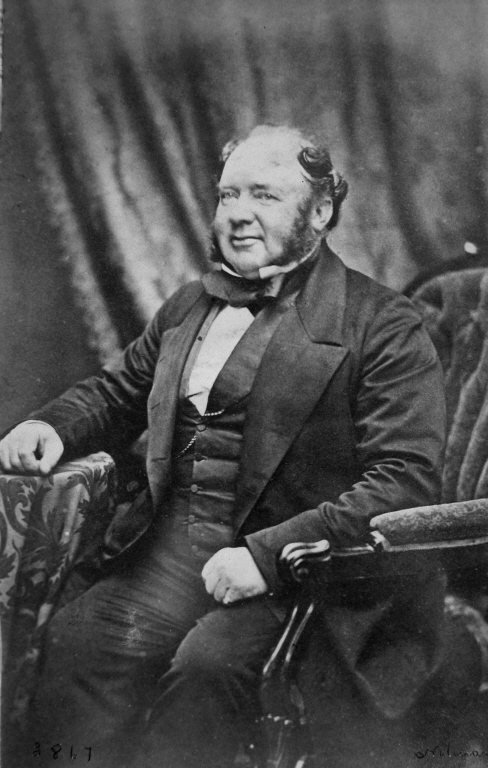
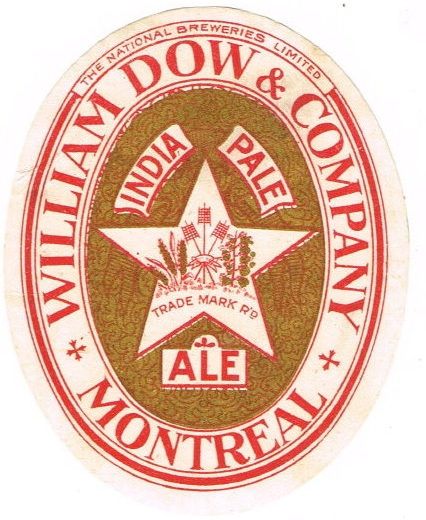
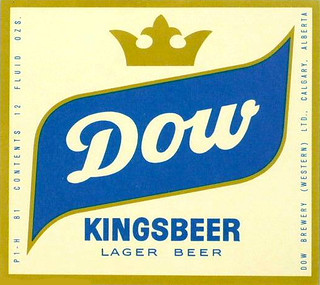
Today is the birthday of William Dow (March 27, 1800–December 7, 1868). Born in Scotland, Dow emigrated to Montreal, Canada when he was 18 and eventually founded what became known as Dow Breweries.

Montréal, vers 1860. William Dow (1800-1868).
William Dow in 1860.
Here’s a short biography from his Wikipedia page:

Born at Muthill, Perthshire, he was the eldest son of Dr William Dow (1765-1844), Brewmaster, and Anne Mason. Since 1652, his family had been brewing in Perthshire. Having gained an extensive experience in brewing under his father, he emigrated to Montreal from Scotland in about 1818. He was employed as foreman of Thomas Dunn’s brewery in Montreal and quickly became a partner. His younger brother, Andrew, who had also trained as a brewer, joined him, and on the death of Dunn, the company became known as William Dow and Company, later known as Dow Breweries. It soon was a strong competitor to Molson’s, the biggest brewery in the city. Dow was also a financier and in 1860 he built his home, Strathearn House, in Montreal’s Golden Square Mile.

Dow-William-1868
Dow in 1868.
And here’s a longer biography from the Dictionary of Canadian Biography:

The son of a brewmaster, William Dow emigrated to Canada in 1818 or 1819 with substantial experience in brewing. He was employed as foreman at Thomas Dunn’s brewery, one of the few in Montreal at that time; by November 1829 Dow was a partner and was joined by his younger brother, Andrew, who had also trained as a brewer. Known as William Dow and Company after 1834, the year of Dunn’s death, the firm prospered and became one of the principal competitors in Montreal to Molson’s, the largest brewery in the city. Like some of his competitors William Dow was also engaged in distilling and in this business too he was a major local supplier. By 1863 his plant was producing some 700,000 gallons of beer in comparison to the Molson’s 142,000 gallons. As his business grew, Dow took in other partners besides his brother (who died in 1853). During the early 1860s he was joined by a group of associates, headed by Gilbert Scott, to whom he eventually sold the business for £77,877 in 1864; it kept his name.

By that time Dow was already a wealthy man with a number of highly remunerative investments in other enterprises besides brewing and distilling. Through the 1840s he put considerable sums into Montreal real estate: in one transaction in 1844 he paid £5,580, mostly in cash, for four pieces of property. Investing also in railways and banks, Dow became important in this expanding sector of Montreal’s economic life. He was a director of the Montreal and New York Railroad Company (which had a line between Montreal and Plattsburg, N.Y.) from 1847 to 1852 and invested nearly £10,000 in its shares, an unusually large sum for anyone to put into a single joint stock company in that era. Dow was one of the Montreal promoters who merged this railway with its major competitor, the Champlain and St Lawrence, in 1855, after a vicious rate war threatened to bankrupt both companies. He also had a small investment in the St Lawrence and Atlantic Railroad and served briefly on its board of directors (1852–53). A shareholder in the City Bank, he was also a director of the Bank of British North America and the Montreal Provident and Savings Bank. Although a determined rival of the Molsons in the beer and whisky business, he was their associate in 1854 in the formation of still another Montreal bank, Molsons Bank [see William Molson*], which was later incorporated into the Bank of Montreal. Compartmentalization of their lives, especially in business, was characteristic of most Montreal businessmen and, indeed, was probably essential for success in this era of constantly expanding frontiers of enterprise.

Dow was a director of the Montreal Insurance Company between 1839 and 1852 and a member of the group which formed the Sun Life Insurance Company in 1865. His many other local corporate ventures included the abortive company organized in 1849 by John Young* to build a canal between the St Lawrence River and Lake Champlain, the Montreal Steam Elevating and Warehousing Company founded in 1857, the City Passenger Railway Company in 1861, and the Montreal Stock Exchange in 1852. Though not himself a shipowner, he invested in shipping companies and was one of the pioneer investors in the Atlantic Telegraph Company. In 1854 he and Hugh* and Andrew Allan*, William Edmonstone, and Robert Anderson of Montreal formed the Montreal Ocean Steamship Company with a capital of £500,000 to provide regular steamer connections between Great Britain and Canada.

Although a bachelor, Dow lived in baronial style in an immense, richly decorated stone mansion named Strathearn House at the top of Beaver Hall Hill in Montreal and also nearby in the country on his estate at Côte Saint-Paul. At his death, on 7 Dec. 1868, the house and the bulk of his estate, estimated to be in excess of (300,000, were left to his brother’s widow and her four daughters.

William_Dow

Dow-IPA-1920

Dow-kingsbeer

Filed Under: Birthdays, Just For Fun Tagged With: Canada, History

Beer In Ads #4921: Too Good To Last

March 26, 2025 By Jay Brooks

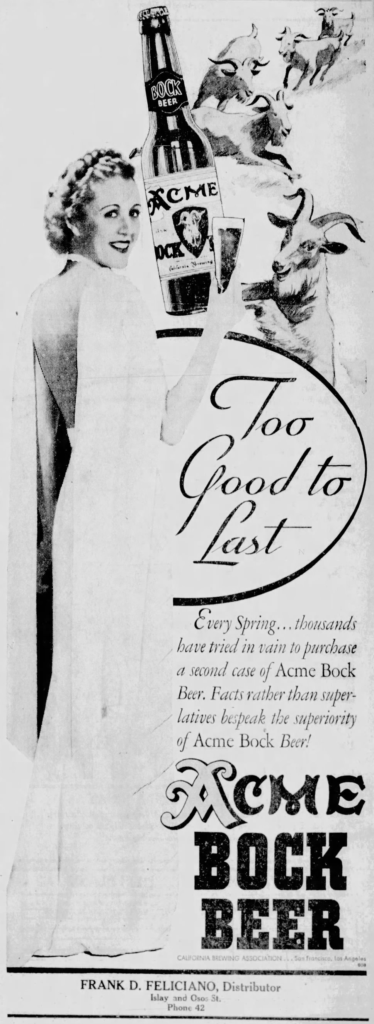
Last year I decided to concentrate on Bock ads. Bock, of course, originated in Germany, in the town of Einbeck. Because many 19th century American breweries were founded by German immigrants, they offered a bock at certain times of the year, be it Spring, Easter, Lent, Christmas, or what have you. In a sense they were some of the first seasonal beers. “The style was later adopted in Bavaria by Munich brewers in the 17th century. Due to their Bavarian accent, citizens of Munich pronounced ‘Einbeck’ as ‘ein Bock’ (a billy goat), and thus the beer became known as ‘Bock.’ A goat often appears on bottle labels.” And presumably because they were special releases, many breweries went all out promoting them with beautiful artwork on posters and other advertising.

Wednesday’s ad is for Acme Bock Beer and was published March 26, 1936. The brewery was the Acme Brewing Co. of San Francisco, California, which was originally founded in 1907, though they also opened a location in the Los Angeles area. Today the brand is opened by North Coast Brewing. This ad ran in The Tribune, of San Luis Obispo, California, and includes the headline: “Too Good To Last” and features a woman in a fancy dress holding a glass of beer.

Filed Under: Art & Beer, Beers, Breweries, Just For Fun Tagged With: Advertising, Bock, California, History

« Previous Page
Next Page »

Find Something

Northern California Breweries

Please consider purchasing my latest book, California Breweries North, available from Amazon, or ask for it at your local bookstore.

Recent Comments

  • Bob Paolino on Beer Birthday: Grant Johnston
  • Gambrinus on Historic Beer Birthday: A.J. Houghton
  • Ernie Dewing on Historic Beer Birthday: Charles William Bergner 
  • Steve 'Pudgy' De Rose on Historic Beer Birthday: Jacob Schmidt
  • Jay Brooks on Beer Birthday: Bill Owens

Recent Posts

  • Beer In Ads #5138: The Event Of The Year: Jax Bock Beer March 2, 2026
  • Historic Beer Birthday: Anthony Durkin March 1, 2026
  • Historic Beer Birthday: Adam Sander March 1, 2026
  • Beer In Ads #5138: Flower City Bock Beer March 1, 2026
  • Historic Beer Birthday: Regina Wauters March 1, 2026

BBB Archives

Feedback

Head Quarter
This site is hosted and maintained by H25Q.dev. Any questions or comments for the webmaster can be directed here.