Brookston Beer Bulletin

Jay R. Brooks on Beer

  • Home
  • About
  • Editorial
  • Birthdays
  • Art & Beer

Socialize

  • Dribbble
  • Email
  • Facebook
  • Flickr
  • GitHub
  • Instagram
  • LinkedIn
  • Pinterest
  • RSS
  • Twitter
  • YouTube

Powered by Genesis

Patent No. 20120093992A1: Apparatus And Method For Stripping Wort

April 19, 2016 By Jay Brooks

patent-logo
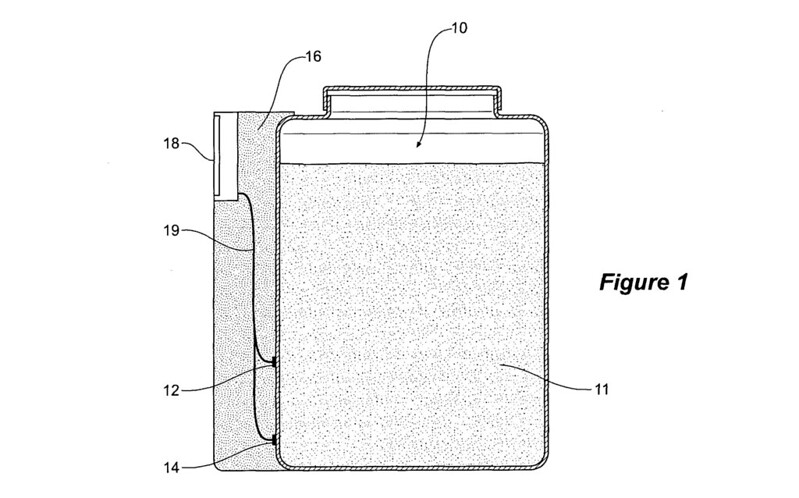
Today in 2012, US Patent 20120093992 A1 was issued, an invention of Peter Gattermeyer and Christian Dorr, assigned to Krones Ag, for their “Apparatus and Method For Stripping Wort.” Here’s the Abstract:

An apparatus and a method for stripping wort, with the apparatus including a receptacle that has a wort inlet and a wort outlet, and a heater on the side wall of the receptacle as well as a distributor device which applies the wort to the heating surface of the heater, such that the wort runs down the heating surface as a film.

US20120093992A1-20120419-D00001
US20120093992A1-20120419-D00002

US20120093992A1-20120419-D00003

US20120093992A1-20120419-D00005
US20120093992A1-20120419-D00006

Filed Under: Beers, Breweries, Just For Fun, Politics & Law, Related Pleasures Tagged With: History, Law, Patent, Science of Brewing, Wort

Patent No. 2155134A: Fermentation Process

April 18, 2016 By Jay Brooks

patent-logo
Today in 1939, US Patent 2155134 A was issued, an invention of Walter Karsch, for his “Fermentation Process.” There’s no Abstract, although in the description it includes this summary:

This invention relates to a fermentation process for the production of alcohol from liquids containing carbohydrates.

The invention provides that the total quantity of yeast shallrbe led positively and continuously in a circuit through a fermentation system consisting of a mixing device and a separating device in this wise that the total quantity of .yeast is moved unidirectionally from the mixing device to the separating device and back to the mixing 5 device. Preferably, after a predetermined controllable time, each yeast particle passes through the separating device and thus comes in contact, with fresh particles of sugar. The yeast is thus for a short time only free from the material to be fermented. The fermented liquor, after a predetermined controllable time, and after once traversing the fermentation system, leaves the said system beyond the separating device. It has been found that yeast can operate continuously in this process because it is removed as rapidly as possible from the conversion products formed. The loss of yeast cells observed with discontinuous fermentation practically does not occur in the present process. The mixing oi the yeast and of the liquor to be fermented is as intimate as possible, so that the conversion of the sugar to alcohol and to carbonic acid is effected with the greatest rapidity. At the exchange surface–the yeast membranes-by the intimate admixture the conversion products formed are withdrawn and new sugar molecules added.

By the flow through the fermentation system in the direction from the mixing device to the separating device it is further ensured that each yeast particle is separated positively after a predetermined time from the conversion products and is mixed with fresh sugar particles. No yeast particles can move in the fermentation system otherwise than in the desired direction, or settle, which is of great importance for the attainment of a maximum output of alcohol. Likewise the fermented liquor is led positively to the separating device, so that the result is obtained that the nocuous conversion products formed are separated as soon as possible from the yeast.

In the preferred embodiment the liquor is subjected to an after-fermentation in the interval between the mixing of the yeast with the liquor to be fermented and the separation of the yeast from the fermented liquor.

US2155134-0

Filed Under: Beers, Breweries, Just For Fun, Politics & Law, Related Pleasures Tagged With: History, Law, Patent, Science of Brewing

Patent No. 34943A: Beer Measure

April 15, 2016 By Jay Brooks

patent-logo
Today in 1862, US Patent 34943 A was issued, an invention of Charles Chinnock, for his “Beer Measure.” There’s no Abstract, although in the description it includes this summary:

I have invented a new and improved can and measure for liquids liable to froth or foam when drawn or measured and also to separate the froth or foam from the liquid when pouring into other vessel or vessels.

US34943-0

Filed Under: Beers, Breweries, Just For Fun, Politics & Law, Related Pleasures Tagged With: Brewing Equipment, History, Law, Patent, Science of Brewing

NBWA Brewery Count Over 4,800

April 12, 2016 By Jay Brooks

nbwa
Some very interesting analysis from the NBWA, and their economist Lester Jones, about the number of breweries in America. Lester’s analysis uses slightly different metrics from the TTB and doesn’t define craft breweries as narrowly as the BA, and also the TTB doesn’t distinguish exactly what mat beverages are being made, if they’re licensed as a brewery then they’re included in the data. Those difference in calculating show the NBWA’s number for how many breweries there in America is 4,824, or over 550 more. But even more remarkable is that based on the number of “permitted breweries on record” at the TTB by the end of last year, that number could swell beyond 6,000, which seems absolutely crazy. The number is California alone, at 788, is just shy of 800. Sheesh!

Here’s the entire analysis below since the whole summary is worth reading:

Each year, the NBWA requests data from the TTB on tax paid withdraw volumes by size of brewery. Once again, this year’s TTB data provides some interesting brewing industry insights into the dynamics of the U.S. brewing industry. This data also is helpful for us to supplement the Brewers Association data on overall independent craft beer growth and brewery count. According to the BA, craft brewer volumes grew by 13 percent to 24.5 million barrels in 2015. The BA also reported 4,269 total operating breweries for 2015. As with all statistics, how the numbers are collected and reported can vary across organizations. In our industry, the numbers also change quickly.

As of April 2016, the U.S. domestic brewing industry had 4,824 reporting breweries according to the TTB. As with the BA’s brewery count of 4,269, this number is expected to change as additional new brewers are counted that may not yet have been fully recognized and/or reported by either the TTB or the BA data. The data presented below is for all types of malt beverage manufacturers and recognizes only the individual facility, not the ownership or control group.

Highlights from the 2015 TTB brewery count data include:

  1. The small brewer group (making less than 7,500 barrels) accounted for less than 2 percent of all domestic volumes yet accounted for 93 percent of all breweries. The smallest of this group has 566 breweries reporting less than one barrel of production each in 2015. These super small brewers can thank the contracting brewing industry for helping them sell almost 100,000 barrels – a figure well beyond their reported production capacity.
    The medium brewer group (making between 7,501 and 60,000 barrels) is a much smaller group consisting of 246 breweries, but these few breweries account for 1.6 times more volume than the 4,475 breweries in the small brewer group.
  2. The large brewer group consists of only 82 breweries making between 60,001 and 1.9 million barrels. This is a unique group within the industry as they pay the mixed rate federal excise tax of $7 for the first 60,000 barrels and $18 on each barrel over 60,001. While a much smaller group of only 82 breweries, they collectively produce more than four times the amount of beer as the medium brewer group. The large brewer group also has the largest range of production volumes and saw the fewest number of new entrants (17 breweries) into its ranks in 2015.
  3. Finally, we get the extra-large group. This is a group of only 21 breweries that produce more than 84 percent of all domestic beer – more than five times the amount made by all 4,803 combined. The closing of the MillerCoors brewery in Eden, North Carolina, will reduce this class of brewers by one in future reports and will take a significant-sized brewery offline for the first time in many years.
  4. The industry added around 1,500 new breweries in 2015 – that is equivalent to four new breweries a day entering the marketplace. As a highly capital-intensive business, starting small is the name of the game. Growing a beer brand takes a long time, and economies of scale are earned over decades. The largest U.S. breweries have been in operation for decades, and economies of scale should help maintain the beer volumes even in the face of declining per capita beer consumption.
  5. With more than 6,000 permitted breweries on record at the end of CY 2015, 2016 is set to be an even more competitive year for the brewing industry. Just as economies of scale drive the brewing side of the industry, logistical expertise and local market insights drive the efficiencies inherent in beer distributor networks. Working together and maximizing their comparative advantages, brewers, distributors and retailers will deliver unprecedented choice and value to American beer consumers in 2016.

Brewery counts by size 2015_Page_1

Brewery counts by size 2015_Page_2

Filed Under: Beers, Breweries, Just For Fun, News, Politics & Law, Related Pleasures Tagged With: Business, Distributors, Economics, Statistics

ABI Buys Devils Backbone

April 12, 2016 By Jay Brooks

ABI devils-backbone
In what’s becoming almost routine news, Anheuser-Busch InBev announced this morning the acquisition of Devils Backbone Brewing of Roseland, Virginia.

Here’s the press release:

Today, Anheuser-Busch announced an agreement to acquire Devils Backbone Brewing Company, the leading and fastest-growing craft brewery in the state of Virginia. Devils Backbone will be the latest partner to join the diverse portfolio of craft breweries within The High End, the company’s business unit comprising unique craft and import brands.

“I am extremely pleased to announce the partnership of Devils Backbone Brewing Company with Anheuser-Busch. While we are joining a creative group of craft breweries in the division, Devils Backbone will retain a high level of autonomy and continue its own authentic DNA within The High End framework,” said Steve Crandall, co-founder and CEO of Devils Backbone Brewing Company. “The existing management team plans to stay on board for many years, while continuing to innovate and bring locally crafted Virginia beer to the nation.”

In 2008, founders Steve and Heidi Crandall opened the doors to Devils Backbone Brewing Company in the Virginia Heartland, after being inspired by a ski trip to northern Italy in 1991 where they had their first taste of Germanic style beer. After success with the first brewpub, Basecamp, the decision was made to break ground on the Outpost facility, in Lexington, Virginia. Originally projected to produce 10,000 barrels of beer in its first ten years, the Outpost produced almost 45,000 barrels in its first three. Steve credits much of this early success to the excellent network of distributors within his system, which is weighted heavily towards Anheuser-Busch.

“I congratulate Steve and Heidi Crandall and the entire Devils Backbone team as they partner with Anheuser-Busch,” said Virginia Governor Terry McAuliffe. “Through the strength of Anheuser-Busch’s network of distributors, Devils Backbone’s award-winning craft beer will soon be available throughout the country and beyond. I want to thank Devils Backbone for their immense contribution to Virginia’s world-class craft beer industry, and I look forward to the additional exposure for Virginia as a leading state for craft beer lovers.”

Today, the Outpost Brewery & Taproom in Lexington serves as the primary production brewery while the Basecamp Brewpub & Meadows in Roseland, serves as a visitor destination. Devils Backbone takes full advantage of the scenic 100-acre Basecamp property surrounded by the Blue Ridge Mountains, offering a variety of opportunities for guests to enjoy the outdoors. In 2015, the two locations hosted more than 500,000 guests.

“Devils Backbone has captivated beer drinkers in Virginia since opening its doors eight years ago,” said Felipe Szpigel, President, The High End. “From the beginning, they have shown creativity and talent with the great beers they brew, and they’ve been able to use the authentic offerings at Basecamp Brewpub & Meadows to cultivate a fun, outdoor lifestyle that resonates with everyone. Pair these qualities with dynamic leadership and a dream to do something bigger, and you have the recipe for an even more promising future.”

While best known for its flagship Vienna Lager, which accounted for nearly 60% of Devils Backbone volume in 2015, the portfolio also includes other award-winning year-round favorites like Eight Point IPA and Schwartz Bier. Developing beers with personality and individual integrity of flavor has helped enable Devils Backbone to win four National titles: 2014 Great American Beer Festival Mid-Size Brewery & Brew Team, 2013 Small Brewing Company & Small Brewing Company Brew Team, 2012 Small Brewpub & Small Brewpub Brewer, 2010 World Beer Cup Champion Brewery, and the Virginia Craft Brewers Fest Best of Show medals in 2015, 2014, 2013 and 2012.

First Beverage Group acted as financial advisor to Devils Backbone Brewing Company. Anheuser-Busch’s partnership with Devils Backbone is expected to close in the second quarter, subject to customary closing conditions. Terms of the agreement were not disclosed.

devilsbackbone-coaster

Filed Under: Breweries, News, Politics & Law Tagged With: Anheuser-Busch InBev, Announcements, Business, Press Release

Scranton Media Family Buys Flying Fish

April 11, 2016 By Jay Brooks

flying-fish
I somehow missed this news, which seems to have come out without too much fanfare a few days ago. Maybe we’re becoming desensitized to brewery M&A? Certainly Twitter wasn’t abuzz with the news. Flying Fish Brewing, one of New Jersey’s earliest small brewers, was bought by the Lynett and Haggerty families, who own Times-Shamrock Communications. They own a dozen newspapers and eleven radio stations. On April 8, they announced that they’d bought a controlling interest in the Somerdale, New Jersey brewery, though the deal was quietly done a month earlier, on March 11.

Flying Fish was founded in 1995 by Gene Muller. They started in Cherry Hill, but moved to larger quarters in Sommerville four years ago.

According to the Scranton Times-Tribune (one of the papers owned by the family), this is how it went down.

The family’s expertise in marketing, events and promotions will help the brewery continue to grow and expand its footprint, said Bobby Lynett, manager of L&H Brewing Partners, the entity that now holds a majority interest in Flying Fish. They declined to disclose the cost of their acquisition.

“Flying Fish is a nice brewery with good people and a great product,” said Mr. Lynett, a publisher of The Times-Tribune. “We want to help it grow.”

Flying Fish currently employs 33 people who produce about 24,000 barrels of beer each year.

Gene Muller, founder of Flying Fish, said he began looking for new partners when some initial investors began to cash out on their investment in the company. He joked that the Scranton family emerged as a good fit “because they are Irish.”

Mr. Muller, 61, believes Flying Fish will benefit from events and other business interests of the Lynett-Haggerty families, whom he refers to as “The Scranton Guys.”

“There are obvious synergies,” he said. “We saw an opportunity to inject some enthusiasm into the company and take care of our initial investors. The Scranton Guys are part of a 100-year-old company. They understand the long-term horizon.”

The capital for L&H Brewing Partners came from some individual family members and Elk Lake Capital, set up by the family to invest in non-media companies to add diversity to the family’s holdings beyond Times-Shamrock’s media holdings of newspapers, radio stations and outdoor advertising. Elk Lake already owns a land-surveying company and water-testing company.

Toasting the Class of '96: Greg Koch, Mark Edelson, Bill Covaleski, Tom Kehoe, Gene Muller & Sam CalagioneAt a Philly Beer Week event celebrating the Class of '96: Greg Koch, Mark Edelson, Bill Covaleski, Tom Kehoe, Gene Muller & Sam Calagione.

Filed Under: Breweries, News Tagged With: Business, New Jersey, Pennsylvania

Patent No. 2547988A: Process For Improving The Foam Of Fermented Malt Beverages And Product Obtained Thereby

April 10, 2016 By Jay Brooks

patent-logo
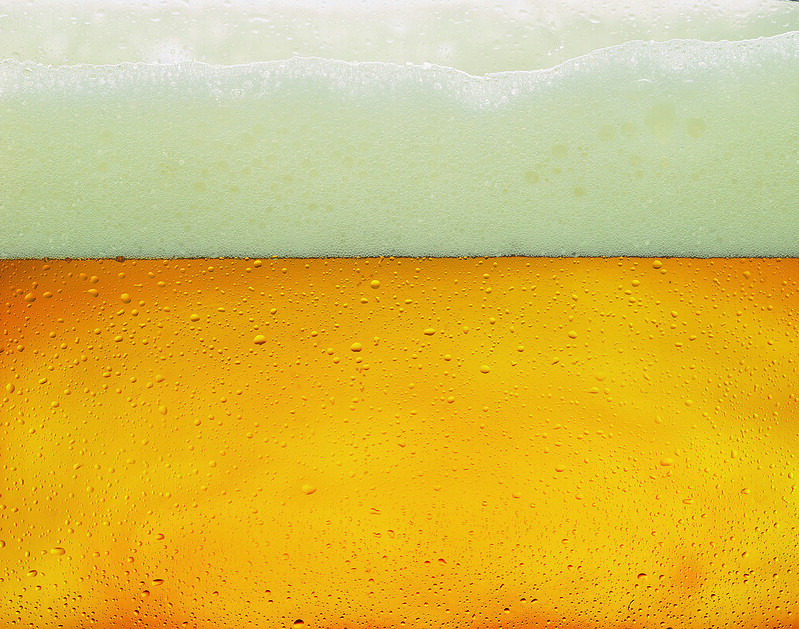
Today in 1951, US Patent 2547988 A was issued, an invention of Hilton B. Levy, Arthur L. Schade and James S. Wallerstein, for his “Process For Improving the Foam of Fermented Malt Beverages and Product Obtained Thereby” for beer bottles. There’s no Abstract, although in the description it includes this summary:

The present invention relates to fermented malt beverages and more particularly to beverages of this type characterized by the capacity for forming a. stable, that is, a long-lived foam.

It is accordingly the general object of the present invention to provide fermented malt beverages Whose foam-head is longer-lasting in character than the foam-head produced by the normal components of these beverages as at present manufactured.

It is a further object of the invention to improve a persistent or enduring foam which he lasting qualities of the foam-head of fermented beverages by adding to such beverages at any suitable time in the course ,of their manufacture, but preferably after the fermenting and initial or coarse filtering, but prior to the storage period, a small quantity of a soluble non-toxic carboxy-methyl cellulose, preferably in the form of its alkali metal salt, such as the sodium and potassium salts.

We have now discovered that the foam of beer may be prolonged in a simple and economical manner by the addition to the beer of, small amounts of a water-soluble, heat-stable form of carboxy-methyl cellulose, as, for example, the

sodium salt of such material. This is commonly called cellulose gum, and, is a completely harmless and edible material. When solutions of, for example, sodium carboxy-methyl cellulose are added to beer in a concentration of 5 to 200 parts per million, the duration of the foam is greatly increased and a persistent froth is produced which endures for as much as several hours. Preparations of the sodium carboxy-methyl cellulose are particularly valuable when they are of a high viscosity type, and they increase the foam duration period many times.

beer_foam

Filed Under: Beers, Breweries, Just For Fun, Politics & Law, Related Pleasures Tagged With: History, Law, Patent, Science of Brewing

Bistro IPA Festival Winners 2016

April 9, 2016 By Jay Brooks

bistro
Today was only a little wet in Hayward for the 19th annual IPA Festival at the Bistro. It was perfect beer-drinking weather once we emerged from judging in the basement all morning. This year’s big winner was Today Was a Good Day IPA, from Pizza Port Carlsbad, which was chosen best in show, out of 64 IPA offerings. The full list of winners is below.

  • 1st Place: Today Was a Good Day IPA (Pizza Port Carlsbad)
  • 2nd Place: Gold Digger IPA (Auburn Alehouse)
  • 3rd Place: Hop Riot IPA (High Water Brewing)
  • People’s Choice: Maui Waui (Altamont Beer Works)

SAM_5053
Perfect Beer Drinking Weather.

Filed Under: Beers, Breweries, Events, News Tagged With: Awards, Bay Area, California, IPA

The Top 50 Annotated 2015

April 5, 2016 By Jay Brooks

ba
This is my ninth annual annotated list of the Top 50, skipping two years ago because the BA provided that information then, so here again you can see who moved up and down, who was new to the list and who dropped off. So here is this year’s list again annotated with how they changed compared to last year.

  1. Anheuser-Busch InBev; #1 last ten years, no surprise
  2. MillerCoors; ditto for #2
  3. Pabst Brewing; ditto for #3
  4. D. G. Yuengling and Son; Same as last year
  5. Boston Beer Co.; Same as last year
  6. North American Breweries; Same as last year
  7. Sierra Nevada Brewing; Same as last year
  8. New Belgium Brewing; Same as last year
  9. Craft Brewers Alliance; Same as last year
  10. Lagunitas Brewing; Up 1 from #11 last year
  11. Gambrinus Company; Down 1 from #10 last year
  12. Bell’s Brewery; Same as last year
  13. Deschutes Brewery; Same as last year
  14. Minhas Craft Brewery; Up 2 from #16 last year
  15. Stone Brewing; Down 1 from #14 last year
  16. Sleeman Brewing; Down 1 from #15 last year
  17. Ballast Point Brewing & Spirits; Rocketed up 20 from #37 last year
  18. Brooklyn Brewery; Down 1 from #17 last year
  19. Firestone Walker Brewing; Up 3 from #22 last year
  20. Founders Brewing; Up 3 from #23 last year
  21. Oskar Blues Brewing; Jumped up 9 from #30
  22. Duvel Moortgat USA (Boulevard Brewing/Ommegang); Down 4 from #18 last year
  23. Dogfish Head Craft Brewery; Down 4 from #19 last year
  24. Matt Brewing; Down 4 from #20 last year
  25. SweetWater Brewing; Down 1 from #24 last year
  26. Harpoon Brewery; Down 5 from #21 last year
  27. New Glarus Brewing; Down 2 from #25 last year
  28. Great Lakes Brewing; Up 1 from #29 last year
  29. Alaskan Brewing; Down 3 from #26 last year
  30. Abita Brewing; Down 3 from #27 last year
  31. Anchor Brewing; Down 3 from #28 last year
  32. Stevens Point Brewery; Same as last year
  33. Victory Brewing; Up 2 from #35 last year
  34. August Schell Brewing; Down 1 from #33 last year
  35. Long Trail Brewing; Down 1 from #36 last year
  36. Summit Brewing; Down 2 from #34 last year
  37. Shipyard Brewing; Down 6 from #31 last year
  38. Full Sail Brewing; Up 5 from #39 last year
  39. Odell Brewing; Up 1 from #40 last year
  40. Southern Tier Brewing; Up 1 from #41 last year
  41. Rogue Ales Brewery; Down 3 from #38 last year
  42. 21st Amendment Brewery; Jumped up 7 from 49 last year
  43. Ninkasi Brewing; Down 1 from #42 last year
  44. Flying Dog Brewery; Same as last year
  45. Narragansett Brewing; Not in Top 50 last year
  46. Pittsburgh Brewing (fka Iron City); Down 1 from #45 last year
  47. Left Hand Brewing; Up 1 from #48 last year
  48. Uinta Brewing; Down 2 from #46 last year
  49. Green Flash Brewing; Not in Top 50 last year
  50. Allagash Brewing; Same as last year

Not too much movement this year, except for a few small shufflings. The top is virtually unchanged, with only numbers 10 and 11 switching places. And apart from those two small changes, the top 13 were all the same as 2014. The biggest jump came from Ballast Point, which leapt up 20 spots, while Shipyard slipped the furthest, dropping six slots. Only two new breweries made the list; Green Flash Brewing and Narragansett Brewing. Off the list was World Brew/Winery Exchange, a California contract label brewer making private label beers for retailers, and Bear Republic Brewing.

If you want to see the previous annotated lists for comparison, here is 2014, 2013, 2012, 2011, 2010, 2009, 2008, 2007 and 2006.

Filed Under: Breweries, Editorial, Just For Fun, News Tagged With: Big Brewers, Brewers Association, Business, Statistics, United States

Top 50 Craft Breweries For 2015

April 5, 2016 By Jay Brooks

ba
The Brewers Association just announced the top 50 craft breweries in the U.S. based on sales, by volume, for 2015, which is listed below here. I should also mention that this represents “craft breweries” according to the BA’s membership definition, and not necessarily how most of us would define them, as there’s no universally agreed upon way to differentiate the two. For the eighth year, they’ve also released a list of the top 50 breweries, which includes all breweries. Here is this year’s craft brewery list:

2016_Top_50-craft

Here is this year’s press release. The last couple of years, the BA has helpfully annotated the list, saving me lots of time, since I’ve been annotating the list for the last eight years, but they’ve abandoned that practice this time around. So for the eighth consecutive year, I’ll also posted an annotated list, showing the changes in each brewery’s rank from year to year, but it will take me some time to put together so I’ll have that again later today.

The BA, this year, did create a map showing the relative location of each of the breweries that made the list.

Print

Filed Under: Breweries, News Tagged With: Brewers Association, Business, Statistics, United States

« Previous Page
Next Page »

Find Something

Northern California Breweries

Please consider purchasing my latest book, California Breweries North, available from Amazon, or ask for it at your local bookstore.

Recent Comments

  • Bob Paolino on Beer Birthday: Grant Johnston
  • Gambrinus on Historic Beer Birthday: A.J. Houghton
  • Ernie Dewing on Historic Beer Birthday: Charles William Bergner 
  • Steve 'Pudgy' De Rose on Historic Beer Birthday: Jacob Schmidt
  • Jay Brooks on Beer Birthday: Bill Owens

Recent Posts

  • Historic Beer Birthday: Oliver Hughes May 20, 2026
  • Historic Beer Birthday: Benjamin, Lord Iveagh May 20, 2026
  • Historic Beer Birthday: Eduard Buchner May 20, 2026
  • Historic Beer Birthday: Louis de Luze Simonds May 20, 2026
  • Historic Beer Birthday: Johann Adam Lemp May 20, 2026

BBB Archives

Feedback

Head Quarter
This site is hosted and maintained by H25Q.dev. Any questions or comments for the webmaster can be directed here.