Brookston Beer Bulletin

Jay R. Brooks on Beer

  • Home
  • About
  • Editorial
  • Birthdays
  • Art & Beer

Socialize

  • Dribbble
  • Email
  • Facebook
  • Flickr
  • GitHub
  • Instagram
  • LinkedIn
  • Pinterest
  • RSS
  • Twitter
  • YouTube

Powered by Genesis

Historic Beer Birthday: John Courage

October 1, 2025 By Jay Brooks

Today is the birthday of John Courage (October 1, 1761-October 1797). He founded the Courage Brewery in London in 1787, when he bought a brew house in Horselydown, Bermondsey, London.

This biography is from Courage & Co., a website dedicated to the Courage Brewery and the Courage family.

John Courage, the founder of Courage & Co., came to London in 1780 as a
younger son of a French Huguenot family who had been exiled and settled in Scotland a century before.

In a letter dated 7th February 1786, the Founder’s sister writes to him congratulating him on his marriage to Harriet Murdoch and that “the marriage is no surprise to us and be that she be a sober good woman and that we drank your health on your marriage night very hearty.”

The Anchor Brewhouse, the location of the original Courage Brewery.

By 1787 he had already been in business in London for eight years as an agent for the Glasgow shipping firm of Carron which traded from the Glasgow Wharf (the Carron and Continental Wharves) on the north side of the Thames, downstream from the Tower of London.

John Courage was the only surviving son of his late father, Alexander, when he left Aberdeen for London in about 1780 to become the Wapping agent for Carron Shipping, leaving behind in Aberdeen his mother Isabel and his unmarried sister Ann. John could see across the river to the foreshore of Southwark and decided to diversify his interests by going into the beer business. Thus it was that the name of Courage became associated with the brewing industry.

When John Courage, together with a number of friends, settled for the purchase of a brew house at Horselydown, on the south bank of the Thames, he was investing his acumen and money in a staple industry at an opportune time. He purchased the Anchor Brewery at Horselydown, Bermondsey, in 1787 from John and Hagger Ellis. An earlier owner of the Brewery was Vassal Webbing a Flemish émigré. What is interesting is that both Vassal Webbing and John were described in G.N. Hardinge’s book, Courages 1787-1932, as being Protestant émigrés. Frank Courage wrote to his daughter Milly in New Zealand in 1914, that he thought John (his Grandfather), could have come from Flanders, as brewing has always been more of an industry there than in France. The only known French Protestant Courages in the 1600s were Thomas and Nicholas Courage, and their names do not appear in Aberdeen, so the search has shifted to Flanders (Belgium), for our Protestant forebears.

On 17th December 1787, John Courage, aged 26, paid a cheque for £100 to the Morris Estate as part payment for the Private House and Old Brewhouse at Horselydown over the Thames and opposite Wapping. On Christmas Eve, John paid the balance on the purchase of £674 18s 9d. On 4th January 1788, he paid George Courage £26 6s for sundries and scroll book. On 15th January 1788 John purchased one silk waistcoat for 19 shillings 8d, and on 7th June paid John Ward £10 for a gelding. On 15th November 1788, the Founder’s sister Ann writes to her brother “this piece of news that our king is died” (Bonnie Prince Charlie in exile in Italy).

In March 1793, tragedy struck and John’s sister Ann died of a fever in Aberdeen and was buried beside her father in Old Machar; there is a long letter from the Founder’s mother, Isabel Courage, about this in the Courage Collection at the Greater London Record Office, EC1, together with the other original letters that survive from this period including the old brewery book.

In May 1793, Archibald Courage from Findhorn supplies his cousin “with 1000 American staves and 20 bundles hoops”. Courage Beer was being shipped all over the world, as its reputation grew. 2 hogsheads of Porter on 25th February 1793 were shipped back to Scotland to the Earl of Fife,
and throughout 1794 barrels of porter were dispatched to India, Dominica, Antigua, Amsterdam, Hambro, Gibraltar and Lisbon. Ann Murdoch, the Founder’s mother-in-law spent £6-10-6 on clothes for her grandson John in September 1796 and Mrs Courage’s house expenses for the month of October 1796 were £9-6-10d.

On 26th June 1788 a son, John, was born to John and his wife Harriet and on 8th June 1790 twins Ann and Elizabeth were born. On 23rd February 1795 another daughter, Harriet, was born.

John Courage died in October 1797 aged 36 and was buried at St John’s, Horselydown. His widow, Harriet died in May the following year aged 32, and was also buried at Horselydown. On Harriet’s death, the new John Courage was only 10, and John Donaldson, the managing clerk, took over the running of the Brewery, becoming a partner in the newly named firm of Courage and Donaldson, taking a third of the gross profits which was afterwards enlarged to half, as well as half of the capital.

This is a short history of the brewery from its Wikipedia page:

Courage & Co Ltd was started by John Courage at the Anchor Brewhouse in Horsleydown, Bermondsey in 1787. He was a Scottish shipping agent of French Huguenot descent. It became Courage & Donaldson in 1797. By 1888, it had been registered simply as Courage. In 1955, the company merged with Barclay, Perkins & Co Ltd (who were located at the nearby Anchor Brewery) to become Courage, Barclay & Co Ltd. Only five years later another merger with the Reading based Simonds Brewery led to the name changing to Courage, Barclay, Simonds & Co Ltd. In the late 1960s, the group had assets of approximately £100m, and operated five breweries in London, Reading, Bristol, Plymouth and Newark-on-Trent. It owned some 5,000 licensed premises spread over the whole of Southern England, a large part of South Wales and an extensive area of the East Midlands and South Yorkshire. It was employing some 15,000 people and producing something like 75 million imperial gallons (340,000,000 L) of beer annually. Its name was simplified to Courage Ltd in October 1970 and the company was taken over by the Imperial Tobacco Group Ltd two years later.

Its vast Worton Grange (later the Berkshire) brewery was opened on the Reading/Shinfield border in 1978. The Anchor Brewery closed in 1981 and all brewing was transferred to Reading. Imperial Tobacco was acquired by the Hanson Trust in 1986 and it sold off Courage to Elders IXL who were renamed the Foster’s Brewing Group in 1990. The following year the Courage section of Foster’s merged with the breweries of Grand Metropolitan. Its public houses were owned by a joint-company called Inntrepreneur Estates. Scottish & Newcastle purchased Courage from Foster’s in 1995, creating Scottish Courage as its brewing arm.

Filed Under: Birthdays, Breweries, Just For Fun Tagged With: England, Great Britain, History, UK

Historic Beer Birthday: Joseph Fallert Jr.
October 1, 2025 By Jay Brooks

joseph-fallert
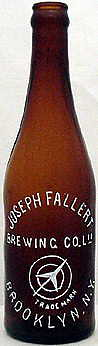
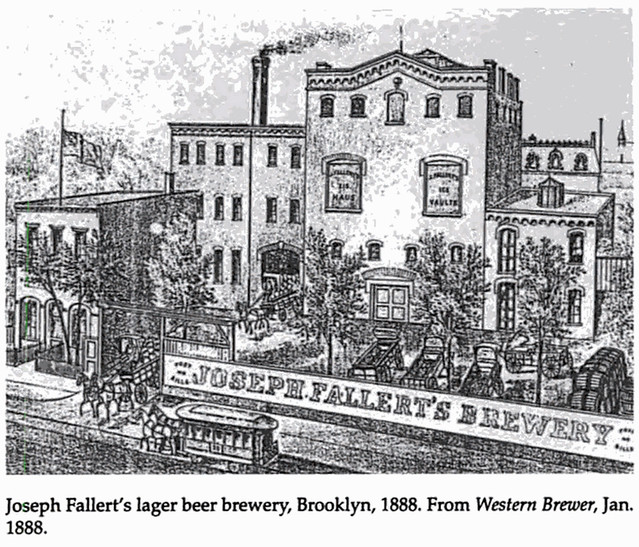
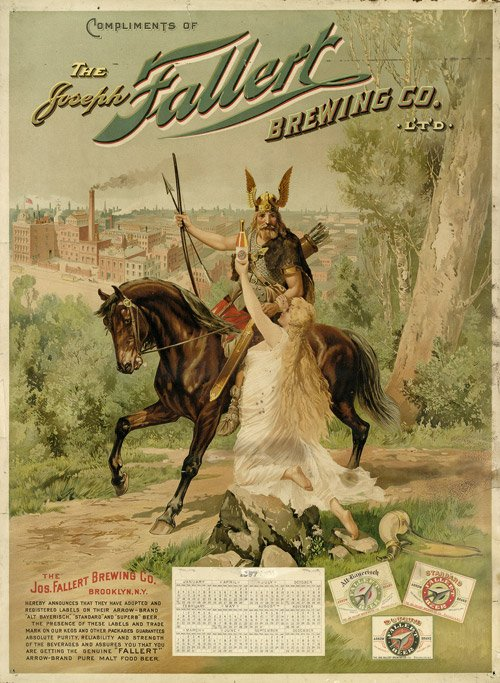
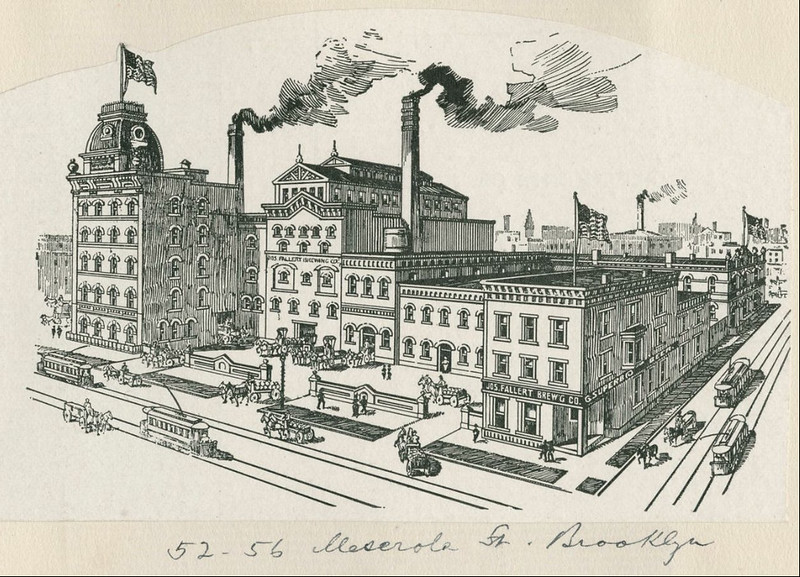
Today is the birthday of Joseph Fallert Jr. (October 1, 1867-March 23, 1919). He was the son of Joseph Fallert, who founded the Joseph Fallert Brewery in 1878. Incorporating in 1884, he renamed it the Joseph Fallert Brewing Co. Ltd. in Brooklyn, New York. Junior over the brewery in 1893, when his father died, but it closed in 1920 for good when prohibition began, the year after he passed away.

Joseph-Fallert-Brewery-1888

Like his father, there’s very little biographical information I could find, not even a photograph.

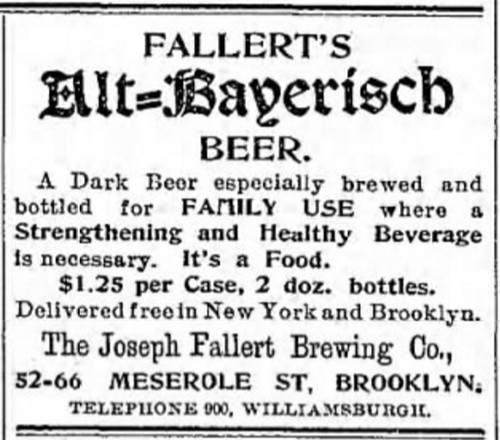
Take a look at this amazing newspaper ad from 1897, extolling the virtues of Fallert’s Alt-Bayerisch and especially its “family use.” “It’s a food.”

Joseph-Fallerts-4
The Joseph Fallert Brewery at 52-66 Meserole Street in Brooklyn.

Filed Under: Birthdays, Breweries, Just For Fun Tagged With: History, New York

Historic Beer Birthday: Valentin Blatz

October 1, 2025 By Jay Brooks

blatz
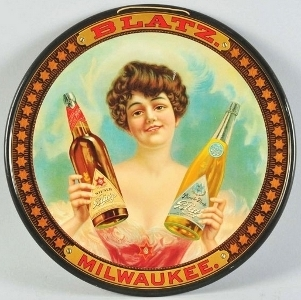
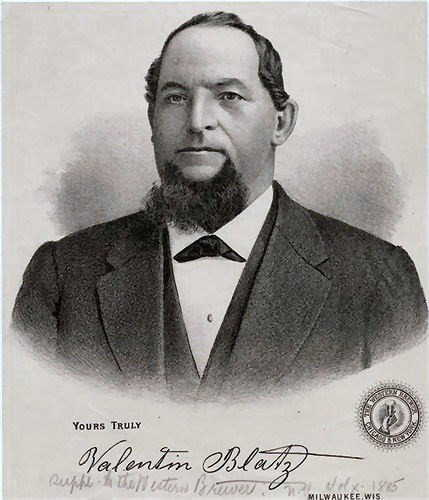
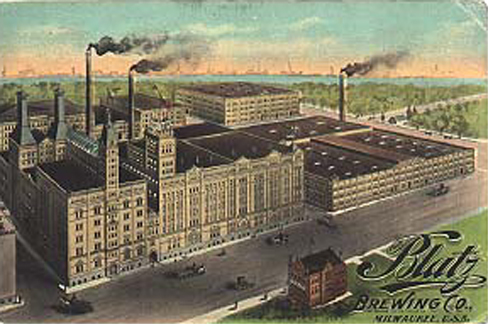
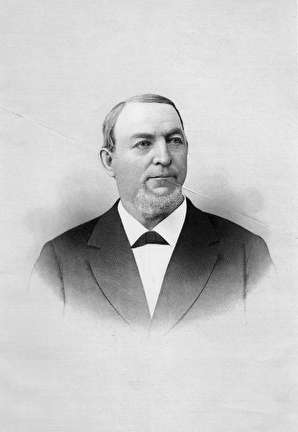
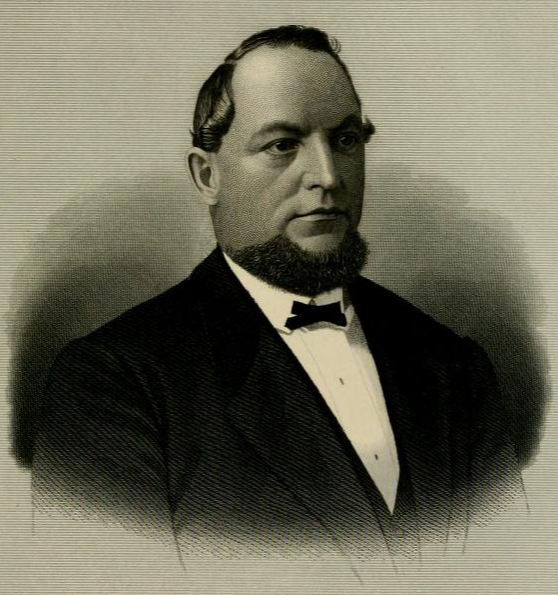
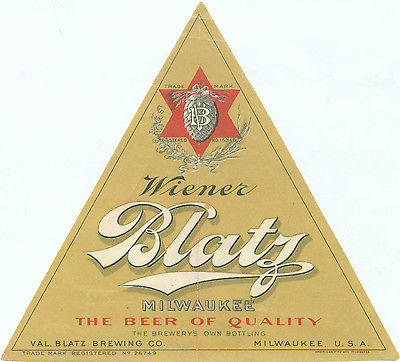
Today is the birthday of Valentin Blatz (October 1, 1826-May 26, 1894). Blatz was a German-American brewer and banker. He was born in Miltenberg, Bavaria and worked at his father’s brewery in his youth. In August 1848 Blatz immigrated to America and by 1849 had moved to Milwaukee, Wisconsin. Blatz established a brewery next to Johann Braun’s City Brewery in 1850 and merged both breweries upon Braun’s death in 1852. He also married Braun’s widow. The brewery produced Milwaukee’s first individually bottled beer in 1874. It incorporated as the Valentin Blatz Brewing Company in 1889 and by the 1900s was the city’s third largest brewer.

Here’s a biography of Blatz from Find-a-Grave:

Businessman, Beer Magnate. Valentin Blatz, born to Casper Blatz, a brewer, in Miltenberg am Main, Bavaria, Germany, attended municipal schools until age 14 when he began an apprenticeship in his father’s brewery. He began in 1844, to acquire additional experience at breweries in Augusburg, Wurzburg and Munich until 1848 when he emigrated from Bavaria to Buffalo, New York, where he worked for a year at Philip Born’s brewery. Arriving in Milwaukee, Wisconsin in 1849, he became brewmaster at John Braun’s Cedar Brewery producing 150 barrels annually. He boarded at Braun’s home until 1851 when, after having saved $500, he established his own brewery. Shortly thereafter, Braun was fatally thrown from his horse-drawn beer wagon and Blatz eventually married Braun’s widow. Subsequently he combined Braun’s small brewery and his own into a new company, City Brewery; with output of 500 barrels annually it would eventually become one of the largest breweries in Milwaukee. Blatz was widely acknowledged to be the first of the great Milwaukee brewers to establish a reputation outside of Wisconsin, the first to begin developing a national distribution network, and the first to establish a bottling plant in connection with his brewery. During its early years of development, he operated the brewery as a sole proprietorship and reportedly out-paced both the Pabst and Schlitz operations. With production exceeding 200,000 barrels in 1889, he incorporated it as the Val. Blatz Brewing Company with capital stock of $2,000,000 and sold it in 1891 to a group of British and American investors, United States Brewing Company, reportedly netting himself (also a member of the syndicate) and his family $3,000,000 and full control of the Milwaukee operation. Blatz was the only beer available on tap in German restaurants at the 1893 Chicago World’s Fair.

A year later he died unexpectedly at the Hotel Ryan in St. Paul, Minnesota, returning from a trip to California, where he had vacationed and attended a midwinter exposition. Ironically, he had postponed the trip several times because of a premonition he would not return to Milwaukee alive, but made the trip because of his wife’s deteriorating health so they could spend part of the winter in California’s milder climate. At his death, he was one of Milwaukee’s wealthiest men, with an estate estimated at between $6,000,000 and $8,000,000. Throughout his life he had been active in community affairs and belonged to the Milwuakee Old Settlers Society and a host of other organizations. In 1866 he became the first president of the Merchants National Bank, and in 1868 he was elected President of the Second Ward Savings Bank, a position held until his death. A member of the Milwaukee Brewers Association and the Chamber of Commerce, he belonged to an influential group of local businessmen who organized the Milwaukee Industrial Exposition in 1879. Also served a single term as a Milwaukee city alderman in 1882. His company survived prohibition with “near beer” and other non-alcoholic products until 1933, when it resumed producing beer, until 1958 when it was purchased by Pabst. The Blatz label was sold to G. Heileman brewing in 1959, which was acquired by Stroh Brewery in 1996, which was sold to Pabst in 1999 who now owns it.

And here’s a biography of both Valentin and his Blatz Brewery, from the Blatz Brewing Company Records, 1862-1944, housed in the University of Wisconsin Library:

Valentin Blatz was born on October 1, 1826, in Miltenberg am Main, Bavaria. The son of a local brewer, Caspar Blatz and his wife Barbara, he attended school until age fourteen at which time he began an apprenticeship in his father’s business. In 1844 Blatz began an extended tour of some of Europe’s greatest breweries where he spent his time learning new techniques and the latest in brewing technology until, at age twenty-one, he was forced to return home in order to fulfill his military obligation in the army. However, his father, a prominent community leader, obtained a substitute to serve in his place and shortly thereafter, like thousands of his countrymen, Valentin Blatz left Bavaria for the United States. Landing in New York City in August 1848, Blatz found work almost immediately at the Born Brewery in Buffalo, New York.

Blatz remained in Buffalo for approximately one year after which time he journeyed west to Milwaukee. Arriving in 1849, he found work as the foreman (some sources say brewmaster) at John Braun’s Cedar Brewery that had been established in 1846. It was a small operation, employing only a few workmen and capable of producing approximately 150 barrels of beer annually. The brewery’s storage capacity was said to be only 80 barrels. Blatz worked for Braun and boarded at his home until 1851, when, after having saved $500, he purchased half of a city lot and began his own brewing business.

Around the time that Blatz was establishing his own brewery, John Braun was killed suddenly after being thrown from his horse-drawn wagon while on a trip selling beer. He left a son, John, and a wife, Louise, who was pregnant with the couple’s second child. In December of 1851 Blatz married Braun’s widow and adopted her infant child (also named Louise) who was born after Braun’s death. Blatz also raised his late employer’s son John as his own. Although he was never formally adopted, John Braun became known generally around Milwaukee as “John Blatz.” Valentin and Louise (Braun) Blatz also had five children of their own: four sons; Albert, Emil, Valentin Jr., and Louis (who died at a young age); and one daughter, Alma.

The marriage allowed Blatz to acquire Braun’s small brewery and combine it with his own operation, which he named City Brewery. This formed the basis of what would eventually become one of the largest and most prominent breweries in Milwaukee. Blatz was widely acknowledged to be the first of the great Milwaukee brewers to establish a reputation outside Wisconsin, the first to begin developing a national distribution network, and the first to establish a bottling plant in connection with his brewery. During its early years of development, the Blatz brewery reportedly out-paced both the Pabst and Schlitz operations.

Blatz operated his business as a single proprietorship until 1889 when it was incorporated as the Val. Blatz Brewing Company with a capital stock of 21 $2,000,000. Officers of the new corporation were Valentin Blatz, president; Albert C. Blatz, vice president; John Kremer (a son-in-law), secretary; and Val. Blatz, Jr., superintendent. The company was quietly sold in 1891 to a group of British and American investors incorporated as the United States Brewing Company and known variously as the “English Syndicate” or the “Chicago Syndicate.” The sale reportedly netted Blatz (who was himself a member of the syndicate) and his family $3,000,000 and left them in full control of the local operation.

Three years later, on May 26, 1894, Valentin Blatz died suddenly while staying at the Hotel Ryan in St. Paul, Minnesota, on his return from a trip to California, where he vacationed and attended a midwinter exposition. Ironically, it was a journey that he had reportedly postponed several times because of a premonition that he would not return to Milwaukee alive. A newspaper reported at the time that it was only because of his wife’s deteriorating health that he agreed to go to California where they could spend part of the winter in a milder climate. At the time of his death at age sixty-eight, Blatz was regarded as one of Milwaukee’s wealthiest men, with an estate estimated at between $6,000,000 and $8,000,000. Throughout his life Blatz was a generous man. In his will he not only left thousands of dollars to more than a dozen local charities, hospitals, orphanages, and homes for the aged, but also provided for the four children (Cora, Selma, Elsie, and John) of his late step-son “John Blatz.” He was survived by his wife, Louise, who was with him in St. Paul; three sons, Albert, Emil, and Valentin, Jr.; and two daughters, Louise (Mrs. John) Kremer and Alma (Mrs. Gustav) Kletzsch. He was interred in Milwaukee’s Forest Home Cemetery.

Throughout his life, Blatz had been active in community affairs. He was a lifelong member of the Milwaukee Musical Society and belonged to a host of other groups, including the Milwaukee Old Settlers Society, the Independent Order of Odd Fellows (I.O.O.F.), the Aurora Lodge of Freemasons, The Arion Club, the Frei Gemeinde, the Liederkranz Society, the Germania Maennerchor of Chicago, the Eichenkranz Maennerchor of New York, several local Turnverein Societies, and–reportedly one of his favorite haunts–the West Side Old Settlers Bowling Club. In 1866 he became the first president of the Merchants National Bank, and in 1868 he was elected President of the Second Ward Savings Bank, a position he held until his death. Blatz was a member of the Milwaukee Brewers Association and the Chamber of Commerce, and also belonged to an influential committee of local businessmen who organized the Milwaukee Industrial Exposition in 1879. Blatz, who became an American citizen in 1855, was elected for a single term as a Milwaukee city alderman in 1882

After Blatz’s death, the brewery was operated by two of his sons, Albert C. and Val. Blatz, Jr., and John Kremer, a son-in-law. The United States Brewing Company, which purchased the brewery in 1891, owned and operated it until the onset of national prohibition in 1920.

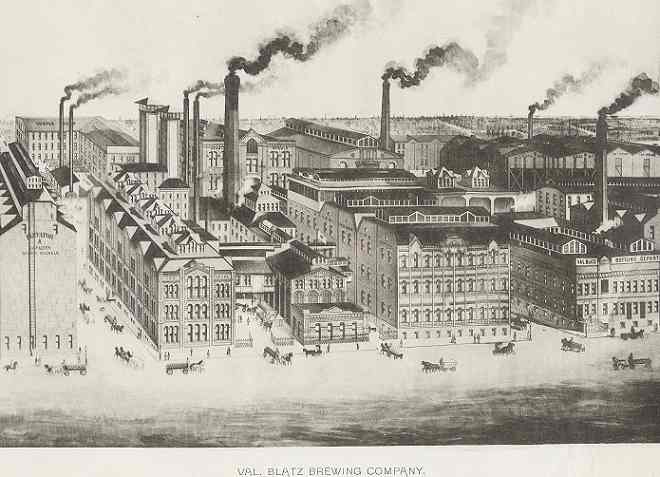
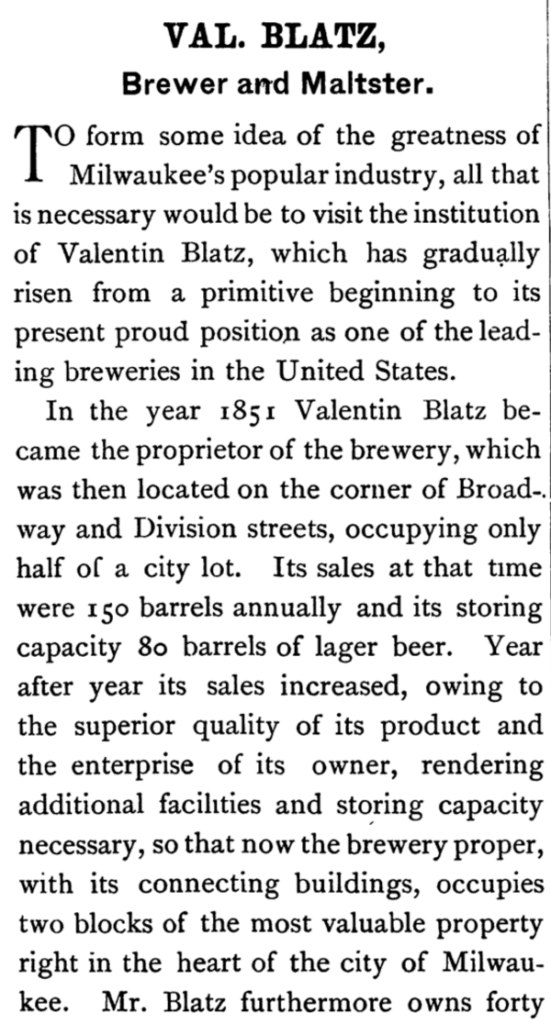
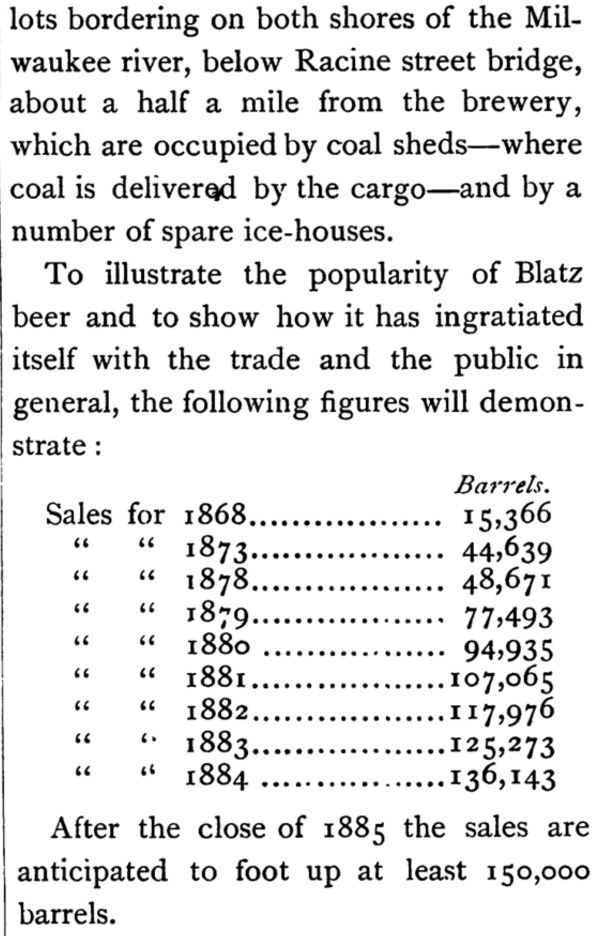
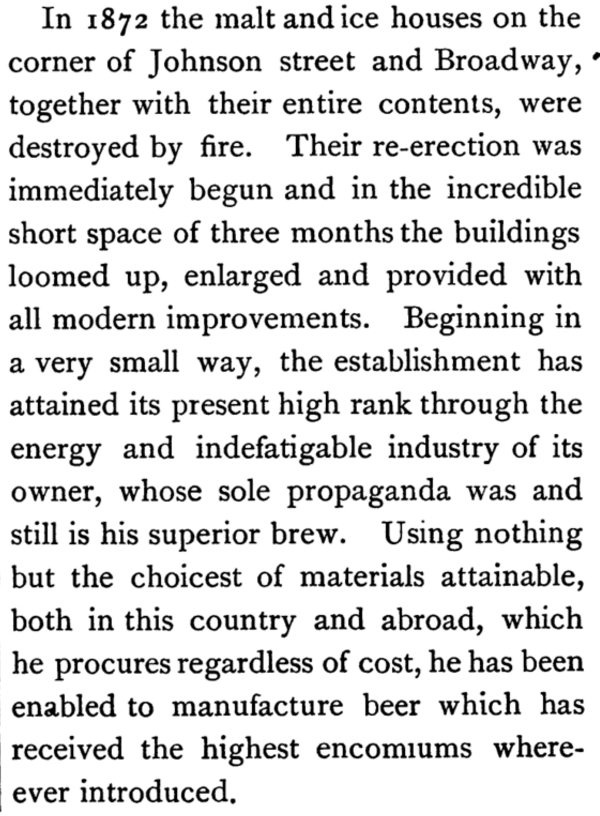
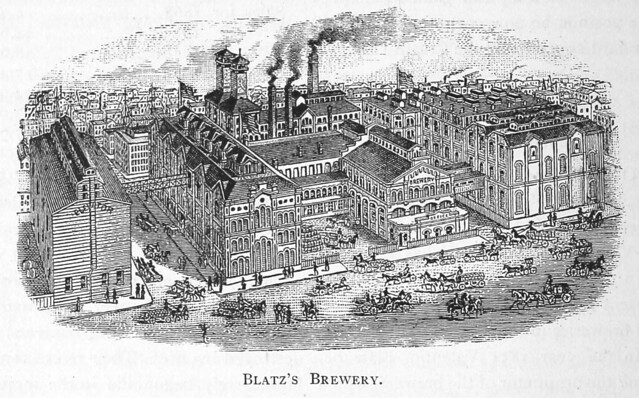
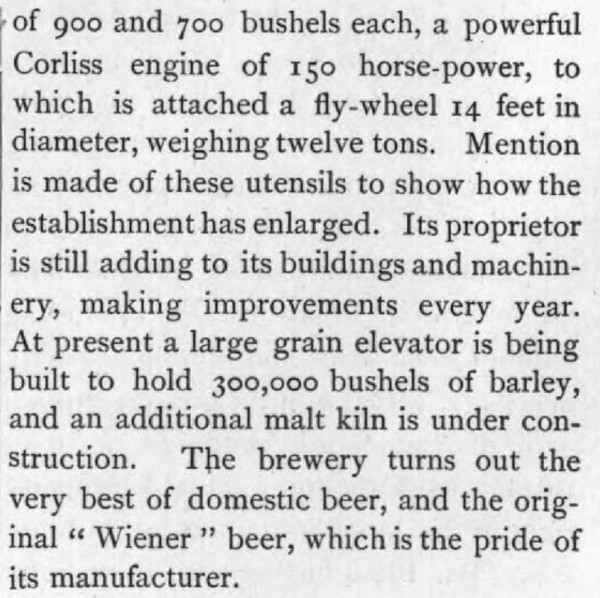
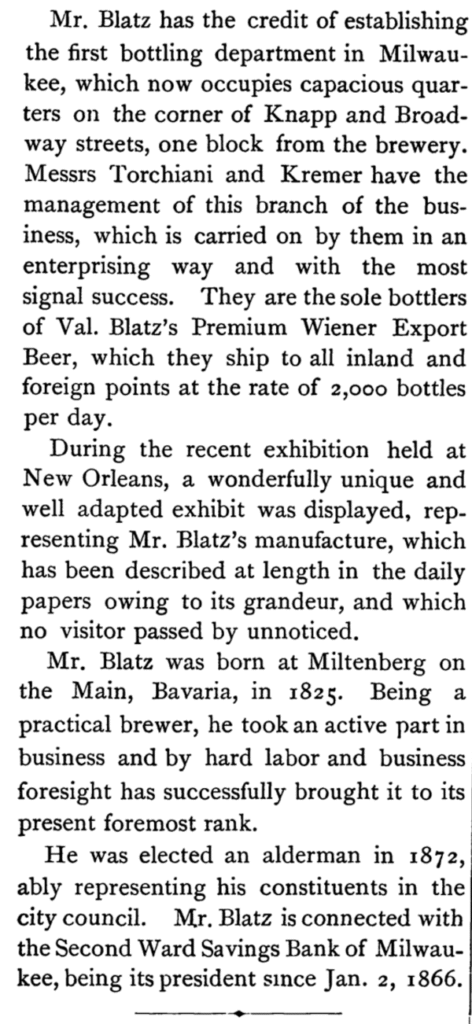
This lengthy article is from the Industrial History of Milwaukee, published in 1886.

Blatz Brewery in 1886,
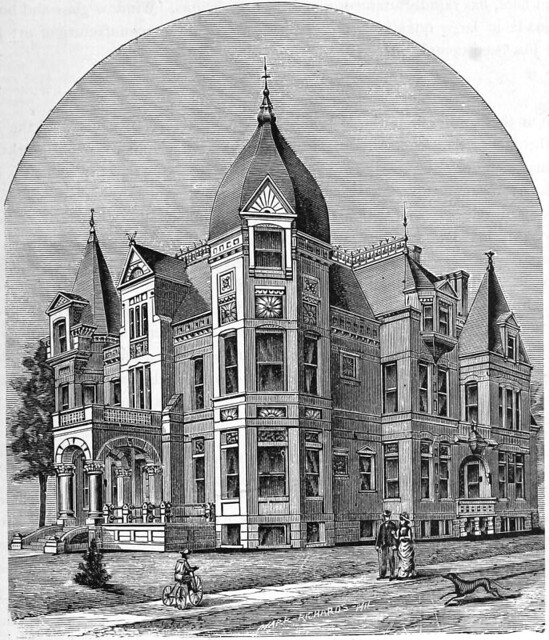
The Valetin Blatz home c. 1886

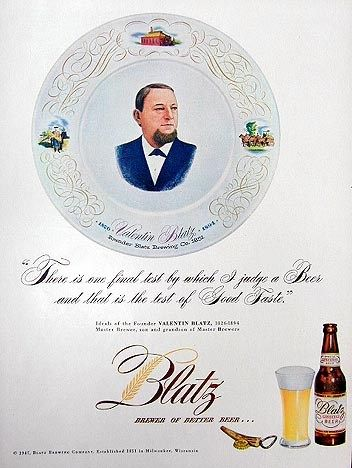
This 1946 ad features a plate with founder Valentin Blatz.

Here’s a history of Blatz, from the current Blatz beer website, which is currently owned by Pabst Brewing.

Blatz was one of the premier Milwaukee breweries. It was founded by John Braun in 1846, shortly before Wisconsin achieved statehood, and was originally called the City Brewery. Braun’s fledgling business produced about 150 barrels of beer annually – until 1851 when Valentine Blatz, a former employee, established a brewery of his own next door to the City Brewery. Braun died later that year and Blatz soon married his widow, thereby uniting the City Brewery and his own operation.

At the time of the marriage, the combined breweries produced only 350 barrels per year. However, by 1880 total annual production reached 125,000 barrels. The brewery’s growth continued, and in 1884 Blatz ranked as the third-largest beer producer in Milwaukee.

Blatz was the first Milwaukee brewer to market beer nationally. He set up distribution centers in Chicago, New York, Boston, New Orleans, Memphis, Charleston, and Savannah. He was also the first of the Milwaukee brewers to include a bottling plant within his brewery. In addition, Blatz operated his own carpenter shop, railroad cars, cooper shop, machine shop and coal yard.

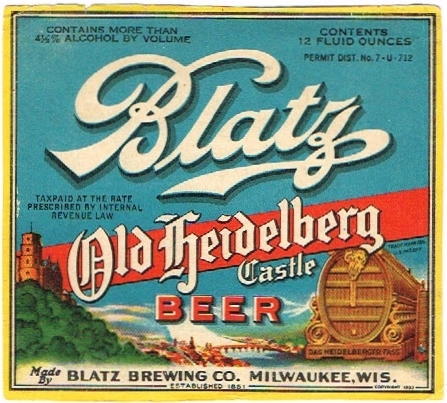
In 1890 Blatz sold his brewery to a group of London investors, who continued to operate the plant until Prohibition. Following the repeal of the eighteenth amendment, the Blatz brewery again flourished, producing over a million barrels annually during the 1940s and 1950s. Its labels included Blatz, Pilsener, Old Heidelberg, Private Stock, Milwaukee Dark, Culmbacher, Continental Special, Tempo, and English Style Ale.

By 1955 only six Milwaukee breweries remained open. Of these six, Miller, Pabst and Schlitz were the biggest and most successful. Blatz was big, too, but stiff competition and skyrocketing production costs prevented it from growing further. In 1958 the brewery was finally sold to Pabst; however a federal court order at the time prevented Pabst from Brewing at the Blatz facilities. In 1959 this giant, Blatz, ceased all operations. Shortly there after, Pabst purchased the Blatz brands, and relaunched the brand as a craft-style beer, true to the high-quality style that Valetine Blatz espoused.

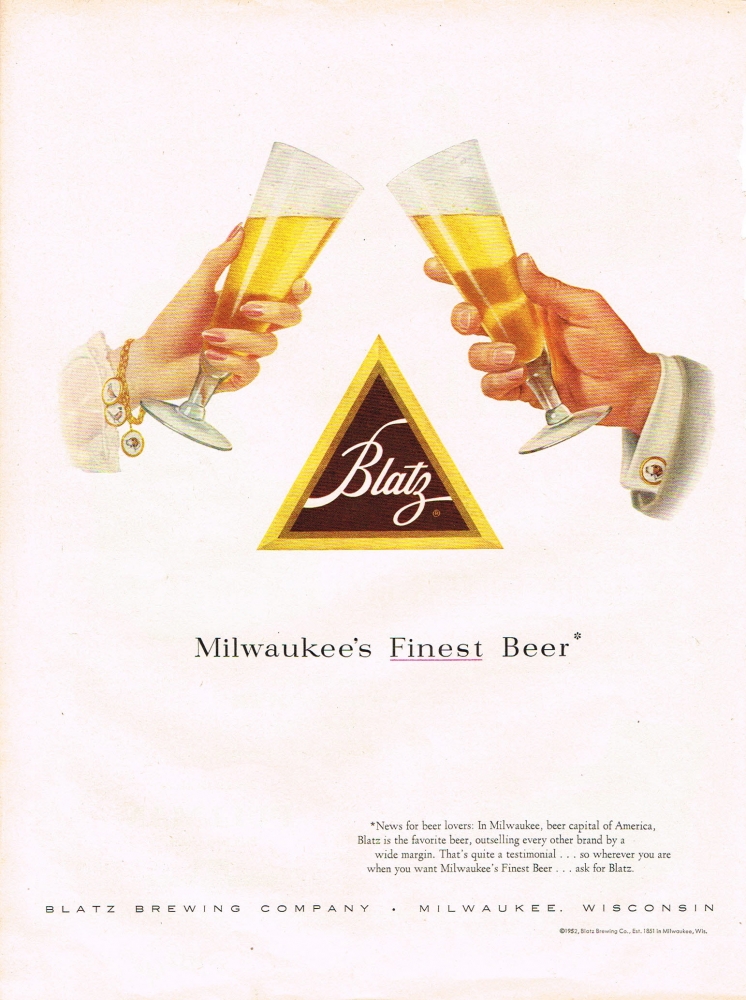
Today, Blatz continues to be recognized for it’s quality and tradition. While the Blatz Brewery is now home to some of Milwaukee’s Finest Citizens, Blatz Beer will always be Milwaukee’s Finest Beer.

Blatz-Beer-Paper-Ads-Blatz-Brewing-Company

Filed Under: Birthdays, Breweries, Just For Fun Tagged With: Bavaria, Blatz, Germany, History, Milwaukee, Wisconsin

Beer In Ads #5092: The October Bock Beer

September 30, 2025 By Jay Brooks

Last year I decided to concentrate on Bock ads. Bock, of course, may have originated in Germany, in the town of Einbeck. Because many 19th century American breweries were founded by German immigrants, they offered a bock at certain times of the year, be it Spring, Easter, Lent, Christmas, or what have you. In a sense they were some of the first seasonal beers. “The style was later adopted in Bavaria by Munich brewers in the 17th century. Due to their Bavarian accent, citizens of Munich pronounced ‘Einbeck’ as ‘ein Bock’ (a billy goat), and thus the beer became known as ‘Bock.’ A goat often appears on bottle labels.” And presumably because they were special releases, many breweries went all out promoting them with beautiful artwork on posters and other advertising.

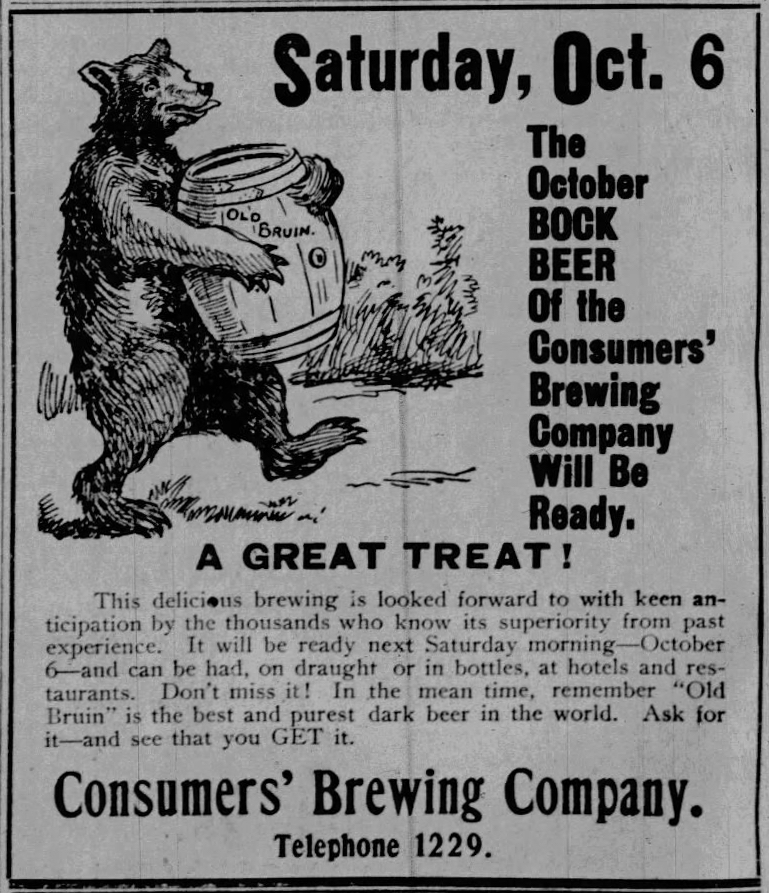
Tuesday’s ad is for Consumers’ Bock Beer, which was published on September 30, 1900, six days before it was scheduled to be released on October 6. This one was for the Consumers’ Brewing Co. of Norfolk, Virginia, which was originally founded in 1896. At least I think so, since that’s the closest one to D.C. But there were also breweries called “Consumers'” located in Rhode Island, Ohio, Pennsylvania and New York. This ad ran in The Washington Post, from Washington, D.C.

Filed Under: Art & Beer, Beers, Breweries, Just For Fun Tagged With: Advertising, Bock, D.C., History

Historic Beer Birthday: Ludwig Narziß, a.k.a. Beer Pope

September 30, 2025 By Jay Brooks

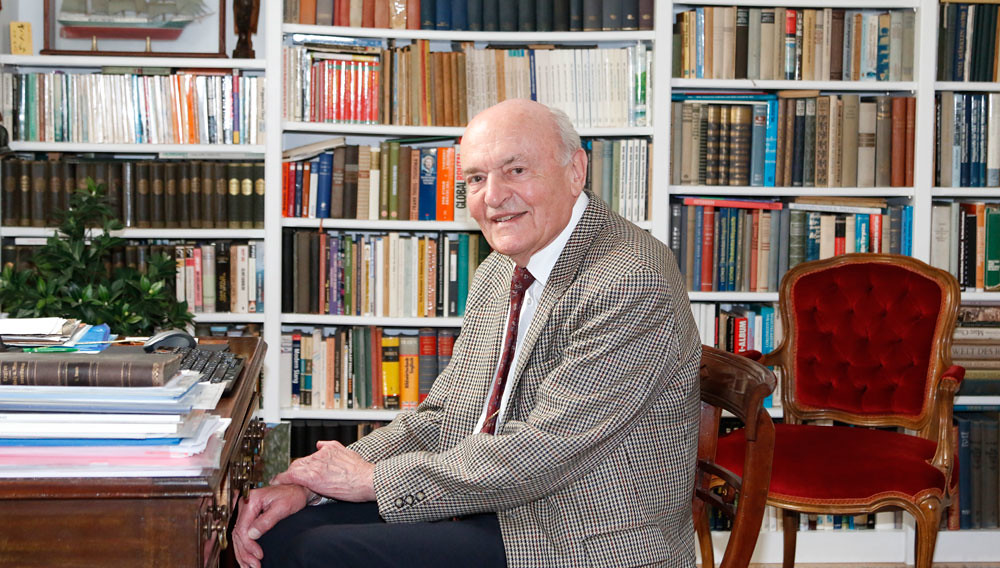
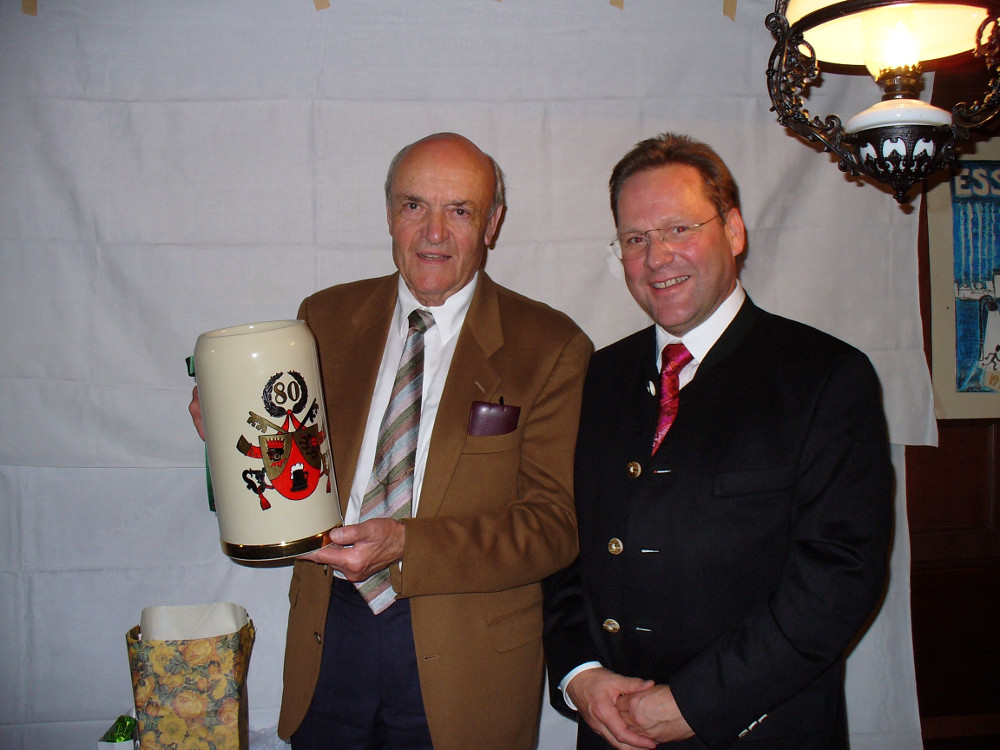
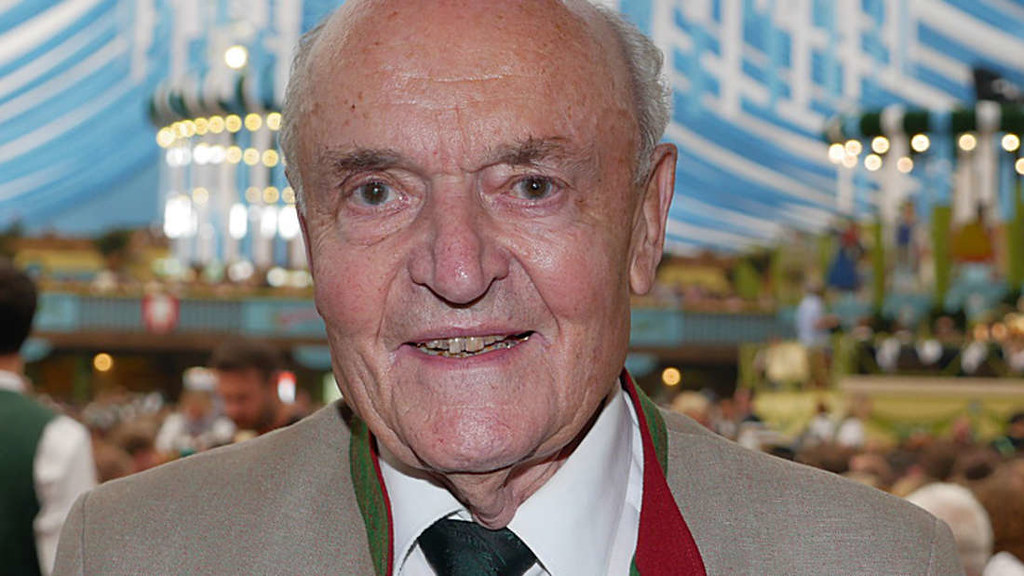
Today is the birthday of Ludwig Narziß (or Narziss), who was also known as the “Beer Pope” (September 30, 1925-November 29, 2022). He was born in Munich, and was “one of the world’s most renowned brewing scientists and educators of the 20th century. For almost thirty years, “was a leading authority in his field at the Weihenstephan Center of Life and Food Science in Freising, outside Munich. Often called the Harvard of beer, the school, part of the Technical University of Munich, is closely tied to the Bavarian state-owned brewery with which it shares its name. Following an apprenticeship at the Tucher Brewery in Nuremberg, Narziss arrived at Weihenstephan as a student in 1948. There, he received degrees in brewing science and engineering and later completed a doctorate, writing a thesis on the influence of different yeast strains on beer quality. In 1958, he became the brewmaster at Munich’s Löwenbräu Brewery. But Weihenstephan didn’t let Narziss stray for long. Only 6 years later he joined the faculty at Weihenstephan, taking over the chair of Brewing Technology I. While instructing students in the science of beer making and conducting research on methods in Weihenstephan’s test brewery, Professor Narziss at times also served as the school’s dean, once from 1968 to 1970 and again in 1990. He also made time available to be a council member of the European Brewery Convention, as well as the organization’s president from 1979 to 1983. Narziss has authored and co-authored literally hundreds of papers as well as three seminal text books, Abriss der Bierbrauerei (An Outline of Beer Brewing) in 1972, Die Technologie der Malzbereitung (Technology of Malt Preparation) in 1976, and Die Technologie der Würzebereitung (Technology of Wort Preparation) in 1985. These books have gone through many revisions and editions and are still used as standard student textbooks today. Professor Narziss retired from Weihenstephan in 1992. He still lives in Freising and serves as Professor Emeritus at his venerable alma mater.”

This was his obituary, from Brauwelt, written by Lydia Junkersfeld:

Prof. Ludwig Narziß was born in Munich on September 30, 1925 and grew up in Nuremberg. As a young adult he personally experienced the Second World War. His father was an authorized signatory at the Lederer Brewery and had planned a commercial apprenticeship at the Tucher Brewery for his son, who had returned home from captivity. Of his own accord, Ludwig Narziß soon switched to an apprenticeship as a brewer, which appealed to him more – the right decision, as it turned out. Despite the difficult conditions in the brewery after the war, he successfully completed his apprenticeship after two years in October 1947 and in 1948 switched to the Faculty of Brewing in Weihenstephan to study, where a long career began.

From 1951 he initially worked for two years as a research assistant and management consultant in the field service of the research institute for brewing at the Bavarian State Trade Institute in Nuremberg, where he also met his wife Dorle. In 1953, Prof. Weinfurtner recruited him to the State Brewery Testing and Research Institute (today the Weihenstephan Research Centre for Brewing and Food Quality) in Weihenstephan and offered him the opportunity to study for a doctorate (topic: “The influence of the yeast variety on beer quality“) which he completed in 1956.

After completing his doctorate, Prof. Narziß first went back into business: he worked at the Löwenbrauerei in Munich as first brewmaster and authorized signatory until 1964, before he returned to Weihenstephan. Between 1964 and 1992 he held the Chair for Technology at Brewery 1 of the Technical University of Munich in Weihenstephan, where he trained and shaped generations of students. Many ground-breaking innovations in brewery technology and technology occurred during this time, which Prof. Narziß initiated and managed. There was hardly an area in the brewery that could not be further developed through research from his chair: raw material issues, developments in malting, in the brewhouse, in fermentation and storage or in filtration. It was a basic need of Prof. Narziß to solve practical problems through scientific research; whilst often about optimizing production, it was of course also about improving the quality of the product. One of the most important research topics from his time was the avoidance of spoilage from oxygen in beer.

Hundreds of graduate students and over 50 doctoral students have worked on various topics under his expert guidance. He was a “doctor father” to them, with whom some of the former doctoral students have remained in close contact to this day. What distinguished Prof. Ludwig Narziß was his closeness to people. Despite the great international recognition, he maintained his humble and lovable manner towards everyone. He challenged his employees – he was strict in this matter – but he also promoted them to the best of his ability.

Hundreds of Publications

Many books, including classics of brewery technology, and hundreds of publications and lectures have emerged from his scientific work. All of this has made him a world-renowned brewing scientist whose expertise was valued by authorities, associations and breweries around the world. Prof. Narziß has not only significantly shaped the faculty for brewing in Weihenstephan, but also the reputation of German brewing science in general at home and abroad. It was always important to him to ensure dialogue between the brewing industry and brewing science, between research and brewing practice. It is only logical that a research prize, the Ludwig Narziß Award for Brewing Science from BrewingScience, bears his name.

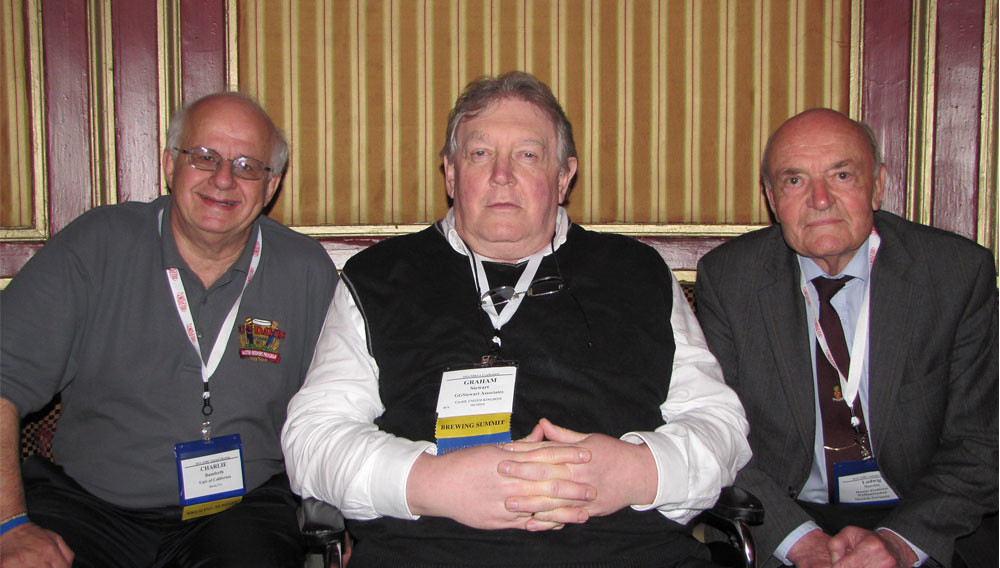
Charlie Bamfort, Graham Stewart and Ludwig.

International Recognition

Prof. Ludwig Narziß joined the Institute of Brewing in 1965, after being nominated by the late Norman Curtis. He was elected President of the EBC Council in 1981, with the 19th EBC Congress being held in 1983 on the South Bank in London where, in collaboration with his EBC/IOB colleagues, he played a major role in the organisation of this event and 1600 delegates attended it. During the course of this Congress he had the opportunity to co-author a poster presentation (they were still very much in their infancy at that time) entitled “Composition of Worts and Beers of High Temperature Wort Boiling Systems“.

Prof. Narziß also participated in one of the Institute‘s London Section Cambridge meetings, also with Norman Curtis who was the London Section‘s Chairman at the time. In addition, he was a participant in the Master Brewer Association of the Americas Ontario District One-Day Conferences that were held in Toronto each January and he also was a participant in a number of the Association‘s National Conferences.

Prof. Narziß was awarded the IBD’s Horace Brown Medal in 1990 and the accompanying lecture, 125 Years Research At Weihenstephan, was delivered at the Royal Society in London and published in the Journal of the Institute of Brewing in 1992.

Many Awards and Honours

Commitment to voluntary work at home and abroad was also a matter of course for him, for example his 1979 election as President of the European Brewery Convention (EBC) in Brussels. To this day he is the only honorary president of the EBC. Prof. Narziß was the bearer of the Cross of Merit of the Order of Merit of the Federal Republic of Germany as well as receiving many other honours and awards.

In 1992, Prof. Narziß handed over the management of the chair to Prof. Werner Back, but retained his research spirit, which kept him very active to the end. At the age of over 90, he was still traveling the world to attend brewing industry events and give lectures.

In spring 2021 he moved from Freising and Weihenstephan, the centre of his life for many years, to his family, who live near Reutlingen. Even if things got a little quieter around him, he still worked on his books every day, kept himself up to date with telephone calls.

The contribution given by Prof. Ludwig Narziß to the brewing industry internationally has been unique and we have lost a truly remarkable icon!

And this obituary is from Weinheistephaner:

Prof. Ludwig Narziß was a true “Weihenstephaner“: he passed his degree here after his brewery apprenticeship and also completed his doctorate in 1956. After his time as brewmaster at Löwenbräu, he was appointed to the Chair of Brewery Technology I and took over management of the teaching and research brewery. Until 1992, Prof. Narziß was the man at the helm, researching the further development of brewing – teaching the craft of brewing to thousands and thousands of students. Even today, many young people benefit from his works, which are held as standard works in brewing and beverage technology. 

His professional expertise was more than appreciated by the Bavarian State Brewery Weihenstephan. Not only was great value placed here on his opinion on new beers – he was also a very welcome conversation partner at the table in the Bräustüberl. In every exchange, Prof. Narziß provided a different perspective, a further idea, a new approach: the fire for brewing was still burning in him until the very last moment. A characteristic that everyone appreciates to this day and that proved infectious to all his students.

Alongside all his professional expertise, it must never go unmentioned that with Prof. Narziß we lost a fine person. Never at a loss for a joke, always a smile on his lips – and above all he always had an open ear for every generation. Regardless of whether you were a young student or an experienced brewer: no question was left unanswered, Prof. Narziß always made time for you. He usually finished his meals in the Bräustüberl with a sip from his favorite beer, the Pils – and in the next days, people will be raising a toast to his memory and legacy everywhere in the brewing world. 

Prof. Dr. Josef Schrädler, Director of the Bavarian State Brewery Weihenstephan explained on Wednesday: ”For me, Prof. Narziß was always an important dialog partner and advisor in strategic questions.“ But not only that: “I looked forward to every beer tasting with him – he was just an extremely likeable person.“ 

And Tobias Zollo, Technical Director and First Brewmaster can only confirm this: “Prof. Narziß treated everyone with respect, he was a true brewer.“ For Zollo and the brewmaster team, the many discussions they had with him on the last product developments about three years ago were especially valuable. Passing on knowledge – that was Prof. Narziß‘ mission in life. And he fulfilled this mission brilliantly.

Filed Under: Beers, Birthdays, Breweries, Related Pleasures Tagged With: Germany, Science of Brewing

Historic Beer Birthday: Frederick Wacker

September 30, 2025 By Jay Brooks

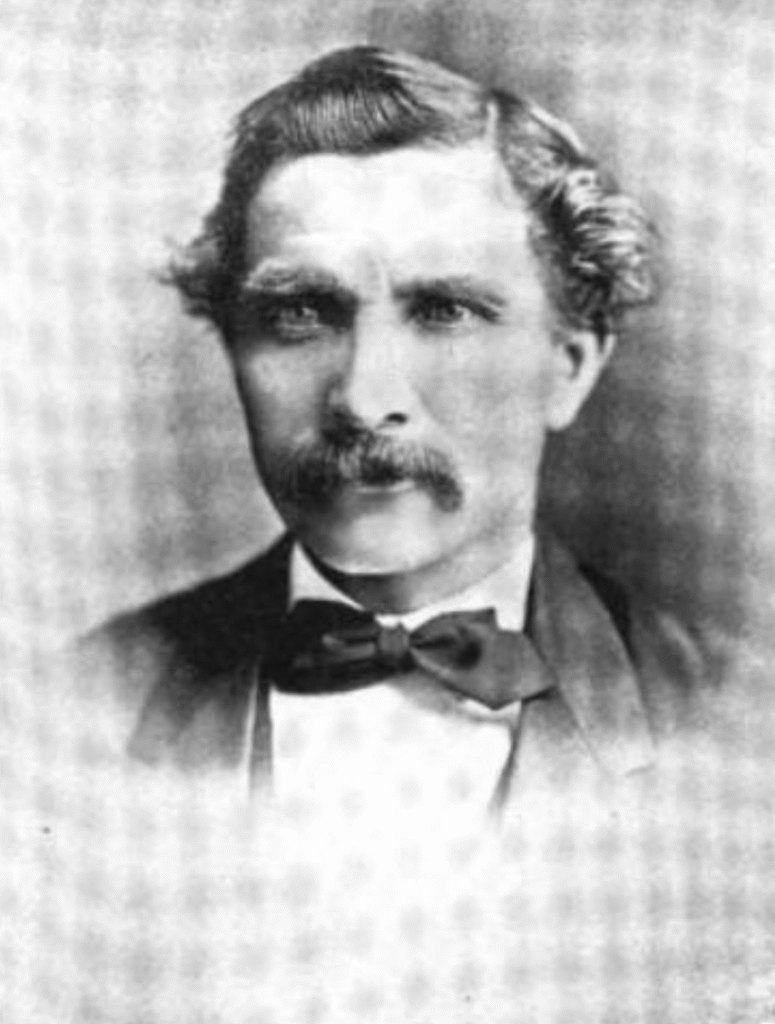
wacker-and-birk
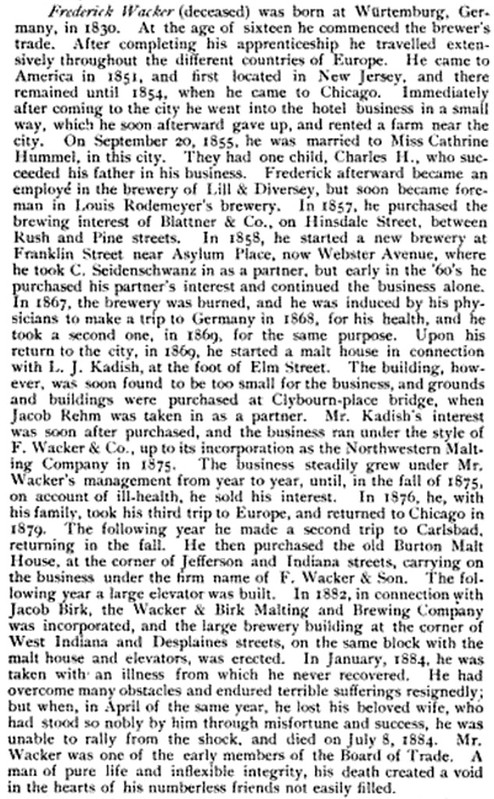
Today is the birthday of Frederick Wacker (September 30, 1830-July 8, 1884). Wacker was born in Württemberg Germany (though some sources claim he was from Switzerland) and founded the Chicago brewery Wacker & Birk in 1857 with business partner Jacob Birk. Shortly thereafter, Birk left to start a different brewery, and the name was changed to the Frederick Wacker Brewing Co. 1865. But Birk appears to have returned to the business, because the name became the Frederick Wacker & Jacob Birk Brewing & Malting Co., and it remained some form of the two men’s names until it was closed for good by prohibition. Frederick Wacker is also remembered as the father of his more famous son, Charles Wacker, for whom Wacker Drive in Chicago was named.

Here’s a biography of Frederick Wacker, from the History of Chicago, Volume 3, by Alfred Theodore Andreas, published in 1886.

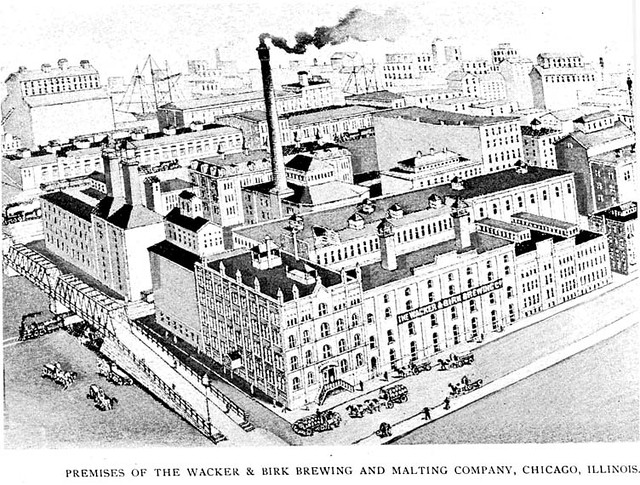
wacker-and-birk

The Chicago brewery Frederick started was originally called Seidenschwanz & Wacker, and was located on Hinsdale, between Pine and Rush streets. It was founded in 1857, but the following year it became known as Wacker & Seidenschwanz, and was on N. Franklin Street. That version lasted until 1865. Beginning that same year, its name changed once again to the Frederick Wacker Brewery, and its address was listed as 848 N. Franklin Street, presumably in the same location as its predecessor. Sixteen years later, in 1882, it relocated to 171 N. Desplaines (now Indiana Street) and it became known as the Wacker & Birk Brewing & Malting Co. This is also when Charles joined his father’s business, when he would have been 26 years old. Just before prohibition the name was shortened to the Wacker & Birk Co., although it appears to have closed by 1920.

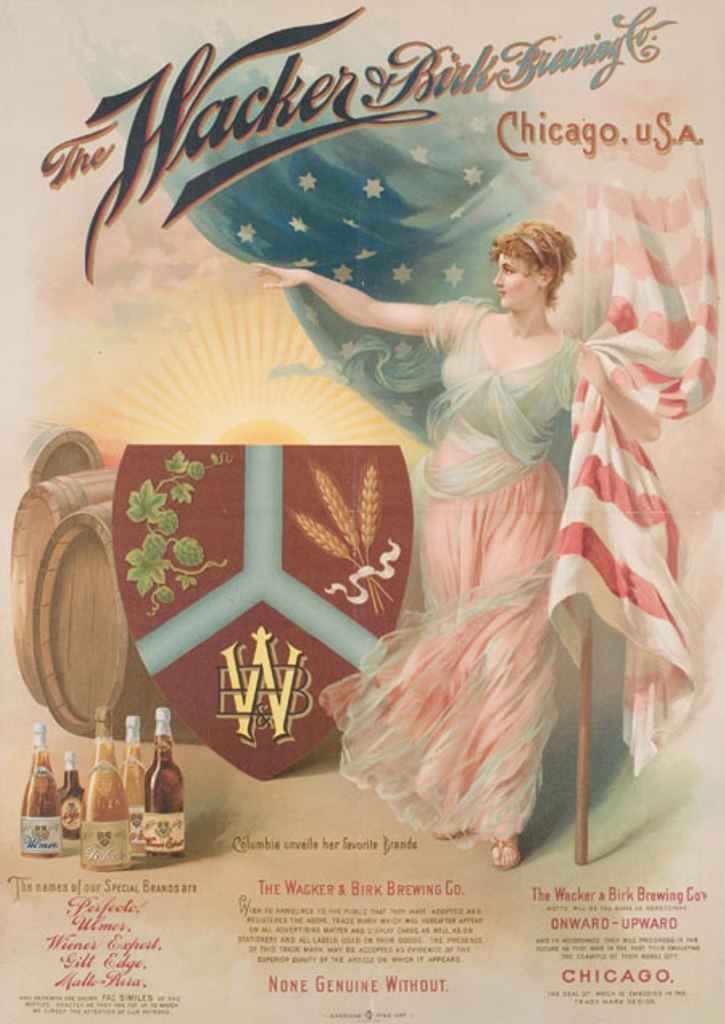
wacker-poster

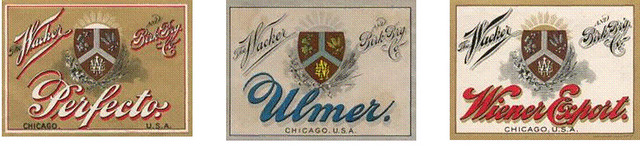
wackerbirklabels

Filed Under: Birthdays, Breweries Tagged With: Chicago, Germany, History, Illinois, Switzerland

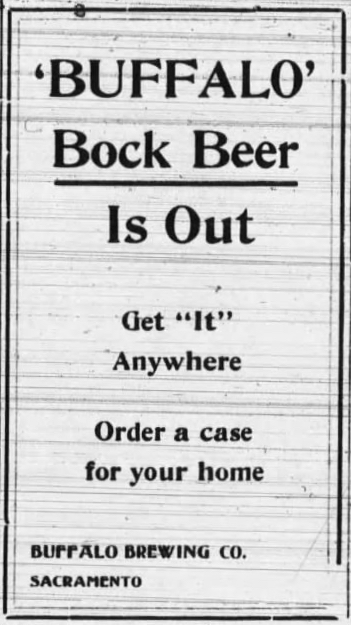
Beer In Ads #5091: Buffalo Bock Beer Is Out

September 29, 2025 By Jay Brooks

Last year I decided to concentrate on Bock ads. Bock, of course, may have originated in Germany, in the town of Einbeck. Because many 19th century American breweries were founded by German immigrants, they offered a bock at certain times of the year, be it Spring, Easter, Lent, Christmas, or what have you. In a sense they were some of the first seasonal beers. “The style was later adopted in Bavaria by Munich brewers in the 17th century. Due to their Bavarian accent, citizens of Munich pronounced ‘Einbeck’ as ‘ein Bock’ (a billy goat), and thus the beer became known as ‘Bock.’ A goat often appears on bottle labels.” And presumably because they were special releases, many breweries went all out promoting them with beautiful artwork on posters and other advertising.

Monday’s ad is for Buffalo Bock Beer, which was published on September 29, 1915. This one was for the Buffalo Brewing Co. of Sacramento, California, which was originally founded in 1890. This ad ran in The Plumas Independent, which served Plumas County, California, located in the northeast part of the state, in the Sierra Nevada mountains. I love how they claim you can “Get ‘It’ Anywhere.”

Filed Under: Art & Beer, Beers, Breweries, Just For Fun Tagged With: Advertising, Bock, California, History, Sacramento

Historic Beer Birthday: Frank H. Stahl

September 29, 2025 By Jay Brooks

stahl
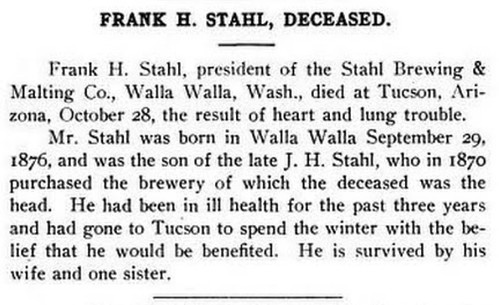
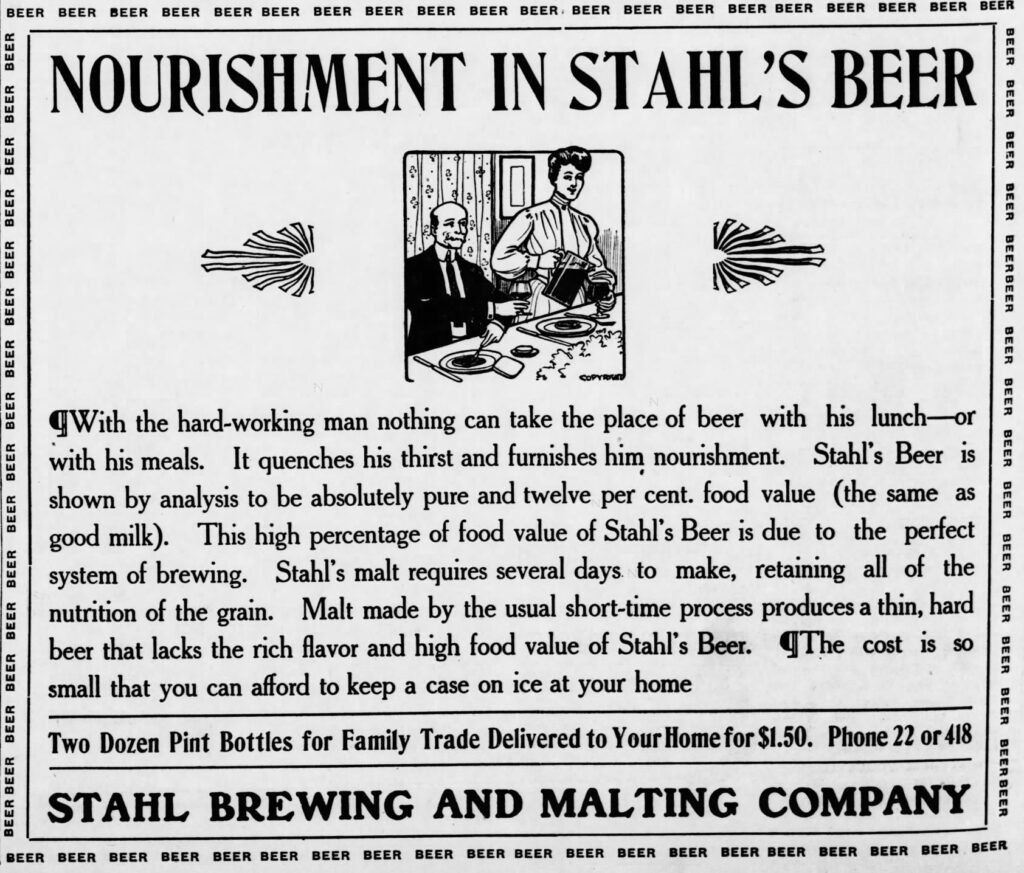
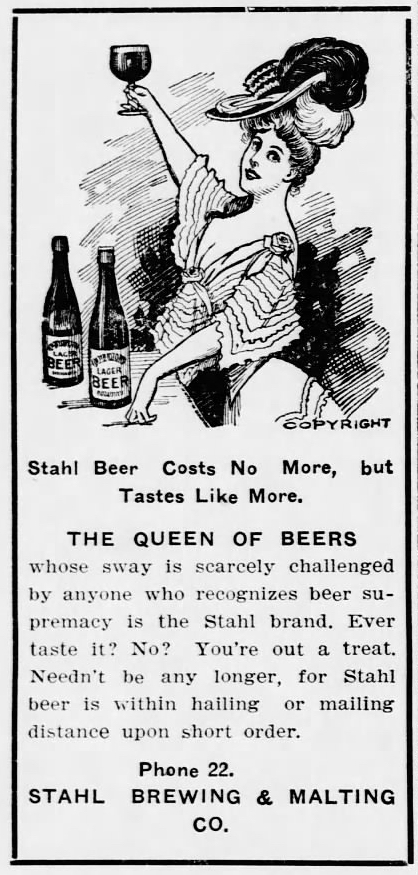
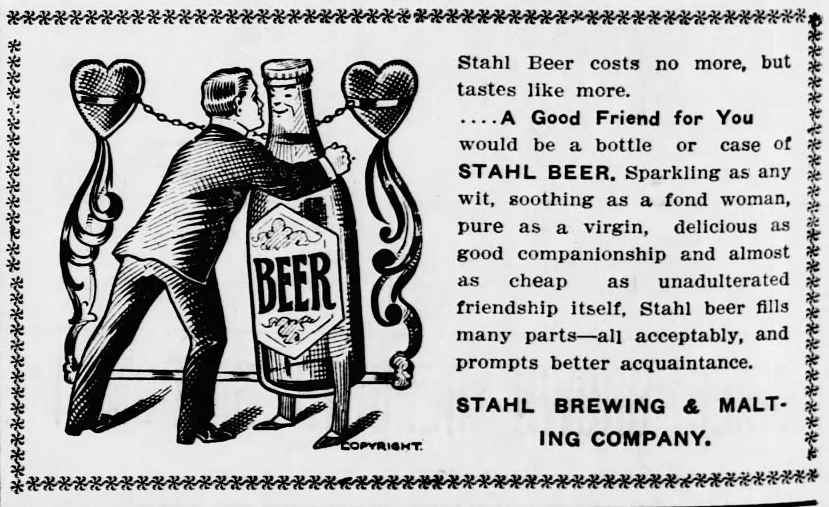
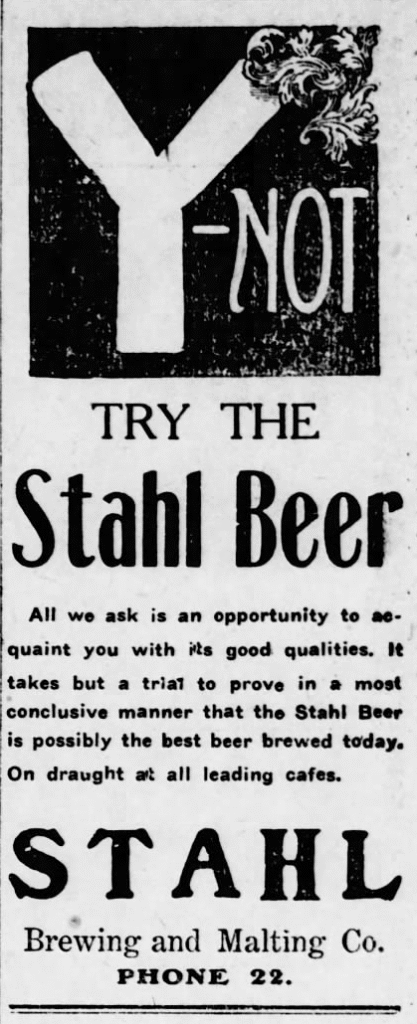
Today is the birthday of Frank Harmon Stahl (September 29, 1876-October 28, 1909). He was the son of John H. Stahl, who in 1870 bought the City Brewery in Walla Walla, Washington. Although he continued to operate the brewery by that name, the business was called John H. Stahl & Co. until 1905, when Frank took over and renamed it the Stahl Brewing and Malting Co.

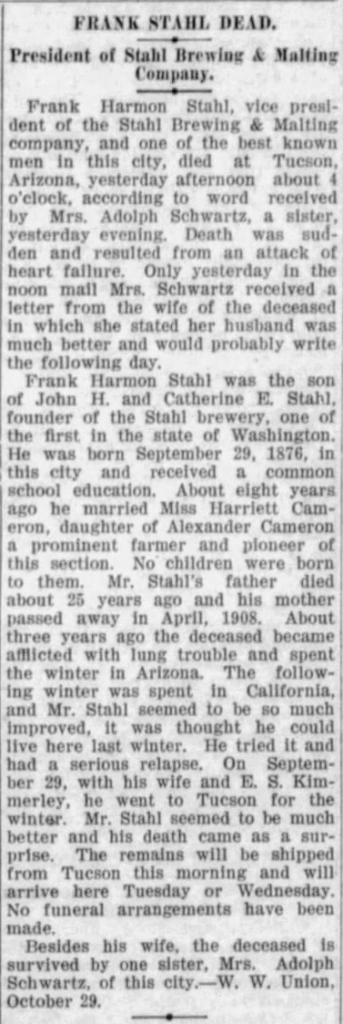
This is his short obituary from the Brewers Journal for 1909:

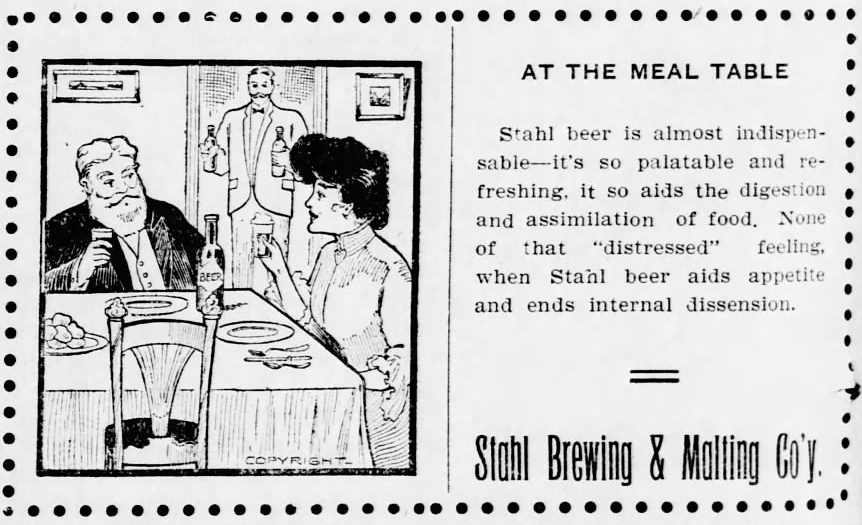
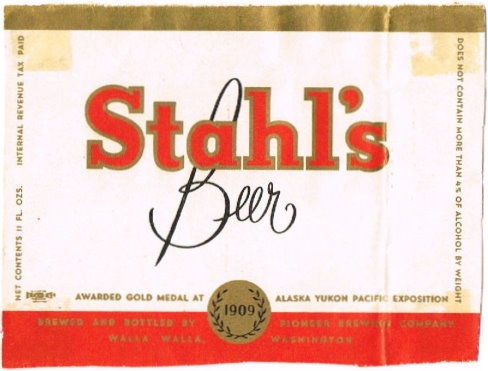
There’s not very much information I could find about him, not even a photograph. Gary Flynn at Brewery Gems has more about the brewery itself, in an article about Stahl’s Brewing Company ~ City Brewery and more broadly about the History of the Pioneer Brewing Company of Walla Walla, which includes the various business entities that operated the brewery over the years, from 1855 until it closed for good in 1952.

And here’s another obituary from the Columbia Twice-A-Week:

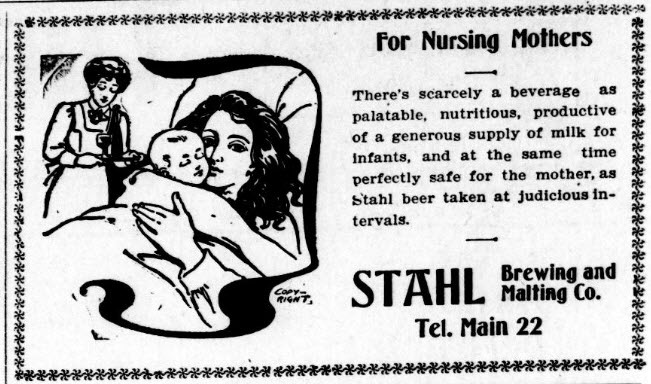
Stahl-1906-nursing

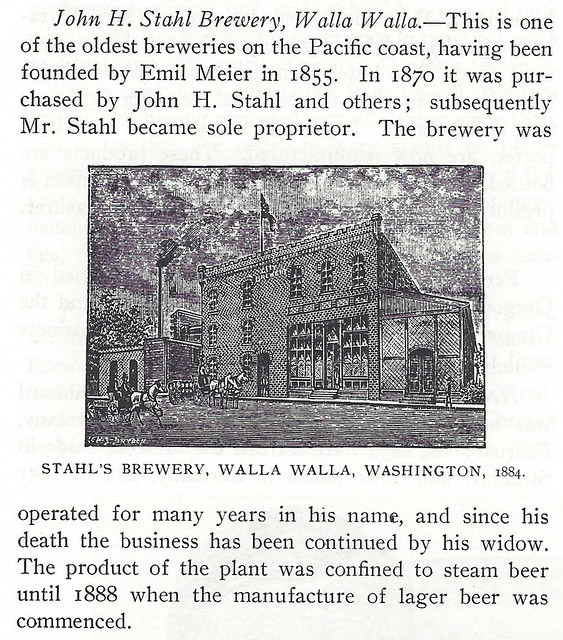
Here’s a short history of the brewery from 100 Years of Brewing:

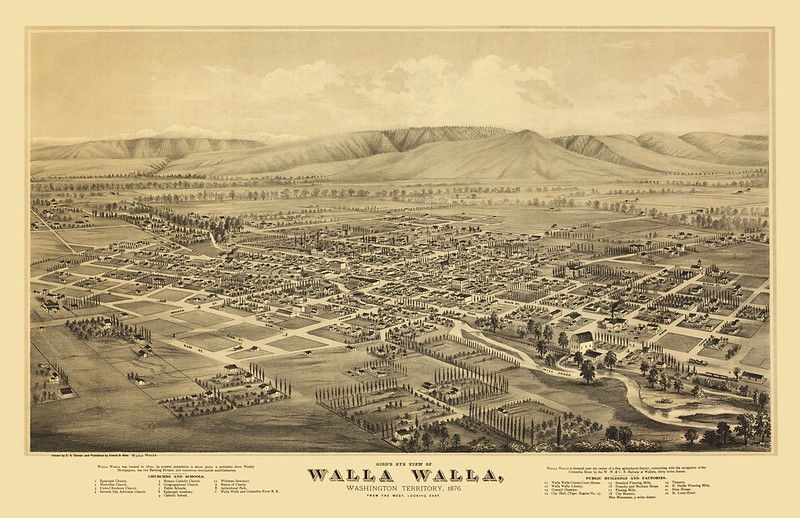
walla-walla-1876
This is Walla Walla in 1876, about six years after Frank Stahl’s father bought the brewery.

Filed Under: Birthdays, Breweries, Just For Fun Tagged With: History, Washington

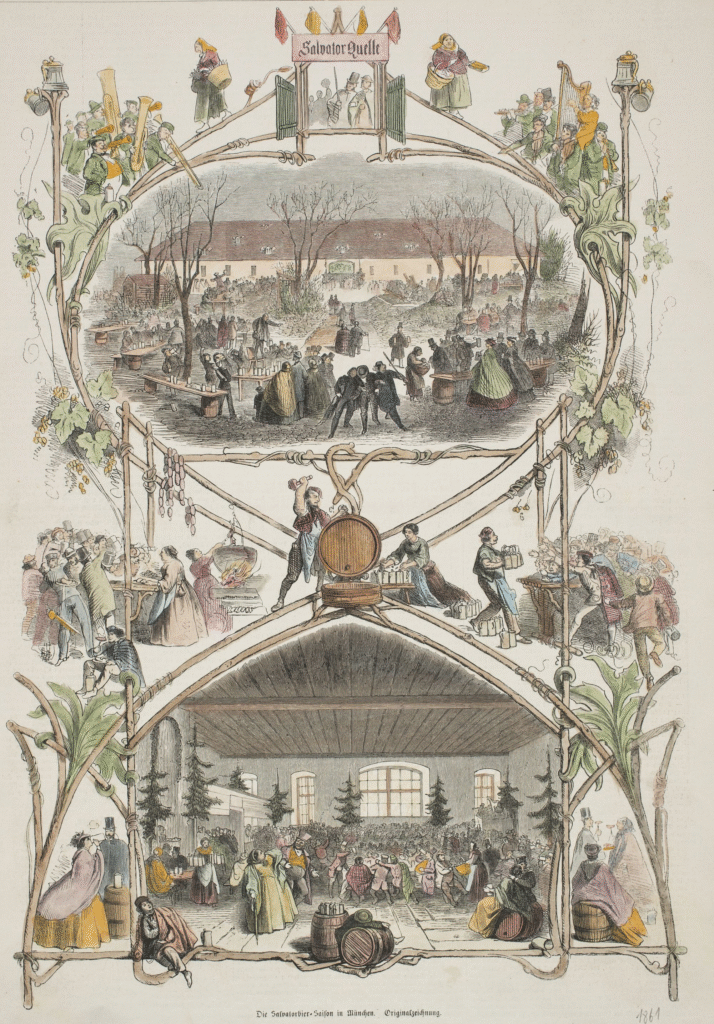
Beer In Ads #5090: Salvator Season In Munich

September 28, 2025 By Jay Brooks

Last year I decided to concentrate on Bock ads. Bock, of course, may have originated in Germany, in the town of Einbeck. Because many 19th century American breweries were founded by German immigrants, they offered a bock at certain times of the year, be it Spring, Easter, Lent, Christmas, or what have you. In a sense they were some of the first seasonal beers. “The style was later adopted in Bavaria by Munich brewers in the 17th century. Due to their Bavarian accent, citizens of Munich pronounced ‘Einbeck’ as ‘ein Bock’ (a billy goat), and thus the beer became known as ‘Bock.’ A goat often appears on bottle labels.” And presumably because they were special releases, many breweries went all out promoting them with beautiful artwork on posters and other advertising.

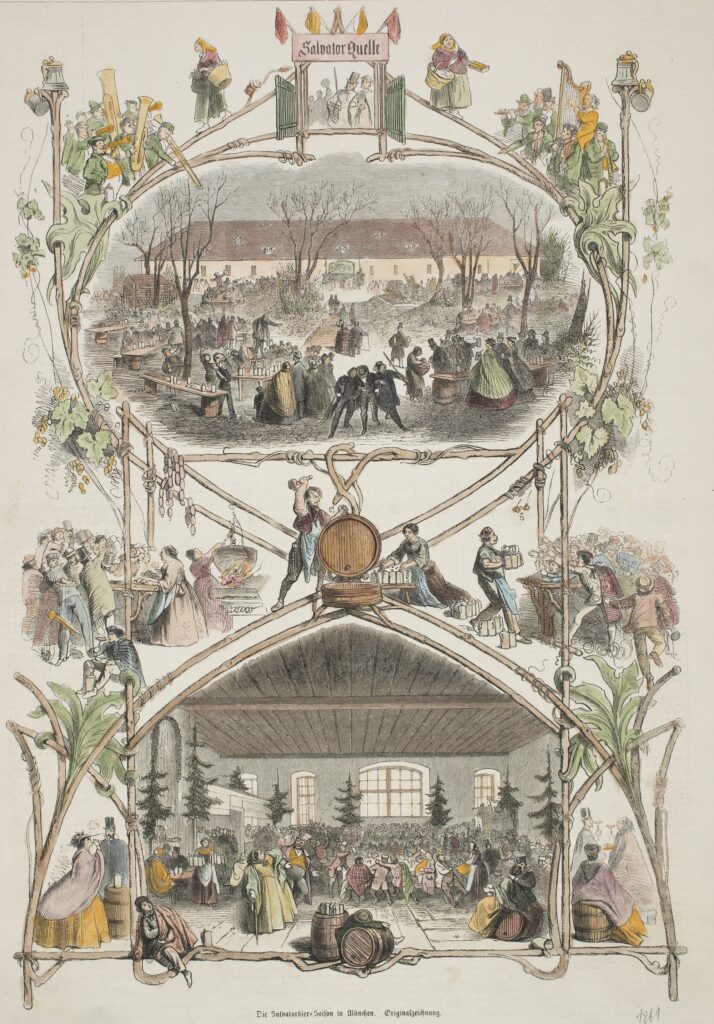
Sunday’s work is another one for Salvator Doppelbock, which was created in 1861. This one was for the Paulaner Brewery (Paulaner Brauerei München) of Munich, Germany, which was originally founded in 1634. It’s an original drawing is called “Die Salvator-Saison in München” (or “Salvator Season in Munich”) at the Munich City Museum, although they don’t know who the artist was who created this highly detailed drawing.

Filed Under: Art & Beer, Beers, Breweries, Just For Fun Tagged With: Advertising, Bock, Germany, History

Historic Beer Birthday: Frederick Schaefer

September 28, 2025 By Jay Brooks

schaefer
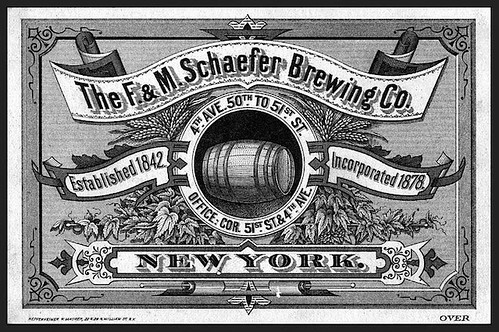
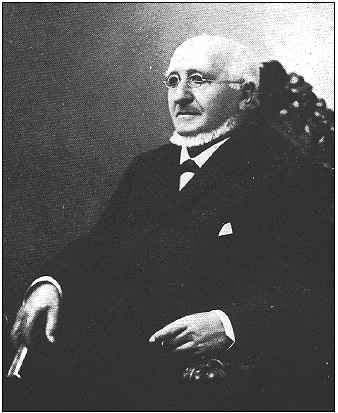
Today is the birthday of Frederick Schaefer (September 28, 1817-May 20, 1897). Frederick is the “F” in F&M Schaefer Brewing Co., founding it with his brother Maximilian in 1842. He was born in Wetzlar, which is part of Hesse, in what today is Germany. He arrived in New York in 1838, a year before his brother joined him in America.

This is his biography from Find a Grave:

Beer Magnate. He emigrated to the United States in 1838, settled in New York City, and was employed by a local beer maker. In 1839 his brother Maximilian also emigrated, carrying with him the recipe for lager, a popular brew in Germany that was then unknown in America. In 1842 the Schaefers bought out their employer and established F & M Schaefer Brewing. Lager proved popular and the Schaefer company became one of the country’s largest beer producers, with Frederick Schaefer remaining active in the company until failing health caused him to retire in the early 1890s. By the early 1900s, its customer base in the Northeastern United States made Schaefer the most popular beer in the country, a position it maintained until ceding it to Budweiser in the 1970s. The Schaefer brand continued to decline, and as of 1999 is owned by Pabst Brewing, a holding company that contracts for the brewing of formerly popular regional brands.

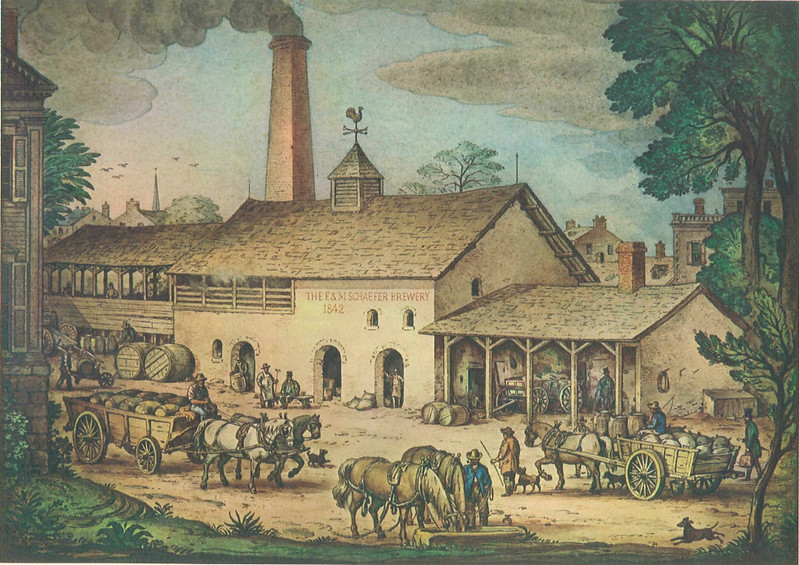
This is what the brewery looked like in 1842, when Frederick and his brother opened the brewery.

schaefer-brewery-1842

Below is part of a chapter on the history of F&M Schaefer Brewing Co., from Will Anderson’s hard-to-find Breweries in Brooklyn.

Longest operating brewery in New York City, last operating brewery in New York City [as of 1976], and America’s oldest lager beer brewing company — these honors, plus many others, all belong to The F. & M. Schaefer Brewing Co.

“F. & M.”, as most breweriana buffs know, stands for Frederick and Maximilian, the brothers who founded Schaefer. Frederick Schaefer, a native of Wetzlar, Prussia, Germany, emigrated to the U.S. in 1838. When he arrived in New York City on October 23rd he was 21 years old and had exactly $1.00 to his name. There is some doubt as to whether or not he had been a practicing brewer in Germany, but there is no doubt that he was soon a practicing brewer in his adopted city. Within two weeks of his landing, Frederick took a job with Sebastian Sommers, who operated a small brewhouse on Broadway, between 18th and 19th Streets. Frederick obviously enjoyed both his job and life in America, and the next year his younger brother, Maximilian, decided to make the arduous trip across the Atlantic also. He arrived in June of 1839 and brought with him a formula for lager, a type of beer popular in Germany but unheard of in the United States. The brothers dreamed, and planned, and saved – and in the late summer of 1842 they were able to buy the small brewery from Sommers. The official, and historic, starting date was September, 1842.

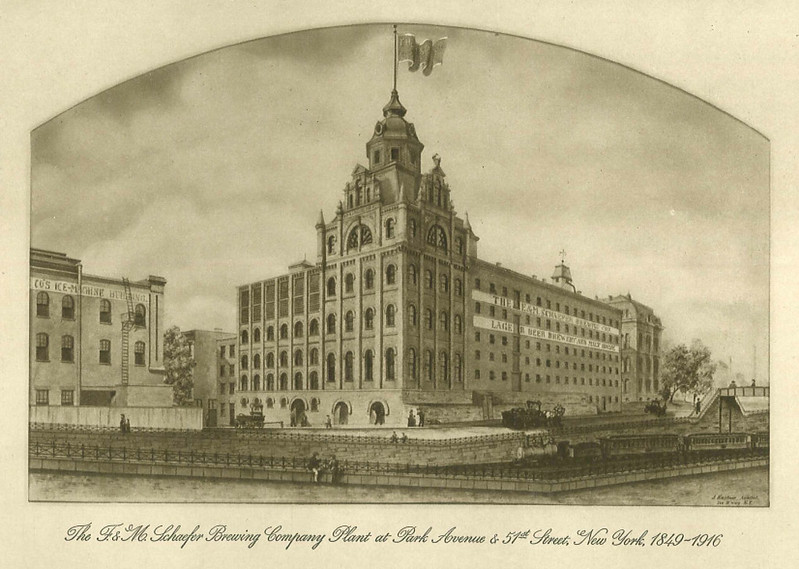
schaefer-brewery-1849
The new brewery they built in 1849.

Sommers’ former facility was a start, but that’s all it was, as it was much too small. New York beer drinkers immediately took a liking to “the different beer” the brothers brewed, and in 1845 Frederick and Maximilian developed a new plant several blocks away, on 7th Avenue, between 16th and 17th Streets (7th Avenue and 17th Street is today, of course, well known as the home of Barney’s, the giant men’s clothing store). This, too, proved to be just a temporary move; the plant was almost immediately inadequate to meet demands and the brothers wisely decided to build yet another new plant, and to locate it in an area where they could expand as needed. Their search took them to what were then the “wilds” of uptown Manhattan. In 1849 the brewery, lock, stock and many barrels, was moved to Fourth Ave. (now Park Avenue) and 51st Street. Here, just north of Grand Central Station, the Schaefers brewed for the next 67 years, ever-expanding their plant. The only problem was that the brothers were not the only ones to locate “uptown.” The area in the 40’s, 50’s and 60’s grew rapidly all during the last half of the 19th century, and especially after the opening of the original Grand Central Terminal in 1871. Frederick and Maximilian had wisely purchased numerous lots between 50th and 52nd Streets, and by the time they passed away (Frederick in 1897 and Maximilian in 1904) the brewery was, literally, sitting atop a small fortune. Maximilian’s son, Rudolph J. Schaefer, fully realized this when he assumed the Presidency of the brewery in 1912. In that same year Rudolph purchased the 50% of the company owned by his uncle Frederick’s heirs. He thus had complete control of the brewery, and one of the first matters he turned to was the suitable location for a new, and presumably everlasting, plant. In 1914, in anticipation of its move, Schaefer sold part of the Park Ave. site to St. Bartholomew’s Church. This sale, for a reputed $1,500,000, forced Rudolph to intensify his search for a new location. Finally, in June of 1915, it was announced that the brewery had decided on a large tract in Brooklyn, directly on the East River and bounded by Kent Avenue and South 9th and 10th Streets. Here, starting in 1915, Rudolph constructed the very best in pre-Prohibition breweries. The move across the river to their ultra-new and modern plant was made in 1916, just four years before the Volstead Act crimped the sails (and sales!) of all United States breweries, new or old alike.

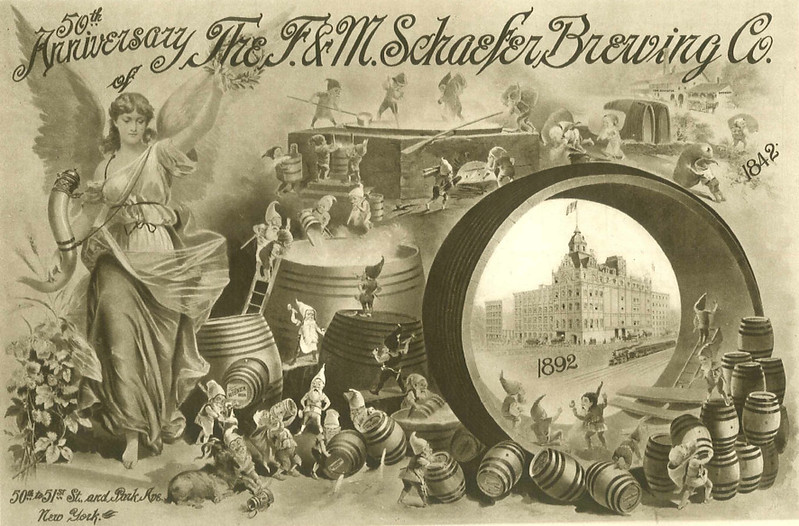
schaefer-brewery-1842-1892

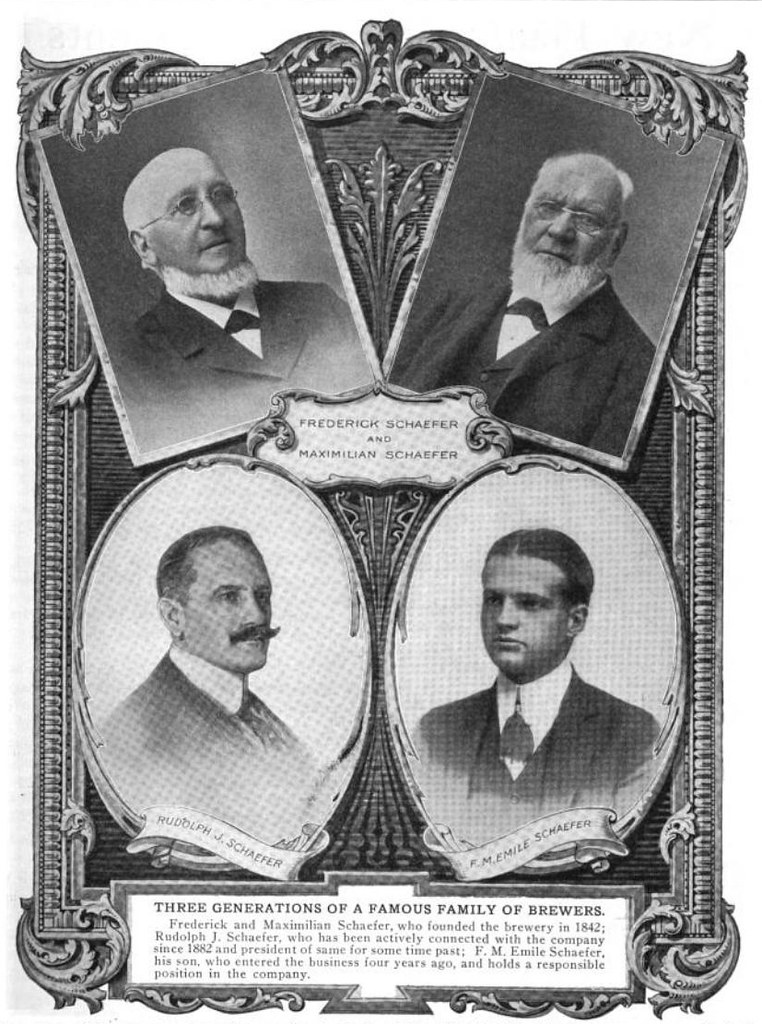
Schaefer-family
Three generations of Schaefers.

Filed Under: Birthdays, Breweries Tagged With: History, Law, Patent

« Previous Page
Next Page »

Find Something

Northern California Breweries

Please consider purchasing my latest book, California Breweries North, available from Amazon, or ask for it at your local bookstore.

Recent Comments

  • Bob Paolino on Beer Birthday: Grant Johnston
  • Gambrinus on Historic Beer Birthday: A.J. Houghton
  • Ernie Dewing on Historic Beer Birthday: Charles William Bergner 
  • Steve 'Pudgy' De Rose on Historic Beer Birthday: Jacob Schmidt
  • Jay Brooks on Beer Birthday: Bill Owens

Recent Posts

  • Beer In Ads #5169: The Best Of The Bocks March 17, 2026
  • Beer In Ads #5168: Hey! It’s Bock Beer Day To-Day! March 17, 2026
  • Beer In Ads #5167: Acme Bock Is Back Tomorrow! March 16, 2026
  • Historic Beer Birthday: John Land March 16, 2026
  • Historic Beer Birthday: Axel Heiberg March 16, 2026

BBB Archives

Feedback

Head Quarter
This site is hosted and maintained by H25Q.dev. Any questions or comments for the webmaster can be directed here.