Brookston Beer Bulletin

Jay R. Brooks on Beer

  • Home
  • About
  • Editorial
  • Birthdays
  • Art & Beer

Socialize

  • Dribbble
  • Email
  • Facebook
  • Flickr
  • GitHub
  • Instagram
  • LinkedIn
  • Pinterest
  • RSS
  • Twitter
  • YouTube

Powered by Genesis

Lewis Carroll’s Scheme To Get People Drinking Beer At Home

January 27, 2019 By Jay Brooks

drink-me

Today is the birthday of Charles Lutwidge Dodgson, better known by his pen name Lewis Carroll. He was “an English writer of world-famous children’s fiction, notably Alice’s Adventures in Wonderland and its sequel Through the Looking-Glass. He was noted for his facility at word play, logic and fantasy. The poems Jabberwocky and The Hunting of the Snark are classified in the genre of literary nonsense. He was also a mathematician, photographer, and Anglican deacon.” One of his lesser known books, two really, was Sylvie and Bruno and its sequel Sylvie and Bruno Concluded, published in 1889 and 1893, respectively.
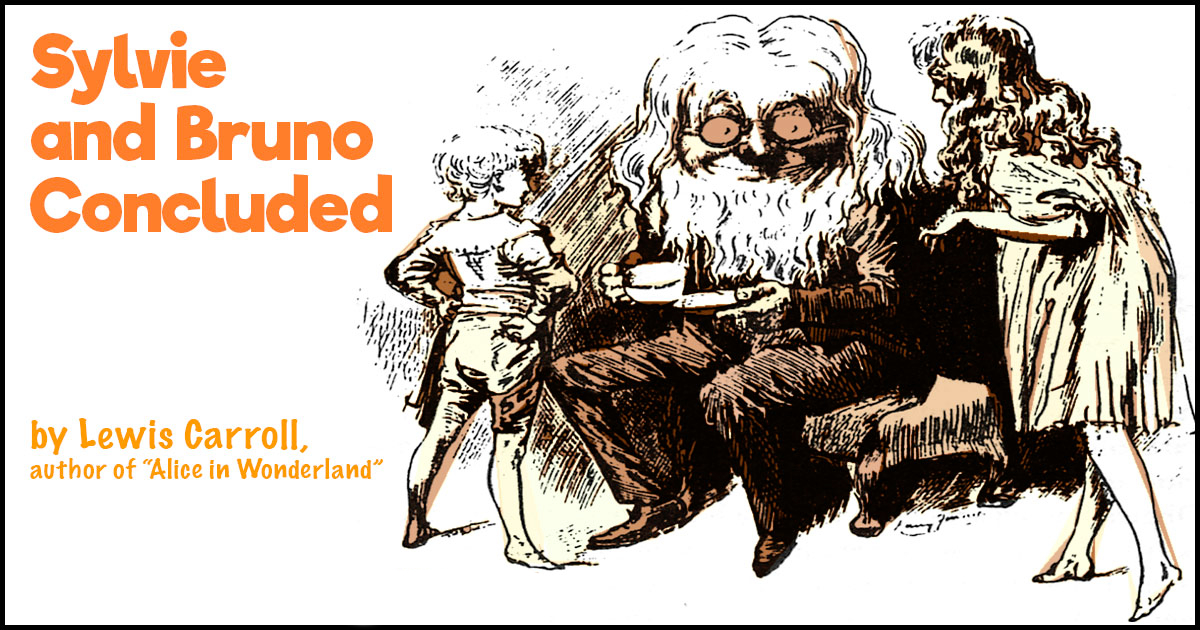
Sylvie-and-Bruno-Concluded

In the latter, Sylvie and Bruno Concluded, Carroll writes about his idea on how to keep drunkards at home, drinking their beer there and not throwing away the family’s money, all to the betterment of society. It begins in Chapter V: Mathilda Jane.

When the full stream of loving memories had nearly run itself out, I began to question her about the working men of that neighbourhood, and specially the ‘Willie,’ whom we had heard of at his cottage. “He was a good fellow once,” said my kind hostess: “but it’s the drink has ruined him! Not that I’d rob them of the drink—it’s good for the most of them—but there’s some as is too weak to stand agin’ temptations: it’s a thousand pities, for them, as they ever built the Golden Lion at the corner there!”

“The Golden Lion?” I repeated.

“It’s the new Public,” my hostess explained. “And it stands right in the way, and handy for the workmen, as they come back from the brickfields, as it might be to-day, with their week’s wages. A deal of money gets wasted that way. And some of ’em gets drunk.”

“If only they could have it in their own houses—” I mused, hardly knowing I had said the words out loud.

“That’s it!” she eagerly exclaimed. It was evidently a solution, of the problem, that she had already thought out. “If only you could manage, so’s each man to have his own little barrel in his own house—there’d hardly be a drunken man in the length and breadth of the land!”

And then I told her the old story—about a certain cottager who bought himself a little barrel of beer, and installed his wife as bar-keeper: and how, every time he wanted his mug of beer, he regularly paid her over the counter for it: and how she never would let him go on ‘tick,’ and was a perfectly inflexible bar-keeper in never letting him have more than his proper allowance: and how, every time the barrel needed refilling, she had plenty to do it with, and something over for her money-box: and how, at the end of the year, he not only found himself in first-rate health and spirits, with that undefinable but quite unmistakeable air which always distinguishes the sober man from the one who takes ‘a drop too much,’ but had quite a box full of money, all saved out of his own pence!

“If only they’d all do like that!” said the good woman, wiping her eyes, which were overflowing with kindly sympathy. “Drink hadn’t need to be the curse it is to some——”

“Only a curse,” I said, “when it is used wrongly. Any of God’s gifts may be turned into a curse, unless we use it wisely. But we must be getting home. Would you call the little girls? Matilda Jane has seen enough of company, for one day, I’m sure!”

So Carroll insists that it’s not beer or drink that’s bad for them, it’s over-indulging in it. That seems a rather progressive idea for 1893, especially in the face of temperance movements of the day.

But his solution is sublime. To avoid so many people wasting their wages down at the pub, just give every household its own Kegerator and barrel of beer so they’ll instead come home most nights and drink their beer there with their family. Genius.
golden-lion

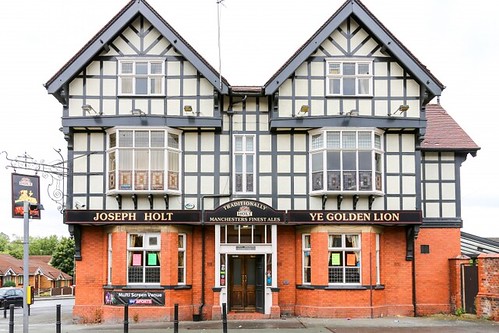
Later in the chapter, Sylvie and Bruno find themselves outside The Golden Lion.

“And that’s the new public-house that we were talking about, I suppose?” I said, as we came in sight of a long low building, with the words ‘The Golden Lion’ over the door.

“Yes, that’s it,” said Sylvie. “I wonder if her Willie’s inside? Run in, Bruno, and see if he’s there.”

I interposed, feeling that Bruno was, in a sort of way, in my care. “That’s not a place to send a child into.” For already the revelers were getting noisy: and a wild discord of singing, shouting, and meaningless laughter came to us through the open windows.

“They wo’n’t see him, you know,” Sylvie explained. “Wait a minute, Bruno!” She clasped the jewel, that always hung round her neck, between the palms of her hands, and muttered a few words to herself. What they were I could not at all make out, but some mysterious change seemed instantly to pass over us. My feet seemed to me no longer to press the ground, and the dream-like feeling came upon me, that I was suddenly endowed with the power of floating in the air. I could still just see the children: but their forms were shadowy and unsubstantial, and their voices sounded as if they came from some distant place and time, they were so unreal. However, I offered no further opposition to Bruno’s going into the house. He was back again in a few moments. “No, he isn’t come yet,” he said. “They’re talking about him inside, and saying how drunk he was last week.”

While he was speaking, one of the men lounged out through the door, a pipe in one hand and a mug of beer in the other, and crossed to where we were standing, so as to get a better view along the road. Two or three others leaned out through the open window, each holding his mug of beer, with red faces and sleepy eyes. “Canst see him, lad?” one of them asked.

“I dunnot know,” the man said, taking a step forwards, which brought us nearly face to face. Sylvie hastily pulled me out of his way. “Thanks, child,” I said. “I had forgotten he couldn’t see us. What would have happened if I had staid in his way?”
Sylvie_and_Bruno-ch-6

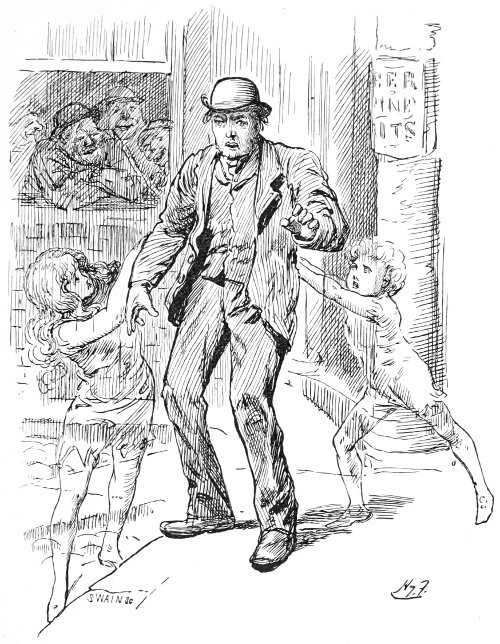
In Chapter VI, they decide to rescue Willie from his pub crawling ways.

He made for the door of the public-house, but the children intercepted him. Sylvie clung to one arm; while Bruno, on the opposite side, was pushing him with all his strength, with many inarticulate cries of “Gee-up! Gee-back! Woah then!” which he had picked up from the waggoners.

‘Willie’ took not the least notice of them: he was simply conscious that something had checked him: and, for want of any other way of accounting for it, he seemed to regard it as his own act.

“I wunnut coom in,” he said: “not to-day.”

“A mug o’ beer wunnut hurt ’ee!” his friends shouted in chorus. “Two mugs wunnut hurt ’ee! Nor a dozen mugs!”84

“Nay,” said Willie. “I’m agoan whoam.”

“What, withouten thy drink, Willie man?” shouted the others. But ‘Willie man’ would have no more discussion, and turned doggedly away, the children keeping one on each side of him, to guard him against any change in his sudden resolution.

Willie went home and gave all his wages to his wife, and she was pretty happy, as were his children. The only thing that would have made the ending better is if his wife had installed a barrel of beer so he could come home every day after work and have a drink of beer there, as was the earlier suggestion Carroll made.
Sylvie_and_Bruno
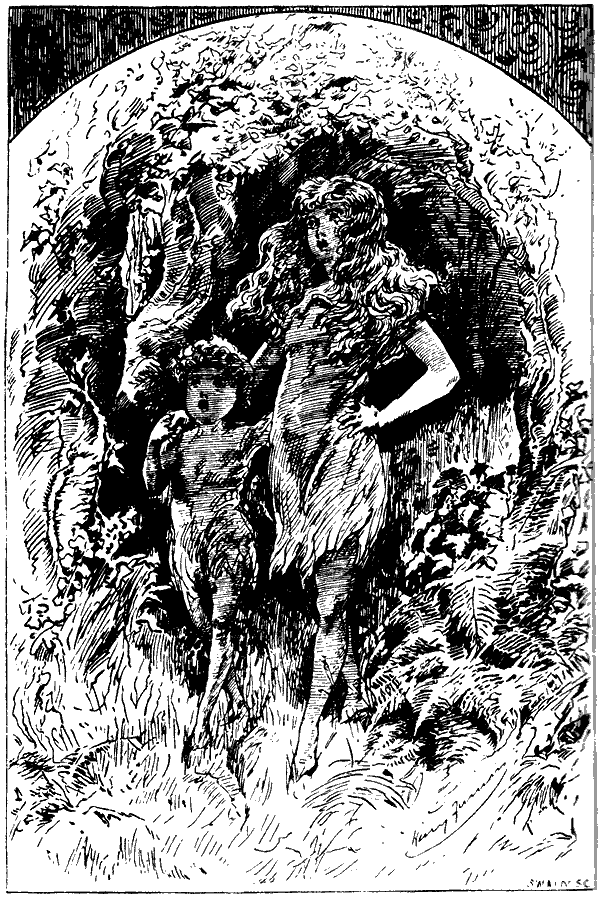
Sylvia and Bruno, from the inside cover of the original edition, with illustrations by Harry Furniss.

Filed Under: Beers, Just For Fun Tagged With: England, Great Britain, History, Literature, Prohibition

Potato Peel Beer

January 13, 2019 By Jay Brooks

potato
My good friend Luc De Raedemaeker, who among quite a bit more, publishes the Belgian beer magaine Biere Grand Cru that started in 2014. Knowing my love (some might say obsession) with frites, my universal name for fried potatoes or fries, he included me in a tweet about an article covering a new Dutch beer that uses potato peels from a frites business.

biere-grand-cru-logo

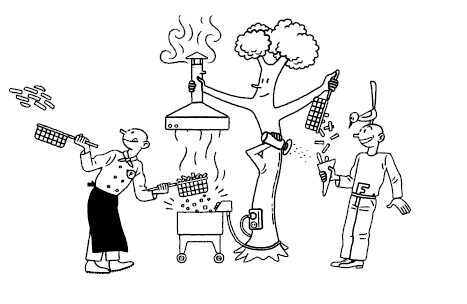
Beer in which old bread is processed during brewing, we already had, but also when making fries a lot of ‘waste’ is produced. To put it in the words of FrietHoes say “potatoes are round, french fries square”. Throwing away the leftovers would be a shame, especially because they are still trying to make their production process as sustainable as possible. In search of a solution they came into contact with Jopen as beer lovers and the solution was not far away.

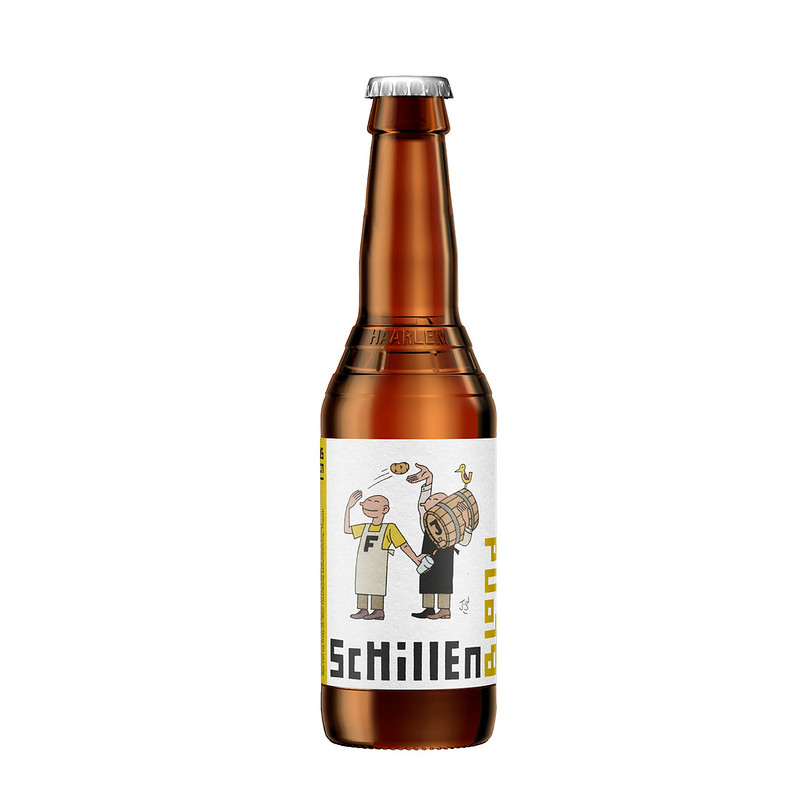
Potatoes are full of starch and you can use some of them during the brewing process. Jopen therefore developed a beer in which the leftover potato (the ‘shells’) is added to the batter. Still nice fruity hopping and ‘Klaar is Kees’. The result is a dark blond beer with a hoppy aroma of citrus fruit and a nice bitterness so that it dries super smoothly. Ideal for a pack of salty fries …

I’m in.

Schillenbier_etiket

I’ve had a few potato beers before. Widmer Brothers made one for OBF a number of years ago, I believe. And I certainly remember a couple more. But this is even more interesting because it’s recycling at its finest. Taking the leftover potato peels from making frites is just genius. The people behind it, Friethoes, grow their own organic potatoes, operate frites shops, food trucks, and have other potato-related businesses. But the peels were going to waste. So why not? Of course, now I’m dead keen to try a bottle. So they partnered with Brouwerij Troost to brew the beer.

Schillen bier Blond Friethoes en Jopen

Until I can get my own bottle, here’s a review of it from a Dutch blog called Lauriekoek:

Beer is usually made of malt, yeast and hops. Malt does not necessarily have to be malt, other sources of sugar and starch are also suitable for fermentation. You can also use potato starch, because that too can be converted into alcohol and bubbles by yeast. And that’s what FrietHoes did, together with brewery Troost. By working in a smart way on the potato residues as part of the ingredients in the beer, FrietHoes comes a step closer to the zero waste goal.

Peeling beer is described as a Weizen. Of course this is not a Weizen in the most German sense of the word, because it differs from the traditional ingredients. It is a bit between a Weizen and a Belgian wheat beer, partly because of the addition of coriander seeds and orange peel, to give it a fresher character. Peeling beer is sweet and a little weeïg, but a bit more acidic than other white beers and with the typical notes of banana and clove that you can also find in weizen beers. The acidity in this beer is easy to combine with fatty dishes such as everything that comes out of a frying pan.

All in all, FrietHoes has succeeded in developing a beer with potato that fits well with the deep-fried delicacies that they mainly sell. Whether it is a really accessible beer, I wonder. For a number of people, perhaps it is just a bit too sour.

Schillenblond-1
And here’s another review from BierNet.nl:

Friethoes Schillenbier

New: Schillenbier from Friethoes . An unofficial Weizen beer made from hops, barley and pieces of potato from Friethoes fries factory. The fries bakers worked together with Brouwerij Troost to process the remains from the fries cutting plant and use them in a new and cool product. From now on: fries and beer from Friethoes.

Brewery Troost has often brewed with other ingredients with the aim to prevent waste. In the past they also brewed Pieper Bier and Bammetjes beer.

That’s how you make beer

Friethoes Schillenbier bottleYou already knew: beer is made from malt, hops and yeast. You mainly use malt to give color and flavor to your beer. The starch in malt also provides alcohol and bubbles with the help of a little yeast. You do not need malt starch per se, you can also use potato starch.

And that is exactly what Friethoes and Troost have done: the waste is converted into a main component. In the end, fewer raw materials are needed to make the same fries and the same beer. Hoera!

Es ist (k) ein Weizen
The new Schillenbier naturally had to taste good with fries, which is why the brewers chose Weizen beer . Weizen is sweet, mild and accessible and that fits well with a first-class salty burger.

The new Schillenbier consists of 50% wheat malt, a little barley and little hops. Officially you can not call that Weizen. If you are a bit of a German, you know that according to the Reinheitsgebot you do not use beeper starch in Weizen, even if it tastes exactly the same. No Weizen.

A responsible company

Friethoes wants to make fries in a responsible and honest way. That’s why it uses as many local potatoes and local ingredients as possible, uses green electricity for their fries and 100% E-numberless sunflower oil to bake the fries.

The packaging is made of biodegradable plastic, recycled paper and cardboard and the forks in the recycled wood store. Schillenbier is an initiative and an experiment to determine the value of the waste stream. The goal is to be the first zero waste fries company in the Netherlands by 2019.

winkelconcept_background_right

Filed Under: Beers, Food & Beer, Just For Fun, News, Related Pleasures Tagged With: Food, Potatoes, The Netherlands

Guy Debord On A Drinking Life

December 28, 2018 By Jay Brooks

spectacle
Today is the birthday of Guy Debord. If you’ve never heard of Guy Debord, don’t worry, you’re by no means in the minority. Lots of people haven’t; undoubtedly most people have not. So who was he? Guy Debord (December 28, 1931–November 30, 1994) “was a French Marxist theorist, philosopher, filmmaker, member of the Letterist International, founder of a Letterist faction, and founding member of the Situationist International (SI).” In 1967, he wrote a book called The Society of the Spectacle (although it wasn’t translated until 1970). At some point when I was reading a lot of political works, maybe twenty years ago, I picked up a copy and really enjoyed it. It was a very prescient look at where society was heading, and was quite interesting.

la-societe-du-spectacle

Anyway, later in his life, he wrote what amounted to a two-volume autobiography called “Panegyric,” in 1989, which was translated into English finally in 2004. Apart from having read his one book, I don’t know very much about Debord’s life, his overall philosophy or anything, really. But having just read this chapter, he must have been amazing. This is his take on the writing life, or more correctly the drinking life of a writer.

After the circumstances I have just recalled, it is undoubtedly the rapidly acquired habit of drinking that has most marked my entire life. Wines, spirits, and beers: the moments when some of them became essential and the moments when they returned have marked out the main course and the meander of days, weeks, years. Two or three other passions, of which I will speak, have been more or less continuously important in my life. But drinking has been the most constant and the most present. Among the small number of things that I have liked and known how to do well, what I have assuredly known how to do best is drink. Although I have read a lot, I have drunk even more. I have written much less than most people who write, but I have drunk much more than most people who drink. I can count myself among those of whom Baltasar Gracián, thinking about an elite discernible only among the Germans — but here he was quite unjust to the detriment of the French, as I think I have shown — could say, ‘There are those who got drunk only once, but that once lasted them a lifetime.’

Furthermore, I am a little surprised, I who have had to read so often the most extravagant calumnies or quite unjust criticisms of myself, to see that in fact thirty or more years have passed without some malcontent ever instancing my drunkenness as at least an implicit argument against my scandalous ideas — with the one, belated exception of a piece by some young English drug addicts who revealed around 1980 that I was stupefied by drink and thus no longer harmful. I never for a moment dreamed of concealing this perhaps questionable side of my personality, and it was clearly evident for all those who met me more than once or twice. I can even note that on each occasion it sufficed but a few days for me to be highly esteemed, in Venice as in Cadiz, in Hamburg as in Lisbon, by the people I met only by frequenting certain cafés.

At first, like everyone, I appreciated the effect of mild drunkenness; then very soon I grew to like what lies beyond violent drunkenness, once that stage is past: a terrible and magnificent peace, the true taste of the passage of time. Although in the first decades I may have allowed only slight indications to appear once or twice a week, I was, in fact, continuously drunk for periods of several months; and the rest of the time, I still drank a lot.

An air of disorder in the great variety of emptied bottles remains susceptible, all the same, to an a posteriori classification. First, I can distinguish between the drinks I consumed in their countries of origin and those I consumed in Paris; but almost every variety of drink was to be had in mid-century Paris. Everywhere, the premises can be subdivided between what I drank at home, or at friends’, or in cafés, cellars, bars, restaurants, or in the streets, notably on café terraces.

The hours and their shifting conditions almost always retain a decisive role in the necessary renewal of the stages of a binge, and each brings its reasonable preference to bear on the available possibilities. There is what one drinks in the mornings, and for quite a long while that was the time for beer. In Cannery Row a character who one can tell is a connoisseur proclaims, ‘There’s nothing like that first taste of beer.’ But often upon waking I have needed Russian vodka. There is what is drunk with meals; and in the afternoons that stretch out between them. At night, there is wine, along with spirits; later on, beer is welcome, for beer makes you thirsty. There is what one drinks at the end of the night, at the moment when the day begins anew. One can imagine that all this has left me very little time for writing, and that is exactly as it should be: writing should remain a rare thing, since one must have drunk for a long time before finding excellence.

I have wandered extensively in several great European cities, and I appreciated everything that deserved appreciation. The catalogue on this subject could be vast. There were the beers of England, where mild and bitter were mixed in pints; the big schooners of Munich; the Irish beers; and the most classical, the Czech beer of Pilsen; and the admirable baroque character of the Gueuze around Brussels, when it had its distinctive flavor in each local brewery and did not travel well. There were the fruit brandies of Alsace; the rum of Jamaica; the punches, the aquavit of Aalborg, and the grappa of Turin, cognac, cocktails; the incomparable mescal of Mexico. There were all the wines of France, the loveliest coming from Burgundy; there were the wines of Italy, especially the Barolos of the Langhe and the Chiantis of Tuscany; there were the wines of Spain, the Riojas of Old Castille or the Jumilla of Murica.

I would have had very few illnesses if drink had not in the end caused me some, from insomnia to gout to vertigo. ‘Beautiful as the tremor of the hands in alcoholism,’ said Lautreamont. There are mornings that are stirring but difficult.

‘It is better to hide one’s folly, but that is difficult in debauchery or drunkenness,’ Heraclitus thought. And yet Machiavelli would write to Francesco Vettori: ‘Anyone reading our letters … would sometimes think that we are serious people entirely devoted to great things, that our hearts cannot conceive any thought which is not honourable and grand. But then, as these same people turned the page, we would seem thoughtless, inconstant, lascivious, entirely devoted to vanities. And even if someone judges this way of life shameful, I find it praiseworthy, for we imitate nature, which is changeable.’ Vauvenargues formulated a rule too often forgotten: ‘In order to decide that an author contradicts himself, it must be impossible to conciliate him.’

Moreover, some of my reasons for drinking are respectable. Like Li Po, I can indeed exhibit this noble satisfaction. ‘For thirty years, I’ve hidden my fame in taverns.’

The majority of the wines, almost all the spirits, and every one of the beers whose memory I have evoked here today completely lost their tastes, first on the world market and then locally, with the progress of industry as well as the disappearance of economic re-education of the social classes that had long remained independent of large industrial production; and thus also through the interplay of the various government regulations that not prohibit virtually anything that is not industrially produced. The bottles, so that they can still be sold, have faithfully retained their labels; this attention to detail gives the assurance that one can photograph them as they used to be — but not drink them.

Neither I nor the people who drank with me have at any moment felt embarrassed by our excesses. ‘At the banquet of life’ — good guests there, at least — we took a seat without thinking even for an instant that what we were drinking with such prodigality would not subsequently be replenished for those who would come after us. In drinking memory, no one had ever imagined that he would see drink pass away before the drinker.

Panegyric

Filed Under: Just For Fun, Politics & Law, Related Pleasures Tagged With: History, Philosophy, Writing

Hoppy Christmas

December 25, 2018 By Jay Brooks

christmas-beer
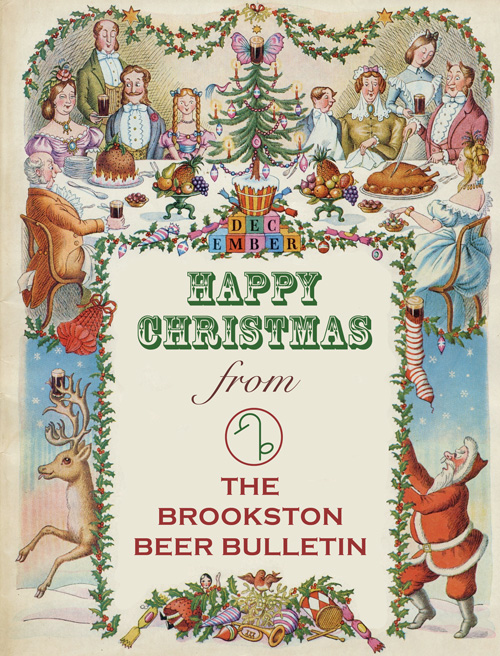
From my IP address to yours. Have a very Malty Christmas and a Hoppy Holiday. Peace On Earth, Good Beer to Men (and Women).

brookston-xmas

“Christmas is not a time nor a season, but a state of mind. To cherish peace and goodwill, to be plenteous in mercy, is to have the real spirit of Christmas.”

             — Calvin Coolidge

holly

‘Twas Christmas broach’d the mightiest ale; ’twas Christmas told the merriest tale; a Christmas gambol oft could cheer the poor man’s heart through half the year.

             — Sir Walter Scott

holly

The original image, which I doctored, was the cover of a 1950 issue of Guinness Time, “a quarterly publication by the Guinness company [that] was distributed to all Guinness staff.” I found it at Bygone Bodiam, a very cool website covering old time Bodiam, a hop growing area in England. There are also a number of great nostalgic photographs of the local hops industry back in the day.

Filed Under: Art & Beer, Beers, Breweries, Events, Just For Fun Tagged With: Christmas, Holidays

Having One More For The Road

December 10, 2018 By Jay Brooks

session-the 1-the-road
For our 142nd and final Session, our host is Stan Hieronymus, who founded the Session, and writes the Appellation Beer Blog. I could think of no better person than the man who started it all with the first Session back in March of 2007. For Stan’s topic this month, he’s chosen One More For the Road, which he sums up as going out with a bang, um … I mean beer; going out with a beer. So what beer would you choose? If you only have one to pick — and you do — what would it be? How would (will) you decide? You only have one more beer to drink, make it count.

beer-choice

Here are Stan’s simple instructions, in full:

When Jay Brooks and I exchanged emails about the topic this month I flippantly suggested “Funeral Beers” [which] seemed appropriate. You can call it “Last Beers” if you’d rather not think about how your friends might toast you when you no longer are participating. Or “One more for the road”* because that has a soundtrack.

Pick a beer for the end of a life, an end of a meal, an end of a day, an end of a relationship. So happy or sad, or something between. Write about the beer. Write about the aroma, the flavor, and write about what you feel when it is gone.

one-for-road-142

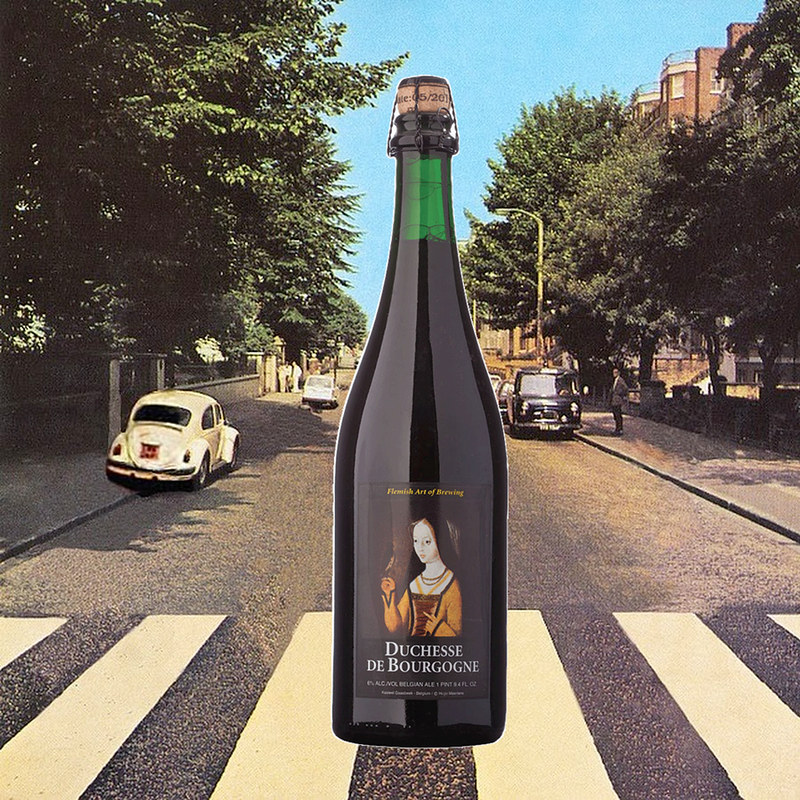
For me, it’s the end of The Session itself, a bittersweet event because I’ve been helping to shepherd the project almost since its beginning and feel a deep sense of loss over its conclusion. That’s despite the fact that I also helped pull the plug, but because the writing was (or in this case no longer was) on the wall and it seemed to have run its course. But that didn’t make it any easier to decide. I think it was the right thing to do, but I’m still sad about it. So what beer did I decide to mark the last Session? I opened one of our garage refrigerators and looked for something appropriate, finally settling on something sour to match my mood. It’s one of my favorite beers, one of the early sour beers I really fell in love with, and over the years I’ve been surprised to learn that not many people love it as much as I do — finding it okay, or good, but not great. I think they’re wrong, but hey, tastes are somewhat individual. Plus, I think it just occupies a special place in my heart because it was one of the first sour beers I loved. I’m talking about Duchesse de Bourgogne, a West-Flemish red brown ale brewed by Brouwerij Verhaeghe, in Vichte, West-Vlaanderen, Belgium.

abbey-duchese

I don’t actually remember when or where I first tried Duchesse de Bourgogne, but I know I was immediately smitten. I remember how vinegary it was, especially in the aroma, but also the sweetness and malt character, with loads of fruit, how heavy on the tongue, the weight of it on my mouth. And ultimately, how satisfying it felt to drink it.

This is the brewery’s description of their beer:

“Duchesse de Bourgogne” is an ale of mixed fermentation. It is a sweet-fruity ale with a pleasant fresh aftertaste. This ale is brewed with roasted malts and with hops with a low bitterness. After the main fermentation and the lagering, the “Duchesse de Bourgogne” matures further for many months in oak casks. The tannins in the oak give the “Duchesse de Bourgogne” its fruity character. “Duchesse de Bourgogne” has a full, sweet and fresh taste: it is a ruby red jewel of 6.2 % alc. vol., that best is served in a chalice-shaped glass between 8 and 12°C. A perfect beer.

And this is how it’s described on Wikipedia:

Duchesse de Bourgogne is a Flanders red ale-style beer produced by Brouwerij Verhaeghe in Vichte, Belgium. After a primary and secondary fermentation, this ale is matured in oak barrels for 18 months. The final product is a blend of a younger 8-month-old beer with an 18-month-old beer. The name of the beer is meant to honour Duchess Mary of Burgundy, the only daughter of Charles the Bold. She was born in Brussels in 1457, and died in a horse riding accident. Like all Flemish red ales, Duchesse de Bourgogne has a characteristically sour, fruity flavour similar to that of lambic beers.

The beer, of course, was named for Mary of Burgundy. Several years ago, I wrote this about Mary:

Beer aside, the history of the Duchesse is fascinating. Her anglicized name was Mary of Burgundy, though she was born in Brussels on February 13, 1457, the only child of Charles the Bold, Duke of Burgundy, and his wife Isabella of Bourbon. Needless to say she was quite a catch, especially after her father died in battle (at the siege of Nancy, not a particularly awful sounding name) in 1477, when she was nineteen. Louis XI of France tried to take Burgundy and the Low Countries for himself but was frustrated when Mary signed the “Great Privilege,” by which she gave Flanders, Brabant, Hainaut, and all of Holland autonomous rule (leaving for herself the remainder of the Low Countries, Artois, Luxembourg, and Franche-Comté). She then married Archduke Maximilian of Austria, who was later the Holy Roman Emperor Maximilian I, and part of the Hapsburg Austrian dynasty. This sparked a long-standing dispute over the Low Countries between France and the Hapsburg family.

One of Mary’s favorite hobbies was falconing, which was popular among royals in the day. Falconry is basically training and hunting using a falcon. While engaged in this pursuit, in 1482, Mary’s horse tripped, tossing her onto the ground where the horse then landed on top of her, breaking her back. A few days later she died. Mary was only 25. The beer label’s portrait pays homage to her love of falconry and her ultimate death because of it.

Her young son Philip became heir after her death, though Maximilian was in charge until he reached adulthood. King Louis forced Maximilian to sign the Treaty of Arras the same year, and it gave Franche Comté and Artois to France. But Philip was a virtual prisoner until 1485, and then it took Max another eight years to take back control of their lands in the Low Countries. The Treaty of Senlis, in 1493, finally established peace in the area, but Burgundy and Picardy remained French.

So during her short life, Mary had such great impact on European politics that they can be felt even now in the present. So it’s quite appropriate that she have so wonderful a beer that bears her name and her portrait. It’s a fitting legacy.

Unfortunately, I don’t drink it all the time, just once in a while. Maybe I don’t want to ruin the experience by drinking it every day, or even once a week. As a once in a while beer, it stays special, every time. I usually try to keep a bottle in the ‘frig at all times, so when I want one, it’s already there, waiting for me. But it has been almost a year, maybe longer, since I’d cracked open a bottle of Duchesse de Bourgogne. I was looking forward to it, but also I always wonder how it will taste this time, will it taste the same? As good as I remember it? But it’s always an adventure.

DdBme

So how did this bottle of Duchesse de Bourgogne fare? After a long week, driving half a high school basketball team back and forth to another town, an hour away, four days in a row, then scoring each game, plus trying to do all of my other work took its toll. Finally, Sunday came, a day of rest … eventually. The Packers actually won for a change, which certainly improved my mood. By nightfall, it was quiet enough to open a bottle and spend some time with it. So I opened the cage, popped the cork, and poured a glass of Duchesse de Bourgogne. I let Sarah nose it, and she predictably hated it. She loves most beer, but has never warmed to sour beers in any way, although she loves Kombucha. I hate sour foods, but love it in beer. People certainly don’t make sense. I’m living proof of that.

But I loved the nose. A little less vinegar than I remembered from before, but still there, and still loads of fruit; plums, cherries, maybe burgundy. But it’s the flavors I really respond to, it’s just thick and chewy; lays on my tongue like a weight, until swallowed. I like to let it sit there, roll it around, keep the flavors assaulting my taste buds until they start to dissipate, like chewing gum you’ve been chewing for too long. Then flush it down my throat, feel the sourness burn all the way down, as it evaporates on my tongue, preparing the way for another sip. I love this beer. I remember why as that second sip repeats the first, as complex flavors abound, with vinous notes, wood, dark fruit, figs, tart cherries, a smidge of vanilla, port wine, both sweet and sour dancing together. This is a beer that ideally you should take as long as possible to finish, it should not be hurried. It changes as it warms, which adds yet another element to the experience, so it’s not quite the same beer it was in the first few sips as it is when you drain the last remnants of the bottle. And when it’s empty, I’m a little sad, which is how I feel about the Session ending, too. So for this Session, it’s perfect. A perfect beer, a perfect end.

So that’s it. It’s been great fun, a great run. 142 Sessions over 11+ years. Thanks to everybody who hosted and everybody who participated, and especially Stan. Thanks, Stan.

142-album-btl

Filed Under: Beers, Just For Fun, Related Pleasures, The Session Tagged With: Belgium, Flanders, Sour Beer

The Final Session: One More For The Road

November 29, 2018 By Jay Brooks

session-the
For our 142nd and final Session, our host will be Stan Hieronymus, who founded the Session, and writes the Appellation Beer Blog. I could think of no better person than the man who started it all with the first Session back in March of 2007 with the topic “Not Your Father’s Stout.” In the intervening 11+ years we’ve tacked 141 topics, wrote about 24 specific styles along with another 27 broader categories of beer (like wood-aged or session beers). We discussed the packages beer can come in or what’s on the package 6 times and where to drink it 12 times. Homebrewing came up 3 times, food and beer 4 times, and mixing with beer twice. We wrote about beer history 7 times, locality 11 times, beer on the interwebs at least 3 times, and ourselves and beer writing an astonishing 37 times. We’ve tackled beer abroad or traveling to the beer 8 times and have been asked to make predictions 4 times, including by me last month. That’s not including the dozens of unique singular topics. But back to the final topic.

For Stan’s topic this month, he’s chosen One More For the Road, which he sums up as going out with a bang, um … I mean beer; going out with a beer. So what beer would you choose? If you only have one to pick — and you do — what would it be? How would (will) you decide? You only have one more beer to drink, make it count.

142-album-btl

Here are Stan’s simple instructions, in full:

When Jay Brooks and I exchanged emails about the topic this month I flippantly suggested “Funeral Beers” [which] seemed appropriate. You can call it “Last Beers” if you’d rather not think about how your friends might toast you when you no longer are participating. Or “One more for the road”* because that has a soundtrack.

Pick a beer for the end of a life, an end of a meal, an end of a day, an end of a relationship. So happy or sad, or something between. Write about the beer. Write about the aroma, the flavor, and write about what you feel when it is gone.

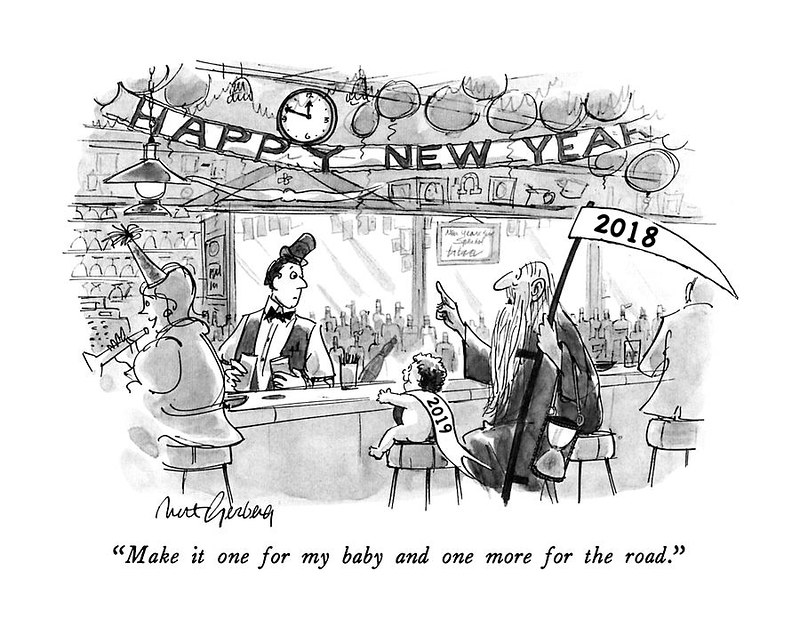
make-it-one-for-my-baby-and-one-more-for-the-road-mort-gerber
To participate in the December Session, simply post a link to your session post by commenting at the original announcement, or “on Twitter, Instagram, Facebook, wherever” on or before Friday, December 7, or by the 12th at the latest.

Filed Under: Beers, Just For Fun, Related Pleasures, The Session Tagged With: Announcements, Beer Styles, Blogging, Websites

Rounding Up Session #141: What Does The Future Hold?

November 28, 2018 By Jay Brooks

session-the
This month’s Session was notably our second-to-last, and I chose the appropriately forward-looking theme, The Future of Beer Blogging. With only around six submissions, I think we’ve proved the point that interest in The Session has been waning and that it is time to, in the words of the Disney ice queen character, Elsa, “let it go.” Here’s what the most loyal and ardent beer bloggers still playing along to the bitter end had to say about the future of beer blogging:

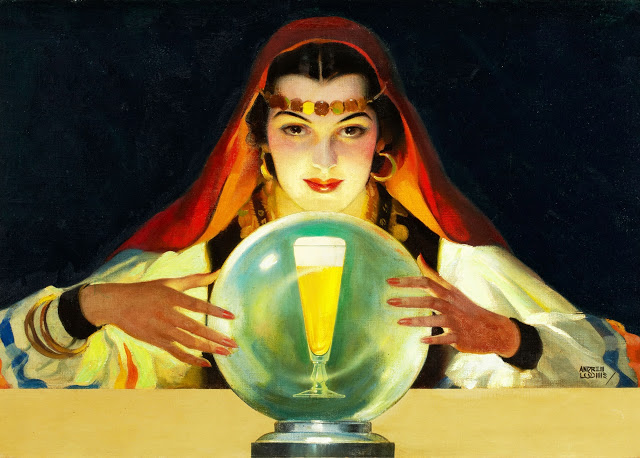
CrystalBall_Beer

Appellation Beer Blog – Long Live Beer Blogging: In his post, Stan, who created The Session, is ever hopeful and while he believes The Session is ready to be put out to pasture, he’s confident that beer blogging itself is not dead, but just one of many tools in the writer’s toolbox of ways to reach an audience. Like any technology, it’s continually evolving and happily a “diversity in beer storytelling” will go on. Hear, hear!

The Beerverse – Goodbye, Session. Hello, Something Else??: Dean has been writing about beer now about five years and is a true blogger in Alan’s sense of the word, meaning he’s blogging for blogging’s sake. (Full disclosure, Dean was a student of mine when I taught my beer class at Sonoma State University, although I’d met him before that.) While he never did host (although he came close a couple of times), he did participate and even reached out about what he could do to keep it going. He’s come up with a plan to do something similar through a bi-weekly newsletter he publishes, so give his post a read and see if that’s something you could get behind.

Boak & Bailey – The Penultimate Session: B&B understandably winced a little at my navel-gazing topic, but decided to play along anyway since the “news that the Session is expiring” made it a reasonable enough moment to weigh in. As with the majority of opinions expressed, Boak & Bailey also agree that blogging itself is not in decline, and continue to “find plenty of great posts that we think are worth sharing, and those pieces seem more adventurous, stylish, erudite and varied than much of what was around a decade ago.” They also remark that “the feeling of global community has diminished,” replaced “by many active, more locally-focused sub-communities: the pub crawlers, the historians, the tasting note gang, the podcasters, the social issues crew, the jostling pros and semi-pros, the pisstakers, and so on.” In a nutshell, it’s evolved, and evolving. They conclude with this hopefulness. “[O]n balance, we see the future of blogging as being much like its past – sometimes supportive, sometimes bad-tempered, over-emotional, churning like primordial soup as blogs are born in fits of tipsy enthusiasm and die of ennui – but also more fractured, more varied, and less cosy.”

The Brew Site – The Future of Beer Blogging: Jon Abernathy, who’s been a host multiple times, continues Stan’s line of reasoning, more forcefully perhaps, that beer blogging isn’t going anywhere. A point which I actually agree with, but which I just stated less elegantly, opening the door for him to rightly school me (us) about how ubiquitous the blogging platform is, it’s just that it’s morphed into many different, sometimes unrecognizable, forms. And while in part I was referring to the traditional standalone blog of one person writing from their perspective, I take his meaning and “get his point.” As he concludes, “Beer blogging continues on.” And so it goes.

A Good Beer Blog – The King Is Dead! Long Live The King!!: Alan also points out that “beer blogging is one type of writing in a broad range of formats,” but believes “[i]t’s the only one that provides for long form creative writing on anything that strikes the author’s fancy, without concern for pay or editorial intrusion.” And I agree with him that that aspect was certainly one of its hallmarks and likewise agree that “there is a place for such things.” The simple idea of us all taking up a discussion of a single topic was, simply, genius, and has been a highlight of the last decade. Like Alan, I hope we can find something to replace it that truly gets a lot us wordy types energized and excited.
Yours For Good Fermentables – The beer blog is dead. Long live the beer blog.: Thomas provides a run down of how beer information online is changing by detailing the decision to shut down The Session and Jonathan Surrat reviving his old beer blog aggregator in a more modern form called ReadBeer. The more things change, the more they stay the same. Or as Thomas puts it, “The beer blog is dead. Long live the beer blog. Or, at least, long live the beer journal, public or private, online or pen-and-paper.”

If you know of any Session posts I missed, or if I missed yours, please drop me a note at “Jay (.) Brooks (@) gmail (.) com.” Happy Holidays.

so-long

The final Session will be hosted by the man, the myth, the legend, Stan Hieronymus at his Appellation Beer Blog. His topic will be “One More for the Road” The date for the next Session will be a day which will live in infamy, December 7, 2018, although Stan will give everybody a few more days and won’t be posting his roundup until the 12th. It’s only one more, why not help us go out with a bang and participate in the final Session?

Filed Under: Just For Fun, Related Pleasures, The Session Tagged With: Blogging, Social Media, Websites

Kurt Vonnegut’s Mile High Malt

November 11, 2018 By Jay Brooks

vonnegut
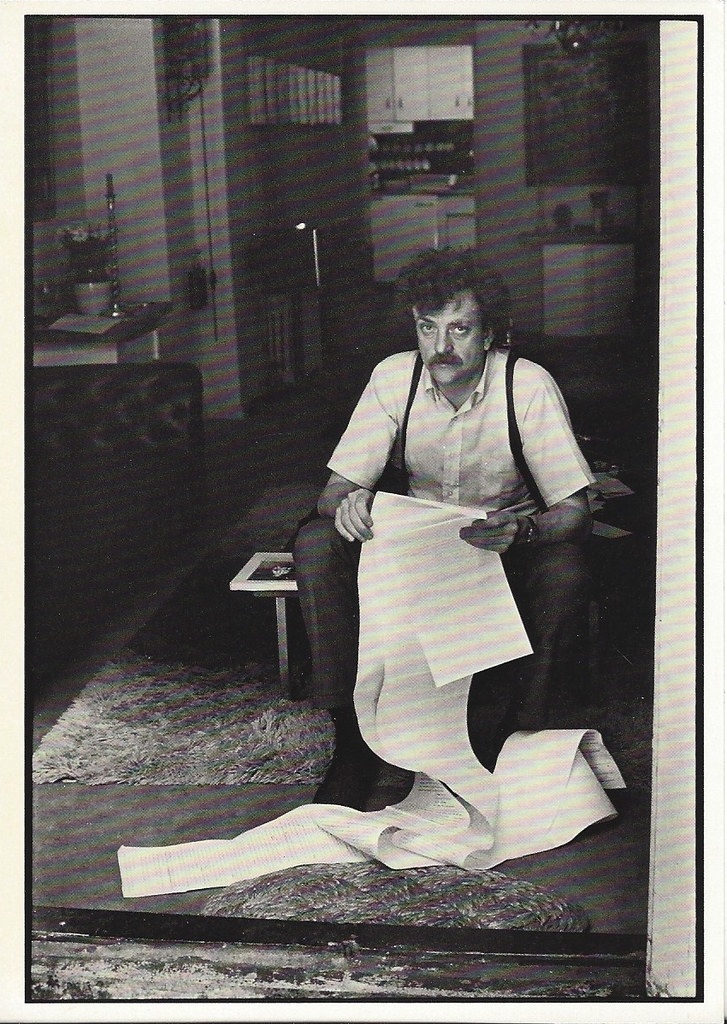
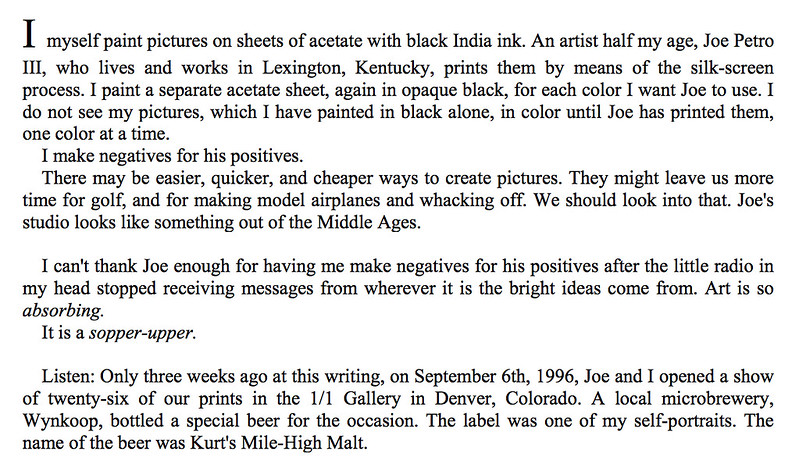
Today is the birthday of Kurt Vonnegut Jr., one of my favorite authors. I wrote about him when he passed away in 2007 in a post entitled So It Goes: Kurt Vonnegut’s Beer Heritage and detailed his relationship with John Hickelooper’s father and a beer Wynkoop later made based on Vonnegut’s grandfather’s recipe. There were essentially two different beer stories involving the Wynkoop Brewing and Vonnegut, and I’ve learned a little more about them over the past decade.
1111-vonnegut

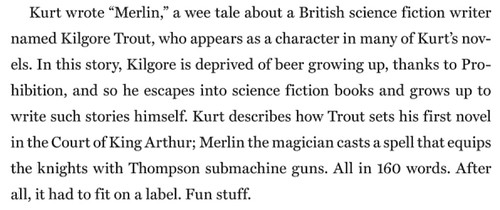
The first one was in the mid-1990s, when the Denver Public Library held a special event around 1996 (sources vary between 1995-97) called Denver Public Libation to commemorate the opening of the new library. The library partnered with Wynkoop, who invited several well-known authors to write mini-stories to be printed on the labels. Some of the writers included Clive Cussler, Allen Ginsberg, and Hunter Thompson, among others. Vonnegut also wrote something for the event. His piece was 160 words and entitled “Merlin,” and tells the story of “the unfortunate events that ensue when the master wizard casts a spell that equips the Knights of the Round Table with Thompson submachine guns.” Despite its short length, I cannot find a copy of it anywhere, and it doesn’t appear to have been reprinted anywhere else. It’s listed in his bibliography as having only been “Serialized on bottles of Denver Public Libation Ale, made by Wynkoop Brewing Company.”

John Hickenlooper wrote about the story in “The Opposite of Woe: My Life in Beer and Politics:”

Hickenlooper-merlin

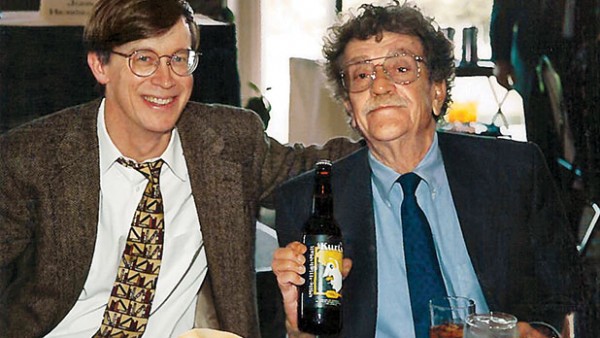
The second instance was around the same time, when Wynkoop created a beer with Vonnegut based on his grandfather’s recipe. It was called Wynkoop Mile High Malt.

hick-kurt

Vonnegut himself detailed the experience in his 1997 semi-autobiographical novel “Timequake.”

timequake-1
timequake-2
timequake-3

kurtPosteroriginal

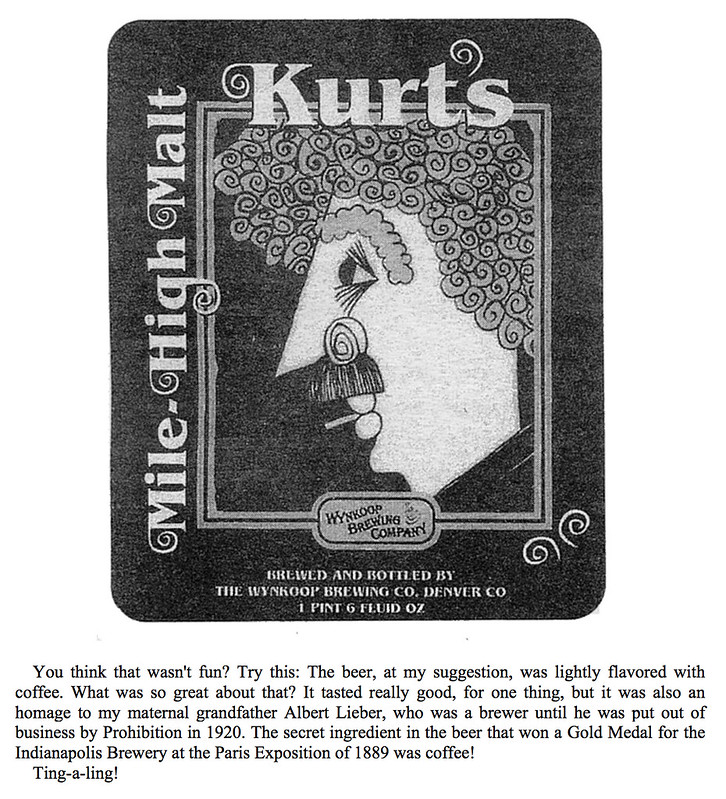
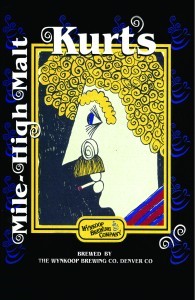
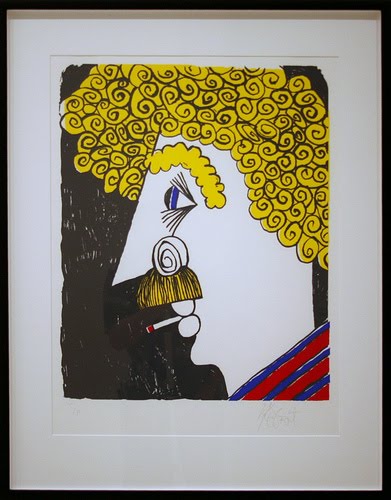
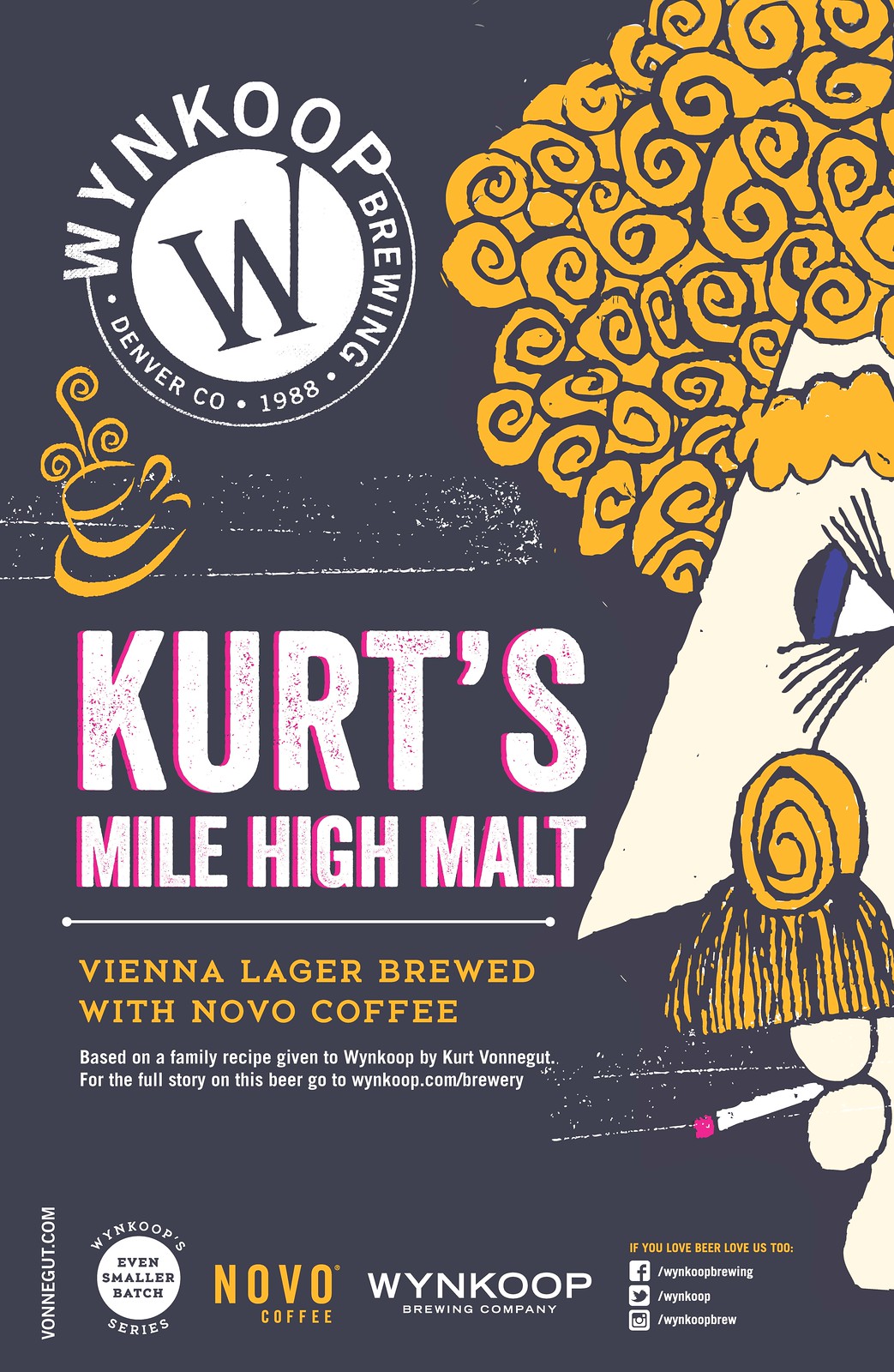
The label artwork was based on a self-portrait by Vonnegut, who was also an artist.

kurtvonnegut

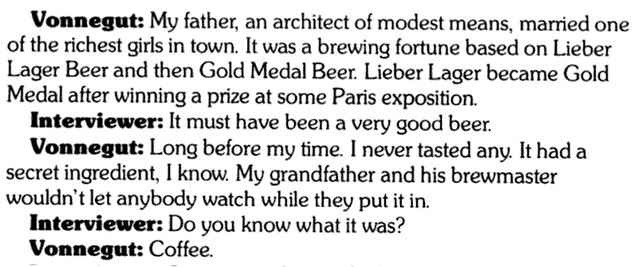
And in the book “Conversations with Kurt Vonnegut,” by Kurt Vonnegut and William Richard Allen, he explains more about his grandfather’s beer.

Vonnegut-interview

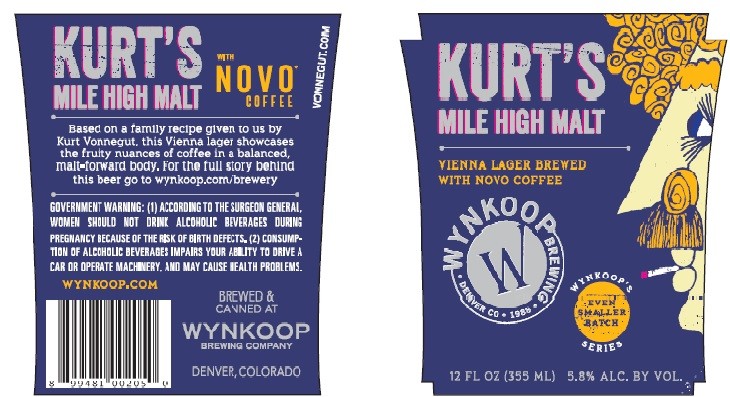
mile-hi-malt-label

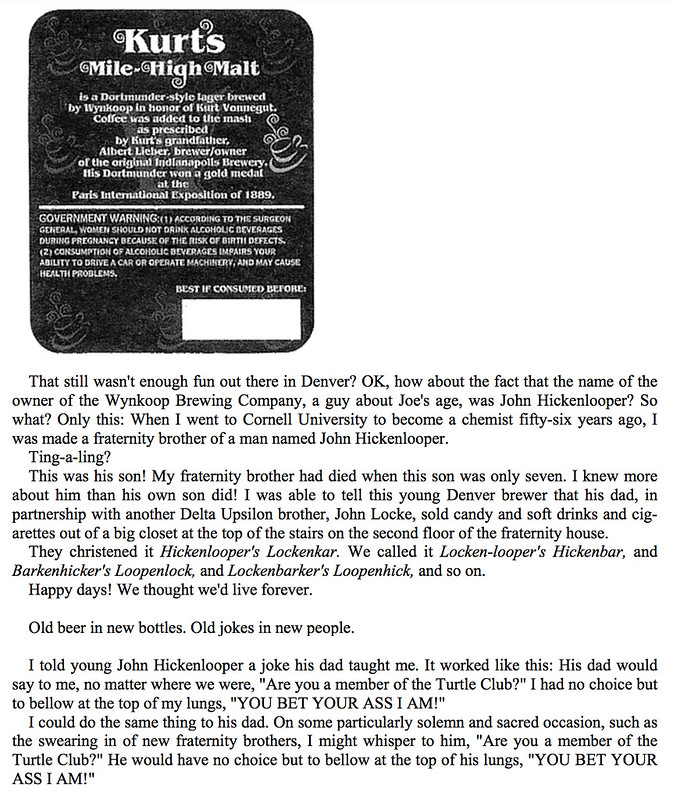
On November 11, 2007, Wynkoop Brewing Company in Denver, reintroduced Kurt’s Mile High Malt to celebrate the late author’s birthday. The beer was originally created by Vonnegut’s grandfather, Albert Lieber, of the Indianapolis Brewery, using coffee as the secret ingredient. Kurt’s Mile High Malt was first brewed in 1996 thanks to Wynkoop Founder and Denver Mayor John Hickenlooper, a friend of Vonnegut’s. At Vonnegut’s request, coffee was added to the Mile High Malt, making it a close recreation of his grandfather’s original.

kurts-oldnew-front

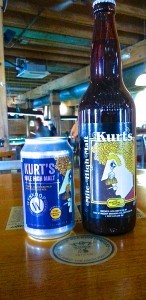
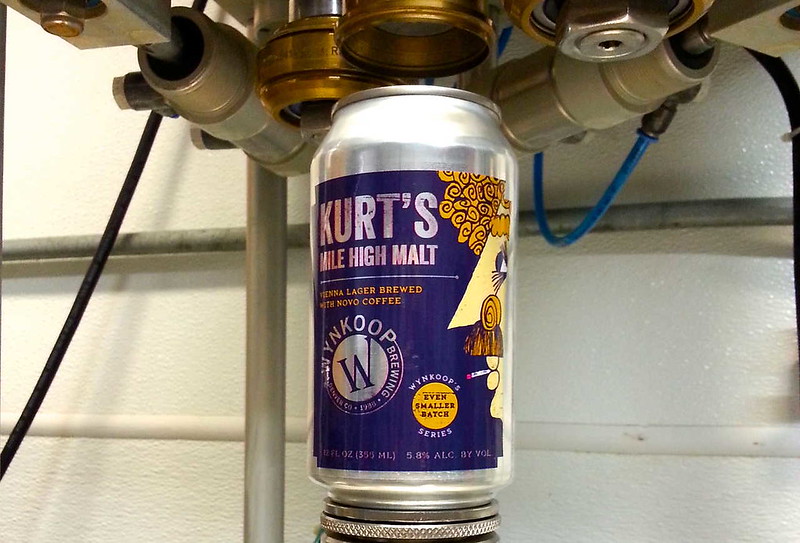
Then, in 2014, they released it again for the brewery’s 25th anniversary. It was part of their “Even-Smaller Batch Series” and was even canned.

mile-hi-malt-can

Kurts_Poster2014-lg

Filed Under: Beers, Just For Fun, Related Pleasures Tagged With: Colorado, Denver, History, Literature

Second-To-Last Session: The Future Of Beer Blogging

November 8, 2018 By Jay Brooks

session-the
For our 141th Session, our host will be me again, which will make sense shortly. As you may know, I write the Brookston Beer Bulletin, and have been involved in The Session since Stan Hieronymus first conceived of it in 2007. For my topic, I have chosen The Future Of Beer Blogging, which seems to be changing a lot lately, I believe, and is certainly different than it was ten years ago.

CrystalBall_Beer

My topic is fairly broad and open-ended, but centered on what has happened to beer blogging over the almost eleven years since we started the monthly Session. Back in those dark ages of the mid-2000s, beer blogging was relatively new, and many people were jumping in, no doubt in part because of how easy and inexpensive it was to create a platform to say whatever you wanted to say. It was the Wild West, and very vibrant and engaging. You could write short or long, with or without pictures, and basically say whatever you wanted. People engaged in commenting, and whole threads of conversation ensued. It was great.

Fast forward a decade and there are many more ways that people interact online, and blogs, I think, lost their vaunted place in the discussion. Now there’s also Facebook, Twitter, Instagram and countless other ways to communicate online. This has meant blogging, I believe, has lost its place at the top, or in the middle, or wherever it was. That’s how it feels to me, at least. I think one incident that confirmed this for me is that recently the Beer Bloggers & Writers Conference changed its name to the “Beer Now Conference,” a seeming acknowledgment that the landscape has changed. They explained the decision thusly:

We love bloggers. But after many discussions with key players, we have determined our community has reached consensus that the term “bloggers” is too limiting. Blogging, after all, is just one medium used by beer writers. Even with our switch in 2015 to the name Beer Bloggers & Writers Conference, we believe we are not including those who primarily communicate on beer via podcasts, photos, and video.

So where do you think the future of beer blogging is heading? What will it look like next year, or in ten years? Will it even still be around? If not, what will replace it? People won’t stop talking about beer, analyzing it and tasting it. But how we do all of those things certainly will. That’s what I’m interested in with this topic. What do you think the future will hold? What will we all be doing, beerwise?

To participate in the November Session, simply leave a link to your session post by commenting to this announcement, or email me, ideally on or before Friday, November 9, or really anytime this month. Since this is late notice, and our second-to-last Session, take all the time you need.

sorry-were-closing

Participation in The Session has been waning for quite some time now, and finding willing hosts has become harder and harder. I’ve had to cajole and beg for hosts many times, and I’m not sure why I’ve kept it up other than we’ve been doing it so long that I just kept going out of habit. But the reality is that if people don’t want to host and fewer and fewer people are actually participating I’d say that’s a pretty strong signal that the time has come to shut down the Session. So in consultation with Stan, we’ve decided that December 2018 will be the last Session. It’s been over ten years and by the time the smoke clears we’ll have done 142 Sessions, which is a pretty good run. Thanks to everybody who’s hosted and participated over the years. After this Session, there will be one more, and I could think of no more fitting host than the man who started it all, so Stan Hieronymus has agreed to be the final host to put a bookend on this grand 11-year adventure.

now-what-03

So by next year, The Session will be a distant memory. Now what? Is there something else we could, or should, be doing as an online community of people who write about beer through the internet? I don’t know the answer. I hate to see this end, but people’s priorities and methods of communication have been evolving so I’m not sure in what form we could keep any engagement going. But I can start a conversation. So let’s discuss. As a coda to this month’s session, please consider what we could do as a group to remotely weigh in on the beer world from time to time. Maybe the answer is nothing. But maybe it isn’t. As a bonus topic, what ideas do you have for what to do next?

Filed Under: Just For Fun, Related Pleasures, The Session Tagged With: Blogging, Websites, Writing

Myles na Gopaleen, Inventor Of Stout Trousers

October 5, 2018 By Jay Brooks

ireland
Today is the birthday of Irish novelist, playwright and satirist Brian O’Nolan, who was “considered a major figure in twentieth century Irish literature. Born in Strabane, County Tyrone, he is regarded as a key figure in postmodern literature.” Under the pen name Flann O’Brien, he wrote two influential novels, “At Swim-Two-Birds” and “The Third Policeman.” In 1940, he began writing a daily column for The Irish Times entitled the “Cruiskeen Lawn,” which trasnaltes roughly as “the full little jug.” He originally started writing it under the pseudonym “An Broc” (the badger) but quickly changed it to “Myles na gCopaleen” and finally “Myles na Gopaleen,” which is the one that stuck. He continued writing it until shortly before he died in 1966. Many of them have been collected in book form, and today I was perusing “The Best of Miles,” published in 1968, and discovered this little gem in a chapter entitled “Research Bureau,” about his patented new “Stout Trousers,” that would allow a person to conceal eight bottles of stout in his pants.

“Before the leaves of autumn fall, the Research Bureau, spurred on by the exhortations of Sir Myles na Gcopaleen (the da) will have provided new patent emergency trousers for the plain people of Ireland. These garments, conventional enough in appearance, will be fitted with long eel-like pockets reaching down to the ankles. The pockets will be the exact diameter of a bottle of stout and not by any coincidence, for they are designed to deal with the nuisance of those brown-paper Saturday-night parcels. It will be possible to stow four shots in each leg. At first, walking in the ‘loaded’ position will necessarily be rather slow and straight-legged but practice will tell in the long-run, which should be undertaken only after short runs have been mastered.

What will happen if a man gets an accidental blow in the leg and has his bottles smashed? Nothing. The pockets are stout-proof and the beer will lie safely in the bottom until it can be syphoned into a guest’s mouth, in the privacy of the home. Indeed, many men, disdaining the rather precious affectation of bottles, will have their trousers filled with draught stout or porter and saunter home on their puffy, tubular and intoxicating legs. Where bottles are discarded, however, one must be careful to avoid overcrowded trams and ‘buses. Should a fat lady sit down beside you and crush you with her great girth to make way for her loud children, great cascades of stout may emerge from your pockets, ascending to the roof and drenching everybody with the frothy brew.”

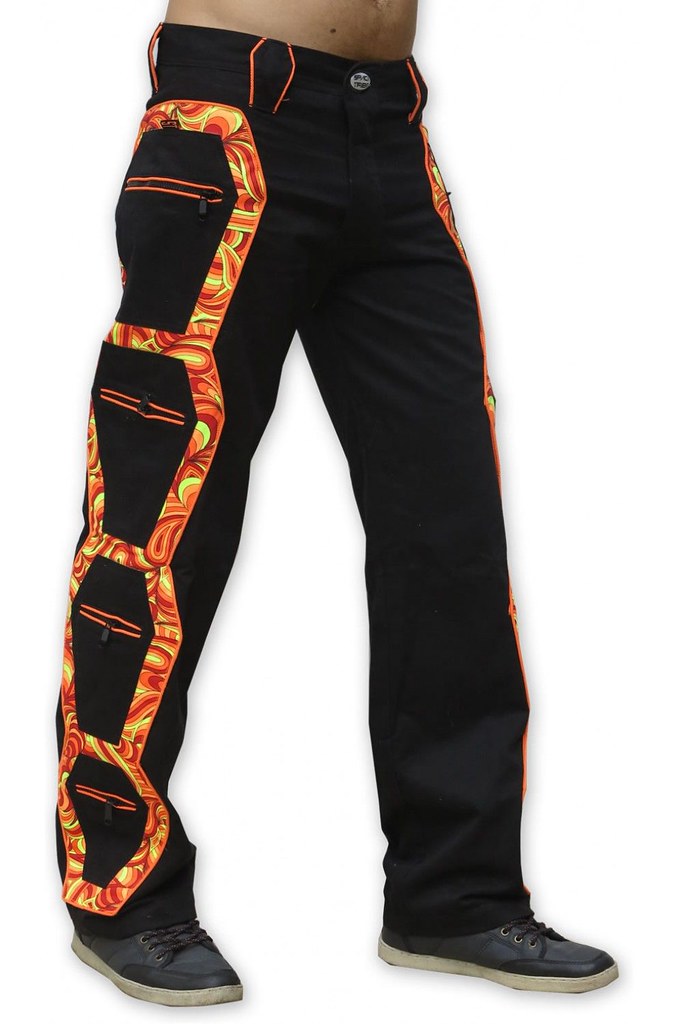
I’m not really sure why nobody ever made Stout Trousers for real. This photo below is the closest I could find of what I imagine the pants would look like.

pocket-trousers

Filed Under: Beers, Just For Fun, Related Pleasures Tagged With: Guinness, History, Ireland, Literature

« Previous Page
Next Page »

Find Something

Northern California Breweries

Please consider purchasing my latest book, California Breweries North, available from Amazon, or ask for it at your local bookstore.

Recent Comments

  • Bob Paolino on Beer Birthday: Grant Johnston
  • Gambrinus on Historic Beer Birthday: A.J. Houghton
  • Ernie Dewing on Historic Beer Birthday: Charles William Bergner 
  • Steve 'Pudgy' De Rose on Historic Beer Birthday: Jacob Schmidt
  • Jay Brooks on Beer Birthday: Bill Owens

Recent Posts

  • Beer In Ads #5389: Point & Brunswick Bock Beer November 10, 2026
  • Historic Beer Birthday: Edward Cecil Guinness November 10, 2026
  • Historic Beer Birthday: Jacob Betz November 10, 2026
  • Beer In Ads #5388: Bock Beer Vats In The Brewers Hall November 9, 2026
  • Historic Beer Birthday: Peter Barbey November 9, 2026

BBB Archives

Feedback

Head Quarter
This site is hosted and maintained by H25Q.dev. Any questions or comments for the webmaster can be directed here.