Brookston Beer Bulletin

Jay R. Brooks on Beer

  • Home
  • About
  • Editorial
  • Birthdays
  • Art & Beer

Socialize

  • Dribbble
  • Email
  • Facebook
  • Flickr
  • GitHub
  • Instagram
  • LinkedIn
  • Pinterest
  • RSS
  • Twitter
  • YouTube

Powered by Genesis

Beer In Ads #5186: Graupner’s Bock Beer Is Here …

January 29, 2026 By Jay Brooks

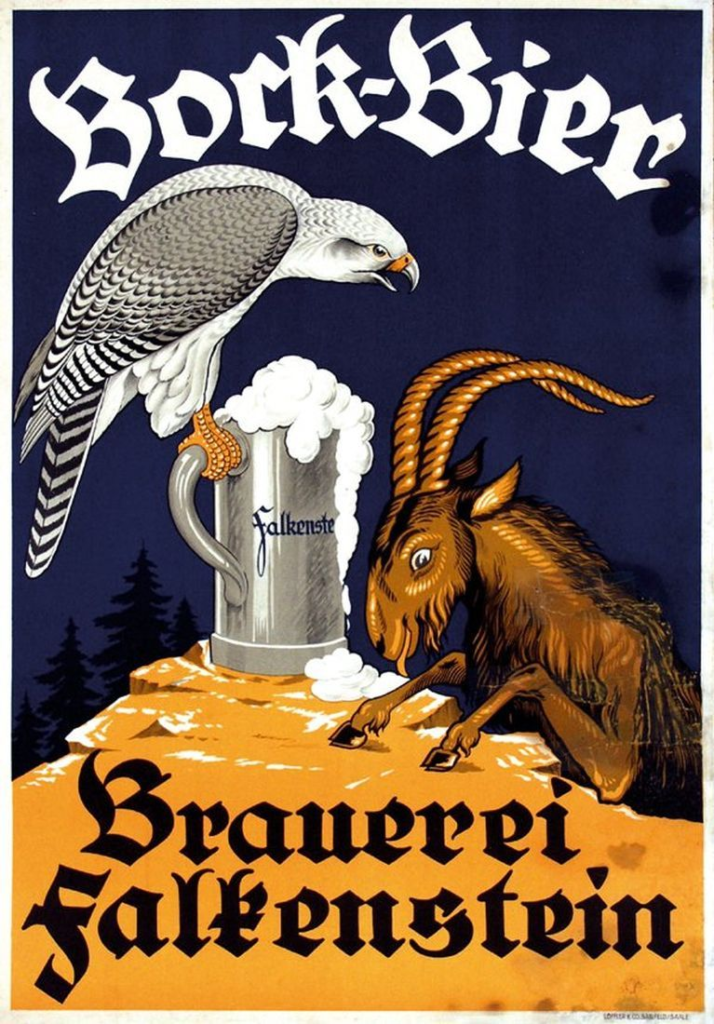
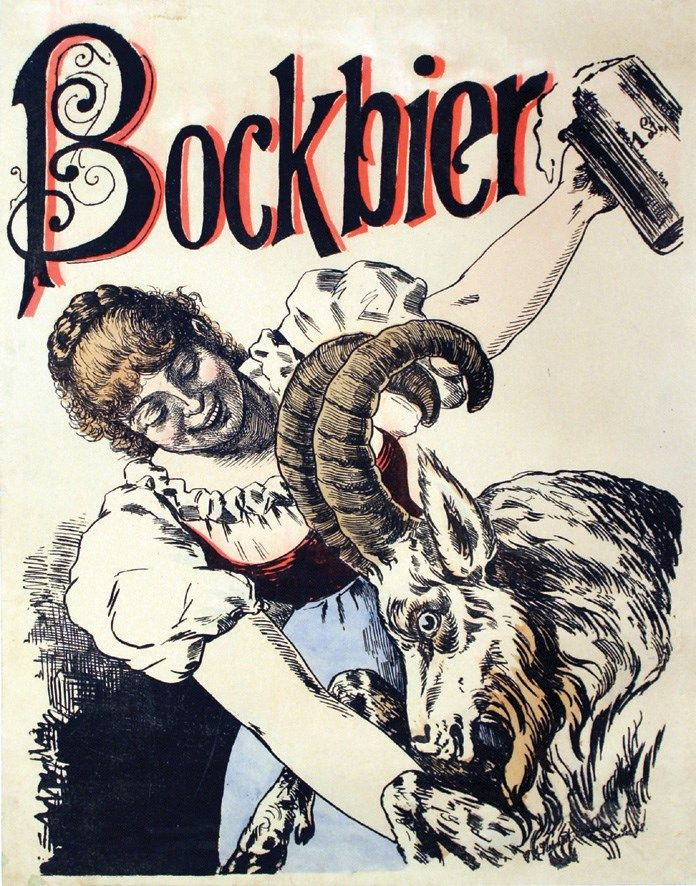
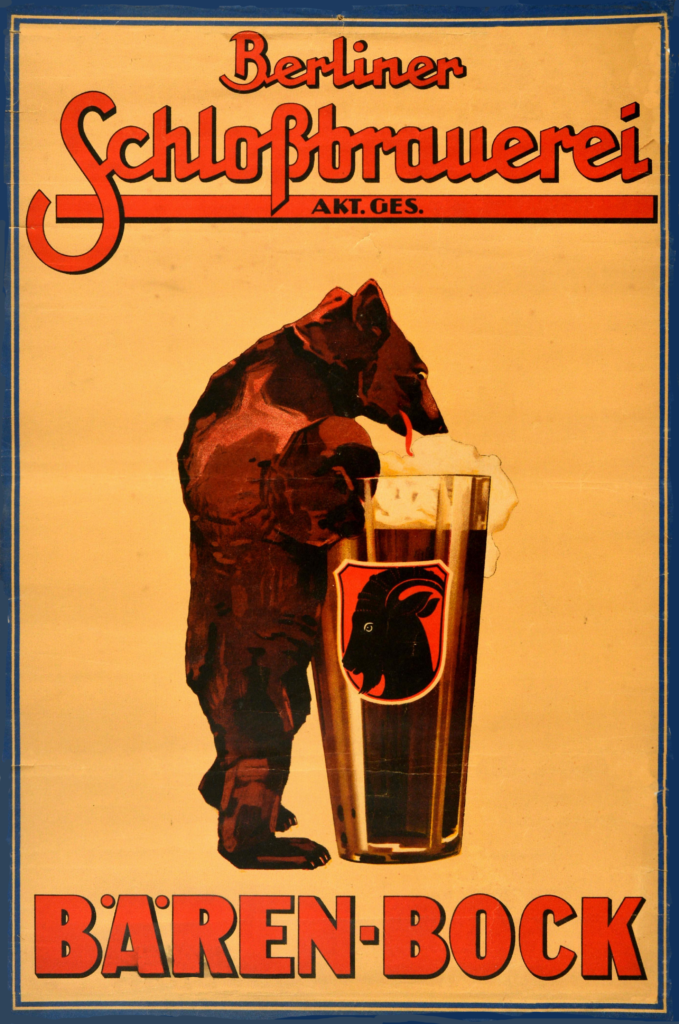
Two years ago I decided to concentrate on Bock ads for awhile. Bock, of course, may have originated in Germany, in the town of Einbeck. Because many 19th century American breweries were founded by German immigrants, they offered a bock at certain times of the year, be it Spring, Easter, Lent, Christmas, or what have you. In a sense they were some of the first seasonal beers. “The style was later adopted in Bavaria by Munich brewers in the 17th century. Due to their Bavarian accent, citizens of Munich pronounced ‘Einbeck’ as ‘ein Bock’ (a billy goat), and thus the beer became known as ‘Bock.’ A goat often appears on bottle labels.” And presumably because they were special releases, many breweries went all out promoting them with beautiful artwork on posters and other advertising.

Thursday’s ad is for Graupner’s Bock Beer, which was published on January 29, 1948. This ad was for the Graupners of Harrisburg, Pennsylvania, which was originally founded in 1875 by Edward and John Koenig, by Robert H. Graupner bought the brewery in 1893 and he, and then his family, ran it until 1951. This ad ran in The Harrisburg Telegraph, also of Harrisburg, Pennsylvania.

Filed Under: Art & Beer, Beers, Breweries, Just For Fun Tagged With: Advertising, Bock, History, Pennsylvania

Historic Beer Birthday: W.C. Fields

January 29, 2026 By Jay Brooks

wc-fields-logo
Today is the birthday of W.C. Fields (January 29, 1880–December 25, 1946). His full name was William Claude Dukenfield. He “was an American comedian, actor, juggler and writer. Fields’ comic persona was a misanthropic and hard-drinking egotist, who remained a sympathetic character despite his snarling contempt for dogs and children.

His career in show business began in vaudeville, where he attained international success as a silent juggler. He gradually incorporated comedy into his act, and was a featured comedian in the Ziegfeld Follies for several years. He became a star in the Broadway musical comedy Poppy (1923), in which he played a colorful small-time con man. His subsequent stage and film roles were often similar scoundrels, or else henpecked everyman characters.

Among his recognizable trademarks were his raspy drawl and grandiloquent vocabulary. The characterization he portrayed in films and on radio was so strong it was generally identified with Fields himself. It was maintained by the publicity departments at Fields’ studios (Paramount and Universal) and was further established by Robert Lewis Taylor’s biography, W.C. Fields, His Follies and Fortunes (1949). Beginning in 1973, with the publication of Fields’ letters, photos, and personal notes in grandson Ronald Fields’ book W.C. Fields by Himself, it was shown that Fields was married (and subsequently estranged from his wife), and financially supported their son and loved his grandchildren.”

w-c-fields-hat

Known as “The Great One,” William Claude Dukenfield was better known to the world by his stage name, W.C. Fields. Born in Darby, Pennsylvania, on January 29, 1880, Fields created a hard-drinking, sarcastic, egocentric persona that was so convincing he became one of the most famous drunk misanthropes who ever lived. He famously said that a man should “never work with animals or children,” and carefully cultivated the perception of a curmudgeon, but in real life he was a devoted father and grandfather.

His entertainment career began in vaudeville, where he made a name for himself as a juggler and comedian, and later took the act on Broadway, before making his first short films in 1915. He eventually made around 45 films, the most of famous of which were “Tillie’s Punctured Romance,” “The Fatal Glass of Beer,” “My Little Chickadee,” “The Bank Dick” and “Never Give a Sucker an Even Break.” Most of his most memorable quotes come from his films, though they’ve become entwined with his public persona, making it difficult to separate his roles from the man.

Fields with Mae West.

Fields’ screen character often expressed a fondness for alcohol, a prominent component of the Fields legend. Fields never drank in his early career as a juggler, because he did not want to impair his functions while performing. Eventually, the loneliness of constant travel prompted him to keep liquor in his dressing room as an inducement for fellow performers to socialize with him on the road. Only after he became a Follies star and abandoned juggling did Fields begin drinking regularly.[59] His role in Paramount Pictures’ International House (1933), as an aviator with an unquenchable taste for beer, did much to establish Fields’ popular reputation as a prodigious drinker. Studio publicists promoted this image, as did Fields himself in press interviews.

Fields expressed his fondness for alcohol to Gloria Jean (playing his niece) in Never Give a Sucker an Even Break: “I was in love with a beautiful blonde once, dear. She drove me to drink. That’s the one thing I am indebted to her for.” Equally memorable was a line in the 1940 film My Little Chickadee: “Once, on a trek through Afghanistan, we lost our corkscrew…and were forced to live on food and water for several days!” The oft-repeated anecdote that Fields refused to drink water “because fish fuck in it” is unsubstantiated.

On movie sets Fields famously shot most of his scenes in varying states of inebriation. During the filming of Tales of Manhattan (1942), he kept a vacuum flask with him at all times and frequently availed himself of its contents. Phil Silvers, who had a minor supporting role in the scene featuring Fields, described in his memoir what happened next:

One day the producers appeared on the set to plead with Fields: “Please don’t drink while we’re shooting — we’re way behind schedule” … Fields merely raised an eyebrow. “Gentlemen, this is only lemonade. For a little acid condition afflicting me.” He leaned on me. “Would you be kind enough to taste this, sir?” I took a careful sip — pure gin. I have always been a friend of the drinking man; I respect him for his courage to withdraw from the world of the thinking man. I answered the producers a little scornfully, “It’s lemonade.” My reward? The scene was snipped out of the picture.

There’s no doubt that regardless of how much Fields drank, he certainly created a reputation and persona around it. And while he seems to have favored whiskey, gin and other spirits, he did love his beer, too. Below are some quotes I’ve collected by Fields, the first group being quotes he said, or were attributed to him, while the second group are quotes from films he appeared in, and thus easier to verify.

Personal Quotes

  • “I never drank anything stronger than beer before I was twelve.”
  • “Everybody has to believe in something … I believe I’ll have another beer.”
  • “If I had to live my life over, I’d live over a saloon.”
  • “I never drink water; that is the stuff that rusts pipes.”
  • “I drink therefore I am.”
  • “There are only two real ways to get ahead today — sell liquor or drink it.”
  • “I like to keep a bottle of stimulant handy in case I see a snake, which I also keep handy.”
  • “I must have a drink of breakfast.”
  • “I never worry about being driven to drink; I just worry about being driven home.”
  • “It was a woman who drove me to drink, and I never had the courtesy to thank her for it.”
  • “A woman drove me to drink and I didn’t even have the decency to thank her.”
  • “Fell in love with a beautiful blonde once. Drove me to drink. And I never had the decency to thank her.”
  • “Now don’t say you can’t swear off drinking; it’s easy. I’ve done it a thousand times.”
  • “Once, during Prohibition, I was forced to live for days on nothing but food and water.”
  • “Reminds me of my safari in Africa. Somebody forgot the corkscrew and for several days we had to live on nothing but food and water.”
  • “I never drink water. I’m afraid it will become habit-forming.”
  • “What contemptible scoundrel stole the cork from my lunch?”
  • “I spent half my money on gambling, alcohol and wild women. The other half I wasted.” [Note: Tug McGraw has a similar quote attributed to him.]

wcfields-cup

Film Quotes


Ouliotta Delight Hemogloben: “Do you think he drinks?”Mrs. Hemogloben: “He didn’t get that nose from playing ping-pong.”

— From “Never Give a Sucker an Even Break,” 1941


Receptionist: “Some day you’ll drown in a vat of whiskey!”The Great Man: “Drown in a vat of whiskey. Death, where is thy sting?”

— From “Never Give a Sucker an Even Break,” 1941


The Great Man: [Suffering from a hangover] “Somebody put too many olives in my martini last night!”Stewardess: “Should I get you a Bromo?”

The Great Man: “No, I couldn’t stand the noise!”


— From “Never Give a Sucker an Even Break,” 1941


Egbert Sousé: “Ten cents a share. Telephone sold for five cents a share. How would you like something better for ten cents a share? If five gets ya ten, ten’ll get ya twenty. A beautiful home in the country, upstairs and down. Beer flowing through the estate over your grandmother’s paisley shawl.”Og Oggilby: “Beer?”

Egbert Sousé: “Beer! Fishing in the stream that runs under the aboreal dell. A man comes up from the bar, dumps $3,500 in your lap for every nickel invested. Says to you, “Sign here on the dotted line.” And then disappears in the waving fields of alfalfa.”


— From “The Bank Dick,” 1940


Egbert Sousé, to his bartender: “Was I in here last night, and did I spend a twenty dollar bill?”Bartender: “Yeah.”

Egbert Sousé: “Oh, boy. What a load that is off my mind. I thought I’d lost it.”


— From “The Bank Dick,” 1940


Cuthbert J. Twillie: “During one of my treks through Afghanistan, we lost our corkscrew. Compelled to live on food and water … for several days.”

— From “My Little Chickadee,” 1940


Cuthbert J. Twillie, nursing a hangover: “I feel as though a midget with muddy feet had been walking over my tongue all night.”

— From “My Little Chickadee,” 1940


Whipsnade: “Some weasel took the cork out of my lunch.”

— from “You Can’t Cheat An Honest Man,” 1939


S.B. Bellows: “Meet me down in the bar! We’ll drink breakfast together.”

— From “The Big Broadcast of 1938,” 1938


Businessman: “You’re drunk.”Harold: “Yeah, and you’re crazy. But I’ll be sober tomorrow, and you’ll be crazy for the rest of your life.”

— From “It’s a Gift,” 1934


Quail, to a valet: “Hey, garcon. Bring me a drink.”Valet: “Water, sir?”

Quail: “A little on the side…very little.”


— From “International House,” 1933

W.C. Fields in “International House.

Filed Under: Birthdays, Just For Fun, Related Pleasures Tagged With: Celebrities, Film, History

Beer In Ads #5185: It’s Bock Time

January 28, 2026 By Jay Brooks

Two years ago I decided to concentrate on Bock ads for awhile. Bock, of course, may have originated in Germany, in the town of Einbeck. Because many 19th century American breweries were founded by German immigrants, they offered a bock at certain times of the year, be it Spring, Easter, Lent, Christmas, or what have you. In a sense they were some of the first seasonal beers. “The style was later adopted in Bavaria by Munich brewers in the 17th century. Due to their Bavarian accent, citizens of Munich pronounced ‘Einbeck’ as ‘ein Bock’ (a billy goat), and thus the beer became known as ‘Bock.’ A goat often appears on bottle labels.” And presumably because they were special releases, many breweries went all out promoting them with beautiful artwork on posters and other advertising.

Wednesday’s ad is for Walter’s Bock Beer, which was published on January 28, 1966. This ad was for the Walter Brewing Co. of Pueblo, Colorado, which was originally founded in 1889 in Eau Claire, Wisconsin by Johannes Walter, while his brother Martin Walter opened a location in Colorado in 1898. This ad ran in The Daily Sentinel, of Grand Junction, Colorado.

Filed Under: Art & Beer, Beers, Breweries, Just For Fun Tagged With: Advertising, Bock, Colorado, History, Wisconsin

Historic Cider Birthday: H.P. Bulmer

January 28, 2026 By Jay Brooks

bulmers
Today is the birthday of Henry Percival “H.P.” Bulmer (January 28, 1867-December 2, 1919). He was born in Credenhill, Herefordshire, England. He founded Bulmer’s Cider in 1887, and his brother Fred joined him in the business a year later. “He is said to have taken his mother’s advice to make a career in food or drink, “because neither ever go out of fashion.” The company’s two principal brands are its own Bulmers cider, which is sold worldwide, and Strongbow, which is sold across Europe, the US, Australasia and the Far East. The company is owned by Heineken International. Today, HP Bulmer makes 65% of the five hundred million litres of cider sold annually in the United Kingdom and the bulk of the UK’s cider exports. The firm’s primary competitor is the Irish C&C Group and its Magners brand (which holds the licence to the Bulmers name within the Republic of Ireland only).”

hp-bulmer
Here’s his biography from the Oxford Dictionary of National Biography:

Bulmer, Henry Percival [Percy] (1867–1919), cider maker, was born on 28 January 1867 at the rectory, Credenhill, Herefordshire, the second son of Charles Henry Bulmer (1833–1918), rector of Credenhill, and his wife, Mary Grace Parnel Bulmer (née Cockrem). The rector was the son and grandson of Hereford wine merchants and cider makers, and himself won prizes for his bottled cider and perry. Bulmer, who was usually known as Percy, suffered from asthma as a child, and his interrupted education at Hereford Cathedral school between 1880 and 1886 gave him no chance of going to university. In 1887, at the age of twenty, he began to make cider out of the apples grown in his father’s glebe orchard, borrowing the family pony and a neighbour’s cider-mill for the purpose.

At that time most cider was made by farmers with ancient and primitive equipment out of any apples that came to hand, to be drunk as payment in kind by their thirsty but undiscriminating labourers. Bottled cider, carefully made from selected apples, for sale in hotels, public houses, and off-licences, was a rarity. It was this select market that Bulmer meant to supply. In the autumn of 1887 he moved to Hereford, where in his first full year of business he made forty casks (4000 gallons) of cider, that sold for a mere £157. His elder brother, Edward Frederick Bulmer (1865–1941), cider maker, born on 26 May 1865, at the rectory, Credenhill, lent a hand with the manual labour in the long vacations. Unlike Percy, Fred Bulmer went from Hereford Cathedral school to Shrewsbury School, and thence to King’s College, Cambridge, with an exhibition in classics. On graduation in 1889, he joined his brother in the cider business. The brothers only had one employee at first, but, small though the firm was, it produced cider of excellent quality, winning prizes in Paris in 1888 and at the Royal Agricultural Show in 1889. These successes almost certainly reflected not only the rector’s skill and experience, but also his financial support, as the brothers had little capital. They borrowed from some of Fred’s Cambridge friends and from the local bank; the rector, by pledging his life insurance policy, raised a further £1760. With these funds they bought land, erected some buildings, and invested in equipment typical of the industrial age—a steam engine, hydraulic presses and pumps, and some large vats.

There was an informal division of labour between the two brothers: Percy Bulmer concentrated on production, organizing the factory, reading Pasteur on yeasts, visiting Rheims to learn the techniques of champagne making (transferable to cider), and Germany to study the handling of sugar beet (what was good for beet was good for apples). He also studied bottling at the works where the Apollinaris mineral water was produced. The firm consulted analytical chemists from time to time, and from 1905 had a small laboratory of its own, where important discoveries were made by H. E. Durham. Fred Bulmer undertook purchase and marketing, and was, inter alia, the commercial traveller. Affable and outgoing, he was equal to most situations. Confronted with a blunt Yorkshireman, who asked him who the hell he thought he was staring at, Fred replied ‘The rudest bugger I ever saw’ (Bulmer, Early Days, 10). The riposte won him a good order and a firm friendship. Nevertheless, he was happy to give up touting for orders when in 1896, with output not far short of 200,000 gallons a year, the firm appointed a full-time commercial traveller. The Bulmers owed their success not only to hard work, access to adequate funds, and a little science, but also to a flair for publicity. In an age well aware of the uses of advertising, they were skilful practitioners of the art: in brochures, by poster, and by the choice of such evocative brand names as Pomagne, Woodpecker, and Strongbow. The firm ran its business on advanced paternalist lines, instituting a superannuation scheme in 1898, and family allowances in 1938. It also built some workers’ housing. The housing schemes and charitable trusts continue to benefit the people of Hereford.

Percy Bulmer was chairman and managing director, and also the more single-minded businessman. He was secretary of the short-lived National Association of English Cider Makers, founded in 1894. Fred, as head of the largest firm of cider makers, was the natural choice as chairman when the association was refounded in 1920. Percy had doubted the power of government to effect much social improvement, whereas Fred Bulmer was an ardent ‘new Liberal’, active in local politics. He was a local and a county councillor, and was twice mayor of Hereford. In later years, he moved to the right and in 1931 supported the National Government.

Percy Bulmer married a cousin, Susan Mildred Ball (1870/71–1968), in 1894, and they had four sons, and a daughter who died in infancy. Fred Bulmer married, in 1899, Sophie Rittner (1874–1968), the daughter of a Liverpool merchant of German origin. They had three sons and three daughters.

The brothers ran the business as a partnership until 1918, when H. P. Bulmer & Co. was turned into a private company, as a result of Percy Bulmer’s developing cancer; he died at the early age of fifty-two at his home, Longmeadow, Hereford, on 2 December 1919. His brother succeeded him as chairman. By then the firm was a soundly established concern with 200 employees, and produced some three-quarters of a million gallons of cider a year. When Fred Bulmer retired in 1938, the workforce had quadrupled, output was approaching 4 million gallons, and the firm was by far the largest cider maker in the country. Fred died on 2 September 1941 at his home, Adams Hill, Breinton, Herefordshire, at the age of seventy-six. Of contrasting characters and complementary talents, H. P. and E. F. Bulmer can fairly be regarded as joint creators of the firm that bears the younger brother’s name. It became a public limited company in 1970.

bulmers-factory-1888
The original Bulmers’ cider factory in 1888, on Ryelands Street, Hereford.

And this history of the Bu;mer Cider Co. is from the website of The Cider Museum, Pomona Place, Hereford, on the part of their “Archive of Cider Pomology” entitled Industrialisation 1860s Onwards:

Fred Bulmer describes the beginning of the Bulmers factory, in a charming booklet called ‘Early Days of Cider Making’. He and his brother (H P or Percy Bulmer) were young men, sons of a gentleman vicar. Fred was Cambridge educated but Percy, due to ill health, had ‘no Education at all’ and it was he who began the cider business, joined one year later by Fred. In the first year of their enterprise, 1887, Percy produced 4,000 gallons of cider using traditional methods. The brothers became ‘whole time workers’, working round the clock. There were no cider making machines to speed the process up, so they invented them. With the help of an engineering friend the brothers innovated, they also imported a mill and press from France where production was more advanced, and in 1892 put in hydraulic pumps and two more presses. By 1894 they were selling £7558 of cider a year, 48 times more than the first year of their partnership in 1888. They also had a workforce. Bulmers only produced bottled cider in the early years and in 1898, just 11 years on from their first year, the bottling line employed 37 women.

Bulmers grew and grew. By 1919 there were 2 acres of cellaring below ground and they were selling 80,000 gallons p.a. which made a profit of £9,000. In 1937 as much as 20,000 tons could be pressed during the season September to December.

Between 1948 and 1960 turn over increased from £1,604,000 to £3,008,000. In 1957 a new bottling hall was erected at end of Plough Lane and by 1964 most bottling had been transferred there.

In 1970, in response to a cash flow crises brought on by investment in the company and high death duties on two family members, the decision was made to go public. The Bulmer family retained 65% of the shares.

In 1970 there were nine directors, four of whom were Bulmer’s family. The turnover was nearly £11m and they employed 1,817 people. Nearly 85,000 apple trees were planted in an attempt to keep ahead of demand and the orchards were producing 15,000 tons of apples a year. Output was over 100,000 gallons a day and their modern flagon bottling line could fill 12,000 bottles and hour. They had 60% of the £25m market (£15m). In 1985 the board had been divided into executive and non executive directors, 12 in all, four of whom were Bulmer’s family. By this time 35,000 tons of apples were being pressed a year. The record day was 1982 when the company pressed just over 1,000 tonnes in a day. The group produced several drinks including cider and had overseas operations. The total turnover was £138m and the profit £17m.

In 2003 Bulmers got into financial difficulties due to over investment abroad. The firm was taken over by Scottish and Newcastle. In 2008 Scottish and Newcastle were taken over by Heineken who now run the Bulmer’s cider business. Fruit processing (crushing the apples) has moved from the Bulmers site in Plough Lane, Hereford to Universal Beverages Ltd (UBL), Ledbury, also owned by Heineken. Some fermentation, processing and bottling is also done at this site but the huge majority of production is still carried out at the Plough Lane site in Hereford. The fruit concentrate is taken into the factory here by tanker and processed into their leading brands such as Strongbow and Woodpecker employing around 250 people and producing over 3 million hectolitres a year (68 million gallons), about half UK total output. Bulmers also runs a bouyant Fruit Office employing 30 staff, managing 10,000 acres of orchard, about a quarter of which is company owned, the remaining three quarters is on long term contract to individual growers.

Bulmers-early
An early view of the Bulmers Cider Co.

And this short history is from H.P. Bulmers Wikipedia page:

Using apples from the orchard at his father’s rectory and an old stone press on the farm next door, Percy Bulmer made the first cider, upon which the family fortune would be made.

In 1889, his elder brother Fred (Edward Frederick Bulmer), coming down from King’s College, Cambridge, turned down the offer of a post as tutor to the children of the King of Siam to join Percy in his fledgling cider business.

With a £1,760 loan from their father, the brothers bought an 8 acres (3.2 ha) field just outside the city and built their first cider mill. It was little more than a barn compared to the huge modern stainless-steel computer-controlled cider-making plant that has grown up on a 75 acres (30.4 ha) site nearby.

Cider-making was then an unpredictable activity, the natural fermentation process being achieved by yeast contained within apples; meant that the cider often became sour. It was a college friend of Fred’s, Dr Herbert Durham, who, in the 1890s, isolated a wild yeast to create the first pure cider yeast culture, which would ensure that fermentations were consistent. This was the start of commercial cider-making.

Bulmers was first granted the Royal Warrant in 1911 and continues today as ‘Cider Maker to Her Majesty the Queen.’ It was incorporated as a private company on 27 June 1918. It described its cider as “The White Wine of England”.

Bulmers-early-20th
H.P. Bulmer’s in the early 20th century.

Filed Under: Birthdays, Just For Fun, Related Pleasures Tagged With: Cider, England, History

Beer Birthday: Shane McNamara

January 28, 2026 By Jay Brooks

Today is the 37th birthday of Shane McNamara, who is a Master Cicerone and the Global Director, Innovation Quality & Beyond Beer for Anheuser-Busch InBev. He’s been with ABI for seven years, and before that he was with the Chartered Institute of Brewers and Distillers (CIBD) and before that brewed at CRATE Brewery in London. He’s originally from Australia, but lives in New York. I believe I first met Shane when Emily Sauter introduced us in Minneapolis during CBC, but we’ve run into each other multiple time since then. Join me in wishing Shane a very happy birthday.
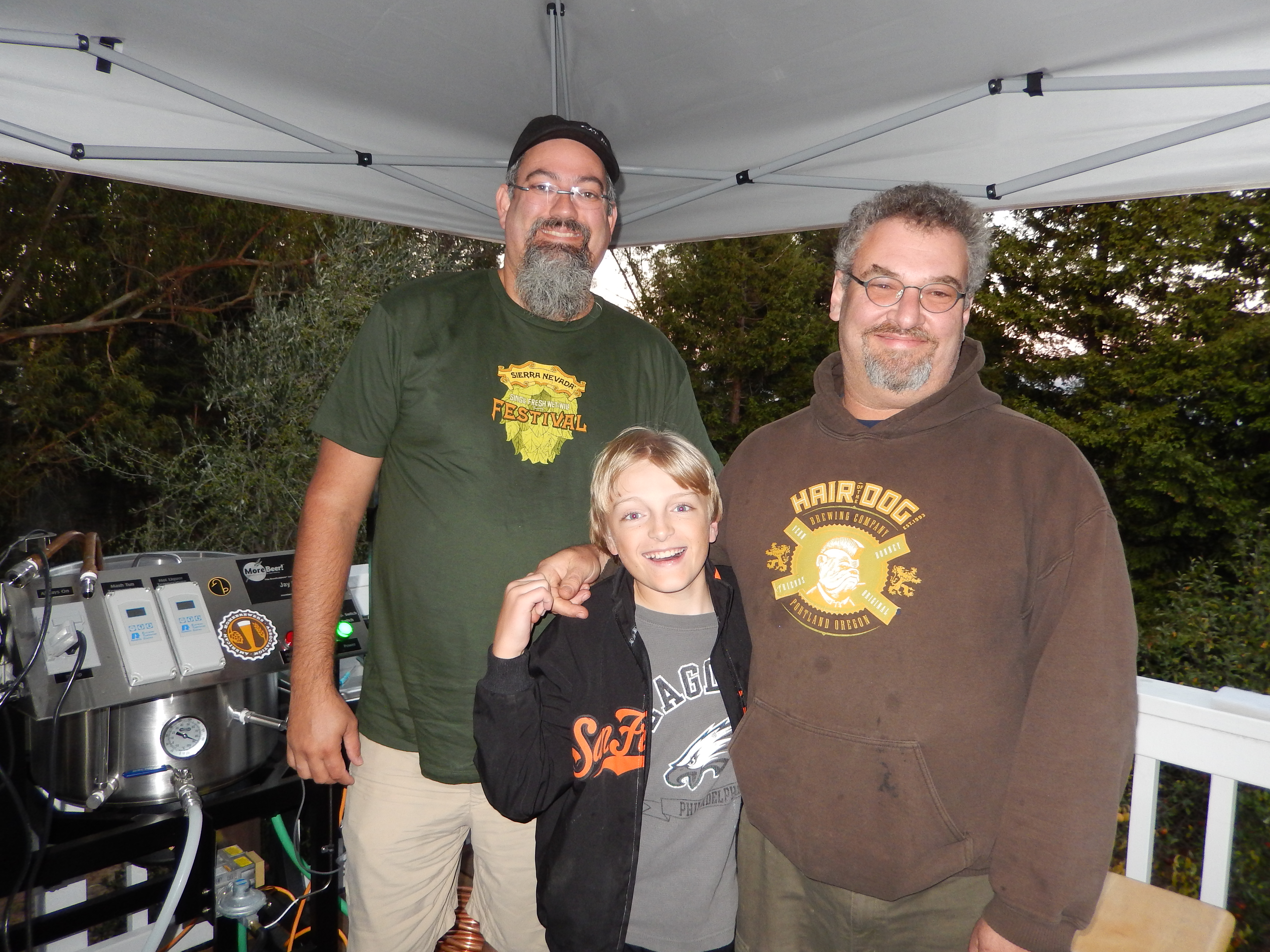
Me and Shane at the BA warehouse for GABG judging.
Me, Emily Sauter, Shane and Max Finnance at CBC in 2023.

Filed Under: Birthdays, Breweries, Just For Fun Tagged With: Anheuser-Busch InBev, Australia, New York

Historic Beer Birthday: John Goetz

January 28, 2026 By Jay Brooks

christian-moerlein
Today is the birthday of John Goetz, Jr. (January 28, 1855-January 23, 1898), who was married to Christian Moerlein’s daughter Lizzie and worked in his father-in-law’s brewery. He also organized the Brewers Exchange, and was its first president, a trustee in the U.S. Brewers Association, and helped organize the Ohio Brewers Guild.
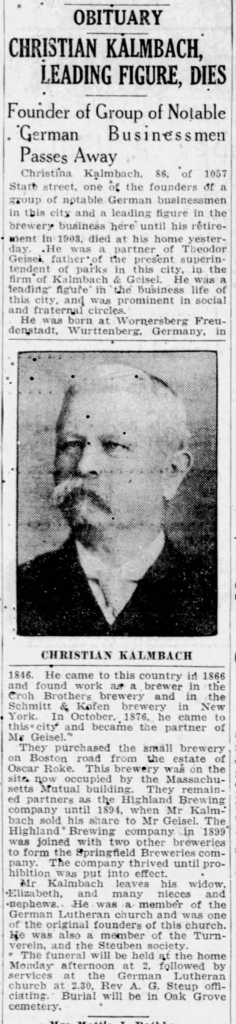
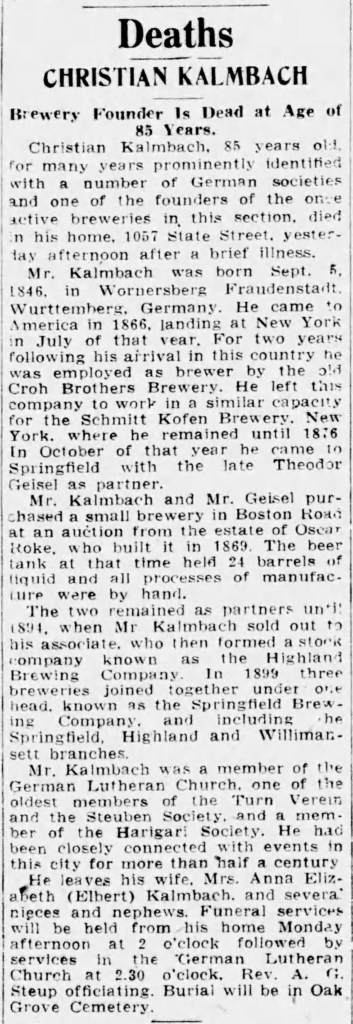
Here’s his obituary from the American Brewers’ Review, which provides a summary of his life:

After Goetz married Lizzie Moerlein, he went to work for his father-in-law at one of Cincinnati’s biggest breweries, Christian Moerlein Brewing Co. In fact, before prohibition, it was one of the nation’s ten largest. But like many breweries, it was closed by prohibition, and wasn’t re-introduced until 1981. In 2004, the brand was purchased by Greg Hardman, a local resident of the Greater Cincinnati area, who also bought several other local beer brands in addition to Moerlein.

Christian-Moerlein-Beer1890

And here’s an additional biography.

Filed Under: Birthdays, Breweries Tagged With: History, Ohio

Beer Birthday: Jean-Marie Rock

January 28, 2026 By Jay Brooks

Today is the 78th birthday of Jean-Marie Rock, former brewmaster of Orval. While I’d visited the brewery a couple of times, I had the pleasure of judging Belgian beers with Jean-Marie at the World Beer Cup when it was in Nashville, which was an amazing experience. He first brewed for Palm and later for Lamot in Mechelen, brewing lagers, before joining Orval in 1972. He retired about sieven years ago, and is doing some consulting, plus working on another brewery in Belgium, Monsieur Rock. Join me in wishing Jean-Marie a very happy birthday.

Jean-Marie-Rock-and-Carl
Carl Kins and Jean-Marie in Nashville.
Jean-Marie-Rock-and-me
Jean-Marie and me at the World Beer Cup.
Rock-satisfied
A satisfied-looking Jean-Marie.

Filed Under: Birthdays, Breweries, Just For Fun Tagged With: Belgium, Trappist Beer

Beer In Ads #5184: The “B”s Are Here, Bruton Bock Beer

January 27, 2026 By Jay Brooks

Two years ago I decided to concentrate on Bock ads for awhile. Bock, of course, may have originated in Germany, in the town of Einbeck. Because many 19th century American breweries were founded by German immigrants, they offered a bock at certain times of the year, be it Spring, Easter, Lent, Christmas, or what have you. In a sense they were some of the first seasonal beers. “The style was later adopted in Bavaria by Munich brewers in the 17th century. Due to their Bavarian accent, citizens of Munich pronounced ‘Einbeck’ as ‘ein Bock’ (a billy goat), and thus the beer became known as ‘Bock.’ A goat often appears on bottle labels.” And presumably because they were special releases, many breweries went all out promoting them with beautiful artwork on posters and other advertising.

Tuesday’s ad is for Bruton Bock Beer, which was published on January 27, 1939. This ad was for the Bruton Brewing Co. of Baltimore, Maryland, which was originally founded in 1855 by George Neisendorfer. Over the years it had several owners and a variety of names, and for it’s last five years in business, from 1935-1940, it was known as the Bruton Brewing Co. This ad ran in The Evening Sun, also of Baltimore, Maryland.

Filed Under: Art & Beer, Beers, Breweries, Just For Fun Tagged With: Advertising, Bock, History, Maryland

Beer Birthday: Logan Plant

January 27, 2026 By Jay Brooks

Today is the 47th birthday of Logan Plant, founder and brewmaster of Beavertown Brewery, which he started in 2011. I met Logan first at the Firestone-Walker Invitational Beer Festival a few years ago and have run into a couple of times since both there and at the RateBeer Best Festival. He’s a very friendly and talented person and his beer is great, and it’s always been a pleasure to hang out with him. Please join me in wishing Logan a very happy birthday.

IMG_7809
At the Firestone-Walker Invitational in 2017.
logan-jeremy-me
With Jeremy Marshall, from Lagunitas, and me at the RateBeer Best Awards show in January 2017.
IMG_7806
With Matt Brynildson at the Firestone-Walker Invitational in 2017.
SAM_6302
With me, Matt Brynildson and another F-W brewer at the Firestone-Walker Invitational in 2016.

Filed Under: Birthdays, Breweries, Just For Fun Tagged With: England, Great Britain, UK

Historic Beer Birthday: William Tunis Ryerson

January 27, 2026 By Jay Brooks

Today is the birthday of William Tunis Ryerson (January 27, 1829-December 28, 1891). He was born in New York, and his father was a senior partner in the Ryerson and Brown Transfer Co. The Ryersons came to America in 1646, so I suspect he didn’t struggle financially too much. When he was 44 year old, in 1873, he joined the New York City brewery Yuengling & Co. on 213 Front & 4th Avenue as an investor and controlling partner. But he left just four years later to help form the New York Cab Company, which consolidated the existing taxi service in the city. Meanwhile, Yuengling closed the New York brewery in 1882. Ryerson passed away in late 1891, age 62.

Filed Under: Birthdays, Breweries, Just For Fun Tagged With: History, New York

« Previous Page
Next Page »

Find Something

Northern California Breweries

Please consider purchasing my latest book, California Breweries North, available from Amazon, or ask for it at your local bookstore.

Recent Comments

  • Ernie Dewing on Historic Beer Birthday: Charles William Bergner 
  • Steve 'Pudgy' De Rose on Historic Beer Birthday: Jacob Schmidt
  • Jay Brooks on Beer Birthday: Bill Owens
  • Steve 'Pudgy' De Rose on Beer Birthday: Charles Finkel
  • Steve 'Pudgy' De Rose on Beer Birthday: Bill Owens

Recent Posts

  • Beer In Ads #5125: Bowler Brothers’ Bock February 22, 2026
  • Beer Birthday: Fred Bueltmann February 22, 2026
  • Historic Beer Birthday: John Emmerling February 22, 2026
  • Beer In Ads #5124: Möerlbach Bock February 22, 2026
  • Historic Beer Birthday: George M. Biner February 22, 2026

BBB Archives

Feedback

Head Quarter
This site is hosted and maintained by H25Q.dev. Any questions or comments for the webmaster can be directed here.