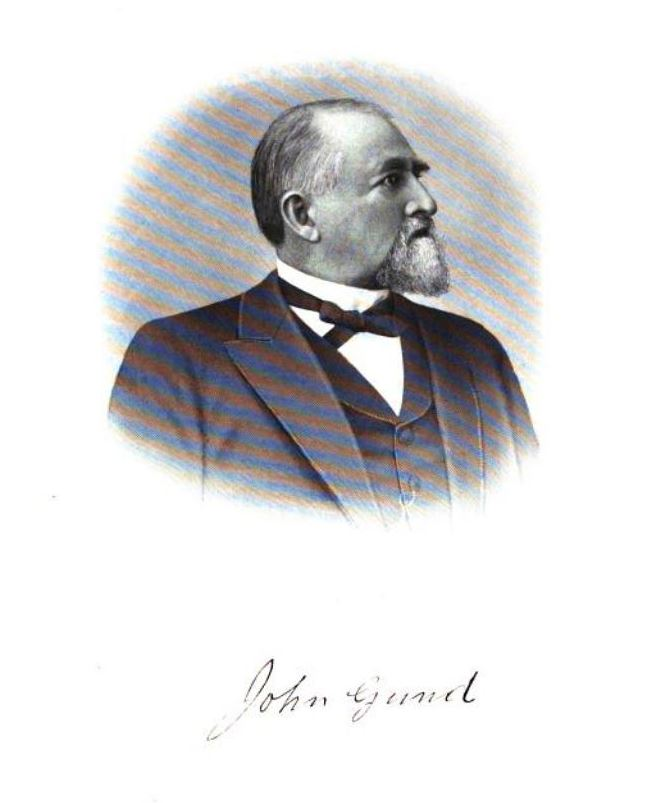
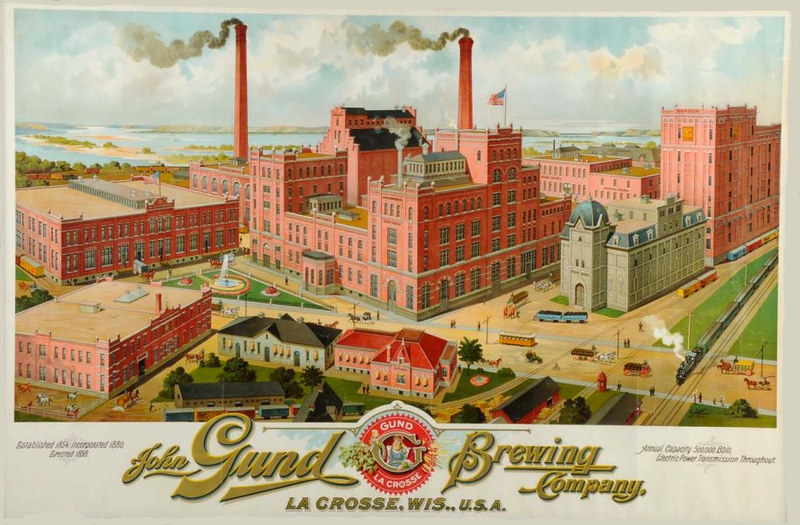
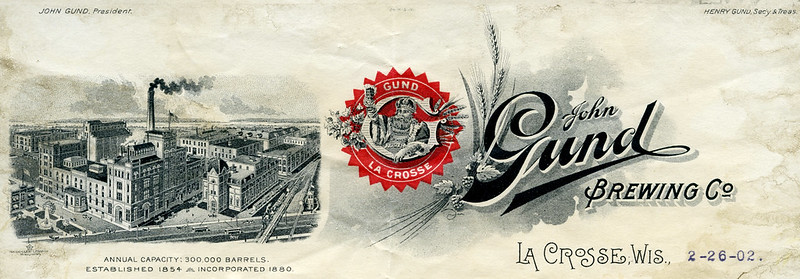
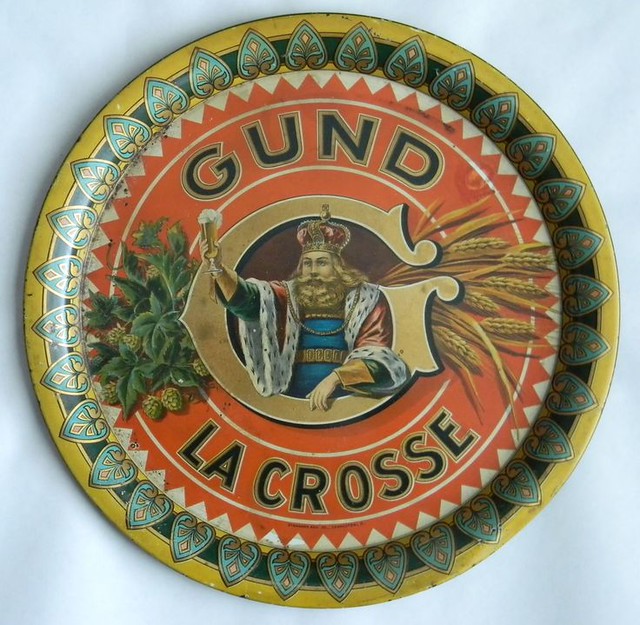
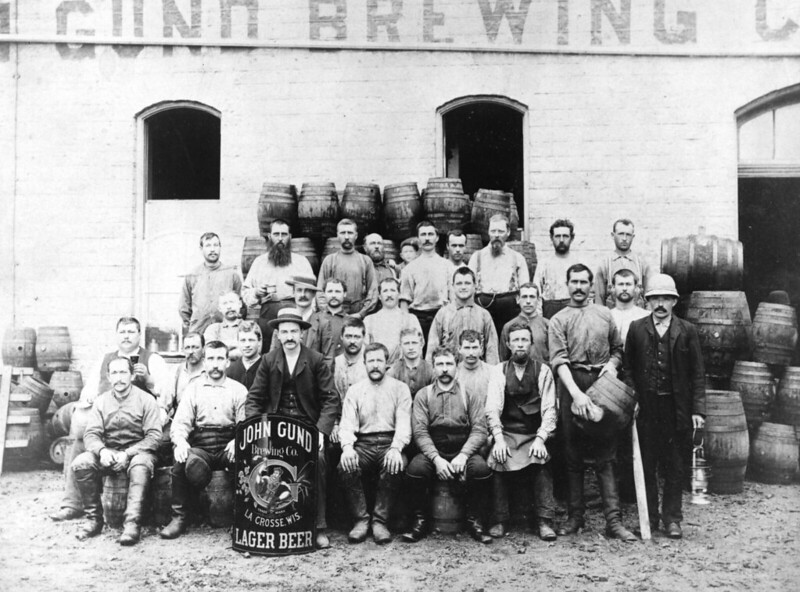
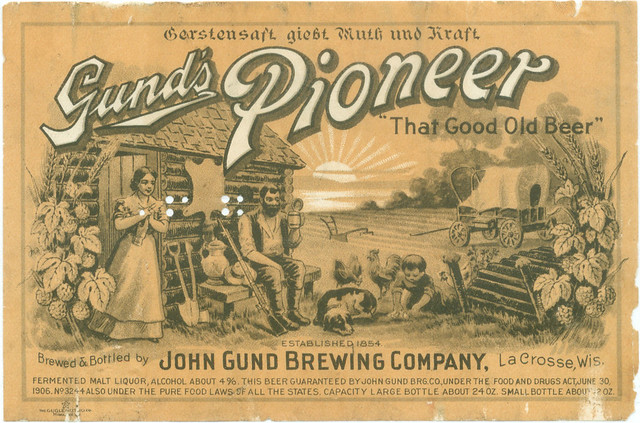
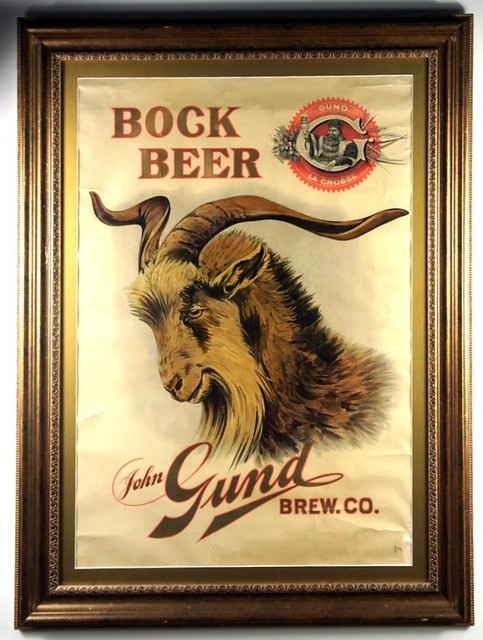
Today is the birthday of John Gund (October 3, 1830-May 7, 1910). Gund co-founded what would become the The G. Heileman Brewing Company with Gottlieb Heileman. They formed a partnership in November 1858 to operate the City Brewery in La Crosse, but “after nearly fifteen years in business together, Heileman and Gund dissolved their partnership in 1872.” After leaving City Brewing, Gund immediately “established a new brewery on the southern edge of La Crosse that he named the Empire Brewery, and which was incorporated in 1880 as the John Gund Brewing Company.” Gund employed all three of his sons in his new venture, and eventually his son Henry became president of the brewery after his father’s death in 1910.
Came to America in 1848 and settled in LaCrosse in 1854. He began his own brewery until in 1858 he and Gottlieb Heileman formed the City Brewery. John later left and founded the Empire Brewery in 1872 but — due to the fact there were 14 breweries in LaCrosse at the time — his business failed.
The story of the John Gund Brewery is a story of the American Dream. Many immigrants came to the US in search of a new and better life. John Gund accomplished this goal and became one of the forefathers of the modern beer industry.
John Gund was born in Schwetzingen, Germany in 1830. He was the second of eight children. After finishing this education at the common schools he began an apprenticeship working at a brewery in the winter.
John Gund arrived in New York on May 16, 1848. Shortly after arriving in New York the family moved to Freeport, Illinois. After his fathers and mothers death in 1850 of cholera, Gund married Louise Hottman and in1852 moved to Dubuque, Iowa. Gund added to his earlier knowledge by working at the brewery of Anton Heeb.
In 1854 Gund pack up and left the brewery and Iowa to move to LaCrosse, WI. John Gund’s first Brewery was a far cry from what was to come of this legend. His first brewery was in a log cabin he built at the corner of Front and Division Street. In just 4 years Gund sold the cabin and entered into a partnership with Gottlieb Heileman. These two men built and opened the City Brewery in 1854.
In 1872, Gund sold his share of City Brewery to Heileman and began building the Empire Brewery on South Ave. When opened the brewery had 9 buildings: Main Building, Storage Cellars, Brew house, Icehouse, office, Malt House, Dry Kiln, Engine House, and across the street the Bottle House. Later, a second Bottle house was built. The total cost of the brewery was $250,000. Empire Brewery had a staff of 25 people and was able to produce 30 thousand barrels per year. Much of the beer was exported, but much was used to supply the city’s bars.
The John Gund Brewing Company opened May 1, 1880 with only $100,000 capital. John appointed his family member to officer positions. These included: John Gund- President, Henry – Traveling Agent, George Gund – Manager, and John Gund Jr.- Bookkeeper. (Wife Died 1880 of severe cold.)
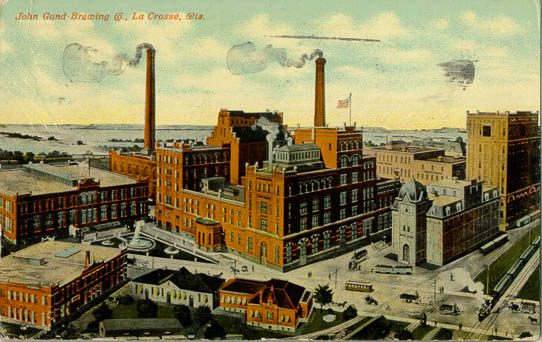
The John Gund Brewing Company was booming. The brewery covered 5 acres and produced 60 thousand barrels of beer in 1897. Many of the neighboring states benefited from this fine brew. Gund Beer was shipped all over Wisconsin, Dakota, Iowa, Illinois, Minnesota, and Nebraska. Everything John Gund has built almost came crashing down the night of September 25, 1897. This night the city of LaCrosse witnessed a “one of the most destructive fires in the history of LaCrosse”(Baier, 1976). The fire was reported at 1:00am and was finally put out by noon the next day. The fire destroyed much of the Gund Brewery. The estimated damage of the fire totaled $200,000. Only the Engine house and cold storage could be saved. Insurance only covered $125,000. Fortunately enough beer was saved to allow for the brewery to fill orders and continue operation until the brewery was rebuilt. Clean up and rebuilding began the next day.
The new brewery was finished on April 16, 1898. The new brewery was larger, consisting of 8 buildings: Brew house, bottling house (now next to Brew house), mill house, dry house, hop storage, and malt house. It was also improved. New modern machinery and equipment was added. The new brewery even contained an elevator. Gund even prepared for another catastrophe by making the new brewery fireproof.
Business was again booming for the Gund Brewery. Capital stock for the company climbed to two million dollars. Unfortunately tragedy again strikes the Gund Brewery. This time the tragedy goes to the top. After fighting apoplexy for many months John Gund dies of the disease on May 7, 1901. In honor of a great man the brewery shut down for the day. Leadership of the John Gund Brewery now rests in the hands of Henry Gund and rumors spread like wildfire that the brewery would be moved to Omaha, Nebraska.
The John Gund Brewery survived and thrived after, yet another devastating disaster. By 1900 Gund Brewery became the “largest brewery in the old Northwest, outside of Milwaukee” (Baier, 1976). The World was beginning to take notice of Gund’s Peerless Beer. This became evident when in 1900 it won a metal at the Paris Exposition and in 1904 won the Gold metal at the Louisiana Purchase Exposition (World Fair in 1904). The explosion in popularity caused for an increase in production. This need caused the increase of works to 450 in 1910. This year the brewery produced over 600,000 barrels of beer.
Soon the final blow would come to the brewery. In 1919 the 18th amendment was enacted. So began the years of Prohibition. The Brewery closed its doors. Luckily, on May 27th a law was passed making it legal to produce “war time” beer. Wartime beer was beer that was limited to 2.3%-4% alcohol content. The doors to the John Gund Brewery opened again to produce this beer. Still struggling, the brewery was it with another problem. The Brewery Workers Union in Lacrosse went on strike. The brewery was hit hard, offering jobs to men, woman, and children to help fill the void created by the strike.
The straw that finally breaks the John Gund Brewery’s back was the complete Prohibition. The Gund Brewery closed its doors for good later that year just as many other breweries throughout the US were doing.
John Gund (born October 3, 1830, in Schwetzingen, Grand Duchy of Baden; died May 7, 1910, in La Crosse, Wisconsin), the firm’s co-founder, eventually decided that Heileman’s business practices were too restrictive and ended the partnership in 1872 in order to build a new brewery in La Crosse that could compete with cross-state rivals such as Pabst, Schlitz, and Miller. The G. Heileman Brewing Company and the John Gund Brewing Company continued to pursue separate business strategies until national Prohibition was implemented fully in 1920. Gund’s large brewery collapsed, whereas Heileman’s smaller firm subsisted by producing non-alcoholic beer and malt products until the Twenty-First Amendment was passed in 1933.
John Gund, on the other hand, was born approximately seventy-five miles northwest of Kirchheim in the community of Schwetzingen in the Grand Duchy of Baden on October 3, 1830. Schwetzingen lay in the rich, alluvial farmland between the Rhine and Neckar Rivers approximately six miles southwest of Heidelberg. Gund was the second of eight children born to Georg Michael and Sophia Elizabeth Gund (née Eder or Edes).
John Gund found employment sixty miles to the west in Dubuque, Iowa, a commercial center situated on the west bank of the Mississippi River. He worked in a brewery operated by a German named Anton Heeb for two years. In June 1850, he relocated to nearby Galena, Illinois, to operate a brewery with a German named Witzel, possibly twenty-year-old Sebastian Witzel, who may have been an old friend. John Gund’s parents died of cholera the following month. After less than a year, he sold his share in the Galena brewery operation and rented another brewery in the community, known as the Cedar Brewery. About this time, he married fellow German immigrant Louise Hottman, a resident of Galena, with whom he eventually had five children. Two years after renting the Cedar Brewery, Gund decided to relocate to a larger and more prosperous community that would provide a better market for his beer. He and his wife moved approximately 180 miles northwest to the Mississippi River settlement of La Crosse, Wisconsin.
La Crosse had a population of approximately 2,000 residents in the mid-1850s. Situated on the east bank of the Mississippi River, the community had experienced rapid growth during the 1850s as settlers arrived to take advantage of the surrounding farmland and forests. The lumber industry flourished, facilitated by the community’s access to steamboats that plied the Mississippi River from St. Paul down to St. Louis and New Orleans. The city was incorporated in 1856 and benefitted further when a cross-state railroad connection was completed between La Crosse and Milwaukee in 1858.
John Gund founded a brewery in La Crosse in August 1854. The small operation was located in a log cabin near the community’s waterfront. A number of other German immigrants founded breweries in the city in the months and years that followed. Gustavus Nicolai and Jacob Franz founded the Nicolai Brewery shortly after Gund founded his brewery. Due to production problems with Gund’s initial batch of beer, Nicolai and Franz were first to bring their beer to market. Charles and John Michel founded the La Crosse Brewery in 1857 after a failed attempt to strike it rich in the California gold fields in the early 1850s. After returning from the West Coast, they attempted to settle in Chicago but soon grew to dislike the community and made their way north to St. Paul. Ice on the Mississippi delayed their river journey and they eventually settled in La Crosse instead. After noting that existing breweries in the community could not meet local demand, they founded their own brewery.
After nearly fifteen years in business together, Heileman and Gund dissolved their partnership in 1872. Heileman seems to have been content brewing beer primarily for the local market and this was reflected in the brewery’s modest output of approximately 3,000 barrels per year by the 1870s. By comparison, Eberhardt Anheuser and Adolphus Busch’s Bavarian Brewery in St. Louis produced approximately 100,000 barrels of beer per year during the same decade and the Pabst Brewery in Milwaukee produced 121,000 barrels annually.[10] John Gund was far more ambitious than his partner and wished to establish La Crosse as a major center of brewing that would rival Milwaukee and St. Louis. Supposedly, the partners flipped a coin to determine which partner would receive the brewery and which would receive the International Hotel. Heileman won the City Brewery and Gund gained control of the hotel.
Gund immediately established a new brewery on the southern edge of La Crosse that he named the Empire Brewery, and which was incorporated in 1880 as the John Gund Brewing Company. A bottling house was included in the new brewery, which indicated that Gund intended to distribute the beer regionally. At the time, federal law required that excise taxes be paid on kegged beer. Only after the tax stamp had been applied to the keg could brewers then bottle the beer for sale. Bottling beer was also labor intensive since employees had to fill and cork individual bottles by hand during this era and then pasteurize each lot. Consequently, bottling beer was more time consuming and expensive than distributing it in kegs. Bottled beer’s key advantage lay in the fact that it could be shipped more easily and thus could reach more distant markets than kegged beer.
Gund’s decision to end his partnership with Heileman in 1872 may had been attributable, at least in small part, to the 1871 conflagration in Chicago. The Great Chicago Fire destroyed the city’s nascent brewing industry and opened the door to brewers in nearby cities with railroad connections to Chicago. Gund along with brewers from Milwaukee, St. Louis, and Cincinnati began shipping beer to Chicago and established a presence in the taverns and other drinking establishments of the city.
Gund and his three sons, George, Henry, and John Jr., continued to expand their brewery’s operations during the 1870s and 1880s. After John Gund incorporated the brewery in May 1880, he assumed the title of brewery president and his sons took other positions in the firm. The firm was capitalized at $100,000 (approximately $2.3 million dollars in 2011$) with the stock remaining in family hands. By 1887, the facility covered five acres and produced 45,000 barrels of beer annually. While this output still lagged behind the volume produced by major shipping breweries of the era such as Pabst, Schlitz, and Anheuser-Busch, when combined with the other breweries of La Crosse, the city’s beer production briefly surpassed the quantity produced by any other city in Wisconsin, including Milwaukee, in 1884. Given that La Crosse’s population was ten percent of Milwaukee’s population during this decade, such an output is impressive to say the least. Gund took advantage of La Crosse’s rail and river connection to the Upper Midwest and the Chicagoland area to distribute beer to the Dakotas, Minnesota, Iowa, Nebraska, and Illinois. Henry Gund served as a traveling agent for the firm and established a distribution center in Minneapolis in 1882.
A major fire at the Gund brewery in 1897 destroyed the original 1872 structure but also enabled Gund to reconstruct the brewery with expanded capacity the following year. The new facility was designed by prominent Chicago architect Louis William Lehle, a German immigrant University of Stuttgart graduate who was responsible for designing breweries throughout the United States for a number of major firms including Blatz, Grain Belt, and Dixie. Gund’s focus on bottled beer was reflected in the new design of the brewery. The bottling plant was relocated from a building across the street from the brewing complex to a new building next to the brew house. This arrangement allowed beer to be pumped directly from holding tanks to the bottling line. Improvements in bottling technology, such as the development of crown caps in 1892, made the production process less labor intensive. Gund’s bottling line was capable of producing twenty-five million bottles per year.[ By 1900, production at the new brewery grew to 200,000 barrels per year and tripled to 600,000 a decade later. Nevertheless, the Gund Brewing Company was still a middle-tier producer in comparison to other major regional breweries such as Pabst or Schlitz, whose output exceeded one million and one-and-a-half million barrels, respectively, during the same period.
In conjunction with its focus on bottled beer production, the firm began to develop a specific branded beer, which it called Peerless. The brewery invested great effort into promoting the brand and entered Peerless into a variety of international competitions including the 1900 Paris Exposition and the 1904 Louisiana Purchase Exposition in St. Louis. Peerless won a medal at both expositions and the Gund Brewery used the publicity generated by the beer’s performance in its advertising.
Generational transition in brewery management took place gradually from the 1880s through the first decade of the twentieth century. Gund’s three sons served in various roles at the brewery. George Gund worked as brewery manager. Henry served as a traveling agent for the firm and later as bookkeeper after his younger brother, John Jr., left the firm in 1887 to pursue other interests. His elder brother also left the firm in the 1890s and established a brewery in Seattle and later purchased an existing brewery in Cleveland. With the departure of his brothers, Henry gradually assumed greater responsibilities at the brewery despite health problems. By the early 1900s, he was in his forties and was well respected within the local and regional brewing communities. He was elected vice president of Wisconsin’s Brewer’s Association in 1901 and by 1904 had assumed the position of vice president and treasurer of the John Gund Brewing Company. In May 1910, John Gund passed away a few months shy of his eightieth birthday.
Politically, John Gund’s party affiliation reflected broader shifts in German immigrant political participation during the second half of the nineteenth century. He supported the Whig ticket shortly after his arrival in the United States and voted Republican in the 1860s and 1870s, but his allegiance shifted to the Democratic Party in his later years. This may have been linked to the Democrats’ opposition to the growing prohibitionist movement in the United States and the support they enjoyed from populist, agrarian elements in Midwestern states like Wisconsin, Minnesota, and Iowa.
Last year I decided to concentrate on Bock ads. Bock, of course, may have originated in Germany, in the town of Einbeck. Because many 19th century American breweries were founded by German immigrants, they offered a bock at certain times of the year, be it Spring, Easter, Lent, Christmas, or what have you. In a sense they were some of the first seasonal beers. “The style was later adopted in Bavaria by Munich brewers in the 17th century. Due to their Bavarian accent, citizens of Munich pronounced ‘Einbeck’ as ‘ein Bock’ (a billy goat), and thus the beer became known as ‘Bock.’ A goat often appears on bottle labels.” And presumably because they were special releases, many breweries went all out promoting them with beautiful artwork on posters and other advertising.
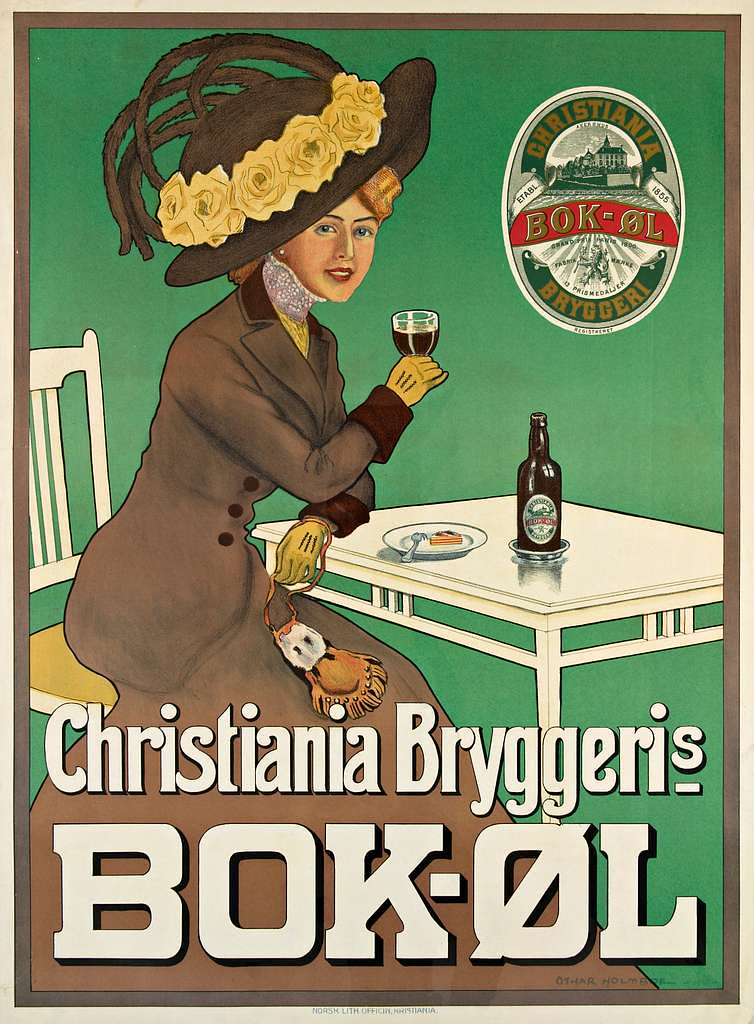
Thursday’s work is for Christiania Bryggeri’s Bok-Øl, which was created in 1910. This one was for the Christiania Bryggeri, of Christiania (Oslo), Norway, which was originally founded in 1855. The artist who created this poster was Othar Holmboe, who was also from Norway.
Last year I decided to concentrate on Bock ads. Bock, of course, may have originated in Germany, in the town of Einbeck. Because many 19th century American breweries were founded by German immigrants, they offered a bock at certain times of the year, be it Spring, Easter, Lent, Christmas, or what have you. In a sense they were some of the first seasonal beers. “The style was later adopted in Bavaria by Munich brewers in the 17th century. Due to their Bavarian accent, citizens of Munich pronounced ‘Einbeck’ as ‘ein Bock’ (a billy goat), and thus the beer became known as ‘Bock.’ A goat often appears on bottle labels.” And presumably because they were special releases, many breweries went all out promoting them with beautiful artwork on posters and other advertising.
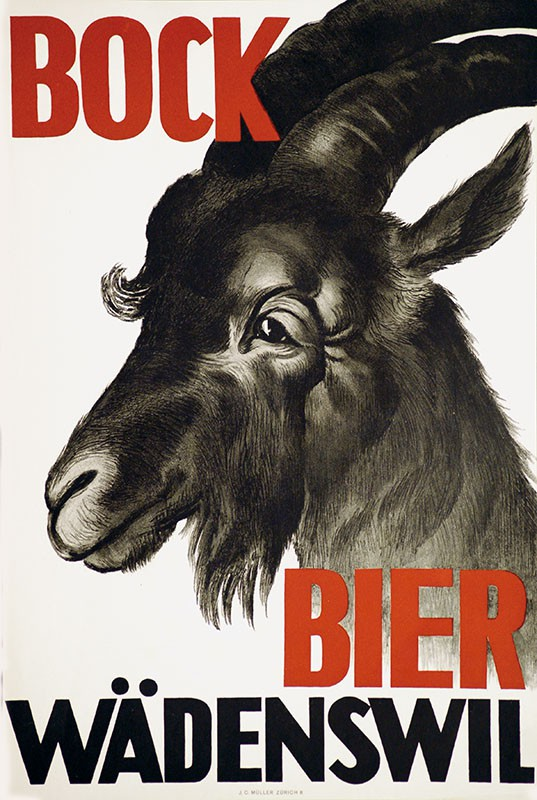
Wednesday’s work is for Wädenswil Bock Bier, which was created in 1939. This one was for the Brauerei Wädenswil of Wädenswil, Switzerland, which was originally founded in 1833. Sadly, the artist who created it is unknown.
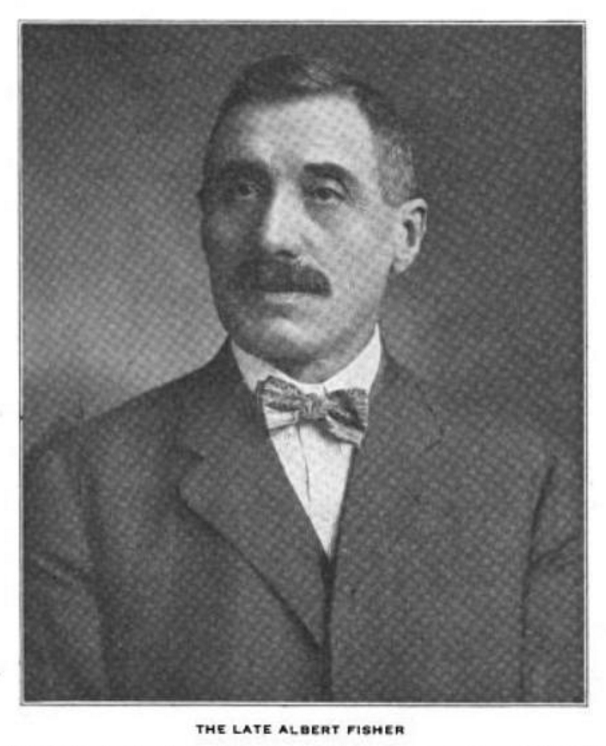
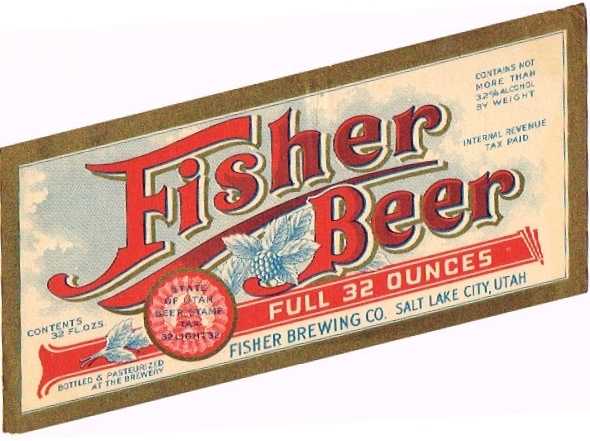
Today is the birthday of Albert Fisher (October 1, 1852-June 28, 1917). Fisher was born in Germany, but moved to Salt Lake City, Utah in his twenties, around the 1870s.
Here’s Fisher’s obituary from the Deseret News, Thursday June 28, 1917:
Albert Fisher, president of the A. Fisher Brewing company, died this morning in a sanitarium at Hot Lakes, Or., where he went two weeks ago to undergo treatment for rheumatism. The telegram which conveyed the news of his death to members of the family, said Mr. Fisher died of inflammation of the kidneys and that he passed away at 7 o’clock.
Upon receipt Wednesday of a telegram that Mr. Fisher was near death, his wife and son, Frank A. Fisher, left last night at 11:45 o’clock for Portland. They are on the train today and they do not know yet of the death of the husband and father.
Albert Fisher was born in Germany in 1852. He came to Utah in the early ’70’s, and this had ever since been his home. In addition to his brewery interests Mr. Fisher was the owner of Salt Lake real estate and had numerous business connections.
He is survived by his wife and the following children: Mrs. Fred Davidson, Frank A., Albert B. and Carl A. Fisher.
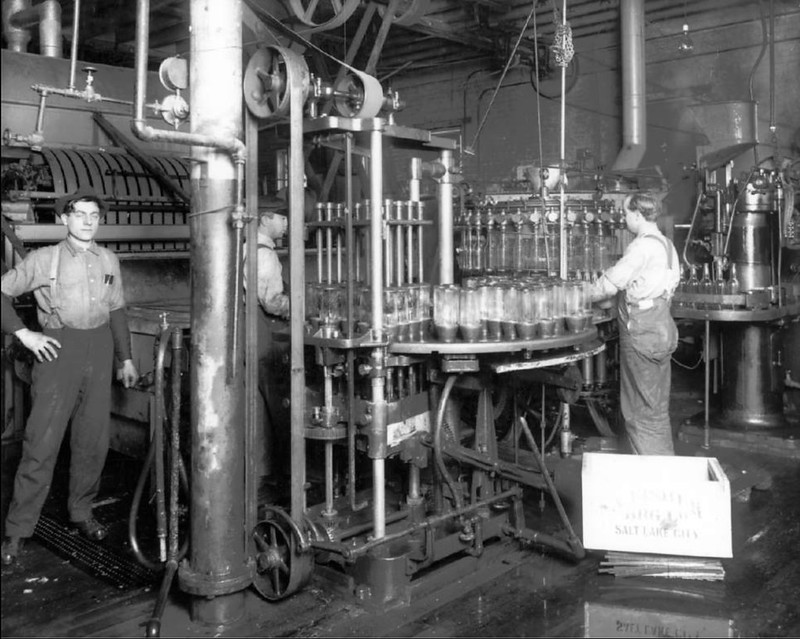
Inside the A. Fisher Brewery bottling department around 1940.
The Utah Beer Blog has a short history of the Fisher brewery:
In the early 1870s a man named Albert Fisher immigrated from Germany to the United States and eventually settled in Salt Lake City. Albert was a brewer by trade and he quick put his skill set to work shortly after arriving in Utah.
In 1884, Albert Fisher purchased 15 acres of land on 200 South on the east bank of the Jordan River (1206 West) where he established the A. Fisher Brewing Company. The Fisher Brewing Company quickly became the largest brewery in Utah.
The first mention of Fisher Brewing Company by a print publication was August 27th, 1884 in the Salt Lake Tribune.
“The Albert Fisher Brewing Company is on one entire block of ground. On the south side of the building is a 92’ by 100’ malt room. The north part of the building will be divided up between a cellar and brewery office.”
The brewery was constructed using state-of-the-art German methods that Fisher likely learned growing up in the trade. The Eagle foundry was commissioned to construct many of the boilers. Steam powered the boiler engine and the rest of the facility; from malting barley, to milling, to properly drying hops to shipping out finished product on rail-lines and on coaches to hundreds of taverns. It’s clear that every part of the brewing process was conducted on their 10-acre site. The cost of construction was $35,000 another $15,000 would be needed for kegs, casks.
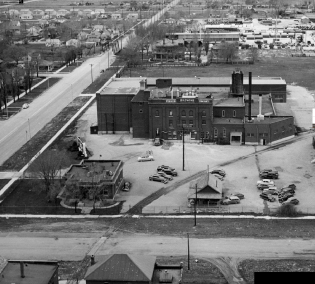
The Fisher Brewery in forefront the Fisher Mansion further South. The Fisher Mansion is located at 1206 W 200 S and is now owned by Salt Lake City. The city has plans to renovate the mansion.
While the brewery was built on the bank of the Jordan River, the fresh water provided to brew beer came from a nearby spring.
Fisher and Moritz were well known in Salt Lake among the pioneers as master brewers. Prior to opening his own brewery Fisher was employed by Fezer and Moritz, then Moritz and Culleo.
Moritz and Fisher would go on to start two of the largest breweries west of the Mississippi. Traditionally, the English-style ales had been the most popular beers in the US. But the German-style lagers began gaining popularity due to the longer shelf life and the pasteurization and bottling process which facilitated mass production and distribution. Germans also understood the value of offering a consistent product, carefully measuring ingredients and maintaining quality control standards.
Larger at the time then Coors, larger than any brewery in San Francisco, the Salt Lake Brewing Company and Fisher Brewing by 1905 were brewing 100,000 barrels of beer per year. Fisher was brewing 75,000 barrels, distributing throughout Idaho and Wyoming, employing 50 people. By comparison, Uinta Brewing, Utah’s largest, brews 45,000 barrels, employing 35 people.
Both had their own water works, malting houses, power plants and very effective distribution operations for offering their beer on draft throughout the Salt Lake Valley, to the dozens of taverns that they owned.
By the early 1900s Albert Fisher was an industry titan. Fisher also built one of the finest mansions in the Salt Lake Valley, a block away from his brewery, far away from other mansions. Today it still stands in its odd industrial location. Fisher also built a beautiful two story building on Main Street which had a dual purpose, serving both as a sales office and distribution outlet. The upstairs was a gathering place for the Salt Lake German community and immigrants, who likely enjoyed great parties and gatherings with Fisher beer freely flowing.
As a proud German father, Albert Fisher determined that his son Frank showed the most promise to one day take over his brewery and he raised young Frank to learn the business from the ground up.
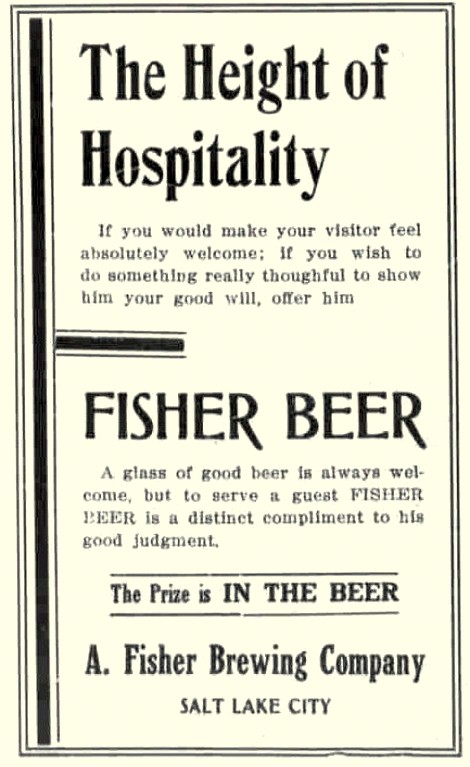
However, despite Albert’s best efforts, success was never a consistent upward climb. His drive to grow his company far beyond the intermountain west was always met with ever-changing “morality laws,” new taxes and a barrage of legislation that worked against him and his brewery. Fisher started running ads with copy reading. “Beer drinking people are a home-loving, moral people.”
The pioneer brewer must have felt somewhat betrayed, as anti-monopoly laws were introduced forcing him to relinquish control of his taverns. In 1908 it was found that rather than selling or giving up control of his dozens of taverns Fisher had his bartenders sign bonds to read as if his taverns were owned by various minority immigrants. A Salt Lake Telegram investigation found through some digging that indeed Fisher did not comply with the law which stated breweries or beer or whiskey suppliers could not also operate as retailers.
The first calls for prohibition started in Utah far earlier than the rest of the country. The Salt Lake Telegraph reported in 1916 that “Breweries Are Waiting to See New Dry Order.” Four years prior to national prohibition Utah Breweries were forbidden by law from producing alcoholic beverages. By then Frank Fisher was operating the brewery and he said 60 men would be immediately out of employment. Fisher made no plans to manufacture any other product. At this time 130 saloons and taverns were operating in Salt Lake City. This would mean a loss of $195,000 in annual tax revenue. Not to mention the loss of thousands of dollars of rent property owners were receiving and all the supporting farmers in which the breweries purchased their barley and hops.
It must have been incredibly sad to see everything he worked his entire life to build end boarded up and abandoned, to lay off all his dedicated employees, brewers and shut down. Albert Fisher would die just one year after his brewery closed.
It would be sixteen years before Frank Fisher would again file articles of incorporation for the Fisher Brewing Company. In 1934 Fisher spent $250,000 renovating and modernizing his father’s brewery to make it his own. Upon completion it would produce 275 barrels of beer daily and eventually a capacity of 50,000 barrels. Frank Fisher, like his father, would continually upgrade his brewery and improve his beer. An advertisement from 1941 shows that Fisher was the top selling brand of beer in Utah. By this time competition was growing from San Francisco and Colorado. Lucky Lager out of San Francisco entered the Utah market and its distribution continued to increase due to their low price.
Fisher and Lucky were the two top names and dominated fifty five percent market share by 1957. Yet, Fisher’s sales were falling quickly due to Lucky’s low price.
In 1957 Fisher calculated that there was no way Fisher could be producing their beer for less than the price they were selling. Fisher learned that Lucky was indeed guilty of price fixing– in their attempt to squash Fisher and put him out of business. A federal court battle ensued, Fisher won this battle and was awarded close to $2 million. Counter suits ensued, but eventually Fisher won the case in Federal court.
In 1957, Fisher sold the brewery to his fierce competitor, Lucky Lager. Today, both names are known only to collectors of antique beer memorabilia. The country had changed. Sales to thirsty miners were not enough to compete against nationally marketed brands. The era of Salt Lake brewing greatness would take several decades to rise again to the prominence of these early German brewmeisters.
Today is the birthday of John Courage (October 1, 1761-October 1797). He founded the Courage Brewery in London in 1787, when he bought a brew house in Horselydown, Bermondsey, London.
This biography is from Courage & Co., a website dedicated to the Courage Brewery and the Courage family.
John Courage, the founder of Courage & Co., came to London in 1780 as a younger son of a French Huguenot family who had been exiled and settled in Scotland a century before.
In a letter dated 7th February 1786, the Founder’s sister writes to him congratulating him on his marriage to Harriet Murdoch and that “the marriage is no surprise to us and be that she be a sober good woman and that we drank your health on your marriage night very hearty.”
The Anchor Brewhouse, the location of the original Courage Brewery.
By 1787 he had already been in business in London for eight years as an agent for the Glasgow shipping firm of Carron which traded from the Glasgow Wharf (the Carron and Continental Wharves) on the north side of the Thames, downstream from the Tower of London.
John Courage was the only surviving son of his late father, Alexander, when he left Aberdeen for London in about 1780 to become the Wapping agent for Carron Shipping, leaving behind in Aberdeen his mother Isabel and his unmarried sister Ann. John could see across the river to the foreshore of Southwark and decided to diversify his interests by going into the beer business. Thus it was that the name of Courage became associated with the brewing industry.
When John Courage, together with a number of friends, settled for the purchase of a brew house at Horselydown, on the south bank of the Thames, he was investing his acumen and money in a staple industry at an opportune time. He purchased the Anchor Brewery at Horselydown, Bermondsey, in 1787 from John and Hagger Ellis. An earlier owner of the Brewery was Vassal Webbing a Flemish émigré. What is interesting is that both Vassal Webbing and John were described in G.N. Hardinge’s book, Courages 1787-1932, as being Protestant émigrés. Frank Courage wrote to his daughter Milly in New Zealand in 1914, that he thought John (his Grandfather), could have come from Flanders, as brewing has always been more of an industry there than in France. The only known French Protestant Courages in the 1600s were Thomas and Nicholas Courage, and their names do not appear in Aberdeen, so the search has shifted to Flanders (Belgium), for our Protestant forebears.
On 17th December 1787, John Courage, aged 26, paid a cheque for £100 to the Morris Estate as part payment for the Private House and Old Brewhouse at Horselydown over the Thames and opposite Wapping. On Christmas Eve, John paid the balance on the purchase of £674 18s 9d. On 4th January 1788, he paid George Courage £26 6s for sundries and scroll book. On 15th January 1788 John purchased one silk waistcoat for 19 shillings 8d, and on 7th June paid John Ward £10 for a gelding. On 15th November 1788, the Founder’s sister Ann writes to her brother “this piece of news that our king is died” (Bonnie Prince Charlie in exile in Italy).
In March 1793, tragedy struck and John’s sister Ann died of a fever in Aberdeen and was buried beside her father in Old Machar; there is a long letter from the Founder’s mother, Isabel Courage, about this in the Courage Collection at the Greater London Record Office, EC1, together with the other original letters that survive from this period including the old brewery book.
In May 1793, Archibald Courage from Findhorn supplies his cousin “with 1000 American staves and 20 bundles hoops”. Courage Beer was being shipped all over the world, as its reputation grew. 2 hogsheads of Porter on 25th February 1793 were shipped back to Scotland to the Earl of Fife, and throughout 1794 barrels of porter were dispatched to India, Dominica, Antigua, Amsterdam, Hambro, Gibraltar and Lisbon. Ann Murdoch, the Founder’s mother-in-law spent £6-10-6 on clothes for her grandson John in September 1796 and Mrs Courage’s house expenses for the month of October 1796 were £9-6-10d.
On 26th June 1788 a son, John, was born to John and his wife Harriet and on 8th June 1790 twins Ann and Elizabeth were born. On 23rd February 1795 another daughter, Harriet, was born.
John Courage died in October 1797 aged 36 and was buried at St John’s, Horselydown. His widow, Harriet died in May the following year aged 32, and was also buried at Horselydown. On Harriet’s death, the new John Courage was only 10, and John Donaldson, the managing clerk, took over the running of the Brewery, becoming a partner in the newly named firm of Courage and Donaldson, taking a third of the gross profits which was afterwards enlarged to half, as well as half of the capital.
This is a short history of the brewery from its Wikipedia page:
Courage & Co Ltd was started by John Courage at the Anchor Brewhouse in Horsleydown, Bermondsey in 1787. He was a Scottish shipping agent of French Huguenot descent. It became Courage & Donaldson in 1797. By 1888, it had been registered simply as Courage. In 1955, the company merged with Barclay, Perkins & Co Ltd (who were located at the nearby Anchor Brewery) to become Courage, Barclay & Co Ltd. Only five years later another merger with the Reading based Simonds Brewery led to the name changing to Courage, Barclay, Simonds & Co Ltd. In the late 1960s, the group had assets of approximately £100m, and operated five breweries in London, Reading, Bristol, Plymouth and Newark-on-Trent. It owned some 5,000 licensed premises spread over the whole of Southern England, a large part of South Wales and an extensive area of the East Midlands and South Yorkshire. It was employing some 15,000 people and producing something like 75 million imperial gallons (340,000,000 L) of beer annually. Its name was simplified to Courage Ltd in October 1970 and the company was taken over by the Imperial Tobacco Group Ltd two years later.
Its vast Worton Grange (later the Berkshire) brewery was opened on the Reading/Shinfield border in 1978. The Anchor Brewery closed in 1981 and all brewing was transferred to Reading. Imperial Tobacco was acquired by the Hanson Trust in 1986 and it sold off Courage to Elders IXL who were renamed the Foster’s Brewing Group in 1990. The following year the Courage section of Foster’s merged with the breweries of Grand Metropolitan. Its public houses were owned by a joint-company called Inntrepreneur Estates. Scottish & Newcastle purchased Courage from Foster’s in 1995, creating Scottish Courage as its brewing arm.
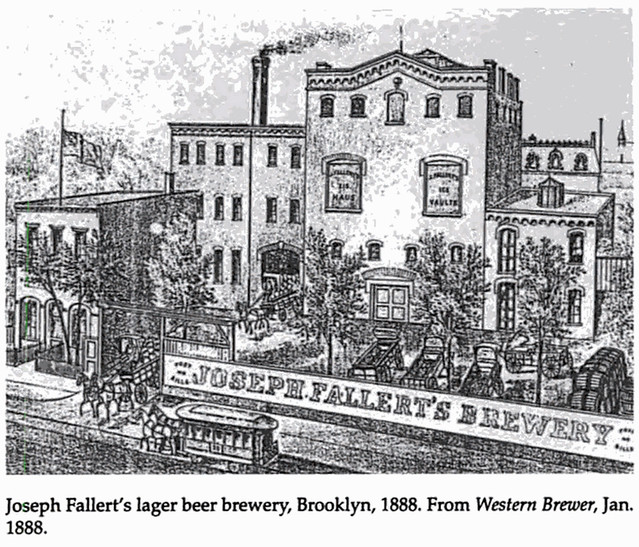
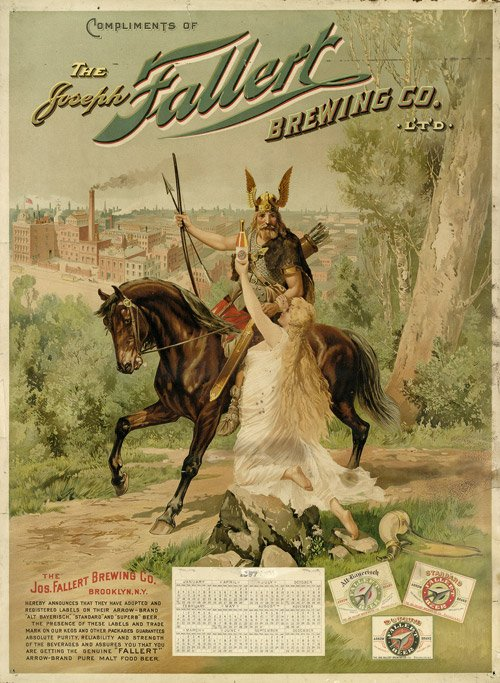
Today is the birthday of Joseph Fallert Jr. (October 1, 1867-March 23, 1919). He was the son of Joseph Fallert, who founded the Joseph Fallert Brewery in 1878. Incorporating in 1884, he renamed it the Joseph Fallert Brewing Co. Ltd. in Brooklyn, New York. Junior over the brewery in 1893, when his father died, but it closed in 1920 for good when prohibition began, the year after he passed away.
Like his father, there’s very little biographical information I could find, not even a photograph.
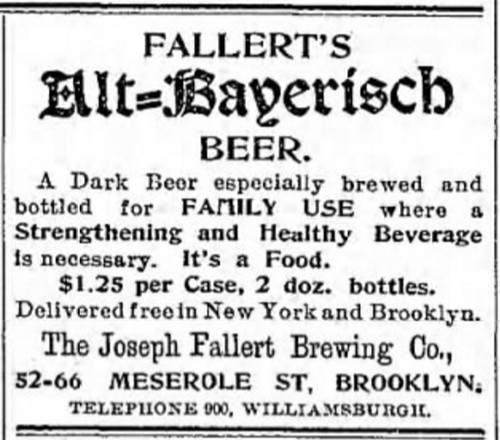
Take a look at this amazing newspaper ad from 1897, extolling the virtues of Fallert’s Alt-Bayerisch and especially its “family use.” “It’s a food.”
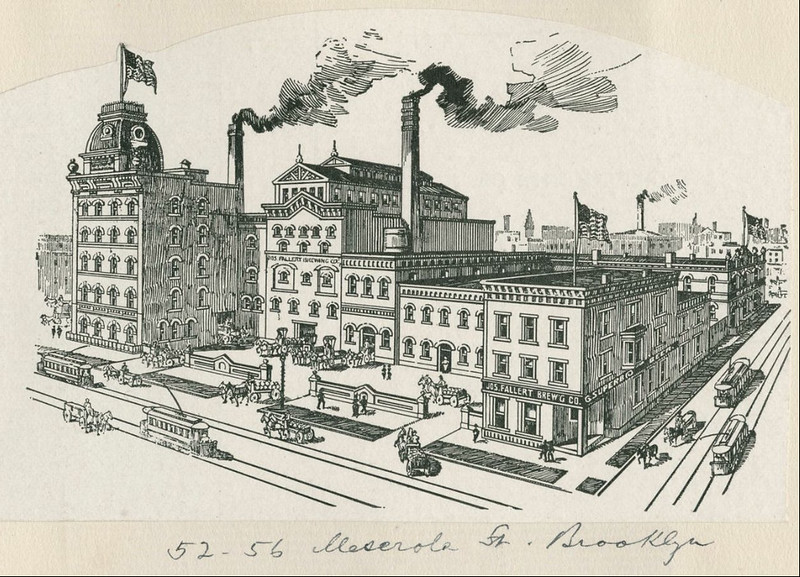
The Joseph Fallert Brewery at 52-66 Meserole Street in Brooklyn.
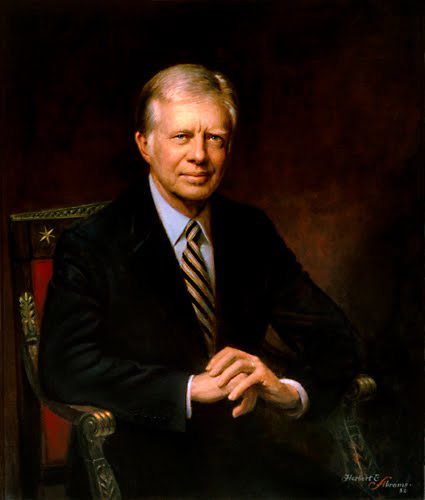
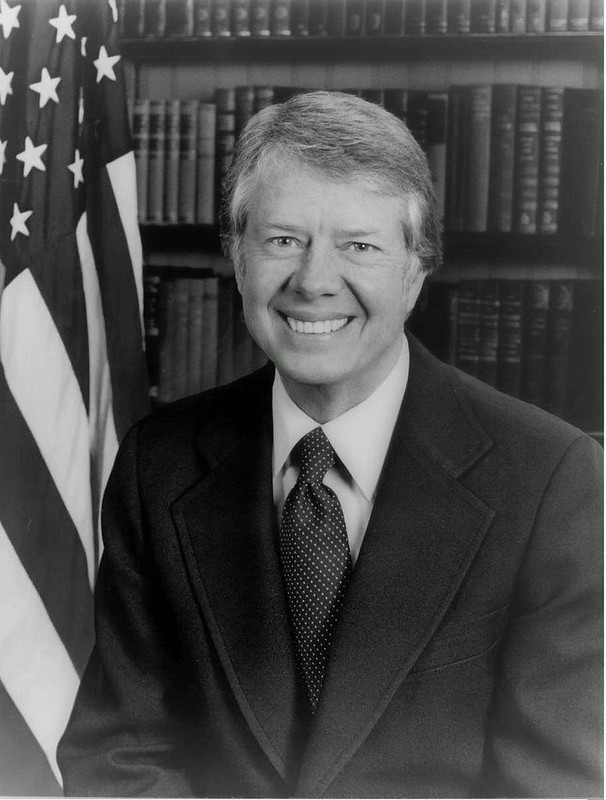
Today would have been the 101st birthday of our 39th U.S. President Jimmy Carter (October 1, 1924-December 29, 2024), but he passed away at the end of the year in 2024. He was “an American politician and author who served as the 39th President of the United States from 1977 to 1981. In 2002, he was awarded the Nobel Peace Prize for his work with the Carter Center.
Carter, a Democrat raised in rural Georgia, was a peanut farmer who served two terms as a Georgia State Senator, from 1963 to 1967, and one as the Governor of Georgia, from 1971 to 1975. He was elected President in 1976, defeating incumbent President Gerald Ford in a relatively close election; the Electoral College margin of 57 votes was the closest at that time since 1916.”
The White House website also has a series of presidential biographies, from “The Presidents of the United States of America,” by Frank Freidel and Hugh Sidey:
Jimmy Carter served as the 39th President of the United States from 1977 to 1981. He was awarded the 2002 Nobel Peace Prize for work to find peaceful solutions to international conflicts, to advance democracy and human rights, and to promote economic and social development.
Jimmy Carter aspired to make Government “competent and compassionate,” responsive to the American people and their expectations. His achievements were notable, but in an era of rising energy costs, mounting inflation, and continuing tensions, it was impossible for his administration to meet these high expectations.
Carter, who has rarely used his full name–James Earl Carter, Jr.–was born October 1, 1924, in Plains, Georgia. Peanut farming, talk of politics, and devotion to the Baptist faith were mainstays of his upbringing. Upon graduation in 1946 from the Naval Academy in Annapolis, Maryland, Carter married Rosalynn Smith. The Carters have three sons, John William (Jack), James Earl III (Chip), Donnel Jeffrey (Jeff), and a daughter, Amy Lynn.
After seven years’ service as a naval officer, Carter returned to Plains. In 1962 he entered state politics, and eight years later he was elected Governor of Georgia. Among the new young southern governors, he attracted attention by emphasizing ecology, efficiency in government, and the removal of racial barriers.
Carter announced his candidacy for President in December 1974 and began a two-year campaign that gradually gained momentum. At the Democratic Convention, he was nominated on the first ballot. He chose Senator Walter F. Mondale of Minnesota as his running mate. Carter campaigned hard against President Gerald R. Ford, debating with him three times. Carter won by 297 electoral votes to 241 for Ford.
Carter worked hard to combat the continuing economic woes of inflation and unemployment. By the end of his administration, he could claim an increase of nearly eight million jobs and a decrease in the budget deficit, measured in percentage of the gross national product. Unfortunately, inflation and interest rates were at near record highs, and efforts to reduce them caused a short recession.
Carter could point to a number of achievements in domestic affairs. He dealt with the energy shortage by establishing a national energy policy and by decontrolling domestic petroleum prices to stimulate production. He prompted Government efficiency through civil service reform and proceeded with deregulation of the trucking and airline industries. He sought to improve the environment. His expansion of the national park system included protection of 103 million acres of Alaskan lands. To increase human and social services, he created the Department of Education, bolstered the Social Security system, and appointed record numbers of women, blacks, and Hispanics to Government jobs.
In foreign affairs, Carter set his own style. His championing of human rights was coldly received by the Soviet Union and some other nations. In the Middle East, through the Camp David agreement of 1978, he helped bring amity between Egypt and Israel. He succeeded in obtaining ratification of the Panama Canal treaties. Building upon the work of predecessors, he established full diplomatic relations with the People’s Republic of China and completed negotiation of the SALT II nuclear limitation treaty with the Soviet Union.
There were serious setbacks, however. The Soviet invasion of Afghanistan caused the suspension of plans for ratification of the SALT II pact. The seizure as hostages of the U. S. embassy staff in Iran dominated the news during the last 14 months of the administration. The consequences of Iran’s holding Americans captive, together with continuing inflation at home, contributed to Carter’s defeat in 1980. Even then, he continued the difficult negotiations over the hostages. Iran finally released the 52 Americans the same day Carter left office.
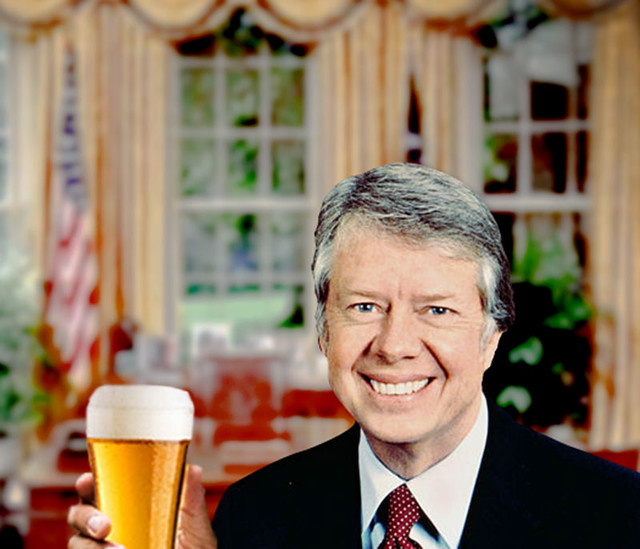
But, of course, none of that is why people who love beer will celebrate Jimmy Carter. Carter, of course signed H.R. 1337 on October 14, 1978. That was the bill that finally legalized homebrewing. And while you can argue that it was really senator Alan Cranston who deserves the lion’s share of the credit, after all he added the specific language to the bill that made homebrewing okay again, it’s generally Carter who’s best remembered for having signed the bill into law. At least outside of California, anyway, where many people know that it was Amendment 3534, drafted by Cranston, that homebrewing was decriminalized.
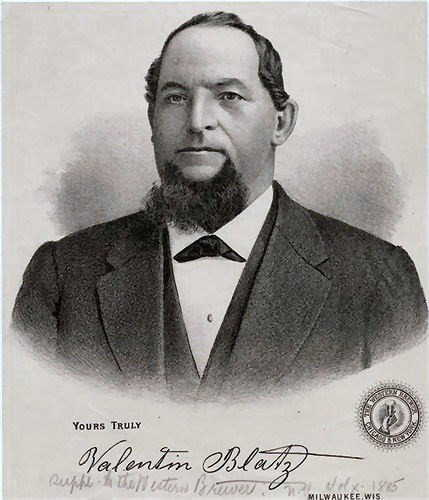
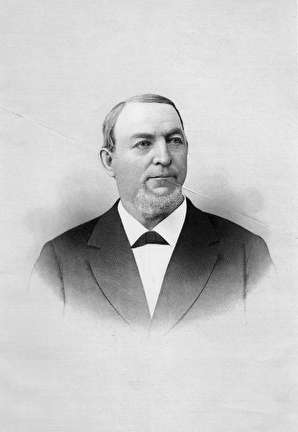
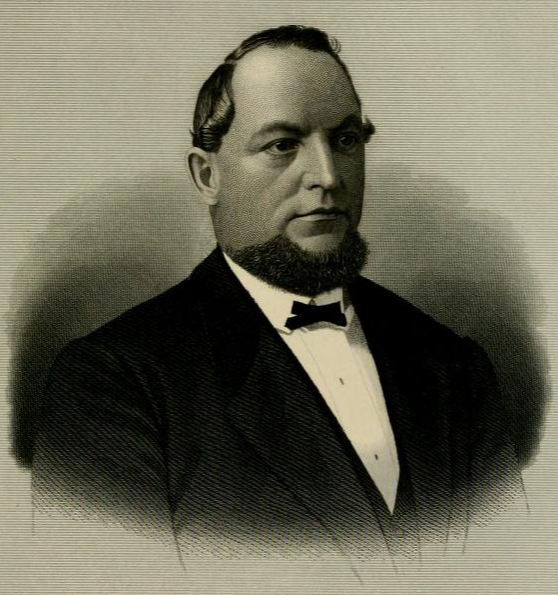
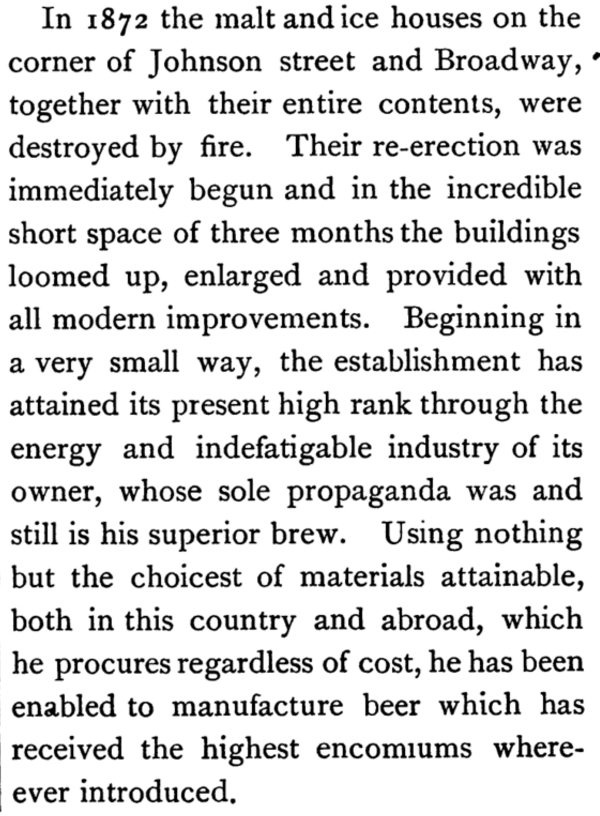
Today is the birthday of Valentin Blatz (October 1, 1826-May 26, 1894). Blatz was a German-American brewer and banker. He was born in Miltenberg, Bavaria and worked at his father’s brewery in his youth. In August 1848 Blatz immigrated to America and by 1849 had moved to Milwaukee, Wisconsin. Blatz established a brewery next to Johann Braun’s City Brewery in 1850 and merged both breweries upon Braun’s death in 1852. He also married Braun’s widow. The brewery produced Milwaukee’s first individually bottled beer in 1874. It incorporated as the Valentin Blatz Brewing Company in 1889 and by the 1900s was the city’s third largest brewer.
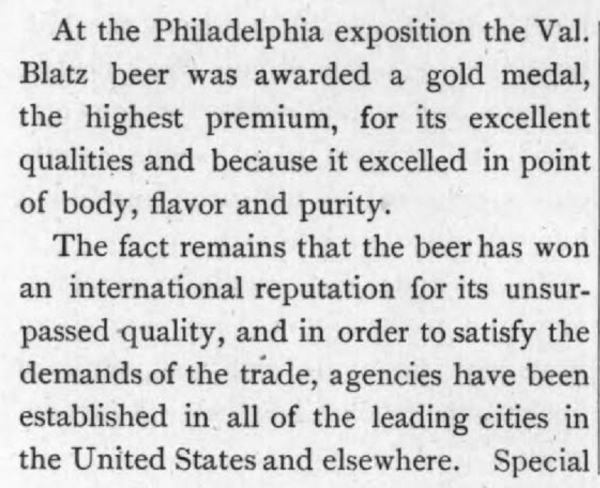
Businessman, Beer Magnate. Valentin Blatz, born to Casper Blatz, a brewer, in Miltenberg am Main, Bavaria, Germany, attended municipal schools until age 14 when he began an apprenticeship in his father’s brewery. He began in 1844, to acquire additional experience at breweries in Augusburg, Wurzburg and Munich until 1848 when he emigrated from Bavaria to Buffalo, New York, where he worked for a year at Philip Born’s brewery. Arriving in Milwaukee, Wisconsin in 1849, he became brewmaster at John Braun’s Cedar Brewery producing 150 barrels annually. He boarded at Braun’s home until 1851 when, after having saved $500, he established his own brewery. Shortly thereafter, Braun was fatally thrown from his horse-drawn beer wagon and Blatz eventually married Braun’s widow. Subsequently he combined Braun’s small brewery and his own into a new company, City Brewery; with output of 500 barrels annually it would eventually become one of the largest breweries in Milwaukee. Blatz was widely acknowledged to be the first of the great Milwaukee brewers to establish a reputation outside of Wisconsin, the first to begin developing a national distribution network, and the first to establish a bottling plant in connection with his brewery. During its early years of development, he operated the brewery as a sole proprietorship and reportedly out-paced both the Pabst and Schlitz operations. With production exceeding 200,000 barrels in 1889, he incorporated it as the Val. Blatz Brewing Company with capital stock of $2,000,000 and sold it in 1891 to a group of British and American investors, United States Brewing Company, reportedly netting himself (also a member of the syndicate) and his family $3,000,000 and full control of the Milwaukee operation. Blatz was the only beer available on tap in German restaurants at the 1893 Chicago World’s Fair.
A year later he died unexpectedly at the Hotel Ryan in St. Paul, Minnesota, returning from a trip to California, where he had vacationed and attended a midwinter exposition. Ironically, he had postponed the trip several times because of a premonition he would not return to Milwaukee alive, but made the trip because of his wife’s deteriorating health so they could spend part of the winter in California’s milder climate. At his death, he was one of Milwaukee’s wealthiest men, with an estate estimated at between $6,000,000 and $8,000,000. Throughout his life he had been active in community affairs and belonged to the Milwuakee Old Settlers Society and a host of other organizations. In 1866 he became the first president of the Merchants National Bank, and in 1868 he was elected President of the Second Ward Savings Bank, a position held until his death. A member of the Milwaukee Brewers Association and the Chamber of Commerce, he belonged to an influential group of local businessmen who organized the Milwaukee Industrial Exposition in 1879. Also served a single term as a Milwaukee city alderman in 1882. His company survived prohibition with “near beer” and other non-alcoholic products until 1933, when it resumed producing beer, until 1958 when it was purchased by Pabst. The Blatz label was sold to G. Heileman brewing in 1959, which was acquired by Stroh Brewery in 1996, which was sold to Pabst in 1999 who now owns it.
And here’s a biography of both Valentin and his Blatz Brewery, from the Blatz Brewing Company Records, 1862-1944, housed in the University of Wisconsin Library:
Valentin Blatz was born on October 1, 1826, in Miltenberg am Main, Bavaria. The son of a local brewer, Caspar Blatz and his wife Barbara, he attended school until age fourteen at which time he began an apprenticeship in his father’s business. In 1844 Blatz began an extended tour of some of Europe’s greatest breweries where he spent his time learning new techniques and the latest in brewing technology until, at age twenty-one, he was forced to return home in order to fulfill his military obligation in the army. However, his father, a prominent community leader, obtained a substitute to serve in his place and shortly thereafter, like thousands of his countrymen, Valentin Blatz left Bavaria for the United States. Landing in New York City in August 1848, Blatz found work almost immediately at the Born Brewery in Buffalo, New York.
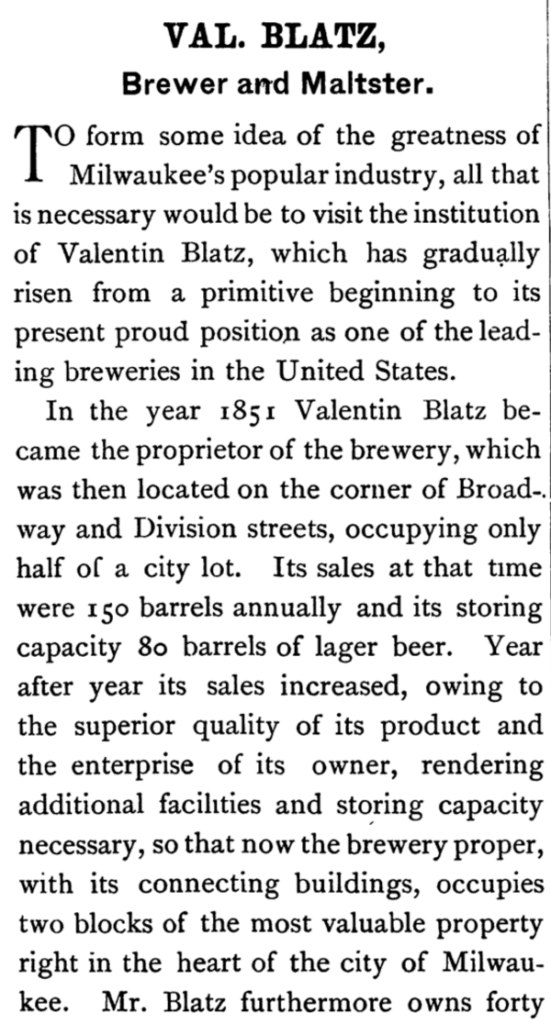
Blatz remained in Buffalo for approximately one year after which time he journeyed west to Milwaukee. Arriving in 1849, he found work as the foreman (some sources say brewmaster) at John Braun’s Cedar Brewery that had been established in 1846. It was a small operation, employing only a few workmen and capable of producing approximately 150 barrels of beer annually. The brewery’s storage capacity was said to be only 80 barrels. Blatz worked for Braun and boarded at his home until 1851, when, after having saved $500, he purchased half of a city lot and began his own brewing business.
Around the time that Blatz was establishing his own brewery, John Braun was killed suddenly after being thrown from his horse-drawn wagon while on a trip selling beer. He left a son, John, and a wife, Louise, who was pregnant with the couple’s second child. In December of 1851 Blatz married Braun’s widow and adopted her infant child (also named Louise) who was born after Braun’s death. Blatz also raised his late employer’s son John as his own. Although he was never formally adopted, John Braun became known generally around Milwaukee as “John Blatz.” Valentin and Louise (Braun) Blatz also had five children of their own: four sons; Albert, Emil, Valentin Jr., and Louis (who died at a young age); and one daughter, Alma.
The marriage allowed Blatz to acquire Braun’s small brewery and combine it with his own operation, which he named City Brewery. This formed the basis of what would eventually become one of the largest and most prominent breweries in Milwaukee. Blatz was widely acknowledged to be the first of the great Milwaukee brewers to establish a reputation outside Wisconsin, the first to begin developing a national distribution network, and the first to establish a bottling plant in connection with his brewery. During its early years of development, the Blatz brewery reportedly out-paced both the Pabst and Schlitz operations.
Blatz operated his business as a single proprietorship until 1889 when it was incorporated as the Val. Blatz Brewing Company with a capital stock of 21 $2,000,000. Officers of the new corporation were Valentin Blatz, president; Albert C. Blatz, vice president; John Kremer (a son-in-law), secretary; and Val. Blatz, Jr., superintendent. The company was quietly sold in 1891 to a group of British and American investors incorporated as the United States Brewing Company and known variously as the “English Syndicate” or the “Chicago Syndicate.” The sale reportedly netted Blatz (who was himself a member of the syndicate) and his family $3,000,000 and left them in full control of the local operation.
Three years later, on May 26, 1894, Valentin Blatz died suddenly while staying at the Hotel Ryan in St. Paul, Minnesota, on his return from a trip to California, where he vacationed and attended a midwinter exposition. Ironically, it was a journey that he had reportedly postponed several times because of a premonition that he would not return to Milwaukee alive. A newspaper reported at the time that it was only because of his wife’s deteriorating health that he agreed to go to California where they could spend part of the winter in a milder climate. At the time of his death at age sixty-eight, Blatz was regarded as one of Milwaukee’s wealthiest men, with an estate estimated at between $6,000,000 and $8,000,000. Throughout his life Blatz was a generous man. In his will he not only left thousands of dollars to more than a dozen local charities, hospitals, orphanages, and homes for the aged, but also provided for the four children (Cora, Selma, Elsie, and John) of his late step-son “John Blatz.” He was survived by his wife, Louise, who was with him in St. Paul; three sons, Albert, Emil, and Valentin, Jr.; and two daughters, Louise (Mrs. John) Kremer and Alma (Mrs. Gustav) Kletzsch. He was interred in Milwaukee’s Forest Home Cemetery.
Throughout his life, Blatz had been active in community affairs. He was a lifelong member of the Milwaukee Musical Society and belonged to a host of other groups, including the Milwaukee Old Settlers Society, the Independent Order of Odd Fellows (I.O.O.F.), the Aurora Lodge of Freemasons, The Arion Club, the Frei Gemeinde, the Liederkranz Society, the Germania Maennerchor of Chicago, the Eichenkranz Maennerchor of New York, several local Turnverein Societies, and–reportedly one of his favorite haunts–the West Side Old Settlers Bowling Club. In 1866 he became the first president of the Merchants National Bank, and in 1868 he was elected President of the Second Ward Savings Bank, a position he held until his death. Blatz was a member of the Milwaukee Brewers Association and the Chamber of Commerce, and also belonged to an influential committee of local businessmen who organized the Milwaukee Industrial Exposition in 1879. Blatz, who became an American citizen in 1855, was elected for a single term as a Milwaukee city alderman in 1882
After Blatz’s death, the brewery was operated by two of his sons, Albert C. and Val. Blatz, Jr., and John Kremer, a son-in-law. The United States Brewing Company, which purchased the brewery in 1891, owned and operated it until the onset of national prohibition in 1920.
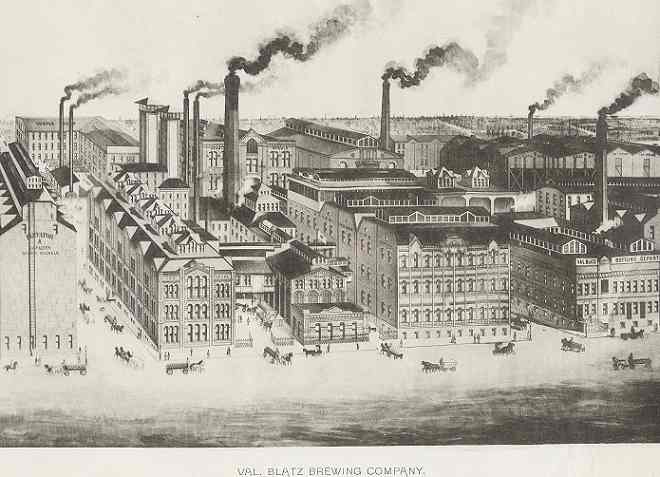
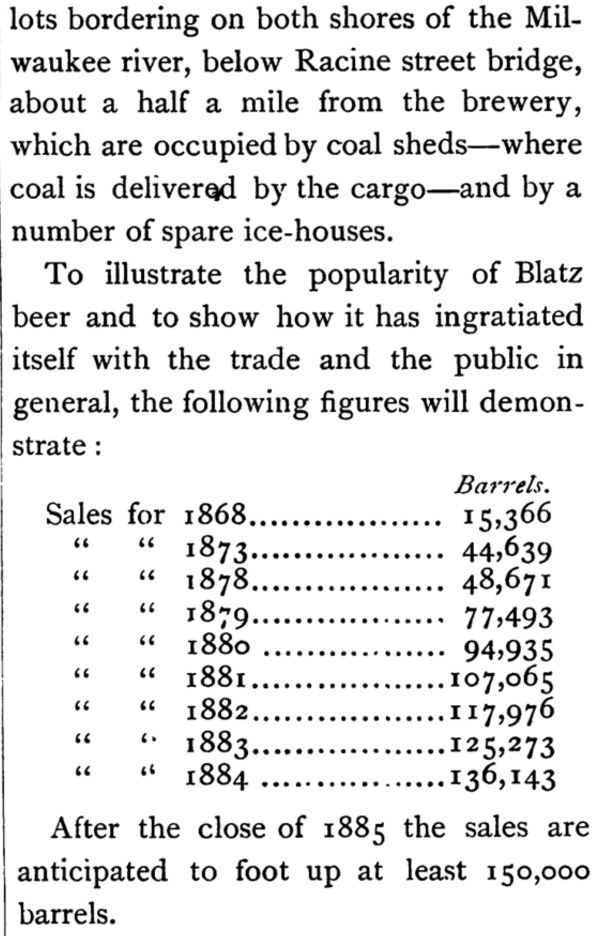
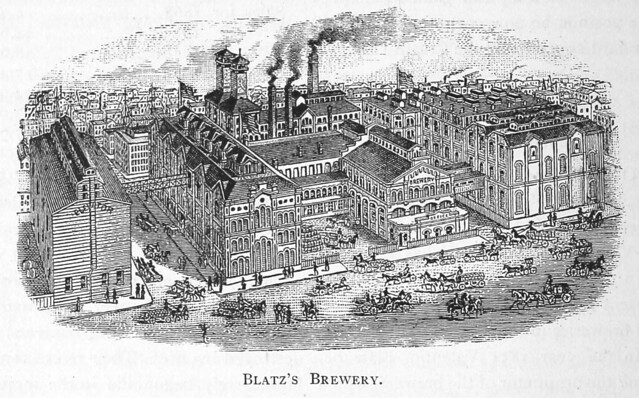
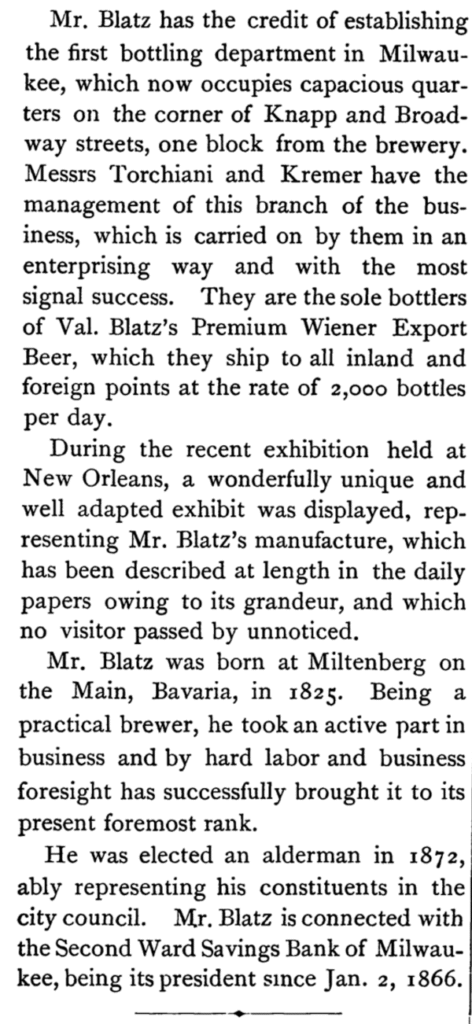
This lengthy article is from the Industrial History of Milwaukee, published in 1886.
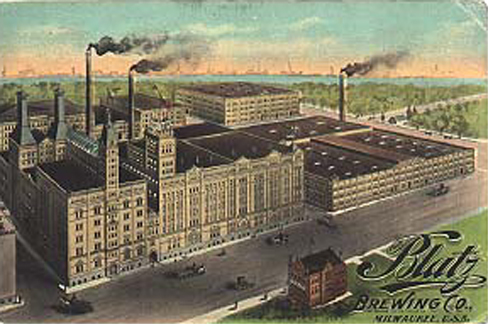
Blatz Brewery in 1886,
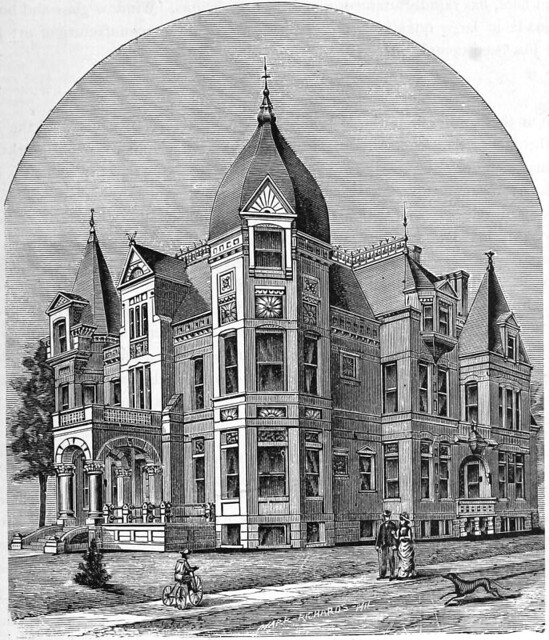
The Valetin Blatz home c. 1886
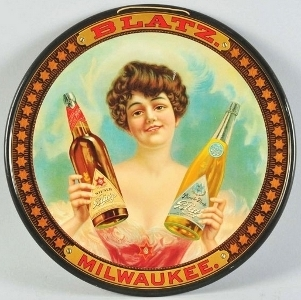
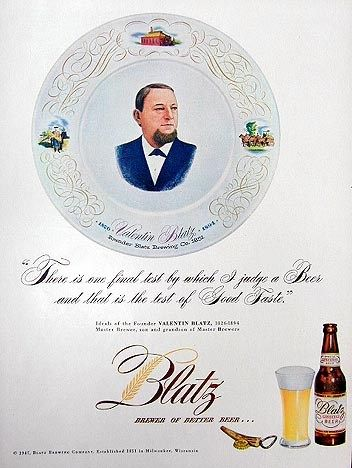
This 1946 ad features a plate with founder Valentin Blatz.
Here’s a history of Blatz, from the current Blatz beer website, which is currently owned by Pabst Brewing.
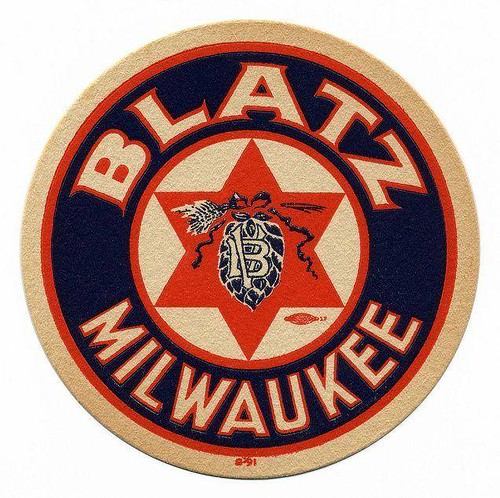
Blatz was one of the premier Milwaukee breweries. It was founded by John Braun in 1846, shortly before Wisconsin achieved statehood, and was originally called the City Brewery. Braun’s fledgling business produced about 150 barrels of beer annually – until 1851 when Valentine Blatz, a former employee, established a brewery of his own next door to the City Brewery. Braun died later that year and Blatz soon married his widow, thereby uniting the City Brewery and his own operation.
At the time of the marriage, the combined breweries produced only 350 barrels per year. However, by 1880 total annual production reached 125,000 barrels. The brewery’s growth continued, and in 1884 Blatz ranked as the third-largest beer producer in Milwaukee.
Blatz was the first Milwaukee brewer to market beer nationally. He set up distribution centers in Chicago, New York, Boston, New Orleans, Memphis, Charleston, and Savannah. He was also the first of the Milwaukee brewers to include a bottling plant within his brewery. In addition, Blatz operated his own carpenter shop, railroad cars, cooper shop, machine shop and coal yard.
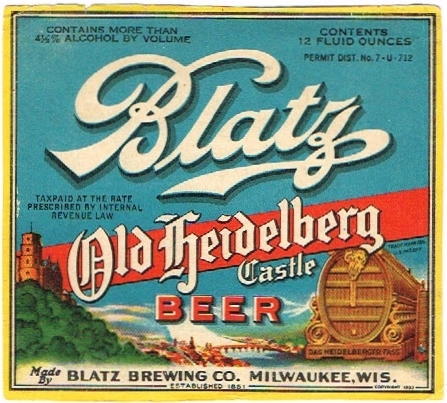
In 1890 Blatz sold his brewery to a group of London investors, who continued to operate the plant until Prohibition. Following the repeal of the eighteenth amendment, the Blatz brewery again flourished, producing over a million barrels annually during the 1940s and 1950s. Its labels included Blatz, Pilsener, Old Heidelberg, Private Stock, Milwaukee Dark, Culmbacher, Continental Special, Tempo, and English Style Ale.
By 1955 only six Milwaukee breweries remained open. Of these six, Miller, Pabst and Schlitz were the biggest and most successful. Blatz was big, too, but stiff competition and skyrocketing production costs prevented it from growing further. In 1958 the brewery was finally sold to Pabst; however a federal court order at the time prevented Pabst from Brewing at the Blatz facilities. In 1959 this giant, Blatz, ceased all operations. Shortly there after, Pabst purchased the Blatz brands, and relaunched the brand as a craft-style beer, true to the high-quality style that Valetine Blatz espoused.
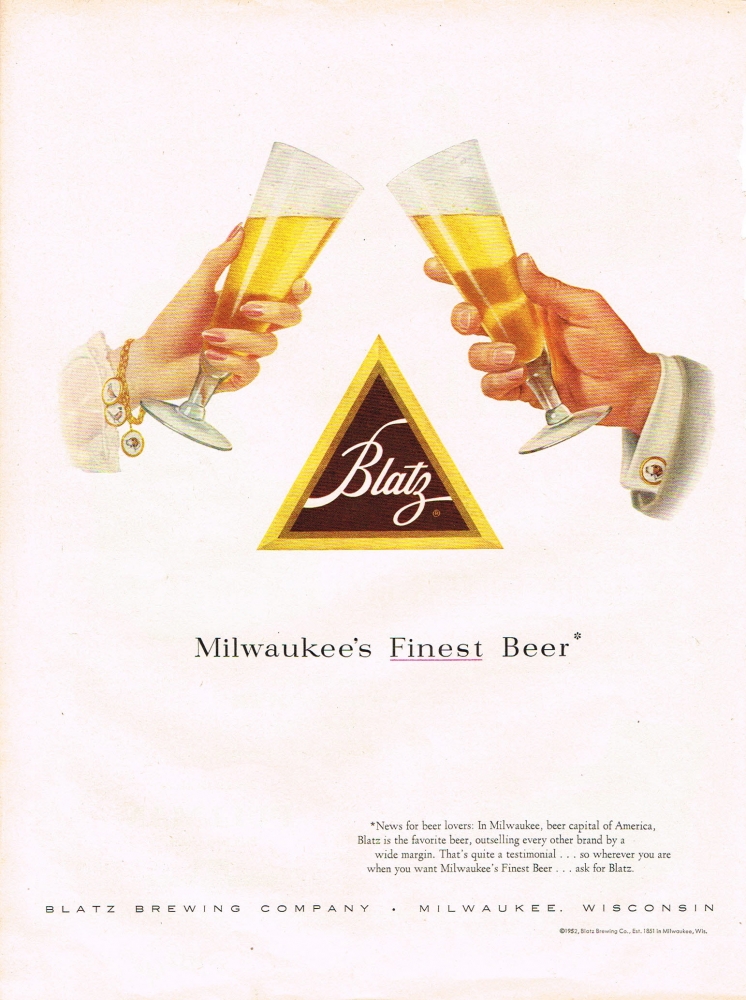
Today, Blatz continues to be recognized for it’s quality and tradition. While the Blatz Brewery is now home to some of Milwaukee’s Finest Citizens, Blatz Beer will always be Milwaukee’s Finest Beer.
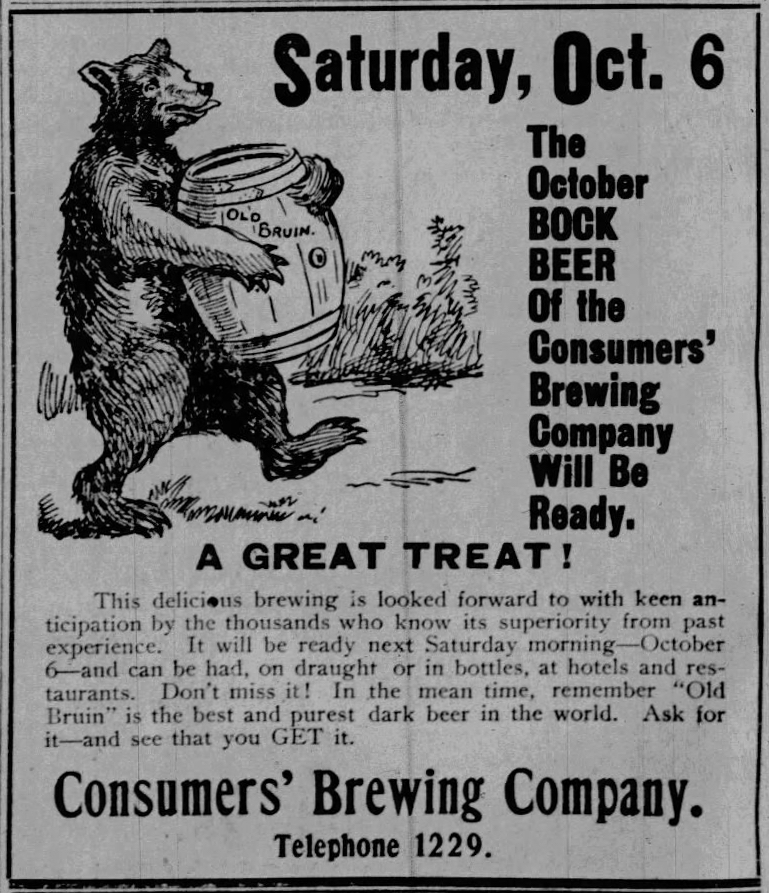
Last year I decided to concentrate on Bock ads. Bock, of course, may have originated in Germany, in the town of Einbeck. Because many 19th century American breweries were founded by German immigrants, they offered a bock at certain times of the year, be it Spring, Easter, Lent, Christmas, or what have you. In a sense they were some of the first seasonal beers. “The style was later adopted in Bavaria by Munich brewers in the 17th century. Due to their Bavarian accent, citizens of Munich pronounced ‘Einbeck’ as ‘ein Bock’ (a billy goat), and thus the beer became known as ‘Bock.’ A goat often appears on bottle labels.” And presumably because they were special releases, many breweries went all out promoting them with beautiful artwork on posters and other advertising.
Tuesday’s ad is for Consumers’ Bock Beer, which was published on September 30, 1900, six days before it was scheduled to be released on October 6. This one was for the Consumers’ Brewing Co. of Norfolk, Virginia, which was originally founded in 1896. At least I think so, since that’s the closest one to D.C. But there were also breweries called “Consumers'” located in Rhode Island, Ohio, Pennsylvania and New York. This ad ran in The Washington Post, from Washington, D.C.
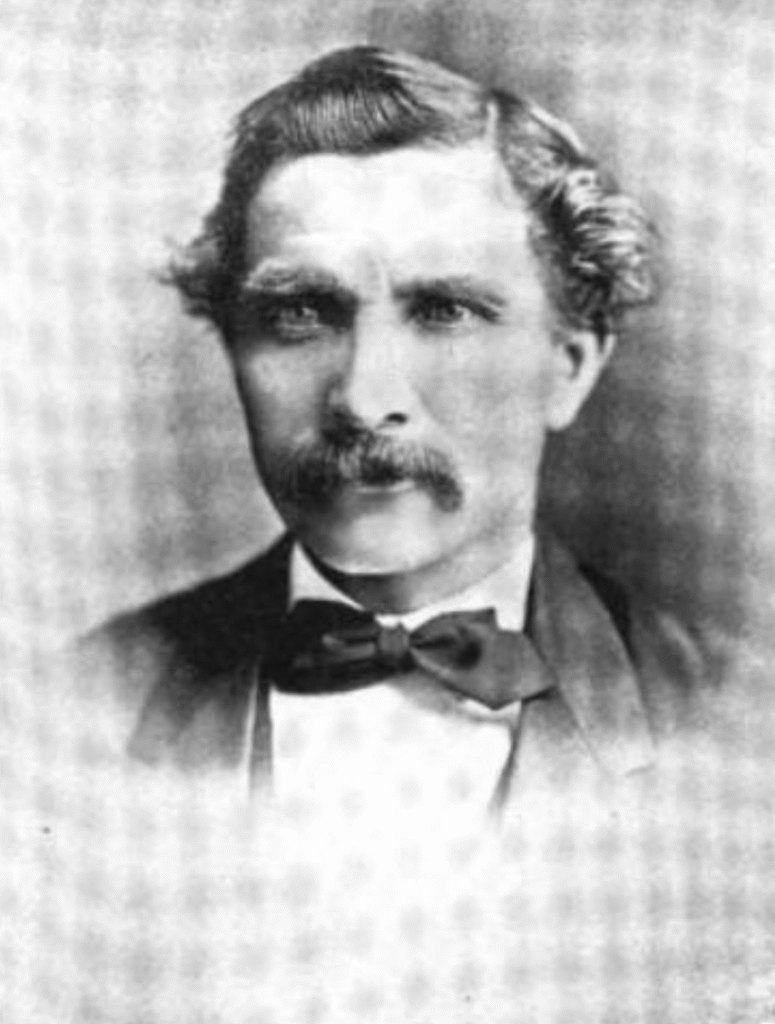
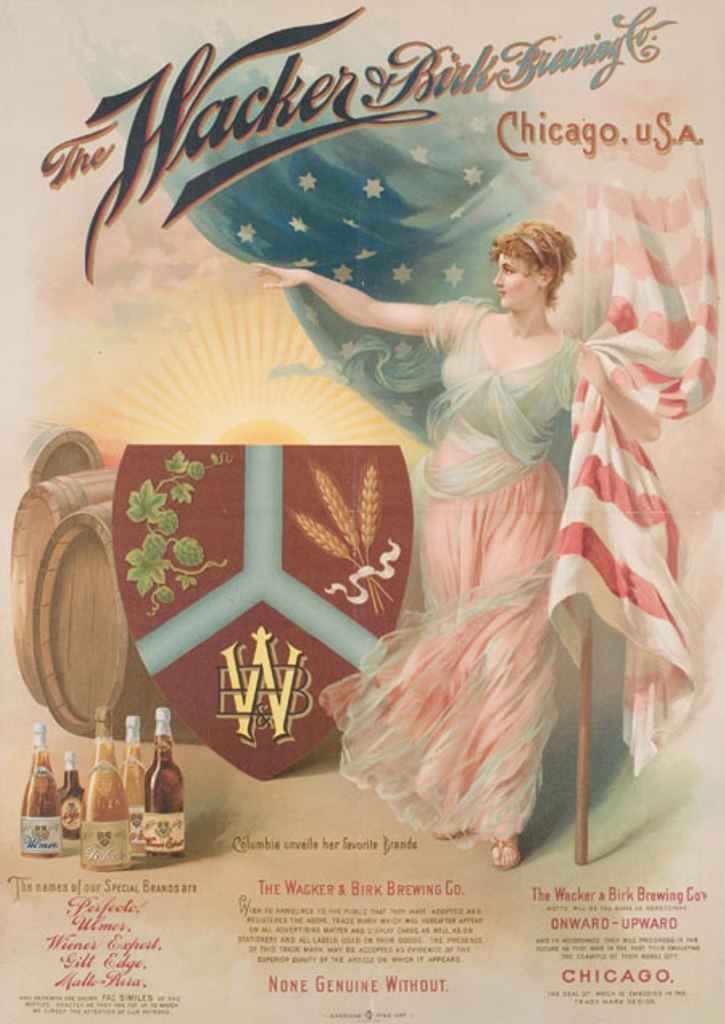
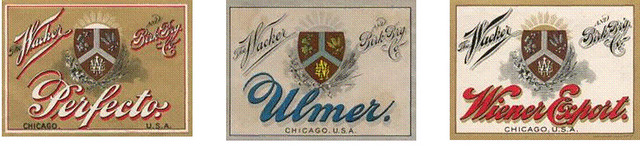
Today is the birthday of Frederick Wacker (September 30, 1830-July 8, 1884). Wacker was born in Württemberg Germany (though some sources claim he was from Switzerland) and founded the Chicago brewery Wacker & Birk in 1857 with business partner Jacob Birk. Shortly thereafter, Birk left to start a different brewery, and the name was changed to the Frederick Wacker Brewing Co. 1865. But Birk appears to have returned to the business, because the name became the Frederick Wacker & Jacob Birk Brewing & Malting Co., and it remained some form of the two men’s names until it was closed for good by prohibition. Frederick Wacker is also remembered as the father of his more famous son, Charles Wacker, for whom Wacker Drive in Chicago was named.
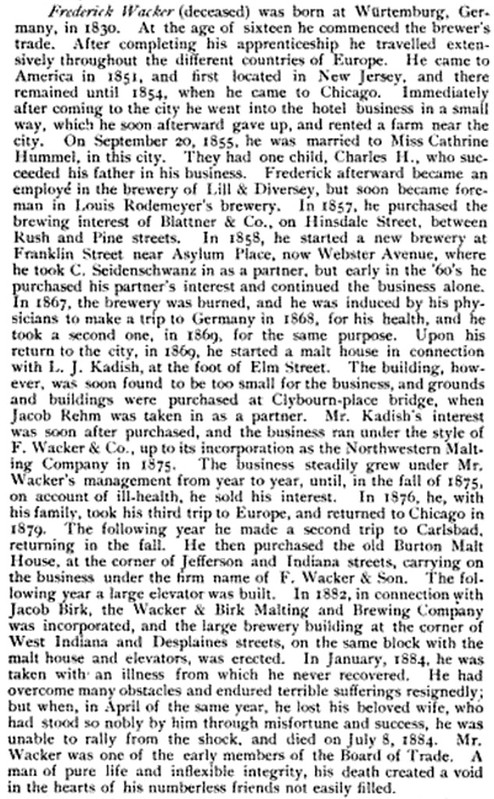
Here’s a biography of Frederick Wacker, from the History of Chicago, Volume 3, by Alfred Theodore Andreas, published in 1886.
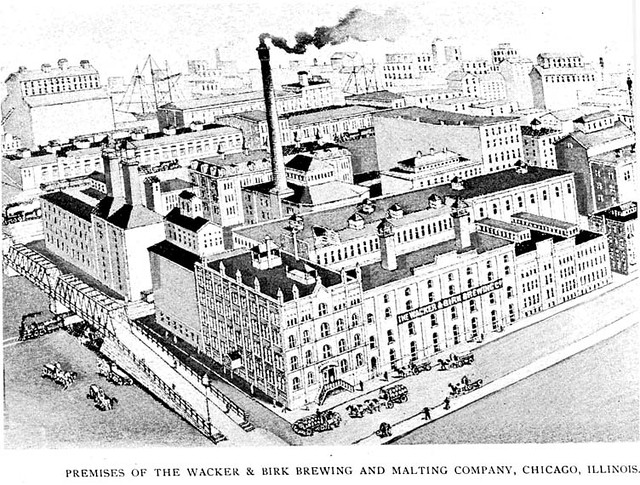
The Chicago brewery Frederick started was originally called Seidenschwanz & Wacker, and was located on Hinsdale, between Pine and Rush streets. It was founded in 1857, but the following year it became known as Wacker & Seidenschwanz, and was on N. Franklin Street. That version lasted until 1865. Beginning that same year, its name changed once again to the Frederick Wacker Brewery, and its address was listed as 848 N. Franklin Street, presumably in the same location as its predecessor. Sixteen years later, in 1882, it relocated to 171 N. Desplaines (now Indiana Street) and it became known as the Wacker & Birk Brewing & Malting Co. This is also when Charles joined his father’s business, when he would have been 26 years old. Just before prohibition the name was shortened to the Wacker & Birk Co., although it appears to have closed by 1920.