Brookston Beer Bulletin

Jay R. Brooks on Beer

  • Home
  • About
  • Editorial
  • Birthdays
  • Art & Beer

Socialize

  • Dribbble
  • Email
  • Facebook
  • Flickr
  • GitHub
  • Instagram
  • LinkedIn
  • Pinterest
  • RSS
  • Twitter
  • YouTube

Powered by Genesis

Beer Birthday: Gretchen Schmidhausler

August 8, 2025 By Jay Brooks

little-dog
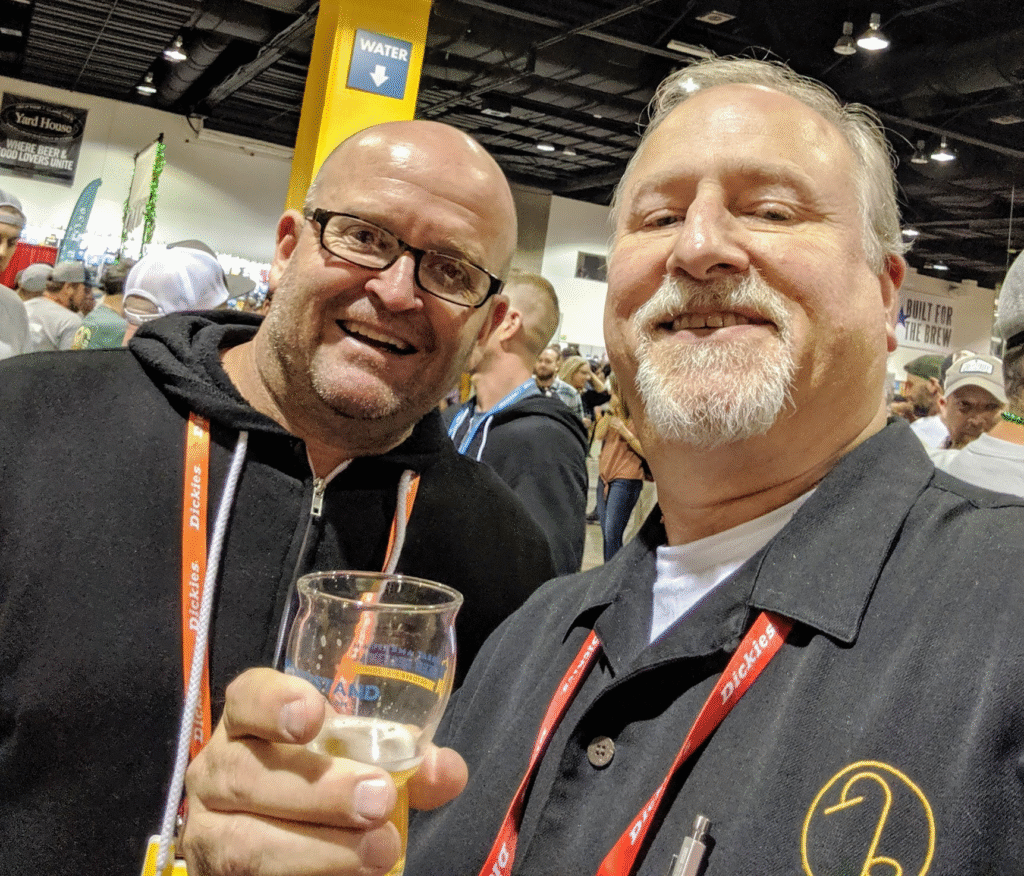
Today is the birthday of Gretchen Schmidhausler. She owns and operates Little Dog Brewing in Neptune City, New Jersey. I first met Gretchen, I believe, when she was brewing at Basil T’s Brewery & Italian Grill, where she brewed for over a dozen years, although she’s been in the industry longer than that. Gretchen also is a beer writer, and wrote the book Making Craft Beer at Home, which was published in 2014. And more recently, she joined us for World Beer Award judging in D.C. Join me wishing Gretchen a very happy birthday.

Gretchen and I a few years ago at CBC in Minneapolis.
Gretchen-Schmidhausler
Gretchen with her little dog at her Little Dog Brewery.
gretchen-and-norm
Gretchen with George “Norm” Wendt.

[Note: last two photos purloined from Facebook and her brewery website.]

Filed Under: Birthdays, Just For Fun Tagged With: New Jersey

Beer In Ads #5046: The Flavor’s The Pay Off — Back It Every Time

August 7, 2025 By Jay Brooks

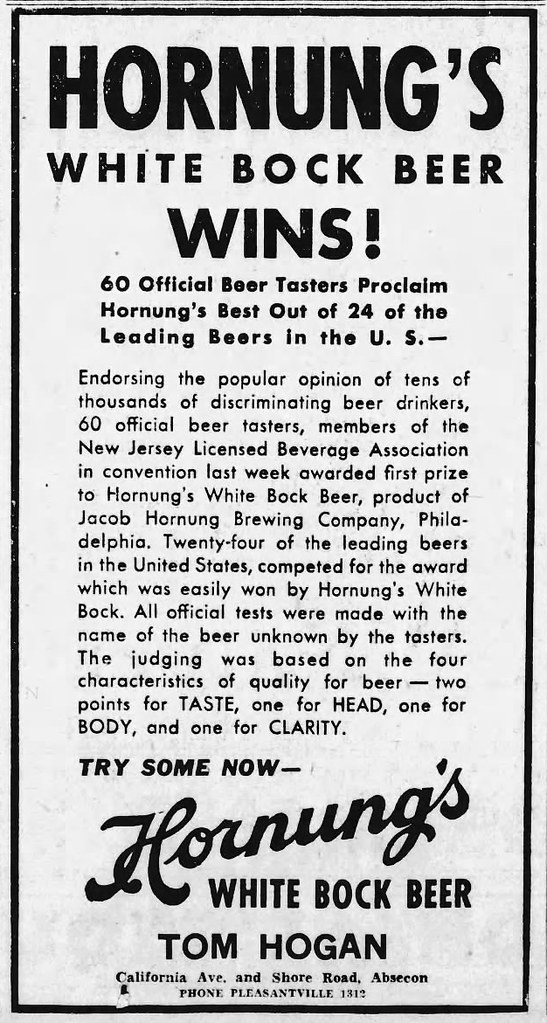
Last year I decided to concentrate on Bock ads. Bock, of course, may have originated in Germany, in the town of Einbeck. Because many 19th century American breweries were founded by German immigrants, they offered a bock at certain times of the year, be it Spring, Easter, Lent, Christmas, or what have you. In a sense they were some of the first seasonal beers. “The style was later adopted in Bavaria by Munich brewers in the 17th century. Due to their Bavarian accent, citizens of Munich pronounced ‘Einbeck’ as ‘ein Bock’ (a billy goat), and thus the beer became known as ‘Bock.’ A goat often appears on bottle labels.” And presumably because they were special releases, many breweries went all out promoting them with beautiful artwork on posters and other advertising.

Thursday’s ad is for Hornung’s White Bock Beer, which was published on August 7, 1936. This one was for the Jacob Hornung Brewing Co. of Philadelphia, Pennsylvania, which was originally founded in 1885. This ad ran in The Evening Sun, of Hanover, Pennsylvania.

Filed Under: Art & Beer, Beers, Breweries, Just For Fun Tagged With: Advertising, Bock, History, Pennsylvania

Historic Beer Birthday: Henry J. Schreihart

August 7, 2025 By Jay Brooks

schreihart
Today is the birthday of Henry J. Schreihart (August 7, 1876-August 7, 1931). He was the son of John Schreihart, and the grandson of Peter Schreihart, both of whom he founded with a partner, Frederick Pautz, bought the William Fricke Brewery, which had been founded in 1862. In 1879, John become soler proprietor, re-naming it the John Schreihart Brewery, and later the Schreihart Brewing Co. John Schreihart died during prohibition, and the brewery re-opened as the Bleser Brewing Co. in 1937, closing for good in 1942.

Henry-J-Schreihart

Here’s his obituary from the Manitowoc Herald News, Wednesday, August 5, 1931:

Former Head of Brewing Co. Here Passes – Illness Forced Retirement 14 Years Ago

Henry J. Schreihart, 55, lifelong resident of Manitowoc, former president of the Schreihart Brewing Co. founded by his father, the late John Schreihart, but who, for the past several years has been forced to live a retired life on account of illness, passed away at the family home, 1111 Marshall street, this morning. He was taken seriously ill last Friday and failed rapidly until the end came today.

Funeral services for the deceased will be held from the home on Saturday afternoon at 2:30 in charge of the Manitowoc lodge of Elks, of which Mr. Schreihart was a member. The Rev. Hood of the St. James church will be in charge and interment will be at Evergreen.

Became Brewmaster

Mr. Schreihart was educated in the schools of the city and at the conclusion of his schooling entered the Hanthe Brewing school at Milwaukee. After completing his course there he returned to become brewmaster in the Schreihart brewery here, operated by his father, John Schreihart, a pioneer brewer in Manitowoc, and before that time in Germany.

When reorganization of the brewery was perfected in 1911, and John Schreihart retired from active head of the company, Henry Schreihart was elected president of the company, which position he filled until a merger was effected with other interests here, and the new company became the Manitowoc Products Co. Mr. Schreihart continued with that company in an official capacity until failing health fourteen years ago forced his retirement.

Great Lover of Books

In late years Mr. Schreihart has been a great lover of books and took pride in his library at the home, where he spent many hours daily in reading. Just one month ago today his mother, Mrs. John Schreihart passed away and it is believed that the shock of her death brought about a sudden relapse in his condition that forced him to bed at the end of last week and brought about his death this morning.

Mr. Schreihart was married to Miss Hattie Hartwig of this city, on June 29, 1904 and she survives him with two sisters, Miss Helen of this city, and Mrs. Charles Kulnick of Berlin, Wis., and two brothers, Edward of this city and Dr. Adolph Schreihart of Chicago.

While not inclined to take part in public life the deceased was prevailed on by his constituents to represent the third ward on the county board of supervisors, serving for two years. In addition to the Elks the deceased was a member of the United Commercial Travelers. The remains have been removed to the home from the Pfeffer parlors, where they may be viewed up to the time of the funeral.

Shreihart-beer-sign

Pautz’s Brewery was built in 1849, by Mr. Hottleman, he being the first to brew beer in the county. G. Kuntz purchased the brewery of him in 1865. Messrs. Fred. Pautz and John Schreihart became the owners in 1875. In November, 1878, the former purchased the interest of the latter, and is now conducting the business alone. The capacity of the brewery is about 1,600 barrels of beer per annum.

Schreiharts’s Brewery. In 1879, John Schreihart established himself in business, and is now conducting a brewery on Washington street. He has been brought up in the business and understands it.

Schreihard-das-schmeckt-gut

From what I can piece together about the brewery itself, it appears to have been built in 1849, and went through several name changes from the William Fricke Brewery, the Christian Fricke Brewery, and then the Carl Fricke Brewery. It seems to have been called by the latter name when Frederick Pautz and John Schreihart bought it in 1875, but it didn’t become the John Schreihart Brewery until he bought out Pautz in 1879. A few years later, in 1884 until the following year, it was known as the John Schreihart & George Kunz Brewery, presumably because Schreihart took on George Kunz as a partner. Then there’s a gap in the record, but by 1891 it was known as the Schreihart Brewing Co. until it was closed by prohibition in 1920. The building apparently lay dormant after repeal in 1933, but from 1937-1942 housed the Bleser Brewing Co., which I assume was because they leased or bought the building where the Schreihart had brewed.

schreihartbeertray

Filed Under: Birthdays, Breweries, Just For Fun Tagged With: History, Wisconsin

Historic Beer Birthday: John Allen Young

August 7, 2025 By Jay Brooks

youngs
Today is the birthday of John Allen Young (August 7, 1921-September 17, 2006). Young was the great-great-grandson of Charles Young, who co-founded Young’s brewery in 1831. “He joined the family firm in 1954 after serving as a fighter pilot and a merchant seaman. He became chairman and chief executive in 1962 when his father retired and reverted to executive chairman in 1999.”

john-young-2

Here’s his obituary, written by Roger Protz, from the Guardian in 2006.

John Young, who has died aged 85, will have a prominent place in the Brewers’ Hall of Fame, revered as the father of the “real ale revolution”, an iconoclast who believed in good traditional beer drunk in good traditional pubs. Young, chairman of Young’s of Wandsworth in south London for 44 years, steered the family brewery on a different course from the rest of the industry in the 1970s. It was a course that was derided at the time: however, it proved not only successful for Young’s but also encouraged other regional brewers to follow suit.

A spate of mergers in the 1960s had created six national brewers who attempted to transform the way beer was made by switching from cask ale to keg beer – filtered, pasteurised and artificially carbonated. Panic ensued as such brands as Watney’s Red Barrel, Worthington E and Whitbread Tankard rapidly dominated the market. Smaller regional brewers rushed to emulate the “Big Six”, as they were known.

In Wandsworth, John Young raised his standard above the Ram Brewery, on the oldest brewing site in Britain, and declared he would remain faithful to beer that matured naturally in its cask. He was laughed to scorn by directors of other breweries. Among the legion of stories about him, one is told of a meeting of the Brewers’ Society in London where, during a break for coffee, one member saw a funeral hearse passing by outside. “There goes another of your customers, John,” he told Young, to roars of laughter from his colleagues. John Young had the last laugh.

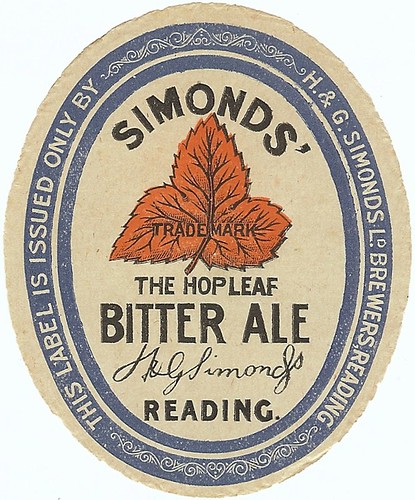
He was born in Winchester, the eldest of four sons of William Allen Young. The family was steeped in brewing. John was the great-great-grandson of Charles Allen Young, one of two businessmen who took over the 16th-century Ram Brewery in 1831. John’s mother was Joan Barrow Simonds, a member of the family that owned Simonds Brewery in Reading.

But John’s first love was sailing: he was educated at the Nautical College in Pangbourne. Sailing holidays in the late 1930s on the river Orwell in Suffolk brought John and his brothers into contact with Arthur Ransome at Pin Mill, the setting for We Didn’t Mean to Go to Sea. Ransome claimed that he, rather than the brothers’ father, introduced the boys to the pleasures of beer and darts.

Either side of the second world war, John went to Corpus Christi College, Cambridge, where he graduated with an honours degree in economics. During the war he served with distinction as a fighter pilot on aircraft carriers. He left the Fleet Air Arm as a lieutenant commander in 1947 and launched a career in shipping. For a while he was based in Antwerp, where he met his Belgian wife Yvonne. They married in 1951 and settled in West Sussex, from where John, with his brothers, was summoned to work at the Ram Brewery in 1954.

He succeeded his father as chairman in 1962 and set about refashioning the company to meet the challenges of the time. Improving the pub estate and offering children’s rooms – a daring move at the time – did not mean a move away from traditional values. The brewery retained a fierce commitment to cask beer and delivered it to local pubs by horse-drawn drays, while a live ram mascot, along with ducks and geese, were familiar if bizarre sights at Wandsworth.

The energetic new chairman visited every pub in his estate. He was on first name terms with his landlords and became friendly with regular customers. Company annual general meetings became lavish affairs where a white-suited John Young would proclaim his belief in traditional brewing values. He was so horrified by the way some London pubs were being remodeled in the 1970s – as wild west saloons or sputniks – that he once threatened to enter one pub armed with a packet of soap flakes to throw into a large fountain that had been installed there.

The commitment to cask beer paid off. Sales of Young’s ales rocketed and their success was instrumental in helping the Campaign for Real Ale to make its mark in the early 1970s. In 1975 John Young was made a CBE to mark his work in brewing and for charity: he was chairman of the National Hospital for Nervous Diseases in Bloomsbury and raised millions of pounds to build new wards and install modern equipment.

His passion for brewing remained unabated, and John continued to work and chair company AGMs up to this year, though he was visibly ill with cancer. His last few months in office were dogged by controversy: a redevelopment scheme in Wandsworth meant the brewery had to close. When a suitable alternative site could not be found in London, Young’s agreed to merge its brewing operations with Charles Wells of Bedford, a move that has not pleased all lovers of Young’s distinctive beers.

But 200 Young’s pubs will remain in London and the south-east, bricks and mortar reminders of the man who guided their fortunes with undiminished fervour for more than 40 years.

He is survived by a son, James, who is deputy chairman of Young’s, and a daughter, Ilse.

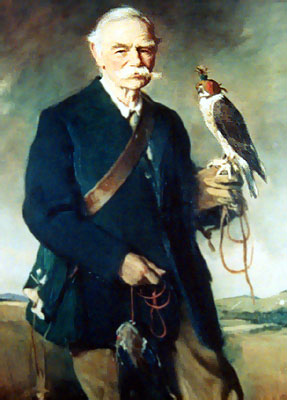
john-young-portrait-2
A portrait of John Young that used to be in the brewery tasting room.

And here’s another obit, this one from the Telegraph:

The brewing industry is mourning the loss of one of its most passionate and colourful characters, Young & Co’s chairman, John Young. He died at the age of 85 after a long battle against cancer. The timing is particularly poignant as Young’s will this week cease production at the historic Ram Brewery in Wandsworth, south London, where ales were first brewed in 1581.

Mr Young – known affectionately as Mr John by staff – was a staunch opponent of red tape. Last year, he complained in the annual report: “At the brewery, we can no longer walk down the yard to the offices because of health and safety regulations. Our horses need passports. Since they cannot fit into a photo-booth, a vet must be employed to sketch the animal.”

Mr Young will also be remembered for his eccentric annual shareholder meetings. In what became a tradition as he fended off attempts at reform by activist shareholder Guinness Peat Group, he started bringing props to the event.

One year, he wore a bee-keeper’s hat to show his resolve to keep the group’s preferential B shares for family members. On other occasions, he brandished a megaphone to make sure “certain people, who seemed to be ignoring what I have to say” could hear him, and sported oversized boxing gloves.

john-young

Filed Under: Birthdays, Just For Fun Tagged With: England, Great Britain, History, UK

Beer Birthday: Tara Nurin

August 7, 2025 By Jay Brooks

Today is the 52nd birthday of beer writer Tara Nurin. She’s originally from Annapolis, but now calls Camden, New Jersey her home, where she writes for Forbes, USA Today, Food & Wine, Wine Enthusiast, VinePair, and many others. Her most recent book is about the history of women in beer, entitled “A Woman’s Place Is in the Brewhouse: A Forgotten History of Alewives, Brewsters, Witches, and CEOs.” She also founded Beer for Babes (f.k.a. Barley’s Angels New Jersey). I don’t remember when I first met Tara, possibly at a North American Guild of Beer Writer events, but she’s been a great addition to the beer writer’s cadre, and a couple of years I worked with Tara on her media panel for the Craft Brewers Conference. Join me in wishing Tara a very happy birthday.

Tara with a taster of beers.
With Herlinda Heras at the Hopland Tap during a recent trip to California.
With Samuel Adams brewer Megan Parisi.

NOTE: All photos purloined from Facebook.

Out Now!: A Woman’s Place Is in the Brewhouse.

Filed Under: Birthdays, Just For Fun Tagged With: Beer Writers Guild, Maryland, New Jersey, United States, Writing

Historic Birthday: Henry C. Ramos

August 7, 2025 By Jay Brooks

Today is the birthday of Henry C. Ramos (August 8, 1846-September 18, 1928). Ramos was born in Indiana, but moved to New Orleans when he was 41, in 1887. There, he bought and ran several prominent bars and invented the Ramos Gin Fizz, which is named for him.

Here’s a biography of Ramos from his Find-a-Grave page:

Henry RAMOS should be listed here as “famous.” Ramos came to New Orleans in 1887 and took over the Imperial Cabinet Saloon at Gravier and Carondelet downtown. In 1907 he purchased the Stag Saloon, near Gravier and St Charles. In the city that literally invented the first American cocktails, Ramos moved things forward with his invention of the Ramos Gin Fizz. Frothy, citrusy, smooth-as-silk. Demand for it was so high he employed 35 “shaker boys” during Mardi Gras 1915. Prohibition shut him down, but the cocktail reemerged after his death in the Roosevelt Hotel in New Orleans in the 1930s. The drink is still served at places in New Orleans like the Bar UnCommon, the French 75 Bar at Arnaud’s, at Cure and at all the Brennan restaurants.

And this account is from the Bakery Blog:

In perhaps the most ironic twist in New Orleans cocktail history, the Ramos Gin Fizz was invented by a bar owner who actually was not a fan of drinking: Mr. Henry C. Ramos, known to his friends as Carl.  Ramos, originally born in Indiana, began his career in a beer saloon, called Exchange Alley, and worked the alcohol circuit in Baton Rouge for several years before deciding to invest in his own property in New Orleans with his brother as a partner.  The pair purchased the Imperial Cabinet in 1887, a bar located on Gravier Street in what is now the Central Business District.

Ramos was widely respected in the community and was considered to be a gentleman of the highest quality; he ran his bar to reflect this.  He closed his bar every evening at the decent hour of 8 o’clock to discourage all-night drinking binges and was open for a mere two hours on Sunday afternoons and only then because the community begged it.  The Imperial Cabinet was upheld to strict standards of temperance and morality, accepting only the most well-behaved of clientele. Ramos was known to spend his time conversing with his patrons in order to keep an eye out for anyone who was toeing the line of tipsy.  He hated drunkenness and ensured that any unruly patrons were pointed out to the bartenders so that no further drinks would be served.  The 1928 New Orleans Item-Tribune states that “nobody could get drunk at the Ramos bar, not only because old Henry wouldn’t let them, but because drunkenness would take away their appreciation of the drinks.”

It was in this culture of quality over quantity that the Ramos Gin Fizz was created by Ramos himself in 1888.  Originally called the ‘New Orleans Fizz’, the drink became an immediate hit and the Imperial Cabinet became busier than ever.  Ramos’s original recipe included a sprinkling of powdered sugar and stipulated that the cocktail must be shaken for 12 minutes before serving, quite the undertaking for any skinny-armed bartender.  Because of the rigorous shaking needed and the popularity of the drink, Ramos had up to 20 bartenders working at any given time.  These gin fizz makers were called ‘shaker boys’ and often rotated in relay lines to share the burden of shaking the cocktail.  The drink became so popular that during the Mardi Gras season of 1915 it was said Ramos had to employ 35 bartenders just to keep up with the number of New Orleans Fizzes ordered.

Ramos was said to have served his last gin fizz at midnight on October 27th 1919 as he became an avid supporter of Prohibition and firmly closed the doors of the Imperial Cabinet.  Even after leaving the alcohol business, Ramos guarded the cocktail’s recipe up until his death, revealing it to the New Orleans Item-Tribune only days before he passed in 1928.  He included in his recipe that “the secret in success lies in the good care you take and in your patience, and be certain to use good material.”

ARC's Mixology - Ramos Gin Fizz

Today, there is even a brand of gin named for Henry Ramos, produced by the Sazerac Company.

Filed Under: Birthdays, Just For Fun, Related Pleasures Tagged With: Cocktails, History, Louisiana, New Orleans, Spirits

Beer Birthday: Patrick Rue

August 7, 2025 By Jay Brooks

bruery
Today is the 45th birthday of Patrick Rue, founder of The Bruery in Orange County, California. I first became aware of Patrick when he started writing his blog about the travails of opening a brewery. We began corresponding, becoming friends and eventually meeting in person. I’ve since written several articles about Patrick and the Bruery as he’s become very successful in a very short period of time, and later sold the brewery. He and his family moved to Napa, where he’s opened a winery, Erosion, to which they’ve added a beer hall and started brewing, as well. More recently, he’s become a part owner of Moonlight Brewing. Join me in wishing Patrick a very happy birthday.
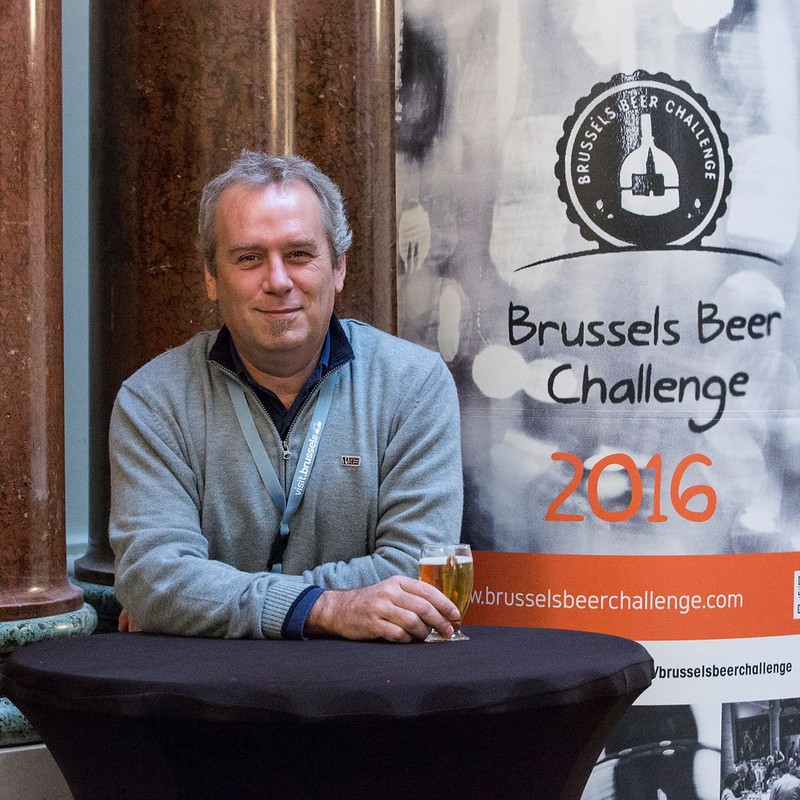
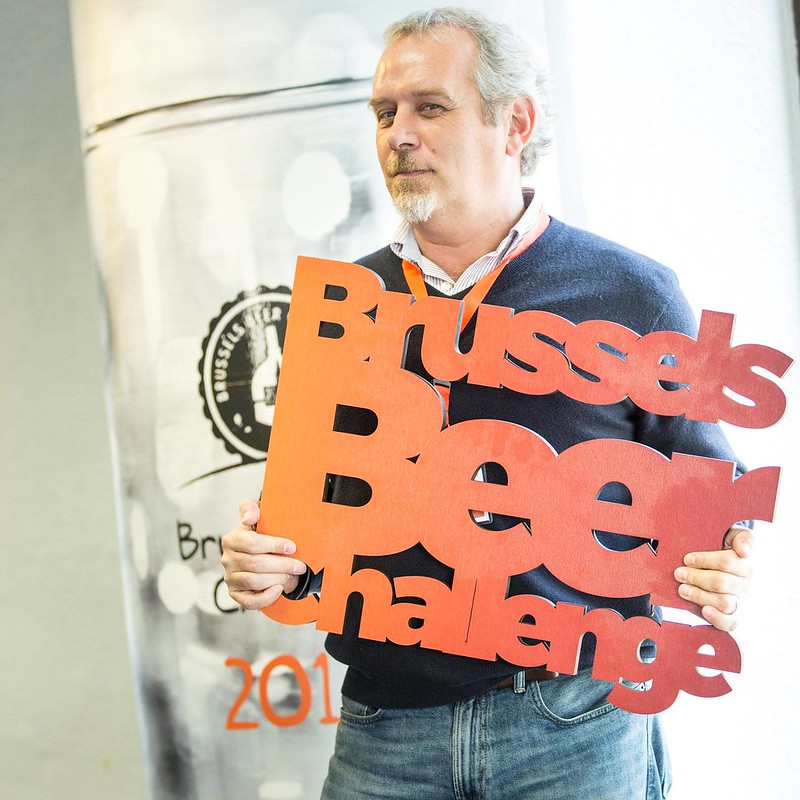
Me and Patrick at Moonlight a few summers back. 

Patrick with then assistant brewer Travis Smith (before he opened his own place, Societe Brewing) at GABF in 2009.
Tyler King, Rachel and Patrick Rue, shortly after they opened at the Boonville Beer Festival.
Patrick at the first Firestone Walker Invitational Beer Festival a few years ago.
Patrick-Rue-1
Rick Sellers, Peter Hoey, Patrick and Shaun O’Sullivan.

Filed Under: Birthdays, Just For Fun Tagged With: California, Southern California

Historic Beer Birthday: Nicholas Fitzgerald

August 7, 2025 By Jay Brooks

castlemaine
Today is the birthday of Nicholas Fitzgerald (August 7, 1829-August 17, 1908). He “was an Australian politician, a member of the Victorian Legislative Council from 1864 until 1908,” and co-founded the Castlemaine Brewery, along with his brother Edward Fitzgerald.

NIcholas-Fitzgerald

Here’s his short biography from his Wikipedia page:

Born in Galway, Ireland to Francis Fitzgerald and Eleanor Joyes, Fitzgerald attended Trinity College, Dublin from 1845 until he entered King’s Inns in 1848 and Queen’s College, Galway in 1849. After travelling in Ceylon and India he moved to Victoria in 1859 and established a family brewery at Castlemaine with his brother Edward. The business had soon expanded and Fitzgerald owned property in New South Wales and Queensland. He was a member of the Victorian Legislative Council for North Western Province from 1864 to 1882 and for North Central Province 1882 to 1904, Southern Province June 1904. until his death on 17 August 1908. He also represented Victoria at the Federal Convention in Sydney in 1891 and the Colonial Conference of 1894 in Ottawa where he represented both Victoria and Tasmania. In 1863 he had married Marianne O’Shanassy, with whom he had seven sons. Fitzgerald died at St Kilda on 17 August 1908.

Side_view_of_Castlemaine_Brewery_in_Milton,_Brisbane_1901

His brother Edward started the brewery, and Nicholas emigrated to Australia in 1859 and joined him in the brewery business. By 1871 the name Castlemaine Brewery had been adopted, in 1875 the brothers opened a brewery in South Melbourne, and in 1885 the enterprise was turned into a public company. Breweries were opened right across the country and the brothers were involved in the establishment of the Castlemaine Perkins brewery in Brisbane which is home of the XXXX brand and is still brewing to this day.”

And this short history is from the Castlemaine Perkins Wikipedia page:

In 1877, brothers Nicholas Fitzgerald and Edward Fitzgerald bought the site of a failing distillery and created a brewery, which they named after an existing brewery that they owned in Castlemaine, Victoria in the Victorian goldfields. They began to brew beer there in the following year and the brewery continues production to this day. The first beverage was called XXX Sparkling Ale.

In 1866, Patrick Perkins started the Perkins Brewery in Toowoomba. In 1872, he later extended his operations to Brisbane with the purchase of the City Brewery in 1872.

The company restricted its operations entirely to brewing by 1916. XXXX was introduced with new advertising campaign in 1924 after the brewery employed German brewer, Alhois William Leitner. The advertising included a depiction of a little man wearing a suit with a smile, a wink and a boater hat. The so-called ‘Fourex Man’ soon became one of the most recognised symbols in Queensland.

In 1928 (long after the death of Patrick Perkins in 1901), the Perkins brewing company was bought by the Castlemaine Brewery with new company being known as Castlemaine Perkins Limited.

Castlemaine Perkins was acquired in 1992 by drinks conglomerate Lion Nathan.

fourex

The Castlemaine or Milton Brewery was established at Milton, Brisbane, in 1878 by Fitzgerald Quinlan & Co. The brothers Nicholas and Edward Fitzgerald had established brewing interests at Castlemaine in Victoria, and then in Adelaide, Perth, Sydney and Newcastle. In Brisbane, Quinlan Gray & Co. had taken over the interests of the Milton Distillery that was established on the site at Milton in 1870. The first brew by the new Milton Brewery was called Castlemaine XXX Sparkling Ale and was made to the same formula as the beer brewed by Castlemaine Brewery in Victoria. (Information taken from: Public Affairs Department, Castlemaine Perkins Limited, comp., History of the Castlemaine Perkins Brewery, 1877 – 1993, 1993).
This drawing of the brewery depicts some laden wagons in the street in front of the three-storey building. A worker stands alongside. The signage reads: Castlemaine Brewery, Fitzgerald, Quinlan & Co.

castlemaine-brewery-tower


The Castlemaine Brewery at Milton, Brisbane, 1879, from the State Library of Queensland.

Filed Under: Birthdays, Breweries, Just For Fun Tagged With: Australia, History

Beer In Ads #5045: You Should Try Rainier Summer Bock Beer

August 6, 2025 By Jay Brooks

Last year I decided to concentrate on Bock ads. Bock, of course, may have originated in Germany, in the town of Einbeck. Because many 19th century American breweries were founded by German immigrants, they offered a bock at certain times of the year, be it Spring, Easter, Lent, Christmas, or what have you. In a sense they were some of the first seasonal beers. “The style was later adopted in Bavaria by Munich brewers in the 17th century. Due to their Bavarian accent, citizens of Munich pronounced ‘Einbeck’ as ‘ein Bock’ (a billy goat), and thus the beer became known as ‘Bock.’ A goat often appears on bottle labels.” And presumably because they were special releases, many breweries went all out promoting them with beautiful artwork on posters and other advertising.

Wednesday’s ad is for Rainier Summer Bock Beer, which was published on August 6, 1914. This one was for the Rainier Brewing Co. of Seattle, Washington, which was originally founded in 1878. This ad ran in The Evening Mail, of Stockton, California. I do love the text: “Say! There’s Strength and Vigor in every drop of Rainier Beer. You Should Try Our Summer Bock Beer. The Taste Is Most Pleasing.”

Filed Under: Beers

Beer Birthday: Paul Sangster

August 6, 2025 By Jay Brooks

rip-current
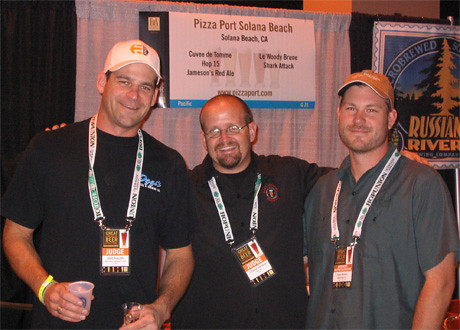
Today is the birthday of Paul Sangster, who was the brewmaster of Rip Current Brewing in San Marcos, California and a co-founder with his partner Guy Shobe. By a strange coincidence, Guy’s sister is our neighbor across the street at the home we bought over ten years ago and his niece is one of my daughter’s best friends. So I’ve met Paul and Guy a couple of time now, and it was great seeing them win big at the 2015 GABF. A few years ago, we judged together on the final day of GABF judging. Paul is a longtime San Diego homebrewer and won numerous awards before leaving his career in 2014 to turn pro. Unfortunately, they made the hard decision to close the brewery in December of 2023. I’m not sure what Paul’s up to these days, but hopefully he’s still brewing somewhere even if only in his garage.

Untitled
Picking up a medal at the 2015 GABF awards. That’s Paul in the center next to Charlie Papazian, and his business partner Guy to Charlie’s right.
Untitled
The Rip Current crew off the stage.
Untitled
On stage again, winning Very Small Brewing Company of the Year in 2015.
Winning his third straight brewing machine award at the AFC in his final homebrewing competition before opening his own brewery [photo purloined from Facebook].

Filed Under: Birthdays Tagged With: California, San Diego

« Previous Page
Next Page »

Find Something

Northern California Breweries

Please consider purchasing my latest book, California Breweries North, available from Amazon, or ask for it at your local bookstore.

Recent Comments

  • Ernie Dewing on Historic Beer Birthday: Charles William Bergner 
  • Steve 'Pudgy' De Rose on Historic Beer Birthday: Jacob Schmidt
  • Jay Brooks on Beer Birthday: Bill Owens
  • Steve 'Pudgy' De Rose on Beer Birthday: Charles Finkel
  • Steve 'Pudgy' De Rose on Beer Birthday: Bill Owens

Recent Posts

  • Beer In Ads #5199: Fresh As A Frosty Morn, Congress Bock Beer February 11, 2026
  • Historic Beer Birthday: John Weidenfeller February 11, 2026
  • Beer Birthday: Dylan Schatz February 11, 2026
  • Historic Beer Birthday: Joseph Bosch February 11, 2026
  • Historic Beer Birthday: Charles Engel February 11, 2026

BBB Archives

Feedback

Head Quarter
This site is hosted and maintained by H25Q.dev. Any questions or comments for the webmaster can be directed here.