Brookston Beer Bulletin

Jay R. Brooks on Beer

  • Home
  • About
  • Editorial
  • Birthdays
  • Art & Beer

Socialize

  • Dribbble
  • Email
  • Facebook
  • Flickr
  • GitHub
  • Instagram
  • LinkedIn
  • Pinterest
  • RSS
  • Twitter
  • YouTube

Powered by Genesis

Historic Beer Birthday: William Ogden

June 15, 2025 By Jay Brooks

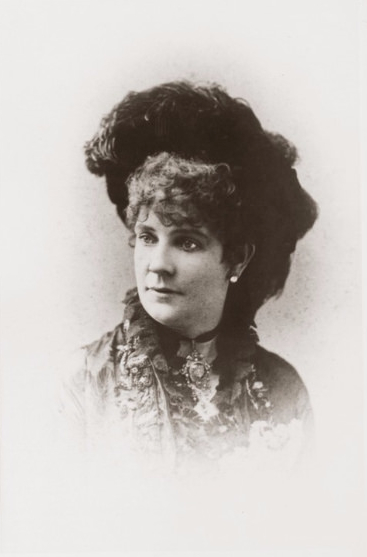
chicago-1

Today is the birthday of William B. Ogden (June 15, 1805-August 3, 1877). Ogden’s biggest claim to fame is being the first mayor of the city of Chicago, elected in 1837. But he was also a businessman, and one of the businesses he was involved in was one of Chicago’s first breweries, Lill & Diversey.

William_B_Ogden_by_GPA_Healy,_1855
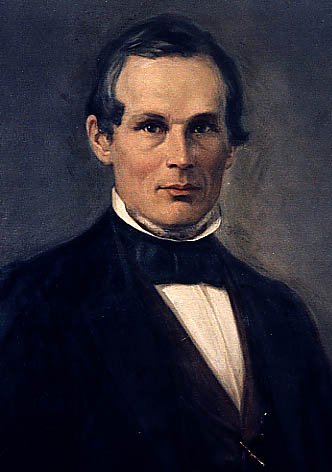
A portrait of William B. Ogden, painted by G.P.A. Healy in 1855.

Some sources say it was the very first brewery in Chicago, but either way, it was certainly one of the earliest. It was founded by William Lill, who was later joined by partner Michael Diversey

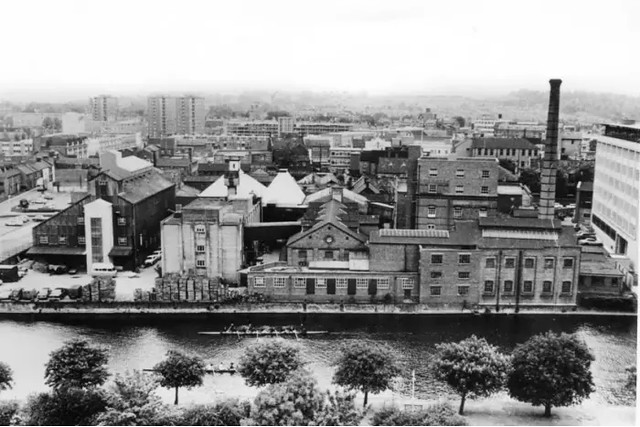
lilldiversies

Here’s the brewery’s story from One Hundred Years of Brewing, published in 1901:

The immense brewing interests of Chicago had their origin in the persons of William Lill and William Haas. In September, 1839, William B. Ogden, who, two years previously, had been elected mayor of the city, established Mr. Lill in business at the corner of Pine street and Chicago avenue, Mr. Haas being the latter’s assistant. The “plant” was installed in a small tenement building and the first year’s brew was about 450 barrels.

After a few years Michael Diversey formed a partnership with Mr. Lill, when Mr. Ogden withdrew his silent interest in the business. Under the management of Lill & Diversey the so-called Chicago Brewery developed into one of the most extensive establishments of the kind in the west, occupying a portion of the original site, but then covering an entire block. For many years “Lill‘s Cream Ale” was one of the most famous brands in the country. Besides being known as good business men, Lill and Diversey were noted for their benevolence and generosity, the latter being a large benefactor to the German Catholic churches of Chicago.

In 1841, Michael Diversey and William Lill bought the first commercial brewery in Chicago (Haas & Sulzer Brewery) and changed the name to the Lill & Diversey Brewery, also known as the Chicago Brewery. The two men saw huge success and by 1861 were producing 45,000 barrels of beer a year and employing over 75 men. Famous for “Lill’s Cream Ale,” by 1866 the brewery had sprawled to over two acres and four stories high. The Water Tower Pumping Station, which still stands today, was put in directly across the street.

Serving two terms as a Chicago Alderman (1844-45; 1856-1868), Michael Diversey also donated a small plot of land where a Catholic church for fellow German immigrants was built. St. Michael’s was the tallest building in Chicago until 1885 when The Old Chicago Board of Trade building was completed. Known as a great city leader and keeping company with the likes of Joseph Sheffield and William Ogden, Michael Diversey was integral in bringing great growth to Chicago.

However, Diversey died in 1869, and Lill continued to run the brewery. Till the Great Fire of 1871 wiped it out and Lill lost everything. The brewery never re-opened and Lill passed away in 1875.

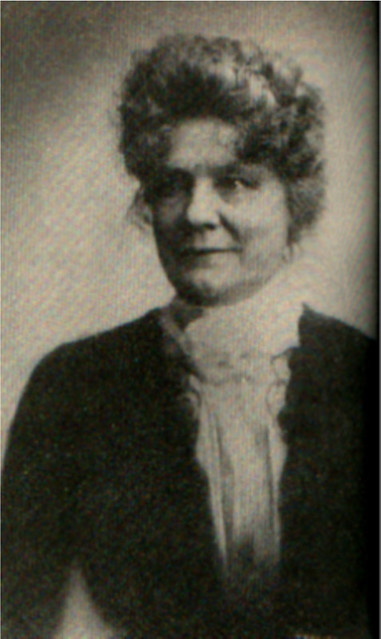
WB-Ogden

Most of Ogden’s biographies don’t even mention his affiliation with the brewery at all. See, for example his Wikipedia page, the WBEZ Chicago blog and the Encyclopedia of Chicago. His business with the brewery was apparently a pretty minor investment for him, and he was much more heavily involved in many other projects and businesses. Most accounts state that Ogden was a silent partner in the brewer. But in Gregg Smith’s “Beer In America: The Early Years—1587-1840,” he claims “that the mayor was very much involved in the business, and not just a silent partner: he wanted to ensure that the brewery’s hops came from New York’s Finger Lakes region.” Which makes some sense; Ogden was born in upstate New York.

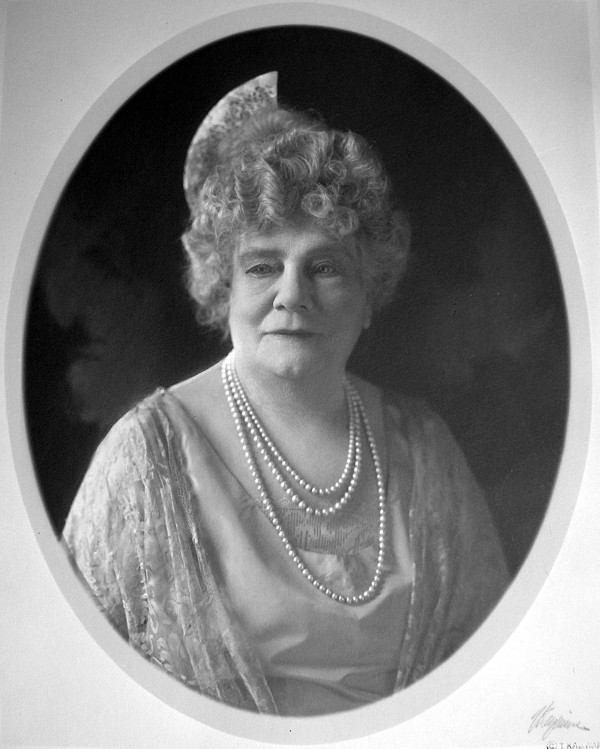
william-b-ogden
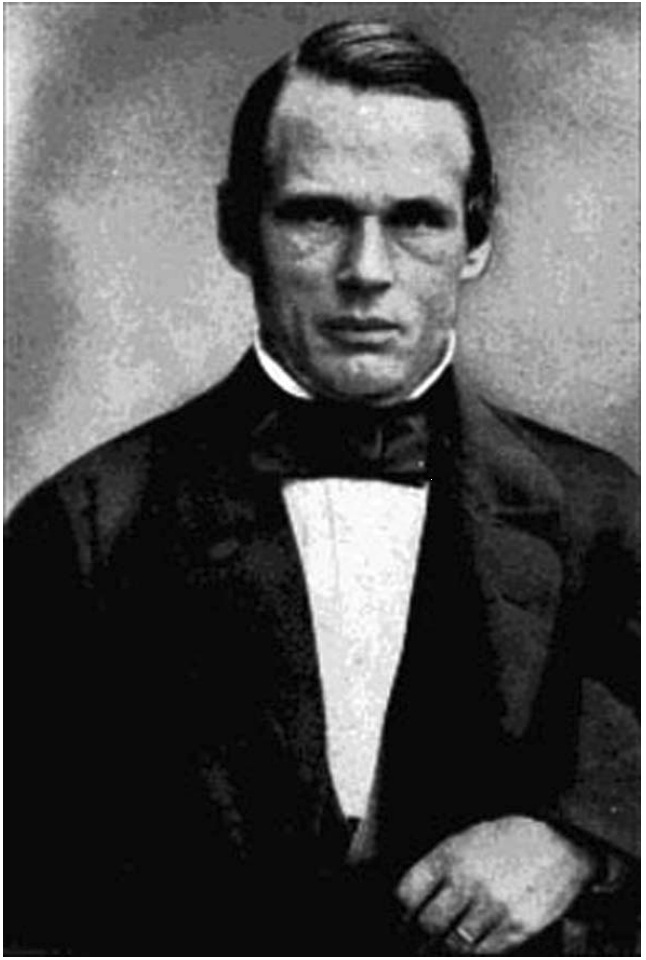
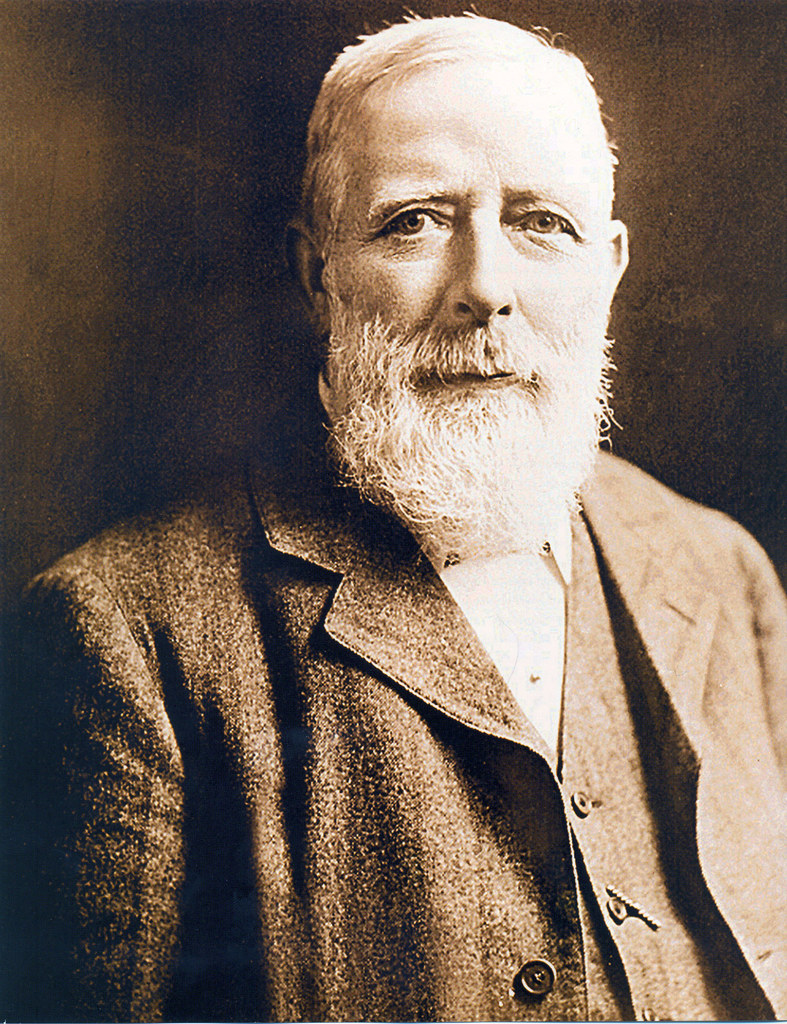
A photo of Ogden later in life.

Filed Under: Birthdays Tagged With: Chicago, History, Illinois, New York

Beer Birthday: Ron Lindenbusch

June 15, 2025 By Jay Brooks

Today is the 64th birthday of Ron Lindenbusch, who had been with the Lagunitas Brewery since the very beginning. I first met Ron and founder Tony Magee when I visited the brewery in its original location in the mid-1990s. Ron had been a huge part of bringing the brewery along to where it is today, and is a terrific person and a good friend. More recently, he’s retired from Lagunitas, and is now full-time at what had originally been a side project, reopening the old location of the original Mendocino Brewing Co. site as the Hopland Tap and Grill in Hopland, California, but even more recently he’s closed that down, as well, and is working with the Best Day Brewing line of N/A beers. Join me in wishing Ron a very happy birthday.

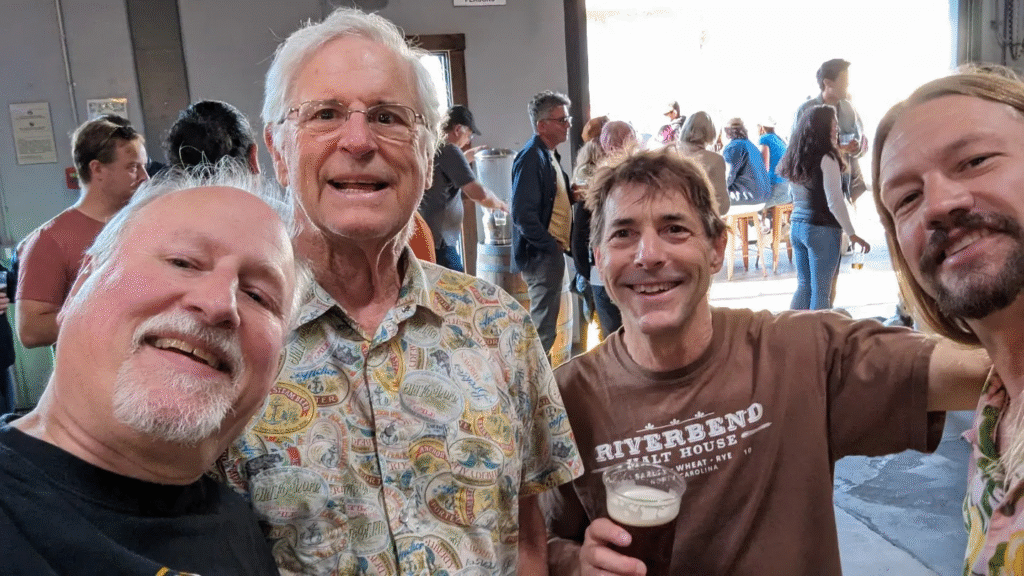
Closing weekend last year at the Hopland Tap & Grill, with my Wife Sarah, Ron, and Pat Mace.
A random run-in during CBC in Nashville.
Another random run-in, this time at my local gas station, of all places.
Tweetup organizer Ashley, a.k.a. The Beer Wench, with Ron Lindenbusch, from Lagunitas
The Beer Wench, Ashley Routson, with Ron at a Tweet-Up at Lagunitas a couple of years ago.
horizons-6
At a beer dinner at Horizons in Marin County, with Dean Biersch and Lynn, the chef at Hopmonk Tavern, Dean’s then-new venture in Sebastopol.
P1000119
Ron with Lagunitas owner Tony Magee’s sister Karen, who rep’s Lagunitas in the Chicago area, at SAVOR several years ago in Washington, D.C.
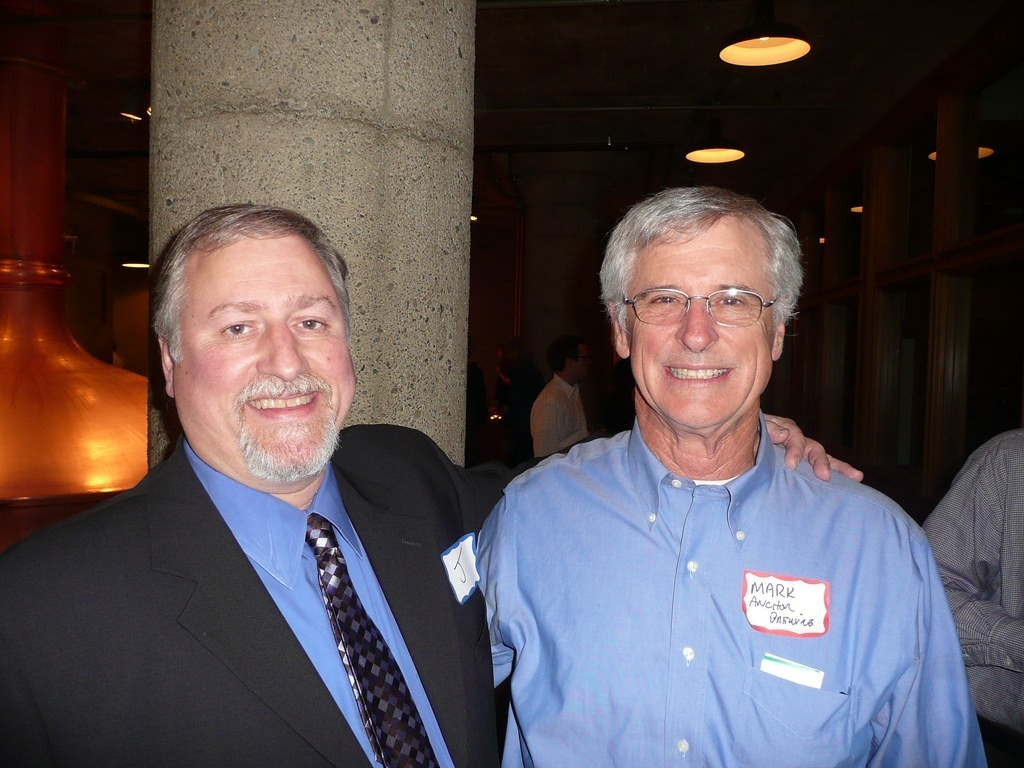
Ron Lindenbusch, Shaun O'Sullivan, Zambo, Rich Rosen, me, Sarah, Lloyd Knight, Dave Suurballe and James Renfrew
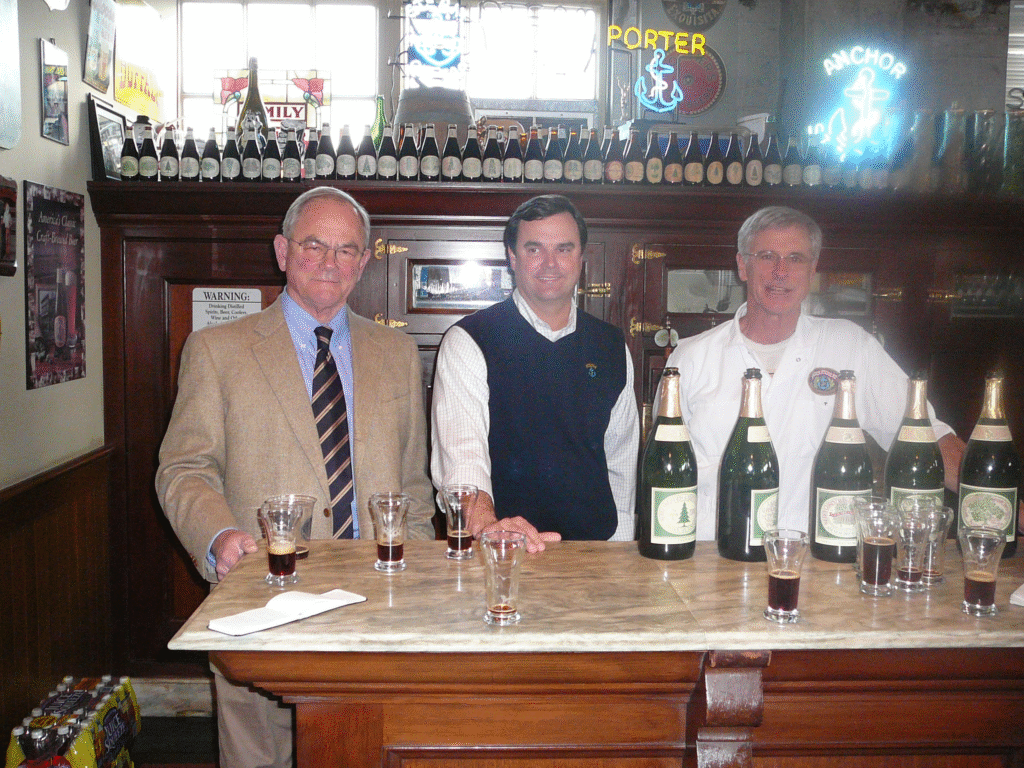
Ron, with Shaun O’Sullivan, Zambo, Rich Rosen, me, Sarah, Lloyd Knight, Dave Suurballe and James Renfrew at Anchor’s annual Christmas Party a few years ago.

Filed Under: Birthdays Tagged With: California, Northern California

Beer In Ads #4998: Maier’s Bock Beer

June 14, 2025 By Jay Brooks

Last year I decided to concentrate on Bock ads. Bock, of course, may have originated in Germany, in the town of Einbeck. Because many 19th century American breweries were founded by German immigrants, they offered a bock at certain times of the year, be it Spring, Easter, Lent, Christmas, or what have you. In a sense they were some of the first seasonal beers. “The style was later adopted in Bavaria by Munich brewers in the 17th century. Due to their Bavarian accent, citizens of Munich pronounced ‘Einbeck’ as ‘ein Bock’ (a billy goat), and thus the beer became known as ‘Bock.’ A goat often appears on bottle labels.” And presumably because they were special releases, many breweries went all out promoting them with beautiful artwork on posters and other advertising.

Saturday’s ad is for Maier’s Bock Beer. The ad was published in 1912. This one was for the Maier Brewing Co., which was located in Los Angeles, California and was originally founded in 1874, though they were known by a variety of names, using Maier Brewing from 1907-1971. This ad ran in the Los Angeles Evening Post Record, also of Los Angeles, California.

Filed Under: Art & Beer, Beers, Breweries, Just For Fun Tagged With: Advertising, Bock, California, History, Los Angeles

Historic Beer Birthday: Bob Brown

June 14, 2025 By Jay Brooks

Today is the birthday of was an American writer and publisher Robert Carlton Brown, who often wrote under the name Bob Brown (June 14, 1886–August 7, 1959). He was very prolific, and wrote over 1,000 pieces, and worked in “many forms from comic squibs to magazine fiction to advertising to avant-garde poetry to business news to cookbooks to political tracts to novelized memoirs to parodies and much more.” His writing was lyrical and ahead of its time, but despite his popularity during his lifetime, very little of his work, if any, is still in print or even been digitized. One of his food books, “The Complete Book of Cheese,” is an exception and you can download a copy at the Gutenberg Project. You can get a sense of his oeuvre from some of his titles, which includes What Happened to Mary (1912) [later turned into the first serial film What Happened to Mary, My Marjonary (1916), The Readies (1930), Globe-Gliding (1930), Words: I but Bend My Finger in a Beckon and Words, Birds of Words, Hop on It, Chirping (1931), Gems: a Censored Anthology  (1931), Demonics (1931), and Readies for Bob Brown’s Machine (1931). He also wrote or co-wrote a number of best-selling cookbooks, including The European Cookbook (1936), 10,000 Snacks (1937), The Wine Cook Book (1941), and The Complete Book of Cheese (1955).

But the reason he’s here is because of another book he wrote, published in 1932, and dedicated to H.L. Mencken with this: “To H.L. Mencken for many reasons not the least of them BEER, B.B.” That book was called “Let Them Be Beer!”

The title page.

Here’s an excerpt from BeerBooks.com:

About the beginning of this century pubcrawling was imported from London, where it had been in existence for centuries, and ws definitely adopted as a daily custom in New York City. The practice of visiting a series of saloons in succession, and having a drink or two in each before crawling on to the next, grew in popularity, every year approaching the peak of perfection, until it was suddenly knocked in the head by prohibition and fell into disuse.

In Philadelphia, with its solid, stolid Dutch drinking tradition and its splendid big beer cellars, pubcrawling was always indlulged in pleasantly in a safe and sedate manner.

But in Boston the pastime was slightly dangerous, especially if continued after closing hours, in clandestine blind pigs. A pub-crawler might sit down to imbibe in such a place and find himself in a group of Boston Irish terriers. Inadvertently he might say something about the Orange men. Suddenly bottles and broom would thicken the smoky air, cut arabesques in it, and if the outsider were not quick, the Irishman opposite would slide sidewise from his chair, whip it out from beneath him with one swift motion and bring it down bang over the pub-crawler’s head. The unfortunate victim would awake a few hours later, at the first dribbles of dawn, lying in an alley ash can with a thick clot on his brow.

The big beer town of Buffalo was always a bit too low for fastidious pub-crawling; it did not offer the finer subtleties and shadings of Manhattan.

In Portland, Maine, and other dry towns of that day, life was just one drug store after another. A damp, drab, soggy species of sub-rosa drug-store dangling. Not a bit of snap to it.

New York was the appropriate center for the strolling drinker. The whole mid-West Anheuser Busch League shipped its best beer and all outstanding pub-crawling customs to Manhattan. Pabst’s sent samples of Milwaukee drinks and drinking, Kentucky kicked in with Bourbon and toasts, Chicago showed how things were done at her home, Hofbrau and barny Bismarck, Cincinnati sent sangvereins and the South in general contributed with scuppernong and nigger gin.

Between 1900 and 1920 the booze boundaries of New York were roughly fixed in an oblong half a mile wide and six miles long. Though all sorts of drinks, from horse’s necks to sherry cobblers, were consumed in this section, it was chiefly noted for its big beer saloons, and included a brewery or two. O’Connor’s Working Girls’ Home, or perhaps McSorley’s, marked the extreme south end of the beer district — “way down south in Greenwich Village, where the artists drank their fillage.” Pabst’s Harlem came to be its fixed North Pole. On the East Side, Ehret’s old brewery over by the river, in the 50’s; and on the West Side a solid wall of saloons all along Sixth Avenue, from Fourth Street up to the Park, where the line wobbled over to Broadway and on up to Harlem.

There were Bowery beer arcades out of bounds, good suds shops and ale houses in the financial district, from the Battery up to Washington Square, splendiferous theatrical and sportive saloons in the Forties as far over as Seventh and Eighth. Even Hell’s Kitchen was not dry in those days, and there were service stations for pub-crawlers as far up as Hell Gate. The famous beer and beef steak Castle Cave stood out like a star in the West, and Terrace Garden was one of the bright Eastern Stars. Luigi’s Black Cat shed its luster under the dingy El; almost every street corner of the city was brightened by a gin mill, but the big beer belt tightened around the center of Manhattan and more ambulatory drinking was done in the three square miles of the section described than in all the rest of the town put together.

If brewery sales-managers had charted the territory at the time, there would have been a hurricane of dots, a huddle of red-headed pins around Union Square radiating out to the Brevoort, the Lafayette, the Hell Hole on Fourth Street, and on up Sixth Avenue past the Old Grapevine. McSorley’s and Scheffel Hall over east, working up to a daze of dots around Luchow’s, one particularly bright standing for Gentleman Jim Corbett’s place near by, though beer was seldom served there, except as a chaser after stronger fire-water; and another for Arensberg’s wine-stube, right on the square.

Luchow’s stuck out like a monogrammed gold buckle on that broad beer belt. Herald Square was a whirlpool of dots centering in the old Herald Square Hotel Bar and radiating out to the Hofbrau and the Kaiserhof. Times Square showed a thick cluster of dots, a hay-pile huddle around the Knickerbocker and Considine’s, in which nobody at that time would have even looked for a needle of beer.

On up Broadway to Columbus Circle. Broadway and beer have always been synonymous. The Great Way foamed White with beer tossed restlessly in a beery froth from Bowling Green to Van Cortlandt Park.

Pabst’s was set like a big iridescent bubble in the center of Columbus Circle, and a sea of brilliant beads swirled around Pabst’s Harlem Casino. Columbus was forgotten, Harlem was but a name. For a while it looked as though these two centers of night life would have to change their names to Pabst’s Best and Pabst’s Blue Ribbon, so the persistent pubcrawler could be sure exactly where he was at.

And here’s a few more excerpts:

And here’s another short biography of Brown.

Bob Brown, born Robert Carlton Brown, liked to say he had written in every genre imaginable: advertising, journalism, fiction, poetry, ethnography, screen-writing, even cookbooks. He wrote at least 1,000 pulp stories, some of which became the basis for “What Happened to Mary?” the first movie serial, released in 1912. He was on the editorial board of the radical magazine The Masses before founding a successful business magazine in Brazil. His output was so varied and his life so far-flung — he boasted of having lived in 100 cities — that some library card catalogs list him as at least two different people.

Brown was also involved in the expatriate literary community in Paris, publishing several volumes of poetry. While in France, Brown also made plans toward, and wrote a manifesto for, the development of a “reading machine” involving the magnified projection of miniaturized type printed on movable spools of tape. Arguing that such a device would enable literature to compete with cinema in a visual age, Brown published a book of “Readies” — poems by Gertrude Stein, William Carlos Williams, Ezra Pound, and others.

He contributed to leading avant-garde journals and wrote, sometimes in collaboration with his wife and mother, some 30 popular books about food and drink, including “Let There Be Beer!” (published after the repeal of Prohibition) and The Complete Book of Cheese. Bob and his family eventually established residence in Rio de Janeiro, where they lived until his wife’s death in 1952. Bob soon returned to New York where he re-married, and ran a shop called Bob Brown’s Books in Greenwich Village until his death in 1959.

Filed Under: Beers, Birthdays, Just For Fun Tagged With: History, Literature, Writing

Beer Birthday: John Bryant

June 14, 2025 By Jay Brooks

no-li-red
Today is my friend John Bryant’s 58th birthday. I first met John when he was with Deschutes Brewery in Bend, Oregon. Several years ago he migrated to Odell Brewing in Fort Collins to work his magic on them, and then a few years ago he joined Dale at Oskar Blues. He then left Oskar Blues and disappeared for a time, finally re-emerging in Spokane, Washington with the then-newly rebranded No-Li Brewing. Join me in wishing John a very happy birthday.

gabf06-wed-01
At the Brewer’s Reception before GABF in 2006. From left: Bob Pease (Brewers Association), Vinnie Cilurzo (Russian River Brewing), John and his wife Cindy, Banjo (Real Beer) and Tom McCormick (California Craft Brewers Association).
gabf06-wed-03
John, with Ray Daniels, then with the Brewers Association, who celebrated his own birthday last week.
john-bryant
John and me during a visit to the brewery several summers ago, when we were in Colorado for my cousin’s wedding.

Filed Under: Birthdays Tagged With: Colorado, Washington

Beer Birthday: Warren Pawsey

June 14, 2025 By Jay Brooks

little-creatures
Today is the birthday of Warren Pawsey, former head brewer for Little Creatures’ brewery in Geelong. And for several years, he had been the head judge for the Australian International Beer Awards, which I had the privilege to judge a few years ago, and I keep planning to make it back. I first met Warren at Russian River Brewing, the night before he and a contingent of Australians flew to San Diego, where I also then joined them to judge at the World Beer Cup. Warren’s also a terrific person to share a pint with and a great brewer, too. Join me in wishing Warren a very happy birthday.

DSCN9607
Warren and me after AIBA judging in 2014.

DSCN9553
At a judge’s reception in Ballarat, with many of the judges of the AIBA from outside Australia, plus head judge Warren in the back row, next to me.

Filed Under: Birthdays, Just For Fun Tagged With: Australia

Beer Birthday: James Costa

June 14, 2025 By Jay Brooks

oakland-brewing half-moon-bay
Today is the 53rd birthday of James Costa. James is a brewer and co-founder of Oakland Brewing, and is also currently brewing at Half Moon Bay Brewing. But James has certainly made the rounds, and has also brewed for Moylan’s, Santa Cruz Aleworks, E.J. Phair and others. James is justly famous for his big, hoppy beers like the wonderful Sticky Zipper. Join me in wishing James a very happy birthday.

bistro-dipa09-03
James with Vic at the Bistro Double IPA Festival in 2009.
bravo-fest-06
James with Shaun O’Sullivan (left) and Vinnie Cilurzo (Russian River) at the 2nd annual Single Hop Festival & Washoe Tournament in 2007.
toronado20th-19
James with his wife Caroline (left), with Iron Springs brewer Christian Kazakoff and his then-girlfriend, Jodi, at the Toronado 20th Anniversary Party in 2007.
tion-din-14
At the Beer Chef’s “Tion” beer dinner at the Cathedral Hill Hotel in September of 2006, James with Arne Johnson and Vinnie Cilurzo.
allagash-bdin-04
At another Beer Chef dinner, this one with Allagash, James offers some “Shrimp flavored Chips” to his now ex-wife Caroline, who wisely declined.

Filed Under: Birthdays Tagged With: Bay Area, California, Oakland

Beer Birthday: Rick Kempen

June 14, 2025 By Jay Brooks

Today is the birthday or Rick Kempen, who is a Bierambassadeur at Bier&cO in Amsterdam, which is a specialized beer import, export and wholesale company. Originally, Rick studied economics but applied that to beer, working as a bartender before turning his attention to the exporting and importing of beer. I first met Rick at the Brussels Beer Challenge in 2014, and run into him frequently on the international beer judging circuit, and he’s definitely a fun person to share a pint with. Join me in wishing Rick a very happy birthday.

John Holl, Rick and me outside Moeder Lambic in 2016.
Me, Andreas Fält, and Rick in Belgium in 2018.
Rick at the Brussels Beer Challenge in 2018.
Visiting Anchor Brewing in San Francisco in 2011.
Rick becoming a fellow Knight of the Brewers Mashstaff in 2015.

Filed Under: Birthdays, Just For Fun Tagged With: Europe, The Netherlands

Beer In Ads #4997: Magnolia Bock Beer

June 13, 2025 By Jay Brooks

Last year I decided to concentrate on Bock ads. Bock, of course, may have originated in Germany, in the town of Einbeck. Because many 19th century American breweries were founded by German immigrants, they offered a bock at certain times of the year, be it Spring, Easter, Lent, Christmas, or what have you. In a sense they were some of the first seasonal beers. “The style was later adopted in Bavaria by Munich brewers in the 17th century. Due to their Bavarian accent, citizens of Munich pronounced ‘Einbeck’ as ‘ein Bock’ (a billy goat), and thus the beer became known as ‘Bock.’ A goat often appears on bottle labels.” And presumably because they were special releases, many breweries went all out promoting them with beautiful artwork on posters and other advertising.

Friday’s ad is for Magnolia Bock Beer. The ad was published on June 13, 1908. This one was for, I think, the Houston Ice & Brewing Co., which was located in Houston, Texas and was founded by Hugh Hamilton in 1889 and closed in 1918 due to Prohibition, though it opened for only one year afterwards in 1934. They were also known as the Magnolia Brewery. This ad ran in the St. Landry Clarion, of Opelousas, Louisiana. The ad is actually for The Elk Saloon, which was also in Opelousas, Louisiana. Here’s how it was described in an article entitled: What were Opelousas’ first restaurants and bars? “Another early Opelousas saloon was the Elk Saloon, managed by J. Adam Budd Company, which was opened in the downtown area before 1907.”

Filed Under: Art & Beer, Beers, Breweries, Just For Fun Tagged With: Advertising, Bock, History, Louisiana, Texas

Historic Beer Birthday: William S. Gossett

June 13, 2025 By Jay Brooks

guinness-new
Today is the birthday of William Sealy Gosset (June 13, 1876–October 16, 1937). He “was an English statistician. He published under the pen name Student, and developed the Student’s t-distribution.” He also worked his entire career for Guinness Brewing, and was trained as a chemist, but it was his pioneering work in statistics, in which he was self-taught, that he is best remembered for today.

William_Sealy_Gosset

Here’s his biography, from Wikipedia:

Born in Canterbury, England to Agnes Sealy Vidal and Colonel Frederic Gosset, Gosset attended Winchester College before studying chemistry and mathematics at New College, Oxford. Upon graduating in 1899, he joined the brewery of Arthur Guinness & Son in Dublin, Ireland.

As an employee of Guinness, a progressive agro-chemical business, Gosset applied his statistical knowledge – both in the brewery and on the farm – to the selection of the best yielding varieties of barley. Gosset acquired that knowledge by study, by trial and error, and by spending two terms in 1906–1907 in the biometrical laboratory of Karl Pearson. Gosset and Pearson had a good relationship. Pearson helped Gosset with the mathematics of his papers, including the 1908 papers, but had little appreciation of their importance. The papers addressed the brewer’s concern with small samples; biometricians like Pearson, on the other hand, typically had hundreds of observations and saw no urgency in developing small-sample methods.

Another researcher at Guinness had previously published a paper containing trade secrets of the Guinness brewery. To prevent further disclosure of confidential information, Guinness prohibited its employees from publishing any papers regardless of the contained information. However, after pleading with the brewery and explaining that his mathematical and philosophical conclusions were of no possible practical use to competing brewers, he was allowed to publish them, but under a pseudonym (“Student”), to avoid difficulties with the rest of the staff. Thus his most noteworthy achievement is now called Student’s, rather than Gosset’s, t-distribution.

Gosset had almost all his papers including The probable error of a mean published in Pearson’s journal Biometrika under the pseudonym Student. It was, however, not Pearson but Ronald A. Fisher who appreciated the importance of Gosset’s small-sample work, after Gosset had written to him to say I am sending you a copy of Student’s Tables as you are the only man that’s ever likely to use them!. Fisher believed that Gosset had effected a “logical revolution”. Fisher introduced a new form of Student’s statistic, denoted t, in terms of which Gosset’s statistic was {\displaystyle z={\frac {t}{\sqrt {n-1}}}} z=\frac{t}{\sqrt{n-1}}. The t-form was adopted because it fit in with Fisher’s theory of degrees of freedom. Fisher was also responsible for applications of the t-distribution to regression analysis.

Although introduced by others, Studentized residuals are named in Student’s honour because, like the problem that led to Student’s t-distribution, the idea of adjusting for estimated standard deviations is central to that concept.

Gosset’s interest in the cultivation of barley led him to speculate that the design of experiments should aim not only at improving the average yield but also at breeding varieties whose yield was insensitive to variation in soil and climate, i.e. robust. This principle only appeared in the later thought of Ronald Fisher, and then in the work of Genichi Taguchi during the 1950s.

In 1935, Gosset left Dublin to take up the position of Head Brewer, in charge of the scientific side of production, at a new Guinness brewery at Park Royal in northwestern London. He died two years later in Beaconsfield, England, of a heart attack.

Gosset was a friend of both Pearson and Fisher, a noteworthy achievement, for each had a massive ego and a loathing for the other. He was a modest man who once cut short an admirer with the comment that “Fisher would have discovered it all anyway.”

And this biography is from the MacTutor History of Mathematics archive:

William Sealey Gosset was born on June 13, 1876 in Canterbury, England where he was the oldest of five children. He died at the age of 61 in Beaconsfield, England on October 16, 1937. He attended the Royal Military Academy in Woolwich to b ecome an engineer before he was rejected because of poor eyesight. William Gosset was never employed as a statistician. In a world of quarrelsome statistics, but he got along with everyone. He was a very helpful, quiet, patient and loyal person.

He went to school at Winchester and was well educated before entering the New College in Oxford. Here he won a first degree in chemistry in 1899. After getting his degree as a chemist, he got a job at Guinness brewery in Dublin in 1899, where he did important work on statistics, but her was never hired at a statistician. It was his environment at Guinness’ that made him a statistician. The brewery was interested in how they could make the best beer.

In 1900, the Guinness Research Laboratory was opened, which was head by the most distinguished brewing chemist, Horace Brown. Horace Brown along with the other brews were wondering how to get the raw materials for brewing beer at the cheapest but getting the best. There were many factors that they had to take into account such as varieties of barley and hops, what conditions of dying, cultivation and maturing factors.

After a few years of research, given that they were given a free hand to explore the conditions of brewing. This gave Gosset a chance to work as a statistician. He was able to take the data from the different examples of brewing to help find out which way was the best. As the young brewers work together, it seemed natural for them to take the data to Gosset to solve the numerical problems.

Gosset, in 1903, could calculate standard errors. In 1904 he wrote on the brewing of beer. This report lead to Karl Pearson consulting Gosset. Gosset met Pearson in July of 1905 when they had long talk together. Pearson, in an hour and a half, m ade Gosset understand the theory of standard errors. Gosset went back to the brewery and practiced those method for the next year. The meeting was also successful in which Pearson got Gosset to take up the study of the law of error.

Gosset wrote paper in his spare time under the name “Student.” His paper were on the probability of error of the mean and of the correlation coefficient for publication. Gosset even managed to run cooperative experiments with Hunter a nd Bennett at Ballinacurra, Buffin at Cambridge, and Beaven at Warminster in the testing of seeds against other seeds. Gosset also work with R.A. Fisher. The funny part is that Fisher did not get along Pearson, but Gosset studied under Pearson and also got along with Fisher.

To quickly recap William Gosset, he was born in 1876 and died in 1937. He did mathematical research for beer brewing, but had the problem working with only a small sample size. He work on the concept of probable errror of a mean. He also analysi sed an extended and broad range of problems such as the counting with a haemacytometer, probable error of a correlation coefficient, cereals, agronomy and the Lanarkshire milk experiment.

A very personal friend, McMullen, said this about Gosset, “he was a very kindly and tolerant and absolutely devoid malice. He rarely spoke about personal matters but when his opinion was well worth listening to and not in the least superficia l.”

Pricenomics has a good overview of Gossett’s contributions to mathematics and statistics, entitled The Guinness Brewer Who Revolutionized Statistics.

Filed Under: Birthdays, Just For Fun, Related Pleasures Tagged With: England, Guinness, History, Ireland, Math, Science, Science of Brewing

« Previous Page
Next Page »

Find Something

Northern California Breweries

Please consider purchasing my latest book, California Breweries North, available from Amazon, or ask for it at your local bookstore.

Recent Comments

  • Ernie Dewing on Historic Beer Birthday: Charles William Bergner 
  • Steve 'Pudgy' De Rose on Historic Beer Birthday: Jacob Schmidt
  • Jay Brooks on Beer Birthday: Bill Owens
  • Steve 'Pudgy' De Rose on Beer Birthday: Charles Finkel
  • Steve 'Pudgy' De Rose on Beer Birthday: Bill Owens

Recent Posts

  • Beer Birthday: Bruce Joseph February 13, 2026
  • Beer In Ads #5200: Now Is The Time To Enjoy … Stroh’s Bock Beer February 12, 2026
  • Historic Beer Birthday: Adolph Schell February 12, 2026
  • Beer Birthday: Jennifer Talley February 12, 2026
  • Beer In Ads #5199: Fresh As A Frosty Morn, Congress Bock Beer February 11, 2026

BBB Archives

Feedback

Head Quarter
This site is hosted and maintained by H25Q.dev. Any questions or comments for the webmaster can be directed here.