Brookston Beer Bulletin

Jay R. Brooks on Beer

  • Home
  • About
  • Editorial
  • Birthdays
  • Art & Beer

Socialize

  • Dribbble
  • Email
  • Facebook
  • Flickr
  • GitHub
  • Instagram
  • LinkedIn
  • Pinterest
  • RSS
  • Twitter
  • YouTube

Powered by Genesis

Beer Birthday: Tom Dalldorf

June 16, 2025 By Jay Brooks

celebrator-long
Today is Celebrator publisher Tom Dalldorf’s 83rd birthday. Since he was famous for having his picture in the Celebrator and being at every beer event, I figured the Bulletin should be no different, despite his slowing down a bit these days. Join me in wishing Tom a very happy birthday.

cbn18-01
Tom at the Mardi Gras-themed Celebrator anniversary party in 2007.
At Trumer for the Celebrator anniversary party in 2018.
tdalldorf-02
Raising a toast with Full Sail brewer John Harris.
tdalldorf-03
Huddling up with the owner’s of Monk’s Cafe in Philadelphia, Fergie and Tom.
tdalldorf-04
Mine’s bigger. Russian River’s Vinne Cilurzo with Tom in D.C.
tdalldorf-07
Looking like a deer caught in the headlights at the roast I threw for Tom when he turned sixty. That’s Stephen Beaumont on the left and me on the right.
At Boonville, taking the Rubicon kegerator bike for a spin.
At Boonville in 2006 with then-Anderson Valley Brewery owner Ken Allen.

Filed Under: Birthdays, Just For Fun Tagged With: Bay Area, California, Northern California, Writing

Beer Birthday: Jessica Jones

February 29, 2024 By Jay Brooks

Today is the 40th birthday — the Big 4-O — of Jessica Jones, who’s the former COO of Ninkasi Brewing. Several years ago, she left Ninkasi and became the Chief Marketing Officer and Director of Strategy for Enjoy Beer, the startup founded by Rich Doyle after he left Harpoon, but as far as I know it never really caught on as they’d hoped, and the site is no longer active. Anyway, I haven’t talked to her in quite a few years, and last I heard she and her husband had moved to Eugene, Oregon and they’ve started a honey business, Queen’s Bounty Honey. But since she’s one of the few people I know born on leap day, I wanted to still post about her birthday this year.

When I first met Jessica, she was blogging at beer as the Thirsty Hopster and helped do some of the behind-the-scenes setup when I founded the Bay Area Beer Bloggers. She then put her education to good use by getting a job with Firestone Walker, and found that she liked working for a brewery. So she went back to school and got her MBA, before moving to Portland. Since 2011, she’s been keeping Ninkasi Brewing humming, and keeping Jamie in line. It’s been fun to watch Jessica’s evolution in the beer world, and how amazing she’d made Ninkasi. Join me in wishing Jessica a very happy birthday.

hard-liver09-08
At the Hard Liver Barleywine Festival in Seattle, in 2009. Clockwise from left; Shitwig (a nickname, I believe), Jessica, her sister and her sister’s friend.
bestowest09-42
At the end of the Celebrator Anniversary Party in 2009.
malheur-choc-08
With Nicole Erny and, The Beer Chef, Bruce Paton, at his Beer & Chocolate Beer Dinner several years back.
sfbw-gabf08-6
Jessica at the Falling Rock, along with her sister (bottom left) and friends, during an SF Beer Week event at the Falling Rock during GABF in 2008.
Jessica Jones a.k.a. The Thirsty Hopster & Scott Perkins
Jessica and Scott Perkins at GABF in 2009.

Filed Under: Birthdays, Just For Fun Tagged With: Oregon

Charles Deulin’s Tales of King Cambrinus

January 4, 2023 By Jay Brooks

gambrinus
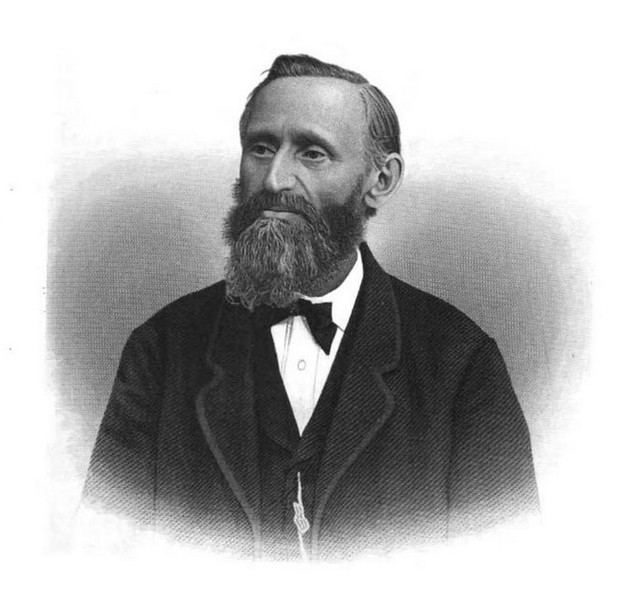
Today is the birthday of Charles Deulin (January 4, 1827–77). He was “a French writer, theatre critic, and folklorist who is most known for his contemporary adaptations of European folk tales.”

deulin

This biography of Deulin is from “The Greenwood Encyclopedia of Folktales and Fairy Tales,” published in 2008:

Charles Deulin was the son of a poor tailor who lived in the Escaut, a region in the north of France whose folklore inspired his major works. Deulin’s early career as the secretary of an enlightened notary and patron of the arts came to a sudden end after he eloped with the daughter of a notable local merchant. Deulin relocated to Paris, where he worked as a columnist for numerous French journals and reviews. However, Deulin found his real fame writing tales that drew on regional folklore and folktales. His first tale, “Le compere de la mort” (“Godfather Death”), was based on an oral tale that he had first adapted as a song. His tales achieved both popular and critical success, so Deulin mined the rare resources and folk literature in the Library of the Arsenal in Paris for material that he could reshape into tales of his own. Contes d’un buveur de biere (Tales of a Beer Drinker, 1868) and its sequels Contes du roi Cambrinus (Tales of King Cambrinus, 1874) and Histoires de petite ville (Village Stories, 1875) constitute his most important collections of fairy tales. Les contes de ma Mere l’Oye avant Perrault (The Tales of Mother Goose from before Perrault), a scholarly work that explores Charles Perrault’s likely sources, was published in 1879, after his death. Deulin and his beer drinker remind us of his contemporary Alphonse Daudet and his windmill of Provence. Despite obvious differences between these writers, they both provide sharp yet personal evocations of the lore of their native regions, thanks to their skill at giving French language a distinctive regional twist.

His second collection of stories was called “Contes d’un buveur de bière” (“Tales of a Beer Drinker”) and was published in 1868. “Deulin based one of the stories, “Cambrinus, Roi de la Bière” (“Cambrinus, King of Beer”), on folktales about the origin of a beer-brewing mythological king called Gambrinus. In the story, a lovelorn Gambrinus makes a deal with the Devil, and Beelzebub teaches him about brewing.”

tales-of-beer-drinker

Here’s a summary of his first Cambrinus story:

In this, the seminal Cambrinus short story, Cambrinus is an apprentice glassblower in the Flemish village of Fresnes-sur-Escaut, but he believes that he lacks the skill and upward mobility to succeed in glassblowing. He becomes smitten with the master glassblower’s daughter, Flandrine. When he tells her, she rebuffs him and he leaves in disgrace. He apprentices himself to a viol master and becomes a great player. One day, he summons the courage to climb on a barrel and play publicly. He plays well, but just as he has whipped the crowd into a dance, the sight of Flandrine flusters him, and he bungles his playing. The villagers, believing Cambrinus tripped them up on purpose, pull him off the barrel to jeer and strike him. A contemptuous judge called Jocko sentences Cambrinus to a month in prison. When Cambrinus emerges a month later, he feels so ashamed that he prepares to hang himself. As he stands with the noose around his neck, a colourfully-dressed stranger appears. Cambrinus recognizes him by his horns: it is Beelzebub. As they chat, Beelzebub reveals that he has killed the judge, and now expects to collect Cambrinus’ soul, for, he says, such is his fate if he hangs himself. Not wanting to go to hell or to return to life as he knew it, Cambrinus tries to bargain. Beelzebub cannot make Flandrine love him, so Cambrinus settles for forgetting his affection for her; he also wants revenge on the villagers. Beelzebub tells him that the way to forget is if “one nail drives out another.”

Cambrinus wins a fortune in games of skill and chance. The consistent winning becomes tedious, so he returns to Flanders—but Flandrine still refuses him. Once again, he is about to hang himself when Beelzebub reappears, and tells him that drinking is the way to forget. Cambrinus drinks wine, gin, whisky, cider, and brandy, but his condition only worsens. Cambrinus is momentarily contented when Beelzebub introduces him to beer, but he seeks revenge on those who would not dance for him. Beelzebub tells him that playing the carillon will prove irresistible.

Cambrinus builds a large brewery with a carillon and a belfry, then invites the villagers for a drink after Mass. They come, but find the beer too bitter. To punish them, Cambrinus plays his carillon, and everyone in earshot is compelled to dance until they beg for a drink. This time, they find the beer delicious, and Cambrinus’ dances become an institution that transforms the village of Fresnes-sur-Escaut.

Fame of the drink and of Cambrinus’ carillon reaches the king of the Netherlands, who in return heaps titles of nobility on Cambrinus: Duke of Brabant, Count of Flanders, Lord of Fresnes. But even after founding the town of Cambrai, Cambrinus prefers the villagers’ honorary title for him: King of Beer. When Flandrine finally approaches him, he rejects her.

At the end of the 30 years, Beelzebub sends Jocko, the judge, to fetch Cambrinus; but Jocko drinks too much beer and sleeps for three days. Since he is too ashamed to return to hell, he hides in a purse. Cambrinus thrives for nearly a hundred years more. When Cambrinus finally dies, Beelzebub comes for his soul, only to find that Cambrinus’ body has become a beer barrel.

Contes_d'un_buveur_de_bière_Deulin_Charles

For his third collection of stories, “Deulin made his Cambrinus character the focus,” in “Contes du roi Cambrinus” (“Tales of King Cambrinus”), which was published in 1874. This collection included at least “Cambrinus, The Devil’s Pot, Manneken-pis, Martin and Martine, The Muscades of Guerliche, The Poirier de Misère, and The Thirty-Six Encounters of Jean du Gogué.

cambrinus

This is a Google translation from the French Wikisource library:

I

In the old days, there was in the village of Fresnes-sur-l’Escaut a glass boy named Cambrinus, according to other Gambrinus, who, with his pink and fresh face, his beard and his golden hair, was indeed the prettiest you could see.

More than one young lady of glass, bringing her father’s dinner, was annoying the handsome Cambrinus; but he had eyes only for Flandrine, the daughter of his blower.

Flandrine was, on her side, a beautiful girl with golden hair, cheeks reouvelèmes, – It was meant to be a vermeilles, and never would a better matched couple have been blessed by the cure, had there not been between them an insurmountable barrier.

Cambrinus was not a glass race and could not aspire to mastery. He had, throughout his life, to pass the bottle sketched to his blower, without ever claiming the honor of finishing it himself.

Nobody is ignorant, indeed, that the glassmakers are all Gentiles-men by birth and only show their sons the noble profession of blower. But Flandrine was too proud to lower her eyes to a simple big boy, as they say in the language of glass.

This made the unhappy man, consumed by a fire ten times hotter than his oven, lost his fresh colors and became dry like a heron.

No longer able to hold out, one day he was alone with Flandrine, he took his courage in both hands and told him his feelings. The proud girl received him with such disdain that in despair he planted his work there and did not reappear at the glassworks.

As he loved music, he bought a viol to charm his troubles and tried to play it without ever learning.

The idea then came to him to become a musician. ” I will become a great artist, he said to himself, and perhaps Flandrin will want me. A good musician is well worth a glass gentleman. ”

He went to find an old canon of Conde’s collegiate, named Josquin, who had a wonderful genius for music. He told him of his troubles and asked him to teach him his art. Josquin felt sorry for his grief and showed him to play the viol according to the rules.

Cambrinus was soon in a position to make the girls dance on the meadow. He was ten times more skillful than the other minstrels; but unfortunately! No one is a prophet in his own country.

The people of Fresnes did not want to believe that a glass boy had become in such a short time a good musician, and it was under a rolling fire of jeers that, on a fine Sunday, armed with his viola, he mounted his platform I mean his barrel.

Although very moved, he gave a sure hand the first bows. Little by little he became animated and led the dance with a vigor and an enthusiasm that silenced the laughter. Everything was going well when Flandrine appeared.

At his sight, the unfortunate man lost his head, played against the weather and beat the campaign so well that the dancers, believing that he was making fun of them, dragged him out of his barrel, broke his rapes on the shoulders and sent him back booed, boozy and pooped eyes.

To make matters worse, there was at that time at Conde a judge who did justice like the grocers sell candles, by leaning the scales to his liking. He was a stammerer, spoke almost always in Latin, mumbled paternosters from morning till night, and looked so much like a monkey that he was nicknamed Jocko.

Jocko learned the case and called the disrupters to his court. The Fresnois went there, each bearing a couple of chickens which they offered to the judge. The latter found the chickens so fat and Cambrinus so guilty that, although the unfortunate man had been beaten in full sun, he condemned him to a month’s imprisonment for assault and night-time fury.

It was a big heartbreak for the poor boy. He was so ashamed and sorry that when he was released from prison he resolved to end life. He unfastened the rope from his well, which was brand new, and reached the wood of Odomez.

At the darkest intersection, he climbed an oak tree, sat down on the first branch, tied the rope tightly and wrapped it around his neck. That done, he raised his head, and he was going to take the plunge, when he suddenly stopped.

Before his eyes was a man of tall stature, dressed in a green coat with copper buttons, wearing a feathered hat, armed with a hunting knife, and carrying a silver horn over his carnivore. Cambrinus and he looked at each other for some time in silence.

“That I do not bother you! finally said the unknown.

“I am in no hurry,” replied the other, a little chilled by the presence of a stranger.

– But I am, my good Cambrinus.

– Here! you know my name?

– And I also know that you’re going to dance your last jig, because you’ve been thrown in prison and the kind Flandrine refuses to enlist you in the big brotherhood … ”

And so saying, the stranger took off his hat.

“What! it’s you, myn heer van Belzebuth. Well ! by your two horns, I thought you were uglier.

– Thank you!

– And what good wind brings you?

– Is it not today Saturday? My wife is washing the house, and, as I hate wassingues …

– You have decamped. I understand that. And … did you have a good hunt?

– Pooh! I only report the soul of the judge of Condé.

– How! Jocko is dead! And you take away his soul! Oh ! but do not waste time, myn heer. What are you waiting for?

– I’m waiting for yours.

– What if I do not hang myself?

– It will be hell in this world.

– Which is not much better. But that’s just right, that, godverdom! Come on, Monsieur the devil, be good devil and shoot me from there!

– But how?

Let Flandrine want to marry me.

– Impossible, good! What woman wants …

“God wills it, I know it; but what she does not want?

– What she does not want, the devil himself would lose his horns.

– So, make sure I do not love him anymore.

– I agree … on one condition. It is that you will give me your soul in exchange.

– Right now?

– No. In thirty years from here.

– My faith! start there. I am too unhappy … but you will help me, on the other hand, to avenge myself on the people of Fresnes.

Let’s first think of healing yourself, and remember this. One nail drives out another. It is not so strongsion that does not yield to a more passionate passion. Day and night plays, and replaces the game of love by the love of the game.

“I’ll try,” Cambrinus said. Thank you, myn heer. ”

He untied his rope and drew his bow.

II

There was precisely in Condé, the following Sunday, a great archery. Cambrinus went there, like all the Fresnois.

The brotherhood of the archers of San Sebastián had displayed, in price, five dishes and three tin pots, plus six teaspoons in silver for the last birdie shot. Cambrinus won four dishes, two coffee pots and six silver spoons. No one had ever heard of such an address.

As, eight days later, the ball was to be played on the Place Verte de Conde, he formed at Fresnes a platoon of players, and although until then the Fresnois had scarcely shone on the game of palm, he did not He feared not to fight against the parts of Valenciennes and Quaregnon, the two strongest in the country. The Valenciennes and the Quaregnonais were defeated by the Fresnois. They got angry, and they fisted in every street.

Cambrinus then bought a blind finch, which, in the fashion of the people of the Walloon country, he carried everywhere with him. Having heard that there must have been a great competition of finches in Saint-Amand, he took his fellow-traveler and set off.

On approaching the town, he met on the Croisette the guns that, three hundred in number, went to the place of the battle, two by two, and holding in their hands their little wooden cages, furnished with wire. The procession was preceded by a drum-major, adorned with his cane, two drums, and six hams, ornamented with flowers, worthy of the prize.

Cambrinus followed suit, and when the cages were ranged in battle, along the enclosure of the Abbey, a pretty concert was heard. Each bird shouted at the top of its cheerful chorus, while with a piece of chalk its master, under the surveillance of the commissaries, conscientiously inscribed the guns on a slate. The noise was such that the big bell of the tower had not been heard.

The Fresnois had bet three thousand florins that, without intermingling his song of p’tit-p’tit-petit-placapiau who escape the artifithese second-rate, his virtuoso would repeat nine hundred times in one hour ran-plan-plan-plan-biscouïtte-biscoriau, the true solo, the only one that can count.

The bird went up to nine hundred and fifty, and the master won the first prize and the three thousand florins, after which the Amandinois triumphantly walked the man and the beast, one carrying the other.

Cambrinus then set out to cross Flanders, beating with his tenor the most renowned gunslingers; and it is from this period that the Flemings are as passionate about finches as the English for cockfights.

From Flanders he went to Germany and traveled from town to town, playing all games of skill and chance. Everywhere he took his chance with him. He made general admiration, gained enormous sums, became immensely rich, but he did not cure of his love.

This infallible luck had at first delighted him. Later, she only amused him; then she left him cold and soon she bored him. In the end, he was so tired of this perpetual gain that he would have given everything to lose once; but his happiness pursued him with relentless obstinacy.

He was beginning to be very unhappy, when, one morning, he awoke with a luminous idea: “To something happiness is good,” he said to himself. Perhaps Flandrine will consent to marry me, now that I am all sewn with gold. ”
He returned to deposit his treasures at the feet of the cruel; but, unbelievable and well done to astonish the ladies of today, Flandrine refused.

“Are you a gentleman? she says.

– No.

– Well! win your treasures, I will marry only a gentleman.”

Cambrinus was so desperate that one fine day, between dog and wolf, he returned to the wood of Odomez, climbed the oak, sat down on the first branch, and fastened his rope securely. Already the noose around the neck was passing, when the green hunter appeared.

“Ah! fuck! cried Beelzebub, I had forgotten the proverb: Unhappy in love, happy in the game. Do you want me to tell you a way to lose? ”

Cambrinus listened.

“Yes, you will lose, and you will lose more than gold. You will lose your memory, and with it the torments of remembrance.

– And how?

– Wood. Wine is the father of oblivion. Wormmake waves of joy. Nothing beats a bottle of piot to drown human sadness.

– You might be right, myn heer.”

And Cambrinus rolled his rope and went back to Fresnes.

III

Without wasting time, he had a large cellar of six hundred feet, forty feet wide, and tall, built in broad Tournay stones. He garnishes it with the most exquisite wines.

In the lightnings, arranged on two parallel lines, ripened the warm burgundy, the sweet burgundy, the sparkling champagne, the gay malvoisie, the marsala bulletin board, the ardent sherry, the generous tokai and the tender johannisberg, which opens to the square heads of Germany the golden gates of daydreaming.

Day and night Cambrinus drank the juice of the vine in Bohemian glasses. The unfortunate thought he drank oblivion, he drank only love. Where did this phenomenon come from? Alas! that the good Flemings are otherwise built that the people of elsewhere.

At home, when the fumes of wine invade the brain, when the divine juice ends under the skull, as the lava at the bottom of the crater, it is only then that the imagination catches fire.

At the sixth glass, the Flamand invariably saw in front of his eyes, at the arms of pretty dancers, myriads of Flandrines, who made him a nique by performing interminable carmagnoles.

Then he sought oblivion in Norman cider, manceau parsley, Gallic mead, French cognac, Dutch gin, English gin, Scottish whiskey, German kirsch. Alas! cider, perry, mead, cognac, juniper, gin, whiskey, and kirsch only fueled the furnace. The more he drank, the more excited he was, the more he raged.

One evening he could no longer resist; he ran all at once to the wood of Odomez, climbed the oak, fastened the rope, and, without raising his eyes, to be sure not to return, He rushed the rope around his neck. The rope broke and the hangman fell into the green hunter’s arms.

“Do you want to let me go, damn impostor? exclaimed Cambrinus in a strangled voice. How! you will not even be able to hang yourself at your ease! ”

Belzebuth burst out laughing.

“I wanted to see,” he said, “how far the confidence of a good Flemish would go. And now, for the trouble, I’ll heal you. Here, look!”

All at once the trees parted to the right and to the left, so as to leave a large empty square, and Cambrinus saw in line long rows of large poles made of chestnut wood, where were curled frail plants which bore green and fragrant bells.

Some of the stakes were lying on the ground and three to four hundred squatting women seemed to peel a huge salad. This strange forest was bounded by a vast brick building.

“What is this, myn God? exclaimed the Fresnois.

“This, my good man, is a hopshop, and the house you see there a brewery. The flower of this plant will heal you from love sickness. Follow me. ”

Beelzebub led him into the building. There were enormous vats, stoves, tons, and boilers full of blond liquor, from which an acrid perfume was exhaled. Men in blue aprons were doing a strange job.

“It is with barley and hops,” says Beelzebub, “that, by the example of these men, you will make Flemish wine, that is, beer. re. When the millstone has crushed the barley, you will brew it in this large vat, from which the barley wine will pass into these vast boilers to be married to the hops. The hops flower will give the flavor and scent to barley wine. Thanks to the sacred plant, the beer, like the juice of the vine, can age in barrels. She will come out blonde like topaz or brown like onyx, and make good Flemings as many gods on the earth. Here, wood! ”

And Beelzebub pulled from one of the casks a great jug of foaming beer. Cambrinus obeyed and made a face.

“Drink again, again!”

The other goal, discarded and felt a sort of calm down gradually in his senses.

“Are not you happy as a god?

“Yes, sir, except that I miss the supreme pleasure of the gods.

– And which one?

– Revenge! The people of Fresnes have not wanted to dance to the sound of my viol. Give me an instrument that will blow them to my will.

– Listen, then.”

At this moment, nine knocks sounded at the belfry of Vieux-Conde.

– Well? Cambrinus said.

– Shut up and listen again. ”

The bell tower of Fresnes repeated the ring, then that of Condé, then that of Bruille.

“After? said the Fresnois again.

– You ask me for an instrument that forces you to dance. Here he is all found. Have you noticed that these bells each have their own sound? Gather several, give them, put the ringtone in motion with two keyboards, one of keys and the other of pedals, you will have the most beautiful chime …

– Carillon! This is the name of which I will baptize this marvelous instrument, exclaimed Cambrinus. Thank you, my good Beelzebub, and … goodbye!

– No. Goodbye! … in thirty years … and, as I like business, you will give me the grace to sign this paper with a drop of your blood. ”

He presented him with a feather and a parchment covered with cabalistic characters. The Fresnois pricked his fingertip and signed. At once the hops, the brewery, and Beelzebub, all disappeared.

IV [ edit ]
Returning to Fresnes, Cambrinus advised a rich and deep land sheltered from the wind. He bought it and planted some hops. He also had an immense brewery built in the very spot of the village, in all likeness to that which Belzebub had shown him. He crowned it with a belfry in the shape of a gigantic can, surmounted by a pint and a barrel, which ended with a golden rooster.

If a stranger had come into the country to perform these strange works, we would have been very careful not to laugh at them, but the builder being born at Fresnes, he was thought to be mad, as it should, and we began to laugh at him again.

He paid no attention to it, asked mechanics and bell-founders, and made the establishment of the carillon and the brewery march in front.

When it was all over, he made two great brews, one of white beer, the other of dark beer, and one Sunday morning, after mass, he invited people to have a drink.

“Ugh! how bitter! said one.

– It’s horrible! another said.

– Despicable! added a third.

– Abominable! Concludes a fourth.

Cambrinus was smiling under his breath.

In the afternoon, he arranged long tables around the square. On these tables pots and glasses full of dark beer awaited the drinkers. When the Fresnois came out of vespers, the brewer urged them to cool off again. They refused.

“You do not want to drink, boys,” thought Cambrinus, “well! you will dance! And he went up to his belfry.

“Dig, din, don,” said the chime.

Suddenly, oh prodigy! at the first blows of the bells, men, women, children, all stopped short, as if they were preparing to dance.

“Dyke, dyke, din. ”

All raised their legs, and the mayor himself shook the ashes of his pipe and sat up.

“Dig, din, gift, dike, dyke, gift. ”

All jumped in rhythm, and the mayor and the country guard jumped higher than the others.

Cambrinus then paused, then he attacked the air:

Band of beggars, would you like to dance?

The young, the old, the fat, the skinny, the big and the small, the rights, the turtles, the wobbly, the lame began to dance again, until the dogs stood on their hind legs to dance as well. . A cart passed by: the horse and the cart entered the dance. They danced on the square, in the streets, in the alleys, as far as the carillon was heard; and on the road the people of Conde who came to Fresnes were dancing without knowing why or how. Everything was dancing in the houses: men, animals and furniture. The old men danced by the fire, the sick in their beds. the horses danced in the stable, the cows in the stable, the hens in the henhouse; and the tables danced, the chairs, the cupboards, and the dressers; and the houses danced themselves, and the brasserie danced and the church; and the tower in which Cambrinus was pealing was opposite the bell-tower, giving himself graces. Never, since the world is a world, had we seen such a jerky jerk!

After an hour of this exercise, the Fresnois were swimming. Panting, exhausted, they shouted to the carillonneur:

“Stop, stop! We can not take it anymore!

– No no. Dance, “replied the carillonneur, and the more he carilloned, the more the dancersleapt. Their heads clashed, and the crowd began to moan piteously.

” To drink ! to drink! They finally shouted.

The carillonneur stopped pealing, and men, women, children, animals, and houses stopped dancing. Dancers and dancers rushed over the peas, which, surprisingly, had jumped with the tables without spreading a single drop of beer.

Thus put in taste, the Fresnois no longer found the new detestable liquor, on the contrary.

After they had emptied three or four pints each, they asked Cambrinus to let his music go. and they danced all evening and part of the night.

The next day and the following days, the rumor spread, and people came from all parts to Fresnes to drink beer and to dance in the carillon.

A crowd of chimes; music clocks, breweries, taverns, cabarets and estaminets soon settled in Fresnes, Condé, Valenciennes, Lille, Dunkirk, Mons, Tournay, Bruges, Leuven and Brussels.

Like a godmother who throws dragees, the carillon shook her silver apron full of magical notes, and the barley wine flowed in the Netherlands, Holland, Germany, England and Scotland.

They drank the dark beer, the white beer, the double beer, the lambic, the faro, the pale-ale, the scotch-ale, the porter and the stout, without forgetting the beer; however, the carillon de Fresnes remained the only enchanted carillon, the beer of Fresnes, the best beer, and the Fresnois, the first drinkers in the world.

Competitions of Frankish drinkers took place, such as finches in all the Netherlands; but it was only at Fresnes that they found some good drinkers, capable of absorbing a hundred pints in one day of a fair and twelve steins while the twelve o’clock strokes were striking at the church clock.

To reward the inventor with dignity, the King of the Netherlands made him Duke of Brabant, Count of Flanders and Lord of Fresnes. It was then that the new Duke founded the city of Cambrai; but the title which he preferred to all others was that of “king of beer,” which the locals bestowed on him.

He did not delay, however, in experiencing the generous effects of the brown liquor. At first he emptied his two cans every evening. At the end of six months of this regime, his amorous delirium calmed down, the face of Flandrine appeared to him less clear and less mocking.

When he could hold his twelve pints, he felt in him only a vague and indefinable reverie.

The evening he went to twenty, he fell into a sort of drowsiness, which was not without charm, and quite forgot Flandrine. In a short time, his face again rivaled the full moon: he became very fat and was perfectly happy.

When Flandrine saw that the lord de Fresnes was not thinking of claiming his hand, it was she who came round about him; but, as he dreamed, his eyes half closed, he did not recognize her, and offered him a pint.

The king of beer was, besides, a good king’s man, who put his happiness in smoking his pipe and drinking his mug at the same table as his subjects. His subjects all imitated his example, and it is from then on that, melancholy smokers, besides stomachs and noses in bloom, the good Flemings spend their lives draining pints without speaking ill of anyone and without thinking of anything.

V

However, thirty years were over, and Belzebub thought of demanding the soul of Cambrinus. The devil will not always touch his debts in no one. Like the creditors from above, he sometimes sends a bailiff.

On the other hand, as the world gets older, becomes worse and gives more work to those below, Beelzebub, in order to suffice, is obliged, from time to time, to make recruits.

To reinforce his staff, he chooses, among the newcomers, the good people who on earth have particularly resembled him.

The judge who had formerly condemned Cambrinus had the honor of passing the devil, and, in memory of his former office, Belzebub resolved to elevate him to the rank of infernal usher.

“Come on, face of ape,” he said to him one morning. The moment has come to signal you with new feats. You will go to the village of Fresnes, and there you will claim in my name the soul of Cambrinus, king of beer. Here is the title.

– Su … Sufficiency, Do … Domine, “answered Jocko. And he took the road to Fresnes at once. He arrived there on the Sunday of the ducasse.

The king of beer had just risen in his turn. He saw the emissary of Beelzebub coming from afar, recognized him, and suspected what was bringing him.

VI

It was about six o’clock, and the people were leaving the table having drunk and eaten since midday. Some were spreading in cabarets to digest by smoking a pipe. Others played bowling or raven, or else bricotiau.

The envoy of Beelzebub addressed a circle of drinkers sitting at the door of the estaminet of the Grand St. Lawrence, patron of glassmakers.

At this moment, dig, din, don! a sheaf of notes burst into the air like a rocket, then the carillon began to play:

Hello, my friend Vincent,

Health, how is it?

The judge immediately jumped like a gigantic puppet.

“What … what do I have? He said, and nothing was a buffoon like the furious face with which he was fidgeting.

All the Fresnois gathered together, holding the ribs with laughter.

Ah! what a nose he has! ‘

then played the chime, and two hundred voices sang in chorus:

Ah! what a nose he has!

as long as the dancer fell to the ground, exhausted and out of breath. The chime was silent.

As Jocko complained of a horrible thirst, he was brought a mug of beer which he emptied at one stroke.

Having always liked to raise his elbow, he drank a second, then a third, then a crowd of others with his good friends the Fresnois.

By dint of drinking, he completely forgot his mission, and when, towards the fiftieth mug, the heads warmed up and the hops began, as they say at home, to pass the poles, he was suddenly seized with a gay access been crazy.

He got up, took the pots, the cans, and the glasses, threw everything on the pavement, threw the table and cover over it, then began to dance on his own, claiming the music loudly.

The Fresnois all ran behind him in single file: he made several rounds of the place on the air of the Codaqui, and took the band out of the village, a quarter of a league away.

He finally fell on the road, tired and completely out of action. He was laid down against a haystack, and slept there for three days and three nights without debriding.

When he awoke, he was so ashamed that he did not dare to go back to Fresnes or go back to hell. Not knowing where to go, he saw an empty purse that a poor man was tending to passers-by. He went in and hid there so well that he is still there.

And from that comes a common saying of a penniless man that he houses the devil in his purse.

VII

Lord de Fresnes continued to carillon and brew beer for nearly a hundred years, with no further news of hell. As he isthat the devil never lost anything, Belzebuth hoped to repel the soul of the duke of Brabant on the day of his death; but when the supreme moment came, in the place of his debtor, he found only a barrel of beer; he was well caught.

Was it because of the effect of the drink of forgetfulness, or did Belzébuth seek revenge for the trick Cambrinus had played him? The memory of the king of beer was soon lost in Fresnes and in all the Netherlands.

The Douaiiens still celebrate the feast of their old Gayant, but it is a long time ago that Cambrai no longer walks the wicker giant who represented Cambrinus, the royal founder of the city.

It is among the Prussians that the memory of Bacchus of hops has been preserved. There, in each tavern, you will see, in the place of honor, a magnificent image representing, sitting on a barrel, a brave knight dressed in a purple cloak lined with ermine. The left hand leans on a crown and a sword; the right raises triumphantly a mug of foaming beer.

It is Cambrinus, the king of beer, as he was in his lifetime, with his beautiful figure, his long golden hair, and his long golden beard.

Students annually appoint bierkœnig most outspoken drinker of them, and only they are entitled to this great honor of sitting under the portrait of the monarch sparkling.

The people of Fresnes will be very surprised when they read this truthful story. Just as they did not believe in the genius of Cambrinus before, they will not believe his glory today, and when he who has written these lines will go and drink a pint at the Ducasse de Fresnes, we will not hesitate to to call him an impostor, so true is it that no one is a prophet in his country!

cambrinus-2

Unfortunately, from what I can tell, most of Deulin’s works have not been published in an English translation, which is a shame. I’d love to read more of his “Tales of a Beer Drinker” and its sequel “Tales of King Cambrinus.”

PortraitCharlesDeulin

Filed Under: Beers, Birthdays, Just For Fun, Related Pleasures Tagged With: History, Literature, Mythology

Beer Birthday: Garrett Oliver

July 29, 2021 By Jay Brooks

brooklyn
Today is Garrett Oliver’s 59th birthday. Garrett is the brewmaster at Brooklyn Brewery and has done more for the craft beer industry to promote pairing food and beer than just about any other person alive. If you haven’t picked up a copy of his book, The Brewmaster’s Table, you should definitely do so. He was also tapped to be the editor of the Oxford Companion to Beer, which came out several years ago (and which I also contributed to). He’s the best-dressed brewer in the world and a great person. Join me in wishing Garrett a very happy birthday.

garrett-1
Garrett and Bruce Joseph, from Anchor Brewery, at the Brewer’s Dinner before GABF a few years ago.

garrett-3
Tom Dalldorf, published of the Celebrator, Garrett and me share a beer at d.b.a.

garrett-4
Giving a cooking demonstration with beer chef Bruce Paton at GABF in 2005.

Garrett Oliver and Randy Mosher
A happy Garrett with Randy Mosher at the World Beer Cup dinner at CBC in Chicago a few years ago.

SAM_5839
A couple of years ago at Carlsberg in Copenhagen.

me-garrett-shaun
During SF Beer Week 2018, starting the Brew Free! or Dine beer dinner at 21st Amendment Brewpub with Garrett Oliver, Shaun O’Sullivan and Gordon Schuck from Funkwerks.


Dancing with Jessica, formerly of the Brewers Association, late one night after GABF in 2004 at Falling Rock.

Filed Under: Birthdays Tagged With: Brooklyn, Eastern States, New York, Video

Historic Beer Birthday: Ludwig Thoma

January 21, 2021 By Jay Brooks

Today is the birthday of Ludwig Thoma (January 21, 1867-August 26, 1921). If his name is not familiar to you, that’s not a surprise. He was a German author, publisher and editor, who gained popularity through his partially exaggerated description of everyday Bavarian life,” but he’s largely unknown outside of his native Germany.

One of his best-known works is Der Münchner im Himmel (or The Municher in Heaven), which in 1962 was made into a short animated cartoon directed by Walter Reiner for BR, the German equivalent of PBS. And it was based on Ludwig Thoma’s story of the same name.

Here’s a description of the story, translated by Google, so you can make sense of the cartoon since it’s in German:

Alois Hingerl, clerk no. 172 from Munich Central Station, goes to heaven. Peter reveals to him the heavenly house rules: “Rejoice and sing Hallelujah”. The “Angel Aloisius” is not particularly impressed by this, especially since he is supposed to get “heavenly manna” instead of the Munich beer. Angry, he sits down on a cloud to rejoice and sing hallelujah. It sounds like the hair of the heavenly ones stand on end. The good Lord has an understanding and instructs Aloisius to convey the divine inspirations to the Bavarian government. He also sends it to Munich with a corresponding letter. When the “Angel Aloisius” steps back on Munich soil, and when he finally – following an old custom – ends up in the Hofbräuhaus again, he forgets the divine mandate and the Bavarian State Government with a “Maß” and another Maß …

This account of the original story is from the German Wikipedia page about Der Münchner im Himmel, translated by Google:

The short story is about Alois Hingerl, clerk number 172 at Munich Central Station . This one does a job with such a hurry that he from the blow falls taken to the ground and dies. Two angels drag him laboriously to heaven , where he is given his otherworldly name “Angel Aloisius” by Peter , a harp and a cloud on which, according to the “heavenly house rules”, he is to rejoice and sing Hosanna according to a fixed schedule . When he asked when he would finally get something to drink, Peter replied to Aloisius with the words: “You will get your manna.”

In view of the prospect of manna instead of the beer he loves, Aloisius suspects something bad, at the same time there will be fights with a heavenly red shandy angel, his hated competition on earth. Frustrated, he begins to rejoice on his cloud. When a “spiritualized angel” flying past answers his request for “am Schmaizla” (a pinch of snuff ) with an incomprehensible, lisped “Hosanna!”, His anger rises, whereupon Aloisius begins to rant and curse, which also changes in his way rejoicing is reflected. Through his scolding, cursing and loud rejoicing (“ Ha-ha-lä-lä-lu-u-uh – – Himmi Lord God – Erdäpfi – Saggerament – – lu – uuu – iah!“) God becomes aware of him. After a brief appraisal of the delinquent and consultation with Peter, he comes after the words “Aha! A Munich resident! ”To the conclusion that Aloisius is of no use for heaven. That is why he has a different task: He is supposed to convey divine advice to the Bavarian government (in the original from Thoma the Bavarian State Minister of the Interior for Church and School Affairs Anton von Wehner ); as a result, the Munich resident comes to Munich a few times a week and the dear soul has its peace.

Alois is very happy about this assignment, takes divine advice and flies away. As usual, he first goes to the Hofbräuhaus with his message , where he orders one beer after the other, then forgets his order and sits there to this day. Meanwhile, the Bavarian government (or the Bavarian Minister of Education) is still waiting for divine advice (or divine inspiration).

Below are some images of Aloisius from various sources. As far as I can tell, he remains a well-known literary figure throughout Germany.

Inside the Hofbrauhaus Oktoberfest tent.
I can’t tell if this is a photograph or painting.

Filed Under: Beers, Birthdays, Just For Fun, Related Pleasures Tagged With: Animation, Cartoons, Germany, History, Literature

Beer Birthday: Abram Goldman-Armstrong

April 28, 2020 By Jay Brooks

naobf
Today is the 42nd birthday of Abram Goldman-Armstrong, a Portland-based beer writer who is the managing editor of the Northwest Brewing News and also writes online at Brewsville. Abe also is the organizer of the North American Organic Brewers Festival and by day works in construction. When Abe was writing for the Celebrator Beer News several years back, during GABF we spent an evening drinking out and about the city eventually ending up at the Denver Diner, during which time I discovered I’d spent the entire evening calling him by the wrong name — d’oh. Anyway, these days I can get his name right. Join me in wishing Abe a very happy birthday.

Abe Goldman-Armstrong as Beer Patrol Man
As “Beer Patrol Man” at the 2009 OBF Parade.

Abe & Ed Bennett
With Ed Bennett at the OBF Parade, also in 2009.

Abe-Timbers-Billboard
Abe’s also a big fan of the local soccer team, the Portland Timbers, and recently appeared on a billboard for the team as they joined the MLS several years ago.

Filed Under: Birthdays Tagged With: Oregon, Portland

Beer Birthday: Anat Baron

March 25, 2020 By Jay Brooks

anat
Today is the birthday of filmmaker Anat Baron, whose Beer Wars movie started people writing and talking about the beer business, from all sorts of angles, over ten years ago, and while it’s slowed down, the discussion has yet to have completely gone away. Or as Alan from A Good Beer Blog puts it, “joined to the long-standing discussion about the beer business and added an interesting interpretation.” Love it or loathe it, it has certainly managed to capture people’s attention, and if that’s all it’s done, that’s still a huge positive to my way of thinking. But it’s also opened quite a few minds to what those of us who’ve been embedded in the beer business have known forever, which is how the business operates, where it’s fair and unfair, and what you can do as a consumer to support the beers and breweries you love. Join me in wishing Anat a very happy birthday.

anat-tall-glass
Anat behind the bar.

anat
Publicity photo for Beer Wars.

Filed Under: Birthdays Tagged With: California, Film, Southern California

Beer Birthday: Porter

September 10, 2019 By Jay Brooks

pint
Alright, you caught me again. It’s not the birthday of the beer style, Porter. Strictly speaking, this isn’t really a beer post but it’s my son’s 18th birthday today, but since his name is Porter I figured people wouldn’t feel too duped by the title. It is accurate, after all. In previous years, I’d written that “one day soon, we’ll brew a porter together.” Well that day finally came, and six years ago on his birthday weekend it was Porter’s Porter Day, when he made his first batch of homebrew, with a little help from our friends. Anyway, please join me in wishing Porter a very happy birthday!

porter-kegger
At Porter’s birthday party when he turned one, trying to get at a keg of Russian River. That’s my boy! NOTE: To those of you reaching for the phone to call child protective services, put down the receiver. He did NOT drink any beer. His mother got to him before he figured out how the tap worked.

younger-porter
A beautiful memory at the Rogue Alehouse in San Francisco when Porter couldn’t have been more than two, if that. Much to my surprise, Porter utterly charmed Don Younger with his ability to swiftly climb a bar stool. Don was very impressed, and so was I.

porter-upchal
Twelve years ago, showing off a 5th-birthday present from Grandpa, a Union Pacific Challenger steam engine.

P1050462
Porter several years ago, when he came with me to visit Southern Pacific Brewing in San Francisco. He was trying to emulate his then-hero Tim Lincecum, at least hair-wise, pitching-wise he was more of a closer. Timmy may be gone, but the hair remains.

DSCN3203
Me, Porter and Vinnie Cilurzo, after Porter’s Porter Day six years ago.

DSCN4077
Also six years ago, Porter’s second batch, a version of Hair of the Dog’s Doggie Claws, made with the Homebrew Chef Sean Paxton, but mostly Alan Sprints, whose own birthday was just a few days ago.

porter-dives
Wowing the ladies with his diving prowess during a vacation in Solvang a few summers ago.

porter-train
Porter riding Amtrak, also during a summer vacation a few years back.

okayest
Porter with his sister sporting their World’s Okayest siblings shirts.

Filed Under: Birthdays Tagged With: Bay Area, California, Northern California, Sonoma County

Beer Birthday: Gary Gillman

July 4, 2019 By Jay Brooks

beer-et-seq
Today is the 69th birthday of Gary Gillman, an attorney in Toronto, who also writes online at Beer et seq. He describes himself as a beer and food writer with a historical focus in these areas. He’s also published full-length, referenced articles in beer historical and food journals and he’s done two brewing collaborations with Toronto’s Amsterdam Brewery, to recreate an 1870 English AK Bitter recipe. In addition, he’s been a beer enthusiast for over forty years, and started participating online as soon as that became viable. In his daily life, he represents several breweries, as well as other food and beverage businesses, so brings a unique perspective to his writing. He’s also contributed articles to several beer magazines. Join me in wishing Gary a very happy birthday.

IMG_20160229_094656

Filed Under: Birthdays, Just For Fun Tagged With: Canada, Law, Toronto

Beer Birthday: Suzanne Woods

April 24, 2019 By Jay Brooks

allagash
Today is Suzanne Woods’ 41st birthday. I first met her during my trip to Philadelphia for Philly Beer Week its inaugural year. She used to write online as the Beer Lass and now is the mid-atlantic territory manager for Allagash, though when I first met her she worked for Sly Fox Brewing outside of Philadelphia. Join me in wishing Suzanne a very happy birthday.

slyfox-12
With Suzanne during a visit to Sly Fox Brewing at the beginning of Philly Beer Week.

An afro'd Suzy Woods and Wendy, from Dogfsh Head, with the Hammer
An afro’d Suzy and Wendy, from Dogfish Head, with the Hammer during Philly Beer Week 2010.

sidecar-4
Outside the Philly Bar, Sidecar, with some colorful local characters at the bar.

suzanne-woods-5
Suzanne posted this photo of herself when she was five when she turned thirty, eleven years ago.

Filed Under: Birthdays Tagged With: Pennsylvania, Philadelphia

« Previous Page
Next Page »

Find Something

Northern California Breweries

Please consider purchasing my latest book, California Breweries North, available from Amazon, or ask for it at your local bookstore.

Recent Comments

  • Bob Paolino on Beer Birthday: Grant Johnston
  • Gambrinus on Historic Beer Birthday: A.J. Houghton
  • Ernie Dewing on Historic Beer Birthday: Charles William Bergner 
  • Steve 'Pudgy' De Rose on Historic Beer Birthday: Jacob Schmidt
  • Jay Brooks on Beer Birthday: Bill Owens

Recent Posts

  • Beer Birthday: Martyn Cornell June 16, 2026
  • Beer In Ads #5269: Lion Bock Now On Tap June 15, 2026
  • Historical Beer Birthday: John Lofting June 15, 2026
  • Historic Beer Birthday: William Ogden June 15, 2026
  • Beer Birthday: Ron Lindenbusch June 15, 2026

BBB Archives

Feedback

Head Quarter
This site is hosted and maintained by H25Q.dev. Any questions or comments for the webmaster can be directed here.