Brookston Beer Bulletin

Jay R. Brooks on Beer

  • Home
  • About
  • Editorial
  • Birthdays
  • Art & Beer

Socialize

  • Dribbble
  • Email
  • Facebook
  • Flickr
  • GitHub
  • Instagram
  • LinkedIn
  • Pinterest
  • RSS
  • Twitter
  • YouTube

Powered by Genesis

The Credibility Crisis Of Science Journals

January 14, 2016 By Jay Brooks

science
Regular readers will no doubt know how much I hate junk science, especially when it’s used as propaganda by prohibitionist groups to further their agenda. In the ten years since I started the Bulletin (and the 25 years since I’ve been writing about beer) I’ve been watching a growing trend of prohibitionist groups sponsoring questionable “science” and then turning around once they’ve got the conclusion they paid for and trumpeting to the world that science supports their position, which I detailed a couple of years ago Self-Fulfilling Prophecy Propaganda. In some cases, the studies even involved their own staff. I’m sure it was naive to think this is an issue confined to anti-alcohol fanatics, because clearly it’s not. It’s been an education in itself and over the years I’ve gotten much better with How To Spot Bad Science.

The other related issue is that even rigorous studies are often misused as propaganda when they often aren’t as ironclad as the people using them might hope. This practice was detailed in Studies Show Studies Don’t Show Much, which talked about jumping to conclusions too quickly when a study is preliminary, uses a small sample or needs to be reproduced and replicated before anything definitive can be said with certainty. And that, I just learned is a bigger problem for all journal articles, not just the ones I’ve been noticing.

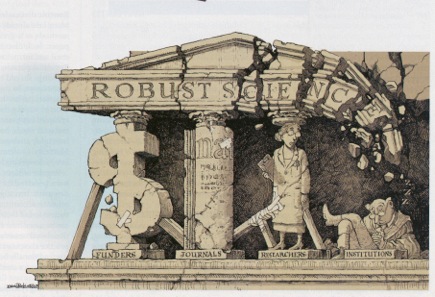
According to Rupert Sheldrake, a British biologist, who writes online at Science Set Free, there is a The Replicability Crisis in Science. By that, he means; “The credibility of science rests on the widespread assumption that results are replicable, and that high standards are maintained by anonymous peer review. These pillars of belief are crumbling. In September 2015, the international scientific journal Nature published a cartoon showing the temple of ‘Robust Science’ in a state of collapse.”
temple-of-science

In recent years, countless studies have been found to be faulty, not reproducible, making them all but useless. As other scientists have relied on them, which used to be a reasonable assumption since the journals are peer-reviewed, the science that’s coming after is equally flawed, because it’s based on bad science. And we’re not just talking about a few. “In 2011, German researchers in the drug company Bayer found in an extensive survey that more than 75% of the published findings could not be validated.” It gets worse. “In 2012, scientists at the American drug company Amgen published the results of a study in which they selected 53 key papers deemed to be ‘landmark’ studies and tried to reproduce them. Only 6 (11%) could be confirmed.”

Why is this happening? Sheldrake has a theory.

Unfortunately, personal advancement in the world of science depends on incentives that encourage these questionable research practices. Professional scientists’ career prospects, promotions and grants depend on the number of papers they have published, the number of times they are cited and the prestige of the journals in which they are published. There are therefore powerful incentives for people to publish eye-catching papers with striking positive results. If other researchers cannot replicate the results, this may not be discovered for years, if it is discovered at all, and meanwhile their careers have advanced and the system perpetuates itself. In the world of business, the criteria for success depend on running a successful business, not on whether business plans are ranked highly by business academics, and whether they are often cited in business journals. But status in the world of science depends on publications in scientific journals, rather than on practical effects in the real world.

Meanwhile, the peer-review system is falling into disrepute. The very fact that so many unreliable papers are published shows that the system is not working effectively, and a recent investigation by the American journal Science revealed some shocking results. A member of Science’s staff wrote a spoof paper, riddled with scientific and statistical errors, and sent 304 versions of it to a range of peer-reviewed journals. It was accepted for publication by more than half of them.

This is apparently enough of a problem that it even has its own Wikipedia page, and is known as the Replication Crisis. And Science News had an article entitled Is redoing scientific research the best way to find truth?

reproducibility_piechart

But it’s hard not to see another culprit. Science News also offered 12 reasons research goes wrong, and included “fraud” at the end, stating that “fraud is responsible for only a tiny fraction of results that can’t be replicated.” I suppose that depends on how you define it, and I think I’d say it might include the type of junk science where somebody is hired to find a specific result rather than find out what the result might be in a specific situation. That’s the type I see more and more in the field of alcohol studies being sponsored by prohibitionist groups.

Prohibitionists and other groups have been perverting science for their own ends for years, using it to hoodwink an unsuspecting public, who still trusts the studies they’re reporting, to promote their agenda. It’s become a common tool of propaganda. This is detailed quite well in the classic book How to Lie with Statistics, but even more forcefully in the later expose Trust Us We’re Experts: How Industry Manipulates Science and Gambles with Your Future. It’s unfortunate, but prohibitionist groups aren’t really interested in health or safety. Like almost all non-profits, they’ve become more interested in sustaining themselves, which means raising money has become the real goal. This was revealed with startling clarity at an alcohol policy conference held a couple of years ago, which I reported on in The Neo-Prohibitionist Agenda: Punishment Or Profit. It’s about money. Isn’t it always?

But sadly, science is supposed to be science, and should be free of the entanglements that cloud so many other fields. And once upon a time, I like to kid myself, it probably was. But is it sure seems as corrupt as the rest of the world to me now, and that can’t be good for the present, and especially the future. Because it’s only going to get worse. I’m sure there’s a study somewhere that supports that. And if not, I can always fund my own. Apparently that’s how it’s done.

Filed Under: Editorial, Politics & Law, Related Pleasures Tagged With: Prohibitionists, Science, Statistics

Patent No. EP0208450A2: Beer Filtration

January 14, 2016 By Jay Brooks

patent-logo
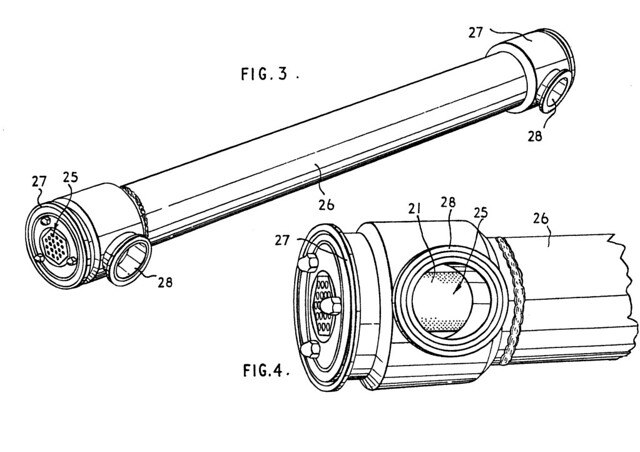
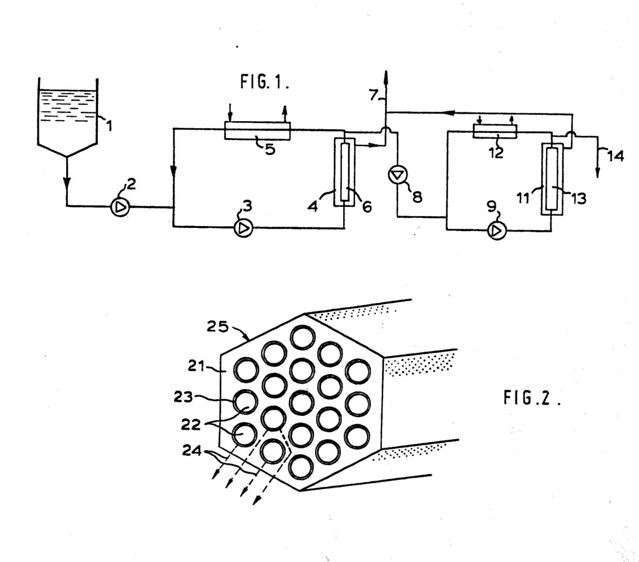
Today in 1987, US Patent EP 0208450 A2 was issued, an invention of Ronald Shackleton, for his “Beer Filtration.” Here’s the Abstract:

It has been proposed to filter beer or tank bottoms using crossflow filtration. In accordance with the invention, this crossflow filtration is achieved using ceramic membranes. In a particular form shown in figure 1, a two stage filtration process combines the functions of clarification and recovery from tank bottoms. Beer is drawn from a tank 1 by a centrifugal pump 2 to a primary filtration stage comprising a circuit in- cludinga a circulating centrifugal pump 3, a ceramic membrane filter 4 and a cooler 5. A proportion of the circulating liquid is drawn off by a positive pump 8, and passed to a secondary filtration stage, again comprising a circuit including a circulating positive pump 9, a ceramic membrane filter 11 and a cooler 12. A proportion of the retentate is drawn off via a line 14. This retentate is of a pasty consistency and normally has a commercial value, in that it is free of kieselguhr or other filter aid.

0208450-imgf0001
0208450-imgf0002

Filed Under: Beers, Breweries, Just For Fun, Politics & Law, Related Pleasures Tagged With: Brewing Equipment, History, Law, Patent, Science of Brewing

Beer In Ads #1789: Flying Goats

January 13, 2016 By Jay Brooks


Wednesday’s ad is for Bock Beer, from either the late 1800s or early 20th century. It was produced by the Donaldson Litho. Co. of Newport, Kentucky as a sample of their printing work, complete with pricing information at the top. This is one of several bock-themed samples they produced, and in this one not only can goats fly, they can fly airplanes.

bock-beer-hangers-plane

Filed Under: Art & Beer, Beers Tagged With: Advertising, History

Stay Snowed In For The Next Session

January 13, 2016 By Jay Brooks

session-the
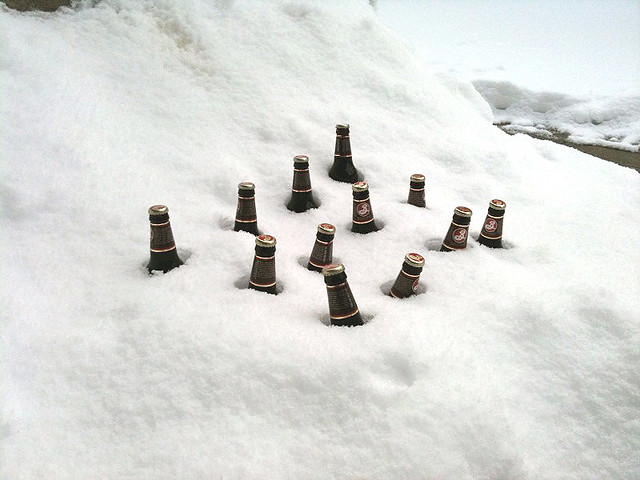
For our 108th Session, our host will be Jon Abernathy, who writes the Brewsite in Bend, Oregon. For his topic, he’s asking us to consider being Snowed In, which is in fact his topic. Jon goes on to explain what he means by that in his announcement for the February Session:

beer-in-snow

The theme is “Snowed In,” and I want it to be open-ended. It’s the first week of February—we are solidly in the grip of the winter, which means hunkering down from the cold and, depending on where you live, waiting for warmer days to thaw out the ice and snow. But perhaps it’s one of those winters, where the snow starts falling… and falling… and falling some more, and the next thing you know, schools are closed, there’s four or more feet of snow on the ground—and you are effectively snowed in and not going anywhere.

For those of you living in the southern climes who don’t have snow to worry about, perhaps it’s some other stormy situation keeping you indoors—hurricanes or tropical storms, for instance. You tell me—I live northerly!

So what’s next? That is what I want you to write about—as it pertains to beer, of course! Not sure where to start? Here are some suggestions to hopefully inspire some ideas:

  • What style(s) of beer do you prefer for this cold weather? Open one up and write about it.
  • Do you dip into the stash or cellar, and drink something special? Does the occasion warrant it? Why, or why not?
  • When you know the weather’s coming, do you stock up on a favorite or go-to beer? What makes you pick this particular beer?
  • Are you a homebrewer? Maybe this is the perfect time for a brew day—what would you brew? Have you brewed in the snow before?
  • Alternatively, perhaps you have a hodge-podge of brewing ingredients lying around but nothing definitive—could you MacGyver up a homebrewed beer from only what you have on hand?
  • Imagine you were snowed in at a cabin in the mountains for the winter. What one beer would you want with you, and why? (Think “desert island beer” but colder.)
  • There’s plenty of time to catch up on reading; what beer book(s) would you read? If not a beer book, what would you be reading—and what beer would you pair with it?

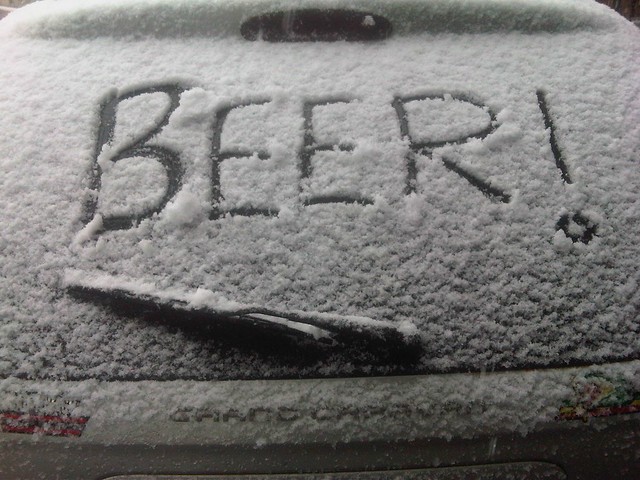
I hope these can get you started, but feel free to write about whatever you like, as long as it has something to do with beer and being snowed in, on Friday, February 5.

So what does winter mean for your beer consumption. Does it go up or down. Does being stuck indoors effect it? And how does the weather change what you choose to drink? Lots of questions but since these beers won’t drink themselves and you won’t find any answers until you start drinking, I guess you know what to do. To participate in the February Session, leave the link to your post in a comment to the original announcement on or before Friday, February 5.

beer-winshield

Filed Under: Beers, Just For Fun, The Session Tagged With: Announcements, Blogging, Social Media, Websites

Patent No. EP0142966B1: Valved Closure For Kegs Or Casks

January 13, 2016 By Jay Brooks

patent-logo
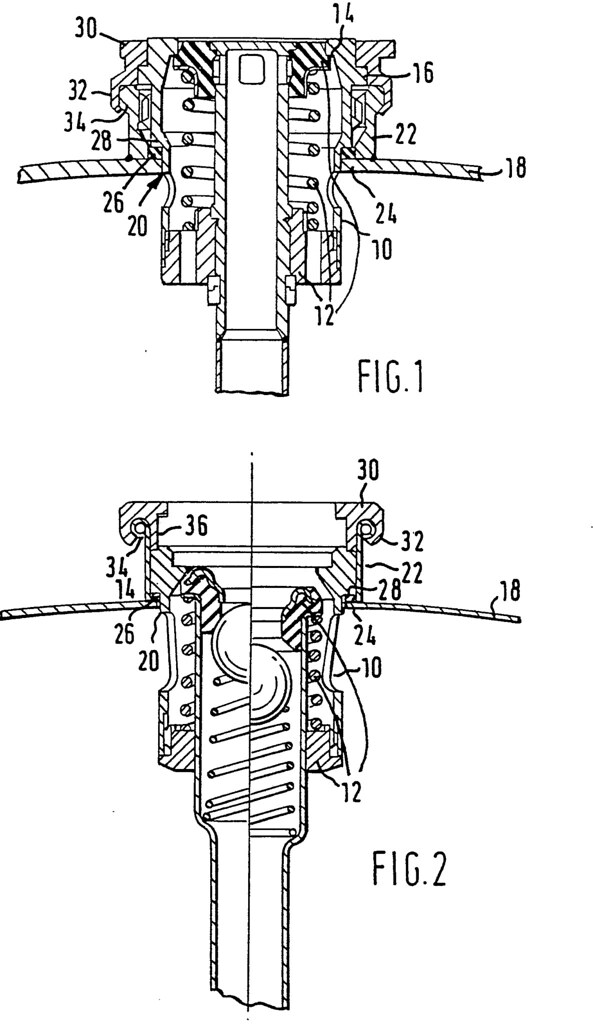
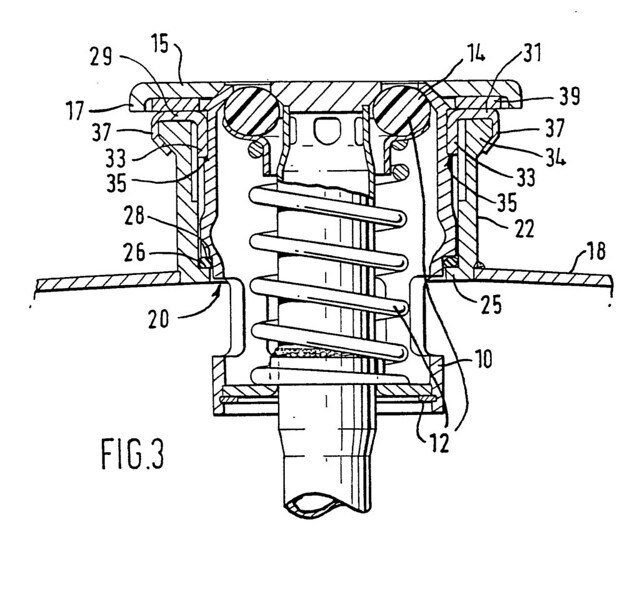
Today in 1988, US Patent EP 0142966 B1 was issued, an invention of Roger John Hyde, for his “Valved Closure for Kegs or Casks.” There’s no Abstract, although in the description it includes this summary:

This invention relates to valved closures for pressure vessels, such as kegs or casks for beverages dispensed through the valved closure by pressure gas admitted to the keg or cask through the closure.

0142966-imgf0001

0142966-imgf0002

Filed Under: Beers, Just For Fun, Politics & Law, Related Pleasures Tagged With: Cask, History, Kegs, Law, Patent

Beer In Ads #1788: Anti-Prohibition Goats

January 12, 2016 By Jay Brooks


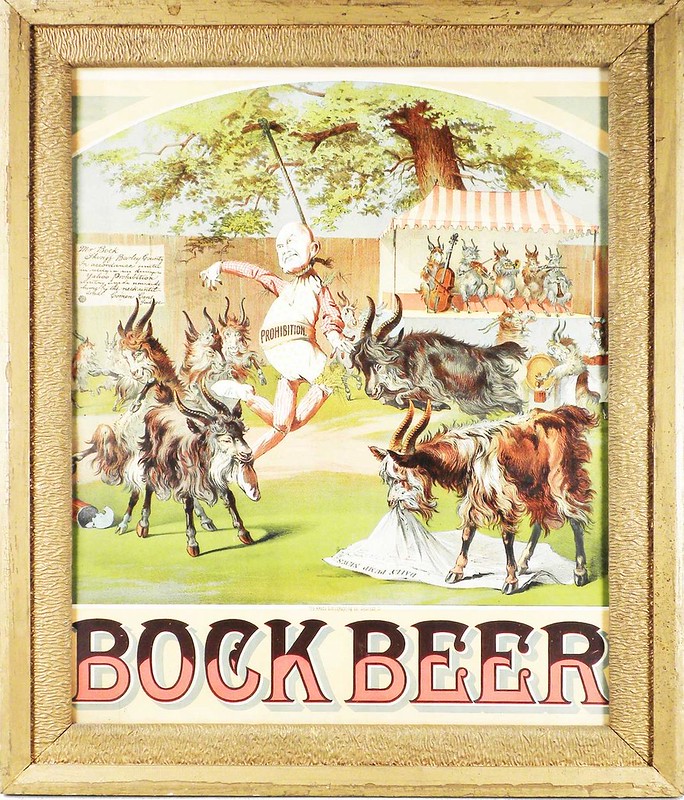
Tuesday’s ad is for Bock Beer, from before Prohibition. In this one, a group of goats are having a beer-furled outdoor carnival of sorts, with casks of bock, a goat band playing from a stage and front and center the personification of prohibition has been strung up from a tree and is being head-butted around in what appears to be some kind of game. There’s another goat in the foreground chewing on the daily newspaper, no doubt because it’s bringing news about prohibition. There’s a sign on the fence on the left that you can barely read. But what you can see is this: “Mr. Bock, Sherrif Barley County.” It signed by a judge and in the middle, written larger, it says “Yahoo Prohibition.”

bock-prohibition

Filed Under: Art & Beer, Beers Tagged With: Advertising, History

Patent No. 3554400A: Nonflipping Beer Can End

January 12, 2016 By Jay Brooks

patent-logo
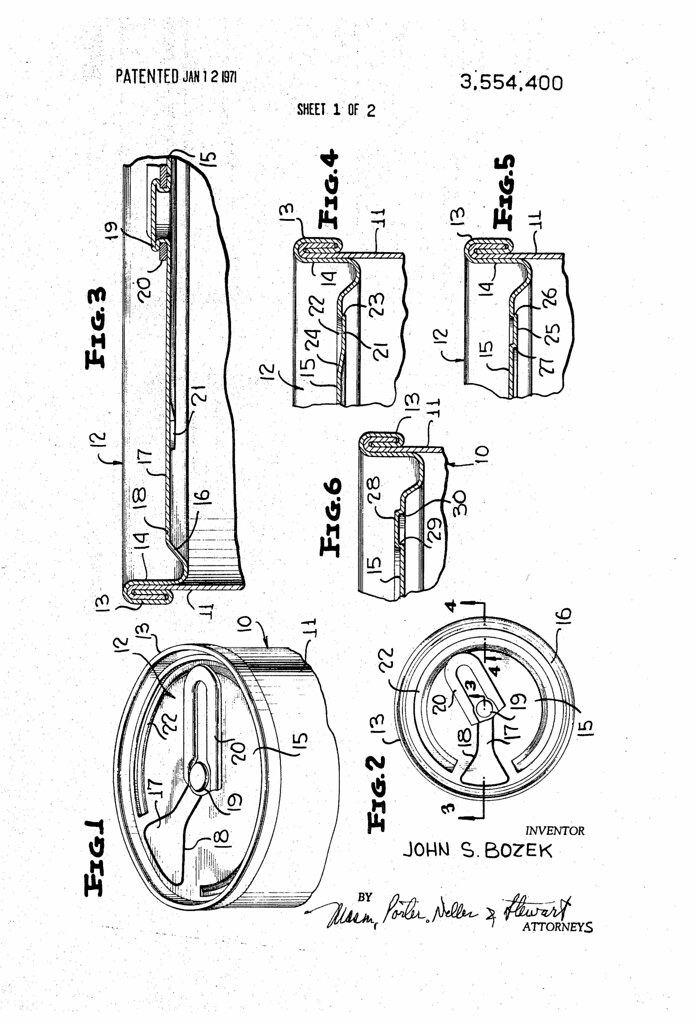
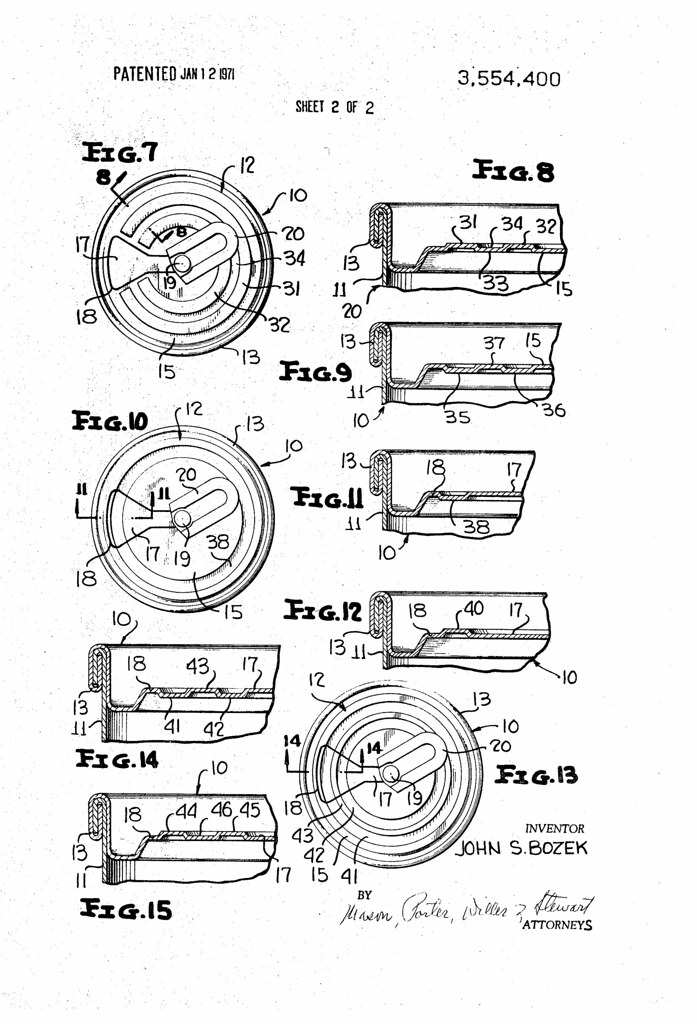
Today in 1971, US Patent 3554400 A was issued, an invention of John S. Bozek, assigned to the Continental Can Co., for his “Nonflipping Beer Can End.” Here’s the Abstract:

An easy opening end particularly adapted for use on beverage cans, said end including an end panel, weakening line formed in said end panel and defining a removable tearout portion which extends generally from the central portion of said end panel to the periphery of said end panel, and a circumferential rib in said end panel, said rib being generally C-shaped in outline and having opposite ends terminating adjacent said tearout portion and reinforcing said end panel around said tearout portion to prevent premature rupturing of said can end along said weakening line, and a pull tab secured to said tearout portion for effecting the removal thereof, said rib being depressed to define an upwardly opening groove, and said pull tab having a free end overlying said groove whereby clearance is provided between said pull tab free end and said end panel to facilitate the initial lifting of said pull tab.

US3554400-1
US3554400-2

Filed Under: Beers, Just For Fun, Politics & Law, Related Pleasures Tagged With: Cans, History, Law, Packaging, Patent

Pyramid Closes Walnut Creek Location

January 12, 2016 By Jay Brooks

pyramid-breweries
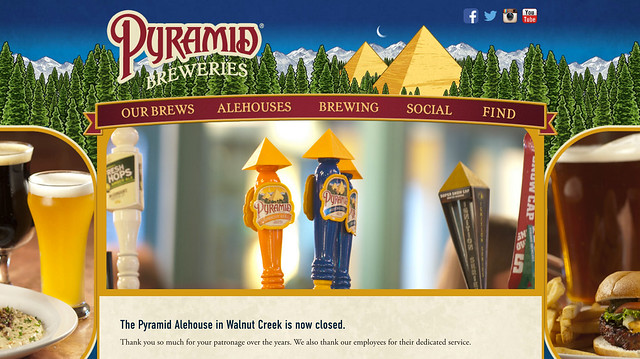
Rumor has it that Pyramid Breweries has closed the last remaining vestige of their foray into California. After closing the Sacramento brewpub a couple of years ago, and the Berkeley brewpub last year, apparently the staff of the Walnut Creek Alehouse learned Sunday that it would be their last day. Yesterday, apparently, the alehouse was locked up and closed up for good.

The website for the Walnut Creek Alehouse simply states the following:

The Pyramid Alehouse in Walnut Creek is now closed.
Thank you so much for your patronage over the years. We also thank our employees for their dedicated service.

pyramid-walnut-creek-closed

Filed Under: Breweries, News Tagged With: Business, California, Northern California, Rumors

Patent No. 2665936A: Beer Can Handle

January 12, 2016 By Jay Brooks

patent-logo
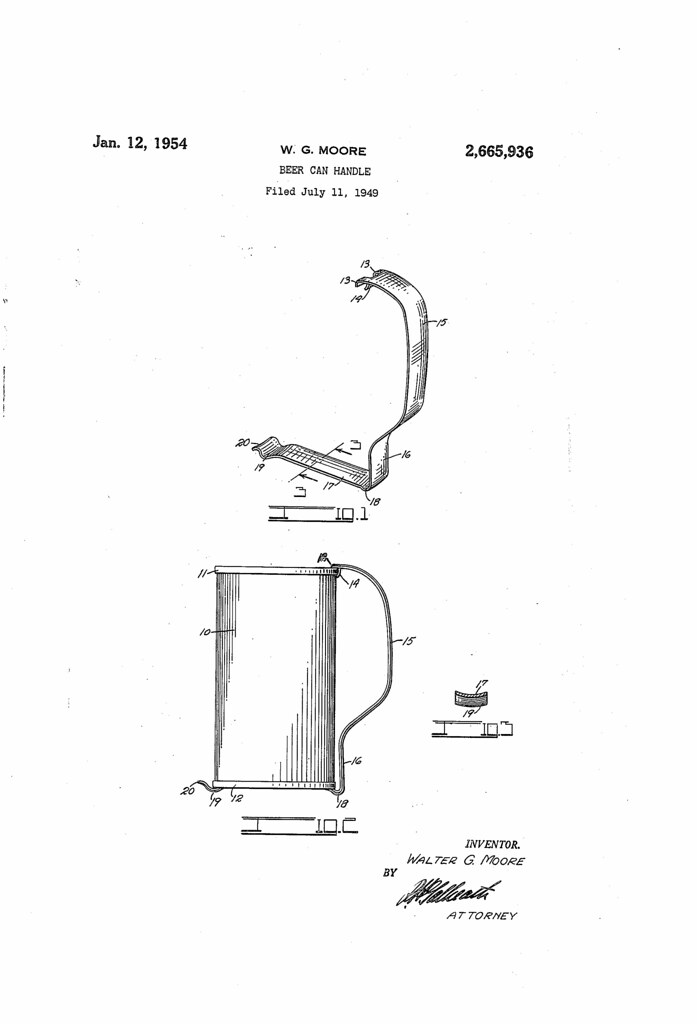
Today in 1954, US Patent 2665936 A was issued, an invention of Walter G. Moore, for his “Beer Can Handle.” There’s no Abstract, although in the description it includes this summary:

This invention relates to a handle for beer cans and the like, and has for its principal object the provision of a simple, economical, one-piece structure which can be instantly snapped on and off a tin can to provide a handle therefor, and to form a drinking receptacle therefrom.

US2665936-0

Filed Under: Beers, Just For Fun, Politics & Law, Related Pleasures Tagged With: Glassware, History, Law, Packaging, Patent

Patent No. 749583A: Beer Keg Washing Apparatus

January 12, 2016 By Jay Brooks

patent-logo
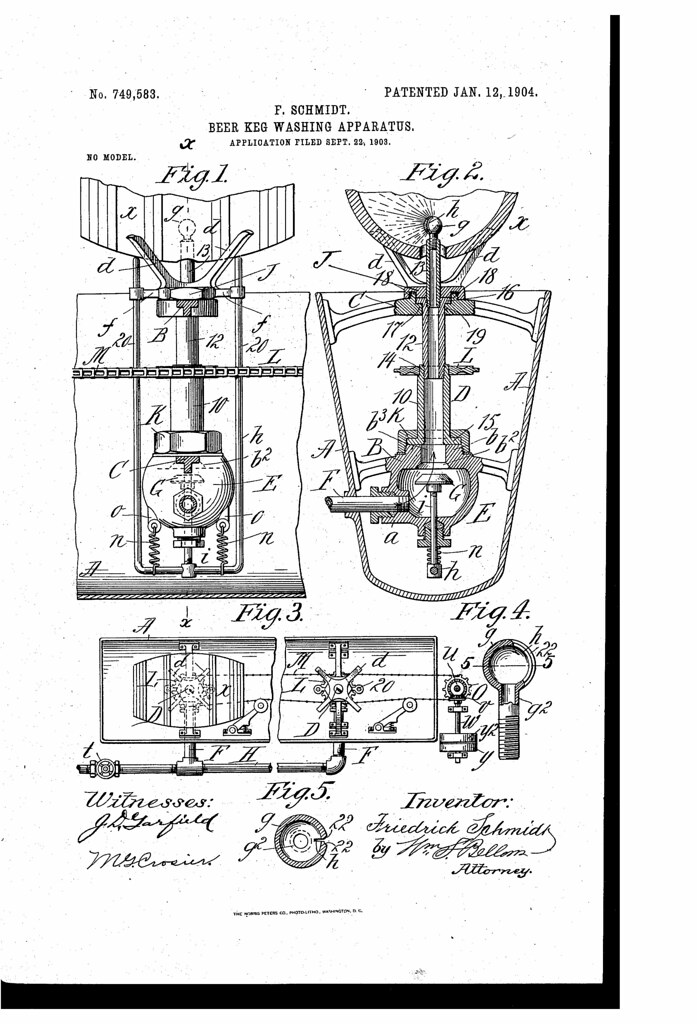
Today in 1904, US Patent 749583 A was issued, an invention of Frederich Schmidt, for his “Beer Keg Washing Apparatus.” There’s no Abstract, although in the description it includes this summary:

This invention relates to improvements in apparatus for washing or flushing beer-kegs internally with hot or cold water.

The object of the invention is to provide an` apparatus by the employment of which beer kegs may be conveniently and expeditiously cleansed.

The invention consists in arrangements or combinations and constructions of parts, all substantially as hereinafter fully described, and set forth in the claims.

US749583-0

Filed Under: Beers, Just For Fun, Politics & Law, Related Pleasures Tagged With: History, Kegs, Law, Patent

« Previous Page
Next Page »

Find Something

Northern California Breweries

Please consider purchasing my latest book, California Breweries North, available from Amazon, or ask for it at your local bookstore.

Recent Comments

  • Bob Paolino on Beer Birthday: Grant Johnston
  • Gambrinus on Historic Beer Birthday: A.J. Houghton
  • Ernie Dewing on Historic Beer Birthday: Charles William Bergner 
  • Steve 'Pudgy' De Rose on Historic Beer Birthday: Jacob Schmidt
  • Jay Brooks on Beer Birthday: Bill Owens

Recent Posts

  • Beer In Ads #5203: Now’s The Time To Say … Blitz Weinhard Bock For Me! April 3, 2026
  • Beer Birthday: Dave Bonighton April 3, 2026
  • Historic Beer Birthday: Frederick Hinckel Jr. April 3, 2026
  • Beer In Ads #5202: The Bock Beer Time Is Near, And It Comes But Once A Year April 3, 2026
  • Historic Beer Birthday: Henry Pierre Heineken April 3, 2026

BBB Archives

Feedback

Head Quarter
This site is hosted and maintained by H25Q.dev. Any questions or comments for the webmaster can be directed here.