Brookston Beer Bulletin

Jay R. Brooks on Beer

  • Home
  • About
  • Editorial
  • Birthdays
  • Art & Beer

Socialize

  • Dribbble
  • Email
  • Facebook
  • Flickr
  • GitHub
  • Instagram
  • LinkedIn
  • Pinterest
  • RSS
  • Twitter
  • YouTube

Powered by Genesis

Beer Birthday: Jonathan Goldsmith

September 26, 2025 By Jay Brooks

dos-equis
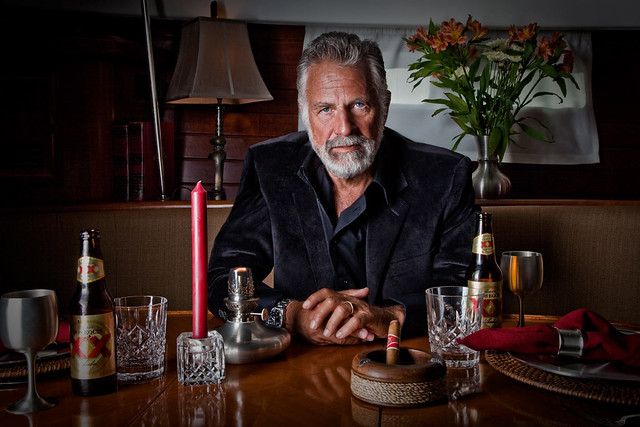
Today is the birthday of Jonathan Goldsmith (September 26, 1938- ), who “is an American actor. He began his career on the New York stage, then started a career in film and television. He appeared in several TV shows from the 1960s to the 1990s.” And if that were all, he wouldn’t be here, but he’s probably best known now “for appearing in television commercials for Dos Equis beer, from 2006 to 2016, as the character ‘The Most Interesting Man in the World.'” I confess that I’ve never been a fan of the Dos Equis ad campaign and wrote a post against it back when it began because I hated the “stay thirsty, my friends” tagline. I probably got more angry comments over the years about my negative reaction than any other post I wrote. And while I’ve never come around on that aspect of the campaign, I do have to admit it’s been very successful. It’s certainly not the first time I’ve been in the minority opinion on something. I briefly met Goldsmith at a comedy event in Napa a few years ago, and he was certainly an interesting person. Despite my protestations, his character has certainly become iconic in the decade Dos Equis ran with it.
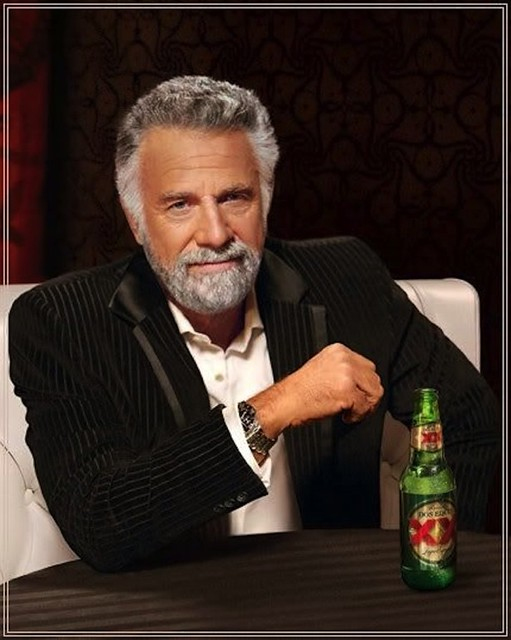
Here’s his biography, from his Wikipedia page:

Goldsmith was born on September 26, 1938, in New York. His mother was a model and his father was a gym teacher. His parents were Jewish. Goldsmith graduated from Boston University in 1958, after which he pursued an acting career.

Jonathan has made over 350 television appearances in his career. Among them was the role of Marvin Palmer in the 1964 Perry Mason episode, “The Case of the Blonde Bonanza.” To advance his acting career, Goldsmith moved to California from New York in 1966.[6] Like many aspiring actors, he found it difficult to gain enough acting work to survive and wound up working various jobs, including driving a garbage truck and working in construction, to help make ends meet.

During his early years in film, Goldsmith performed as “Jonathan Lippe”, having taken the name of his stepfather at the age of six. He subsequently changed his professional name back to his birth name, later recalling, “It always made me feel bad for my father, who never caused me any grief about it…. As my career grew and my son was born, I changed my name back to my real name, Goldsmith, so my father could enjoy his son’s success and have a grandson to carry his name as well.”

Goldsmith first established himself as an actor in Western films, with 25 such appearances. In the 1976 film The Shootist, Goldsmith played a villain who was shot between the eyes by hero John Wayne, who fired blood capsules from a special pellet gun at point blank range into Goldsmith’s face for seven painful takes.

Goldsmith also made guest appearances on 45 television series, including Gunsmoke; Adam-12; Knight Rider; CHiPs; Eight Is Enough; The Rockford Files; Hawaii Five-O; Barnaby Jones; MacGyver; Murder, She Wrote; Charlie’s Angels; Petrocelli; Manimal; The Fall Guy; Dynasty; T.J. Hooker; Hardcastle and McCormick; Magnum, P.I.; Knots Landing; and The A-Team, as well as a few made-for-TV movies. His longest run in a television series was on Dallas, in which he appeared 17 times.

In the 1980s Goldsmith started network marketing businesses (waterless car wash products) Dri Wash & Guard, and also SPRINT which was successful enough to allow him to “retire” from the Hollywood scene; he purchased an estate in the Sierra. He taught theater at Adelphi University in Garden City, New York from 1999-2004. He moved onto a large sailboat moored in Marina del Rey. As of 2011 he and his wife Barbara (who was his agent when he obtained the Dos Equis role) are moving to a house in the area of Manchester, Vermont.

Starting in 2016 Goldsmith writes for True.Ink, a web site that “celebrates The Noble Pursuit, a mix of adventure, expertise, and kindness.”

Beginning in April 2007 and continuing through 2015, Goldsmith had been featured in a high-profile television ad campaign, promoting Dos Equis beer. The campaign, which transformed Goldsmith into “the most interesting man in the world”, has been credited for helping to fuel a 15.4 percent sales increase for the brand in the United States in 2009 and also made him into a very popular meme.

Goldsmith landed the Dos Equis gig by auditioning for the role. Auditioners were given the ending line “…and that’s how I arm wrestled Fidel Castro” and asked to improvise. Goldsmith began his audition by removing one sock and then improvised for 30 minutes before reaching the concluding line. The character was inspired by his deceased sailing partner and friend Fernando Lamas.

On March 9, 2016, Dos Equis announced that it would replace Goldsmith in the role as the “Most Interesting Man in the World”, saying that the brand hoped to “reboot (the character) in a way that’s relevant for today’s drinker so the brand doesn’t get stale.” In September 2016, French actor Augustin Legrand (who also speaks English and Spanish) became the new “Most Interesting Man in the World”.

In June, 2017, he returned to television advertising; he switched to tequila, and does ads for Astral Tequila.
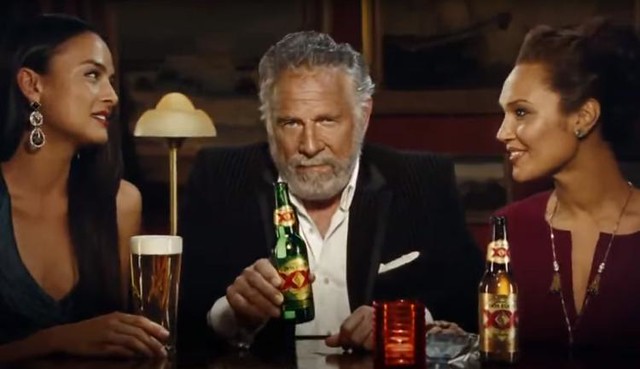
interesting-man

And this is the Wikipedia entry for The Most Interesting Man in the World:

The Most Interesting Man in the World is an advertising campaign for the Dos Equis brand of beer. The ads feature “the world’s most interesting man,” a bearded, debonair gentleman, with voiceovers that are intended to be both humorous and outrageous. The advertisements first began appearing in the United States in 2006 and have since then become a popular Internet meme.

The advertisements first began appearing in the United States in 2006, with The Most Interesting Man in the World portrayed by American actor Jonathan Goldsmith, and Frontline narrator Will Lyman providing voiceovers. They were produced by the marketing firm Euro RSCG (now Havas Worldwide) for Cuauhtémoc Moctezuma Brewery.

Goldsmith landed the Dos Equis gig by auditioning for the role. Auditioners were given the ending line “…and that’s how I arm wrestled Fidel Castro” and asked to improvise. Goldsmith began his audition by removing one sock and then improvised for 30 minutes before reaching the concluding line. The character was inspired by his deceased sailing partner and friend Fernando Lamas.

In March 2016, Dos Equis announced Goldsmith’s retirement from the role, with a commercial sending him on a one-way journey to Mars amid much acclaim, and the narration: “His only regret is not knowing what regret feels like”. In September, they introduced French actor Augustin Legrand as Goldsmith’s replacement

The Goldsmith advertisements feature an older bearded, debonair gentleman. They also feature a montage (mostly in black and white) of daring exploits involving “the most interesting man” when he was younger, in which the character is played by actor Claudio Marangone.

The precise settings are never revealed, but he performs feats such as freeing an angry bear from a painful-looking bear trap, shooting a pool trick shot before an audience (by shooting the cue ball out of the mouth of a man lying on the pool table), catching a marlin while cavorting in a Hemingway-esque scene with a beautiful young woman, winning an arm-wrestling match in a South American setting, surfing a killer wave, and bench pressing two young women, each seated in a chair, in a casino setting. The voiceovers themselves are intended to be both humorous and outrageous, and include humorous undertones such as his giving his own father “the talk”, experiencing an awkward moment just to know how it felt, and finding the Fountain of Youth but not drinking from it, “because he wasn’t thirsty”. Other feats are more centered on his physical abilities and personality. These include his small talk changing foreign policies, parallel-parking a train, and slamming a revolving door.

At the end of the advertisement, the most interesting man, usually shown sitting in a night club or other social setting surrounded by several beautiful young women, says, “I don’t always drink beer. But when I do, I prefer Dos Equis.” Each commercial ends with him stating the signature sign-off: “Stay thirsty, my friends.”

There are secondary advertisements that are similar to the final part of the original advertisements. They feature the man sitting in a social setting, surrounded by beautiful young women, conveying a short opinion to the viewer on certain subjects, such as bar nuts, the two-party system, self-defense, trophy wives, and “bromance”. He then finishes the advertisement by holding a Dos Equis beer and saying, “Stay thirsty, my friends.”

The agency’s rationale for the brand strategy was defined as: “He is a man rich in stories and experiences, much the way the audience hopes to be in the future. Rather than an embodiment of the brand, The Most Interesting Man is a voluntary brand spokesperson: he and Dos Equis share a point of view on life that it should be lived interestingly.” According to the company, U.S. sales increased each year between 2006–2010 and tripled in Canada in 2008, although exact figures were not provided. Sales of Dos Equis are said to have increased by 22% at a time when sale of other imported beer fell 4% in the U.S.

Goldsmith said in an interview that he realized how successful the campaign had been when a man came up to him in a restaurant, telling Goldsmith that the man had asked his young son what he wanted to be when he grew up, and the son replied: “I want to be The Most Interesting Man In The World.”
dos_equis_most_interesting_man

Here’s a fun video from Business Insider about “How Jonathan Goldsmith Became ‘The Most Interesting Man In The World:'”

The ad campaign was successful enough that it also created a popular meme generator to make your own:

Filed Under: Beers, Birthdays, Just For Fun Tagged With: Advertising, New York, United States

Beer Birthday: Evan Rail

September 16, 2025 By Jay Brooks

evan-rail
Today is the 53rd birthday of Evan Rail, expat American writer living, and writing about beer, in Prague, Czech Republic. Evan was born and raised in Fresno, but discovered his love for beer while attending U.C. Davis as a French and German literature major. While there, he spent his time at the nearby Sudwerk Privatbrauerei brewpub, and counted among his friends several students in the Master Brewers program. That’s also where he began homebrewing in 1993. He also studied in New York and Paris, before making the Czech Republic his home in 2000. His move to Prague was meant to be for a single year, but he’s still there almost two decades later. Given that he met his wife there, and they’ve started a family, it’s likely he won’t be moving home any time soon. In addition to writing the Good Beer Guide to Prague and the Czech Republic, Rail’s also penned Why Beer Matters, In Praise of Hangovers and Triplebock, all Kindle singles. We finally had a chance to share a beer in person a few years ago when he was in San Francisco for an event sponsored by Pilsner Urquell. But since then we’ve been on trips in Denmark and Belgium together, as well. Join me in wishing Evan a very happy birthday.

IMG_2260
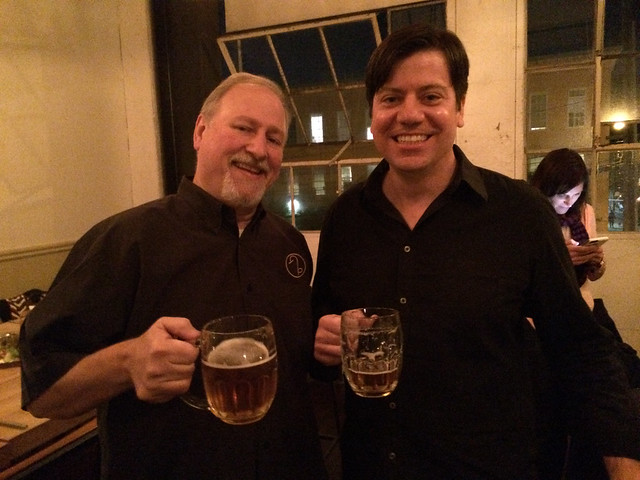
A few years ago at event in san Francisco, where Evan was doing a presentation for Pilsner Urquell.
copenhagen
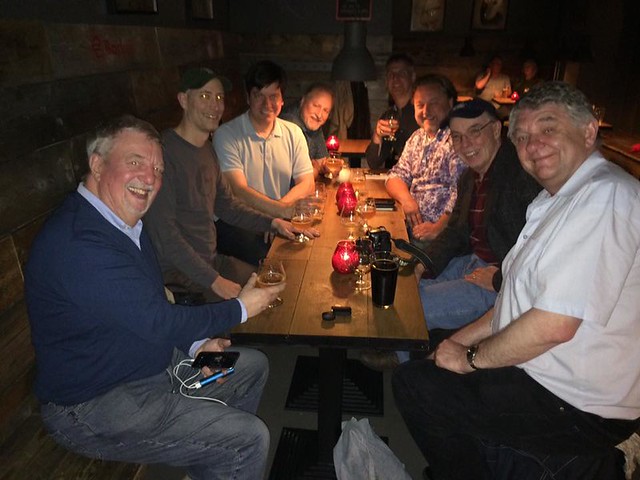
Also a couple of years ago in Copenhagen, along with, clockwise from left: Martyn Cornell, Jeff Alworth, Evan, me, Stephen Beaumont, Pete Brown, Stan Hieronymus and Ron Pattinson.
SAM_5803
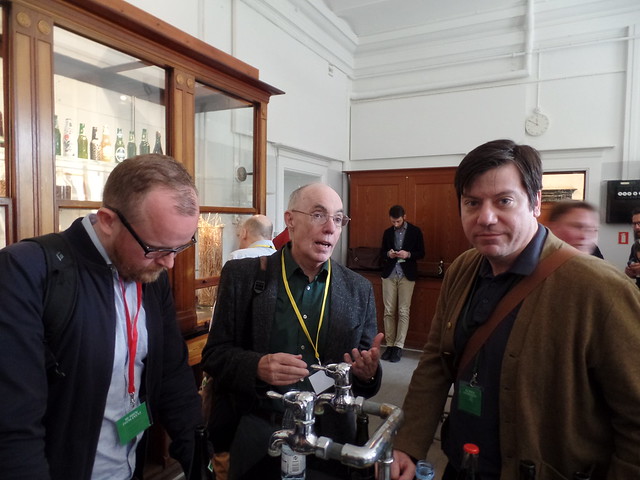
Talking with Stan Hieronymus during a tour of the Carlsberg Laboratory.
Evan-Rail-1
A Facebook cover photo of Evan (which is where I purloined it from, along with the next one, too).
Evan-Rail-2
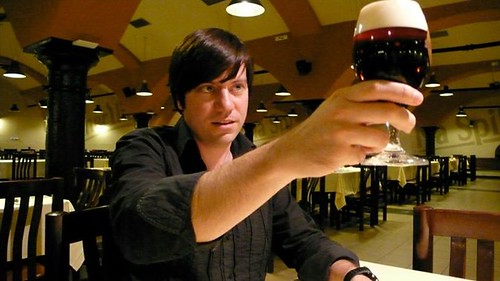
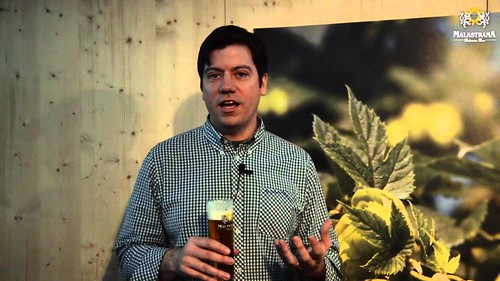
A screenshot from a video of Evan talking about Czech beer.

Filed Under: Birthdays Tagged With: California, Czech Republic, United States

Beer Birthday: Tara Nurin

August 7, 2025 By Jay Brooks

Today is the 52nd birthday of beer writer Tara Nurin. She’s originally from Annapolis, but now calls Camden, New Jersey her home, where she writes for Forbes, USA Today, Food & Wine, Wine Enthusiast, VinePair, and many others. Her most recent book is about the history of women in beer, entitled “A Woman’s Place Is in the Brewhouse: A Forgotten History of Alewives, Brewsters, Witches, and CEOs.” She also founded Beer for Babes (f.k.a. Barley’s Angels New Jersey). I don’t remember when I first met Tara, possibly at a North American Guild of Beer Writer events, but she’s been a great addition to the beer writer’s cadre, and a couple of years I worked with Tara on her media panel for the Craft Brewers Conference. Join me in wishing Tara a very happy birthday.

Tara with a taster of beers.
With Herlinda Heras at the Hopland Tap during a recent trip to California.
With Samuel Adams brewer Megan Parisi.

NOTE: All photos purloined from Facebook.

Out Now!: A Woman’s Place Is in the Brewhouse.

Filed Under: Birthdays, Just For Fun Tagged With: Beer Writers Guild, Maryland, New Jersey, United States, Writing

Historic Beer Birthday: Adolphus Busch

July 10, 2025 By Jay Brooks

a-b
Today is the birthday of Adolphus Busch (July 10, 1839-October 10, 1913). He was born in Kastel, Germany, and co-founded Anheuser-Busch, along with his father-in-law, Eberhard Anheuser. The twenty-first of twenty-two children, his family was in the wholesale business, specializing in winery and brewery supplies. Like all of his his brothers he was sent to college, and graduated from the Collegiate Institute of Belgium in Brussels.

He moved to St. Louis in 1857, when he was eighteen, and eventually got a sales job with Charles Ehlermann Hops and Malt Co. After a distinguished stint as a soldier during the Civil War, he returned to his brewery supply job and married Lily Anheuser, the daughter of Eberhard Anheuser. Together, they had thirteen children, including Adolphus Busch II and August A. Busch. After marrying Lily, he joined the family business, then known as E. Anheuser Co.’s Brewing Association, and eventually became a partner. When Lily’s father passed away in 1879, Adolphus took control of the business and changed the name to Anheuser-Busch.

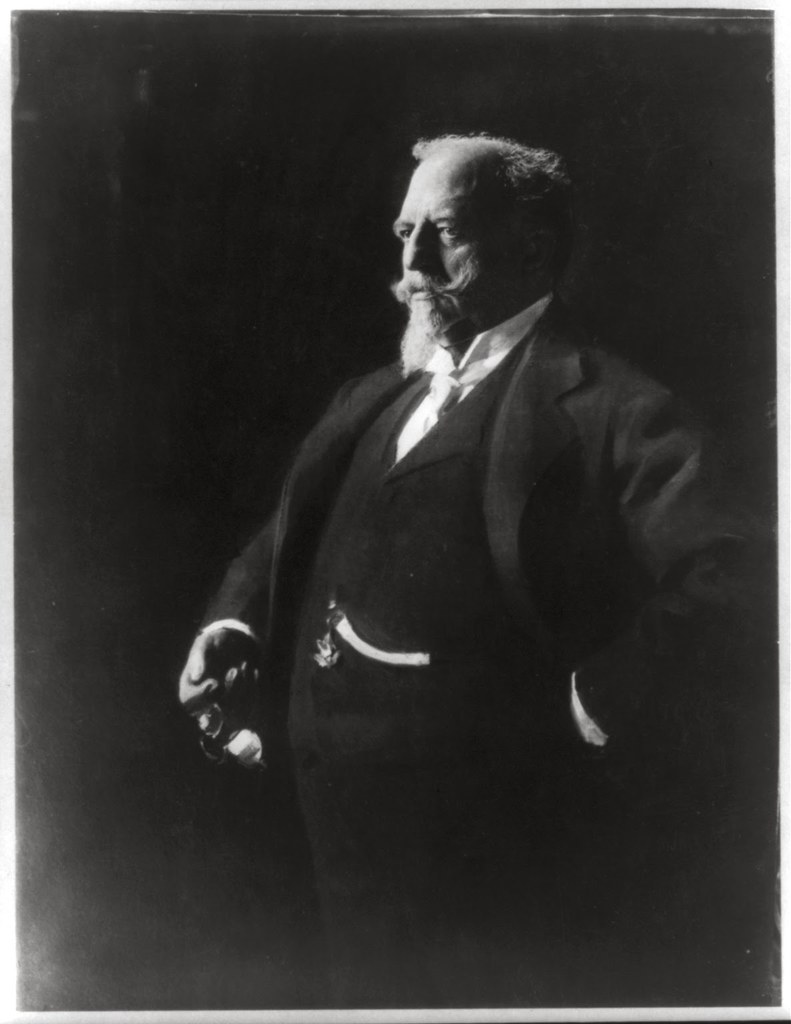
portrait-of-Adolphus-Busch

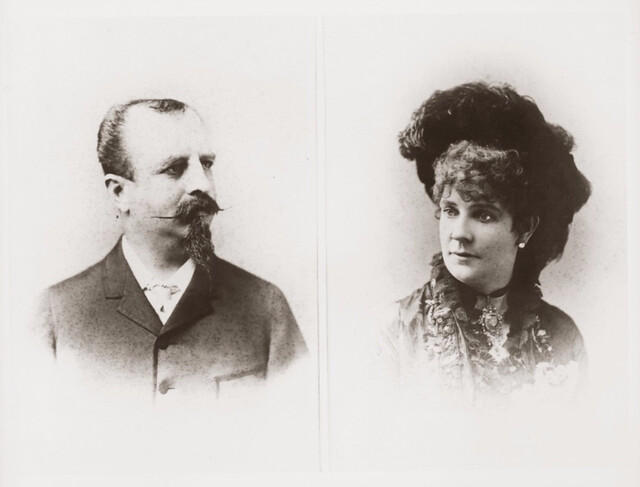
In St. Louis, Adolphus Busch was busy transforming his father-in-law’s (Eberhard Anheuser’s) once-failing brewery into a grand empire. Adolphus, perhaps more than any other brewer, became known for his flamboyant, almost audacious persona. Tirelessly promoting his Budweiser Beer, he toured the country in a luxurious railroad car immodestly named “The Adolphus.” In place of the standard calling card, the young entrepreneur presented friends and business associates with his trademark gold-plated pocket knife featuring a peephole in which could be viewed a likeness of Adolphus himself. His workers bowed in deference as he passed. “See, just like der king!” he liked to say.

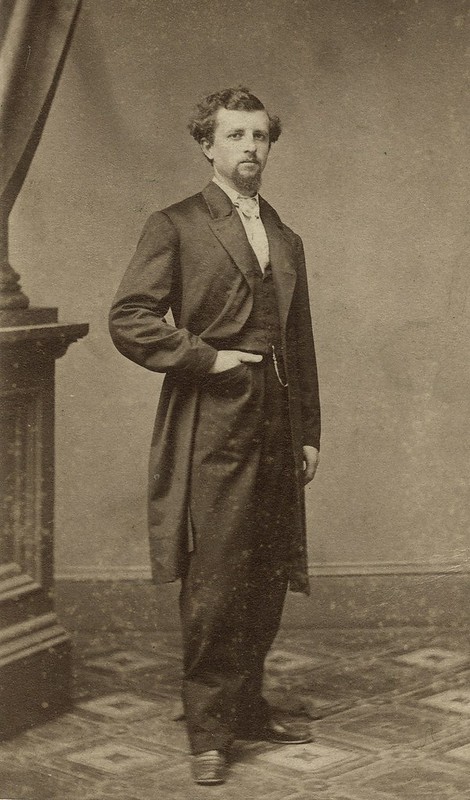
adolphus-busch-1869
Adolphus as a young man, in 1869.

Here’s a biography of Adolphus Busch from the Immigrant Entrepreneur Hall of Fame:

“A truly American tale. Freedom. Opportunity. Progress. Words that seized the imagination of people all over the world and brought them to the Land of Liberty. It’s a uniquely American story, told in chapter after chapter of hardship, hard work and hard-won success. The Budweiser story is no exception.”

Photo of Adolphus BuschSo begins the tale of Adolphus Busch, the founder of Anheuser-Busch and creator of Budweiser beer, as stated on the Budweiser website. He was an immigrant who not only created personal wealth and success but also made a landmark contribution to American society.

Born the second youngest of 22 children in Germany, Busch was educated in Brussels and immigrated to the United States in 1857. Settling in St. Louis, he married Lilly Anheuser and had 13 children of his own.

After completing his enlistment in the Union Army during the Civil War, Adolphus joined his father-in-law in the operation of E. Anheuser & Co. Brewery. The company was later restructured with Anheuser as president and Busch as secretary. As full partner, Busch took on greater responsibility for the operation of the brewery. To recognize his efforts, in 1879 the company name was changed to the Anheuser-Busch Brewing Association.

Busch was a man of many firsts. Apart from founding America’s first national beer brand, Budweiser, in 1876, he is credited with revolutionizing the shipment of beer (in refrigerated railway cars), being one of the first to bottle beer and implementing a method to pasteurize beer to keep it fresh.

Today, Anheuser-Busch captures the largest market share in the U.S. with 47.6 percent share of U.S. beer sales to retailers. It brews the world’s top-selling beer brands, Budweiser and Bud Light, at 12 breweries across the United States.

After he died while on vacation in Germany, his body was brought back to St. Louis to be buried. It was a fitting resting place for the man who created one of America’s most iconic brands.

Adolphus-Busch-photog

Busch married Elise “Lilly” Eberhard Anheuser, the third daughter of Eberhard Anheuser, on March 7, 1861 in St. Louis, Missouri. They had thirteen children; eight sons, including Adolphus Busch II, August Anheuser Busch I and Carl Busch, and five daughters. The Busches often traveled to Germany where they bought a castle. They named it the Villa Lilly for Mrs Busch. It was located in Lindschied near Langenschwalbach, in present-day Bad Schwalbach.

adolphus-and-lily-1865-to-75

And here’s his biography from the German-American Hall of Fame:

Busch, Adolphus
1839-1913
Inducted: 2007
Area of Achievement: Business & Industry

American businessman and philanthropist, b. Mainz, Germany. To U.S. (1857); joined St. Louis brewery of Eberhard Anheuser (1861); president of Anheuser-Busch Brewing Association (1879-1913); introduced Budweiser brand; pioneered in pasteurization of beer.

Adolphus Busch was born July 10, 1839 in Kastel (near Mainz, Hesse), Germany. He was second-to-youngest of twenty-two children of Ulrich Busch and Barbara Pfeiffer Busch.

In 1857, Adolphus Bush emigrated to the United States with no plans, no destination, and nothing but his own ambition and abilities. Three of his brothers had already headed for St. Louis, Missouri. His brother John had opened his own brewery in nearby Washington, Missouri.

Young Adolphus joined Ernst Wattenberg to sell equipment and supplies to breweries. This venture led him to forge several strategic partnerships. Most important, he met his future bride, Lily Anheuser. At the same time, his brother Ulrich became enamored with her older sister, Anna.

Their father, Eberhard Anheuser, a skilled St. Louis soap and candle-maker, had recently purchased the failing Bavarian Brewery in St. Louis. He reopened the brewery as E. Anheuser & Co.

On March 7, 1861, the Anheuser-Busch interests were formally joined, both professionally and matrimonially. Eberhard Anheuser escorted both daughters down the aisle in double nuptials to the two Busch brothers. At the time, Busch was working for Anheuser as a salesman. (The future malt mogul and his brother married his boss’ daughters.)

Eventually, Busch and Anheuser became partners and equals. It was the perfect match. Busch was the consummate marketer, and Anheuser was a skilled manufacturer. Working for his father-in-law, Busch developed pasteurization of beer and began marketing the Budweiser brand, which was named after Bmische Budweis, a town in his homeland of Germany. In 1876, Busch enlisted the help of his friend Carl Conrad (a liquor bottler) to develop this Bohemian-style pilsner beer.A fierce rivalry developed between Anheuser-Busch’s Budweiser beer and an old Czech brand from Budejovice. Since the 16th Century, the Czechs had called their product “The Beer of Kings,” so Busch began marketing his as “The King of Beers.”

By 1879, Busch was president of the Anheuuser-Busch Brewing Association. He held this position for more than 30 years.

His extravagant spending and elaborate lifestyle have become American folklore. Busch owned an expansive St. Louis manor, plus two palatial homes near Pasadena, California. He also had a country estate and a hops farm near Cooperstown, New York (not far from the Baseball Hall of Fame), two country villas in Germany, and his own private railroad car. His landscaping was famous for its fairy tale figurines, as Busch was a fan of the famed Grimm Brothers.

In 1911, when Adolphus and Lily marked their 50th wedding anniversary, he presented his queenly with a diamond tiara. U.S. President Theodore Roosevelt, the emperor of Germany, and other world leaders sent lavish gifts as well.

He died October 10, 1913 near Langenschwalbach, Germany. His son August took the reins of the company until his death in 1934. The company has been headed by a family succession ever since.

Incidentally, the famous Anheuser-Busch Clydesdale horses did not join the clan until after his death. In 1933, at the end of Prohibition, a team of Clydesdales were hitched up to pull the first load of legal beer from the St. Louis brewery. Company President August Busch (Adolphus’ son) was so taken by the sight that the horses became a favorite company trademark.

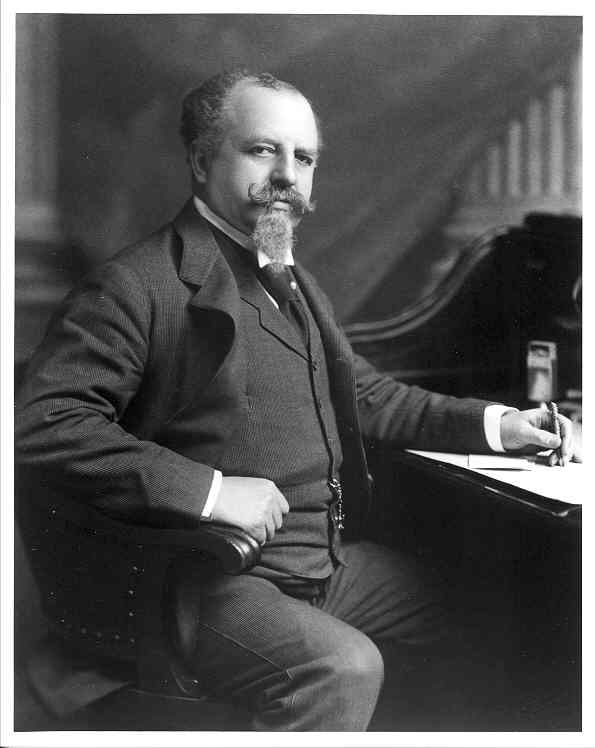
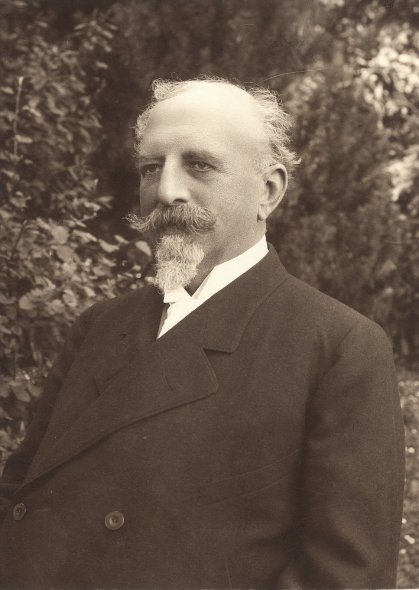
adolphus-busch-1905
Adolphus later in life, around 1905.

And there’s a few more thorough accounts of his life at Encyclopedia.com, the State Historical Society of Missouri’s Historic Missourians, and and a four part story “originally published in The American Mercury, October, 1929,” entitled The King of Beer by Gerald Holland.

Filed Under: Birthdays, Just For Fun Tagged With: Germany, History, Missouri, St. Louis, United States

Beer Birthday: Joe Stange

May 26, 2025 By Jay Brooks

Today may be the birthday of Joe Stange (May 26, 19??- ). A mutual friend posted this morning that it was, and in an absence of better — or any — information, I’m going to assume it is. Joe rarely shares much personal information, so you never know. His wife is in the state department so he’s lived abroad in different locations over the years, while writing about beer wherever he is. Joe is originally from Missouri, and studied journalism in college before becoming an AP reporter. He later studied politics in graduate school, where he met his diplomat wife and he began freelance beer writing wherever they were posted. More recently, he’s been the managing editor of Craft Beer & Brewing magazine, one of the few left concentrating on beer. Join me in wishing Joe a very happy birthday.

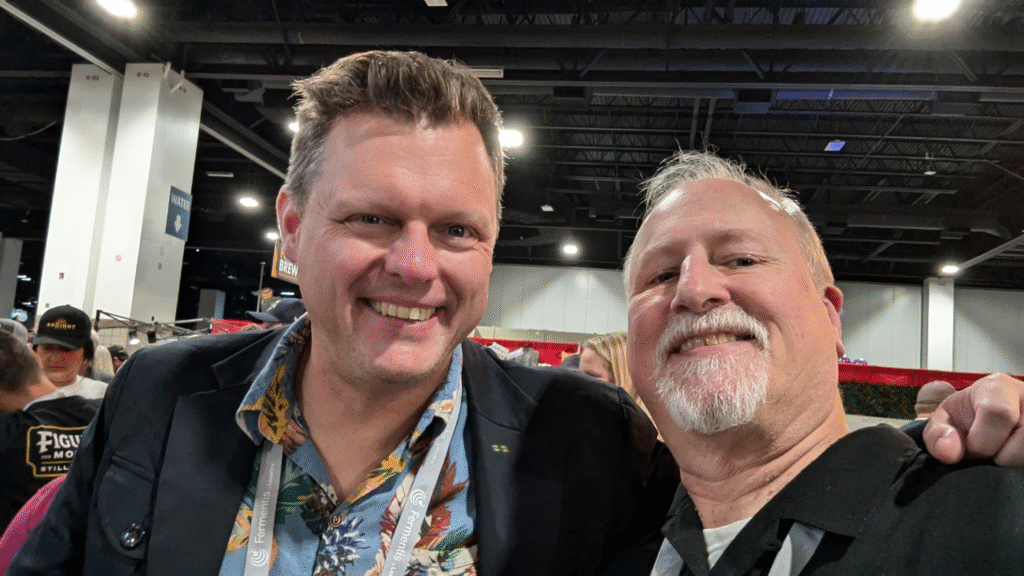
Joe and me at GABF in 2024.
In Namur for Brussels Beer Challenge judging in 2017.

Filed Under: Birthdays, Just For Fun Tagged With: Missouri, United States, Writing

Beer Birthday: Big Mike Moore

May 25, 2025 By Jay Brooks

Today is the 66th birthday of “Big” Mike Moore. Originally a pharmacist, Mike gave it all up for beer … thank goodness. Mike has been leading beer tours in Europe and a few years ago took over running the judging for, first the California State Fair Commercial Competition, and more recently, the CCBC, the California Craft Brewers Cup, which was sponsored by the CCBA. I’ve gotten to know Big Mike much better over the last few years, judging together on Celebrator Beer News panels, at competitions at The Bistro and other beery events. He’s even stayed with us a few times in our guesthouse, where we’ve introduced him to the pleasures of gin. Join me in wishing Big Mike a very happy birthday.

Big Mike at Augustiner in Germany.
Andy Klein (2nd from the left) and the Monk’s Cellar crew with Big Mike and Tom McCormick at the Celebrator Anniversary Party in 2017.
Big Mike with the 2018 inductees into the California Brewer’s Hall of Fame, Pete Slosberg, Judy Ashworth, and Tom Dalldorf.
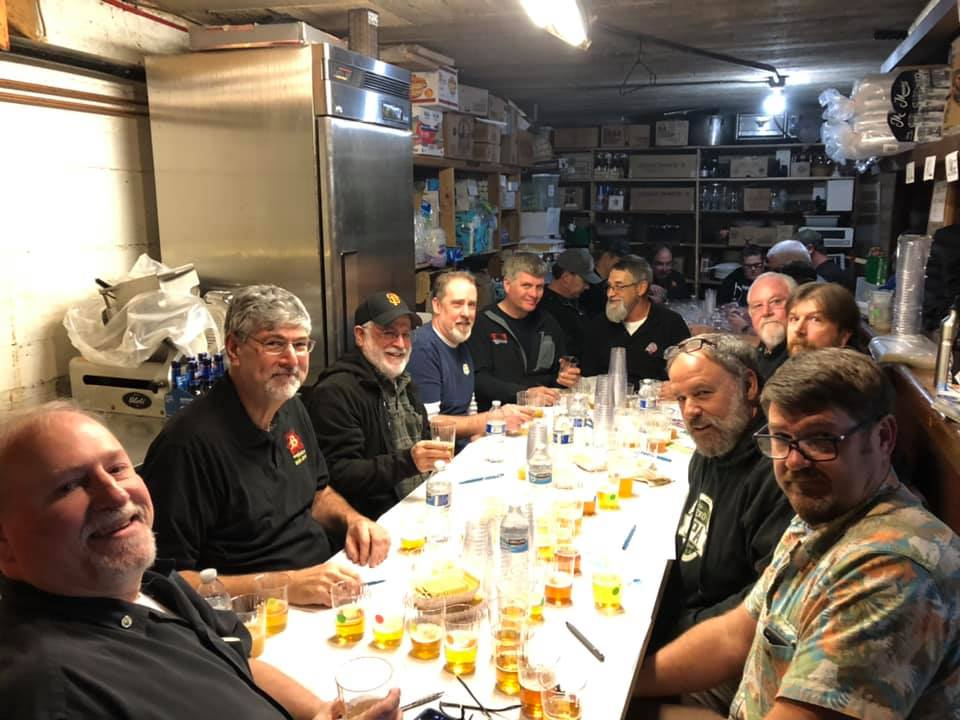
In the basement of The Bistro for Double IPA judging in 2020.

Filed Under: Birthdays, Just For Fun Tagged With: California, United States

Historic Beer Birthday: William H. Biner

April 16, 2025 By Jay Brooks

east-idaho
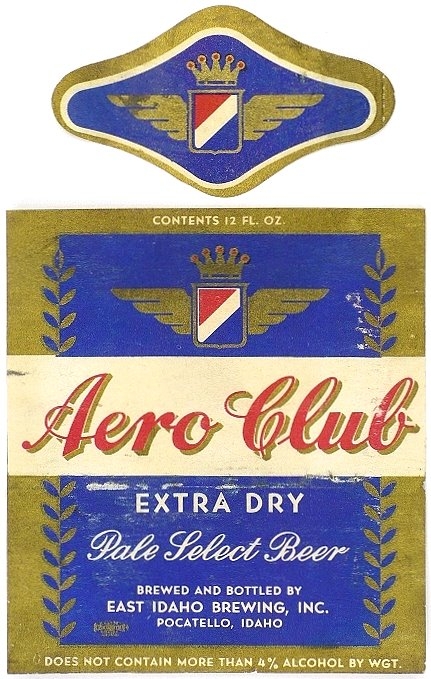
Today is the birthday of William H. “Billy” Biner (April 16, 1889-January 5, 1953). Biner was a journeyman brewer who worked for numerous breweries over his long career. He was born in the Montana territory to Swiss immigrant parents. His father, Theophil Biner, knew Leopold Schmidt and even worked at his Olympia Brewery. Biner sent two of his sons, including Billy once he’s finished with a career as a boxer, to brewing school in Milwaukee. Biner’s first brewing job was at the Phoenix Brewery in Vancouver, British Columbia in 1912. He then worked as the brewmaster for at least eight more breweries, from Los Angeles to Canada. The breweries he worked at included the Mexicali Brewery; the Orange Crush Bottling Company in L.A.; the Mexicali Brewing Company again after it was rebuilt following an earthquake; then the Kootenay Breweries, Ltd. in both Nelson and Trail, in BC, Canada; followed by the Ellensburg Brewing Co. in Washington, and then in 1937 he founded his own brewery, the Mutual Brewing Company. But it didn’t last thanks to World War II and supply issues, and it folded. Afterward, he moved on to both Sicks’ Century Brewery in Seattle and the Silver Springs Brewery in Port Orchard, Washington. Finally, he ran the East Idaho Brewing Co. in Pocatello, Idaho until 1946, when he retired from brewing and bought his own bar, the Leipzig Tavern in Portland, Oregon. He stayed there until a year before he died, which was in 1953.

You can read his biography at Brewery Gems, written by Gary Flynn working with Joseph Fulton, the grandson of Billy Biner.

Filed Under: Birthdays, Breweries, Just For Fun Tagged With: British Columbia, California, Canada, History, Idaho, Oregon, United States, Washington

Historic Beer Birthday: Leo Van Munching Jr.

April 7, 2025 By Jay Brooks

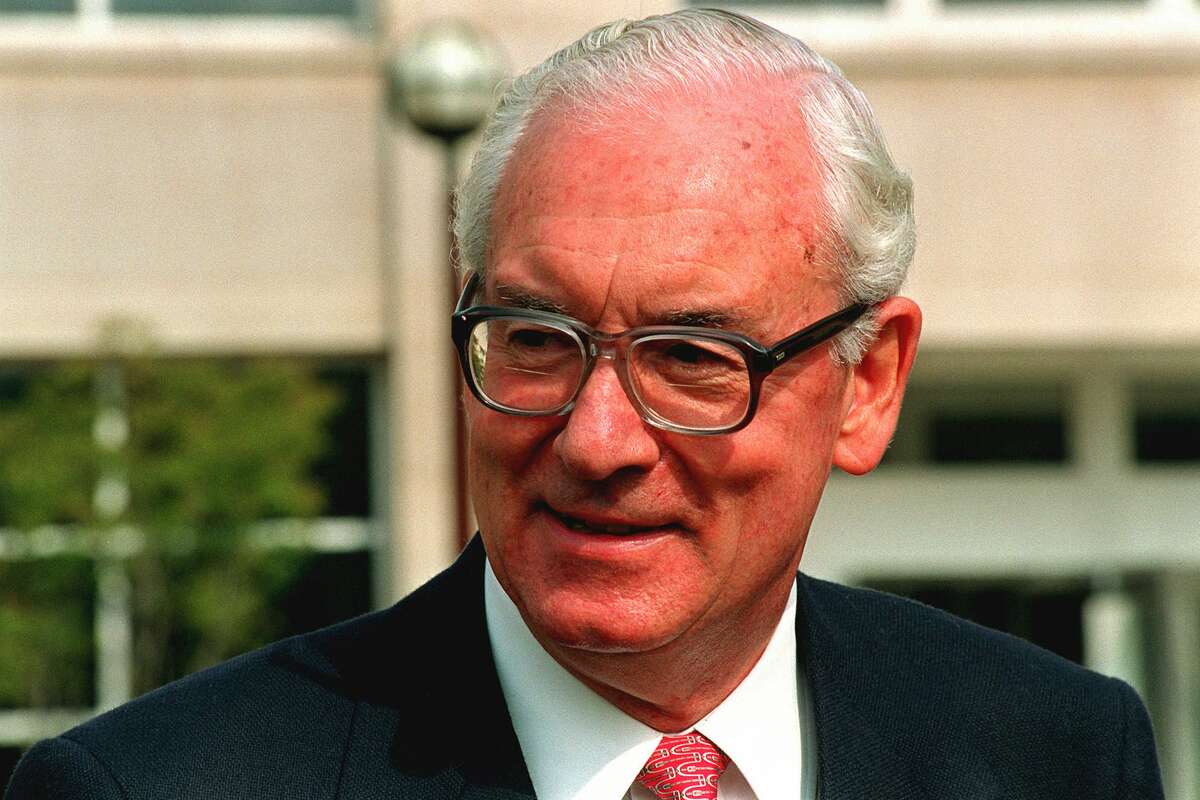
Today is the birthday of Leo Van Munching Jr. (April 7, 1926-February 15, 2016). He was born in Rotterdam, The Netherlands, but moved with his family after prohibition. His father, Leo van Munching Sr. started importing Heineken beer under the name “Van Munching & Co., and he and his son built it into a powerhouse imported beer brand. Sales Agents UK has an overview of their business strategy in a short piece entitled Leo Van Munching – The Story of the US Heineken Mogul.

This is his obituary from the San Francisco Chronicle:

Leo Van Munching Jr., whose stewardship of the importing company started by his father made the Dutch-brewed beer Heineken and its low-calorie sibling, Amstel Light, familiar brand names in the United States, died on Sunday at his home in Darien. He was 89.

The cause was heart failure, his son Philip said.

Heineken, which was first brewed in the 19th century, was the first European beer to be shipped to this country after the end of Prohibition. It was Mr. Van Munching’s father, Leo van Munching (the father preferred the lowercase v, the son the uppercase V), who recognized the business opportunity, and persuaded Heineken executives to allow him to represent the brand in the United States.

He arrived from the Netherlands with 50 cases of beer and his young family shortly after the repeal in December 1933 of the 18th amendment to the Constitution that had banned the manufacture and sale of alcoholic beverages. Earlier that year, President Franklin D. Roosevelt had signed the Beer and Wine Revenue Act that legalized (and taxed) beverages containing no more than 3.2 percent alcohol. “I think this would be a good time for beer,” the president declared.

Exports from the Netherlands were curtailed a few years later during World War II, but in 1946, the elder Mr. van Munching established Van Munching and Company as the lone American distributor of Heineken products.

Spurred by the beer’s popularity among American soldiers, who had enjoyed it in Europe, and by an advertising campaign that underscored its cachet as a foreign beer, sales were brisk. In 1951, The New York Times reported that sales of Heineken in the United States totaled more than 4.6 million bottles, an increase of 49 percent from 1950, a period when beer sales as a whole increased by only 1.2 percent.

That was just about the time that the younger Mr. Van Munching went to work for the company, shortly after graduating from college in 1950. He worked closely with his father for a quarter-century, establishing regional offices and, through advertising and marketing, helping to lift American recognition of the Heineken brand.

The Van Munching name grew in prominence as well, largely because of radio ads for Heineken that closed with an announcer saying: “Imported by Van Munching and Company, New York, New York.” By the mid-1970s, Leo Jr. was running day-to-day operations; he was officially named president in 1980.

By then, Heineken had been the best-selling imported beer in America for eight years, and according to Advertising Age, in 1979, it accounted for a whopping 41 percent of all imported beer sales in the country. Under Mr. Van Munching, the family company introduced other brands to the United States (including Grizzly, a Canadian-brewed beer, whose radio ads featured a not terribly well-known comedian named Jerry Seinfeld).

But perhaps more significantly, he increased Heineken product sales: He persuaded Heineken, which had bought the Amstel brewery, then in Amsterdam, in 1968, to begin producing a low-calorie beer for export; it arrived in the United States as Amstel Light in the early 1980s, initially marketed with women as a target.

Beginning in the mid-1970s, he marketed Heineken with television advertising for the first time, focusing on the beer’s distinctive green bottle and a slogan promoting its documented popularity: “America’s No. 1-selling imported beer.”

By the late 1980s, fending off a challenge from Mexican beers that were being marketed to younger drinkers — by then, the decade had minted (and named) a new demographic, yuppies, who gravitated to trendy imports — Heineken changed its advertising direction, which was focused by a tagline: “When you’re done kidding around, Heineken.”

Mr. Van Munching sold his company to Heineken in the early 1990s (he ran it for them until 1993), and when he left, it was still the leading American import. By 1997, however, Heineken had yielded the top spot to Corona Extra. As of 2015, it had yet to reclaim it.

Mr. Van Munching was born in Rotterdam, the Netherlands, on April 7, 1926. His father had been a ship’s steward for the Holland/America cruise line before he began importing beer. His mother was the former Maria Molt.

The family lived in Weehawken, N.J., where Mr. Van Munching attended high school. He joined the Navy, serving in Hawaii at the end of World War II. Afterward, he studied business and management at the University of Maryland on the G.I. Bill of Rights.

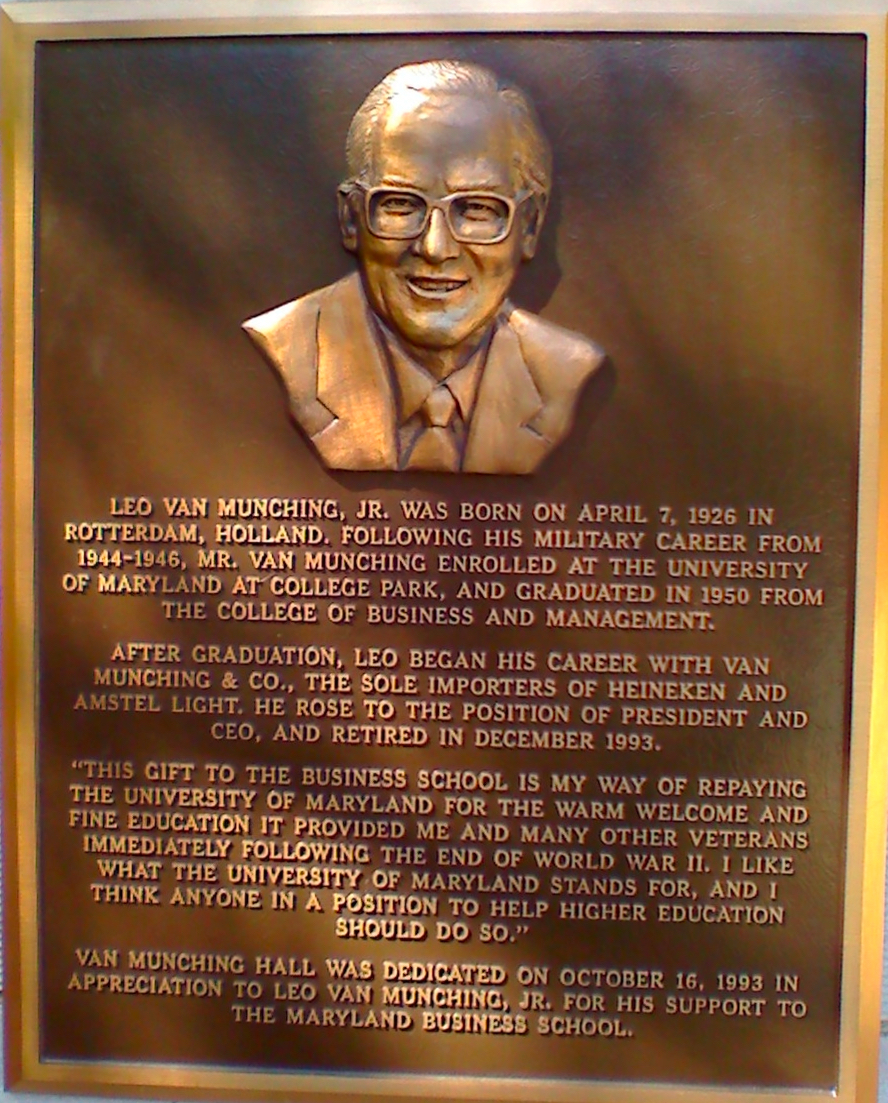
In later years, among his many philanthropic donations were gifts totaling $11 million to his alma mater, where Van Munching Hall is the home of the Robert H. Smith School of Business.

And this obituary is from his hometown paper of Darien, Connecticut, the Darien Times:

Leo Van Munching, Jr., who guided Heineken’s decades-long dominance in the US imported beer market, died February 14th after a long illness. The Darien resident was 89.

Born in 1926 in Rotterdam, the Netherlands, Leo and his family immigrated to the United States upon the repeal of Prohibition in 1933. His late father, Leo, Sr., came as a representative of the Heineken brewery and eventually established the independent Van Munching & Company as the sole US importer of Heineken brands.

Leo served as a ‘Seabee’ in the 35th Special Naval Construction Battalion on Oahu, Hawaii from 1944 to 1946. Upon discharge from the Navy, he enrolled in the University of Maryland on the G.I. Bill, earning a degree from the College of Business and Management in 1950.

He then went to work for Van Munching & Company, establishing regional offices in major markets around the country and developing both the brand imagery and the distribution network that led to Heineken’s preeminence in the expanding imported beer segment. He married Margaret (Peggy) Pratt in 1953, and moved his quickly growing family to Chicago and Los Angeles before settling in Connecticut, where he took over as president of Van Munching & Company. He remained in that role until his retirement in 1993.

During his time with Van Munching & Company, no other brand approached Heineken’s position as the largest-selling imported beer. After cajoling the Heineken Brewery to create a low-calorie version of its Amstel brand, Leo guided Amstel Light to the top sales spot in the imported light beer segment.

In recognition of his outstanding contributions and personal dedication to US-Netherlands trade relations, and his promotion of goodwill for the Netherlands in the United States, the Dutch government honored him with The Order of Orange-Nassau in 1982. Six years later, the Netherlands Chamber of Commerce in the US also recognized his role in the expansion of trade between the two countries, presenting him with the George Washington Vanderbilt Award.

Leo’s efforts as a philanthropist – often anonymous – were substantial and far-reaching. Many of his contributions were made out of appreciation for the opportunities he and his family enjoyed in America. He became involved in the restoration of the Statue of Liberty in honor of his mother, Mia, who he said was greatly affected by seeing the statue as an arriving immigrant.

He donated Van Munching Hall, home of the University of Maryland’s Robert H. Smith School of Business, in part to thank the university for its kind treatment of the veterans of World War II. In addition to building the home for the University of Maryland’s business school, Leo was a member of the school’s Dean’s Advisory Council, an honorary trustee of the University of Maryland College Park Foundation Board, and in 2012, was given the Tyser Gottwals Award in honor of his outstanding service to the university.

Leo’s fervent commitment to supporting education led him to a long-standing relationship with Kolbe Cathedral High School in Bridgeport. His support of that school, both as a benefactor and member of the Advisory Board, prompted the Diocese of Bridgeport to honor him with the Order of St. Augustine Medal of Service in 2012. He and Peggy were also strong supporters of the St. Margaret Mary School in the Bronx.

Closer to home, Leo and Peggy established the Van Munching Rehabilitation Unit at Stamford Hospital, which helps people with chronic or disabling illnesses or injuries restore their mobility and independence. The excellent care he received at the New York Hospital/Cornell Medical Center prompted Leo to make a founding donation to the Margaret M. Dyson Vision Research Institute. Leo was also a leadership donor to the construction of the new Darien Library, which opened in 2009. He was an active supporter of several Darien-based charities, and a member of the Wee Burn Country Club.

This plaque hangs at the University of Maryland, Van Munching’s alma mater, which he attended after World War 2.

Filed Under: Beers, Birthdays Tagged With: Connecticut, Heineken, Imports, The Netherlands, United States

Historic Beer Birthday: John Friedrich Wiessner Jr.

April 5, 2025 By Jay Brooks

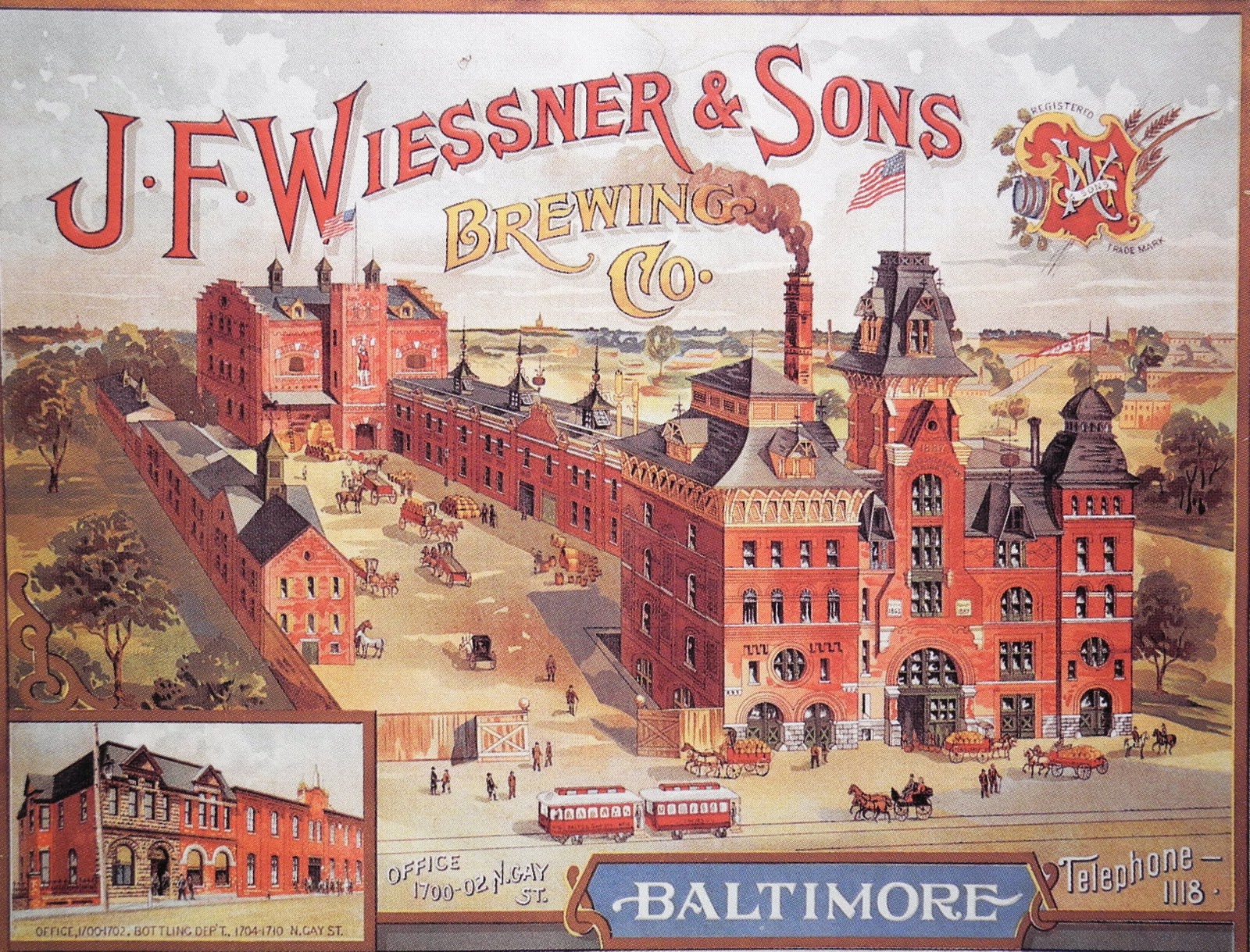
Today is the birthday of John Friedrich Wiessner Jr. (April 5, 1859-September 21, 1906). He was born in Baltimore, Maryland, and learned the brewing trade there, before moving to New York to work at the George Ringler Brewery for a time. In the 1880s, he returned to Baltimore to work at his father’s brewery, first known as the John F. Wiessner Brewery, and after junior and his brother joined him in the business in 1888, it was renamed the John F. Wiessner & Sons Brewing Co., which it remained until closed by prohibition in 1920. It reopened after repeal in 1933 as the American Brewery until closing for good in 1973.

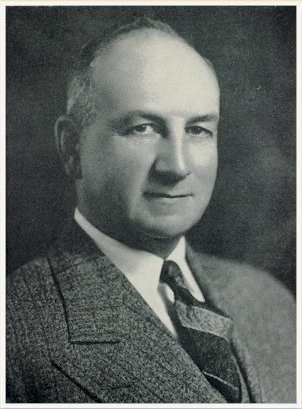
And this obituary is from the American Brewers Journal:

Baltimore History Bits has a short history of the brewery, and cartoonist from California, Chendi Xu, created a short comic about the history of Wiessner’s brewery, although she claims he went to Bavaria to learn brewing and came back from there rather than New York. There’s also a pdf online with a history of the brewery from a breweriana perspective by David Hagberg.

Filed Under: Birthdays, Breweries Tagged With: Baltimore, Maryland, United States

Historic Beer Birthday: Karl Frederick Schuster

April 2, 2025 By Jay Brooks

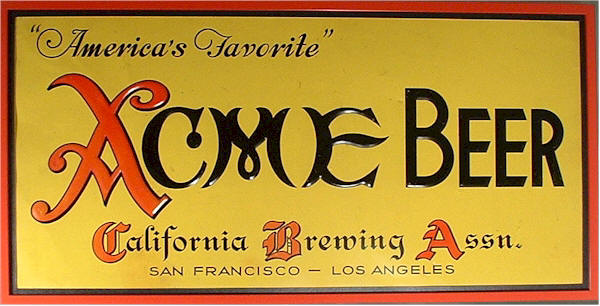
acme-script
Today is the birthday of Karl Frederick Schuster (April 2, 1890-November 4, 1976). He was born into a brewing family, and worked in several Bay Area breweries until prohibition, during which time he continued working with beer people though making cereal products. When prohibition ended, he was named president of Acme Breweries.

kark-frederick-schuster
Brewery Gems has the only biography of Schuster I could find, written by Gary Flynn:

Our subject’s grand-father, Frederick Schuster emigrated from the Alsace upon hearing of the California gold rush and made his way to the placer mines in Plumas County.

In the early 1850s he started a family and failing to strike it rich, he established a small steam beer plant, one of the first in California. The Pacific Coast Directory for 1867 lists the La Porte Brewery, F. Schuster, proprietor. When the placer mines played out Frederick relocated to San Francisco, and in 1870 he purchased the American Railroad Brewery. When Frederick died, his son Frederick Paul Schuster took control of the Brewery, and in 1902 he merged it with the Union Brewing & Malting Company. The American Railroad branch of the new company operated for two more years, and was then closed. Frederick became the vice president of the Union Brewery.

Frederick Paul’s son, Karl F. Schuster, continued the family tradition in brewing. In 1908 he started as an apprentice, drawing his first pay check from the Union Brewery, which had abandoned the manufacture of steam beer and entered the lager beer field in 1903. While Karl was learning all aspects of the trade, the brewing industry in San Francisco was undergoing many changes – in part from the effects of the ’06 earthquake, but also from the influx of brewers escaping early Prohibition in their home states.

….

Karl Schuster remained president of Acme Breweries until it was sold in January 1954. He died in November 4, 1976.

You can read the rest of the Biography of Karl Frederick Schuster at Brewery Gems.

Acme-beer-sign

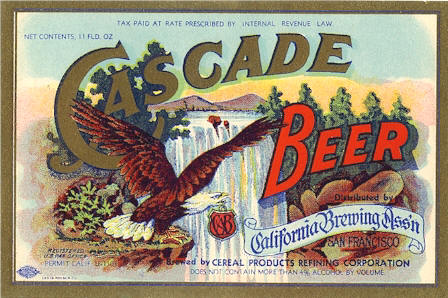
Cascade-beer

Filed Under: Birthdays, Breweries, Just For Fun Tagged With: California, History, San Francisco, United States

« Previous Page
Next Page »

Find Something

Northern California Breweries

Please consider purchasing my latest book, California Breweries North, available from Amazon, or ask for it at your local bookstore.

Recent Comments

  • Bob Paolino on Beer Birthday: Grant Johnston
  • Gambrinus on Historic Beer Birthday: A.J. Houghton
  • Ernie Dewing on Historic Beer Birthday: Charles William Bergner 
  • Steve 'Pudgy' De Rose on Historic Beer Birthday: Jacob Schmidt
  • Jay Brooks on Beer Birthday: Bill Owens

Recent Posts

  • Beer In Ads #5168: Hey! It’s Bock Beer Day To-Day! March 17, 2026
  • Beer In Ads #5167: Acme Bock Is Back Tomorrow! March 16, 2026
  • Historic Beer Birthday: John Land March 16, 2026
  • Historic Beer Birthday: Axel Heiberg March 16, 2026
  • Beer Birthday: Paul Segura March 16, 2026

BBB Archives

Feedback

Head Quarter
This site is hosted and maintained by H25Q.dev. Any questions or comments for the webmaster can be directed here.