Brookston Beer Bulletin

Jay R. Brooks on Beer

  • Home
  • About
  • Editorial
  • Birthdays
  • Art & Beer

Socialize

  • Dribbble
  • Email
  • Facebook
  • Flickr
  • GitHub
  • Instagram
  • LinkedIn
  • Pinterest
  • RSS
  • Twitter
  • YouTube

Powered by Genesis

Session #131 Round-Up

January 26, 2018 By Jay Brooks

session-the
This month’s Session was last minute to say the least. I woke up the first Friday of the month, January 5, to people on Twitter asking who was hosting and what the topic of the January Session was. Which for me was a facepalm moment because in the business of the holidays I hadn’t even noticed that no one had signed up to host the Session. So I scrambled to put one together, and tried to come up with something quick and easy.

So in my announcement, I asked three simple questions that could have very short answers, or with explanations a bit longer, that I thought could be fun to ponder. Since time was short, I wanted something that people could answer without thinking too much about it, out of necessity, and just go with their gut. Many people referred to this as an “Emergency Session,” which I guess is true. Anyway, here’s what everybody had to say:
emergency-session

Normally, the round-up gives a short description of each person’s take on the topic, but since I posed three questions, I thought it made more sense to break the round-up into separate round-ups, so to speak.

If you want to read their full answers, and the rationale behind them, here’s who participated in the January Session:

  • A Good Beer Blog
  • The A Position
  • Appellation Beer
  • Boak & Bailey
  • Brewing in a Bedsetter
  • The Brew Site
  • Brookston Beer Bulletin
  • Brussels City Beer
  • By the Barrel
  • Deep Beer
  • Fuggled
  • Oh Good Ale
  • Ramblings of a Beer Runner
  • The Would-be Brewmaster

So that’s fourteeen participants, not to shabby considering it was posted last minute, on the day it was due.
three-beers-1

Question No. 1

For our first question of the new year, what one word, or phrase, do you think should be used to describe beer that you’d like to drink. Craft beer seems to be the most agreed upon currently used term, but many people think it’s losing its usefulness or accuracy in describing it. What should we call it, do you think?

And the answers are:

  1. Beer, just beer:
    • Appellation Beer
    • Brookston Beer Bulletin
    • Ramblings of a Beer Runner
    • The Would-be Brewmaster
  2. Classic beer:
    • Fuggled
  3. Clear:
    • A Good Beer Blog
  4. Craft beer:
    • Boak & Bailey
  5. Excellent Beer… Whatever the source:
    • Deep Beer
  6. Good beer:
    • The A Position
    • The Brew Site
    • By the Barrel
  7. The Good Stuff:
    • Oh Good Ale
  8. No Answer:
    • Brewing in a Bedsetter
  9. Worthwhile beer:
    • Brussels City Beer

By and large, a majority felt a return to simply calling all beer just “beer” is the way to go, and I’m in that camp, as well. A close second, others felt “good beer” was a good (pun intended) way of marking the divide, and I have certainly used the term on numerous occasions. It avoids the politics but also conveys a certain fluid meaning that we all sort of understand.

three-beers-2

Question No. 2

For our second question of the new year, what two breweries do you think are very underrated? Name any two places that don’t get much attention but are quietly brewing great beer day in and day out. And not just one shining example, but everything they brew should be spot on. And ideally, they have a great tap room, good food, or other stellar amenities of some kind. But for whatever reason, they’ve been mostly overlooked. Maybe 2018 should be the year they hit it big. Who are they?

And the answers are:

  1. Back Forty Beer Co.: The A Position
  2. Brewery Ommegang: Deep Beer
  3. Bristol Beer Factory: Boak & Bailey
  4. Brouwerij Brasserie De Ranke: Brewing in a Bedsetter
  5. Burley Oak Brewing: Deep Beer
  6. Buxton Brewery: Brewing in a Bedsetter
  7. Caldera Brewing: The Brew Site
  8. Chuckanut Brewing: Appellation Beer, Brookston Beer Bulletin
  9. Corn based craft beer: A Good Beer Blog
  10. Dust Bowl Brewing: Ramblings of a Beer Runner
  11. En Stoemelings: Brussels City Beer
  12. Galway Bay Brewery: Brussels City Beer
  13. Hunter-Gatherer Brewery & Alehouse: Fuggled
  14. Kettlesmith, or Stroud, or Cheddar Ales: Boak & Bailey
  15. Kobold Brewing: Ramblings of a Beer Runner
  16. Marble Brewery (UK): Oh Good Ale
  17. Moonlight Brewing (UK): Brookston Beer Bulletin
  18. None, most breweries are over-rated: By the Barrel
  19. Olde Mecklenburg Brewery: Fuggled
  20. Quebec breweries: A Good Beer Blog
  21. Rock Art Brewery: The A Position
  22. Smuttynose Brewing: The Would-be Brewmaster
  23. Summit Brewing: Appellation Beer
  24. Ticketybrew: Oh Good Ale
  25. Von Trapp Brewing: The Would-be Brewmaster

Not surprisingly, given that we’re all over the map geographically, so were the answers to this one. An interesting mix of breweries to explore.
three-beers-3

Question No. 3

For our third question of the new year, name three kinds of beer you’d like to see more of. It’s clear hoppy beers, IPAs and all of the other hop-forward beers they’ve spawned, are here to say. There seems to be a few other styles that are popular, too, like saisons, barrel-aged beers, anything imperial and also sour beers of all kinds. But lots of other previously popular beers seem sidelined these days. What three types of beer do you think deserve more attention or at least should be more available for you to enjoy? They can be anything except IPAs, or the other extreme beers. I mean, they could be, I suppose, but I’m hoping for beers that we don’t hear much about or that fewer and fewer breweries are making. What styles should return, re-emerge or be resurrected in 2018?

And the answers are:

  1. Altbier: Fuggled
  2. Barley wine: Oh Good Ale
  3. Barrel-Aged: Deep Beer
  4. Belgian session beers: Brewing in a Bedsetter
  5. Belgian witbiers: The Brew Site
  6. Best Bitter (or English Pale Ale): Boak & Bailey (specifically Pale-n-hoppy), Fuggled, The Would-be Brewmaster
  7. Bocks: By the Barrel
  8. Dubbels (and other strong dark ale): A Good Beer Blog, Brussels City Beer
  9. Dunkelweizens: Brookston Beer Bulletin
  10. German weissbeers or hefeweizens: Appellation Beer
  11. Gose (authentic): Ramblings of a Beer Runner
  12. Imperial Stout: Boak & Bailey, Brewing in a Bedsetter
  13. IPAs, Classic US: Brewing in a Bedsetter
  14. Lagers (that taste like lagers): Appellation Beer, The Brew Site, Brussels Beer City
  15. Malt-forward beers, like Scottish ales, brown ales, bocks: The Brew Site, By the Barrel (bocks, at least)
  16. Milds: A good Beer Blog, Boak & Bailey, Brookston Beer Bulletin, By the Barrel, Fuggled, Oh Good Ale, Ramblings of a Beer Runner
  17. Old Ale: Oh Good Ale
  18. Oud Bruin: Deep Beer
  19. Porters: A Good Beer Blog (especially 1700s porters made with diastatic malted Battledore barley), Appellation Beer
  20. Quadruppels: Deep Beer
  21. Rye beers: Brookston Beer Bulletin
  22. Scotch Ales: Ramblings of a Beer Runner
  23. Stouts (non-imperial): The Would-be Brewmaster
  24. Styles not inspired by British, German, and Belgian brewing traditions: The Would-be Brewmaster
  25. Surprise Me: Brussels City Beer
  26. Vienna Lager: By the Barrel

Happy to see so many people lamenting the scarcity of Milds, but there were plenty of other kinds of beer represented, and only a single mention of anything super hoppy (which, to be fair, was from outside hoppyland USA) although the more restrained and balanced Best Bitter (or English Pale Ale) did get a few mentions.

If you know of any Session posts I missed, or if I missed yours, please drop me a note at “Jay (.) Brooks (@) gmail (.) com.” Thanks.

According to the Session calendar, the next Session still has no host. If you’d like to host February’s Session, please let me know as soon as you can. Thanks. The date for the next Session will be Groundhog Day, February 2, 2018.

Filed Under: Just For Fun, Related Pleasures, The Session Tagged With: Beer Styles, Blogging, Business

Rubber Duckie Day

January 13, 2018 By Jay Brooks

duck
Today is “Rubber Duckie Day” so designated because today in 1970 marked the first appearance of Ernie’s now-famous rubber duckie on Sesame Street. So while I was watching the Eagles manage to hold off the Falcons, I did a little search for rubber duckies drinking beer. I actually found more than I expected. Seem I like to keep it clean here. Enjoy!

rd-blue-beer

rd-oktoberfesr

rd-dirndl rd-leiderhosen

rd-couple

rd-pretzel

rd-flaucher

rd-quartet rd-mustache

rd-munchen

Filed Under: Just For Fun, Related Pleasures Tagged With: Humor, Toys

Session #131: Three Questions, Three Answers

January 5, 2018 By Jay Brooks

3-fingers
For our 131st Session, I’m the host so I suppose it seems like a bit of a cheat for me since I made up the questions. Anyway, here are my three “simple” questions, with my own answers, which — for the record — I did not know in advance. The questions came first, then I had to come up with the answers the same way as anyone else. Still, I think, and hope, my questions will be fun and make everyone think about it a little bit. Plus, as many have pointed out, it was a Session emergency and I had to think fast.

beer-1

Question No. 1

For our first question of the new year, what one word, or phrase, do you think should be used to describe beer that you’d like to drink. Craft beer seems to be the most agreed upon currently used term, but many people think it’s losing its usefulness or accuracy in describing it. What should we call it, do you think?

Short Answer: Beer

Long Answer: For a while now, I’ve been thinking that trying to divide up beer into two or more camps — big beer vs. craft beer, et al. — has become a fool’s errand. It just doesn’t work anymore, if indeed it ever really did. As the size of the brewery, ownership issues and other factors complicate how we define what constitutes a craft brewery, that’s pretty much all inside baseball. Consumers, of which I’m still one, don’t really care about most of these so long as the beer tastes good. There are reasons to care about ownership. I get that. And I certainly understand why the Brewers Association needs to define a craft brewery, but for almost everyone else it’s not terribly important. And since the term is increasingly meaningless to a majority of people, I think it’s time to ditch it and go back to calling it all beer. There’s just beer I’ll drink, and beer I don’t really want to drink. That’s how it’s always been, and that’s how it will always be.

beer-2

Question No. 2

For our second question of the new year, what two breweries do you think are very underrated? Name any two places that don’t get much attention but are quietly brewing great beer day in and day out. And not just one shining example, but everything they brew should be spot on. And ideally, they have a great tap room, good food, or other stellar amenities of some kind. But for whatever reason, they’ve been mostly overlooked. Maybe 2018 should be the year they hit it big. Who are they?

Answer 1: Stan mentioned Chuckanut in his session post, and I have to heartily agree. Every beer Will Kemper makes is just fantastic. His lagers are second to none, just spot on. He’s the Matt Brynildsohn of lagers, or maybe Matt’s the Will Kemper of hoppy beers (although Pivo doesn’t suck). The point is his lagers are just amazing

Answer 2: My second has to be Moonlight Brewing, the tiny self-distributing brewery tucked into Santa Rosa. It doesn’t hurt that owner/brewer Brian Hunt is one of my favorite people on Planet Beer, but he’s also the best brewer you’ve probably never heard of. I feel fortunate to live when you can find his beer, because it doesn’t exactly have wide distribution — only as far as Brian’s van can go.

beer-3

For our third question of the new year, name three kinds of beer you’d like to see more of. It’s clear hoppy beers, IPAs and all of the other hop-forward beers they’ve spawned, are here to say. There seems to be a few other styles that are popular, too, like saisons, barrel-aged beers, anything imperial and also sour beers of all kinds. But lots of other previously popular beers seem sidelined these days. What three types of beer do you think deserve more attention or at least should be more available for you to enjoy? They can be anything except IPAs, or the other extreme beers. I mean, they could be, I suppose, but I’m hoping for beers that we don’t hear much about or that fewer and fewer breweries are making. What styles should return, re-emerge or be resurrected in 2018?

Answer 1: Milds. It’s baffling to me that people are trying to make sessionable versions of other beers, when there are already milds out there. Even more mystifying is that American brewers consistently have found that if they call their beer a “mild,” no one will buy it. If they give it a name without mild in it, people will order it. But I love milds, if only more people made them.

Answer 2: Rye beers. Really any beer with some rye in the grain bill I generally like. I just love that spicy note that rye adds. It doesn’t need much rye to give it that extra oomph, although I’ll drink it no matter how much rye is used. Bear Republic once brewer a 100% rye beer as an experiment, finally making it work, and I was privileged to be there when they tapped the first keg. I thought it was delicious.

Answer 3: Dunkelweizens. I already like German hefeiweizens but dunkleweizens just add a welcome additional element. The ones with chocolate notes are especially good to my taste, but the dark malt is great regardless and I find just that much more delicious than the regular weizens with malted wheat and pilsner malt.

Filed Under: Beers, Breweries, Just For Fun, Related Pleasures, The Session Tagged With: Beer Styles

New Session: Three Things In 2018

January 5, 2018 By Jay Brooks

session-the
For our 131st Session this month our host will be me, from the Brookston Beer Bulletin, stepping in because I hadn’t realized no one had offered to host until it was pointed out this morning on Twitter. For my topic, I’ve chosen Three Things, a quick session topic as we look ahead to what this year, and beyond, will bring to the world of beer. So here we go, three quick questions for you to ponder and answer extemporaneously as best you can from your perspective.

three-beers-1

Question No. 1

For our first question of the new year, what one word, or phrase, do you think should be used to describe beer that you’d like to drink. Craft beer seems to be the most agreed upon currently used term, but many people think it’s losing its usefulness or accuracy in describing it. What should we call it, do you think?

ANSWER: ____________________

three-beers-2

Question No. 2

For our second question of the new year, what two breweries do you think are very underrated? Name any two places that don’t get much attention but are quietly brewing great beer day in and day out. And not just one shining example, but everything they brew should be spot on. And ideally, they have a great tap room, good food, or other stellar amenities of some kind. But for whatever reason, they’ve been mostly overlooked. Maybe 2018 should be the year they hit it big. Who are they?

ANSWER 1: ____________________

ANSWER 2: ____________________

three-beers-3

For our third question of the new year, name three kinds of beer you’d like to see more of. It’s clear hoppy beers, IPAs and all of the other hop-forward beers they’ve spawned, are here to say. There seems to be a few other styles that are popular, too, like saisons, barrel-aged beers, anything imperial and also sour beers of all kinds. But lots of other previously popular beers seem sidelined these days. What three types of beer do you think deserve more attention or at least should be more available for you to enjoy? They can be anything except IPAs, or the other extreme beers. I mean, they could be, I suppose, but I’m hoping for beers that we don’t hear much about or that fewer and fewer breweries are making. What styles should return, re-emerge or be resurrected in 2018?

ANSWER 1: ____________________

ANSWER 2: ____________________

ANSWER 3: ____________________

So stop what you’re doing and start a new Session post. Now would be good. To participate in the January Session, today, Friday, January 5, write your post as soon as feasible, then leave a comment below or shoot me an e-mail or copy me (@Brookston) in your Twitter feed with your link. Don’t think about it too long, just give the first answers that pop into your head.

Filed Under: Beers, Breweries, Just For Fun, Related Pleasures, The Session Tagged With: Announcements

The Secret Life of Machines: Adnams Brewery

January 1, 2018 By Jay Brooks

animated-tim
A favorite British television show of mine was The Secret Life of Machines, by Tim Hunkin, whose birthday is today, January 1, 1950. Hunkin is “an English engineer, cartoonist, writer, and artist living in Suffolk, England. He is best known for creating the Channel Four television series The Secret Life of Machines, in which he explains the workings and history of various household devices. He has also created museum exhibits for institutions across the UK, and designed numerous public engineering works, chiefly for entertainment. Hunkin’s works are distinctive, often recognisable by his unique style of papier-mâché sculpture (made from unpainted newsprint), his pen and ink cartoons, and his offbeat sense of humour.” Given that his show, three seasons between 1988-1993, was about how machines work, it’s surprisingly low-key and minimalist, but quite fascinating. And often very funny.

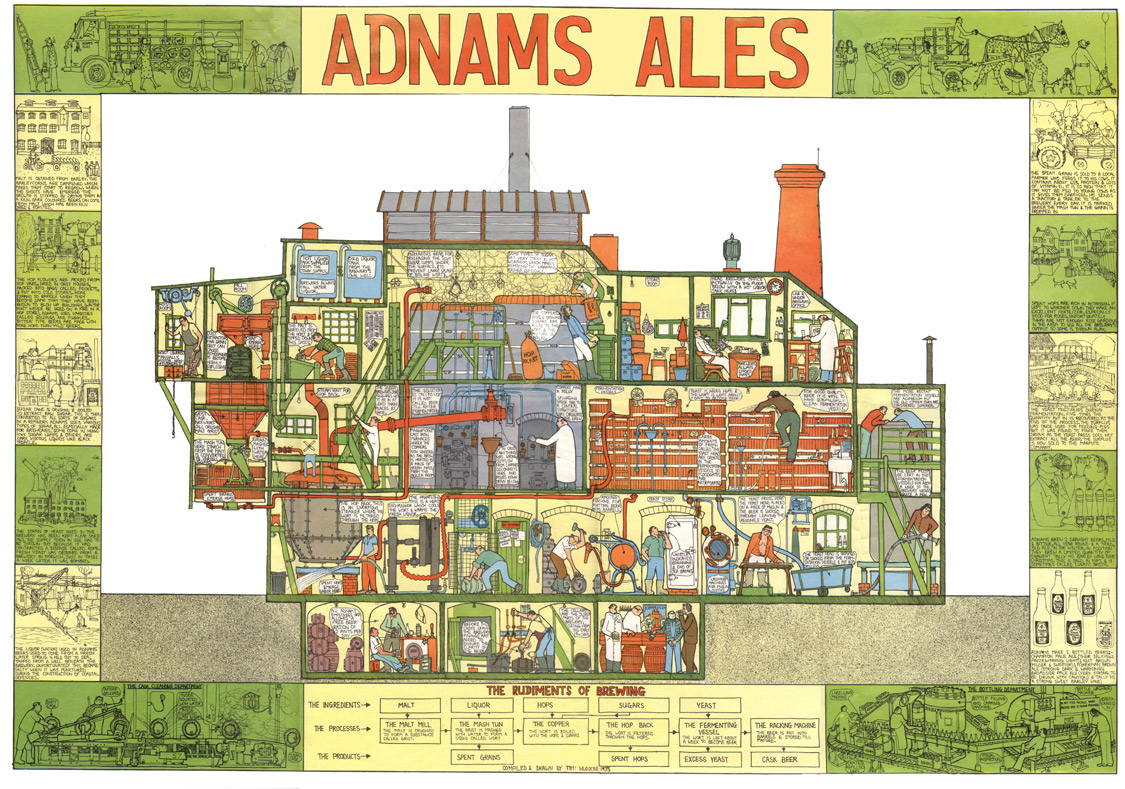
Anyway, in 1977, Adnams Brewery, commissioned Hunkin to create a poster of their brewery in Suffolk. Hunkin remembered. “I spent a month drawing it and so enjoyed the experience that I moved out of London to Suffolk where I’ve lived ever since. I didn’t even drink much of the beer at the time. Before drawing it, I don’t think I had ever appreciated how the combination of words and drawings can make conveying information much clearer and simpler. I was able to dramatically cut the text about the brewing process by having it integrated with the drawing of the vats and pipes. I think all journalists should be taught to draw.”

I have a couple of books by Hunkin that are filled with detailed doodle drawings with loads of text like this, and they’re great, so I’d love to see what he wrote in this poster although the biggest file of the poster I could find wasn’t quite big enough to read it all.

adnams_brewery-poster
Or you can see it full size here.

Filed Under: Art & Beer, Breweries, Just For Fun, Related Pleasures Tagged With: England, Great Britain, History, Science of Brewing

Order Of Temperance Founded Christmas Day

December 25, 2017 By Jay Brooks

hesse-kassel
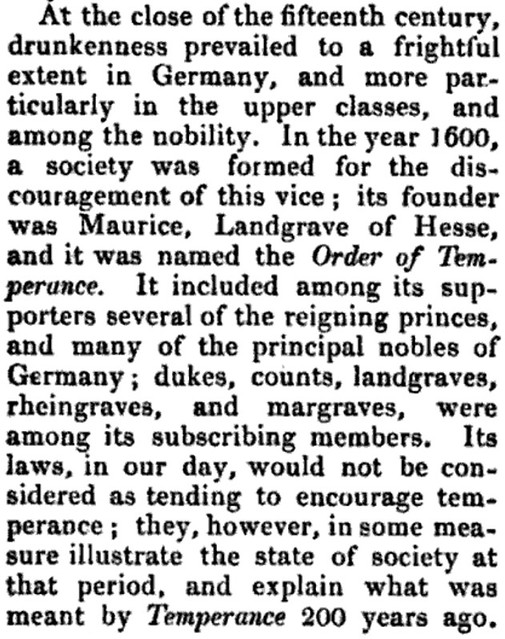
Here’s an interesting, and odd, bit of history. One of the earliest temoperance socities, the Order of Temperance, was founded on Christmas Day, December 25, 1600. It was established by Maurice, Landgrave of Hesse-Kassel. The Landgraviate of Hesse-Kassel, or Hesse-Cassel, was a state in the Holy Roman Empire.

Here’s a short history of the Order, from “The Gentlemen’s Magzine, published in 1836:

order-of-temp

They were trying to put an end to the custom of “pledging healths,” which in that time period meant drinking to the health of everyone and everything; or toasting. So the Order of Temperance had its members pledge “to never become intoxicated.” Which is all well and good, except for one tiny little detail. The order had strict rules on alcoholic consumption and they were allowed no more than seven alcoholic drinks per meal, and only two meals per day; essentially they were restricted to only fourteen glasses or wine or beer per day. That was their idea of temperance. That doesn’t actually sound too bad, now does it? I think most of us could have taken that pledge.

maurice-hesse
Maurice, Landgrave of Hesse-Kassel

Filed Under: Just For Fun, Politics & Law, Related Pleasures Tagged With: Germany, History, Prohibitionists

Esperanto Beer

December 15, 2017 By Jay Brooks

esperanto
Today is Zamenhof Day, which is also sometimes called Esperanto Literature Day and Esperanto Day. It’s today because it’s the birthday of Ludwik Lejzer Zamenhof, usually known as L.L. Zamenhof. As you probably know, I’m fascinated with language. If you’re not familiar with the language of Esperanto, it’s “a constructed international auxiliary language. With an estimated two million speakers worldwide, it is the most widely spoken constructed language in the world. The Polish-Jewish ophthalmologist L. L. Zamenhof published the first book detailing Esperanto, Unua Libro, in Warsaw on July 26, 1887. The name of Esperanto derives from Doktoro Esperanto (Esperanto translates as “one who hopes”), the pseudonym under which Zamenhof published Unua Libro.”

Zamenhof’s goal was to create a neutral language so that international relations didn’t have to choose one over another that in the process would indicate bias in negotiations between world powers. A lofty goal, but it never quite caught on, although there are still around 350 native speakers and between 2 and 10 million people who have some familiarity with using the language.

Even Google Translate includes Esperanto as one of its supported languages, and it’s interesting to see how beer and other beer-related terms are expressed in the language:

  • beer = biero
  • brewery = bierfarejo
  • brewing = bukado
  • hops = lupolojn
  • malt = malto
  • pub or bar = trinkejo
  • yeast = feĉo

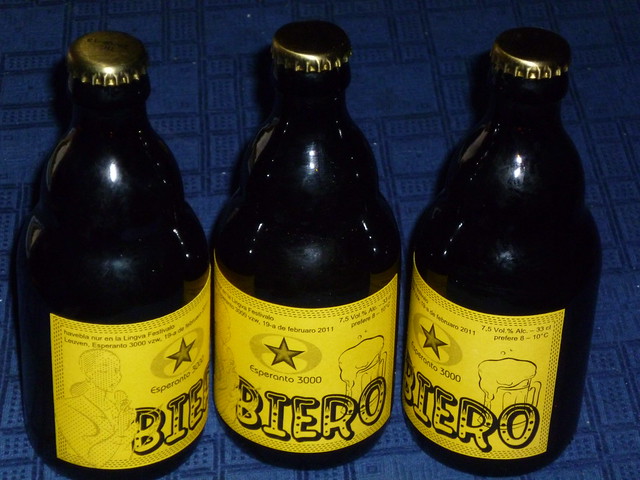
If you’re interested in learning more, check out Time magazine’s “The Serious History Behind Esperanto.” The few remaining Esperanto speakers get together annually for a convention and a few years ago they even created a beer for a language festival.

Esperanto_Biero

Filed Under: Just For Fun, Related Pleasures Tagged With: Literature, Words

Design Your Perfect Beer Festival For The Next Session

November 15, 2017 By Jay Brooks

session-the
For our 130th Session, our host will be Bryan Yeager, who writes on his eponymous Bryan Yeager website. For his topic, he’s asking what would the perfect beer festival look like to you, and has called his topic Create Your Own Beerfest. Surely, you’ve been to a beer festival and thought, “I could do better.” Here’s your chance.

beer-festival-logo

Here’s Bryan’s full explanation:

There are actually so many regional, local, and niche beer fests these days, we’re hearing a bit about “beerfest fatigue.” And I get that. Can you really hit 52 of ’em a year if you live somewhere near Portland, San Diego, Denver, Chicago, Philly, NYC, etc? As someone who attends more than my fair share, sadly not all are created equal, but one I may not care for is probably someone else’s annual favorite. Things to ponder:

  • Size matters: When building your own fest, are you striving for a crowd of Oktoberfest proportions in the millions, an epic party of many thousands, or more intimate few hundred?
  • Styles matter: From GABF where over 7,900 beers across every imaginable style (and mash-up) were available for sampling to themed events such as barrel-aged beers or holiday ales, to the plethora of IPA fests and some other single-style fests, would the event of your design be a grab-bag or exhibit razor-sharp focus?
  • Locavore vs Globe Trotter: After deciding what kind of beers to feature, or even before, think about if you’re inviting your local breweries or ones from your Brewery Fantasy League. Are attendees going to be more tempted to support local or to get a taste of beers from breweries they don’t already have access to? Let’s put aside for a second how hard it can be to bring in a brewery that’s not already licensed to distribute in your home town if that’s where this event is.
  • Location, location, and timing: The most important element of a successful event is its location. Followed by location. Followed by timing. When and where is this fantasy beerfest of yours? Is it in a city rife with events (meaning they’ve proven to be popular) or one starved for such a fest (but who’s to say if the locals will support)? And does it take place in the summer at the height of beer drinking season or a less-crowded date where it can shine on its own?
  • Etcetera. There’s a lot more that goes into organizing a beer fest. (I know from experience in producing some that have turned into annual events and some I’ve let slip away as a one- or two-off.) So if you want to opine about your favorite kind of glassware (or hated glasses you always see), ticket prices, food vendors, or anything else that you hate witnessing or wonder why we don’t see something like we should, add that, too. Finally, end with a note about why you can see trying to make this fantasy fest a reality or why you’ll never advance this idea of yours beyond the Session post!

gabfmedia_06

So how would you create a beer festival? What elements would you like to see, or what would you get rid of? Where would it be held? How many people would you allow? Food? Music? Glass or plastic? Tokens or all-you-can-sample for one price? How long would it last? Etcetera, etcetera, etcetera. Simply leave a comment at the original announcement and leave the URL to your post there, or tag him @yaeger when you post your perfect beer festival on Twitter.

capitol

Filed Under: Events, Just For Fun, The Session Tagged With: Announcements, Beer Festivals

Prohibitionist Poetry

November 5, 2017 By Jay Brooks

poetry
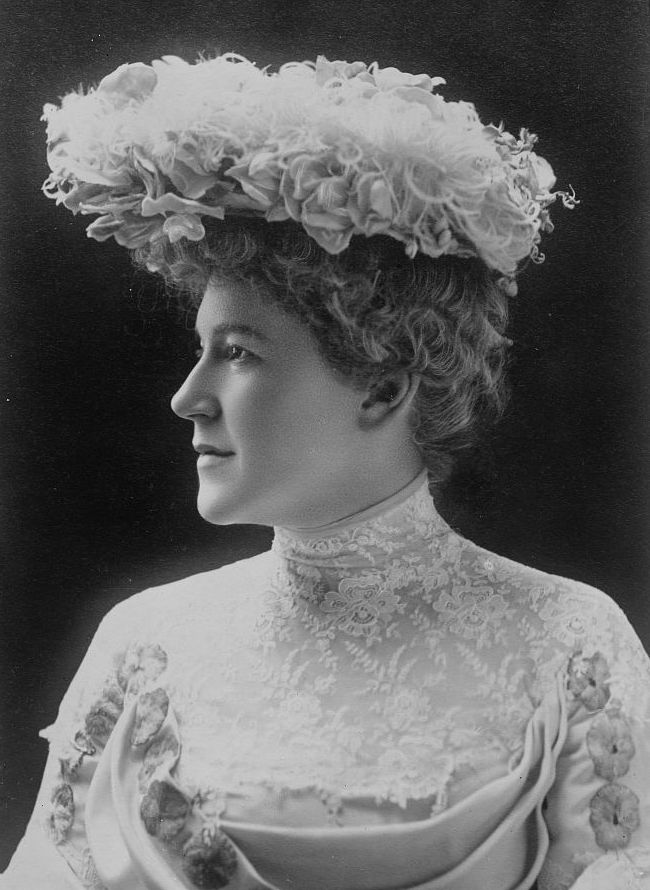
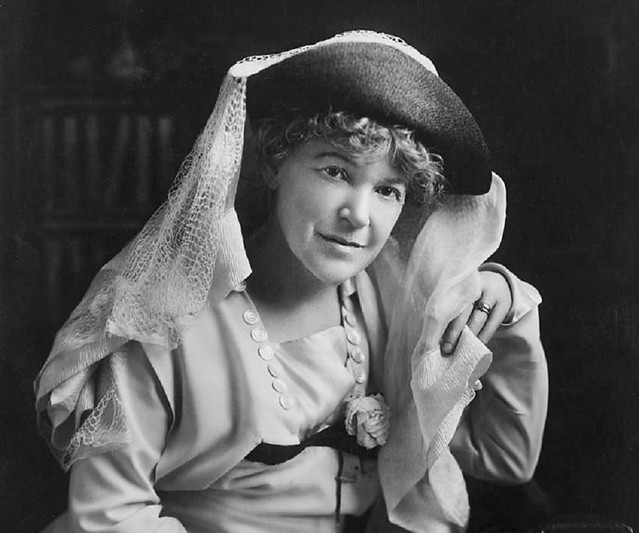
Today is the birthday of Ella Wheeler Wilcox, who “was an American author and poet. Her best-known work was Poems of Passion. Her most enduring work was ‘Solitude,’ which contains the lines ‘Laugh, and the world laughs with you; weep, and you weep alone.’ Her autobiography, The Worlds and I, was published in 1918, a year before her death.” She was also a confirmed prohibitionist and wrote many temperance poems that are absolutely rife with ridiculous propaganda, along the order of “Reefer Madness” in their misinformation, and are similarly unintentionally funny … almost. But she started writing such works as a young woman, having never once consumed a drop of alcohol herself so her ignorance, while understandable, is no less dangerous and uninformed. Also, her poetry wasn’t very good, but it was popular. For example, her poetry’s described on her Wikipedia page:

A popular poet rather than a literary poet, in her poems she expresses sentiments of cheer and optimism in plainly written, rhyming verse. Her world view is expressed in the title of her poem “Whatever Is—Is Best”, suggesting an echo of Alexander Pope’s “Whatever is, is right,” a concept formally articulated by Gottfried Leibniz and parodied by Voltaire’s character Doctor Pangloss in Candide.

None of Wilcox’s works were included by F. O. Matthiessen in The Oxford Book of American Verse, but Hazel Felleman chose no fewer than fourteen of her poems for Best Loved Poems of the American People, while Martin Gardner selected “The Way Of The World” and “The Winds of Fate” for Best Remembered Poems.

She is frequently cited in anthologies of bad poetry, such as The Stuffed Owl: An Anthology of Bad Verse and Very Bad Poetry.

Ella_Wheeler_Wilcox_circa_1919

Here’s a representative example, written around 1872, and entitled “Ph. Best & Co.’s Lager-Beer.” In the poem, he really sticks it to Philip Best for making and selling beer, all but calling him a murderer. Needless to say, she must have been a hoot at parties.

Ph. Best & Co.’s Lager-Beer

“In every part of the thrifty town,
Whether my course be up or down,
In lane, and alley, and avenue,
Painted in yellow, and red, and blue,
This side and that, east and west,
Was this flaunting sign-board of ‘Ph. Best.’

’Twas hung high up, and swung in the air
With a swaggering, bold-faced, ‘devil-may-care-
It-is-none-of-your-business’ sort of way;
Or, as if dreading the light o’ the day,
It hung low, over a basement-stair,
And seemed ashamed when you saw it there.

Or it shone like a wicked and evil eye
From a ‘restaurant’ door on passers-by,
And seemed with a twinkling wink to say:
‘Are you bound for hell? Then step this way;
This is the ticket-office of sin;
If you think of purchasing, pray, walk in.’

Or it glared from a window where the light
Of the lamps within shone full and bright,
And seemed to be saying, ‘Come out of the storm!
Come into my haven snug and warm;
I will give you warmth from the flowing bowl,
And all I ask is your purse and soul.’

But whether on window, door, or stair,
Wherever I went, it was always there;
Painted in yellow, and red, and blue,
It stared from alley and avenue:
It was north and south, and east, and west,
The lager-beer of this Philip Best.

And who was Philip Best, you ask?
Oh! he was a man, whose noble task
Was the brewing of beer — good beer, first class —
That should sparkle, and bubble, and boil in the glass:
Should sparkle and flow till drank, and then
Feast like a vampire on brains of men.

Ah! Philip Best, you have passed from view,
But your name and your works love after you.
Come, brothers, raise him a monument,
Inscribed, ‘Here lies the man who sent
A million of souls to the depths of hell;
Turned genius and worth to the prison-cell;

Stole bread from the mouth of the hungry child:
Made the father a brute, and the mother wild;
Filled happy homes with dread unrest:
Oh! a very great man was Philip Best.
O Ph. Best! you have passed from view,
But your name and your deeds live after you.’”

ella-wheeler-wilcox-7

She was nicknamed “the poet laureate of the Temperance Movement,” and indeed her very first book of poetry, “Drops of Water: Poems,” was published by The National Temperance Movement and Publication House. It’s quite startling to see how they viewed drinking people and especially the people making and selling alcoholic beverages as less than human, something you still see today in the propaganda of modern prohibitionist groups. But some of her poems are just crazy.

Here are some more excerpts from some of her other temperance poems:

From “What I Have Seen, Number III”

“I saw two men: one was fair to behold;
The other, a drunken sot, bloated and bold.
One stood on the mountain and drank of God’s fountain,
The other drank beer in the street.
Yet both started alike; but one made a ’stroke,’
Which ended, you see, in defeat.”

From “What I Have Seen, Number V”

“I saw his candidate sipping his beer,
Wiping his mustache and lapping his jaws;
And I said to myself, ‘ It’s decidedly queer,
If this is the man that should help make our laws,’
But may be he is — may be he is!
I won’t say it outright, but may be he is!”

From “Don’t Drink”

“Don’t drink, boys, don’t!
There is nothing of happiness, pleasure, or cheer,
In brandy, in whiskey, in rum, or beer.
If they cheer you when when drunk, you are certain to pay
In headaches and crossness the following day.
Don’t drink, boys, don’t!”

From “Where are the Temperance People?”

“Where are the temperance people?
Well, scattered here and there:
Some gathering in their produce
To show at the autumn fair:
Some threshing wheat for market,
And others threshing rye,
That will go to the fat distiller
For whiskey by-and-by.

And some are selling their hop crops
At a first-rate price, this year,
And the seller pockets the money,
While the drunkard swallows the beer.
And some ’staunch temperance workers’(?)
Who’d do anything for the cause,
Save too give it a dime or a moment,
Or work for temperance laws,

May be seen from now to election,
Near any tavern stand
Where liquor flows in plenty,
With a voter on either hand.
And these temperance office-seekers
That we hear of far and near
Are the ones who furnish the money
That buys the lager-beer.”

From “Give Us a Call”

“Give us a call! We keep good beer,
Wine, and brandy, and whiskey here;
Our doors are open to boys and men,
And even to women, now and then.
We lighten their purses, we taint their breaths,
We swell up the column of awful deaths;
      All kinds of crimes
      We sell for dimes
In our sugared poisons, so sweet to taste!
If you’ve money, position, or name to waste,
      Give us a call!

Give us a call! In a pint of our gin,
We sell more wickedness, shame, and sin
Than a score of clergymen, preaching all day
From dawn till darkness, could preach away,
And in our beer (though it may take longer
To get a man drunk than drinks that are stronger)
We sell out poverty, sorrow, and woe —
Who wants purchase? Our prices are low.
      Give us a call!”

From “Origin of the Liquor Dealer”

“Turn it in, to a lake of gin,
      Where the devil bathes, to cool.
Then lift it up, and turn to a cup
      Of wine they dip from a pool.
Then they dip it in ale, till it turneth pale,
      In beer, till it growth red.
It? nay, HE! for the thing they see
      Is a man, from heel to head.”

And here’s one more full poem:

From “The Brewer’s Dog”

“The brewer’s dog is abroad boys,
      Be careful where you stray,
His teeth are coated with poison,
      And he’s on the watch for prey.
The brewery is his kennel,
      But he lurks on every hand,
And he seeks for easy victims
      The children of the land.

His eyes gleam through the windows
      Of the gay saloon at night,
And in many a first-class ‘drug store’
      He is hiding out of sight.
Be careful where you enter,
      And, if you smell his breath,
Flee as you would from a viper,
      For its fumes are the fumes of death.

O boys! would you kill the bloodhound?
      Would you slay the snarling whelp?
I know that you can do it
      If every one will help.
You must make a solemn promise
      To drink no ale or beer,
And soon the feeble death-wail
      Of the brewer’s dog we’ll hear.

For, if all keep the promise,
      You can starve him out, I know;
But, if boys and men keep drinking,
      The dog will thrive and grow.”

WER0780

Filed Under: Just For Fun, Politics & Law, Related Pleasures Tagged With: History, Poetry, Prohibitionists

Beer and Cider by George Saintsbury

October 23, 2017 By Jay Brooks

book
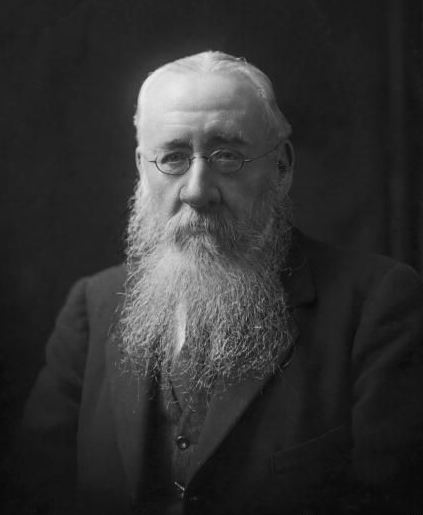
Today is the birthday of George Saintsbury (October 23, 1845–January 28, 1933). He “was an English writer, literary historian, scholar, critic and wine connoisseur.

George_Saintsbury_Lafayette

Although Saintsbury was best known during his lifetime as a scholar, he is also remembered today for his Notes on a Cellar-Book (1920), one of the great testimonials to drink and drinking in wine literature. When he was close to death, André Simon arranged a dinner in his honour. Although Saintsbury did not attend, this was the start of the Saintsbury Club, men of letters and members of the wine trade who continue to have dinners to this day.

Part of his work, Notes on a Cellar Book, was a chapter entitled “Beer and Cider.”

This is the introduction to this chapter, from a later volume of various works called “Modern Essays,” and edited by Christopher Morley. It was originally published in 1921, one year after Saintsbury’s death.

How pleasant it is to find the famous Professor Saintsbury — known to students as the author of histories of the English and French literatures, the History of Criticism and History of English Prosody — spending the evening so hospitably in his cellar. I print this — from his downright delightful Notes on a Cellar Book — as a kind of tantalizing penance. It is a charming example of how pleasantly a great scholar can unbend on occasion.

George Saintsbury, born in 1845, studied at Merton College, Oxford, taught school 1868-76, was a journalist in London 1876-95, and held the chair of English Literature at Edinburgh University, 1895-1915. If you read Notes on a Cellar Book, as you should, you will agree that it is a charmingly light-hearted causerie for a gentleman to publish at the age of seventy-five. More than ever one feels that sound liquor, in moderation, is a preservative of both body and wit.

BEER AND CIDER

By George Saintsbury

THERE is no beverage which I have liked “to live with” more than Beer; but I have never had a cellar large enough to accommodate much of it, or an establishment numerous enough to justify the accommodation. In the good days when servants expected beer, but did not expect to be treated otherwise than as servants, a cask or two was necessary; and persons who were “quite” generally took care that the small beer they drank should be the same as that which they gave to their domestics, though they might have other sorts as well. For these better sorts at least the good old rule was, when you began on one cask always to have in another. Even Cobbett, whose belief in beer was the noblest feature in his character, allowed that it required some keeping. The curious “white ale,” or lober agol—which, within the memory of man, used to exist in Devonshire and Cornwall, but which, even half a century ago, I have vainly sought there—was, I believe, drunk quite new; but then it was not pure malt and not hopped at all, but had eggs (“pullet-sperm in the brewage”) and other foreign bodies in it.

I did once drink, at St David’s, ale so new that it frothed from the cask as creamily as if it had been bottled: and I wondered whether the famous beer of Bala, which Borrow found so good at his first visit and so bad at his second, had been like it.

On the other hand, the very best Bass I ever drank had had an exactly contrary experience. In the year 1875, when I was resident at Elgin, I and a friend now dead, the Procurator-Fiscal of the district, devoted the May “Sacrament holidays,” which were then still kept in those remote parts, to a walking tour up the Findhorn and across to Loch Ness and Glen Urquhart. At the Freeburn Inn on the first-named river we found some beer of singular excellence: and, asking the damsel who waited on us about it, were informed that a cask of Bass had been put in during the previous October, but, owing to a sudden break in the weather and the departure of all visitors, had never been tapped till our arrival.

Beer of ordinary strength left too long in the cask gets “hard” of course; but no one who deserves to drink it would drink it from anything but the cask if he could help it. Jars are makeshifts, though useful makeshifts: and small beer will not keep in them for much more than a week. Nor are the very small barrels, known by various affectionate diminutives (“pin,” etc.) in the country districts, much to be recommended. “We’ll drink it in the firkin, my boy!” is the lowest admission in point of volume that should be allowed. Of one such firkin I have a pleasant memory and memorial, though it never reposed in my home cellar. It was just before the present century opened, and some years before we Professors in Scotland had, of our own motion and against considerable opposition, given up half of the old six months’ holiday without asking for or receiving a penny more salary. (I have since chuckled at the horror and wrath with which Mr. Smillie and Mr. Thomas would hear of such profligate conduct.) One could therefore move about with fairly long halts: and I had taken from a friend a house at Abingdon for some time. So, though I could not even then drink quite as much beer as I could thirty years earlier a little higher up the Thames, it became necessary to procure a cask. It came—one of Bass’s minor mildnesses—affectionately labeled “Mr. George Saintsbury. Full to the bung.” I detached the card, and I believe I have it to this day as my choicest (because quite unsolicited) testimonial.

Very strong beer permits itself, of course, to be bottled and kept in bottles: but I rather doubt whether it also is not best from the wood; though it is equally of course, much easier to cellar it and keep it bottled. Its kinds are various and curious. “Scotch ale” is famous, and at its best (I never drank better than Younger’s) excellent: but its tendency, I think, is to be too sweet. I once invested in some—not Younger’s—which I kept for nearly sixteen years, and which was still treacle at the end. Bass’s No. 1 requires no praises. Once when living in the Cambridgeshire village mentioned earlier I had some, bottled in Cambridge itself, of great age and excellence. Indeed, two guests, though both of them were Cambridge men, and should have had what Mr. Lang once called the “robust” habits of that University, fell into one ditch after partaking of it. (I own that the lanes thereabouts are very dark.) In former days, though probably not at present, you could often find rather choice specimens of strong beer produced at small breweries in the country. I remember such even in the Channel Islands. And I suspect the Universities themselves have been subject to “declensions and fallings off.” I know that in my undergraduate days at Merton we always had proper beer-glasses, like the old “flute” champagnes, served regularly at cheese-time with a most noble beer called “Archdeacon,” which was then actually brewed in the sacristy of the College chapel. I have since—a slight sorrow to season the joy of reinstatement there—been told that it is now obtained from outside. And All Souls is the only other college in which, from actual recent experience, I can imagine the possibility of the exorcism,

Strongbeerum! discede a lay-fratre Petro,

if lay-brother Peter were so silly as to abuse, or play tricks with, the good gift.

I have never had many experiences of real “home-brewed,” but two which I had were pleasing. There was much home-brewing in East Anglia at the time I lived there, and I once got the village carpenter to give me some of his own manufacture. It was as good light ale as I ever wish to drink (many times better than the wretched stuff that Dora has foisted on us), and he told me that, counting in every expense for material, cost and wear of plant, etc., it came to about a penny a quart. The other was very different. The late Lord de Tabley—better or at least longer known as Mr. Leicester Warren—once gave a dinner at the Athenæum at which I was present, and had up from his Cheshire cellars some of the old ale for which that county is said to be famous, to make flip after dinner. It was shunned by most of the pusillanimous guests, but not by me, and it was excellent. But I should like to have tried it unflipped.

I never drank mum, which all know from The Antiquary, some from “The Ryme of Sir Lancelot Bogle,” and some again from the notice which Mr. Gladstone’s love of Scott (may it plead for him!) gave it once in some Budget debate, I think. It is said to be brewed of wheat, which is not in its favor (wheat was meant to be eaten, not drunk) and very bitter, which is. Nearly all bitter drinks are good. The only time I ever drank “spruce” beer I did not like it. The comeliest of black malts is, of course, that noble liquor called of Guinness. Here at least I think England cannot match Ireland, for our stouts are, as a rule, too sweet and “clammy.” But there used to be in the country districts a sort of light porter which was one of the most refreshing liquids conceivable for hot weather. I have drunk it in Yorkshire at the foot of Roseberry Topping, out of big stone bottles like champagne magnums. But that was nearly sixty years ago. Genuine lager beer is no more to be boycotted than genuine hock, though, by the way, the best that I ever drank (it was at the good town of King’s Lynn) was Low not High Dutch in origin. It was so good that I wrote to the shippers at Rotterdam to see if I could get some sent to Leith, but the usual difficulties in establishing connection between wholesale dealers and individual buyers prevented this. It was, however, something of a consolation to read the delightful name, “our top-and-bottom-fermentation beer,” in which the manufacturer’s letter, in very sound English for the most part, spoke of it. English lager I must say I have never liked; perhaps I have been unlucky in my specimens. And good as Scotch strong beer is, I cannot say that the lighter and medium kinds are very good in Scotland. In fact, in Edinburgh I used to import beer of this kind from Lincolnshire, where there is no mistake about it. My own private opinion is that John Barleycorn, north of Tweed, says: “I am for whisky, and not for ale.”

“Cider and perry,” says Burton, “are windy drinks”; yet he observes that the inhabitants of certain shires in England (he does not, I am sorry to say, mention Devon) of Normandy in France, and of Guipuzcoa in Spain, “are no whit offended by them.” I have never liked perry on the few occasions on which I have tasted it; perhaps because its taste has always reminded me of the smell of some stuff that my nurse used to put on my hair when I was small. But I certainly have been no whit offended by cider, either in divers English shires, including very specially those which Burton does not include, Devon, Dorset, and Somerset, or in Normandy. The Guipuzcoan variety I have, unfortunately, had no opportunity of tasting. Besides, perry seems to me to be an abuse of that excellent creature the pear, whereas cider-apples furnish one of the most cogent arguments to prove that Providence had the production of alcoholic liquors directly in its eye. They are good for nothing else whatever, and they are excellent good for that. I think I like the weak ciders, such as those of the west and the Normandy, better than the stronger ones, and draught cider much better than bottled. That of Norfolk, which has been much commended of late, I have never tasted; but I have had both Western and West-Midland cider in my cellar, often in bottle and once or twice in cask. It is a pity that the liquor—extremely agreeable to the taste, one of the most thirst-quenching to be anywhere found, of no overpowering alcoholic strength as a rule, and almost sovereign for gout—is not to be drunk without caution, and sometimes has to be given up altogether from other medical aspects. Qualified with brandy—a mixture which was first imparted to me at a roadside inn by a very amiable Dorsetshire farmer whom I met while walking from Sherborne to Blandford in my first Oxford “long”—it is capital: and cider-cup who knoweth not? If there be any such, let him not wait longer than to-morrow before establishing knowledge. As for the pure juice of the apple, four gallons a day per man used to be the harvest allowance in Somerset when I was a boy. It is refreshing only to think of it now.

Of mead or metheglin, the third indigenous liquor of Southern Britain, I know little. Indeed, I should have known nothing at all of it had it not been that the parish-clerk and sexton of the Cambridgeshire village where I lived, and the caretaker of a vinery which I rented, was a bee-keeper and mead-maker. He gave me some once. I did not care much for it. It was like a sweet weak beer, with, of course, the special honey flavor. But I should imagine that it was susceptible of a great many different modes of preparation, and it is obvious, considering what it is made of, that it could be brewed of almost any strength. Old literary notices generally speak of it as strong.

Filed Under: Beers, Just For Fun, Related Pleasures Tagged With: England, Great Britain, Literature

« Previous Page
Next Page »

Find Something

Northern California Breweries

Please consider purchasing my latest book, California Breweries North, available from Amazon, or ask for it at your local bookstore.

Recent Comments

  • Bob Paolino on Beer Birthday: Grant Johnston
  • Gambrinus on Historic Beer Birthday: A.J. Houghton
  • Ernie Dewing on Historic Beer Birthday: Charles William Bergner 
  • Steve 'Pudgy' De Rose on Historic Beer Birthday: Jacob Schmidt
  • Jay Brooks on Beer Birthday: Bill Owens

Recent Posts

  • Beer In Ads #5389: Point & Brunswick Bock Beer November 10, 2026
  • Historic Beer Birthday: Edward Cecil Guinness November 10, 2026
  • Historic Beer Birthday: Jacob Betz November 10, 2026
  • Beer In Ads #5388: Bock Beer Vats In The Brewers Hall November 9, 2026
  • Historic Beer Birthday: Peter Barbey November 9, 2026

BBB Archives

Feedback

Head Quarter
This site is hosted and maintained by H25Q.dev. Any questions or comments for the webmaster can be directed here.