Brookston Beer Bulletin

Jay R. Brooks on Beer

  • Home
  • About
  • Editorial
  • Birthdays
  • Art & Beer

Socialize

  • Dribbble
  • Email
  • Facebook
  • Flickr
  • GitHub
  • Instagram
  • LinkedIn
  • Pinterest
  • RSS
  • Twitter
  • YouTube

Powered by Genesis

Budweiser Clydesdales Debut On April 7, 1933

April 7, 2017 By Jay Brooks

clydesdales-high
Today, of course, is known by many names: National Beer Day, Beer is Back Day, Legal Beer Day, Brew Year’s Day, and New Beer’s Day. And that’s because while the repeal of the 18th Amendment wouldn’t be ratified until December 5, 1933, the Cullen-Harrison Act took effect on April 7, 1933, having been enacted by Congress on March 21 of the same year. And that meant that at least some lower-alcohol beer could legally be served in about twenty states in the United States, which I imagine after a thirteen-year drought was a welcome relief to beer lovers everywhere. Here’s the nutshell history from Wikipedia:

The Cullen–Harrison Act, named for its sponsors, Senator Pat Harrison and Representative Thomas H. Cullen, enacted by the United States Congress March 21, 1933 and signed by President Franklin D. Roosevelt the following day, legalized the sale in the United States of beer with an alcohol content of 3.2% (by weight) and wine of similarly low alcohol content, thought to be too low to be intoxicating, effective April 7, 1933. Upon signing the legislation, Roosevelt made his famous remark, “I think this would be a good time for a beer.”

Of course, he actually signed the bill on March 22, 1933, which is when he made that remark, still a full sixteen days before he could actually do so.

According to the Cullen-Harrison Act, each state had to pass similar legislation to legalize sale of the low alcohol beverages in that state. Roosevelt had previously sent a short message to Congress requesting such a bill. Sale of even such low alcohol beer had been illegal in the U.S. since Prohibition started in 1920 following the 1919 passage of the Volstead Act. Throngs gathered outside breweries and taverns for their first legal beer in many years. The passage of the Cullen–Harrison Act is celebrated as National Beer Day every year on April 7.
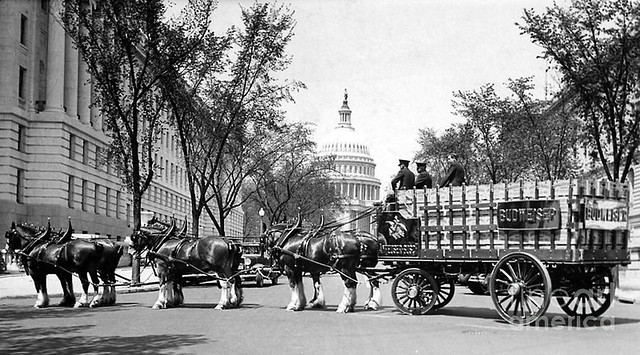
beer-for-the-president

And while you often see this photo of Budweiser’s Clydesdales pulling a beer wagon to deliver beer in Washington for the president at the time, Franklin D. Roosevelt, this could not have been taken on April 7, but would have been a few weeks later at the earliest. Although the clydesdales did debut today in 1933, it was not in Washington D.C. Here’s the story, from Anheuser-Busch’s website:

On April 7, 1933, August A. Busch, Jr. and Adolphus Busch III surprised their father, August A. Busch, Sr., with the gift of a six-horse Clydesdale hitch to commemorate the repeal of Prohibition of beer.

Realizing the marketing potential of a horse-drawn beer wagon, the company also arranged to have a second six-horse Clydesdale hitch sent to New York on April 7 to mark the event. The Clydesdales drew a crowd of thousands on their way to the Empire State Building. After a small ceremony, a case of Budweiser was presented to former Governor Alfred E. Smith in appreciation of his years of service in the fight against Prohibition.

This hitch continued on a tour of New England and the Mid-Atlantic states, thrilling thousands, before stopping in Washington, D.C., in April 1933 to reenact the delivery of one of the first cases of Budweiser to President Franklin Delano Roosevelt. The St. Louis hitch also toured in celebration, stopping in Chicago and other Midwestern cities.

Shortly after the hitch was first introduced, the six-horse Clydesdale team increased to eight. On March 30, 1950, in commemoration of the opening of the Anheuser-Busch Newark Brewery, a Dalmatian was introduced as the Budweiser Clydesdales’ mascot. Now, a Dalmatian travels with each of the Clydesdale hitches.
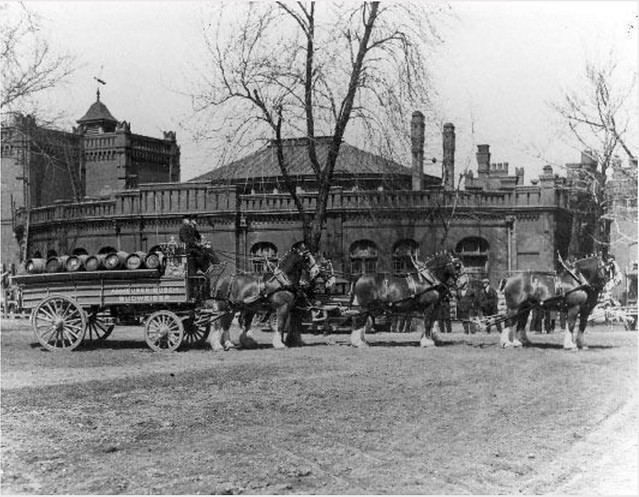
budweiser-clydesdales-1
Original Budweiser Clydesdale Six-horse Hitch and Beer Wagon, in front of the St. Louis Brewery in 1933.

And here’s the story from Wikipedia:

The Budweiser Clydesdales were first introduced to the public on April 7, 1933, to celebrate the repeal of Prohibition. August A. Busch, Jr. presented the hitch as a gift to his father, August Anheuser Busch, Sr., who was guided outside the brewery by the ruse of being told his son had purchased him a new car, but instead was greeted by the horses, pulling a red, white and gold beer wagon. The hitch proceeded to carry the first case of post-Prohibition beer from the St. Louis brewery in a special journey down Pestalozzi Street in St. Louis.

Recognizing the advertising and promotional potential of a horse-drawn beer wagon, Busch, Sr. had the team sent by rail to New York City, where it picked up two cases of Budweiser beer at New Jersey’s Newark Airport, and presented it to Al Smith, former governor of New York and an instrumental force in the repeal of Prohibition. From there, the Clydesdales continued on a tour of New England and the Mid-Atlantic States, a journey that included the delivery of a case of beer to President Franklin D. Roosevelt at the White House.
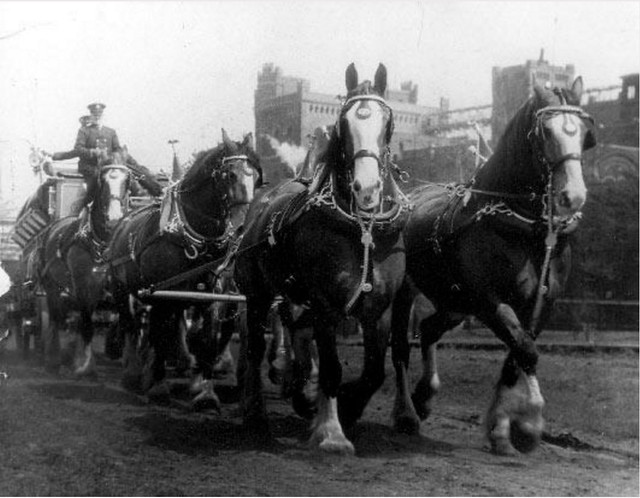
budweiser-clydesdales-2

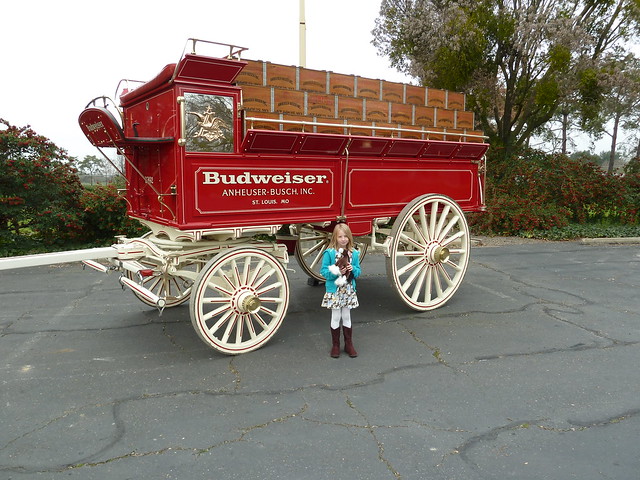
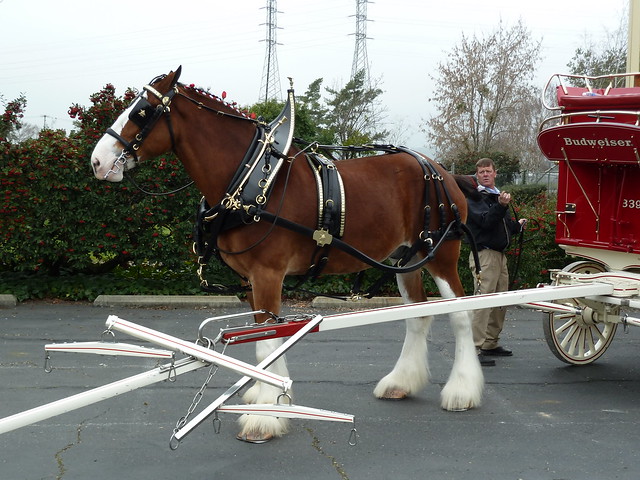
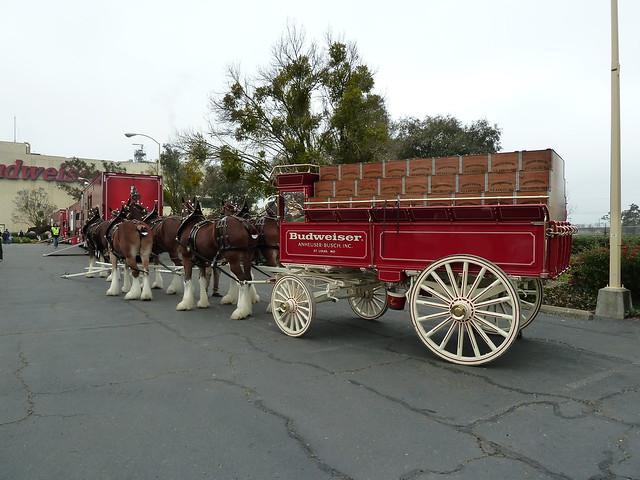
The Budweiser Clydesdales are still going, of course, and have been a great marketing tool for the beer company. My daughter is a horse lover, and has been doing equestrian vaulting (essentially gymnastics on the back of a moving horse) since she was six-years old. When she was seven, in 2011, I took her to see the clydesdales at the Fairfield Budweiser brewery. I had called ahead, and we had a private tour of the brewery first, which was fun, and then the horses arrived in several specially designed trucks and put on a demonstration in the parking lot. We watched as they unloaded them, groomed them and then got them ready. Then they hooked them up to the wagon and they circled the parking lot. My daughter had a great time and the horses, to her at least, were beautiful and the attention to detail they put into them was amazing. Anyway, here’s a few photos from that trip.
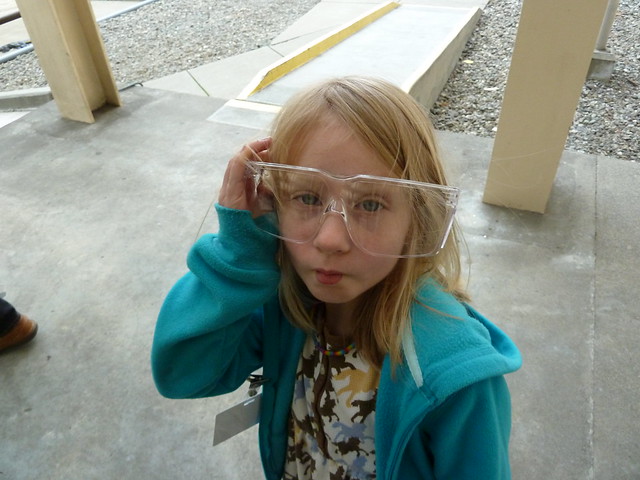
P1020739
My daughter Alice, ready for the brewery tour.
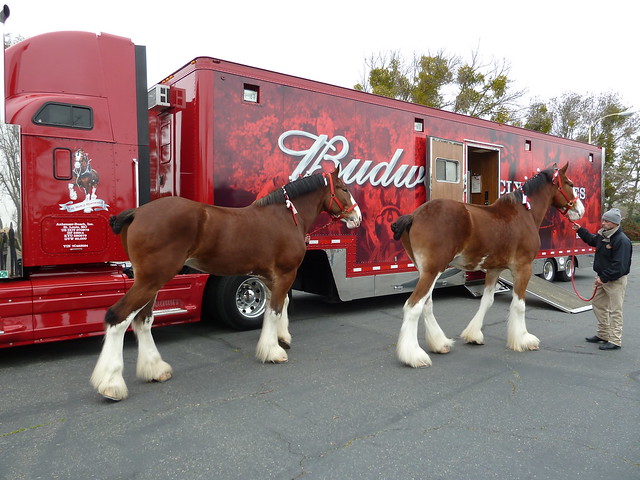
P1020751
The horses arrives.

P1020755
Alice in front of the beer wagon.

P1020760
After getting the horses ready, they started hitching them up, one by one.
P1020771
Until they were all hitched and ready to go.

Filed Under: Breweries, Just For Fun, Politics & Law, Related Pleasures Tagged With: Anheuser-Busch, History, Marketing, Prohibition

Your Views On Imported Beer

April 5, 2017 By Jay Brooks

session-the
For our 122th Session, our host will be Christopher Barnes, who writes I Think About Beer. For his topic, he’s chosen to elicit everyone’s Views on Imported Beer, which he explains more fully:

I love imported beer, specifically Belgian and German beer. They’re what I drink. My cellar is made up of Belgian beers, my fridge is full of them, and there a few stashed around in a closet or two as well. Imported beer is my life. I drink them. I write about them. I travel to experience them. In fact, my career involves working with Imported Beer. I manage several prominent import portfolios for a Oregon craft focused wholesaler. And while I have a vested interest in the success of Imported Beer, it doesn’t lessen my passion for the traditional beers of Europe. As craft beer sales have surged across America, sales of imported beers have suffered. I’m going to ask a couple of questions.

For American and Canadians: What place do imported beers (traditional European) have in a craft beer market?

For Non North Americans: How are American beers (imported into YOUR country) viewed? What is their place in your market?

top-20-imported-beers-in-america-social

So what’s your take on imports, or as some people say disparagingly, foreign beer? How do they fit into the craft movement, or the beer landscape in its entirety? Are they useful, out-dated, a necessary evil, a valid category, what? I need to know, dammit. SO please let us know your “Vues sur la bière importée,” or your “Ansichten über importiertes Bier,” or even your “Bekeken op geïmporteerd bier.” Personally I’d like to know your “Opinie na temat piwa importowanego” and your “Synspunkter om importeret øl.” But don’t forget your 輸入ビールの眺め or your Просмотры на импортированном пиве.

To participate in the April Session, on or before Friday, April 7, 2017 — which is this Friday, just a few days away — write a post about your views on imported beer. “Leave a comment with a link to your post in the comment section” of the original announcement, and “have fun and please do participate.”

beers-of-the-world-lg

Filed Under: Beers, Just For Fun, The Session Tagged With: Announcements, Imports

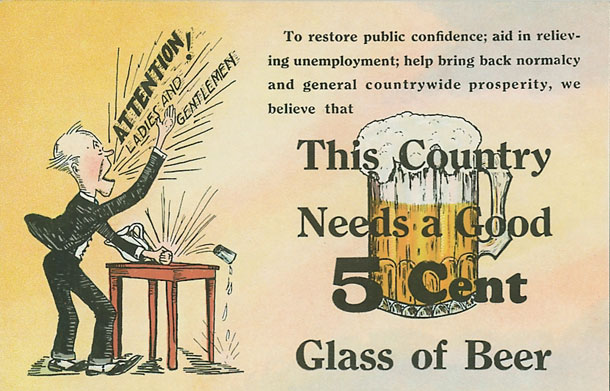
The Nickel (Beer) In New York

April 4, 2017 By Jay Brooks

nickel
This is an interesting article I stumbled upon, from a Time magazine article about Sam’s Bar & Grill in St. Mark’s Place in the East Village of New York City. It was from April 4, 1949

sams-place-1

The Nickel In St. Mark’s Place


Monday, April 4, 1949

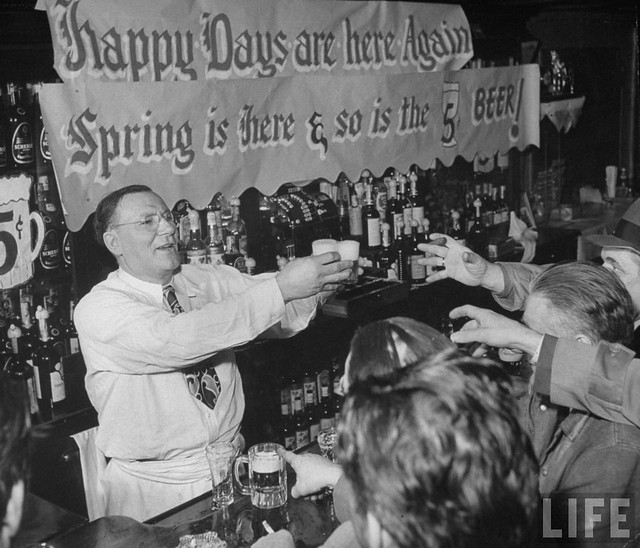
Pale and shaken, 51-year-old Sam Atkins backed away from himself with a feeling somewhere between disbelief and awe. By a single, splendid cerebration he had been lifted out of the ruck into the status of a television curiosity. In his humble Manhattan saloon, Sam had decided to cut the price of beer (the 7-oz. glass) from a dime to a nickel.

Up to that moment Sam was just a pensioned pumper driver from the Bayonne (N.J.) fire department, and Sam’s bar & grill was like any neighborhood joint around St. Mark’s Place on the Lower East Side. Its only distinctive touch was Sam’s cousin, “Bottle Sam” Hock, who amused the trade by whacking tunes out of whisky bottles with a suds-scraper. But the customers got a joyful jolt when Sam opened up one morning last week.

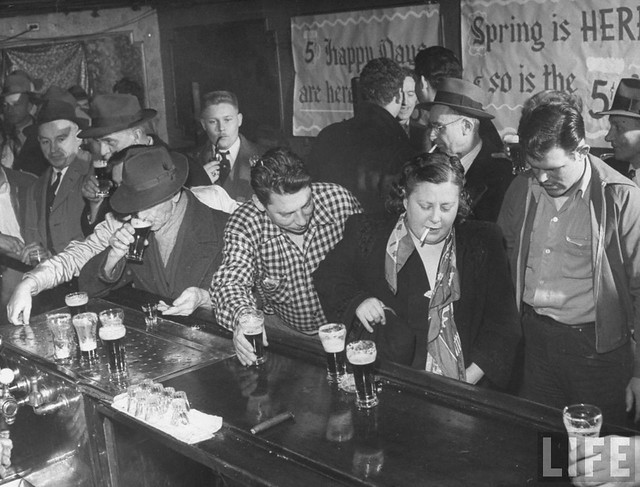
All around the walls, even over the bar mirror, tasteful, powder-blue signs proclaimed in red letters: “Spring is here and so is the 5¢ beer.” The early birds drank and took their change in mild disbelief. The nickel wasn’t obsolescent after all. The word spread. Sam’s bar & grill started to bulge like Madison Square Garden on fight night. People drank, shook hands with strangers and sang.

sams-place

Then something went sour. The two breweries that supplied Sam cut him off, and an electrician came around and took the neon beer sign out of the flyspecked windows. Somehow, it seemed, Sam had betrayed free enterprise. An organization of restaurant owners muttered that Sam might not be cutting his beer, but he was cutting his throat. The Bartenders Union threw a picket line in front of the place because it was nonunion.

But Sam hung on. He signed up with the union, managed to get his beer through a couple of distributors and a Brooklyn brewery, announced that he was going to have the windows washed, and keep at it. Said he solemnly: “The people want it.” By this week Sam’s idea had spread to other saloons in Washington, D.C. and New Jersey, and Sam was getting more trade in a day than he had drawn before in a week. The nickel beer was here to stay, Sam announced.

nickel-beer

Filed Under: Beers, Just For Fun, Politics & Law, Related Pleasures Tagged With: Business, History, New York

Sign Up Today For The Brookston Hitting Derby

April 1, 2017 By Jay Brooks

baseball
I confess I completely forgot about the baseball season starting tomorrow. I’d set up the annual Brookston Hitting Derby, but promptly forgot about it again. We used to call it a Home Run Derby because to keep things simpler, we only counted those, but more recently I monkeyed with the scoring (because I generally can’t keep well enough alone) so while it’s still simpler than being in a full-blown fantasy baseball league, there are now more ways to get points. Still, we do it just for fun, and there are twenty spaces available if you want to play along, although we only need four to draft (two more now). But hurry up, the league will draft late tonight since the season starts tomorrow, so sign up today if you want to join.

In order to join the league, follow this link, and I think that’s all you have to do, other then follow the on-screen instructions. If that’s not right, or you’re having trouble, leave a comment below and a way to reach you. Otherwise, see you on the diamond.

brookston-baseball

Filed Under: Just For Fun, News, Related Pleasures Tagged With: Announcements, Baseball, Fantasy, Sports

Peter Hoey Returns To His Urban Roots With New Brewery

March 31, 2017 By Jay Brooks

urban-roots
I got a heads up from my friend Peter Hoey a few days ago that he’s leaving Brewer’s Supply Group and embarking on a new venture in Sacramento. I’ve known Peter since he was brewing at Bison Brewing, and he’s been brewing and consulting around the Bay Area for many years, including at Sierra Nevada and Sacramento Brewing. He announced today that coming this fall, he’ll be brewing again at his own place in downtown Sacramento, which will be called Urban Roots Brewing. Their Facebook page went live this morning, too. Peter’s partnering with Rob Archie, who also owns the Pangaea Bier Cafe. I’ve met Rob at several beer events over the years, and I think he’ll be a great partner in this, and will appreciate how talented a brewer Peter is. The lease is already signed and they’re fairly well along in the process. Fall seems reasonable, actually, even though most such predictions, in my experience, tend to be twice as long as originally thought. But Peter has opened breweries before, and knows what he’s up against, so I think we’ll be able to sample his new beer before the end of the year, which is terrific news.

urban-root-coming

Here’s the press release that came out today:

Urban Roots Brewery & Smokehouse announces plans to open a 15,600 sq. ft. facility incorporating a 15-barrel craft beer production brewery, tasting bar and a 300-seat smokehouse restaurant, including a 2,400 sq. ft. outdoor patio in the Downtown Sacramento/Southside Park area at 1322 V Street.

A joint venture between Sacramento area natives and co-owners, Brewmaster Peter Hoey and Rob Archie, owner of regional favorite Pangaea Bier Café, Urban Roots Brewery & Smokehouse plans to open fall 2017 and estimates to employ approximately 50 people.

Peter Hoey has worked toward this moment for over two decades. He has practiced his craft alongside the legends at Sierra Nevada, led the charge at Sacramento Brewing Company, and currently consults with the top beer brands in the country for BSG CraftBrewing, an industry supplier of brewing ingredients. Recent production collaborations include the highly sought after Hoeybeer with Santé Adairius Rustic Ales.

After a decade of collaborating together in the industry, partnering with Rob Archie on Urban Roots will fulfill Hoey’s life-long dream of producing some of the finest beers in the world, pairing them with simple, clean and delicious food, and showcasing Sacramento’s regional farm-to-fork ingredients.

A pioneer of national and international craft beer promotion in Sacramento, Rob Archie’s concept, Pangaea Bier Café, has earned the respect of top brewers in the country and a fiercely devoted clientele—not to mention being the culinary critics’ darling with back-to-back Sacramento Burger Battle judges’ choice wins, being named a Top Beer Destination every year since its opening in 2008, and receiving numerous accolades from both print and broadcast media.

Bringing their combined national and international beer travel experience and expertise home, Urban Roots will produce a myriad of beer varieties, with a focus on farmhouse style ales, oak aged beers and collaborative releases. The smokehouse will continue the culinary excellence practiced at Pangaea Bier Café focusing on regional ingredients and smoked meats. The Urban Roots name is intended to represent its location in the city’s center and its proud roots in both the Sacramento urban and farming communities.

Hoey and Archie believe that the V Street location is a key ingredient in creating their vision for Urban Roots—and their vision for Sacramento. Investing in the Downtown Sacramento/Southside Park neighborhood, and in Sacramento in general, is a reflection of both partners’ beliefs and passion for their community. Both Hoey and Archie have individual and shared histories of uniting Curtis Park and Oak Park through a successful neighborhood business, hosting sold-out beer dinners to support local philanthropy, as well as taking and sharing the Sacramento region’s talents and tastes with a global audience.

1322 V Street is exactly where Hoey and Archie want to build Urban Roots Brewery & Smokehouse, an immersive craft-beer brewery experience that doesn’t currently exist in the Capital City. In doing so, they will offer a one-of-a-kind destination for Sacramentans to come together and create a bevy of food and beer tastes for the world to enjoy.

URBAN_ROOTS_03
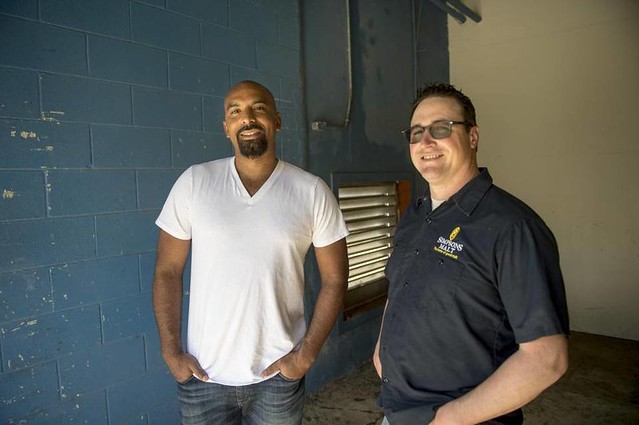
Rob Archie and Peter Hoey, owners of the new Urban Roots Brewery.

Filed Under: Breweries, Just For Fun, News Tagged With: Announcements, California, Northern California, Press Release, Sacramento

Top 50 Craft Breweries For 2016

March 15, 2017 By Jay Brooks

ba
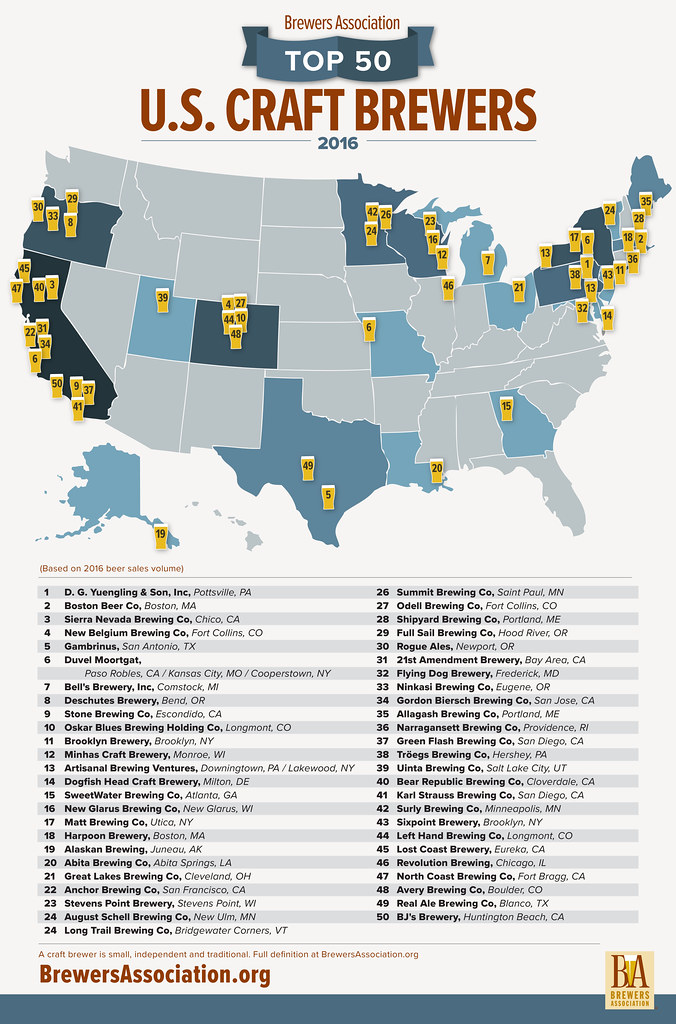
The Brewers Association just announced the top 50 craft breweries in the U.S. based on sales, by volume, for 2016, which is listed below here. I should also mention that this represents “craft breweries” according to the BA’s membership definition, and not necessarily how most of us would define them, as there’s no universally agreed upon way to differentiate the two. For the ninth year, they’ve also released a list of the top 50 breweries, which includes all breweries. Here is this year’s craft brewery list:

Top 50 Craft Brewing Companies

RankBrewing CompanyCityState
1D. G. Yuengling & Son, IncPottsvillePA
2Boston Beer CoBostonMA
3Sierra Nevada BrewingChicoCA
4New Belgium BrewingFort CollinsCO
5GambrinusSan AntonioTX
6Duvel MoortgatPaso Robles/Kansas City/CooperstownCA/MO/NY
7Bell’s Brewery, IncComstockMI
8Deschutes BreweryBendOR
9Stone BrewingEscondidoCA
10Oskar Blues Brewing HoldingLongmontCO
11Brooklyn BreweryBrooklynNY
12Minhas Craft BreweryMonroeWI
13Artisanal Brewing VenturesDownington/LakewoodPA/NY
14Dogfish Head Craft BreweryMiltonDE
15SweetWater BrewingAtlantaGA
16New Glarus BrewingNew GlarusWI
17Matt BrewingUticaNY
18Harpoon BreweryBostonMA
19Alaskan BrewingJuneauAK
20Abita BrewingAbita SpringsLA
21Great Lakes BrewingClevelandOH
22Anchor BrewingSan FranciscoCA
23Stevens Point BreweryStevens PointWI
24August Schell BrewingNew UlmMN
24Long Trail BrewingBridgewater CornersVT
26Summit BrewingSaint PaulMN
27Odell BrewingFort CollinsCO
28Shipyard BrewingPortlandME
29Full Sail BrewingHood RiverOR
30Rogue AlesNewportOR
3121st Amendment BreweryBay AreaCA
32Flying Dog BreweryFrederickMD
33Ninkasi BrewingEugeneOR
34Gordon Biersch BrewingSan JoseCA
35Allagash BrewingPortlandME
36Narragansett BrewingProvidenceRI
37Green Flash Brewing CoSan DiegoCA
38Tröegs BrewingHersheyPA
39Uinta BrewingSalt Lake CityUT
40Bear Republic BrewingCloverdaleCA
41Karl Strauss BrewingSan DiegoCA
42Surly BrewingMinneapolisMN
43Sixpoint BreweryBrooklynNY
44Left Hand BrewingLongmontCO
45Lost Coast BreweryEurekaCA
46Revolution BrewingChicagoIL
47North Coast BrewingFort BraggCA
48Avery BrewingBoulderCO
49Real Ale BrewingBlancoTX
50BJ’s BreweryHuntington BeachCA

Here is this year’s press release. The last couple of years, the BA has helpfully annotated the list, saving me lots of time, since I’ve been annotating the list for the last nine years, but they’ve abandoned that practice for a second year. So for the ninth consecutive year, I’ll also posted an annotated list, showing the changes in each brewery’s rank from year to year, but it will take me some time to put together so I’ll have that again later tonight or tomorrow.

And similar to last year, the BA created a map showing the relative location of each of the breweries that made the list.

Top_50_Craft_Breweries_2016

Filed Under: Breweries, Just For Fun, News, Related Pleasures Tagged With: Brewers Association, Business, Statistics, United States

Top 50 Breweries For 2016

March 15, 2017 By Jay Brooks

ba
The Brewers Association has also just announced the top 50 breweries in the U.S. based on sales, by volume, for 2016, which this year they’re calling the “Top 50 Overall Brewing Companies.” This includes all breweries, regardless of size or any other definitions or parameters. Here is the new list:

Top 50 Overall Brewing Companies

Breweries in bold are considered to be “small and independent craft brewers” under the BA’s current definition. That there are so many footnotes (23 in total, or almost half of the list) explaining exceptions or reasons for the specific entry, seems illustrative of a growing problem with the definition of what is a craft brewery. I certainly understand the need for a trade group to have a clearly defined set of criteria for membership, but I think the current one is getting increasingly outdated again, and it’s only been a few years since the contentious debate that resulted in the current BA one. But it may be time to revisit that again.

six-glasses

RankBrewing CompanyCityState
1Anheuser-Busch, Inc (a)Saint LouisMO
2MillerCoors (b)ChicagoIL
3Pabst Brewing Co (c)Los AngelesCA
4D. G. Yuengling & Son, IncPottsvillePA
5North American Breweries (d)RochesterNY
6Boston Beer Co (e)BostonMA
7Sierra Nevada Brewing CoChicoCA
8New Belgium Brewing CoFort CollinsCO
9Lagunitas Brewing Co (f)PetalumaCA
10Craft Brew Alliance (g)PortlandOR
11Gambrinus (h)San AntonioTX
12Duvel Moortgat (i)Paso Robles/Kansas City/CooperstownCA/MO/NY
13Ballast Point Brewing Co (j)San DiegoCA
14Bell’s Brewery, Inc (k)ComstockMI
15Deschutes BreweryBendOR
16Founders Brewing Co (l)Grand RapidsMI
17Stone Brewing CoEscondidoCA
18Oskar Blues Brewing
Holding Co
(m)
LongmontCO
19Sapporo USA (n)La CrosseWI
20Brooklyn BreweryBrooklynNY
21Minhas Craft Brewery (o)MonroeWI
22Artisanal Brewing Ventures (p)Downington/LakewoodPA/NY
23Dogfish Head Craft BreweryMiltonDE
24SweetWater Brewing CoAtlantaGA
25New Glarus Brewing CoNew GlarusWI
26Matt Brewing Co (q)UticaNY
27Harpoon BreweryBostonMA
28Alaskan Brewing CoJuneauAK
29Abita Brewing CoAbita SpringsLA
30Great Lakes Brewing CoClevelandOH
31Anchor Brewing CoSan FranciscoCA
32Stevens Point Brewery (r)Stevens PointWI
33August Schell Brewing Co (s)New UlmMN
33Long Trail Brewing Co (t)Bridgewater CornersVT
35Summit Brewing CoSaint PaulMN
36Odell Brewing CoFort CollinsCO
37Shipyard Brewing Co (u)PortlandME
38Full Sail Brewing CoHood RiverOR
39Rogue AlesNewportOR
4021st Amendment BreweryBay AreaCA
41Flying Dog BreweryFrederickMD
42Ninkasi Brewing CoEugeneOR
43Gordon Biersch Brewing CoSan JoseCA
44Allagash Brewing CoPortlandME
45Narragansett Brewing CoProvidenceRI
46Green Flash Brewing Co (v)San DiegoCA
47Tröegs Brewing CoHersheyPA
48Uinta Brewing CoSalt Lake CityUT
49Bear Republic Brewing CoCloverdaleCA
50Pittsburgh Brewing Co (w)PittsburghPA

six-glasses

2016 Top 50 Overall U.S.
Brewing Companies Notes

Details from brand lists are illustrative and may not be exhaustive. Ownership stakes reflect
greater than 25% ownership:

(a) Anheuser-Busch, Inc includes 10 Barrel, Bass, Beck’s, Blue Point, Bud Light,
Budweiser, Breckenridge, Busch, Devils Backbone (partial year), Elysian, Four Peaks,
Golden Road, Goose Island, Karbach (partial year), King Cobra, Landshark, Michelob,
Natural Rolling Rock, Shock Top, Wild Series brands and Ziegenbock brands. Does not
include partially owned Coastal, Craft Brew Alliance, Fordham, Kona, Old Dominion,
Omission, Red Hook, and Widmer Brothers brands;
(b) MillerCoors includes A.C. Golden, Batch 19, Blue Moon, Colorado Native, Coors,
Hamms, Hop Valley (partial year), Icehouse, Keystone, Killian’s, Leinenkugel’s,
Mickey’s, Milwaukee’s Best, Miller, Olde English, Revolver (partial year), Saint Archer,
Steel Reserve, Tenth & Blake, and Terrapin (partial year) brands;
(c) Pabst Brewing Co includes Ballantine, Lone Star, Pabst, Pearl, Primo, Rainier, Schlitz
and Small Town brands;
(d) North American Breweries includes Dundee, Genesee, Labatt Lime, Mactarnahan’s,
Magic Hat, Portland and Pyramid brands as well as import volume;
(e) Boston Beer Co includes Alchemy & Science and Sam Adams brands. Does not include
Twisted Tea or Angry Orchard brands;
(f) Lagunitas Brewing Co ownership stake by Heineken;
(g) Craft Brew Alliance includes Kona, Omission, Red Hook and Widmer Brothers brands;
(h) Gambrinus includes BridgePort, Shiner and Trumer brands;
(i) Duvel Moortgat USA includes Boulevard, Firestone Walker, and Ommegang brands;
(j) Ballast Point Brewing Co owned by Constellation brands;
(k) Bell’s Brewery, Inc includes Bell’s and Upper Hand brands;
(l) Founders ownership stake by Mahou San Miguel;
(m) Oskar Blues Brewing Holding Co includes Cigar City, Perrin and Utah Brewers
Cooperative brands;
(n) Sapporo USA includes Sapporo and Sleeman brands as well as export volume;
(o) Minhas Craft Brewery includes Huber, Mountain Crest and Rhinelander brands as well as
export volume;
(p) Artisanal Brewing Ventures includes Victory and Southern Tier brands;
(q) Matt Brewing Co includes Flying Bison, Saranac and Utica Club brands;
(r) Stevens Point Brewery includes James Page and Point brands;
(s) August Schell Brewing Co includes Grain Belt and Schell’s brands;
(t) Long Trail Brewing Co includes Long Trail, Otter Creek, The Shed and Wolaver’s
brands;
(u) Shipyard Brewing Co includes Casco Bay, Sea Dog and Shipyard brands;
(v) Green Flash Brewing Co includes Alpine and Green Flash brands;
(w)Pittsburgh Brewing Co includes Iron City and Old German brands

BEER-generic

Here is this year’s press release.

Filed Under: Beers, Breweries, Editorial, Just For Fun, News, Politics & Law, Related Pleasures Tagged With: Big Brewers, Brewers Association, Business, Statistics, United States

The Price Of A Beer: 1952-2016

March 9, 2017 By Jay Brooks

beer-money
I saw a slideshow recently on a genealogy website that took data from the Consumer Price Index from the Bureau of Labor Statistics and showed the price of a pint beginning in 1952 through last year, along with what that price would be in today’s money, in other words adjusted for inflation. I took it from a slideshow and turned into a table so you could more easily see the changes over time. Perhaps most surprising is that the average price of a beer is one-third less now than it was 64 years ago.

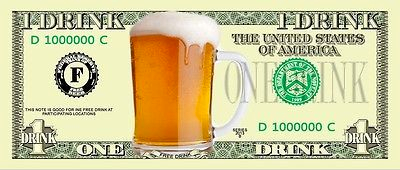
1-drink-bill

According to the data, the adjusted price for a pint peaked in the mid-1950s, 1956-57 to be specific. After that, the price has been coming down slowly but surely (with a few blips here and there) ever since. Part of that is undoubtedly efficiencies in both brewing and distribution. The on-and-off price wars that the big brewers engaged in over the last few decades must certainly have played a roll, as it kept prices artificially low across the board. At any rate, it’s interesting to see the prices all laid out like this over six decades. I’m sure others will see a lot more in the data, too.

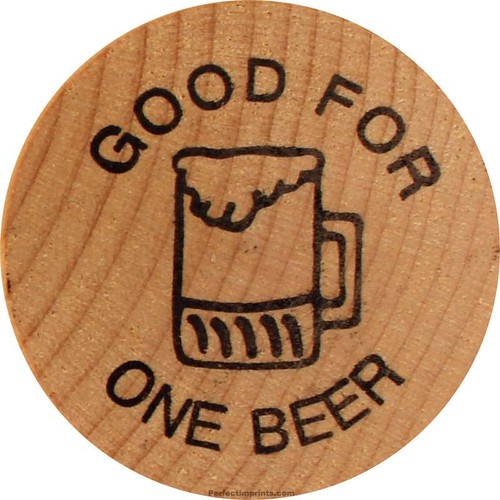
wooden-nickel

Year
Price of Beer
Adjusted for Inflation
1952
$0.65
$5.93
1953
$0.65
$5.80
1954
$0.67
$5.93
1955
$0.67
$5.91
1956
$0.68
$6.01
1957
$0.69
$6.01
1958
$0.69
$5.82
1959
$0.70
$5.74
1960
$0.71
$5.77
1961
$0.71
$5.68
1962
$0.71
$5.62
1963
$0.72
$5.64
1964
$0.73
$5.64
1965
$0.74
$5.65
1966
$0.75
$5.63
1967
$0.76
$5.54
1968
$0.79
$5.61
1969
$0.82
$5.58
1970
$0.86
$5.58
1971
$0.89
$5.43
1972
$0.91
$5.32
1973
$0.94
$5.32
1974
$1.01
$5.38
1975
$1.09
$5.23
1976
$1.12
$4.93
1977
$1.15
$4.78
1978
$1.22
$4.76
1979
$1.32
$4.79
1980
$1.42
$4.63
1981
$1.52
$4.37
1982
$1.59
$4.14
1983
$1.65
$4.05
1984
$1.70
$4.04
1985
$1.75
$3.99
1986
$1.83
$4.03
1987
$1.88
$4.06
1988
$1.95
$4.06
1989
$2.03
$4.06
1990
$2.13
$4.07
1991
$2.35
$4.26
1992
$2.43
$4.22
1993
$2.47
$4.17
1994
$2.50
$4.10
1995
$2.54
$4.06
1996
$2.61
$4.05
1997
$2.68
$4.04
1998
$2.73
$4.08
1999
$2.80
$4.07
2000
$2.88
$4.09
2001
$2.95
$4.06
2002
$3.02
$4.04
2003
$3.08
$4.05
2004
$3.17
$4.08
2005
$3.23
$4.05
2006
$3.31
$4.01
2007
$3.41
$4.00
2008
$3.53
$4.03
2009
$3.64
$4.00
2010
$3.68
$4.06
2011
$3.73
$4.05
2012
$3.88
$4.00
2013
$3.87
$3.99
2014
$3.91
$3.97
2015
$3.95
$3.95
2016
$3.99
$3.99

nickel-beer

Filed Under: Beers, Just For Fun, News, Related Pleasures Tagged With: Economics, Statistics, United States

Scrappy’s Beer Parade

March 8, 2017 By Jay Brooks

tiny-toons
As regular readers will know, I’m a huge cartoon nerd. Today, March 8, 1933, the cartoon “Beer Parade” was released by Screen Gems, and created by the Charles Mintz Studio. It was a Scrappy cartoon.

Scrappy

Here’s more about Scrappy, from Wikipedia:

Scrappy is a cartoon character created by Dick Huemer for Charles Mintz’s Krazy Kat Studio (distributed by Columbia Pictures). A little round-headed boy, Scrappy often found himself involved in off-beat neighborhood adventures. Usually paired with his little brother Oopy (originally Vontzy), Scrappy also had an on-again, off-again girlfriend named Margy and a Scotty dog named Yippy. In later shorts the annoying little girl Brat and pesky pet Petey Parrot also appeared. Huemer created the character in 1931, and he remained aboard Mintz’s studio until 1933. With Huemer’s departure, his colleagues Sid Marcus and Art Davis assumed control of the series. The final Scrappy cartoon, The Little Theatre was released in 1941.

beerparade
Posters for the “Beer Parade”
beerparade_1933

Here’s the synopsis of the cartoon from its IMDb page:

Scrappy and Oopie, though little boys, happily celebrate the return of beer after fourteen years, with the help of brew-guzzling gnomes, apparently from the “Rip Van Winkle” story. They leave an allegorical “Prohibition” figure (ugly old man in stovepipe hat) stripped and chased off.

scrappy600

beer-parade-title

Here’s another description from a user review at IMDb:

Scrappy and Oopie are partying with some gnomes who are enjoying beer from barrels. A mean Prohibition Agent appears and attacks the barrels with an axe, but Oopie will defend the right of people to enjoy their lager in this cartoon released a month before beer sales were legalized.

It had been a long fight and this typically bizarre Scrappy cartoon has the two children strongly in support of drinking. Although they do not partake themselves, they certainly use startlingly strange methods typical of Dick Huemer’s series. It is a pretty good one because it does not ease up in the second half. Dick and his staff certainly made it clear where their sympathies lay!

beerparade

parade-2

beerparade2

This is from Scrappyland, a website dedicated to Scrappy:

Plot summary: Scrappy and Oopy joyfully serve beer by the barrelful to dozens of drunken elves until Old Man Prohibition shows up. The boys and the little men assault him from the ground and the air–even using explosives–until he chooses to bury himself. Whereupon the good times roll once more.

(I particularly like the moment when Oopy, having rigged up a rope to trip Old Man Prohibition, tugs at it to verify that it’s tight enough to do the job.)

The cartoon is an obvious allegory concerning prohibition and its repeal. But it was released on March 4, 1933, when the federal ban on alcoholic beverages was still in force, so its celebration of unrestrained imbibing was anticipatory.

FDR, who famously made repeal part of his campaign, had taken office in January; a couple of weeks after the cartoon debuted, he signed the Cullen-Harrison act, which permitted the sale of wine and 3.2 percent beer starting the following month. In December, prohibition on the federal level was fully repealed.

Prohibition was never enforced all that rigorously in cartoon land. The 1929 Silly Symphony The Merry Dwarfs presaged The Beer Parade by showing its title characters quaffing beer; 1931’s Lady Play Your Mandolin, the first Merrie Melody, takes place in a saloon and is full of tippling animals, although it’s possible that it’s set in Mexico. But the sheer quantity of beer in The Beer Parade–served by two small boys without any adult supervision–remains startling. It’s unimaginable that anyone would have made a cartoon with this theme a few years later. Or today.

(Scrappy and Oopy aren’t shown drinking in the cartoon, but they are depicted brandishing foamy mugs themselves, and do seem to be in an awfully exuberant good mood.)

He’s reviewing it from a YouTube video where someone at a public screening simply videotaped the cartoon and then uploaded it. But it’s subsequently been removed from YouTube. And as far as I can tell, Scrappy cartoons have not been released on either videotape or DVD. Which is a crying shame, because it looks like it was an amazing cartoon.

parade-1

parade-3

parade-5

parade-6

This is from Scrappyland, a website dedicated to Scrappy:

Dr. Richard Huemer–the son of Scrappy’s creator–shared this New Years’ card which was sent to his father by Joe De Nat, the Mintz studio’s musical director. The card depicts Scrappy and his Mintz stablemate Krazy Kat pumping beer into a mug inhabited by a piano player and a mermaid (presumably representing Mr. and Mrs. De Nat). Assuming that the references to 1933 and the new year mean that the De Nats distributed this card around January 1, 1933, prohibition was still in effect, but the recent election of FDR meant that its days were clearly numbered.

denatcard

Filed Under: Art & Beer, Beers, Just For Fun, Related Pleasures Tagged With: Cartoons, History, Prohibition

Beer In Ads #2203: Thanks For The Job!

March 2, 2017 By Jay Brooks


Thursday’s ad is a trade ad, by the United States Brewing Industry Foundation, from 1939. After prohibition ended, the industry started doing PSA-type ads in an attempt to create goodwill for beer and brewers. They would later go on to do a fairly sophisticated series of ads between 1946 and 1956, known unofficially as Beer Belongs. Officially, they were “The Home Life in America” series, consisting of 120 ads, with a new ad running in major periodicals each month. Last year, for my Beer in Ads series, I featured every one of them. But in the years before that, the U.S. Brewing Industry Foundation (a precursor to the original Brewer’s Association) dabbled with a variety of similar ads promoting the industry as a whole. These were especially popular during World War 2, and in fact they even won an award from the government for some of these ads. Most of the ads were black and white, although a few were in color, though usually in a minimal way, with a few colors accented rather than being in full color.

In this ad, another blue collar worker (it may be our “Mike Anders” from yesterday’s ad) walks hand in hand with his son after a hard day’s work. But he’s happy because he has a job. Now that alcohol is legal again (it was only six years after repeal) lot’s of people had jobs, and the beer industry was trying to make sure it thanked its consumers and also let them now what a positive impact their business was having on the economy.

USBF-1939-Life-4

Filed Under: Art & Beer, Beers, Just For Fun, Politics & Law Tagged With: Advertising, Brewers Association, History

« Previous Page
Next Page »

Find Something

Northern California Breweries

Please consider purchasing my latest book, California Breweries North, available from Amazon, or ask for it at your local bookstore.

Recent Comments

  • Bob Paolino on Beer Birthday: Grant Johnston
  • Gambrinus on Historic Beer Birthday: A.J. Houghton
  • Ernie Dewing on Historic Beer Birthday: Charles William Bergner 
  • Steve 'Pudgy' De Rose on Historic Beer Birthday: Jacob Schmidt
  • Jay Brooks on Beer Birthday: Bill Owens

Recent Posts

  • Beer In Ads #5389: Point & Brunswick Bock Beer November 10, 2026
  • Historic Beer Birthday: Edward Cecil Guinness November 10, 2026
  • Historic Beer Birthday: Jacob Betz November 10, 2026
  • Beer In Ads #5388: Bock Beer Vats In The Brewers Hall November 9, 2026
  • Historic Beer Birthday: Peter Barbey November 9, 2026

BBB Archives

Feedback

Head Quarter
This site is hosted and maintained by H25Q.dev. Any questions or comments for the webmaster can be directed here.