Brookston Beer Bulletin

Jay R. Brooks on Beer

  • Home
  • About
  • Editorial
  • Birthdays
  • Art & Beer

Socialize

  • Dribbble
  • Email
  • Facebook
  • Flickr
  • GitHub
  • Instagram
  • LinkedIn
  • Pinterest
  • RSS
  • Twitter
  • YouTube

Powered by Genesis

Historic Beer Birthday: John Bechtel

September 26, 2025 By Jay Brooks

bechtel
Today is the birthday of John Bechtel (September 26, 1815-May 26, 1881). He was born in Weissenheim, Germany, in Bavaria, and came to the U.S. in 1840. In 1853, he founded a brewery on Staten Island, New York, which initially was known as the John Bechtel Brewery. In 1863, John Bechtel was elected as the second president of the Brewers Association, which he had helped to found. But in 1865, he sold the brewery to his son, George Bechtel, who renamed it the George Bechtel Brewery. His son continued to operate it until it closed for good in 1907.

This account is from “100 Years of Brewing,” published in 1903. The second part of the article is about John Moffat:

george-bechtel-brewery

This early history of the brewery is from “History of Richmond County, from its discovery to the present time,” by Richard Mather Bayles, published in 1887:

Bechtel’s Brewery, perhaps the largest of these, was located at Stapleton, where it was founded by John Bechtel, in 1853. In 1865 he sold the concern to his son, George Bechtel, the present proprietor. The capital invested here amounts to well nigh half a million dollars. In 1865 the revenue tax of this brewery was $10,000, and ten years later it had increased to $60,000. It employs about fifty hands.

George Bechtel, was born in Germany in 1840. He came with his parents to America at the age of six months, and in 1851 entered the grammar school of ColumbiaCollege. After finishing his course at that institution he began an apprenticeship in the brewery which his father had established at Stapleton in 1853. From 1860 to 1865 he occupied the position of superintendent of the establishment, and while engaged in that capacity he established the first ice-house in the East. In 1865 he rented the property from his father, and in 1870 purchased his entire interest, becoming the sole proprietor.

The original building proving too small for his rapidly increasing business, Mr. Bechtel concluded to tear it down and in its place he built the present elegant structure, special attention being given to its equipment. So energetically was the work of erection pushed that in ten weeks after the first stone was laid brewing had recommenced. The continued increase of his business is due to the high quality of excellence which he maintains in all his productions. Mr. Bechtel has been foremost in all public and benevolent matters. During the riots in 1861 he sheltered large numbers of these homeless people in the woods and sent them nourishment daily till the trouble had subsided, a circumstance which the colored people on Staten Island have never forgotten and for which they have been ever grateful.

Mr. Bechtel’s benevolent qualities show themselves on all occasions, and many poor families on Staten Island have been the recipients of his charity. It is said of him that he is ever ready to help where it is needed. In 1879 the Japanese embassy, together with the secretary of state and several other gentlemen, paid a visit to Mr. Bechtel’ s brewery. As a result they ordered one hundred thousand bottles of beer to be sent to Japan. On their return they sent him several very flattering letters and a pair of costly vases as a token of their esteem.

Bechtel-brewery-1897

Filed Under: Birthdays, Breweries, Just For Fun Tagged With: Germany, History, New York

Historic Beer Birthday: Phillip Best

September 26, 2025 By Jay Brooks

jacob-best
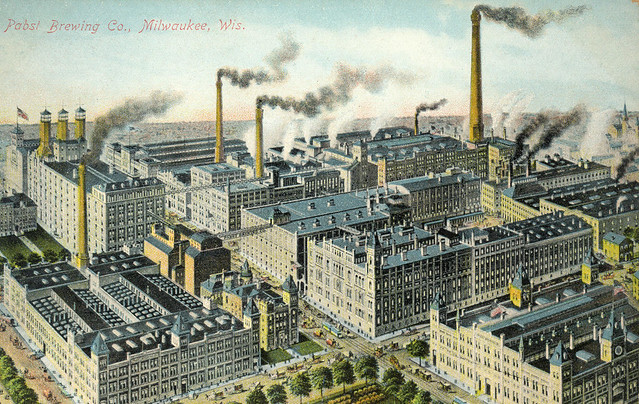
Today is the birthday of Phillip Best (September 26, 1814-July 17, 1869) Phillip Best was the son of Jacob Best, who founded the brewery that eventually became Pabst Brewing Co., with his four sons in 1844. The Best family’s business was originally called “The Empire Brewery,” and then it was “Jacob Best & Sons Brewery” until 1859 when Phillip Best took over the firm and renamed it the “Phillip Best Brewing Company.” Upon Phillip’s retirement Frederick Pabst and Emil Schandein became the company’s president and vice-president in the mid-1860s and the brewery’s name was amended to Phillip Best & Company. After Schandein died, the company was renamed the Pabst Brewing Company in 1889.

phillip-best-portrait

Immigrant Entrepreneurship has a lengthy article about the Bests, centered around Frederick Pabst, but with background that includes Phillip and the rest of the Best family:

In 1844, Phillip Best (born September 26, 1814, in Mettenheim, Grand Duchy of Hesse; died July 17, 1869, in Altenglan, Kingdom of Bavaria), together with his father and three brothers, opened the Jacob Best & Sons Brewery in Milwaukee, Wisconsin. Twenty years later, Phillip’s son-in-law Frederick Pabst (born March 28, 1836, in Nikolausrieth, Kingdom of Prussia; died January 1, 1904, in Milwaukee, Wisconsin) joined the company and helped to transform it into the nation’s leading beer producer – first in 1874 and then again in 1879, a position that was maintained until the turn of the twentieth century. As the company’s president, the former ship captain led the firm through a remarkable period of growth and the Pabst Brewing Company (as it came to be called from 1889 onwards) became the epitome of a successful national shipping brewery. Pabst not only contributed to the firm’s (and Milwaukee’s) economic growth, he also left a permanent cultural and social mark both on the German-American community and on the public at large. A decade after the height of his success, Pabst died on New Year’s Eve of 1904, passing on his commercial and cultural legacy to his sons.

The Best family’s relocation from Mettenheim to Milwaukee went relatively smoothly. After spending a few weeks in the summer of 1844 looking for a suitable location, Jacob Sr. purchased two lots on Chestnut Street (today West Juneau Avenue) on September 10 and founded the Empire Brewery. Jacob Sr.’s sons, Charles and Lorenz, soon went on to establish independent brewing ventures, so Jacob Sr. formed a new partnership with his other two sons, Phillip and Jacob Jr., in 1851, which stayed in place until Jacob Sr. retired two years later. After several arguments about the expansion of the firm, Jacob Jr. sold out to Phillip on October 1, 1859, who continued the business as its sole proprietor under the name of the Phillip Best Brewing Company.

In its inaugural year, the Best brewery produced 300 barrels (one barrel equaling 31 US gallons). The firm initially produced ale and porter, but added German-style lager on February 22, 1845. In 1847, Phillip reported in a letter to his wife’s family that the business was developing well and selling 28-30 barrels of beer weekly for $4.50 per barrel ($5 if delivered). The brewery owned three horses for the malt grinding mill, as well as for deliveries in the city and county, and planned to buy another. By 1850, the company’s 2,500-barrel annual production classified it as a medium-sized producer, ranking fourth out of the twelve largest reported breweries in Wisconsin.

As production increased, the company acquired and built new facilities. In 1850, the family purchased a lot on Market Street between Biddle and Martin Streets (today East Kilbourn Avenue and East State Street). Five years later, the company built a new brick house on Market Street with a beer hall on the ground floor, and in 1857 it erected a new main brewery on the north side of Chestnut Street between Ninth and Tenth Streets with large storage cellars. The Milwaukee Sentinel reported on October 9, 1857, that the brewery had the “deepest cellars in the city” and it may be seen from almost any part of the city. The building is a fine looking one, and were it not for a life-sized figure of a sturdy Teuton which is perched on top, in the act of sipping a glass of lager, one would never suspect its being a brewery. It has much more the appearance of a public building of some sort.

The article went on to explain that demand for Best beer was not only “constantly increasing” locally but also across the whole nation: “Everybody has tasted Best’s beer, and it’s very generally acknowledged to be the best in the country.” Although the article certainly exaggerated the national impact of Best’s beer at mid-century, the company had begun to sell their brands outside Wisconsin in the early 1850s when it established a sales office in Chicago, Illinois. While Milwaukee and the surrounding region provided the main market for Best products throughout the second half of the nineteenth century, this early effort to serve the national and – beginning in the 1860s – international market was a distinctive feature of the company’s development.

Best’s production and profits increased during the nationwide economic boom of the 1850s, but the panic of 1857 and the economic disruption of the Civil War slowed the firm’s growth rate. At the height of its early prosperity in 1857, the brewery employed steam power to produce nearly 40,000 barrels a year and was valued at $50,000 (approximately $1.4 million in 2014$). It employed eight men and used ten horses for delivery. Not until after the Civil War would these production levels be reached again. But as the expansion of the family business began to stall, Phillip made his two sons-in-law, Frederick Pabst and Emil Schandein, equal partners in 1864 and 1866 – a decision which turned out to have a lasting impact on the future development of the company.

philip-best-brewery-1880
The Best’s South Side brewery in 1880, a few years after Jacob died and it became the Philip Best Brewing Co.

Here’s a shorter account from “American Breweries of the Past” by David G. Moyer:

Best-bros-amer-breweries-of-the-past

best-brewery-long
And this is the main Best brewery, the original Empire Brewery.

A biography of Phillip Best from the National Cyclopaedia of American Biography, published in 1893.

phillip-best-brewing-company-became-pabst-brewing-company-signed-by-fred-pabst-as-president-milwaukee-wisconsin-1874-12
A stock certificate for the Phillip Best Brewing Company from 1874.

This history is from A Spirited History of Milwaukee Brews & Booze by Martin Hintz:

best-spirited-history-1

And finally there’s this from the Industrial History of Milwaukee, published in 1886.

phillipbest-logo

Filed Under: Birthdays, Just For Fun Tagged With: Germany, History, Milwaukee, Pabst, Wisconsin

Beer In Ads #5087: It’s Like Old Times Again

September 25, 2025 By Jay Brooks

Last year I decided to concentrate on Bock ads. Bock, of course, may have originated in Germany, in the town of Einbeck. Because many 19th century American breweries were founded by German immigrants, they offered a bock at certain times of the year, be it Spring, Easter, Lent, Christmas, or what have you. In a sense they were some of the first seasonal beers. “The style was later adopted in Bavaria by Munich brewers in the 17th century. Due to their Bavarian accent, citizens of Munich pronounced ‘Einbeck’ as ‘ein Bock’ (a billy goat), and thus the beer became known as ‘Bock.’ A goat often appears on bottle labels.” And presumably because they were special releases, many breweries went all out promoting them with beautiful artwork on posters and other advertising.

Thursday’s ad is for Rainier Bock Beer, which was published on September 25, 1933. This one was for the Rainier Brewing Co. of Seattle, Washington, which was originally founded in 1878, though it was mostly advertising Long John’s Tavern, which located in downtown Nevada City, California. The tagline was “It’s Like Old Times Again Down at Long John’s.” This ad ran in The Nevada County Nugget, from Nevada City, California.

Filed Under: Art & Beer, Beers, Breweries, Food & Beer Tagged With: Advertising, Bock, California, History, Pubs

Historic Beer Birthday: James Moffat

September 25, 2025 By Jay Brooks

moffats
Today is the birthday of James Moffat (September 25, 1808-April 4, 1863). He was the son of John Moffat, and helped his father in founding one of the earliest breweries in Buffalo, New York in 1833. It was later called the James Moffat Brewery, and after that the Moffat & Service Brewery. His son, who took over after James died, renamed it the Henry C. Moffat Brewery in 1890, which was closed by Prohibition in 1920. It briefly reopened after repeal, in 1934, as Moffat’s Ale Brewery, but closed for good the same year.

This account of his brewery is from “100 Years of Brewing,” published over 40 years after he died:

moffats-drawing

According to John & Dave’s Buffalo Brewing History, John Moffat, along with his son James, acquired what was Buffalo’s second brewery and named it the Moffat Brewery.

Kane, Peacock and Relay brewery was short lived however and a 1909 article in the Buffalo Evening Times indicates John Moffat and his son James purchased the brewing operation around 1833. Also, the 1836 Buffalo City Directory lists Moffat as a brewer at that location. The 1839 Directory lists James Moffat & Co. as a “Brewery, Soap and Candle Factory”. The Moffat Brewery continued in operation until son James died and it was sold to Arthur Fox and became the Fox and Williams Brewery. In 1876 it was sold back to the Moffat family and continued in operation at the same location until the advent of Prohibition forced their closure in 1920. After Prohibition the Phoenix Brewery continued brewing “Moffats Pale Ale” through an agreement with the Moffat family.

And “History of the City of Buffalo and Erie County, Volume 2,” published in 1884, has this to say about Buffalo’s earliest brewers, including Moffat:

buffalo-brewers

moffats-brewery

Filed Under: Birthdays, Breweries, Just For Fun Tagged With: History, New York

Beer Birthday: Bill Owens

September 25, 2025 By Jay Brooks

buffalo-bills-new
Today is the 87th birthday of Bill Owens, who founded one of California (and America’s) earliest brewpubs, Buffalo Bill’s, in Hayward, California. The brewpub opened in 1983, but in 1994 he sold it to his then-brewer, Geoff Harries, who still owns and operates it today. Bill also founded American Brewer magazine, which today is owned by Jamie Magee. Bill’s also an accomplished photographer, and has published several volumes of his photos, the most famous of which is Suburbia. More recently, he’s been involved in micro-distilling, in 2003 founding the American Distilling Institute. Please join me in wishing Bill a very happy birthday.
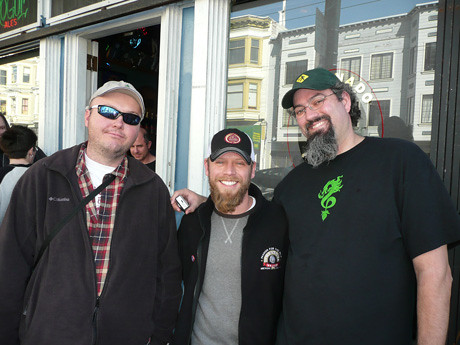
Bill and me at the Anchor Xmas Party in 2009.
ambrew-anchor-1
Bill and Fritz Maytag at an event for Maureen Ogle’s book “Ambitious Brew” in 2006.
bill-owens-1985
Bill at Buffalo Bill’s in 1985.
Bill-Owens
A press shot from the 1980s.
Bill-Owens-paddle
Manning the mash paddle around 1985, the year he made his first batch of Pumpkin Ale, probably the first pumpkin beer in modern times.
how-to-build-a-small-brewery
Bill Owens’ early book — more of a pamphlet really — on How to Build a Small Brewery.

Filed Under: Birthdays Tagged With: Bay Area, California

Beer Birthday: Charles Finkel

September 25, 2025 By Jay Brooks

pike
Today is the 82nd birthday of Charles Finkel, one of the pioneers of the better beer movement. He founded Merchant du Vin in 1978, the company responsible for importing a number of word-class beers to the U.S., including a few favorites of mind: Traquair, Ayinger, Westmalle, Rochefort and Orval. He also started the Seattle brewpub, Pike Brewing , in 1989, where Fal Allen was head brewer there from 1990-96. I first met Charlie around 1996 during a visit to Seattle. The following year, the Finkels sold both Pike Brewing and Merchant du Vin. In 2006, they bought back Pike Brewing. In Chicago for CBC a couple of years ago, I was fortunate enough to spend an evening out and about town with the Finkels, and I wrote a profile of them for Beer Connoisseur a few years back. Charlie and his late wife Rose Ann are some of my favorite people in the industry. Join me in wishing Charlie a very happy birthday.
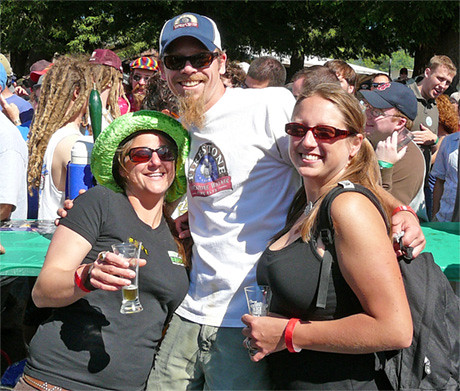
Charlie at CBC in Chicago a few years ago, with Mark Blasingame, owner of the Map Room.
Charlie at Pints for Prostates’ Rare Beer Tasting at Wynkoop during GABF.
Charlie and Rose Ann Finkel behind their Pike Brewing booth at GABF a few years ago.
Charlie and Rose Ann Finkel with past and present Pike brewers during the 2006 CBC in Seattle.
Charles with Rose Ann, Daniel Bradford, Rick Lyke, Jim Cline then with Rogue, and Ron Jeffries from Jolly Pumpkin at GABF in 2009.

Filed Under: Birthdays, Just For Fun Tagged With: Seattle, Washington

Beer In Ads #5086: Ehrhart’s Party Store Bock Beer

September 24, 2025 By Jay Brooks

Last year I decided to concentrate on Bock ads. Bock, of course, may have originated in Germany, in the town of Einbeck. Because many 19th century American breweries were founded by German immigrants, they offered a bock at certain times of the year, be it Spring, Easter, Lent, Christmas, or what have you. In a sense they were some of the first seasonal beers. “The style was later adopted in Bavaria by Munich brewers in the 17th century. Due to their Bavarian accent, citizens of Munich pronounced ‘Einbeck’ as ‘ein Bock’ (a billy goat), and thus the beer became known as ‘Bock.’ A goat often appears on bottle labels.” And presumably because they were special releases, many breweries went all out promoting them with beautiful artwork on posters and other advertising.

Wednesday’s ad is for an unknown Bock Beer, which was published on September 24, 1965. This one was not for a specific brand of bock beer, it was instead for a liquor store called Ehrhart’s Party Store. I cut out the middle of the ad, which consisted of some other ads for root beer along with information about the store and its hours. Surprisingly, sixty years after this ad ran, the store is still a going concern in Bucyrus, Ohio. This ad ran in The Bucyrus Telegraph-Forum, which serves Bucyrus, Crawford County and Ohio.

Filed Under: Art & Beer, Beers, Just For Fun Tagged With: Advertising, Bock, History, Ohio

Beer In Ads #5085: Celebrated Miller’s Bock Beer

September 23, 2025 By Jay Brooks

Last year I decided to concentrate on Bock ads. Bock, of course, may have originated in Germany, in the town of Einbeck. Because many 19th century American breweries were founded by German immigrants, they offered a bock at certain times of the year, be it Spring, Easter, Lent, Christmas, or what have you. In a sense they were some of the first seasonal beers. “The style was later adopted in Bavaria by Munich brewers in the 17th century. Due to their Bavarian accent, citizens of Munich pronounced ‘Einbeck’ as ‘ein Bock’ (a billy goat), and thus the beer became known as ‘Bock.’ A goat often appears on bottle labels.” And presumably because they were special releases, many breweries went all out promoting them with beautiful artwork on posters and other advertising.

Tuesday’s ad is for Miller Bock Beer, which was published on September 23, 1903. This one was for the Miller Brewing Co. of Milwaukee, Wisconsin, which was originally founded in 1855. This ad ran in The Honolulu Star Bulletin, of Honolulu, Hawaii because the ad was really for the liquor department of the Hoffschlaeger Co., which also made whiskey. Miller apparently only made a bock from 1888-1920. I do love the remark about it being the “most nutritious in the market.” Plus, “Doctors recommend it to their patients with the greatest confidence,”

Filed Under: Art & Beer, Beers, Breweries, Just For Fun Tagged With: Advertising, Bock, Hawaii, History, Miller Brewing, Wisconsin

Beer Birthday: Yuseff Cherney

September 23, 2025 By Jay Brooks

ballast-point cutwater
Today is the 56th birthday of Yuseff Cherney, co-founder, former COO and head brewer of Ballast Point Brewing in San Diego. Although not too long after selling Ballast Point in later 2015 to Constellation Brands, Yuseff left the brewery, in July of 2016. For a time, he was focusing his energy on their rebranded spirits division, called Cutwater Spirits, although more recently that was sold, as well. I used to run into Yusseff in the Bay Area or at GABF, but I’m not sure we’ll see him as much in the beer world. He’s a great person and a terrific brewer. Join me in wishing Yusseff a very happy birthday.

Sierra Nevada’s Steve Dressler with Yuseff and his wife at the Chico leg of Beer Camps Across America a few years ago.
Claudia Pamparana, co-founder of Faction Brewing, Yuseff, Jeff Bagby, and his then-assistant brewer, Noah Regney, now with Hollister Brewing at the Boonville Beer Festival in 2007.
Yussef with Fal Allen (from Anderson Valley) at Prost Brewing during CBC a few years ago in Denver.
Yusseff-01
Matt Matthew Brynildson, Earl Kight, and Yuseff at the European Beer Star Awards in Germany a few years ago.
Yusseff-03
Yuseff with 2013’s Hop Queen. (Note: last two photos purloined from Facebook.)

Filed Under: Birthdays Tagged With: California, San Diego, Southern California

Historic Beer Birthday: Lord Chesterfield

September 22, 2025 By Jay Brooks

lord-chesterfield
Today is the birthday of Lord Chesterfield, whose full name was Philip Stanhope, 4th Earl of Chesterfield (September 22, 1694-March 24, 1773). He “was a British statesman, and a man of letters, and wit. He was born in London to Philip Stanhope, 3rd Earl of Chesterfield, and Lady Elizabeth Savile, and known as Lord Stanhope until the death of his father, in 1726. Educated at Trinity Hall, Cambridge, he subsequently embarked on the Grand Tour of the Continent, to complete his education as a nobleman, by exposure to the cultural legacies of Classical antiquity and the Renaissance, and to become acquainted with his aristocratic counterparts and the polite society of Continental Europe.

In the course of his post-graduate tour of Europe, the death of Queen Anne (r. 1702–1714) and the accession of King George I (r. 1714–1727) opened a political career for Stanhope, and he returned to England. In the British political spectrum he was a Whig and entered government service, as a courtier to the King, through the mentorship of his relative, James Stanhope, 1st Earl Stanhope, the King’s favourite minister, who procured his appointment as Lord of the Bedchamber to the Prince of Wales.

Chesterfield
Today he’s arguably best known for two things. The first is the numerous letters written to his illegitimate son Phillip Stanhope. They consisted of 400 private correspondences written over thirty years, first published a year after Lord Chesterfield’s death as “Letters to His Son on the Art of Becoming a Man of the World and a Gentleman.” From that correspondence, many quotations have become well-known, such as “Whatever is worth doing at all is worth doing well,” “Never seem more learned than the people you are with. Wear your learning like a pocket watch and keep it hidden. Do not pull it out to count the hours, but give the time when you are asked,” “Take care of the minutes and the hours will take care of themselves,” and “Know the true value of time; snatch, seize, and enjoy every moment of it. No idleness, no delay, no procrastination; never put off till tomorrow what you can do today.” Then there’s “Young men are apt to think themselves wise enough, as drunken men are apt to think themselves sober enough” and “Choose your pleasures for yourself, and do not let them be imposed upon you. Follow nature and not fashion: weigh the present enjoyment of your pleasures against the necessary consequences of them, and then let your own common sense determine your choice.”

lord-chesterfield-1728
Portrait by Jonathan Richardson from 1728.
Here’s the description from the Oxford edition of Chesterfield’s collected letters:

Not originally intended for publication, the celebrated and controversial correspondences between Lord Chesterfield and his son Philip, dating from 1737, were praised in their day as a complete manual of education, and despised by Samuel Johnson for teaching “the morals of a whore and the manners of a dancing-master.” Reflecting the political craft of a leading statesman and the urbane wit of a man who associated with Pope, Addison, and Swift, Lord Chesterfield’s Letters reveal the author’s political cynicism, his views on good breeding, and instruction to his son in etiquette and the worldly arts. The only annotated selection of this breadth available in paperback, these entertaining letters illuminate the fascinating aspects of eighteenth-century life and manners.

Yuengling-Lord-Chesterfield
The second thing he’s known for today is Yuengling Brewery’s Lord Chesterfield Ale, which the brewery first brewed in 1829, the year they were founded as the Eagle Brewery.

lord-chesterfield-1934
The Lord Chesterfield Ale label in 1934.
lord-chesterfield-3

Filed Under: Beers, Birthdays, Just For Fun Tagged With: England, Great Britain, History, Pennsylvania

« Previous Page
Next Page »

Find Something

Northern California Breweries

Please consider purchasing my latest book, California Breweries North, available from Amazon, or ask for it at your local bookstore.

Recent Comments

  • Bob Paolino on Beer Birthday: Grant Johnston
  • Gambrinus on Historic Beer Birthday: A.J. Houghton
  • Ernie Dewing on Historic Beer Birthday: Charles William Bergner 
  • Steve 'Pudgy' De Rose on Historic Beer Birthday: Jacob Schmidt
  • Jay Brooks on Beer Birthday: Bill Owens

Recent Posts

  • Beer In Ads #5231: A Sign Of Spring April 26, 2026
  • Historic Beer Birthday: Henry Hoerl April 26, 2026
  • Historic Beer Birthday: John Toohey April 26, 2026
  • Beer In Ads #5230: The Original Old German Bock Beer, GOT IT? Get It! April 25, 2026
  • Historic Beer Birthday: Al Levy April 25, 2026

BBB Archives

Feedback

Head Quarter
This site is hosted and maintained by H25Q.dev. Any questions or comments for the webmaster can be directed here.