Brookston Beer Bulletin

Jay R. Brooks on Beer

  • Home
  • About
  • Editorial
  • Birthdays
  • Art & Beer

Socialize

  • Dribbble
  • Email
  • Facebook
  • Flickr
  • GitHub
  • Instagram
  • LinkedIn
  • Pinterest
  • RSS
  • Twitter
  • YouTube

Powered by Genesis

Bergner & Engel Brewing’s Railroad

July 21, 2018 By Jay Brooks

steam-train
The third Saturday in July is “Railroad Day,” which I know not only because I collect holidays, but also because of my son’s obsession with trains. So this is an interesting historical artifact. The Bergner & Engel Brewing Co. of Philadelphia was one of the more prominent breweries in the Philly neighborhood known as Brewerytown, a nine-block area of the city with breweries on virtually every street.

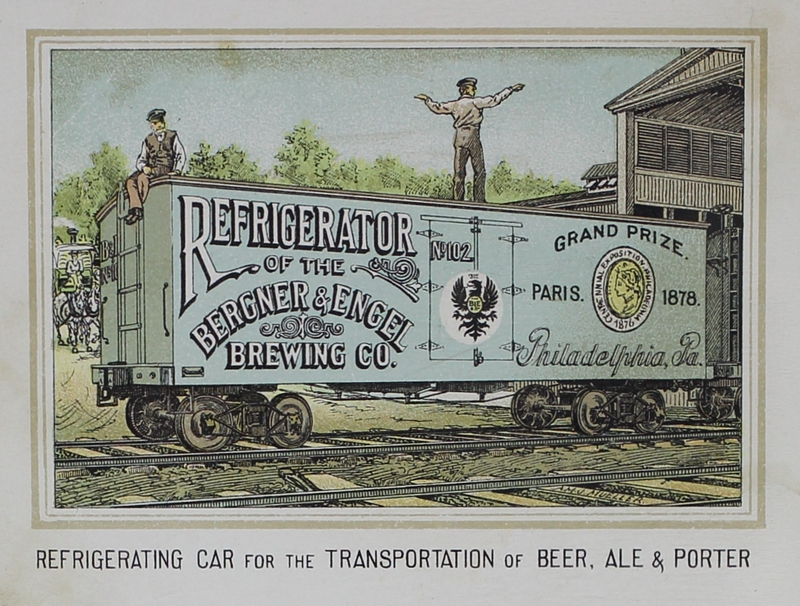
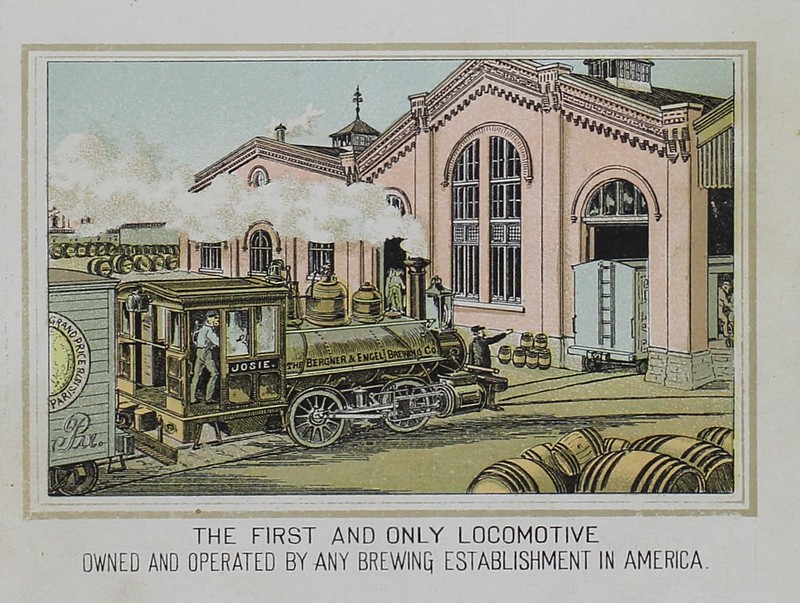
Bergner & Engel was one of the bigger ones in Brewerytown, and in the late 1880s they published a book with chromolithographs of their brewery and their brewing process that are a great timepiece. The 24-page bound publication is really cool. Anyway, because it’s Railroad Day, these two illustrations of the brewery’s boxcar and locomotive are especially awesome.

This is on Page 11, showing B&E’s boxcar:
B&E-Refrigerator-Car

And on Page 12, they show the locomotive, which they claim at the time is “the first and only locomotive owned and operated by any brewing establishment in America:
B&E-Engine-lg

Filed Under: Beers, Breweries, Just For Fun, Related Pleasures Tagged With: History, Pennsylvania, Philadelphia, technology

Ballantine’s Literary Ads: Clarence Budington Kelland

July 11, 2018 By Jay Brooks

ballantine
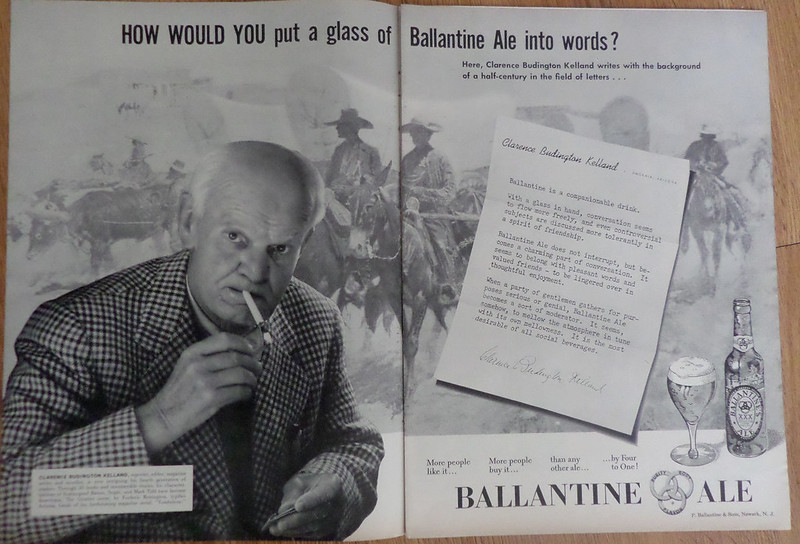
Between 1951 and 1953, P. Ballantine and Sons Brewing Company, or simply Ballentine Beer, created a series of ads with at least thirteen different writers. They asked each one “How would you put a glass of Ballantine Ale into words?” Each author wrote a page that included reference to their beer, and in most cases not subtly. One of them was Clarence Budington Kelland, who was an American writer. He once described himself as “the best second-rate writer in America”

Today is the birthday of Clarence Budington Kelland (July 11, 1881–February 18, 1964). “Although largely forgotten now, Kelland had a long career as a writer of fiction and short stories, stretching from 1913 to 1960. He was published in many magazines, including The Saturday Evening Post and The American Magazine. A prolific writer, his output included sixty novels and some two hundred short stories. His best known juvenile works were the Mark Tidd series and the Catty Atkins series, while his best known adult work was the Scattergood Baines series. Other notable adult books by Kelland include Conflict (1920), Rhoda Fair (1925), Hard Money (1930), Arizona (1939), and Dangerous Angel (1953). Kelland was the “literary idol” of the teenaged John O’Hara. He was referred to in a 1995 installment of Harlan Ellison’s television commentary, Harlan Ellison’s Watching for the program Sci-Fi Buzz, wherein Ellison laments what he perceives as a prevailing cultural illiteracy.

Kelland’s work resulted in some thirty Hollywood movies, including Speak Easily (1932) starring Buster Keaton. Opera Hat, a serial from The American Magazine, was the basis for the film Mr. Deeds Goes to Town (1936) starring Gary Cooper. Opera Hat later was turned into the short-lived television series Mr. Deeds Goes to Town (1969–70), and the movie Mr. Deeds (2002). One of Kelland’s best-known characters was featured in the Scattergood Baines series of six films from 1941 to 1943, starring Guy Kibbee.”

Ballantine-Clarence-Budington-Kelland

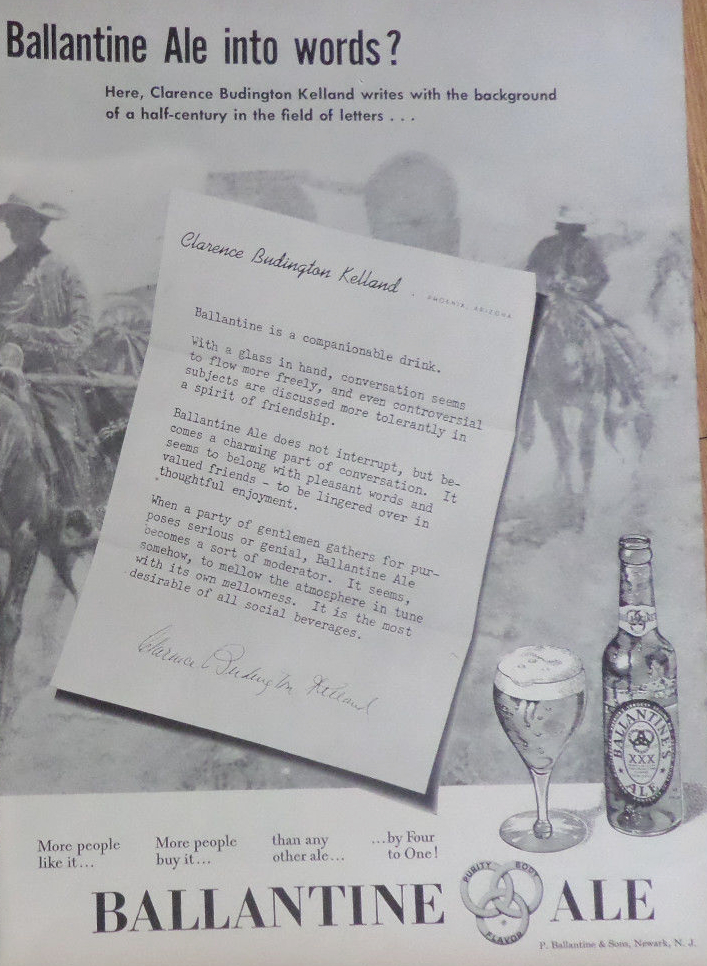
His 1952 piece for Ballantine was done as a reminiscence of his first taste of Ballantine in America, just after a well-played round of golf:

Ballangine is a companionable drink.

With a glass in hand, conversation seems to flow more freely, and even controversial subjects are discussed more tolerantly in a spirit of friendship.

Ballantine Ale does not interrupt, but becomes a charming part of conversation. It seems to belong with pleasant words and valued friends — to be lingered over its thoughtful enjoyment.

When a party of gentlemen gathers for purposes serious or genial, Ballantine Ale becomes a sort of moderator. It seems, somehow, to mellow the atmosphere in tune with its own mellowness. It is the most desirable of all social beverages.

Ballantine-Clarence-Budington-Kelland-text

Filed Under: Beers, Breweries, Just For Fun, Related Pleasures Tagged With: Advertising, Ballantine, History, Literature

Next Session In The Bavarian Clouds

June 27, 2018 By Jay Brooks

session-the
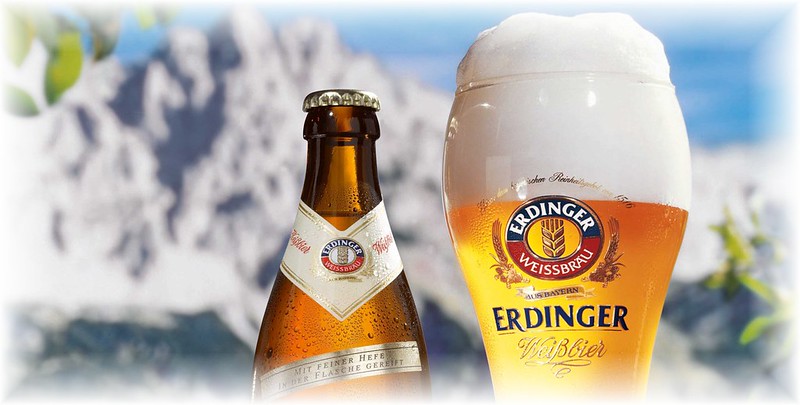
For our 137th Session, our host will be Roger Mueller, who writes at Roger’s Beers …and Other Drinks. For his topic, he’s chosen German Wheat Beers, one of the original hazy beers.

flyinghefeweizens
This is from Stan Hieronymus’ recent article, Traditional Hefeweizen: Worth the Trouble?

Here’s his full explanation of the month’s topic:

I would like to clarify for myself the similarities and dissimilarities of weissbeers, kristall weizen, weizen, hefeweizen, etc. I’d love to read about the distinctions all you brewers and beer researchers know about regarding the various “styles” of weissbeer, experiences in brewing and drinking the beer, it’s history. Yeah, whatever you’d like to say about German wheat beers will be great.

german_beer

To participate in the July Session, simply post a link to your session post by commenting at the original announcement on or before Friday, July 6.

Filed Under: Beers, Just For Fun, The Session Tagged With: Announcements, Beer Styles

Visual Poetry: Let’s Have A Beer

June 23, 2018 By Jay Brooks

poetry
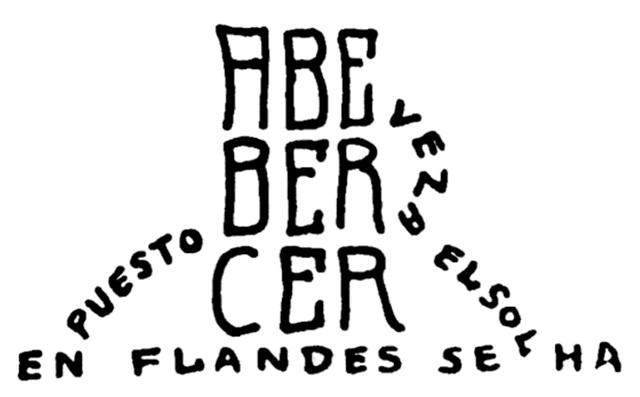
So this post will be chiefly for the literary, and especially poetry lovers, among you, a small subset of beer lovers who also enjoy art. Visual poetry is “a development of concrete poetry but with the characteristics of intermedia in which non-representational language and visual elements predominate. In other words, it was experimental or avant-garde poetry in which the arrangement of the text also was a part of the poem’s meaning, which was communicated both visually and through the text itself.

Two Mexican poets in the 1920s, José D. Frias and José María González de Mendoza were both expatriates living in France and became friends, later exchanging humorous letters between themselves and their literary friends. Today is Mendoza’s birthday, which is what reminded me of this.

In 1923, the pair wrote a letter from Paris to fellow poet Francisco Orozco Muñoz that included four visual poems. They were based on the work of French poet Guillaume Apollinaire, who a few years before wrote a book of visual poetry entitled Calligrammes: Poems of Peace and War 1913-1916. They also were influenced by Japanese Haiku, which had become popular at the time in their literary circles, as opposed to Apollinaire’s more cubist or l’esprit nouveau poetry.

Three of the visual poems were written by Frias and translated visually by Mendoza. But the fourth poem was done entirely by Mendoza, and it’s the one below. All four poems contain witty references to the fact that Muñoz was living in Brussels.

lets-have-a-beer

The text is in the shape of a mug of beer, sitting on a table, and reads, according to several books on visual poetry, “Let’s Have a Beer” followed by “The Sun Has Already Set in Flanders.”

Filed Under: Birthdays, Just For Fun, Related Pleasures Tagged With: Belgium, Literature, Mexico, Poetry

Historic Beer Birthday: George Schmitt

June 14, 2018 By Jay Brooks

new_york
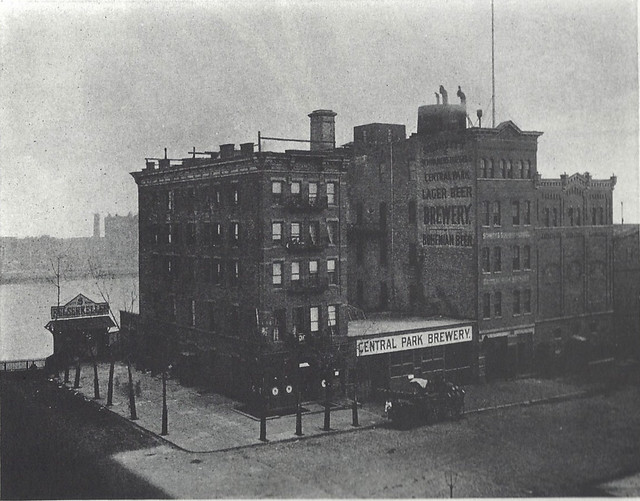
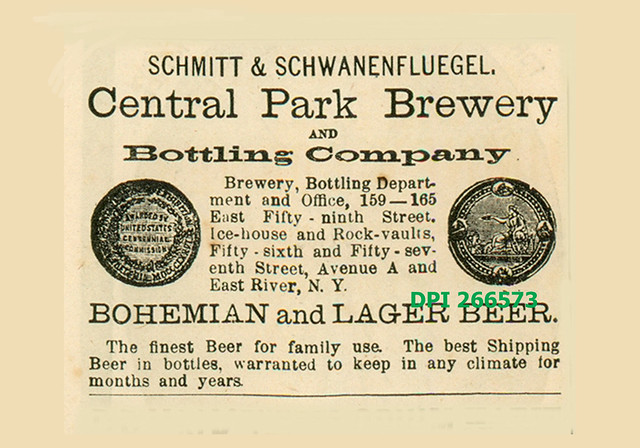
Today is the birthday of George Peter Allen Schmitt (June 14, 1833-May 4, 1897). He was born in Zell-in-der-Pflaz, Bavaria. Originally trained as a carpenter, he came to America when he was 19, in 1852, eventually shifting careers to importing wines. That proved successful enough that he partnered with Henry Elias to open the Central Park Brewery, and after changing partners a few times it became known as the Schmitt & Schwanenfluegel Brewery, which was in New York City, near Central Park at 1065 Avenue A, between 56th & 57th. Schmitt passed away in 1897, and his son, also George Schmitt, kept it going briefly, but he also died the following year, in 1898.

george-schmitt-sr

The brewery was originally known as the Henry Elias Brewery, who founded it near 15th Street & Broadway in 1855. Elias, in 1865, partnered with George Schmitt, and became known as Henry Elias & George Schmitt Brewery, a.k.a. the Central Park Brewery (and was readdressed to 1065 Avenue A, between 56th & 57th). In 1868, Schmitt partnered with Christian Koehne to keep it going and it became the Schmitt & Christian Koehne Brewery. Then in 1885, Koehne left and Louis Von Schwanenfluegel came to the business and it became known as Schmitt & Schwanenfluegel Brewery, which it remained until it closed in 1906. During that time it was also known as Consumers Park Brewing Co. and also Central Park Brewery.

Schmitt-and-Schwanenfluegel-brewery

schmitt-schwan

Extra-Bohemian-Beer-Foam-Scrapers-Schmitt-and-Schwanenfluegel

Filed Under: Birthdays, Just For Fun Tagged With: Germany, History, New York

1877 U.S. Brewers Association Convention

June 6, 2018 By Jay Brooks

usba
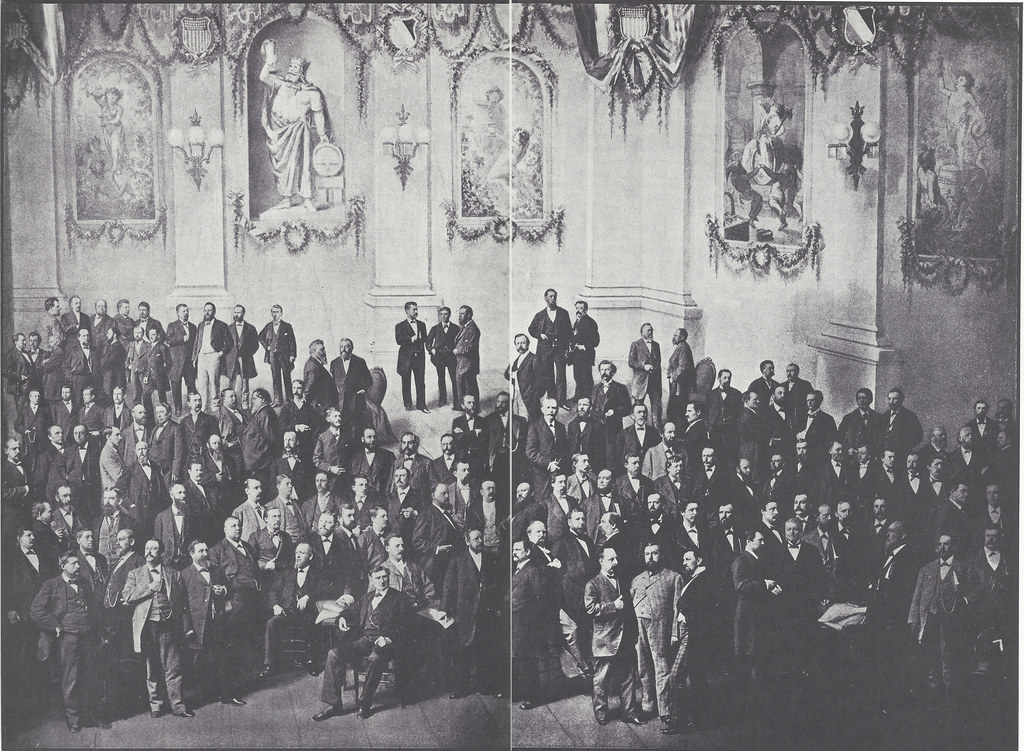
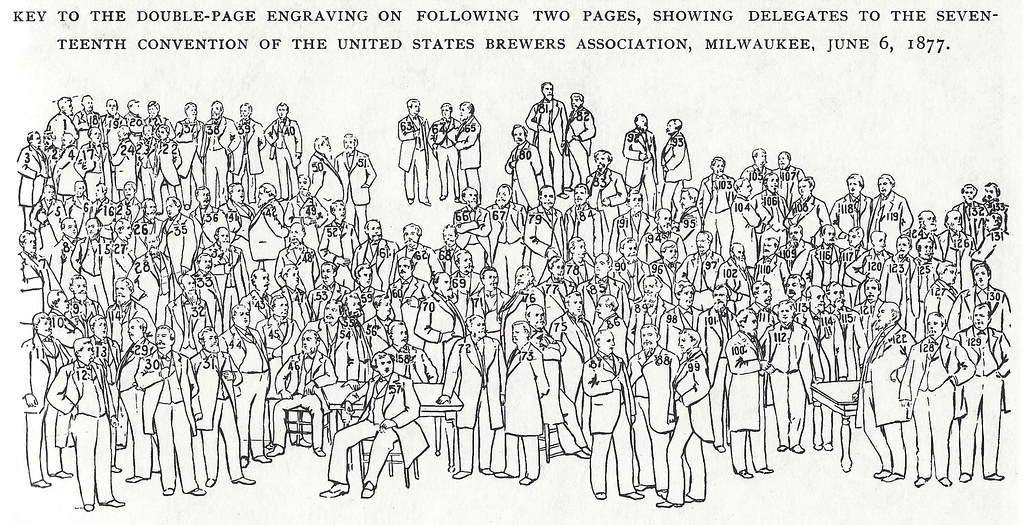
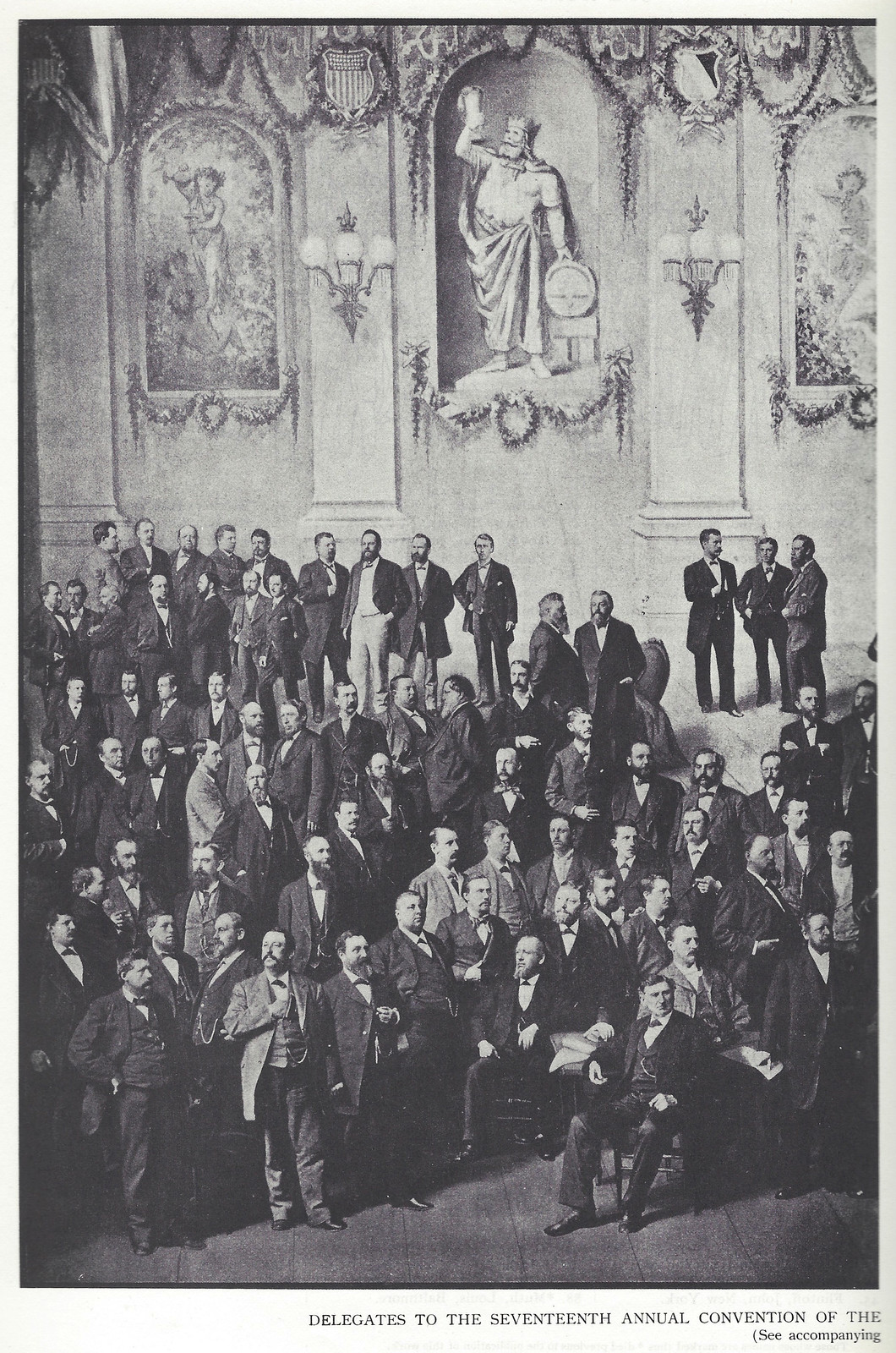
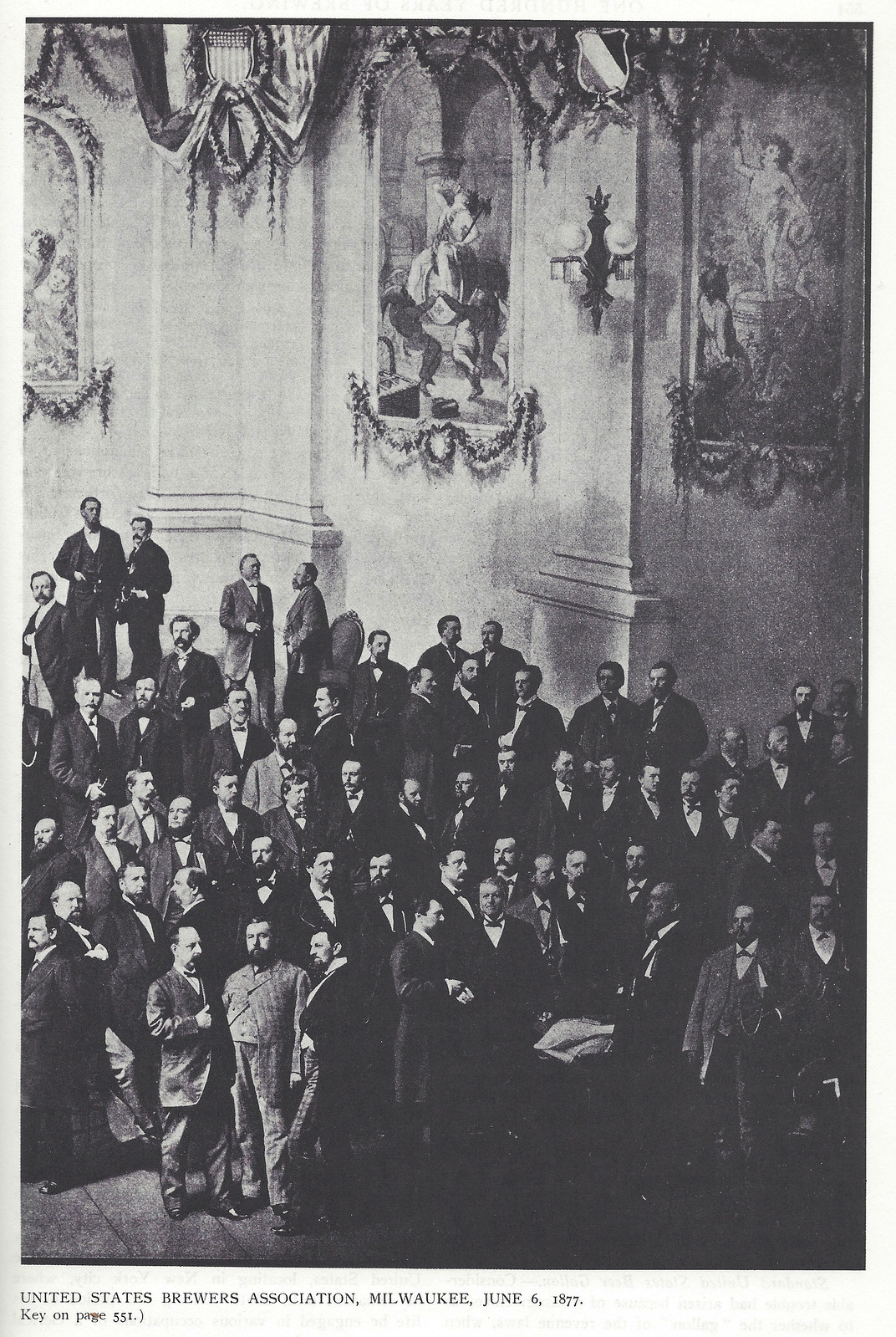
This is an interesting photo I came across in 100 Years of Brewing, which was originally published in 1903. This two-page double truck is a photo of all the attendees of the Seventeenth annual convention of the United States Brewers Association, which was held in Milwaukee, Wisconsin. The photo was taken on June 6, 1877.

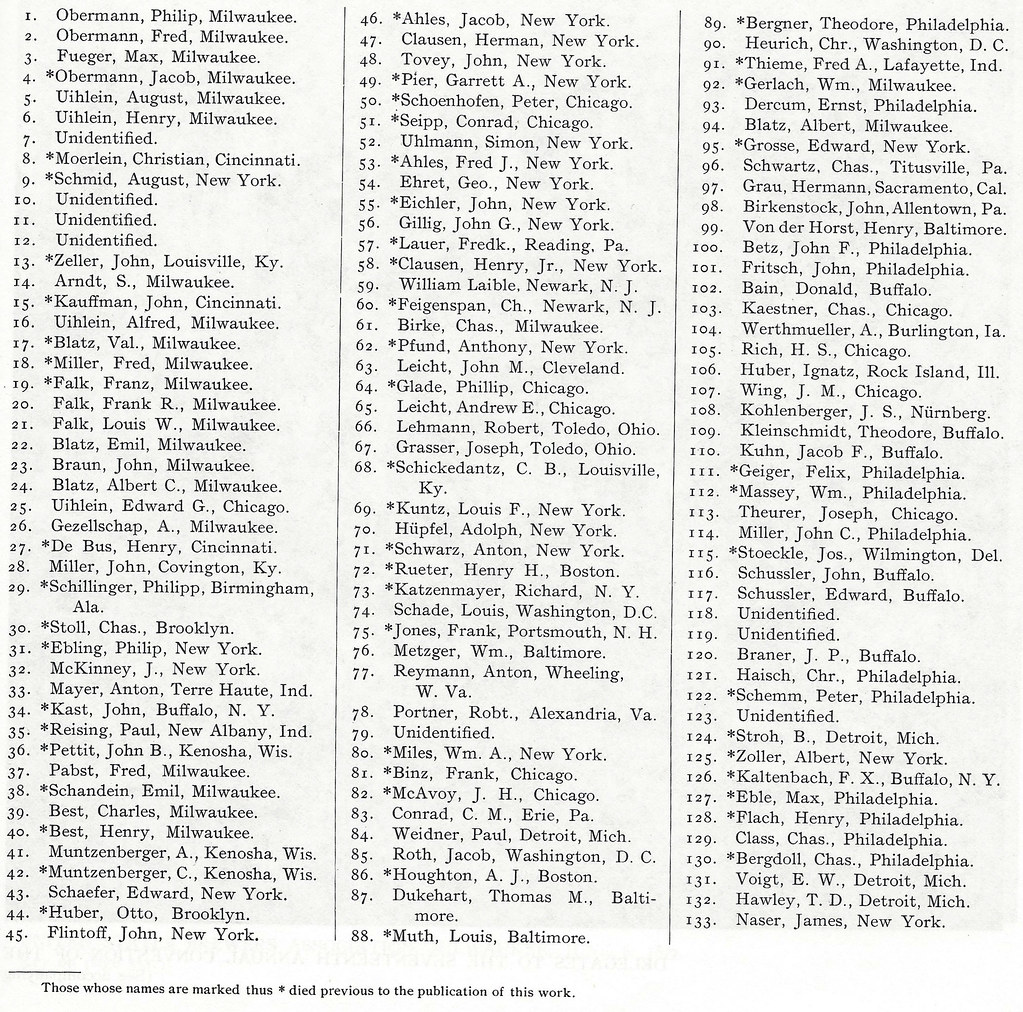
There are 133 people in the photo, although not all of them are identified. Quite a few of the people in the photo are, or rather were, pretty big deals in the brewing industry at that time, which makes sense. This was, after all, the biggest trade convention for brewing. But when you read the names, it’s a veritable who’s who of the brewing industry.

USBA-1877

Luckily, they included a numbered key to identify the people in the picture.

USBA-1877-key-1

USBA-1877-key-2

Interestingly, even though the photo was taken in 1877, by the time it was published in “100 Years of Brewing,” 26 years later, 55 of the 133 people in the photo had died, or over 40%.

Here are slightly larger images of the two pages, first the left page, followed by the right.

USBA-1877-left

USBA-1877-right

Filed Under: Breweries, Events, Just For Fun Tagged With: Brewers Association, History

The Etymological Compendium On Beer

May 24, 2018 By Jay Brooks

book
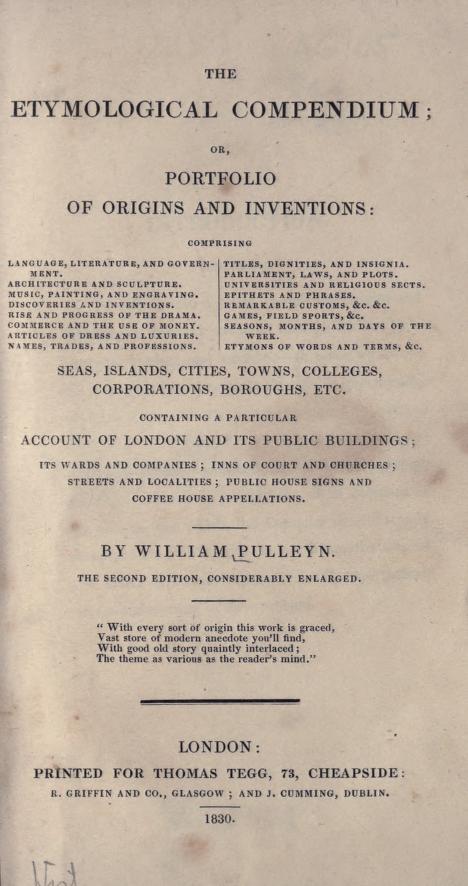
So this is another word nerd find. The book is titled “The Etymological Compendium, or Portfolio of Origins and Inventions,” published in 1828 (although I’ve also come across a copy from 1830).

etymological-compendium

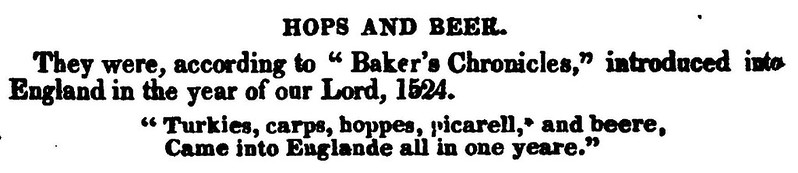
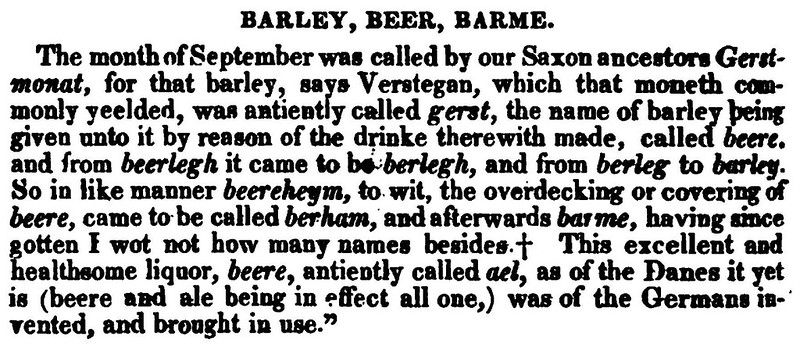
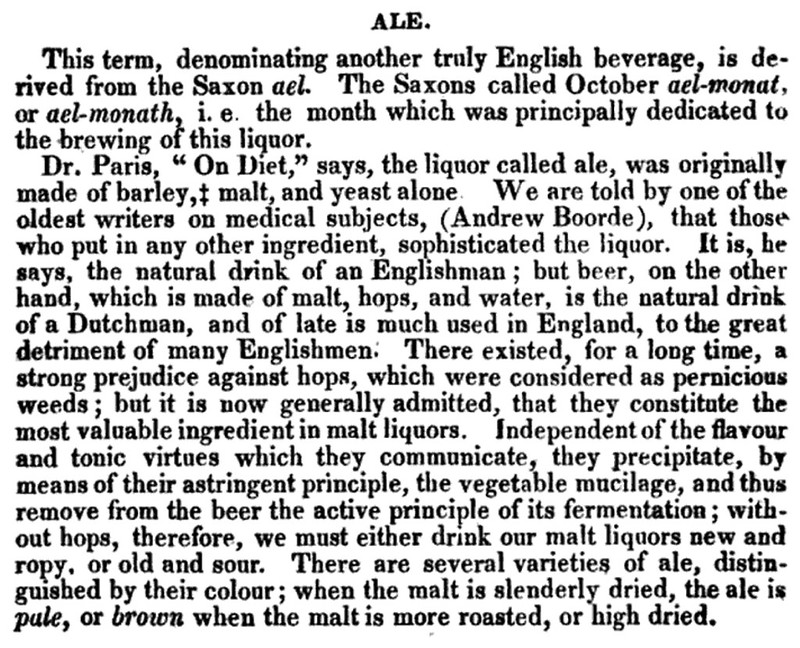
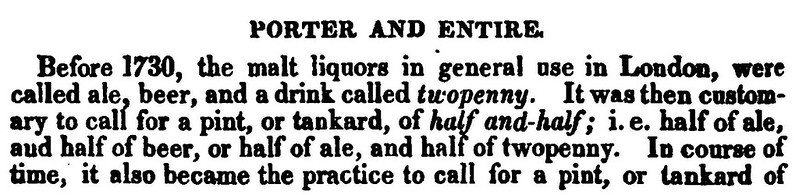
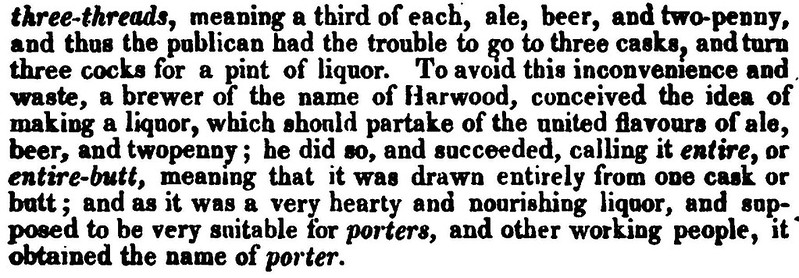
The explanations involving beer are fairly interesting, where in Section XI: Agriculture, Horticulture, Vegetables, Fruits, Plants, Flowers, Beverages, Etc. they have the following:

ec-hops-ia

flourish

ec-barley-ia

flourish

ec-ale

flourish

ec-porter-1-ia
ec-porter-2-ia

flourish

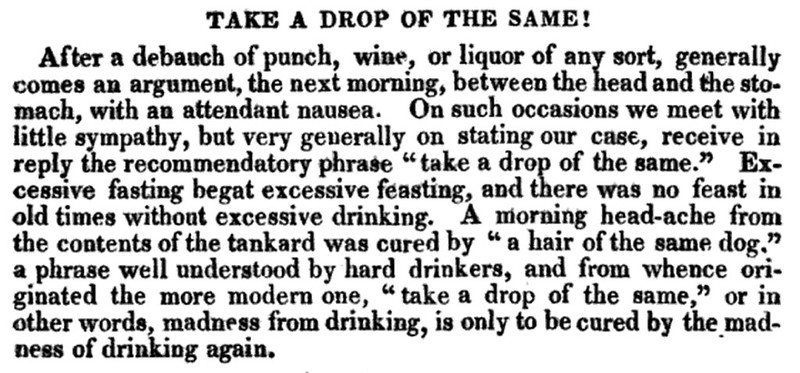
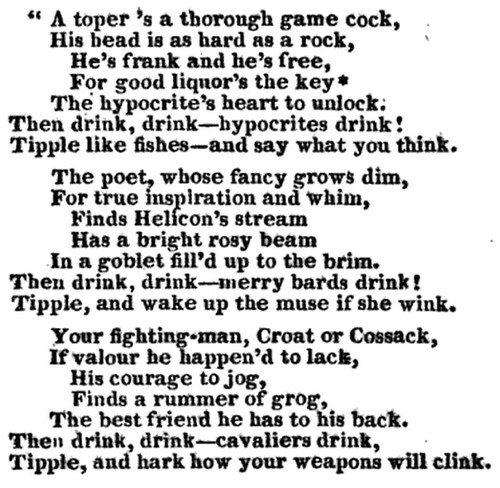
And this is from Section XV: Epithets and Phrases:

take-a-drop-1

take-a-drop-2

flourish

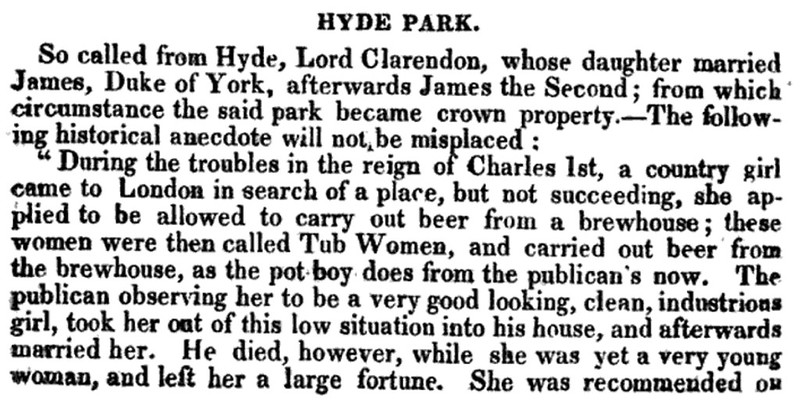
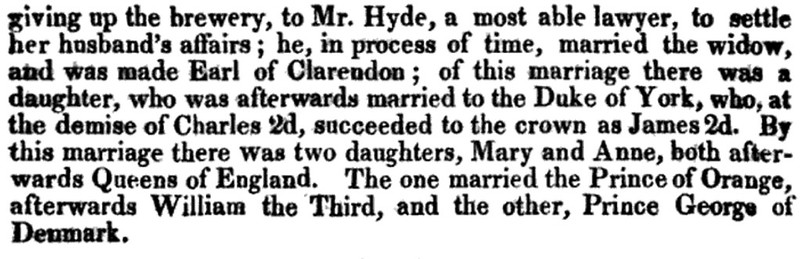
And finally, this odd historical anecdote is from Section XIII: Public Buildings, Inns of Court, Wards, Churches, Streets, and Localities of London and Westminster.”

hyde-park-1
hyde-park-2

flourish

Filed Under: Just For Fun, Related Pleasures Tagged With: History, Literature, Words

Down on The Farmhouse Beers For The Next Session

May 21, 2018 By Jay Brooks

session-the
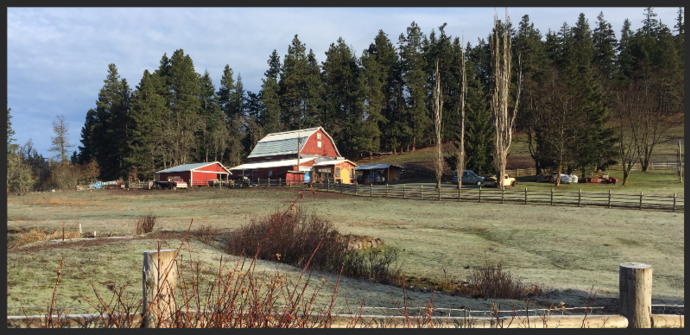
For our 136th Session, our host will be Dave S, who writes Brewing In A Bedsitter, or “Adventures in small batch homebrew.” For his topic, he’s chosen Farmhouse Beers, by which he’s asking everybody to consider the farmhouse beer or farmhouse brewery and wax philophically about it.

logsdon-2

Here is a fuller explanation of what he’s thinking about ways to approach this month’s topic:

Whether it’s about the success of modern craft breweries like Jester King and Burning Sky, the worldwide spread of saison or the revival of international interest in Northern European traditions, farmhouse brewing is a recurring theme in the beer world. It’s a very resonant idea but also one that invites many perspectives, so it seems like an ideal topic for the collective conversation that is The Session.

I’d invite people to approach the topic however they like — the more creative the better — but here are some ideas to get you started.

You could talk about how the word “farmhouse” is used in modern craft breweries, or about historic brewing traditions. You might want to think about how, if at all, the two are related.

If you think that farmhouse brewing or farmhouse beer refers to something meaningful and relevant in modern beer, you could write something touching on what it means to you. What’s its defining element? Is it about style, ingredients, location or something else? Would you call a crisp, clean pilsner or a hoppy IPA a farmhouse beer if it was brewed from local ingredients in a medieval barn? What about a mixed fermentation barrel-aged saison brewed in a light industrial unit in a suburb of Manchester? Why does any of this matter?

If you want to get specific, maybe talk about one or more beers or breweries that you think embody some aspect of the idea of farmhouse brewing. Or if you’re a homebrewer, you could talk about ways that your own beer has been influenced by it.

Conversely, if you think that the modern idea of a farmhouse brewery is largely just about marketing and aesthetics then you could have a go at dissecting and deconstructing it. Where did it originate and what are its roots? Who popularized it? How is it constructed and signaled? Most importantly, why are people so keen to buy into it?

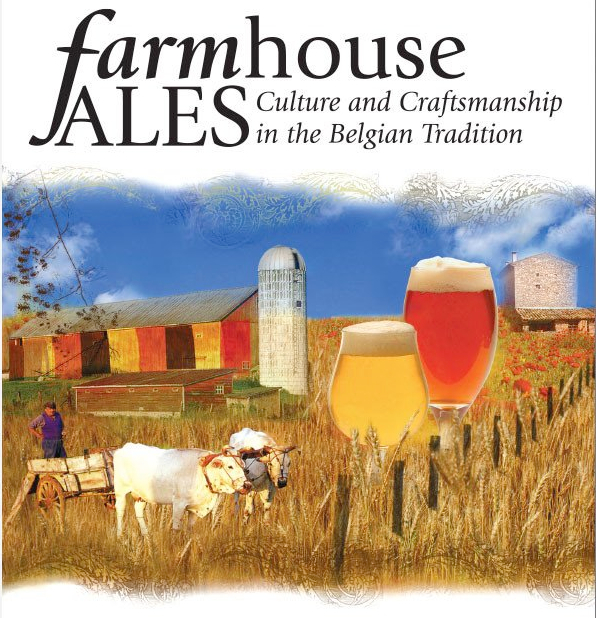
farmhouse-ales

This month, the first Friday is also the first day of the month, June 1, so don’t accidentally miss it. To participate in the June Session, simply post a link to your session post by commenting at the original announcement.

Filed Under: Beers, Just For Fun, The Session Tagged With: Announcements, Beer Styles

Moon Crater “Beer”

May 16, 2018 By Jay Brooks

moon
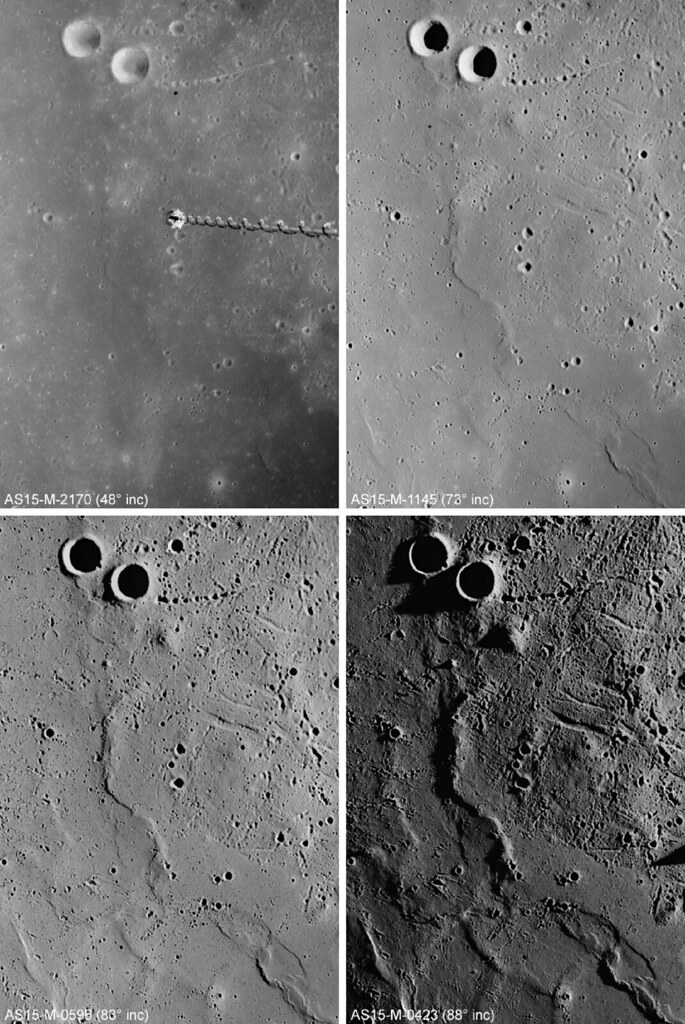
So this is an interesting bit of ephemera. There’s a crater on the Moon that is named “Beer.” I’d like to think it was named for the beverage, but unfortnately that’s apparently not the case. That would have made for a better story, but c’est la vie. Instead, there was a German amateur astronomer who it was named for. The crater in the center is one the called “Beer.” The other big one, in the upper left, used to be called “Beer A” but is now known as Feuillée. The string of smaller craters (known as “craterlets”) in a line to the east-southeast of “Beer” used to be called “Fossa Archimedes” but it’s been suggested they should be called “Catena Beer,” and it seems to be catching on.

Beer-Feuillee_LO-IV-114H_LTVT

Here’s how the name came about:

  • Named for Wilhelm Wolff Beer (January 4, 1777 – March 27, 1850), a banker and astronomer in Berlin, Germany. Beer built a private observatory with a 9.5 cm refractor in Tiergarten, Berlin. Together with Johann Heinrich Mädler he produced the first exact map of the Moon (entitled Mappa Selenographica) in 1834-1836, and in 1837 published a description of the Moon (Der Mond nach seinen kosmischen und individuellen Verhältnissen). Both remained the best descriptions of the Moon for many decades.
  • Beer was Catalog Number 1185 in the original IAU nomenclature of Named Lunar Formations. The designation is attributed to Birt, and had earlier been adopted by Neison, 1876 (where the designation Beer A is used for what is now known as Feuillée, differing from the modern usage of Beer A for the much smaller crater selected in Named Lunar Formations). Schmidt is said there to have called this feature Hamilton (unrelated to the modern Hamilton) and to have used the name Beer for the crater now known as Rosse. However, Schmidt himself says that his personal preference since 1856, based on the Lohrmann maps (which he edited), was to call the present crater pair Beer and Mädler, but he changed these to Hamilton and Feuillée in his 1878 book in an effort to be consistent with the English observers.
  • In his 1880 article, Neison equates Schmidt’s 1878 Hamilton and Feuillée to his 1876 Beer and Beer A and the British Association’s Beer and Mädler.

The Planetary Society has an interesting post where they show an experiment of taking photos of the moon “under different solar illumination conditions.” The NASA photos are all of the craters Beer, Feuillée and the craterlets Fossa Archimedes, which are also known as “Catena Beer.”

20140325_four_apollo_images

Filed Under: Just For Fun, Related Pleasures Tagged With: Humor, Science

We Want Beer Parade

May 14, 2018 By Jay Brooks

we-want-beer-parade
You’ve undoubtedly seen the photographs or men marching through the streets carrying signs that read “We Want Beer.” The parade, held on May 14, 1932, was organized by the city’s mayor, Jimmy Walker, and was originally called the Beer for Taxation march, although it quickly became known more popularly as the “We Want Beer!” parade. Mayor Walker was a flamboyant showman, but prohibition was also making life difficult for New Yorkers. The criminal element took over the sale and distribution of illegal alcohol and something like 400 murders each year were attributed to bootleggers and gangsters in New York. And the increased crime was harder to combat because of the city’s lost revenue from various alcohol taxes, which forced the mayor to dramatically reduce both his police and fire departments. There was also rampant unemployment as the nation was in the throes of the Great Depression.

we-want-beer-parade-1
This is the iconic photo of marchers in the We Want Beer parade.

The photo above shows marchers at night, which may be surprising, but the parade actually lasted all day long, and continued into the evening.

jimmy-walker
NYC Mayor Jimmy Walker.

Mayor Walker gave a speech in the evening over station WEAF of the National Broadcasting Company, in which he challenged the opponents of his “Beer for Taxation” plan to produce any other form of taxation that would be “less of a burden upon people already overburdened with taxation.”

Anti Prohibition Rally 1933

The parade began down Fifth Avenue from 80th Street in Manhattan, “with picket signs, in costume, and cars festooned with slogans. The marchers went west on 59th Street and back north on Central Park West, parading into the night,” with Mayor Jimmy Walker, “dapper in his derby and suit (and about to be brought up on corruption charges before resigning as mayor), led the procession.” Within the month, other cities held similar parades.

we-want-beer-parade-6

“Interestingly, at noon, the marchers paused for a minute of silence in honor of Charles Lindbergh Jr., whose body was found dead in woods in New Jersey two days earlier.”

we-want-beer-parade-5

It started as a fairly small protest, but quickly swelled to an estimated 100,000 marchers (and some accounts put that number closer to 150,000). One of the slogans they chanted was “Beer for Prosperity” and they also chanted the call and response “Who wants beer?” followed by “We Do!”

we-want-beer-parade-4

Today I Found Out also has an account of the parade, including:

When Congressman Emanuel Celler heard about the event, he said he’d come and bring a bunch of friends. You’d be able to pick him out in the crowd by the two signs he’d be holding: “Never Say Dry” and “Open the Spigots and Drown the Bigots.” The Veterans of Foreign Wars, the American Legion and the Grand Army of the Republic (a group of Civil War veterans) also turned out to march in the parade. Students and society matrons also joined the fray.

we-want-beer-parade-2

They even created a souvenir program for the parade.

beer-parade-1932-souvenir

And Steuben Taverns created a hanger to put on your car’s rear view mirror.

car-hanger-1

car-hanger-2

And to get a sense of the parade itself, here is a video from the event.

Mayor James J. Walker leads the great Beer Parade in New York City:

Filed Under: Events, Just For Fun, Politics & Law, Related Pleasures Tagged With: History, New York, Prohibition, Video

« Previous Page
Next Page »

Find Something

Northern California Breweries

Please consider purchasing my latest book, California Breweries North, available from Amazon, or ask for it at your local bookstore.

Recent Comments

  • Bob Paolino on Beer Birthday: Grant Johnston
  • Gambrinus on Historic Beer Birthday: A.J. Houghton
  • Ernie Dewing on Historic Beer Birthday: Charles William Bergner 
  • Steve 'Pudgy' De Rose on Historic Beer Birthday: Jacob Schmidt
  • Jay Brooks on Beer Birthday: Bill Owens

Recent Posts

  • Beer In Ads #5389: Point & Brunswick Bock Beer November 10, 2026
  • Historic Beer Birthday: Edward Cecil Guinness November 10, 2026
  • Historic Beer Birthday: Jacob Betz November 10, 2026
  • Beer In Ads #5388: Bock Beer Vats In The Brewers Hall November 9, 2026
  • Historic Beer Birthday: Peter Barbey November 9, 2026

BBB Archives

Feedback

Head Quarter
This site is hosted and maintained by H25Q.dev. Any questions or comments for the webmaster can be directed here.