Brookston Beer Bulletin

Jay R. Brooks on Beer

  • Home
  • About
  • Editorial
  • Birthdays
  • Art & Beer

Socialize

  • Dribbble
  • Email
  • Facebook
  • Flickr
  • GitHub
  • Instagram
  • LinkedIn
  • Pinterest
  • RSS
  • Twitter
  • YouTube

Powered by Genesis

NOSB Unanimously Votes That Organic Beer Should Include 100% Organic Hops

October 28, 2010 By Jay Brooks

usda-organic
I just heard that the National Organic Standards Board (NOSB) earlier today voted unanimously “to require organic beer to include 100% organic hops beginning January 1, 2013.” If you haven’t been following this, under current USDA guidelines, a beer can be labeled “organic” if 95% of its ingredients are organic. Since less than 5% of beer consists of hops, that means almost any beer using organic malt may be called an organic beer. If a brewery uses 100% organic ingredients, they may label that beer “100% organic,” but all but the most savvy consumers are unaware of the difference. And it’s hard to argue that the current standard doesn’t cause confusion. I think most people who see a product labeled “organic” are going to assume that it’s all organic, not just mostly organic. There are actually four ways that beer can be labeled “organic” which includes the two I just mentioned plus “Made with Organic Ingredients” and “Some Organic Ingredients.” You can see the different standards at a post I did several Years ago, What Makes Beer Organic? The last two seem to convey the intended information, and so does saying “100%.” It’s that simple “organic” designation being only 95% that has people concerned — rightly so, I should add — and led the American Organic Hop Grower Association (AOHGA) to petition the USDA to “remove hops from the National List of non-organic ingredients allowed in organic food (section 205.606).” You can view the petition, and an addendum, at the AOGHA website.

Here’s some of the background, from an AOGHA press release:

Hops were first added to the National List by the NOSB in June 2007, when organic hops were primarily produced in Europe and New Zealand. Since then, the U.S. organic hop industry has made significant advances. Progressive, large-scale family farms in the Pacific Northwest and small, local growers across the country are now growing organic hops, even though the hop producers believe the market for them has remained weak due to the current NOSB policy which allows brewers to use less expensive, non-organic hops in their beer labeled organic.

In an attempt to remove hops from the National List, the American Organic Hop Grower Association (AOHGA) submitted a petition to the USDA in December 2009, supported by Sierra Nevada Brewing Company, Anheuser-Busch, Lakefront Brewery, Seven Bridges Cooperative, and Hopunion LLC.

When the USDA denied the petition, BT Loftus Ranches VP Patrick Smith wrote an impassioned essay, National Organic Standards Board to US Organic Hop Industry: “Drop Dead”, that nicely laid out the organic hop farmers’ case. In the middle of October, “thanks to his efforts, and the attendant “response from consumers, organic hop growers, and organic brewers, the NOSB Handling Committee has revised their previous recommendation and is now recommending that hops come off the National List on January 1, 2013.” Good news, to be sure, but it still required the full board of NOSB board vote on the petition again and accept the changed recommendation at a meeting in Madison today, as reported by Patrick Smith in an Organic Hops Update.
organic-beer

The AOHGA website is now updated with the following: “On October 28, 2010, the National Organic Standards Board unanimously voted in favor of the removal of hops from section 205.606 of the National List of Approved and Prohibited Substances, effective January 1, 2013.”

Filed Under: Beers, Breweries, News Tagged With: Hops, Organic, Science of Brewing

Discovery Channel To Explain “How Beer Saved The World”

October 25, 2010 By Jay Brooks

sweetwater
It seems that the Discovery Channel is also currently shooting a beer documentary entitled “How Beer Saved the World.” Sweetwater Brewing in Georgia tweeted a photo of the crew of the documentary at the brewery over the weekend.

sweetwater-discovery
“The Discovery channel’s, “How Beer Saved the World” Amanda from Emory with our Brewmaster Mark Medlin and the sound dude.”

There’s not much additional information out there, though on Sunday the Georgia Tech Glee Club performed the Anacreontic Song at the Brick Store Pub in Decatur, also for the documentary. If you’re not familiar with the song, it’s also known as “To Anacreon in Heaven” and is an old British drinking song. According to AstroCocktail, “Anacreon was an ancient Greek poet (563-478 BC) whose many poems about the pleasures of wine and its results earned him the reputation as the bard of the grape.”

Even if you don’t know the lyrics, you probably know the tune, as it was used as the melody for our National Anthem. “Francis Scott Key wrote ‘Defence of Fort McHenry’ while detained on a British ship during the night of September 13, 1814, as the British forces bombarded the American fort. His brother-in-law, on hearing the poem Key had written, realized it fit the tune of ‘The Anacreontic Song.'” It was later retitled The Star-Spangled Banner. You can hear a version of it here.

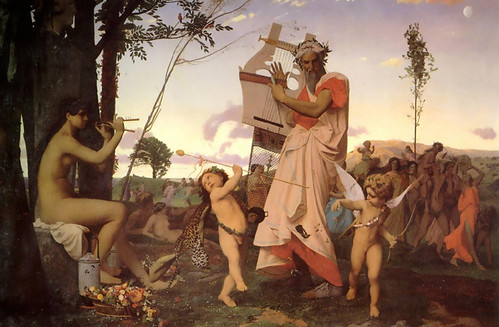
anacreon
“Anacreon” by Jean Leon Gerome, 1848

Admittedly, not much to go on, but it would appear there is definitely another beer documentary in the works for the Discovery channel, and that’s in addition to the new series, Brew Masters, debuting next month and starring Sam Calagione from Dogfish Head.

Filed Under: Breweries, News Tagged With: History, Rumors

Giants vs. Rangers: San Francisco Brewery & Fort Worth Brewery Make Friendly Wager

October 25, 2010 By Jay Brooks

sf-giants texas-rangers
Craft brewers tend to not be as cutthroat competing with one another as a lot of other businesses. Most believe that the sale of one craft beer helps the sales of all other good beer, too. But that ethos doesn’t necessarily extend to sports. Case in point, the 2010 World Series between the San Francisco Giants and the Texas Rangers.

Shaun O’Sullivan, from the 21st Amendment Brewery in San Francisco — in fact just a stone’s throw from the ballpark where the World Series will be played — got a call today from his friend and colleague Fritz Rahr, who owns Rahr & Sons Brewing in Fort Worth, Texas, proposing a friendly wager on this year’s World Series.

So here’s the bet, as told by Shaun O’Sullivan on the 21st Amendment website in a post entitled It’s On Like Donkey Kong:

If the Texas Rangers win the World Series (highly unlikely in my opinion, but I digress), I will wear a Texas Ranger’s shirt, drinking a Rahr and Sons delicious beer outside of San Francisco’s AT&T Park. And when the San Francisco Giants beat the Texas Rangers (they will), Fritz will be wearing a Giants shirt and drinking a 21st Amendment delicious canned craft beer outside of Arlington Field.

I can’t wait to see those photos. Just one more reason to cheer on the Giants. Though I confess that Rahr makes some outstanding beers and it would be nice to taste a few of them during the series, I think for now I’ll stick to Bay Area beers to root for San Francisco beginning this Wednesday. What will you be drinking during the ball games?

world-series-2010

Filed Under: Breweries, Just For Fun, News, Related Pleasures Tagged With: Baseball, California, San Francisco, Sports, Texas

Bay Area Craft Beer Festival This Saturday

October 21, 2010 By Jay Brooks

bay-area-craft-beer-fest
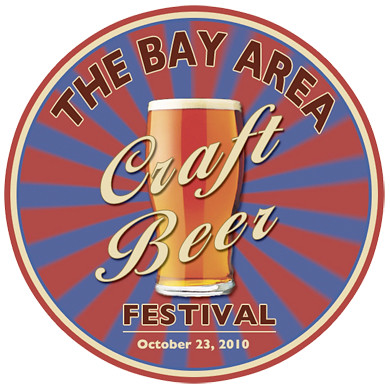
This Saturday, October 23, another new festival will kick off in the Bay Area, in this case Martinez. The Bay Area Craft Beer Festival will be held in the historic Cannery District at the Martinez Waterfront Park, located at 333 Ferry St. in downtown Martinez from 1:00 to 5:00 p.m. Tickets are $35 for general admission or $50 for a VIP ticket, which gets you in an hour earlier, at Noon. Tickets can be purchased online or at several locations throughout the Bay Area. Check out the festival website for details.

Admission includes includes a commemorative glass, unlimited tastings and entertainment, which includes three bands. Over thirty breweries will be pouring their beer. Food will also be available for a separate purchase. The festival will take place indoors, so it’s rain or shine.

BACBF

Filed Under: Beers, Breweries, Events, News Tagged With: Announcements, Bay Area, Beer Festivals, California

Yuengling Talks To The Wall Street Journal

October 21, 2010 By Jay Brooks

yuengling-eagle
With the announcement that Yuengling Brewery is buying their fourth brewery to continue to expand their market, the Wall Street Journal today has a nice overview of the company’s plans for the future. Check out After 181 Years, Local Beer Stops Playing Hard to Get.

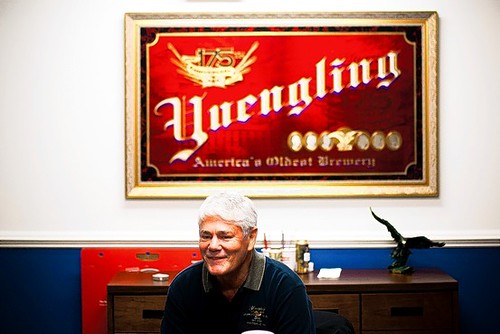
dick-yuengling
Dick Yuengling (Photo by Scott Lewis)

Filed Under: Breweries, News Tagged With: Interview, Mainstream Coverage, Pennsylvania

Customer Satisfaction With Beer Continues To Fall

October 19, 2010 By Jay Brooks

acsi
The American Customer Satisfaction Index (ACSI) today released their latest findings for a variety of products, and beer again continued to drop. I should point out, however, that the ACSI tracks only the big brands. As far as I can tell, they do not track any craft brewers. Since they refer to “Corona, Heineken, and Samuel Adams” all as “smaller brands,” I feel confident that very few, if any, craft breweries are on their radar. As a result, these findings — while interesting — are only relevant for the big picture and don’t reflect the continuing gains and positive growth in the craft sector.

From the press release:

Beverages: Anheuser-Busch Tanks
Beer drinker satisfaction falls from its all-time high in 2009 by 2.4% to 82, driven by a sharp decline for Anheuser-Busch products. Last year, shortly after its acquisition by Belgian InBev, Anheuser-Busch recorded its best ACSI score ever and captured the industry lead. Now that gain evaporates, as the company drops 4% to an ACSI score of 82. Sales of the Budweiser brand fell by nearly 10% over the past year, the largest decline on record, as younger drinkers have increasingly turned to microbrews and low-calorie products. A-B’s weakness is Miller’s gain. Without improving, Miller claims the top ACSI spot among brewers, unchanged at 83. Molson Coors also remains unchanged, stalled at the bottom of the industry at 81.

And here’s additional analysis from a second release:

Beverages
Customer satisfaction with beer fell from its all-time high in 2009 by 2.4% to 82, driven by a sharp decline for Anheuser-Busch products. The rest of the measured brewers—Miller, Molson Coors, and the aggregate of smaller brands such as Corona, Heineken, and Samuel Adams—held to the same scores received one year ago.

In 2009, a year after its acquisition by Belgian InBev, Anheuser-Busch advanced to its best ACSI score ever and captured the industry lead at a record 84. In 2010, the gain has evaporated as the company lost 4% and slid to 82. The number-one seller of beer in the United States also has struggled with sales of its Budweiser brand. Sales of the brand fell by nearly 10% last year, the largest decline on record, as younger drinkers have increasingly turned to microbrews and low-calorie products.

Miller is a beneficiary of A-B’s plunge. Miller assumes the industry lead in customer satisfaction by standing still at an ACSI score of 83, sharing the top spot with the aggregate of smaller brands (also unchanged). A year ago, Molson Coors slumped to the bottom of the industry. The company is stalled there for a second year at an unchanged score of 81. Value for money remains a challenge, as consumers are increasingly price sensitive and Molson Coors brands tend to be higher priced than many of its competitors’ brands.

Filed Under: Breweries, News Tagged With: Big Brewers, Press Release, Statistics

European Study Shows Raising Beer Taxes A Bad Idea

October 15, 2010 By Jay Brooks

brewers-europe
Earlier this month, the Brewers of Europe — a trade organization of European breweries — released the results of an independent study they commissioned by PriceWaterhouseCoopers. They asked PWC to “quantify the impact of excise taxes on the overall tax collection, and employment and profitability in the brewing sector compared to other alcoholic beverages.” In Europe, like in the United States, a poor economy coupled with tireless anti-alcohol organizations are causing some politicians to look to the alcohol industry to help fund problems not of their making in the form of higher taxes. The entire report, Taxing the Brewing Sector: A European Analysis of the Costs of Producing Beer and the Impact of Excise Duties, is available online.

They also released a press release, highlighting the findings. From the press release:

“The study provides strong evidence that arbitrary increases in excise tax would hit brewers — and the 1.8 million jobs created in the European hospitality sector generated by the brewing sector — hard just as the economy is striving to emerge from a deeply damaging recession. The study also shows that tax increases will ultimately NOT increase government revenues nor attain the expected levels.”

The study comes at a crucial time, with skyrocketing taxes on beer in some European countries as governments scramble to rake in cash. “At a time when regulators across Europe are looking at scenarios about taxation, we would urge them to give any plan a full economic reality check,” [said] Pierre-Olivier Bergeron, [secretary-general of the Brewers of Europe]. “This study provides the data for sound judgments.”

A comparative cost analysis within the study shows that producers of alcoholic beverages constitute a significant industry within the EU, worth €242.5bn in 2007 in terms of sales. Sales of beer account for the highest proportion by value — €111.5bn or 46%. Beer contributed the highest amount of taxes to Member States across the EU and the lion’s share of jobs.

“This study shows that beer is the most expensive form of alcohol to produce,” observed Pierre-Olivier Bergeron. “So any move toward taxing all drinks based solely on alcohol content (‘unitary taxation’) would disadvantage a low alcohol beverage such as beer further in terms of cost of the product to the consumer.”

The study shows that an increase in excise taxes on the beer and hospitality sectors would be negative in terms of employment and tax collection. This is because increases in excise tax revenue are more than offset by decreases in the revenues obtained by the Government from personal and corporate income taxes, social security payments and, in some cases, from value added tax (VAT).

“The excise tax research shows that a 20% increase in beer excise taxes at national level across Europe would lead to loss of over 70,000 jobs and a fall in government revenues of €115 million EU-wide, due to lower sales and lower income from VAT and corporate taxes,” adds Pierre-Olivier Bergeron. “Also an increase of current EU minimum rates of excise tax will have no beneficial impact on the EU’s internal market or on national treasuries concerned. Plainly this is an ineffective measure for improving public finances and detrimental for brewers.” Bergeron concludes: “Europe’s brewing sector fully backs Europe 2020, the European strategy for smart, sustainable and inclusive growth. Our call for good sense and reason on the excise duty front fully meets the strategic objectives the EU has rightly set for itself, particularly in terms of fostering a high-employment economy.”

Perhaps the biggest finding is how many jobs would be lost if excise taxes were increased. The Marin Institute and the City of San Francisco insisted there would be no job losses if their recently proposed alcohol tax for the city passed. They were quite insulting, I believe, to the concerns of both local businesses and workers for even suggesting that was a potential outcome. This EU study does appear to lend credence to the claims made by many critics of the San Francisco Alcohol Tax, especially the California Alliance for Hospitality Jobs.

Naturally, critics of this study will undoubtedly point to its origin, having been commissioned by a trade organization. But the Brewers of Europe appear to have been very diligent in making the study as impartial as possible, and, perhaps more importantly, they’ve been extremely transparent and up front about their sponsorship of the study. That’s something that American anti-alcohol groups have not been as forthcoming about, with the more common scenario being that they fund academic institutions to conduct a study and then all but hide that fact, or at a minimum downplay it. Those same groups then use the studies they themselves commissioned in propaganda that tries to make them appear impartial or from an independent source, as was seen recently in the City of San Francisco’s nexus study supporting the alcohol tax. So at least this study involved no such subterfuge. People know exactly where it came from, can read the report and draw their own conclusions in full command of all the facts.

Filed Under: Breweries, Editorial, News, Politics & Law Tagged With: Europe, Prohibitionists, Science, Statistics, Taxes

Yuengling To Buy Former Coors Brewery In Memphis

October 14, 2010 By Jay Brooks

yuengling-eagle
The Wall Street Journal is reporting that Yuengling Brewery of Pottsville, Pennsylvania is close to finalizing a deal to purchase the brewery in Memphis, Tennessee formerly owned by Coors. Yuengling has signed a letter of intent to buy the brewery for an undisclosed amount and the deal is expected to close in a few weeks. This will be Yuengling’s fourth brewery, as they currently own and operate three breweries, two in Pennsylvania and one in Florida.

The brewery was originally built by Schlitz in 1971 and then Stroh’s operated it for a time before selling it to Coors, where they brewed their Blue Moon line of stealth micros, along with Zima and Keystone. MillerCoors shut it down in 2006 and I seem to recall there were some labor disputes there, too. Then later that same year it was sold for $9 million and it became the Hardy Bottling Co..

Filed Under: Breweries, News Tagged With: Business, Pennsylvania, Tennessee

Tailgating For The Flames: Black Diamond’s TV Commercial

October 13, 2010 By Jay Brooks

black-diamond-new
If you haven’t watched much sports on television lately perhaps you missed the new cable television commercial by the Bay Area’s own Black Diamond Brewing of Concord. Happily, it’s now up on YouTube. Go Flames!

Filed Under: Beers, Breweries, Just For Fun Tagged With: Advertising, Bay Area, California, Humor, Video

SABMiller Proposes Floating Brewery

October 12, 2010 By Jay Brooks

ship-cargo
SABMiller put out a press release today with their prediction for the future of breweries, “given a range of different scenarios determined by the cost and availability of water and energy.” Below is the text fro the release.

Working with innovation consultancy, Innovia Technology, SABMiller envisioned four plausible business environments, based on the different uncertainties facing the brewing industry over the next 30 years. These scenarios informed thinking around how the ‘Brewery of the Future’ might look under different circumstances, with some surprising results.

The most extreme scenario, ‘Marginal Survival’ envisaged a market with limited access to water and high energy costs. This scenario – where people would migrate from areas of water shortage or turbulent weather -provoked the most unorthodox response. One of the proposed solutions was a smaller, mobile brewery which would move from place to place on the back of a ship.

floating-brewery

Rob Wilkinson, Director of Innovia, said: “The descriptions are intended as food for thought rather than as blueprints for building new facilities. However, the example of the brewery on a ship is entirely feasible. It would allow for rapid entry to new markets, especially where no infrastructure is in place, it would provide flexibility in positioning and length of stay and allow SABMiller to move with water sources, with people, with crops, or even away from severe weather, natural disasters or political instability.”

Maurice Egan, SABMiller’s group head of manufacturing said: “Whilst this research has produced some imaginative solutions, the business case behind the thinking is very serious. We need to ensure that, given the rapid pace of technological developments, the impacts of climate change and growing wealth in developing economies, SABMiller has the capability to define, design and deploy our future breweries and supply chains.”

In another scenario ‘Energy Deprived’, where energy prices and the cost of transport are high but water plentiful and cheap, the brewery is closely integrated with the community, sharing facilities and resources. For example, local farmers might use the brewery mills for processing crops, while the brewery would use their agricultural waste to create bio-fuel as an energy source; the kilns used for malting barley might also be shared with local businesses as a facility for drying paper pulp. The resulting brewery would be a sustainable building looking not unlike the Eden Project in Cornwall where hot processes are timetabled for the day and cold processes during the cooler night in order to optimize resource use.

The other two scenarios envisaged were:

‘Water Scarce’, where energy costs are low due to large scale investment in alternatives to fossil fuels, but water is in short supply exacerbated by population increases coupled with climate change. In this case, the brewery would be highly optimised for low water use, using less than 2 litre of water to produce 1 litre of beer compared to SABMiller’s current average of 4.5 litres; this would be achieved in part by implementing a continuous brewing system and in part by advanced water treatment technologies.

‘Plentiful Supply’ describes a world self-sufficient in both water and energy, which benefits from low transport costs, abundant rainfall and robust water infrastructure. In this cornucopia sustainability and environmental stewardship remain key drivers. For example, the brewery would use natural processes to upgrade waste or extract valuable chemicals from it so as to reduce environmental impact. Power would be derived from renewable sources such as solar panels, rainwater would be collected and as much water as possible recycled.

Filed Under: Breweries, News Tagged With: Announcements, Science of Brewing

« Previous Page
Next Page »

Find Something

Northern California Breweries

Please consider purchasing my latest book, California Breweries North, available from Amazon, or ask for it at your local bookstore.

Recent Comments

  • Bob Paolino on Beer Birthday: Grant Johnston
  • Gambrinus on Historic Beer Birthday: A.J. Houghton
  • Ernie Dewing on Historic Beer Birthday: Charles William Bergner 
  • Steve 'Pudgy' De Rose on Historic Beer Birthday: Jacob Schmidt
  • Jay Brooks on Beer Birthday: Bill Owens

Recent Posts

  • Historic Beer Birthday: Frederick Kirschner May 21, 2026
  • Beer Birthday: Nick Matt May 21, 2026
  • Historic Beer Birthday: Oliver Hughes May 20, 2026
  • Historic Beer Birthday: Benjamin, Lord Iveagh May 20, 2026
  • Historic Beer Birthday: Eduard Buchner May 20, 2026

BBB Archives

Feedback

Head Quarter
This site is hosted and maintained by H25Q.dev. Any questions or comments for the webmaster can be directed here.